View allAll Photos Tagged language
Six Aboriginal language groups are the traditional owners of the Greater Blue Mountains World Heritage Area:
Darug.
Gundungurra.
Wanaruah.
Wiradjuri.
Darkinjung.
Tharawal.
I acknowledge the Traditional Custodians of the land on which I work and live, and recognise their continuing connection to land, water and community. I pay respect to Elders past, present and emerging.Top of a misty Wentworth Falls.......
Got home from work grabbed Jen and the camera and headed off to Wentworth falls to check out the flow!!! The flow was a bit disappointing to be honest but I didn't mind this shot in the mist and all. This shot was taken in the actual water bare feet with the Manfrotto poised precariously in the drink!!! ... have a good weekend!!!
The ocean has never been silent. It simply speaks a language that cannot be heard, only remembered. She wanders through its emerald halls without disturbing a single current, listening to conversations carried by bubbles, seaweed, and forgotten tides. Every creature that passes seems to recognize her, as though she belonged not to the sea itself, but to the memory the sea keeps of the world.
Some truths were never meant to rise to the surface. They remain suspended beneath the waves, waiting for those who understand that wisdom is not always found in answers... sometimes it lives quietly in everything that chooses not to speak.
The style card and credits here.
PETRICHOR / :[P]:- Advent 2025 - Variani @ in main store now
BESPOKE / BeSpoke - Blossom - HEAD v1.4 @ Access event
ZIBSKA / Zibska ~ Erato set @ in main store
[QE] Designs / [QE] Leviathan Female Claws - Mystic Shrooms 001
GLOOM / Gloom - Shojo Skin - Velour Fantasy : Ghost for Blossom head
FAETAL / FaeTal - Bay - LeLutka Human Female @ weekend offers
CURELESS / CURELESS[+] Goddess Touch Halo @ weekend offers
BACKDROP **SN~ Below the Sunken Ship
Caso Cerrado
2001•American television show•13 seasons
star star star star star
4 years ago
Thanks to "Caso Cerrado" I have learned Spanish language.
I also found it very interesting with diverse subjects that offers a new perspective on life meaning. I have been watching Caso Cerrado since 2004. Now, I have to enjoy only the daytime episodes at 2:00 pm because the 7:00 pm show is not anymore televised. I hope it will return soon.
I miss it very much.
8 people found this helpful
Alert, fear, anxiety, intimidation, defensiveness and in heightened state. This communication method is known as "piloerection." Same thing when dog's hair is pointing straight up to intimidate another one or ready to fight. This was the Black-crowned Night Heron's reaction to a mink running its way and then behind the branch (see other picture).
.
Muflon
The European mouflon, called mouflon in hunter's language, is the westernmost and smallest subspecies of the mouflon. It was originally distributed only on the Mediterranean islands of Corsica and Sardinia, but has since been introduced into numerous areas of Europe.
John Ray wrote the first proper bird book in the English language in 1678 (though he published the same work in Latin two years earlier). There were earlier books that referenced birds, often with a more general natural history theme, but Ray's was the first devoted to birds. In this first bird book Ray gave three names to this species; "The common Barn-Owl, or White-Owl, or Church-Owl". So one name referred to its unique owl colour, and two referred to its habitat preferences. Interestingly Ray gave the name "Ivy-Owl" as an alternative to our Tawny Owl, and I usually find them roosting in Ivy. The next major work on birds was Thomas Pennant in 1768, though it was a more general work on Zoology. Pennant coined the term warbler used for so many of our birds, and he often led the way for the selection of the accepted British name. But Pennant backed the wrong horse in this instance and chose White Owl. Later authors were reluctant to lose Barn Owl and often kept both names, such as William Yarrell in 1843. He listed both names but in his text showed a clear preference for Barn Owl, and the BOU officially adopted Barn Owl in 1883. So that is why a bird that nests freely in holes in trees, nest boxes on posts, and a variety of old buildings, has become linked to barns. Before I leave the names, the name Screech Owl was widely used and pre-dates Ray as it was first used in 1593. And Barn Owl does indeed screech. Have a listen on xeno-canto: www.xeno-canto.org/604167 , but the name Screech Owl has been adopted for different species of owl in America.
I photographed this hunting Barn Owl recently not far from my home while I was out for an afternoon walk. It was hunting over an abandoned grass field. You can see by the bramble over the wall that the field hasn't been used for some time.
Hua Lamphong Station ~ Pathum Wan District ~ Bangkok, Thailand
Nikon D7500, Nikkor 18-300, ISO 400, f/10.0, 62mm, 1/200s
Tenby, Pembrokeshire ▪️▪️▪️▪️▪️"Gaza offers one brutal example of how Western media acted as a passive conduit for the narratives of those in power and actively expunged the very language needed to describe the atrocities that were occurring. Left unchecked, that dynamic has spread yet again, with disastrous results for Lebanon."
- Assal Rad
DAWN Fellow, and scholar of modern Middle East History.
Vikings were Norse seafarers, mainly speaking the Old Norse language, who during the late 8th to late 11th centuries, raided and traded from their Northern European homelands across wide areas of Europe, and explored westwards to Iceland, Greenland, and Vinland.
The term is also commonly extended in modern English and other vernaculars to the inhabitants of Norse home communities during what has become known as the Viking Age. This period of Nordic military, mercantile and demographic expansion constitutes an important element in the early medieval history of Scandinavia, Estonia, the British Isles, France, Kievan Rus' and Sicily. wikipedia
Is mathematics the language of the universe?
I find it neat that many plants (haha, but not all!) follow a mathematical rule called the "Golden Ratio" when they grow. Using this ratio (and a numbering sequence attributed to Fibonacci but known in India for hundreds of years before), each petal is able to get the maximum amount of sunlight it possibly can. Next time you see a sunflower, take a close look - its growth pattern can be described using mathematics!
Menacing clouds above a creek in Dutch National Park De Biesbosch in autumnal colors.
© All of my photos are unconditional copyrighted unless explicitly stated otherwise. Therefore it is legally forbidden to use my pictures on websites, in commercial and/or editorial prints or in other media without my explicit permission.
Some of my photos are sold at reasonable prices through various stock photo agencies.
For example look here for my images on Nationale Beeldbank (Dutch language):
This lovely woman is Chrystal, who has tried to teach me American Sign Language (sadly Canadians use American sign) for the last two semesters. She is a lovely, bright and funny woman. When she was a little girl, the doctors told her parents she was retarded because of her inability to speak. I'd say perhaps they were the ones with the problem. Turns out she was only operating with 15 % of her hearing. Since then, she has lost it all. She uses a cochlear implant to hear and is fluent in sign as well as an excellent lip reader.
Tonight I write my final exam for Level 2. I've been reviewing so long I'm getting cross-eyed, or cross-fingered more accurately. The end of this class means I get a certificate. Yee haw!
Back to work.
Since the beginning of human history, this mighty mountain has been called 'Denali.'
The name 'Denali' comes from “deenaalee,” which in the Koyukon language means 'the tall one,' 'big mountain', and 'the great one.'
The Koyukon are a people of Athabaskans (also known as Dena), who settled in the interior area north of the mountain and have been there for ten thousand years.
Outfit: {Le'La} Kosem Outfit (LaraX)
Hair: TRUTH Collective Luscious / - Brunette
Backdrop: SYNNERGY// Tokyo Loft [DAY] 360 Backdrop
Photos taken at Sunny's Studio
Dedicated to esanatha and her current exhibition "The language of lines"
Everyone who hasn't done 'til now: its a must ! Go and make your round !
Thank you @esanatha that you made legs world-famous !
Now your leg has a chance too ;-)
Style Card | Closeup 1 | Closeup 2
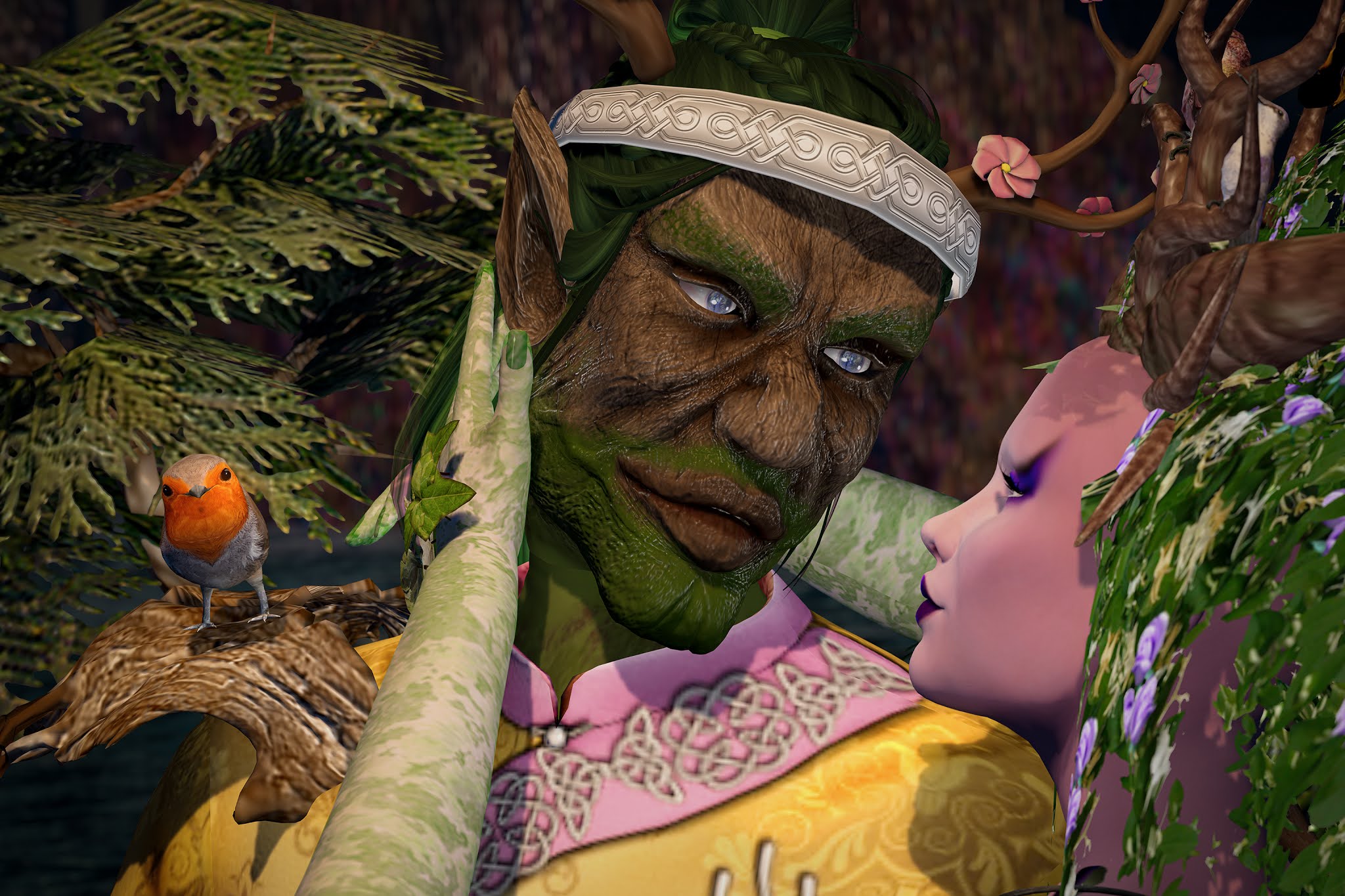
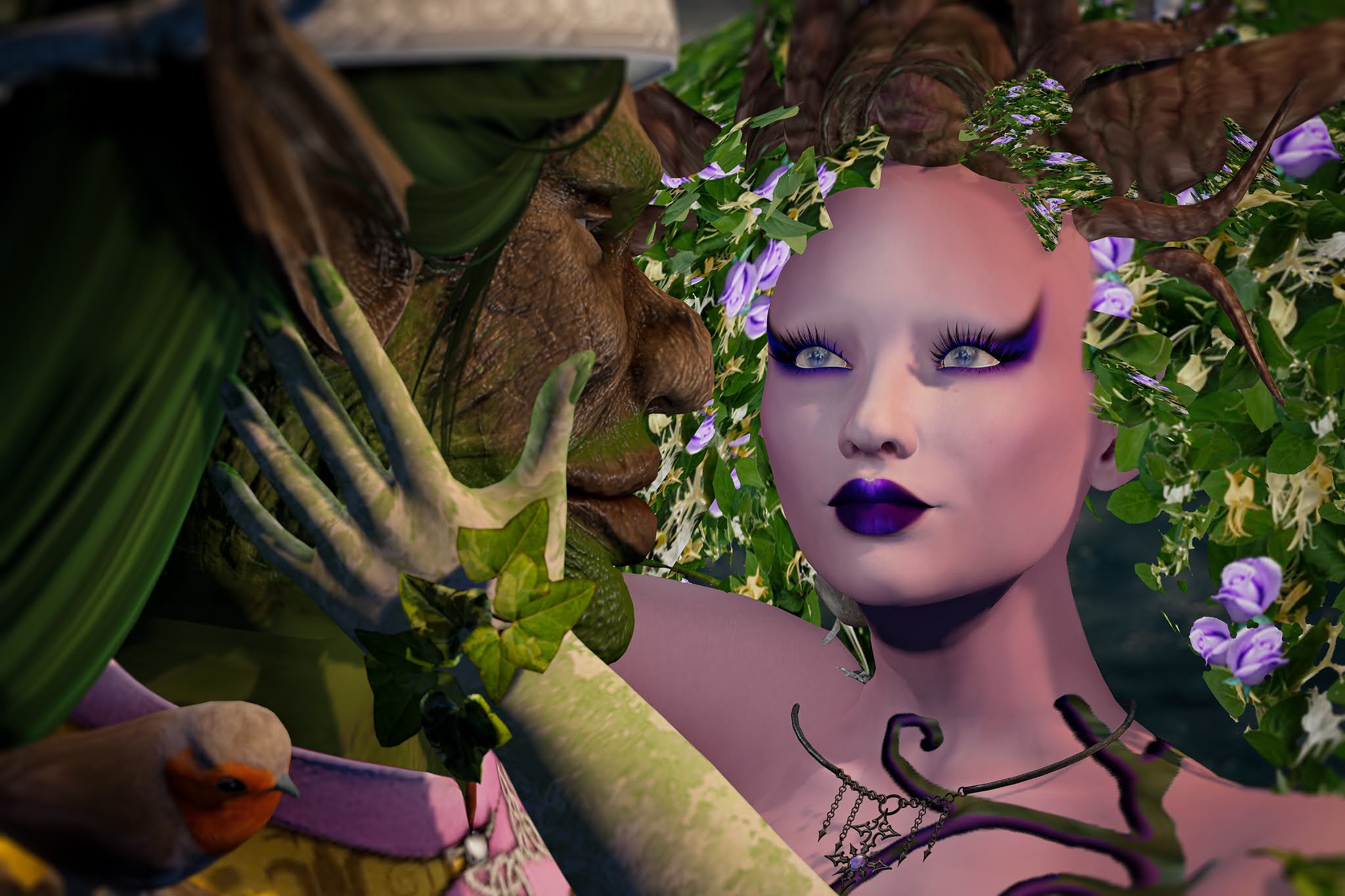
Read the second chapter of Neo Chronicles of Adair on the official Fantasy Faire blog to discover the treasures awaiting you at this year's Fantasy Faire Quest: The Language of Birds!
Many thanks to Aznana Shieldmaiden for working together with me on this shoot. ♥
Photo taken at Fairelands Junction, created by Saiyge Lotus.
Cruising ship with the skyline as backdrop
Hongkong is a former colony of Great Britain
View of the towering Hongkong Finance Center
Seen from the boardwalk near Tsim Sha Tui.
Currency - Hongkong Dollar (HKD)
Languages - English and Chinese
Major religions - Buddhism, Taoism & Christianity
www.youtube.com/watch?v=V-PxJFoohtc
So I finally got around to doing an image of my own character from the coronation of King Saefiraen event.
Ilirra, Little Tree's scathach fae True Form, all gussied up. Little Tree is of course played by myself, Cedar Ashland, and is a roleplay character at Convergence: The Lost City.
visible items worn:
hair: nani // cora hair_(fit) // variety
head piece: *LODE* Head Accessory - Olivia [ice]
face accessories: {Limerence} Mermaid facegems
dress: >glYph< Aurora Dress Iceblue *Maitreya Lara*
shoulder pieces: ERSCH - Crystalls Gacha Body Crystalls 10
misc. accessories: .aisling. Diane Style 3 - Fitted [Size 2]
pose: SLC SS Pose Coastline Point3 (13m) by Body Language Sweet Lovely Cute
Mount Merapi, Gunung Merapi in Indonesian language, is a conical volcano located on the border between Central Java and Yogyakarta, Indonesia.
It is the most active volcano in Indonesia and has erupted regularly since 1548. Its name means Mountain of Fire. It is very close to the city of Yogyakarta, and thousands of people live on the flanks of the volcano.
Although smoke can be seen emerging from the mountain top at least 300 days a year, several eruptions have caused fatalities. Hot gas from a large explosion killed 43 people in 1994, mostly in the town of Muntilan, west of the volcano. Another large eruption occurred in 2006, shortly before the Yogyakarta earthquake. In light of the hazards that Merapi poses to populated areas, it has been designated as one of the Decade Volcanoes.
In April 2006, increased seismicity at more regular intervals and a detected bulge in the volcano's cone indicated that fresh eruptions were imminent. Authorities put the volcano's neighboring villages on high alert and local residents prepared for a likely evacuation. On April 19 smoke from the crater reached a height of 400 metres, compared to 75 metres the previous day. On April 23, after nine surface tremors and some 156 multifaced quakes signalled movements of magma, some 600 elderly and infant residents of the slopes were evacuated.
By early May, active lava flows had begun. On May 11, with lava flow beginning to be constant, some 17,000 people were ordered to be evacuated from the area and on May 13, Indonesian authorities raised the alert status to the highest level, ordering the immediate evacuation of all residents on the mountain. Many villagers defied the dangers posed by the volcano and returned to their villages, fearing that their livestock and crops would be vulnerable to theft. Activity calmed by the middle of May.
On May 27, a 6.2 magnitude earthquake struck roughly 30 miles southwest of Merapi, killing at least 5,000 and leaving at least 200,000 people homeless in the Yogyakarta region, heightening fears that Merapi will blow The quake did not appear to be a long-period oscillation, a seismic disturbance class that is increasingly associated with major volcanic eruptions. A further 11,000 villagers were evacuated on June 6 as lava and superheated clouds of gas poured repeatedly down its upper slopes. The pyroclastic flows are known locally as wedhus gembel (Javanese for shaggy goat).
We waited for a long-time watching Mom resting near the jackal den. The little ones were hidden underground. After quite a while we could see Dad coming from a distance away. Mom didn’t see him until he got close and the greeting he received was worth the wait. She ran for him, showing with body language and licks just how happy she was to see him. He accepted the love with aloof dignity! (Black-backed Jackal – Lupulella mesomelas) (Sony a1, 400mm f/2.8 with a 1.4 extender for 560mm @ f/4, 1/1250 second, ISO 1600)
A macro view of a metal ruler showing millimeters and 32nds of an inch.
Technical info:
The scene was illuminated by two LED light panels placed at 4- and 7-o'clock.
Lens: reverse-mounted Nikon EL - Nikkor 50mm f2.8 attached to bellows extended to 75mm.
到个時揭个旗無根就無旗
從來盲識有過真正個自家根
在海風強烈吹來吹去島嶼
畀外來文化連根掘挖
移上移下
根 尋唔到地下水脈
釘唔下自家真正根
祖公傳下一句話
到時就揭旗
「母語文字化」
就係恩兜客家根
「我寫我口」
就係全地球流動地下水脈
Six Aboriginal language groups are the traditional owners of the Greater Blue Mountains World Heritage Area:
Darug.
Gundungurra.
Wanaruah.
Wiradjuri.
Darkinjung.
Tharawal.
I acknowledge the Traditional Custodians of the land on which I work and live, and recognise their continuing connection to land, water and community. I pay respect to Elders past, present and emerging.
On a rainy, misty afternoon, my youngest fella, Rylan and I decided to head out to test some new photo gear we had purchased. The conditions were not ideal, but with the greatly appreciated bout of rain that was falling, the opportunity was there to capture some decent water flow!
I had heard of a place named Water Nymph Dell, which seemed quite photogenic so off we went in search of water Nymphs!!
There are two entry points to the Dell, we choose the Glenview Rd Wentworth Falls entry to the north. Heading down took us around 20-25 minutes on a steep decline.
It’s a beautiful spot with a lovely rainforest feel. If you want to see the Dell at it’s finest, one needs to visit after heavy rain and you’ll see the water flowing at its best. The rocks here are all covered in beautiful moss, and the stream weaves in interesting twists and turns amongst tree-roots and fallen trunks.
The other waterfall we shot was the ever popular Empress Falls, at Wentworth Falls, starting at the Conservation Hut. This was to be my first time in actually photographing this picturesque bundle of tumbling turbulence. Empress was quite full and with mist and rain greeting us, made for some challenging captures.
Judging by the common names in various languages -Tjiftjaf, Chiffchaff, Zilpzalp - Phylloscopus collybita is not the most versatile singer in the business LOL
October = LISTOPAD in the Croatian language means 'the month of falling leaves'
[LIST: 'leaf' + PAD: 'fall' = LISTOPAD: 'leaf-fall'].
The month of October was also called LISTOPAD in the old Macedonian (Листопад)
as well as old Bulgarian (Листопад). The month's name LISTOPAD exists or existed
in several other Slavic languages: Polish (Listopad), Czech (Listopad), old Slovenian (Listopad), Ukrainian (Листопад), and Byelarusian (Листопад). However in the latter
five languages the term LISTOPAD refers to the month of November. This is probably
due to differences in climate.
On the other hand, October is called "VINOTOK" [VINO: 'wine' + TOK: 'flow' = "the wine flowing month"] in the archaic Slovenian language, "ZHOVTEN" [ZHOVTIY: 'yellow' color = month when leaves turn yellow] in Ukrainian (Жовтень), and "KASTRYCHNIK" [KOSTER: 'bonfire' = month when leaves turn colour of fire] in Byelarusian (Кастрычнiк). These two languages call October the "mud month" - Finnish (Lokakuu) and Carelian (Ligakuu).