Sponsored images from 
View allAll Photos Tagged published
You can also find me on Instagram: tekapa_pictures
...
#Frankfurt#Germany#City#urban#cityphotography#urbanphotography#cityexplorer#exploringthecity#urbanexplorer#street#streetphotography#streetshot#blackandwhitephotography#blackandwhite#bw#bnw#blacknwhite#blackandwhitephoto#bwlover#bwlovers#tekapapics
I am very excited to inform you my photo "Violin" is published in the winter issue of the "Photo News" Magazine. This is my first publication. Above is the page from the electronic edition of the magazine. The flickr group of the magazine can be found over here, if you would want to check it out.
I would like to thank you the Photo News Editor for giving me the opportunity to be the part of this wonderful magazine. I would like to thank you all of you for constant support of my work. Thank you!
"She relaxes after she feeds. You can actually talk to her."
Where does the story go from here?
She comes, the room temperature drops, and I am paralyzed. I can only watch.
More here:
More red and black photos here:
SN/NC: Diospyros kaki, Ebenaceae Family
Diospyros kaki is the most widely cultivated species of the genus Diospyros. Although its first published botanical description was not until 1780, the kaki is among the oldest plants in cultivation, known for its use in China for more than 2000 years. In some rural Chinese communities, the kaki fruit is seen as having a great mystical power that can be harnessed to solve headaches, back pains and foot ache.
The persimmon (kaki) is a sweet, slightly tangy fruit with a soft to occasionally fibrous texture. This species, native to China, is deciduous, with broad, stiff leaves. Cultivation extended first to other parts of East Asia, including Japan where it is very popular. It was later introduced to California and southern Europe in the 19th century, to Brazil in the 1890s, and numerous cultivars have been selected. A variety is Diospyros kaki var. sylvestris Makino. When ripe, this fruit comprises thick pulpy jelly encased in a waxy thin-skinned shell.
In many cultivars, known as the astringent varieties, the fruit has a high proanthocyanidin-type tannin content which makes the immature fruit astringent and bitter. The tannin levels are reduced as the fruit matures. The fruit of those cultivars is not edible in its crisp, firm state; it tastes best when allowed to rest and soften after harvest. It has a soft jelly-like consistency and is best eaten with a spoon. The Japanese 'Hachiya' is a widely grown astringent cultivar. Other cultivars, such as 'Fuyu', do not contain tannins when firm. Those can be eaten like an apple or can be allowed to go to any stage of ripeness, including to the jelly-like stage. These non-astringent varieties are however considered to have a less complex flavor.
"Sharon Fruit" (named originally after Sharon plain in Israel) is a trade name for non-astringent D. kaki fruit.
El caqui o palosanto, una especie arbórea de la familia de las Ebenáceas, originario de Asia. Su fruto, el caqui o pérsimo, es una baya comestible de sabor muy dulce. Diospyros kaki es la especie más cultivada del género Diospyros. Aunque su primera descripción botánica publicada no fue hasta 1780, el kaki se encuentra entre las plantas más antiguas en cultivo, conocido por su uso en China durante más de 2000 años. En algunas comunidades rurales chinas, se considera que la fruta kaki tiene un gran poder místico que puede aprovecharse para resolver dolores de cabeza, de espalda y de pies.
El caqui (kaki) es una fruta dulce, ligeramente ácida, con una textura suave a ocasionalmente fibrosa. Esta especie, originaria de China, es caducifolia, con hojas anchas y rígidas. El cultivo se extendió primero a otras partes del este de Asia, incluido Japón, donde es muy popular. Más tarde se introdujo en California y el sur de Europa en el siglo XIX, en Brasil en la década de 1890, y se han seleccionado numerosos cultivares. Una variedad es Diospyros kaki var. Sylvestris Makino. Cuando está madura, esta fruta se compone de gelatina espesa y carnosa encerrada en una cáscara cerosa de piel fina.
En muchos cultivares, conocidos como variedades astringentes, la fruta tiene un alto contenido de taninos de tipo proantocianidina que hace que la fruta inmadura sea astringente y amarga. Los niveles de taninos se reducen a medida que la fruta madura. El fruto de esos cultivares no es comestible en su estado crujiente y firme; sabe mejor cuando se deja reposar y ablandar después de la cosecha. Tiene una consistencia gelatinosa suave y se come mejor con una cuchara. El 'Hachiya' japonés es un cultivar astringente ampliamente cultivado. Otros cultivares, como 'Fuyu', no contienen taninos cuando están firmes. Se pueden comer como una manzana o se puede permitir que pasen a cualquier etapa de madurez, incluida la etapa gelatinosa. Sin embargo, se considera que estas variedades no astringentes tienen un sabor menos complejo.
"Sharon Fruit" (llamado originalmente por la llanura de Sharon en Israel) es un nombre comercial para la fruta D. kaki no astringente.
O caquizeiro é uma árvore de origem asiática, dióica, decídua e mundialmente apreciada por seus frutos doces e saborosos, os caquis. O próprio nome botânico Diospyros, já dá uma boa idéia de que estamos falando de uma fruta deliciosa. A palavra vem do grego antigo e significa "alimento de Zeus", uma alusão ao divino sabor dessa fruta. Em Portugal, é conhecida por dióspiro, e a árvore, por diospireiro. Seu tronco é tortuoso e a casca bastante rugosa, com raízes profundas e fortes. Se deixada a crescer livremente, atinge 15 metros de altura. No entanto, em pomares, sejam comerciais ou domésticos, não convém que se deixe crescer tanto, o que dificulta a colheita. As folhas são largas, lanceoladas e rígidas, e apresentam um verde terroso mais claro ou mais escuro, que adquire belas tonalidades de bronze e vermelho durante o outono, logo antes de caírem. As flores são pequenas, de cor creme ou rosadas, tetrâmeras e podem ser femininas, masculinas ou hermafroditas. A floração ocorre na primavera e pode acontecer de a expressão sexual de uma árvore se alterar a cada ano, com uma proporção maior de flores masculinas ou hermafroditas por exemplo.
Os frutos são bagas, e podem apresentar sementes, quando polinizados, ou ausência total de sementes, quando formados por partenocarpia. Eles podem ser globosos, ovóides ou achatados, amarelos a avermelhados, de casca fina e polpa firme e opaca, ou mole, gelatinosa e translúcida. Os frutos tornam-se maduros no final do verão e início do outono, mas algumas colheitas podem se estender um pouco mais, de acordo com a cultivar.
Diospyros kaki è la specie più coltivata del genere Diospyros. Sebbene la sua prima descrizione botanica pubblicata non risalga al 1780, il kaki è tra le piante più antiche in coltivazione, nota per il suo uso in Cina da oltre 2000 anni. In alcune comunità rurali cinesi, il frutto del kaki è visto come dotato di un grande potere mistico che può essere sfruttato per risolvere mal di testa, mal di schiena e dolori ai piedi.
Il cachi (kaki) è un frutto dolce e leggermente piccante con una consistenza da morbida a occasionalmente fibrosa. Questa specie, originaria della Cina, è decidua, con foglie larghe e rigide. La coltivazione si è estesa prima ad altre parti dell'Asia orientale, incluso il Giappone, dove è molto popolare. Successivamente è stato introdotto in California e nell'Europa meridionale nel 19° secolo, in Brasile negli anni '90 dell'Ottocento e sono state selezionate numerose cultivar. Una varietà è Diospyros kaki var. sylvestris Machino. Quando è maturo, questo frutto comprende una gelatina densa e polposa racchiusa in un guscio ceroso dalla buccia sottile.
In molte cultivar, note come varietà astringenti, il frutto ha un alto contenuto di tannino di tipo proantocianidina che rende il frutto immaturo astringente e amaro. I livelli di tannino si riducono con la maturazione del frutto. Il frutto di quelle cultivar non è commestibile nel suo stato croccante e sodo; ha un sapore migliore quando viene lasciato riposare e ammorbidire dopo la raccolta. Ha una consistenza morbida e gelatinosa ed è meglio mangiarlo con un cucchiaio. La "Hachiya" giapponese è una cultivar astringente ampiamente coltivata. Altre cultivar, come "Fuyu", non contengono tannini quando sono sodi. Quelli possono essere mangiati come una mela o possono essere lasciati andare a qualsiasi stadio di maturazione, incluso lo stadio gelatinoso. Si ritiene tuttavia che queste varietà non astringenti abbiano un sapore meno complesso.
"Sharon Fruit" (dal nome originariamente della pianura di Sharon in Israele) è un nome commerciale per il frutto D. kaki non astringente.
Diospyros kaki ist die am weitesten verbreitete Art der Gattung Diospyros. Obwohl die erste veröffentlichte botanische Beschreibung erst 1780 erfolgte, gehört die Kaki zu den ältesten Kulturpflanzen und ist seit mehr als 2000 Jahren für ihre Verwendung in China bekannt. In einigen ländlichen chinesischen Gemeinden wird der Kaki-Frucht eine große mystische Kraft zugeschrieben, die genutzt werden kann, um Kopfschmerzen, Rückenschmerzen und Fußschmerzen zu lindern.
Die Kaki (Kaki) ist eine süße, leicht würzige Frucht mit einer weichen bis gelegentlich faserigen Textur. Diese in China beheimatete Art ist laubabwerfend mit breiten, steifen Blättern. Der Anbau erstreckte sich zunächst auf andere Teile Ostasiens, einschließlich Japan, wo er sehr beliebt ist. Später wurde sie im 19. Jahrhundert nach Kalifornien und Südeuropa eingeführt, in den 1890er Jahren nach Brasilien, und es wurden zahlreiche Sorten ausgewählt. Eine Sorte ist Diospyros kaki var. Sylvestris Makino. Wenn sie reif ist, besteht diese Frucht aus dickem, fleischigem Gelee, das von einer wachsartigen, dünnhäutigen Schale umhüllt ist.
In vielen Sorten, die als adstringierende Sorten bekannt sind, hat die Frucht einen hohen Tanningehalt vom Proanthocyanidin-Typ, der die unreife Frucht adstringierend und bitter macht. Mit zunehmender Fruchtreife nimmt der Tanningehalt ab. Die Früchte dieser Sorten sind in ihrem knackigen, festen Zustand nicht essbar; es schmeckt am besten, wenn es nach der Ernte ruhen und weich werden kann. Es hat eine weiche geleeartige Konsistenz und wird am besten mit einem Löffel gegessen. Die japanische 'Hachiya' ist eine weit verbreitete adstringierende Sorte. Andere Sorten wie 'Fuyu' enthalten keine Tannine, wenn sie fest sind. Diese können wie ein Apfel gegessen werden oder können jedes Reifestadium erreichen, einschließlich des geleeartigen Stadiums. Diese nicht adstringierenden Sorten gelten jedoch als weniger komplex im Geschmack.
"Sharon Fruit" (ursprünglich nach Sharon Plain in Israel benannt) ist ein Handelsname für nicht-adstringierende D. kaki-Früchte.
Diospyros kaki is de meest gekweekte soort van het geslacht Diospyros. Hoewel de eerste gepubliceerde botanische beschrijving pas in 1780 werd gepubliceerd, is de kaki een van de oudste planten in de teelt en staat hij al meer dan 2000 jaar bekend om zijn gebruik in China. In sommige landelijke Chinese gemeenschappen wordt de kaki-vrucht gezien als een grote mystieke kracht die kan worden aangewend om hoofdpijn, rugpijn en voetpijn op te lossen.
De persimmon (kaki) is een zoete, licht pittige vrucht met een zachte tot soms vezelige textuur. Deze soort, afkomstig uit China, is bladverliezend, met brede, stijve bladeren. De teelt breidde zich eerst uit naar andere delen van Oost-Azië, waaronder Japan, waar het erg populair is. Het werd later geïntroduceerd in Californië en Zuid-Europa in de 19e eeuw, in Brazilië in de jaren 1890, en er zijn talloze cultivars geselecteerd. Een variëteit is Diospyros kaki var. Sylvestris Makino. Wanneer rijp, bestaat deze vrucht uit dikke, vlezige gelei omhuld door een wasachtige, dunne schil.
In veel cultivars, bekend als de samentrekkende variëteiten, heeft de vrucht een hoog tanninegehalte van het proanthocyanidine-type, wat de onrijpe vrucht samentrekkend en bitter maakt. Het tanninegehalte neemt af naarmate het fruit rijpt. De vrucht van die cultivars is niet eetbaar in zijn knapperige, stevige staat; het smaakt het lekkerst als het na de oogst rust en zacht wordt. Het heeft een zachte geleiachtige consistentie en kan het beste met een lepel worden gegeten. De Japanse 'Hachiya' is een veel gekweekte samentrekkende cultivar. Andere cultivars, zoals 'Fuyu', bevatten geen tannines als ze stevig zijn. Die kunnen als een appel worden gegeten of kunnen naar elk stadium van rijpheid gaan, inclusief het gelei-achtige stadium. Deze niet-samentrekkende variëteiten worden echter beschouwd als een minder complexe smaak.
"Sharon Fruit" (oorspronkelijk genoemd naar de Sharon-vlakte in Israël) is een handelsnaam voor niet-samentrekkend D. kaki-fruit.
Diospyros kaki est l'espèce la plus cultivée du genre Diospyros. Bien que sa première description botanique publiée ne remonte qu'en 1780, le kaki est l'une des plus anciennes plantes cultivées, connue pour son utilisation en Chine depuis plus de 2000 ans. Dans certaines communautés rurales chinoises, le kaki est considéré comme ayant un grand pouvoir mystique qui peut être exploité pour résoudre les maux de tête, les maux de dos et les douleurs aux pieds.
Le kaki (kaki) est un fruit sucré légèrement acidulé avec une texture douce à parfois fibreuse. Cette espèce, originaire de Chine, est caduque, aux feuilles larges et raides. La culture s'est d'abord étendue à d'autres parties de l'Asie de l'Est, notamment au Japon où elle est très populaire. Il a ensuite été introduit en Californie et en Europe du Sud au XIXe siècle, au Brésil dans les années 1890, et de nombreux cultivars ont été sélectionnés. Une variété est Diospyros kaki var. Sylvestris Makino. À maturité, ce fruit comprend une épaisse gelée pulpeuse enfermée dans une coquille cireuse à peau fine.
Dans de nombreux cultivars, connus sous le nom de variétés astringentes, le fruit a une teneur élevée en tanin de type proanthocyanidine qui rend le fruit immature astringent et amer. Les niveaux de tanin sont réduits à mesure que le fruit mûrit. Le fruit de ces cultivars n'est pas comestible dans son état croquant et ferme; il a meilleur goût lorsqu'on le laisse reposer et ramollir après la récolte. Il a une consistance gélatineuse et se mange mieux avec une cuillère. Le 'Hachiya' japonais est un cultivar astringent largement cultivé. D'autres cultivars, comme 'Fuyu', ne contiennent pas de tanins lorsqu'ils sont fermes. Ceux-ci peuvent être consommés comme une pomme ou peuvent atteindre n'importe quel stade de maturité, y compris le stade de la gelée. Ces variétés non astringentes sont cependant considérées comme ayant une saveur moins complexe.
"Sharon Fruit" (nommé à l'origine d'après la plaine de Sharon en Israël) est un nom commercial pour le fruit D. kaki non astringent.
Ο Διόσπυρος είναι το πιο ευρέως καλλιεργούμενο είδος του γένους Διόσπυρος. Αν και η πρώτη δημοσιευμένη βοτανική περιγραφή του έγινε μόλις το 1780, το kaki είναι ένα από τα παλαιότερα φυτά σε καλλιέργεια, γνωστό για τη χρήση του στην Κίνα για περισσότερα από 2000 χρόνια. Σε ορισμένες αγροτικές κινεζικές κοινότητες, το φρούτο kaki θεωρείται ότι έχει μια μεγάλη μυστικιστική δύναμη που μπορεί να αξιοποιηθεί για να λύσει πονοκεφάλους, πόνους στην πλάτη και πόνους στα πόδια.
Ο λωτός (κακί) είναι ένα γλυκό, ελαφρώς πικάντικο φρούτο με απαλή έως περιστασιακά ινώδη υφή. Αυτό το είδος, εγγενές στην Κίνα, είναι φυλλοβόλο, με πλατιά, δύσκαμπτα φύλλα. Η καλλιέργεια επεκτάθηκε πρώτα σε άλλα μέρη της Ανατολικής Ασίας, συμπεριλαμβανομένης της Ιαπωνίας όπου είναι πολύ δημοφιλής. Αργότερα εισήχθη στην Καλιφόρνια και τη νότια Ευρώπη τον 19ο αιώνα, στη Βραζιλία τη δεκαετία του 1890 και έχουν επιλεγεί πολλές ποικιλίες. Μια ποικιλία είναι ο Διόσπυρος κακή βάρ. συλβεστρης Μακινο. Όταν είναι ώριμο, αυτό το φρούτο αποτελείται από παχύρρευστο πολτό ζελέ που περικλείεται σε ένα κέρινο κέλυφος με λεπτό δέρμα.
Σε πολλές ποικιλίες, γνωστές ως στυπτικές ποικιλίες, ο καρπός έχει υψηλή περιεκτικότητα σε τανίνες τύπου προανθοκυανιδίνης που κάνει τον ανώριμο καρπό στυπτικό και πικρό. Τα επίπεδα τανίνης μειώνονται καθώς ο καρπός ωριμάζει. Ο καρπός αυτών των ποικιλιών δεν είναι βρώσιμος στην τραγανή, σταθερή του κατάσταση. έχει καλύτερη γεύση όταν αφήνεται να ξεκουραστεί και να μαλακώσει μετά τη συγκομιδή. Έχει μια μαλακή υφή σαν ζελέ και τρώγεται καλύτερα με ένα κουτάλι. Η ιαπωνική «Hachiya» είναι μια ευρέως αναπτυσσόμενη στυπτική ποικιλία. Άλλες ποικιλίες, όπως το «Fuyu», δεν περιέχουν τανίνες όταν είναι σταθερές. Αυτά μπορούν να καταναλωθούν σαν μήλο ή μπορούν να περάσουν σε οποιοδήποτε στάδιο ωρίμανσης, συμπεριλαμβανομένου του σταδίου που μοιάζει με ζελέ. Αυτές οι μη στυπτικές ποικιλίες ωστόσο θεωρείται ότι έχουν λιγότερο περίπλοκη γεύση.
Το "Sharon Fruit" (ονομάστηκε αρχικά από την πεδιάδα Sharon στο Ισραήλ) είναι μια εμπορική ονομασία για το μη στυπτικό φρούτο D. kaki.
Diospyros kaki هو أكثر الأنواع المزروعة على نطاق واسع من جنس Diospyros. على الرغم من أن أول وصف نباتي منشور لها لم يكن حتى عام 1780 ، إلا أن الكاكي يعد من بين أقدم النباتات في الزراعة ، والمعروف باستخدامه في الصين لأكثر من 2000 عام. في بعض المجتمعات الريفية الصينية ، يُنظر إلى فاكهة الكاكي على أنها تتمتع بقوة صوفية عظيمة يمكن تسخيرها لعلاج الصداع وآلام الظهر وآلام القدم.
البرسيمون (كاكي) هو فاكهة حلوة ، منعشة قليلاً ذات ملمس ناعم إلى ليفي في بعض الأحيان. هذا النوع ، موطنه الصين ، نفضي ، بأوراق عريضة وقاسية. امتدت الزراعة أولاً إلى أجزاء أخرى من شرق آسيا ، بما في ذلك اليابان حيث تحظى بشعبية كبيرة. تم تقديمه لاحقًا إلى كاليفورنيا وجنوب أوروبا في القرن التاسع عشر ، إلى البرازيل في تسعينيات القرن التاسع عشر ، وتم اختيار العديد من الأصناف. مجموعة متنوعة هي ديوسبيروس كاكي فار. سيلفستريس ماكينو. عندما تنضج ، تتكون هذه الفاكهة من هلام لب سميك مغطى بقشرة شمعية رقيقة القشرة.
في العديد من الأصناف ، المعروفة باسم الأصناف القابضة ، تحتوي الفاكهة على نسبة عالية من التانين من نوع البروانثوسيانيدين مما يجعل الفاكهة غير الناضجة قابضة ومريرة. تنخفض مستويات التانين مع نضوج الثمار. ثمرة تلك الأصناف ليست صالحة للأكل في حالتها الهشة والثابتة ؛ يكون طعمه أفضل عندما يُسمح له بالراحة واللين بعد الحصاد. قوامه ناعم يشبه الهلام ويفضل تناوله بالملعقة. يُعد "Hachiya" الياباني أحد الصنف القابض للنمو على نطاق واسع. الأصناف الأخرى ، مثل "فويو" ، لا تحتوي على العفص عندما تكون صلبة. يمكن أن تؤكل مثل التفاح أو يمكن السماح لها بالذهاب إلى أي مرحلة من النضج ، بما في ذلك المرحلة التي تشبه الهلام. ومع ذلك ، تعتبر هذه الأصناف غير القابضة ذات نكهة أقل تعقيدًا.
"شارون فروت" (سميت في الأصل على اسم سهل شارون في إسرائيل) هو اسم تجاري لفاكهة D. kaki غير القابض.
Diospyros kakiは、Diospyros属の中で最も広く栽培されている種です。最初に発表された植物の説明は1780年までではありませんでしたが、カキは栽培で最も古い植物の1つであり、2000年以上中国で使用されていることで知られています。一部の中国の田舎のコミュニティでは、カキの実は、頭痛、腰痛、足の痛みを解決するために利用できる大きな神秘的な力を持っていると見られています。
柿(柿)は甘くて少しピリッとした果実で、やわらかいものから時々繊維質の食感があります。この種は中国原産で、落葉性で、広くて硬い葉を持っています。栽培は、それが非常に人気のある日本を含む東アジアの他の地域に最初に広がりました。その後、19世紀にカリフォルニアと南ヨーロッパに、1890年代にブラジルに導入され、数多くの品種が選ばれました。品種はカキノキ変種です。シルベストリス牧野。熟すと、この果実は、ワックス状の薄い皮の殻に包まれた厚い果肉のあるゼリーで構成されます。
収斂性品種として知られる多くの栽培品種では、果実はプロアントシアニジンタイプのタンニン含有量が高く、未熟な果実を収斂性で苦いものにします。果実が成熟するにつれてタンニンレベルは低下します。それらの栽培品種の果実は、そのさわやかな、しっかりした状態では食用ではありません。収穫後に休ませて柔らかくすると、最高の味がします。やわらかいゼリーのような粘りがあり、スプーンで食べるのが一番です。日本の「八谷」は、広く栽培されている収斂性の品種です。 「ふゆ」のような他の品種は、しっかりしているときはタンニンを含んでいません。それらはリンゴのように食べることができます、またはゼリーのような段階を含む熟成の任意の段階に行くことができます。しかし、これらの非収斂性の品種は、それほど複雑ではないと考えられています。
「シャロンフルーツ」(イスラエルのシャロン平野にちなんで名付けられました)は、収斂性のないD.カキフルーツの商品名です。
I submitted this picture to to the Readers' Pictures section of a short-lived magazine named Trains and Railways and it was published in early 1974. The magazine was edited by P.B.Whitehouse and John Adams, and it would be nice to think that one of those eminent personalities had personally selected my picture.
Published On Nat Geo Daily Dozen June 7th 2013
yourshot.nationalgeographic.com/daily-dozen/2013-06-07/
Traveling through Hindukush mountain range of Baltistan , Pakistan i find this open air school in tough winter, students are studying in tough weather conditions without proper cloths and sweaters due to poverty in region.Local people are mostly formers and didn't afford the basics of life
Gulaghmoli , Ghizar , Gilgit-Baltistan
Today I was having a quick look at my dad's newspaper ("TA NEA" which if I'm not wrong is the largest circulation daily newspaper in Greece) and my eyes stopped on a photo that looked quite familiar. The photo - which you can see here: i88.photobucket.com/albums/k186/alexring_bucket/AthensBik...
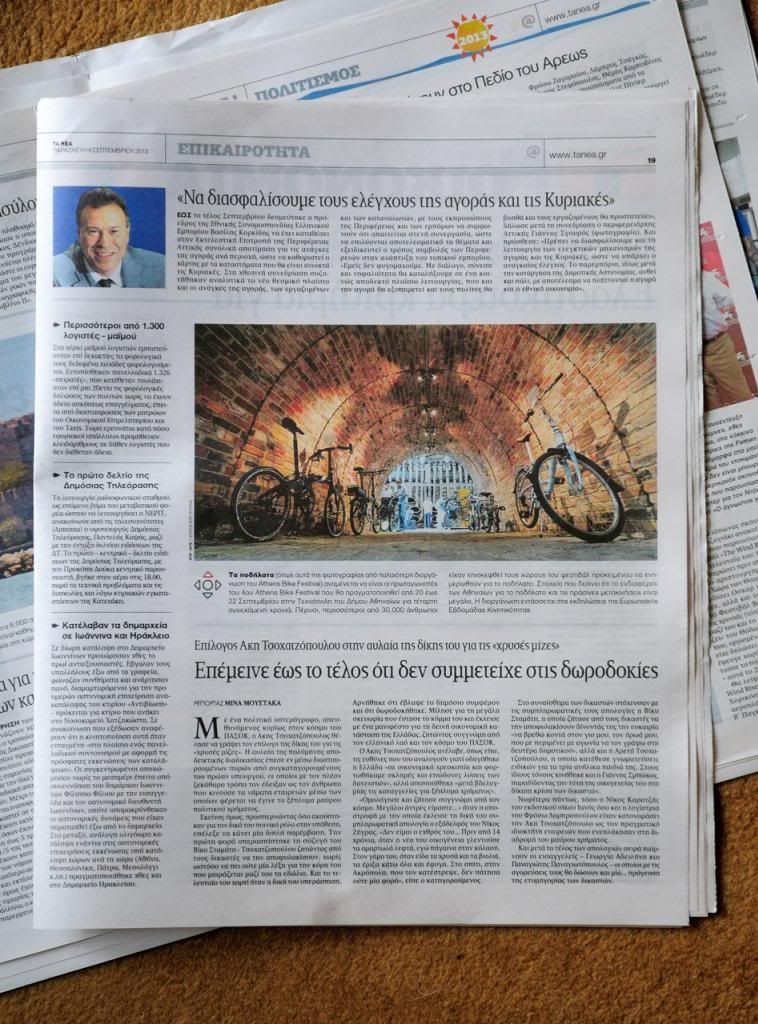
was from last year's Athens Bike Festival, (where I happened to be the official photographer) and it certainly looked a lot like one I had shot back then.
I looked at the photo credits and just saw the name of the organizers (which is not strange as in many cases you sell them the photos and they use them at wish without having to mention the photographer as you sell them all your rights too)
Mostly out of curiosity I checked my archives and saw that it was indeed a photo of mine, the one you see above. I can say that it feels nice to be published in such a popular media, even if no-one knows it's yours...
Btw I have already been contacted to shoot this years Bike Festival (starting at 20 Sept.) Who knows, maybe I'll see another photo of mine in next year's newspapers...
title.
Live shot 41.
(FUJIFILM GFX50R shot)
Record of shooting.
Date and time. July 7, 2019.
place. live house. Anti-knock. Shinjuku ward. Tokyo. Japan.
the weather. It was raining, but on the first basement floor.
Live time. About 40 minutes.
Remarks.
I don't use a tripod.
I'm shooting alone.
I don't use a flash.
I don't use food.
Copyright. Moth in Lilac. All Rights Reserved. / mothinlilac.com
live house. ANTI KNOCK. Shinjuku ward. Tokyo. Japan. July 7. 2019. shot ... ... 55 / 68
(Today 's picture, it is unpublished.)
Shooting: Editing: Configuration = Mitsushiro “stealaway” Nakagawa.
Moth in Lilac. : twitter.com/Moth_in_Lilac
Ayano : vocal : twitter.com/sfn_ayano
Lisa 13 : guitar : twitter.com/lhjw121315666
NalchaRos : bass : twitter.com/Nalu_chaRos223
You : guitar : twitter.com/you_ogami
M9N : drums : twitter.com/mokuniuka
Management office.
V.I.P. Design Machine : twitter.com/vipdm69
New mini Album. OUT NOW.
Mayve U
www.amazon.co.jp/dp/B07T8XM9RR/ref=cm_sw_em_r_mt_dp_U_XHn...
Images.
Moth in Lilac / Maybe U
Official.
YOUTUBE.
Apple Music.
music.apple.com/jp/album/moth-in-lilac/1441243472
Live schedule.
October 6, 2019. Shibuya. Guilty.
November 1, 2019. Kichijoji. crescendo.
www.kichijoji-crescendo.net/top2013.html
_________________________________
_________________________________
Profile.
In November 2014, we caught the attention of the party selected to undertake the publicity for a mobile phone that changed the face of the world with just a single model, and will conclude a confidentiality agreement with them.
stealaway.cocolog-nifty.com/stealaway/2019/02/2019-profil...
youpic.com/photographer/mitsushironakagawa/
_________________________________
_________________________________
_________________________________
_________________________________
Interviews and novels.
About my book.
I published a book in old days.
At that time, I was uploading my interview on the net on the net.
That Japanese and English.
I will make it public for free.
Details were explained to the Amazon site.
How to write a novel.
How to take pictures.
Distance to the work.
They all have a common item.
I made a sentence about what I felt, and left it.
I hope that my text can be read by many people.
Thank you.
Mitsushiro.
1 Interview in English
「interview_eng.pdf」
stealaway.cocolog-nifty.com/stealaway/2018/08/interviews-...
2 novels. unforgettable 'English version.(This book is Dedicated to the future artist.)
「novel_unforgettable_eng.pdf」
stealaway.cocolog-nifty.com/stealaway/2018/08/interviews-...
3 Interview Japanese version
drive.google.com/file/d/1w5l2hrV5a6lraDiC_Lz2tG_HqatqUCO5...
stealaway.cocolog-nifty.com/stealaway/2018/08/interviews-...
4 novels. unforgettable ' JPN version.
「novel_unforgettable_jpn.pdf」
stealaway.cocolog-nifty.com/stealaway/2018/08/interviews-...
5 A streamlined trajectory. only Japanese.
「streamlined_trajectory.pdf」
stealaway.cocolog-nifty.com/stealaway/2018/08/interviews-...
_________________________________
_________________________________
iBooks. Electronic Publishing. It is free now.
0.about the iBooks.
stealaway.cocolog-nifty.com/stealaway/2017/03/about-digit...
1.unforgettable '(ENG.ver.)(This book is Dedicated to the future artist.)
itunes.apple.com/us/book/unforgettable/id1216576828?ls=1&...
2.unforgettable '(JNP.ver.)(This book is Dedicated to the future artist.)
itunes.apple.com/us/book/unforgettable/id1216584262?ls=1&...
3. Streamlined trajectory.(For Japanese only.)
itunes.apple.com/us/book/%E6%B5%81%E7%B7%9A%E5%BD%A2%E3%8... =11
_________________________________
_________________________________
My Novel >> Unforgettable'
(This book is Dedicated to the future artist.)
Synopsis.
Kei Kitami who aims at university.
A 6 year old older event companion woman. Meet Kaori Uemura on SNS.
The dream of Kaori who has moved to Tokyo.
It is to be a friend of the artist.
The producer of the radio station for that. The existence of Ryo Osawa was necessary.
Live on the radio.Osawa talks to Kaori.
"I have a wife and a child, but I want to see you."
Kei’s classmate Rika Sanzyou who is thinking of him.
She was searching for Kaori.
※ Supplement
I use Google Translate.
Mitsushiro Nakagawa
All Translated by Yumi Ikeda .
images.
U2 - No Line On The Horizon Live in Dublin
www.youtube.com/watch?v=_oKwnkYFsiE&feature=related
Main story
There are two reasons why a person faces the sea.
One, to enjoy a slice of shine in the sea like children bubbling over in the beach.
The other, to brush the dust of memory like an old man who misses old days, staring at the shine
quietly.
Those lead to only one meaning though they do not seem to overlap. It’s a rebirth.
I face myself to change tomorrow, a vague day into something certain.
That is the meaning of a rebirth.
I had a very sweet girlfriend when I was 18.
After she left, I knew the meaning of gentleness for the first time and also a true pain of loss. After
she left, how many times did I depend too much on her, doubt her, envy her and keep on telling lies
until I realized it is love?
I wonder whether a nobody like me could have given something to her who was struggling in the
daily life in those days. Giving something is arrogant conceit. It is nothing but self-satisfaction.
I had been thinking about such a thing.
However, I guess what she saw in me was because I had nothing. That‘s why she tried to see
something in me. Perhaps she found a slight possibility in me, a guy filled with ambiguous, unstable
tomorrow. But I wasted days depending too much on her gentleness.
Now I finally can convey how I felt in those days when we met.
1/9
www.flickr.com/photos/stealaway/24577016535/in/dateposted...
2/9
www.flickr.com/photos/stealaway/24209330259/in/dateposted...
3/9
www.flickr.com/photos/stealaway/23975215274/in/dateposted...
4/9
www.flickr.com/photos/stealaway/24515964952/in/dateposted...
5/9
www.flickr.com/photos/stealaway/24276473749/in/dateposted...
6/9
www.flickr.com/photos/stealaway/24548895082/in/dateposted...
7/9
www.flickr.com/photos/stealaway/24594603711/in/dateposted...
8/9
www.flickr.com/photos/stealaway/24588215562/in/dateposted...
9/9
www.flickr.com/photos/stealaway/24100804163/in/dateposted...
Fin.
images.
U2 - No Line On The Horizon
www.youtube.com/watch?v=_oKwnkYFsiE&feature=related
_________________________________
_________________________________
Title of my book > unforgettable'
Author : Mitsushiro Nakagawa
Out Now.
ISBN978-4-86264-866-2
in Amazon.
www.amazon.co.jp/Unforgettable’-Mitsushiro-Nakagawa/dp/...
_________________________________
_________________________________
The schedule of the next novel.
Still would stand all time. (Unforgettable '2)
(It will not go away forever)
Please give me some more time. That is Japanese.
_________________________________
_________________________________
2020 exhibition.
theme.
So Near, So far.
place. Tokyo Big Site.
Sponsoring. Design festa.
2021.
Date unknown.
DIC Kawamura Memorial Art Museum attached gallery.
place. Sakura City, Chiba Prefecture.
theme.
From that day, forever ...
_________________________________
_________________________________
My Works.
1 www.flickr.com/photos/stealaway/48072442376/in/dateposted...
2 www.flickr.com/photos/stealaway/48078949821/in/dateposted...
3 www.flickr.com/photos/stealaway/48085863356/in/dateposted...
_________________________________
_________________________________
Do you want to hear my voice?
:)
I updated Youtube.
It is only in Japanese.
I explained comments on photos etc.
If your time is permitted, please look.
:)
1
About the composition of the picture posted to Flicker. First type.
2
About the composition of the picture posted to Flicker. Second type.
3
About when I started Fotolog. Architect 's point of view.
4
Why did not you have a camera so far?
5
What is the coolest thing? The photo is as it is.
6
About the current YouTube bar. I also want to tell, I want to leave.
7
About Japanese photographers. Japanese YouTube bar is Pistols.
8
The composition of the photograph is sensibility. Meet the designers in Milan. Two questions.
9
What is a good composition? What is a bad composition?
10
What is the time to point the camera? It is slow if you are looking into the viewfinder or display.
11
Family photos. I can not take pictures with others. The inside of the subject.
12
About YouTube 's photographer. Camera technology etc. Sensibility is polished by reading books.
13
About the Japanese newspaper. A picture of a good newspaper is Reuters. If you continue to look at useless photographs, it will be useless.
14
About Japanese photographers. About the exhibition.
Summary. I wrote a novel etc. What I want to tell the most.
_________________________________
_________________________________
I talked about how to make a work.
It's really long, but I want to leave everything, so please ask. (^ O ^) /
Japanese only.
About work production 1/2
About work production 2/2
1 Photo exhibition up to that point. Did you want to go?
2 Well, what is an exhibition that you want to visit even if you go there?
3 Challenge to exhibit one work every month before opening a solo exhibition at the Harajuku Design Festa.
4 works are materials and silhouettes. Similar to fashion.
5 Who is your favorite artist? What is it? Make it clear.
6 Creating a collage is exactly the same as taking photos. As I wrote in the interview, it is the same as writing a novel.
7 I want to show it to someone, but I do not make a piece to show it. Aim for the work you want to decorate your own room as in the photo.
8 What is copycat? Nowadays, it is suspected to be beaten. There is something called Mimesis?
kotobank.jp/word/Mimesis-139464
9 What is Individuality? What is originality?
It is a flow of.
If you have time, please listen.
:)
www.youtube.com/user/mitsushiro/
_________________________________
_________________________________
Miles Davis sheet 1955-1976.
stealaway.cocolog-nifty.com/stealaway/2019/05/post-70842e...
_________________________________
_________________________________
flickr.
www.flickr.com/photos/stealaway/
_________________________________
_________________________________
YouTube.
www.youtube.com/user/mitsushiro/
_________________________________
_________________________________
instagram.
www.instagram.com/mitsushiro_nakagawa/
_________________________________
_________________________________
Pinterest.
_________________________________
_________________________________
YouPic
youpic.com/photographer/mitsushironakagawa/
_________________________________
_________________________________
fotolog
_________________________________
_________________________________
twitter.
_________________________________
_________________________________
facebook.
www.facebook.com/mitsushiro.nakagawa
_________________________________
_________________________________
My statistics. (As of May 16, 2019)
stealaway.cocolog-nifty.com/stealaway/2019/05/post-199d28...
_________________________________
_________________________________
Japanese is the following.
Title of my book unforgettable' Mitsushiro Nakagawa Out Now. ISBN978-4-86264-866-2
_________________________________
_________________________________
#新宿 #Manhattan #USA #London #UK #Paris #アンチノック #Milan #Italy #LUMIX #G3 #FUJIFILM #MothinLilac #MIL #GFX50R #B&W #Mono #Chiba #Japan #Exhibition #Flickr #YOUPIC #gallery #Camera #collage #Subway #street #Novel #Publishing #Mitsushiro #Nakagawa #artist #NY #Interview #Photograph #picture #How #take #write #novel #display #art #future #designfesta #Kawamura #Memorial #DIC #Museum #Fineart
For insta
#新宿 #Manhattan #London #Paris #アンチノック #Milan #MothinLilac #LUMIX #MIL #FUJIFILM #GFX50R #B&W #Fineart #Japan #Exhibition #Flickr #YOUPIC #Camera #Subway #street #Novel #Publishing #Mitsushiro #artist #Photograph #picture #novel #Fineart #future #designfesta
For twitter
#NY #London #Paris #Milan #LUMIX #FUJIFILM #新宿 #B&W #Exhibition #Flickr #Camera #street #MIL #MothinLilac #Mitsushiro #artist #アンチノック #designfesta #Fineart
タイトル。
Live shot 41.
( FUJIFILM GFX50R shot )
撮影の記録。
日時。2019年7月7日。
場所。ライブハウス。アンチノック。新宿区。東京都。日本。
天候。雨だったけど、地下一階。
ライブの時間。約40分。
備考。
三脚は使っていません。
撮影は一人で行っています。
フラッシュも使っていません。
フードも使っていません。
Copyright. Moth in Lilac. All Rights Reserved. / mothinlilac.com
ライブハウス。アンチノック。新宿区。東京。日本。 7月7日。2019. shot ... ... 55 / 68
(Today 's picture, it is unpublished.)
撮影:編集:構成 = Mitsushiro “stealaway” Nakagawa.
Images.
Moth in Lilac / Maybe U
Moth in Lilac. : twitter.com/Moth_in_Lilac
Ayano : vocal : twitter.com/sfn_ayano
Lisa 13 : guitar : twitter.com/lhjw121315666
NalchaRos : bass : twitter.com/Nalu_chaRos223
You : guitar : twitter.com/you_ogami
M9N : drums : twitter.com/mokuniuka
Management office.
V.I.P. Design Machine : twitter.com/vipdm69
New mini Album. OUT NOW.
Mayve U
www.amazon.co.jp/dp/B07T8XM9RR/ref=cm_sw_em_r_mt_dp_U_XHn...
Official.
YOUTUBE
Apple Music
music.apple.com/jp/album/moth-in-lilac/1441243472
ライブ予定。
2019年10月6日。渋谷。ギルティ。
2019年11月1日。吉祥寺。クレッシェンド。
www.kichijoji-crescendo.net/top2013.html
_________________________________
_________________________________
プロフィール。
2014年11月、たった1機種で世界を塗り替えた携帯電話の広告を請け負った選考者の目に留まり、秘密保持同意書を結ぶ。
stealaway.cocolog-nifty.com/stealaway/2019/02/2019-profil...
youpic.com/photographer/mitsushironakagawa/
_________________________________
_________________________________
_________________________________
_________________________________
インタビューと小説。
僕の本について。
僕は、昔に本を出版しました。
その際に、僕のインタビューをPDFでネット上へアップロードしていました。
その日本語と英語。
僕は、無料でを公開します。
詳細は、アマゾンのサイトへ解説しました。
小説の書き方。
写真の撮影方法。
作品への距離感。
これらはすべて共通項があります。
僕は、僕が感じたことを文章にして、残しました。
僕のテキストが多くの人に読んでもらえることを望みます。
ありがとう。
Mitsushiro.
1 インタビュー 英語版
「interview_eng.pdf」
stealaway.cocolog-nifty.com/stealaway/2018/08/interviews-...
2 小説。unforgettable’ 英語版。
「novel_unforgettable_eng.pdf」
stealaway.cocolog-nifty.com/stealaway/2018/08/interviews-...
3 インタビュー 日本語版
drive.google.com/file/d/1w5l2hrV5a6lraDiC_Lz2tG_HqatqUCO5...
stealaway.cocolog-nifty.com/stealaway/2018/08/interviews-...
4 小説。unforgettable’ 日本語版。(この小説は未来のアーティストへ捧げます)
(四百字詰め原稿用紙456枚)
あらすじ
大学を目指している北見ケイは、SNS上で、6歳年上のイベントコンパニオン、上村香織に出会う。
上京してきた香織の夢は、有名なアーティストの友達になるためだ。
そのためにはラジオ局のプロデューサー、大沢亮の存在が必要だった。
大沢は、ラジオの生放送中、香織へ語りかける。
「僕には妻子がある。しかし、僕は君に会いたいと思っている」
ケイの同級生で、彼を想っている三條里香は、香織の動向を探っていた。。。。。
本編
人が海へ向かう理由には、二つある。
ひとつは、波打ち際ではしゃぐ子供のように、今の瞬間の海の輝きを楽しむこと。
もうひとつは、その輝きを静かに見据えて、過ぎ去った日々を懐かしむ老人のように記憶の埃を払うこと。
二つは重なり合わないようではあるけれども、たったひとつの意味しか生まない。
再生だ。
明日っていう、曖昧な日を確実なものへと変えてゆくために、自分の存在に向き合う。
それが再生の意味だ。
十八歳だった僕には大切な人がいた。
「novel_unforgettable_jpn.pdf」
stealaway.cocolog-nifty.com/stealaway/2018/08/interviews-...
5 流線形の軌跡。 日本語のみ。
「streamlined_trajectory.pdf」
stealaway.cocolog-nifty.com/stealaway/2018/08/interviews-...
_________________________________
_________________________________
iBooks.電子出版。(現在は無料)
0.about the iBooks.
stealaway.cocolog-nifty.com/stealaway/2017/03/about-digit...
1.unforgettable’ ( ENG.ver.)(This book is Dedicated to the future artist.)
itunes.apple.com/us/book/unforgettable/id1216576828?ls=1&...
For Japanese only.
2.unforgettable’ ( JNP.ver.)(この小説は未来のアーティストへ捧げます)
itunes.apple.com/us/book/unforgettable/id1216584262?ls=1&...
3.流線形の軌跡。
itunes.apple.com/us/book/%E6%B5%81%E7%B7%9A%E5%BD%A2%E3%8...
_________________________________
_________________________________
僕の小説。英語版
My Novel Unforgettable' (This book is Dedicated to the future artist.)
Mitsushiro Nakagawa
All Translated by Yumi Ikeda .
1/9
www.flickr.com/photos/stealaway/24577016535/in/dateposted...
2/9
www.flickr.com/photos/stealaway/24209330259/in/dateposted...
3/9
www.flickr.com/photos/stealaway/23975215274/in/dateposted...
4/9
www.flickr.com/photos/stealaway/24515964952/in/dateposted...
5/9
www.flickr.com/photos/stealaway/24276473749/in/dateposted...
6/9
www.flickr.com/photos/stealaway/24548895082/in/dateposted...
7/9
www.flickr.com/photos/stealaway/24594603711/in/dateposted...
8/9
www.flickr.com/photos/stealaway/24588215562/in/dateposted...
9/9
www.flickr.com/photos/stealaway/24100804163/in/dateposted...
Fin.
images.
U2 - No Line On The Horizon Live in Dublin
www.youtube.com/watch?v=_oKwnkYFsiE&feature=related
_________________________________
_________________________________
Title of my book > unforgettable'
Author : Mitsushiro Nakagawa
Out Now.
ISBN978-4-86264-866-2
in Amazon.
www.amazon.co.jp/Unforgettable’-Mitsushiro-Nakagawa/dp/...
_________________________________
_________________________________
次の小説の予定。
Still would stand all time.(unforgettable'2)
(いつまでもなくならないだろう)
もう少し時間をください。それは日本語です。
_________________________________
_________________________________
2020年の展示。
テーマ。
So Near , So far.
場所。東京ビッグサイト。
Sponsoring. Design festa.
2021年。
日時未定。
DIC川村記念美術館付属ギャラリー。
場所。千葉県佐倉市。
テーマ。
あの日から、ずっと…
_________________________________
_________________________________
僕の作品。
1 www.flickr.com/photos/stealaway/48072442376/in/dateposted...
2 www.flickr.com/photos/stealaway/48078949821/in/dateposted...
3 www.flickr.com/photos/stealaway/48085863356/in/dateposted...
_________________________________
_________________________________
あなたは僕の声を聞きたいですか?
:)
僕はYoutubeを更新しました。
日本語だけです。
僕は写真などの解説をしました。
もしも、あなたの時間が許されれば、見てください。
:)
1
フリッカーへ投稿した写真の構図について。1種類目。
2
フリッカーへ投稿した写真の構図について。2種類目。
3
Fotologを始めた時について。 建築家の視点。
4
なぜ、今までカメラを手にしなかったのか?
5
何が一番かっこいいのか? 写真はありのままに。
6
現在のユーチューバーについて。僕も伝え、残したい。
7
日本人の写真家について。日本のユーチューバーはピストルズ。
8
写真の構図は、感性。ミラノのデザイナーに会って。二つの質問。
9
良い構図とは? 悪い構図とは?
10
カメラを向ける時とは? ファインダーやディスプレイを覗いていては遅い。
11
家族写真。他人では撮れない。被写体の内面。
12
ユーチューブの写真家について。カメラの技術等。感性は、本を読むことで磨く。
13
日本の新聞について。良い新聞の写真はロイター。ダメな写真を見続けるとダメになる。
14
日本の写真家について。その展示について。
まとめ。僕が書いた小説など。僕が最も伝えたいこと。
作品の制作方法などついて語りました。
すっごい長いですが、すべて伝え残したいことなので聞いてください。(^O^)/
日本語のみです。
作品制作について 1/2
作品制作について 2/2
1 それまでの写真展。自分は行きたいと思ったか?
2 じゃ、自分が足を運んででも行きたい展示とは何か?
3 原宿デザインフェスタで個展を開くまでに、毎月ひとつの作品を展示することにチャレンジ。
4 作品とは、素材とシルエット。ファッションと似ている。
5 自分が好きなアーティストは誰か? どんなものなのか? そこをはっきりさせる。
6 コラージュの作成も写真の撮り方と全く同じ。インタビューに書いたように小説の書き方とも同じ。
7 誰かに見せたい、見せるがために作品は作らない。写真と同じように自分の部屋に飾りたい作品を目指す。
8 パクリとは何か? 昨今、叩かれるパクリ疑惑。ミメーシスとは?
https://ja.wikipedia.org/wiki/ミメーシス
https://kotobank.jp/word/ミメーシス-139464
9 個性とはなにか? オリジナリティってなに?
おまけ 眞子さまについて
という流れです。
お時間がある方は是非聴いてください。
:)
www.youtube.com/user/mitsushiro/
_________________________________
_________________________________
Miles Davis sheet 1955-1976.
stealaway.cocolog-nifty.com/stealaway/2019/05/post-70842e...
_________________________________
_________________________________
flickr.
www.flickr.com/photos/stealaway/
_________________________________
_________________________________
YouTube.
www.youtube.com/user/mitsushiro/
_________________________________
_________________________________
instagram.
www.instagram.com/mitsushiro_nakagawa/
_________________________________
_________________________________
Pinterest.
_________________________________
_________________________________
YouPic
youpic.com/photographer/mitsushironakagawa/
_________________________________
_________________________________
fotolog
_________________________________
_________________________________
twitter.
_________________________________
_________________________________
facebook.
www.facebook.com/mitsushiro.nakagawa
_________________________________
_________________________________
僕の統計。(2019年5月16日現在)
stealaway.cocolog-nifty.com/stealaway/2019/05/post-199d28...
_________________________________
_________________________________
「日本の経営者は奇跡的無能」
stealaway.cocolog-nifty.com/stealaway/2019/06/post-926bf5...
_________________________________
_________________________________
Japanese is the following.
Title of my book unforgettable' Mitsushiro Nakagawa Out Now. ISBN978-4-86264-866-2
_________________________________
_________________________________
#新宿 #Manhattan #USA #London #UK #Paris #アンチノック #Milan #Italy #LUMIX #G3 #FUJIFILM #MothinLilac #MIL #GFX50R #B&W #Mono #Chiba #Japan #Exhibition #Flickr #YOUPIC #gallery #Camera #collage #Subway #street #Novel #Publishing #Mitsushiro #Nakagawa #artist #NY #Interview #Photograph #picture #How #take #write #novel #display #art #future #designfesta #Kawamura #Memorial #DIC #Museum #Fineart
For insta
#新宿 #Manhattan #London #Paris #アンチノック #Milan #MothinLilac #LUMIX #MIL #FUJIFILM #GFX50R #B&W #Fineart #Japan #Exhibition #Flickr #YOUPIC #Camera #Subway #street #Novel #Publishing #Mitsushiro #artist #Photograph #picture #novel #Fineart #future #designfesta
For twitter
#NY #London #Paris #Milan #LUMIX #FUJIFILM #新宿 #B&W #Exhibition #Flickr #Camera #street #MIL #MothinLilac #Mitsushiro #artist #アンチノック #designfesta #Fineart
撮影の記録。
日時。2019年7月7日。
場所。ライブハウス。アンチノック。新宿区。東京都。日本。
天候。雨だったけど、地下一階。
ライブの時間。約40分。
備考。
三脚は使っていません。
撮影は一人で行っています。
フラッシュも使っていません。
フードも使っていません。
アイフォーン11 プロ シルバー 512GB をソフトバンクで買いました。
:)
で、ソフトバンクのサイトから予約したんですけど、アップルケアへ入るには、
ソフトバンクさんの『安心保証プラスアップルケア』みたいなのに、予約と同時に入らないと後で入ることはできません。
が、
アイフォーン11プロが届いてから、アップルとの契約で、『アップルケア(盗難紛失保証付)』などへ、 iOSの設定から入れます。
で、ここで何度かチャレンジしたんですけど、まるでできませんでした。
という、動画をアップしますのでお時間がある方は見てください。
:)
YouTube.
www.youtube.com/user/mitsushiro/
E
Riding electricos to Alfama in Lisbon.
Published on Contact Quarterly
Volume 31 number 1 - Spring/Winter 2006 (pag. 22).
Inifinte thanks to Nancy, Lisa and Melinda, CQ editors.
What is meant by fine art photography?
Practical Photography Magazine contacted me recently to ask me if I could help with a query they had from a reader regarding the definition of fine art photography. One of my minimalist b&w photos from Crosby Beach was also used to illustrate the feature. My interpretation published in the magazine was that: "The best fine art images connect with us on an emotional level and are produced by photographers who have a unique vision. They can show us a different way of viewing the world in which we live. In my own work I'm most interested in exploring ideas about beauty and simplicity - it makes me feel happy and at peace with the world."
I'd be really interested in hearing your own definition for the genre of fine art photography
Edinburgh journal of natural history and of the physical sciences.
Edinburgh [etc.] :Published for the proprietor [etc.],1835-1840.
Well of Shiuan - book 2 of the Morgaine cycle - C.J. Cherryh [fantasy novel - November 12, 2015 - 0656]
The Morgaine book series by C.J. Cherryh consist of four novels. The second book "Well of Ivrel"(1976) is commented upon in this report.
The following is my synopsis of the back-story for these four novels:
The ancient Qhal Empire expanded and dominated civilizations throughout the Galaxy. The Qhal are human in appearance and can breed, if desired, with other humanoid beings. The teleportation Gates technology the Qhal reversed engineered and utilized for interstellar travel were discovered in ruins on a dead world. The Qhal did not invent the Gates. Using the Gates the ruthless Qhal who despised other "native" beings imposed their wills without remorse. In the end the downfall of the Qhal was in the nature of the Gates. The Gates in addition to providing instantaneous travel between star systems could also be used to travel forward in time. It is speculated from analysis of ancient Qhal artifacts on many worlds that travel back in time unraveled the Qhal civilization. Qujalin are human offspring that have bred with Qhal beings. Morgaine is a Qujalin who has undertaken a quest to go from world to world destroying the master Gates since there influence corrupts societies, nature and individuals. It should be noted that all worlds contain many Gates but only one Master Gate. Shutting down the Master renders them all just dead stone monuments.
I have not been able to definitely determine the motivation that propels Morgaine to go from world to world closing the Gates. Certainly the Gates are inherently evil but I was she given a mandate by some council or organization or is she self - motivated, the latter appears to be the case as best I can determine. Her journeys are difficult and dangerous yet her persistence and dedication never waivers. There is enormous opposition to her task since those in power lose all when the Gates is sealed. Fortunately she is in possession of an incredibly magical sword - Changling by name - that is partnered with the mystical evil of the Gates and provides her a weapon that can irrevocably draws individuals to oblivion. How she aquired this incredibly powerful weapon is unknown. Use of the sword takes a psychic toll on her. All the books take place in medieval type world. The technologies evident are body armor and cross bows; horses are the only means of transportation. These pre industrial revolution locals makes for interesting stories but I question if the Qhal who were interstellar travelers what happened to their technology?
Vanye the bastard son of Nhi Rijan killed his half-brother Nhi Kandrys and cut off several fingers of his other half-brother Nhi Erij in a fight he was goaded into by the half-brothers. His father was incensed with grief and anger and cursed his son and pronounced him an "ilin" an outcast. Vanye was "claimed" by the Qujalin Morgaine to assist her in defeating a clan leader who aspires for the forbidden knowledge of the Gates. At the story unfolds her becomes her assistant is riding worlds of Master Gates.
Well of Shiuan - book 2 of the Morgaine cycle:
The setting for this book is alien planet that had in the distant past been an outpost of the Qhal. The planet has earth-like conditions and is populated with men and descendants of the Qhal who have breed with the humans. The planet's moon had experienced a cataclysmic event that results in a steadily rising sea level and a forbidding sense of dread among the inhabitants. The society is pre-industrial and feudal ruled by clans who maintain uneasy alliances and truces with adjoining clans. Warriors are respected for their skills with bows and swords and their horsemanship. Anything to do with the Qhal - the Gates or beings with Qhal blood - Qujalin - is an object of justified superstitious dread. Nonetheless some individual's lust for the powers Qhal items can provide. Morgaine and her sworn assistant Vanyn appear intent on closing the Master Gate. Degenerate Qhal, a being masquerading as Vanye's cousin and angry locals conspire to thwart their plan.
This book screams for a glossary of terms - alas there isn't one. The author with a masters of arts in mythology fills her books with cryptic terms for places and locations that, frankly, were unfamiliar to this reader. Alas I had to slow down take a few notes and use some page index tabs to refer back too and I was ok and good to go. It was worth the effort - this is a many-layered story with several very strong personalities competing for the reader attention. The climax of this story, a stand-alone book as published, begs for sequel. Fortunately for us there was one.
I have read several of Ms. Cherryh's books and to be honest they are an acquired taste and put demands on the reader not accustomed to her writing style and narrative pacing. In this book the narrative pacing proceeded glacially. Nonetheless I enjoyed this book and will eventually read the two remaining sequels.
Note: this photo was published in an Aug 5, 2008 NowPublic blog entitled "Waiting for iPhone 3g." It was also published in a Mar 25, 2010 Wikimedia Commons blog with the title "File:Sleeping-1-dot-jpg." It was also published in a Nov 8, 2008 blog titled "The Importance of Sleep to Teenagers." And it was published in a Jul 6, 2010 blog titled "Keep Dreaming, Kid: Rhode Island High School Tells Students to Sleep In." It was also published in a Sep 8, 2010 blog titled "Sleep less than 6 hours a night? Hello, diabetes..." And it was published ina Dec 21, 2010 blog titled "Not Just for Kids — the Surprising Health Issues of Midlife Women.."

The photo was also published in a Feb 7, 2011 blog titled "40代の心の危機." And it was published in a May 25, 2011 Cool iPhone images blog, with the same caption and detailed notes that I had written on this Flickr page. It was also published in a May 27, 2011 "The Daily Sleep" blog in a posting titled "Too Much Going On In Teen Life." And it was published in a Jun 29, 2011 Cool Sleep Importance Issues blog, with the same caption and detailed notes I had written on this Flickr page. It was also published in an undated (early Jul 2011) blog titled "5 Reasons Sleep Affects Your Fitness." And it was published in a Sep 16, 2011 Slate blog posting titled "Le bonheur appartient à ceux qui se lèvent tôt." It was also published in an Oct 12, 2011 blog titled "Donne e problemi notturni/1: il cervello lavora fino a tardy." And it was published in a Nov 28, 2011 blog titled "How to Perfect Your Sleep Cycle." It was also published in a Dec 15, 2011 blog titled "Dormi più di dieci ore per notte? Leggi qui."
Moving into 2012, the photo was published in an undated (late Jan 2012) blog titled "Serial dilution, or ... How to Count to a Million." It was also published in a Feb 6, 2012 blog titled "t10 Reasons It's Awesome to Be an Insomniac." And it was published in a Feb 20, 2012 "Mag for Women" blog titled "6 Signs of Sleep Deprivation." It was also published in a May 23, 2012 blog titled "Sleep Bot, la aplicación que le ayudará a tener dulcet sueños." And it was published in an undated (early Jun 2012) blog titled "効果的な予防策は?" It was also published in a Jun 15, 2012 blog titled "Dormir pouco pode aumentar consumo de comidas gordurosas, did estudo." And it was published in an undated (mid-Jun 2012) blog titled "I RIMEDI NATURALI PER LA PRESSIONE BASSA." And it was published in a Jun 14, 2012 blog titled "Dormir pouco pode aumentar consumo de comidas gordurosas, diz estudo." It was also published in a Jun 30, 2012 blog titled "Nice Healthy Gadgets photos." And it was published in a Jul 18, 2012 blog titled "How Much Sleep Do You Need To Keep Your Memory Sharp?" It was also published in an Aug 31, 2012 blog titled "Crampi allo stomaco notturni, quali sono i rimedi." And it was published in an Oct 20, 2012 blog titled "Sonno e salute, ecco 9 motivi per dormire di più." It was also published in a Nov 24, 2012 blog titled Scoperto l'antidoto all'ipersonnia, aiuterà la Bella Addormentata? And it was published in a Dec 10, 2012 blog titled "OCD and Sleep."
Moving into 2013, the photo was published in an undated (late Feb 2013) blog titled "I RIMEDI NATURALI PER LA PRESSIONE BASSA." It was also published in a Mar 5, 2013 blog titled "Gros dormeurs : le gouvernement vote le passage aux 25 heures," as well as a Mar 13, 2013 blog titled "Student health and effects of sleep deprivation: Best study habits include adequate sleep," as well as a Mar 26, 2013 blog titled "How to Help Your Teen Get a Good Night’s Sleep." And it was published in an Apr 8, 2013 blog titled "WHAT DO I DO IF I CAN’T GET ALONG WITH MY TRAVEL BUDDY?" It was also published in a May 25, 2013 blog titled "Feeling Sleep Deprived? Blame Facebook," as well as a Jul 29, 2013 blog titled "Nefarious NapStealers and the Importance of Sleep." And it was published in a Sep 5, 2013 blog titled "Should High Schools Have Later Start Times?"
***********************************************
Silly me: after the iPhone 3g had been out for a full week, I thought I could stroll right into the Apple Store on Fifth Avenue & 59th Street in mid-town Manhattan, and simply buy one without any muss, fuss, bother, or delay.
But when I arrived at 11 AM, I found a line of approximately 150 people waiting outside in the broiling sun, not seeming to move forward at all; it turned out that the Apple store "concierge" folks were letting them in in groups of ten, when the previous ten had been taken care of. When I asked the woman how long she had been waiting, she said, "Four hours" -- she had arrived at 7 AM, having already determined that the AT&T stores were sold out throughout New Jersey and Connecticut.
Well, I'm a gadget freak and a Mac fan, but there's a limit to my passion for such things; four hours was just too much. So instead, I decided to take a bunch of pictures of the people who were in the line. Of course, I have no idea whethere the people queued up in front of Apple stores in other cities (or at other stores here in NYC) are similar to this group ... but I'm inclined to think that they are. And if that's true, then the demographics of this group -- in terms of age, gender, nationality, ethnic groups, etc. -- is particularly intriguing. I saw only one guy dressed in a corporate uniform of suit and tie; Apple may be trying to break into the "enterprise" market, but that's not who was standing in line for all those hours in the sun...
My first published nonfiction book.
I'm a professional psychic and medium with 50 years expertise and a worldwide clientele. As a paranormal investigator/researcher I've experienced over 1,000 physical supernatural manifestations, some of which are documented on film and audio, and many times witnessed by others.
For over 15 years I've been a featured guest on many popular radio shows and podcasts, with 8 appearances to date on Coast to Coast AM with George Noory, and I filmed a TV pilot for The History Channel in which I psychically explored the assassination of President Abraham Lincoln. In the period of a year and a half I was interviewed over 100 times and I continue to be a featured guest on many prominent podcasts and radio shows in the United States and the UK.
And I've been an avid motorcyclist for over 50 years.
Now, as the multiple award-winning author of my first nonfiction book—Riding with Ghosts, Angels, and the Spirits of the Dead—I'll bring you along with me on a truly magical ride as I travel thousands of miles off the beaten path to explore the paranormal from the seat of my beloved motorcycle, Melissa. Everywhere I roam ghosts, angels, and the spirits of the dead come to greet me, communicating intriguing messages to me and providing me with an incredible array of otherworldly manifestations.
Come along with me on an exciting daylong ride filled with mind-blowing supernatural interactions that appear to have been instigated by the intelligences behind crop circles.
Hike with me through vast, lonely woods as I experience a lifesaving encounter with a ghostly owl and a Native American Indian Spirit in a haunted forest.
Let's enjoy together a day's ride from my home base in Florida to Georgia, arriving at Savannah's famed Bonaventure Cemetery for a revealing paranormal investigation that left me astounded, giving proof that invisible intelligences watch us and hear the words we speak.
And then, just imagine: making a phone call...to a ghost?
Encountering—and having interactions with—multiple UFOs.
In the aftermath of a notorious tropical storm ride along with me as I experience mystical weather events that are so bizarre that it makes me wonder if storms are controlled by intelligent entities, or if the tempests themselves may be cognizant.
Join me as I ride to a historic Civil War battlefield and share in my amazement when I'm treated to one of the most authentic battle reenactments possible...conducted by the phantoms of the soldiers who fought there.
Enjoy these and more incredible true stories of the paranormal. Come along for the ride! Buy your copy today.
LINKS FOR INFO:
www.amazon.com/Riding-Ghosts-Angels-Spirits-Dead-ebook/dp...
The Postcard
A postally unused postcard that was published by Fotofolio of Box 661, Canal Sta., NY, NY. The photography was by Rollie McKenna. The card has a divided back.
Dylan Thomas
Dylan Marlais Thomas, who was born in Swansea on the 27th. October 1914, was a Welsh poet and writer whose works include the poems 'Do not go Gentle Into That Good Night' and 'And Death Shall Have No Dominion.'
Dylan's other work included 'Under Milk Wood' as well as stories and radio broadcasts such as 'A Child's Christmas in Wales' and 'Portrait of the Artist as a Young Dog'.
He became widely popular in his lifetime, and remained so after his death at the age of 39 in New York City. By then he had acquired a reputation, which he had encouraged, as a roistering, drunken and doomed poet.
In 1931, when he was 16, Thomas, an undistinguished pupil, left school to become a reporter for the South Wales Daily Post, only to leave under pressure 18 months later.
Many of his works appeared in print while he was still a teenager. In 1934, the publication of 'Light Breaks Where no Sun Shines' caught the attention of the literary world.
While living in London, Thomas met Caitlin Macnamara. They married in 1937, and had three children: Llewelyn, Aeronwy and Colm.
Thomas came to be appreciated as a popular poet during his lifetime, though he found it hard to earn a living as a writer. He began augmenting his income with reading tours and radio broadcasts. His radio recordings for the BBC during the late 1940's brought him to the public's attention, and he was frequently used by the BBC as an accessible voice of the literary scene.
Thomas first travelled to the United States in the 1950's. His readings there brought him a degree of fame, while his erratic behaviour and drinking worsened. His time in the United States cemented his legend, however, and he went on to record to vinyl such works as 'A Child's Christmas in Wales'.
During his fourth trip to New York in 1953, Thomas became gravely ill and fell into a coma. He died on the 9th. November 1953, and his body was returned to Wales. On the 25th. November 1953, he was laid to rest in St Martin's churchyard in Laugharne, Carmarthenshire.
Although Thomas wrote exclusively in the English language, he has been acknowledged as one of the most important Welsh poets of the 20th century. He is noted for his original, rhythmic and ingenious use of words and imagery. He is regarded by many as one of the great modern poets, and he still remains popular with the public.
-- Dylan Thomas - The Early Years
Dylan was born at 5 Cwmdonkin Drive, the son of Florence Hannah (née Williams; 1882–1958), a seamstress, and David John Thomas (1876–1952), a teacher. His father had a first-class honours degree in English from University College, Aberystwyth and ambitions to rise above his position teaching English literature at the local grammar school.
Thomas had one sibling, Nancy Marles (1906–1953), who was eight years his senior. The children spoke only English, though their parents were bilingual in English and Welsh, and David Thomas gave Welsh lessons at home.
Thomas's father chose the name Dylan, which means 'Son of the Sea', after Dylan ail Don, a character in The Mabinogion. Dylan's middle name, Marlais, was given in honour of his great-uncle, William Thomas, a Unitarian minister and poet whose bardic name was Gwilym Marles.
Dylan caused his mother to worry that he might be teased as the 'Dull One.' When he broadcast on Welsh BBC, early in his career, he was introduced using this pronunciation. Thomas favoured the Anglicised pronunciation, and gave instructions that it should be spoken as 'Dillan.'
The red-brick semi-detached house at 5 Cwmdonkin Drive (in the respectable area of the Uplands), in which Thomas was born and lived until he was 23, had been bought by his parents a few months before his birth.
Dylan's childhood featured regular summer trips to the Llansteffan Peninsula, a Welsh-speaking part of Carmarthenshire, where his maternal relatives were the sixth generation to farm there.
In the land between Llangain and Llansteffan, his mother's family, the Williamses and their close relatives, worked a dozen farms with over a thousand acres between them. The memory of Fernhill, a dilapidated 15-acre farm rented by his maternal aunt, Ann Jones, and her husband, Jim, is evoked in the 1945 lyrical poem 'Fern Hill', but is portrayed more accurately in his short story, 'The Peaches'.
Thomas had bronchitis and asthma in childhood, and struggled with these throughout his life. He was indulged by his mother and enjoyed being mollycoddled, a trait he carried into adulthood, and he was skilful in gaining attention and sympathy.
Thomas's formal education began at Mrs Hole's Dame School, a private school on Mirador Crescent, a few streets away from his home. He described his experience there in Reminiscences of Childhood:
"Never was there such a dame school as ours,
so firm and kind and smelling of galoshes, with
the sweet and fumbled music of the piano lessons
drifting down from upstairs to the lonely schoolroom,
where only the sometimes tearful wicked sat over
undone sums, or to repent a little crime – the pulling
of a girl's hair during geography, the sly shin kick
under the table during English literature".
In October 1925, Dylan Thomas enrolled at Swansea Grammar School for boys, in Mount Pleasant, where his father taught English. He was an undistinguished pupil who shied away from school, preferring reading.
In his first year, one of his poems was published in the school's magazine, and before he left he became its editor. In June 1928, Thomas won the school's mile race, held at St. Helen's Ground; he carried a newspaper photograph of his victory with him until his death.
During his final school years Dylan began writing poetry in notebooks; the first poem, dated 27th. April 1930, is entitled 'Osiris, Come to Isis'.
In 1931, when he was 16, Thomas left school to become a reporter for the South Wales Daily Post, only to leave under pressure 18 months later. Thomas continued to work as a freelance journalist for several years, during which time he remained at Cwmdonkin Drive and continued to add to his notebooks, amassing 200 poems in four books between 1930 and 1934. Of the 90 poems he published, half were written during these years.
In his free time, Dylan joined the amateur dramatic group at the Little Theatre in Mumbles, visited the cinema in Uplands, took walks along Swansea Bay, and frequented Swansea's pubs, especially the Antelope and the Mermaid Hotels in Mumbles.
In the Kardomah Café, close to the newspaper office in Castle Street, he met his creative contemporaries, including his friend the poet Vernon Watkins.
-- 1933–1939
In 1933, Thomas visited London for probably the first time.
Thomas was a teenager when many of the poems for which he became famous were published:
-- 'And Death Shall Have no Dominion'
-- 'Before I Knocked'
-- 'The Force That Through the Green Fuse Drives the Flower'.
'And Death Shall Have no Dominion' appeared in the New English Weekly in May 1933:
'And death shall have no dominion.
Dead men naked they shall be one
With the man in the wind and the
west moon;
When their bones are picked clean and
the clean bones gone,
They shall have stars at elbow and foot;
Though they go mad they shall be sane,
Though they sink through the sea they
shall rise again
Though lovers be lost love shall not;
And death shall have no dominion'.
When 'Light Breaks Where no Sun Shines' appeared in The Listener in 1934, it caught the attention of three senior figures in literary London - T. S. Eliot, Geoffrey Grigson and Stephen Spender. They contacted Thomas, and his first poetry volume, '18 Poems', was published in December 1934.
'18 Poems' was noted for its visionary qualities which led to critic Desmond Hawkins writing that:
"The work is the sort of bomb
that bursts no more than once
in three years".
The volume was critically acclaimed, and won a contest run by the Sunday Referee, netting him new admirers from the London poetry world, including Edith Sitwell and Edwin Muir. The anthology was published by Fortune Press, in part a vanity publisher that did not pay its writers, and expected them to buy a certain number of copies themselves. A similar arrangement was used by other new authors, including Philip Larkin.
In September 1935, Thomas met Vernon Watkins, thus beginning a lifelong friendship. Dylan introduced Watkins, working at Lloyds Bank at the time, to his friends. The group of writers, musicians and artists became known as "The Kardomah Gang".
In those days, Thomas used to frequent the cinema on Mondays with Tom Warner who, like Watkins, had recently suffered a nervous breakdown. After these trips, Warner would bring Thomas back for supper with his aunt.
On one occasion, when she served him a boiled egg, she had to cut its top off for him, as Thomas did not know how to do this. This was because his mother had done it for him all his life, an example of her coddling him. Years later, his wife Caitlin would still have to prepare his eggs for him.
In December 1935, Thomas contributed the poem 'The Hand That Signed the Paper' to Issue 18 of the bi-monthly New Verse.
In 1936, Dylan's next collection 'Twenty-five Poems' received much critical praise. In 1938, Thomas won the Oscar Blumenthal Prize for Poetry; it was also the year in which New Directions offered to be his publisher in the United States. In all, he wrote half his poems while living at Cwmdonkin Drive before moving to London. It was the time that Thomas's reputation for heavy drinking developed.
In early 1936, Thomas met Caitlin Macnamara (1913–94), a 22-year-old blonde-haired, blue-eyed dancer of Irish and French descent. She had run away from home, intent on making a career in dance, and at the age of 18 joined the chorus line at the London Palladium.
Introduced by Augustus John, Caitlin's lover, they met in The Wheatsheaf pub on Rathbone Place in London's West End. Laying his head on her lap, a drunken Thomas proposed. Thomas liked to comment that he and Caitlin were in bed together ten minutes after they first met.
Although Caitlin initially continued her relationship with Augustus John, she and Thomas began a correspondence, and by the second half of 1936 they were courting. They married at the register office in Penzance, Cornwall, on the 11th. July 1937.
In early 1938, they moved to Wales, renting a cottage in the village of Laugharne, Carmarthenshire. Their first child, Llewelyn Edouard, was born on the 30th. January 1939.
By the late 1930's, Thomas was embraced as the "Poetic Herald" for a group of English poets, the New Apocalyptics. However Thomas refused to align himself with them, and declined to sign their manifesto.
He later stated that:
"They are intellectual muckpots
leaning on a theory".
Despite Dylan's rejection, many of the group, including Henry Treece, modelled their work on Thomas's.
During the politically charged atmosphere of the 1930's, Thomas's sympathies were very much with the radical left, to the point of holding close links with the communists, as well as being decidedly pacifist and anti-fascist. He was a supporter of the left-wing No More War Movement, and boasted about participating in demonstrations against the British Union of Fascists.
-- 1939–1945
In 1939, a collection of 16 poems and seven of the 20 short stories published by Thomas in magazines since 1934, appeared as 'The Map of Love'.
Ten stories in his next book, 'Portrait of the Artist as a Young Dog' (1940), were based less on lavish fantasy than those in 'The Map of Love', and more on real-life romances featuring himself in Wales.
Sales of both books were poor, resulting in Thomas living on meagre fees from writing and reviewing. At this time he borrowed heavily from friends and acquaintances.
Hounded by creditors, Thomas and his family left Laugharne in July 1940 and moved to the home of critic John Davenport in Marshfield, Gloucestershire. There Thomas collaborated with Davenport on the satire 'The Death of the King's Canary', though due to fears of libel, the work was not published until 1976.
At the outset of the Second World War, Thomas was worried about conscription, and referred to his ailment as "An Unreliable Lung".
Coughing sometimes confined him to bed, and he had a history of bringing up blood and mucus. After initially seeking employment in a reserved occupation, he managed to be classified Grade III, which meant that he would be among the last to be called up for service.
Saddened to see his friends going on active service, Dylan continued drinking, and struggled to support his family. He wrote begging letters to random literary figures asking for support, a plan he hoped would provide a long-term regular income. Thomas supplemented his income by writing scripts for the BBC, which not only gave him additional earnings but also provided evidence that he was engaged in essential war work.
In February 1941, Swansea was bombed by the Luftwaffe in a three night blitz. Castle Street was one of many streets that suffered badly; rows of shops, including the Kardomah Café, were destroyed. Thomas walked through the bombed-out shell of the town centre with his friend Bert Trick. Upset at the sight, he concluded:
"Our Swansea is dead".
Soon after the bombing raids, he wrote a radio play, 'Return Journey Home', which described the café as being "razed to the snow". The play was first broadcast on the 15th. June 1947. The Kardomah Café reopened on Portland Street after the war.
In May 1941, Thomas and Caitlin left their son with his grandmother at Blashford and moved to London. Thomas hoped to find employment in the film industry, and wrote to the director of the films division of the Ministry of Information (MOI). After initially being rebuffed, he found work with Strand Films, providing him with his first regular income since the Daily Post. Strand produced films for the MOI; Thomas scripted at least five films in 1942.
In five film projects, between 1942 and 1945, the Ministry of Information (MOI) commissioned Thomas to script a series of documentaries about both urban planning and wartime patriotism, all in partnership with director John Eldridge:
-- 'Wales: Green Mountain, Black Mountain'.
-- 'New Towns for Old' (on post-war reconstruction).
-- 'Fuel for Battle'.
-- 'Our Country' (1945) was a romantic tour of Great
Britain set to Thomas's poetry.
-- 'A City Reborn'.
Other projects included:
-- 'This Is Colour' (a history of the British dyeing industry).
-- 'These Are The Men' (1943), a more ambitious piece in which Thomas's verse accompanied Leni Riefenstahl's
footage of an early Nuremberg Rally.
-- 'Conquest of a Germ' (1944) explored the use of early antibiotics in the fight against pneumonia and tuberculosis.
In early 1943, Thomas began a relationship with Pamela Glendower; one of several affairs he had during his marriage. The affairs either ran out of steam or were halted after Caitlin discovered his infidelity.
In March 1943, Caitlin gave birth to a daughter, Aeronwy, in London. They lived in a run-down studio in Chelsea, made up of a single large room with a curtain to separate the kitchen.
The Thomas family made several escapes back to Wales during the war. Between 1941 and 1943, they lived intermittently in Plas Gelli, Talsarn, in Cardiganshire. Plas Gelli sits close by the River Aeron, after whom Aeronwy is thought to have been named. Some of Thomas’ letters from Gelli can be found in his 'Collected Letters'.
The Thomases shared the mansion with his childhood friends from Swansea, Vera and Evelyn Phillips. Vera's friendship with the Thomases in nearby New Quay is portrayed in the 2008 film, 'The Edge of Love'.
In July 1944, with the threat of German flying bombs landing on London, Thomas moved to the family cottage at Blaencwm near Llangain, Carmarthenshire, where he resumed writing poetry, completing 'Holy Spring' and 'Vision and Prayer'.
In September 1944, the Thomas family moved to New Quay in Cardiganshire (Ceredigion), where they rented Majoda, a wood and asbestos bungalow on the cliffs overlooking Cardigan Bay. It was here that Thomas wrote the radio piece 'Quite Early One Morning', a sketch for his later work, 'Under Milk Wood'.
Of the poetry written at this time, of note is 'Fern Hill', believed to have been started while living in New Quay, but completed at Blaencwm in mid-1945. Dylan's first biographer, Constantine FitzGibbon wrote that:
"His nine months in New Quay were a second
flowering, a period of fertility that recalls the
earliest days, with a great outpouring of poems
and a good deal of other material".
His second biographer, Paul Ferris, concurred:
"On the grounds of output, the bungalow
deserves a plaque of its own."
The Dylan Thomas scholar, Walford Davies, has noted that:
"New Quay was crucial in supplementing
the gallery of characters Thomas had to
hand for writing 'Under Milk Wood'."
-- Dylan Thomas's Broadcasting Years 1945–1949
Although Thomas had previously written for the BBC, it was a minor and intermittent source of income. In 1943, he wrote and recorded a 15-minute talk entitled 'Reminiscences of Childhood' for the Welsh BBC.
In December 1944, he recorded 'Quite Early One Morning' (produced by Aneirin Talfan Davies, again for the Welsh BBC), but when Davies offered it for national broadcast, BBC London initially turned it down.
However on the 31st. August 1945, the BBC Home Service broadcast 'Quite Early One Morning' nationally, and in the three subsequent years, Dylan made over a hundred broadcasts for the BBC, not only for his poetry readings, but for discussions and critiques.
In the second half of 1945, Dylan began reading for the BBC Radio programme, 'Book of Verse', that was broadcast weekly to the Far East. This provided Thomas with a regular income, and brought him into contact with Louis MacNeice, a congenial drinking companion whose advice Thomas cherished.
On the 29th. September 1946, the BBC began transmitting the Third Programme, a high-culture network which provided further opportunities for Thomas.
He appeared in the play 'Comus' for the Third Programme, the day after the network launched, and his rich, sonorous voice led to character parts, including the lead in Aeschylus's 'Agamemnon', and Satan in an adaptation of 'Paradise Lost'.
Thomas remained a popular guest on radio talk shows for the BBC, who stated:
"He is useful should a younger
generation poet be needed".
He had an uneasy relationship with BBC management, and a staff job was never an option, with drinking cited as the problem. Despite this, Thomas became a familiar radio voice and well-known celebrity within Great Britain.
By late September 1945, the Thomases had left Wales, and were living with various friends in London. In December, they moved to Oxford to live in a summerhouse on the banks of the Cherwell. It belonged to the historian, A. J. P. Taylor. His wife, Margaret, became Thomas’s most committed patron.
The publication of 'Deaths and Entrances' in February 1946 was a major turning point for Thomas. Poet and critic Walter J. Turner commented in The Spectator:
"This book alone, in my opinion,
ranks him as a major poet".
From 'In my Craft or Sullen Art,' 'Deaths and Entrances' (1946):
'Not for the proud man apart
From the raging moon, I write
On these spindrift pages
Nor for the towering dead
With their nightingales and psalms
But for the lovers, their arms
Round the griefs of the ages,
Who pay no praise or wages
Nor heed my craft or art'.
The following year, in April 1947, the Thomases travelled to Italy, after Thomas had been awarded a Society of Authors scholarship. They stayed first in villas near Rapallo and then Florence, before moving to a hotel in Rio Marina on the island of Elba.
On their return to England Thomas and his family moved, in September 1947, into the Manor House in South Leigh, just west of Oxford, found for him by Margaret Taylor.
He continued with his work for the BBC, completed a number of film scripts, and worked further on his ideas for 'Under Milk Wood'.
In March 1949 Thomas travelled to Prague. He had been invited by the Czech government to attend the inauguration of the Czechoslovak Writers' Union. Jiřina Hauková, who had previously published translations of some of Thomas' poems, was his guide and interpreter.
In her memoir, Hauková recalls that at a party in Prague, Thomas narrated the first version of his radio play 'Under Milk Wood.' She describes how he outlined the plot about a town that was declared insane, and then portrayed the predicament of an eccentric organist and a baker with two wives.
A month later, in May 1949, Thomas and his family moved to his final home, the Boat House at Laugharne, purchased for him at a cost of £2,500 in April 1949 by Margaret Taylor.
Thomas acquired a garage a hundred yards from the house on a cliff ledge which he turned into his writing shed, and where he wrote several of his most acclaimed poems. To see a photograph of the interior of Dylan's shed, please search for the tag 55DTW96
Just before moving into the Boat House, Thomas rented Pelican House opposite his regular drinking den, Brown's Hotel, for his parents. They both lived there from 1949 until Dylan's father 'D.J.' died on the 16th. December 1952. His mother continued to live there until 1953.
Caitlin gave birth to their third child, a boy named Colm Garan Hart, on the 25th. July 1949.
In October 1949, the New Zealand poet Allen Curnow came to visit Thomas at the Boat House, who took him to his writing shed. Curnow recalls:
"Dylan fished out a draft to show me
of the unfinished 'Under Milk Wood'
that was then called 'The Town That
Was Mad'."
-- Dylan Thomas's American tours, 1950–1953
(a) The First American Tour
The American poet John Brinnin invited Thomas to New York, where in 1950 they embarked on a lucrative three-month tour of arts centres and campuses.
The tour, which began in front of an audience of a thousand at the Kaufmann Auditorium in the Poetry Centre in New York, took in a further 40 venues. During the tour, Thomas was invited to many parties and functions, and on several occasions became drunk - going out of his way to shock people - and was a difficult guest.
Dylan drank before some of his readings, although it is argued that he may have pretended to be more affected by the alcohol than he actually was.
The writer Elizabeth Hardwick recalled how intoxicated a performer he could be, and how the tension would build before a performance:
"Would he arrive only to break
down on the stage?
Would some dismaying scene
take place at the faculty party?
Would he be offensive, violent,
obscene?"
Dylan's wife Caitlin said in her memoir:
"Nobody ever needed encouragement
less, and he was drowned in it."
On returning to Great Britain, Thomas began work on two further poems, 'In the White Giant's Thigh', which he read on the Third Programme in September 1950:
'Who once were a bloom of wayside
brides in the hawed house
And heard the lewd, wooed field
flow to the coming frost,
The scurrying, furred small friars
squeal in the dowse
Of day, in the thistle aisles, till the
white owl crossed.'
He also worked on the incomplete 'In Country Heaven'.
In October 1950, Thomas sent a draft of the first 39 pages of 'The Town That Was Mad' to the BBC. The task of seeing this work through to production was assigned to the BBC's Douglas Cleverdon, who had been responsible for casting Thomas in 'Paradise Lost'.
However, despite Cleverdon's urgings, the script slipped from Thomas's priorities, and in early 1951 he took a trip to Iran to work on a film for the Anglo-Iranian Oil Company. The film was never made, with Thomas returning to Wales in February, though his time there allowed him to provide a few minutes of material for a BBC documentary, 'Persian Oil'.
Early in 1951 Thomas wrote two poems, which Thomas's principal biographer, Paul Ferris, describes as "unusually blunt." One was the ribald 'Lament', and the other was an ode, in the form of a villanelle, to his dying father 'Do not go Gentle Into That Good Night". (A villanelle is a pastoral or lyrical poem of nineteen lines, with only two rhymes throughout, and some lines repeated).
Despite a range of wealthy patrons, including Margaret Taylor, Princess Marguerite Caetani and Marged Howard-Stepney, Thomas was still in financial difficulty, and he wrote several begging letters to notable literary figures, including the likes of T. S. Eliot.
Margaret Taylor was not keen on Thomas taking another trip to the United States, and thought that if he had a permanent address in London he would be able to gain steady work there. She bought a property, 54 Delancey Street, in Camden Town, and in late 1951 Thomas and Caitlin lived in the basement flat. Thomas described the flat as his "London House of Horror", and did not return there after his 1952 tour of America.
(b) The Second American Tour
Thomas undertook a second tour of the United States in 1952, this time with Caitlin - after she had discovered that he had been unfaithful on his earlier trip. They drank heavily, and Thomas began to suffer with gout and lung problems.
It was during this tour that the above photograph was taken.
The second tour was the most intensive of the four, taking in 46 engagements.
The trip also resulted in Thomas recording his first poetry to vinyl, which Caedmon Records released in America later that year. One of his works recorded during this time, 'A Child's Christmas in Wales', became his most popular prose work in America. The recording was a 2008 selection for the United States National Recording Registry, which stated that:
"It is credited with launching the
audiobook industry in the United
States".
(c) The Third American Tour
In April 1953, Thomas returned alone for a third tour of America. He performed a "work in progress" version of 'Under Milk Wood', solo, for the first time at Harvard University on the 3rd. May 1953. A week later, the work was performed with a full cast at the Poetry Centre in New York.
Dylan met the deadline only after being locked in a room by Brinnin's assistant, Liz Reitell, and was still editing the script on the afternoon of the performance; its last lines were handed to the actors as they put on their makeup.
During this penultimate tour, Thomas met the composer Igor Stravinsky. Igor had become an admirer of Dylan after having been introduced to his poetry by W. H. Auden. They had discussions about collaborating on a "musical theatrical work" for which Dylan would provide the libretto on the theme of:
"The rediscovery of love and
language in what might be left
after the world after the bomb."
The shock of Thomas's death later in the year moved Stravinsky to compose his 'In Memoriam Dylan Thomas' for tenor, string quartet and four trombones. The work's first performance in Los Angeles in 1954 was introduced with a tribute to Thomas from Aldous Huxley.
Thomas spent the last nine or ten days of his third tour in New York mostly in the company of Reitell, with whom he had an affair.
During this time, Thomas fractured his arm falling down a flight of stairs when drunk. Reitell's doctor, Milton Feltenstein, put his arm in plaster, and treated him for gout and gastritis.
After returning home, Thomas worked on 'Under Milk Wood' in Wales before sending the original manuscript to Douglas Cleverdon on the 15th. October 1953. It was copied and returned to Thomas, who lost it in a pub in London and required a duplicate to take to America.
(d) The Fourth American Tour
Thomas flew to the States on the 19th. October 1953 for what would be his final tour. He died in New York before the BBC could record 'Under Milk Wood'. Richard Burton featured in its first broadcast in 1954, and was joined by Elizabeth Taylor in a subsequent film. In 1954, the play won the Prix Italia for literary or dramatic programmes.
Thomas's last collection 'Collected Poems, 1934–1952', published when he was 38, won the Foyle poetry prize. Reviewing the volume, critic Philip Toynbee declared that:
"Thomas is the greatest living
poet in the English language".
There followed a series of distressing events for Dylan. His father died from pneumonia just before Christmas 1952. In the first few months of 1953, his sister died from liver cancer, one of his patrons took an overdose of sleeping pills, three friends died at an early age, and Caitlin had an abortion.
Thomas left Laugharne on the 9th. October 1953 on the first leg of his trip to America. He called on his mother, Florence, to say goodbye:
"He always felt that he had to get
out from this country because of
his chest being so bad."
Thomas had suffered from chest problems for most of his life, though they began in earnest soon after he moved in May 1949 to the Boat House at Laugharne - the "Bronchial Heronry", as he called it. Within weeks of moving in, he visited a local doctor, who prescribed medicine for both his chest and throat.
Whilst waiting in London before his flight in October 1953, Thomas stayed with the comedian Harry Locke and worked on 'Under Milk Wood'. Locke noted that Thomas was having trouble with his chest, with terrible coughing fits that made him go purple in the face. He was also using an inhaler to help his breathing.
There were reports, too, that Thomas was also having blackouts. His visit to the BBC producer Philip Burton a few days before he left for New York, was interrupted by a blackout. On his last night in London, he had another in the company of his fellow poet Louis MacNeice.
Thomas arrived in New York on the 20th. October 1953 to undertake further performances of 'Under Milk Wood', organised by John Brinnin, his American agent and Director of the Poetry Centre. Brinnin did not travel to New York, but remained in Boston in order to write.
He handed responsibility to his assistant, Liz Reitell, who was keen to see Thomas for the first time since their three-week romance early in the year. She met Thomas at Idlewild Airport and was shocked at his appearance. He looked pale, delicate and shaky, not his usual robust self:
"He was very ill when he got here."
After being taken by Reitell to check in at the Chelsea Hotel, Thomas took the first rehearsal of 'Under Milk Wood'. They then went to the White Horse Tavern in Greenwich Village, before returning to the Chelsea Hotel.
(Bob Dylan, formerly Robert Zimmerman, used to perform at the White Horse; Dylan Thomas was his favourite poet, and it is highly likely that Bob adopted Dylan's first name as his surname).
The next day, Reitell invited Thomas to her apartment, but he declined. They went sightseeing, but Thomas felt unwell, and retired to his bed for the rest of the afternoon. Reitell gave him half a grain (32.4 milligrams) of phenobarbitone to help him sleep, and spent the night at the hotel with him.
Two days later, on the 23rd. October 1953, at the third rehearsal, Thomas said he was too ill to take part, but he struggled on, shivering and burning with fever, before collapsing on the stage.
The next day, 24th. October, Reitell took Thomas to see her doctor, Milton Feltenstein, who administered cortisone injections. Thomas made it through the first performance that evening, but collapsed immediately afterwards.
Dylan told a friend who had come back-stage:
"This circus out there has taken
the life out of me for now."
Reitell later said:
"Feltenstein was rather a wild doctor
who thought injections would cure
anything".
At the next performance on the 25th. October, his fellow actors realised that Thomas was very ill:
"He was desperately ill…we didn’t think
that he would be able to do the last
performance because he was so ill…
Dylan literally couldn’t speak he was so
ill…still my greatest memory of it is that
he had no voice."
On the evening of the 27th. October, Thomas attended his 39th. birthday party, but felt unwell, and returned to his hotel after an hour. The next day, he took part in 'Poetry and the Film', a recorded symposium at Cinema 16.
A turning point came on the 2nd. November. Air pollution in New York had risen significantly, and exacerbated chest illnesses such as Thomas's. By the end of the month, over 200 New Yorkers had died from the smog.
On the 3rd. November, Thomas spent most of the day in his room, entertaining various friends. He went out in the evening to keep two drink appointments. After returning to the hotel, he went out again for a drink at 2 am. After drinking at the White Horse, Thomas returned to the Hotel Chelsea, declaring:
"I've had eighteen straight
whiskies. I think that's the
record!"
However the barman and the owner of the pub who served him later commented that Thomas could not have drunk more than half that amount, although the barman could have been trying to exonerate himself from any blame.
Thomas had an appointment at a clam house in New Jersey with Todd on the 4th. November. When Todd telephoned the Chelsea that morning, Thomas said he was feeling ill, and postponed the engagement. Todd thought that Dylan sounded "terrible".
The poet, Harvey Breit, was another to phone that morning. He thought that Thomas sounded "bad". Thomas' voice, recalled Breit, was "low and hoarse". Harvey had wanted to say:
"You sound as though from the tomb".
However instead Harvey told Thomas that he sounded like Louis Armstrong.
Later, Thomas went drinking with Reitell at the White Horse and, feeling sick again, returned to the hotel. Dr. Feltenstein came to see him three times that day, administering the cortisone secretant ACTH by injection and, on his third visit, half a grain (32.4 milligrams) of morphine sulphate, which affected Thomas' breathing.
Reitell became increasingly concerned, and telephoned Feltenstein for advice. He suggested that she get male assistance, so she called upon the artist Jack Heliker, who arrived before 11 pm. At midnight on the 5th. November, Thomas's breathing became more difficult, and his face turned blue.
Reitell phoned Feltenstein who arrived at the hotel at about 1 am, and called for an ambulance. It then took another hour for the ambulance to arrive at St. Vincent's, even though it was only a few blocks from the Chelsea.
Thomas was admitted to the emergency ward at St Vincent's Hospital at 1:58 am. He was comatose, and his medical notes stated that:
"The impression upon admission was acute
alcoholic encephalopathy damage to the brain
by alcohol, for which the patient was treated
without response".
Feltenstein then took control of Thomas's care, even though he did not have admitting rights at St. Vincent's. The hospital's senior brain specialist, Dr. C. G. Gutierrez-Mahoney, was not called to examine Thomas until the afternoon of the 6th. November, thirty-six hours after Thomas' admission.
Dylan's wife Caitlin flew to America the following day, and was taken to the hospital, by which time a tracheotomy had been performed. Her reported first words were:
"Is the bloody man dead yet?"
Caitlin was allowed to see Thomas only for 40 minutes in the morning, but returned in the afternoon and, in a drunken rage, threatened to kill John Brinnin. When she became uncontrollable, she was put in a straitjacket and committed, by Feltenstein, to the River Crest private psychiatric detox clinic on Long Island.
It is now believed that Thomas had been suffering from bronchitis, pneumonia and emphysema before his admission to St Vincent's. In their 2004 paper, 'Death by Neglect', D. N. Thomas and Dr Simon Barton disclose that Thomas was found to have pneumonia when he was admitted to hospital in a coma.
Doctors took three hours to restore his breathing, using artificial respiration and oxygen. Summarising their findings, they conclude:
"The medical notes indicate that, on admission,
Dylan's bronchial disease was found to be very
extensive, affecting upper, mid and lower lung
fields, both left and right."
The forensic pathologist, Professor Bernard Knight, concurs:
"Death was clearly due to a severe lung infection
with extensive advanced bronchopneumonia.
The severity of the chest infection, with greyish
consolidated areas of well-established pneumonia,
suggests that it had started before admission to
hospital."
Thomas died at noon on the 9th. November 1953, having never recovered from his coma. He was 39 years of age when he died.
-- Aftermath of Dylan Thomas's Death
Rumours circulated of a brain haemorrhage, followed by competing reports of a mugging, or even that Thomas had drunk himself to death. Later, speculation arose about drugs and diabetes.
At the post-mortem, the pathologist found three causes of death - pneumonia, brain swelling and a fatty liver. Despite Dylan's heavy drinking, his liver showed no sign of cirrhosis.
The publication of John Brinnin's 1955 biography 'Dylan Thomas in America' cemented Thomas's legacy as the "doomed poet". Brinnin focuses on Thomas's last few years, and paints a picture of him as a drunk and a philanderer.
Later biographies have criticised Brinnin's view, especially his coverage of Thomas's death. David Thomas in 'Fatal Neglect: Who Killed Dylan Thomas?' claims that Brinnin, along with Reitell and Feltenstein, were culpable.
FitzGibbon's 1965 biography ignores Thomas's heavy drinking and skims over his death, giving just two pages in his detailed book to Thomas's demise.
Ferris in his 1989 biography includes Thomas's heavy drinking, but is more critical of those around him in his final days, and does not draw the conclusion that he drank himself to death.
Many sources have criticised Feltenstein's role and actions, especially his incorrect diagnosis of delirium tremens and the high dose of morphine he administered. Dr C. G. de Gutierrez-Mahoney, the doctor who treated Thomas while at St. Vincent's, concluded that Feltenstein's failure to see that Thomas was gravely ill and have him admitted to hospital sooner was even more culpable than his use of morphine.
Caitlin Thomas's autobiographies, 'Caitlin Thomas - Leftover Life to Kill' (1957) and 'My Life with Dylan Thomas: Double Drink Story' (1997), describe the effects of alcohol on the poet and on their relationship:
"Ours was not only a love story, it was
a drink story, because without alcohol
it would never had got on its rocking
feet. The bar was our altar."
Biographer Andrew Lycett ascribed the decline in Thomas's health to an alcoholic co-dependent relationship with his wife, who deeply resented his extramarital affairs.
In contrast, Dylan biographers Andrew Sinclair and George Tremlett express the view that Thomas was not an alcoholic. Tremlett argues that many of Thomas's health issues stemmed from undiagnosed diabetes.
Thomas died intestate, with assets worth £100. His body was brought back to Wales for burial in the village churchyard at Laugharne. Dylan's funeral, which Brinnin did not attend, took place at St Martin's Church in Laugharne on the 24th. November 1953.
Six friends from the village carried Thomas's coffin. Caitlin, without her customary hat, walked behind the coffin, with his childhood friend Daniel Jones at her arm and her mother by her side. The procession to the church was filmed, and the wake took place at Brown's Hotel. Thomas's fellow poet and long-time friend Vernon Watkins wrote The Times obituary.
Thomas's widow, Caitlin, died in 1994, and was laid to rest alongside him. Dylan's mother Florence died in August 1958. Thomas's elder son, Llewelyn, died in 2000, his daughter, Aeronwy in 2009, and his youngest son Colm in 2012.
-- Dylan Thomas's Poetry
Thomas's refusal to align with any literary group or movement has made him and his work difficult to categorise. Although influenced by the modern symbolism and surrealism movements, he refused to follow such creeds. Instead, critics view Thomas as part of the modernism and romanticism movements, though attempts to pigeon-hole him within a particular neo-romantic school have been unsuccessful.
Elder Olson, in his 1954 critical study of Thomas's poetry, wrote:
"There is a further characteristic which
distinguished Thomas's work from that
of other poets. It was unclassifiable."
Olson went on to say that in a postmodern age that continually attempted to demand that poetry have social reference, none could be found in Thomas's work, and that his work was so obscure that critics could not analyse it.
Thomas's verbal style played against strict verse forms, such as in the villanelle 'Do not go Gentle Into That Good Night'.
His images appear carefully ordered in a patterned sequence, and his major theme was the unity of all life, the continuing process of life and death, and new life that linked the generations.
Thomas saw biology as a magical transformation producing unity out of diversity, and in his poetry sought a poetic ritual to celebrate this unity. He saw men and women locked in cycles of growth, love, procreation, new growth, death, and new life. Therefore, each image engenders its opposite.
Thomas derived his closely woven, sometimes self-contradictory images from the Bible, Welsh folklore, preaching, and Sigmund Freud. Explaining the source of his imagery, Thomas wrote in a letter to Glyn Jones:
"My own obscurity is quite an unfashionable one,
based, as it is, on a preconceived symbolism
derived (I'm afraid all this sounds woolly and
pretentious) from the cosmic significance of the
human anatomy".
Thomas's early poetry was noted for its verbal density, alliteration, sprung rhythm and internal rhyme, and some critics detected the influence of the English poet Gerard Manley Hopkins. Hopkins, had taught himself Welsh, and used sprung verse, bringing some features of Welsh poetic metre into his work.
However when Henry Treece wrote to Thomas comparing his style to that of Hopkins, Thomas wrote back denying any such influence. Thomas greatly admired Thomas Hardy, who is regarded as an influence. When Thomas travelled in America, he recited some of Hardy's work in his readings.
Other poets from whom critics believe Thomas drew influence include James Joyce, Arthur Rimbaud and D. H. Lawrence.
William York Tindall, in his 1962 study, 'A Reader's Guide to Dylan Thomas', finds comparison between Thomas's and Joyce's wordplay, while he notes the themes of rebirth and nature are common to the works of Lawrence and Thomas.
Although Thomas described himself as the "Rimbaud of Cwmdonkin Drive", he stated that the phrase "Swansea's Rimbaud" was coined by the poet Roy Campbell.
Critics have explored the origins of Thomas's mythological pasts in his works such as 'The Orchards', which Ann Elizabeth Mayer believes reflects the Welsh myths of the Mabinogion.
Thomas's poetry is notable for its musicality, most clear in 'Fern Hill', 'In Country Sleep', 'Ballad of the Long-legged Bait' and 'In the White Giant's Thigh' from Under Milk Wood.
Thomas once confided that the poems which had most influenced him were Mother Goose rhymes which his parents taught him when he was a child:
"I should say I wanted to write poetry in the
beginning because I had fallen in love with
words.
The first poems I knew were nursery rhymes,
and before I could read them for myself I had
come to love the words of them. The words
alone.
What the words stood for was of a very
secondary importance ... I fell in love, that is
the only expression I can think of, at once,
and am still at the mercy of words, though
sometimes now, knowing a little of their
behaviour very well, I think I can influence
them slightly and have even learned to beat
them now and then, which they appear to
enjoy.
I tumbled for words at once. And, when I began
to read the nursery rhymes for myself, and, later,
to read other verses and ballads, I knew that I
had discovered the most important things, to
me, that could be ever."
Thomas became an accomplished writer of prose poetry, with collections such as 'Portrait of the Artist as a Young Dog' (1940) and 'Quite Early One Morning' (1954) showing he was capable of writing moving short stories. His first published prose work, 'After the Fair', appeared in The New English Weekly on the 15th. March 1934.
Jacob Korg believes that one can classify Thomas's fiction work into two main bodies:
-- Vigorous fantasies in a poetic style
-- After 1939, more straightforward
narratives.
Korg surmises that Thomas approached his prose writing as an alternate poetic form, which allowed him to produce complex, involuted narratives that do not allow the reader to rest.
-- Dylan Thomas as a Welsh Poet
Thomas disliked being regarded as a provincial poet, and decried any notion of 'Welshness' in his poetry. When he wrote to Stephen Spender in 1952, thanking him for a review of his Collected Poems, he added:
"Oh, & I forgot. I'm not influenced by
Welsh bardic poetry. I can't read Welsh."
Despite this, his work was rooted in the geography of Wales. Thomas acknowledged that he returned to Wales when he had difficulty writing, and John Ackerman argues that:
"Dylan's inspiration and imagination
were rooted in his Welsh background".
Caitlin Thomas wrote that:
"He worked in a fanatically narrow groove,
although there was nothing narrow about
the depth and understanding of his feelings.
The groove of direct hereditary descent in
the land of his birth, which he never in
thought, and hardly in body, moved out of."
Head of Programmes Wales at the BBC, Aneirin Talfan Davies, who commissioned several of Thomas's early radio talks, believed that the poet's whole attitude is that of the medieval bards.
Kenneth O. Morgan counter-argues that it is a difficult enterprise to find traces of cynghanedd (consonant harmony) or cerdd dafod (tongue-craft) in Thomas's poetry. Instead he believes that Dylan's work, especially his earlier, more autobiographical poems, are rooted in a changing country which echoes the Welshness of the past and the Anglicisation of the new industrial nation:
"Rural and urban, chapel-going and profane,
Welsh and English, unforgiving and deeply
compassionate."
Fellow poet and critic Glyn Jones believed that any traces of cynghanedd in Thomas's work were accidental, although he felt that Dylan consciously employed one element of Welsh metrics: that of counting syllables per line instead of feet. Constantine Fitzgibbon, who was his first in-depth biographer, wrote:
"No major English poet has
ever been as Welsh as Dylan".
Although Dylan had a deep connection with Wales, he disliked Welsh nationalism. He once wrote:
"Land of my fathers, and
my fathers can keep it".
While often attributed to Thomas himself, this line actually comes from the character Owen Morgan-Vaughan, in the screenplay Thomas wrote for the 1948 British melodrama 'The Three Weird Sisters'.
Robert Pocock, a friend from the BBC, recalled:
"I only once heard Dylan express an
opinion on Welsh Nationalism.
He used three words. Two of them
were Welsh Nationalism."
Although not expressed as strongly, Glyn Jones believed that he and Thomas's friendship cooled in the later years because he had not rejected enough of the elements that Thomas disliked, i.e. "Welsh nationalism and a sort of hill farm morality".
Apologetically, in a letter to Keidrych Rhys, editor of the literary magazine 'Wales', Thomas's father wrote:
"I'm afraid Dylan isn't much
of a Welshman".
FitzGibbon asserts that Thomas's negativity towards Welsh nationalism was fostered by his father's hostility towards the Welsh language.
Critical Appraisal of Dylan Thomas's Work
Thomas's work and stature as a poet have been much debated by critics and biographers since his death. Critical studies have been clouded by Thomas's personality and mythology, especially his drunken persona and death in New York.
When Seamus Heaney gave an Oxford lecture on the poet, he opened by addressing the assembly:
"Dylan Thomas is now as much
a case history as a chapter in the
history of poetry".
He queried how 'Thomas the Poet' is one of his forgotten attributes. David Holbrook, who has written three books about Thomas, stated in his 1962 publication 'Llareggub Revisited':
"The strangest feature of Dylan Thomas's
notoriety - not that he is bogus, but that
attitudes to poetry attached themselves
to him which not only threaten the prestige,
effectiveness and accessibility to English
poetry, but also destroyed his true voice
and, at last, him."
The Poetry Archive notes that:
"Dylan Thomas's detractors accuse him
of being drunk on language as well as
whiskey, but whilst there's no doubt that
the sound of language is central to his
style, he was also a disciplined writer
who re-drafted obsessively".
Many critics have argued that Thomas's work is too narrow, and that he suffers from verbal extravagance. However those who have championed his work have found the criticism baffling. Robert Lowell wrote in 1947:
"Nothing could be more wrongheaded
than the English disputes about Dylan
Thomas's greatness ... He is a dazzling
obscure writer who can be enjoyed
without understanding."
Kenneth Rexroth said, on reading 'Eighteen Poems':
"The reeling excitement of a poetry-intoxicated
schoolboy smote the Philistine as hard a blow
with one small book as Swinburne had with
Poems and Ballads."
Philip Larkin, in a letter to Kingsley Amis in 1948, wrote that:
"No one can stick words into us
like pins... like Thomas can".
However he followed that by stating that:
"Dylan doesn't use his words
to any advantage".
Amis was far harsher, finding little of merit in Dylan's work, and claiming that:
"He is frothing at the mouth
with piss."
In 1956, the publication of the anthology 'New Lines' featuring works by the British collective The Movement, which included Amis and Larkin amongst its number, set out a vision of modern poetry that was damning towards the poets of the 1940's. Thomas's work in particular was criticised. David Lodge, writing about The Movement in 1981 stated:
"Dylan Thomas was made to stand for
everything they detest, verbal obscurity,
metaphysical pretentiousness, and
romantic rhapsodizing".
Despite criticism by sections of academia, Thomas's work has been embraced by readers more so than many of his contemporaries, and is one of the few modern poets whose name is recognised by the general public.
In 2009, over 18,000 votes were cast in a BBC poll to find the UK's favourite poet; Thomas was placed 10th.
Several of Dylan's poems have passed into the cultural mainstream, and his work has been used by authors, musicians and film and television writers.
The long-running BBC Radio programme, 'Desert Island Discs', in which guests usually choose their favourite songs, has heard 50 participants select a Dylan Thomas recording.
John Goodby states that this popularity with the reading public allows Thomas's work to be classed as vulgar and common. He also cites that despite a brief period during the 1960's when Thomas was considered a cultural icon, the poet has been marginalized in critical circles due to his exuberance, in both life and work, and his refusal to know his place.
Goodby believes that Thomas has been mainly snubbed since the 1970's and has become: "... an embarrassment to twentieth-century poetry criticism", his work failing to fit standard narratives, and thus being ignored rather than studied.
-- Memorials to Dylan Thomas
In Swansea's maritime quarter is the Dylan Thomas Theatre, the home of the Swansea Little Theatre of which Thomas was once a member. The former Guildhall built in 1825 is now occupied by the Dylan Thomas Centre, a literature centre, where exhibitions and lectures are held and which is a setting for the annual Dylan Thomas Festival. Outside the centre stands a bronze statue of Thomas by John Doubleday.
Another monument to Thomas stands in Cwmdonkin Park, one of Dylan's favourite childhood haunts, close to his birthplace. The memorial is a small rock in an enclosed garden within the park, cut by and inscribed by the late sculptor Ronald Cour with the closing lines from Fern Hill:
'Oh as I was young and easy
in the mercy of his means
Time held me green and dying
Though I sang in my chains like
the sea'.
Thomas's home in Laugharne, the Boathouse, is now a museum run by Carmarthenshire County Council. Thomas's writing shed is also preserved.
In 2004, the Dylan Thomas Prize was created in his honour, awarded to the best published writer in English under the age of 30. In 2005, the Dylan Thomas Screenplay Award was established. The prize, administered by the Dylan Thomas Centre, is awarded at the annual Swansea Bay Film Festival.
In 1982 a plaque was unveiled in Poets' Corner, Westminster Abbey. The plaque is also inscribed with the last two lines of 'Fern Hill'.
In 2014, the Royal Patron of The Dylan Thomas 100 Festival was Charles, Prince of Wales, who made a recording of 'Fern Hill' for the event.
In 2014, to celebrate the centenary of Thomas's birth, the British Council Wales undertook a year-long programme of cultural and educational works. Highlights included a touring replica of Thomas's work shed, Sir Peter Blake's exhibition of illustrations based on 'Under Milk Wood', and a 36-hour marathon of readings, which included Michael Sheen and Sir Ian McKellen performing Thomas's work.
Towamensing Trails, Pennsylvania named one of its streets, Thomas Lane, in Dylan's honour.
-- List of Works by Dylan Thomas
-- 'The Collected Poems of Dylan Thomas: The New Centenary Edition', edited and with Introduction by John Goodby. London: Weidenfeld & Nicolson, 2014.
-- 'The Notebook Poems 1930–34', edited by Ralph Maud. London: Dent, 1989.
-- 'Dylan Thomas: The Film Scripts', edited by John Ackerman. London: Dent 1995.
-- 'Dylan Thomas: Early Prose Writings', edited by Walford Davies. London: Dent 1971.
-- 'Collected Stories', edited by Walford Davies. London: Dent, 1983.
-- 'Under Milk Wood: A Play for Voices', edited by Walford Davies and Ralph Maud. London: Dent, 1995.
-- 'On The Air With Dylan Thomas: The Broadcasts', edited by Ralph Maud. New York: New Directions, 1991.
-- Correspondence
-- 'Dylan Thomas: The Collected Letters', edited by Paul Ferris (2017), 2 vols. London: Weidenfeld & Nicolson
Vol I: 1931–1939
Vol II: 1939–1953.
-- 'Letters to Vernon Watkins', edited by Vernon Watkins (1957). London: Dent.
-- Posthumous Film Adaptations
-- 2016: Dominion, written and directed by Steven Bernstein, examines the final hours of Dylan Thomas.
-- 2014: Set Fire to the Stars, with Thomas portrayed by Celyn Jones, and John Brinnin by Elijah Wood.
-- 2014: Under Milk Wood BBC, starring Charlotte Church, Tom Jones, Griff Rhys-Jones and Michael Sheen.
-- 2014: Interstellar. The poem is featured throughout the film as a recurring theme regarding the perseverance of humanity.
-- 2009: A Child's Christmas in Wales, BAFTA Best Short Film. Animation, with soundtrack in Welsh and English. Director: Dave Unwin. Extras include filmed comments from Aeronwy Thomas.
-- 2007: Dylan Thomas: A War Films Anthology (DDHE/IWM).
-- 1996: Independence Day. Before the attack, the President paraphrases Thomas's "Do not go Gentle Into That Good Night".
-- 1992: Rebecca's Daughters, starring Peter O'Toole and Joely Richardson.
-- 1987: A Child's Christmas in Wales, directed by Don McBrearty.
-- 1972: Under Milk Wood, starring Richard Burton, Elizabeth Taylor, and Peter O'Toole.
-- Opera Adaptation
-- 1973: Unter dem Milchwald, by German composer Walter Steffens on his own libretto using Erich Fried's translation of 'Under Milk Wood' into German, Hamburg State Opera. Also at the Staatstheater Kassel in 1977.
-- Final Thoughts From Dylan Thomas
"Somebody's boring me.
I think it's me."
"Do not go gentle into that good night,
Old age should burn and rave at close of day;
Rage, rage against the dying of the light."
"When one burns one's bridges,
what a very nice fire it makes."
"I think, that if I touched the earth,
It would crumble; It is so sad and
beautiful, so tremulously like a dream."
"An alcoholic is someone you don't
like, who drinks as much as you do."
"I hold a beast, an angel, and a madman in me,
and my enquiry is as to their working, and my
problem is their subjugation and victory, down
throw and upheaval, and my effort is their self-
expression."
"The only sea I saw was the seesaw sea
with you riding on it. Lie down, lie easy.
Let me shipwreck in your thighs."
"Why do men think you can pick love up
and re-light it like a candle? Women know
when love is over."
"Poetry is not the most important thing in life.
I'd much rather lie in a hot bath reading
Agatha Christie and sucking sweets."
"And now, gentlemen, like your manners,
I must leave you."
"My education was the liberty I had to read
indiscriminately and all the time, with my eyes
hanging out."
"I'm a freak user of words, not a poet."
"Our discreditable secret is that we don't
know anything at all, and our horrid inner
secret is that we don't care that we don't."
"It snowed last year too: I made a snowman
and my brother knocked it down and I knocked
my brother down and then we had tea."
"Though lovers be lost love shall not."
"Man’s wants remain unsatisfied till death.
Then, when his soul is naked, is he one
with the man in the wind, and the west moon,
with the harmonious thunder of the sun."
"And books which told me everything
about the wasp, except why."
"We are not wholly bad or good, who
live our lives under Milk Wood."
"Love is the last light spoken."
"... an ugly, lovely town ... crawling, sprawling ...
by the side of a long and splendid curving
shore. This sea-town was my world."
"I do not need any friends. I prefer enemies.
They are better company, and their feelings
towards you are always genuine."
"This poem has been called obscure. I refuse
to believe that it is obscurer than pity, violence,
or suffering. But being a poem, not a lifetime,
it is more compressed."
"One: I am a Welshman; two: I am a drunkard;
three: I am a lover of the human race, especially
of women."
"I believe in New Yorkers. Whether they've ever
questioned the dream in which they live, I wouldn't
know, because I won't ever dare ask that question."
"These poems, with all their crudities, doubts and
confusions, are written for the love of man and in
praise of God, and I'd be a damn fool if they weren't."
"Before you let the sun in, mind he wipes his shoes."
"Nothing grows in our garden, only washing.
And babies."
"Make gentle the life of this world."
"A worm tells summer better than the clock,
the slug's a living calendar of days; what shall
it tell me if a timeless insect says the world
wears away?"
"Time passes. Listen. Time passes. Come
closer now. Only you can hear the houses
sleeping in the streets in the slow deep salt
and silent black, bandaged night."
"Rhianon, he said, hold my hand, Rhianon.
She did not hear him, but stood over his bed
and fixed him with an unbroken sorrow. Hold
my hand, he said, and then: Why are you
putting the sheet over my face?"
"Come on up, boys - I'm dead."
"Life is a terrible thing, thank God."
Published for #post-apo.lv weekly theme "Atvērto (b)aiļu dienas". #post-apoFriday
Combo picture. Both photos taken with Zenit 11 + Helios-44M-4 lens and Ilford Delta 100 Professional BW film. DIY developed with reversal processing, pushed +2
Published on COCO Magazine
Model: Claudia Marusanici
MUA and hair: Sabina Pinsone
Styling: Bruno Michael Manfuso
NME (New Musical Express) published its list of the 500 all time greatest albums this week, based on its poll of roughly 80 critics who work for it. I saw a listing on the internet of the NME top 500 and it's set out below. The stars indicate the albums that would probably make my personal top 500 and the check marks indicate albums I've listened to that don't make my personal top 500.
This is in my sweet spot. When a bunch of highly knowledgeable critics decide on the "best ever' I'm going to seek that music out. They've heard more music than I ever have (there are 188 records on the list that I've never listened to).
Still, I have some quibbles about the list. The Smiths at #1? I've never understood the appeal of the Smiths. I went back and listened again to "The Queen Is Dead" and found it just as unbearable as ever. Maybe it's a British thing.
Second, no Robert Johnson or Hank Williams? I'm betting this is because the list seems to ban compilation albums and Johnson and Williams recorded exclusively as singles artists. But it just seems wrong to claim that the 500 best all time records don't include Hank Williams or Robert Johnson.
Third, where are the great British folkies? How can there be no Richard Thompson, no Fairport Convention, and no Pentangle? [Update: I see I'm wrong and that Fairport Convention is at #110. Still, why no Richard Thompson?]
Fourth, the list seems to ignore most of the world (maybe there's a rule saying English language only). But you can't have a list of the 500 best of all time with no Nusrat Fateh Ali Khan and not a single album from Brazil.
Fifth, where's WIllie Nelson?
-----------------------------
★ - Would be on my personal Top 500
✓ - Have listened to album and would not be in my personal Top 500
? - Have listened to album and still undecided about it
~ - Have listened to album and it stinks
~1. The Smiths - The Queen Is Dead (1986)
★ 2. The Beatles - Revolver (1966)
★ 3. David Bowie - Hunky Dory (1972)
★4. The Strokes - Is This It (2001)
★5. The Velvet Underground - The Velvet Underground & Nico (1966)
★ 6. Pulp - Different Class (1995)
★7. The Stone Roses - The Stone Roses (1989)
★8. Pixies - Doolittle (1989)
★9. The Beatles - The Beatles (1968)
✓ 10. Oasis - Definitely Maybe (1994)
★11. Nirvana - Nevermind (1991)
✓ 12. Patti Smith - Horses (1975)
✓ 13. Arcade Fire - Funeral (2004)
★14. David Bowie - Low (1977)
✓ 15. PJ Harvey - Let England Shake (2011)
✓ 16. Joy Division - Closer (1980)
✓ 17. Public Enemy - It Takes A Nation Of Millions To Hold Us Back (1988)
✓ 18. My Bloody Valentine - Loveless (1991)
✓ 19. Arctic Monkeys - Whatever People Say I Am, That's What I'm Not (2006)
✓ 20. Radiohead - OK Computer (1997)
✓ 21. Kanye West - My Beautiful Dark Twisted Fantasy (2010)
✓ 22. Blur - Parklife (1994)
★23. David Bowie - The Rise And Fall Of Ziggy Stardust And The Spiders From Mars (1972)
✓ 24. The Rolling Stones - Exile On Main St. Street (1972)
★25. Marvin Gaye - What's Going On (1971)
✓ 26. The Beach Boys - Pet Sounds (1966)
✓ 27. Primal Scream - Screamadelica (1991)
✓ 28. Amy Winehouse - Back To Black (2006)
★29. Television - Marquee Moon (1977)
✓ 30. Wu-Tang Clan - Enter The Wu-Tang (36 Chambers) (1993)
✓ 31. Suede - Dog Man Star (1994)
✓ 32. Beastie Boys - Paul's Boutique (1989)
✓ 33. Blur - Modern Life Is Rubbish (1993)
★34. The Beatles - Abbey Road (1969)
★35. Nirvana - In Utero (1993)
★36. Bob Dylan - Blood On The Tracks (1975)
✓ 37. Love - Forever Changes (1967)
★38. Sex Pistols - Never Mind The Bollocks... Here's The Sex Pistols (1977)
✓ 39. The Clash - London Calling (1979)
★40. Joy Division - Unknown Pleasure (1979)
★41. Sonic Youth - Daydream Nation (1988)
~ 42. Stevie Wonder - Innervisions (1973)
★43. The Beatles - Rubber Soul (1965)
44. Manic Street Preachers - The Holy Bible (1994)
✓ 45. Blondie - Parallel Lines (1978)
~ 46. Björk - Debut (1993)
47. The Smiths - Strangeways, Here We Come (1987)
48. Kate Bush - Hounds Of Love (1985)
✓ 49. LCD Soundsystem - Sound Of Silver (2007)
★50. Dusty Springfield - Dusty In Memphis (1969)
✓ 51. Fleetwood Mac - Rumours (1977)
✓ 52. The Rolling Stones - Let It Bleed (1969)
✓ 53. David Bowie - Station To Station (1976)
★54. Talking Heads - Remain In Light (1980)
✓ 55. The Rolling Stones - Sticky Fingers (1971)
✓ 56. Neil Young - After The Gold Rush (1970)
57. Kraftwerk - The Man Machine (1978)
★58. Pixies - Surfer Rosa (1988)
59. Radiohead - In Rainbows (2007)
✓ 60. Massive Attack - Blue Lines (1991)
✓ 61. The Clash - The Clash (1977)
★62. Bob Dylan - Blonde On Blonde (1966)
✓ 63. Joni Mitchell - Blue (1971)
★64. Bob Dylan - Highway 61 Revisited (1965)
✓ 65. REM - Automatic For The People (1992)
66. Radiohead - The Bends (1995)
✓ 67. Oasis - (What's The Story) Morning Glory (1995)
★ 68. Van Morrison - Astral Weeks (1968)
✓ 69. REM - Murmur (1983)
70. The Libertines - Up The Bracket (2002)
✓ 71. Neil Young - Harvest (1972)
★ 72. Lou Reed - Transformer (1972)
★ 73. Bob Dylan - Bringing It All Back Home (1965)
74. Nas - IIImatic (1994)
✓ 75. Green Day - Dookie (1994)
76. Daft Punk - Discovery (2001)
★ 77. The White Stripes - White Blood Cells (2001)
✓ 78. Suede - Suede (1993)
✓ 79. Miles Davis - Kind Of Blue (1959)
★ 80. Iggy And The Stooges - Raw Power (1973)
✓ 81. Kraftwerk - Trans-Europe Express (1977)
✓ 82. Carole King - Tapestry (1971)
★ 83. The Band - The Band (1969)
✓ 84. Hole - Live Through This (1994)
✓ 85. Bruce Springsteen - Born To Run (1975)
✓ 86. Jeff Buckley - Grace (1994)
★ 87. The Beatles - Sgt Pepper's Lonely Hearts Club Band (1967)
★ 88. Roxy Music - For Your Pleasure (1973)
✓ 89. Lauryn Hill - The Miseducation Of Lauryn Hill (1998)
90. The Streets - A Grand Don't Come For Free (2004)
✓ 91. Prince And The Revolution - Purple Rain (1984)
? 92. Super Furry Animals - Radiator (1997)
93. Queens Of The Stone Age - Songs For The Deaf (2002)
★ 94. The Rolling Stone - Beggars Banquet (1968)
95. Talk Talk - Spirit Of Eden (1988)
✓ 96. Public Enemy - Fear Of A Black Planet (1990)
✓ 97. The Smiths - The Smiths (1984)
✓ 98. Neutral Milk Hotel - In The Aeroplane Over The Sea (1998)
99. The Libertines - The Libertines (2004)
100. The Smiths - Hatful Of Hollow (1984)
✓ 101. Kraftwerk - Computer World
102. The Flaming Lips - The Soft Bulletin
★ 103. The Jimi Hendrix Experience - Electric Ladyland
★ 104. The Stooges - Funhouse
★ 105. Tom Waits - Rain Dogs
★ 106. Led Zeppelin - IV
107. Rage Against the Machine - Rage Against the Machine
108. Weezer - Pinkerton
✓ 109. Bruce Springsteen - Darkness on the Edge of Town
✓ 110. Fairport Convention - Liege and Lief
111. The Human League - Dare
112. GZA - Liquid Swords
★ 113. Belle and Sebastian - If You're Feeling Sinister
✓ 114. Radiohead - Kid A
✓ 115. Teenage Fanclub - Bandwagonesque
★ 116. The White Stripes - Elephant
✓ 117. ABC - The Lexicon of Love
✓ 118. Dexys Midnight Runners - Searching or the Young Soul Rebels
119. Pulp - His 'N' Hers
★ 120. De La Soul - 3 Feet High and Rising
121. Aphex Twin - Selected Ambient Works 85-92
122. New Order - Technique
★ 123. Blur - 13
★ 124. Paul Simon - Graceland
✓ 125. James Brown - Live at the Apollo
✓ 126. Beastie Boys - Ill Communication
✓ 127. Ramones - Ramones
✓ 128. The Verve - Urban Hymns
✓ 129. Neil Young - On the Beach
130. Interpol - Turn on the Bright Lights
✓ 131. Michael Jackson - Thriller
✓ 132. Pink Floyd - Dark Side of the Moon
★ 133. John Lennon/Plastic Ono Band - John Lennon/Plastic Ono Band
★ 134. PJ Harvey - Stories From the City, Stories From the Sea
★ 135. Eminem - The Marshall Mathers LP
✓ 136. Yeah Yeah Yeahs - Fever to Tell
✓ 137. Blur - Blur
~ 138. Sufjan Stevens - Illinois
139. The Cure - Disintegration
✓ 140. Nick Drake - Bryter Layter
★ 141. Bob Marley and the Wailers - Natty Dread
✓ 142. Serge Gainsbourg - Histoire De Melody Nelson
✓ 143. Bob Dylan - Desire
★ 144. The Jimi Hendrix Experience - Are You Experienced
★ 145. The Zombies - Odessey and Oracle
✓ 146. At the Drive-In - Relationship of Command
✓ 147. Frank Ocean - Channel Orange
~ 148. Bruce Springsteen - Nebraska
149. Elliot Smith - Either/Or
✓ 150. The Streets - Original Pirate Material
★ 151. PJ Harvey - Dry
152. Mercury Rev - Deserter's Songs
✓ 153. The La's - The La's
★ 154. PJ Harvey - To Bring You My Love
155. The Prodigy - Music For the Jilted Generation
★ 156. Spiritualized - Ladies and Gentlemen We're Floating In Space
★ 157. The Jesus and Mary Chain - Psychocandy
158. Wild Beasts - Two Dancers
★ 159. Gang of Four - Entertainment!
160. Primal Scream - XTRMTR
✓ 161. Arcade Fire - The Suburbs
✓ 162. The National - The Boxer
163. Neu - Neu '75!
✓ 164. Johnny Cash - At Folsom Prison
165. Nick Cave and the Bad Seeds - Let Love In
★ 166. Pulp - This is Hardcore
★ 167. Aretha Franklin - Lady Soul
168. Portishead - Dummy
169. Dexys Midnight Runners - Don't Stand Me Down
170. Smashing Pumpkins - Siamese Dream
★ 171. Talking Heads - Fear of Music
~172. Stevie Wonder - Songs in the Key of Life
★ 173. Led Zeppelin - III
174. Bright Eyes - I'm Wide Awake, It's Morning
★ 175. David Bowie - Young Americans
~176. Rufus Wainwright - Want One
177. Mogwai - Young Team
178. The Coral - The Coral
✓ 179. Missy Elliott - Miss E…So Addictive
★ 180. X-Ray Spex - Germ Free Adolescents
181. Boards of Canada - Music Has the Right to Children
182. Manic Street Preachers - Everything Must Go
✓ 183. OutKast - Speakerboxxx/The Love Below
✓ 184. MIA - Kala
✓ 185. Eric B and Rakim - Paid in Full
? 186. Jay-Z - The Blueprint
187. My Bloody Valentine - Isn't Anything
188. John Coltrane - A Love Supreme
✓ 189. Todd Rungren - A Wizard, A True Star
190. Pink Floyd - Piper At the Gates of Dawn
★ 191. Elastica - Elastica
✓ 192. Franz Ferdinand - Franz Ferdinand
193. Ryan Adams - Gold
✓ 194. Guns N' Roses - Appetite For Destruction
★ 195. The Beatles - A Hard Day's Night
✓ 196. The Stranglers - Rattus Norvegicus
✓ 197. AC/DC - Back in Black
✓ 198. Prince - Sign O' The Times
199. The Boo Radleys - Giant Steps
✓ 200. The Breeders - Last Splash
201. The Fall - Hex Enduction Hour
✓ 202. Tricky - Maxinquaye
? 203. Beach House - Teen Dream
✓ 204. Michael Jackson - Bad
✓ 205. NWA - Straight Outta Compton
★ 206. Pavement - Slanted and Enchanted
★ 207. Janis Joplin - Pearl
✓ 208. Chic - Risque
209. Kate Bush - The Kick Inside
★ 210. The Magnetic Fields - 69 Love Songs
✓ 211. Grace Jones - Nightclubbing
212. Kings of Leon - Youth and Young Manhood
✓ 213. Funkadelic - One Nation Under a Groove
✓ 214. Air - Moon Safari
215. Massive Attack - Mezzanine
✓ 216. New Order - Power, Lies and Corrruption
✓ 217. Iggy Pop - Lust for Life
218. The Horrors - Primary Colours
✓ 219. The Jam - All Mod Cons
220. The National - Alligator
✓ 221. Marianne Faithful - Broken English
222. Fever Ray - Fever Ray
✓ 223. Arcade Fire - Neon Bible
224. Echo and the Bunnymen - Heaven Up Here
★ 225. T Rex - Electric Warrior
★ 226. The Doors - The Doors
★ 227. John Lennon - Imagine
✓ 228. Pavement - Brighten the Corners
✓ 229. Public Image Ltd - Metal Box
★ 230. David Bowie - Aladdin Sane
✓ 231. Dr. Dre - The Chronic
★ 232. Leonard Cohen - The Songs of Leonard Cohen
233. Babyshambles - Down In Albion
234. Pet Shop Boys - Behaviour
235. Nick Cave and the Bad Seeds - Murder Ballads
★ 236. Suicide - Suicide
237. The xx - The xx
238. Yeah Yeah Yeahs - Show Your Bones
239. Dizzee Rascal - Boy In Da Corner
✓ 240. Ian Dury - New Boots and Panties!!
241. Madonna - Ray of Light
✓ 242. Michael Jackson - Off the Wall
✓ 243. Joni Mitchell - The Hissing of Summer Lawns
244. Wild Beasts - Smother
245. Super Furry Animals - Fuzzy Logic
★ 246. Nirvana - MTV Unplugged In New York
247. Glasvegas - Glasvegas
★ 248. Eminem - The Slim Shady LP
✓ 249. Prodigy - The Fat of the Land
250. Weezer - Weezer
✓ 251. The Beach Boys - Surf's Up
252. Grimes - Visions
253. Pussy Galore - Exile on Main St
✓ 254. The Smiths - Meat is Murder
255. Metronomy - The English Riviera
★ 256. Elvis Costello and the Attractions - This Year's Model
257. Nick Cave and the Bad Seeds - The Boatman's Call
✓ 258. Nick Drake - Five Leaves Left
✓ 259. Public Enemy - Yo! Bum Rush the Stage
★ 260. The Specials - The Specials
★ 261. Bob Marley and the Wailers - Live!
✓ 262. Boogie Down Productions - Criminal Minded
263. Laura Marling - I Speak Because I Can
★ 264. The Beatles - Please Please Me
265. Hole - Celebrity Skin
266. Coldplay - A Rush of Blood to the Head
267. Dr. Feelgood - Stupidity
268. Todd Rungren - Todd
269. The Horrors - Skying
✓ 270. The Kinks - The Village Green Preservation Society
✓ 271. The Velvet Underground - Loaded
272. Coldplay - Parachutes
✓ 273. Kanye West - The College Dropout
✓ 274. R.E.M. - Green
✓ 275. The Who - Quadrophenia
276. Echo and the Bunnymen - Ocean Rain
277. The Sunday - Reading, Writing and Arithmetic
✓ 278. The Slits - Cut
★ 279. Captain Beefhart and his Magical Band - Trout Mask Replica
280. Aphex Twin - Drukqs
★ 281. Elvis Costello - My Aim is True
282. Teenage Fanclub - Grand Prix
★ 283. Roxy Music - Roxy Music
★ 284. Fugazi - 13 Songs
285. Marvin Gaye - Midnight Love
286. Screaming Trees - Dust
✓ 287. Slayer - Reign In Blood
288. Stevie Wonder - Music of My Mind
★ 289. The Modern Lovers - The Modern Lovers
290. The Bluetones - Expecting to Fly
★ 291. The Byrds - Younger than Yesterday
292. The Cribs - The New Fellas
✓ 293. Aztec Camera - High Land Hard Rain
294. Klaxons - Myths of the Near Future
✓ 295. Snoop Doggy Dogg - Doggystyle
✓ 296. David Bowie - Let's Dance
297. Can - Ege Bamyasi
298. Malcolm McLaren -
✓ 299. The Go-Betweens - 16 Lovers Lane
✓ 300. The Who - The Who By Numbers
301. Arthur Russell - World of Echo
302. Daft Punk - Homework
303. Charles Mingus - Mingus Ah Um
304. The Orb - UFOrb
★ 305. Rod Stewart - Every Picture Tells a Story
★ 306. Bob Dyan - The Freewheelin' Bob Dylan
✓ 307. Beck - Midnight Vultures
308. Lemonheads - It's a Shame About Ray
309. Metallica - Metallica
✓ 310. Steely Dan - Countdown to Ecstacy
311. Super Furry Animals - Guerilla
312. Cocteau Twins - Treasure
★ 313. Tom Waits - Frank's Wild Years
✓ 314. Slint - Spiderland
★ 315. Big Brother and the Holding Company - Cheap Thrills
✓ 316. Elvis Costello and the Attractions - Imperial Bedroom
★ 317. Gram Parsons - Grievous Angel
✓ 318. Ice-T - OG Original Gangster
✓ 319. The Who - Who's Next
★ 320. Tom Waits - Swordfishtrombones
321. Doves - Lost Souls
322. LCD - This is Happening
✓ 323. Miles Davis - Bitches Brew
✓ 324. R.E.M. - Life's Rich Pageant
325. Beck - Sea Change
★ 326. Yo La Tengo - I Can Hear the Heart Beating As One
✓ 327. Beck - Mutations
✓ 328. The Flaming Lips - Yoshimi Battles the Pink Robots
★ 329. David Bowie - "Heroes"
330. Portishead - Third
✓ 331. MC5 - Kick out the Jams
332. Shack - HMS Fable
~ 333. Paul McCartney and Wings - Band on the Run
334. The Avalanches - Since I Left You
335. Queens of the Stoneage - …Like Clockwork
✓ 336. Neneh Cherry - Raw Like Sushi
337. Danger Mouse - The Grey Album
✓ 338. Notorious BIG - Ready to Die
339. Pearl Jam - Ten
✓ 340. Sister Sledge - We Are Family
★ 341. Tom Waits - Closing Time
★ 342. Spritualized - Lazer Guided Melodies
★ 343. Bob Dylan - John Wesley Harding
✓ 344. Eels - Beautiful Freak
✓ 345. Elvis Costello - Punch the Clock
✓ 346. New Order - Low Life
★ 347. Sonic Youth - Dirty
348. Whitney Houston - Whitney
349. Alt-J - An Awesome Wave
350. Black Rebel Motorcycle Club - BRMC
★ 351. The Byrds - Sweetheart of the Rodeo
★ 352. The Velvet Underground - White Light/White Heat
353. Mclusky - Mclusky Do Dallas
354. Isaac Hayes - Hot Buttered Soul
★ 355. New York Dolls - New York Dolls
★ 356. Pixies - Bossanova
✓ 357. Sugar - Copper Blue
358. Robert Wyatt - Rock Bottom
✓ 359. The Mothers of Invention - We're Only In it for the Money
360. The Strokes - Room on Fire
✓ 361. The Faces - A Nod is as Good as a Wink…the a Bliind Horse
✓ 362. Beastie Boys - Hello Nasty
✓ 363. Black Flag - Damaged
✓ 364. Bon Iver - For Emma, Forever Ago
✓ 365. Dead Kennedys - Fresh Fruit for Rotting Vegatables
366. Leonard Cohen - Songs of Love and Hate
367. Metronomy - Nights Out
368. Radiohead - Hail to the Thief
369. St Vincent - Strange Mercy
✓ 370. The Cribs - Men's Needs, Women's Needs, Whatever
★ 371. Beck - Odelay
★ 372. Big Black - Atomizer
373. Curtis Mayfield - There's No Place Like America Today
★ 374. Frank Sinatra - In the Wee Small Hours
375. Morrissey - Vauxhall and I
376. Sam Cooke - Live At The Harlem Square Club
377. Roy Harper - Stormcock
★ 378. Wire - Pink Flag
✓ 379. Belle & Sebastian - The Boy With The Arab Strap
380. Bloc Party - Silent Alarm
✓ 381. David Bowie - Scary Monsters (And Super Creeps)
✓ 382. Simon and Garfunkel - Bridge Over Troubled Water
383. The Long Blondes - Someone To Drive You Home
★ 384. Elvis Presley - Elvis Presley
★ 385. The White Stripes - Get Behind Me Satan
★ 386. Gillian Wellch - Revival
✓ 387. The Clash - Combat Rock
388. Tim Buckley - Happy Sad
★ 389. Le Tigre - Le Tigre
390. The Verve - A Northern Soul
391. Burial - Burial
392. Edan - Beauty and the Beat
★ 393. Prince - Dirty Mind
★ 394. Wire - Chairs Missing
★ 395. The White Stripes - De Stijl
✓ 396. Heartbreakers - L.A.M.F.
397. Jay-Z - Reasonable Doubt
★ 398. Neil Young - Everybody Knows This Is Nowhere
399. Nick Cave and The Bad Seeds - The Lyre of Orpheus/Abattoir Blues
★ 400. The Fall - This Nation's Saving Grace
✓ 401. 20 Jazz Funk Greats - Throbbing Gristle
402. Twenty One - Mystery Jets
403. Vespertine - Bjork
404. No Other - Gene Clark
★ 405. Otis Blue - Otis Redding
✓ 406. Rated R - Queens of the Stone Age
407. Going Blank Again - Ride
★ 408. Crooked Rain, Crooked Rain - Pavement
409. Tago Mago - Can
410. Antics - Interpol
411. Madvillainy - Madvillain
✓ 412. Entroducing... - DJ Shadow
413. Pills N Thrills and Bellyaches - Happy Mondays
✓ 414. Dig Your Own Hole - The Chemical Brothers
✓ 415. Chet Baker Sings - Chet Baker
✓ 416. Merriweather Post Pavillion - Animal Collective
417. 1977 - Ash
✓ 418. Electro-Shock Blues - Eels
419. Let It Come Down - Spiritualized
420. People's Instinctive Travels... - A Tribe Called Quest
★ 421. Radio City - Big Star
422. Too-Rye-Ay - Dexys Midnight Runners
✓ 423. Live at Leeds - The Who
424. The Joshua Tree - U2
425. Nancy and Lee - Nancy Sinatra and Lee Hazelwood
★ 426. Goo - Sonic Youth
★ 427. Here Comes the Warm Jets - Brian Eno
✓ 428. Born in the USA - Bruce Springsteen
429. Bleed America - Jimmy Eat World
430. Scott 4 - Scott Walker
431. Badmotorfinger - Soundgarden
★ 432. Tindersticks - Tindersticks
433. 2001 - Dr. Dre
434. Steve McQueen - Prefab Sprout
✓ 435. Easter - Patti Smith
436. Mirrored - Battles
★ 437. Dear Science - TV on the Radio
438. Aha Shake Heartbreak - Kings of Leon
439. The Futureheads - The Futureheads
✓ 440. Life's a Riot with Spy vs. Spy - Billy Bragg
441. Arrival - ABBA
✓ 442. Al Green is Love - Al Green
✓ 443. Sometimes I Wish We Were an Eagle - Bill Callahan
444. Violator - Depeche Mode
✓ 445. Tusk - Fleetwood Mac
446. The Warning - Hot Chip
✓ 447. Diamond Dogs - David Bowie
448. Sci-Fi Lullabies - Suede
449. AM - Arctic Monkeys
★ 450. Rid of Me - PJ Harvey
★ 451. Third/Sister Lovers- Big Star
★ 452. The B-52's- The B-52's
453. The House of Love- The House of Love
454. The Writing on the Wall- Destiny's Child
✓ 455. Vampire Weekend- Vampire Weekend
456. September of My Years- Frank Sinatra
✓ 457. Black Cherry- Goldfrapp
✓ 458. Yankee Hotel Foxtrot- Wilco
★ 459. The Black Album- Jay-Z
★ 460. Bleach- Nirvana
461. Generation Terrorists- Manic Street Preachers
462. Master of Puppets- Metallica
✓ 463. Pod- The Breeders
464. Because of the Times- Kings of Leon
465. High Violet- The National
✓ 466. The W- Wu-Tang Clan
✓ 467. The Idiot- Iggy Pop
468. Chutes Too Narrow- The Shins
469. Holland- The Beach Boys
470. Graduation- Kanye West
471. Oracular Spectacular- MGMT
✓ 472. Mellon Collie and the Infinite Sadness- Smashing Pumpkins
473. A Storm in Heaven- The Verve
474. Tarot Sport- f**k Buttons
475. Smoke Ring for My Halo- Kurt Vile
476. Foo Fighters- Foo Fighters
477. Crystal Castles- Crystal Castles
478. Trouble Will Find Me- The National
479. The Real Ramona- Throwing Muses
★ 480. I Never Loved a Man the Way I Love You- Aretha Franklin
✓ 481. Smile- Brian Wilson
482. Lady in Satin- Billie Holiday
✓ 483. Blood and Chocolate- Elvis Costello & The Attractions
✓ 484. The River- Bruce Springsteen
★ 485. Good Kid, M.A.A.D City- Kendrick Lamar
✓ 486. Homogenic- Bjork
✓ 487. Sound Affects- The Jam
488. I'm Your Man- Leonard Cohen
489. George Best- The Wedding Present
★ 490. Back in the USA- MC5
✓ 491. Actually- Pet Shop Boys
492. Hidden- These New Puritans
493. Blood- This Mortal Coil
494. The Head on the Door- The Cure
★ 495. Hot Fuss- The Killers
496. Album- Girls
497. Random Access Memories- Daft Punk
★ 498. Berlin- Lou Reed
✓ 499. Star- Belly
✓ 500. Stankonia- OutKast
Edinburgh journal of natural history and of the physical sciences.
Edinburgh [etc.] :Published for the proprietor [etc.],1835-1840.
Fine Art Ballet Photography: Nikon D810 Elliot McGucken Fine Art Ballerina Dancer Dancing Ballet in Pointe Shoes!
Fine Art Ballet Photography: Nikon D810 Elliot McGucken Fine Art Ballerina Dancer Dancing Ballet Spring Wildflowers! Black leotard!
Dancing for Dynamic Dimensions Theory dx4/dt=ic: The fourth dimension is expanding relative to the three spatial dimensions at the rate of c!
New ballet & landscape instagrams!
www.instagram.com/elliotmcgucken/
Nikon D810 Epic Fine Art Ballerina Goddess Dancing Ballet! Dr. Elliot McGucken Fine Art Ballet!
Marrying epic landscape, nature, and urban photography to ballet!
Nikon D810 with the Nikon MB-D12 Multi Battery Power Pack / Grip for D800 and D810 Digital Cameras allows one to shoot at a high to catch the action FPS! Ballerina Dance Goddess Photos! Pretty, Tall Ballet Swimsuit Bikini Model Goddess! Captured with the AF-S NIKKOR 70-200mm f/2.8G ED VR II from Nikon, and the Sigma 50mm f/1.4 DG HSM Art Lens for Nikon! Love them both!
www.facebook.com/45surfAchillesOdysseyMythology
A pretty goddess straight out of Homer's Iliad & Odyssey!
New Instagram! instagram.com/45surf
New facebook: www.facebook.com/45surfAchillesOdysseyMythology
Join my new fine art ballet facebook page! www.facebook.com/fineartballet/
The 45EPIC landscapes and goddesses are straight out of Homer's Iliad & Odyssey!
I'm currently updating a translation with the Greek names for the gods and goddesses--will publish soon! :)
"RAGE--Sing, O goddess, the anger of Achilles son of Peleus, that brought countless ills upon the Achaeans. Many a brave soul did it send hurrying down to Hades, and many a hero did it yield a prey to dogs and vultures, for so were the counsels of Zeus fulfilled from the day on which the son of Atreus, king of men, and great Achilles, first fell out with one another. " --Homer's Iliad capturing the rage of the 45EPIC landscapes and seascapes! :)
Ludwig van Beethoven: "Music/poetry/art should strike fire from the heart of man, and bring tears from the eyes of woman."
Follow my Fine Art Ballet instagram!
I posted a few of my Monarch migration photos on a local facebook site and they were spotted by the local newspaper ! Over 350 people liked my photos and I got to meet a few of them at Lakeland Park ! Some days you just get lucky !!
Grazas polas vosas visitas e comentarios.
شكرا جزيلا لزيارتك والتعليقات
Moltas grácies per la teva visita
Gracias por vuestras visitas y comentarios.
Obrigado pelas suas visitas e comentários.
Thanks for your visits and comments.
Grazie per le vostre visite e commenti.
Merci pour vos visites et vos commentaires.
ご訪問とコメントありがとうございます。
Vielen Dank für Ihren Besuch und Kommentare.
Спасибо вам большое за ваш визит
Σας ευχαριστώ πολύ για την επίσκεψή σας
Eskerrik asko zure bisita
DERECHOS DE AUTOR:
Todas las fotografías de este sitio, están protegidas por el real Decreto Legislativo 1/1996, de 12 de abril, por el que se aprueba el texto Refundido de la LEY DE PROPIEDAD INTELECTUAL. Queda totalmente prohibida su reproducción total o parcial sin el expreso consentimiento de su autor. Si estás interesado en adquirir alguna copia, o los derechos de reproducción de alguna de las fotografías aquí publicadas, contacta con el autor. Si la finalidad de las fotografías deseadas no es con fines lucrativos, igualmente debes contactar con el autor indicando el uso que se dará a las imágenes.
COPYRIGHT:
All photographs on this site are protected by Royal Decree Law 1 / 1996 of 12 April, approving the revised text of the Copyright Law. It is strictly forbidden to reproduce in whole or in part without the express consent from the author. If you are interested in purchasing any copy or reproduction rights for any of the photographs published here, please contact the author. If the desired purpose of the photographs is not for profit, you should also contact the author indicating the use which will be the images.
Comento vuestras fotos en las visitas que tenga; Gracias a tod@s por los comentarios.
Esta es una imagen con © Todos los Derechos Reservados. Por favor no use esta imagen en páginas webs, blogs, facebook u otro medio sin mi explicito permiso.
This is a copyrighted image with © All Rights Reserved. Please don't use this image on websites, blogs, facebook, or other media without my explicit permission.
Si quieres ver mi galería con fondo Negro presionar L / If you want to see my gallery on black background: L
© Copyright : You can not use my photos !
© Copyright : No se puede utilizar mis fotos !
© Copyright :Sie können nicht meine Fotos !
© Copyright : Vous ne pouvez pas utiliser mes photos !
© Copyright : Non è possibile utilizzare le mie foto!
© Copyright: Ezin duzu erabili nire argazkiak!
© Copyright: Δεν μπορείτε να χρησιμοποιήσετε τις φωτογραφίες μου!
©著作権:あなたは私の写真を使用することはできません!
© Copyright: Вы не можете использовать мои фотографии!
©版權所有:你不能用我的照片!
© حقوق النشر: لا يمكنك استخدام صوري!
ChatGPT pointed out that in the first English translation, Chapter 6, Sections 4 through 11 had been translated rather roughly. I therefore retranslated those sections and uploaded the revised version as the Fourth Edition.
最初に翻訳した英語版は、第6章第4節から第11節が、かなり荒い翻訳になっているとチャットGPTに指摘されたので、再翻訳し、第4版として、アップロードし直しました。
I have announced the publication of my novel. While the English, Spanish, and French versions are already out, the German translation is currently in progress.
My novel, B♭, is now available
I’m an Apple fan, so Apple products appear in the story. :)
.
The Japanese and English editions have already been published.
It can be found in the following Drive folder:
Drive folder for novel publication:
drive.google.com/drive/folders/1EUyKO4locQKzfKfvmlh0-uamF...
B♭
Mitsushiro Nakagawa, with ChatGPT 5.5
North Korea’s cryptocurrency system is hacked, and hundreds of millions of dollars are stolen.
At the end of that hidden flow of money, a group of Palestinian men and women from Gaza secretly infiltrates the United States.
Their purpose is to “restore” their lost homeland, Gaza, on American soil.
A hard-line immigration policy led by the Republican Party.
A smoldering current of xenophobia within the country.
A society breaking further apart.
Using all of it, a plan to collapse America from within begins to move forward in silence.
Republican presidential candidate Justin Bradford is shot during a speech. Almost at the same time, in Los Angeles, former President Owen Reed is also gunned down.
Two gunshots split the nation in two.
Yet Justin miraculously survives.
What keeps him alive is one of the rarest blood types in the world: Bombay blood.
The person able to provide that blood is Anaya Patel, a community art facilitator working in Brooklyn.
The blood of one woman touches the fate of a nation.
That coincidence, as if it had never truly been coincidence, begins to draw her toward the center of an enormous event.
Terrorism, elections, immigration, blood, memory, and prayer.
Those who believe in destruction, and those who have seen the emptiness left beyond it.
A plan that began as revenge gradually blurs the boundary between salvation and nothingness.
The night of Manhattan.
The light of Brooklyn.
Memories left behind by the river.
The city continues to shine as if nothing has happened.
Yet beneath its feet, a low sound no one can hear is still ringing.
What does revenge take away?
Whom does prayer save?
And where do human beings go, carrying what they have lost?
Trailer
Soundtrack
B♭ — My Novel Playlist
music.apple.com/jp/playlist/b-my-novel-soundtrack/pl.u-47...
B♭ — My Novel Playlist for Japanese
music.apple.com/jp/playlist/b-my-novel-soundtrack-for-jap...
© 2026 Mitsushiro Nakagawa. All rights reserved.
The copyright of this work belongs to Mitsushiro Nakagawa.
No part of this work may be reproduced, reprinted, or modified without the author’s permission.
:::::::::::::::::::::::::::::::::::::::::::::::::::::::::::::::::::::::::::::::::::::::::::::::::::::::::::::::::::::::::::::::::::::::::::::::::::::::
:::::::::::::::::::::::::::::::::::::::::::::::::::::::::::::::::::::::::::::::::::::::::::::::::::::::::::::::::::::::::::::::::::::::::::::::::::::::
J’ai publié la version française de mon roman.
Mon roman, B♭ (Si bémol), est désormais disponible.
Les versions japonaise, anglaise et espagnole ont déjà été publiées.
Comme je suis un fan d’Apple, des produits Apple apparaissent dans l’histoire. :)
Il est disponible dans le dossier Drive ci-dessous.
Drive folder for novel publication:
drive.google.com/drive/folders/1EUyKO4locQKzfKfvmlh0-uamF...
B♭
Mitsushiro Nakagawa, avec ChatGPT 5.5
Le système de cryptomonnaie de la Corée du Nord est piraté, et plusieurs centaines de millions de dollars sont dérobés.
Au bout du flux de cet argent, un groupe d’hommes et de femmes palestiniens originaires de Gaza s’infiltre secrètement aux États-Unis.
Leur objectif est de « reconstituer », sur le sol américain, la patrie perdue qu’est Gaza.
Une politique migratoire dure menée par les Républicains.
Un sentiment xénophobe qui couve au sein du pays.
Une société qui se divise peu à peu.
En exploitant tout cela, un plan destiné à faire s’effondrer l’Amérique de l’intérieur avance en silence.
Le candidat républicain à la présidence, Justin Bradford, est abattu en plein discours ; presque au même moment, à Los Angeles, l’ancien président Owen Reed est lui aussi victime d’une fusillade.
Deux coups de feu qui fendent la nation en deux.
Mais Justin survit miraculeusement.
Ce qui lui sauve la vie est un groupe sanguin extrêmement rare dans le monde : le sang Bombay.
La seule personne capable de lui donner ce sang est Anaya Patel, facilitatrice d’art communautaire active à Brooklyn.
Le sang d’une femme touche soudain au destin d’une nation.
Ce hasard, comme s’il n’avait finalement jamais été un hasard, attire peu à peu Anaya elle-même au centre d’un événement immense.
Terrorisme, élections, immigration, sang, mémoire, prière.
Ceux qui croient en la destruction, et ceux qui finissent par voir le vide laissé au-delà de la destruction.
Un plan né comme une vengeance brouille peu à peu la frontière entre salut et néant.
La nuit de Manhattan.
La lumière de Brooklyn.
Les souvenirs laissés au bord du fleuve.
La ville continue de briller comme si rien ne s’était passé.
Mais sous ses pieds, un son grave, que personne n’entend, continue de résonner.
Que prend la vengeance ?
Qui la prière sauve-t-elle ?
Et vers où les êtres humains se dirigent-ils, en portant avec eux ce qu’ils ont perdu ?
Trailer
Soundtrack
B♭ — My Novel Playlist
music.apple.com/jp/playlist/b-my-novel-soundtrack/pl.u-47...
B♭ — My Novel Playlist for Japanese
music.apple.com/jp/playlist/b-my-novel-soundtrack-for-jap...
© 2026 Mitsushiro Nakagawa. Tous droits réservés.
Les droits d’auteur de cette œuvre appartiennent à Mitsushiro Nakagawa. Toute reproduction, republication ou modification, totale ou partielle, du contenu de cette œuvre sans l’autorisation de l’auteur est interdite.
:::::::::::::::::::::::::::::::::::::::::::::::::::::::::::::::::::::::::::::::::::::::::::::::::::::::::::::::::::::::::::::::::::::::::::::::::::::::
:::::::::::::::::::::::::::::::::::::::::::::::::::::::::::::::::::::::::::::::::::::::::::::::::::::::::::::::::::::::::::::::::::::::::::::::::::::::
He publicado la edición en español de mi novela.
Mi novela, B♭, ya está disponible.
Soy fan de Apple, así que en la historia aparecen productos de Apple. :)
Las ediciones en japonés y en inglés ya han sido publicadas.
Puede encontrarse en la siguiente carpeta de Drive:
Carpeta de Drive para la publicación de la novela:
drive.google.com/drive/folders/1EUyKO4locQKzfKfvmlh0-uamF...
B♭
Mitsushiro Nakagawa, with ChatGPT 5.5
El sistema de criptomonedas de Corea del Norte es hackeado, y cientos de millones de dólares son robados.
Al final de ese flujo oculto de dinero, un group de hombres y mujeres palestinos originarios de Gaza se infiltra secretamente en los Estados Unidos.
Su propósito es “restaurar” su patria perdida, Gaza, sobre suelo estadounidense.
Una política migratoria de línea dura impulsada por el Partido Republicano.
Una corriente latente de xenofobia dentro del país.
Una sociedad que se fractura cada vez más.
Aprovechándolo todo, un plan para derrumbar a Estados Unidos desde dentro empieza a avanzar en silencio.
El candidato presidencial republicano Justin Bradford recibe un disparo durante un discurso. Casi al mismo tiempo, en Los Ángeles, el expresidente Owen Reed también es baleado.
Dos disparos dividen a la nación en dos.
Sin embargo, Justin sobrevive milagrosamente.
Lo que mantiene su vida es uno de los tipos de sangre más raros del mundo: la sangre Bombay.
La única persona capaz de donar esa sangre es Anaya Patel, una facilitadora de arte comunitario que trabaja en Brooklyn.
La sangre de una sola mujer toca el destino de una nación.
Aquella coincidencia, como si nunca hubiera sido realmente una coincidencia, comienza a arrastrarla hacia el centro de un acontecimiento inmenso.
Terrorismo, elecciones, inmigración, sangre, memoria y plegaria.
Quienes creen en la destrucción, y quienes han visto el vacío que queda más allá de ella.
Un plan que comenzó como venganza va desdibujando, poco a poco, la frontera entre la salvación y la nada.
La noche de Manhattan.
La luz de Brooklyn.
Los recuerdos abandonados junto al río.
La ciudad sigue brillando como si nada hubiera ocurrido.
Pero bajo sus pies continúa resonando una nota grave que nadie puede oír.
¿Qué arrebata la venganza?
¿A quién salva la plegaria?
¿Y hacia dónde se dirigen los seres humanos, cargando con aquello que han perdido?
Tráiler
Banda sonora
B♭ — My Novel Playlist
music.apple.com/jp/playlist/b-my-novel-soundtrack/pl.u-47...
B♭ — My Novel Playlist for Japanese
music.apple.com/jp/playlist/b-my-novel-soundtrack-for-jap...
© 2026 Mitsushiro Nakagawa. Todos los derechos reservados.
Los derechos de autor de esta obra pertenecen a Mitsushiro Nakagawa.
Ninguna parte de esta obra podrá ser reproducida, reimpresa ni modificada sin la autorización del autor.
:::::::::::::::::::::::::::::::::::::::::::::::::::::::::::::::::::::::::::::::::::::::::::::::::::::::::::::::::::::::::::::::::::::::::::::::::::::::
:::::::::::::::::::::::::::::::::::::::::::::::::::::::::::::::::::::::::::::::::::::::::::::::::::::::::::::::::::::::::::::::::::::::::::::::::::::::
:::::::::::::::::::::::::::::::::::::::::::::::::::::::::::::::::::::::::::::::::::::::::::::::::::::::::::::::::::::::::::::::::::::::::::::::::::::::
:::::::::::::::::::::::::::::::::::::::::::::::::::::::::::::::::::::::::::::::::::::::::::::::::::::::::::::::::::::::::::::::::::::::::::::::::::::::
僕は僕の小説を発表しました。英語、スペイン語、フランス語は以下で発表済みです。
現在は、ドイツ語を翻訳中です。
僕の小説、【B♭(ビーフラット)】を公開しました。日本語と英語とスペイン語は公開済みです。
僕はアップルファンなので、アップル製品が登場します。:)
それは以下のドライブにあります。
Drive folder for novel publication: (小説専門の公開用ドライブ)
drive.google.com/drive/folders/1EUyKO4locQKzfKfvmlh0-uamF...
B♭
Mitsushiro Nakagawa, with ChatGPT 5.5
北朝鮮の仮想通貨システムがハッキングされ、数億ドルが奪取された。
その資金の流れの先で、ガザ出身のパレスチナ男女のグループが、密かにアメリカ合衆国へ潜入する。
彼らの目的は、失われた祖国ガザを、アメリカの地に「復元」することだった。
共和党による強硬な移民政策。
国内にくすぶる排外感情。
分断されていく社会。
そのすべてを利用し、アメリカを内側から崩壊させる計画が、静かに進行していく。
共和党大統領候補ジャスティン・ブラッドフォードが演説中に撃たれ、ほぼ同じ時刻、ロサンゼルスでは前大統領オーウェン・リードもまた銃撃される。
国家を二分する、ふたつの銃声。
だが、ジャスティンは奇跡的に生還する。
彼の命をつないだのは、世界でも極めて希少な血液型――ボンベイブラッド。
その血を提供できたのは、ブルックリンで活動するコミュニティアート・ファシリテーター、アナヤ・パテルだった。
ひとりの女性の血が、国家の運命に触れてしまう。
その偶然は、やがて偶然ではなかったかのように、彼女自身を巨大な事件の中心へ引き寄せていく。
テロ、選挙、移民、血、記憶、祈り。
破壊を信じる者と、破壊の果てに残る空虚を見てしまう者。
復讐として始まった計画は、いつしか救済と虚無の境界を曖昧にしていく。
マンハッタンの夜。
ブルックリンの光。
川辺に残された記憶。
都市は何事もなかったかのように輝き続けている。
だがその足元では、誰にも聞こえない低い音が鳴っている。
復讐は、何を奪うのか。
祈りは、誰を救うのか。
そして人は、失われたものを抱えたまま、どこへ向かうのか。
Trailer
Soundtrack
B♭ — My Novel Playlist
music.apple.com/jp/playlist/b-my-novel-soundtrack/pl.u-47...
B♭ — My Novel Playlist for Japanese
music.apple.com/jp/playlist/b-my-novel-soundtrack-for-jap...
© 2026 Mitsushiro Nakagawa. All rights reserved.
本作品の著作権は Mitsushiro Nakagawa に帰属します。内容の全部または一部を、著者の許可なく複製・転載・改変することを禁じます。
:::::::::::::::::::::::::::::::::::::::::::::::::::::::::::::::::::::::::::::::::::::::::::::::::::::::::::::::::::::::::::::::::::::::::::::::::::::::
:::::::::::::::::::::::::::::::::::::::::::::::::::::::::::::::::::::::::::::::::::::::::::::::::::::::::::::::::::::::::::::::::::::::::::::::::::::::
#イギリス #uk #England #London #ロンドン #英語 ##novel #ネットフリックスへの挑戦 #ChallengetoNetflix #Netflix #ネットフリックス #B♭ #小説 #ビーフラット #千葉 #やちまた #八街 #八街市 #yachimata #yachimatacity #cityofyachimata #NewYork #ニューヨーク #マンハッタン #Manhattan #アメリカ #USA #Chiba #apple #アップル #MrLonely #BobbyVinton #oneokrock #thepilot #LUMIX #panasonic #ルミックス #G3 #パナソニック
#UnitedKingdom #UK #England #London #London #English #Novel #ChallengeToNetflix #ChallengeToNetflix #Netflix #Netflix #B♭ #Novel #BFlat #Chiba #Yachimata #Yachimata #YachimataCity #Yachimata #YachimataCity #CityOfYachimata #NewYork #NewYork #Manhattan #Manhattan #America #USA #Chiba #Apple #Apple #MrLonely #BobbyVinton #OneOkRock #ThePilot #LUMIX #Panasonic #Lumix #G3 #Panasonic
I have a photo gallery exhibited at Galerie du Lion, Orleans (1 hour by train from Paris) from 4 April to 25 May 2014.
www.galeriedulion.fr/les-expositions-4.html
Drôles de bestioles : la nature dans tous ses états
6, rue Croix de Malte
45000 Orléans
Self published my first book a couple months back. Havent posted a pic on here in a bit. The book is a non-profit book and is a completely independent venture. You can read more about it at www.bookofbeards.com You can also buy a copy there.
* * *
In case you publish this photo please don't forget the credits |
Ao publicar, por gentileza, dar os devidos créditos
Foto por Rodrigo Bertolino: rodrigobertolino.com
____________________________________________________________
CONTACTS / E-MAIL
¯¯¯¯¯¯¯¯¯¯¯¯¯¯¯¯¯¯¯¯¯¯¯¯¯¯¯¯¯¯¯¯¯¯¯¯¯¯¯¯¯¯¯¯¯¯¯¯¯¯¯¯¯¯¯¯¯¯¯¯
¬ CONTACT: contato@rodrigobertolino.com
¬ ADD MSN: jwg_rdg@hotmail.com
¬ SITE: rodrigobertolino.com
I'm not one for bragging, but I just can't help it with this one!
I got the front page and also an 8 page article inside the magazine. What a great start to 2014!
Huge thanks to everyone who follows and supports me, and to everyone that's helped and inspired me along the way in the light painting world :)
Press F to 'Fave'
Press L to view Large on 'black'
Twitter | Google+ | Tumblr | 500px | Facebook Page
(Published in Photo Technique, Spring 2013)
(Explore #1)
'What do all these buttons do again?!'
So went my text message to Keith Aggett earlier today, suddenly finding myself alone in a wet and muddy field, camera in hand and innapropriate flip-flops (foolish given yesterday's downpour) adorning my feet. A combination of incessant rainfall with no respect for the season, home decorating, family commitments, long hours at work (I manage a team doing twelve hour shifts and it's surprising how often twelve can become sixteen), and my own general dislike for summer imagery had left me precious little time to get out and take any photographs. In fact, it's fair to say I was feeling slightly disconnected - not good for any photographer - although I was pleased to note it didn't take long before my camera began to feel reassuringly familiar in my grasp, apparently forgiving me for it's period of impromptu hibernation.
My phone rang in response. Answering it, Keith's query of "You're out shooting then mate?" was met with a spluttering cough before I could reply properly. Oh, didn't I mention above the cold I'm recovering from? No? Oh well, never mind... Keith's revelation that there was some excellent racing cloud (LE practitioners will understand) where he currently was in Exeter - some twenty miles from me - didn't do a great deal to inspire, although several minutes into our conversation and I suddenly cut him off with the news that the singularly ominous, dramatic bank of cloud I'd been waiting to head nearer was gaining position...
'That cloud is full of rain. I'm now wet.'
That was exactly how my next text message read. Determined to embrace the stalwart British tradition of perseverance, I ignored my sodden shirt and the rain dripping from my nose (at least I think it was rain - damn that cold), keen on removing the lens cap now that the shower had moved on. Quickly assembling my ND filter lens housing, eager to capture something of the remaining brooding sky without the threat of droplets ruining the shot, I turned briefly to see an enormous dog bounding towards me. I mean enormous. Had I meant big, or slightly larger than average I would have said so. This dog was clearly related to The Hound Of The Baskervilles, and looking beyond it I could see it had two similarly apportioned siblings - both of which seemed unsure whether to rush me or bide their ground in case the first one failed to take me out alone, a feat that seemed highly likely at that point. I barely had time to register it's unseen owner's shout of beckoning as the animal skidded to a halt, it's intended leap limited to just two dirty pawprints on my jeans. I didn't care - I was alive! It's not that I don't like dogs - far from it in fact, I had my own for a good ten years and intend to get another eventually. It's just that in my experience, most dog owner's I encounter when I'm out taking shot's seem to assume that everyone else loves their pet too. The number of times I've had to loft my backpack high to stop some beast urinating on it, or shout at one myself as an insidious hind leg begins to cock itself against my tripod - while simultaneously the owner remains conveniently oblivious. Perhaps next time I'll run after the person concerned, jumping up at them and popping a flash unit in their face manically! At least on this occasion the owner did make some half-mumbled words of apology as he trudged by with his trotting trio of Satan, Lucifer and Beelzebub... Looking down I realised I'd been stood all the time just inches away from a pile of what I shall politely describe as canine excrement, judging by the size of which I (perhaps unfairly) attributed to my new four-legged friend.
Deciding it was time to try a different subject from the telegraph poles it had been my intent to capture (I haven't yet reviewed the images but feel I will be lucky if I nailed the shot), I went on to a second nearby site where I've tried several times to shoot a particular item. Minutes after I got out of the car it started to rain again, leading me to take shelter beneath some overhanging trees at the side of a path, crouching down to gain better cover and trying not to let my resolve weaken. A second dog walker passed me by, eyeing me suspiciously in my lair as I raised a hand in the universal symbol of 'I'm ok, really I am.' Several email checks later, a quick game of Angry Birds and a catch up on my flickr contact's recent uploads and the rain suddenly cleared. Hurrying on to my destination, I was confronted by the newly revealed sun placed directly behind my subject - creating huge contrasts and glare. I did actually set up my gear, frame everything up, focus and get my filters and cable release ready hoping for a fresh bout of obscuring cloud but it wasn't to be. That didn't happen until half an hour or so later when I was back in my car heading for home...
Nobody said landscape photography was easy! It isn't, but all of you I'm sure have had occasions like these - and I'm sure you'll agree the good times are all the more sweet because of them. Yin and yang in all things.
Consequently, this shot is one from my archives taken almost a year ago on a day when things went my way a little more easily...
On a separate note, I'm happy to announce my 'Snake' image (elsewhere on my photostream) was a Nominee in the Fine Art category of the recent international Black & White Spider Awards - www.thespiderawards.com/. It's my first year of entering and I submitted two images in just the one category, so am pleased with the outcome. Congratulations also to Keith Aggett (he's like a bad penny!) for similar recognition in the competition, alongside Bill Allen, Marina Chen, Michael Diblicek, Gavin Dunbar, Robert Moran, and Vassilis Tangoulis who all also enjoyed success(es). My sincere apologies to anyone I've inadvertently missed.
I’m delighted to share that I’ve just received the wonderful news from the editors of a landscape photography magazine that my photograph has been selected and published in their latest issue. It’s an incredibly rewarding feeling to see my work featured in a publication dedicated to celebrating the beauty and artistry of landscape photography. I’m truly grateful to the editors for this opportunity and excited to share this special milestone.
Bears, illustrated is a free downloadable calendar for 2010 featuring twelve artists from around the world homaging the men they love and admire: Charlie Hunter, Álvaro Barruylle Ayala, Tabo Ayala, Kenzie LaMar-Rubens, LÚ, Rodrigo Muñoz Ballester, Fuzzbelly, AP Bear, Harry Soup, José Manuel Hortelano-Pi, Christian Trippe and me, Christian Fernández Mirón. This is my illustration for October. Visit the website to see them all and download the calendar!
Bears, illustrated es un calendario descargable y gratuito para 2010 con doce artistas internacionales homenajeando a los hombres que aman y admiran: Charlie Hunter, Álvaro Barruylle Ayala, Tabo Ayala, Kenzie LaMar-Rubens, LÚ, Rodrigo Muñoz Ballester, Fuzzbelly, AP Bear, Harry Soup, José Manuel Hortelano-Pi, Christian Trippe y Christian Fernández Mirón. Ésta es mi ilustración para el mes de Octubre. ¡Visita el enlace para verlas todas y bajarte el calendario!