View allAll Photos Tagged modifications
www.containertech.com - We have over 30 years experience with custom container modifications. Let us convert a container to meet your specs. Email us at sales@containertech.com or call us (800) 266-1266.
This is the first test image ive gathered from the now pimped-up skywatcher 130pds. The sky quality was awful, but this was just a test.
The focuser has now been converted to an all-threaded system, so everything is solid and the corrector has been sunk into the drawtube, therebt clawing back a large amount of focuser travel.
The (very) dodgy corners are now gone, be there is still a very slight hint of coma, probably because the corrector distance needs to be reduced by about 1mm. An unintended side effect of this is that the system is currently running at f4.38.... thats pretty fast!
But on the downside, its now exposing the shortcomings of 1.25" filters (need to upgrade!).
M27
12x300 (Ha)
130pds, Atik 383L+, NEQ6
Visibility: Poor + moonlit
Commission for reconstruction group.
Original map:
eloblog.pl/wp-content/uploads/2015/12/Stara-Mapa-Europy-1...
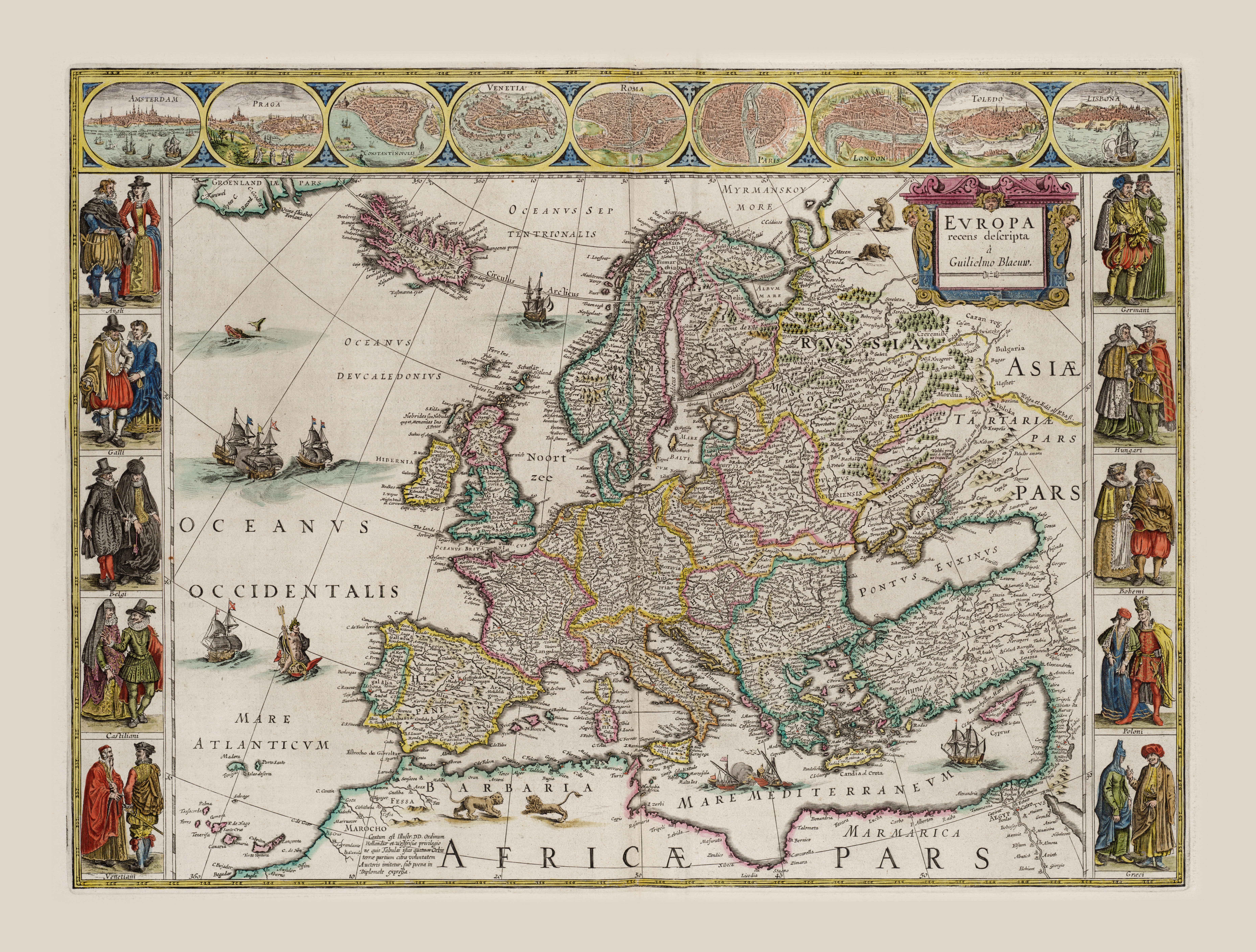
Font:
For throwing standing up. I place the pedal to the right of the wheel on the platform that raises up my wheel.
Install a 15amp fuse on the sunroof circuit, and a 20 amp fuse on the power windows circuit.
Re-connect C104 and the car battery.
Test that your windows work when the is no key in the ignition.
A side-effect of this modification is that the power outlet in the dash will be always-on.
Taken with a temporary film-plane modification of the Koroll 24 camera that I previously used in week 132 of my 52 film cameras in 52 weeks project:
www.flickr.com/photos/tony_kemplen/collections/72157623113584240
Strips of the coloured cellophane wrappers from "Quality Street" chocolates, loosely placed inside the camera. Agfa Vista ISO400 35mm film from Poundland, used without backing paper and processed in the Tetenal C41 kit..
Now that's better. This has lifted the picavet cross and feather high above the rig, so its out of the way of camera and rig now. Tomorrow will tell!
A bit tricky at some points, but looks like 100% success. Sample IR coming...
A big thanks to guys at Vancouver Telescope Centre for letting me borrow there repair room. it has little dust lots of light, and very quiet, so i could concentrate!
A day out in London of a Saturday morning requires planning. Jools arranged for shopping to be dropped on Thursday afternoon, meaning we did not have to go on Saturday morning.
Then setting alarms so that we got to Priory station at half seven ready for the quarter to eight train.
Jools went to get tickets, and I went to the corner greasy spoon to get sausage and bacon sticks and brews. So that when the train rolled at twenty to, we climbed on board, sitting at a table and starting on our breakfast.
Leaving at that time meant it was already light, so we could see the countryside rolling by until we got to Ashford, then flash by once we got on the high speed line, zooming up to Ebbsfleet and then under the Thames into Essex and on to Stratford.
We got out at Stratford, caught the DLR to the regional station, then changing DLR lines for the trains heading for Lewisham.
At Pudding Mill Lane, where we used to watch steam tours on the Great Eastern Main Line, a new station has been built to allow for the entrances to the Elizabeth Line tunnels, and next door is the Abba theatre.
We have been talking about going, so Jools checks prices for the show, and amazed that some are nearly £200! Prices next June are £99, but still for seeing a video recreation rather than the band themselves.
The train rattled on, turning south where the old Bryant and May match factory used to be. The building is still there but seems to be business units or flats now.
Passing the old factory used to be the cue for my Granddad to get us standing up and gathering our coats and bags as we were five minutes from Liverpool Street.
Instead, we took the line south through Bow and towards the crystal towers of Docklands and Canary and other Wharves.
I texted Graham to say we were on our way, and he replied to say he was 5 minutes from Canary Wharf. I said we would be there in a few minutes, maybe we would meet there?
Through Poplar and into the 21st century hellscape that is Docklands, we get off on platform 1, and our next train is waiting on platform 2. Jools walks over, I lag behind, scouring the platform for Graham.
Then as I reach the doors, and the electronic bleeps announcing departure, Graham reaches us and comes on board.
Doors close and the train departs, taking tight turns around the skyscrapers before heading to the river, and after Mudschute, dives under the river for Greenwich.
We get off at Cutty Sark, so named after a tea clipper, and find the way out signed to a flight of 125 steps to street level.
I sigh and follow Jools and Graham up, regretting my life choices.
But I made it to the top, and a short walk we called in at a coffee shop for a refill and wait for the Cutty Sark itself to open.
Although the story of the Cutty Sark and the other tea clippers is very interesting, I wanted to come for purely photographic reasons, to snap the prow and the glazed roof that protects the old dry dock.
We pay to go on, and enter the ship, going up two flights of steps onto the deck, where the masts and rigging tower high above. Remember, sailors used to have to climb up these and gather in sails, and all weathers and on all seas, no matter their state.
Hardy buggers.
Cabins were small and on deck, as all space down below was for cases of tea only, to keep them dry and in perfect condition.
Then down through the visitor centre to the bottom of the dry dock, and the copper bottom of the ship, suspended so that shots looking along and up the prow could be taken.
Which I took plenty of.
Above the roofs of the shops and pubs,the tower of the parish church, St Alphage, Greenwich, which is an usual dedication, but turns out this was the site where the titular Saint was martyred in the 11th century.
Graham had never found it open, but I had checked online and it was due to open at eleven, ten minutes ago. So we walked towards the church, dodging through the traffic and arrived at the church gate.
The south doors were closed, as were the north, so I began to doubt myself. But a nearby sight indicated that the main entrance was on the south side, so we went back round.
And one of the doors was indeed ajar.
Bingo.
Bango.
Bongo.
We climbed the steps and went in, and were met my quiet the most friendly and informative volunteer I think I have ever met.
Interesting details were pointed out, and those hidden were shown, including the location of the font where King Henry XIII was christened, and the last surviving part of the second church's wall.
The church, which is after Hawksmoor, is a delight, though gutted during the blitz, so most glass is now lost, though the Victorian is of good quality.
We were here for the Mars display in the Painted Hall at the Greenwich Naval College.
We have been here before, but some 15 years back at least, so a return was overdue, though the sumptuous painting would be partly hidden by the 7m model of the planet Mars.
We have seen the artist's Moon work at the Maritime Museum nearby, but also in Denver back in 2017. But seemed to have missed his "Earth", I'm sure it'll come round again.
We walked through the college grounds, into the painted hall, exchanged vouchers for tickets and climbed the two sets of stairs into the hall itself.
The view opened out, and the first impression was amazing, Mars at the far end, suspended and slowly turning, with the painted hall as a background. And a helmeted Mar looking down at the planet named after him, a great juxtaposition.
We took and hour to take it all in, then talked about going to the Chapel, which we were not sure was open.
At the base of the stairs, we found the entrance to a passageway, with sign pointing to the Chapel, could this lead all the way under the formal gardens?
Yes. Yes it could. And did.
Up spiral staircases to the lobby, then up a formal stairway flanked by statues of Faith, Hope, Charity and Meekness, into the church, a delight, without much in the way of painting to match the hall opposite, but stunning all the same, and few folks had made it over, so we soaked up the building and details, and fittings.
Time was getting on, and thoughts turned to food. So, we left and headed out to the narrow path beside the river, where high tide meant water was lapping at our feet, but we powered back towards the High Road, and the cluster of pubs and other eateries.
Beside the Cutty Sark was the Gipsy Moth pub, but that was full, so we walked on and found a table beside the fire in the Spanish Galleon, a Shepherd Neame's pub, but they had tables and a great looking menu.
We got pints of Whitstable Bay, and ordered burgers each, all in a great end to the trip where we did all we set out to do, and now rounded it off with a pub lunch.
We ate the burgers with pints of Bishop's Finger, now a timid 5.2% rather than the 7% in days of yore, but still full of flavour.
Time to go home. Back to Cutty Sark DLR station, down in the lift this time, and straight on a train heading north. Change at Canary Wharf, where our train to Stratford was also waiting.
We said goodbye to Graham, hopped on, and the doors closed, so we moved off north.
Back at Stratford, down the steps to the concourse, and straight onto a train going to the International Station, we got on, and so were on the platforms for Kent a full ten minutes before the train was due.
When it came, there were a few seats, so I got to sit and rest by back after the 11,000 steps done, so while darkness fell outside, I kept up to date with the football, Norwich 2-2 with Luton at half time, but scoring twice in the second half to win 4-2, and make it 12 goals scored in three games over seven days.
By the time final whistle went, we were back home, and supping fresh brews as we rested, taking our shoes off.
A brilliant day out.
The West Ham fans we had seen on the DLR were going to their home game against Arsenal, which was on TV at half five. Not the game they were hoping for, as Arsenal were 5-2 by halftime, though no more goals scored in the second half, but worthy of that first half to have watched.
----------------------------------------------------------------------------------------
St Alfege Church is an Anglican church in the centre of Greenwich, part of the Royal Borough of Greenwich in London. It is of medieval origin and was rebuilt in 1712–1714 to the designs of Nicholas Hawksmoor.
The church is dedicated to Alfege (also spelt "Alphege"), Archbishop of Canterbury, and reputedly marks the place where he was martyred on 19 April 1012, having been taken prisoner during the sack of Canterbury by Danish raiders the previous year. The Danes took him to their camp at Greenwich and killed him when the large ransom they demanded was not forthcoming.[1]
The church was rebuilt in around 1290, and Henry VIII was baptized there in 1491.
The patronage of the church was given to the abbey at Ghent during the 13th century. Following the suppression of alien priories under Henry V, it was granted to the priory at Sheen with which it remained until transferred to the Crown by exchange under Henry VIII in 1530.[1]
During a storm in 1710 the medieval church collapsed, its foundations having been weakened by burials both inside and outside.
Following the collapse of the medieval church, the present building was constructed, funded by a grant from the Commission for Building Fifty New Churches, to the designs of Nicholas Hawksmoor, one of the commission's two surveyors. The first church to be built by the commissioners, it was begun in 1712 and basic construction was completed in 1714;[2] it was not, however, consecrated until 1718.[3] The church was built by Edward Strong the Younger a friend of Christopher Wren the Younger.
The church is rectangular in plan with a flat ceiling and a small apse serving as a chancel. The east front, towards the street, has a portico in the Tuscan order, with a central arch cutting through the entablature and pediment—a motif used in Wren's "Great Model" for St Paul's Cathedral.[3] A giant order of pilasters runs around the rest of the church, a feature Kerry Downes suggests may have been added by Thomas Archer, who, according to the minutes of the commission, "improved" Hawksmoor's plans.[2] On the north and south sides of the churchwide projecting vestibules rise to the full height of the building, with steps leading up to the doors.[3]
Hawksmoor planned a west tower, in the position of the existing one, which had survived the collapse. However the commission was reluctant to fund it, and the medieval tower was retained. In 1730 John James refaced it, and added a spire. Hawksmoor's design, published in an engraving in 1714, had an octagonal lantern at the top, a motif he was later to use at St George in the East.
The crypt served as an air-raid shelter during World War II. During the Blitz on 19 March 1941, incendiary bombs landed on the roof causing it to collapse, burning into the nave. The walls and the tower remained standing but much of the interior was gutted. The church was restored by Sir Albert Richardson in 1953. As part of the post-war restorations, stencils of Mary the Mother of Jesus and St John the Evangelist were installed either side of the Cross (forming a traditional rood) in the side chapel of St Alfege with St Peter by the tempera artist Augustus Lunn.
The present organ was installed in 2001, having been relocated from the Lower Chapel at Eton College, with some minor changes.[6] It is an 1891 Lewis & Co instrument, with modifications in 1927 by A. Hunter & Son and 1970 by Harrison & Harrison.[7]
Additionally, there is a small, six-stop moveable organ located in the north aisle, by W & A Boggis of Diss from c 1960, with a later restoration by Mander Organs.
he previous organ had a long history. It dated from the 16th century (when St Alfege was recorded as having a pair of organs). The National Pipe Organ Register does not record its present whereabouts. However, a three manual drawstop console is on display at the West End of the South aisle. This may incorporate keys from the time of the composer Thomas Tallis,[9] who was buried in the chancel of the medieval church in the 16th century. The organ was restored in 1706 by Thomas Swarbrick, with further restorations and modifications by Dallam (1765), George England (1770) and J. W. Walker & Sons Ltd (1840, 1853 and 1863).[9][10] It was further restored and rebuilt in 1875 by Joseph Robson and Benjamin Flight,[11] modified by Lewis & Co in 1910[12] and rebuilt by R. Spurden Rutt & Co in 1934. By this point it had grown to 47 stops.[13] It survived the bomb damage of 1941 and was rebuilt, again by R Spurden Rutt, in 1953, with 55 stops.
This is a photograph from the 3rd and penultimate round of the 2015 Mullingar Road League which was held in Belvedere House and Gardens, Mullingar, Co. Westmeath, Ireland on Wednesday 20th May 2015 at 20:00. The weather was perfect for running and racing and even an improvement on last week. Bright sunshine with little or no breeze were conditions greeted by all the runners this evening. This seemed to also make the course quicker than last week with many runners recording faster times than the 1st or 2nd round race. This year's 5KM is ran on a modified route based on the route from the last couple of years. The final 1KM is within the Belvedere Gardens bringing runners down to the lakeside for a second time and finishing along the aptly named Stream Of Life. The route modification means that the race offers a slightly faster route than the hill finish of previous years. After tonight all attention turns to the final night of the road league next week.
The race is promoted by Mullingar Harriers for the Pat Finnerty Memorial Cup. Competitors need to run 3 races out of the 4 races in May (any order) to be considered in the overall placing in categories at the conclusion of the league. Runners can also choose to just run one race without being considered for the overall league placings. Over 330 people took part in tonight's event bring the total from the three nights to so far to well over 1,000 runners. As with last week the new finish area provided a nice space for runners to stay around and chat in the evening sunshine. The Mullingar Road League 2015 is now half-way through and has continued successfully and looks to add to the success in the history of this great series. Despite the bright evenings the photographic conditions in Belevedere are difficult so this photograph is part of a smaller than usual photograph set as there were many blurred photographs this evening.
The "Road League" is something of a misnomer but is an indication of the League's origins on the roads around Ladestown Mullingar prior to it's move into Belvedere in 2008. The Road League is the envy of many other races in the country as the Belvedere locations offers a completely traffic free 5KM route.
We have an extensive set of photographs from tonight in the following Flickr Album: www.flickr.com/photos/peterm7/sets/72157650853131823
Timing and event management was provided by Precision Timing. Results are available on their website at www.precisiontiming.net/result.aspx?v=2649 with additional material available on their Facebook page (www.facebook.com/davidprecisiontiming?fref=ts) See their promotional video on YouTube: www.youtube.com/watch?v=c-7_TUVwJ6Q
Photographs from the last number of years of the Mullingar Road League are found at the bottom of this text
USING OUR PHOTOGRAPHS - A QUICK GUIDE AND ANSWERS TO YOUR QUESTIONS
Can I use these photographs directly from Flickr on my social media account(s)?
Yes - of course you can! Flickr provides several ways to share this and other photographs in this Flickr set. You can share directly to: email, Facebook, Pinterest, Twitter, Tumblr, LiveJournal, and Wordpress and Blogger blog sites. Your mobile, tablet, or desktop device will also offer you several different options for sharing this photo page on your social media outlets.
BUT..... Wait there a minute....
We take these photographs as a hobby and as a contribution to the running community in Ireland. We do not charge for our photographs. Our only "cost" is that we request that if you are using these images: (1) on social media sites such as Facebook, Tumblr, Pinterest, Twitter,LinkedIn, Google+, VK.com, Vine, Meetup, Tagged, Ask.fm,etc or (2) other websites, blogs, web multimedia, commercial/promotional material that you must provide a link back to our Flickr page to attribute us or acknowledge us as the original photographers.
This also extends to the use of these images for Facebook profile pictures. In these cases please make a separate wall or blog post with a link to our Flickr page. If you do not know how this should be done for Facebook or other social media please email us and we will be happy to help suggest how to link to us.
I want to download these pictures to my computer or device?
You can download this photographic image here directly to your computer or device. This version is the low resolution web-quality image. How to download will vary slight from device to device and from browser to browser. Have a look for a down-arrow symbol or the link to 'View/Download' all sizes. When you click on either of these you will be presented with the option to download the image. Remember just doing a right-click and "save target as" will not work on Flickr.
I want get full resolution, print-quality, copies of these photographs?
If you just need these photographs for online usage then they can be used directly once you respect their Creative Commons license and provide a link back to our Flickr set if you use them. For offline usage and printing all of the photographs posted here on this Flickr set are available free, at no cost, at full image resolution.
Please email petermooney78 AT gmail DOT com with the links to the photographs you would like to obtain a full resolution copy of. We also ask race organisers, media, etc to ask for permission before use of our images for flyers, posters, etc. We reserve the right to refuse a request.
In summary please remember when requesting photographs from us - If you are using the photographs online all we ask is for you to provide a link back to our Flickr set or Flickr pages. You will find the link above clearly outlined in the description text which accompanies this photograph. Taking these photographs and preparing them for online posting takes a significant effort and time. We are not posting photographs to Flickr for commercial reasons. If you really like what we do please spread the link around your social media, send us an email, leave a comment beside the photographs, send us a Flickr email, etc. If you are using the photographs in newspapers or magazines we ask that you mention where the original photograph came from.
I would like to contribute something for your photograph(s)?
Many people offer payment for our photographs. As stated above we do not charge for these photographs. We take these photographs as our contribution to the running community in Ireland. If you feel that the photograph(s) you request are good enough that you would consider paying for their purchase from other photographic providers or in other circumstances we would suggest that you can provide a donation to any of the great charities in Ireland who do work for Cancer Care or Cancer Research in Ireland.
Let's get a bit technical: We use Creative Commons Licensing for these photographs
We use the Creative Commons Attribution-ShareAlike License for all our photographs here in this photograph set. What does this mean in reality?
The explaination is very simple.
Attribution- anyone using our photographs gives us an appropriate credit for it. This ensures that people aren't taking our photographs and passing them off as their own. This usually just mean putting a link to our photographs somewhere on your website, blog, or Facebook where other people can see it.
ShareAlike – anyone can use these photographs, and make changes if they like, or incorporate them into a bigger project, but they must make those changes available back to the community under the same terms.
Above all what Creative Commons aims to do is to encourage creative sharing. See some examples of Creative Commons photographs on Flickr: www.flickr.com/creativecommons/
I ran in the race - but my photograph doesn't appear here in your Flickr set! What gives?
As mentioned above we take these photographs as a hobby and as a voluntary contribution to the running community in Ireland. Very often we have actually ran in the same race and then switched to photographer mode after we finished the race. Consequently, we feel that we have no obligations to capture a photograph of every participant in the race. However, we do try our very best to capture as many participants as possible. But this is sometimes not possible for a variety of reasons:
►You were hidden behind another participant as you passed our camera
►Weather or lighting conditions meant that we had some photographs with blurry content which we did not upload to our Flickr set
►There were too many people - some races attract thousands of participants and as amateur photographs we cannot hope to capture photographs of everyone
►We simply missed you - sorry about that - we did our best!
You can email us petermooney78 AT gmail DOT com to enquire if we have a photograph of you which didn't make the final Flickr selection for the race. But we cannot promise that there will be photograph there. As alternatives we advise you to contact the race organisers to enquire if there were (1) other photographs taking photographs at the race event or if (2) there were professional commercial sports photographers taking photographs which might have some photographs of you available for purchase. You might find some links for further information above.
Don't like your photograph here?
That's OK! We understand!
If, for any reason, you are not happy or comfortable with your picture appearing here in this photoset on Flickr then please email us at petermooney78 AT gmail DOT com and we will remove it as soon as possible. We give careful consideration to each photograph before uploading.
I want to tell people about these great photographs!
Great! Thank you! The best link to spread the word around is probably http://www.flickr.com/peterm7/sets
Links to previous Mullingar Road League Photographs from over the years
Our photographs from Round 2 of the 2015 Road League on Flickr: www.flickr.com/photos/peterm7/sets/72157652357781278
Our photographs from Round 1 of the 2015 Road League on Flickr: www.flickr.com/photos/peterm7/sets/72157652342512706
Our photographs from Round 1 of the 2014 Road League on Flickr: www.flickr.com/photos/peterm7/sets/72157644508131856/
Our photographs from Round 2 of the 2014 Road League on Flickr: www.flickr.com/photos/peterm7/sets/72157644261638039/
Our photographs from Round 3 of the 2014 Road League on Flickr: www.flickr.com/photos/peterm7/sets/72157644769714481/
Our photographs from Round 4 of the 2014 Road League on Flickr: www.flickr.com/photos/peterm7/sets/72157644840050706/
Road League 2014 Facebook Page: www.facebook.com/patfinnertyroadleague?fref=ts (Requires Facebook logon)
YouTube Video for the Promotion of the 2014 Road League: www.youtube.com/watch?v=KfvVVwrkgTM
A Vimeo Video for the Promotion of the 2013 Road League: vimeo.com/64875578
Our photographs from Round 5 of the 2013 Road League on Flickr: www.flickr.com/photos/peterm7/sets/72157633794985503/
Our photographs from Round 4 of the 2013 Road League on Flickr: www.flickr.com/photos/peterm7/sets/72157633604656368/
Our photographs from Round 3 of the 2013 Road League on Flickr: www.flickr.com/photos/peterm7/sets/72157633470510535/
Our photographs from Round 2 of the 2013 Road League on Flickr: www.flickr.com/photos/peterm7/sets/72157633451422506/
Our photographs from Round 1 of the 2013 Road League on Flickr: www.flickr.com/photos/peterm7/sets/72157633397519242/
Belvedere House and Gardens on Google Street View: goo.gl/maps/WWTgD
Chip Timing Results from Precision Timing: www.precisiontiming.net/results.aspx
Belvedere House and Gardens Website: www.belvedere-house.ie/
Mullingar Harriers Facebook Group Page: www.facebook.com/groups/158535740855708/?fref=ts
Our Flickr Collection from Mullingar Road League 2012 (1,800 photographs) www.flickr.com/photos/peterm7/collections/72157629780992768/
Our Flickr Collection from Mullingar Road League 2011 (820 photographs) www.flickr.com/photos/peterm7/collections/72157626524444213/
Our Flickr Collection from Mullingar Road League 2010 (500 photographs) www.flickr.com/photos/peterm7/collections/72157624051668808/
Our Flickr Collection from Mullingar Road League 2009 (250 photographs) www.flickr.com/photos/peterm7/collections/72157617814884076/
Our Flickr Collection from Mullingar Road League 2008 (150 photographs) www.flickr.com/photos/peterm7/collections/72157605062152203/
No Color Correction or Modification.
Cross Processed (XPRO) Kodak EliteChrome 100 ISO Color Slide 35mm Film. Shot with the Nikon N6006, scanned using the Epson V600. Processed at Costco (yes, they will do cross processing).
This is from my second roll of cross processed film. The first was Fuji Sensia film. I have to say, for XPRO, I prefer this. The green haze produced by the EliteChrome is far less harsh than the Sensia film from my last experience. It makes for easier color correction for one. The uncorrected shot looks fine, just slightly green, rather than a crazy red saturation.
Also, I shot this roll as if it was 200 ISO film, over exposing it slightly. Some of my shots look like I over exposed a little too much, but others are fine, so perhaps it's a little more unstable in that sense, but otherwise, I got what I wanted from this film.
I also scanned a color modified version to reduce the greens found in Kodak EliteChrome film when processed using C-41 chemicals.
Read my cross processing adventures here: www.flickr.com/groups/1535149@N22/discuss/72157628109340933/
A spark from Countess' chimney started a small lineside fire. The following day during the early morning inspection a gap was found between two of the components. About ten minutes before the advertised departure time the workshop staff decided to undertake a tactical modification. The loco was uncoupled from the train and taken to the back door of the loco shed and a couple of patches were welded to the underside of the spark arrestor base plate.
Photo taken at the Welshpool & Llanfair Light Railway on Wednesday 12th April 2017
A bit tricky at some points, but looks like 100% success. Sample IR coming...
A big thanks to guys at Vancouver Telescope Centre for letting me borrow there repair room. it has little dust lots of light, and very quiet, so i could concentrate!
Some older AI images modified with new Photoshop beta. Borders were expanded and then auto filled by Photoshop. A whole new world.
Part One :-
The Hawker Siddeley Nimrod was an extensive modification of the Comet Jet Airliner. XV255 was delivered to RAF St Mawgan in 1971, saw service in the Falklands and was based at RAF St Mawgan and RAF Kinloss between 1983 and 2010. XV255 flew from RAF Kinloss to Norwich Airport on 24th May 2010 for display at the City of Norwich Aviation Museum.
The Hawker Siddeley Nimrod is a retired Maritime Patrol Aircraft developed and operated by the United Kingdom, it was an extensive modification of the de Havilland Comet, the world's first operational jet airliner. It was originally designed by de Havilland's successor firm, Hawker Siddeley, further development and maintenance work was undertaken by Hawker Siddeley's own successor companies, British Aerospace and, later, BAE Systems.
Designed in response to a requirement issued by the Royal Air Force to replace its fleet of ageing Avro Shackletons, the Nimrod MR1 / MR2's were primarily fixed-wing aerial platforms for Anti-Submarine Warfare (ASW) Operations, secondary roles included Maritime Surveillance and Anti-Surface Warfare. It served from the early 1970's until March 2010. The intended replacement was to be extensively rebuilt Nimrod MR2's, designated Nimrod MRA4, however, due to considerable delays, repeated cost overruns, and financial cutbacks, the development of the MRA4 was abandoned in 2010.
The RAF also operated a small number of the Nimrod R1, an Electronic Intelligence Gathering (ELINT) variant. A dedicated Airborne Early Warning Platform, the Nimrod AEW3, was in development from late 1970's to the mid-1980's, however, much like the MRA4, considerable problems were encountered in development and thus the project was cancelled in 1986 in favour of an off-the-shelf solution in the Boeing E-3 Sentry. All Nimrod variants had been retired by mid-2011.
Starting in 1975, 35 aircraft were upgraded to MR2 standard, being re-delivered from August 1979, the upgrade included extensive modernisation of the aircraft's Electronic Suite. Changes included the replacement of the 1950's ASV Mk.21 Radar used by the Shackleton and Nimrod MR1 with the new EMI Searchwater Radar, a new Acoustic Processor (GEC-Marconi AQS-901) capable of handling more modern Sonobuoys, a new Mission Data Recorder (Hanbush) and a new Electronic Support Measures (Yellow Gate) which included new Pods on the wingtips.
Provision for in-flight refuelling was introduced during the Falklands War (as the MR2P) as well as hardpoints to allow the Nimrod to carry the AIM-9 Sidewinder Missile to counter enemy Argentine Air Force Maritime Surveillance Aircraft. In preparation for operations in the Gulf War Theatre, several MR2's were fitted with new communications and ECM equipment to deal with anticipated threats, at the time these modified aircraft were given the designation MR2P(GM) (Gulf Mod).
The Nimrod MR2 carried out three main roles - Anti-Submarine Warfare (ASW), Anti-Surface Unit Warfare (ASUW) and Search and Rescue (SAR). Its extended range enabled the crew to monitor maritime areas far to the north of Iceland and up to 2,200 nautical miles out into the Western Atlantic. With Air-to-Air Refuelling (AAR) range and endurance was greatly extended. The crew consisted of two Pilots and one Flight Engineer, two Navigators (one Tactical Navigator and a Routine Navigator), one Air Electronics Officer (AEO), the Sonobuoy Sensor team of two Weapon System Operators (WSOp ACO) and four Weapon System Operators (WSOp EW) to manage Passive and Active Electronic Warfare Systems.
Until 1992, the Nimrod MR2 was based at RAF Kinloss in Scotland (120, 201 and 206 Squadrons) and RAF St Mawgan in Cornwall (42 and 38(R) Squadrons). Following Options for Change, 42 Squadron was disbanded and its number reassigned to 38(R) Squadron. The Nimrod MR2 aircraft was withdrawn on 31st March 2010, a year earlier than planned, for financial reasons. The last official flight of a Nimrod MR2 took place on 26th May 2010, with XV229 flying from RAF Kinloss to Kent International Airport to be used as an evacuation training airframe at the nearby MOD Defence Fire Training and Development Centre.
Part Two Link :- flic.kr/p/2ieci2s
Sourced from Wikipedia en.m.wikipedia.org/wiki/Hawker_Siddeley_Nimrod