View allAll Photos Tagged material
Una mañana de sábado íbamos Luisma. Felipe y yo por la zona de El Tejar a dar caza al "Tren de la Navidad" de este mismo año. Mientras nos acercábamos al punto apareció esta 252-037-7 con rama de talgo.
Henry Moore - Form and Material - Museum Beelden aan Zee - The Hague
In collaboration with the Henry Moore Foundation, Museum Beelden aan Zee has made a selection of works from the artist's substantial oeuvre. Around 70 objects and sculptures portray the artistic vision and creative process of one of the most important innovators of modern sculpture. The exhibition in Beelden aan Zee focuses on the influence of nature on his work and his growth and development as a sculptor. From promoting direct carving – carving without using preparatory sketches and studies – to experimenting with casting in lead and bronze. Henry Moore (1898-1986) is one of the most important British artists of the twentieth century. His sculptures balance on the boundary between figurative and abstract art and continue to be a source of inspiration to artists. His work has a recognisable and characteristic formal language. Important themes in his oeuvre are ‘mother and child’ and his reclining figures, which he explored extensively.
From the 1920s, Moore participated in countless British and international exhibitions, with solo as well as group exhibitions, he sold work on a regular basis, and so made a name for himself as an important modernist sculptor. However, the Second World War called a halt to these positive developments. Henry Moore left his teaching post and took up a commission as a war artist. It was in this capacity that he produced his deeply moving Shelter Drawings of Londoners crowding the city's underground stations sheltering from the Blitz. In the 1950s he created larger groups of figures. The prices for his works increased considerably and his fame as an international artist continued to grow. In later years he served as a trustee at both the Tate Gallery and the National Gallery and he was the recipient of a large number of prizes and honours.
©All photographs on this site are copyright: ©DESPITE STRAIGHT LINES (Paul Williams) 2011 – 2021 & GETTY IMAGES ®
No license is given nor granted in respect of the use of any copyrighted material on this site other than with the express written agreement of ©DESPITE STRAIGHT LINES (Paul Williams). No image may be used as source material for paintings, drawings, sculptures, or any other art form without permission and/or compensation to ©DESPITE STRAIGHT LINES (Paul Williams)
.
.
Photograph taken at an altitude of Forty nine metres at 09:45am on Saturday 20th February 2021 off Blackheath Avenue and Charlton Way in the grounds of Greenwich Park, one of the Royal Parks of London situated in Greenwich, South East London.
The carrion crow (Corvus corone) is a passerine bird of the family Corvidae and the genus Corvus which is native to western Europe and eastern Asia. It can grow to twenty inches in length with a wingspan of up to thirty nine inches. Highly intelligent, utterly beautiful with an amazingly detailed and rich plumage, these stunning birds are much maligned and tainted with unfair tags attributed through folklore and ignorance. I love 'em!
.
.
Nikon D850 Hand held with Sigma OS Optical Stabilization enabled on normal setting. Focal length 420mm Shutter speed: 1/250s Aperture f/6.0 ISO640 Image area FX (36 x 24) NEF RAW L (8256 x 5504). NEF RAW L (14 bit uncompressed) Focus mode AF-C focus. AF-C Priority Selection: Release. Nikon Back button focusing enabled. Auto ISO 3D Tracking watch area: Normal 55 Tracking points.AF-Area mode single point & 73 point switchable. Exposure mode: Shutter priority mode. Matrix metering. White balance on: Auto1 (4370K). Colour space: RGB. Vignette control: Normal. Picture control: Auto (Sharpening A +1/Clarity A+1)
Sigma 60-600mm f/4.5-6.3DG OS HSM SPORTS. Lee SW150 MKI filter holder with MK2 light shield and custom made velcro fitting for the Sigma lens. Lee SW150 circular polariser glass filter.Lee SW150 Filters field pouch.Nikon GP-1 GPS module. Hoodman HEYENRG round eyepiece oversized eyecup.Mcoplus professional MB-D850 multi function battery grip 6960.Two Nikon EN-EL15a batteries (Priority to battery in Battery grip). Black Rapid Curve Breathe strap. My Memory 128GB Class 10 SDXC 80MB/s card. Lowepro Flipside 400 AW camera bag.
.
.
LATITUDE: N 51d 28m 29.18s
LONGITUDE: E 0d 0m 17.70s
ALTITUDE: 49.0m
RAW (TIFF) FILE: 130.00MB NEF: 94.4MB
PROCESSED (JPeg) FILE: 48.50MB
.
.
PROCESSING POWER:
Nikon D850 Firmware versions C 1.20 (14/01/2021) LD Distortion Data 2.018 (18/02/20) LF 1.00
HP 110-352na Desktop PC with AMD Quad-Core A6-5200 APU 64Bit processor. Radeon HD8400 graphics. 8 GB DDR3 Memory with 1TB Data storage. 64-bit Windows 10. Verbatim USB 2.0 1TB desktop hard drive. WD My Passport Ultra 1tb USB3 Portable hard drive. Nikon ViewNX-1 64bit Version 1.4.1 (18/02/2020). Nikon Capture NX-D 64bit Version 1.6.2 (18/02/2020). Nikon Picture Control Utility 2 (Version 2.4.5 (18/02/2020). Nikon Transfer 2 Version 2.13.5. Adobe photoshop Elements 8 Version 8.0 64bit.
It was late in the day, the refuge was closing in a few minutes, but the work to build a new nest goes on.
We are two months into the breeding season at Wakodahatchee Wetlands, with several gbh nests already complete and a few still being built. This is "phase one" and we would hope that in a another month or so when the chicks have arrived that construction will begin again.
Materials: oil on canvas. Dimensions: 174.6 x 123.8 cm. Nr.: 17.190.29. Source: www.metmuseum.org/collection/the-collection-online/search.... I have changed the light, contrast and colors of the original photo.
Metallic Starling (Aplonis metallica) ferrying nesting material up to the hanging nests in Owens Aviary at the San Diego Zoo.
Hazardous Materials Company is made up of four apparatus:
Hazmat 1: 2016 Seagrave Marauder II walk-in heavy rescue
Hazmat 1a: 2006 Kenworth/Hackney tractor trailer heavy rescue
Mobile Lab 1: 1978/1991/2016 Mack CF walk-in heavy rescue
Foam 1: 2017 SSV Tiger II 2650/1500/210/500#
Credits:
Martijn Meijdam for Foam 1
Paulo R. for the SNOTed compartments as well as the wheel wells on HM1a
Zak O. for inspiration on the Kenworth tractor
Xander Gerakis for the rear wheel wells on the tractor
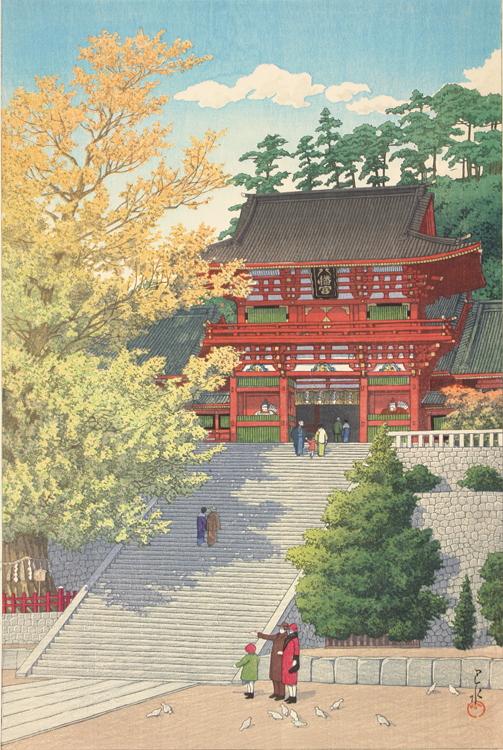
Materials: woodblock print. Dimensions: 49.2 x 32.8 cm. Nr.: 1980.764. Source: embarkkiosk.chazen.wisc.edu/media/images/Print_Room/proce.... I have changed the light and contrast of the original photo.
Materials: oil on canvas. Dimensions: 64.9 x 80.8 cm. Inscriptions: J. Vernet f/ 1765. Sold by Sotheby's in London, on July 4, 2007. Source: www.sothebys.com/content/dam/stb/lots/L07/L07031/L07031-6.... I have changed the contrast of the original photo.

Materials: Oil on canvas. Dimensions: 124 x 84 cm. Source: www.masterart.eu/tsmedia/MacConnalMasonMacphoto/Willem-Ko....

Materials: gouache. Dimensions: 27.2 x 46.2 cm. Source: cp14.nevsepic.com.ua/183/18259/1384986349-booksellers---l.... I have changed the light, contrast and colors of the original photo.

Material Circulante: CP 9004 + CEyf 466 + CEyf 4178 + CEyf 4169
Hora: 11:42
Data: 01-07-2017
Local: Sernada do Vouga (PK 0 - Linha do Vouga)
Serviço: Marcha n.º 27006 (Sernada do Vouga --» Aveiro - Vouga)
The Disney Royal Ball Cinderella Doll by Mattel, fully deboxed. She is posed standing, supported by a Kaiser doll stand (not included).
I finally got the Disney Royal Ball Cinderella Doll by Mattel, from Target today (Friday January 30, 2015). Customer Service had two brought out to me from the back room. They are $39.99 each. The blue ballroom gown is truly spectacular, with glitter butterflies of various colors and sizes throughout the gown. The back of the gown has only small silver ones, however. The gown is blue satin, with an overskirt of double layered purple tulle, to which the butterflies are attached. The shoulders are also of tulle. There are also ''glass'' slippers that are high heeled shoes of clear plastic, with golden butterflies on the front of the shoes. She has golden blonde hair with shimmering highlights (tinsel). The bottom curls are heavily stiffened with hair product, and the styling is a little sloppy. I did my best to tidy up her hair. The most disappointing aspect of the doll is the stiff arms and legs, which limits her posability. The packaging is very beautiful, and is reusable. The sides open up, and the inner cardboard backing slides out with the doll and shoes attached. She is the same size as the Disney Store Wedding Cinderella Film Collection doll, about 11 1/2 inches tall with the heels. But she has a smaller, more proportional head. When I get the Disney version, I will compare them side by side.
Information below from the Target website. The doll is available at some stores, but is not yet available online.
Disney Cinderella Royal Ball Doll
$39.99
WARNING: choking hazard - small parts. Not for children under 3 yrs.
Prices, promotions, styles and availability may vary by store and online.
View our return policy.
details
A beloved fairy tale comes to life in Disney’s new Cinderella live action movie! Kind and beautiful Ella is rewarded with a wish come true and behold - the Disney Cinderella Royal Ball Cinderella doll! Ella enchants in an iconic dress with multicolor blue and purple layers that create spectacular volume. She sparkles from head to toe with delicate, magical butterflies and foil print accents and wears her famous "glass" slipper shoes that sweep her across the ballroom floor and carry her off to Happily Ever After. This breathtaking doll is sure to delight girls, moms, collectors and fans of the movie! For ages 3 and older.
Features: Removable Clothes
Articulation: Articulated
Material: Plastic, Fabric
Textile Material: 59% Fabric
Dimensions: 12.75 " H x 3.37 " W x 11.0 " L
Weight: 0.77 Lb.
Suggested Age: 3 Years and Up
Battery: no battery used
Care and Cleaning: Wipe Clean With a Damp Cloth
other Info.
Online Item #: 16805186
Store Item Number (DPCI): 086-07-0695
Imported
Alle materialen werden aan- en afgevoerd via de weg. Twee enorme bergen nieuwe ballast werden met shovels gedeponeerd en daarna met deze kleine bulldozer verspreid.
Op 27 juni 2022 begonnen de werkzaamheden waarbij in een week dag & nacht werd doorgewerkt om van spoor 1, de helft van spoor 2 en heel spoor 3 en het stukje tussen de grote en de kleine overweg alle oude bielzen te vervangen voor hergebruikte betonnen dwarsliggers, van de wissels zijde Maarssen alle bielzen te vervangen voor nieuwe kunststoffen dwarsliggers, het wissel in spoor 3 naar spoor 4 aan die zijde te vervangen door een hergebruikt wissel, en van spoor 1, 2 en 3 en dat stukje na de kleine overweg alle ballast te vervangen voor nieuwe ballast.
Cavendish Mews is a smart set of flats in Mayfair where flapper and modern woman, the Honourable Lettice Chetwynd has set up home after coming of age and gaining her allowance. To supplement her already generous allowance, and to break away from dependence upon her family, Lettice has established herself as a society interior designer, so her flat is decorated with a mixture of elegant antique Georgian pieces and modern Art Deco furnishings, using it as a showroom for what she can offer to her well heeled clients.
Today however, we are following Edith, Lettice’s maid, along with her best friend and fellow maid-of-all-work, Hilda Clerkenwell, who works around the corner from Cavendish Mews in Hill Street as a live-in maid for Lettice’s married friends Margot and Dickie Channon. It is Wednesday, and both maids have Wednesdays as a half-day off work and are free until four o’clock. The pair of maids head east of Mayfair, to a place far removed from the elegance and gentility of Lettice’s flat, in London’s East End. As a young woman, Edith is very interested in fashion. This interest has intensified, particularly since she started stepping out with Mayfair grocer Mr. Willison’s delivery boy, Frank Leadbetter. She is hoping that after several years of serious courting, that he will soon ask for her hand in marriage and they will become officially engaged. This idea is more predominant in her mind these days, especially now that Lettice is engaged to Sir John Nettleford-Huges and talk at Cavendish Mews often revolves around their forthcoming nuptials*, even if they do seem a little fraught. Edith’s own desire to make their engagement official has gotten the better of her in recent times, and after a fierce row over when Frank would propose to her whilst they were window shopping together up the Elephant** one Sunday afternoon, Edith resorted to visiting a “discreet clairvoyant” named Madame Fortuna, in Swiss Cottage***. Luckily, Madame Fortuna told Edith that Frank would propose within the year, which has allayed her concerns. Like most young girls of her class, Edith’s mother has taught her how to sew her own clothes and she has become an accomplished dressmaker, having successfully made frocks from scratch for herself, or altered cheaper existing second-hand pieces to make them more fashionable by letting out waistlines and taking up hems. Thanks to Lettice’s Cockney charwoman****, Mrs. Boothby, who lives in nearby Poplar, Edith now has her own hand treadle Singer***** sewing machine, and frequents a wonderful haberdasher in Whitechapel, Mrs. Minkin, whom she goes to frequently on her days off when she needs something for one of her many sewing projects as she slowly adds to and updates her wardrobe. Edith’s interest in fashion is greater than that Hilda, who is more bookish, isn’t walking out with a young man like Edith is, and with a fondness for sweet cakes and pastries, has a fuller figure than her best friend. Hilda is also the exception to the rule, and she cannot sew a stitch to save her life. However, Mrs. Minkin has managed to get Hilda involved in her knitting circle, which Hilda joins on some of her own Sundays off, whilst Edith and Frank spend time in one another’s company. Mrs. Minkin’s Haberdashery is just a short walk from Petticoat Lane******, where Edith often picks up bargains from one of the many second-hand clothes stalls.
The pair of maids now stand in Mrs. Minkin’s cluttered, yet cosy and well organised haberdashery. The long and narrow old Victorian shop is illuminated by the early summer light filtering through the plate glass front window and several old fashioned Art Nouveau gas lights suspended from the high ceiling which Mrs. Minkin turns on and off and adjusts with a long stick with a hook on the end. The shelves stretching three quarters of the way up the walls of the haberdashers, full of bolts of colourful textiles and dazzling white pressed linens help to dull the noise of the foot traffic outside and cocoon Edith and Hilda in a snug comfort, as do the piles of cloth and lace and the tables of materials artfully arranged to show off all that Mrs. Minkin has to sell. The shop’s smell is always comforting for Edith, as the familiar scent of a mixture of soap, starch, cloves and lavender remind her of her parent’s home, where Edith’s mother, Ada, takes in laundry to supplement the family’s income.
Edith spies a holly sprigged tablecloth and six matching napkins on a table and walks over to it. “Perfect!” she breathes, smiling with delight. “I’ll buy them for Mum for Christmas. She’s always wanted a Christmas tablecloth!”
“Cor, you are so lucky Edith,” Hilda remarks to Edith as she joins her friend in front of the table which is covered in fabrics laid out expertly in layered rows, carefully showing off enough of the pattern for each one to attract the eye.
“Me?” Edith ask. “Why?” she drops her green leather handbag on the textile covered surface of the table and places a hand lovingly on some fabric covered in a bold floral pattern in lupin blue and scarlet that has caught her eye.
“Your Miss Lettice seems never to be home. Weekend parties and all that.” Hilda elucidates.
“She’s gone home for a few days is all, Hilda,” Edith says dismissively as she runs her hand over the bold, almost pansy like flowers of the fabric. “She’s gone to talk about organising and buying her trousseau******* with her mother, the Viscountess. She’ll be back tonight.”
“Yes,” Hilda answers. “I know.”
“Oh of course!” Edith exclaims. “She’s going to a dinner party at the Channons tonight, isn’t she.”
“As is that American Mr. Carter and his wife.” Hilda adds with a morose sigh. “And you know what that means.” She eyes her best friend with a knowing look.
“The hard graft of grinding coffee beans to make fresh coffee for Mr. Carter.” Edith replies with a nod of understanding.
“That’s right!” Hilda opines, raising her chin and looking down her nose at Edith before continues, “No Camp Coffee******** for His Majesty the King of the American Department Store!” She sighs again and runs her own pudgy, worn fingers across a bolt of exotic floral fabric in bright pink and blue, embroidered with gold thread. “Still, I mustn’t complain. At least with Mr. Cater and his bottomless American dollar pockets and largess with wine and champagne, I won’t have to worry about telling bare-faced lies********* to the wine merchant, who just like the butcher, the baker and your Frank’s Mr. Willison the grocer, all know about the Channon’s precarious financial situation.”
“That’s so awful for you, Hilda.” Edith looks at her friend and smiles sadly. “Being a maid-of-all-work is hard enough graft as it is, without having to try and put off shopkeepers whom Mr. and Mrs. Channon are indebted to.”
“I know. I don’t think Mrs. Channon will ever learn how to balance a household account. I’m only relieved that Mrs. Channon’s father Lord de Virre pays my wages.”
“We must be grateful for small mercies, Hilda.” Edith says sagely.
“Oh, I am, Edith!” Hilda breathes. “Believe me I am!”
“Thinking of things to be grateful for, I believe Mr. Bruton will be attending the Channon’s dinner party tonight as Miss Lettice’s escort, and he’s always polite and not dismissive of servants, like Mr. and Mrs. Carter.”
“That’s true, Edith. He and Miss Lettice always smile and acknowledge me, and say ‘thank you’, and that does make things a little bit nicer for me when I wait at table for the Channons. And of course Mrs. Channon always tells me at the end of a dinner party, how grateful she is to have me.”
“I should think she should!” Edith opines. “There are fewer and fewer servants like us, now, what with working class women like us becoming shop girls and secretaries. I hope she appreciates everything you do for her.”
“Oh, she does, Edith. It’s just the chaotic nature of the Channon’s household and their financial precariousness and foolishness that wears me down, sometimes. Mrs. Channon would rather spend eighty-five guineas********** on a new frock from Mr. Bruton to parade around the Crystal Palace Horse Show*********** in, than pay off the sixty pound debt she and Mr. Channon have accrued with the wine merchant, who has flatly refused to extend their credit any further until at least half the amount is paid.”
“Imagine spending eighty-five guineas on a frock, Hilda!” Edith gasps. She moves her hand to a green patterned material further down the table, rubbing it between the thumb and forefinger of her right hand before letting it drop in distaste, deciding that it too thick, and therefore not suitable for her purposes. “And here I am, looking at material so I can cut a pattern from Weldon’s************ and make myself a new summer frock for a few shillings.” Her eyes stray back to the brightly patterned pansy fabric.
“Do you suppose Mr. Bruton will make Miss Lettice’s wedding frock, Edith?”
“I would imagine so, Hilda. I can’t imagine anyone else making it. Then again, that all depends upon Miss Lettice’s mum, the Viscountess, Lady Sadie.”
“Why?”
“It would be the same for us. Our mums will get involved in our weddings when we get married.”
Hilda snorts derisively. “I don’t think I’m ever going to meet a man who wants to marry me, Edith.”
“It’s more like the other way around, Hilda.” Edith retorts. “With your exacting standards.”
“Well, why shouldn’t I want to step out with a young man who respects me for my mind, and allows me my independence, Edith?”
“Oh, you should, Hilda!” Edith assures her. “It’s just that young eligible men are sometimes intimidated by women who are smart and independent.”
“No, not all men are like your Frank, that’s for certain, Edith.”
“I’m hardly smart or independent,” Edith replies, her hand drifting back to the pansy fabric which she caresses softly. “Well, not like… well, like you, Hilda.”
“What rot!” Hilda retorts. “Of course you are, Edith! Frank wouldn’t want to marry a girl who had no brains or ideas of her own.”
“Well, I think in that area, you’re probably more of a match for him than I am.” Edith says with a little bit of discomfort. She has always felt that Hilda is far smarter and more forward thinking than she is, and she feels inadequate sometimes when Frank and Hilda talk about politics or the state of working conditions for the everyday man. She decides to try and guide the conversation back to something she does feel more comfortable discussing. “Anyway, just like your mum or mine, Miss Lettice’s mum will want to have her say about Miss Lettice’s trousseau. It’s her right, as Miss Lettice’s mum, to help with it, which is why she has gone down to Wiltshire to see her.” She pauses. “Mind you I don’t think Miss Lettice wants her mum to help her with it.”
“Whyever not, Edith? I’m sure being a Viscountess, she can afford more than one eighty-five guinea frock.”
“I’m quite sure she can!” Edith chuckles. “I know Miss Lettice certainly can! From what I can gather from snippets I have overheard around Cavendish Mews, I think, Miss Lettice thinks the Viscountess is too old and stuffy and staid in her tastes.”
“Well, your Miss Lettice is very fashionable.” Hilda opines.
“And she gets help from Mr. Bruton, who is forever making her something new to wear. Her ‘muse’ is what he calls her, whatever that is.”
“A ‘muse’ is a person who inspires an artist, Edith.” Hilda elucidates. “So I suppose he must like designing frocks for her.”
“See Hilda! You’re as smart as a whip*************.” Edith opines, making Hilda blush. She then goes on, “Miss Lettice’s head has also been turned by her fiancée, Sir Nettleford-Hughes’ sister, who is apparently ever so smartly turned out.”
“Have you seen her, Edith?”
“No. Not yet anyway, Hilda. But I’m sure it will only be a matter of time before she comes to Cavendish Mews and I can see her for myself. Miss Lettice tells me that Mrs. Pontefract is much older than she is, but that she had been living in Paris for many prior to returning to live in London after her husband died. Miss Lettice is always talking about how much Mrs. Pontefract knows about the latest styles, and how much she admires her style and taste.”
“Her mum will have her nose out of joint over that, I’d imagine, Edith, if that’s what Miss Lettice gone down to talk to her about.” Hilda’s thick and dark eyebrows arch over her eyes in apprehension.
“I think you’re right, Hilda.” Edith nods in agreement.
“That would make a lovely autumn frock, Edit.” eagle eyed Mrs. Minkin calls from behind the shop counter where she is sorting through a box of miscellaneous sewing notions**************, her pudgy finger decorated with a few sparkling gold rings moving with dexterity as she sorts. “The colours would suit your complexion and colourings.”
“Thank you, Mrs. Minkin.” Edith calls cheerfully in reply. “I’ll keep that in mind.”
“I have some lovely buttons in this box that would go perfectly with it, Edit my dear.” Mrs. Minkin goes on, holding up half a card of glass buttons in a pretty shade of cobalt blue. “I will give them to you as a gift if you buy the fabric.” she says as she tries to tempt Edith.
A refugee from Odessa as a result of a pogrom*************** in 1905, Mrs. Minkin’s Russian accent, still thick after nearly twenty years of living in London’s East End, muffles the h at the end of Edith’s name, never ceasing to make the young girl smile, for it is an endearing quality. Edith likes the Jewess proprietor with her old fashioned upswept hairdo and frilly Edwardian lace jabot running down the front of her blouse, held in place by a beautiful cameo – a gift from her equally beloved and at the same time irritating Mr. Minkin. She always has a smile and a kind word for Edith and Hilda, and her generosity towards her has found Edith discover extra spools of coloured cottons or curls of pretty ribbons and other notions in the lining of her parcel when she unpacks it at Cavendish Mews. Mrs. Minkin always insists when Edith mentions it, that she wished all her life that she had had a daughter, but all she ever had were sons, so Edith is like a surrogate daughter to her, and as a result she gets to reap the small benefits of her largess.
“That’s far to kind of you, Mrs. Minkin. You are too generous.” Edith replies, blushing as she does.
“Nonsense Edit my dear!” Mrs. Minkin scoffs with a wave of her hand. “For me, it is a pleasure. Besides, they are just sitting idly in this box. Better they go home with someone who will use them!”
“She’s right about the colours, Edith.” Hilda remarks. “They would suit you.”
“Hilda Clerkenwell!” Edith exclaims, here eyes widening in surprise as she looks in amused startlement at her best friend. “Since when do you have an opinion about colours and how they’d suit someone’s complexion!”
“Let’s put it down to Mrs. Minkin’s knitting circle.” Hilda replies with a smirk, her doughy face brightening as a blush runs up her neck and floods her face.
“Well! That is a turn up for the books****************, I must say!” Shew turns to Mrs. Minkin behind her shop counter. “It seems as if you are having a good influence on Hilda, Mrs. Minkin.”
Mrs. Minkin bows her head a little bit and smiles indulgently at the two maids. “I do my best to be a good influence on Hilde, and anyone else, wherever I go, Edit my dear, except perhaps upon my Mr. Minkin.” She rolls her eyes to the stained white painted ceiling above. “Oy vey*****************! No-one can be a good influence upon my tsedoodelt******************Mr. Minkin!”
Just as she speaks, the door to Mrs. Minkin’s storeroom opens and her husband in his grey flat cap with his dark beard that is starting to slowly grey steps out. He wears a beautiful silk cravat of jade green and gold at his throat – an expensive, showy and stylish piece that looks like it should belong to an outfit that Beau Brummell******************* had worn in the Eighteenth Century, rather than Mr. Minkin’s outfit of a thick apron over a collarless shirt, dark woollen vest and worn work trousers. He has thick bushy eyebrows arch over soft, dark brown eyes, and a gentle and friendly smile graces his aging face.
“What are you saying about me now, Rachel?” he asks in a good natured way, his heavily accented voice soft, rumbling and deep.
“Well Soloman,” Mrs. Minkin replies, spinning to her right, away from Edith and Hilda to face her husband, placing her hands firmly on her hips in a stance she is obviously well versed in striking after thirty-five years of marriage and raising three sons. “I was just saying what a tsemisht mentsh******************** you are!”
“No wonder I am a tsemisht mentsh, being married to a yenta froy********************* like you Rachel!” A booming laugh bursts from his chest full of teasing joviality. He turns his attentions to Edith and Hilda. “Good afternoon, ladies.” he says politely, bowing towards them in acknowledgement. “Watch out for Mrs. Minkin,” His brown eyes twinkle with mischief. “She’s schlau**********************, my dears innocent ones. She’ll have you buy something you don’t want before you can say… err… say… ay cleaver!”
“It’s knife, Soloman, you schlemiel**********************!” Mrs. Minkin says with an air of mock offence. “How many years must we live in London before you learn to speak English properly, or keep your hoykh moyl*********************** shut!”
Mrs. Minkin snatches up a half used roll of pink grosgrain*********************** ribbon from her box and throws it across the shop at her husband. As it tumbles through the air, the ribbon uncoils, cascading like a pretty celebratory streamer. Mr. Minkin ducks as, with very good aim from his wife, the spool and streamer of ribbon hits the doorjamb behind where he had been before ricocheting off the wood and tumbling to the floor.
“I’ll let you clean that up, Rachel, my beloved schlemiel.” Mr. Minkin says to his wife before slipping back into the safety of storeroom with a final cheeky and loving smile towards her, before closing the door.
Mrs. Minkin laughs as she walks the short distance along the aisle behind the counter and bends to pick up the spool of mostly unwound ribbon. “Oy vey!” she laughs.
“I wonder what schlemiel means?” Hilda asks Edith.
Edith smiles as she chuckles softly. “I think I can guess.”
“Thinking of trousseaus and wedding frocks, we should ask Mrs. Minkin to unpack some of her special lace for you.” Hilda says to her friend as Edith runs her hands lightly over a piece of quilted fabric with a pattern of flowers on it.
“Hhhmmm?” Edith murmurs distractedly.
“Lace Edith.” Hilda insists. “For your wedding frock.”
“Has your young man finally proposed, Edit my dear?” Mrs. Minkin pipes up, her figure appearing suddenly from behind the notion filled counter, her middle-aged face a mixture of excitement, joy and expectation as her own dark eyes sparkle with anticipation.
“Nothing escapes you, does it, Mrs. Minkin?” Edith laughs. Not expecting an answer to her rhetorical question she goes on. “No, not yet.”
“But it’s going to happen soon, Mrs. Minkin.” Hilda pipes up.
“How do you know, Hilde?” Mrs. Minkin asks, depositing the roll of ribbon, still only half wound back onto the spool, onto the glass surface of the counter. She quickly steps away from behind the counter and walks over to the two girls.
“Well, I thought he was going to ask me on Easter Sunday, Mrs. Minkin.” Edith explains. “He was acting like he wanted to say something… something important, but then at the last minute he didn’t.”
“And Edith says he’s been like that a few times since, hasn’t he, Edith?”
Edith nods shallowly in acquiescence.
“Well then, Edit my dear! There is no harm in looking is there?” Mrs. Minkin purrs. “I have just received some beautiful Huguenot lace************************ from my suppliers in Spitalfields************************.” She carefully guides Edith around with her hands firmly on the young girl’s shoulders and indicates to the counter opposite, which is draped with a collection of crisp white and soft creamy lace.
Edith and Hilda both smile with delight as they observe the beautiful and intricate patterns in the lace. Dainty daisies, large asters, bobbles wound around curlicues of white and ecru, each piece seems more ornate and exquisite than the last.
“There is no harm in looking, Edit my dear.” Mrs. Minkin says cheerfully. “You don’t have to buy anything today, but let your creative mind imagine what you could do with this lace.” She holds up a length of creamy off-white lace made up of large, stylised chrysanthemum flowers. “Or this.” She carefully withdraws some lace covered with different sized asters from beneath it. “There is no harm in looking, is there?”
As Edith looks, her imagination is sparked as she imagines herself arrayed in a blouson style************************** wedding frock of creamy white crêpe de chiné*************************** with ruffles and a braided waistline, embroidered with tiny glass beads, wearing a bridal coronet made of lace, decorated with wax orange blossoms with a cascade of cream lace falling in romantic cascades down her back.
“What dreams are made of.” Edith murmurs softly as she feels the delicate lace as Mrs. Minkin runs it lightly across her careworn palm like a whisper of spiderwebs.
*Nuptials is a alternative word for marriage. The term “nuptials” emphasizes the ceremonial and legal aspects of a marriage, lending a more formal tone to wedding communications and documentation.
**The London suburb of Elephant and Castle, south of the Thames, past Lambeth was known as "the Piccadilly Circus of South London" because it was such a busy shopping precinct. When you went shopping there, it was commonly referred to by Londoners, but South Londoners in particular, as “going up the Elephant”.
***According to the Dictionary of London Place Names, the district of Swiss Cottage is named after an inn called The Swiss Tavern that was built in 1804 in the style of a Swiss chalet on the site of a former tollgate keeper's cottage, and later renamed Swiss Inn and in the early 20th century Swiss Cottage.
****A charwoman, chargirl, or char, jokingly charlady, is an old-fashioned occupational term, referring to a paid part-time worker who comes into a house or other building to clean it for a few hours of a day or week, as opposed to a maid, who usually lives as part of the household within the structure of domestic service. In the 1920s, chars usually did all the hard graft work that paid live-in domestics would no longer do as they looked for excuses to leave domestic service for better paying work in offices and factories.
*****The Singer Corporation is an American manufacturer of consumer sewing machines, first established as I. M. Singer & Co. in 1851 by Isaac M. Singer with New York lawyer Edward C. Clark. Best known for its sewing machines, it was renamed Singer Manufacturing Company in 1865, then the Singer Company in 1963. In 1867, the Singer Company decided that the demand for their sewing machines in the United Kingdom was sufficiently high to open a local factory in Glasgow on John Street. The Vice President of Singer, George Ross McKenzie selected Glasgow because of its iron making industries, cheap labour, and shipping capabilities. Demand for sewing machines outstripped production at the new plant and by 1873, a new larger factory was completed on James Street, Bridgeton. By that point, Singer employed over two thousand people in Scotland, but they still could not produce enough machines. In 1882 the company purchased forty-six acres of farmland in Clydebank and built an even bigger factory. With nearly a million square feet of space and almost seven thousand employees, it was possible to produce on average 13,000 machines a week, making it the largest sewing machine factory in the world. The Clydebank factory was so productive that in 1905, the U.S. Singer Company set up and registered the Singer Manufacturing Company Ltd. in the United Kingdom.
******Petticoat Lane Market is a fashion and clothing market in Spitalfields, London. It consists of two adjacent street markets. Wentworth Street Market and Middlesex Street Market. Originally populated by Huguenots fleeing persecution in France, Spitalfields became a center for weaving, embroidery and dying. From 1882, a wave of Jewish immigrants fleeing persecution in eastern Europe settled in the area and Spitalfields then became the true heart of the clothing manufacturing district of London. 'The Lane' was always renowned for the 'patter' and showmanship of the market traders. It was also known for being a haven for the unsavoury characters of London’s underworld and was rife with prostitutes during the late Victorian era. Unpopular with the authorities, as it was largely unregulated and in some sense illegal, as recently as the 1930s, police cars and fire engines were driven down ‘The Lane’, with alarm bells ringing, to disrupt the market.
*******A trousseau refers to the wardrobe and belongings of a bride, including her wedding dress or similar clothing such as day and evening dresses.
********Camp Coffee is a concentrated syrup which is flavoured with coffee and chicory, first produced in 1876 by Paterson & Sons Ltd, in Glasgow. In 1974, Dennis Jenks merged his business with Paterson to form Paterson Jenks plc. In 1984, Paterson Jenks plc was bought by McCormick & Company. Legend has it (mainly due to the picture on the label) that Camp Coffee was originally developed as an instant coffee for military use. The label is classical in tone, drawing on the romance of the British Raj. It includes a drawing of a seated Gordon Highlander (supposedly Major General Sir Hector MacDonald) being served by a Sikh soldier holding a tray with a bottle of essence and jug of hot water. They are in front of a tent, at the apex of which flies a flag bearing the drink's slogan, "Ready Aye Ready". A later version of the label, introduced in the mid-20th century, removed the tray from the picture, thus removing the infinite bottles element and was seen as an attempt to avoid the connotation that the Sikh was a servant, although he was still shown waiting while the kilted Scottish soldier sipped his coffee. The current version, introduced in 2006, depicts the Sikh as a soldier, now sitting beside the Scottish soldier, and with a cup and saucer of his own. Camp Coffee is an item of British nostalgia, because many remember it from their childhood. It is still a popular ingredient for home bakers making coffee-flavoured cake and coffee-flavoured buttercream. In late 1975, Camp Coffee temporarily became a popular alternative to instant coffee in the UK, after the price of coffee doubled due to shortages caused by heavy frosts in Brazil.
*********A bare-faced lie is a blatant, obvious lie told without any attempt to conceal it. It's a lie that is told with complete confidence and without any shame or remorse. The term "bare-faced" itself implies being without disguise or concealment, like a bald head is without hair.
**********The guinea was a coin, minted in Great Britain between 1663 and 1814, that contained approximately one-quarter of an ounce of gold. The name came from the Guinea region in West Africa, from where much of the gold used to make the coins was sourced. It was the first English machine-struck gold coin, originally representing a value of twenty shillings in sterling specie, equal to one pound, but rises in the price of gold relative to silver caused the value of the guinea to increase, at times to as high as thirty shillings. From 1717 to 1816, its value was officially fixed at twenty-one shillings. After the guinea coin ceased to circulate, the guinea continued in use as a unit of account worth twenty-one shillings (£1.05 in decimalised currency). The guinea had an aristocratic overtone, so professional fees, and prices of land, horses, art, bespoke tailoring, furniture, white goods and other "luxury" items were often quoted in guineas until a couple of years after decimalisation in 1971. The guinea was used in a similar way in Australia until that country converted to decimal currency in 1966, after which it became worth $2.10.
***********The Crystal Palace Horse Show was not a single event but rather a recurring fixture of the Crystal Palace, a large glass and iron structure built for the Great Exhibition of 1851 in Hyde Park, London. Initially housed in Hyde Park, the structure was later moved and reconstructed in Sydenham Hill, south London, becoming a popular attraction and the namesake of the area, Crystal Palace. The horse show was a regular event within the larger Crystal Palace complex, which was designed for public entertainment and events. While the Crystal Palace did host horse racing, the horse show itself likely involved other equestrian events and displays beyond just racing and became a popular destination for Londoners and visitors alike, offering a variety of entertainment and attractions. Held after the Fourth of June at Eaton, the Crystal Palace Horse Show became a fixture of the London Season and thereby the social calendar for the upper-classes: a place to see the latest fashions and be seen in them in a prelude to Ascot Week later in the month.
************Created by British industrial chemist and journalist Walter Weldon Weldon’s Ladies’ Journal was the first ‘home weeklies’ magazine which supplied dressmaking patterns. Weldon’s Ladies’ Journal was first published in 1875 and continued until 1954 when it ceased publication.
*************Meaning very quick-witted and intelligent, the idiom "smart as a whip" originates from the quick, snapping movement of a whip when it's used to urge on a horse. The rapid action and effectiveness of the whip led to its association with sharp, quick thinking and intelligence.
**************In sewing and haberdashery, notions are small objects or accessories, including items that are sewn or otherwise attached to a finished article, such as buttons, snaps, and collar stays. Notions also include the small tools used in sewing, such as needles, thread, pins, marking pens, elastic, and seam rippers.
***************Pogroms in the Russian Empire were large-scale, targeted, and repeated anti-Jewish rioting that began in the Nineteenth Century. Pogroms began to occur after Imperial Russia, which previously had very few Jews, acquired territories with large Jewish populations from the Polish–Lithuanian Commonwealth and the Ottoman Empire from 1772 to 1815. The 1905 pogrom against Jews in Odessa was the most serious pogrom of the period, with reports of up to 2,500 Jews killed. Jews fled Russia, some ending up in London’s east end, which had a reasonably large Jewish community, particularly associated with clothing manufacturing.
****************“A turn-up for the books” is a British idiom that means a surprising or unexpected event, typically one that is pleasing. The phrase was originally “a turn up for the book”. At Eighteenth and Nineteenth Century English race meetings, when bets were placed the punter’s name and wager were written down in a notebook. Not unreasonably, this process was called “making a book”. If a race was won by a horse that the bookmaker had no record of in his book, he had a “turn up” and kept all the wagered money. By the 1820s, the reference was to cards or dice, which are “turned up” by chance. Specifically, the “turn up” was referred to in the game of cribbage. At the start of a game of cribbage a member of one team cuts the pack and a member of the other turns up the top card. If this is a knave, the second team gets extra points – called “two for his heels”. Holding the knave of the suit that is turned up also merits a point – “one for his nibs”, the knave being one of the “Royal” cards and “nibs” being slang for “a person of importance”.
*****************Oy vey is a commonly used Jewish exclamation indicating dismay or grief.
******************Tsedoodelt is Yiddish for befuddled or confused.
*******************George Bryan "Beau" Brummell was an important figure in Regency England, and for many years he was the arbiter of British men's fashion. At one time, he was a close friend of the Prince Regent, the future King George IV, but after the two quarrelled and Brummell got into debt, he had to take refuge in France.
*******************Tsemisht mentsh is Yiddish for a confused man.
*********************Both the forms yenta and yente are used in Yinglish (Jewish varieties of English) to refer to someone who is a gossip or a busybody. The use of yenta as a word for “busybody” originated in the age of Yiddish theatre. There is a mistaken belief that the word for a Jewish matchmaker is yenta or yente. In reality a Jewish matchmaker is called a “shadchan”. The origin of this error is the 1964 musical “Fiddler on the Roof”, in which a character named Yente serves as the matchmaker for the village of Anatevka.
**********************Whilst there isn't one single word in Yiddish that perfectly translates to “wily” as it is used in English, there are several Yiddish words can convey similar meanings depending on the specific nuance. "Schlaum” or "schlau" mean sly, clever, or cunning, which can fit the context of “wily.”
***********************Schlemiel is a Yiddish term meaning "inept/incompetent person" or "fool". It is a common archetype in Jewish humour, and so-called "schlemiel jokes" depict the schlemiel falling into unfortunate situations.
**********************Hoykh moyl is Yiddish for “loud mouth”.
***********************Grosgrain is a type of fabric characterized by prominent transverse ribs created by a heavier weft than warp in a plain weave. It's a firm, close-woven fabric with a distinct texture, making it suitable for various applications like ribbon, millinery, and crafting.
************************Huguenot lace is a type of imitation lace where floral cut-out designs are sewn onto a muslin net ground. This style of lace was popular in England, particularly in the counties of Bedfordshire, Buckinghamshire, and Northamptonshire.
*************************After the Massacre of St Bartholomew's Day in Paris in 1572, when over ten thousand Huguenot Protestants were murdered, many fled to England. A second, larger, wave of Huguenots fled from France in the 1680s when King Louis XIV revoked a previous royal edict protecting Protestants from religious persecution and they were again attacked. Many Huguenots had difficult and dangerous journeys, escaping France and crossing to England by sea. Many Huguenot Protestants upon arriving in England after their dangerous journey, set up in London, in Spitalfields, the City, Clerkenwell, Soho, Greenwich, Marylebone and Wandsworth. Here they established weaving and lace making businesses, some of which are still in existence today, albeit not in quite the same form as when they were first established.
**************************A blouson dress is characterised by its loose, flowing silhouette, often with a gathered or cinched waistline, creating a blouson effect (a billowing or puffy appearance) over the bust and upper body. The waistline is typically undefined or slightly gathered, creating a comfortable, relaxed fit. This more relaxed style of dress became popular with the abandonment of tightly laced corsets after the Great War in the 1920s, which revolutionised women’s fashions, creating a look that is more characteristic of what we see today.
***************************Crêpe de chiné is a lightweight, luxurious fabric known for its smooth, silky feel and fluid drape. It's often associated with silk, although by the mid 1920s, when this story is set, cheaper crêpe de chiné made from other materials like rayon and man-made silks were readily available for women whose budgets couldn’t extend to real silk crêpe de chiné. The name "Crêpe de Chiné" translates to "crêpe from China," reflecting its origins.
Mrs. Minkin’s cluttered haberdashers filled with an assortment of notions, bolts of colourful fabrics and swags of creamy lace is not all it seems to be at first glance, for it is made up of part of my 1:12 size dollhouse miniatures collection.
Fun things to look for in this tableau include:
Edith’s handbag in the foreground handmade from soft leather is part of a larger collection of hats and bags that I bought from an American miniature collector Marilyn Bickel. The black umbrella came from an online stockist of 1:12 miniatures on E-Bay.
The fabrics on the table in the foreground are, aside from the holly print cloth, which is a 1:12 size square tablecloth, all embroidered ribbons from my collection of haberdashery. Each ribbon was given to me by a very drear friend who knows I love and collect beautiful and vintage haberdashery. The ribbons were either manufactured in India or France. The Christmas themed tablecloth and serviettes are 1:12 miniatures from Mick and Marie’s Miniatures in the United Kingdom.
The delicate lace you see on the counter in the midground and the wooden shelves in the background are a mixture of antique hand sewn and embroidered doilies, milk jug covers or rolls of very fine lace. The ecru coloured lace you see draped beneath the folded linen tied with a ribbon to the right of the photograph is in reality an antique French lace collar from the late Nineteenth Century.
The corsetry boxes on the counter are 1:12 size miniatures made by the British miniature artisan Ken Blythe. Known mostly for his books, most designed to opened to reveal authentic printed interiors, he also made other paper and cardboard based miniatures including a selection of beautiful boxes. All of Ken Blythe’s books, magazines and boxes are authentically replicated 1:12 scale miniatures of real volumes and boxes, with meticulous attention paid to the detailing of each one. To create something so authentic to the original in such detail and so clearly, really does make the corsetry boxes miniature artisan pieces. Ken Blythe’s work is highly sought after by miniaturists around the world today and command high prices at auction for such tiny pieces, particularly now that he is no longer alive. I was fortunate enough to acquire a large number of pieces from Ken Blythe prior to his death about four years ago, as well as through his estate via his daughter and son-in-law. His legacy will live on with me and in my photography which I hope will please his daughter.
The spools of cotton in the box in front of the corsetry boxes, I acquired from Kathleen Knight’s Dolls’ House Shop in the United Kingdom. The concertina wooden sewing box on casters which you can see closed in the background to the left of the photograph, beside the counter, also came from Kathleen Knight’s Dolls’ House Shop, as did the starched sheets tied with ribbon on the counter in the midground to the right of the photograph.
Inspired by these blocks: www.flickr.com/photos/tweedledeedesigns/4055006088/in/fav...
It took me forever to piece and appliqué these little hexagons but I couldn't be happier with how they turned out. Now to make a little project for me :-)
Materials: oil on canvas. Dimensions: 58.5 x 76.5 cm. Inscriptions: FM Kruseman fc 1840 (lower right). Sold by Sotheby’s in London, on November 20, 2012. Source: www.sothebys.com/content/dam/stb/lots/L12/L12102/251L1210.... I have changed the light and contrast of the original photo.

Matériaux pour la paléontologie suisse, ou, Recueil de monographies sur les fossiles du Jura et des Alpes /
Genève :H. Georg,1854-1873.
Materials: oil on panel. Dimensions: 39.5 x 49.5 cm. Source: www.rijksmuseum.nl/en/collection/SK-A-4937.
info :
A Kebaya is a traditional blouse-dress combination worn by women in Indonesia, Malaysia, Brunei, Burma, Singapore, southern Thailand and some parts of Cambodia. It sometimes made from sheer material and usually worn with a sarong or batik kain panjang, or other traditional woven garment such as ikat, songket with a colorful motif."
source:http://en.wikipedia.org/wiki/Kebaya
Inv.nr: OBM/FS1271
Protokolnr: FS1271
Genstand: Lerkarskår, dyreknogler, tænder
Materiale: Keramik/oldtid, zoologisk og antropologisk materiale
Fundsted: Skovlykken
Sogn: Fraugde
Dato/år: 00-00-1865
Giver/sælger: -
Bemærkning: Udgravet af Faber
Litteratur: Faber 1868:345ff
Hopefully out and about soon. May stuggle a bit with the camera for a while :o)) RSPB Bempton Cliffs, Bempton, East Yorkshire.
Material Circulante: CPA 4009
Hora: 14:27
Data: 01-12-2014
Local: Estação da Torre da Gadanha (PK 75 - Linha do Alentejo)
Serviço: Comboio de Formação n.º 32208 (Casa Branca --» Vendas Novas)
Urbex Benelux -
Retting is a process employing the action of micro-organisms and moisture on plants to dissolve or rot away much of the cellular tissues and pectins surrounding bast-fibre bundles, and so facilitating separation of the fibre from the stem.[1] It is used in the production of fibre from plant materials such as flax and hemp stalks and coir from coconut husks.
Here's my stuff! I finally am getting around to photographing my packaging materials. A couple of my colors aren't incorporated here, but most of them are (there are still a few envelopes yet to be used!).
Materials: Prismacolor pencils on AMI black paper
Category: beginner
Thank you Sally Robertson for the photo.
Materials: oil on canvas. Dimensions: 75.5 x 105 cm. Nr.: AM-832-PS01. Source: commons.wikimedia.org/wiki/File:Marten_van_Valckenborch_t.... I have changed the contrast of the original photo.

took this nice snapshot of all these coils with all these threads. it looks really messy but i reckon it looks pretty cool.
Lucky Super 200
Asahi Pentax K1000
Napoles. A name which will be forever infamous here in the Philippines. The crime you ask. Was the stealing billions of taxpayers money by setting up fake NGOs pocketing contributions and giving a % back to the pockets of those who contributed. There was even a 10 million PHP reward for her capture from the President but she ended up surrendering. Majority of the money came from the pork barrel of the government. A budget given to politicians to do what they will for the country. I thought it was funny that they called it that and wondered why would they call themselves pigs. I found out its origins eventually, however i think the pig theory is fitting with the corruption and behaviour by those involved.
In a country which has alot of poverty and sub standard infrastructure, where clean drinking water and electricity is not available to all, such corruption is sickening. There is alot of outcry from the masses and so there should be. I left this country when I was 12 and moved to Australia. Usually when you return to a place of memory, changes are inevitable and you feel a certain disconnection from the strangely familiar feeling of place. Here a certain regression has occured. Nothing has moved forward. Corruption is worse. There is a war in the island of Mindanao between the Philippine military and the MNLF. Floods still occur in my hometown and the Rivers are still full of ash from the Mount Pinatubo volcano eruption from 1991. Construction practices have not developed. Food products are overtly unhealthy yet approved by the government in particular a popular cheese spread that has been around since I was a child. Its 30g serving already has 540mg of salt! Its no wonder hypertension is so high here. Alot more things need to be done. The problems all seeming to come from a lack of education.
“The oppressors do not favor promoting the community as a whole, but rather selected leaders.”
― Paulo Freire, Pedagogy of the Oppressed
“The Eye Moment photos by Nolan H. Rhodes”
nrhodesphotos@yahoo.com
www.flickr.com/photos/the_eye_of_the_moment
“Any users, found to replicate, reproduce, circulate, distribute, download, manipulate or otherwise use my images without my written consent will be in breach of copyright laws.” www.flickr.com/photos/the_eye_of_the_moment