View allAll Photos Tagged focusstacking
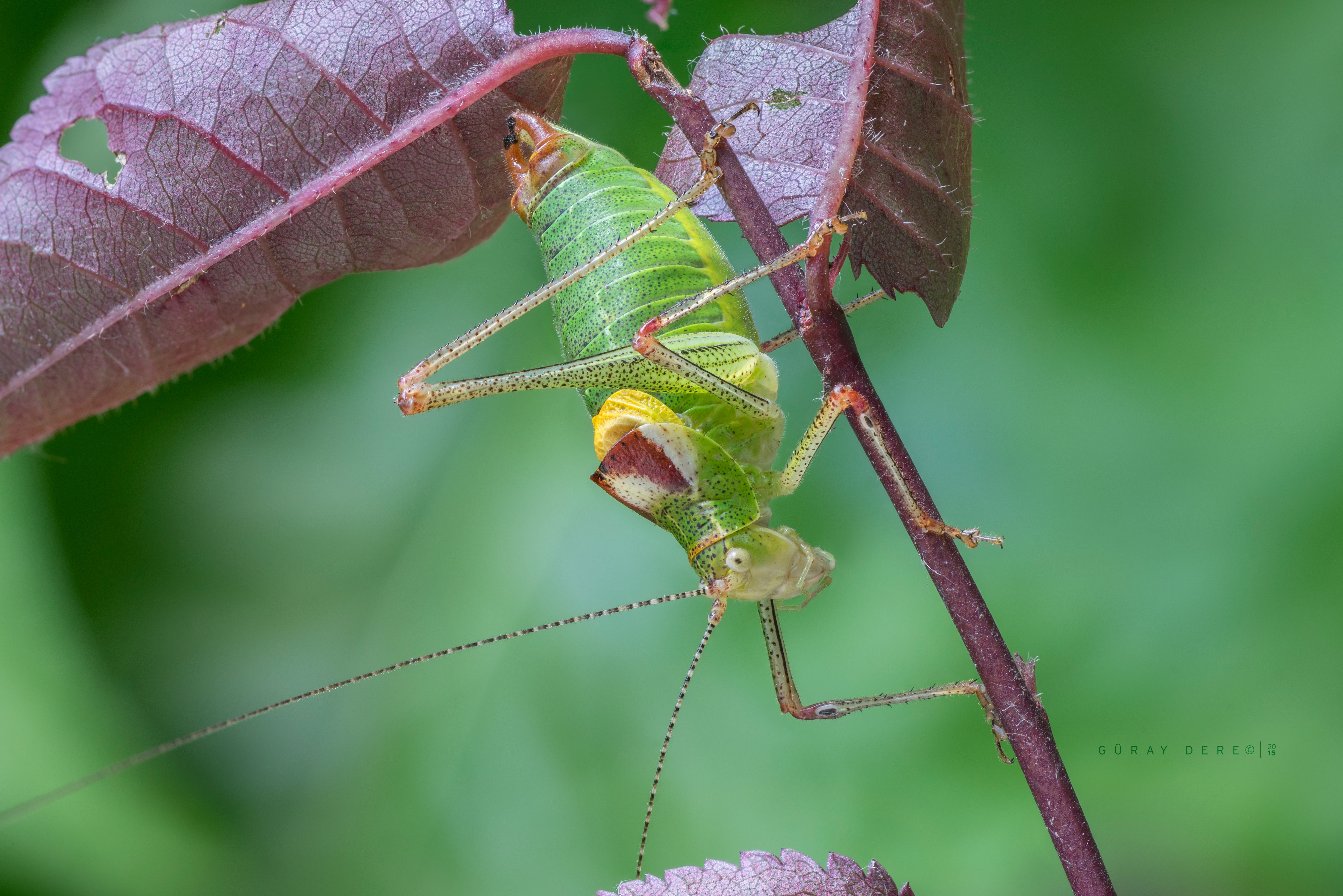
A studio stack of 220 images
focus step 0.004mm
stackshot rail
zerene stacker PMax
nikon D810
mitutoyo 10x/0.28 microscope objective on a nikon 200mm f4 lens
This was taken from Waitts Mount park in Malden, Massachusetts, just north of Boston. It's a focus stack, with 30 frames blended into one with Photoshop.
Today's macro photos in the garden all make use of in-camera focus stacking, which really shows the detail that would be hard to see with the naked eye.
Day 22 for April 2025: A month in 30 pictures
Built in the 1000s on the foundations of an earlier church, listed as a Historic Landmark on Prosper Mérimée’s very first list in 1840, the abbey church of Saint Theudère stands in the village of Saint-Chef in the French département of Isère, east of Lyon, towards the Alps.
When I say “earlier church”, I mean the one built in the 500s (of which nothing visible remains) when Theudère of Dauphiné, a local Benedictine monk who had been a trained disciple of Saint Césaire in Arles, returned to bis birthplace to found an abbey. The village of Saint-Chef grew around it during the Middle Ages, while the abbey itself reached its apogee around 1200, at the end of the Romanesque age, when it ruled over a dozen priories and about 80 churches in the environs. Decline came shortly after 1300, when the monks, profoundly divided in two factions, could not elect a new abbot. Pope John XII, then residing in Avignon, issued a bull in 1320 whereby the archbishop of Vienne would become the abbot of Saint-Chef, which forever lost its independence as of that fateful day.
The last remnants of the Benedictine communal life were washed away in the 1530s when the remaining “monks” (but could they still be called that?) were authorized by King Francis Ist and Pope Paul III to abandon their religious status and their vows (including that of poverty!), thus turning them into secular canons. The canons then went on living what was probably a much more comfortable (in all material respects!) life, until that wasn’t even good enough: in 1774, they requested and obtained (claiming isolation and the insalubrious nature of the area, poor dears) to abandon the village of Saint-Chef and be transferred to the abbey of Saint-André-le-Bas in the city of Vienne.
It should come as no surprise that, when the French Revolution erupted a few years later, not many voices were raised to defend and protect the abbey’s buildings, which were sold, destroyed and their stones used for construction works in the village and surrounding area.
The church itself, turned into a parish church, remained as the only legacy of what the powerful abbey had once been.
This rather sad story of downfall, lack of resolve and backbone, and probably outright lack of faith, outweighed by an appetite for creature comforts and personal wealth by those who had vowed to forsake them, has fortunately not contaminated the church itself, which remains as it ever was, one of the most striking examples of Romanesque architecture in the Dauphiné province. Even more importantly, the Saint Theudère former abbey church houses one of the finest (in all of France!) sets of Romanesque alfresco paintings from the 1100s, located in places not normally open to the public, but to which I managed to secure access. I hope you will enjoy them.
The nave is very airy and well lit, with relatively thin piles to support a vault that we unfortunately cannot see, owing to an equally unfortunate wood paneling. There is precious little decoration, the walls are utterly uninteresting and the capitals are quite bare.
This is a composite shot made of two focus-stacked exposures stitched with Helicon Focus software. I did this as a precautionary measure because the nave is quite long, and I needed to have everything in good focus, especially the stoup in the foreground.
A studio stack of 300 images
focus step 0.004mm
stackshot rail
zerene stacker PMax
nikon D810
mitutoyo 10x/0.28 microscope objective
mounted on a nikon 200mm f4 lens
Follow me on the Internet:
Keto Omelette using my Agfa APX100 Film Sim.
My first attempt at doing a focus-stacked image. For those doing Keto it is an egg-white omelette made with bacon, ham, mushrooms, avocado and topped with salsa.
Fujifilm X-T4 w/ 18mm f/2 lens using my Film Simulation for Agfa APX 100 which emulates a yellow-green filter
Agfa APX100 Y/G Recipe:
Film Sim: Acros G
Dynamic Range: DR100
ISO: 160
Grain Effect: Off
Color Chrome Effect: Weak
White Balance: 10000K, -7 Red & -9 Blue
Sharpening: +1
Highlight: +4
Shadow: +2
Noise Reduction: 0
Clarity: +2
Image Quality: Fine + RAW
Aspect Ratio: 3:2
Exposure Compensation: +/-0
Cascade de la Beaume (focusstacking met 4 opnamen)
Het verslag over deze Masterclass herfst 2018 is te lezen op mijn blog
Der Palpuognasee liegt in den Albula-Alpen auf 1918 m ü. M. oberhalb von Preda im Schweizer Kanton Graubünden.
I was experimenting with the focus stacking technique to keep the background out of focus. This was the result.
A Painted-wing Tachinid Fly ( Ectophasia crassipennis )
Tech info | 47 natural light exposures stacked at f5, exp.time 1/3sec, ISO200
Stacking Soft / Zerene Stacker
canon mp-e 65mm/f2.8 1-5x macro lens | Metabones Canon EF to Sony E Smart Adapter (Mark IV) | Sony A7
Here's a second shot I took the other day (or rather 3 shots blended). I still wish that I took the time to perfect the focus and composition, but I brightened up the back a little bit and did some other little touch-ups. I'm still not excellent at photoshop but I'm learning.
My next portrait will be fully focus stacked and composed much better.
Thank you, and please check out my set Life Through a Marble for similar pictures to this: www.flickr.com/photos/cabe26/sets/72157625201107241/
Moisissure sur un fruit (focus stacking).
Image composée de 64 photos prises avec la bonnette Raynox DCR-250 et assemblées avec Zerene Stacker.
Close-up photo of a double-sided quarter inch by twenty thumbscrew. Created from 50 images shot at ISO 64, 25mm, f/5.6 and 1/15th of a second exposure. Camera used was a Nikon D850 with the Laowa 25mm Ultra Macro Lens set to 2.5X magnification. Focus stacking was processed in Helicon Focus with method B (depth map) and then finishing touches were done in Adobe Lightroom.
Focus stack of 91 single shots. Shot with the EOS 90D and a Laowa 25mm Ultra Macro on a Cognisys StackShot Macro Rail. Processed in Helicon Focus and Lightroom. Natural light.
messing about with some old lenses, tried a 135mm prime with an old 50mm prime reversed and all on tubes.This is a 37 x shot focus stack.Here is a BW Version.
Empilhamento de foco, combinado 82 exposições, iluminação Flash Canon Circular MT-24EX Macro Twin Lite com suporte Novoflex suporte para flash duplo, e dois difusores que desenvolvi com duas cúpulas, Câmera Canon 5D Mark III com lente MP-E 65mm, trilho de foco, tripé manfrotto.
(As exposições foram posteriormente combinadas com o software Helicon Focus).
Para quem desejar obter o programa HELICON FOCUS com 20% de desconto acesse o www.heliconsoft.com/ com o código 45K2D47E4T .