View allAll Photos Tagged RetroStyle
16-35mm | @25mm | 60 sec. | F/16 | ISO 100 | Tripod |
Thanks for your visits, comments and favorites.If you are interested feel free to visit my homepage www.bolc-fotografie.de
Buddy Holly - The day the music died
"Buddy Holly played rock and roll for only two short years, but the wealth of material he recorded in that time made a major and lasting impact on popular music. Holly was an innovator who wrote his own material and was among the first to exploit such advanced studio techniques as double-tracking. He pioneered and popularized the now-standard rock-band lineup of two guitars, bass and drums. In his final months, he even began experimenting with orchestration. Holly’s catalog of songs includes such standards of the rock and roll canon as “Rave On,” “Peggy Sue,” “That’ll Be the Day,” Oh Boy!” and “Maybe Baby.” Though Holly lacked the arresting sexuality of Elvis Presley, he nonetheless cut an engaging, charismatic figure with his trademark horn-rimmed glasses and vocal hiccup. His creative self-reliance and energetic, inspired craftsmanship prefigured the coming wave of rock and rollers in the Sixties. Holly was a professed influence on the Beatles and Hollies (both of whom derived their names from his). Even the Rolling Stones had their first major British hit with Holly’s “Not Fade Away.”
He was born Charles Hardin Holley (later amended to “Holly") on September 7th, 1936, in Lubbock, Texas. He learned to play guitar, piano and fiddle at an early age. After high school, he formed the Western and Bop Band, a country-oriented act that performed regularly on a Lubbock radio station and opened for acts that came through town. After being noticed by a talent scout, Holly was signed to Decca in early 1956, recording demos and singles for the label in Nashville under the name Buddy Holly and the Three Tunes. Back home, Holly opened a show at the Lubbock Youth Center for Elvis Presley, an event that hastened his conversion from country and western to rock and roll. ("We owe it all to Elvis,” he later said).
On February 25th, 1957, Holly and a revised band lineup, now dubbed the Crickets, recorded “That’ll Be the Day” at the Clovis, New Mexico, studio of producer Norman Petty. The effortless, upbeat rocker won them a contract with the Coral and Brunswick labels. Later that year it became a Number One pop hit and even rose to Number Two on the R&B charts. The terms of Holly’s arrangement with his record labels, negotiated by producer/manager Petty, were somewhat unusual. Releases alternated on Coral and Brunswick, with those on the former label credited to Buddy Holly and the latter to the Crickets. Between August 1957 and August 1958, Holly and the Crickets charted seven Top Forty singles.
In October 1958, Holly split both with the Crickets and with Petty, moving to Greenwich Village and marrying Maria Elena Santiago, to whom he proposed on their first date. Because of legal and financial problems engendered by his breakup with Petty, Holly reluctantly agreed to perform on the Winter Dance Party, an ill-advised bus tour of the Midwest in the winter of 1959. Following a show in Clear Lake, Iowa, Holly chartered a private plane to the next stop on the tour, Moorhead, Minnesota. Two other performers, Ritchie Valens and the Big Bopper, joined him. Their plane left the Mason City, Iowa, airport at one in the morning and crashed in a cornfield a few minutes later, killing all aboard. Buddy Holly was only 22 years old at the time of the crash - an event immortalized in Don McLean’s “American Pie” as “the day the music died."”
TIMELINE
September 7, 1936: Charles Hardin Holley, a.k.a., Buddy Holly, is born in Lubbock, Texas.
September 1, 1953: Best friends Buddy (Holly) and Bob (Montgomery) audition for radio station KDAV in Lubbock. The teenage duo is given a half-hour show on Sunday afternoons, during which they perform country and bluegrass standards.
October 14, 1955: The trio of Buddy Holly, Bob Montgomery and Larry Welborn opens for Bill Haley and the Comets in Lubbock. Holly impresses a Nashville talent scout, leading to his eventual signing with Decca Records.
October 15, 1955: In the process of moving from their country-music origins toward the rockabilly sound, Buddy Holly’s trio open for Elvis Presley in Lubbock.
January 9, 1956: Buddy Holly & the Two-Tones (Sonny Curtis and Don Guess) kick off a 14-date country & western tour in Little Rock, Arkansas. They’re bottom-billed on a lineup that includes Hank Thompson, George Jones, Wanda Jackson and Cowboy Copas.
January 26, 1956: Signed to Decca Records, Buddy Holly heads to Nashville for his first official recording session. Overseen by veteran country producer Owen Bradley, the session yields four tracks, including Holly’s debut single ("Blue Days, Black Nights") and a classic cover ("Midnight Shift").
February 25, 1957: Buddy Holly records “That’ll Be the Day” at Norman Petty’s studio in Clovis, New Mexico. The single is released on the Brunswick label (a Decca subsidiary) and credited to the Crickets.
September 23, 1957: “That’ll Be the Day” hits #1. “Peggy Sue” is released hot on its heels, reaching #3. Buddy Holly performs both songs on The Ed Sullivan Show in December.
January 25, 1958: “Oh Boy!” becomes Buddy Holly’s third Top Ten hit.
March 28, 1958: Buddy Holly performs at Brooklyn’s Paramount Theater as part of a bill that includes Chuck Berry, Jerry Lee Lewis, Frankie Lymon & the Teenagers. It is the kickoff date for a two-month tour billed as “Alan Freed’s Big Beat Show.”
August 15, 1958: Buddy Holly marries Maria Elena Santiago back home in Lubbock.
October 3, 1958: Another caravan tour, “The Biggest Show of Stars for 1958—The Autumn Edition,” kicks off in Worcester, Massachusetts. Buddy Holly and the Crickets share the bill with Bobby Darin, Dion and the Belmonts, Clyde McPhatter, and the Coasters.
January 5, 1959: “It Doesn’t Matter Anymore” becomes the last release from Buddy Holly before his death.
January 23, 1959: The “Winter Dance Party,” an ill-advised tour through the frigid Midwest, is launched at George Devine’s Million Dollar Ballroom in Milwaukee, Wisconsin. Buddy Holly, who has parted ways with the Crickets, is the headliner. The other acts are Dion and the Belmonts, Ritchie Valens, the Big Bopper and Frankie Sardo.
February 3, 1959: After performing at the Surf Ballroom in Clear Lake, Iowa, Buddy Holly charters a plane to fly him to Fargo, North Dakota. Shortly after takeoff, the plane crashes eight miles northwest of the airfield, killing Holly, Ritchie Valens, J.P. Richardson (a.k.a. The Big Bopper) and pilot Roger Peterson.
March 9, 1959: “It Doesn’t Matter Anymore,” written by Paul Anka and recorded by Buddy Holly at his last studio session, becomes a posthumous hit.
December 24, 1969: The Buddy Holly Story, a best-of album that has been in print since 1959, is certified gold (500,000 copies sold).
July 1, 1976: Lifelong Buddy Holly fan Paul McCartney purchases rights to the entire Holly song catalog.
September 7, 1976: On what would have been Buddy Holly’s 40th birthday, the singer’s life and music are the subject of a week-long tribute organized by Paul McCartney. “Buddy Holly Week” becomes an annual affair.
May 18, 1978: The Buddy Holly Story, a popular film biography starring Gary Busey in the title role, is released. Twelve years later, the actor pays a quarter of a million dollars at auction for an acoustic guitar that belonged to Holly.
February 3, 1979: A commemorative concert is held at the Surf Ballroom in Clear Lake, Iowa, exactly 20 years after the final show played by Buddy Holly, Ritchie Valens and the Big Bopper. Del Shannon and the Drifters are among the performers.
January 23, 1986: Buddy Holly is inducted into the Rock and Roll Hall of Fame at the first induction dinner, held in New York City. Holly’s widow, Maria Elena, accepts on his behalf.
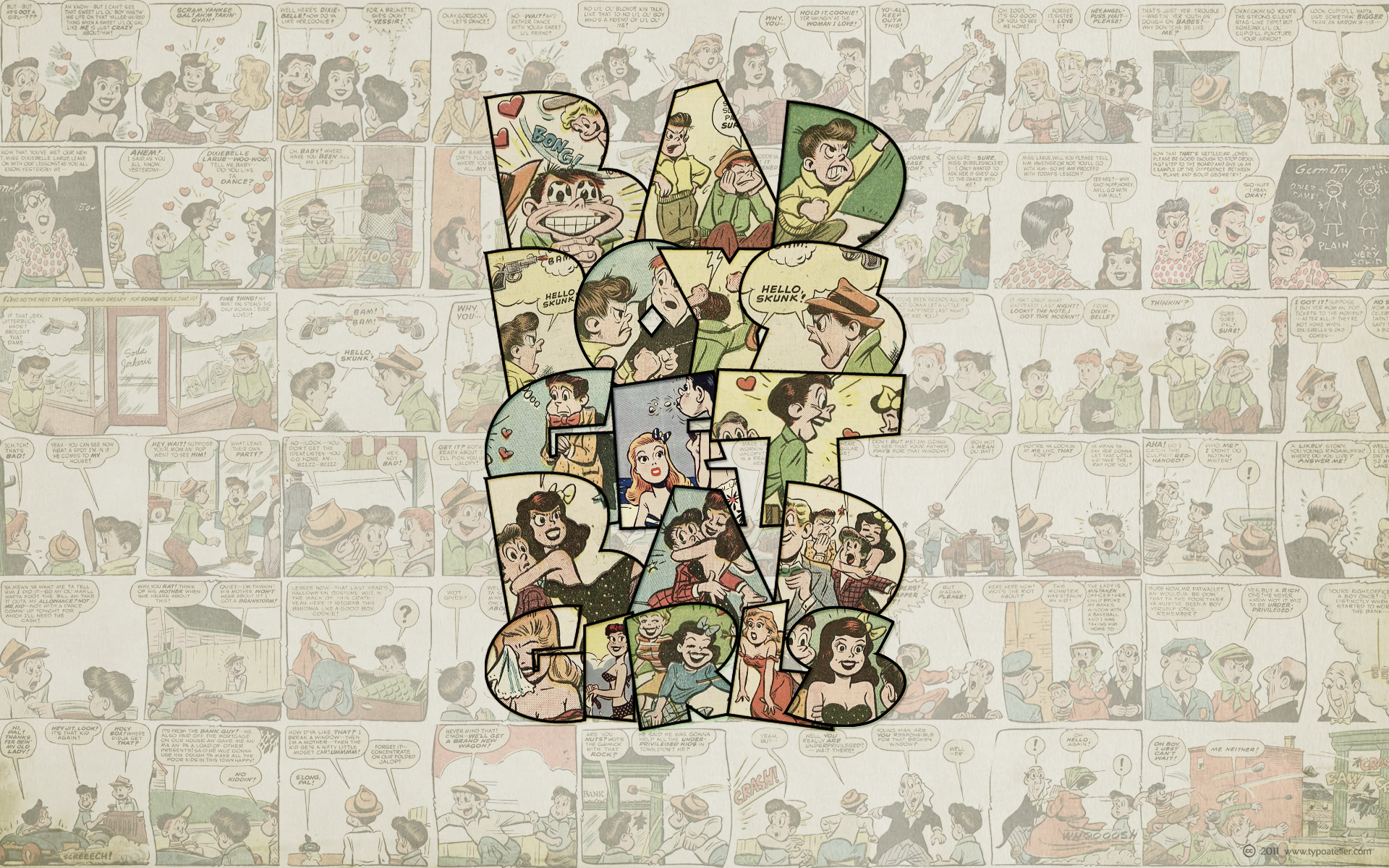
This Wallpaper I dedicate to my friend minimizán, who seems to prefer bad girls! :D – It’s a tribute to the legendary cartoonist and story board artist Dan Gordon and his great COOKIE Comics.
Typefaces in use:
Lecter Johnson’s (Doubletwo Studios) cartoony, hand-cut typeface »XXII Urban Cutouts«.
Portrait of Pin Up Miss Felicity with vintage Volkswagen Beetle, 1964
Picture and Edit: Davide Morino
Outfit, makeup and hairstyle: Pinup4oneday Team
Vintage Car: OldiesWorks Garage co.Ltd Chiang Mai
Model, MUAH:
Miss Diversity
www.facebook.com/Mss.Diversity/
Photographer: Alex
Earrings: Reikolyn
Dress: Pinup Couture Micheline Dress
... Welcome To The Change!
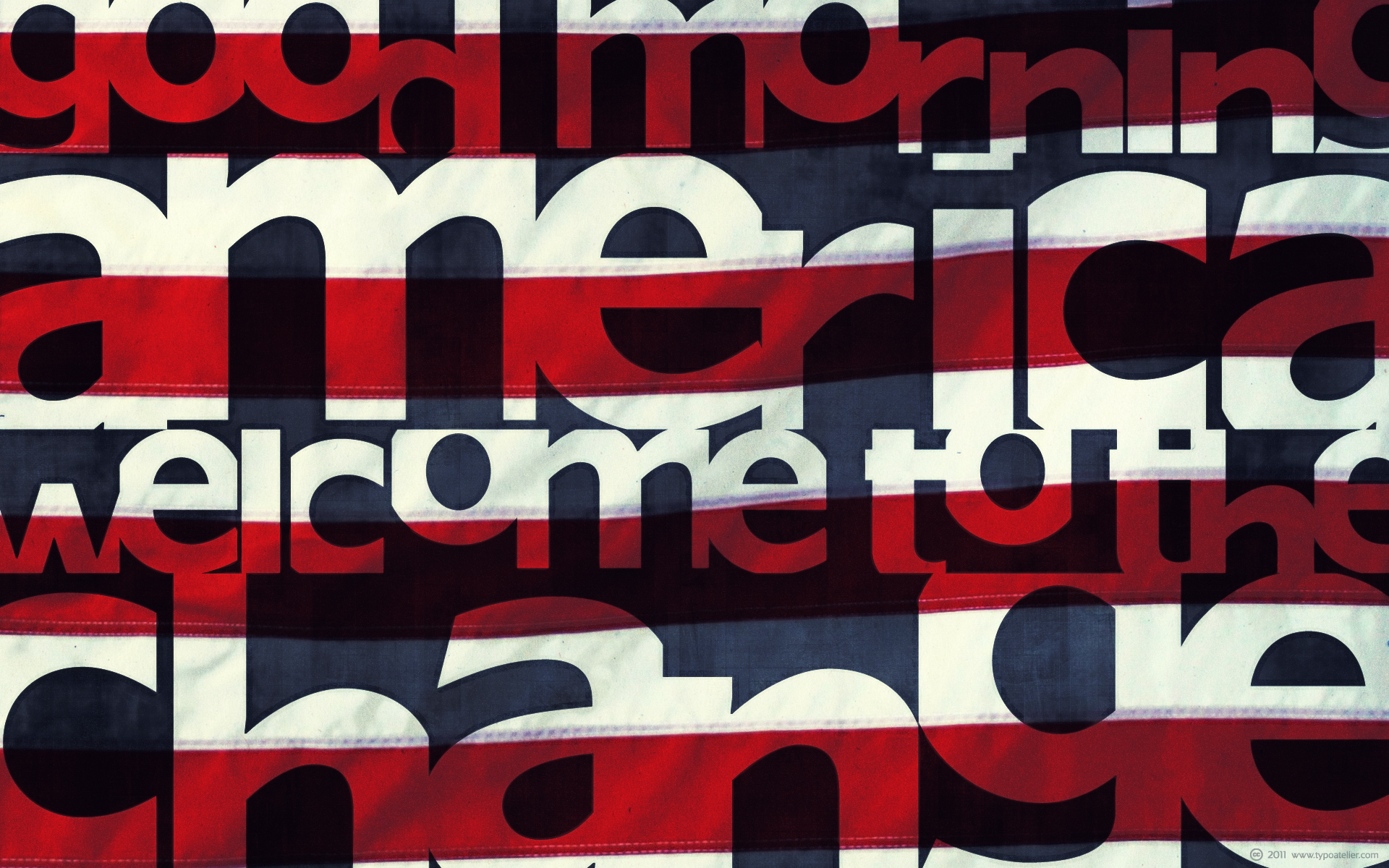
Typefaces in use:
Torbjörn Olsson’s (T4) striking, cut out typeface »One Night Stand«.
One Night Stand – Torbjörn Olsson’s experimental type – deserves a longer relation.
Use it for drop caps or quotes, to add drama in dull surroundings and to spice up bland editorial content. One Night stand is also the perfect way to seduce readers of advertisments, as well as delivering contrast in headlines. Do you want to show the world in stark black and white? The One Night Stand is for you!
One Night Stand is an OpenType typeface for both PC and Mac. Swedish type foundry T4 releases new fonts every month. One Night Stand is our twelfth introduction.
Note: The underlying sans-serif font for One Night Stand is Esans Bold, also designed by Torbjörn Olsson. Esans is a fine sans, excellent for headline use, inspired by Granby, Tempo, Gill and others.
Portrait of Miss Malì
Picture: Davide Morino
Edit: Davide Morino
Outfit, makeup and hairstyle: Miss Malì
Model Right: Miss Diversity
Model Left: Sakira Sandra
Photographer: Heiko Kalweit
Shooting for Vintage Flaneur
Black and white photo of a man in Hungary, 1960s, relaxing outdoors on a pillow, wearing a scarf and sweater.
The 'Skeena' is a Canadian train that travels between Pince Rupert and Jasper in two days with an overnight stop in Prince George where passengers choose their own accommodation. For a long time the train follows the valley of the Skeena River through the scenic wilderness of the coastal mountains.
This was a split level car with a lounge and stairs leading to the observation dome where we spent most of the time. It was the budget option but I could not think of a better way to travel.
Tin box with a very cute bambi print from the Belgian brand Froy & Dind (Kers op de kaart).
Love this sooo much :)

Typeface in use:
Rui Abreu’s (Fountain) outstandingly beautiful flared serif typeface »Aria Pro«.
In the words of Rui Abreu:
The inspiration for Aria came from the epigraph on a frame of a nineteenth century painting. I was fascinated by the peculiar capitals of the inscription. The high contrast, and the overall quirkiness, especially the tail of the R and the oblique stems on the M, were interesting.
I decided to draw a display font with high contrast and a vertical axis, in a reference to the transitional form. Still I wanted to capture the spirit of the original letters, which to me are so imbued with Romanticism. This approach allowed for some exuberance on the regular style, but also led to more calligraphic letterforms in the italic – in which “the flow of the curves” lead the way.
To add to this epigraphic nature there is a number of ornaments that accompany words accordingly to their uppercase or lowercase form. For versatility there’s also a good amount of ligatures, alternative glyphs, and a special set of ornamental numbers.
Picture is made with the film camera fully immersed under water. Film size 18x24 cm. Monocle. Without shutter. Xray film. DS51 flash. The model appearence is inspired by the japanesse ama and korean haenyeo.
Hiking trail in the Chagrin Reservation, Willoughby Hills, Ohio, a part of the Cleveland Metropark system.
Sepia-toned vintage portrait of a young girl standing on a patterned blanket, holding a small toy. Taken in Hungary in 1938.
土耳其-爱琴海地区-Izmir省-阿拉恰特-晒太阳的猫咪
Lazy cat on the street of Alaçatı, a pretty little town on Çeşme Peninsula by Aegean Sea, in Izmirn province, Aegean region of Turkey.
Alacati has been famous for its architecture, vineyards and windmills for over 150 years has now made its name in the world of windsurfing and kitesurfing, with its crystal clear water, consistent and steady wind (for an average of 300 days a year). Alacati is one of the most traditional towns in Turkey with stone houses, narrow streets, boutique hotels and restaurants with tables on the streets.
© All rights reserved. You may not use this photo in website, blog or any other media without my explicit permission.
Black and white portrait of a young male student in a formal uniform and jacket, Budapest, Hungary, 1930s. Wesselényi felső kereskedelmi iskola
Cool cars, cooler outfits, and a whole lot of sunshine at the Classic Car Boot Sale, King’s Cross, Spring 2026.
Sepia-toned portrait of First Lieutenant Sándor Zsuffa, captured in the 1920s in Gyöngyös, Hungary, by photographer Kovács. The subject is dressed in formal military attire with visible medals and insignia.
Toronto, Canada.
Model: Alexandra Palma
Vlog: www.youtube.com/watch?v=-wuWSC8hmGg&t=65s
Twitter: twitter.com/TheJennire
Instagram (Photographyl): www.instagram.com/jennirenarvaezphotography/
Instagram (Personal): instagram.com/thejennire
TikTok: www.tiktok.com/@thejennire
"Merry-go-round" collana/necklace
F/W 2012-13 "Treasures" collection.
Learn more about the collection on my blog: bit.ly/jHxoqG
Collezione "Treasures" A/I 2012-13.
Scopri qualcosa in più a proposito della collezione sul mio blog: bit.ly/jHxoqG
If you want to know more about me, have a look to my profile!
E per saperne di più su di me... date un'occhiata al mio profilo!
A black-and-white photo of a Hungarian man from the 1930s wearing a suit and hat, standing beside a lace-covered table.
A black-and-white photo of a Hungarian woman from the 1930s wearing a formal dark dress and standing confidently.
Black-and-white photo of a group in historical costumes, part of a theatrical performance in Hungary, 1944.
Portrait of Miss Malì
Picture: Davide Morino
Edit: Davide Morino
Outfit, makeup and hairstyle: Miss Malì