View allAll Photos Tagged Handheld
Yup! That's right! I hand held this :-D I also used dodge and burn to take out some sensor dusties! :-D So while this isn't that excellent of a photo, it's been excellent to learn on :-D
The common green bottle fly is a blowfly found in most areas of the world and is the most well-known of the numerous green bottle fly species - handheld back garden shot
Grandfather´s lens 2.1.
Ingredients:
Leitz-Wetzlar Elmarit-R 90/2.8 @2.8
10mm extension tube
Olympus EM 10 Mark II
a lots of time.
Manual settings, manual focus, handheld, available light. Hope, you enjoy!
Quebec City
PE: Cropping, perspective, LAB: saturation, separate gamma on sign, slight sharpening on L layer. No content editing.
New @ the FWRD Event
Game Day Tray
Click for Sliders, Flapper or Drumstick Wings, Meatballs, Nacho Chips, Chip Bags & animated dip bowls. For male/female/kid avatars. Only 7Li, and choose from Black or Silver Trays (both included) Resize on click, modify decor versions included along with food decor!
And Happy Fence Friday!
Stitched from 2 shots with Samsung NX3000, Samsung NX 30mm F/2 @F2, 1/15 secs, ISO 2500
Contraption for handheld and fast stacking in the field.
Of course only for insects that are not skittish ....
The support where the insect sits (4) does not have to be cut, but in many cases I cut it off. If the insect doesn't buzz off after cutting, you're likely to have a good chance of getting the stack made.
The left hand (1) holds the specimen (4) and rests on a metal tube (3), recovered from an old tripod, about 27cm long. The metal tube slides neatly over a metal rod (2). The rod (2) is 27cm long, sits about 6.5cm under the camera base, 1cm outside its left side and is firmly fixed under the camera (stuff from Wondlan). A second rod (5) carries a ‘magic arm’ with diffusor (6) over the specimen (absolutely needed in bright sunlight).
Shifting the subject goes as follows: i hold the subject in my left hand, between index and thumb. While shifting the subject through the focal plane, my left hand rests on the sliding tube. So left hand and black tube slide together over rod 2. This helps to gain full control over lateral movements that could destroy the composition. It also helps to make steadier - regular shifts.
It didn't take much exercise and this slider is a great help. However, it does add wheight to the camera, but it's a winner since this method doesn't require the need for much heavier tripods and sliding plate, etcetera.
A small rod (7) is placed under the contraption and serves as monopod (12cm); it gives better support to the camera by resting it on the right knee or any other support available.
UPDATE (January 2018) of this rig here: www.flickr.com/photos/andredekesel/8086137225/in/dateposted/
Before you start hunting it is best to train all this on a static subject.
It's also good to have all the camera settings right before bringing the subject in front of the lens. Usually camera settings are like this:
a) The camera is set to continuous shooting, the highest frame rate. The more the better. The Sony A6300 (or A6500) has 11fr/sec, the Sony A7R5 has 10fr/sec.
b) while pressing the button, the specimen is shifted through the focal plane. Because of this movement, you need to use shutter priority and set it to at least 1/160sec or even faster (if light allows). You can also use aperture priority, but then keep an eye on the shutter speed, it should be faster than 1/160sec.
c) With the Sony A6300, A6500 or A7R5 an ISO setting between 200 to 400 gives excellent jpegs. I only shift it higher than 100 if necessary, so only when the resulting aperture is too low 2.8
d) in general i try to get an aperture around f5 and exposure compensation at -0,7 to -1.
e) I shoot with the highest jpeg, and i am only interested in stacks with images of 6000x4000px. Usually the A6300's buffer fills up after 60 images. This means that a complete shift/stack with the A6300 needs to be made in less than 5 seconds. Which is perfectly possible. With the A6500 or A7R5 this is not a problem, the buffer is big enough.
f) So far I have used this technique with the Canon's 100mm & 60mm macro, and also with Sony's FE90mm macro and the Laowa 65mm f/2.8 2X macro APO.
Examples of images made with this setup in the first comment lines
Handheld, D750, 24-120f4 at High ISO
#monsoon #kolkata
I captured this video handheld on my #nikond750 just before leaving the city forever.
#saltlake #kolkatagram #westbengal
The same bee on her original lavender flower, telling me to take a hike.
2x magnification, 1 frame, handheld.
all handheld; exp +0.3;
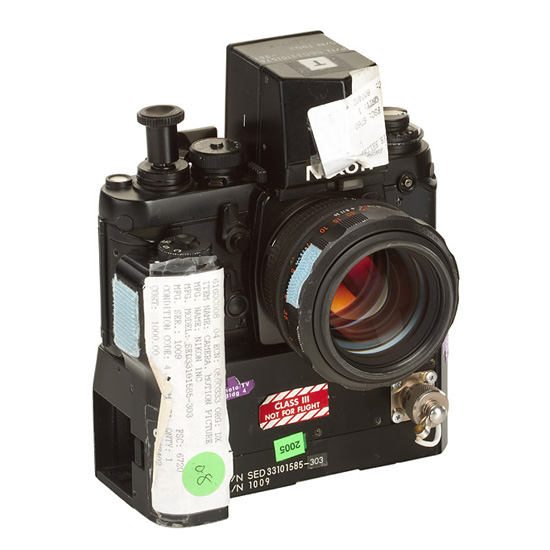
lens c.1972 55 mm f/1.2 pre-Ai
www.destoutz.ch/lens_55mm_f1.2_221699.html
used by NASA to photo eg ozone layer