View allAll Photos Tagged FUT
“Launch Platform for Mars Ascent Vehicle”
And/or, per the following linked document & near equivalent depiction within it (Page 97, Figure 43):
“Mars excursion module configuration.”
ntrs.nasa.gov/api/citations/19700026519/downloads/1970002...
See also:
www.nasa.gov/sites/default/files/atoms/files/19690804_man...
Last, but not least, with a vivid color version of the image and superior caption of:
“MEM ascent stage liftoff. The ascent stage was a stage-and-a-half design with a cluster of approximately conical expendable propellant tanks and integral tanks in its cylindrical core feeding a single engine.”
At/from:
spaceflighthistory.blogspot.com/search?q=integrated+progr...
Credit: David S. F. Portreee/”No Shortage of Dreams” blog
Unfortunately, no signature is visible. A very similar Mars Excursion Module (MEM) depiction, also within NASA’s grand Integrated Program Plan (IPP) is by Renato Moncini. However, its depiction of the Martian landscape doesn’t agree with that of my posted photo, sooo…possibly/probably not by him. ¯\_(ツ)_/¯
“FUTURE SPACE STATION CONCEPT---In the summer of 1982 NASA sponsored industry studies to examine mission requirements for a possible U.S. space station. The studies analyzed future missions in space to determine what attributes a space station would have to have to fulfill these missions. While the studies focused on mission requirements and appropriate space station “architecture,” several renderings were produced to enable a possible station configuration to be envisioned. This picture, an artist’s concept, portrays one possible space station, as conceived by Rockwell International’s North American Space Operations Division.
The picture shows a mature space station configuration, which includes two solar panels to provide power; several modules for command, habitation and experimental activity; a Shuttle-sized unpressurized rack for storage of payloads; advanced remote manipulator systems for the assembly of large structures and servicing/storage of satellites and instruments; and a locking/utility hub that might serve in addition as a “safe haven” in case of emergency.
Attached to the station in this picture is a Shuttle orbiter. The Space Shuttle would periodically visit the space station, delivering new crews, supplies, and payloads as required.
Also shown in this picture is an Orbital Transfer Vehicle (OTV) delivering an advanced communications satellite to geosynchronous orbit. Such a vehicle could be space-based at the station, providing a significant gain in economy and capability.”
And/or:
“Relative size of the space shuttle and the space station is emphasized in this picturization of a typical resupply mission. The shuttle is docked, and a communications satellite has been removed from its payload bay and stored temporarily in the open-sided assembly bay, where manipulator arms and astronauts performed the final assembly and checkout. Then, attached to an orbital transfer vehicle, the satellite (upper right) is ferried to a higher orbit.”
The image (on page 28) and above, at:
docshare01.docshare.tips/files/4606/46060281.pdf
Credit: “NASA Space Station” (EP-211), 1985, by David A. Anderton
The beautiful depiction is surely by Ted Brown.
See also:
www.astronautix.com/s/spacestation1984.html
Credit: Astronautix website
“BUILDING A PROSPEROUS COLONY AT L-5”
A beautiful & rarely seen Rick Guidice work, I assume as part of his other wonderful vistas of massive space colonies on behalf of the Ames Research Center, for whatever the ca. 1975/76 workshop or conference was.
Take a gander at what appears to be a big-ass reaction control system ‘package’ being approached by the Astronaut…with appropriately enough…what appears to be a big-ass wrench. I also like the sun glint off the shuttle’s wingtip.
Without some serious boosting, I really don’t think an orbiter could get to L-5. And if that's the moon, I do believe there's some artistic license being exercised.
So…with that, I think I got it. The two similar looking craft in the background are “Lunar Transfer Vehicles”, assembled in earth orbit, which brought the shuttle orbiters, construction materials, etc., etc. The shuttles are then used to transport/transfer personnel, cargo & elements of the massive colony as required. Said colony occupies the entire foreground, at the rim of which the aforementioned spacewalking Astronaut is about to begin work.
Works for me. And if wrong, which it may very well be, it doesn’t really matter.
I’m not even going to touch whose/what design proposal/phase…if any, the shuttles are.
I hope Mr. Guidice obtained Mr. McCall’s permission before publishing this. 😉
Despite being of a paltry resolution, at yet another long defunct NASA site, I’m thankful:
er.jsc.nasa.gov/seh/settle138.GIF

As such, I’m sure the site’s days are numbered, so even this fraction of an iota of information & 134 KB of visual data will go bye-bye, like so many before. 😐☹️😠😡😟☹️😞😢
Some Lagrange/Lagrangian/libration point(s) context:
en.wikipedia.org/wiki/Lagrange_point_colonization
Credit: Wikipedia
www.space.com/30302-lagrange-points.html
Credit: Space.com website
This would seem to be of the same vehicles:
www.rickguidice.com/images/489_Neg_001.jpg

www.rickguidice.com/images/241_Untitled-58_edited-1.jpg

Credit: Rick Guidice website
“…The next United States mission to explore Venus may well be a buoyant station which could float a science package approximately 60 kilometers above the planet’s surface. The full-scale design concept has the capability of answering the most important scientific questions concerning Venus. This station is comprised of a 175-pound gondola supported by a16-foot-diameter balloon. The gondola contains a mock-up of instruments and supporting equipment designed to measure atmospheric composition, temperature, pressure, density, cloud structure and organic (biological) matter. Two drop sondes capable of gathering data to reconstruct lower atmosphere and surface structure are also included in the science package.”
By Charles O. Bennett.
www.aerospaceprojectsreview.com/blog/wp-content/uploads/2...
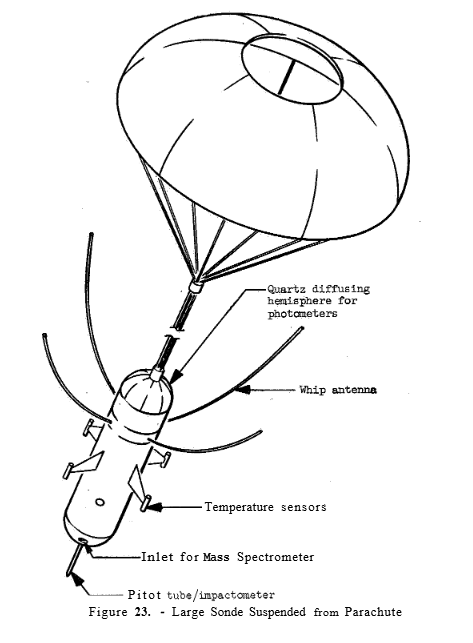
Credit: Aerospace Projects Review website
Rest In Space Mr. Bennett, Thank You:
www.celestis.com/participants-testimonials/charles-oren-b...
Credit: Celestis, Inc. website
Bummer:
www.space.com/venus-clouds-life-not-enough-water
Credit: Space.com website
But:
www.nasa.gov/press-release/nasa-selects-2-missions-to-stu...
La légende rapporte que le 17 mai 628, sous le règne de l'Impératrice Suiko (593 - 628), deux frères, Hamanari et Takenari Hinokuma, pêchant sur la rivière Sumida, trouvèrent dans leurs filets une statue de la Déesse Kannon. Cette découverte parvint aux oreilles du seigneur du village, Haji no Nakamoto, qui vint trouver les deux frères et fit un sermon passionné au Bouddha, la déesse Kannon étant un bodhisattva.
Les frères Hinokuma en furent fortement impressionnés et se convertirent ensuite au bouddhisme. La statue de la déesse Kannon fut placée dans un temple de fortune, et les trois hommes vouèrent ensuite leur vie à prêcher la voie bouddhiste.
Le temple Sensō-ji, terminé en l'an 645, prospéra, tout comme le quartier d'Asakusa dans lequel il était établi. Anciennement associé à la secte Tendai, il est devenu indépendant après la Seconde Guerre mondiale.
En 1649, pour rendre hommage aux trois hommes et les élever au rang des divinités, le sanctuaire Asakusa, aussi nommé Sanja-sama (三社様, « Sanctuaire des Trois Divinités »), fut érigé sur ordre du shogun Tokugawa Iemitsu.
“U.S. INTERNATIONAL COOPERATION PHASE III – This is a representation illustrating the United States’ international cooperation in space. Phase III of the international Space Station is depicted in its completed/fully operational state, with elements from the United States, Europe, Canada and r****a. This updated version shows a centrifuge module attached. Artwork done by John Frassanito and Associates.”
Interesting:
www.esa.int/esapub/sp/sp1201/images/sp1201f1.gif
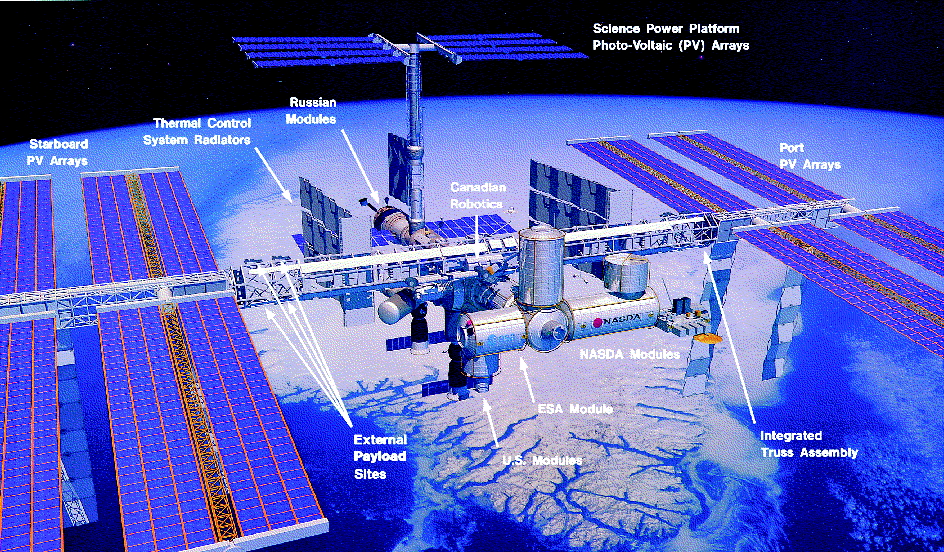
Credit: ESA website
Widely reproduced…by many…although surprisingly, a reverse image search yielded a plethora of almost exclusively Godless sites.
This is dark, like pretty much every reproduction I’ve previously seen it. Why? Intentional? NASA ‘photo’ buffoonery? Unfortunately, I can see them originally getting ahold of it, and whoever being asleep at the wheel when it was processed/reproduced/printed. And from that point on, “bam”, the die is cast…and here we are. Also, two Soyuz spacecraft, but no shuttle, hmmm.
I’m pretty sure the snow-covered landmass is Greenland. If so, I don’t think the orbital track of the ISS offers this near. as steep a perspective. “Software user’s” license?
Although I don’t begrudge those with expertise in computer generation/manipulation of images, it just doesn’t do it for me. Does it require skill? Absolutely. Artistic talent? To a degree, I suppose. However, to me, nothing equals knowing that what you’re looking at was literally created by hand. Keeping such steady, using whatever the physical tool was; brush, airbrush, pallet thingy or whatever was at the artist’s disposal. And, the image possibly exhibiting texture, and if seeing it in person - without being subsequently apprehended - being able to reach out & tactilely experience/confirm.
Nothing digital provides that appreciation, satisfaction or gratification.
Riom est située dans le département du Puy-de-Dôme, en région Auvergne-Rhône-Alpes.
Située au nord de l'Auvergne, la ville fut, dès 1210, capitale de la Terre d'Auvergne puis du duché d'Auvergne.
“SPACE TRANSPORTATION EVOLUTION”
Unfortunately, “NO”.
A veritable flotilla comprised primarily of never/not to be spacecraft are depicted enroute to fanciful destinations.
I’m having a hard time determining where the boundary - if such even exists - is between computer-generation & time-tested, old-fashioned, hand-created artwork within this. Although the spacecraft have an airbrushed appearance, their ‘geometry’, along with the grid lines – which I’ve always attributed to be an ‘artifact’ of early computer-generated depictions – imparts a sort of clinical artificiality.
Oddly & thankfully, not a single NASA worm logo to be seen.
Other than the space shuttle stack on the far left - with the multi-nozzled "stielhandgranate" solid? rocket booster design and the twin-engine mini-shuttle/lifting body/sortie vehicle/X-?? thing on the far right, I think I've identified the other craft in "Tags".
Also thankfully, the artist’s first name & first letter of last name is visible, who’s likely Doug McLeod. Thereby a WIN.
Ce matin, le calme de la gare de Saint-Lô fut quelque peu troublé par la présence de ce train d'inspection de l'infra composé du wagon Vulcain et de la voiture Lucie. Ils étaient encadrés par les BB 69484 et BB 69485. Le convoi est ici en attente de départ vers Lison pour la poursuite de sa tournée.
The great rainstorm having temporarily abated, I went for a walk to feed the local peacocks some scraps and was rewarded with this! (Two young and rather small males.)
20260101-IMG_1930
La Grande porte aurait été construite lors de travaux des fortifications sous Charles VII.
Elle faisait office d'entrée principale de Granville.
Sa construction était accompagnée d'un logement au-dessus appelé ''logis du roy'' qui servit d'habitation aux gouverneurs de Granville.
Des travaux de la porte aurait eu lieu sous le règne de Louis XIII.
En 1630, la porte est équipée d'un pont levis.
Lorsqu'il fut décidé de détruire les enceintes en 1688, la porte ne fut pas touchée.
Au 18e siècle, elle servit de maison commune.
Au 19e, on y installa une bibliothèque de Génie.
En 1889, toute la place forte est déclassée sauf les casernes par la proposition du ministre de la guerre, Charles de Freycinet...
Hammershus est la plus grande ruine (13 ha) de château d'Europe du Nord et l'attraction la plus visitée de Bornholm. Ses ruines s'élèvent au nord-ouest de l'île de Bornholm, au sommet de la colline rocheuse d'Hammeren qui culmine à 74 m d'altitude en surplomb de la mer. Le contrôle de l'île de Bornholm fut l'objet d'une longue rivalité entre la monarchie danoise et l'archevêché de Lund, qui se livrèrent plusieurs batailles pour y parvenir. Au cours du XIIème siècle, le roi Valdemar II de Danemark avait en effet accepté le transfert de trois des quatre subdivisions de l'île à l'archevêché de Lund.
Vers la fin du XIIIème siècle, l'archevêque fit construire sa propre forteresse, Hammershus. Pendant les combats entre les archevêques et les rois du Danemark, le château changea plusieurs fois de mains et ce n'est qu'en 1522 que l'île cesse de faire partie du domaine de l'archevêché de Lund. En 1658, les troupes suédoises occupent l'île et prennent le château. Mais la population se soulève et l'île retrouve sa souveraineté danoise (d'où encore sa fidélité à son drapeau). Vers 1750, le château est démantelé et devient une ruine (cf. wikipédia).
☾ Il fut un temps où les gardiennes découvrirent les brumes pour la première fois. De leurs émois naquirent de nouvelles formes de pouvoir, engeances de leur époque.☽
Photo : Gaël Sacré ~ www.ether.4ormat.com
Muse : Magdalène
Venasque (Vaucluse, Provence) .
Absis oest.
Al terra es troba el lloc de l'antiga pica baptismal octogonal original
Le baptistère de Venasque est un édifice construit à l'époque mérovingienne (VIe siècle) et remanié à plusieurs reprises jusqu'à l'époque romane. Il est situé à Venasque en Provence dans le département de Vaucluse.
À l'origine, l'édifice fut probablement un temple romain consacré à Diane, Vénus ou Mercure.
Selon la tradition, le baptistère Saint-Jean Baptiste aurait été fondé à l'époque mérovingienne par Saint Siffrein, moine de l'abbaye de Lérins devenu évêque de Venasque à la fin du VIe siècle.
Le Baptistère de Venasque fait l'objet d'un classement au titre des monuments historiques depuis 18401 : il fait partie de la première liste de monuments historiques français, la liste des monuments historiques de 1840, qui comptait 1034 monuments.
fr.wikipedia.org/wiki/Baptist%C3%A8re_de_Venasque
El baptisteri de Venasque és un edifici construït en l'època merovingia (segle VI) i revisat diverses vegades, fins a l'època romana. Està situat a Venasque, a la Provença, al departament de Vaucluse.
Originalment, l'edifici va ser probablement un temple romà dedicat a Diana, Venus o Mercuri.
Segons la tradició, el Baptisteri de Sant Joan Baptista va ser fundat en època merovingia de Sant Siffrein, monjo de l'abadia de Lerins que es va convertir en bisbe de Venasque a la fi del segle VI.
El baptisteri va ser utilitzat per celebrar el baptisme per immersió dels catecúmens adults.
Aquest baptisme només podia ser celebrat pel bisbe i tenia lloc només dues vegades l'any: això implicava un gran nombre de batejats i per tant, requereix un gran edifici.
====
El baptisterio de Venasque es un edificio construido en la época merovingia (siglo VI) y revisado varias veces, hasta la época romana. Está situado en Venasque, en la Provenza, en el departamento de Vaucluse.
Originalmente, el edificio fue probablemente un templo romano dedicado a Diana, Venus o Mercurio.
Según la tradición, el Baptisterio de San Juan Bautista fue fundado en época merovingia de San Siffrein, monje de la abadía de Lerins que se convirtió en obispo de Venasque a finales del siglo VI.
El baptisterio fue utilizado para celebrar el bautismo por inmersión de los catecúmenos adultos.
Este bautismo solo podía ser celebrado por el obispo y tenia lugar sólo dos veces al año: esto implicaba un gran número de bautizados y por lo tanto, requiere un gran edificio.
La fontaine fut réalisée en décembre 1885 par Gaspard André (1840-1896) à qui nous devons également le théâtre des Célestins. En marbre blanc, elle représente Philibert Delorme ou de l'Orme, Guillaume Coustou, Gérard Audran et Hippolyte Flandrin.
Philibert Delorme, architecte (Lyon 1514, Paris 1570), a bâti les châteaux d'Anet et des Tuileries. Guillaume Coustou, sculpteur, (Lyon 1677, Paris 1746). Gérard Audran, artiste, (Lyon 1640, Paris 1703). Hippolyte Flandrin, peintre, (Lyon 1809, Rome 1864).
La place des Jacobins où se dresse la fontaine, d'une superficie de 6320 m², s'est appelée place Confort jusqu'en 1782, du nom d'une chapelle dédiée à Notre-Dame de Confort puis, place des Jacobins du nom du couvent des Dominicains ou Jacobins. Au sud de la place se trouvait leur église et leur couvent. Dans cette église, le Pape Jean XXII fut élu en 1316.
Elle s'est appelée place de la Fraternité de 1794 à 1871.
La fontaine est inscrite à l'inventaire supplémentaire des monuments historiques (ISMH, 18/05/1992).
Ces fresques ornent le plafond de la nef de l'Oslo Domkirke située au Karl Johans Gate à Oslo en Norvège.
Au milieu des années 1850, l'intérieur baroque de la cathédrale datant de 1697 fut réaménagé dans le style néogothique. La chaire, l'autel et le buffet d'orgue avec ses ornements aux motifs de feuilles d'acanthe sont d'origine.
La décoration comprend de vastes fresques (d'Hugo Louis Mohr) au plafond qui illustrent des scènes bibliques et datent de 1936-1950, et des vitraux d'Emanuel Vigeland (le frère de Gustav, le sculpteur).
La Karl Johans Gate (partie basse) est une sorte de Champs-Élysées d'Oslo, c'est donc l'avenue la plus célèbre et la plus animée du pays. Elle tient son nom du roi de Suède et de Norvège Karl Johan (règne 1818-1844). Percée en 1840 d'Est en Ouest, de la gare centrale au nouveau Palais Royal, la Karl Johans Gate dessert (directement ou à proximité immédiate) tous les bâtiments officiels : cathédrale, Parlement, université, Théâtre national... et Palais royal. Elle est piétonne sur la première moitié de son parcours, partie basse près de la gare.
Oslo est la capitale d'État de la Norvège. La ville s'est appelée Christiania de 1624 à 1924, selon l'ancienne graphie latine héritée du danois, ou communément Kristiania en dano-norvégien. Le 1er janvier 1925, elle a officiellement repris le nom d'un modeste faubourg, site historique de la première ville, fondée au fond de l'Oslofjord par Harald III et promue capitale royale sous Haakon V. La ville, qui s'étend sur 450 km2, est restée en symbiose avec la nature par ses larges espaces verts et ses pistes de ski, bien que cet important nœud de communication ferroviaire et portuaire soit desservi par un réseau routier et autoroutier et de nombreux trains de banlieue.
Possibly as part of NASA’s 1988 - 1989 Mars Exploration Case Studies, an unmanned articulated Martin Marietta rover is depicted in action. I’ve never seen this before & couldn’t find it anywhere online.
The rover appears to be equipped with a suite of soil analyzing instrumentation…maybe even return capable chambers/canisters?
I like the sporty paint scheme of the wheels, which I’d think would be for engineering photographic documentation. If so, is it logical to assume this is part of a manned exploration proposal? Since a human would likely take those photographs? Along those lines, note the lack of a high-gain antenna, supportive of this being a ‘localized’ component of a larger effort/mission. Maybe?
Oh yeah, doesn’t the sampler arm look like one of those fancy pot filler faucets?
Being of Martin Marietta origin, and the timeframe I’m thinking, this may well be by Robert S. Murray. Although, maybe even Charles O. Bennett.
Keukenhof 07-04-1991. Anderson of CastlefordH620 FUT, BOVA Futura FHD12-290 new the previous month. Probabaly scrapped ca. 07/2011.
Possibly an evolution of JPL’s original “Purple Pigeon” concept/proposal, depicting a Mars rover, lights ablaze, descending into a shadowed crater. Although only one rover is depicted, could it possibly be one of a pair, per the original PP concept?
And, is the apparent 'original' configuration Viking lander in the background just that…an original Viking lander that the rover may have just visited? Or, a subsequent externally similar derivative/variant? Who knows,
In lieu of any other imagery, the only reason I refer to this as a possible extension of the Mars Purple Pigeon proposal is because Mr. Portree alludes to such in referencing an image with similar rovers:
spaceflighthistory.blogspot.com/2018/12/dual-mars-rovers-...
Credit: “No Shortage of Dreams: Mars Multi-Rover Mission (1977)”/David S. F. Portree
One of many beautiful works by Ken Hodges for JPL.
Thank you for your service Brother, continue to Rest In Peace:
www.legacy.com/us/obituaries/latimes/name/ken-hodges-obit...
Credit: Legacy website
"DC-3 docks with large space base. In June 1969, NASA redirected North American to investigate a bold new concept proposed by the Manned Spacecraft Center's Maxime Faget. The company received a $0.25-million contract extension for this purpose, and another $2.9 million in July 1969 to develop large modular space stations and space base concepts like the early concept depicted here. Faget, the designer of the Mercury capsule, disliked Max Hunter's Starclipper lifting-body design since it had poor low-speed aerodynamics and also would be difficult to develop since the structure was tightly coupled with the aerodynamics. Faget preferred a simple winged design but he also admitted that traditional wings would be very heavy and the leading edges would be difficult to protect from the searing heat of reentry. His solution was the “DC-3” which alleviated the problem by reentering at a very high angle of attack (60 deg.), i.e. coming in nose-high much like the suborbital X-15 rocketplane. This would only expose the flat underside of the vehicle, as most of the thermal energy goes into the shock wave forming in front of the vehicle. The high drag also shortens the duration of the heat pulse, yet does not exceed acceptable crew deceleration load factors beyond 2 g's. The DC-3 wing would only be optimized for subsonic flight and landing, greatly reducing the development cost and time. But the low lift-to-drag ratio reentry profile advocated by Faget would also create some problems since the DC-3 would have limited crossrange during reentry, i.e. it would have been unable to fly larger distances than about 430km to the left and right of an initial direction of flight. Crossrange was an important military requirement, so the USAF opposed the DC-3."
The above, and the photo, along with a plethora of other fantastic images and information, at:
www.pmview.com/spaceodysseytwo/spacelvs/sld022.htm
Credit: PMView website
The exquisite artwork is by Henry Lozano Jr., North American Aviation/North American Rockwell artist/illustrator extraordinaire. Accordingly, Mr. Lozano was 1970 President of the Society of Illustrators of Los Angeles (SILA):
Unfortunately, the record of the above, along with the link itself, has been removed from the following SILA website...:
...and replaced by the following.
Both above credit: SILA website
While still very informative, with reference to other superb ‘aerospace’ artists, it’s nonetheless very disappointing that Mr. Lozano has been omitted from the record.
See also:
1.bp.blogspot.com/-OlAZql_DmEs/Xv0oJa3n2hI/AAAAAAAASts/RY...
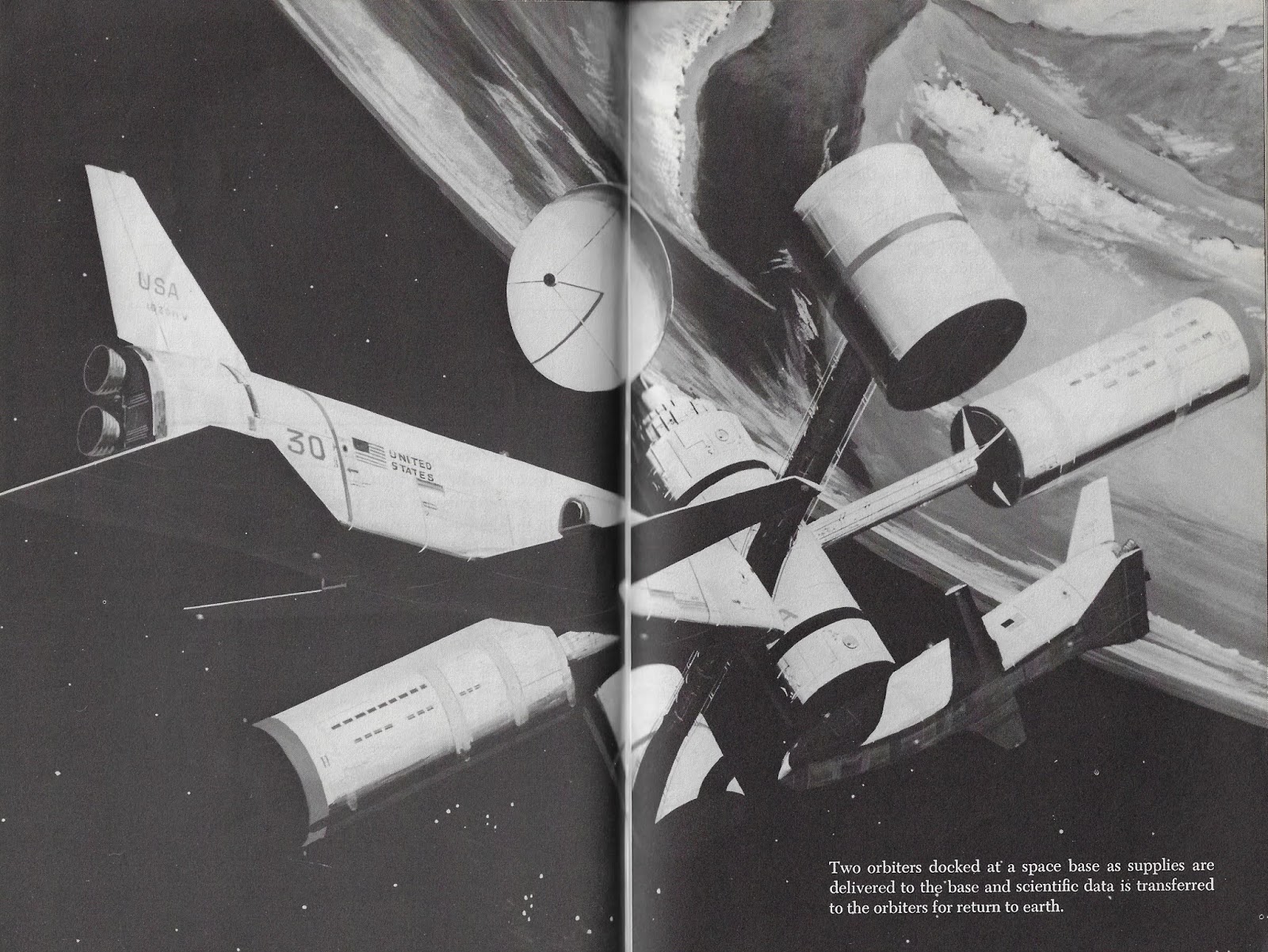
Credit: John Sisson/Dreams of Space - Books and Ephemera blogspot
And:
forum.kerbalspaceprogram.com/index.php?/topic/127839-maxi...
Credit: KERBAL SPACE PROGRAM website/LOTS of cool stuff at this website as well.
en.wikipedia.org/wiki/North_American_DC-3
Credit Wikipedia
Gard ~ Occitanie
Elle fut érigée par le sculpteur Tony Noël en hommage aux services rendus par Pasteur à la sériciculture cévenole. Elle fut inaugurée le 26 septembre 1896.
Archives Municipales d’Alès
Elle fut érigée par le sculpteur Tony Noël en hommage aux services rendus par Pasteur à la sériciculture cévenole. Elle fut inaugurée le 26 septembre 1896.
D'autres statues de bronze avaient également été édifiées au XIXe siècle (Jean-Baptiste Dumas, Florian, Lafare - Alais, l'Abbé de Sauvages). Celle de Pasteur est la seule a avoir été épargnée par les Allemands pendant la deuxième guerre. L'universalité du savant est la raison du respect accordé à sa statue.
Pasteur avait été l'élève du chimiste alésien Jean-Baptiste Dumas. C'est celui-ci qui l'appela pour trouver la cause de la maladie qui dévastait les magnaneries.
Le premier séjour de Pasteur à Alès date de 1865. De 1865 à 1869, il revint à plusieurs reprises dans la capitale cévenole, seul ou bien avec ses collaborateurs ou encore en famille. Il logea notamment au Pont de Gisquet et mena ses expériences dans la maison connue sous le nom de "Maison Pasteur". Il découvrit l'existence de deux maladies microbiennes du ver à soie : la pébrine et la flacherie, et parvint à enrayer le fléau.
Durant ces années-là, Alès fut au centre des débats qui divisaient les savants par presse interposée.
Ces études sur le ver à soie permirent à Pasteur de passer du rôle de physicien et chimiste à celui de biologiste.
(Sources : Archives Municipales d'Alès)
“This is artist’s concept of ion rocket vehicle for flight in outer space. As big as present missiles, vehicle would be propelled through vacuum of space at thousands of miles an hour by a few pounds of thrust. Discharge of ionized particles--rather than gas as in conventional rockets--would provide propulsive force. Nuclear reactor would generate power for ionization. Wing-shaped attachments to vehicle are radiators to reject excess heat. Direction would be controlled by swiveling rockets.”
A ca. 1959 Rocketdyne ad depicts the same rendition of the spacecraft nearing the planet Mars.
Beautiful artwork by the amazing yet unheralded Sol Dember:
“Artist Sol Dember died July 23, 2011 in a car accident, however, his passing just recently became known within the SF community.
He began as a scientific illustrator, specializing in astronomical paintings. When Dember was an art director for Rockwell Scientific he drew over 500 illustrations of space vehicles, machinery and surfaces of imaginary planets.
He did SF art for Galaxy, IF and Worlds of Tomorrow in the 1950s and 1960s.
His work also appeared in encyclopedias, dictionaries, books, magazines, greeting cards and record jackets.”
Credit: Andrew Porter
file770.com/sol-dember-death-learned/
Credit: File 770/'Mike Glyer's news of science fiction fandom' website
Again, if the above is anywhere near accurate, then the following is sad & very disappointing, unless intentional. Maybe not my place then, however, an immensely talented, prolific & CONTRIBUTING artist over many years, and this is it???
If not intentional, this is wrong, especially since his death was the result of an accident:
www.legacy.com/obituaries/name/sol-dember-obituary?pid=17...
Credit: Legacy website
Rest in Peace Mr. Dember. THANK YOU.
Le château fut construit au XIe siècle par le comte de Montblanc, seigneur de Bigorre, pour surveiller les brigands venus d’Espagne ou de Barèges. Il ne reste du château que deux tours (une ronde et une carrée) avec entre les deux une muraille les reliant, qu’on appelle courtine. Devant le château se trouvait autrefois une chapelle nommée prieuré de Sainte-Marie, d’où le nom du château.
Il existe également une légende qui relie Le château à la chapelle Solférino. Voici la légende : Il y a très longtemps, un bandit habitait dans ce château. Il tuait, assassinait et ne gardait aucun prisonnier à nourrir. Seule une de ses victimes a eu la vie sauve, il s’agissait de Marie, une belle jeune fille d’Arcizans que le méchant homme voulait pour femme et qu’il retenait prisonnière au grand dam de son amoureux Pierre (les moeurs étaient dures en ce temps là !). La Vierge apparut à la jeune fille qui fut délivrée du tyran, emportée dans le ciel par une douce lumière blanche. Pierre, qui voulait attaquer le château avec une fronde, fut inconsolable. Il se retira en ermite sur la colline où se dresse aujourd’hui la chapelle Solférino et qui a longtemps porté le nom d’ermitage Saint-Pierre.
Toujours entouré d’une houle blanche, plus ou moins forte, le phare de Goury trône tout au bout du bout, à Auderville. Haut de cinquante mètres, il fut mis en service dès 1837. Auparavant, en une seule année, vingt-sept navires avaient sombré dans les parages. Face à lui, le raz Blanchard, l’un des courants de marée les plus forts d’Europe. Entre le cap de la Hague et l’île d’Aurigny, le passage dit de la Déroute est connu de tous les marins pour ses violentes tempêtes et la force de ses courants. Un monde brutal à l’opposé du monde poétique de Prévert, le voisin d’en face. « Le Raz Blanchard est un monde hostile, raconte Cédric, pêcheur de homards. Il y a toujours des vagues, même les jours sans vent. »
En 1823, en une seule année, 27 navires ont sombré dans les parages. Au nombre de ces naufrages, il faut relater celui du paquebot «Paris» qui, de retour d’Amérique, transportait de nombreux passagers dont Monseigneur de Cheverus. Le prélat, qui fut le premier évêque catholique d’une paroisse de Boston aux États-Unis, rentrait en France. Le premier contact fut plutôt rude et pénible sur les rochers du Cap de la Hague. Transporté à dos d’homme à travers champs jusqu’au presbytère d’Auderville, trempé et épuisé, il trouva abri et réconfort. Ceci se passait dans la nuit du 31 octobre 1823. Le lendemain, 1er novembre, il présidait la cérémonie de la Toussaint, en l’église de la paroisse.
Ces pertes de navires et de vies humaines sur nos côtes devaient finir par alerter l’opinion publique et les autorités maritimes. C’est ainsi que peu de temps après le naufrage du «Paris», la construction d’un phare fut mise à l’étude.
Il fut décidé que cet ouvrage serait construit sur un rocher situé à 800 m. du littoral connu sous le nom du Gros du Raz. Le chantier débuta en 1834 et nécessita une main-d’oeuvre importante pendant 3 ans. Le granit, en provenance de Diélette, était travaillé à Goury, acheminé sur le site et hissé sur la construction à l’aide d’un système de palans actionnés par une grande roue dans laquelle avançait une jument («la chambre à la Belle»).
En 1837, la construction de cette tour de granit est terminée. A 48 m de hauteur, elle sert de support à une lanterne munie de puissantes lentilles. Cette lanterne a un mouvement de rotation continu au rythme d’un éclat blanc toutes les 5 secondes (EB5S).
Depuis le début du XXème siècle, un signal sonore a été ajouté au signal lumineux : En cas de brouillard, une sirène diffuse un écho dont les ondes se répercutent à la surface de la mer, précieux indicateur de position pour les navigateurs.
En 1940, le phare fut occupé par les Allemands. Il resta éteint jusqu’au 1er juillet 1944, date de sa libération.
En 1971, il est électrifié et automatisé en 1989, les derniers gardiens partent en mai 1990.
Always surrounded by a white swell, more or less strong, the Goury lighthouse sits at the very end, in Auderville. Fifty meters high, it was put into service in 1837. Previously, in a single year, twenty-seven ships had sunk in the area. Facing it, the Raz Blanchard, one of the strongest tidal currents in Europe. Between Cape de la Hague and the island of Alderney, the so-called Rout Passage is known to all sailors for its violent storms and the strength of its currents. A brutal world as opposed to the poetic world of Prévert, the neighbor across the street. “The Raz Blanchard is a hostile world,” says Cédric, a lobster fisherman. There are always waves, even on windless days. »
In 1823, in a single year, 27 ships sank in the area. Among these shipwrecks, we must mention that of the liner “Paris” which, returning from America, transported many passengers including Monseigneur de Cheverus. The prelate, who was the first Catholic bishop of a parish in Boston in the United States, was returning to France. The first contact was rather rough and painful on the rocks of Cap de la Hague. Transported on the back of a man across fields to the presbytery of Auderville, soaked and exhausted, he found shelter and comfort. This happened on the night of October 31, 1823. The next day, November 1, he presided over the All Saints’ Day ceremony in the parish church.
These losses of ships and human lives on our coasts were to end up alerting public opinion and the maritime authorities. This is how shortly after the sinking of the “Paris”, the construction of a lighthouse was studied.
It was decided that this work would be built on a rock located 800 m away. of the coast known as Gros du Raz. The construction began in 1834 and required a significant workforce for 3 years. The granite, coming from Diélette, was worked in Goury, transported to the site and hoisted onto the construction using a system of hoists operated by a large wheel in which a mare moved ("the bedroom with Beauty") ).
In 1837, the construction of this granite tower was completed. At 48 m high, it serves as a support for a lantern equipped with powerful lenses. This lantern has a continuous rotating movement at the rate of a white flash every 5 seconds (EB5S).
Since the beginning of the 20th century, a sound signal has been added to the light signal: In the event of fog, a siren broadcasts an echo whose waves are reflected on the surface of the sea, a valuable position indicator for navigators.
In 1940, the lighthouse was occupied by the Germans. It remained extinct until July 1, 1944, the date of its release.
In 1971, it was electrified and automated in 1989, the last guards left in May 1990.
Hiroshima fut entièrement reconstruite après la guerre. À l'initiative de son maire, Shinzō Hamai, elle fut proclamée Cité de la Paix par le parlement japonais en 1949.
En guise de témoignage, les ruines du Genbaku Dome, l'un des seuls bâtiments à ne pas avoir été entièrement détruits par l'explosion, furent conservées.
La reconstruction de la ville intègre un Musée de la Paix, dont les bâtiments ont été conçus par l'architecte Kenzō Tange. Un vaste parc, le Parc du Mémorial de la Paix, s'étend sur 12 hectares, à proximité de l'hypocentre de l'explosion, dans lequel chaque année, le 6 août, une cérémonie commémorative est organisée. Ce parc abrite de nombreux monuments à la mémoire des victimes de la bombe. Le cénotaphe contient le nom de toutes les victimes connues de la bombe ; une flamme de la paix y brûle, destinée à rester allumée tant que des armes nucléaires existeront.
En novembre 2010 lors du sommet de Hiroshima, le dalaï-lama et cinq autres lauréats du Nobel de la paix ont participé au sommet des prix Nobel de la Paix. Ce sommet était consacré au désarmement nucléaire et organisé à Hiroshima. Le premier Prix Nobel de la paix Chinois Liu Xiaobo, emprisonné en Chine, a été représenté à ce sommet par Wuer Kaixi, un des leaders étudiants lors des manifestations de la place Tian'anmen en 1989. Ce dernier a appelé à la libération de Liu Xiaobo. Il a par ailleurs déclaré : « Les militants en faveur de la démocratie et les avocats défenseurs des droits de l'homme continuent d'être harcelés et emprisonnés en Chine, au moment où nous sommes réunis à Hiroshima ».
Cette rue est une voie ancienne du village, puis de la commune de Montmartre. Elle apparait déjà sur le plan de Albert Jouvin de Rochefort, dessiné en 1672. C’est l’ancien chemin du pèlerinage de saint Denis, jusqu'en 1784. Plus au Nord, elle est dans le prolongement exact de la rue Adrien-Lesesne, à Saint-Ouen, appelée chemin de la Procession jusqu'en 1920 et qui rejoint le chemin des Poissonniers (lui-même dans le prolongement du Faubourg Poissonnière) au niveau du Cimetière parisien de Saint-Ouen. Tous les sept ans, à l'emplacement de l’actuelle station de métro Jules Joffrin, des représentants de l’abbesse de Montmartre venaient à la rencontre des moines de l'abbaye de Saint-Denis, pour les accompagner jusqu’au sommet de la butte4. Ce chemin fut appelé Chemin de la Procession, puis Petite rue Saint-Denis entre les rues Norvins et Marcadet, Chaussée Saint-Denis.
Église Saint-Sulpice, Paris 6e.
Les historiens ont beaucoup de difficulté à se mettre d'accord sur l'ancienneté de la première église construite à l'emplacement actuel de l'église Saint-Sulpice. En 1724, les fouilles de l'église permirent de mettre au jour une pierre tombale du xe siècle, prouvant par là même qu'une chapelle (dont dépendait un cimetière) existait à cet endroit depuis plusieurs siècles. Du xiie au xive siècles, une nouvelle église fut bâtie à la place de l'ancienne chapelle ; elle fut agrandie d'une nef sous François Ier, et de trois chapelles en 1614. Cependant, avec l'agrandissement des bourgs de Saint-Germain et Saint-Germain-des-Prés, la nécessité de construire une église plus grande et plus digne de la population qui la fréquente s'impose : le bâtiment d'alors ne peut contenir que le douzième des paroissiens. De plus, l'ancienne église menace de tomber en ruine. La proposition est résolue dans une assemblée, tenue le 16 mars 1643 sous la présidence du prince de Condé.
Les travaux d'agrandissement sont confiés en 1645 à l'architecte Christophe Gamard, voyer de l'abbaye de Saint-Germain-des-Prés. Gaston d'Orléans pose la première pierre en 1646. Mais ce bâtiment n'ayant pas été jugé suffisant, on en recommence un en 1655, dans les fondations duquel la reine Anne d'Autriche pose la première pierre. Les projets de Gamard se révèlent irréalisables et il faut bientôt faire appel à Daniel Gittard et à Louis Le Vau. Le chœur est achevé et béni à la fin de 1673. Mais les travaux sont interrompus moins de deux ans plus tard faute de crédits. Ils ne reprennent qu'en 1718, sous la direction de Gilles-Marie Oppenord, qui édifie la nef et le transept.
_____________________________________
The present church is the second building on the site, erected over a Romanesque church originally constructed during the 13th century. Additions were made over the centuries, up to 1631. The new building was founded in 1646 by parish priest Jean-Jacques Olier (1608–1657) who had established the Society of Saint-Sulpice, a clerical congregation, and a seminary attached to the church.
Work continued for about 140 years, the church was mostly completed in 1732, the chancel is the work of Christophe Gamard, Louis Le Vau and Daniel Gittard, but the work was completed by Gilles-Marie Oppenord, a student of François Mansart, in 1714-1745.
The pulpit, Saint-Sulpice
Nineteenth-century redecorations to the interior, after some Revolutionary damage when Saint-Sulpice became a Temple of Victory, include the murals of Eugène Delacroix, that adorn the walls of the side chapel. The most famous of these are Jacob Wrestling with the Angel and Heliodorus Driven from the Temple.[3] Jules Massenet set an act of Manon at fashionable Saint-Sulpice.
Another point of interest dating from the time of Saint-Sulpice serving as a Temple of Victory is a printed sign over the center door of the main entrance. One can still barely make out the printed words ‘’Le Peuple Francais Reconnoit L’Etre Suprême Et L’Immortalité de L’Âme’’, The people of France recognize the supreme being and the immortality of the soul. Further questions of interest are the fate of the frieze that this must have replaced, the persons responsible for placing this manifesto and the reasons that it has been left in place.
The Marquis de Sade and Charles Baudelaire were baptized in Saint-Sulpice (1740 and 1821, respectively), and the church also saw the marriage of Victor Hugo to Adèle Foucher (1822). Louise Élisabeth de Bourbon and Louise Élisabeth d'Orléans, grand daughters of Louis XIV and Madame de Montespan are buried in the church. Louise de Lorraine, duchesse de Bouillon was buried here in 1788, wife of Charles Godefroy de La Tour d'Auvergne.
Clic ! - See it in large on black - Clic !
Caméra Sony DSLR-A850
Exposition 6
Ouverture f/10.0
Longueur focale 20 mm
Vitesse ISO 100
Détection du degré d'exposition +1 EV
HDR with 7 raw and 0,5 ev assembled with PS5
[My GETTY Images @] [My MOST FAVE on Flickriver] [My RECENT on Fluidr] [My STREAM on Darckr]
“This is an artist concept of the enhanced configuration of the permanently manned Space Station, produced by Martin Marietta. The enhanced configuration includes an upper and lower keel for attaching external payloads, a 50 kilowatt solar dynamic system mounted on the ends of the transverse boom, a servicing bay and a co-orbiting platform (not pictured).”
One of several “dual-keel” proposals during this time period. Note the module(?) which sorta looks like a large telescope, recently delivered by the docked orbiter and being positioned by the station’s manipulators. In fact, the possible “receiving” RMS is attached to some sort of cradle (akin to those in the cargo bays of orbiters). For final placement/further translation along the truss? There appear to be cameras and some sort of optical/sighting (tele?) scope on one end. No idea what the appendages on the other end are. Even an MMU-clad Astronaut conducting an EVA, possibly inspecting the far-left solar array.
Interesting pseudo-negative/silhouette-like depiction…creative…by Les Pettus. Based on other works of his that I’ve come across - primarily in the form of Skylab crew Manned Flight Awareness posters - Mr. Pettus was previously a NASA-employed artist.
Dual-Keel-palooza:
www.astronautix.com/d/dualkeelspaestation-1985.html
Credit: Astronautix website
Arrivée au débarcadère d'Ouchy-Lausanne.
Le Rhône a été construit en 1927 par Sulzer Frères à Winterthour (Suisse) pour la CGN. Il a été commandé pour remplacer le Bonivard (1868-1925). C'est le dernier bateau salon à vapeur construit pour la CGN par Sulzer. Il fut mis en service le 29 mars 1927. Sa machine est novatrice de par son système automatique de lubrification. C'est le troisième du nom sur le Léman.
Le Rhône effectue quelques courses pour la Fête des vignerons de 1927, mais il ne sera effectivement mis en service qu'en 1928, après le réglage de sa machine.
Le 3 mai 1928, il entre en collision avec le Genève près de Pully. L'ancre de bâbord du Genève s'accroche aux cordages sous le beaupré du Rhône, le beaupré se brise avec la figure de proue : la chute du mât provoque la mort d'une passagère.
Il est mis hors service entre 1940 et 1945, dans le contexte de la Seconde Guerre mondiale. Rénovations : remplacement de tubes de la chaudière et rafraîchissement du salon en 1949-1950, remplacement des brûleurs et révision de la machine en 1960 (passage au mazout).
Le mauvais état des chaudières pousse la compagnie à mettre le Rhône hors service en 1967, mais il est décidé de conserver la propulsion à la vapeur. Il est rénové en 1968 et reçoit de nouvelles chaudières en provenance de Siller & Jammart (Wuppertal, Allemagne). On profite de ces transformations pour revoir l'installation électrique et restructurer les superstructures. Le fumoir est supprimé.
Puis il subit un entretien général en 1995-1996. À cette occasion ses décorations de proue et de poupe sont restaurées grâce à l'Association Patrimoine du Léman et sa cheminée est remplacée. Deux nouveaux générateurs sont installés en 1999.
En 2002 le Rhône est immobilisé suite à une avarie de machine. Sa machine est alors entièrement révisée.
En 2011, il est classé monument historique par le canton de Vaud. Il est également inscrit, tout comme le Savoie, La Suisse et le Simplon comme bien culturel suisse d'importance nationale.
Mise en service: 1927
Capacité: 850 pers.
Restauration: 200 pers.
Longueur: 68 m
Puissance: 850 cv / 625 kW
La synagogue fut bâtie entre 1639 et 1642 à la place d’un bâtiment en bois antérieur (vers 1600). Seuls les hommes pouvaient entrer par la porte sculptée. Les murs intérieurs sont décorés de motifs floraux et de textes en hébreu.
__________________________
The synagogue, also known as "New" (Neuschul), dates from 1669. After 1837, a new part of women's gallery was added to its northern part (according to Jewish religious traditions men and women were not allowed to share the same space in the sanctuary). Since 1925, the synagogue has not been used any more for religious purposes and was converted into a storehouse. Due to lack of maintenance the structure fell into disrepair in the 1980s. The complex and expensive full renovation was completed in 1997 and the synagogue was reopened in that year. Both experts and common visitors will particularly appreciate the mural paintings in its interior dating from the early 18th century. Today, the synagogue is used for exhibitions, concerts, and other cultural events.
A permanent exhibition of Jewish culture is available in the former women´s gallery, displaying many valuable objects used in secular and religious life of the former Jewish community whose last page of history was written by the holocaust during the Second World War.
The Rear Synagogue is open to public daily. Qualified guides provide detailed information, and you can also buy various publications and souvenirs here. For accommodation is available, the boarding-house "U Synagogy" located in the neighbouring house can be used.
www.trebic.cz/en/unesco/zidovska-ctvrt-zadni-synagoga.asp...
“This artist’s concept depicts “Satellite Observatory,” termed the initial mission of the Boeing Company’s PARSECS program, or Program for Astronomical Research and Scientific Experiments Concerning Space.
April 7, 1960”
Gorgeous & detailed work by Robert Fetterly, along with many others.
EXCELLENT & HIGHLY INFORMATIVE PARSECS discussion - as with many other topics - by a bunch of really knowledgeable folks. Absolutely fascinating:
www.secretprojects.co.uk/threads/parsecs-1960.7039/
Credit: “SECRET PROJECTS: UNBUILT PROJECTS, MILITARY AND AEROSPACE TECHNOLOGY” website
The ‘made to fit” acronym & its breakout brought to mind this:
www.nasa.gov/mission_pages/station/behindscenes/colbert_f...
Le château fut édifié sans doute au 14ème siècle par les seigneurs de Buenc. Il est agrandi au 16ème et 17ème siècle par l'adjonction de pavillons d'entrée.
A la veille de la révolution, il se présentait sous la forme d'une construction carrée, composée de 4 ailes disposant aux angles de tours rondes ou carrées.
Il fut incendié par les allemands en 1944.
Óbidos est une petite ville médiévale située à 90km de Lisbonne.
Située assez près de la capitale et en hauteur, à proximité de la côte Atlantique, Óbidos eut une importance stratégique sur le territoire. Déjà occupée avant l'arrivée des Romains dans la péninsule Ibérique, cette petite ville devint prospère, dès qu'elle fut choisie par la famille royale. Lorsque le roi Denis Ier l'offrit à son épouse, Isabelle d'Aragon, au XIIIe siècle, elle fut désormais considérée comme la « maison des reines » qui, au fil des différentes dynasties, l'embellirent et l'enrichirent. C'est l'une des principales raisons pour lesquelles, cette petite localité possède autant d'églises.
Dans l'enceinte des murailles se trouvent un château bien préservé et un labyrinthe de rues et de maisons blanches, qui enchantent tous les visiteurs qui s'y promènent. Parmi des portiques manuélins, des fenêtres fleuries et des petites places, se trouvent plusieurs motifs de visite, notamment de beaux spécimens de l'architecture religieuse et civile de l'âge d'or de cette localité (source : www.visitportugal.com/fr/node/73768)
Ma page Facebook
[ Vincent Leroux Photo ] tous droits réservés - all rights reserved. Contacter l'auteur avant toute utilisation - contact the author before any use
Avec / with permission.
Cette photo fut la populaire sur Ipernity avec plus de 6000 vues.
More than 6000 views on Ipernity. The most famous actually.
Une séduisante Dominatrice Blonde dans la cinquantaine avancée demeurant à Halifax en Nouvelle-Écosse, Canada, Elle a des Pieds à faire damner le Pape selon moi !! Elle est friande de Talons Hauts mais je suis en admiration pour ses petons voluptueux ! Des Pieds de Déesse à vénérer avec dévotion et obéissance ! Vous pouvez la trouver sur le net par une recherche si vous le désirez. Une Dame charmante qui sait ce qu'elle veut dans la vie ! Bienvenue à Halifax !
Si Vous désirez en savoir plus veuillez m'écrire en privé merci !
A charming blonde Mistress in her late fifties living in Halifax, Nova Scotia, Canada. She is fond of high-heeled footwear but has also beautiful Feet. She was trained in Amsterdam many years ago to become a professional Dominatrix. If you wish to get more information about her write to me!
“An artist’s concept illustrates the construction in low earth orbit of a Satellite Solar Power Station (SSPS). SSPS is a concept spun off one of many studies being done to determine ways of harnessing the sun’s energy for applications supporting industry and life on earth. Manufacturing modules here work on rolls of aluminum strip and other raw construction material, automatically producing the structure of the satellite. Cylindrical chambers on top of a module house work crews. The concept was released at Johnson Space Center at Houston June 2.”
Interesting discussion regarding the ‘beam builder’:
forum.nasaspaceflight.com/index.php?topic=33977.0
Credit: “NASA Spaceflight.com” website
An almost dream-like, apparition depiction...as the trusses fade into the rather busy looking 'void'.
Note the nearby spent? booster, which sort of looks like an extended space shuttle external tank, with an open panel/fairing...with what looks like a MRWS offloading cargo, supplies, equipment, or something like that, from it.
I've never seen this before. There were so many proposals...so I'm sure there's a ton of ‘em.
Artist unknown. Possibly Albert Lane? If a GAC design/concept, then Bud Parke?
Construit dans les années 70, le Front de Seine fut la première opération d'urbanisme incluant des immeubles de grande hauteur à Paris. Le charme « seventies » de certaines réalisations ne parvient cependant pas à masquer le vieillissement d'un ensemble coupé de son environnement.
A la différence d'Italie XIII ou de la Défense, le Front de Seine est une zone mixte comportant à la fois des immeubles d'habitation et des bureaux. Le projet, confié en 1959 à Henri Pottier et Raymond Lopez, reprend les principes de la Charte d'Athènes (édictés par le Corbusier en 1933), dont s'inspirera « l'urbanisme de dalle » dans les années 60-70.
Les architectes imaginent alors un projet sur trois niveaux : le niveau inférieur réservé aux voitures (au niveau de la rue), le niveau médian réservé aux piétons (la dalle) et le niveau supérieur pour les logements (les tours).
Une vingtaine de tours de styles variés, quelques immeubles bas, des équipements publics (bibliothèque, crèche, écoles, infrastructures sportives) et un centre commercial, reliés par une grande dalle rectangulaire, s'érigent entre 1967 et 1979. Ce nouveau quartier, très bien desservi par les transports en commun, devait offrir aux habitants de l'époque tout le confort moderne et toutes les commodités, une vue imprenable, des appartements à l'écart des nuisances de la ville.
L'ensemble, qui atteint 100 m de hauteur, bien que dominé par la couleur grise du béton, n'est pas exempt d'originalité et de fantaisie. Certaines tours sortent du lot (les fenêtres « téléviseurs » de la tour Novotel et les blocs empilés de la tour Totem, par exemple) et des immeubles bas aux couleurs vives (Mercure III) tranchent délibérément avec l'uniformité du site. Des sculptures, des murs peints, une composition en céramique de Olivier Debré animent l'ensemble, sans oublier la cerise sur le gâteau : la dalle pavée de motifs dont le dessin est visible depuis les étages élevés.
En la Villa de Ucero , Soria , existen las ruinas sugerentes de este Castillo Templario. Desde él y por la parte no visible de la fotografía se observa una inmensa panorámica que domina los ríos Ucero y Chico. Al fondo a la derecha se ve el comienzo de esa auténtica gozada que es el Cañón del Río Lobos y las primeras curvas del Puerto de la Galiana. El acceso al Castillo se realiza andando por una pequeña cuesta desde la localidad del mismo nombre. Existe una explanada delante del conjunto realmente preciosa. Las vistas con día claro son impagables en su belleza. Alrededor del año 1200 esta Plaza fortificada fue habitada por la Orden del Temple, quienes al parecer también edificaron la cercana Ermita de San Bartolomé, enclavada en pleno Cañón, otra joya arquitectónica. Desde mi punto de vista , el Castillo y la ermita cercana son unos de los lugares más mágicos de la geografía española, y para mí , aparte de por razones históricas por otra razón más personal. Iré relatando próximamente más detalles sobre la zona. Una nota significativa… San Juan de la Peña (Huesca), enclave templario asimismo, dista de la Ermita de San Bartolomé lo mismo que este templo de Santiago de Compostela. Casualidad?... Pues …. Mucha casualidad. Este lugar añadiendo misterio fue singularmente también cárcel de clérigos… Y en mi supina ignorancia me atrevo a decir ….el castillo tenía tres filas de murallas , hoy completamente en ruinas, preciosas ruinas, que lo hacían además de por su emplazamiento totalmente inexpugnable a los ataques … pensar que estaba en plena “Marca Islámica”. Se accedía a él por un sistema de rampas y un puente levadizo del que no existe ya nada. Pasadizos secretos (hoy existe uno)…gárgolas asimétricas , escudos y un montón de detalles que por espacio no puedo citar.. hacen de esta maravilla totalmente recomendable su visita. Por cierto y a quien le interese hacer sendas a pie : desde allí se puede ir andando por la montaña a la Fuentona en Muriel de la Fuente (20 kilometros), a Calatañazor , atravesando el mayor sabinar de la Península.
In the village of Ucero, Soria, there are the evocative ruins of the Templar Castle. From him and the party is not visible in the photograph shows a panoramic view overlooking the vast river and Ucero Chico. At bottom right is the beginning of that which is truly enjoyed the Canyon River Wolves and the first curves of Puerto de la Galiana. Access to the Castle is walking on a small hill from the village of the same name. There is an esplanade in front of all really beautiful. With a clear day the views are unpayable in its beauty. Around 1200 this fortified place was inhabited by the Knights Templar, who apparently also built the nearby Ermita de San Bartolomé, located in the Canyon, another architectural jewel. From my point of view, the Castle and the nearby chapel are among the most magical places of Spain and for me, apart from historical reasons why most of the other staff. I will go soon telling details about the area. A significant note ... San Juan de la Peña (Huesca), also Templar enclave, far from the Chapel of St. Bartholomew the same as the church of Santiago de Compostela. Coincidence? ... Well .... Much chance. This place was uniquely also adding mystery prison clerics supine ... And in my ignorance I dare say .... The castle has three lines of walls, now completely in ruins, beautiful ruins, which they did well on his site completely impregnable to attacks ... I thought I was in full "Islamic." It is accessed by a system of ramps and a drawbridge that does not exist at all. Secret passageways (which exist today) ... gargoyles, coats and a lot of details that I can not quote for space .. make this wonderful totally recommend your visit. Will return in spring.
Dans le village de Ucero, Soria, il ya les ruines de l'évocation du château des Templiers. De lui-même et la partie n'est pas visible dans la photo montre une vue panoramique sur la grande rivière et Ucero Chico. En bas à droite est le début de ce qui est vraiment aimé les Wolves River Canyon et les premières courbes de Puerto de la Galiana. L'accès au château est de marcher sur une petite colline du village du même nom. Il ya une esplanade en face de tous vraiment belle. En clair, les vues sont impayables dans sa beauté. Vers 1200 cette place fortifiée fut habité par les chevaliers du Temple, qui est aussi construit à proximité de Ermita de San Bartolomé, situé dans le canyon, un autre joyau architectural. De mon point de vue, le château et à proximité de la chapelle sont parmi les endroits les plus magiques du Espagne et pour moi, en dehors des raisons historiques pour les quelles la plupart des autres membres du personnel. Je vais bientôt aller raconter des détails sur la zone. Une note ... San Juan de la Peña (Huesca), également des Templiers enclave, loin de la chapelle de Saint-Barthélemy, le même que l'église de Saint-Jacques de Compostelle. Coincidence? ... Eh bien .... Beaucoup de chance. Ce lieu unique a été également l'ajout de mystère prison clercs dos ... Et dans mon ignorance, je dirai .... Le château dispose de trois lignes de murs, désormais complètement en ruines, de belles ruines, dont ils ne sont bien sur son site entièrement imprenable à attentats ... Je pensais que j'étais en plein "islamique". Il est accessible par un système de rampes et d'un pont-levis qui n'existe pas du tout. Des passages secrets (qui existe aujourd'hui) ... gargouilles, des manteaux et beaucoup de détails que je ne peux pas citer pour l'espace .. faire de ce merveilleux totalement recommander votre visite. Sera de retour au printemps.
Dès sa construction, l'abbaye fut une des plus importantes de l'Ordre cistercien, filiale de l'abbaye de Santes Creus dans la Province de Tarragone. Toute la Valldigna (vallée digne) était propriété de cette communauté monacale par ordre royal. Son style de construction est gothique valencien.
L'abbaye fut habitée par les moines jusqu'en 1835, où une révolte populaire dans la Valldigna après le désamortissement de Mendizábal (confiscation d'une partie des biens du clergé) obligea les moines à abandonner le monastère. La majeure partie de ses biens furent détruits ou spoliés.
En 1944, les Alliés établirent un port artificiel provisoire afin de permettre le débarquement de matériel lourd devant Arromanches. Le port fut mis en service le 14 juin. Pendant les 100 jours de fonctionnement du port, ont été débarqués : 2,5 millions d'hommes, 500 000 véhicules, 4 millions de tonnes de matériel.
Photographie aérienne par cerf-volant.
In 1944, the Allies established a provisional artificial port to allow the landing of heavy equipment to Arromanches. The port was commissioned on June 14. During 100 days of operation of the port, were unloaded: 2.5 million men, 500,000 vehicles, 4 million tons of material.
Kite Aerial Photography.
© Décembre 2013, François Levalet, www.francoislevalet.fr
Mistra fut fondée en 1249 par Guillaume II de Villehardouin, alors prince d'Achaïe, qui cherchait à construire une forteresse sur les hauteurs du Taygète dans le but de protéger Sparte, alors lieu de résidence favori des Villehardouin.
Le dernier empereur romain d'Orient, Constantin XI, est despote à Mistra avant de monter sur le trône. Démétrios Paléologue, le dernier despote de Morée, rend la ville à l'empereur ottoman Mehmed II le 31 mai 1460. Mistra demeure une ville importante, accueille la résidence du Pacha du Péloponnèse et compte alors 40 000 habitants. Le commerce y est florissant, entre autres grâce au développement de la production de soie. Les Vénitiens occupent provisoirement la ville de 1687 à 1715. En 1770, Mistra est brièvement aux mains des Russes qui, soutenus par les Grecs, tentent de libérer la Grèce de la présence ottomane lors de la révolution d'Orloff. La reconquête de la ville par les Turcs est suivie d'une terrible répression contre la population qui diminue pour ne plus compter que 8 000 habitants. Mistra reste turque jusqu'en 1822 et la guerre d'indépendance grecque. Reprise par les Turcs une dernière fois en 1825, elle est rasée par Ibrahim Pacha et connaît alors un déclin irrémédiable. À l'issue de la guerre d'indépendance, le roi Othon Ier de Grèce fait de Sparte la nouvelle capitale administrative des environs, où les derniers habitants s'établissent à leur tour.
L'ancienne cité byzantine fut totalement abandonnée dans les années 1950 pour devenir un site archéologique. En 1989, les ruines, y compris la forteresse, le palais, les églises et les monastères, ont été inscrites sur la liste du patrimoine mondial de l'UNESCO. Aujourd'hui, la cité n'est plus habitée que par quelques religieuses orthodoxes qui occupent le monastère de la Pantanassa. Elle a néanmoins donné son nom à une municipalité du nome de Laconie, qui siège dans la localité voisine de Magoul Wikipédia
Cet édifice fut probablement érigé sur l’emplacement d’un monastère construit vers 650 par le moine irlandais saint Fursy. L’Histoire et les siècles ont été témoins de ses nombreuses transformations, restaurations et reconstruction. En 1205, les travaux s’engagent sur les bases d’un projet grandiose : une abbatiale d’une longueur de 110 mètres et d’une hauteur sous voûte de 27 mètres. Malheureusement, il se limitera au chœur accolé à la nef de l’édifice antérieur. Après la disparition de cette nef au XVIIe siècle, on construit un clocher porche puis un deuxième qui s’ouvre aujourd’hui sur un chœur imposant : 48 m de long et 37 m de large. Les chapelles de profondeurs différentes rythment son chevet. Le mur ouest conserve des vestiges de la nef du XIIe siècle, de part et d’autre du buffet d’orgue. Dans la chapelle dédiée à la Vierge Marie, se sont déroulés deux événements qui ont marqué l’histoire de l’église abbatiale. En 1126, décimée pour la deuxième fois en un siècle par le terrible « mal des ardents » (forte fièvre due à un cham- pignon de l’ergot de seigle), la population se porte en masse à la chapelle et obtient par ses
prières que le mal cesse.
A trois reprises, Jeanne d’Arc a foulé le sol latignacien. En 1430, elle mêle ses prières à celles de jeunes filles et un enfant qu’on pensait mort depuis 3 jours retrouve vie, le temps de lui donner le baptême. C’est à ce titre que quelques siècles plus tard, Jeanne d’Arc fut canonisée. A noter que
Lagny-sur-Marne a rejoint le cercle prisé des Villes Johanniques en 2013.
Les plus anciens vitraux réalisés par Claudius Lévêque datent de la deu- xième moitié du XIXe siècle. Ceux d’une tonalité bleue, situés près de la
chapelle de la Vierge Marie, sont une création de Calixte Poupart inau-
gurés en 1955.
Depuis 1886, l’église abbatiale est classée Monument Historique.
Le coquelicot ou poppy est le symbole britannique.
un écrivain fut le premier à établir un rapport entre le coquelicot et les champs de bataille durant les guerres napoléoniennes au début du 19 ème siècle.
Il remarqua, que les champs qui étaient nus avant le combat, se couvraient de fleurs rouges après la bataille.
Avant la première guerre mondiale peu de coquelicots poussaient en Artois et en Flandres. Durant les bombardements qu'ont connus ces terrains crayeux, ils se chargèrent en poussière de chaux favorisant ainsi l'apparition des coquelicots.
Cette fleur "se teintant de sang des Morts" devint rapidement le symbole des soldats du COMMONWEALTH tombés au combat.(source site off commune de vis en artois)
Saint-Martin, une église romane du Bas-Maine
Le prieuré Saint-Martin fut fondé vers 1050 par Guy Ier de Laval. Autour du couvent se développe peu à peu le faubourg Saint-Martin.
Construit en grès roussard, l'édifice reprend le plan traditionnel de nombreuses églises romanes. Il est composé d'une nef unique, d'un transept peu saillant et d'un chevet doté de chapelles orientées.
Des peintures murales, datées du XIIè siècle au XVIIè siècle, ornent les murs de la nef ainsi que les absides du choeur et du transept.
A noter, dans le choeur, un calendrier des mois représentant les travaux agricoles selon les saisons.
L'église Saint-Martin est fermée pour des raisons de sécurité. Elle se découvre de l'extérieur ou à l'occasion de visites guidées.
Saint-Martin, a Romanesque church of Bas-Maine
The priory of Saint-Martin was founded around 1050 by Guy I de Laval. Around the convent gradually develops the Faubourg Saint-Martin.
Built Speckled sandstone, the building takes the traditional plan of many Romanesque churches. It consists of a single nave, a transept and a few salient features bedside oriented chapels.
Murals, dated twelfth century in the seventeenth century, the walls of the nave and the apse the choir and transept.
A note in the choir, a calendar month representing agricultural work seasonally.
The Church of St. Martin is closed for safety reasons. She discovers the outside or during tours.
raccoglie più di 30 mila soldati caduti in terra italiana dal 1943 al 1945
it.wikipedia.org/wiki/Cimitero_militare_germanico_della_Futa
quello che colpisce quando si leggono le lapidi è la giovane età di questi soldati caduti, quasi tutti dai 18, 19,20 anni. Erano le ultime forze della Germania piegata che spargeva l'ultimo sangue dei suoi figli