View allAll Photos Tagged render
Mettaton is a glam-robot singer/entrepreneur from an indie-game Undertale made by Toby Fox.
* * *
If you like what I do and you want to see me create your OC, a favorite Bionicle Character, or something else, feel free to look up my Commission Info! I also now have a Patreon page, so please consider supporting!
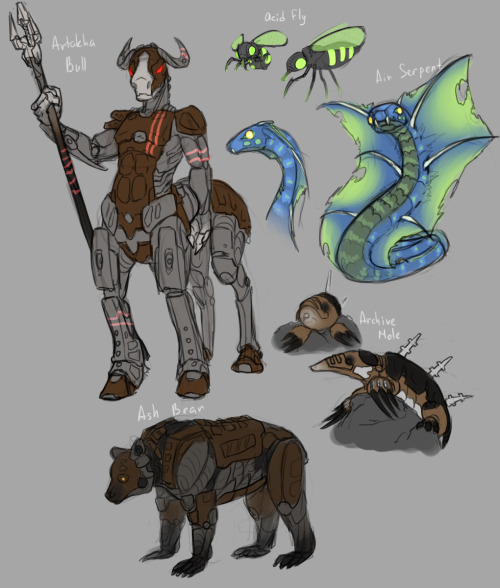
I didn't realize I never posted this one here. A render of Artakha Bull MOC: www.flickr.com/photos/cyborgs_workshop/15691524831/
Based on my girlfriend's drawing: 40.media.tumblr.com/a5ee4d170d32da97129c22b517be7b57/tumb...
The Ralston Company's automotive roots stretch right back to the 1910's, but it wasn't until the late 1920's that the low-volume products offered really shone.
Like all luxury automotive companies, however, the Wall Street Crash and ensuing Great Depression upset the grand plans that they had put into place. Prior to WWII the Ralston Group was still based in Finland, where the assembly of it's cars took place. Many of the systems, however, were sourced from other makers or suppliers.
The Ralston Type 6 was launched in 1919, featuring a six-cylinder inline engine produced by engine specialist firm Continental Motors.
en.wikipedia.org/wiki/Continental_Motors_Company
The Continental engine was used, at the time, by a large number of small, independent vehicle manufacturers who were not in a position to be able to design, tool and produce their own engines independently.
The Type 6 covered a variety of frame lengths and body styles which evolved through the 1920, all models built in modest numbers. Economic volatility through this period led to the dissolution of many competitors in the luxury field, but Ralston, through modest ambition, was able to ride out the storms, if not able to capitalise fully during the fair weather periods. It must be remembered that Ralston was still manufacturing vehicle frames and finishing most bodies in the native Finland, and this compounded the difficulty in being able to react to rapidly changing market conditions.
Nonetheless, 1927 had been deemed the breakout year. The Type 8 was to be launched in mid 1928, using an engine from luxury competitor Auburn, who were readying their own straight 8, under new ownership by E.L. Cord. The Type 8 chassis was planned to support the 'senior' Ralstons - those Imperials, Limousines and Phaetons demanded by the most exclusive of customers, while the new Type-6 for 1927 would be renamed 'Lynx' and act as the 'junior' Ralston, in support of Roadsters, Speedsters and Coupes, in other words, all the smaller body styles, and in particular those that could be made in series production to help lower the cost.
In the end, things didn't go quite to plan. Both the Type 6 'Lynx' and the grand new Type 8 were launched just in time for the Wall Street Crash and financial crisis. The crisis ultimately killed off even more of the facing competition, but the actions to use type-production bodies on the established Type 6 chassis, along with a 'generic' engine, provided about the safest pathway through this period of automotive history. The image of the marque was upheld by the (barely, if at all profitable) Type 8, this series receiving some of the grandest body designs of any vehicle at this time. All variants of both the senior and junior cars were trimmed and detailed to the highest standards, the additional standardisation and volume of the junior Type 6 Lynx helping to reduce the bespoke items (and cost) on all but the most exclusive of fittings.
The car shown here is the Type 6 Lynx MkI-B of 1929 in Boat-tail Speedster (a bodystyle popular at the time). This model, along with all other revise 'B' models can be identified primarily by the reclined radiator grille and flowing fender design. The Boat-tail speedster was not one of the series production body styles, so production numbers for this variant were quite low. All the chassis and powertrain were shared with volume types, and from the cowl forward, this model is near identical to the much more common 'series' Coupe, Coupe-Cabriolet (both with rumble seats), and the Coupe-Sport.
The Type-6 Lynx was subsequently updated every two to three years up until the outbreak of WWII. At that point, the factory was given over briefly to the production of military vehicles, though a final series 'F', a non-luxury trimmed version of the preceding 1938-'E', and built in Sedan, Cabriolet-Sedan and a limited number of Coupe-Sport vehicles.
After the war production of passenger vehicles was largely transferred to the US (the main customer market), via a head quarter transition to Costa Rica, with the Type-8 (renamed to Tigre in 1938) powered by Cadillac V8 engines, initially at very low volumes. Ralston's first new post-war car was the Tigre MkII of 1954, using a modified 1948-53 Cadillac 'C' Body, frame, engine and underbody (some special versions used the long-wheelbase 'D' Body systems). There was no 'junior' Ralston at this time, and even in the vibrant US-market, total sales remained modest, requiring the continued adoption of major systems from a donor manufacturer.
This Ralston Typ-6 Lynx MkI B Boat-tail Speedster (1929) has be built on Lego miniland scale for Flickr LUGNuts 95th Build Challenge, - 'Designing the Ralston Legacy' - a challenge to design the fictitious Dragon 'Motorcycle' model for the fictitious Ralston company, though any of the previous Ralston challenge vehicles, the Tiger or the Rhino are also eligible to be submitted. The chief stipulation is that the model must feature a 'X' in the styling.
Renderings have always been a missing tool in my LEGO toolbox. I know how to do them - in theory. In practice I don't know how to do them well.
So running across this LDraw to Blender plugin by Toby Nelson was a real treat. Does everyone know about it? It took a bit of digging for me to find it. Aside from being quite fast and accurate, it has two modes: realistic and instruction. My quick test above takes a basic construction with a few different colors and materials and tests them both. I really like the result. Useful tool.
Updated render of my Snow and Sand speeders using the new Stud.io render engine.
There are some slight updates to the nose peices of the speeders due to some new parts that LEGO recently released.
Instructions can still be found here: www.brickvault.toys/products/snowspeeder-minifig-scale
The updated parts are all easily visible in the new render, so if anyone wanted to update their builds they shouldn't have much trouble.
I am trying again to get a handle on Ldraw, which I am finding to be difficult. I am remembering why so many times before I have decided not to document my builds on this program. While I am getting the handle on creating things in the program, what frustrates me is not finding the pieces that I use in many of my builds. While this render is nice, it misses some important pieces to better understand how this build works. Add to the fact, I am a MAC user (bricksmith), so the tutorials are a little difficult to understand.
How can I add new parts? When I do find them, how do I integrate them into my parts library? Why is a PF motor not a certified part? Why do I us speciality parts in my builds that I can find in LDraw?
It's driving me nuts.
This is the drive of my GMC Truck Trial with a couple of omissions.
The Sun imaged in white light and rendered in false colour
London 9th July 2016
Celestron Edge HD11, Canon EOS Rebel T3i
4 panel mosaic processed in PS CS6
Sadly the PBR release created some problems due to how differently alpha textures are rendered now. This was particularly apparent on the hairbases of many of our styles, so we've been busy correcting this issue on the following listed hairstyles. You can claim free updates for these via the Redelivery at the store:
Abigail, Adelaide, Addison, Alexandra, Alice, Alvilde, Amanda, Amy, Artisan, Ash, Aurora, Cassie, Cassiopeia, Celeste, Cordelia, Cure, Darla, Dawn, December, Delilah, Delulu, Dolly, Eleanor, Eliza, Erin, Esme, Faith, Fiend, Gemma, Hazel, Helena, Holly, Isabelle, Jennifer, Joy, Kat, Kayla, Lilian, Lydia, Lyric, Maia, Marigold, Melody, Michelle, Midnight, Mira, Monarch, Mood, Morgana, Morticia, Natalie, Oats, Pia, Sadie, Salem, Sienna, Sunrise, Unravel, Vanessa, Violet.
Here's another variation of Zoa, an OC Ga-matoran of lovely ever-quick-singsong from Tumblr.
* * *
If you like what I do and you want to see me create your OC, a favorite Bionicle Character, or something else, feel free to look up my Commission Info! I also now have a Patreon page, so please consider supporting!
✰ This photo was featured on The Epic Global Showcase here: bit.ly/2fM7q93
-------------
Now featuring: Raw & Rendered - collide.jpg
By Will Kim