View allAll Photos Tagged Wikimedia
.jpg)

Description
Description
Banner at demonstrations and protests against Chavismo and Nicolas Maduro government
Date
2014-04-05
Source
{{own}}
Author
{{User: The Photographer/info}}
Other_versions
License
{{self|cc-zero}}
Banners and signs at demonstrations and protests opposing Chavismo and Nicolas Maduro government
Uploaded with UploadWizardTaken with Nikon D300Files by The Photographer
Images of Venezuela by User: The_Photographer
.jpg)
Description
Description
{{es|Caminata anual en favor de los animales celebrada en Maracaibo anualmente, en este caso el 3 de Noviembre de 2012}}
Source
{{own}}
Date
2012-11-03 08: 55: 31
Author
{{User: The Photographer/info}}
Other_versions
License
{{self|GFDL|cc-by-sa-3.0,2.5,2.0,1.0}}
Caminata anual en favor de los animales Maracaibo
Dogs of Venezuela
Poodles
Adolescent girls in Venezuela
Dogs on leashes
Dogs jumping up on people
Women with dogs
People with Chuck Taylor All-Stars
Women wearing jeansTaken with Nikon D300Files by The Photographer
Images of Venezuela by User: The Photographer

Description
Location dec|10.683919| -71.593550
Description
{{es|1=El [[: es: Lago de Maracaibo|Lago de Maracaibo]] se encuentra ubicado en el [[: es: Estado Zulia|Estado Zulia]], [[es: Venezuela|Venezuela]], es el lago mas grande de Sudamerica con un area de 13.820 km²[http: //www.zulia.gob.ve/mostrarDatosTurismo.php?id=4 Maracaibo lake extension], es común observar este tipo de contaminación a lo largo de todas sus costas contaminadas con [[: es: lemna|lemmna]] sp, derrames de petroleo y desechos humanos son los principales contaminantes. Las actividades agrícolas, pecuarias, mineras e industriales, sin control, desarrolladas en la cuenca del Lago de Maracaibo, han originando un proceso acelerado de eutrofización en el mismo.[http: //www.zulia.gob.ve/mostrarDatosTurismo.php?id=4 Eutrophication and Activities uncontrolled in Maracaibo lake extension]}}
1 =[[: en: Maracaibo Lake|Maracaibo Lake]] situated in Estado Zulia [[: en: Venezuela|Venezuela]] is the biggest lake of South America with an area of 13820 km2, it is frequently to look this kind of pollution along of its coasts. It has [[: en: lemna|lemna]], oil spill, human waste as main pollutant. The uncontrolled agricultural activities, mining and industrial done in Maracaibo Lake Basin had started a rapid process of eutrophication on this place.
Date
2012-10-28 15: 02: 39
Source
{{own}}
Author
{{User: The Photographer/info}}
Other_fields
== References ==
License
{{self|cc-by-sa-3.0}}
{{QualityImage}}
Lago de Maracaibo
Water pollution in Venezuela
Shopping malls
Quality images by The Photographer
Culture_pictures_by_The Photographer
Quality images of Venezuela
Quality images of ZuliaTaken with Nikon D300Files by The Photographer
Images of Venezuela by User: The Photographer
Files by The Photographer
Volunteers who want to take a leading role in Wikimedia UK's training programme have the option to follow a Training for trainers course at Wikimedia UK office. For the first time this training was organised for international Wikimedians too.
Wikimedia commons.
"Godber Collection, Alexander Turnbull Library"
Wellington New Zealand
commons.wikimedia.org/wiki/File:H_class_steam_locomotive,...

Wikimedia's annual development community meet-up — the Wikimedia Hackathon — was held in Amsterdam, Netherlands in 2013 from 24-26 May. It was a long weekend filled with hacking anything related to MediaWiki or one of the Wikimedia projects (and sometimes other things, too). The Hackathon was completely open to seasoned and new developers, as well as people working on MediaWiki, tools, pywikipedia, gadgets, extensions, templates, etc.
Wikimedia's annual development community meet-up — the Wikimedia Hackathon — was held in Amsterdam, Netherlands in 2013 from 24-26 May. It was a long weekend filled with hacking anything related to MediaWiki or one of the Wikimedia projects (and sometimes other things, too). The Hackathon was completely open to seasoned and new developers, as well as people working on MediaWiki, tools, pywikipedia, gadgets, extensions, templates, etc.

Description
Location dec|10.958991|-63.998985
Description
Girl of Venezuela, Margarita Island, 8 years old. At that moment the girl is eating a typical breakfast Venezuelan (arepa with ham and cheese), points to a place about a question I asked. The girl and her ancestors have lived in the area of the Guevaras of Margarita Island from pre-Columbian times.
Date
2012-08-24
Source
{{own}}
Author
{{User: The Photographer/info}}
Permission
Her parents agreed to publish this photo here and with this license
Other_fields
License
{{self|cc-by-sa-3.0}}
{{Personality rights}}
{{Consent|full}}
Uploaded with UploadWizard
Girls of Isla Margarita
Arepas
Taken with Nikon D300
{{ImageNote|id=1|x=1090|y=1684|w=514|h=522|dimx=3500|dimy=2701|style=2}}
Arepa
{{ImageNoteEnd|id=1}}
Unassessed QI candidates
Culture pictures by The PhotographerTaken with Nikon D300Files by The Photographer
Images of Venezuela by User: The Photographer
People eating cheese
Wikimedia's annual development community meet-up — the Wikimedia Hackathon — was held in Amsterdam, Netherlands in 2013 from 24-26 May. It was a long weekend filled with hacking anything related to MediaWiki or one of the Wikimedia projects (and sometimes other things, too). The Hackathon was completely open to seasoned and new developers, as well as people working on MediaWiki, tools, pywikipedia, gadgets, extensions, templates, etc.
Demonstrated by Maria Schiewe, accessibility advocate with WIkimedia Deustchland, at Wikimedia Developer Conference 2010.
Her slides from a presentation on making AJAX interfaces accessible.

Description
Spanish: Panorámica del puente sobre el lago de maracaibo, se puede observar el nivel de contaminación de la Lemna obscura (Austin) Daubs, fotografía tomada desde el museo llamado "Visita tu Puente". Municipio San Francisco, Edo. Zulia, Venezuela.
Source
{{own}}
Date
2007
Author
{{User: The Photographer/info}}
Permission
Own work, copyleft: Multi-license with GFDL and Creative Commons CC-BY-SA-2.5 and older versions (2.0 and 1.0)
Other_versions
{{self|Cc-zero}}
Puente Sobre el Lago de Maracaibo
lemna obscura
Visita tu puente
PollutionFiles by The Photographer
Images of Venezuela by User: The Photographer
Wikimedia commons.
"Godber Collection, Alexander Turnbull Library"
Wellington New Zealand
commons.wikimedia.org/wiki/File:E_Class_locomotive_%22E_6...


Description
Description
girl walking bike
Date
2013-02-11 17: 43: 32
Source
{{own}}
Author
{{User: The Photographer/info}}
Other_fields
License
{{self|cc-zero}}
{{QualityImage}}
Uploaded with UploadWizard
Vereda del Lago
People of Maracaibo
Quality images by The Photographer
Culture pictures by The Photographer
Quality images of Venezuela
Adolescent girls in Venezuela
Quality images of cycling
Taken with Nikon D300
Files by The Photographer
Images of Venezuela by User: The Photographer
Files by The Photographer

Description
Description
Banners and signs at demonstrations and protests against Chavismo and Nicolas Maduro government
Date
2014-03-29 11: 17: 18
Source
{{own}}
Author
{{User: The Photographer/info}}
Other_versions
License
{{self|cc-zero}}
Uploaded with UploadWizard
Banners and signs at demonstrations and protests opposing Chavismo and Nicolas Maduro governmentTaken with Nikon D300Files by The Photographer
Images of Venezuela by User: The Photographer
Maglev track.
Taken at Yamanashi Prefectural Maglev Exhibition Center (山梨県リニア見学センター), on 10 Dec 2016 (JST).
NOTE: This pic has been already uploaded to Wikimedia commons. ☆
.jpg)
Wikimedia's annual development community meet-up — the Wikimedia Hackathon — was held in Amsterdam, Netherlands in 2013 from 24-26 May. It was a long weekend filled with hacking anything related to MediaWiki or one of the Wikimedia projects (and sometimes other things, too). The Hackathon was completely open to seasoned and new developers, as well as people working on MediaWiki, tools, pywikipedia, gadgets, extensions, templates, etc.
To see the animated image and a cropped detail scroll down to the first comment below. View original size to see it large.
Details and History
The Wikimedia Commons website offers a multitude of historical images with no restrictions on use. This 1901 B. L. Singley image, published by the Keystone View Company, shows the Boston Fire Department Rushing to the Scene of Duty. Text on the reverse claims crews could hitch horses and be ready to depart in 11.5 seconds.

Copyright Advisory
This item is indicated as being in the public domain. This image is also available with bibliographic notes from the New York Public Library's Digital Library under the digital ID digitalgallery.nypl.org/nypldigital/id?G90F328_087F .
Technical trivia
Image manipulations and gif generation done with StereoPhotoMaker, a freeware program by Masuji Suto & David Sykes.

Wikimedia's annual development community meet-up — the Wikimedia Hackathon — was held in Amsterdam, Netherlands in 2013 from 24-26 May. It was a long weekend filled with hacking anything related to MediaWiki or one of the Wikimedia projects (and sometimes other things, too). The Hackathon was completely open to seasoned and new developers, as well as people working on MediaWiki, tools, pywikipedia, gadgets, extensions, templates, etc.
Wikimedia's annual development community meet-up — the Wikimedia Hackathon — was held in Amsterdam, Netherlands in 2013 from 24-26 May. It was a long weekend filled with hacking anything related to MediaWiki or one of the Wikimedia projects (and sometimes other things, too). The Hackathon was completely open to seasoned and new developers, as well as people working on MediaWiki, tools, pywikipedia, gadgets, extensions, templates, etc.

Description
Description
Banner at demonstrations and protests against Chavismo and Nicolas Maduro government
Date
2014-04-05
Source
{{own}}
Author
{{User: The Photographer/info}}
Other_versions
License
{{self|cc-zero}}
Banners and signs at demonstrations and protests opposing Chavismo and Nicolas Maduro government
Uploaded with UploadWizard
Wikiviajes por Venezuela 2014Taken with Nikon D300Images from Wikiviajes por Venezuela 2014Files by The Photographer
Images of Venezuela by User: The_Photographer
Wikimedia's annual development community meet-up — the Wikimedia Hackathon — was held in Amsterdam, Netherlands in 2013 from 24-26 May. It was a long weekend filled with hacking anything related to MediaWiki or one of the Wikimedia projects (and sometimes other things, too). The Hackathon was completely open to seasoned and new developers, as well as people working on MediaWiki, tools, pywikipedia, gadgets, extensions, templates, etc.

Description
Description
Protests against of Nicolas Maduro government
Date
2014-03-31 11: 57: 10
Source
{{own}}
Author
{{User: The Photographer/info}}
Other_versions
License
{{self|cc-zero}}
Uploaded with UploadWizard
Demonstrations and protests in Venezuela in 2014Files by The Photographer
Images of Venezuela by User: The Photographer

Description
Location dec|10.683919| -71.593550
Description
{{es|1=El [[: es: Lago de Maracaibo|Lago de Maracaibo]] se encuentra ubicado en el [[: es: Estado Zulia|Estado Zulia]], [[es: Venezuela|Venezuela]], es el lago mas grande de Sudamerica con un area de 13.820 km²[http: //www.zulia.gob.ve/mostrarDatosTurismo.php?id=4 Maracaibo lake extension], es común observar este tipo de contaminación a lo largo de todas sus costas contaminadas con [[: es: lemna|lemmna]] sp, derrames de petroleo y desechos humanos son los principales contaminantes. Las actividades agrícolas, pecuarias, mineras e industriales, sin control, desarrolladas en la cuenca del Lago de Maracaibo, han originando un proceso acelerado de eutrofización en el mismo.[http: //www.zulia.gob.ve/mostrarDatosTurismo.php?id=4 Eutrophication and Activities uncontrolled in Maracaibo lake extension]}}
1 =[[: en: Maracaibo Lake|Maracaibo Lake]] situated in Estado Zulia [[: en: Venezuela|Venezuela]] is the biggest lake of South America with an area of 13820 km2, it is frequently to look this kind of pollution along of its coasts. It has [[: en: lemna|lemna]], oil spill, human waste as main pollutant. The uncontrolled agricultural activities, mining and industrial done in Maracaibo Lake Basin had started a rapid process of eutrophication on this place.
Date
2012-09-08 15: 14: 33
Source
{{own}}
Author
{{User: The Photographer/info}}
Other_fields
== References ==
License
{{self|cc-by-sa-3.0}}
{{QualityImage}}
Uploaded with UploadWizard
Lago de Maracaibo
Water pollution in Venezuela
Water pollution
Quality images by The Photographer
Quality images of Venezuela
Quality images of Zulia
Quality images of Maracaibo
Taken with Nikon D300
Lemna obscuraTaken with Nikon D300Files by The Photographer
Images of Venezuela by User: The Photographer
Files by The Photographer
The Amsterdam Hackathon 2014 was a small hackathon focussing on GLAM activities and wikidata. It was held in Amsterdam, Netherlands in 2014 from 14-16 Nov.
It was a weekend filled with hacking together with other GLAM and/or wikidata developers. The Hackathon was open to developers with experience in relevant projects.
Wikimedia Nederland has a longstanding history organising hackathons and GLAM camps. Previous events were held in 2013, 2012 and 2011.
More information can be found on www.mediawiki.org/wiki/Amsterdam_Hackathon_2014


Description
Description
Banner at demonstrations and protests against Chavismo and Nicolas Maduro government
Date
2014-04-05
Source
{{own}}
Author
{{User: The Photographer/info}}
Other_versions
License
{{self|cc-zero}}
Banners and signs at demonstrations and protests opposing Chavismo and Nicolas Maduro government
Uploaded with UploadWizardTaken with Nikon D300Files by The Photographer
Images of Venezuela by User: The_Photographer

Description
Description
Fishermen on Pier Juan Griego
Date
2014-04-24 17: 14: 26
Source
{{own}}
Author
{{User: The Photographer/info}}
Other_versions
Location dec|11.08048|-63.973695
License
{{self|cc-zero}}
{{QualityImage}}
{{ImageNote|id=1|x=158|y=623|w=79|h=90|dimx=4220|dimy=2100|style=2}}
dust spot
{{ImageNoteEnd|id=1}}
{{ImageNote|id=2|x=591|y=902|w=1282|h=79|dimx=4220|dimy=2100|style=2}}
Funny things on the waterline, looking like fountains at regular intervals.
{{ImageNoteEnd|id=2}}
{{ImageNote|id=3|x=285|y=306|w=454|h=433|dimx=4220|dimy=2100|style=2}}
colour banding and posterization here
{{ImageNoteEnd|id=3}}
Uploaded with UploadWizard
Juan Griego Pier
Wikiviajes por Venezuela 2014
Taken with Nikon D300
Fishermen from Isla Margarita
Sunlight reflections from water
Images from Wikiviajes por Venezuela 2014
Files by The Photographer
Images of Venezuela by User: The Photographer
.……………………………….
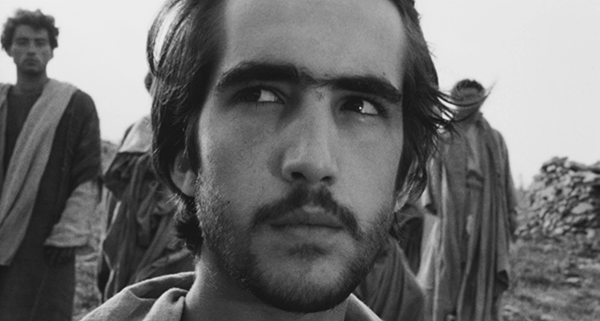
upload.wikimedia.org/wikipedia/en/2/2b/Pasolini_Gospel_Po...

The Gospel According to Pasolini
The Gospel According to Pasolini
THE GOSPEL ACCORDING TO ST MATTHEW(Il Vangelo Secondo Matteo)
-----------------------------------------------------------------
click to activate the icon of slideshow: the small triangle inscribed in the small rectangle, at the top right, in the photostream;
or…. Press the “L” button to zoom in the image;
clicca sulla piccola icona per attivare lo slideshow: sulla facciata principale del photostream, in alto a destra c'è un piccolo rettangolo (rappresenta il monitor) con dentro un piccolo triangolo nero;
oppure…. premi il tasto “L” per ingrandire l'immagine;
www.worldphoto.org/sony-world-photography-awards/winners-...
www.fotografidigitali.it/gallery/2726/opere-italiane-segn...
…………………………………………………………………
Before talking about the procession of the Holy Crucifix of Aracoeli which is held in the town of San Marco d'Alunzio (in the province of Messina), I make a brief introduction, this "photographic story" was created with photographs taken both during the procession of this year 2024, and during the procession of last year 2023, this meant, in some cases, that in some key moments of the procession the shots were taken simultaneously from two different angles, as if I had been in "bilocation", this because this year I chose a different perspective than last year. The procession begins on the morning of the last Friday of March each year, however there is an exception to this rule, when it coincides with Good Friday, which happened this year, then the procession is brought forward to the previous Friday. That of the SS. Crucifix of Aracoeli is an ancient penitential rite, on the day of the feast of the Crucifix in San Marco d'Alunzio the Holy Mass is celebrated in the Church of Aracoeli, therefore the SS. Crucifix (which is found in the church at the end of the right nave, at its feet the picture of the Virgin of Sorrows pierced by seven swords) is removed from the hook on which it is hanging, is taken outside the church, then raised and fixed on the float , and so (after the sermon of the priest who climbed onto the float next to the Crucifix) the Crucifix with the picture of his Sorrowful Mother underneath, then both placed on the float, are carried in procession by the Babbaluti, who proceed invoking the pity and mercy of the Lord with a faint lament that continually repeats “Signuri, Misericordia, Pietà!”. San Marco d'Alunzio is a pleasant town in the Messina area, located in the Nebrodi mountains, in Sicily; the procession takes place in honor of the Holy Crucifix of Araceli, this is a religious-penitential occasion also known as the "procession of the babbaluti", they are those who, by vote or by grace received, have decided to carry during the procession on their shoulders the float with the Crucifix and the painting; they head to the nearby Church of Santa Maria dei Poveri or to some private home nearby where, sheltered from the curiosity of the faithful, they wear a simple but characteristic indigo-coloured cloth habit, consisting of a tunic and a conical-shaped hood such to cover the entire body and leave only the eyes and hands free, it is not uncommon, however, that among the penitents, made anonymous by the habit they wear, there are also women, who, to avoid any possibility of recognition, wear a pair of gloves; the babbaluti are 33 in number to commemorate the 33 years of Christ, the number is odd, in fact the 33rd babbaluto does not wear the float, he (should be the "chief of float") proceeds backwards, turning his gaze to Christ and to His Mother, and at the same time checks that everything is in order among the babbaluti (this is a way of proceeding in carrying the float, which is present in various Sicilian religious processions). Then, the 32 (+1) "babbaluti" carry on their shoulders the launch bearing the Holy Crucifix of the Araceli church (the statue of Christ was created by Scipione Li Volsi, in the year 1652, he was a sculptor and plasterer of the Sicilian Baroque), at whose feet, on the float, the painting of Our Lady of Sorrows is tied, which appears pierced by seven swords (an 18th century painting). Before the start of the procession, the babbaluti advance barefoot wearing only heavy handmade raw wool socks. Before entering the church they must walk a purification path: when they arrive near the ancient church of Araceli , they bend down and kiss the ground, thus receiving permission to enter the church, but this happens from a side door, called "false door" (in Sicilian dialect “porta fausa”), once they enter the church laterally, they now emerge from the main entrance, thus being able to take their places, kneeling at the front and behind, of the float; the priest's long-awaited speech will follow, once finished, the procession can begin which takes place through the streets of the picturesque and welcoming town of San Marco d'Alunzio. Along the route the Babbaluti pace their pace accompanied by the sad and plaintive jugulation that invokes the Lord. There are devout men and women who proceed together with the mugglers, walking alongside the float, touching it, now caressing it... just to have physical (and consequently spiritual) contact with it. Finally, after having completed a specific route, the procession returns to the ancient church (of Norman origins) of Aracoeli. Whenever I am present at this touching occasion I am completely flooded with emotions (which however I cannot abandon myself to, I would lose concentration in taking the photos), the highlight is when the Crucified Christ is removed from the hook fixed on the wall by expert men, and then be carried (seems to float) above the heads of the devotees, supported with their hands, right outside the church, and be hoisted and fixed on the float; in these moments of intense emotion it is common to see in the eyes of the devotees, shining with tears, that profound emotion of their relationship with this Christ, which has always lasted: it is as if they found themselves in the presence of the true Christ, in flesh and blood, this it is the atmosphere you experience in those moments, this is the magic of the procession of the SS. Crucifix and his Mother, represented by the painting of Our Lady of Sorrows pierced by seven swords (iconography of Spanish origin).
+++++++++++++++++++++++++++++++++++++++++
+++++++++++++++++++++++++++++++++++++++++
Prima di parlare della processione del Santissimo Crocifisso di Aracoeli che si tiene nel paese di San Marco d’Alunzio (in provincia di Messina), faccio una breve premessa, questo “racconto fotografico” è stato realizzato con fotografie scattate sia durante la processione di quest’anno 2024, sia durante la processione dello scorso anno 2023, questo ha comportato, in alcuni casi, che in alcuni momenti salienti della processione gli scatti siano stati realizzati contemporaneamente da due angolazioni diverse, come se io fossi stato in “bilocazione”, questo perché quest’anno ho scelto una prospettiva differente da quella dello scorso anno. La processione inizia la mattina dell’ultimo venerdì del mese di marzo di ogni anno, c’è però una eccezione a questa regola, quando avviene la coincidenza col Venerdì Santo, cosa accaduta quest’anno, allora la processione viene anticipata al venerdì precedente. Quella del SS.Crocifisso di Aracoeli è un antico rito penitenziale, il giorno della festa del Crocifisso a San Marco d'Alunzio viene celebrata la S. Messa nella Chiesa dell'Aracoeli, quindi il SS. Crocifisso (che si trova nella chiesa in fondo alla navata di destra, ai suoi piedi il quadro della Vergine Addolorata. trafitta da sette spade) viene tolto dal gancio sul quale è appeso, viene portato all’esterno della chiesa, quindi innalzato e fissato sulla vara, e così (dopo il sermone del sacerdote salito sulla vara accanto al Crocifisso) il Crocifisso con sotto il quadro di sua Madre Addolorata, quindi messi entrambi sulla vara, vengono portati in processione dai Babbaluti, che procedono invocando la pietà e la misericordia del Signore con un flebile lamento che ripete continuamente “Signuri, Misericordia, Pietà!”. San Marco d’Alunzio è un ameno paese del territorio Messinese, sito sui monti Nebrodi, in Sicilia; la processione si svolge proprio in onore del Santissimo Crocifisso di Araceli, è questa una ricorrenza religioso-penitenziale conosciuta anche come "processione dei babbaluti", essi sono coloro che per voto o per grazia ricevuta, hanno deciso di portare in processione sulle loro spalle il fercolo con il Crocifisso ed il quadro; essi si dirigono nella vicina Chiesa di Santa Maria dei Poveri o in qualche abitazione privata lì vicino dove, al riparo dalla curiosità dei fedeli, indossano un semplice ma caratteristico saio di tela di colore indaco, costituito da una tunica e un cappuccio di forma conica tale da coprire l'intero corpo e lasciare liberi solo gli occhi e le mani, non è raro purtuttavia che tra i penitenti, resi anonimi dal saio che indossano, vi siano anche delle donne, le quali per evitare qualsiasi possibilità di riconoscimento, indossano un paio di guanti; i babbaluti sono in numero di 33 per rievocare i 33 anni di Cristo, il numero è dispari, infatti il 33° babbaluto non porta la vara, egli (dovrebbe essere il “capo vara”) procede all’indietro, rivolgendo lo sguardo al Cristo ed a sua Madre, e nel contempo controlla che tutto sia in ordine tra i babbaluti (questo è un modo di procedere nel portare la vara o fercolo, che è presente in diverse processioni religiose siciliane). Quindi, i 32 (+1) "babbaluti" portano sulle loro spalle la vara che reca il Santo Crocifisso della chiesa dell’Araceli (la statua del Cristo è stata creata da Scipione Li Volsi, nell'anno 1652, egli fu uno scultore e stuccatore del barocco SIciliano), ai cui piedi, sulla vara, viene legato il quadro della Madonna Addolorata, che appare trafitta da sette spade ( un dipinto del XVIII secolo). I babbaluti prima dell'inizio della processione avanzano a piedi scalzi indossando solo delle pesanti calze di lana grezza realizzate a mano, devono percorrere, prima di entrare in chiesa, un cammino di purificazione: quando essi giungono in prossimità dell'antica chiesa dell'Araceli, essi si chinano e baciano in terra, ricevendo in tal modo il permesso per poter accedere dentro la chiesa, questo però avviene da una porta laterale, chiamata "falsa porta" (In dialetto siciliano “porta fausa”), una volta entrati in chiesa lateralmente, ora fuoriescono dall'ingresso principale, potendo così prendere posto, inginocchiandosi sul davanti ed alle spalle, della vara; seguirà l'atteso discorso del sacerdote, terminato, potrà iniziare la processione che si svolge per le vie del pittoresco ed accogliente paese di San Marco d'Alunzio. Lungo il percorso i Babbaluti cadenzano la propria andatura accompagnandosi alla mesta e lamentosa giugulatoria che invoca il Signore . Ci sono uomini e donne devoti che procedono assieme ai babbaluti camminando a lato della vara, toccandola, ora accarezzandola...pur di avere un contatto fisico (e di rimando spirituale) con essa. Infine, dopo aver compiuto un preciso percorso, la processione fa rientro nell'antica chiesa (di origini Normanne) dell'Aracoeli. Ogniqualvolta sono presente a questa toccante ricorrenza sono completamente inondato da emozioni (alle quali però non posso abbandonarmi, perderei la concentrazione nel realizzare le foto), il momento clou è quando il Cristo Crocifisso viene tolto dal gancio fissato sul muro da uomini esperti, per poi essere portato (sembra galleggiare) sopra la testa dei devoti, sostenuto con le mani, fin fuori la chiesa, ed essere issato e fissato sulla vara; in questi momenti di intensa emozione è comune vedere negli occhi dei devoti, lucidi di lacrime, quella emozione profonda del loro rapporto con questo Cristo, che dura da sempre: è come se si trovassero al cospetto del Cristo vero, in carne ed ossa, questa è l’atmosfera che si vive in quei momenti, questa è la magia della processione del SS. Crocifisso e di Sua Madre, rappresentata dal quadro dell’Addolorata trafitta da sette spade (iconografia di origine spagnola).
++++++++++++++++++++++++++++++++++++++++
Wikimedia's annual development community meet-up — the Wikimedia Hackathon — was held in Amsterdam, Netherlands in 2013 from 24-26 May. It was a long weekend filled with hacking anything related to MediaWiki or one of the Wikimedia projects (and sometimes other things, too). The Hackathon was completely open to seasoned and new developers, as well as people working on MediaWiki, tools, pywikipedia, gadgets, extensions, templates, etc.