View allAll Photos Tagged Wikimedia
Description
Description
{{bn|1=[[: bn: ভেনেজুয়েলা|ভেনেজুয়েলার]] মার্গারিটা দ্বীপের ৯ বছরের একটি ছেলের ঘামে ভেজা মুখ মণ্ডল।}}
A 9-year-old boy's face, [[: en: Isla Margarita|Margarita Island]], Venezuela.He's my nephew, his parents agreed to publish this photo here and with the license listed below.
{{hu|1=Egy 9 éves kolumbiai fiú arca Margarita szigetén.}}
Date
2012-08-23
Source
{{Own}}
Author
{{User: The Photographer/info}}
Permission
Other_versions
{{Derived from|Boy Face from Venezuela (Original).JPG}}
Other_fields
field|{{Notes}}|}}
== {{Assessment}} ==
{{Assessments|quality=1|featured=1}}
License
{{Self|Cc-zero}}
{{Personality rights}}
{{Consent|full}}
Uploaded with UploadWizard
Human skin
Perspiration
Portrait photographs of boys
Boys of Venezuela
Children of Isla Margarita
Taken with Nikon D300
Featured pictures of Venezuela
Featured pictures by User: The Photographer
Featured pictures of Venezuela by User: The Photographer
Culture pictures by The Photographer
9-year-old human malesTaken with Nikon D300Files by The Photographer
Images of Venezuela by User: The Photographer
Map made for Wikipedia and the Wikimedia Commons.
This is a map of the Ganges (yellow), Brahmaputra (violet), and Meghna (green) drainage basins. Created with ArcExplorer and Adobe Illustrator, based on Natural Earth data.
Commons links: commons.wikimedia.org/wiki/File:Ganges-Brahmaputra-Meghna...
Used on en.wikipedia.org/wiki/Ganges and many other pages.
Map made for Wikipedia and the Wikimedia Commons.
This is a map of the route taken by Alessandro Malaspina during his expedition of 1789-1794. The map shows only the route of Malaspina's ship, Descubierta. A second ship, Atrevida, under command of José Bustamante accompanied Malaspina along most but not all of this route. The return route from Tonga to Spain is not shown. Made using various sources that describe the expedition and its route.
Commons link: commons.wikimedia.org/wiki/File:MalaspinaRouteMap.png
Used on various pages including
en.wikipedia.org/wiki/Alessandro_Malaspina
Map made for Wikipedia and the Wikimedia Commons.
Map of the Appalachian Mountain physiographic regions, highlighting the Great Appalachian Valley, naming the main valleys making it up and the main mountains on either side.
Commons link: commons.wikimedia.org/wiki/File:Greatvalley-map.jpg
Used on various pages including
en.wikipedia.org/wiki/Great_Appalachian_Valley
Reference: Photo 24/(263)
From the Girdwood Collection held by the British Library.
This image is part of the Europeana Collections 1914-1918
Date: 6 Aug 1915
See also:
- View this at the British Library's site
.……………………………….
upload.wikimedia.org/wikipedia/en/2/2b/Pasolini_Gospel_Po...
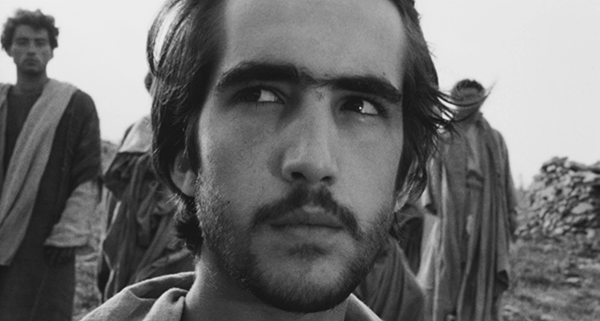
The Gospel According to Pasolini
THE GOSPEL ACCORDING TO ST MATTHEW(Il Vangelo Secondo Matteo)
-----------------------------------------------------------------
click to activate the icon of slideshow: the small triangle inscribed in the small rectangle, at the top right, in the photostream;
or…. Press the “L” button to zoom in the image;
clicca sulla piccola icona per attivare lo slideshow: sulla facciata principale del photostream, in alto a destra c'è un piccolo rettangolo (rappresenta il monitor) con dentro un piccolo triangolo nero;
oppure…. premi il tasto “L” per ingrandire l'immagine;
www.worldphoto.org/sony-world-photography-awards/winners-...
www.fotografidigitali.it/gallery/2726/opere-italiane-segn...
…………………………………………………………………
Before talking about the procession of the Holy Crucifix of Aracoeli which is held in the town of San Marco d'Alunzio (in the province of Messina), I make a brief introduction, this "photographic story" was created with photographs taken both during the procession of this year 2024, and during the procession of last year 2023, this meant, in some cases, that in some key moments of the procession the shots were taken simultaneously from two different angles, as if I had been in "bilocation", this because this year I chose a different perspective than last year. The procession begins on the morning of the last Friday of March each year, however there is an exception to this rule, when it coincides with Good Friday, which happened this year, then the procession is brought forward to the previous Friday. That of the SS. Crucifix of Aracoeli is an ancient penitential rite, on the day of the feast of the Crucifix in San Marco d'Alunzio the Holy Mass is celebrated in the Church of Aracoeli, therefore the SS. Crucifix (which is found in the church at the end of the right nave, at its feet the picture of the Virgin of Sorrows pierced by seven swords) is removed from the hook on which it is hanging, is taken outside the church, then raised and fixed on the float , and so (after the sermon of the priest who climbed onto the float next to the Crucifix) the Crucifix with the picture of his Sorrowful Mother underneath, then both placed on the float, are carried in procession by the Babbaluti, who proceed invoking the pity and mercy of the Lord with a faint lament that continually repeats “Signuri, Misericordia, Pietà!”. San Marco d'Alunzio is a pleasant town in the Messina area, located in the Nebrodi mountains, in Sicily; the procession takes place in honor of the Holy Crucifix of Araceli, this is a religious-penitential occasion also known as the "procession of the babbaluti", they are those who, by vote or by grace received, have decided to carry during the procession on their shoulders the float with the Crucifix and the painting; they head to the nearby Church of Santa Maria dei Poveri or to some private home nearby where, sheltered from the curiosity of the faithful, they wear a simple but characteristic indigo-coloured cloth habit, consisting of a tunic and a conical-shaped hood such to cover the entire body and leave only the eyes and hands free, it is not uncommon, however, that among the penitents, made anonymous by the habit they wear, there are also women, who, to avoid any possibility of recognition, wear a pair of gloves; the babbaluti are 33 in number to commemorate the 33 years of Christ, the number is odd, in fact the 33rd babbaluto does not wear the float, he (should be the "chief of float") proceeds backwards, turning his gaze to Christ and to His Mother, and at the same time checks that everything is in order among the babbaluti (this is a way of proceeding in carrying the float, which is present in various Sicilian religious processions). Then, the 32 (+1) "babbaluti" carry on their shoulders the launch bearing the Holy Crucifix of the Araceli church (the statue of Christ was created by Scipione Li Volsi, in the year 1652, he was a sculptor and plasterer of the Sicilian Baroque), at whose feet, on the float, the painting of Our Lady of Sorrows is tied, which appears pierced by seven swords (an 18th century painting). Before the start of the procession, the babbaluti advance barefoot wearing only heavy handmade raw wool socks. Before entering the church they must walk a purification path: when they arrive near the ancient church of Araceli , they bend down and kiss the ground, thus receiving permission to enter the church, but this happens from a side door, called "false door" (in Sicilian dialect “porta fausa”), once they enter the church laterally, they now emerge from the main entrance, thus being able to take their places, kneeling at the front and behind, of the float; the priest's long-awaited speech will follow, once finished, the procession can begin which takes place through the streets of the picturesque and welcoming town of San Marco d'Alunzio. Along the route the Babbaluti pace their pace accompanied by the sad and plaintive jugulation that invokes the Lord. There are devout men and women who proceed together with the mugglers, walking alongside the float, touching it, now caressing it... just to have physical (and consequently spiritual) contact with it. Finally, after having completed a specific route, the procession returns to the ancient church (of Norman origins) of Aracoeli. Whenever I am present at this touching occasion I am completely flooded with emotions (which however I cannot abandon myself to, I would lose concentration in taking the photos), the highlight is when the Crucified Christ is removed from the hook fixed on the wall by expert men, and then be carried (seems to float) above the heads of the devotees, supported with their hands, right outside the church, and be hoisted and fixed on the float; in these moments of intense emotion it is common to see in the eyes of the devotees, shining with tears, that profound emotion of their relationship with this Christ, which has always lasted: it is as if they found themselves in the presence of the true Christ, in flesh and blood, this it is the atmosphere you experience in those moments, this is the magic of the procession of the SS. Crucifix and his Mother, represented by the painting of Our Lady of Sorrows pierced by seven swords (iconography of Spanish origin).
+++++++++++++++++++++++++++++++++++++++++
+++++++++++++++++++++++++++++++++++++++++
Prima di parlare della processione del Santissimo Crocifisso di Aracoeli che si tiene nel paese di San Marco d’Alunzio (in provincia di Messina), faccio una breve premessa, questo “racconto fotografico” è stato realizzato con fotografie scattate sia durante la processione di quest’anno 2024, sia durante la processione dello scorso anno 2023, questo ha comportato, in alcuni casi, che in alcuni momenti salienti della processione gli scatti siano stati realizzati contemporaneamente da due angolazioni diverse, come se io fossi stato in “bilocazione”, questo perché quest’anno ho scelto una prospettiva differente da quella dello scorso anno. La processione inizia la mattina dell’ultimo venerdì del mese di marzo di ogni anno, c’è però una eccezione a questa regola, quando avviene la coincidenza col Venerdì Santo, cosa accaduta quest’anno, allora la processione viene anticipata al venerdì precedente. Quella del SS.Crocifisso di Aracoeli è un antico rito penitenziale, il giorno della festa del Crocifisso a San Marco d'Alunzio viene celebrata la S. Messa nella Chiesa dell'Aracoeli, quindi il SS. Crocifisso (che si trova nella chiesa in fondo alla navata di destra, ai suoi piedi il quadro della Vergine Addolorata. trafitta da sette spade) viene tolto dal gancio sul quale è appeso, viene portato all’esterno della chiesa, quindi innalzato e fissato sulla vara, e così (dopo il sermone del sacerdote salito sulla vara accanto al Crocifisso) il Crocifisso con sotto il quadro di sua Madre Addolorata, quindi messi entrambi sulla vara, vengono portati in processione dai Babbaluti, che procedono invocando la pietà e la misericordia del Signore con un flebile lamento che ripete continuamente “Signuri, Misericordia, Pietà!”. San Marco d’Alunzio è un ameno paese del territorio Messinese, sito sui monti Nebrodi, in Sicilia; la processione si svolge proprio in onore del Santissimo Crocifisso di Araceli, è questa una ricorrenza religioso-penitenziale conosciuta anche come "processione dei babbaluti", essi sono coloro che per voto o per grazia ricevuta, hanno deciso di portare in processione sulle loro spalle il fercolo con il Crocifisso ed il quadro; essi si dirigono nella vicina Chiesa di Santa Maria dei Poveri o in qualche abitazione privata lì vicino dove, al riparo dalla curiosità dei fedeli, indossano un semplice ma caratteristico saio di tela di colore indaco, costituito da una tunica e un cappuccio di forma conica tale da coprire l'intero corpo e lasciare liberi solo gli occhi e le mani, non è raro purtuttavia che tra i penitenti, resi anonimi dal saio che indossano, vi siano anche delle donne, le quali per evitare qualsiasi possibilità di riconoscimento, indossano un paio di guanti; i babbaluti sono in numero di 33 per rievocare i 33 anni di Cristo, il numero è dispari, infatti il 33° babbaluto non porta la vara, egli (dovrebbe essere il “capo vara”) procede all’indietro, rivolgendo lo sguardo al Cristo ed a sua Madre, e nel contempo controlla che tutto sia in ordine tra i babbaluti (questo è un modo di procedere nel portare la vara o fercolo, che è presente in diverse processioni religiose siciliane). Quindi, i 32 (+1) "babbaluti" portano sulle loro spalle la vara che reca il Santo Crocifisso della chiesa dell’Araceli (la statua del Cristo è stata creata da Scipione Li Volsi, nell'anno 1652, egli fu uno scultore e stuccatore del barocco SIciliano), ai cui piedi, sulla vara, viene legato il quadro della Madonna Addolorata, che appare trafitta da sette spade ( un dipinto del XVIII secolo). I babbaluti prima dell'inizio della processione avanzano a piedi scalzi indossando solo delle pesanti calze di lana grezza realizzate a mano, devono percorrere, prima di entrare in chiesa, un cammino di purificazione: quando essi giungono in prossimità dell'antica chiesa dell'Araceli, essi si chinano e baciano in terra, ricevendo in tal modo il permesso per poter accedere dentro la chiesa, questo però avviene da una porta laterale, chiamata "falsa porta" (In dialetto siciliano “porta fausa”), una volta entrati in chiesa lateralmente, ora fuoriescono dall'ingresso principale, potendo così prendere posto, inginocchiandosi sul davanti ed alle spalle, della vara; seguirà l'atteso discorso del sacerdote, terminato, potrà iniziare la processione che si svolge per le vie del pittoresco ed accogliente paese di San Marco d'Alunzio. Lungo il percorso i Babbaluti cadenzano la propria andatura accompagnandosi alla mesta e lamentosa giugulatoria che invoca il Signore . Ci sono uomini e donne devoti che procedono assieme ai babbaluti camminando a lato della vara, toccandola, ora accarezzandola...pur di avere un contatto fisico (e di rimando spirituale) con essa. Infine, dopo aver compiuto un preciso percorso, la processione fa rientro nell'antica chiesa (di origini Normanne) dell'Aracoeli. Ogniqualvolta sono presente a questa toccante ricorrenza sono completamente inondato da emozioni (alle quali però non posso abbandonarmi, perderei la concentrazione nel realizzare le foto), il momento clou è quando il Cristo Crocifisso viene tolto dal gancio fissato sul muro da uomini esperti, per poi essere portato (sembra galleggiare) sopra la testa dei devoti, sostenuto con le mani, fin fuori la chiesa, ed essere issato e fissato sulla vara; in questi momenti di intensa emozione è comune vedere negli occhi dei devoti, lucidi di lacrime, quella emozione profonda del loro rapporto con questo Cristo, che dura da sempre: è come se si trovassero al cospetto del Cristo vero, in carne ed ossa, questa è l’atmosfera che si vive in quei momenti, questa è la magia della processione del SS. Crocifisso e di Sua Madre, rappresentata dal quadro dell’Addolorata trafitta da sette spade (iconografia di origine spagnola).
++++++++++++++++++++++++++++++++++++++++
Wikimedia's annual development community meet-up — the Wikimedia Hackathon — was held in Amsterdam, Netherlands in 2013 from 24-26 May. It was a long weekend filled with hacking anything related to MediaWiki or one of the Wikimedia projects (and sometimes other things, too). The Hackathon was completely open to seasoned and new developers, as well as people working on MediaWiki, tools, pywikipedia, gadgets, extensions, templates, etc.
Wikimedia commons.
"Godber Collection, Alexander Turnbull Library"
Wellington New Zealand
commons.wikimedia.org/wiki/File:Ka_class_steam_locomotive...
Holy Trinity Church in Kraków
This article is about the Dominican church. See also: floor plan of the same name .
Church of the Holy Trinity
Dominican convent church
Parish Church
Distinctive emblem for cultural property.svg A- 21, 25/03/1931 , A- 188 / M 02/09/1999
View from us . Dominican
Country Poland
In Kraków, ul. Joiners 12
the Roman Catholic
The Roman Catholic Church
Parish of the Holy Trinity
Minor Basilica of 1957
History
Data temple
Location map of the Old Town in Krakow
Church of the Holy Trinity
Earth 50 ° 03'33 .44 " N 19 ° 56'21 , 89 " E
Multimedia Commons Wikimedia Commons
Holy Trinity Church - a historic church located in the Old Town of Krakow, ul. Stolarskiej 12, combined with the Dominican convent.
History
Church. Trinity ( XVII -XIX century )
The service on the ruins of the church after a fire in 1850
Holy Trinity Church
Dominican Republic, with St . Jack at the helm, came to Krakow to Bologna in 1222. He brought the Cracow bishop Iwo Odrowąż who gave the Dominicans partly wood, partly brick parish church. Trinity, moving to a new parish church of St Mary, March 12, 1223, the church was consecrated .
New Gothic church and monastery of the Dominicans began to rise after the Tartar invasion in 1241. Originally it was a three-aisled hall, which was then, at the turn of the fourteenth and fifteenth centuries, the basilica was rebuilt. Until the mid nineteenth century, one of the characteristic features of the exterior of the temple was made of brick bell tower, standing not in front of the facade of the Church Street exit. Carpentry. After a fire in 1850, the church bell tower remained of the burned walls that were demolished during the reconstruction work of the church. In 1876, in place of the tower dostawiono the neo-Gothic facade of the temple porch. It protected the Gothic, the fourteenth-century portal of the main entrance, which was renovated in 1893 Among other things, lists the number of broken fragments of stone.
The end of the glory of the church put a terrible fire Krakow in 1850. It burned the whole interior with the exception of some of the chapels of the nave vault collapsed. Immediately after the fire started a comprehensive reconstruction of the temple. Construction lasted between 1850-1884 , and guided by the architect Theophilus Żebrawski. Blown walls were so weak that they had to dismantle part of the imminent collapse of the facade. After joining the reconstruction, it turned out that even the lower parts of the walls and pillars are too damaged to be able to carry the weight of the new vault. Therefore temporarily propped up with wooden beams and pillars of pressed metal rims. In the years 1853-1854 the rate of recovery was very slow, but such managed to bring the new stained glass windows by German artist Hübner The following year, construction was resumed, supporting silhouetted walls and covering them with arches supported on pillars of brick, stone interleaved only. After removing the props from under the arches of the nave vaults in the morning, April 12, 1855, a portion of the vault and the walls collapsed, damaging a neighboring house. This catastrophe building in Kraków moved public opinion. Especially criticized austerity policies in the selection of materials. In order to ensure adequate control was established in 1856 by a special committee conservation. After collecting the necessary funds and uprzątnięciu debris, only in 1858 began to laying new foundations for the pillars. Three years later roofed aisles, and in 1863 - the main nave. Basic work on the reconstruction was completed in 1872 . As a result, the appearance of the temple has changed considerably, which was criticized by the artistic community. Especially firmly decided to include sculptor Edward Stehlik. Later, many attacks also met Francis activity prior Pavoni who has pseudogotyckich interior alterations, furnishings and architectural details of the church. At the present time a high altar, choir stalls and confessionals. After the restoration, in 1884, the church was consecrated .
Since 1957 the church is a basilica minor .
Interior
Today the Trinity church is a three-nave Gothic temple of brick and stone, built in the characteristic of the Krakow-skarpowym (clothing) pillar system, with an elongated choir ended straight wall.
In the church, next to the main altar, is buried Leszek the Black Prince, who died in 1288. In the chancel of the church has a brown plate eminent humanist Filip Callimachus , who died in 1496, and made according to a design by Veit Stoss.
Authorities built in the 1890s the company Rieger Brothers of Jägerndorfu as opus 756. The instrument has 30 votes, mechanical and pneumatic tracker game tracker registers. It is a valuable and interesting example of the romantic organ building, while maintaining to this day its original concept of the tone.
Chapels
The interior of the church
Nave south (right )
Saint Joseph's Oratory. Rose Limańskiej (Lubomirski) - built in the early seventeenth century Gothic chapel, burial place Pilecki (erected in the late fourteenth century). The founders were Sebastian Lubomirski and his wife Anna Branicka, their portraits are on the walls in TONDACH brakes. The interior of the dome filled with images of St. Sebastian, Stanislaw and Anna Samotrzeć and the prophet Elijah, in the niches are statues of saints (Dominik, Stanislaus, Stanislaus Kostka, Czeslaw, Kazimierz, Jacek, Florian and Wojciech). The chapel was closed seventeenth century grid.
Saint Joseph's Oratory. Thomas - built in the fifteenth century by the characteristics of tailors. Is covered with a dome network. Equipment is designed by Marian Pavoni neo-Gothic altar with statues of St. Thomas, Casimir Stanislaus Kostka, Anthony and Albert, Renaissance tomb of Nicholas Bogusz Krasnystaw governor and Tommaso Dolabella image depicting a school of St . Thomas Aquinas.
Chapel of the Saviour (Przeździeckich) - placed by Nicholas Edeling in 1368, subsequent came under the care of the bakers' guild, and in the sixteenth century passed into the possession of the family Orliki. After a fire in 1850 and restored by the family Przeździeckich. Equipped with a neo-Gothic altar made by Edward Stehlik, designed by Theophilus Żebrawskiego.
Saint Joseph's Oratory. Joseph (Szafraniec, Provanów) - built in the fifteenth century by the characteristics of shoemakers, after many years was owned by the family Szafraniec. Equipment is a neo-Gothic altar designed by Marian Pavoni with the image of Christ in the Holy workshop. Joseph John Angelika Drewaczyńskiego brush and Mannerist tombstone Prosper Prov - żupnika Wieliczka .
Saint Joseph's Oratory. Dominic Myszkowskis - founded in 1614. It is located on the second to last in the side, the right aisle. It is specific and easy to recognize because it can see a gallery of family Myszkowskis. These are the family carved figures inside the dome. This chapel is easy to recognize from the outside, because it is decorated with rustication. The building was used srebrzystoczarny (shiny metallic grey) noble marble columns are colored in soft, broken pink and white sculptures emphasize elegance.
Chapel of the Rosary - it was built on a Greek cross with a dome over the intersection of the arms in the years 1685-1688 on the site of an earlier fifteenth- century chapel of the Annunciation. In 1668 was placed in the chapel of the image of Our Lady of the Rosary, which according to tradition was to belong to St . Stanislaus Kostka. It is located between the main altar with statues of St . Pius V and error . Benedict IX. The walls and ceiling covered by a polychrome painted over in 1820 by Teodor Baltazar Stachowicz and in 1875 by Valentine and Wladyslaw Bąkowskich. It reveals the mysteries of the Rosary, the coronation of the Blessed Virgin Mary, the saints and angelic choirs. The chapel is the tomb of Stanislaus Sołtyka by F. Pozzi, painting of the Madonna and Child in a silver dress and the statue of Christ the Man of Sorrows in the early sixteenth century. Since 1983, the chapel is the burial place Teofili Sobieska mother of King John III Sobieski , and Marek Sobieski (brother of John III) .
Nave north (left )
Headstone of General Jan Skrzynecki in the chapel of Jesus Crucified
Saint Joseph's Oratory. Catherine of Siena (Zbaraskis) - built the foundation of George Zbaraskiego Castellan of Cracow in the years 1627-1633 by Andrew and Anthony Castellich. Perched on a rectangular plan and is covered with a dome of elliptical projection. The interior is made of black marble. Opposite the entrance is an altar with a picture of Teodor Baltazar Stachowicz showing a vision of St . Catherine of Siena. On both sides of the picture are statues of St . St. Catherine of Alexandria and St . Catherine of Siena. On the right side of the altar - George Zbaraskiego tombstone, and on the left - Christopher Zbaraskiego. The chapel was closed grille of the 2nd half. Nineteenth century, mounted on a marble balustrade.
Saint Joseph's Oratory. Mary Magdalene (Malachowski) - built in the fifteenth century, in the sixteenth century wore call St . John the Baptist, and was owned by the family Tęczyńska. Since 1884 belongs to the family Malachowski. It is located in the neo-Gothic design by Marian altar painting of St. Pavoni. Mary Magdalene Wladyslaw Bąkowski brush, painting Feast of Simon Thomas Dolabella and Malachowskis tombstone from 1884.
Chapel of Jesus Crucified - built in the late fourteenth century with the foundation of John Castellan łęczycki Ligęza. It wore once call St . Stanislaus. In the seventeenth taken care of her features masons. At the arcade, there are fragments of Gothic paintings from the end of the fourteenth century St . Catherine of Alexandria and the two prophets. The equipment includes the neo-Gothic altar designed by Marian Pavoni an image of Christ crucified Joseph Simmler brush. The high altar is gothic reliquary containing the remains of Bl. Wit - the thirteenth-century apostle of Lithuania. In front of the altar is the marble tomb of General Jan Skrzynecki. In the chapel Masses are celebrated on the anniversary of the Battle of Olszynka Grochowska.
Chapel of the Holy . Jack - in it, in a late Baroque tomb placed on the altar are the remains of the saint. The altar was made in the years 1695-1703 by Baltazar Fontana. The same artist around 1700 the chapel decorated with stucco. Then covered wall murals Charles Dankwart. In the chapel there are also scenes from the life of St . Jack painted by Tomasz Dolabella. The chapel is closed grille of the mid-eighteenth century.
Monastery
The monastic buildings adjacent to the church on the north and center on three wirydarzy. The galleries around the first of them are called campo santo Krakow because of the numerous monuments, tombstones and epitaphs set in the walls. Cross-ribbed vault of the cloister dates from the fourteenth century, tombstones and epitaphs in most of the sixteenth and seventeenth centuries. The oldest portion of the buildings are Romanesque refectory of wild stone and portal decorated with braid. Is identified with the original church of St. Trinity devoted to the Dominicans in 1222 by Iwo Odrowąż, or the oratory built after the fire of 1225 years. Inside are paintings of the fifteenth and sixteenth centuries. On the left of the Roman relics are early Gothic windows, identified by some scholars of the Church of the former St . Thomas. The buildings also include:
chapter house erected from the thirteenth to the beginning. The sixteenth century. It leads to the Gothic portal .
Gothic hall is covered with cross-ribbed vault supported on three pillars
Old library, built in the thirteenth, and rebuilt in the seventeenth century.
Stock monastery include, among others portraits of the bishops of the Dominican order, Tommaso Dolabella images from the years 1614 to 1620, the so-called accommodation. Dominican polyptych by the Master of the Dominican Passion, painting of St . Jude Luke Orlowski, Vision of St. Sophie Michael Stachowicz, alabaster sculpture Gothic Madonna and Child (called jacks) on the head reliquary of St . Jack baroque vestments, numerous incunabula, old books and even manuscripts from the thirteenth century.
pl.wikipedia.org/wiki/Bazylika_%C5%9Awi%C4%99tej_Tr%C3%B3...
Rainbow
A rainbow is an optical and meteorological phenomenon that causes a spectrum of light to appear in the sky when the Sun shines onto droplets of moisture in the Earth's atmosphere. They take the form of a multicoloured arc, with red on the outer part of the arch and violet on the inner section of the arch.
A rainbow spans a continuous spectrum of colours; the discrete bands are an artefact of human colour vision. The most commonly cited and remembered sequence, in English, is Newton's sevenfold red, orange, yellow, green, blue, and violet (popularly memorized by mnemonics like Roy G. Biv). Rainbows can be caused by other forms of water than rain, including mist, spray, and dew.
Arcobaleno
L'arcobaleno è un fenomeno ottico e meteorologico che produce uno spettro (quasi) continuo di luce nel cielo quando la luce del Sole attraversa le gocce d'acqua rimaste in sospensione dopo un temporale, o presso una cascata o una fontana.
Visivamente è un arco multicolore, rosso sull'esterno e viola sulla parte interna; la sequenza completa è rosso, arancione, giallo, verde, azzurro, indaco e violetto. Esso è la conseguenza della dispersione e della rifrazione della luce solare contro le pareti delle gocce stesse.
In rari casi, un arcobaleno lunare, o notturno, può essere visto nelle notti di forte luce lunare. Ma, dato che la percezione umana dei colori in condizioni di poca luminosità è scarsa, gli arcobaleni lunari sono percepiti come bianchi.
Arco iris
El arco iris es un fenómeno óptico y meteorológico que produce la aparición de un espectro de luz continuo en el cielo cuando los rayos del sol atraviesan pequeñas partículas de humedad contenidas en la atmósfera terrestre. La forma es la suma de un arco multicolor con el rojo hacia la parte exterior y el violeta hacia la interior. Menos frecuente es el arco iris doble, el cual incluye un segundo arco más tenue con los colores invertidos, es decir el rojo hacia el interior y el violeta hacia el exterior.
A pesar de que el arco iris muestra un espectro continuo de colores, comúnmente se suele aceptar como siete los colores que lo conforman, los cuales son el rojo, naranja, amarillo, verde, azul, celeste y violeta producto de la descomposición de frecuencias de la luz, y es formado por los 3 colores primarios y los 3 secundarios, aunque tradicionalmente se habla de 7 colores, incluyendo el añil entre el azul y el violeta.
Para recordar facilmente los colores del Arco iris en orden, se puede utilizar la siguiente regla nemotécnica en inglés:
ROY G BIV
Red Orange Yellow Green Blue Indigo Violet (Rojo Naranja Amarillo Verde Azul Índigo Violeta)
A Taromina c'era la pioggia. Per puro caso sono riuscito a fotografare l'arcobaleno dalla piazza panoramica della chiesa di San Giusseppe.
taormina rainbow messina bougainvillea basil basilico hotel san domenico giardini naxos etna volcano vulcano island isola sicilia sicily italia italy sea sun landscape free europe wallpaper michael micky castielli resolution vacation holiday travel flight creativecommons creative commons zero CC0 cc0 CC cc panoramio flickr googleearth maps geotagged gnu gimp wikimedia
On the advice of his mother Gaia, the titan Cronos castrated his father Uranus and threw his genitals into the sea.
The severed organs landed South East of Kythera, as they touched the water, it foamed and Aphrodite the goddess of love emerged. en.wikipedia.org/wiki/Aphrodite
CC BY-SA Picture by Marsyas via the National Archeological Museum of Athens and Wikimedia Commons w.wiki/5fPQ
Wikimedia commons.
"Godber Collection, Alexander Turnbull Library"
Wellington New Zealand
commons.wikimedia.org/wiki/File:Nc_Class_steam_locomotive...
SEE IT IN FULL SIZE HERE:
upload.wikimedia.org/wikipedia/en/0/09/BaruchCollegeLectu...
A lecture hall in the 5th floor of the Vertical Campus building. Lecture halls at Baruch College are usually used for introductory courses and can seat approximately 500 students. This is a modern lecture hall; microphones and large projection screens are used to help students.
I took a few pictures and stitched them together to make this panoramic photo.
© 2009 Salman Ashraf. www.artofsalman.com.
The origins of the church dedicated to St. Michael the Archangel and documentary evidence of so-called (Arkhangel'skoe) village goes back to the 17th century when these groungs were owned by Boltin boyars. The church as it's shown on a photo was finalized in 1822 by well-known Russian architect Joseph Bove who was the second husband of princess A.S. Trubetskoy, whose noble family owned this land since year 1710. Later in 1937 the church was closed by atheist soviet authorities and turned into warehouse and country club, then severly damaged during WW II. One of the most sad things in history of the church is that The Nazis killed lots of people from the bell-tower of the church as it's a prevailing height of this area. The church was returned to the Russian Orthodox Church in 1995 and since then is permanently under reconstruction process.
More information about the village and country estate of the Trubetskoy family can be found here -in Russian
More information about Joseph Bove : WIKI
taormina rainbow messina bougainvillea basil basilico hotel san domenico giardini naxos etna volcano vulcano island isola sicilia sicily italia italy sea sun landscape free europe wallpaper michael micky castielli resolution vacation holiday travel flight creativecommons creative commons zero CC0 cc0 CC cc panoramio flickr googleearth maps geotagged gnu gimp wikimedia
Moggerhanger House
From Wikipedia, the free encyclopedia
Jump to navigationJump to search
Moggerhanger House
Moggerhangerhouse.jpg
Wikimedia | © OpenStreetMap
General information
TypeManor house
LocationMoggerhanger, Bedfordshire
CountryEngland
Coordinates52.12465°N 0.34291°W
Construction started1790
Completed1812
Renovated1994
Design and construction
ArchitectJohn Soane
Other designersHumphry Repton
Renovating team
ArchitectPeter Inskip
Website
moggerhangerpark.com
Moggerhanger House is a Grade I-listed country house in Moggerhanger, Bedfordshire, England, designed by the eminent architect John Soane. The house is owned by a Christian charity, Harvest Vision, and the Moggerhanger House Preservation Trust, and has recently undergone a £7m refurbishment project with help from organisations such as the Heritage Lottery Fund, English Heritage, World Monuments Fund and the East of England Development Agency.[1]
.……………………………….
upload.wikimedia.org/wikipedia/en/2/2b/Pasolini_Gospel_Po...
The Gospel According to Pasolini
THE GOSPEL ACCORDING TO ST MATTHEW(Il Vangelo Secondo Matteo)
-----------------------------------------------------------------
click to activate the icon of slideshow: the small triangle inscribed in the small rectangle, at the top right, in the photostream;
or…. Press the “L” button to zoom in the image;
clicca sulla piccola icona per attivare lo slideshow: sulla facciata principale del photostream, in alto a destra c'è un piccolo rettangolo (rappresenta il monitor) con dentro un piccolo triangolo nero;
oppure…. premi il tasto “L” per ingrandire l'immagine;
www.worldphoto.org/sony-world-photography-awards/winners-...
www.fotografidigitali.it/gallery/2726/opere-italiane-segn...
…………………………………………………………………
Before talking about the procession of the Holy Crucifix of Aracoeli which is held in the town of San Marco d'Alunzio (in the province of Messina), I make a brief introduction, this "photographic story" was created with photographs taken both during the procession of this year 2024, and during the procession of last year 2023, this meant, in some cases, that in some key moments of the procession the shots were taken simultaneously from two different angles, as if I had been in "bilocation", this because this year I chose a different perspective than last year. The procession begins on the morning of the last Friday of March each year, however there is an exception to this rule, when it coincides with Good Friday, which happened this year, then the procession is brought forward to the previous Friday. That of the SS. Crucifix of Aracoeli is an ancient penitential rite, on the day of the feast of the Crucifix in San Marco d'Alunzio the Holy Mass is celebrated in the Church of Aracoeli, therefore the SS. Crucifix (which is found in the church at the end of the right nave, at its feet the picture of the Virgin of Sorrows pierced by seven swords) is removed from the hook on which it is hanging, is taken outside the church, then raised and fixed on the float , and so (after the sermon of the priest who climbed onto the float next to the Crucifix) the Crucifix with the picture of his Sorrowful Mother underneath, then both placed on the float, are carried in procession by the Babbaluti, who proceed invoking the pity and mercy of the Lord with a faint lament that continually repeats “Signuri, Misericordia, Pietà!”. San Marco d'Alunzio is a pleasant town in the Messina area, located in the Nebrodi mountains, in Sicily; the procession takes place in honor of the Holy Crucifix of Araceli, this is a religious-penitential occasion also known as the "procession of the babbaluti", they are those who, by vote or by grace received, have decided to carry during the procession on their shoulders the float with the Crucifix and the painting; they head to the nearby Church of Santa Maria dei Poveri or to some private home nearby where, sheltered from the curiosity of the faithful, they wear a simple but characteristic indigo-coloured cloth habit, consisting of a tunic and a conical-shaped hood such to cover the entire body and leave only the eyes and hands free, it is not uncommon, however, that among the penitents, made anonymous by the habit they wear, there are also women, who, to avoid any possibility of recognition, wear a pair of gloves; the babbaluti are 33 in number to commemorate the 33 years of Christ, the number is odd, in fact the 33rd babbaluto does not wear the float, he (should be the "chief of float") proceeds backwards, turning his gaze to Christ and to His Mother, and at the same time checks that everything is in order among the babbaluti (this is a way of proceeding in carrying the float, which is present in various Sicilian religious processions). Then, the 32 (+1) "babbaluti" carry on their shoulders the launch bearing the Holy Crucifix of the Araceli church (the statue of Christ was created by Scipione Li Volsi, in the year 1652, he was a sculptor and plasterer of the Sicilian Baroque), at whose feet, on the float, the painting of Our Lady of Sorrows is tied, which appears pierced by seven swords (an 18th century painting). Before the start of the procession, the babbaluti advance barefoot wearing only heavy handmade raw wool socks. Before entering the church they must walk a purification path: when they arrive near the ancient church of Araceli , they bend down and kiss the ground, thus receiving permission to enter the church, but this happens from a side door, called "false door" (in Sicilian dialect “porta fausa”), once they enter the church laterally, they now emerge from the main entrance, thus being able to take their places, kneeling at the front and behind, of the float; the priest's long-awaited speech will follow, once finished, the procession can begin which takes place through the streets of the picturesque and welcoming town of San Marco d'Alunzio. Along the route the Babbaluti pace their pace accompanied by the sad and plaintive jugulation that invokes the Lord. There are devout men and women who proceed together with the mugglers, walking alongside the float, touching it, now caressing it... just to have physical (and consequently spiritual) contact with it. Finally, after having completed a specific route, the procession returns to the ancient church (of Norman origins) of Aracoeli. Whenever I am present at this touching occasion I am completely flooded with emotions (which however I cannot abandon myself to, I would lose concentration in taking the photos), the highlight is when the Crucified Christ is removed from the hook fixed on the wall by expert men, and then be carried (seems to float) above the heads of the devotees, supported with their hands, right outside the church, and be hoisted and fixed on the float; in these moments of intense emotion it is common to see in the eyes of the devotees, shining with tears, that profound emotion of their relationship with this Christ, which has always lasted: it is as if they found themselves in the presence of the true Christ, in flesh and blood, this it is the atmosphere you experience in those moments, this is the magic of the procession of the SS. Crucifix and his Mother, represented by the painting of Our Lady of Sorrows pierced by seven swords (iconography of Spanish origin).
+++++++++++++++++++++++++++++++++++++++++
+++++++++++++++++++++++++++++++++++++++++
Prima di parlare della processione del Santissimo Crocifisso di Aracoeli che si tiene nel paese di San Marco d’Alunzio (in provincia di Messina), faccio una breve premessa, questo “racconto fotografico” è stato realizzato con fotografie scattate sia durante la processione di quest’anno 2024, sia durante la processione dello scorso anno 2023, questo ha comportato, in alcuni casi, che in alcuni momenti salienti della processione gli scatti siano stati realizzati contemporaneamente da due angolazioni diverse, come se io fossi stato in “bilocazione”, questo perché quest’anno ho scelto una prospettiva differente da quella dello scorso anno. La processione inizia la mattina dell’ultimo venerdì del mese di marzo di ogni anno, c’è però una eccezione a questa regola, quando avviene la coincidenza col Venerdì Santo, cosa accaduta quest’anno, allora la processione viene anticipata al venerdì precedente. Quella del SS.Crocifisso di Aracoeli è un antico rito penitenziale, il giorno della festa del Crocifisso a San Marco d'Alunzio viene celebrata la S. Messa nella Chiesa dell'Aracoeli, quindi il SS. Crocifisso (che si trova nella chiesa in fondo alla navata di destra, ai suoi piedi il quadro della Vergine Addolorata. trafitta da sette spade) viene tolto dal gancio sul quale è appeso, viene portato all’esterno della chiesa, quindi innalzato e fissato sulla vara, e così (dopo il sermone del sacerdote salito sulla vara accanto al Crocifisso) il Crocifisso con sotto il quadro di sua Madre Addolorata, quindi messi entrambi sulla vara, vengono portati in processione dai Babbaluti, che procedono invocando la pietà e la misericordia del Signore con un flebile lamento che ripete continuamente “Signuri, Misericordia, Pietà!”. San Marco d’Alunzio è un ameno paese del territorio Messinese, sito sui monti Nebrodi, in Sicilia; la processione si svolge proprio in onore del Santissimo Crocifisso di Araceli, è questa una ricorrenza religioso-penitenziale conosciuta anche come "processione dei babbaluti", essi sono coloro che per voto o per grazia ricevuta, hanno deciso di portare in processione sulle loro spalle il fercolo con il Crocifisso ed il quadro; essi si dirigono nella vicina Chiesa di Santa Maria dei Poveri o in qualche abitazione privata lì vicino dove, al riparo dalla curiosità dei fedeli, indossano un semplice ma caratteristico saio di tela di colore indaco, costituito da una tunica e un cappuccio di forma conica tale da coprire l'intero corpo e lasciare liberi solo gli occhi e le mani, non è raro purtuttavia che tra i penitenti, resi anonimi dal saio che indossano, vi siano anche delle donne, le quali per evitare qualsiasi possibilità di riconoscimento, indossano un paio di guanti; i babbaluti sono in numero di 33 per rievocare i 33 anni di Cristo, il numero è dispari, infatti il 33° babbaluto non porta la vara, egli (dovrebbe essere il “capo vara”) procede all’indietro, rivolgendo lo sguardo al Cristo ed a sua Madre, e nel contempo controlla che tutto sia in ordine tra i babbaluti (questo è un modo di procedere nel portare la vara o fercolo, che è presente in diverse processioni religiose siciliane). Quindi, i 32 (+1) "babbaluti" portano sulle loro spalle la vara che reca il Santo Crocifisso della chiesa dell’Araceli (la statua del Cristo è stata creata da Scipione Li Volsi, nell'anno 1652, egli fu uno scultore e stuccatore del barocco SIciliano), ai cui piedi, sulla vara, viene legato il quadro della Madonna Addolorata, che appare trafitta da sette spade ( un dipinto del XVIII secolo). I babbaluti prima dell'inizio della processione avanzano a piedi scalzi indossando solo delle pesanti calze di lana grezza realizzate a mano, devono percorrere, prima di entrare in chiesa, un cammino di purificazione: quando essi giungono in prossimità dell'antica chiesa dell'Araceli, essi si chinano e baciano in terra, ricevendo in tal modo il permesso per poter accedere dentro la chiesa, questo però avviene da una porta laterale, chiamata "falsa porta" (In dialetto siciliano “porta fausa”), una volta entrati in chiesa lateralmente, ora fuoriescono dall'ingresso principale, potendo così prendere posto, inginocchiandosi sul davanti ed alle spalle, della vara; seguirà l'atteso discorso del sacerdote, terminato, potrà iniziare la processione che si svolge per le vie del pittoresco ed accogliente paese di San Marco d'Alunzio. Lungo il percorso i Babbaluti cadenzano la propria andatura accompagnandosi alla mesta e lamentosa giugulatoria che invoca il Signore . Ci sono uomini e donne devoti che procedono assieme ai babbaluti camminando a lato della vara, toccandola, ora accarezzandola...pur di avere un contatto fisico (e di rimando spirituale) con essa. Infine, dopo aver compiuto un preciso percorso, la processione fa rientro nell'antica chiesa (di origini Normanne) dell'Aracoeli. Ogniqualvolta sono presente a questa toccante ricorrenza sono completamente inondato da emozioni (alle quali però non posso abbandonarmi, perderei la concentrazione nel realizzare le foto), il momento clou è quando il Cristo Crocifisso viene tolto dal gancio fissato sul muro da uomini esperti, per poi essere portato (sembra galleggiare) sopra la testa dei devoti, sostenuto con le mani, fin fuori la chiesa, ed essere issato e fissato sulla vara; in questi momenti di intensa emozione è comune vedere negli occhi dei devoti, lucidi di lacrime, quella emozione profonda del loro rapporto con questo Cristo, che dura da sempre: è come se si trovassero al cospetto del Cristo vero, in carne ed ossa, questa è l’atmosfera che si vive in quei momenti, questa è la magia della processione del SS. Crocifisso e di Sua Madre, rappresentata dal quadro dell’Addolorata trafitta da sette spade (iconografia di origine spagnola).
++++++++++++++++++++++++++++++++++++++++
Map made for Wikipedia and the Wikimedia Commons.
Map showing the major Continental divides of North America, following the style of commons.wikimedia.org/wiki/File:NorthAmericaDivides.gif and intended as a replacement. Made using commons.wikimedia.org/wiki/File:BlankMap-North_America-Su... as a base map. Various maps and other sources consulted, such as: commons.wikimedia.org/wiki/File:Ocean_drainage.png, Drainage Basins, The Atlas of Canada, www.cec.org/atlas/files/watersheds/na_watersheds_en.jpg, and others.
Commons link: commons.wikimedia.org/wiki/File:NorthAmerica-WaterDivides...
Used on various pages including
en.wikipedia.org/wiki/Continental_divide
en.wikipedia.org/wiki/Continental_Divide_of_the_Americas
en.wikipedia.org/wiki/Triple_Divide_Peak_(Montana)
en.wikipedia.org/wiki/Laurentian_Divide
and many others.
[Allium Linnæus 1753: 1,063 (IT: 72) spp]
[Bombylius Linnæus 1758: 347 (IT: 49) spp]
REFERENCES
A. Pignatti & al. 2019: Flora IT, v.1, pp. 226-270; v.4, pp. 297-302.
Uruguay, 3-Paraguay, 0
Uruguay: Muslera; Maxi Pereira, Lugano, Coates, Martín Cáceres (Godín, m. 90); Álvaro González, Diego Pérez (Eguren, m. 71), Arévalo, Álvaro Pereira (Cavani, m. 65); Forlán y Luis Suárez. No utilizados: Juan Castillo; Victorino, Hernández, Lodeiro, Rodríguez y Abreu.
Paraguay: Justo Villar; Piris, Da Silva, Verón, Marecos; Riveros, Ortigoza, Víctor Cáceres, Vera; Valdez y Zeballos (Lucas Barrios, m. 78). No utilizados: Diego Barreto; Marcos Cáceres, Alcaraz, Osvaldo, Estigarribia, Pérez y Edgar Barreto.
Goles:1-0. M. 12. Luis Suárez. 2-0. M. 42. Forlán. 3-0. M. 90. Forlán.
Árbitro: Salvio Fagundes (Brasil). Amonestó a Víctor Cáceres, Diego Pérez, Martín Cáceres, Maxi Pereira, Vera y Coates.
Unos 67.000 espectadores en el Monumental de Buenos Aires.
Camera: Canon EOS 5D Mark II
Lens: EF135mm f/2L USM +2x
Focal Length: 270 mm
Exposure: ¹⁄₆₄₀ sec at f/7.1
ISO: 200
Published: commons.wikimedia.org/wiki/File:Hinchas_paraguayos_en_fin...
Wikimedia's annual development community meet-up — the Wikimedia Hackathon — was held in Amsterdam, Netherlands in 2013 from 24-26 May. It was a long weekend filled with hacking anything related to MediaWiki or one of the Wikimedia projects (and sometimes other things, too). The Hackathon was completely open to seasoned and new developers, as well as people working on MediaWiki, tools, pywikipedia, gadgets, extensions, templates, etc.
The purpose here is not to duplicate the original image, from the Wikimedia Commons website (search for vintage KS stereoimages), but to generate an animated gif to assist viewing. Unfortunately, animation is not automatic - to animate you must view the image at original resolution (click all sizes) or simply scroll down.
The Wikimedia commons a multitude of historical images online, many needing no license to redistribute. The original image entitled Commerical street looking east from Seventh street, Atchinson, by Conklin & Kleckner(sic), is from Atchison area photographers. This 19th century view predates the brick streets and trolley that came at the end of the century. See the same, or a nearby block, in 1905 or the intersection of 7th & Commerical in 1907. This image is reduced to 600dpi wide to facilitate loading. See the full resolution animated gif (1400 x 1600 dpi; 2 MB).
Notable landmarks:
List of landmarks found at the Atchison History project.
The reverse of a Conklin and Kleckner describes their oeuvre:
Stereoscopic views of life and scenes in Kansas
Atchison, Union Deopt, Hotels, Business Houses, Missouri River Views, Atchison Brisge, Commercial Street, Grain Elevators, and all placesof interest in and around Atchison.
Prairie Life and Scenes
Sod Houses, Dugouts, Log Cabins, Prairie Flowers, Great Spirit Springs, Hunter's Cabins, Sod School Houses, Sheep Herding, and everything of interest on the frontier.
Photographed and published by Conklin & Kleckner, Portrait and Landscape Photographers.
509 Commercial St., Atchison, Kansas
Animated gif generated with StereoPhotoMaker, a freeware program by Masuji Suto & David Sykes
Photos from Zuccotti Park on Saturday, October 29, Day 43 of Occupy Wall Street. Today was New York's first snow of the year, and the first big test of cold weather for the protesters.
Good Magazine: The (Un)Official Occupy Wall Street Photographer's 15 Favorite Frames
The Occupy Wall Street Creative Commons Project
Day 1 September 17 Photos - Preoccupation and Occupation Begins
Day 2 September 18 Photos - People settle in; cardboard sign menage begins
Day 3 September 19 Photos - Community forms; protest signs
Day 7 September 23 Photos - First rain, protest signs, life
Day 8 September 24 Photos - Pepper spray day, Zuni Tikka, people
Day 21 October 6 Photos - Naomi Klein
Day 23 October 8 - Faces of OWS
Day 28 October 13 - Tom Morello of RATM
Day 31 - protesting Chihuahua and The Daily Show
Day 36 - Parents and Kids Day and quite a crowd
Day 40 - protesting hotties, Reverend Billy and tents
Day 43 Photos - Snow storm at OWS of the first NYC winter snowfall
Day 47 - Solidarity with Occupy Oakland
Day 52 November 7 - Jonathan Lethem, Lynn Nottage and Jennifer Egan
Day 53 November 8 - David Crosby and Graham Nash play OWS
Day 57 November 12 - Former NJ Gov. Jim McGreevey
Day 60 November 15 - Police evict protesters from Zuccotti
Occupy Colorado Springs Colorado on November 20
Do you want to see the Occupy Wall Street series laid out thematically? Click here
Op zaterdag 29 september reikte Frans Grijzenhout, voorzitter Wikimedia Nederland, het eerste gedrukte exemplaar van de handleiding ‘Schrijven voor Wikipedia’ uit aan emiritus hoogleraar psychologie Dolph Kohnstamm. Het boek is geschreven door Lodewijk Gelauff en is een samenwerking tussen Wikimedia Nederland en uitgever Van Duuren Media.
This work is protected under copyright laws and agreements.
All Rights Reserved (c) 2014 Берни Эггерян :: rumoto images
Todos los Derechos Reservados • Tous droits réservés • Todos os Direitos Reservados • Все права защищены • Tutti i diritti riservati
RF / РФ • The most beautiful and largest country in the world...
RUS 39 ► Kaliningrad... |► Baltic Sea, The Curonian Spit...
!! РОССИЯ ❤️ RUSSIA • best RUS Flickr group | Гимн
►my profile.. |►collections.. |►my sets.. |► Россия..
★ Fine Art photography ★ landscapes | alpine & mediterranean
Россия ☆ Russia Europe | Greece | Armenia | Австрия in austria
If you may want to see out more of my images, or you even have questions for usages of the photographs, I'd love to hear from you.
Please don't hesitate to add my works to your faves - thanks a lot!
☆ Берни Эггерян :: rumoto images
differs from all the turkeys out there
The Curonian Spit - (en.wikipedia.org/wiki/Curonian_Spit)
Куршская коса is a 98 km long, thin, curved sand-dune spit that separates the Curonian Lagoon from the Baltic Sea.
Die Kurische Nehrung ist ein 98 km langer Landstreifen (Halbinsel) zwischen Klaipėda/Memel und Lesnoje/Sarkau, von dem 46 km zu Russland gehören. Sie trennt das Kurische Haff von der Ostsee. Benannt ist die Kurische Nehrung nach dem Volksstamm der Kuren.
Die Nehrung besteht ausschließlich aus Sand mit riesigen Wanderdünen, die in den vergangenen Jahrhunderten, nach der Abholzung in der frühen Neuzeit, immer wieder Ortschaften unter sich begruben. Erst in der zweiten Hälfte des 19. Jahrhunderts gelang es, die Dünen zu bepflanzen und zu stabilisieren.
Im Mai 2006 verbrannten über 200 Hektar Kiefernwald im nördlichen Teil der Nehrung. Die Große Düne bei Nidden/Nida ist eine der größten Europas.
Die breiteste Stelle der Nehrung mit 3,8 km befindet sich beim Bulvikio ragas (Bullwikscher Haken), vier Kilometer nordöstlich von Nidden. Die schmalste liegt bei der Siedlung Lesnoje/Sarkau und ist 380 m breit.
Im Jahr 2000 wurde die Kurische Nehrung zum UNESCO Weltnaturerbe - Nationalpark Kurschskaja Kossa / Куршская каса.
:: Я фотограф, 写真家, фотограф, photographer, фото, rumoto, fine art, photography, Fotografie, Fotográfico, Fotografo, Nikon FX, Nikkor, full-frame, art print, Берни Эггерян, Бернхард Эггер, stunning, awesome, outstanding, supershot, Россия, Европа, Europe, RUS 39, tourism, Tourismus, travel, travelling, vacanze, destination, Urlaub, Reise, reisen, RF, РФ, Russiche Föderation, Russian Federation, Russland, Russia, the most beautiful country, Städtetourismus, туризм, Kaliningrad, Калининград, Зеленоградск, Cranz, Selenogradsk, Zelenogradsk, Kaliningrad Gebiet, Kaliningradskaya Oblast, Калинингрaдская oбласть, Балтийское море, Baltic Sea, Ostsee, Kurische Nehrung, The Couronian Spit, UNESCO, World Heritage, Natur, nature, National Geographic, Curonian Lagoon, Haff, Istmo de Curlandia, Isthme de Courlande, Penisola di Neringa, Istmo da Curlândia, Куршская коса, Курска превлака, Kuurinkynnäs, Koerse Schoorwal, Bernstein, Amber, gallery, Canvas Prints, posters, Poster, Kunstdruck, Grußkarte, beautiful, gorgeous, print, prints, printed, canvas, quality, calendar, Kalenderbilder, Fotos, Bilder, postcard, greeting card, best, authentic, real, exclusive, original, Tanzender Wald, dancing forest,
The Curonian Spit - Dancing Forest Калинингрaдская oбласть Russia (c) 2014 Берни Эггерян :: rumoto images 9668
Scroll down to the first comment or view original size (actions menu, above) to see the stereo illusion.
Details and History
The Wikimedia Commons website offers a multitude of historical images with no restrictions on use. Commons member State Library of Queensland preserves and shares several images, and their collections appear safe from the catastrophic 2011 floods. This September 14, 1915 stereoview from Baroona, Queensland, Australia shows Gymnasts performing at the Rosalie and Milton Patriotic Fete, Brisbane, 1915.
Quick Links to Related Animated Stereo Images
Images from Australia
Copyright Advisory
The purpose here is not to duplicate the original image but to generate a downloadable animated gif to assist viewing and presentation. This item is indicated as being in the public domain on its Wikimedia page: commons.wikimedia.org/wiki/File:StateLibQld_1_251753_Gymn... . Image metadata has been released by State Library of Queensland under the Creative Commons Attribution-Share Alike 2.5 license
Technical trivia
Image manipulations and animated gif generation done with StereoPhotoMaker, a freeware program by Masuji Suto & David Sykes.
Wikimedia commons.
"Godber Collection, Alexander Turnbull Library"
Wellington New Zealand
tiaki.natlib.govt.nz/#details=ecatalogue.292904
Now at Ferrymead Railway Christchurch.
Wikimedia Commons share. Public photo. Engraving by Edward Harding. Source: www.altair.co.uk
The Sami is known to have used ermine in the 1600's. Det er kjent fra flere kilder at samene brukte hermelin skinn på 1600-tallet.
Provinciaal Archeologisch Depot Zuid-Holland. Foto collectie WikiCommons. Naamsvermelding:ErfgoedZH - Eigen werk, CC BY 3.0, commons.wikimedia.org/w/index.php?curid=6210852
Near the small town Sonch`on (Pyongan Bukto province), parts of a old wall or a Fortress are visible. In former centurys some wall of chinese dynastys reached into korean territory:
upload.wikimedia.org/wikipedia/commons/thumb/9/9d/Map_of_...
Dec. 2003 (scanned slide)
Presidential Candidate 總統候選人
www.google.com/search?hl=en&noj=1&biw=1367&bi...
www.bing.com/images/search?q=%e9%a6%ac%e5%a4%a9%e4%ba%ae+...
atomzone.co.uk/images/search/TianLiang+Maa%2C+Taiwan+Pres...
flickr.akitomo.net/TianLiang+Maa%2C+Taiwan+Presidential+C...
snap.nl.sg/searchflickr.aspx?q=TianLiang+Maa%2C+Taiwan+Pr...
www.google.com/search?q=DPP+Taiwan+recommended+parliament...
whotalking.com/flickr/TianLiang+Maa,+Taiwan+Presidential+...
atomzone.co.uk/images/search/%E9%A6%AC%E5%A4%A9%E4%BA%AE+...
Tianliang Ma
~ a Taiwanese social reformer, philosopher, photographer and film director
“Touching Fairness and Justice”
馬天亮
~ 臺灣的社會改革者,哲學家,攝影師,和電影導演
《感動的公平與正義》
TianLiang Maa, alternative spelling: Tianliang Ma, also known as Theophilus Raynsford Mann; Ma, Tianliang; Chinese: 馬天亮; 马天亮.
SUMMARY
TianLiang Maa is a naturalist, occultist, Buddhist and Taoist. In 1982, Maa developed a technique for abstract photography, applied “Rayonism” into photographic works. Maa staged 32 individual, extraordinary exhibitions around Taiwan, who was the first exhibitor around Formosa. Maa’s works is the beginning of modernization in the modern abstract arts in the world. At the University of Oxford, Maa’s attractive topic was “A View of Architectural History: Towns through the Ages from Winchester through London Arrived at Oxford in England”; also an author at the University of California, Berkeley and the University of Michigan in the United States; an alumnus from Christ Church College at the University of Oxford in England, the University of Glamorgan in Wales, and National Taiwan University in Taipei on Taiwan. Maa’s works have been quoted by the scholars many times, making Maa one of the highly cited technological, artistic, and managing public administrators in the academia. Maa was listed in “Taiwan Who’s Who In Business” © 1984, 1987, 1989 Harvard Management Service.
Early Life and Record of Genealogy
TianLiang Maa possesses both Taiwanese and German surnames from birth. Usually, whenever anyone asks Maa about where he comes from, he would reply “Formosa” as he grew up and was educated in the Far East and lives in Taiwanese and Japanese lifestyles. Moreover, he often teaches and educates younger generations based on the methods of the Far Eastern teaching he experienced when he was young, though he does not oppose the Western ways of teaching and thinking. Maa takes great pride in his roots, which go back 150 years (since 1864); Maa’s ancestry originates and creates generations, and prepares younger generations to succeed their personality and ethical standards and integrity.
Education in Taiwan and a Brief of Latest Generation of History in Taiwan / Formosa
In 1980, Maa obtained his postgraduate certificate from the Graduate Institute of Electrical Engineering of National Taiwan University in Taipei; successfully completed another graduate studies in Information dBase III Plus and Taiwanese Traditional Chinese Mandarin Information System at National Sun Yat-Sen University in Kaohsiung in 1989.
In history, the Portuguese explorers discovered and called the island (Taiwan), “Formosa” (meaning “Beautiful Island”) in 1590. They are non-Chinese people; it was long a Chinese and Japanese pirate base. Fighting continued, between its original inhabitants of Taiwanese and the Chinese settlers, into the 19th century. In 1894-95 first Sino-Japanese War that ended in Manchus of the Qing (Ching) dynasty defeat, the late Manchu Qing Government forced to cede Formosa to Japan. This result was made by the Treaty of Shomonoseki in 1895 and remained under Japanese control until the end of the Second World War. Early on, Taiwan was conquered by the Qing in 1683 and for the first time became part of older China dynasty. However, today, the home country of Maa’s origin has around 165 institutions (93 universities) of higher education, which now has one of the best-educated populations in Asia. Among the major public (state) ones are the National Taiwan University (NTU) at Taipei, and National Sun Yat-Sen University (NSYSU) at Kaohsiung. NSYSU is also called National Chun-Shan University; according to Times Higher Education 2010-2011, NSYSU ranks as the 3rd university in Taiwan, 21st in Asia, and 163rd worldwide. National Taiwan University is ranked 51 to 60 ranks on Times Higher Education World University Rankings - Top Universities by Reputation 2013, the United Kingdom (see www.timeshighereducation.co.uk/world-university-rankings/...); King's College London (KCL) (21st in the world and 6th in Europe in the 2010, QS World University Rankings), the University of London, and University of Southern California (is one of the world's leading private research universities, located in the heart of Los Angeles), afterward.
Backing to Maa’s early school-time of Taiwan Provincial Kaohsiung Industrial Senior High School (Kaohsiung Municipal Kaohsiung Industrial High school), the professional technical education, which is equivalent to Advanced Level General Certificate of Education, commonly referred to as an A-level in the United Kingdom; China Electronic Engineering College, the distance learning programme, which is in equivalence as UK’s Diploma of Higher Education / Undergraduate Diploma (as an Associate Degree in the United States). An additional, his middle education was taught by the Kaohsiung Municipal Chihjh (Ci Sian) Junior High School; and Kaohsiung Municipal San Min Elementary School was his first school in Taiwan.
Early Career
In 1989, Maa instituted Maa’s Office of Electrical Engineer, he settled himself in electrical technology and industries as a chief engineer in his early years. He put his professional and precise knowledge to good account in business management. A formal business management with business relationship established to provide for regular services, dealings, and other commercial transactions and deed. He had many customers having a business and credit relationship with his firm then he was a successful engineer.
Study Abroad and Immigration into the United Kingdom
In 1998, Maa studied abroad when he arrived in Great Britain; he studied at School of Built Environment, the University of Glamorgan (Prifysgol Morgannwg) in Merthyr Tydfil, Pontypridd, Wales for a master of science in real estate appraisal. Until the summer of 2000, Maa completed an academic course on “Towns through the Ages” from Christ Church College at the University of Oxford (is ranked the 2nd place worldwide on The Times Higher Education, World University Rankings 2012-2013
www.timeshighereducation.co.uk/world-university-rankings/...) in England. Afterward, Maa immigrated into the United Kingdom in the early year of 2004.
PHILOSOPHICAL VIEWS
Maa is a naturalist; he trusts spiritual naturalism and naturalistic spirituality, which teaches that “the unknown” created this wonderful world. “The unknown” arranged the nature with its law so that everything in nature is kept balanced and in order. However, human beings failed to control themselves, deliberately went against the law of nature, and resulted in disasters, which we deserved. He also is an occultist, a Taoist, and a Buddhist; but in Britain, he frequently goes to Christian and Catholic churches, where he makes friends with pastors and fathers as well as churchgoers. In his mind, he recognizes “Belief is truth held in the mind; faith is a fire in the heart”. He is always a freethinker, does not accept traditional, social, and religious teaching, but based on his ideas: a thought or conception that potentially and actually exists in his mind as a product of mental activity - his opinion, conviction, and principle. If people have not come across eastern classics and philosophy, we are afraid that people would never understand TianLiang Maa. People cannot judge an eastern philosopher based on western ways of thinking. He studies I Ching discovering eastern classics of ancient origin consisting of 64 interrelated hexagrams along with commentaries. The hexagrams embody Taoist philosophy by describing all nature and human endeavour in terms of the interaction of yin and yang, and the classics may be consulted as an oracle.
Back in the 1990s when Maa just arrived at England, he had been offered places to do Ph.D. and LL.M. degrees (degree in Law and Politics of the European Union) by several western professors in the Great Britain. He has met all the requirements for postgraduate admissions to study at UK’s universities.
During his time at Oxford, he learnt a lot of British culture and folk-custom while carrying out research with many British and Western professors, experts, and archaeologists. This proves that Maa understands various aspects in British society, culture, and lifestyles. Of course, he does not fully understand about the perspectives of thinking of a typical British. For example, what would be the most valuable in life for a British person? What would a British want to gain from life? What is the goal in life for a British? Is it fortune or a lover? Alternatively, perhaps honour? On the other hand, maybe being able to travel around the world and see the world?
FAIRNESS and JUSTICE
As TianLiang Maa’s (馬天亮) saying are:
“Touching Fairness and Justice”
Feel good about themselves, but do not know the sufferings of the people...
Who can get easy life like them?
What is profile of modern society?
What type and style is truly solemn for this society identify?
Where “the characterization” is? Who can see? Did you see it?
《感動的公平與正義》
自我感覺良好, 不知民間疾苦...
誰能得到安逸的生活如同他們一樣?
這是個什麼樣子的社會?
這個社會認定什麼樣的類型和風格是真正莊重的?
「特徵」在那裡?誰可以看到?你看到了嗎?
Jurisprudence and Political Philosophy and Perspectives
Maa ever studied judicial review and governmental action, the impact of law and legal techniques, constitutional mechanisms for the protection of basic rights, and ensuring the integrity of commercial activity, the impact of law and legal techniques on government, policymaking, and administration, as well as the creation of markets. He tries to understand these critical trends in the political development of modern state. Maa will combine both theoretical and empirical approaches, and the conditions for democratic transition and the nature of state development in the ‘post-industrial’ era of globalisation and economic integration.
According as Maa’s legal experiences, he comprehend that “the knowledge of the law is like a deep well, out of which each man draught according to the strength of his understanding”, and, law and arbitrary power are in eternal enmity. He is also sure law and institutions are constantly tending to gravitate like clocks; they must be occasionally cleansed, and wound up, and set to true time.
The government issues a decree - an authoritative order having the force of law, which charged with putting into effect a country's laws and the administering of its functions. Any of the officials promulgate a law or put into practice relating to the government charged with the execution and administration of the nation's laws then they announce and carry out the creation of any order or new policy that will be responsible for the people.
Maa had knowledge in connexion with construction law; he also understands architectural arts, and as well learnt the forms by combining materials and parts include as an integral part concerning modern construct. I ever built urban buildings and rural architecture in different styles under new housing and building projects by the governmental administration and construction corporations.
Right now, Maa studies the problems caused by ethnic disputes and human armed conflicts in the modern society resulted code of mixed civil and criminal procedure. He wishes an agreement or a treaty to end human hostilities - the absence of war and other hostilities around the world. The interrelation and arrangement of freedom from quarrels and disagreement become harmonious relations living in peace with each other. Actually, erect peace in more friendly ways of making friendships for modern human society is comfortable in my ideal. It is like building monolithic architecture: houses and buildings for the people. Maa would like to do “something beautiful for `the unknown`”.
In the ethnic disagreement and armed conflicts as concerning the poor people and children notwithstanding they live through a bad environment on any of poor or crowded village or town in a particular manner - lived frugally. However, after years of industrialisation as a more educated population, becomes more aware of global plenum, continuing to be alive. Environmental groups are increasing and lobbing government will legislate to stop bad environmental and social practices. The establishments of human rights’ wide and untiring efforts will be alleviated people’s suffering. And as well the poor people shall meet and debate sustainable development and for a concerted government led action towards sustainability is an example that the younger generation are concerned for the future. It shall be making the younger easier for their life and make better on their lives, and help them to build a better future.
In present world, Maa really knows the full meanings of “Fundamental Human Rights and Equal Opportunities for the People”. He thinks ethics is the moral code governing the daily conduct of the individual toward those about him / her. It represents those rules or principles by which men and women live and work in a spirit of mutual confidence and service. Without going into the question of how an ethical code was formulated or why anybody should obey it, we can look at the matter in a common-sense fashion with reference to its influence upon our legal affairs. In brief, from the law point of view, a reputable ethical code embodies the qualities of accuracy, dependability, fair play, sound judgement, and service. It is based upon honesty.
No person can have an ethical code that concerns him / her alone. Living in society, as he / she must, a person encounters others whose rights must be respected as well as his / her own. An honest regard for the rights of others is an essential element of any decent code of ethics, and one that anyone must observe if anybody intends to follow that code. After all, ethics is not something apart from human beings. Indeed, there is no such thing apart from our actions and us. It is the duty, therefore, of every man and woman in legal affairs to see that his daily associations with others are truly in conformity with the plain meaning of the Ten Commandments: “Thou shalt not barratry, thou shalt not bear false witness, thou shalt not receive illegal fee and the rest”.
The knowledge Maa has, in connection with legal affairs, was usually come from his precious experiences of his past over ten year’s law and political careers. In an interval regarded as a distinct period of 1980s, he studied mixed civil and crime, and the code of mixed civil and criminal procedure for the problems caused by ethnic disputes and human armed conflicts in the modern society. He was especially one who maintains the language and customs of the group, and social security in Taiwan.
Since 30 July of 1988, Maa settled himself in law as a chief executive and scrivener at Central Legal, Real Estate, and Accounting Services Office; it is in the equivalent to a solicitor of the United Kingdom. The Office provided full legal, accounting, real estate, and commercial services to the public. He did his job as a person legally appointed by another to act as his or her agent in the transaction of business, specifically one qualified and licensed to act for plaintiffs and defendants in legal proceedings and affairs. Over and above Maa was a chairman and executive consultant at Taiwan Credit Information Company®, founded in 1994. The company offered services to the public in response to need and demand in the area of credit information.
Maa had excellent experiences in political and law work was pertaining to mixed civil and crime, the code of mixed civil and criminal procedure, construction, and commercial law abroad. The experiences of legal services related to the rights of private individuals and legal proceedings concerning these rights as distinguished. In the criminal proceedings, he did many cases for the defendants. Although an act committed or omitted in violation of a law forbidding or commanding it and for which punishment is imposed upon conviction; but he also laid legal claim, required as useful, just, proper, or necessary to the defendants under the human rights in the meantime. This provision ensures to the defendant a real voice in the subject.
The men whose judgement we respect are those who do not allow prejudices, preferences, or personalities to influence their decisions. Profit and self-aggrandisement are likewise ignored in their determination to reach an equitable and fair settlement. What are the basic principles upon which good judgement is founded? A keen intellect, a normal emotionally, a through understanding of human nature, experience of law work, sincerity, and integrity.
Developed a Technique for Abstract Photography and Abstractionist
In 1982, Maa developed a technique for abstractive photography, which applied “rayonism” to the photographic works. In November of 1984, Maa was 26-year-old, he instructed many professors and students of National Taiwan Normal University in photography of abstract impressionism and rayonnisme in Taipei, Taiwan. The word “rayonnisme” is French for rayonism - a style of abstract painting developed in 1911 in Russia.
Photographic Exhibitions
TianLiang Maa (Theophilus Raynsford Mann) Photographic Exhibition of “Rayonnisme / Rayonism” Tour - Invitational Exhibition of Taiwan 1983-84.
一九八三〜八四年中華民國臺灣 馬天亮攝影巡迴邀請展
TianLiang Maa (Theophilus Raynsford Mann) Photographic Exhibition of Rayonnisme / Rayonism (32 individual exhibitions) 1983~1985.
馬天亮『光影』攝影特展(個人展32場)1983〜1985年.
Maa staged 32 individual, extraordinary exhibitions and annual special exhibitions on photography of abstractive image and Rayonnisme around Taiwan / Formosa. Maa was the first exhibitor around the country. All of the invited displays were by the Chinese Government, cultural and artistic organisations, and sponsors. Maa’s earliest exhibition took place in the National Taiwan Arts Education Institute (Museum) on 19 December 1983 when Maa was 25 years old; Maa was the youngest exhibitor in the history of the Institute in any solo exhibitions. The Institute that was opened in March 1957, kept a collection of Maa’s work. It is currently updating the Institute’s internal organisation and strengthening co-operation with leading institutes and museums around the world. Meanwhile, it widened the institute’s scope to increase its emphasis on Taiwan’ regional culture and folk arts.
Modernization in the Modern Abstract Arts of Taiwan
Maa’s works is the beginning of modernization in the modern abstract arts of Taiwan, China and greater Chinese society in the world. The use of “modernisation” as a concept that is opposed to “Traditional” of “Conservative” ideas began with the approach of the 20th century. It spreads rapidly through academic circles, and was broadly accepted as a means to reform society. Chinese Manchu Qing (Ching) dynasty’s first steps toward modernisation began in the Tung-chih era (1862-1874) with the “Self-Empowerment Movement”. During the late 19th century, as late Manchu dynasty was confronted on all sides by foreign aggression, voices throughout society debated the most effective means to reform and strengthen the country. Some advocated “combining the best of East and West”, while others went so far as to call for “complete Westernisation”. Taiwan was at the centre of these waves of reform. Faced with direct threats against the island by foreign enemies, the Chinese Ching dynasty court took special steps to push Taiwan’s modernisation.
In a role just like that of a gardener wanting to create a rich and fertile environment for the seeds of culture, one in which Maa may sprout, grow and bloom. Maa aims to provide an educational stimulus for society by introducing his works - Maa can express the neo-romantic spirit deftly from various creations and supporting international artistic exchanges. Maa believes that the first step in creating such a new and independent state is the real emergence of culture and arts, for which the art and science of designing and erecting buildings, and fine arts (including photography and motion picture) of the civilization is a good measurement of success. For the foreseeable future, Maa should be continuing to forge ahead, working diligently and unceasingly towards its mission of raising China and Formosa / Taiwan’s culture in his spare time.
Became an Author and a Scholar
In 1980, TianLiang Maa completed his first book - scenario original “The Soul's Sentimentalizing”, also named: “Hun Yun : Jin Qi Tu Rui” 電影原著《魂韻》(衿契吐蕊) then Maa was at the age of 22. In 1983, The General Library of the University of California, Berkeley in the United States of America, collected and kept Maa’s writings - scenario original 「魂韻 : 衿契吐蕊」“Hun Yun : jin qi tu rui”, included a musical composition of his own – “Sonate Nr. 1 C-dur op. 3 für Klavier (piano)”, composed on 3rd April 1977 then Maa was 18 years old. The works were published in 1980; the theme was based on “The Soul's Sentimentalizing”. Another masterpiece was an Album of Academic Work for News Publication “TianLiang Maa (Theophilus Raynsford Mann) Photographic Exhibition of Rayonnisme / Rayonism”, published in 1985. The Hathi Trust Digital Library, the University of Michigan also collected and kept Maa’s writings.
Authorship
Maa’s articles and writings were published in more than 200 different kinds of domestic and foreign magazines, newspapers, and periodicals, in the period between May of 1972 and 1990s. It was all started when Maa was just 13-year-old. Many of which have been very influential. These have been quoted by Western and Eastern scholars many times in the last few years, making Maa one of the highly cited technological, artistic, and managing public administrators in the world in the late 20th and early 21st century. The Ministry of the Interior in Taiwan had registered Maa’s professional writings and given him two certificates of copyright. The numbers are 33080 and 33081 on 4th July of 1985; and Taiwan’s Gazette of The Presidential Office issue No. 4499, featured his writings on 4th September 1985.
Became an Academic and Film Director
Today, Maa is a professor at Space Time Life Research Academy, and a photographer, film director, and computer engineer now live and work in London.
Director Works:
FILMS:
Experimental Film “New Image for the Spring” © 1982
Documentary Film “Rayonnisme” © 2011
“The Soul's Sentimentalizing” of the feature film is based on the scenario original “The Soul's Sentimentalizing” (preparation)
FASHION SHOWS:
New Image for the Spring of Shapely Models International © 1982
High Lights on the Summer and Fall Fashion of Shapely Models Int’l © 1982
ART EXHIBITIONS:
The Cadillac Club International Fine Arts Exhibition © 1981
The Cinematic & Photographic Arts Salon and the Hall of the Arts, Pegasus Academy of Arts © 1981
Musician Work:
MUSIC COMPOSITION:
Sonate Nr. 1 C-dur op. 3 für Klavier (piano) © 1977, © 1980, © 1981, © 1983, the theme was based on “The Soul's Sentimentalizing”.
PHOTOGRAPHIC ALBUMS:
Portrait and Landscape in France © 2000
Portrait and Landscape in Scotland © 2001
Portrait and Landscape in England © 2009
Portrait at Queen Mary, University of London © 2010
Rayonism of London © 2011
Portrait at The University of Nottingham, United Kingdom © 2011
Snowy London © 2012
Portrait at King's College London © 2013
BOOKS:
Scenario Original「魂韻」(衿契吐蕊) “Hun yun: jin qi tu rui” © December 1980, © 1981, © 1983 (Date of First Publication: 31 December 1980, Second Edition on 29 July 1981, Date of Revision: Revised Edition on 8 May 1983), Languages: Chinese (traditional), and English language.
“Album of the Cadillac Club International Fine Arts Exhibition” © 1981
“Album of the Cinematic & Photographic Arts Salon and the Hall of the Arts, Pegasus Academy of Arts” © 1981
“Album of New Image for the Spring of Shapely Models International” © 1982
“Album of High Lights on the Summer and Fall Fashion of Shapely Models Int’l” © 1982
“Romantic Carol” © 1982
Album of Academic Work for News Publication: “TianLiang Maa (Theophilus Raynsford Mann) Photographic Exhibitions of Rayonnisme” © May 1985
新聞出版之學術著作專輯「馬天亮『光影』“Rayonism” 攝影展」© May 1985
New version of scenario original “The Soul's Sentimentalizing” (to be published)
「曾經輝煌到頂天立地」 “The Indomitable Spirit Was Brilliant to Upright” (individual biography, to be published)
“My Life, My History, and My Love” (based on a legend, to be published, a film scenario will be developed later)
「感動的公平與正義」“Touching Fairness and Justice” (political science and social studies, to be published)
Research Interests:
University of Oxford
Research Studies in Archaeology:
Maa’s attractive topic was “A View of Architectural History: Towns through the Ages from Winchester through London Arrived at Oxford in England”.
National Taiwan University
Graduate Certificate,
Graduate Institute of Electrical Engineering:
Maa’s monograph of seminar was “Applied the sequence control in the electric power distribution engineering”.
University of Glamorgan
M.Sc. Course,
Master of Science in Real Estate Appraisal:
Maa’s thesis - major subject, with relevant construction law was “The Assignment is under Economics of Construction Management in Architecture”.
National Sun Yat-Sen University
Postgraduate Certificate,
Postgraduate Studies in Computing:
Maa’s required subject was Information dBase III Plus and Taiwanese Traditional Mandarin Chinese Information System. He combined academic course work and practical laboratory sessions in “Applied Mandarin Phonetic Symbols into Traditional Taiwanese Personal Computer and Its Information System”.
Associations:
Since 1980, a member of Chinese Taipei Film Archive (CTFA, National Film Archive, Taiwan; founded in 1978), The Motion Picture Foundation, R.O.C. (member of Fédération Internationale des Archives du Film, FIAF; The International Federation of Film Archives was founded in Paris in 1938 by the British Film Institute, the Museum of Modern Art in New York City, the Cinémathèque Française and the Reichsfilmarchiv in Berlin.)
Commissioner of the cinema, photography, radio, and television committee of The Culture and Arts Association (Chinese Writers and Artists Association) of Taiwan ever since September 1983.
Classic member, the membership is equivalent to a doctorate membership of the Chinese Institute of Electrical Engineering since 23 March 1984.
On 15 March 1989, Maa promoted and founded the Consortium Juridical Person Mr. TianLiang Maa Social Benefit Foundation 財團法人馬天亮先生社會公益基金會 in Taiwan. near.archives.gov.tw/cgi-bin/near2/nph-redirect?rname=tre...
Classic member, the membership is equal to a professor or associate professor of The Chinese Institute of Engineers since 30 September 1991.
Honours:
Listed on ‘Taiwan Who’s Who In Business’, © 1984, © 1987, and © 1989 Harvard Management Service.
中華民國企業名人錄編纂委員會, 哈佛企業管理顧問公司.
On 26 August 1985, Maa was awarded a professional certificate of the Outdoor Artistry Activities issued by Education Bureau, Kaohsiung City Government, Taiwan. He acquired awards and certificates of honour about twenty times from National Taiwan Arts Education Center (Museum) on 24 December 1983; Kaohsiung Municipal Social Education Center on 17 March 1984, Kaohsiung Cultural Center, Taipei Cultural Center (Taipei Municipal Social Education Hall); and Taiwan Province Government, Taipei City Government, Kaohsiung City Government, and many cultural centres and art galleries, and so on.
Careers:
Honorary Professor at Space Time Life Research Academy, 7 June 2012 to present; Professor at Space Time Life Research Academy, 1 September 2011 to 1 June 2012 in London, United Kingdom:
Academia,
Teaching and Research:
business management and consultant, political philosophy, Chinese classics, Chinese humanities, modern Chinese language and literature, photography (portrait, fashion, commercial, digital, architectural, abstract photography), visual arts and film production.
教學與研究:
企業管理及顧問、政治哲學、中華經典 (古典漢學、文學、藝術、語言) 、中華人文、中華現代語言與文學、攝影 (人像、時裝、商業、數位/數碼、建築、抽象攝影) ,視覺藝術和影片製作。
Consultant and Translator at Eternal Life Consultants of Immigration and Translations Services, 10 March 2004 to present in London, United Kingdom:
consultants of immigration, translations, and legal services.
永生移民顧問翻譯服務社的移民諮詢顧問和翻譯:
移民事務,翻譯和法律服務。
Computer Hardware & Networking Engineer at Maa Office of Electrical Engineer, 8 March 2004 to present in London, United Kingdom:
Computer Engineering and Network Services. Repairing of Motherboards, Monitors, Power Supplies, CD-ROM Drives; UPS, Hard Disk Drives, H.D.D Data Recovery; BIOS Programming, and all types of Computer Hardware and Software Solutions.
計算機工程和網絡服務。維修主機板,顯示器,電源供應器,光碟機/光盘驱动器,不斷電系統,硬碟/硬盘,硬盤數據恢復,基本輸入輸出系統編程,以及所有類型的電腦/計算機硬體/硬件和軟體/軟件解決方案。
Film Director & Photographer at Photographer and Film Director (Shapely), 2 April 2007 to present in London, United Kingdom:
1) Photo, Video and Film Production; 2) Graphic Design, Web Design, Social Networking, Social Media and Advertising; 3) Architectural Design and Interior Design.
www.facebook.com/filmshapely/info
Reformer and Philosopher at Taiwanese Social Reformer and Philosopher, 7 April 2012 (location: Los Angeles, California) to present in London, United Kingdom:
Social Reform in Taiwan
www.facebook.com/twreform/info
《魂韻》(衿契吐蕊) - 馬天亮22歲寫的電影原著。TianLiang Maa (Theophilus Raynsford Mann) wrote “Hun Yun” (Jin Qi Tu Rui), scenario original “The Soul’s Sentimentalizing” © 1980, 1981, 1983, was at the age of 22.
Website
mtltwp.pixnet.net/album/set/1265174
photo.roodo.com/photos/mtltwp/albums/small/100469.html
Sonate Nr. 1 C-dur op. 3 für Klavier (piano) by Theophilus Raynsford Mann (TianLiang Maa 馬天亮) © 1977, © 1980, © 1981, © 1983. The Sonate composed on 3rd April 1977 then Maa was 18-year-old. The work was published in 1980; the theme was based on “The Soul's Sentimentalizing”.
Website
LINKS:
University of California, Berkeley
berkeley.worldcat.org/search?q=Ma%2C+Tianliang&dblist...
berkeley.worldcat.org/title/hun-yun/oclc/813684284?refere...
oskicat.berkeley.edu/record=b11283690~S1
University of Michigan
mirlyn.lib.umich.edu/Record/006237256
catalog.hathitrust.org/Record/006237256
WorldCat® Identities
www.worldcat.org/search?q=au%3AMa%2C+Tianliang%2C&dbl...
www.worldcat.org/wcidentities/np-ma,%20tianliang$1958
Google Books
books.google.co.uk/books?id=PkyaAAAAIAAJ&redir_esc=y
books.google.co.uk/books?id=JfxnMwEACAAJ&dq=editions:...
scholar.google.com/scholar?cluster=3569983911138966023&am...
National Bibliographic Information Network (NBINet)
nbinet3.ncl.edu.tw/search~S10?/a%7bu99AC%7d%7bu5929%7d%7b...
192.83.186.170/search*cht/a%E9%A6%AC%E5%A4%A9%E4%BA%AE
National Yang Ming University 國立陽明大學
library.ym.edu.tw/search~S7*cht?/tThe+Soul%27s+and+sentim...
National Taiwan University of Science and Technology 國立臺灣科技大學
millennium.lib.ntust.edu.tw/record=b1016706~S1
Wikimedia Commons 維基共享資源
commons.wikimedia.org/w/index.php?search=TianLiang+Maa+%E...
commons.wikimedia.org/wiki/File:TianLiang_Maa_馬天亮.jpg
commons.wikimedia.org/wiki/File:馬天亮_TianLiang_Maa.jpg
國家圖書館 期刊文獻資訊網, 臺灣期刊論文索引
readopac3.ncl.edu.tw/nclJournal/search/search_result.jsp?...
聲音藝術的審美角度, 大學雜誌, 天然
readopac3.ncl.edu.tw/nclJournal/search/detail.jsp?sysId=0...,
readopac3.ncl.edu.tw/nclJournal/search/detail.jsp?sysId=0...
為文化中心把脈, 幼獅文藝
readopac3.ncl.edu.tw/nclJournal/search/detail.jsp?sysId=0...,
科學家與守財奴, 中國地方自治
weblib.exam.gov.tw/ccdb2/Result_List.asp?idx_id=CCVOL&...
Yahoo, Bing, Google Search
www.google.com/search?q=TianLiang+Maa
images.search.yahoo.com/search/images;_ylt=AwrB8pGXJyVTVm...
www.bing.com/images/search?q=tianliang+ma&go=&qs=...
Atomzone
atomzone.co.uk/images/search/馬天亮
atomzone.co.uk/images/search/Ma+Tianliang
lurvely.com www.lurvely.com/photographer/77438197_N03/
www.flickriver.com/photos/mtltwp/
www.flickriver.com/photos/mtltwpprof/
Nature - National Library Board Singapore
snap.nl.sg/searchflickr.aspx?q=%E9%A6%AC%E5%A4%A9%E4%BA%A...
snap.nl.sg/searchflickr.aspx?q=TianLiang+Maa+&p=1&...
画像検索
flickr.akitomo.net/TianLiang+Maa/1
Japan Photos and Pictures
japan.pictures-photos.com/professor-tianliang-maa%E2%80%A6
summer.pictures-photos.com/professor-tianliang-maa%E2%80%A6
far-east-movement - Blogcu (Turkey)
far-east-movement.blogcu.com/professor-tianliang-maa/1226...
man fashion
spirehim.com/3454/professor-tianliang-maa-%E9%A6%AC%E5%A4...
Travel Splash
travel-splash.com/photos/view.php?id=13397167315&sear...
Country profile Taiwan
atomzone.co.uk/images/search/Country+profile+Taiwan
itpints
www.itpints.com/?q=TianLiang+Maa&sources%5b%5d=flickr...
AskJot
askjot.com/search/TianLiang-Maa
Who is talking
whotalking.com/flickr/TianLiang+Maa
University of California, Berkeley period
atomzone.co.uk/scaffold/images/search/University%20of%20C...
University of Michigan period
atomzone.co.uk/scaffold/images/search/University%20of%20M...
University of Oxford period
atomzone.co.uk/scaffold/images/search/University%20of%20O...
www.wer-ist.org/person/Oxford_Archaeology
University of Glamorgan period
atomzone.co.uk/images/search/University+of+Glamorgan+period
www.worldofbuildings.worldofbuildings.org/flickr/wob_flic...
University of Huddersfield period
atomzone.co.uk/scaffold/images/search/Huddersfield%20period
art galleries uk
artgalleriesuk.blogspot.co.uk/2012/08/bigandtall-stores-s...
Mitrasites system
sites.google.com/site/mitrasites/system/app/pages/customS...
articles.whmsoft
articles.whmsoft.com/related_search.php?keyword=Tianliang...
pantieslace-forwomen.blogspot.co.uk/2012/08/motherhood-ma...
3piece-suits.blogspot.co.uk/2012/07/nursing-shawl-become-...
3piece-suits.blogspot.co.uk/2012/08/body-briefers-childre...
www.flickriver.com/search/%E6%BC%A2%E5%AD%B8+OR.../intere...
www.flickriver.com/search/%E8%AB%96%E6%96%87+OR.../recent/
German
www.wer-ist.org/person/Jin_Mann
www.pediatr.org.tw/DB/News/file/1913-1.pdf
HOMEPAGE
Tumblr twwinp.tumblr.com/
Facebook www.facebook.com/twwinp
plus.google.com/+FormosanWinner/about
Flickr
www.flickr.com/people/mtltwpprof/
www.flickr.com/photos/115081224@N02/
Behance be.net/mtltwp
Vimeo vimeo.com/user19375807
ReverbNation www.reverbnation.com/directortianliangmaa%E9%A6%AC%E5%A4%...
YouTube www.youtube.com/watch?v=mqZCtzVdwIU
VideoRes
www.territorioscuola.com/videores/video/view/mqZCtzVdwIU/...
Mashpedia VideoPlayer
www.mashpedia.com/videoplayer.php?q=mqZCtzVdwIU
Webs mtltw-com.webs.com/
NOWnews blog.nownews.com/mtl
blog.nownews.com/profile.php?bid=43616
TaiwanYes tw01.org/profile/mtl
Baidu Space 百度空间
www.baidu.com/p/馬天亮/detail hi.baidu.com/new/mtltw
Blogger mtltwp.blogspot.co.uk/
LiveJournal
mtltwp.livejournal.com/profile
Scribd
www.scribd.com/TianLiang%20Maa%20%E9%A6%AC%E5%A4%A9%E4%BA%AE
yam 天空部落
blog.yam.com/mtltwp&act=profile
痞客邦 PIXNET mtltwp.pixnet.net/profile
Roodo Blog 樂多日誌 blog.roodo.com/mtltwp
funP 推推王 funp.com.tw/t2362814
Plurk www.plurk.com/mtlp/invite
TypePad profile.typepad.com/mtlp
Udemy www.udemy.com/u/861/
Delicious.com previous.delicious.com/mtltw
pinterest.com/mtltwp/a-story-of-professor-tianliang-maa-t...
Yasni®.co.uk person.yasni.co.uk/tianliang+maa+1310815
Twitter twitter.com/mtltwp
Topsy topsy.com/twitter/mtltwp
twpro ツイプロ twpro.jp/mtltwp
Google Talk twwinp@gmail.com
Skype tmanntw@outlook.com
Skype Name: tianliang.maa
Yahoo! Messenger twnwin@yahoo.com
ICQ twwinp@gmail.com
AOL t.maa@aim.com
Tel +44 (0)7575 288 016
.……………………………….
upload.wikimedia.org/wikipedia/en/2/2b/Pasolini_Gospel_Po...
The Gospel According to Pasolini
THE GOSPEL ACCORDING TO ST MATTHEW(Il Vangelo Secondo Matteo)
-----------------------------------------------------------------
click to activate the icon of slideshow: the small triangle inscribed in the small rectangle, at the top right, in the photostream;
or…. Press the “L” button to zoom in the image;
clicca sulla piccola icona per attivare lo slideshow: sulla facciata principale del photostream, in alto a destra c'è un piccolo rettangolo (rappresenta il monitor) con dentro un piccolo triangolo nero;
oppure…. premi il tasto “L” per ingrandire l'immagine;
www.worldphoto.org/sony-world-photography-awards/winners-...
www.fotografidigitali.it/gallery/2726/opere-italiane-segn...
…………………………………………………………………
Before talking about the procession of the Holy Crucifix of Aracoeli which is held in the town of San Marco d'Alunzio (in the province of Messina), I make a brief introduction, this "photographic story" was created with photographs taken both during the procession of this year 2024, and during the procession of last year 2023, this meant, in some cases, that in some key moments of the procession the shots were taken simultaneously from two different angles, as if I had been in "bilocation", this because this year I chose a different perspective than last year. The procession begins on the morning of the last Friday of March each year, however there is an exception to this rule, when it coincides with Good Friday, which happened this year, then the procession is brought forward to the previous Friday. That of the SS. Crucifix of Aracoeli is an ancient penitential rite, on the day of the feast of the Crucifix in San Marco d'Alunzio the Holy Mass is celebrated in the Church of Aracoeli, therefore the SS. Crucifix (which is found in the church at the end of the right nave, at its feet the picture of the Virgin of Sorrows pierced by seven swords) is removed from the hook on which it is hanging, is taken outside the church, then raised and fixed on the float , and so (after the sermon of the priest who climbed onto the float next to the Crucifix) the Crucifix with the picture of his Sorrowful Mother underneath, then both placed on the float, are carried in procession by the Babbaluti, who proceed invoking the pity and mercy of the Lord with a faint lament that continually repeats “Signuri, Misericordia, Pietà!”. San Marco d'Alunzio is a pleasant town in the Messina area, located in the Nebrodi mountains, in Sicily; the procession takes place in honor of the Holy Crucifix of Araceli, this is a religious-penitential occasion also known as the "procession of the babbaluti", they are those who, by vote or by grace received, have decided to carry during the procession on their shoulders the float with the Crucifix and the painting; they head to the nearby Church of Santa Maria dei Poveri or to some private home nearby where, sheltered from the curiosity of the faithful, they wear a simple but characteristic indigo-coloured cloth habit, consisting of a tunic and a conical-shaped hood such to cover the entire body and leave only the eyes and hands free, it is not uncommon, however, that among the penitents, made anonymous by the habit they wear, there are also women, who, to avoid any possibility of recognition, wear a pair of gloves; the babbaluti are 33 in number to commemorate the 33 years of Christ, the number is odd, in fact the 33rd babbaluto does not wear the float, he (should be the "chief of float") proceeds backwards, turning his gaze to Christ and to His Mother, and at the same time checks that everything is in order among the babbaluti (this is a way of proceeding in carrying the float, which is present in various Sicilian religious processions). Then, the 32 (+1) "babbaluti" carry on their shoulders the launch bearing the Holy Crucifix of the Araceli church (the statue of Christ was created by Scipione Li Volsi, in the year 1652, he was a sculptor and plasterer of the Sicilian Baroque), at whose feet, on the float, the painting of Our Lady of Sorrows is tied, which appears pierced by seven swords (an 18th century painting). Before the start of the procession, the babbaluti advance barefoot wearing only heavy handmade raw wool socks. Before entering the church they must walk a purification path: when they arrive near the ancient church of Araceli , they bend down and kiss the ground, thus receiving permission to enter the church, but this happens from a side door, called "false door" (in Sicilian dialect “porta fausa”), once they enter the church laterally, they now emerge from the main entrance, thus being able to take their places, kneeling at the front and behind, of the float; the priest's long-awaited speech will follow, once finished, the procession can begin which takes place through the streets of the picturesque and welcoming town of San Marco d'Alunzio. Along the route the Babbaluti pace their pace accompanied by the sad and plaintive jugulation that invokes the Lord. There are devout men and women who proceed together with the mugglers, walking alongside the float, touching it, now caressing it... just to have physical (and consequently spiritual) contact with it. Finally, after having completed a specific route, the procession returns to the ancient church (of Norman origins) of Aracoeli. Whenever I am present at this touching occasion I am completely flooded with emotions (which however I cannot abandon myself to, I would lose concentration in taking the photos), the highlight is when the Crucified Christ is removed from the hook fixed on the wall by expert men, and then be carried (seems to float) above the heads of the devotees, supported with their hands, right outside the church, and be hoisted and fixed on the float; in these moments of intense emotion it is common to see in the eyes of the devotees, shining with tears, that profound emotion of their relationship with this Christ, which has always lasted: it is as if they found themselves in the presence of the true Christ, in flesh and blood, this it is the atmosphere you experience in those moments, this is the magic of the procession of the SS. Crucifix and his Mother, represented by the painting of Our Lady of Sorrows pierced by seven swords (iconography of Spanish origin).
+++++++++++++++++++++++++++++++++++++++++
+++++++++++++++++++++++++++++++++++++++++
Prima di parlare della processione del Santissimo Crocifisso di Aracoeli che si tiene nel paese di San Marco d’Alunzio (in provincia di Messina), faccio una breve premessa, questo “racconto fotografico” è stato realizzato con fotografie scattate sia durante la processione di quest’anno 2024, sia durante la processione dello scorso anno 2023, questo ha comportato, in alcuni casi, che in alcuni momenti salienti della processione gli scatti siano stati realizzati contemporaneamente da due angolazioni diverse, come se io fossi stato in “bilocazione”, questo perché quest’anno ho scelto una prospettiva differente da quella dello scorso anno. La processione inizia la mattina dell’ultimo venerdì del mese di marzo di ogni anno, c’è però una eccezione a questa regola, quando avviene la coincidenza col Venerdì Santo, cosa accaduta quest’anno, allora la processione viene anticipata al venerdì precedente. Quella del SS.Crocifisso di Aracoeli è un antico rito penitenziale, il giorno della festa del Crocifisso a San Marco d'Alunzio viene celebrata la S. Messa nella Chiesa dell'Aracoeli, quindi il SS. Crocifisso (che si trova nella chiesa in fondo alla navata di destra, ai suoi piedi il quadro della Vergine Addolorata. trafitta da sette spade) viene tolto dal gancio sul quale è appeso, viene portato all’esterno della chiesa, quindi innalzato e fissato sulla vara, e così (dopo il sermone del sacerdote salito sulla vara accanto al Crocifisso) il Crocifisso con sotto il quadro di sua Madre Addolorata, quindi messi entrambi sulla vara, vengono portati in processione dai Babbaluti, che procedono invocando la pietà e la misericordia del Signore con un flebile lamento che ripete continuamente “Signuri, Misericordia, Pietà!”. San Marco d’Alunzio è un ameno paese del territorio Messinese, sito sui monti Nebrodi, in Sicilia; la processione si svolge proprio in onore del Santissimo Crocifisso di Araceli, è questa una ricorrenza religioso-penitenziale conosciuta anche come "processione dei babbaluti", essi sono coloro che per voto o per grazia ricevuta, hanno deciso di portare in processione sulle loro spalle il fercolo con il Crocifisso ed il quadro; essi si dirigono nella vicina Chiesa di Santa Maria dei Poveri o in qualche abitazione privata lì vicino dove, al riparo dalla curiosità dei fedeli, indossano un semplice ma caratteristico saio di tela di colore indaco, costituito da una tunica e un cappuccio di forma conica tale da coprire l'intero corpo e lasciare liberi solo gli occhi e le mani, non è raro purtuttavia che tra i penitenti, resi anonimi dal saio che indossano, vi siano anche delle donne, le quali per evitare qualsiasi possibilità di riconoscimento, indossano un paio di guanti; i babbaluti sono in numero di 33 per rievocare i 33 anni di Cristo, il numero è dispari, infatti il 33° babbaluto non porta la vara, egli (dovrebbe essere il “capo vara”) procede all’indietro, rivolgendo lo sguardo al Cristo ed a sua Madre, e nel contempo controlla che tutto sia in ordine tra i babbaluti (questo è un modo di procedere nel portare la vara o fercolo, che è presente in diverse processioni religiose siciliane). Quindi, i 32 (+1) "babbaluti" portano sulle loro spalle la vara che reca il Santo Crocifisso della chiesa dell’Araceli (la statua del Cristo è stata creata da Scipione Li Volsi, nell'anno 1652, egli fu uno scultore e stuccatore del barocco SIciliano), ai cui piedi, sulla vara, viene legato il quadro della Madonna Addolorata, che appare trafitta da sette spade ( un dipinto del XVIII secolo). I babbaluti prima dell'inizio della processione avanzano a piedi scalzi indossando solo delle pesanti calze di lana grezza realizzate a mano, devono percorrere, prima di entrare in chiesa, un cammino di purificazione: quando essi giungono in prossimità dell'antica chiesa dell'Araceli, essi si chinano e baciano in terra, ricevendo in tal modo il permesso per poter accedere dentro la chiesa, questo però avviene da una porta laterale, chiamata "falsa porta" (In dialetto siciliano “porta fausa”), una volta entrati in chiesa lateralmente, ora fuoriescono dall'ingresso principale, potendo così prendere posto, inginocchiandosi sul davanti ed alle spalle, della vara; seguirà l'atteso discorso del sacerdote, terminato, potrà iniziare la processione che si svolge per le vie del pittoresco ed accogliente paese di San Marco d'Alunzio. Lungo il percorso i Babbaluti cadenzano la propria andatura accompagnandosi alla mesta e lamentosa giugulatoria che invoca il Signore . Ci sono uomini e donne devoti che procedono assieme ai babbaluti camminando a lato della vara, toccandola, ora accarezzandola...pur di avere un contatto fisico (e di rimando spirituale) con essa. Infine, dopo aver compiuto un preciso percorso, la processione fa rientro nell'antica chiesa (di origini Normanne) dell'Aracoeli. Ogniqualvolta sono presente a questa toccante ricorrenza sono completamente inondato da emozioni (alle quali però non posso abbandonarmi, perderei la concentrazione nel realizzare le foto), il momento clou è quando il Cristo Crocifisso viene tolto dal gancio fissato sul muro da uomini esperti, per poi essere portato (sembra galleggiare) sopra la testa dei devoti, sostenuto con le mani, fin fuori la chiesa, ed essere issato e fissato sulla vara; in questi momenti di intensa emozione è comune vedere negli occhi dei devoti, lucidi di lacrime, quella emozione profonda del loro rapporto con questo Cristo, che dura da sempre: è come se si trovassero al cospetto del Cristo vero, in carne ed ossa, questa è l’atmosfera che si vive in quei momenti, questa è la magia della processione del SS. Crocifisso e di Sua Madre, rappresentata dal quadro dell’Addolorata trafitta da sette spade (iconografia di origine spagnola).
++++++++++++++++++++++++++++++++++++++++
まだ11時20分を過ぎたところですが、昼食が出ました。
(2006/05/13 In Flight, NH401, JAPAN)
/* Flight Data */
Airline: All Nippon Airways (NH/ANA)
Airplane: Boeing 767-381 (JA8363)
Flight No.: NH401
From: Kobe Airport (UKB/RJBE)
To: New Chitose Airport (CTS/RJCC)
Seat No.: 2G
Class: Super Seat Premium (S)
/*Menu*/
Ganmodoki: One of a processed food of tofu
Ninjin-ni: Boiled food of carrot and taro
Konnyaku: Paste made from the arum root
Ebi-dango: Dumpling of prawn
Yaki-Ita: Roasted "Boiled fish paste (Kamaboko)"
Konbu-maki: Rolled seaweed
Asari-ni: Boiled short-necked clam
Ikura: Salmon roe
Shiro-Meshi: Boiled rise
Shibazuke: pickles in salt and perilla
Kappazuke: Pickles of cucumbers
Apple
Kiwi Fruit
Orange
Sakura-Mochi: One of a Japanese-style confection in spring season
and Now Used
Map made for Wikipedia and the Wikimedia Commons.
This is a map of the Salmon River of Idaho. Created based on USGS and Digital Chart of the World data.
Commons link: commons.wikimedia.org/wiki/File:Salmon_River_Idaho_Map.png
Used on various pages including
Map made for Wikipedia and the Wikimedia Commons.
World map showing the context of the Maritime Fur Trade era, circa 1790 to 1840.
Commons link: commons.wikimedia.org/wiki/File:Maritime_Fur_Trade-WorldC...
Used on various pages including
en.wikipedia.org/wiki/Maritime_fur_trade
Map made for Wikipedia and the Wikimedia Commons.
This is a locator map of Price Island. Made it with ArcGIS, Adobe Illustrator, and Adobe Photoshop. The coastline data is from the Digital Chart of the World.
Commons link: commons.wikimedia.org/wiki/File:Locmap-PriceIsland.png
Used on en.wikipedia.org/wiki/Price_Island and other pages.