View allAll Photos Tagged Repousse
A bas-relief ("low relief", French pronunciation: [baʁəljɛf], from the Italian basso rilievo) or low relief is a projecting image with a shallow overall depth, for example used on coins, on which all images are in low relief. In the lowest reliefs the relative depth of the elements shown is completely distorted, and if seen from the side the image makes no sense, but from the front the small variations in depth register as a three-dimensional image. Other versions distort depth much less. It is a technique which requires less work, and is therefore cheaper to produce, as less of the background needs to be removed in a carving, or less modelling is required. In the art of Ancient Egypt and other ancient Near Eastern and Asian cultures, and also Meso-America, a very low relief was commonly used for the whole composition. These images would all be painted after carving, which helped to define the forms; today the paint has worn off in the great majority of surviving examples, but minute, invisible remains of paint can usually be discovered through chemical means.
The Ishtar Gate of Babylon, now in Berlin, has low reliefs of large animals formed from moulded bricks, glazed in colour. Plaster, which made the technique far easier, was widely used in Egypt and the Near East from antiquity into Islamic times (latterly for architectural decoration, as at the Alhambra), Rome, and Europe from at least the Renaissance, as well as probably elsewhere. However, it needs very good conditions to survive long in unmaintained buildings – Roman decorative plasterwork is mainly known from Pompeii and other sites buried by ash from Mount Vesuvius. Low relief was relatively rare in Western medieval art, but may be found, for example in wooden figures or scenes on the insides of the folding wings of multi-panel altarpieces.
The revival of low relief, which was seen as a classical style, begins early in the Renaissance; the Tempio Malatestiano in Rimini, a pioneering classicist building, designed by Leon Battista Alberti around 1450, uses low reliefs by Agostino di Duccio inside and on the external walls. Since the Renaissance plaster has been very widely used for indoor ornamental work such as cornices and ceilings, but in the 16th century it was used for large figures (many also using high relief) at the Chateau of Fontainebleau, which were imitated more crudely elsewhere, for example in the Elizabethan Hardwick Hall.
In later Western art, until a 20th-century revival, low relief was used mostly for smaller works or combined with higher relief to convey a sense of distance, or to give depth to the composition, especially for scenes with many figures and a landscape or architectural background, in the same way that lighter colours are used for the same purpose in painting. Thus figures in the foreground are sculpted in high-relief, those in the background in low-relief. Low relief may use any medium or technique of sculpture, stone carving and metal casting being most common. Large architectural compositions all in low relief saw a revival in the 20th century, being popular on buildings in Art Deco and related styles, which borrowed from the ancient low reliefs now available in museums.[5] Some sculptors, including Eric Gill, have adopted the "squashed" depth of low relief in works that are actually free-standing.
Mid-relief, "half-relief" or mezzo-rilievo is somewhat imprecisely defined, and the term is not often used in English, the works usually being described as low relief instead. The typical traditional definition is that only up to half of the subject projects, and no elements are undercut or fully disengaged from the background field. The depth of the elements shown is normally somewhat distorted. Shallow-relief or rilievo stiacciato, used for the background areas of compositions with the main elements in low-relief, was perfected by the Italian Renaissance sculptor Donatello. It is a very shallow relief, which merges into engraving in places, and can be hard to read in photographs.
Mid-relief is probably the most common type of relief found in the Hindu and Buddhist art art of India and Southeast Asia. The low reliefs of 2nd-century BCE to 6th-century CE Ajanta Caves and 5th to 10th-century Ellora Caves in India are rock reliefs. Most of these reliefs are used to narrate sacred scriptures, such as the 1,460 panels of the 9th-century Borobudur temple in Central Java, Indonesia, narrating the Jataka tales or lives of the Buddha. Other examples are low reliefs narrating the Ramayana Hindu epic in Prambanan temple, also in Java, in Cambodia, the temples of Angkor, with scenes including the Samudra manthan or "Churning the Ocean of Milk" at the 12th-century Angkor Wat, and reliefs of apsaras. At Bayon temple in Angkor Thom there are scenes of daily life in the Khmer Empire.
HIGH RELIEF
High relief (or altorilievo, from Italian) is where in general more than half the mass of the sculpted figure projects from the background, indeed the most prominent elements of the composition, especially heads and limbs, are often completely undercut, detaching them from the field. The parts of the subject that are seen are normally depicted at their full depth, unlike low relief where the elements seen are "squashed" flatter. High-relief thus uses essentially the same style and techniques as free-standing sculpture, and in the case of a single figure gives largely the same view as a person standing directly in front of a free-standing statue would have. All cultures and periods in which large sculptures were created used this technique in monumental sculpture and architecture.
Most of the many grand figure reliefs in Ancient Greek sculpture used a very "high" version of high-relief, with elements often fully free of the background, and parts of figures crossing over each other to indicate depth. The metopes of the Parthenon have largely lost their fully rounded elements, except for heads, showing the advantages of relief in terms of durability. High relief has remained the dominant form for reliefs with figures in Western sculpture, also being common in Indian temple sculpture. Smaller Greek sculptures such as private tombs, and smaller decorative areas such as friezes on large buildings, more often used low relief.
Hellenistic and Roman sarcophagus reliefs were cut with a drill rather than chisels, enabling and encouraging compositions extremely crowded with figures, like the Ludovisi Battle sarcophagus (250–260 CE). These are also seen in the enormous strips of reliefs that wound round Roman triumphal columns. The sarcophagi in particular exerted a huge influence on later Western sculpture. The European Middle Ages tended to use high relief for all purposes in stone, though like Ancient Roman sculpture their reliefs were typically not as high as in Ancient Greece. Very high relief reemerged in the Renaissance, and was especially used in wall-mounted funerary art and later on Neo-classical pediments and public monuments.In Hindu-Buddhist art of India and Southeast Asia high relief can also be found, although it is not as common as low reliefs. Most of Hindu-Buddhist sculptures however also can be considered as a high relief, since these sculptures usually connected to a stella as the background to support the statue as well as provides additional elements such as aura or halo in the back of sculpture's head, or floral decoration. The examples of Indian high reliefs can be found in Khajuraho temple, that displaying voluptuous twisting figures that often describes the erotic Kamasutra positions. In 9th-century Prambanan temple, Central Java, the examples are the high reliefs of Lokapala devatas, the guardian of directions deities.
SUNK RELIEF
Sunk or sunken relief is largely restricted to the art of Ancient Egypt where it is very common, becoming after the Amarna period of Ahkenaten the dominant type used, as opposed to low relief. It had been used earlier, but mainly for large reliefs on external walls, and for hieroglyphs and cartouches. The image is made by cutting the relief sculpture itself into a flat surface. In a simpler form the images are usually mostly linear in nature, like hieroglyphs, but in most cases the figure itself is in low relief, but set within a sunken area shaped round the image, so that the relief never rises beyond the original flat surface. In some cases the figures and other elements are in a very low relief that does not rise to the original surface, but others are modeled more fully, with some areas rising to the original surface. This method minimizes the work removing the background, while allowing normal relief modelling.
The technique is most successful with strong sunlight to emphasise the outlines and forms by shadow, as no attempt was made to soften the edge of the sunk area, leaving a face at a right-angle to the surface all around it. Some reliefs, especially funerary monuments with heads or busts from ancient Rome and later Western art, leave a "frame" at the original level around the edge of the relief, or place a head in a hemispherical recess in the block (see Roman example in gallery). Though essentially very similar to Egyptian sunk relief, but with a background space at the lower level around the figure, the term would not normally be used of such works.
COUNTER-RELIEF
Sunk relief technique is not to be confused with "counter-relief" or intaglio as seen on engraved gem seals - where an image is fully modeled in a "negative" manner. The image goes into the surface, so that when impressed on wax it gives an impression in normal relief. However many engraved gems were carved in cameo or normal relief.
A few very late Hellenistic monumental carvings in Egypt use full "negative" modelling as though on a gem seal, perhaps as sculptors trained in the Greek tradition attempted to use traditional Egyptian conventions.
SMALL OBJECTS
Small-scale reliefs have been carved in various materials, notably ivory, wood, and wax. Reliefs are often found in decorative arts such as ceramics and metalwork; these are less often described as "reliefs" than as "in relief". Small bronze reliefs are often in the form of "plaques" or plaquettes, which may be set in furniture or framed, or just kept as they are, a popular form for European collectors, especially in the Renaissance.
Various modelling techniques are used, such repoussé ("pushed-back") in metalwork, where a thin metal plate is shaped from behind using various metal or wood punches, producing a relief image. Casting has also been widely used in bronze and other metals. Casting and repoussé are often used in concert in to speed up production and add greater detail to the final relief. In stone, as well as engraved gems, larger hardstone carvings in semi-precious stones have been highly prestigious since ancient times in many Eurasian cultures. Reliefs in wax were produced at least from the Renaissance.
Carved ivory reliefs have been used since ancient times, and because the material, though expensive, cannot usually be reused, they have a relatively high survival rate, and for example consular diptychs represent a large proportion of the survivals of portable secular art from Late Antiquity. In the Gothic period the carving of ivory reliefs became a considerable luxury industry in Paris and other centres. As well as small diptychs and triptychs with densely packed religious scenes, usually from the New Testament, secular objects, usually in a lower relief, were also produced.
These were often round mirror-cases, combs, handles, and other small items, but included a few larger caskets like the Casket with Scenes of Romances (Walters 71264) in Baltimore, Maryland, in the United States. Originally there were very often painted in bright colours. Reliefs can be impressed by stamps onto clay, or the clay pressed into a mould bearing the design, as was usual with the mass-produced terra sigillata of Ancient Roman pottery. Decorative reliefs in plaster or stucco may be much larger; this form of architectural decoration is found in many styles of interiors in the post-Renaissance West, and in Islamic architecture.
WIKIPEDIA
Gold pectoral with relief head and pendants of the fanged Octopus Decapitator God with engraved snake finials and bone inlay teeth and turquise inlay eyes. Moche, 500 AD - 700 AD. North Coast, Peru. From the Museo Larco, Lima, Peru. Special Exhibit, Golden Kingdoms: Luxury and Legacy in the Ancient Americas. Metropolitan Museum of Art, New York, New York, USA. Copyright 2018, James A. Glazier. Found at La Mina, Jequetepeque Valley.
The Duke of Connaught's Cup in 1930 when it was won by the Regimental Pistol Team of the British 12th Lancers in Cairo, Egypt. Massive in size, and probably made of sterling silver, it is elaborate in design and heavily decorated with fine repoussé work. A pair of regal lions, each holding a large ring in its mouth, grace the sides of the cup.
If you look closely at the inscription on the fancy sheild on the front of the cup when you view the photograph in its largest size, you will see "The Duke of Connaught's Cup" written in script. The names of the winners are engraved on the metal plaque on the wooden base of the cup. (What a shame they are not readable!)
In front of the cup in velvet-lined boxes are the individual awards won by six of the members of the 12th Lancers Pistol Team. To me, they rather look like large metal disks suspended from a small ring, but I suppose it is possible that they are pocket watches. Perhaps someone knows what they might be.
Dame Carcas personnage légendaire de la ville de Carcassonne.
femme de Ballak, prince musulman de Carcassonne, tué au combat contre Charlemagne. Elle décide alors de défendre la ville face à l'armée franque et l'aurait repoussée.
Après un long siège, voyant l'armée de Charlemagne quitter la plaine devant la Cité, elle fit sonner les cloches de la ville. Un des hommes de Charlemagne se serait écrié « Carcas sonne ! », d'où le nom de la Cité...
Armure aux armoiries de Nabeshima Yoshishige (1707 - 1730), domaine de Saga (la province de Hizen sur Kyūshū), Japon.
Epoque Edo.
Expo Daymio - Seigneurs de la Guerre au Japon.
Musée Guimet (MNAAG), Paris (75).
Détails du kabuto (casque, 兜, 冑), représentant une fleur de paulownia et de bois de cerf stylisés.
Le symbole de paulownia sert de cimier : maedate (前立), les bois de cerf servent de cimier aussi, appelés wakidate (脇立)
Sous le paulownias on a le mabisashi (眉庇), plaque frontale.
Matériaux utilisés : fer, fer repoussé, laque, bois, soie, cuivre doré.
A bas-relief ("low relief", French pronunciation: [baʁəljɛf], from the Italian basso rilievo) or low relief is a projecting image with a shallow overall depth, for example used on coins, on which all images are in low relief. In the lowest reliefs the relative depth of the elements shown is completely distorted, and if seen from the side the image makes no sense, but from the front the small variations in depth register as a three-dimensional image. Other versions distort depth much less. It is a technique which requires less work, and is therefore cheaper to produce, as less of the background needs to be removed in a carving, or less modelling is required. In the art of Ancient Egypt and other ancient Near Eastern and Asian cultures, and also Meso-America, a very low relief was commonly used for the whole composition. These images would all be painted after carving, which helped to define the forms; today the paint has worn off in the great majority of surviving examples, but minute, invisible remains of paint can usually be discovered through chemical means.
The Ishtar Gate of Babylon, now in Berlin, has low reliefs of large animals formed from moulded bricks, glazed in colour. Plaster, which made the technique far easier, was widely used in Egypt and the Near East from antiquity into Islamic times (latterly for architectural decoration, as at the Alhambra), Rome, and Europe from at least the Renaissance, as well as probably elsewhere. However, it needs very good conditions to survive long in unmaintained buildings – Roman decorative plasterwork is mainly known from Pompeii and other sites buried by ash from Mount Vesuvius. Low relief was relatively rare in Western medieval art, but may be found, for example in wooden figures or scenes on the insides of the folding wings of multi-panel altarpieces.
The revival of low relief, which was seen as a classical style, begins early in the Renaissance; the Tempio Malatestiano in Rimini, a pioneering classicist building, designed by Leon Battista Alberti around 1450, uses low reliefs by Agostino di Duccio inside and on the external walls. Since the Renaissance plaster has been very widely used for indoor ornamental work such as cornices and ceilings, but in the 16th century it was used for large figures (many also using high relief) at the Chateau of Fontainebleau, which were imitated more crudely elsewhere, for example in the Elizabethan Hardwick Hall.
In later Western art, until a 20th-century revival, low relief was used mostly for smaller works or combined with higher relief to convey a sense of distance, or to give depth to the composition, especially for scenes with many figures and a landscape or architectural background, in the same way that lighter colours are used for the same purpose in painting. Thus figures in the foreground are sculpted in high-relief, those in the background in low-relief. Low relief may use any medium or technique of sculpture, stone carving and metal casting being most common. Large architectural compositions all in low relief saw a revival in the 20th century, being popular on buildings in Art Deco and related styles, which borrowed from the ancient low reliefs now available in museums.[5] Some sculptors, including Eric Gill, have adopted the "squashed" depth of low relief in works that are actually free-standing.
Mid-relief, "half-relief" or mezzo-rilievo is somewhat imprecisely defined, and the term is not often used in English, the works usually being described as low relief instead. The typical traditional definition is that only up to half of the subject projects, and no elements are undercut or fully disengaged from the background field. The depth of the elements shown is normally somewhat distorted. Shallow-relief or rilievo stiacciato, used for the background areas of compositions with the main elements in low-relief, was perfected by the Italian Renaissance sculptor Donatello. It is a very shallow relief, which merges into engraving in places, and can be hard to read in photographs.
Mid-relief is probably the most common type of relief found in the Hindu and Buddhist art art of India and Southeast Asia. The low reliefs of 2nd-century BCE to 6th-century CE Ajanta Caves and 5th to 10th-century Ellora Caves in India are rock reliefs. Most of these reliefs are used to narrate sacred scriptures, such as the 1,460 panels of the 9th-century Borobudur temple in Central Java, Indonesia, narrating the Jataka tales or lives of the Buddha. Other examples are low reliefs narrating the Ramayana Hindu epic in Prambanan temple, also in Java, in Cambodia, the temples of Angkor, with scenes including the Samudra manthan or "Churning the Ocean of Milk" at the 12th-century Angkor Wat, and reliefs of apsaras. At Bayon temple in Angkor Thom there are scenes of daily life in the Khmer Empire.
HIGH RELIEF
High relief (or altorilievo, from Italian) is where in general more than half the mass of the sculpted figure projects from the background, indeed the most prominent elements of the composition, especially heads and limbs, are often completely undercut, detaching them from the field. The parts of the subject that are seen are normally depicted at their full depth, unlike low relief where the elements seen are "squashed" flatter. High-relief thus uses essentially the same style and techniques as free-standing sculpture, and in the case of a single figure gives largely the same view as a person standing directly in front of a free-standing statue would have. All cultures and periods in which large sculptures were created used this technique in monumental sculpture and architecture.
Most of the many grand figure reliefs in Ancient Greek sculpture used a very "high" version of high-relief, with elements often fully free of the background, and parts of figures crossing over each other to indicate depth. The metopes of the Parthenon have largely lost their fully rounded elements, except for heads, showing the advantages of relief in terms of durability. High relief has remained the dominant form for reliefs with figures in Western sculpture, also being common in Indian temple sculpture. Smaller Greek sculptures such as private tombs, and smaller decorative areas such as friezes on large buildings, more often used low relief.
Hellenistic and Roman sarcophagus reliefs were cut with a drill rather than chisels, enabling and encouraging compositions extremely crowded with figures, like the Ludovisi Battle sarcophagus (250–260 CE). These are also seen in the enormous strips of reliefs that wound round Roman triumphal columns. The sarcophagi in particular exerted a huge influence on later Western sculpture. The European Middle Ages tended to use high relief for all purposes in stone, though like Ancient Roman sculpture their reliefs were typically not as high as in Ancient Greece. Very high relief reemerged in the Renaissance, and was especially used in wall-mounted funerary art and later on Neo-classical pediments and public monuments.In Hindu-Buddhist art of India and Southeast Asia high relief can also be found, although it is not as common as low reliefs. Most of Hindu-Buddhist sculptures however also can be considered as a high relief, since these sculptures usually connected to a stella as the background to support the statue as well as provides additional elements such as aura or halo in the back of sculpture's head, or floral decoration. The examples of Indian high reliefs can be found in Khajuraho temple, that displaying voluptuous twisting figures that often describes the erotic Kamasutra positions. In 9th-century Prambanan temple, Central Java, the examples are the high reliefs of Lokapala devatas, the guardian of directions deities.
SUNK RELIEF
Sunk or sunken relief is largely restricted to the art of Ancient Egypt where it is very common, becoming after the Amarna period of Ahkenaten the dominant type used, as opposed to low relief. It had been used earlier, but mainly for large reliefs on external walls, and for hieroglyphs and cartouches. The image is made by cutting the relief sculpture itself into a flat surface. In a simpler form the images are usually mostly linear in nature, like hieroglyphs, but in most cases the figure itself is in low relief, but set within a sunken area shaped round the image, so that the relief never rises beyond the original flat surface. In some cases the figures and other elements are in a very low relief that does not rise to the original surface, but others are modeled more fully, with some areas rising to the original surface. This method minimizes the work removing the background, while allowing normal relief modelling.
The technique is most successful with strong sunlight to emphasise the outlines and forms by shadow, as no attempt was made to soften the edge of the sunk area, leaving a face at a right-angle to the surface all around it. Some reliefs, especially funerary monuments with heads or busts from ancient Rome and later Western art, leave a "frame" at the original level around the edge of the relief, or place a head in a hemispherical recess in the block (see Roman example in gallery). Though essentially very similar to Egyptian sunk relief, but with a background space at the lower level around the figure, the term would not normally be used of such works.
COUNTER-RELIEF
Sunk relief technique is not to be confused with "counter-relief" or intaglio as seen on engraved gem seals - where an image is fully modeled in a "negative" manner. The image goes into the surface, so that when impressed on wax it gives an impression in normal relief. However many engraved gems were carved in cameo or normal relief.
A few very late Hellenistic monumental carvings in Egypt use full "negative" modelling as though on a gem seal, perhaps as sculptors trained in the Greek tradition attempted to use traditional Egyptian conventions.
SMALL OBJECTS
Small-scale reliefs have been carved in various materials, notably ivory, wood, and wax. Reliefs are often found in decorative arts such as ceramics and metalwork; these are less often described as "reliefs" than as "in relief". Small bronze reliefs are often in the form of "plaques" or plaquettes, which may be set in furniture or framed, or just kept as they are, a popular form for European collectors, especially in the Renaissance.
Various modelling techniques are used, such repoussé ("pushed-back") in metalwork, where a thin metal plate is shaped from behind using various metal or wood punches, producing a relief image. Casting has also been widely used in bronze and other metals. Casting and repoussé are often used in concert in to speed up production and add greater detail to the final relief. In stone, as well as engraved gems, larger hardstone carvings in semi-precious stones have been highly prestigious since ancient times in many Eurasian cultures. Reliefs in wax were produced at least from the Renaissance.
Carved ivory reliefs have been used since ancient times, and because the material, though expensive, cannot usually be reused, they have a relatively high survival rate, and for example consular diptychs represent a large proportion of the survivals of portable secular art from Late Antiquity. In the Gothic period the carving of ivory reliefs became a considerable luxury industry in Paris and other centres. As well as small diptychs and triptychs with densely packed religious scenes, usually from the New Testament, secular objects, usually in a lower relief, were also produced.
These were often round mirror-cases, combs, handles, and other small items, but included a few larger caskets like the Casket with Scenes of Romances (Walters 71264) in Baltimore, Maryland, in the United States. Originally there were very often painted in bright colours. Reliefs can be impressed by stamps onto clay, or the clay pressed into a mould bearing the design, as was usual with the mass-produced terra sigillata of Ancient Roman pottery. Decorative reliefs in plaster or stucco may be much larger; this form of architectural decoration is found in many styles of interiors in the post-Renaissance West, and in Islamic architecture.
WIKIPEDIA
Reliure d'Evangile - Gospel Book binding, 1825, Armenia
Vermeil et argent repoussé
Présenté sur www.le-maf.com
Closed for more than 15 years, the Armenian Museum of France is fighting to re-open. Please join the cause on the museum's facebook page.
Title / Titre :
Walton’s Polyglot Bible, Volume 1, 1654, exterior /
Bible polyglotte de l’évêque Walton, volume 1, 1654, extérieur
Description :
Bishop Brian Walton’s six-volume Bible, published between 1654 and 1657, contains nine languages including Hebrew, Syriac, Arabic, Greek, and Latin. This copy is in a 19th-century gold-tooled purple leather binding by the celebrated British bookbinder Robert Riviere. /
La bible en six volumes de l’évêque Brian Walton, publiée de 1654 à 1657, contient neuf langues, notamment l’hébreu, le syriaque, l’arabe, le grec et le latin. Cet exemplaire du 19e siècle vient dans une reliure en cuir repoussé mauve et dorée du célèbre relieur anglais Robert Riviere.
Creator(s) / Créateur(s) : Brian Walton
Date(s) : 1654-1657
Reference No. / Numéro de référence : OCLC 1006898114
bac-lac.on.worldcat.org/oclc/1006898114
Location / Lieu : London, England / Londres, Angleterre
Credit / Mention de source :
Brian Walton. Library and Archives Canada, London : Imprimebat Thomas Roycroft, 1654-1657, Polyglot IMG_6636 /
Brian Walton. Bibliothèque et Archives Canada, London : Imprimebat Thomas Roycroft, 1654-1657, Polyglot IMG_6636
Title / Titre :
Walton’s Polyglot Bible, Volume 1. 1654, title page /
Bible polyglotte de l’évêque Walton, volume 1, 1654, page de titre
Description :
Bishop Brian Walton’s six-volume Bible, published between 1654 and 1657, contains nine languages including Hebrew, Syriac, Arabic, Greek, and Latin. This copy is in a 19th-century gold-tooled purple leather binding by the celebrated British bookbinder Robert Riviere. /
La bible en six volumes de l’évêque Brian Walton, publiée de 1654 à 1657, contient neuf langues, notamment l’hébreu, le syriaque, l’arabe, le grec et le latin. Cet exemplaire du 19e siècle vient dans une reliure en cuir repoussé mauve et dorée du célèbre relieur anglais Robert Riviere.
Creator(s) / Créateur(s) : Brian Walton
Date(s) : 1654-1657
Reference No. / Numéro de référence : OCLC 1006898114
bac-lac.on.worldcat.org/oclc/1006898114
Location / Lieu : London, England / Londres, Angleterre
Credit / Mention de source :
Brian Walton. Library and Archives Canada, London : Imprimebat Thomas Roycroft, 1654-1657, Polyglot IMG_6664 /
Brian Walton. Bibliothèque et Archives Canada, London : Imprimebat Thomas Roycroft, 1654-1657, Polyglot IMG_6664
© Mathias Kellermann 2012 - Please do not copy, reproduce or use this image in any way without my written permission.
Lors de mon passage et selon les habitants de la région, l’armée Indienne a déployé près d’un million d’hommes dans les montagnes depuis les années 60. D’ici 2012, en l’espace d’un an, ce nombre devrait doubler.
En ce début de printemps les routes d’altitudes sont à peine accessibles depuis quelques jours. Avec le début de la fonte des neiges et des glaciers, la présence militaire est plus que jamais remarquable. Une fourmilière qui se réveille aux premiers rayons du soleil ne s’activerait pas avec moins de zèle. C’est qu’outre les renforts militaires qui arrivent chaque jour des quatre coins de l’Inde, c’est la période des ravitaillements en nourriture, combustible, munitions et armes qui commence. La technologie ne peux rien contre ces endroits extrêmes où la nature, par sa grandeur et sa démesure, arrive encore à imposer sa loi aux hommes.
La saison propice aux déplacements à ces altitudes étant de courte durée, chaque minute est précieuse pour tenter de contenir les rigueurs de l’hiver à venir. Je ne compte plus les colonnes de véhicules, parfois plus de cents d’affilés circulant en file indienne sur les routes sinueusement dangereusement escarpées du Ladakh Himalayen. Pour tous les autres véhicules, en circulation, ils sont prioritaires. Ce qui entraine parfois de longues minutes d’attente avant de pouvoir circuler à nouveau, sans compter les innombrables « check point » obligatoires, où tout papiers officiels sont détaillés avec une rigueur très… britannique !
During my visit, and according to locals, the Indian army has deployed nearly a million men in the mountains since the 60s. By 2012, within a year, this number should double.
In early spring the roads are barely accessible heights in recent days. With the onset of melting snow and glaciers, the military presence is more remarkable than ever. An anthill wakes up the first rays of the sun does not activate with less zeal. This is, in addition to military reinforcements arriving daily from all over India, the period of pit stops for food, fuel, ammunition and weapons begins. Technology can do nothing against these extreme places where nature, by its gogantisme and excesses, still manages to impose its law to men.
The season for traveling to these altitudes being short, every minute is precious to try to contain the harsh winter ahead. I can not count the columns of vehicles, sometimes over a hundred in a row moving in single file on roads sinuously dangerously steep Himalayan Ladakh. For all other vehicles in traffic, they take precedence. This can sometimes cause long minutes of waiting before you can move again, not to mention countless "check points" compulsory, where all official documents are detailed with a very British rigor !
GEOPOLITIQUE : UNE GUERRE FROIDE QUI NE DIT PAS SON NOM
(Guerre sino-indienne pour le contrôle des territoires Himalayens - 20 octobre au 21 novembre 1962)
Après l'annexion du Tibet en 1959, la Chine a repoussé sa frontière sud-ouest au détriment de l'Inde. L'armée populaire de libération pénétra au Ladakh le 7 août 1959, dans l'Himalaya occidental, et y construisit une route reliant l'Aksai Chin à la province chinoise du Sinkiang.
La guerre est déclenchée par la Chine, dirigée par Mao Zedong, le 20 octobre 1962 qui entend modifier la frontière héritée de la ligne McMahon en sa faveur.
Elle surprend le gouvernement indien, dirigé par Jawaharlal Nehru, qui avait, dans les années 1950, tenté de se rapprocher de la République populaire de Chine
Les faibles garnisons des forces armées indiennes le long des 2 500 km de la frontière dont l'altitude dépasse parfois les 5 000 mètres ne sont pas préparées à répondre à cette agression et battent rapidement en retraite, 80 % des soldats défendant les postes avancés périssent ou sont faits prisonniers.
L'armée chinoise occupe les territoires de l'Aksai Chin au Cachemire et du futur État indien de l'Arunachal Pradesh, dans l'Assam, des zones très montagneuses revendiquées par la Chine. Le cessez-le-feu est déclaré le 20 novembre 1962, bien que l'armée chinoise ait les moyens de continuer sa progression. L'APL se retire des territoires occupés, sauf de l'Aksai Chin, qui est unilatéralement annexé et aujourd'hui toujours revendiqué par l'Inde, tandis que l'Arunachal Pradesh est revendiqué par la Chine.
Ce conflit a renforcé les tensions à la frontière sino-indienne et a causé la perte d'environ 3 000 Indiens et de 900 Chinois, essentiellement militaires.
En octobre 1962, le Consulat général de l'Inde à Lhassa est fermé et n'a pas été rouvert depuis lors.
Cette guerre eut une influence notable sur la rupture sino-soviétique, le gouvernement soviétique ayant pris ouvertement parti pour l'Inde, tout comme le gouvernement des États-Unis.
En 1965, durant la Deuxième Guerre indo-pakistanaise, la Chine a menacé d'intervenir militairement au côté du Pakistan.
En avril 2005, un accord sino-indien est intervenu afin de régler leur différend frontalier, accord fixant les "grands principes" pour un règlement "définitif" du contentieux frontalier qui les oppose le long de l'Himalaya depuis la guerre de 1962.
Mais les violations de frontière par les forces chinoises restent malgré cela fréquentes avec, en 2008, 270 cas recensés entrainant une augmentation de la présence militaire indienne sur zone. En 2010, le différend frontalier n'est toujours pas réglé.
En 2011, la Chine renforce ses troupes le long de la ligne de démarcation, déploie des missiles balistiques et multiplie les incursions en territoire indien, provoquant ainsi un regain de tension. En réponse, l'armée indienne prévoit de recruter 100 000 soldats sur cinq ans pour les déployer aux abords de la ligne de contrôle et d'y installer des missiles de croisière.
GEOPOLITICS : A COLD WAR THAT DOESN'T SAY IT NAME...
(Sino-Indian War for the control of Himalayan territory - October 20 to November 21, 1962)
After the annexation of Tibet in 1959, China has pushed its southwestern border to the detriment of India. The People's Liberation Army entered Ladakh August 7, 1959, in the western Himalayas, and built a road from Aksai Chin in the Chinese province of Sinkiang.
The war was triggered by China led by Mao Zedong, October 20, 1962 which intends to amend the boundary inherited from the McMahon Line in its favor.
She surprises the Indian government, led by Jawaharlal Nehru, who had, in the 1950s, tried to get closer to the People's Republic of China
The small garrison of Indian armed forces along the 2,500 km from the border where the altitude exceeds 5000 meters sometimes are not prepared to respond to the attack and beat a hasty retreat, 80% of soldiers defending the outposts perish or were taken prisoner.
The Chinese army occupied territories of Aksai Chin in Kashmir and future Indian state of Arunachal Pradesh, Assam, very mountainous areas claimed by China. The cease-fire was declared on 20 November 1962, although the Chinese army has the means to continue its progress. The PLA (Popular Liberation Army) withdrew from the occupied territories, except the Aksai Chin, which was unilaterally annexed and today still claimed by India, while the area of Arunachal Pradesh is claimed by China.
This conflict has increased tensions in the Sino-Indian border and caused the loss of about 3,000 Indians and 900 Chinese, mostly militaries.
In October 1962, the General Consulate of India in Lhasa is closed and has not reopened since.
This war had a significant influence on the Sino-Soviet split, the Soviet government had openly sided for India, as the government of the United States.
In 1965, during the Second War between India and Pakistan, China threatened to intervene militarily in Pakistan's side.
In April 2005, a Sino-Indian agreement was reached to resolve their border dispute, agreement establishing the "basic principles" for a settlement "finality" of the border dispute between them along the Himalayas since the 1962 war.
But border violations by Chinese forces remain despite this common with, in 2008, identified 270 cases leading to an increased military presence on Indian zone. In 2010, the border dispute is still unresolved.
In 2011, China strengthened its troops along the line, deployed ballistic missiles and multiplies incursions into Indian territory, causing a rise in tension. In response, the Indian army plans to recruit 100,000 soldiers over five years to deploy near the control line and install cruise missiles.
More description in French & English will follow on the album page : www.flickr.com/photos/matkeller-as-titus1st/sets/72157630...
One side of a wire bangle. I wished I'd 'grown' the tendrils around all of the wire, but it's too late now that the tin is set in place. Copper, Brass, reclaimed 'tin' (litho printed steel), pressforming, repousse, silver soldered, resin. Heat oxidised, polished and oxidised again.
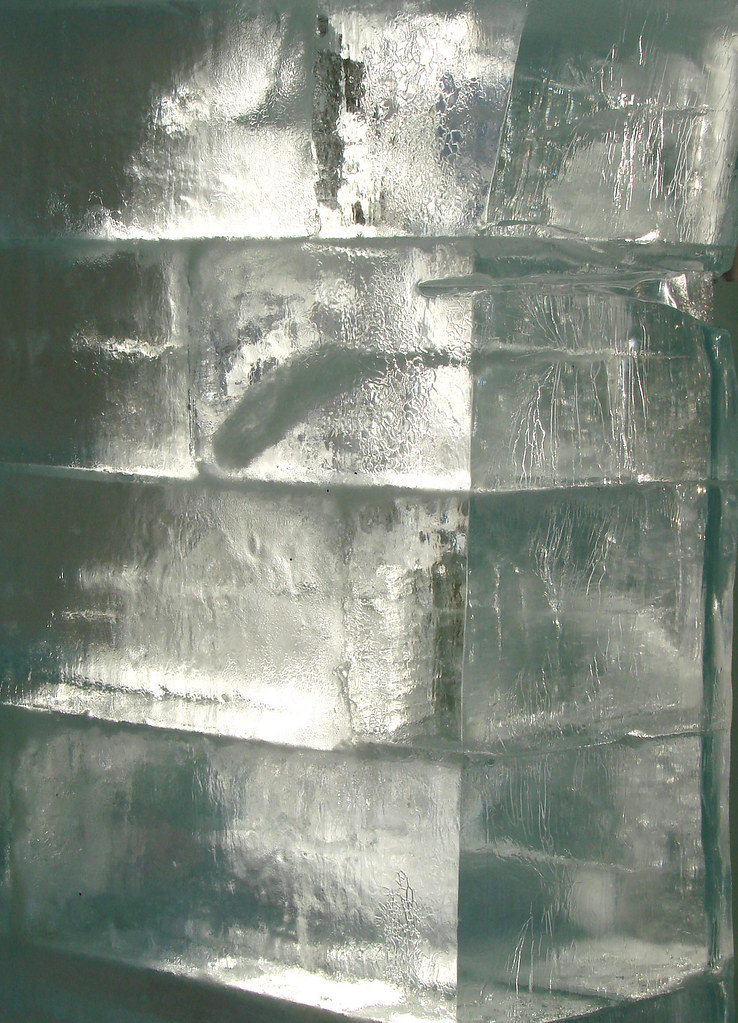
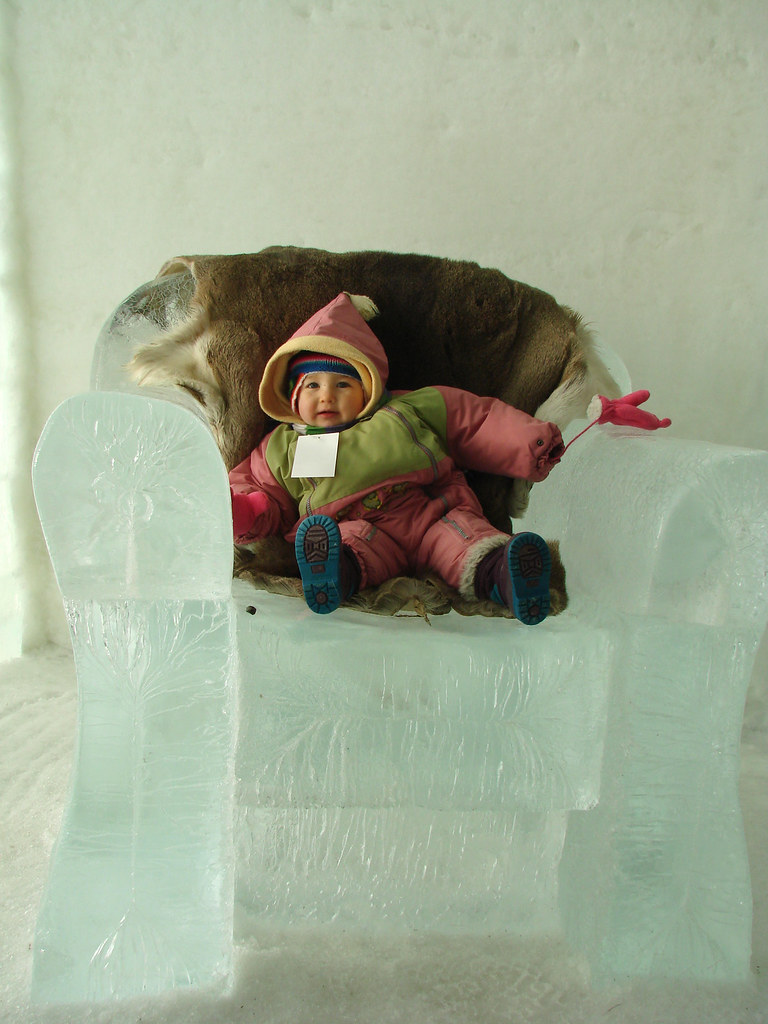
1. Construction-Icehotel-VIII, 2. en-construction, 3. Construction-Icehotel-IV, 4. Icehotel-VI, 5. Inside-Out, 6. Ice-World-I, 7. Ice-Pillars, 8. Ice-Hall, 9. Ice-Chair, 10. Ice-Texture
Created with fd's Flickr Toys.
Hiver où te caches tu?
Les jours de la semaine dernière se sont confondus dans une brume fantomatique née d’une fonte précoce. Les températures anormalement hautes pour un mois de janvier rivalisent de records. Les ours deviennent insomniaques, ils se réveillent et ils errent. Les rivières ne gèlent pas et le paysage se déshabille de ses habits d’hiver pour nous entraîner dans une humide danse. Strip-tease de saison qui déçoit les touristes avides de sensations sibériennes et d'étendues polaires.
Quelque chose ne tourne pas rond. L’hiver se fait la malle, il emporte avec lui sa magie et ses complaintes, sa rudesse et ses blancheurs. Dimanche après-midi, il fait un peu plus frais, il ne pleut plus, le soleil fait une incursion inattendue et un petit gel recommence à emprisonner l’atmosphère trempée. Le lac se solidifie un peu même si personne n’ose s’aventurer sur sa traître surface. L’on annonce un retour sous zéro pour la semaine prochaine…
L’hôtel de glace, pas encore en péril, doit ralentir sa cadence de construction. Les sculpteurs sont en congés forcés, la charpente tient le choc même si elle dégouline un petit peu sur les cotés. Durant les fêtes je suis allée signer mon nouveau contrat. À l'accueil, je découvre (avec grand plaisir) mes photos agencées en posters sous verre. Comme par le passé, je poursuis ma fonction officielle d’ambassadrice en profitant de plusieurs entrées gratuites et d’une future nuitée de glace entre autres petits privilèges de saisons, ceci en échange de mes services photographiques, c'est une belle collaboration qui anime mes hivers tranquilles. Cette année, des produits dérivés de mes photos se retrouvent sur les tablettes de la boutique. Des crayons et des tasses décorées de mes images. Ainsi, cette saison encore, je mettrai mon œil numérique au service de cet étrange palace. Peut-être que cette année-ci j'arriverai à trouver l'inspiration glacée pour y écrire une histoire givrée. Encore une fois je vais aller me plonger le coeur et les idées en ce château des merveilles hivernales qui réveille l’imaginaire gelé.
Ces jours derniers j’étais cependant bien inquiète pour la place. Je regardais tomber la pluie avec chagrin en priant pour que cela s’arrête avant que l’hiver ne disparaisse et ne dissolve de son dépit cet hôtel qui divertit ma saison. Je grommelais dans mon coin sans oser aller voir sur place les dégâts. En ce dimanche, les rayons du soleil et le petit air frais encourage ma curiosité. J’entraîne mon homme et mon lutin pour une première visite…
Érigé sur un océan de glace, il faut faire des petits pas prudents pour accéder à ses portes. Comme l'on a ni poussette, ni luge, l’on nous prête une sorte de petit traîneau qui rappelle ceux tirés par les chiens pour balader la petite à l'intérieur. Juan s’amuse comme un petit fou et Lily-Soleil règne dans son drôle d'engin. Les yeux bien ouverts, elle examine sagement cet étrange univers...
La construction est encore bien inachevée. Cinq suites sont finies et une petite dizaine de chambres de base, le hall et le lounge sont ouverts, tout le reste est en attente de froid. La chapelle n’est pas accessible, le bar et la discothèque sont encore inexistants. Bref, tout n’est pas foutu, loin de là, mais un certain retard se fait sentir. L’inauguration officielle est prévue pour le 25 janvier. Espérons que d’ici cette date, l’hiver aura repris des forces! Que ferait le carnaval sans neige? L’année dernière déjà, l’hiver faisait la gueule, ici il faisait déjà trop chaud et l’inauguration de l’hôtel avait dû être repoussée d’une semaine pour que tout soit prêt à temps. Ce serait quand même étonnant de se dire que l’on ne peut plus compter sur l’hiver au Québec! D'ailleurs en ce lundi voilé la neige n'en finit plus de tomber...
En attendant la suite givrée de janvier, un petit aperçu du royaume des glaces qui se cache de l’autre coté du grand lac…
Relief, or relievo rilievo, is a sculptural technique. The term relief is from the Latin verb relevo, to raise. To create a sculpture in relief is to give the impression that the sculpted material has been raised above the background plane. What is actually performed when a relief is cut in from a flat surface of stone (relief sculpture) or wood (relief carving) is a lowering of the field, leaving the unsculpted parts seemingly raised. The technique involves considerable chiselling away of the background, which is a time-consuming exercise. On the other hand, a relief saves forming the rear of a subject, and is less fragile and more securely fixed than a sculpture in the round, especially one of a standing figure where the ankles are a potential weak point, especially in stone. In other materials such as metal, clay, plaster stucco, ceramics or papier-mache the form can be just added to or raised up from the background, and monumental bronze reliefs are made by casting. There are different degrees of relief depending on the degree of projection of the sculpted form from the field, for which the Italian appellations are still sometimes used. The full range includes high relief (alto-rilievo), where more than 50% of the depth is shown and there may be undercut areas, mid-relief (mezzo-rilievo), low-relief (basso-rilievo, or French: bas-relief /ˌbɑːrɪˈliːf/), and shallow-relief or rilievo schiacciato, where the plane is scarcely more than scratched in order to remove background material. There is also sunk relief, which was mainly restricted to Ancient Egypt. However the distinction between high relief and low relief is the clearest and most important, and these two are generally the only terms used to discuss most work. The definition of these terms is somewhat variable, and many works combine areas in more than one of them, sometimes sliding between them in a single figure; accordingly some writers prefer to avoid all distinctions. The opposite of relief sculpture is counter-relief, intaglio, or cavo-rilievo, where the form is cut into the field or background rather than rising from it; this is very rare in monumental sculpture.
Reliefs are common throughout the world on the walls of buildings and a variety of smaller settings, and a sequence of several panels or sections of relief may represent an extended narrative. Relief is more suitable for depicting complicated subjects with many figures and very active poses, such as battles, than free-standing "sculpture in the round". Most ancient architectural reliefs were originally painted, which helped to define forms in low relief. The subject of reliefs is for convenient reference assumed in this article to be usually figures, but sculpture in relief often depicts decorative geometrical or foliage patterns, as in the arabesques of Islamic art, and may be of any subject.
Rock reliefs are those carved into solid rock in the open air (if inside caves, whether natural or man-made, they are more likely to be called "rock-cut"). This type is found in many cultures, in particular those of the Ancient Near East and Buddhist countries. A stela is a single standing stone; many of these carry reliefs.
TYPES
The distinction between high and low relief is somewhat subjective, and the two are very often combined in a single work. In particular, most later "high reliefs" contain sections in low relief, usually in the background. From the Parthenon Frieze onwards, many single figures have heads in high relief, but their lower legs are in low relief; the slightly projecting figures created in this way work well in reliefs that are seen from below (see Moissac portal in gallery). As unfinished examples from various periods show, raised reliefs, whether high or low, were normally "blocked out" by marking the outline of the figure and reducing the background areas to the new background level, work no doubt performed by apprentices (see gallery). Hyphens may or may not be used in all these terms, though they are rarely seen in "sunk relief" and are usual in "bas-relief" and "counter-relief". Works in the technique are described as "in relief", and, especially in monumental sculpture, the work itself is "a relief".
BAS RELIEF OR LOW RELIEF
A bas-relief ("low relief", from the Italian basso rilievo) or low relief is a projecting image with a shallow overall depth, for example used on coins, on which all images are in low relief. In the lowest reliefs the relative depth of the elements shown is completely distorted, and if seen from the side the image makes no sense, but from the front the small variations in depth register as a three-dimensional image. Other versions distort depth much less. It is a technique which requires less work, and is therefore cheaper to produce, as less of the background needs to be removed in a carving, or less modelling is required. In the art of Ancient Egypt and other ancient Near Eastern and Asian cultures, and also Meso-America, a very low relief was commonly used for the whole composition. These images would all be painted after carving, which helped to define the forms; today the paint has worn off in the great majority of surviving examples, but minute, invisible remains of paint can usually be discovered through chemical means.
The Ishtar Gate of Babylon, now in Berlin, has low reliefs of large animals formed from moulded bricks, glazed in colour. Plaster was sometimes used in Egypt and Rome, and probably elsewhere, but needs very good conditions to survive – Roman decorative plasterwork is mainly known from Pompeii and other sites buried by ash from Mount Vesuvius. Low relief was relatively rare in Western medieval art, but may be found, for example in wooden figures or scenes on the insides of the folding wings of multi-panel altarpieces.
Low relief is probably the most common type of relief found in Hindu-Buddhist arts of India and Southeast Asia. The low reliefs of 2nd-century BCE to 6th-century CE Ajanta Caves and 5th to 10th-century Ellora Caves in India are noted for they were carved out from rock-cut hill. They are probably the most exquisite examples of Buddhist, Hindu, and Jain arts in India. Most of these low reliefs are used in narrating sacred scriptures, such as those founds in 9th century Borobudur temple in Central Java, Indonesia, that narrating The birth of Buddha (Lalitavistara). Borobudur itself possess 1,460 panels of narrating low reliefs. Another example is low reliefs narrating Ramayana Hindu epic in Prambanan temple, also in Java. In Cambodia, the temples of Angkor are also remarkable for their collection of low reliefs. The Samudra manthan or "Churning of Ocean of Milk" of 12th-century Angkor Wat is an example of Khmer art. Another examples are low reliefs of Apsaras adorned the walls and pillars of Angkorian temples. The low reliefs of Bayon temple in Angkor Thom also remarkable on capturing the daily life of Khmer Empire.
The revival of low relief, which was seen as a classical style, begins early in the Renaissance; the Tempio Malatestiano in Rimini, a pioneering classicist building, designed by Leon Battista Alberti around 1450, uses low reliefs by Agostino di Duccio inside and on the external walls. Since the Renaissance plaster has been very widely used for indoor ornamental work such as cornices and ceilings, but in the 16th century it was used for large figures (many also using high relief) at the Chateau of Fontainebleau, which were imitated more crudely elsewhere, for example in the Elizabethan Hardwick Hall.
In later Western art, until a 20th-century revival, low relief was used mostly for smaller works or combined with higher relief to convey a sense of distance, or to give depth to the composition, especially for scenes with many figures and a landscape or architectural background, in the same way that lighter colours are used for the same purpose in painting. Thus figures in the foreground are sculpted in high-relief, those in the background in low-relief. Low relief may use any medium or technique of sculpture, stone carving and metal casting being most common. Large architectural compositions all in low relief saw a revival in the 20th century, being popular on buildings in Art Deco and related styles, which borrowed from the ancient low reliefs now available in museums. Some sculptors, including Eric Gill, have adopted the "squashed" depth of low relief in works that are actually free-standing.
Mid-relief, "half-relief" or mezzo-rilievo is somewhat imprecisely defined, and the term is not often used in English, the works usually being described as low relief instead. The typical traditional definition is that only up to half of the subject projects, and no elements are undercut or fully disengaged from the background field. The depth of the elements shown is normally somewhat distorted. Shallow-relief or rilievo stiacciato, used for the background areas of compositions with the main elements in low-relief, was perfected by the Italian Renaissance sculptor Donatello. It is a very shallow relief, which merges into engraving in places, and can be hard to read in photographs.
HIGH RELIEF
High relief (or altorilievo, from Italian) is where in general more than half the mass of the sculpted figure projects from the background, indeed the most prominent elements of the composition, especially heads and limbs, are often completely undercut, detaching them from the field. The parts of the subject that are seen are normally depicted at their full depth, unlike low relief where the elements seen are "squashed" flatter. High-relief thus uses essentially the same style and techniques as free-standing sculpture, and in the case of a single figure gives largely the same view as a person standing directly in front of a free-standing statue would have. All cultures and periods in which large sculptures were created used this technique in monumental sculpture and architecture.
Most of the many grand figure reliefs in Ancient Greek sculpture used a very "high" version of high-relief, with elements often fully free of the background, and parts of figures crossing over each other to indicate depth. The metopes of the Parthenon have largely lost their fully rounded elements, except for heads, showing the advantages of relief in terms of durability. High relief has remained the dominant form for reliefs with figures in Western sculpture, also being common in Indian temple sculpture. Smaller Greek sculptures such as private tombs, and smaller decorative areas such as friezes on large buildings, more often used low relief.
Hellenistic and Roman sarcophagus reliefs were cut with a drill rather than chisels, enabling and encouraging compositions extremely crowded with figures, like the Ludovisi Battle sarcophagus (250–260 CE). These are also seen in the enormous strips of reliefs that wound round Roman triumphal columns. The sarcophagi in particular exerted a huge influence on later Western sculpture. The European Middle Ages tended to use high relief for all purposes in stone, though like Ancient Roman sculpture their reliefs were typically not as high as in Ancient Greece. Very high relief reemerged in the Renaissance, and was especially used in wall-mounted funerary art and later on Neo-classical pediments and public monuments.
In Hindu-Buddhist art of India and Southeast Asia high relief can also be found, although it is not as common as low reliefs. Most of Hindu-Buddhist sculptures however also can be considered as a high relief, since these sculptures usually connected to a stella as the background to support the statue as well as provides additional elements such as aura or halo in the back of sculpture's head, or floral decoration. The examples of Indian high reliefs can be found in Khajuraho temple, that displaying voluptuous twisting figures that often describes the erotic Kamasutra positions. In 9th-century Prambanan temple, Central Java, the examples are the high reliefs of Lokapala devatas, the guardian of directions deities.
SUNK RELIEF
Sunk or sunken relief is largely restricted to the art of Ancient Egypt where it is very common, becoming after the Amarna period of Ahkenaten the dominant type used, as opposed to low relief. It had been used earlier, but mainly for large reliefs on external walls, and for hieroglyphs and cartouches. The image is made by cutting the relief sculpture itself into a flat surface. In a simpler form the images are usually mostly linear in nature, like hieroglyphs, but in most cases the figure itself is in low relief, but set within a sunken area shaped round the image, so that the relief never rises beyond the original flat surface. In some cases the figures and other elements are in a very low relief that does not rise to the original surface, but others are modeled more fully, with some areas rising to the original surface. This method minimizes the work removing the background, while allowing normal relief modelling.
The technique is most successful with strong sunlight to emphasise the outlines and forms by shadow, as no attempt was made to soften the edge of the sunk area, leaving a face at a right-angle to the surface all around it. Some reliefs, especially funerary monuments with heads or busts from ancient Rome and later Western art, leave a "frame" at the original level around the edge of the relief, or place a head in a hemispherical recess in the block (see Roman example in gallery). Though essentially very similar to Egyptian sunk relief, but with a background space at the lower level around the figure, the term would not normally be used of such works.
COUNTER RELIEF
Sunk relief technique is not to be confused with "counter-relief" or intaglio as seen on engraved gem seals - where an image is fully modeled in a "negative" manner. The image goes into the surface, so that when impressed on wax it gives an impression in normal relief. However many engraved gems were carved in cameo or normal relief.
A few very late Hellenistic monumental carvings in Egypt use full "negative" modelling as though on a gem seal, perhaps as sculptors trained in the Greek tradition attempted to use traditional Egyptian conventions.
SMALL OBJECTS
Small-scale reliefs have been carved in various materials, notably ivory, wood, and wax. Reliefs are often found in decorative arts such as ceramics and metalwork; these are less often described as "reliefs" than as "in relief". Small bronze reliefs are often in the form of "plaques" or plaquettes, which may be set in furniture or framed, or just kept as they are, a popular form for European collectors, especially in the Renaissance.
Various modelling techniques are used, such repoussé ("pushed-back") in metalwork, where a thin metal plate is shaped from behind using various metal or wood punches, producing a relief image. Casting has also been widely used in bronze and other metals. Casting and repoussé are often used in concert in to speed up production and add greater detail to the final relief. In stone, as well as engraved gems, larger hardstone carvings in semi-precious stones have been highly prestigious since ancient times in many Eurasian cultures. Reliefs in wax were produced at least from the Renaissance.
Carved ivory reliefs have been used since ancient times, and because the material, though expensive, cannot usually be reused, they have a relatively high survival rate, and for example consular diptychs represent a large proportion of the survivals of portable secular art from Late Antiquity. In the Gothic period the carving of ivory reliefs became a considerable luxury industry in Paris and other centres. As well as small diptychs and triptychs with densely packed religious scenes, usually from the New Testament, secular objects, usually in a lower relief, were also produced.
These were often round mirror-cases, combs, handles, and other small items, but included a few larger caskets like the Casket with Scenes of Romances (Walters 71264) in Baltimore, Maryland, in the United States. Originally there were very often painted in bright colours. Reliefs can be impressed by stamps onto clay, or the clay pressed into a mould bearing the design, as was usual with the mass-produced terra sigillata of Ancient Roman pottery. Decorative reliefs in plaster or stucco may be much larger; this form of architectural decoration is found in many styles of interiors in the post-Renaissance West, and in Islamic architecture.
WIKIPEDIA
Gilded silver repousse plaque of the great goddess of Samothrace enthroned in a temple, with riders as attendants, a large sculptured pediment and palm leaves. Roman Imperial, 3rd Century AD. Roman-Germanic Museum (Römisch-Germanisches Museum), Köln, Germany. Copyright 2016, James A. Glazier.
Nice example of vintage japanese repousse work, with engraved detailing. I always thought the disc in the upper left corner was the sun....but I've since learned that it is a toy ...a ball... (or a pearl, symbolizing the pursuit of wisdom...thanks, Laurie!)....and that is what makes this a 'happy dragon'.
Another rectangular folded form, cut in scallops on the open side, then opened up and hammered a bit to open up the middle.
The Rendille. Pushed away by their neighbours, they henceforth inhabit a vast territory : from the Kaisut Desert to the east to the shores of Lake Turkana to the west.They are semi-nomadic, that is to say both nomad and pastoralist. Clans live in temporary settlement called gobs. The Rendille never stay long at the same place to look for water sources and pasturing areas. They move 3 to 5 times a year. Women are in charge of taking the houses apart and putting them back in the new location. The Rendille favour camels rather than cattle, because they are better suited to the environment. The Rendille depend heavily on them for food, milk, clothing, trade and transport. The Rendille are skilled craftsmen and make many different decoration or ornaments. Like the Maasai with cows, camels are bled in order to drink their blood. Marriage is not allowed within one's own clan. Society is strongly bound by family ties. The Rendille still believe in their God, called Wak or Ngai. They also have fortune-tellers who predict the future, and perform sacrifices to make it rain. Special ceremonies take place at a child's birth. A ewe or goat is sacrificed if it is a girl, a ram if a boy. The girl is blessed 3 times while 4 for the boy. In the same way, mother drinks blood for 3 days for a babygirl, 4 days for a babyboy. The weeding ceremony takes time. The prospective groom must give the bridewealth to the bride's family: 4 female and 4 male camels.
Les Rendille. Repoussés par leurs voisins, ils habitent désormais un vaste territoire, qui va du Désert de Kaisut à l’est aux rives du Lac Turkana à l’ouest.Ils sont semi-nomades, c’est-à-dire à la fois nomades et pasteurs. Les clans vivent dans des installations temporaires appelées gobs. Les Rendille ne restent jamais longtemps au même endroit pour chercher des sources d’eau et des pâturages. Ils se déplacent 3 à 5 fois par an. Les femmes sont chargées de démonter les maisons et les replacer dans leur nouveau lieu d’habitat. Les Rendile privilégient les dromadaires au bétail, étant plus adaptés à leur environnement. Ils dépendent largement d’eux pour leur nourriture, lait, habits, commerce et transport. Les Rendille sont des artisans qualifiés et créent des décorations et ornements divers. Comme les Maasai avec les vaches, les dromadaires sont saignés pour boire le sang. Le mariage n’est pas autorisé à l’intérieur d’un même clan. La société est solidement lié par les attaches familiales.Les Rendille croient dans un Dieu qu’ils appellent Wak ou Ngai. Ils ont aussi des voyants qui prédisent l’avenir, et réalisent des sacrifices pour faire pleuvoir. Des cérémonies spéciales ont lieu à la naissance d’un enfant. Une brebis ou chèvre est sacrifiée si c’est une fille, un bélier si c’est un garçon. La fille est bénie 3 fois, 4 pour le garçon. De la même manière, la mère boit du sang pendant 3 jours pour une petite fille, 4 pour un petit garçon. La cérémonie du mariage prend du temps. Le futur époux doit payer le prix de la mariée à la famille de celle-ci : 4 dromadaires femelles et 4 mâles.
Illustrated Catalogue of Art Metal Work 1907 by The Cornish Hand Wrot Metal Co. Ltd., Hayle, Cornwall.
Après la Renault Clio V6 phase 1 construite en liaison avec le Tom Walkinshaw Racing, la Clio V6 phase 2 fut lancée en 2003.
Pour se différencier esthétiquement de la première version et accentuer un réel air de famille, elle adopte la calandre et les phares/feux de la Clio standard. Dans ses ailes gonflées, elle abrite d'imposantes jantes en alliage léger OZ de 18 pouces, repoussées aux quatre coins de la caisse dont l'empattement d'origine est légèrement allongé.
L'évolution du moteur V6 2.9 litres est le fruit des ingénieurs de Renault Sport Technologies, en particulier le haut moteur qui développe désormais 255 chevaux à 7.150 tr/min. Boîte à six rapports avec pignons rapprochés et pont court accentuent encore la réactivité de la Clio V6 phase 2, qui revendique 237 km/h en pointe et abat le kilomètre départ arrêté en 26 s 3/10e.
Ces performances ne l'empêchent pas d'être plus facile à piloter que la phase 1 grâce à une nouvelle cinématique du train arrière et des réglages de suspension adaptés à la conduite sur route ouverte.
A l'intérieur, tout est consacré au sport : sièges baquets en alcantara et cuir, volant cuir à trois branches, pédalier, pommeau de levier de vitesses et même seuils de portes en aluminium. Le bonheur est total.
Modèle exposé :
-Moteur : V6 24 soupapes 2.900 cm3, 255 ch
-Transmission : boîte 6 vitesses à crabots
-Dimensions : longueur = 3.84 m - largeur = 1.83 m - poids : 1.400 kg
Les Guingampaises n'ont pas vraiment pas été récompensées de leurs efforts. Ce dimanche, elles sont sorties de la Coupe de France face à Lyon (0-5).
La première période timide des Lyonnaises ne profite pas aux Rouge et Noir qui échouent sur le poteau de Fourré (7'). En seconde période, Lyon relève la tête et assomme Guingamp dans la dernière demi-heure.
Si Bremer ouvre le score (0-1, 67'), Le Sommer (84'), Hegerberg (88'), Lavogez (89') et Kumagai sur penalty (90'+3) infligent un lourd score à l'En Avant.
La fiche technique
Arbitre : Mme Bonnin.
BUTS. Lyon : Bremer (67'), Le Sommer (84'), Hegerberg (88'), Lavogez (89'), Kumagai (90'+3 sp).
GUINGAMP : Gignoux - Dinglor, Debever, Lorgeré, Morin (Quentin 59') - Bueno, Nwuaboku (Fleury 59') - Oparanozir, Pervier, Le Garrec - Fourré. Entraineur : Sarah M'Barek.
LYON : Gérard - Franco, Buchanan, Renard (cap.), Henning (Bremer 46') - Kaci, Kumagai - Thomas, Dali (Le Sommer 46'), Lavogez - Hegerberg. Entraîneur: Gérard Prêcheur.
L'OL féminin se déplace sur le terrain de Guingamp, dimanche après-midi (16h40), en 1/8 de finale de la Coupe de France.
Après deux victoires consécutives face à Juvisy (5-2, 1-0), en D1 féminine, les Lyonnaises retrouvent la Coupe de France avec un déplacement à Saint-Brieuc pour affronter Guingamp, en 1/8 de finale. Une équipe chez qui l'OL était allé s'imposer 3-0 en championnat, le 14 janvier dernier, après un succès 9-1 à l'aller.
Lors des tours précédents, les joueuses de Gérard Prêcheur ont sorti l'équipe de DH d'ETG Ambilly (8-0) puis le pensionnaire de D2 Grenoble (6-0), avec des équipes remaniées qui ont permis de donner du temps de jeu à celles qui en avaient besoin. De son côté, Guingamp a obtenu ses qualifications dans des derbys bretons face aux équipes de D2 Saint-Malo (6-0) et Brest (4-2).
Tenantes du titre, les Lyonnaises auront à coeur de décrocher leur qualification pour les 1/4 de finale, tout en préparant au mieux le déplacement décisif à Montpellier, le week-end prochain, en D1 féminine. Mbock, Majri, Houara, Seger, et Morgan sont au repos.
L’OL féminin a décroché son billet pour les quarts de finale de la Coupe de France en allant s'imposer 5-0 dans les Côtes d'Armor.
Les Lyonnaises poursuivent leur route dans la compétition après leur victoire ce dimanche à Saint-Brieuc sur le terrain de l'En-Avant de Guingamp. Une qualification pour les quarts de finale de la Coupe de France qui a été longue à se dessiner.
À la mi-temps le score était toujours de 0-0 et la plus belle occasion était à mettre au crédit des joueuses de Sarah M'Barek qui trouvaient la base du poteau de Méline Gerard sur une frappe d'Adélie Fourre. Durant ces 45 premières minutes, les Lyonnaises avaient eu bien du mal à se montrer dangereuses, si ce n'est sur une tentative de Claire Lavogez sauvée sur la ligne.
Dès le début de la seconde période, Gérard Prêcheur lançait sur le terrain Pauline Bremer et Eugénie Le Sommer. Des changement décisifs puisque Bremer se créait dans la foulée une première occasion. L'attaquante allemande ouvrait finalement le score à la 65e minute sur un corner dévié par Wendie Renard et qu'elle convertissait au second poteau (0-1, 65').
Malgré cet avantage, les Lyonnaises se faisaient dans la foulée une grosse frayeur et il fallait une double parade de Méline Gerard pour éviter l'égalisation guingampaise (70'). Un avertissement sans conséquence car dans la foulée Pauline Bremer mettait fin au suspense en ajoutant deux nouveaux buts : le premier sur une reprise après une déviation d'Ada Hegerberg (0-2) et le second sur un centre de Le Sommer repris de la tête au second poteau (0-3). Dans les derniers instants, Claire Lavogez (sur une passe de Bremer) et Saki Kumagai (sur pénalty) portaient le score à 5-0.
Avec cette large victoire, les tenantes du titre restent en course dans cette édition 2017 et seront attentives au tirage au sort des quarts de finale qui sera effectué ce mardi 21 février. Les quatre rencontres seront jouées le dimanche 12 mars. prochain.
Au Stade Fred Aubert à Saint-Brieuc
CDF féminine (1/8 finale) : EA Guingamp - OL féminin 0-5 (0-0)
Arbitre : Sabine Bonnin. Spectateurs : 800 env.
Buts : Bremer (65', 84' et 87' ), Lavogez (89') et Kumagai (93') pour l’OL
OL : Gerard – Petit, Renard (cap.), Buchanan, Henning (Bremer, 46'), - Kaci (Marozsan, 65'), Kumagai, Dali (Le Sommer, 46'), Thomis - Lavogez, Hegerberg. Entr. G. Prêcheur.
L'EA Guingamp s'est incliné 5-0 contre l'Olympique lyonnais ce dimanche en huitième de finale de la Coupe de France féminine. Les Bretonnes ont craqué en toute fin de match.
e score large de 0-5 ne reflète pas vraiment la physionomie du match entre l'EA Guingamp et l'Olympique lyonnais.
Les Bretonnes ont longtemps tenu tête à la meilleure équipe de football féminin du championnat français. En début de première période, Adélie Fourre a failli donner l'avantage à l'EA Guingamp mais sa frappe a fini sur le poteau.
Triplé de Bremer
Les Lyonnaises n'ont réussi à marquer qu'après l'heure de jeu. Suite à un corner, Renard a dévié le ballon de la tête en direction de Bremer, qui a réussi à passer devant la gardienne guingampaise pour ensuite marquer du pied droit en pivot (0-1, 67').
L'EAG aurait pu égaliser quatre minutes plus tard mais la frappe d'Oparanozie a été repoussée par Méline Gerard, la gardienne de l'OL. Dans la continuité de cette action, la tentative de Fleury est passée de peu à côté du but.
Mais face à l'épuisement des joueuses bretonnes en fin de match, les Lyonnaises ont réussi à prendre le large. Bremer s'est offert un triplé grâce à une reprise de volée (0-2, 84') puis une tête plongeante (0-3, 88'). Claire Lavogez a ensuite corsé l'addition d'une demi-volée en pleine lucarne (0-4, 89') avant que Kumagaï ne transforme un penalty en toute fin de match (0-5, 90'+5).
Les Guingampaises y ont longtemps cru, mais ne sont pas parvenues à faire tomber le tout puissant Olympique Lyonnais. Et ont finalement concédé un lourd score à l'arrivée.
Elles résistent longtemps. Bien plus longtemps que lors des deux confrontations en championnat. Mais en seconde période, les Guingampaises craquent. Pourtant, Wendie Renard et ses partenaires peinent à entrer dans la rencontre. Et elles sont d'ailleurs les premières à se faire peur. La frappe d'Adélie Fourré heurte le montant droit d'une Méline Gérard totalement battue (7'). « Je suis dégoûtée, mais c'est comme ça », regrette l'intéressée, titulaire en lieu et place de Salma Amani, blessée pendant l'échauffement. Si les Lyonnaises mettent peu à peu le pied sur le ballon, elles réalisent un premier acte poussif offensivement. Seule la frappe de Corine Franco dans les six mètres, repoussée par Margaux Bueno, parvient à inquiéter les « Rouge et Noir » (43').
L'ogre lyonnais sort ses crocs
Mécontent de son équipe, Gérard Prêcheur procède à deux changements au retour des vestiaires. À peine entrée en jeu, Pauline Bremer se signale, mais ne trouve pas le cadre (47'). Lyon s'installe dans le camp breton et oblige Gignoux à s'employer sur une tête de Renard (65'). Dans la foulée, Renard reprend le dessus sur la défense guingampaise qui ne parvient pas à se dégager. Dans les parages, Bremer concrétise la domination lyonnaise (0-1, 67'). Loin d'être atterrées, les filles de Sarah M'Barek réagissent immédiatement et se procurent une occasion en or. Sur le flanc droit, Oparanozie bute sur Gérard. Le ballon revient dans les pieds de Fleury. Le stade Fred-Aubert retient son souffle, mais l'Internationale U19 croise légèrement trop sa frappe (71'). Quand l'efficacité n'est pas au rendez-vous, la note est souvent payée cash face à l'OL. L'En Avant n'échappe pas à la règle et plie à nouveau sur une frappe d'Eugénie Le Sommer (0-2, 84').
Guingamp s'écroule, Lyon déroule
Dans les dernières minutes, Lyon se déchaîne et alourdit le score grâce à Ada Hegerberg (0-3, 88') et Claire Lavogez (0-4, 89'). Avant de donner au score son allure finale sur un penalty de Saki Kumagai (0-5, 90'+3). « C'est sévère quand on voit comment on s'est battues et arrachées, concède M'Barek. Mais je suis hyperfière de mes joueuses ». Une défaite globalement logique, mais extrêmement cruelle pour En Avant.
La fiche technique
Mi-temps :
0-0
Arbitre :
Mme Bonnin.
BUTS.
Lyon : Bremer (67'), Le Sommer (84') Hegerberg (88'), Lavogez (89'), Kumagai (90'+3 sp).
EA Guingamp :
Gignoux ? Dinglor, Debever, Lorgeré, Morin (Quéro 59') ? Bueno, Nwabuoku (Fleury 59') ? Oparanozie, Pervier (cap.), Le Garrec ? Fourré (Ndolo Ewele 77'). Entraîneur. Sarah M'Barek.
Lyon : Gérard ? Franco, Buchanan, Renard (cap.), Henning (Bremer 46') ? Kaci (Marozsan 67'), Kumagai ? Thomis, Dali (Le Sommer 46'), Lavogez - Hegerberg. Entraîneur : Gérard Prêcheur.
The USS Maryland Silver Service (48 Pieces)
In 1904, Maryland governor Edwin Warfield commissioned the creation of a custom silver service to be placed on the new armored cruiser Maryland. Soon after the creation of the Maryland Cruiser Fund Commission, the contract to design and fabricate the silver was awarded to the Baltimore firm of Samuel Kirk and Sons.
Soon after the commissioning of the service, the members of the Cruiser Fund Commission began to identify the images to be depicted on the pieces and undertook a massive site-wide fundraising effort to raise $5,000 to create the service. This fundraising effort appealed to patriotism and civic specifically targeted children, women, and “rich and poor,” and was well-chronicled in local newspapers. In May 1906, a total of $5,000 had been raised by citizens and schoolchildren of Maryland to purchase this silver service.
The set depicts one hundred and sixty-seven scenes from the history of Maryland’s twenty-three counties and Baltimore City. The USS Maryland silver service is unique. Not only do its pieces portray the houses, churches, and events of Maryland history, but their decorative borders symbolize the economy and culture of the state. Festooned tobacco leaves and oyster shell borders symbolize the importance of both land and water. Rope borders on each piece evoke the nautical origin of the service and the names of twelve noteworthy Maryland naval officers are engraved on the twelve punch cups.
On July 21, 1921, the U.S. Navy commissioned the battleship Maryland to replace the original cruiser, and the silver service was transferred to the new ship. After twenty-six years of service, including duty during World War II, the Maryland, known as “Fighting Mary”, was decommissioned on April 3, 1947. The silver service, which had been in storage during the war, was returned to Baltimore. The silver was displayed in the main gallery of the Maryland Historical Society until 1962 when the silver was placed on permanent loan to the state of Maryland and exhibited in the State House.
The entire service was displayed in the State House until 1992 when the submarine U.S.S. Maryland (SSBN 738) was commissioned and four pieces of the Maryland silver service [sugar bowl, creamer and a pair of candlesticks] were loaned to the Navy for display onboard the ship. The remaining forty-four pieces remained on display in the Maryland Silver Room in the State House until 2008 when they were removed in preparation for the recreation of the Old House of Delegates. The punch bowl and ladle were used annually at holiday celebrations at Government House until the late 1990s.
The entire silver service was cleaned and conserved by Creative Metalworks of Kensington, MD in 2010-2011 in preparation for its unveiling in the State House Caucus Room. Each of the pieces has been “clear-coated” to make them less susceptible to tarnish.
Decorating the Silver Service
Six themes appear throughout the silver service: nation (bald eagle), state (Great Seal of Maryland), county (local scenes and vegetation), hospitality (cornucopias), naval (the USS Maryland cruiser), and nautical (rope border). Oyster shell borders denote pieces representing counties that border the Chesapeake Bay, while tobacco leaves are used on tobacco-growing counties. Platters and compote dishes are engraved “USSM,” and a Mason-Dixon crown stone forms the handle of the serving utensils. Twelve naval officers from Maryland are honored on the punch cups that accompany the punch bowl.
Designing a Masterpiece
This service was a tour-de-force for Samuel Kirk & Son Co., Incorporated of Baltimore, and each piece is decorated using the firm’s famous repoussé technique of hammering designs into the pieces from the reverse side. More than thirty artisans worked on the service for six months. Each of the one hundred and sixty-seven series was meticulously researched, and Kirk’s artisan relied on drawings, photographs, and published sources for accuracy.
Creating the USS Maryland Silver Service
The unique silver service exhibited in this room was created in 1906 by Samuel Kirk & Son Co., Incorporated of Baltimore. The forty-eight-piece service depicts one hundred and sixty-seven scenes from the history of Maryland’s twenty-three counties and Baltimore City, and each county is represented by at least one item.
Although Governor Edwin Warfield commissioned the service in 1904, no funds were allocated for its creation. Appealing to patriotism and civic duty, a state-wide fundraising effort targeting schoolchildren, women, and “rich and poor” was required to raise the necessary $5,000 to design and fabricate the service. It was completed in 1906.
The silver service was used on two US is Marylands until the late 1940s; it was placed on permanent display in the State House in 1962. Two candlesticks (representing Garrett County) and a creamer and sugar bowl (representing Charles County) are now on the submarine Maryland (SSBN 738).
USS Marylands
A total of four ships been named in honor Maryland. The entire silver service was used aboard the armored cruiser and the battleship, while four pieces are now aboard the submarine.
•USS Maryland, Sloop. Launched in 1799 from Baltimore; served for three years in the Napoleonic Wars.
•USS Maryland (ACR 8), Armored Cruiser, 1903-1921.
•USS Maryland (BB 46), Battleship, 1920-1947.
•USS Maryland (SSBN 738), Ohio Class Submarine, 1991-Present.
The USS Maryland Silver Service (48 Pieces)
In 1904, Maryland governor Edwin Warfield commissioned the creation of a custom silver service to be placed on the new armored cruiser Maryland. Soon after the creation of the Maryland Cruiser Fund Commission, the contract to design and fabricate the silver was awarded to the Baltimore firm of Samuel Kirk and Sons.
Soon after the commissioning of the service, the members of the Cruiser Fund Commission began to identify the images to be depicted on the pieces and undertook a massive site-wide fundraising effort to raise $5,000 to create the service. This fundraising effort appealed to patriotism and civic specifically targeted children, women, and “rich and poor,” and was well-chronicled in local newspapers. In May 1906, a total of $5,000 had been raised by citizens and schoolchildren of Maryland to purchase this silver service.
The set depicts one hundred and sixty-seven scenes from the history of Maryland’s twenty-three counties and Baltimore City. The USS Maryland silver service is unique. Not only do its pieces portray the houses, churches, and events of Maryland history, but their decorative borders symbolize the economy and culture of the state. Festooned tobacco leaves and oyster shell borders symbolize the importance of both land and water. Rope borders on each piece evoke the nautical origin of the service and the names of twelve noteworthy Maryland naval officers are engraved on the twelve punch cups.
On July 21, 1921, the U.S. Navy commissioned the battleship Maryland to replace the original cruiser, and the silver service was transferred to the new ship. After twenty-six years of service, including duty during World War II, the Maryland, known as “Fighting Mary”, was decommissioned on April 3, 1947. The silver service, which had been in storage during the war, was returned to Baltimore. The silver was displayed in the main gallery of the Maryland Historical Society until 1962 when the silver was placed on permanent loan to the state of Maryland and exhibited in the State House.
The entire service was displayed in the State House until 1992 when the submarine U.S.S. Maryland (SSBN 738) was commissioned and four pieces of the Maryland silver service [sugar bowl, creamer and a pair of candlesticks] were loaned to the Navy for display onboard the ship. The remaining forty-four pieces remained on display in the Maryland Silver Room in the State House until 2008 when they were removed in preparation for the recreation of the Old House of Delegates. The punch bowl and ladle were used annually at holiday celebrations at Government House until the late 1990s.
The entire silver service was cleaned and conserved by Creative Metalworks of Kensington, MD in 2010-2011 in preparation for its unveiling in the State House Caucus Room. Each of the pieces has been “clear-coated” to make them less susceptible to tarnish.
Decorating the Silver Service
Six themes appear throughout the silver service: nation (bald eagle), state (Great Seal of Maryland), county (local scenes and vegetation), hospitality (cornucopias), naval (the USS Maryland cruiser), and nautical (rope border). Oyster shell borders denote pieces representing counties that border the Chesapeake Bay, while tobacco leaves are used on tobacco-growing counties. Platters and compote dishes are engraved “USSM,” and a Mason-Dixon crown stone forms the handle of the serving utensils. Twelve naval officers from Maryland are honored on the punch cups that accompany the punch bowl.
Designing a Masterpiece
This service was a tour-de-force for Samuel Kirk & Son Co., Incorporated of Baltimore, and each piece is decorated using the firm’s famous repoussé technique of hammering designs into the pieces from the reverse side. More than thirty artisans worked on the service for six months. Each of the one hundred and sixty-seven series was meticulously researched, and Kirk’s artisan relied on drawings, photographs, and published sources for accuracy.
Creating the USS Maryland Silver Service
The unique silver service exhibited in this room was created in 1906 by Samuel Kirk & Son Co., Incorporated of Baltimore. The forty-eight-piece service depicts one hundred and sixty-seven scenes from the history of Maryland’s twenty-three counties and Baltimore City, and each county is represented by at least one item.
Although Governor Edwin Warfield commissioned the service in 1904, no funds were allocated for its creation. Appealing to patriotism and civic duty, a state-wide fundraising effort targeting schoolchildren, women, and “rich and poor” was required to raise the necessary $5,000 to design and fabricate the service. It was completed in 1906.
The silver service was used on two US is Marylands until the late 1940s; it was placed on permanent display in the State House in 1962. Two candlesticks (representing Garrett County) and a creamer and sugar bowl (representing Charles County) are now on the submarine Maryland (SSBN 738).
USS Marylands
A total of four ships been named in honor Maryland. The entire silver service was used aboard the armored cruiser and the battleship, while four pieces are now aboard the submarine.
•USS Maryland, Sloop. Launched in 1799 from Baltimore; served for three years in the Napoleonic Wars.
•USS Maryland (ACR 8), Armored Cruiser, 1903-1921.
•USS Maryland (BB 46), Battleship, 1920-1947.
•USS Maryland (SSBN 738), Ohio Class Submarine, 1991-Present.
Copper headdress in the form of a male head with mother-of-pearl inlay and back stone eyes, gold ormaments and beard made of pendants. Gold and silver mouth cover with stepped pyramid geometrical design. Gold openwork mouth cover in the form of an owl head with copper inlay eyes. Gold mouth cover in the form of a bat. Gold repousse mouth cover with feline head with inlay eyes, horned (crested, see vase in previous photos) mythical animals and snakes. Moche, c. 400 AD. Tomb of the Lady of Cao, Huaca Cao Veijo, El Brujo, Peru. From the Museo Cao, Magdalena de Cao, Peru. Special Exhibit, Golden Kingdoms: Luxury and Legacy in the Ancient Americas. Metropolitan Museum of Art, New York, New York, USA. Copyright 2018, James A. Ferguson.
A detail shot froma gate made by Adrian featuring various scrolls and repousse work.
Made by Artist Blacksmith, Adrian Stapleton of Trinity Forge.
Visit him at trinityforge.co.uk
This elaborate gold hairnet is one of the few surviving from antiquity (the contemporary “Schimmel” hairnet in the Metropolitan Museum, New York, inv. no. 1987.220, is another) and is an example of the extraordinary level of achievement that was possible for goldsmiths in the 3rd century BCE. It is considered to have been made in the same goldsmith’s workshop, probably in Alexandria, Egypt, as the Diadem. The hairnet consists of four elements: the central medallion, the tassels and chains, the net, and the circular clasp. Made to enclose a gathered bun of hair at the back of the head, the fabrication of the hairnet is remarkable for the quality of its execution. The medallion consists of a central repoussé bust of Aphrodite with Eros clinging to the drapery on her left shoulder. The Ptolemaic queens often presented themselves as descendants of Aphrodite; here, the goddess’s features and hairstyle are similar to those of Queen Arsinoe II (ca. 316 – 270 BCE). Two concentric bands of filigree separated by rows of beads surround the center. The innermost band consists of a running pattern of framed acanthus leaves (identical to the inner frieze on the Schimmel hairnet noted above); the outer band is filigreed with a step pattern perhaps once inlaid with enamel, now lost. Running filigree as used here, constructed from lengths of wire rather than short pieces connected together, can also be seen on the Diadem and indicates the work of a master gold-smith. Garnet and gold beaded tassels dangle from the medallion and clasp. The net is comprised of bands of gold spool beads linked by tiny filigreed chains, their intersecting points articulated with tiny masks of Dionysos and actors. The circular clasp is embellished with a large Herakles knot, floral tendrils, ivy leaves, and berries. The association of Arsinoe II with Aphrodite on the hairnet finds parallels on other items in the Assemblage of Ptolemaic Gold Jewelry, such as the identification of Tyche/Fortuna with Arsinoe II on the carnelian ring.
Commonalities between the materials and the workmanship of many objects in this group indicate they were made by Greek goldsmiths working in more than one workshop in Alexandria, Egypt, and were created to be worn as an ensemble. While a royal context can be ascribed to the group, the association cannot be extended to the royals themselves. It therefore seems possible that the original owner was an elite of the exclusive circle of dynastic princesses, who, ornamented in her golden finery, served the queen in one of the royal cults devoted to her worship.
The notorious trafficker-antiquarian Robin Symes sold this as part of a large collection of gold Ptolemaic jewelry in 1990 to the Fleischmans, who in turn sold the collection to the Getty in 1992.
Ptolemaic Greek, Egypt, 225-175 BCE.
Getty Villa Museum (92.AM.8.1)
A bas-relief ("low relief", French pronunciation: [baʁəljɛf], from the Italian basso rilievo) or low relief is a projecting image with a shallow overall depth, for example used on coins, on which all images are in low relief. In the lowest reliefs the relative depth of the elements shown is completely distorted, and if seen from the side the image makes no sense, but from the front the small variations in depth register as a three-dimensional image. Other versions distort depth much less. It is a technique which requires less work, and is therefore cheaper to produce, as less of the background needs to be removed in a carving, or less modelling is required. In the art of Ancient Egypt and other ancient Near Eastern and Asian cultures, and also Meso-America, a very low relief was commonly used for the whole composition. These images would all be painted after carving, which helped to define the forms; today the paint has worn off in the great majority of surviving examples, but minute, invisible remains of paint can usually be discovered through chemical means.
The Ishtar Gate of Babylon, now in Berlin, has low reliefs of large animals formed from moulded bricks, glazed in colour. Plaster, which made the technique far easier, was widely used in Egypt and the Near East from antiquity into Islamic times (latterly for architectural decoration, as at the Alhambra), Rome, and Europe from at least the Renaissance, as well as probably elsewhere. However, it needs very good conditions to survive long in unmaintained buildings – Roman decorative plasterwork is mainly known from Pompeii and other sites buried by ash from Mount Vesuvius. Low relief was relatively rare in Western medieval art, but may be found, for example in wooden figures or scenes on the insides of the folding wings of multi-panel altarpieces.
The revival of low relief, which was seen as a classical style, begins early in the Renaissance; the Tempio Malatestiano in Rimini, a pioneering classicist building, designed by Leon Battista Alberti around 1450, uses low reliefs by Agostino di Duccio inside and on the external walls. Since the Renaissance plaster has been very widely used for indoor ornamental work such as cornices and ceilings, but in the 16th century it was used for large figures (many also using high relief) at the Chateau of Fontainebleau, which were imitated more crudely elsewhere, for example in the Elizabethan Hardwick Hall.
In later Western art, until a 20th-century revival, low relief was used mostly for smaller works or combined with higher relief to convey a sense of distance, or to give depth to the composition, especially for scenes with many figures and a landscape or architectural background, in the same way that lighter colours are used for the same purpose in painting. Thus figures in the foreground are sculpted in high-relief, those in the background in low-relief. Low relief may use any medium or technique of sculpture, stone carving and metal casting being most common. Large architectural compositions all in low relief saw a revival in the 20th century, being popular on buildings in Art Deco and related styles, which borrowed from the ancient low reliefs now available in museums.[5] Some sculptors, including Eric Gill, have adopted the "squashed" depth of low relief in works that are actually free-standing.
Mid-relief, "half-relief" or mezzo-rilievo is somewhat imprecisely defined, and the term is not often used in English, the works usually being described as low relief instead. The typical traditional definition is that only up to half of the subject projects, and no elements are undercut or fully disengaged from the background field. The depth of the elements shown is normally somewhat distorted. Shallow-relief or rilievo stiacciato, used for the background areas of compositions with the main elements in low-relief, was perfected by the Italian Renaissance sculptor Donatello. It is a very shallow relief, which merges into engraving in places, and can be hard to read in photographs.
Mid-relief is probably the most common type of relief found in the Hindu and Buddhist art art of India and Southeast Asia. The low reliefs of 2nd-century BCE to 6th-century CE Ajanta Caves and 5th to 10th-century Ellora Caves in India are rock reliefs. Most of these reliefs are used to narrate sacred scriptures, such as the 1,460 panels of the 9th-century Borobudur temple in Central Java, Indonesia, narrating the Jataka tales or lives of the Buddha. Other examples are low reliefs narrating the Ramayana Hindu epic in Prambanan temple, also in Java, in Cambodia, the temples of Angkor, with scenes including the Samudra manthan or "Churning the Ocean of Milk" at the 12th-century Angkor Wat, and reliefs of apsaras. At Bayon temple in Angkor Thom there are scenes of daily life in the Khmer Empire.
HIGH RELIEF
High relief (or altorilievo, from Italian) is where in general more than half the mass of the sculpted figure projects from the background, indeed the most prominent elements of the composition, especially heads and limbs, are often completely undercut, detaching them from the field. The parts of the subject that are seen are normally depicted at their full depth, unlike low relief where the elements seen are "squashed" flatter. High-relief thus uses essentially the same style and techniques as free-standing sculpture, and in the case of a single figure gives largely the same view as a person standing directly in front of a free-standing statue would have. All cultures and periods in which large sculptures were created used this technique in monumental sculpture and architecture.
Most of the many grand figure reliefs in Ancient Greek sculpture used a very "high" version of high-relief, with elements often fully free of the background, and parts of figures crossing over each other to indicate depth. The metopes of the Parthenon have largely lost their fully rounded elements, except for heads, showing the advantages of relief in terms of durability. High relief has remained the dominant form for reliefs with figures in Western sculpture, also being common in Indian temple sculpture. Smaller Greek sculptures such as private tombs, and smaller decorative areas such as friezes on large buildings, more often used low relief.
Hellenistic and Roman sarcophagus reliefs were cut with a drill rather than chisels, enabling and encouraging compositions extremely crowded with figures, like the Ludovisi Battle sarcophagus (250–260 CE). These are also seen in the enormous strips of reliefs that wound round Roman triumphal columns. The sarcophagi in particular exerted a huge influence on later Western sculpture. The European Middle Ages tended to use high relief for all purposes in stone, though like Ancient Roman sculpture their reliefs were typically not as high as in Ancient Greece. Very high relief reemerged in the Renaissance, and was especially used in wall-mounted funerary art and later on Neo-classical pediments and public monuments.In Hindu-Buddhist art of India and Southeast Asia high relief can also be found, although it is not as common as low reliefs. Most of Hindu-Buddhist sculptures however also can be considered as a high relief, since these sculptures usually connected to a stella as the background to support the statue as well as provides additional elements such as aura or halo in the back of sculpture's head, or floral decoration. The examples of Indian high reliefs can be found in Khajuraho temple, that displaying voluptuous twisting figures that often describes the erotic Kamasutra positions. In 9th-century Prambanan temple, Central Java, the examples are the high reliefs of Lokapala devatas, the guardian of directions deities.
SUNK RELIEF
Sunk or sunken relief is largely restricted to the art of Ancient Egypt where it is very common, becoming after the Amarna period of Ahkenaten the dominant type used, as opposed to low relief. It had been used earlier, but mainly for large reliefs on external walls, and for hieroglyphs and cartouches. The image is made by cutting the relief sculpture itself into a flat surface. In a simpler form the images are usually mostly linear in nature, like hieroglyphs, but in most cases the figure itself is in low relief, but set within a sunken area shaped round the image, so that the relief never rises beyond the original flat surface. In some cases the figures and other elements are in a very low relief that does not rise to the original surface, but others are modeled more fully, with some areas rising to the original surface. This method minimizes the work removing the background, while allowing normal relief modelling.
The technique is most successful with strong sunlight to emphasise the outlines and forms by shadow, as no attempt was made to soften the edge of the sunk area, leaving a face at a right-angle to the surface all around it. Some reliefs, especially funerary monuments with heads or busts from ancient Rome and later Western art, leave a "frame" at the original level around the edge of the relief, or place a head in a hemispherical recess in the block (see Roman example in gallery). Though essentially very similar to Egyptian sunk relief, but with a background space at the lower level around the figure, the term would not normally be used of such works.
COUNTER-RELIEF
Sunk relief technique is not to be confused with "counter-relief" or intaglio as seen on engraved gem seals - where an image is fully modeled in a "negative" manner. The image goes into the surface, so that when impressed on wax it gives an impression in normal relief. However many engraved gems were carved in cameo or normal relief.
A few very late Hellenistic monumental carvings in Egypt use full "negative" modelling as though on a gem seal, perhaps as sculptors trained in the Greek tradition attempted to use traditional Egyptian conventions.
SMALL OBJECTS
Small-scale reliefs have been carved in various materials, notably ivory, wood, and wax. Reliefs are often found in decorative arts such as ceramics and metalwork; these are less often described as "reliefs" than as "in relief". Small bronze reliefs are often in the form of "plaques" or plaquettes, which may be set in furniture or framed, or just kept as they are, a popular form for European collectors, especially in the Renaissance.
Various modelling techniques are used, such repoussé ("pushed-back") in metalwork, where a thin metal plate is shaped from behind using various metal or wood punches, producing a relief image. Casting has also been widely used in bronze and other metals. Casting and repoussé are often used in concert in to speed up production and add greater detail to the final relief. In stone, as well as engraved gems, larger hardstone carvings in semi-precious stones have been highly prestigious since ancient times in many Eurasian cultures. Reliefs in wax were produced at least from the Renaissance.
Carved ivory reliefs have been used since ancient times, and because the material, though expensive, cannot usually be reused, they have a relatively high survival rate, and for example consular diptychs represent a large proportion of the survivals of portable secular art from Late Antiquity. In the Gothic period the carving of ivory reliefs became a considerable luxury industry in Paris and other centres. As well as small diptychs and triptychs with densely packed religious scenes, usually from the New Testament, secular objects, usually in a lower relief, were also produced.
These were often round mirror-cases, combs, handles, and other small items, but included a few larger caskets like the Casket with Scenes of Romances (Walters 71264) in Baltimore, Maryland, in the United States. Originally there were very often painted in bright colours. Reliefs can be impressed by stamps onto clay, or the clay pressed into a mould bearing the design, as was usual with the mass-produced terra sigillata of Ancient Roman pottery. Decorative reliefs in plaster or stucco may be much larger; this form of architectural decoration is found in many styles of interiors in the post-Renaissance West, and in Islamic architecture.
WIKIPEDIA
[Mohamed Wedoud] Mauritanian soldiers conduct exercises near the Mali border.
مناورات للجنود الموريتانيين قرب الحدود المالية
L'armée mauritanienne procède à des exercices à proximité de la frontière malienne.
magharebia.com/cocoon/awi/xhtml1/en_GB/features/awi/featu...
magharebia.com/cocoon/awi/xhtml1/ar/features/awi/features...
magharebia.com/cocoon/awi/xhtml1/fr/features/awi/features...
{SOLD}
-=: Clockwork Goose :=-
(see profile for store info)
How doth the Goose fly South? Find out with this one of a kind vintage bird brooch by 19 Moons. A 1930's oval 17 ruby jewel watch movement is set onto a vintage silver plated goose or duck with bar pin backing. The beautiful bird is rendered in awesome detail, every feather outlined in 3D repousse fashion. The eye comprises a tiny watch part ring. The old movement is lovely as well, with bright rubies and golden gears. Made from 100% vintage materials, this is an eco-friendly piece. Join this bird in flight on its mechanical migration!
Size: 2.25" W X 2.5" H
Line: X-Machina
© 2009 19 Moons, All rights Reserved.
Les Guingampaises n'ont pas vraiment pas été récompensées de leurs efforts. Ce dimanche, elles sont sorties de la Coupe de France face à Lyon (0-5).
La première période timide des Lyonnaises ne profite pas aux Rouge et Noir qui échouent sur le poteau de Fourré (7'). En seconde période, Lyon relève la tête et assomme Guingamp dans la dernière demi-heure.
Si Bremer ouvre le score (0-1, 67'), Le Sommer (84'), Hegerberg (88'), Lavogez (89') et Kumagai sur penalty (90'+3) infligent un lourd score à l'En Avant.
La fiche technique
Arbitre : Mme Bonnin.
BUTS. Lyon : Bremer (67'), Le Sommer (84'), Hegerberg (88'), Lavogez (89'), Kumagai (90'+3 sp).
GUINGAMP : Gignoux - Dinglor, Debever, Lorgeré, Morin (Quentin 59') - Bueno, Nwuaboku (Fleury 59') - Oparanozir, Pervier, Le Garrec - Fourré. Entraineur : Sarah M'Barek.
LYON : Gérard - Franco, Buchanan, Renard (cap.), Henning (Bremer 46') - Kaci, Kumagai - Thomas, Dali (Le Sommer 46'), Lavogez - Hegerberg. Entraîneur: Gérard Prêcheur.
L'OL féminin se déplace sur le terrain de Guingamp, dimanche après-midi (16h40), en 1/8 de finale de la Coupe de France.
Après deux victoires consécutives face à Juvisy (5-2, 1-0), en D1 féminine, les Lyonnaises retrouvent la Coupe de France avec un déplacement à Saint-Brieuc pour affronter Guingamp, en 1/8 de finale. Une équipe chez qui l'OL était allé s'imposer 3-0 en championnat, le 14 janvier dernier, après un succès 9-1 à l'aller.
Lors des tours précédents, les joueuses de Gérard Prêcheur ont sorti l'équipe de DH d'ETG Ambilly (8-0) puis le pensionnaire de D2 Grenoble (6-0), avec des équipes remaniées qui ont permis de donner du temps de jeu à celles qui en avaient besoin. De son côté, Guingamp a obtenu ses qualifications dans des derbys bretons face aux équipes de D2 Saint-Malo (6-0) et Brest (4-2).
Tenantes du titre, les Lyonnaises auront à coeur de décrocher leur qualification pour les 1/4 de finale, tout en préparant au mieux le déplacement décisif à Montpellier, le week-end prochain, en D1 féminine. Mbock, Majri, Houara, Seger, et Morgan sont au repos.
L’OL féminin a décroché son billet pour les quarts de finale de la Coupe de France en allant s'imposer 5-0 dans les Côtes d'Armor.
Les Lyonnaises poursuivent leur route dans la compétition après leur victoire ce dimanche à Saint-Brieuc sur le terrain de l'En-Avant de Guingamp. Une qualification pour les quarts de finale de la Coupe de France qui a été longue à se dessiner.
À la mi-temps le score était toujours de 0-0 et la plus belle occasion était à mettre au crédit des joueuses de Sarah M'Barek qui trouvaient la base du poteau de Méline Gerard sur une frappe d'Adélie Fourre. Durant ces 45 premières minutes, les Lyonnaises avaient eu bien du mal à se montrer dangereuses, si ce n'est sur une tentative de Claire Lavogez sauvée sur la ligne.
Dès le début de la seconde période, Gérard Prêcheur lançait sur le terrain Pauline Bremer et Eugénie Le Sommer. Des changement décisifs puisque Bremer se créait dans la foulée une première occasion. L'attaquante allemande ouvrait finalement le score à la 65e minute sur un corner dévié par Wendie Renard et qu'elle convertissait au second poteau (0-1, 65').
Malgré cet avantage, les Lyonnaises se faisaient dans la foulée une grosse frayeur et il fallait une double parade de Méline Gerard pour éviter l'égalisation guingampaise (70'). Un avertissement sans conséquence car dans la foulée Pauline Bremer mettait fin au suspense en ajoutant deux nouveaux buts : le premier sur une reprise après une déviation d'Ada Hegerberg (0-2) et le second sur un centre de Le Sommer repris de la tête au second poteau (0-3). Dans les derniers instants, Claire Lavogez (sur une passe de Bremer) et Saki Kumagai (sur pénalty) portaient le score à 5-0.
Avec cette large victoire, les tenantes du titre restent en course dans cette édition 2017 et seront attentives au tirage au sort des quarts de finale qui sera effectué ce mardi 21 février. Les quatre rencontres seront jouées le dimanche 12 mars. prochain.
Au Stade Fred Aubert à Saint-Brieuc
CDF féminine (1/8 finale) : EA Guingamp - OL féminin 0-5 (0-0)
Arbitre : Sabine Bonnin. Spectateurs : 800 env.
Buts : Bremer (65', 84' et 87' ), Lavogez (89') et Kumagai (93') pour l’OL
OL : Gerard – Petit, Renard (cap.), Buchanan, Henning (Bremer, 46'), - Kaci (Marozsan, 65'), Kumagai, Dali (Le Sommer, 46'), Thomis - Lavogez, Hegerberg. Entr. G. Prêcheur.
L'EA Guingamp s'est incliné 5-0 contre l'Olympique lyonnais ce dimanche en huitième de finale de la Coupe de France féminine. Les Bretonnes ont craqué en toute fin de match.
e score large de 0-5 ne reflète pas vraiment la physionomie du match entre l'EA Guingamp et l'Olympique lyonnais.
Les Bretonnes ont longtemps tenu tête à la meilleure équipe de football féminin du championnat français. En début de première période, Adélie Fourre a failli donner l'avantage à l'EA Guingamp mais sa frappe a fini sur le poteau.
Triplé de Bremer
Les Lyonnaises n'ont réussi à marquer qu'après l'heure de jeu. Suite à un corner, Renard a dévié le ballon de la tête en direction de Bremer, qui a réussi à passer devant la gardienne guingampaise pour ensuite marquer du pied droit en pivot (0-1, 67').
L'EAG aurait pu égaliser quatre minutes plus tard mais la frappe d'Oparanozie a été repoussée par Méline Gerard, la gardienne de l'OL. Dans la continuité de cette action, la tentative de Fleury est passée de peu à côté du but.
Mais face à l'épuisement des joueuses bretonnes en fin de match, les Lyonnaises ont réussi à prendre le large. Bremer s'est offert un triplé grâce à une reprise de volée (0-2, 84') puis une tête plongeante (0-3, 88'). Claire Lavogez a ensuite corsé l'addition d'une demi-volée en pleine lucarne (0-4, 89') avant que Kumagaï ne transforme un penalty en toute fin de match (0-5, 90'+5).
Les Guingampaises y ont longtemps cru, mais ne sont pas parvenues à faire tomber le tout puissant Olympique Lyonnais. Et ont finalement concédé un lourd score à l'arrivée.
Elles résistent longtemps. Bien plus longtemps que lors des deux confrontations en championnat. Mais en seconde période, les Guingampaises craquent. Pourtant, Wendie Renard et ses partenaires peinent à entrer dans la rencontre. Et elles sont d'ailleurs les premières à se faire peur. La frappe d'Adélie Fourré heurte le montant droit d'une Méline Gérard totalement battue (7'). « Je suis dégoûtée, mais c'est comme ça », regrette l'intéressée, titulaire en lieu et place de Salma Amani, blessée pendant l'échauffement. Si les Lyonnaises mettent peu à peu le pied sur le ballon, elles réalisent un premier acte poussif offensivement. Seule la frappe de Corine Franco dans les six mètres, repoussée par Margaux Bueno, parvient à inquiéter les « Rouge et Noir » (43').
L'ogre lyonnais sort ses crocs
Mécontent de son équipe, Gérard Prêcheur procède à deux changements au retour des vestiaires. À peine entrée en jeu, Pauline Bremer se signale, mais ne trouve pas le cadre (47'). Lyon s'installe dans le camp breton et oblige Gignoux à s'employer sur une tête de Renard (65'). Dans la foulée, Renard reprend le dessus sur la défense guingampaise qui ne parvient pas à se dégager. Dans les parages, Bremer concrétise la domination lyonnaise (0-1, 67'). Loin d'être atterrées, les filles de Sarah M'Barek réagissent immédiatement et se procurent une occasion en or. Sur le flanc droit, Oparanozie bute sur Gérard. Le ballon revient dans les pieds de Fleury. Le stade Fred-Aubert retient son souffle, mais l'Internationale U19 croise légèrement trop sa frappe (71'). Quand l'efficacité n'est pas au rendez-vous, la note est souvent payée cash face à l'OL. L'En Avant n'échappe pas à la règle et plie à nouveau sur une frappe d'Eugénie Le Sommer (0-2, 84').
Guingamp s'écroule, Lyon déroule
Dans les dernières minutes, Lyon se déchaîne et alourdit le score grâce à Ada Hegerberg (0-3, 88') et Claire Lavogez (0-4, 89'). Avant de donner au score son allure finale sur un penalty de Saki Kumagai (0-5, 90'+3). « C'est sévère quand on voit comment on s'est battues et arrachées, concède M'Barek. Mais je suis hyperfière de mes joueuses ». Une défaite globalement logique, mais extrêmement cruelle pour En Avant.
La fiche technique
Mi-temps :
0-0
Arbitre :
Mme Bonnin.
BUTS.
Lyon : Bremer (67'), Le Sommer (84') Hegerberg (88'), Lavogez (89'), Kumagai (90'+3 sp).
EA Guingamp :
Gignoux ? Dinglor, Debever, Lorgeré, Morin (Quéro 59') ? Bueno, Nwabuoku (Fleury 59') ? Oparanozie, Pervier (cap.), Le Garrec ? Fourré (Ndolo Ewele 77'). Entraîneur. Sarah M'Barek.
Lyon : Gérard ? Franco, Buchanan, Renard (cap.), Henning (Bremer 46') ? Kaci (Marozsan 67'), Kumagai ? Thomis, Dali (Le Sommer 46'), Lavogez - Hegerberg. Entraîneur : Gérard Prêcheur.
"Soul Service Station"
artist: Alison Saar
Desert X 2025
Desert Hot Springs, CA
Drawing inspiration from gas stations that have populated the American West, including the Coachella Valley, Saar’s station offers more than practical services; it provides fuel for the soul. She invites weary travelers to get “their blues flushed, spirits inflated, hearts charged, and souls filled.”
Inside the station, a sculptural assemblage handcrafted by Saar contains a collection of devotional objects. Saar has collaborated with Coachella Valley students to create foil repoussé medallions expressing prayers and wishes for healing and hope. These community-crafted elements, combined with furnishings made from salvaged materials, form a sanctuary that merges collective dreams with Saar’s vision of a spiritual oasis. At the center stands a life-size, hand-carved female figure, the guardian and healer of the site, exuding strength and protection.
Relief, or relievo rilievo, is a sculptural technique. The term relief is from the Latin verb relevo, to raise. To create a sculpture in relief is to give the impression that the sculpted material has been raised above the background plane. What is actually performed when a relief is cut in from a flat surface of stone (relief sculpture) or wood (relief carving) is a lowering of the field, leaving the unsculpted parts seemingly raised. The technique involves considerable chiselling away of the background, which is a time-consuming exercise. On the other hand, a relief saves forming the rear of a subject, and is less fragile and more securely fixed than a sculpture in the round, especially one of a standing figure where the ankles are a potential weak point, especially in stone. In other materials such as metal, clay, plaster stucco, ceramics or papier-mache the form can be just added to or raised up from the background, and monumental bronze reliefs are made by casting. There are different degrees of relief depending on the degree of projection of the sculpted form from the field, for which the Italian appellations are still sometimes used. The full range includes high relief (alto-rilievo), where more than 50% of the depth is shown and there may be undercut areas, mid-relief (mezzo-rilievo), low-relief (basso-rilievo, or French: bas-relief /ˌbɑːrɪˈliːf/), and shallow-relief or rilievo schiacciato, where the plane is scarcely more than scratched in order to remove background material. There is also sunk relief, which was mainly restricted to Ancient Egypt. However the distinction between high relief and low relief is the clearest and most important, and these two are generally the only terms used to discuss most work. The definition of these terms is somewhat variable, and many works combine areas in more than one of them, sometimes sliding between them in a single figure; accordingly some writers prefer to avoid all distinctions. The opposite of relief sculpture is counter-relief, intaglio, or cavo-rilievo, where the form is cut into the field or background rather than rising from it; this is very rare in monumental sculpture.
Reliefs are common throughout the world on the walls of buildings and a variety of smaller settings, and a sequence of several panels or sections of relief may represent an extended narrative. Relief is more suitable for depicting complicated subjects with many figures and very active poses, such as battles, than free-standing "sculpture in the round". Most ancient architectural reliefs were originally painted, which helped to define forms in low relief. The subject of reliefs is for convenient reference assumed in this article to be usually figures, but sculpture in relief often depicts decorative geometrical or foliage patterns, as in the arabesques of Islamic art, and may be of any subject.
Rock reliefs are those carved into solid rock in the open air (if inside caves, whether natural or man-made, they are more likely to be called "rock-cut"). This type is found in many cultures, in particular those of the Ancient Near East and Buddhist countries. A stela is a single standing stone; many of these carry reliefs.
TYPES
The distinction between high and low relief is somewhat subjective, and the two are very often combined in a single work. In particular, most later "high reliefs" contain sections in low relief, usually in the background. From the Parthenon Frieze onwards, many single figures have heads in high relief, but their lower legs are in low relief; the slightly projecting figures created in this way work well in reliefs that are seen from below (see Moissac portal in gallery). As unfinished examples from various periods show, raised reliefs, whether high or low, were normally "blocked out" by marking the outline of the figure and reducing the background areas to the new background level, work no doubt performed by apprentices (see gallery). Hyphens may or may not be used in all these terms, though they are rarely seen in "sunk relief" and are usual in "bas-relief" and "counter-relief". Works in the technique are described as "in relief", and, especially in monumental sculpture, the work itself is "a relief".
BAS RELIEF OR LOW RELIEF
A bas-relief ("low relief", from the Italian basso rilievo) or low relief is a projecting image with a shallow overall depth, for example used on coins, on which all images are in low relief. In the lowest reliefs the relative depth of the elements shown is completely distorted, and if seen from the side the image makes no sense, but from the front the small variations in depth register as a three-dimensional image. Other versions distort depth much less. It is a technique which requires less work, and is therefore cheaper to produce, as less of the background needs to be removed in a carving, or less modelling is required. In the art of Ancient Egypt and other ancient Near Eastern and Asian cultures, and also Meso-America, a very low relief was commonly used for the whole composition. These images would all be painted after carving, which helped to define the forms; today the paint has worn off in the great majority of surviving examples, but minute, invisible remains of paint can usually be discovered through chemical means.
The Ishtar Gate of Babylon, now in Berlin, has low reliefs of large animals formed from moulded bricks, glazed in colour. Plaster was sometimes used in Egypt and Rome, and probably elsewhere, but needs very good conditions to survive – Roman decorative plasterwork is mainly known from Pompeii and other sites buried by ash from Mount Vesuvius. Low relief was relatively rare in Western medieval art, but may be found, for example in wooden figures or scenes on the insides of the folding wings of multi-panel altarpieces.
Low relief is probably the most common type of relief found in Hindu-Buddhist arts of India and Southeast Asia. The low reliefs of 2nd-century BCE to 6th-century CE Ajanta Caves and 5th to 10th-century Ellora Caves in India are noted for they were carved out from rock-cut hill. They are probably the most exquisite examples of Buddhist, Hindu, and Jain arts in India. Most of these low reliefs are used in narrating sacred scriptures, such as those founds in 9th century Borobudur temple in Central Java, Indonesia, that narrating The birth of Buddha (Lalitavistara). Borobudur itself possess 1,460 panels of narrating low reliefs. Another example is low reliefs narrating Ramayana Hindu epic in Prambanan temple, also in Java. In Cambodia, the temples of Angkor are also remarkable for their collection of low reliefs. The Samudra manthan or "Churning of Ocean of Milk" of 12th-century Angkor Wat is an example of Khmer art. Another examples are low reliefs of Apsaras adorned the walls and pillars of Angkorian temples. The low reliefs of Bayon temple in Angkor Thom also remarkable on capturing the daily life of Khmer Empire.
The revival of low relief, which was seen as a classical style, begins early in the Renaissance; the Tempio Malatestiano in Rimini, a pioneering classicist building, designed by Leon Battista Alberti around 1450, uses low reliefs by Agostino di Duccio inside and on the external walls. Since the Renaissance plaster has been very widely used for indoor ornamental work such as cornices and ceilings, but in the 16th century it was used for large figures (many also using high relief) at the Chateau of Fontainebleau, which were imitated more crudely elsewhere, for example in the Elizabethan Hardwick Hall.
In later Western art, until a 20th-century revival, low relief was used mostly for smaller works or combined with higher relief to convey a sense of distance, or to give depth to the composition, especially for scenes with many figures and a landscape or architectural background, in the same way that lighter colours are used for the same purpose in painting. Thus figures in the foreground are sculpted in high-relief, those in the background in low-relief. Low relief may use any medium or technique of sculpture, stone carving and metal casting being most common. Large architectural compositions all in low relief saw a revival in the 20th century, being popular on buildings in Art Deco and related styles, which borrowed from the ancient low reliefs now available in museums. Some sculptors, including Eric Gill, have adopted the "squashed" depth of low relief in works that are actually free-standing.
Mid-relief, "half-relief" or mezzo-rilievo is somewhat imprecisely defined, and the term is not often used in English, the works usually being described as low relief instead. The typical traditional definition is that only up to half of the subject projects, and no elements are undercut or fully disengaged from the background field. The depth of the elements shown is normally somewhat distorted. Shallow-relief or rilievo stiacciato, used for the background areas of compositions with the main elements in low-relief, was perfected by the Italian Renaissance sculptor Donatello. It is a very shallow relief, which merges into engraving in places, and can be hard to read in photographs.
HIGH RELIEF
High relief (or altorilievo, from Italian) is where in general more than half the mass of the sculpted figure projects from the background, indeed the most prominent elements of the composition, especially heads and limbs, are often completely undercut, detaching them from the field. The parts of the subject that are seen are normally depicted at their full depth, unlike low relief where the elements seen are "squashed" flatter. High-relief thus uses essentially the same style and techniques as free-standing sculpture, and in the case of a single figure gives largely the same view as a person standing directly in front of a free-standing statue would have. All cultures and periods in which large sculptures were created used this technique in monumental sculpture and architecture.
Most of the many grand figure reliefs in Ancient Greek sculpture used a very "high" version of high-relief, with elements often fully free of the background, and parts of figures crossing over each other to indicate depth. The metopes of the Parthenon have largely lost their fully rounded elements, except for heads, showing the advantages of relief in terms of durability. High relief has remained the dominant form for reliefs with figures in Western sculpture, also being common in Indian temple sculpture. Smaller Greek sculptures such as private tombs, and smaller decorative areas such as friezes on large buildings, more often used low relief.
Hellenistic and Roman sarcophagus reliefs were cut with a drill rather than chisels, enabling and encouraging compositions extremely crowded with figures, like the Ludovisi Battle sarcophagus (250–260 CE). These are also seen in the enormous strips of reliefs that wound round Roman triumphal columns. The sarcophagi in particular exerted a huge influence on later Western sculpture. The European Middle Ages tended to use high relief for all purposes in stone, though like Ancient Roman sculpture their reliefs were typically not as high as in Ancient Greece. Very high relief reemerged in the Renaissance, and was especially used in wall-mounted funerary art and later on Neo-classical pediments and public monuments.
In Hindu-Buddhist art of India and Southeast Asia high relief can also be found, although it is not as common as low reliefs. Most of Hindu-Buddhist sculptures however also can be considered as a high relief, since these sculptures usually connected to a stella as the background to support the statue as well as provides additional elements such as aura or halo in the back of sculpture's head, or floral decoration. The examples of Indian high reliefs can be found in Khajuraho temple, that displaying voluptuous twisting figures that often describes the erotic Kamasutra positions. In 9th-century Prambanan temple, Central Java, the examples are the high reliefs of Lokapala devatas, the guardian of directions deities.
SUNK RELIEF
Sunk or sunken relief is largely restricted to the art of Ancient Egypt where it is very common, becoming after the Amarna period of Ahkenaten the dominant type used, as opposed to low relief. It had been used earlier, but mainly for large reliefs on external walls, and for hieroglyphs and cartouches. The image is made by cutting the relief sculpture itself into a flat surface. In a simpler form the images are usually mostly linear in nature, like hieroglyphs, but in most cases the figure itself is in low relief, but set within a sunken area shaped round the image, so that the relief never rises beyond the original flat surface. In some cases the figures and other elements are in a very low relief that does not rise to the original surface, but others are modeled more fully, with some areas rising to the original surface. This method minimizes the work removing the background, while allowing normal relief modelling.
The technique is most successful with strong sunlight to emphasise the outlines and forms by shadow, as no attempt was made to soften the edge of the sunk area, leaving a face at a right-angle to the surface all around it. Some reliefs, especially funerary monuments with heads or busts from ancient Rome and later Western art, leave a "frame" at the original level around the edge of the relief, or place a head in a hemispherical recess in the block (see Roman example in gallery). Though essentially very similar to Egyptian sunk relief, but with a background space at the lower level around the figure, the term would not normally be used of such works.
COUNTER RELIEF
Sunk relief technique is not to be confused with "counter-relief" or intaglio as seen on engraved gem seals - where an image is fully modeled in a "negative" manner. The image goes into the surface, so that when impressed on wax it gives an impression in normal relief. However many engraved gems were carved in cameo or normal relief.
A few very late Hellenistic monumental carvings in Egypt use full "negative" modelling as though on a gem seal, perhaps as sculptors trained in the Greek tradition attempted to use traditional Egyptian conventions.
SMALL OBJECTS
Small-scale reliefs have been carved in various materials, notably ivory, wood, and wax. Reliefs are often found in decorative arts such as ceramics and metalwork; these are less often described as "reliefs" than as "in relief". Small bronze reliefs are often in the form of "plaques" or plaquettes, which may be set in furniture or framed, or just kept as they are, a popular form for European collectors, especially in the Renaissance.
Various modelling techniques are used, such repoussé ("pushed-back") in metalwork, where a thin metal plate is shaped from behind using various metal or wood punches, producing a relief image. Casting has also been widely used in bronze and other metals. Casting and repoussé are often used in concert in to speed up production and add greater detail to the final relief. In stone, as well as engraved gems, larger hardstone carvings in semi-precious stones have been highly prestigious since ancient times in many Eurasian cultures. Reliefs in wax were produced at least from the Renaissance.
Carved ivory reliefs have been used since ancient times, and because the material, though expensive, cannot usually be reused, they have a relatively high survival rate, and for example consular diptychs represent a large proportion of the survivals of portable secular art from Late Antiquity. In the Gothic period the carving of ivory reliefs became a considerable luxury industry in Paris and other centres. As well as small diptychs and triptychs with densely packed religious scenes, usually from the New Testament, secular objects, usually in a lower relief, were also produced.
These were often round mirror-cases, combs, handles, and other small items, but included a few larger caskets like the Casket with Scenes of Romances (Walters 71264) in Baltimore, Maryland, in the United States. Originally there were very often painted in bright colours. Reliefs can be impressed by stamps onto clay, or the clay pressed into a mould bearing the design, as was usual with the mass-produced terra sigillata of Ancient Roman pottery. Decorative reliefs in plaster or stucco may be much larger; this form of architectural decoration is found in many styles of interiors in the post-Renaissance West, and in Islamic architecture.
WIKIPEDIA
Bronze reposse roundel of Romulus, Remus and the wolf with pups. Roman Imperial, 1st Century AD. Roman-Germanic Museum (Römisch-Germanisches Museum), Köln, Germany. Copyright 2016, James A. Glazier.
Le port de Marina Baie des Anges, situé entre Nice et Antibes, fait partie intégrante de la célèbre Marina, labellisée Patrimoine architectural du XXème siècle et Pavillon Bleu depuis 2011. Sur un site relativement plat de 16 ha entre le rivage et la voie ferrée, 1300 logements s'organisent autour d'un amphithéâtre divisé en deux foyers constitués d'un port de plaisance et d'un parc, les plages étant repoussées à l'extérieur. Un sol artificiel formé de dalles-socles couvrant les parkings est entouré de 4 pyramides de faible épaisseur à l'accroche végétalisée. Autour du port, les équipements comprennent, outre la capitainerie et les logements de fonction, une rangée de commerces, une piscine et un centre de thalassothérapie. L'image sportive de villégiature estivale du lieu s'est avérée très vite en contradiction avec le mode de vie des habitants, en majorité retraités en résidence permanente.
Lucien Nouvel, chimiste de formation et riche industriel, se lance dans l'immobilier de loisir sur un terrain acquis à Villeneuve-Loubet vers 1960. Ce projet était constitué par un ensemble de tours verticales et d'immeubles concentriques. Des difficultés financières importantes ayant conduit le Groupe Carat à l'abandonner, le Groupe Nouvel recherche de nouveaux appuis et accepte celui du bureau d'étude André Minangoy. Les travaux débutent en janvier 1969, sous l'égide du Groupe Marina détenu par M. Jean Marchand.
L'ensemble clos à circulation mixte, culminant à 70 m, au linéaire décuplé par la courbe serpentant à travers le terrain triangulaire, se pénètre par une discrète porte centrale liée à une voirie périphérique. Le souci premier du concepteur se situe dans l'innovation formelle des pyramides aux lignes pures d'une grande légèreté, dont le style relève du design, faisant référence au Musée Guggenheim de F. L. Wright. Ici prime l'esthétique, la stupéfiante beauté d'un port ceint d'un mur décor à l'image de collines artificielles.
Les logements traversants ne font pas l'objet de recherche particulière. L'idée nouvelle est celle de la coursive extérieure qui réduit le nombre des ascenseurs et crée surtout une homogénéité visuelle parfaite entre les façades. Le garde-corps sculptural identique à l'avant comme à l'arrière se prête magnifiquement aux courbes du plan. À l'inclinaison de l'allège à l'effet de porte-à-faux s'ajoute une jardinière intégrée côté mer qui permet la dissimulation au regard d'espaces extérieurs privatifs assez vastes, notamment en pignon où les décrochements des terrasses donnent naissance à la forme pyramidale.
La réalisation s'échelonne sur plus de 20 ans. Le premier bâtiment (Amiral) est livré en 1970, le second (Commodore) en 1972. Après l'achèvement du troisième de 22 étages (Ducal) en 1976, le rythme ralentit et le dernier immeuble (Baronnet) commencé cette année-là n'est terminé qu'en 1993 (cf. Agnès Fuzibet, drac Paca, 2000).
THE EMPEROR MAXIMILIAN I OF MEXICO’S SADDLE & ACCESSORIES
Presented to Emperor Maximilian the First, Mexico by the People of Mexico during his Reign(Maximilian, the Archduke of Austria became the Emperor of Mexico in 1864).
CIRCA: Mid 19th Century
DESCRIPTION: The shaped saddle appears to be crafted from wood and overlaid with a veneer of animal skin; all meticulously hand stitched by artisans. It is embellished with inlaid rondels of black leather, mounted in chased silver with the crown and monogram of Maximilian; these appear to be mounted on steel and set with steel grommets . The same rondel appears on the 9”diameter circular frontispiece displaying a six point star emblem. The crown and monogram in chased silver appear on other fittings described below.
Assorted fittings and accessories complete the ensemble, comprising
Pair of saddle bags (“Vaquerillos”) crafted from black fur, the long black pelt cascading down each side; the bags are further embellished with heavily embroidered, couched stichery along the pocket, the corner and a border of trailing vinery; the corners are embroidered and couched with the crown emblem, monogram and leaf sprigs. A pair of rectangular straps are heavily embellished with couched stitchery in silver and gold giving a three dimensional effect.
Dimensions: 28” x 28” Rectangular leather straps: 4” x 10” Black Bear Pelt with Fur: 78”Length
Pair of arched frame stirrups of steel cast with the silver crown and monogram having repousse’ workmanship.
Dimensions: 10” x 4”
Braided leather bridle
Woven hair bridle and belly band;
Assortment of silver mountings and two large silver monograms and five smaller monograms belonging to the saddle,
Woven strap decorated with Indian geometric patterns in magenta, indigo and yellow on black ground with buckles on each end.
CONDITION: There is wear and use apparent although overall, the saddle appears in extremely good condition, having been stored archivally over the years; the leather accessories have a supple shiny appearance; the silver has a fine patina with some pitting; the saddle bags have slight cracking.
PROVENANCE: The saddle was made and presented to the Emperor Maximilian of Mexico by the citizens of Mexico during his reign and when he resided at the Chapultepec Palace in Mexico.
The saddle and its furnishings of the Emperor Maximilian I of Mexico descended through the Skilton family from Client’s Great Grandfather, Dr. Julius A. Skilton. Maximilian gave the saddle and his belongings to Father Fischer. The saddle was subsequently presented as a gift to Dr. Skilton by Father Fischer in 1867, as a token of gratitude for assisting him and other members of the Austrian nobility in their release from prison.
Auction Jan 30-31, 2010 in Mesa, Arizona
Relief, or relievo rilievo, is a sculptural technique. The term relief is from the Latin verb relevo, to raise. To create a sculpture in relief is to give the impression that the sculpted material has been raised above the background plane. What is actually performed when a relief is cut in from a flat surface of stone (relief sculpture) or wood (relief carving) is a lowering of the field, leaving the unsculpted parts seemingly raised. The technique involves considerable chiselling away of the background, which is a time-consuming exercise. On the other hand, a relief saves forming the rear of a subject, and is less fragile and more securely fixed than a sculpture in the round, especially one of a standing figure where the ankles are a potential weak point, especially in stone. In other materials such as metal, clay, plaster stucco, ceramics or papier-mache the form can be just added to or raised up from the background, and monumental bronze reliefs are made by casting. There are different degrees of relief depending on the degree of projection of the sculpted form from the field, for which the Italian appellations are still sometimes used. The full range includes high relief (alto-rilievo), where more than 50% of the depth is shown and there may be undercut areas, mid-relief (mezzo-rilievo), low-relief (basso-rilievo, or French: bas-relief /ˌbɑːrɪˈliːf/), and shallow-relief or rilievo schiacciato, where the plane is scarcely more than scratched in order to remove background material. There is also sunk relief, which was mainly restricted to Ancient Egypt. However the distinction between high relief and low relief is the clearest and most important, and these two are generally the only terms used to discuss most work. The definition of these terms is somewhat variable, and many works combine areas in more than one of them, sometimes sliding between them in a single figure; accordingly some writers prefer to avoid all distinctions. The opposite of relief sculpture is counter-relief, intaglio, or cavo-rilievo, where the form is cut into the field or background rather than rising from it; this is very rare in monumental sculpture.
Reliefs are common throughout the world on the walls of buildings and a variety of smaller settings, and a sequence of several panels or sections of relief may represent an extended narrative. Relief is more suitable for depicting complicated subjects with many figures and very active poses, such as battles, than free-standing "sculpture in the round". Most ancient architectural reliefs were originally painted, which helped to define forms in low relief. The subject of reliefs is for convenient reference assumed in this article to be usually figures, but sculpture in relief often depicts decorative geometrical or foliage patterns, as in the arabesques of Islamic art, and may be of any subject.
Rock reliefs are those carved into solid rock in the open air (if inside caves, whether natural or man-made, they are more likely to be called "rock-cut"). This type is found in many cultures, in particular those of the Ancient Near East and Buddhist countries. A stela is a single standing stone; many of these carry reliefs.
TYPES
The distinction between high and low relief is somewhat subjective, and the two are very often combined in a single work. In particular, most later "high reliefs" contain sections in low relief, usually in the background. From the Parthenon Frieze onwards, many single figures have heads in high relief, but their lower legs are in low relief; the slightly projecting figures created in this way work well in reliefs that are seen from below (see Moissac portal in gallery). As unfinished examples from various periods show, raised reliefs, whether high or low, were normally "blocked out" by marking the outline of the figure and reducing the background areas to the new background level, work no doubt performed by apprentices (see gallery). Hyphens may or may not be used in all these terms, though they are rarely seen in "sunk relief" and are usual in "bas-relief" and "counter-relief". Works in the technique are described as "in relief", and, especially in monumental sculpture, the work itself is "a relief".
BAS RELIEF OR LOW RELIEF
A bas-relief ("low relief", from the Italian basso rilievo) or low relief is a projecting image with a shallow overall depth, for example used on coins, on which all images are in low relief. In the lowest reliefs the relative depth of the elements shown is completely distorted, and if seen from the side the image makes no sense, but from the front the small variations in depth register as a three-dimensional image. Other versions distort depth much less. It is a technique which requires less work, and is therefore cheaper to produce, as less of the background needs to be removed in a carving, or less modelling is required. In the art of Ancient Egypt and other ancient Near Eastern and Asian cultures, and also Meso-America, a very low relief was commonly used for the whole composition. These images would all be painted after carving, which helped to define the forms; today the paint has worn off in the great majority of surviving examples, but minute, invisible remains of paint can usually be discovered through chemical means.
The Ishtar Gate of Babylon, now in Berlin, has low reliefs of large animals formed from moulded bricks, glazed in colour. Plaster was sometimes used in Egypt and Rome, and probably elsewhere, but needs very good conditions to survive – Roman decorative plasterwork is mainly known from Pompeii and other sites buried by ash from Mount Vesuvius. Low relief was relatively rare in Western medieval art, but may be found, for example in wooden figures or scenes on the insides of the folding wings of multi-panel altarpieces.
Low relief is probably the most common type of relief found in Hindu-Buddhist arts of India and Southeast Asia. The low reliefs of 2nd-century BCE to 6th-century CE Ajanta Caves and 5th to 10th-century Ellora Caves in India are noted for they were carved out from rock-cut hill. They are probably the most exquisite examples of Buddhist, Hindu, and Jain arts in India. Most of these low reliefs are used in narrating sacred scriptures, such as those founds in 9th century Borobudur temple in Central Java, Indonesia, that narrating The birth of Buddha (Lalitavistara). Borobudur itself possess 1,460 panels of narrating low reliefs. Another example is low reliefs narrating Ramayana Hindu epic in Prambanan temple, also in Java. In Cambodia, the temples of Angkor are also remarkable for their collection of low reliefs. The Samudra manthan or "Churning of Ocean of Milk" of 12th-century Angkor Wat is an example of Khmer art. Another examples are low reliefs of Apsaras adorned the walls and pillars of Angkorian temples. The low reliefs of Bayon temple in Angkor Thom also remarkable on capturing the daily life of Khmer Empire.
The revival of low relief, which was seen as a classical style, begins early in the Renaissance; the Tempio Malatestiano in Rimini, a pioneering classicist building, designed by Leon Battista Alberti around 1450, uses low reliefs by Agostino di Duccio inside and on the external walls. Since the Renaissance plaster has been very widely used for indoor ornamental work such as cornices and ceilings, but in the 16th century it was used for large figures (many also using high relief) at the Chateau of Fontainebleau, which were imitated more crudely elsewhere, for example in the Elizabethan Hardwick Hall.
In later Western art, until a 20th-century revival, low relief was used mostly for smaller works or combined with higher relief to convey a sense of distance, or to give depth to the composition, especially for scenes with many figures and a landscape or architectural background, in the same way that lighter colours are used for the same purpose in painting. Thus figures in the foreground are sculpted in high-relief, those in the background in low-relief. Low relief may use any medium or technique of sculpture, stone carving and metal casting being most common. Large architectural compositions all in low relief saw a revival in the 20th century, being popular on buildings in Art Deco and related styles, which borrowed from the ancient low reliefs now available in museums. Some sculptors, including Eric Gill, have adopted the "squashed" depth of low relief in works that are actually free-standing.
Mid-relief, "half-relief" or mezzo-rilievo is somewhat imprecisely defined, and the term is not often used in English, the works usually being described as low relief instead. The typical traditional definition is that only up to half of the subject projects, and no elements are undercut or fully disengaged from the background field. The depth of the elements shown is normally somewhat distorted. Shallow-relief or rilievo stiacciato, used for the background areas of compositions with the main elements in low-relief, was perfected by the Italian Renaissance sculptor Donatello. It is a very shallow relief, which merges into engraving in places, and can be hard to read in photographs.
HIGH RELIEF
High relief (or altorilievo, from Italian) is where in general more than half the mass of the sculpted figure projects from the background, indeed the most prominent elements of the composition, especially heads and limbs, are often completely undercut, detaching them from the field. The parts of the subject that are seen are normally depicted at their full depth, unlike low relief where the elements seen are "squashed" flatter. High-relief thus uses essentially the same style and techniques as free-standing sculpture, and in the case of a single figure gives largely the same view as a person standing directly in front of a free-standing statue would have. All cultures and periods in which large sculptures were created used this technique in monumental sculpture and architecture.
Most of the many grand figure reliefs in Ancient Greek sculpture used a very "high" version of high-relief, with elements often fully free of the background, and parts of figures crossing over each other to indicate depth. The metopes of the Parthenon have largely lost their fully rounded elements, except for heads, showing the advantages of relief in terms of durability. High relief has remained the dominant form for reliefs with figures in Western sculpture, also being common in Indian temple sculpture. Smaller Greek sculptures such as private tombs, and smaller decorative areas such as friezes on large buildings, more often used low relief.
Hellenistic and Roman sarcophagus reliefs were cut with a drill rather than chisels, enabling and encouraging compositions extremely crowded with figures, like the Ludovisi Battle sarcophagus (250–260 CE). These are also seen in the enormous strips of reliefs that wound round Roman triumphal columns. The sarcophagi in particular exerted a huge influence on later Western sculpture. The European Middle Ages tended to use high relief for all purposes in stone, though like Ancient Roman sculpture their reliefs were typically not as high as in Ancient Greece. Very high relief reemerged in the Renaissance, and was especially used in wall-mounted funerary art and later on Neo-classical pediments and public monuments.
In Hindu-Buddhist art of India and Southeast Asia high relief can also be found, although it is not as common as low reliefs. Most of Hindu-Buddhist sculptures however also can be considered as a high relief, since these sculptures usually connected to a stella as the background to support the statue as well as provides additional elements such as aura or halo in the back of sculpture's head, or floral decoration. The examples of Indian high reliefs can be found in Khajuraho temple, that displaying voluptuous twisting figures that often describes the erotic Kamasutra positions. In 9th-century Prambanan temple, Central Java, the examples are the high reliefs of Lokapala devatas, the guardian of directions deities.
SUNK RELIEF
Sunk or sunken relief is largely restricted to the art of Ancient Egypt where it is very common, becoming after the Amarna period of Ahkenaten the dominant type used, as opposed to low relief. It had been used earlier, but mainly for large reliefs on external walls, and for hieroglyphs and cartouches. The image is made by cutting the relief sculpture itself into a flat surface. In a simpler form the images are usually mostly linear in nature, like hieroglyphs, but in most cases the figure itself is in low relief, but set within a sunken area shaped round the image, so that the relief never rises beyond the original flat surface. In some cases the figures and other elements are in a very low relief that does not rise to the original surface, but others are modeled more fully, with some areas rising to the original surface. This method minimizes the work removing the background, while allowing normal relief modelling.
The technique is most successful with strong sunlight to emphasise the outlines and forms by shadow, as no attempt was made to soften the edge of the sunk area, leaving a face at a right-angle to the surface all around it. Some reliefs, especially funerary monuments with heads or busts from ancient Rome and later Western art, leave a "frame" at the original level around the edge of the relief, or place a head in a hemispherical recess in the block (see Roman example in gallery). Though essentially very similar to Egyptian sunk relief, but with a background space at the lower level around the figure, the term would not normally be used of such works.
COUNTER RELIEF
Sunk relief technique is not to be confused with "counter-relief" or intaglio as seen on engraved gem seals - where an image is fully modeled in a "negative" manner. The image goes into the surface, so that when impressed on wax it gives an impression in normal relief. However many engraved gems were carved in cameo or normal relief.
A few very late Hellenistic monumental carvings in Egypt use full "negative" modelling as though on a gem seal, perhaps as sculptors trained in the Greek tradition attempted to use traditional Egyptian conventions.
SMALL OBJECTS
Small-scale reliefs have been carved in various materials, notably ivory, wood, and wax. Reliefs are often found in decorative arts such as ceramics and metalwork; these are less often described as "reliefs" than as "in relief". Small bronze reliefs are often in the form of "plaques" or plaquettes, which may be set in furniture or framed, or just kept as they are, a popular form for European collectors, especially in the Renaissance.
Various modelling techniques are used, such repoussé ("pushed-back") in metalwork, where a thin metal plate is shaped from behind using various metal or wood punches, producing a relief image. Casting has also been widely used in bronze and other metals. Casting and repoussé are often used in concert in to speed up production and add greater detail to the final relief. In stone, as well as engraved gems, larger hardstone carvings in semi-precious stones have been highly prestigious since ancient times in many Eurasian cultures. Reliefs in wax were produced at least from the Renaissance.
Carved ivory reliefs have been used since ancient times, and because the material, though expensive, cannot usually be reused, they have a relatively high survival rate, and for example consular diptychs represent a large proportion of the survivals of portable secular art from Late Antiquity. In the Gothic period the carving of ivory reliefs became a considerable luxury industry in Paris and other centres. As well as small diptychs and triptychs with densely packed religious scenes, usually from the New Testament, secular objects, usually in a lower relief, were also produced.
These were often round mirror-cases, combs, handles, and other small items, but included a few larger caskets like the Casket with Scenes of Romances (Walters 71264) in Baltimore, Maryland, in the United States. Originally there were very often painted in bright colours. Reliefs can be impressed by stamps onto clay, or the clay pressed into a mould bearing the design, as was usual with the mass-produced terra sigillata of Ancient Roman pottery. Decorative reliefs in plaster or stucco may be much larger; this form of architectural decoration is found in many styles of interiors in the post-Renaissance West, and in Islamic architecture.
WIKIPEDIA
Bronze with gold and malachite, 6th-5th century B.C.E.
H. 31.4 cm.
This bronze vessel with ring handles on both sides is wide in the middle of the body, and its mouth is slightly flared at the upper part. The wide body is inlaid with carved malachite in a tied rope pattern along its curves. There are malachite bands around the mouth and above the ring handles, as well. The vessel is divided into five horizontal sections by the bands. The dragon pattern on the vessel was made by covering the body with gold sheet and tracing the pattern. The dragon motif is basically S-shaped with a profile at each end of the body. In the uppermost section of the vessel, as divided by the horizontal malachite bands, in the part just below it, in which the handles are fixed, and in the lowest part, the dragons' eyes are inlaid with malachite. In the two middle parts of the body with the design of the tied rope pattern, the dragons' mouths are inlaid with malachite, as if the dragons were holding jade in their mouths.
An animal head with a coiled horn and rolled up snout is fixed on each of the ring handles. The horns, the eyes, and the center line of the head are inlaid with malachite. The vessel is covered with a flat bronze lid, plated with gold, which has a whirl design at the center and abbreviated dragon patterns traced by pressing. Several malachite tips are inlaid on the lid.
The round shape of this vessel appears in the late Spring and Autumn period or early Warring States period, and the tied rope pattern was often used on bronze vessels from the early to middle parts of the Warring States period. Examples with patterns similar to the animal heads on the ring handles, and the dragon pattern of the body and lid can be found in ceramic molds excavated at Houma in Shanxi province.–1
The ornamentation technique of covering bronze or other materials with gold leaf has been known since ancient times, but very few examples remain. In the Mengdiexuan collection, there is a belt-hook made using the technique of gold being cast in a mold over a bronze core, with the gold surface being chased to express the design more clearly. In the P. Uldry collection, there is an ornament with a ring covered with gold sheet, on which the design has been expressed in repousse.–2 In these examples, the surface design is similar to that of the Houma example, but there are no other vessels of this size which have decorations in the same technique.
Text and image from the website of the Miho Museum.
G'day!
Ned Kelly a copper? Nooooh!
Right-o! I built this one as an entry in the City Of Kingston's 24 Hour Artz Blitz competition. You had to bung together a piece in 24 hours once you were given a set theme. It had to fit within certain size parameters.
I knocked this one out in copper because I'd still got a lot of sheeting leftover from making my Stargate Anubis costume.
Copper's fun to work with. It's malleable and takes detail well, as you can see from the hasty but extensive repousse (raising and lowering with a hammer) and chasing (stamping) work. I used a gas torch to create the peacock coloured surface bloom on the metal.
I was pretty chuffed that in spite of the barnstorming speed at which the metalwork was done that I only holed through the copper twice.
It tickled my costume fancy that this piece was wearable as well as decorative.
The theme of the competition was Origins, which I interpreted as Origins Of Mythology. Given that, once again riffing on the iconistic status of Australian bushranger/bandit Ned Kelly seemed a forgone conclusion.
It won 2nd prize, and of equal importance, was purchased during the exhibition. That combo was just enough loot to make me feel like that losing a night's sleep was worth the effort.
I came up with an explanatory label which was attached to the plinth as a kind of future Museum Of Archaeology label.
Here's the text:
This artifact was excavated in 2996, on the site of the ancient Moorabb Settlement's Civic Centre, several kilomets south of the city of Melba in the Shire of Kingst. Although badly corroded it has been painstakingly restored using molecular recombination techniques.
It is constructed from copper, and weighs one kilogram, bearing the enigmatic inscription 'Ned' on the visor. Two sea shell designs, mussels, are raised on the surface of the brow, ethnologists speculate that these identify the artifact as being produced by the Koori people, indigenous to Orstrayla before Euroasian settlement. One interpretation of the place-name 'Moorabb', is 'mussel'.
Opinions differ as to the artifact's function but four main speculative theories currently attempt to describe it as:
1) A ceremonial helmet, perhaps worn by a driver in the legendary Ground Prune chariot race, which is believed to have been staged around Alba Park Lake in the late 20th century.
2) The theft resistant shell of a portable automatic credit dispensing machine.
3) A primitive drive for receiving crude, bulky 'CD-Roms', the ancient equivalent of modern data storage crystals.
4) A nightsoil container, used before the invention of personal waste recyclers.
Any one of these theories could explain the utility of this object, but none adequately explain the frequency with which similar artifacts have been found at numerous sites across Victrea and Nusow Wayles.
Concentrations of finds occur in the area of Glenrow and Urowa in particular. Identical artifacts abound, as well as a remarkable variety of representations, i.e: paintings, sculptures, two dimensional photographs and even highly decorated spoons! Ironically, we may examine the icon, but the story behind it has vanished from historical and even mythological record. We may never know why this particular item seems to have been the most cherished icon of 20th Century Orstrayla. To quote one unidentified source, equally shrouded by the mists of time, "Such, is life."
Professor Ozymandius Kelly, Univercity of Moorabb, 2997
This is picture #1 of a photoset. For many other costume photos please see:
www.flickr.com/photos/83287853@N00/sets/
Please proceed to picture 2
View Large On Black - Click Here
The Magnificent and beautiful lady, the Statue of Liberty, Liberty Island, New York City. I was so moved by her stunning beauty and impressed by the absolute perfection of this marvelous representation of liberty. I took this photo of the magnificent Statue of Liberty on my first trip to Liberty Island and New York City in October 2004. She is of utmost beauty and I was totally blown away by her magnifigance.
THE STATUE OF LIBERTY
Liberty Enlightening the World (French: La liberté éclairant le monde), known more commonly as the Statue of Liberty (Statue de la Liberté), is a large statue that was presented to the United States by France in 1886. It stands at Liberty Island, New York in New York Harbor as a welcome to all visitors, immigrants, and returning Americans. The copper-clad statue, dedicated on October 28, 1886, commemorates the centennial of the United States and is a gesture of friendship from France to America. Frédéric Auguste Bartholdi sculpted the statue, and Alexandre Gustave Eiffel (designer of the Eiffel Tower) engineered the internal structure. Eugène Viollet-le-Duc was responsible for the choice of copper in the statue's construction and adoption of the repoussé technique.
The statue is of a female figure standing upright, dressed in a robe and a seven point spiked rays representing a nimbus (halo), holding a stone tablet close to her body in her left hand and a flaming torch high in her right hand. The tablet bears the words "JULY IV MDCCLXXVI" (July 4, 1776), commemorating the date of the United States Declaration of Independence.
The statue is made of a sheeting of pure copper, hung on a framework of steel (originally puddled iron) with the exception of the flame of the torch, which is coated in gold leaf. It stands atop a rectangular stonework pedestal with a foundation in the shape of an irregular eleven-pointed star. The statue is 151' 1" (46.5 m) tall, with the pedestal and foundation adding another 154 feet (46.9 m).
Worldwide, the Statue of Liberty is one of the most recognizable icons of the United States, and, more generally, represents liberty and escape from oppression. The Statue of Liberty was, from 1886 until the jet age, often one of the first glimpses of the United States for millions of immigrants after ocean voyages from Europe. The Statue of Liberty's obviously classical appearance (Roman stola, sandals, facial expression) derives from Libertas, ancient Rome's goddess of freedom from slavery, oppression, and tyranny. Broken shackles lie at her feet. The seven spikes in the crown represent the Seven Seas and seven continents. Her torch signifies enlightenment. The tablet in her hand shows the date of the nation's birth, July 4, 1776.
Since 1903, the statue, also known as "Lady Liberty," has been associated with Emma Lazarus's poem “The New Colossus” and has been a symbol of welcome to arriving immigrants. The interior of the pedestal contains a bronze plaque inscribed with the poem, which reads:
“Not like the brazen giant of Greek fame,
With conquering limbs astride from land to land;
Here at our sea-washed, sunset gates shall stand
A mighty woman with a torch, whose flame
Is the imprisoned lightning, and her name
Mother of Exiles. From her beacon-hand
Glows world-wide welcome; her mild eyes command
The air-bridged harbor that twin cities frame.
"Keep ancient lands, your storied pomp!" cries she
With silent lips. "Give me your tired, your poor,
Your huddled masses yearning to breathe free,
The wretched refuse of your teeming shore.
Send these, the homeless, tempest-tost to me,
I lift my lamp beside the golden door!"
There are 354 steps inside the statue and its pedestal. There are 25 windows in the crown which comprise the jewels beneath the seven rays of the diadem. The tablet which the Statue holds in her left hand reads, in Roman numerals, "July 4, 1776" the day of America's independence from Britain. The Statue of Liberty was engineered to withstand heavy winds. Winds of 50 miles per hour cause the Statue to sway 3 inches (7.62 cm) and the torch to sway 5 inches (12.7 cm). This allows the Statue to move rather than break in high [wind load] conditions.
Source: Wikipedia
Wendie Renard (de son complet Wendie Thérèse Renard1) est une footballeuse internationale française née le 20 juillet 1990 à Schœlcher en Martinique. Elle évolue au poste de défenseur droit ou centre à l'Olympique lyonnais.
Elle remporte avec son club dix championnats de France ainsi que la ligue des champions 2011, 2012 et 2016. Elle compte 76 sélections en équipe de France.
Wendie Renard commence le football à l'âge de sept ans à l'Essor Préchotin au sein d'une équipe de garçons. À l'âge de 15 ans, elle intègre le pôle outre-mer du lycée du François et joue en fin de semaine avec le Rapid Club du Lorrain.
Ses qualités physiques et techniques sont repérées par le conseiller technique régional de la ligue martiniquaise, Jocelyn Germé et elle passe le concours d'entrée du centre national de formation et d'entraînement de Clairefontaine. Malgré l'échec aux tests, Farid Bentisti, entraîneur de l'équipe de l'olympique lyonnais remarque ses capacités et elle intègre le centre de formation lyonnais. Elle intègre le groupe professionnel en juillet 2007 et en octobre, elle est sélectionnée en équipe de France des moins de 19 ans par Stéphane Pillard pour deux matchs amicaux contre l'Angleterre.
Wendie Renard dispute ensuite avec les bleues le Championnat d'Europe de football féminin des moins de 19 ans 2008 puis la coupe du monde des moins de 20 ans au Chili où la France termine 4e. Elle devient une des pièces maîtresses de l'Olympique lyonnais.
En mars 2011, elle est appelée pour la première fois en sélection A par Bruno Bini lors du tournoi de Chypre. Elle dispute son premier match en bleue face à la Suisse (victoire 2-0). En fin de saison, lors de la ligue des champions féminine de l'UEFA, elle marque le 1er but des lyonnaises contre le FFC Turbine Potsdam (2-0). L'année suivante, elle réussit avec ses coéquipières lyonnaises le triplé remportant championnat de France, coupe de France et Ligue des champions. Sélectionnée par Bruno Bini, elle dispute les Jeux olympiques.
En avril 2015, elle est sélectionnée par Philippe Bergeroo pour participer à la Coupe du monde de football féminin 2015 au Canada. En tant que capitaine, elle forme ainsi avec Laura Georges une charnière centrale solide permettant à la France de n'encaisser que 3 buts lors de la compétition. Elle échoue finalement avec ses coéquipières en quart de finale, battue par l'Allemagne (1-1, t.a.b : 6-5). Elle est toutefois élue dans le onze-type de la compétition [archive] par les supporters.
En août 2016, elle est la capitaine de l'équipe de France qui atteint les quarts de finale des Jeux Olympiques, éliminée par le Canada.
Les Guingampaises n'ont pas vraiment pas été récompensées de leurs efforts. Ce dimanche, elles sont sorties de la Coupe de France face à Lyon (0-5).
La première période timide des Lyonnaises ne profite pas aux Rouge et Noir qui échouent sur le poteau de Fourré (7'). En seconde période, Lyon relève la tête et assomme Guingamp dans la dernière demi-heure.
Si Bremer ouvre le score (0-1, 67'), Le Sommer (84'), Hegerberg (88'), Lavogez (89') et Kumagai sur penalty (90'+3) infligent un lourd score à l'En Avant.
La fiche technique
Arbitre : Mme Bonnin.
BUTS. Lyon : Bremer (67'), Le Sommer (84'), Hegerberg (88'), Lavogez (89'), Kumagai (90'+3 sp).
GUINGAMP : Gignoux - Dinglor, Debever, Lorgeré, Morin (Quentin 59') - Bueno, Nwuaboku (Fleury 59') - Oparanozir, Pervier, Le Garrec - Fourré. Entraineur : Sarah M'Barek.
LYON : Gérard - Franco, Buchanan, Renard (cap.), Henning (Bremer 46') - Kaci, Kumagai - Thomas, Dali (Le Sommer 46'), Lavogez - Hegerberg. Entraîneur: Gérard Prêcheur.
L'OL féminin se déplace sur le terrain de Guingamp, dimanche après-midi (16h40), en 1/8 de finale de la Coupe de France.
Après deux victoires consécutives face à Juvisy (5-2, 1-0), en D1 féminine, les Lyonnaises retrouvent la Coupe de France avec un déplacement à Saint-Brieuc pour affronter Guingamp, en 1/8 de finale. Une équipe chez qui l'OL était allé s'imposer 3-0 en championnat, le 14 janvier dernier, après un succès 9-1 à l'aller.
Lors des tours précédents, les joueuses de Gérard Prêcheur ont sorti l'équipe de DH d'ETG Ambilly (8-0) puis le pensionnaire de D2 Grenoble (6-0), avec des équipes remaniées qui ont permis de donner du temps de jeu à celles qui en avaient besoin. De son côté, Guingamp a obtenu ses qualifications dans des derbys bretons face aux équipes de D2 Saint-Malo (6-0) et Brest (4-2).
Tenantes du titre, les Lyonnaises auront à coeur de décrocher leur qualification pour les 1/4 de finale, tout en préparant au mieux le déplacement décisif à Montpellier, le week-end prochain, en D1 féminine. Mbock, Majri, Houara, Seger, et Morgan sont au repos.
L’OL féminin a décroché son billet pour les quarts de finale de la Coupe de France en allant s'imposer 5-0 dans les Côtes d'Armor.
Les Lyonnaises poursuivent leur route dans la compétition après leur victoire ce dimanche à Saint-Brieuc sur le terrain de l'En-Avant de Guingamp. Une qualification pour les quarts de finale de la Coupe de France qui a été longue à se dessiner.
À la mi-temps le score était toujours de 0-0 et la plus belle occasion était à mettre au crédit des joueuses de Sarah M'Barek qui trouvaient la base du poteau de Méline Gerard sur une frappe d'Adélie Fourre. Durant ces 45 premières minutes, les Lyonnaises avaient eu bien du mal à se montrer dangereuses, si ce n'est sur une tentative de Claire Lavogez sauvée sur la ligne.
Dès le début de la seconde période, Gérard Prêcheur lançait sur le terrain Pauline Bremer et Eugénie Le Sommer. Des changement décisifs puisque Bremer se créait dans la foulée une première occasion. L'attaquante allemande ouvrait finalement le score à la 65e minute sur un corner dévié par Wendie Renard et qu'elle convertissait au second poteau (0-1, 65').
Malgré cet avantage, les Lyonnaises se faisaient dans la foulée une grosse frayeur et il fallait une double parade de Méline Gerard pour éviter l'égalisation guingampaise (70'). Un avertissement sans conséquence car dans la foulée Pauline Bremer mettait fin au suspense en ajoutant deux nouveaux buts : le premier sur une reprise après une déviation d'Ada Hegerberg (0-2) et le second sur un centre de Le Sommer repris de la tête au second poteau (0-3). Dans les derniers instants, Claire Lavogez (sur une passe de Bremer) et Saki Kumagai (sur pénalty) portaient le score à 5-0.
Avec cette large victoire, les tenantes du titre restent en course dans cette édition 2017 et seront attentives au tirage au sort des quarts de finale qui sera effectué ce mardi 21 février. Les quatre rencontres seront jouées le dimanche 12 mars. prochain.
Au Stade Fred Aubert à Saint-Brieuc
CDF féminine (1/8 finale) : EA Guingamp - OL féminin 0-5 (0-0)
Arbitre : Sabine Bonnin. Spectateurs : 800 env.
Buts : Bremer (65', 84' et 87' ), Lavogez (89') et Kumagai (93') pour l’OL
OL : Gerard – Petit, Renard (cap.), Buchanan, Henning (Bremer, 46'), - Kaci (Marozsan, 65'), Kumagai, Dali (Le Sommer, 46'), Thomis - Lavogez, Hegerberg. Entr. G. Prêcheur.
L'EA Guingamp s'est incliné 5-0 contre l'Olympique lyonnais ce dimanche en huitième de finale de la Coupe de France féminine. Les Bretonnes ont craqué en toute fin de match.
e score large de 0-5 ne reflète pas vraiment la physionomie du match entre l'EA Guingamp et l'Olympique lyonnais.
Les Bretonnes ont longtemps tenu tête à la meilleure équipe de football féminin du championnat français. En début de première période, Adélie Fourre a failli donner l'avantage à l'EA Guingamp mais sa frappe a fini sur le poteau.
Triplé de Bremer
Les Lyonnaises n'ont réussi à marquer qu'après l'heure de jeu. Suite à un corner, Renard a dévié le ballon de la tête en direction de Bremer, qui a réussi à passer devant la gardienne guingampaise pour ensuite marquer du pied droit en pivot (0-1, 67').
L'EAG aurait pu égaliser quatre minutes plus tard mais la frappe d'Oparanozie a été repoussée par Méline Gerard, la gardienne de l'OL. Dans la continuité de cette action, la tentative de Fleury est passée de peu à côté du but.
Mais face à l'épuisement des joueuses bretonnes en fin de match, les Lyonnaises ont réussi à prendre le large. Bremer s'est offert un triplé grâce à une reprise de volée (0-2, 84') puis une tête plongeante (0-3, 88'). Claire Lavogez a ensuite corsé l'addition d'une demi-volée en pleine lucarne (0-4, 89') avant que Kumagaï ne transforme un penalty en toute fin de match (0-5, 90'+5).
Les Guingampaises y ont longtemps cru, mais ne sont pas parvenues à faire tomber le tout puissant Olympique Lyonnais. Et ont finalement concédé un lourd score à l'arrivée.
Elles résistent longtemps. Bien plus longtemps que lors des deux confrontations en championnat. Mais en seconde période, les Guingampaises craquent. Pourtant, Wendie Renard et ses partenaires peinent à entrer dans la rencontre. Et elles sont d'ailleurs les premières à se faire peur. La frappe d'Adélie Fourré heurte le montant droit d'une Méline Gérard totalement battue (7'). « Je suis dégoûtée, mais c'est comme ça », regrette l'intéressée, titulaire en lieu et place de Salma Amani, blessée pendant l'échauffement. Si les Lyonnaises mettent peu à peu le pied sur le ballon, elles réalisent un premier acte poussif offensivement. Seule la frappe de Corine Franco dans les six mètres, repoussée par Margaux Bueno, parvient à inquiéter les « Rouge et Noir » (43').
L'ogre lyonnais sort ses crocs
Mécontent de son équipe, Gérard Prêcheur procède à deux changements au retour des vestiaires. À peine entrée en jeu, Pauline Bremer se signale, mais ne trouve pas le cadre (47'). Lyon s'installe dans le camp breton et oblige Gignoux à s'employer sur une tête de Renard (65'). Dans la foulée, Renard reprend le dessus sur la défense guingampaise qui ne parvient pas à se dégager. Dans les parages, Bremer concrétise la domination lyonnaise (0-1, 67'). Loin d'être atterrées, les filles de Sarah M'Barek réagissent immédiatement et se procurent une occasion en or. Sur le flanc droit, Oparanozie bute sur Gérard. Le ballon revient dans les pieds de Fleury. Le stade Fred-Aubert retient son souffle, mais l'Internationale U19 croise légèrement trop sa frappe (71'). Quand l'efficacité n'est pas au rendez-vous, la note est souvent payée cash face à l'OL. L'En Avant n'échappe pas à la règle et plie à nouveau sur une frappe d'Eugénie Le Sommer (0-2, 84').
Guingamp s'écroule, Lyon déroule
Dans les dernières minutes, Lyon se déchaîne et alourdit le score grâce à Ada Hegerberg (0-3, 88') et Claire Lavogez (0-4, 89'). Avant de donner au score son allure finale sur un penalty de Saki Kumagai (0-5, 90'+3). « C'est sévère quand on voit comment on s'est battues et arrachées, concède M'Barek. Mais je suis hyperfière de mes joueuses ». Une défaite globalement logique, mais extrêmement cruelle pour En Avant.
La fiche technique
Mi-temps :
0-0
Arbitre :
Mme Bonnin.
BUTS.
Lyon : Bremer (67'), Le Sommer (84') Hegerberg (88'), Lavogez (89'), Kumagai (90'+3 sp).
EA Guingamp :
Gignoux ? Dinglor, Debever, Lorgeré, Morin (Quéro 59') ? Bueno, Nwabuoku (Fleury 59') ? Oparanozie, Pervier (cap.), Le Garrec ? Fourré (Ndolo Ewele 77'). Entraîneur. Sarah M'Barek.
Lyon : Gérard ? Franco, Buchanan, Renard (cap.), Henning (Bremer 46') ? Kaci (Marozsan 67'), Kumagai ? Thomis, Dali (Le Sommer 46'), Lavogez - Hegerberg. Entraîneur : Gérard Prêcheur.
C’était un vieux solitaire, un de ces vieux sans âge. Vieux dès sa retraite et durant les décennies qui suivirent, sans qu'il ne changea plus.
Il ne parlait jamais a personne a croire qu il avait même oublié le prénom de tous ses proches, que jamais ils n’entendirent les nommer. Un vieux qui tous les jours du reste de sa vie se mettait en route, dodelinant dune prothèse de hanche à l'autre. Il marchait sur l'ancien chemin muletier et disparaissait chaque fois au premier virage Mais tout le monde savait ou il allait. Sur son lopin de terre, un endroit qui sent la nostalgie, un lieu ou le temps s'est arrêté. Mais personne ne savait ce qu il y faisait, sur cette friche abandonnée.
Il s’asseyait tous les jours au même endroit, sur la même pierre. Sous le plus beau de ses oliviers. Celui qui semblait avoir reçu tous les bienfaits de la nature, même encore jeune, Il était déjà majestueux, et forçait le respect.
C’était l'olivier le plus productif, donnant les plus beaux fruits. Pourtant le seul dont le vieux n'en ramassa jamais un seul, redonnant a la terre ce qu'elle avait produit, de plus beau, pour un cycle perpétuel. Étrangement il ne l'avait jamais taillé. Ne pouvant se résoudre a lui couper les bras. Mais ce qu'il craignait par dessus tout c'était cet aspect mort avant la repousse, il n'aurait pu le vivre.
Le rituel était immuable, pourtant aucun jour ne se ressemblait. Durant les longues heures assis sous sa protection, il l'attendait puis l'écoutait. Le moindre souffle de vent, se muait en souffle de vie. Le bruissement de ses feuilles se métamorphosait en chuchotement, parfois des cris ou des pitreries. Les jours de grâce, il lui parlait vraiment, alors on aurait pu surprendre le vieil homme, lui répondre. Le vieux silencieux parlait donc, mais seulement à son Dieu.
L'hiver il y avait des jours de colère et des bourrasques de rage. Qu'ils se pardonnaient, au printemps, à la plus belle époque de la floraison. Les milliers de petites fleurs blanches, l'habillaient de ses habits de noce. Le vent jouait sa plus belle mélodie, il chantait la vie. Les petites étoiles, finissaient par joncher le sol, alors il était sur un nuage parmi les cieux, au paradis, ensemble.
Les jours les plus durs étaient ceux de l’été, lorsque la chaleur était suffocante, pas un brin d'air pas un mot, seulement le silence et le vide de l'attente. Alors on pouvait voir des gouttelettes couler le long de ses joues, et tomber à terre, pour se mêler à ses racines.
Après des années, d'attente, ils se rejoignirent pour toujours. Les cendres de mon grand père, furent rependues, au pied de l'Olivier, qu'il avait planté avec son fils, parti bien trop jeune. Ils continuent encore aujourd'hui à se nourrir l'un de l'autre. Cet arbre généalogique qui prend racine sur ma terre, est aujourd'hui le lieu de halte des randonneurs sur le chemin des moulins. C'est sous sa protection qu'a été mis un banc et une table, où les promeneurs qui savent écouter, peuvent entendre leur histoire.
--------------------------------------------------------------------
He was an old loner, one of those ageless old men. Old from the moment he retired and for decades afterward, he never changed.
He never spoke to anyone, as if he had even forgotten the first names of all his loved ones, whom they never heard called. An old man who, every day for the rest of his life, set out on a journey, swaying from one hip replacement to the next. He walked along the old mule track and disappeared around the first bend. But everyone knew where he was going. To his plot of land, a place that smacks of nostalgia, a place where time has stood still. But no one knew what he was doing there, on this abandoned wasteland.
He sat every day in the same spot, on the same stone. Under the most beautiful of his olive trees. He who seemed to have received all of nature's blessings, even while still young, was already majestic and commanded respect.
It was the most productive olive tree, yielding the most beautiful fruit. Yet it was the only one from which the old man never picked a single one, giving back to the earth what it had produced, the most beautiful, for a perpetual cycle. Strangely, he had never pruned it. Unable to bring himself to cut off its arms. But what he feared above all was that dead appearance before regrowth; he would not have been able to (re)live it.
The ritual was immutable, yet no two days were alike. During the long hours sitting under her protection, he waited for her and then listened. The slightest breath of wind turned into a breath of life. The rustling of his leaves metamorphosed into whispers, sometimes cries or antics. On days of grace, he truly spoke to her, then one could have surprised the old man, answered him. The silent old man spoke, then, but only to his God.
In winter, there were days of anger and gusts of rage. They were forgiven, in spring, at the most beautiful time of bloom. The thousands of small white flowers dressed him in his wedding attire. The wind played its most beautiful melody, it sang of life. The small stars ended up strewn across the ground, then he was on a cloud among the precious, in paradise, together.
The hardest days were those of summer, when the heat was stifling, not a breath of air, not a word, only silence and the emptiness of waiting. Then you could see droplets running down her cheeks, falling to the ground, to mingle with her roots.
After years of waiting, they were reunited forever. My grandfather's ashes were spread at the foot of the olive tree he had planted with his son, who had passed away far too young. They continue to nourish each other to this day. This family tree, which takes root on my land, is now a stopping place for hikers on the path to the mills. It is under its protection that a bench and a table were placed, where walkers who know how to listen can hear their story.
Champtocé-sur-Loire (Maine-et-Loire)
Château de Champtocé.
Une forteresse fut bâties sur un promontoire de shiste, par la famille de Craon, dès le XIIIe siècle. Le château faisait partie des défenses de l'Anjou face au duché de Bretagne.
C'est dans ce château qu'est né Gilles de Laval, baron de Rais (ou Retz), comte de Brienne, seigneur de Pouzauges, Tiffauges, Machecoul, Pornic, Bourgneuf, Champtocé et autres...
Gilles de Rais ou de Retz est né à Champtocé-sur-Loire vers 1404. Né Gilles de Montmorency-Laval il sera baron de Retz et comme baron de Retz possesseur de Pornic. Il combattra les anglais aux côtés de Jeanne d'Arc et sera promu maréchal de France, il a environ 25 ans, le jour du sacre de Charles VII à Reims. Il sera disgracié après l'échec du siège de Paris en août 1429 (les anglais occupaient Paris depuis 1420, les bourgeois de Paris avaient d'ailleurs accepté l'administration anglaise par mépris de Charles VII qu'ils appelaient le "rois de Bourges", mais surtout parce que les anglais leur avaient accordé de nouveaux privilèges. Les troupes de Charles VII seront repoussées d'ailleurs autant par les parisiens que par les anglais peu nombreux). Il retourna donc sur ses terres et dépensa son immense fortune que le brigandage (était ce le seul? C'était le temps des "Ecorcheurs") ne parvenait à maintenir. En 1433 il ne lui resta plus aucune terre à part celles de sa femme et deux châteaux en Anjou. En 1435, un édit du Roi interdisait à quiconque de commercer avec lui. Il fit venir d'Italie un alchimiste qui prétendait pouvoir fabriquer de l'or (Franco Prelati), puis essaya de reprendre par la force ce qu'il avait vendu. C'est en essayant de reprendre un de ses châteaux à un religieux qu'il s'aliène le duc de Bretagne et l'évêque de Nantes. (En 1439, Gille de Rais doit vendre la forteresse de Saint-Etienne-de-Mer-Morte à Geoffroy Le Ferron. Contestant cette vente, il demande des comptes au recteur de la paroisse, qui est aussi le frère de Geoffroy Le Ferron. Il entre, à cheval et en armes, dans l'église paroissiale au cours de l'office de la Pentecôte 1440 et brutalise le religieux). Des rumeurs circulaient depuis longtemps à son propos, concernant des enlèvements d'enfants.
Une enquête est lancée et le 15 septembre 1440, Jean Labbé, capitaine de Jean V, assisté du notaire Robin Guillaumet, le
représentant de Malestroi, arrête Gilles de Rais à Machecoul. Celui-ci est enfermé au château de Bouffray à Nantes. Il est suivi peu après par ses complices, Prelati, Blanchet, Henriet, Poitou et Perrine Martin.
Gilles de Rais fera l'objet de deux procès, un devant la justice civile dépendante du duc et un devant la justice ecclésiastique rendue par l'évêque.
Le tribunal séculier reproche au prévenu le refus d’obéir au duc de Bretagne, son suzerain, dans la prise du château, et des assassinats d’enfants.
Le tribunal ecclésiastique juge Gilles de Rais pour hérésie, sorcellerie avec évocation des démons, viol de l’immunité de l’Église lors de l’enlèvement du religieux devenu propriétaire d'un de ses châteaux, et enfin pour sodomie. De nombreux témoignages, dont ceux des parents des enfants disparus, sont cités dans les actes des procès. Les serviteurs de Gilles de Rais confirment les enlèvements. Sous la torture, Gilles de Rais se livrera à une confession particulièrement horrible (Lorsque le juge Pierre de L’Hôpital interroge Gilles de Rais sur ses motivations, celui-ci répond à plusieurs reprises que ce fut «seulement pour son plaisir et sa délectation charnelle»).Les deux procès estiment à entre 140 et plus de 200 le nombre des victimes. Le 25 octobre 1440, les deux procès condamnent Gilles de Rais et ses deux complices à être pendus et brûlés. Toutefois, Gilles de Rais sera inhumé avec les honneurs dus à son rang. Les cadavres des complices seront effectivement brûlés. L'alchimiste Prelati (père Francisco Prelati) sera condamné, mais s'échappera.
Wendie Renard (de son complet Wendie Thérèse Renard1) est une footballeuse internationale française née le 20 juillet 1990 à Schœlcher en Martinique. Elle évolue au poste de défenseur droit ou centre à l'Olympique lyonnais.
Elle remporte avec son club dix championnats de France ainsi que la ligue des champions 2011, 2012 et 2016. Elle compte 76 sélections en équipe de France.
Wendie Renard commence le football à l'âge de sept ans à l'Essor Préchotin au sein d'une équipe de garçons. À l'âge de 15 ans, elle intègre le pôle outre-mer du lycée du François et joue en fin de semaine avec le Rapid Club du Lorrain.
Ses qualités physiques et techniques sont repérées par le conseiller technique régional de la ligue martiniquaise, Jocelyn Germé et elle passe le concours d'entrée du centre national de formation et d'entraînement de Clairefontaine. Malgré l'échec aux tests, Farid Bentisti, entraîneur de l'équipe de l'olympique lyonnais remarque ses capacités et elle intègre le centre de formation lyonnais. Elle intègre le groupe professionnel en juillet 2007 et en octobre, elle est sélectionnée en équipe de France des moins de 19 ans par Stéphane Pillard pour deux matchs amicaux contre l'Angleterre.
Wendie Renard dispute ensuite avec les bleues le Championnat d'Europe de football féminin des moins de 19 ans 2008 puis la coupe du monde des moins de 20 ans au Chili où la France termine 4e. Elle devient une des pièces maîtresses de l'Olympique lyonnais.
En mars 2011, elle est appelée pour la première fois en sélection A par Bruno Bini lors du tournoi de Chypre. Elle dispute son premier match en bleue face à la Suisse (victoire 2-0). En fin de saison, lors de la ligue des champions féminine de l'UEFA, elle marque le 1er but des lyonnaises contre le FFC Turbine Potsdam (2-0). L'année suivante, elle réussit avec ses coéquipières lyonnaises le triplé remportant championnat de France, coupe de France et Ligue des champions. Sélectionnée par Bruno Bini, elle dispute les Jeux olympiques.
En avril 2015, elle est sélectionnée par Philippe Bergeroo pour participer à la Coupe du monde de football féminin 2015 au Canada. En tant que capitaine, elle forme ainsi avec Laura Georges une charnière centrale solide permettant à la France de n'encaisser que 3 buts lors de la compétition. Elle échoue finalement avec ses coéquipières en quart de finale, battue par l'Allemagne (1-1, t.a.b : 6-5). Elle est toutefois élue dans le onze-type de la compétition [archive] par les supporters.
En août 2016, elle est la capitaine de l'équipe de France qui atteint les quarts de finale des Jeux Olympiques, éliminée par le Canada.
Les Guingampaises n'ont pas vraiment pas été récompensées de leurs efforts. Ce dimanche, elles sont sorties de la Coupe de France face à Lyon (0-5).
La première période timide des Lyonnaises ne profite pas aux Rouge et Noir qui échouent sur le poteau de Fourré (7'). En seconde période, Lyon relève la tête et assomme Guingamp dans la dernière demi-heure.
Si Bremer ouvre le score (0-1, 67'), Le Sommer (84'), Hegerberg (88'), Lavogez (89') et Kumagai sur penalty (90'+3) infligent un lourd score à l'En Avant.
La fiche technique
Arbitre : Mme Bonnin.
BUTS. Lyon : Bremer (67'), Le Sommer (84'), Hegerberg (88'), Lavogez (89'), Kumagai (90'+3 sp).
GUINGAMP : Gignoux - Dinglor, Debever, Lorgeré, Morin (Quentin 59') - Bueno, Nwuaboku (Fleury 59') - Oparanozir, Pervier, Le Garrec - Fourré. Entraineur : Sarah M'Barek.
LYON : Gérard - Franco, Buchanan, Renard (cap.), Henning (Bremer 46') - Kaci, Kumagai - Thomas, Dali (Le Sommer 46'), Lavogez - Hegerberg. Entraîneur: Gérard Prêcheur.
L'OL féminin se déplace sur le terrain de Guingamp, dimanche après-midi (16h40), en 1/8 de finale de la Coupe de France.
Après deux victoires consécutives face à Juvisy (5-2, 1-0), en D1 féminine, les Lyonnaises retrouvent la Coupe de France avec un déplacement à Saint-Brieuc pour affronter Guingamp, en 1/8 de finale. Une équipe chez qui l'OL était allé s'imposer 3-0 en championnat, le 14 janvier dernier, après un succès 9-1 à l'aller.
Lors des tours précédents, les joueuses de Gérard Prêcheur ont sorti l'équipe de DH d'ETG Ambilly (8-0) puis le pensionnaire de D2 Grenoble (6-0), avec des équipes remaniées qui ont permis de donner du temps de jeu à celles qui en avaient besoin. De son côté, Guingamp a obtenu ses qualifications dans des derbys bretons face aux équipes de D2 Saint-Malo (6-0) et Brest (4-2).
Tenantes du titre, les Lyonnaises auront à coeur de décrocher leur qualification pour les 1/4 de finale, tout en préparant au mieux le déplacement décisif à Montpellier, le week-end prochain, en D1 féminine. Mbock, Majri, Houara, Seger, et Morgan sont au repos.
L’OL féminin a décroché son billet pour les quarts de finale de la Coupe de France en allant s'imposer 5-0 dans les Côtes d'Armor.
Les Lyonnaises poursuivent leur route dans la compétition après leur victoire ce dimanche à Saint-Brieuc sur le terrain de l'En-Avant de Guingamp. Une qualification pour les quarts de finale de la Coupe de France qui a été longue à se dessiner.
À la mi-temps le score était toujours de 0-0 et la plus belle occasion était à mettre au crédit des joueuses de Sarah M'Barek qui trouvaient la base du poteau de Méline Gerard sur une frappe d'Adélie Fourre. Durant ces 45 premières minutes, les Lyonnaises avaient eu bien du mal à se montrer dangereuses, si ce n'est sur une tentative de Claire Lavogez sauvée sur la ligne.
Dès le début de la seconde période, Gérard Prêcheur lançait sur le terrain Pauline Bremer et Eugénie Le Sommer. Des changement décisifs puisque Bremer se créait dans la foulée une première occasion. L'attaquante allemande ouvrait finalement le score à la 65e minute sur un corner dévié par Wendie Renard et qu'elle convertissait au second poteau (0-1, 65').
Malgré cet avantage, les Lyonnaises se faisaient dans la foulée une grosse frayeur et il fallait une double parade de Méline Gerard pour éviter l'égalisation guingampaise (70'). Un avertissement sans conséquence car dans la foulée Pauline Bremer mettait fin au suspense en ajoutant deux nouveaux buts : le premier sur une reprise après une déviation d'Ada Hegerberg (0-2) et le second sur un centre de Le Sommer repris de la tête au second poteau (0-3). Dans les derniers instants, Claire Lavogez (sur une passe de Bremer) et Saki Kumagai (sur pénalty) portaient le score à 5-0.
Avec cette large victoire, les tenantes du titre restent en course dans cette édition 2017 et seront attentives au tirage au sort des quarts de finale qui sera effectué ce mardi 21 février. Les quatre rencontres seront jouées le dimanche 12 mars. prochain.
Au Stade Fred Aubert à Saint-Brieuc
CDF féminine (1/8 finale) : EA Guingamp - OL féminin 0-5 (0-0)
Arbitre : Sabine Bonnin. Spectateurs : 800 env.
Buts : Bremer (65', 84' et 87' ), Lavogez (89') et Kumagai (93') pour l’OL
OL : Gerard – Petit, Renard (cap.), Buchanan, Henning (Bremer, 46'), - Kaci (Marozsan, 65'), Kumagai, Dali (Le Sommer, 46'), Thomis - Lavogez, Hegerberg. Entr. G. Prêcheur.
L'EA Guingamp s'est incliné 5-0 contre l'Olympique lyonnais ce dimanche en huitième de finale de la Coupe de France féminine. Les Bretonnes ont craqué en toute fin de match.
e score large de 0-5 ne reflète pas vraiment la physionomie du match entre l'EA Guingamp et l'Olympique lyonnais.
Les Bretonnes ont longtemps tenu tête à la meilleure équipe de football féminin du championnat français. En début de première période, Adélie Fourre a failli donner l'avantage à l'EA Guingamp mais sa frappe a fini sur le poteau.
Triplé de Bremer
Les Lyonnaises n'ont réussi à marquer qu'après l'heure de jeu. Suite à un corner, Renard a dévié le ballon de la tête en direction de Bremer, qui a réussi à passer devant la gardienne guingampaise pour ensuite marquer du pied droit en pivot (0-1, 67').
L'EAG aurait pu égaliser quatre minutes plus tard mais la frappe d'Oparanozie a été repoussée par Méline Gerard, la gardienne de l'OL. Dans la continuité de cette action, la tentative de Fleury est passée de peu à côté du but.
Mais face à l'épuisement des joueuses bretonnes en fin de match, les Lyonnaises ont réussi à prendre le large. Bremer s'est offert un triplé grâce à une reprise de volée (0-2, 84') puis une tête plongeante (0-3, 88'). Claire Lavogez a ensuite corsé l'addition d'une demi-volée en pleine lucarne (0-4, 89') avant que Kumagaï ne transforme un penalty en toute fin de match (0-5, 90'+5).
Les Guingampaises y ont longtemps cru, mais ne sont pas parvenues à faire tomber le tout puissant Olympique Lyonnais. Et ont finalement concédé un lourd score à l'arrivée.
Elles résistent longtemps. Bien plus longtemps que lors des deux confrontations en championnat. Mais en seconde période, les Guingampaises craquent. Pourtant, Wendie Renard et ses partenaires peinent à entrer dans la rencontre. Et elles sont d'ailleurs les premières à se faire peur. La frappe d'Adélie Fourré heurte le montant droit d'une Méline Gérard totalement battue (7'). « Je suis dégoûtée, mais c'est comme ça », regrette l'intéressée, titulaire en lieu et place de Salma Amani, blessée pendant l'échauffement. Si les Lyonnaises mettent peu à peu le pied sur le ballon, elles réalisent un premier acte poussif offensivement. Seule la frappe de Corine Franco dans les six mètres, repoussée par Margaux Bueno, parvient à inquiéter les « Rouge et Noir » (43').
L'ogre lyonnais sort ses crocs
Mécontent de son équipe, Gérard Prêcheur procède à deux changements au retour des vestiaires. À peine entrée en jeu, Pauline Bremer se signale, mais ne trouve pas le cadre (47'). Lyon s'installe dans le camp breton et oblige Gignoux à s'employer sur une tête de Renard (65'). Dans la foulée, Renard reprend le dessus sur la défense guingampaise qui ne parvient pas à se dégager. Dans les parages, Bremer concrétise la domination lyonnaise (0-1, 67'). Loin d'être atterrées, les filles de Sarah M'Barek réagissent immédiatement et se procurent une occasion en or. Sur le flanc droit, Oparanozie bute sur Gérard. Le ballon revient dans les pieds de Fleury. Le stade Fred-Aubert retient son souffle, mais l'Internationale U19 croise légèrement trop sa frappe (71'). Quand l'efficacité n'est pas au rendez-vous, la note est souvent payée cash face à l'OL. L'En Avant n'échappe pas à la règle et plie à nouveau sur une frappe d'Eugénie Le Sommer (0-2, 84').
Guingamp s'écroule, Lyon déroule
Dans les dernières minutes, Lyon se déchaîne et alourdit le score grâce à Ada Hegerberg (0-3, 88') et Claire Lavogez (0-4, 89'). Avant de donner au score son allure finale sur un penalty de Saki Kumagai (0-5, 90'+3). « C'est sévère quand on voit comment on s'est battues et arrachées, concède M'Barek. Mais je suis hyperfière de mes joueuses ». Une défaite globalement logique, mais extrêmement cruelle pour En Avant.
La fiche technique
Mi-temps :
0-0
Arbitre :
Mme Bonnin.
BUTS.
Lyon : Bremer (67'), Le Sommer (84') Hegerberg (88'), Lavogez (89'), Kumagai (90'+3 sp).
EA Guingamp :
Gignoux ? Dinglor, Debever, Lorgeré, Morin (Quéro 59') ? Bueno, Nwabuoku (Fleury 59') ? Oparanozie, Pervier (cap.), Le Garrec ? Fourré (Ndolo Ewele 77'). Entraîneur. Sarah M'Barek.
Lyon : Gérard ? Franco, Buchanan, Renard (cap.), Henning (Bremer 46') ? Kaci (Marozsan 67'), Kumagai ? Thomis, Dali (Le Sommer 46'), Lavogez - Hegerberg. Entraîneur : Gérard Prêcheur.
RELIQUARY CROSS
Enamelled gold with walrus tusk ivory, cedar core.
Cross: Germany, Figure: England
About 1000 AD (back and sides 900-1000)
This ivory figure was temporarily removed in 1926 for the purpose of being photographed and cast. Beneath it, lying in a hollow cut in the wood approximately 8.5 cm long, 2 cm wide and 1 cm deep was a dried human finger (perhaps a female index finger) pointing downwards with its outer surface to the front. Despite Papal disapproval of the dismemberment of saints, a finger relic was by no means unusual in Anglo-Saxon England: King Athelstan bestowed one third of his extensive collection of relics to the monastery of St. Mary and St. Peter at Exeter in AD 932. The gift included a finger, purportedly that of Mary Magdalene.
The cross is one of the rare surviving pieces which give substance to descriptions in contemporary documentary sources of the sumptuous church furnishings of pre-Conquest England. The enamels are unique in Anglo-Saxon art and may have been made by an English goldsmith familiar with German work. A fragmentary and not totally legible inscription around the edge of the cross seems to list the relics of saints once contained in the cavity beneath the ivory figure of Christ.
The body of the cross is of cedar wood, covered with sheets of gold, the back with repousse decoration now badly crumpled and flattened, the front decorated with filigree work, enamels and an ivory corpus of the figure of Christ. This is carved in walrus ivory. Haloed and crowned, the bearded Christ wears an elaborately pleated loin-cloth, knotted through the folded girdle. The head leans towards the right shoulder and the long hair falls in sevev plaits onto the shoulders. The figure is held in place by golden nails through the palms. The titulus above Christ and four medallions with emblems of the Evangelists are of cloisonné enamel. The back of the cross shows the Holy Lamb and the emblems of the Evangelists in repoussé or beaten work.
Relief, or relievo rilievo, is a sculptural technique. The term relief is from the Latin verb relevo, to raise. To create a sculpture in relief is to give the impression that the sculpted material has been raised above the background plane. What is actually performed when a relief is cut in from a flat surface of stone (relief sculpture) or wood (relief carving) is a lowering of the field, leaving the unsculpted parts seemingly raised. The technique involves considerable chiselling away of the background, which is a time-consuming exercise. On the other hand, a relief saves forming the rear of a subject, and is less fragile and more securely fixed than a sculpture in the round, especially one of a standing figure where the ankles are a potential weak point, especially in stone. In other materials such as metal, clay, plaster stucco, ceramics or papier-mache the form can be just added to or raised up from the background, and monumental bronze reliefs are made by casting. There are different degrees of relief depending on the degree of projection of the sculpted form from the field, for which the Italian appellations are still sometimes used. The full range includes high relief (alto-rilievo), where more than 50% of the depth is shown and there may be undercut areas, mid-relief (mezzo-rilievo), low-relief (basso-rilievo, or French: bas-relief /ˌbɑːrɪˈliːf/), and shallow-relief or rilievo schiacciato, where the plane is scarcely more than scratched in order to remove background material. There is also sunk relief, which was mainly restricted to Ancient Egypt. However the distinction between high relief and low relief is the clearest and most important, and these two are generally the only terms used to discuss most work. The definition of these terms is somewhat variable, and many works combine areas in more than one of them, sometimes sliding between them in a single figure; accordingly some writers prefer to avoid all distinctions. The opposite of relief sculpture is counter-relief, intaglio, or cavo-rilievo, where the form is cut into the field or background rather than rising from it; this is very rare in monumental sculpture.
Reliefs are common throughout the world on the walls of buildings and a variety of smaller settings, and a sequence of several panels or sections of relief may represent an extended narrative. Relief is more suitable for depicting complicated subjects with many figures and very active poses, such as battles, than free-standing "sculpture in the round". Most ancient architectural reliefs were originally painted, which helped to define forms in low relief. The subject of reliefs is for convenient reference assumed in this article to be usually figures, but sculpture in relief often depicts decorative geometrical or foliage patterns, as in the arabesques of Islamic art, and may be of any subject.
Rock reliefs are those carved into solid rock in the open air (if inside caves, whether natural or man-made, they are more likely to be called "rock-cut"). This type is found in many cultures, in particular those of the Ancient Near East and Buddhist countries. A stela is a single standing stone; many of these carry reliefs.
TYPES
The distinction between high and low relief is somewhat subjective, and the two are very often combined in a single work. In particular, most later "high reliefs" contain sections in low relief, usually in the background. From the Parthenon Frieze onwards, many single figures have heads in high relief, but their lower legs are in low relief; the slightly projecting figures created in this way work well in reliefs that are seen from below (see Moissac portal in gallery). As unfinished examples from various periods show, raised reliefs, whether high or low, were normally "blocked out" by marking the outline of the figure and reducing the background areas to the new background level, work no doubt performed by apprentices (see gallery). Hyphens may or may not be used in all these terms, though they are rarely seen in "sunk relief" and are usual in "bas-relief" and "counter-relief". Works in the technique are described as "in relief", and, especially in monumental sculpture, the work itself is "a relief".
BAS RELIEF OR LOW RELIEF
A bas-relief ("low relief", from the Italian basso rilievo) or low relief is a projecting image with a shallow overall depth, for example used on coins, on which all images are in low relief. In the lowest reliefs the relative depth of the elements shown is completely distorted, and if seen from the side the image makes no sense, but from the front the small variations in depth register as a three-dimensional image. Other versions distort depth much less. It is a technique which requires less work, and is therefore cheaper to produce, as less of the background needs to be removed in a carving, or less modelling is required. In the art of Ancient Egypt and other ancient Near Eastern and Asian cultures, and also Meso-America, a very low relief was commonly used for the whole composition. These images would all be painted after carving, which helped to define the forms; today the paint has worn off in the great majority of surviving examples, but minute, invisible remains of paint can usually be discovered through chemical means.
The Ishtar Gate of Babylon, now in Berlin, has low reliefs of large animals formed from moulded bricks, glazed in colour. Plaster was sometimes used in Egypt and Rome, and probably elsewhere, but needs very good conditions to survive – Roman decorative plasterwork is mainly known from Pompeii and other sites buried by ash from Mount Vesuvius. Low relief was relatively rare in Western medieval art, but may be found, for example in wooden figures or scenes on the insides of the folding wings of multi-panel altarpieces.
Low relief is probably the most common type of relief found in Hindu-Buddhist arts of India and Southeast Asia. The low reliefs of 2nd-century BCE to 6th-century CE Ajanta Caves and 5th to 10th-century Ellora Caves in India are noted for they were carved out from rock-cut hill. They are probably the most exquisite examples of Buddhist, Hindu, and Jain arts in India. Most of these low reliefs are used in narrating sacred scriptures, such as those founds in 9th century Borobudur temple in Central Java, Indonesia, that narrating The birth of Buddha (Lalitavistara). Borobudur itself possess 1,460 panels of narrating low reliefs. Another example is low reliefs narrating Ramayana Hindu epic in Prambanan temple, also in Java. In Cambodia, the temples of Angkor are also remarkable for their collection of low reliefs. The Samudra manthan or "Churning of Ocean of Milk" of 12th-century Angkor Wat is an example of Khmer art. Another examples are low reliefs of Apsaras adorned the walls and pillars of Angkorian temples. The low reliefs of Bayon temple in Angkor Thom also remarkable on capturing the daily life of Khmer Empire.
The revival of low relief, which was seen as a classical style, begins early in the Renaissance; the Tempio Malatestiano in Rimini, a pioneering classicist building, designed by Leon Battista Alberti around 1450, uses low reliefs by Agostino di Duccio inside and on the external walls. Since the Renaissance plaster has been very widely used for indoor ornamental work such as cornices and ceilings, but in the 16th century it was used for large figures (many also using high relief) at the Chateau of Fontainebleau, which were imitated more crudely elsewhere, for example in the Elizabethan Hardwick Hall.
In later Western art, until a 20th-century revival, low relief was used mostly for smaller works or combined with higher relief to convey a sense of distance, or to give depth to the composition, especially for scenes with many figures and a landscape or architectural background, in the same way that lighter colours are used for the same purpose in painting. Thus figures in the foreground are sculpted in high-relief, those in the background in low-relief. Low relief may use any medium or technique of sculpture, stone carving and metal casting being most common. Large architectural compositions all in low relief saw a revival in the 20th century, being popular on buildings in Art Deco and related styles, which borrowed from the ancient low reliefs now available in museums. Some sculptors, including Eric Gill, have adopted the "squashed" depth of low relief in works that are actually free-standing.
Mid-relief, "half-relief" or mezzo-rilievo is somewhat imprecisely defined, and the term is not often used in English, the works usually being described as low relief instead. The typical traditional definition is that only up to half of the subject projects, and no elements are undercut or fully disengaged from the background field. The depth of the elements shown is normally somewhat distorted. Shallow-relief or rilievo stiacciato, used for the background areas of compositions with the main elements in low-relief, was perfected by the Italian Renaissance sculptor Donatello. It is a very shallow relief, which merges into engraving in places, and can be hard to read in photographs.
HIGH RELIEF
High relief (or altorilievo, from Italian) is where in general more than half the mass of the sculpted figure projects from the background, indeed the most prominent elements of the composition, especially heads and limbs, are often completely undercut, detaching them from the field. The parts of the subject that are seen are normally depicted at their full depth, unlike low relief where the elements seen are "squashed" flatter. High-relief thus uses essentially the same style and techniques as free-standing sculpture, and in the case of a single figure gives largely the same view as a person standing directly in front of a free-standing statue would have. All cultures and periods in which large sculptures were created used this technique in monumental sculpture and architecture.
Most of the many grand figure reliefs in Ancient Greek sculpture used a very "high" version of high-relief, with elements often fully free of the background, and parts of figures crossing over each other to indicate depth. The metopes of the Parthenon have largely lost their fully rounded elements, except for heads, showing the advantages of relief in terms of durability. High relief has remained the dominant form for reliefs with figures in Western sculpture, also being common in Indian temple sculpture. Smaller Greek sculptures such as private tombs, and smaller decorative areas such as friezes on large buildings, more often used low relief.
Hellenistic and Roman sarcophagus reliefs were cut with a drill rather than chisels, enabling and encouraging compositions extremely crowded with figures, like the Ludovisi Battle sarcophagus (250–260 CE). These are also seen in the enormous strips of reliefs that wound round Roman triumphal columns. The sarcophagi in particular exerted a huge influence on later Western sculpture. The European Middle Ages tended to use high relief for all purposes in stone, though like Ancient Roman sculpture their reliefs were typically not as high as in Ancient Greece. Very high relief reemerged in the Renaissance, and was especially used in wall-mounted funerary art and later on Neo-classical pediments and public monuments.
In Hindu-Buddhist art of India and Southeast Asia high relief can also be found, although it is not as common as low reliefs. Most of Hindu-Buddhist sculptures however also can be considered as a high relief, since these sculptures usually connected to a stella as the background to support the statue as well as provides additional elements such as aura or halo in the back of sculpture's head, or floral decoration. The examples of Indian high reliefs can be found in Khajuraho temple, that displaying voluptuous twisting figures that often describes the erotic Kamasutra positions. In 9th-century Prambanan temple, Central Java, the examples are the high reliefs of Lokapala devatas, the guardian of directions deities.
SUNK RELIEF
Sunk or sunken relief is largely restricted to the art of Ancient Egypt where it is very common, becoming after the Amarna period of Ahkenaten the dominant type used, as opposed to low relief. It had been used earlier, but mainly for large reliefs on external walls, and for hieroglyphs and cartouches. The image is made by cutting the relief sculpture itself into a flat surface. In a simpler form the images are usually mostly linear in nature, like hieroglyphs, but in most cases the figure itself is in low relief, but set within a sunken area shaped round the image, so that the relief never rises beyond the original flat surface. In some cases the figures and other elements are in a very low relief that does not rise to the original surface, but others are modeled more fully, with some areas rising to the original surface. This method minimizes the work removing the background, while allowing normal relief modelling.
The technique is most successful with strong sunlight to emphasise the outlines and forms by shadow, as no attempt was made to soften the edge of the sunk area, leaving a face at a right-angle to the surface all around it. Some reliefs, especially funerary monuments with heads or busts from ancient Rome and later Western art, leave a "frame" at the original level around the edge of the relief, or place a head in a hemispherical recess in the block (see Roman example in gallery). Though essentially very similar to Egyptian sunk relief, but with a background space at the lower level around the figure, the term would not normally be used of such works.
COUNTER RELIEF
Sunk relief technique is not to be confused with "counter-relief" or intaglio as seen on engraved gem seals - where an image is fully modeled in a "negative" manner. The image goes into the surface, so that when impressed on wax it gives an impression in normal relief. However many engraved gems were carved in cameo or normal relief.
A few very late Hellenistic monumental carvings in Egypt use full "negative" modelling as though on a gem seal, perhaps as sculptors trained in the Greek tradition attempted to use traditional Egyptian conventions.
SMALL OBJECTS
Small-scale reliefs have been carved in various materials, notably ivory, wood, and wax. Reliefs are often found in decorative arts such as ceramics and metalwork; these are less often described as "reliefs" than as "in relief". Small bronze reliefs are often in the form of "plaques" or plaquettes, which may be set in furniture or framed, or just kept as they are, a popular form for European collectors, especially in the Renaissance.
Various modelling techniques are used, such repoussé ("pushed-back") in metalwork, where a thin metal plate is shaped from behind using various metal or wood punches, producing a relief image. Casting has also been widely used in bronze and other metals. Casting and repoussé are often used in concert in to speed up production and add greater detail to the final relief. In stone, as well as engraved gems, larger hardstone carvings in semi-precious stones have been highly prestigious since ancient times in many Eurasian cultures. Reliefs in wax were produced at least from the Renaissance.
Carved ivory reliefs have been used since ancient times, and because the material, though expensive, cannot usually be reused, they have a relatively high survival rate, and for example consular diptychs represent a large proportion of the survivals of portable secular art from Late Antiquity. In the Gothic period the carving of ivory reliefs became a considerable luxury industry in Paris and other centres. As well as small diptychs and triptychs with densely packed religious scenes, usually from the New Testament, secular objects, usually in a lower relief, were also produced.
These were often round mirror-cases, combs, handles, and other small items, but included a few larger caskets like the Casket with Scenes of Romances (Walters 71264) in Baltimore, Maryland, in the United States. Originally there were very often painted in bright colours. Reliefs can be impressed by stamps onto clay, or the clay pressed into a mould bearing the design, as was usual with the mass-produced terra sigillata of Ancient Roman pottery. Decorative reliefs in plaster or stucco may be much larger; this form of architectural decoration is found in many styles of interiors in the post-Renaissance West, and in Islamic architecture.
WIKIPEDIA