View allAll Photos Tagged Configuration
Kagagaling lang nito ng LAO or VGN. Bandang 7:25 pm ko ito nakunan sa terminal.
Company/Owner: GMW Trans/GV Florida Transport, Inc.
Fleet/Bus Number: 45
Classification: Air-conditioned Inter-provincial Bus
Coachbuilder: (Suzhou) Higer Bus Company, Ltd.
Body Model: Higer KLQ6118H
Engine Model: Yuchai YC6L280-30 (L38MA/L53SA)
Chassis Model: Higer KLQ6118HKQE3A (LKLR1GS**EB)
Transmission: 6-speed Manual Transmission
Suspension: Air Suspension
Seating Configuration: 2×2
Seating Capacity: 45
Franchise route: Vigan (Ilocos Sur)–Santiago City(?)
Route: Vigan City, Ilocos Sur–Santiago City, Isabela via N2 (MacArthur Highway) and N1 (Maharlika Highway)
Municipalities/cities passing: Bantay/San Ildefonso/Santo Domingo/Magsingal/San Juan/Cabugao/Sinait/Badoc/Pinili/Currimao/Paoay or Batac City/San Nicolas/Laoag City/Bacarra/Pasuquin/Burgos/Bangui/Pagudpud/Santa Praxedes/Claveria/Sanchez-Mira/Pamplona/Abulug/Ballesteros/Aparri/Allacapan/Lal-lo/Gattaran/Alcala/Amulung/Iguig/Tuguegarao City/San Mateo-Tuguegarao Road: Maddarulug [Santo Domingo (Solana)]/Enrile/Santa Maria/Rizal/Quezon/Mallig/Roxas/San Manuel/Aurora/Cabatuan/San Mateo/Ramon or via Maharlika Highway: Peñablanca/San Pablo/Cabagan/Tumauini/Ilagan City/Gamu/Naguilian/Reina Mercedes/Cauayan City/Alicia/Echague/San Isidro
Type of Operation: Inter-regional, Inter-provincial Operation Public Utility Bus (Regular Class)
Area of Operations: Ilocos Region (Region I) / Cagayan Valley (Region II)
Shot Location: GV Florida Bus Terminal, Barangay Villasis, Santiago City, Isabela
Date Taken: May 20, 2018 (19:25H)
Notices:
* Please DON'T GRAB A PHOTO WITHOUT A PERMISSION. If you're going to GRAB IT, please give A CREDIT TO THE OWNER. Also, don't PRINT SCREEN my photos.
** If I have mistakes on the specifications, please comment in a good manner so that I can edit it immediately.
*** The specifications and routes (for provincial, inter-provincial, and city operation) mentioned above are subjected for verification and may be changed without prior notice.
**** The vehicle's registration plate(s), conduction sticker(s), and/or persons (if applicable) were pixelated/blurred to prevent any conflict with the photographer, the bus company and/or to the car owner for their security and/or privacy purposes. So, don't use their plate number, conduction sticker, and vehicle tag as an evidence for any incident. And, I have taken this photo for bus fanatics, bus enthusiasts, and bus lovers purposes.
Dela Rosa Transit
Bus Number: 8856
Coachbuilder: Guilin Daewoo Bus Company, Ltd.
Model: Guilin Daewoo
Chassis Model:
Suspension:
Engine Model:
Seating Configuration:
Capacity:
Shot Location: Balintawak
Sta. Lucia Express
Bus number: 85
Classification: Airconditioned Provincial Operation Bus
Coachbuilder: Kia Motors
Model: Granbird SD
Engine: Hyundai D6AC
Airconditioning Unit: Overhead Unit
Suspension: Air-Suspension
Seating Configuration: 2x2
Capacity: 45
Shot Location: A.boni
Ilang days bago i-renew itong franchise, ang orihinal na may-ari nyan ay si LUMIBAO FAUSTINO JR. (according to PAMI PH), subalit, namatay na pala siya ngayon kaya naipasa sa kanyang anak na si LUMIBAO MICHAEL JOHN kaya napalitan na ang pagmamay-ari nang naparehistro ito noong May 15, 2018.
Company/Owner: Lumibao Express/Lumibao Faustino Jr. (Pan-Ilocandia Transport Association)
Fleet/Bus Number: 8408
Classification: Air-conditioned Inter-provincial Bus
Coachbuilder: Zyle Daewoo Bus Corporation
Body Model: Daewoo Bus BH120F Royal Cruiser II
Engine Model: Daewoo Heavy Industries DE12TIS
Chassis Model: Daewoo BH120 (KL5US65JD4P)
Transmission: 5-speed Manual Transmission
Suspension: Air Suspension
Seating Configuration: 2×2
Seating Capacity: 45
Franchise route: Laoag City–Carmen (Rosales)
Route: Vigan City, Ilocos Sur–Carmen, Rosales, Pangasinan
Municipalities/cities passing: Bantay/Santa/Narvacan/Santa Maria/San Esteban/Santiago/Candon City/Santa Lucia/Santa Cruz/Tagudin/Sudipen/Bangar/Luna/Balaoan/Bacnotan/San Juan/San Fernando City/Bauang/Caba/Aringay/Agoo/Santo Tomas/Rosario/Sison/Pozorrubio/Binalonan/Urdaneta City/Villasis
Type of Operation: Intra-regional, Inter-provincial Operation Public Utility Bus (Economy Class)
Area of Operation: Ilocos Region (Region I)
Shot Location: Highway 2/Radial Road 9 (Manila North Road/MacArthur Highway), San Fernando City, La Union
Date Taken: May 3, 2018
Thanks and photo credits to Liezel Viray for this pic.
Notices:
* Disclaimer: Photo credits to the owner of this pic. This picture is not mine and I ask to the owner for his/her permission in order to upload this picture.
** If I have mistakes on the specifications, please comment in a good manner so that I can edit it immediately.
*** The specifications and routes mentioned above are subjected for verification and may be changed without prior notice.
Victory Liner Inc.
Bus Number: 128
Classification: Airconditioned Provincial Operation Bus
Seating Configuration: 3x2
Seating Capacity: 56 Passengers
Model: Hyundai Super Aero City
Manufacturer: Hyundai Motor Company
Chassis: Hyundai KMJTC18BPAC
Engine: Hyundai D6AB-D
Suspension: Leaf Spring Suspension
Shot Location: Victory Liner Caloocan Terminal
Viron Transit
Bus Number:
Bus Manufacturer: King Long Bus (China)
Bus Model: XMQ6117Y
Engine:
Suspension:
Seating Configuration:
Capacity:
Shot Location: Viron Transit Cubao Terminal
Golden Bee Transport & Logistics Corp.
Bus number: 920
Classification: Airconditioned Provincial Operation Bus
Bus Body Model: AMC Tourist Star
Bus Body Manufacturer: Almazora Motors,
Chassis: MAN 16.290 HOC
Engine: MAN D2866TOH
Seating Configuration: 2x2
Seating Capacity: 49 Passengers
Shot Location: NLEX
GV Florida Transport, Inc.
Bus Number: GD27
Bus Manufacturer: Del Monte Motor Works, Inc.
Model: Golden Dragon XML6127 Marcopolo Replica
Chassis: MAN R39 18.350 HOCL
Engine: MAN D2066LOH
Suspension: Air Suspension
Seating Configuration: 2x1
Seating Capacity: 29
Shot Location: GV Florida Sampaloc Terminal
MAN Truck Shell
Truck Manufacture: MAN Truck & Bus AG
Model: MAN TGS
Chassis: 26.360
Axle Configuration : 6x4
Shot Location: CloverLeaf Balintawak
Flammable Tanker
Truck Manufacturer: MAN Truck & Bus AG
Model: MAN TGS
Chassis 26.360
Engine:
Suspension:
Axle Configuration: 6x4
Shot Location: A.boni
Malanday Metro Link
Bus Number: 1425
Coachbuilder: Golden Dragon
Model: Golden Dragon XML6103
Chassis Model:
Layout: Rear-Mounted Engine Rear-Wheel
Engine Model:
Seating Configuration: 2x3 Seats
Seating Capacity:
Shot Location: Valenzuela
The Citroën DS (French pronunciation: [si.tʁɔ.ˈɛn de ɛs]) is a front-engine, front-wheel-drive executive car manufactured and marketed by the French company Citroën from 1955 to 1975 in sedan, wagon/estate and convertible body configurations. Italian sculptor and industrial designer Flaminio Bertoni and the French aeronautical engineer André Lefèbvre styled and engineered the car. Paul Magès developed the hydropneumatic self-levelling suspension.
Noted for its aerodynamic, futuristic body design and innovative technology, the DS set new standards in ride quality, handling, and braking—and was the first production car equipped with disc brakes.
Citroën sold 1,455,746 examples, including 1,330,755 built at the manufacturer's Paris Quai André-Citroën production plant.
The DS came third in the 1999 Car of the Century poll recognizing the world's most influential auto designs and was named the most beautiful car of all time by Classic & Sports Car magazine
MODEL HISTORY
After 18 years of secret development as the successor to the Traction Avant, the DS 19 was introduced on 5 October 1955 at the Paris Motor Show. In the first 15 minutes of the show, 743 orders were taken, and orders for the first day totalled 12,000. During the 10 days of the show, the DS took in 80,000 deposits; a record that has stood for over 60 years.
Contemporary journalists said the DS pushed the envelope in the ride vs. handling compromise possible in a motor vehicle.
To a France still deep in reconstruction after the devastation of World War II, and also building its identity in the post-colonial world, the DS was a symbol of French ingenuity. The DS was distributed to many territories throughout the world.
It also posited the nation's relevance in the Space Age, during the global race for technology of the Cold War. Structuralist philosopher Roland Barthes, in an essay about the car, said that it looked as if it had "fallen from the sky". An American advertisement summarised this selling point: "It takes a special person to drive a special car".
Because they were owned by the technologically aggressive tire manufacturer Michelin, Citroën had designed their cars around the technically superior radial tire since 1948, and the DS was no exception.
The car featured a novel hydropneumatic suspension including an automatic leveling system and variable ground clearance, developed in-house by Paul Magès. This suspension allowed the DS to travel quickly on the poor road surfaces common in France.
In addition, the vehicle had power steering and a semi-automatic transmission (the transmission required no clutch pedal, but gears still had to be shifted by hand), though the shift lever controlled a powered hydraulic shift mechanism in place of a mechanical linkage, and a fibreglass roof which lowered the centre of gravity and so reduced weight transfer. Inboard front brakes (as well as independent suspension) reduced unsprung weight. Different front and rear track widths and tyre sizes reduced the unequal tyre loading, which is well known to promote understeer, typical of front-engined and front-wheel drive cars.
As with all French cars, the DS design was affected by the tax horsepower system, which effectively mandated very small engines. Unlike the Traction Avant predecessor, there was no top-of-range model with a powerful six-cylinder engine. Citroën had planned an air-cooled flat-6 engine for the car, but did not have the funds to put the prototype engine into production.
The DS placed third in the 1999 Car of the Century competition, and fifth on Automobile Magazine's "100 Coolest Cars" listing in 2005. It was also named the most beautiful car of all time by Classic & Sports Car magazine after a poll of 20 world-renowned car designers, including Giorgetto Giugiaro, Ian Callum, Roy Axe, Paul Bracq, and Leonardo Fioravanti.
NAME
Both the DS and its simpler sibling, the ID, used a punning name. "DS" is pronounced in French as "Déesse" (goddess); "ID" is pronounced as "Idée" (idea). An intermediate model was called the DW.
MOTORSPORT
The DS was successful in motorsports like rallying, where sustained speeds on poor surfaces are paramount, and won the Monte Carlo Rally in 1959. In the 1000 Lakes Rally, Pauli Toivonen drove a DS19 to victory in 1962.
In 1966, the DS won the Monte Carlo Rally again, with some controversy as the competitive BMC Mini-Cooper team was disqualified due to rule infractions. Ironically, Mini was involved with DS competition again two years later, when a drunk driver in a Mini in Sydney Australia crashed into the DS that was leading the 1968 London–Sydney Marathon, 98 miles from the finish line. The DS was still competitive in the grueling 1974 London-Sahara-Munich World Cup Rally, where it won over 70 other cars, only 5 of which even completed the entire event.
TECHNICAL INNOVATION - HYDRAULIC SYSTEMS
In conventional cars, hydraulics are only used in brakes and power steering. In the DS they were also used for the suspension, clutch and transmission. The cheaper 1957 ID19 did have manual steering and a simplified power-braking system. An engine driven pump pressurizes the closed system to 2,400 pounds per square inch.
At a time when few passenger vehicles had independent suspension on all wheels, the application of the hydraulic system to the car's suspension system to provide a self-levelling system was an innovative move. This suspension allowed the car to achieve sharp handling combined with very high ride quality, frequently compared to a "magic carpet".
The hydropneumatic suspension used was pioneered the year before, on the rear of another car from Citroën, the top of range Traction Avant 15CV-H.
IMPACT ON CITROEN BRAND DEVELOPMENT
The 1955 DS cemented the Citroën brand name as an automotive innovator, building on the success of the Traction Avant, which had been the world's first mass-produced unitary body front-wheel-drive car in 1934. In fact, the DS caused such a huge sensation that Citroën was apprehensive that future models would not be of the same bold standard. No clean sheet new models were introduced from 1955 to 1970.
The DS was a large, expensive executive car and a downward brand extension was attempted, but without result. Throughout the late 1950s and 1960s Citroën developed many new vehicles for the very large, profitable market segments between the 2CV and the DS, occupied by vehicles like the Peugeot 403, Renault 16 and Ford Cortina, but none made it into production. Either they had uneconomic build costs, or were ordinary "me too" cars, not up to the company's high standard of innovation. As Citroën was owned by Michelin from 1934 to 1974 as a sort of research laboratory, such broad experimentation was possible. Michelin after all was getting a powerful advertisement for the capabilities of the radial tire Michelin had invented, when such experimentation was successful.
New models based on the small, utilitarian 2CV economy car were introduced, notably the 1961 Ami. It was also designed by Flaminio Bertoni and aimed to combine Three-box styling with the chassis of the 2CV. The Ami was very successful in France, but less so on export markets. Many found the styling controversial, and the car noisy and underpowered. The Dyane, was a modernised 2CV with a hatchback, competed with the 2CV inspired Renault 4 Hatchback. All these 2 cylinder models were very small, so there remained a wide market gap to the DS range all through the 1960s.
In 1970, Citroën finally introduced a car to target the mid-range - the Citroën GS, which won the "European car of the Year" for 1971 and sold 2.5 million units. It combined a small 55 horsepower flat-4 air-cooled engine with Hydropneumatic suspension. The intended 106 horsepower Wankel rotary-engined version with more power did not reach full production.
REPLACING THE DS
The DS remained popular and competitive throughout its production run. Its peak production year was 1970. Certain design elements like the somewhat narrow cabin, column-mounted gearstick, and separate fenders began to seem a little old-fashioned in the 1970s.
Citroën invested enormous resources to design and launch an entirely new vehicle in 1970, the SM, which was in effect a thoroughly modernized DS, with similar length, but greater width. The manual gearbox was a modified DS unit. The front disc brakes were the same design. Axles, wheel bearings, steering knuckles, and hydraulic components were either DS parts or modified DS parts.
The SM had a different purpose than replacing the 15-year-old DS design however - it was meant to launch Citroën into a completely new luxury grand touring market segment. Only fitted with a costly, exotic Maserati engine, the SM was faster and much more expensive than the DS. The SM was not designed to be a practical 4-door saloon suitable as a large family car, the key market for vehicles of this type in Europe. Typically, manufacturers would introduce low-volume coupés based on parts shared with an existing saloon, not as unique models, a contemporary example being the Mercedes-Benz SLC-Class.
The SM's high price and limited utility of the 2+2 seating configuration, meant the SM as actually produced could not seize the mantle from the DS.
So, while the design funds invested would allow the DS to be replaced by two cars - a 'modern DS' and the smaller CX, it was left to the CX alone to provide Citroën's large family or executive car in the model range.
The last DS came off the production line on 24 April 1975 - the manufacturer had taken the elementary precaution of building up approximately eight-month's of inventory of the "break" (estate/station wagon) version of the DS, to cover the period till Autumn 1975 when the estate/station wagon version of the CX would be introduced.
DEVELOPMENT
The DS always maintained its size and shape, with easily removable, unstressed body panels, but certain design changes did occur. During the 20-year production life improvements were made on an ongoing basis.
ID 19 submodel to extend brand downwards (1957–69)
The 1955 DS19 was 65% more expensive than the car it replaced, the Citroën Traction Avant. This affected potential sales in a country still recovering economically from World War II, so a cheaper submodel, the Citroën ID, was introduced in 1957.
The ID shared the DS's body but was less powerful and luxurious. Although it shared the engine capacity of the DS engine (at this stage 1,911 cc), the ID provided a maximum power output of only 69 hp compared to the 75 hp claimed for the DS19. Power outputs were further differentiated in 1961 when the DS19 acquired a Weber-32 twin bodied carburettor, and the increasing availability of higher octane fuel enabled the manufacturer to increase the compression ratio from 7.5:1 to 8.5:1. A new DS19 now came with a promised 83 hp of power. The ID19 was also more traditional mechanically: it had no power steering and had conventional transmission and clutch instead of the DS's hydraulically controlled set-up. Initially the basic ID19 was sold on the French market with a price saving of more than 25% against the DS, although the differential was reduced at the end of 1961 when the manufacturer quietly withdrew the entry level ID19 "Normale" from sale. A station wagon variant, the ID Break, was introduced in 1958.
D SPECIAL AND D SUPER (1970–75)
The ID was replaced by the D Spécial and D Super in 1970, but these retained the lower specification position in the range. The D Super was available with the DS21 2175ccm engine and a 5 speed gearbox, and named the D Super 5.
SERIE 2 - NOSE REDESIGN IN 1962
In September 1962, the DS was restyled with a more aerodynamically efficient nose, better ventilation and other improvements. It retained the open two headlamp appearance, but was available with an optional set of driving lights mounted on the front fenders. All models in the range changed nose design at the same time, including the ID and station wagon models.
Series 3 - Nose redesign in 1967 with Directional headlights
In late 1967, for the 1968 model year, the DS and ID was again restyled, by Robert Opron, who also styled the 1970 SM and 1974 CX. This version had a more streamlined headlamp design, giving the car a notably shark-like appearance. This design had four headlights under a smooth glass canopy, and the inner set swivelled with the steering wheel. This allowed the driver to see "around" turns, especially valuable on twisting roads driven at high speed at night.
Behind each glass cover lens, the inboard high-beam headlamp swivels by up to 80° as the driver steers, throwing the beam along the driver's intended path rather than uselessly across the curved road. The outboard low-beam headlamps are self-leveling in response to pitching caused by acceleration and braking.
However, this feature was not allowed in the US at the time (see World Forum for Harmonization of Vehicle Regulations), so a version with four exposed headlights that did not swivel was made for the US market.
This 'turning headlight' feature was new to the market - it had only been seen before on the very rare three headlight 1935 Tatra 77A. The Tucker, which never was mass-produced, had a central headlight that turned with the steering. 45 years later, it is now a commonly available feature, even in the United States.
NEW GREEN HYDRAULIC FLUID
The original hydropneumatic system used a vegetable oil liquide hydraulique végétal (LHV), similar to that used in other cars at the time, but later switched to a synthetic fluid liquide hydraulique synthétique (LHS). Both of these had the disadvantage that they are hygroscopic, as is the case with most brake fluids. Disuse allows water to enter the hydraulic components causing deterioration and expensive maintenance work. The difficulty with hygroscopic hydraulic fluid was exacerbated in the DS/ID due to the extreme rise and fall in the fluid level in the reservoir, which went from nearly full to nearly empty when the suspension extended to maximum height and the six accumulators in the system filled with fluid. With every "inhalation" of fresh moisture- (and dust-) laden air, the fluid absorbed more water.
For the 1967 model year, Citroën introduced a new mineral oil-based fluid LHM (Liquide Hydraulique Minéral). This fluid was much less harsh on the system. LHM remained in use within Citroën until the Xantia was discontinued in 2001.
LHM required completely different materials for the seals. Using either fluid in the incorrect system would completely destroy the hydraulic seals very quickly. To help avoid this problem, Citroën added a bright green dye to the LHM fluid and also painted all hydraulic elements bright green. The former LHS parts were painted black.
All models, including the station wagon and ID, were upgraded at the same time. The hydraulic fluid changed to the technically superior LHM in all markets except the US and Canada, where the change did not take place until January 1969, due to local regulations.
INTERNATIONAL SALES AND PRODUCTION
The DS was primarily manufactured at the Quai André-Citroën in the Javel neighborhood of Paris, with other manufacturing facilities in the United Kingdom, South Africa, the former Yugoslavia (mostly Break Ambulances), and Australia.
Australia constructed their own D variant in the 1960s at Heidelberg, Victoria, identified as the ID 19 "Parisienne." Australian market cars were fitted with options as standard equipment such as the "DSpecial DeLuxe" that were not available on domestic European models.
Until 1965, cars were assembled at the manufacturer's Slough premises, to the west of London, using a combination of French made knock down kits and locally sourced components, some of them machined on site. A French electrical system superseded the British one on the Slough cars in 1962, giving rise to a switch to "continental style" negative earthing. After 1965 cars for the British market were imported fully assembled from the company's French plant. The British-built cars are distinguished by their leather seats, wooden (early ID19 models) one piece plastic (early DS19 models) dashboards, chromed number plate mount let into the front bumper, and (on pre-1962 cars) Lucas-made electrics. These were all right hand drive cars.
The DS was built and sold in South Africa from 1959 to 1975.
The DS was sold in Japan, but the models were built in France and left hand drive.
DS IN NORTH AMERICA
The DS was sold in North America from 1956 to 1972. Despite its popularity in Europe, it didn't sell well in the United States, and little better in Canada. While promoted as a luxury car, it did not have the basic features that American buyers expected to find on such a vehicle, such as an automatic transmission, air conditioning, power windows, or a powerful engine. The DS was designed specifically to address the French market, with punitive tax horsepower taxation of large engines, as well as very poor roads – it's no great mystery that it was a fish out of water when those constraints were removed.
Jay Leno described the sporadic supply of spare parts as a problem for 1970s era customers, based on his early experiences working at a Citroën dealer in Boston.
The DS was expensive, with a 115 hp (86 kW) vehicle costing $4,170 in 1969, when the price was $4,500 for a 360 hp (268 kW) Buick Electra 225 4 door sedan. For all years, 38,000 units were sold.
US regulations at the time also banned one of the car's more advanced features: its composite headlamps with aerodynamic covered lenses. Based on legislation that dated from 1940, all automobiles sold in the U.S. were required to have round, sealed beam headlamps that produced a meager 75,000 candlepower. The powerful quartz iodine swiveling headlamps designed for the 1968 model DS represented so many performance improvements at once that they were far beyond what the regulations could allow.[50] Even the aerodynamic headlight covers were illegal – as seen on the 1968 Jaguar E-Type. It took the lobbying muscle of Ford to point out that the government was requiring two contradictory things – safety, by ensuring that all headlights were best-of-breed circa 1940, and fuel economy through the CAFE standard – by definition, cars with poor aerodynamics are sacrificing fuel economy. Composite bulb lamps and aerodynamic covered headlights were not permitted until 1983.
The European lamps were legal in Canada, including the directional headlamps.
The hydraulic fluid change in 1967 was another brain teaser for U.S. automotive regulators at the Department of Transportation. NHTSA follows the precautionary principle, also used by the Food and Drug Administration, where new innovations are prohibited until their developers can prove them to the regulators; this stifles the experimentation that automakers need to advance their products. NHTSA had already approved a brake fluid they considered safe – DOT 3 brake fluid, which is red and hygroscopic to promote internal rust. This completely different fluid, used in aircraft applications – the technically superior green LHM (Liquide Hydraulique Mineral) – took NHTSA two years to analyze for automotive use. Approval finally came in January 1969, so half the U.S. cars of the 1969 model year use red fluid and half use green fluid.
DESIGN VARIATIONS
PALLAS
In 1965 a luxury upgrade, the DS Pallas (after Greek goddess Pallas), was introduced. This included comfort features such as better noise insulation, a more luxurious (and optional leather) upholstery and external trim embellishments. From 1966 the Pallas model received a driver's seat with height adjustment.
STATION WAGON, FAMILIALE AND AMBULANCE
A station wagon version was introduced in 1958. It was known by various names in different markets (Break in France, Safari and Estate in the UK, Wagon in the US, and Citroën Australia used the terms Safari and Station-Wagon). It had a steel roof to support the standard roof rack. 'Familiales' had a rear seat mounted further back in the cabin, with three folding seats between the front and rear squabs. The standard Break had two side-facing seats in the main load area at the back.
The Ambulance configuration was similar to that of the Break, but with a 60/30 split in the rear folding seat to accommodate a stretcher. A 'Commerciale' version was also available for a time.
The Safari saw use as a camera car, notably by the BBC. The hydropneumatic suspension produces an unusually steady platform for filming while driving.
CONVERTIBLE
Rarest and most collectable of all DS variants, a convertible was offered from 1958 until 1973. The Cabriolet d'Usine (factory convertible) were built by French carrossier Henri Chapron, for the Citroën dealer network. It was an expensive car, so only 1,365 were sold. These DS convertibles used a special frame which was reinforced on the sidemembers and rear suspension swingarm bearing box, similar to, but not identical to the Break (Station Wagon) frame.
CHAPRON VARIATIONS
In addition, Chapron also produced a few coupés, non-works convertibles and special sedans (including the "Prestige", same wheelbase but with a central divider, and the "Lorraine" notchback).
BOSSAERT COUPE
Between 1959 and 1964, Hector Bossaert produced a coupé on a DS chassis shortened by 470 mm. While the front end remained unchanged, the rear end featured notchback styling.
THE REACTOR
In 1965, noted American auto customizer Gene Winfield created The Reactor, a Citroën DS chassis, with a turbocharged 180 hp (130 kW) flat-six engine from the Corvair driving the front wheels. Since the DS already had the engine behind the front wheels, the longer engine meant only one row of seats. This was draped in a streamlined, low slung, aluminum body.
The Reactor was seen in American Television programs of the era, such as Star Trek: The Original Series episode 2.25 ("Bread and Circuses)," Batman episodes 110 ("Funny Feline Felonies") and 111 (driven by Catwoman Eartha Kitt), and Bewitched, which devoted its episode 3.19 ("Super Car") to The Reactor.
MICHELIN PLR
The Michelin PLR is a mobile tire evaluation machine, based on the DS Break, built in 1972, later used for promotion.
Technical details
SUSPENSION
In a hydropneumatic suspension system, each wheel is connected, not to a spring, but to a hydraulic suspension unit consisting of a hydraulic accumulator sphere of about 12 cm in diameter containing pressurised nitrogen, a cylinder containing hydraulic fluid screwed to the suspension sphere, a piston inside the cylinder connected by levers to the suspension itself, and a damper valve between the piston and the sphere. A membrane in the sphere prevented the nitrogen from escaping. The motion of the wheels translated to a motion of the piston, which acted on the oil in the nitrogen cushion and provided the spring effect. The damper valve took place of the shock absorber in conventional suspensions. The hydraulic cylinder was fed with hydraulic fluid from the main pressure reservoir via a height corrector, a valve controlled by the mid-position of the anti-roll bar connected to the axle. If the suspension was too low, the height corrector introduced high-pressure fluid; if it was too high, it released fluid back to the fluid reservoir. In this manner, a constant ride height was maintained. A control in the cabin allowed the driver to select one of five heights: normal riding height, two slightly higher riding heights for poor terrain, and two extreme positions for changing wheels. (The correct term, oleopneumatic (oil-air), has never gained widespread use. Hydropneumatic (water-air) continues to be preferred overwhelmingly.)
The DS did not have a jack for lifting the car off the ground. Instead, the hydraulic system enabled wheel changes with the aid of a simple adjustable stand. To change a flat tyre, one would adjust the suspension to its topmost setting, insert the stand into a special peg near the flat tyre, then readjust the suspension to its lowermost setting. The flat tyre would then retract upwards and hover above ground, ready to be changed. This system, used on the SM also, was superseded on the CX by a screw jack that, after the suspension was raised to the high position, lifted the tire clear of the ground. The DS system, while impressive to use, sometimes dropped the car quite suddenly, especially if the stand was not placed precisely or the ground was soft or unlevel.
SOURCE AND RESERVE OF PRESSURE
The central part of the hydraulic system was the high pressure pump, which maintained a pressure of between 130 and 150 bar in two accumulators. These accumulators were very similar in construction to the suspension spheres. One was dedicated to the front brakes, and the other ran the other hydraulic systems. (On the simpler ID models, the front brakes operated from the main accumulator.) Thus in case of a hydraulic failure, the first indication would be that the steering became heavy, followed by the gearbox not working; only later would the brakes fail.
Two different hydraulic pumps were used. The DS used a seven-cylinder axial piston pump driven off two belts and delivering 175 bar (2,540 psi) of pressure. The ID19, with its simpler hydraulic system, had a single-cylinder pump driven by an eccentric on the camshaft.
GEARBOX AND CLUTCH
HYDRAULIQUE OR CITROMATIC
The DS was initially offered only with the "hydraulique" four-speed semi-automatic (bvh—"boîte de vitesses hydraulique") gearbox.
This was a four-speed gearbox and clutch, operated by a hydraulic controller. To change gears, the driver flicked a lever behind the steering wheel to the next position and eased-up on the accelerator pedal. The hydraulic controller disengaged the clutch, engaged the nominated gear, and re-engaged the clutch. The speed of engagement of the clutch was controlled by a centrifugal regulator sensing engine rpm and driven off the camshaft by a belt, the position of the butterfly valve in the carburettor (i.e., the position of the accelerator), and the brake circuit. When the brake was pressed, the engine idle speed dropped to an rpm below the clutch engagement speed, thus preventing friction while stopped in gear at traffic lights. When the brake was released, the idle speed increased to the clutch dragging speed. The car would then creep forward much like automatic transmission cars. This drop in idle throttle position also caused the car to have more engine drag when the brakes were applied even before the car slowed to the idle speed in gear, preventing the engine from pulling against the brakes. In the event of loss of hydraulic pressure (following loss of system fluid), the clutch would disengage, to prevent driving, while brake pressure reserves would allow safe braking to standstill.
MANUAL - FOUR SPEED AND FIVE-SPEED
The later and simpler ID19 had the same gearbox and clutch, manually operated. This configuration was offered as a cheaper option for the DS in 1963. The mechanical aspects of the gearbox and clutch were completely conventional and the same elements were used in the ID 19. In September 1970, Citroën introduced a five-speed manual gearbox, in addition to the original four-speed unit.
FULLY AUTOMATIC
In September 1971 Citroën introduced a 3-speed fully automatic Borg-Warner 35 transmission gearbox, on the DS 21 and later DS 23 models. It is ironic that the fully automatic transmission DS was never sold in the US market, where this type of transmission had gained market share so quickly that it became the majority of the market by this time. Many automatic DSs, fuel-injected DS 23 sedans with air conditioning, were sold in Australia.
ENGINES
The DS was originally designed around an air-cooled flat-six based on the design of the 2-cylinder engine of the 2CV, similar to the motor in the Porsche 911. Technical and monetary problems forced this idea to be scrapped.
Thus, for such a modern car, the engine of the original DS 19 was also old-fashioned. It was derived from the engine of the 11CV Traction Avant (models 11B and 11C). It was an OHV four-cylinder engine with three main bearings and wet liners, and a bore of 78 mm and a stroke of 100 mm, giving a volumetric displacement of 1911 cc. The cylinder head had been reworked; the 11C had a reverse-flow cast iron cylinder head and generated 60 hp (45 kW) at 3800 rpm; by contrast, the DS 19 had an aluminium cross-flow head with hemispherical combustion chambers and generated 75 hp (56 kW) at 4500 rpm.
Like the Traction Avant, the DS had the gearbox mounted in front of the engine, with the differential in between. Thus some consider the DS to be a mid engine front-wheel drive car.
The DS and ID powerplants evolved throughout its 20-year production life. The car was underpowered and faced constant mechanical changes to boost the performance of the four-cylinder engine. The initial 1911 cc three main bearing engine (carried forward from the Traction Avant) of the DS 19 was replaced in 1965 with the 1985 cc five-bearing wet-cylinder motor, becoming the DS 19a (called DS 20 from September 1969).
The DS 21 was also introduced for model year 1965. This was a 2175 cc, five main bearing engine; power was 109 hp This engine received a substantial increase in power with the introduction of Bosch electronic fuel injection for 1970, making the DS one of the first mass-market cars to use electronic fuel injection. Power of the carbureted version also increased slightly at the same time, owing to the employment of larger inlet valves.
Lastly, 1973 saw the introduction of the 2347 cc engine of the DS 23 in both carbureted and fuel-injected forms. The DS 23 with electronic fuel injection was the most powerful production model, producing 141 hp (105 kW).
IDs and their variants went through a similar evolution, generally lagging the DS by about one year. ID saloon models never received the DS 23 engine or fuel injection, although the Break/Familiale versions received the carburetted version of the DS 23 engine when it was introduced, supplemented the DS20 Break/Familiale.
The top of the range ID model, The DSuper5 (DP) gained the DS21 engine (the only model that this engine was retained in) for the 1973 model year and it was mated to a five-speed gearbox. This should not be confused with the 1985 cc DSuper fitted with an optional "low ratio" five-speed gearbox, or with the previous DS21M (DJ) five-speed.
IN POPULAR CULTURE
President Charles de Gaulle survived an assassination attempt at Le Petit-Clamart near Paris on August 22, 1962, planned by Algerian War veteran Jean-Marie Bastien-Thiry. The plan was to ambush the motorcade with machine guns, disable the vehicles, and then close in for the kill. De Gaulle praised the unusual abilities of his unarmoured DS with saving his life – the car was peppered with bullets, and the shots had punctured the tyres, but the car could still escape at full speed. This event was accurately recreated in the 1973 film The Day of the Jackal.
Beyond de Gaulle and the French aristocracy, the roomy DS also appealed to French taxi drivers.
Outside France, the car drew an eclectic customer mix, such as Cosmonaut Yuri Gagarin, Pope John XXIII, painter Marc Chagall, and actors Ken Berry, Jeff Bridges, and Rosamund Pike.
The DS appeared in several episodes of contemporary television series Mission: Impossible, including substantial appearances in 'The Slave' (ep. 2.06) and 'Robot' (ep. 4.09).
An ode to Jane Child's DS21 appears on her 1989 self-titled album.
In 1989, the film Back to the Future Part II featured a modified Citroen DS as a flying taxicab, when the main characters travel 30 years into the future (2015). Scarface (1983 film) with Al Pacino and the 2009 television series The Mentalist both feature the DS in key roles. According to Internet Movie Cars Database, the DS/ID has made over 2,000 film and television appearances so far.
Two films focus on the DS, including The Goddess of 1967 about a Japanese man purchasing a DS (goddess or déesse in French) in Australia, and 1995's Icelandic-Japanese road movie Cold Fever.
LEGACY
Citroën DS values have been rising – a 1973 DS 23 Injection Electronique "Decapotable" (Chapron Convertible) sold for EUR €176,250 (USD $209,738) at Christie's Rétromobile in February 2006. and a similar car sold by Bonhams in February 2009 brought EUR €343,497 (USD $440,436). On 18 September 2009 a 1966 DS21 Decapotable Usine was sold by Bonhams for a hammer price of UK£131,300. Bonhams sold another DS21 Decapotable (1973) on 23 January 2010 for EUR €189,000.
The DS's beloved place in French society was demonstrated in Paris on 9 October 2005 with a celebration of the 50th anniversary of its launch. 1,600 DS cars drove in procession past the Arc de Triomphe.
From 2005 to 2008, a young Frenchman named Manuel Boileau travelled around the world in a 1971 DS ambulance. It was an 80,000 kilometer journey across 38 countries called Lunaya World Tour. While traveling through Laos, he located the forlorn 1974 DS Prestige belonging to Sisavang Vatthana, the last King of the Kingdom of Laos, which is now preserved and restored by specialists in Bangkok.
In 2009, Groupe PSA created a new brand - DS Automobiles, intended as high quality, high specification variations on existing models, with differing mechanics and bodywork. This brand ranges across four models, the DS3, DS4, DS5, and the China-only SUV DS 6. The DS3, launched in March 2010, is based on Citroen's new C3, but is more customisable and unique, bearing some resemblance to the original DS, with its "Shark Fin" side pillar. These have created their own niches, with the DS4 being a mix of a crossover and a coupe and the DS5 mixing a coupe and an estate. Many feature hybrid-diesel engines to maximise efficiency.
WIKIPEDIA
Victory Liner Inc.
Bus Number: 120
Bus Manufacturer: Zhengzhou Yutong Bus Co., Ltd.
Model: Yutong ZK6129H
Chassis: Yutong ZK6129CRA
Engine: Yuchai YC6L325-20
Suspension: Air Suspension
Seating Configuration: 2x1
Seating Capacity: 29
Shot Location: Victory Liner Kamias Terminal
Bataan Transit
Bus Number: 2352
Coachmaker: Santarosa Motorworks, Inc. / Five Star Bus Body
Body: Santarosa Motorworks Inc.
Engine: Nissan Diesel PF6-A
Chassis: Nissan Diesel JA450SSN
Suspension: Leaf Spring Suspension
Seating Configuration: 2x2
Seating Capacity: 49 Passengers
Shot Location: A.boni
Victory Liner Inc.
Bus Number: 52
Bus Manufacturer: Hyundai Motor Company
Model: Hyundai Universe Space Luxury
Chassis: Hyundai KMJKJ18BPSC
Engine: Hyundai D6AB-D
Suspension: Air Suspension
Seating Configuration: 2x2
Capacity: 45
Shot Location: Victory Liner Capas Stop over
Victory Liner Inc.
Bus Number: 805
Model: Nissan Diesel Philippines, Corp. Eurobus
Suspension: Air Suspension
Manufacturer: UD Nissan Diesel
Layout: Rear-Engine, 4x2 Rear Wheel Drive
Chassis: JA430SAN.
Engine: Nissan Diesel
Seating Configuration: 2x2
Capacity: 49
Shot Location: Victory Liner Cubao Terminal
Partas Trans.
Beep Beep!
Bus Number: 81598
Seating configuration: 2x2
Capacity: 49
Body: Golden Dragon Bus Ltd.
Model: Golden Dragon XML6119
Engine: MAN 18-310
Fare: Airconditioned
Aircon System: Golden Dragon overhead a/c
Transmission System: M/T
Shot Location: North EDSA
"Apollo-4 Configuration"
"Sta" refers to station numbers...which appear to be a standardized bottom-to-top linear reference system, in inches, of the launch vehicle’s ‘planes’ of attachment(?), separation(?) and (thanks to Mike Jetzer)…gimbal.
I think I've also seen station numbers associated with/to levels/points on either the Mobile Service Structure (MSS) or Launcher Umbilical Tower (LUT). Maybe even both? If so, reasonable to assume they correspond with those of the vehicle??? Then again, it may just be a concocted memory on my part.
Fortunately, and commensurate with the superb site it is, the following excerpt, along with additional graphics, sheds light on the ‘mystery’:
“The station numbers are at right. Marshall Space Flight Center station numbers are in inches and are defined such that station 100 is the gimbal plane of the engines. This scheme seems to have started with the Jupiter missile (the first ABMA missile with an engine with gimbal capability; the Jupiter's S-3D engine was 100 inches tall from the exit plane to the gimbal plane) and continued on up to the Saturn V. This leads to the somewhat unusual need, in the case of the much-larger F-1 engine, for negative station numbers.”
At:
heroicrelics.org/info/saturn-v/saturn-v-general.html
heroicrelics.org/info/saturn-v/saturn-v-general/saturn-v-...
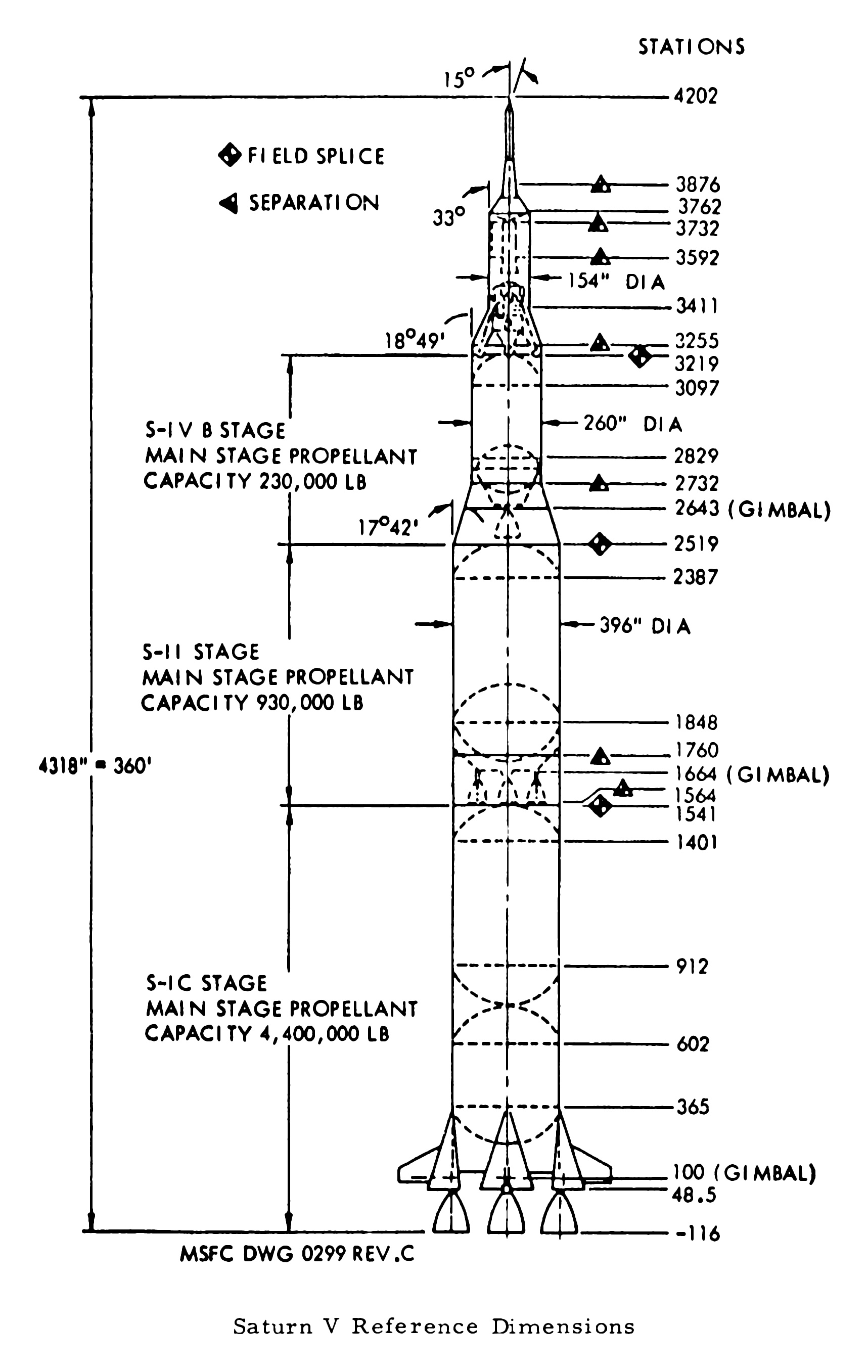
Both above credit: Mike Jetzer/heroicrelics.org
If correct, which I have no reason to doubt, how bizarre…to continue the “tradition”. There surely must’ve been some interesting history & background for its 'continuation'. So, station numbers seem to be attributed to MSFC. I don't get it.
Also, although I've found "field splice" in various NASA documents, it still doesn't help me understand or visualize it. So, I guess it's "duh" on my part.
SLS my Artem-ass. 😜
PLC
Truck Manufacturer: MAN Truck & Bus AG
Model: MAN TGS
Chassis 26.360
Engine:
Suspension:
Axle Configuration: 6x4
Shot Location: A.boni
Five Star Bus Company Inc.
Bus number 1101
Classification: Air Conditioned Provincial Operation Bus
Model: MAN Higer A80
Chassis: MAN Diesel R39 18.350 HOCL
Engine: MAN Diesel D2066LOH
Suspension: Air Suspension
Seating Configuration: 2x2
Capacity:
Shot Location: Balintawak
ALPS The Bus Inc.
Bus Number: V-727 "Kim Cyril"
Coachbuilder: Zhengzhou Yutong Bus Company, Ltd. (Yutong Bus)
Body Model: Yutong ZK6119HA
Engine: Yuchai YC6L280-30 (L38MA)
Chassis : Yutong ZK6119CRA
Suspension: Air-Suspension
Seating Configuration: 2x2
Seating Capacity: 49
Shot Location: ALPS Cubao Terminal
Company/Owner: AB Liner, Inc.
Fleet/Bus Number: 74088
Classification: Air-conditioned Provincial Bus
Coachbuilder: (Suzhou) Higer Bus Company, Ltd.
Body Model: Higer KLQ6112H
Engine Model: Yuchai YC6L280-30 (L53SA/L538A)
Chassis Model: Higer KLQ6110SE3 (LKLR1HSG8GA)
Transmission: 6-speed Manual Transmission
Suspension: Leaf Spring Suspension
Seating Configuration: 2×2
Seating Capacity: 49
Case Number: TBD
Franchise route: TBD
Route: Tagkawayan, Quezon [TGK, QP]–Cubao, Quezon City [CUB, QC] via N68 (Andaya Highway) / Tiaong Bypass Road / N1 (Maharlika Highway)
Municipalities/cities passing: Tabugon (Santa Elena)/Calauag [CUG]/Lopez/Gumaca/Plaridel/Atimonan/Pagbilao/Lucena City [LUC]/Sariaya/Candelaria/Tiaong/San Pablo City/Alaminos/Santo Tomas City/Calamba City [CLM]
Type of Operation: Provincial Operation Public Utility Bus (Regular Class)
Area of Operation: CALABARZON (Region IV-A)
Shot location: EDSA-Boni, Mandaluyong City
Date and time taken: May 14, 2018 (17:50H)
Notices:
* Please DON'T GRAB A PHOTO WITHOUT A PERMISSION. If you're going to GRAB IT, please give A CREDIT TO THE OWNER. Also, don't PRINT SCREEN my photos.
** If I have mistakes on the specifications, please comment in a good manner so that I can edit it immediately.
*** The specifications and routes (for provincial, inter-provincial, and city operation) mentioned above are subjected for verification and may be changed without prior notice.
Victory Liner Inc.
Bus Number: 1214
Coachbuilder: Hyundai Motor Company
Chassis: Hyundai KMJKJ18BPSC
Model: Hyundai Universe Space Luxury
Engine: Hyundai D6AB-D
Airconditioning Unit: Overhead Unit
Suspension: Air-Suspension
Seating Configuration: 2x2
Seating Capacity: 45 Passengers
Shot Location: Victory Liner Caloocan Terminal
Company/Owner: Victory Liner, Inc.
Fleet/Bus Number: 2238
Classification: Air-conditioned Provincial Bus
Coachbuilder: Santarosa Motor Works, Inc./Columbian Manufacturing Corporation
Body Model: Santarosa Daewoo Bus BV115
Engine Model: Doosan Infracore DE12TIS
Chassis Model: Daewoo BV115 (PL5UN58JDFK)
Transmission: 6-speed Manual Transmission
Suspension: Leaf Spring Suspension
Seating Configuration: 2×2
Seating Capacity: 49
Franchise route: Tuguegarao (Cagayan)–Earnshaw (Sampaloc, Manila)
Route: Sampaloc, Manila City [SMP, MN]–Tuguegarao City, Cagayan [TUG, CV] via E1 expressway (NLEX-Balintawak–NLEX-Dau; NLEX-SCTEX-Connector–SCTEX-Amucao–TPLEX-Pura); N215 (Dau Access Road) / Pura–Guimba Road / N114 (Pangasinan–Nueva Ecija Road) / N1 (Maharlika Highway)
Municipalities/cities passing: Dau (Mabalacat City) [DAU]–Pura/Guimba [GUI]/Santo Domingo/Talavera/Science City of Muñoz/San Jose City [SJC]/Carranglan/Santa Fe/Aritao/Gabut (Dupax Del Sur)/Ineangan (Dupax Del Norte)/Bambang/Bayombong/Solano [SOL]/Bagabag/Diadi/Cordon/Santiago City [STO]/San Isidro/Echague/Alicia/Cauayan City [CYZ]/Reina Mercedes/Naguilian/Gamu/Ilagan City [ILA]/Tumauini/Cabagan/San Pablo/Peñablanca
Type of Operation: Provincial Operation Public Utility Bus (Regular Class)
Area of Operation: Cagayan Valley (Region II)
Shot location: Victory Liner Bus Stop, Pura, Tarlac
Date and time taken: May 22, 2018 (17:15H)
Notices:
* Please DON'T GRAB A PHOTO WITHOUT A PERMISSION. If you're going to GRAB IT, please give A CREDIT TO THE OWNER. Also, don't PRINT SCREEN my photos.
** If I have mistakes on the specifications, please comment in a good manner so that I can edit it immediately.
*** The specifications and routes (for provincial, inter-provincial, and city operation) mentioned above are subjected for verification and may be changed without prior notice.
**** The vehicle's registration plate(s), conduction sticker(s), and/or persons (if applicable) were pixelated/blurred to prevent any conflict with the photographer, the bus company and/or to the car owner for their security and/or privacy purposes. So, don't use their plate number, conduction sticker, and vehicle tag as an evidence for any incident. And, I have taken this photo for bus fanatics, bus enthusiasts, and bus lovers purposes.
Bataan Transit Co., Inc
Bus Number: 713
Bus Manufacturer: Hyundai Motor Company (Korea)
Model: Hyundai Universe Xpress Noble
Chassis: Hyundai KMJKL18CP8C
Engine: Hyundai D6AC-Q
Suspension: Air Suspension
Seating Configuration: 2x2
Capacity: 45
Shot Location: Bataan Transir Doroteo Jose Terminal Avenida
Victory Liner Inc.
Bus number: 1528
Classification: Airconditioned Provincial Bus
Bus Body: DMMC Exfoh Replica
Bus Body Manufacturer: Del Monte Motor Works, Inc.
Chassis: RB46S
Engine: Nissan Diesel PE6T
Layout: Rear-Engined Rear-Wheel Drive
Suspension: Leaf Spring Suspension
Airconditioning Unit: Overhead Unit
Seating Capacity: 61 Passengers
Seating Configuration: 3x2
Shot Location: Victory Liner Caloocan Terminal
GV Florida
Bus Number: F48
Class: Regular Fare
Manufacturer: Del Monte Motorworks (thru GV Florida bus body)
Model: DMMC DM11 Version 6127
Engine: Hyundai D6CA POWERTEC
Chassis: Hyundai KMJRJ18SP
Suspension: Airsuspension
Seating Configuration: 2x2
Capacity: 40
Shot Location: Sampaloc
JAC Liner
Bus Number: 892
Bus Manufacturer: Yutong Bus (China)
Bus Model: ZK6122HD
Engine : Yuchai YC6L310-20
Chassis: ZK6122CRD9
Suspension: Air-Suspension
Seating Configuration : 2x2
Capacity: 50
Shot Location: Cubao
Company/Owner: Gold Star Bus Transit, Inc.
Fleet/Bus Number: 11502
Classification: Air-conditioned Deluxe Provincial Bus (with restroom equipped)
Coachbuilder: (Zhengzhou) Yutong Bus Company, Ltd.
Body Model: Yutong ZK6127HYG
Engine Model: Yuchai YC6L330-20 (L33YA)
Chassis Model: Yutong ZK6127CR (LZYTATE6XH1)
Transmission: 6-speed Manual Transmission
Suspension: Air Suspension
Seating Configuration: 2×2
Seating Capacity: 47
Franchise route: Iloilo City–Cubao (Quezon City)
Route: Cubao, Quezon City–Batangas City Grand Terminal, Batangas City, Batangas via E2 [SLEX-Magallanes–STAR (Southern Tagalog Arterial Road)-Tambo Exit] / N4 (Jose P. Laurel Highway) / N434 (Batangas Port Diversion Road)
Municipalities/cities passing: Magallanes (Makati City)–Lipa City/San Jose
Type of Operation: Provincial Operation Public Utility Bus (Deluxe Class)
Area of Operation: CALABARZON (Region IV-A)
Shot Location: EDSA-Boni, Mandaluyong City
Date Taken: May 30, 2018 (5:48H)
Notices:
* Please DON'T GRAB A PHOTO WITHOUT A PERMISSION. If you're going to GRAB IT, please give A CREDIT TO THE OWNER. Also, don't PRINT SCREEN my photos.
** If I have mistakes on the specifications, please comment in a good manner so that I can edit it immediately.
*** The specifications and routes (for provincial, inter-provincial, and city operation) mentioned above are subjected for verification and may be changed without prior notice.
**** The vehicle's registration plate(s), conduction sticker(s), and/or persons (if applicable) were pixelated/blurred to prevent any conflict with the photographer, the bus company and/or to the car owner for their security and/or privacy purposes. So, don't use their plate number, conduction sticker, and vehicle tag as an evidence for any incident. And, I have taken this photo for bus fanatics, bus enthusiasts, and bus lovers purposes.
Victory Liner Inc.
Bus Number: 1540
Body: Partex Auto Body
Chassis: Nissan Diesel RB46S
Engine: Nissan Diesel PE6T
Seating Configuration: 2x3
Shot Location: Victory Liner Caloocan Terminal
Victory Liner Inc.
Bus number: 2112
Classification: Airconditioned Provincial Operation Bus
Coachbuilder: Santarosa Philippines Motor Works, Incorporated
Chassis: MAN 18.310 HOCL
Model: MAN SR Exfoh Hi-Deck
Engine: MAN D2866LOH27
Suspension: Air-Suspension
Seating Configuration: 2x2
Seating Capacity: 49 Passengers
Shot Location: Victory Liner Kamias Terminal
Linda's configuration is: 2-4-0STT
She was built in 1893 in the Hunslet Engine Co. Penrhyn Mainline Hunslet .
Originally an 0-4-0ST running on the Penrhyn Quarry Railway, purchased by the Ffestiniog Railway in 1962. Named after Linda Blanche Douglas-Pennant. Returned to service in 2011 after a lengthy seven-year overhaul.
Image was shot on a Canon EOS 550D with an Canon EF 18-135 mm lens.
Philtranco
Bus Number: 2813
Engine: Nissan Diesel FE6D
Model Santarosa Philippines "PKB"
Chassis Nissan Diesel PKB212N
Seating configuration: 2x2
Capacity: 53
Shot Location: Balintawak
SFOIL
Truck Manufacture : Mercedes Benz
Model: MB Actros MP3
Chassis 33.400
Engine:
Suspension:
Axle Configuration: 6x4
Trailer : 3 Axle Transbuilt Tanker Trailer
Shot Location: Luneta
Victory Liner Inc.
Bus Number: 1867
Body: Pilipinas Hino Motorworks
Model: Hino Partex Grandeza Victory Version
Former Body: Santarosa Motorworks Inc.
Former Model: 2000 SR-EXFOH AC Series
Chassis: Nissan Diesel RB46S
Engine: Nissan Diesel PE6T
Suspension: Leaf Spring Suspension
Seating Configuration: 2x2
Capacity: 49
Shot Location: Cloverleaf Balintawak
Five Star Bus Company Inc.
Bus Number: 1003
Coachbuilder: Trans-Oriental Motor Builders, Inc.
Body Model: Golden Dragon XML6126 "Superstar" (replica)
Chassis: MAN R39 18.350 HOCL
Classification: Air-Conditioned Provincial Operation Bus
Engine: MAN D2066LOH12
Suspension: Air-Suspension
Seating Configuration: 2x2 Seats
Capacity: 49
Shot Location: Five Star Cubao Terminal
Boeing and its industry partners are flying a prototype of the Advanced Super Hornet complete with conformal fuel tanks, enclosed weapons pods and signature enhancements. We will announce our findings from the series of test flights later this month.
Boeing provides this photo for the public to share. Media interested in high-resolution images for publication should email boeingmedia@boeing.com or visit boeing.mediaroom.com. Users may not manipulate or use this photo in commercial materials, advertisements, emails, products, or promotions without licensed permission from Boeing. If you are interested in using Boeing imagery for commercial purposes, email imagelicensing@boeing.com or visit www.boeingimages.com.
Been aiming to have this set up for a while. I bought a new guide rail system and extra counterweight. so, now I can hopefully use my 66mm William Optics refractor as a guide scope for my C8 SCT, meaning closer shots of deep sky objects.
Pangasinan Five Star Bus Company
Bus Number: 9652
Body: Five Star Bus Body
Model:
Chassis:
Engine:
Seating Configuration: 2x3
Capacity : 66
Shot Location Five Star Cubao Terminal
Coca-Cola Company
Truck Manufacturer: MAN Truck & Bus AG
Model: MAN TGS
Chassis 33.350
Engine:
Suspension:
Axle Configuration: 6x4
Shot Location: A.boni
Dagupan Bus Company Inc.
Bus Number: 717107
Coachbuilder: Xiamen Golden Dragon Bus Company, Ltd. (Golden Dragon) / Trans-Oriental Motor Builders, Inc.
Body Model: Golden Dragon XML6103 "Snow Fox"
Suspension: Leaf Springs Suspension
Engine: Yuchai YC6G270-20 (G46MB / G4606)
Chassis: Golden Dragon XML6103J92
Seating Configuration: 2x2 Seats
Seating Capacity: 45 Passengers
Shot Location: Balintawak
Victory Liner Inc.
Bus Number: 2127
Manufacturer: MAN Nutzfahrzeuge
Model: Almazora Motors, Corp. Lion Star II
Suspension: Air Suspension
Engine: MAN D2866LOH27
Chassis: MAN 18.310 HOCL
Seat Configuration : 2x2
Capacity: 49
Shot Location: Victory Liner Cubao Terminal
Victory Liner Inc
Bus Number: 1668
Bus Manufacturer: Santarosa Motor Works Inc (Philippines)
Bus Model: SR Modulo 310
Seating configuration : 2x2
Capacity: 45
Shot Location: Victory Liner Cubao Terminal
Been a while since I updated my configuration.
Now using the Bolstr EDC bag; specifically designed for minimalist carry.
Then continuing on to the right from the top:
- Powerbank: Noontec 10,000 mAh
- Knife: Buck Mayo Waimea
- Sunglasses: Matsuda M3023 (aka "Iron Man shades")
- Watch: PAM111
- Accessory: Olloclip 4-in-1 lens
- Accessory: Steel toothpick container
- Flashlight: Prometheus BetaQR
- Whistle: Cybernetic Brass Tactical Whistle
- Phone: iPhone 6+
- Keys/Keychain: Keyport Slide 2.0 (white for car, red for motorcycle)
- Pen: Move Mini Bolt-action EDC pen
- Wallet/Money Clip: Human Republic Slim
Pangasinan Five Star Bus Company, Inc.
Bus Number: 2020
Coachbuilder: Nissan Diesel Philippines, Corp.
Model: Nissan Diesel Euro Bus
Chassis: Nissan Diesel RB46S
Engine Nissan Diesel PE6-T
Suspension: Leaf Springs Suspension
Classification: Air-Conditioned Provincial Operation Bus
Seating Configuration: 2x2
Capacity: 53
Shot Location: Balintawak
Partas Trans
Bus Number: 81288
Bus Manufacturer: Del Monte Motor Works Inc. (Philippines)
Bus Model: DMMC Lion's star
Rebody Model: DMMC DM12 S2
chassis: MAN A55 (18.310 HOCL-SKD)
engine: MAN D2866LOH
Suspension: Air Suspension
Seating Configuration: 2x1
Seating Capacity: 29 Passengers
Shot Location : Balintawak
Company/Owner: Genesis Transport Service, Inc.
Fleet/Bus Number: 818638
Classification: Air-conditioned Provincial Bus
Coachbuilder: Autodelta Coach Builders, Inc.
Body Model: Volvo B7R Autodelta 12 Meter Coach
Engine Model: Volvo D7E-290 (D7E11)
Chassis Model: Volvo B7R (YV3R6R62*HA)
Transmission: 6-speed Automatic Transmission
Suspension: Air Suspension
Seating Configuration: 2×2
Seating Capacity: 49
Franchise route: Mariveles (Bataan)–Pasay City (Metro Manila)
Route: Pasay City–Mariveles, Bataan via N3 (Jose Abad Santos Avenue/Olongapo–Gapan Road) / N301 (Bataan Provincial Highway/Roman Superhighway)
Municipalities/cities passing: San Fernando City/Bacolor/Guagua/Lubao/Dinalupihan/Hermosa/Orani/Samal/Abucay/Balanga City/Pilar/Orion/Limay
Type of Operation: Provincial Operation Public Utility Bus (Regular Class)
Area of Operation: Central Luzon (Region III)
Shot Location: Ligas Overpass/NLEX-Santa Rita, Barangay Santa Rita, Guiguinto, Bulacan
Date Taken: May 26, 2018 (15:39H)
Notices:
* Please DON'T GRAB A PHOTO WITHOUT A PERMISSION. If you're going to GRAB IT, please give A CREDIT TO THE OWNER. Also, don't PRINT SCREEN my photos.
** If I have mistakes on the specifications, please comment in a good manner so that I can edit it immediately.
*** The specifications and routes (for provincial, inter-provincial, and city operation) mentioned above are subjected for verification and may be changed without prior notice.
Dagupan Bus Company, Inc
Bus Number: 71753
Coachbuilder: Zhengzhou Yutong Bus Company, Ltd.
Body Model: Yutong ZK6119HA
ChassisYutong ZK6119CRA
Suspension: Air-Suspension
Engine: Yuchai YC6L280-30 (L38MA)
Classification: Air-Conditioned Provincial Operation Bus
Seating Configuration: 2x2
Capacity: 49
Shot Location: Balintawak
Company/Owner: Victory Liner, Inc.
Fleet/Bus Number: 6039
Classification: Air-conditioned Provincial Bus
Coachbuilder: Santarosa Motor Works, Inc./Columbian Motors Corporation
Body Model: Nissan Diesel/Santarosa EXFOH
Engine Model: Nissan Diesel PF6-TA (PF6-A)
Chassis Model: Nissan Diesel JA450SSN
Transmission: 6-speed Manual Transmission
Suspension: Leaf Spring Suspension
Seating Configuration: 2×2
Seating Capacity: 49
Route: Monumento, Caloocan City–Tuguegarao City, Cagayan via NLEX-Balintawak–NLEX-San Fernando–NLEX-Dau / Dau Access Road / NLEX-SCTEX Connector–SCTEX-Amucao / Santa Rosa–Tarlac Road / Carmen–Cabanatuan Road / Felipe Vergara Highway / N1 (Maharlika Highway)
Municipalities/cities passing: San Fernando City–Dau (Mabalacat City)–Amucao (Tarlac City)/La Paz/Zaragoza/Aliaga/Cabanatuan City/Talavera/Santo Domingo/Science City of Muñoz/San Jose City/Carranglan/Santa Fe/Aritao/Gabut (Dupax Del Sur)/Ineangan (Dupax Del Norte)/Bambang/Bayombong/Solano/Bagabag/Diadi/Cordon/Santiago City/San Isidro/Echague/Alicia/Cauayan City/Reina Mercedes/Naguilian/Gamu/Ilagan City/Tumauini/Cabagan/San Pablo/Peñablanca
Type of Operation: Provincial Operation Public Utility Bus (Regular Class)
Area of Operation: Cagayan Valley (Region II)
Shot Location: Robinsons Starmills, Barangay San Jose, San Fernando City, Pampanga
Date Taken: December 28, 2015
Notices:
* Please DON'T GRAB A PHOTO WITHOUT A PERMISSION. If you're going to GRAB IT, please give A CREDIT TO THE OWNER. Also, don't PRINT SCREEN my photos.
** If I have mistakes on the specifications, please comment in a good manner so that I can edit it immediately.
*** The specifications and routes (for provincial, inter-provincial, and city operation) mentioned above are subjected for verification and may be changed without prior notice.
**** The vehicle's registration plate(s), conduction sticker(s), and/or persons (if applicable) were pixelated/blurred to prevent any conflict with the photographer, the bus company and/or to the car owner for their security and/or privacy purposes. So, don't use their plate number, conduction sticker, and vehicle tag as an evidence for any incident. And, I have taken this photo for bus fanatics, bus enthusiasts, and bus lovers purposes.