View allAll Photos Tagged this
Explore Apr 5, 2009 #70
Happy Monday Blues!!!
This is my cousin Kim's baby. He is 2 months old.
Ok c'mon you know you wanna play the this little piggie game....so make up stuff and have fun! Hehehehe...
Thanks for all of your comments and faves! You guys are truly the best! xoox
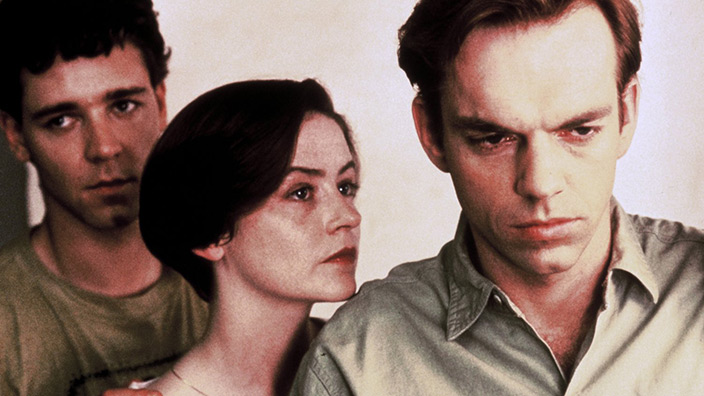
"And so I write this for you, my Sarah. With the hope that one day, when you're old enough, this story that lives with me, will live with you as well. When a story is told, it is not forgotten. It becomes something else: a memory of who we were, the hope of what we can become."
… from the movie “Sarah's Key".
"A volte le storie che non riusciamo a raccontare sono proprio le nostre, ma se una storia non viene raccontata diventa qualcos'altro, una storia dimenticata. Quando una storia viene raccontata, non può essere dimenticata, diventa qualcos'altro. Il ricordo di chi eravamo, la speranza di ciò che possiamo diventare."
… dal film “La chiave di Sara”
-------------------------------
www.imdb.com/it/title/tt0102721/
www.imdb.com/it/title/tt0102721/mediaviewer/rm4025293568/
sbs-au-brightspot.s3.ap-southeast-2.amazonaws.com/drupal/...
d32qys9a6wm9no.cloudfront.net/images/movies/backdrop/4c/8...

m.media-amazon.com/images/I/81T2mYZ41OL._AC_SL1500_.jpg

----------------------------------------------------------
click to activate the small icon of slideshow: the small triangle inscribed in the small rectangle, at the top right, in the photostream (it means the monitor);
or…. Press the “L” button to zoom in the image;
clicca sulla piccola icona per attivare lo slideshow: sulla facciata principale del photostream, in alto a destra c'è un piccolo rettangolo (rappresenta il monitor) con dentro un piccolo triangolo nero;
oppure…. premi il tasto “L” per ingrandire l'immagine;
Qi Bo's photos on Fluidr
Qi Bo's photos on Flickriver
www.worldphoto.org/sony-world-photography-awards/winners-...
www.fotografidigitali.it/gallery/2726/opere-italiane-segn...
......................................................
This is a photographic account of my recent week-long vacation on the island of Favignana, spent at the end of July this year (2026). Specifying the year is a must, as I often post reports from past years.
Favignana is the largest of the Egadi islands, followed by Levanzo (the smallest) and Marettimo, as well as several smaller islets. On this trip, I returned with my wife, years after our honeymoon: we only stayed for one day, and I had with me a compact film camera purchased especially for the occasion on Via Etnea in Catania.
Seen from above, some have poetically glimpsed Favignana as the shape of a butterfly with open wings. The landscape is characterized by gentle hills—with the highest point at Monte Santa Caterina—and several flat areas. The coastline is very rugged, full of inlets, sea caves, hidden coves, and others that are easily accessible; I've visited practically all of the latter. Among the many, I particularly remember Cala Rossa, Cala Azzurra, Bue Marino, Cala Grande, Lido Burrone, and Cala San Nicola. The local road system is dominated by bicycles (traditional and electric), motorcycles, and mopeds, while cars are rare, partly due to an ordinance prohibiting tourist landings except under special conditions.
The history of Favignana is inextricably linked to the Florio family and its imposing tuna fishery, a combination that radically transformed the island between the late 19th and 20th centuries, making it the beating heart of the Mediterranean economy and fishing. The Florios became the symbol of the Sicilian Belle Époque and the southern industrial bourgeoisie when, in 1874, Ignazio Florio Senior purchased the islands of Favignana and Formica. The family didn't limit itself to traditional fishing, but also industrialized the entire process: inaugurated in 1891, the enormous tuna canning plant became one of the largest and most advanced in Europe.
The Florios introduced a revolutionary idea for the time: cooking the tuna and storing it in oil in tins, rather than preserving it in salt, thus allowing the product to be marketed on an industrial scale. The family's influence on the island was widespread. The company employed hundreds of locals and, within the complex, built warehouses, boathouses, workshops, and even a nursery for the workers' children.
The business subsequently gradually declined until it finally closed in the 1970s. After decades of abandonment, the former plant is now an extraordinary museum. Visiting it—which I did with great interest—means stepping back in time among enormous cooking cauldrons, old slaughter boats, and an archaeological site that also houses the bronze rams from the Battle of the Egadi Islands (241 BC). This decisive naval battle, fought and won by the Romans in the waters of the archipelago, marked the end of the First Punic War, destroying the naval power of Carthage, forcing it to surrender and cede control of Sicily to Rome.
I created this photographic story in two parts: the first with color photographs, the second in black and white.
(second part - black and white)
…………………….
Questo è un racconto fotografico della mia recentissima settimana di vacanze nell’isola di Favignana, trascorsa a fine luglio di quest'anno (2026). Specificare l'anno è per me d'obbligo, poiché mi capita spesso di postare reportage realizzati negli anni passati.
Favignana è la maggiore delle isole Egadi, seguita da Levanzo (la più piccola) e da Marettimo, oltre a diversi isolotti minori. In questo viaggio sono tornato con mia moglie, a distanza di anni dal nostro viaggio di nozze: allora ci fermammo solo per una giornata, e io avevo con me una compatta a pellicola acquistata appositamente per l'occasione in via Etnea, a Catania.
Vista dall'alto, qualcuno ha poeticamente intravisto in Favignana la forma di una farfalla con le ali aperte. Il paesaggio è caratterizzato da dolci rilievi collinari — con il punto più alto nel Monte Santa Caterina — e da diverse aree pianeggianti. La costa è molto frastagliata, ricca di insenature, grotte marine, calette nascoste e altre facilmente accessibili; queste ultime le ho visitate praticamente tutte. Tra le tante, ricordo in particolare Cala Rossa, Cala Azzurra, Bue Marino, Cala Grande, Lido Burrone e Cala San Nicola. La viabilità locale è dominata dalla presenza di biciclette (tradizionali ed elettriche), moto e motorini, mentre le automobili circolano in numero ridotto, anche a causa di un'ordinanza che ne vieta lo sbarco turistico se non in particolari condizioni.
La storia di Favignana è indissolubilmente legata alla famiglia Florio e alla sua imponente tonnara, un binomio che ha trasformato radicalmente l'isola tra la fine dell'Ottocento e il Novecento, facendone il cuore pulsante dell'economia e della pesca nel Mediterraneo. I Florio divennero il simbolo della Belle Époque siciliana e della borghesia industriale del Sud quando, nel 1874, Ignazio Florio Senior acquistò le isole di Favignana e Formica. La famiglia non si limitò a gestire la pesca tradizionale, ma volle industrializzare l'intero processo: inaugurato nel 1891, l'enorme stabilimento per la conservazione del tonno divenne una delle tonnare più grandi e avanzate d'Europa.
I Florio introdussero un'intuizione rivoluzionaria per l'epoca: cuocere il tonno e metterlo sott’olio in scatole di latta, anziché conservarlo sotto sale, permettendo così di commercializzare il prodotto su scala industriale. L'influenza della famiglia sull'isola fu totale. L'azienda diede lavoro a centinaia di persone del posto e, all'interno del complesso creò magazzini, rimesse per le barche, officine e persino un asilo nido per i figli degli operai.
Successivamente l'attività andò progressivamente riducendosi fino alla definitiva chiusura negli anni '70. Dopo decenni di abbandono, oggi l'ex stabilimento è uno straordinario museo. Visitarlo — cosa che ho fatto con grandissimo interesse — significa fare un salto indietro nel tempo tra enormi calderoni di cottura, le vecchie barche della mattanza ed un'area archeologica che custodisce anche i rostri di bronzo della Battaglia delle Egadi (241 a.C.). Proprio questo scontro navale decisivo, combattuto e vinto dai Romani nelle acque dell'arcipelago, segnò la fine della Prima Guerra Punica, distruggendo la potenza navale di Cartagine, costringendola alla resa ed a cedere il controllo della Sicilia a Roma.
Ho realizzato questo racconto fotografico in due parti: una prima con fotografie a colori, una seconda in bianco e nero.
(seconda parte - bianco e nero).
…………………………………………………
This is an 8 second image taken using a DJI Mavic Air and the Polar Pro ND64CPL filter. This is the longest exposure time that the drone is capable of so I was keen to see if it was achievable. This particular morning there was barely a breath of wind but this was the 10th attempt at getting the image. I had to be at max flight height of 393 feet in order to get the whole composition in and I am sure it was much windier up there than it was where I was. I still can't believe that it is able to keep itself as steady as it does to achieve this image. I can't begin to imagine where drone tech is going to be in 10 years time. Taken over the coastline of Portknockie in Morayshire, Scotland.
This is not a cave! Han and Leya escape before the Millennium Falcon is digested by the space slug.
I'm participating in vignweek hosted by RebelLUG, a contest where you have to build a vignette every day for a week. The theme for the fifth day is to build a space scene, so here's my entry!
The warm early morning sun in one of the coldest places you find.
Sailing this small thing around and shooting photos of peps on kayak
This picture was taken during the Magic Birding and Wildlife Photography Circuit of Ecuador! At San Jorge Ecolodges and Botanical Reserves of Ecuador!! San Jorge de Tandayapa Gardens. !
Best Birding and Photo tours in Latin America ! www.sanjorgeecolodges.com
This is the Symphony hall located in the centre of Birmingham in England. Its normally used for concerts and theatre plays, although on this particular day it was being used by the local University for its graduation ceremonies.
I managed to sneak in during the interval when they were tidying up to take a few snaps. I was trying to use the chairs as cover so I wouldn't get spotted, but it wasn't long before the eagle eyed staff saw me and asked me to leave.....thats after taking a few more quick shots though. ;-)
This is an unfinished project I've been working back in the welcome home party days.
I wanted to post it and share it with you in a raw state because I would like to know your opinion about it.
(Made with vanilla, red paper, iphone photo, Adobe Photoshop and Adobe illustrator)
This is such a fun thing to watch. I noticed it's active this morning. This one says cloudy skies snow in winter. It's very accurate.
How to Predict the Weather:
Clear liquid: Bright and clear weather.
Cloudy liquid: Cloudy, possible thunderstorms & rain.
Small dots in the liquid: Humid or foggy weather.
Large flaky crystals: Cloudy skies, snow in winter.
Threads of crystals at the top: Windy weather. Crystals at the bottom: Frost may be coming.
Read more: Crystal Ball Weather Station | A magical way to forecast the weather
This is dedicated in gratitude to Philippe Sainte-Laudy, for pointing me in the right direction.
And also for Steve and Mikul. Thank you guys as well! You are both indispensable.
This photo is SOOC.
The Ashmolean is the University of Oxford’s museum of art and archaeology, founded in 1683. Our world famous collections range from Egyptian mummies to contemporary art, telling human stories across cultures and across time.
The Ashmolean’s collections are extraordinarily diverse, representing most of the world’s great civilisations, with objects dating from 8000 BC to the present day. Among many riches we have the world’s greatest collection of Raphael drawings, the most important collection of Egyptian pre-Dynastic sculpture and ceramics outside Cairo, the only great Minoan collection in Britain, outstanding Anglo-Saxon treasures, and the foremost collection of modern Chinese painting in the Western world.
This is a time lapse video of the Milky Way rising over Australia Telescope Compact Array (near Narrabri, NSW) when the site is open to the public. Please enlarge before viewing. The 10 second video was compiled from 306 30 second exposures captured over nearly 4 hours at f/4, ISO 6400.
As a video, it's a complete failure. There are too many vehicle headlights and taillights, head torches, light painting, more light painting, and lens fogging. I've already removed the worst frames and tried to minimise flashing in other frames. It's not worth trying to do more.
But the video does reveal some possibly interesting phenomena. For the first half, you can see the dishes tracking so they remain fixed on the same target in the sky. I didn't notice them doing that at the time. The dishes move in unison, because you get more information from multiple, distributed dishes than from a single dish. Afterwards, you see the dishes move to track a second target, and then a third target.
This will be it on these for a while but I think I saved the best for last...or at least my favorite.
While the boys and I were playing on the beach with these I told them that we really needed to get out into the water and get a reflection shot. Dylan, my 13, practically ran into the lake even though it was NOT that warm outside and the water was pretty danged chilly. We did several of these. Since he was in the water and there was no way in the world I was going in there he had to light the steel wool himself so in a few you can see he is holding the lighter between his teeth while spinning the burning steel wool over his head. The kid has talent! ha! My nine year did a couple of these as well. They were cold, happy little campers ;)
But there are other pictures from the Thanksgiving vacation waiting to be seen so we'll give this type of playing with fire a rest...and move on to some others ;)
View this on black...it's better that way!
This is the royal balcony from where the Mughal emperor's would address their audience.
The Lahore Fort, locally referred to as Shahi Qila (Urdu: شاهی قلعہ ) is citadel of the city of Lahore, Punjab, Pakistan. It is located in the northwestern corner of the Walled City of Lahore. The trapezoidal composition is spread over 20 hectares. Origins of the fort go as far back as antiquity, however, the existing base structure was built during the reign of Mughal emperor Akbar (1556-1605), and was regularly upgraded by subsequent rulers,having thirteen gates in all.[1]. Thus the fort manifests the rich traditions of the entire Mughal architecture.[2] Some of the famous sites inside the fort include: Sheesh Mahal, Alamgiri Gate, Naulakha pavilion, and Moti Masjid. In 1981, the fort was inscribed as a UNESCO World Heritage Site along with the Shalimar Gardens (Lahore).
The origins of Lahore Fort are obscure and are traditionally based on various myths.[3] However, during the excavation carried out in 1959 by the Department of Archaeology, in front of Diwan-e-Aam, a gold coin of Mahmood of Ghazni dated A.H. 416 (1025 A.D.) was found at a depth of 7.62 metres from the level of the lawns. Cultural layers continued to a further depth of 5 metres, giving strong indications that people had lived here, long before the conquest of Lahore by Mahmood in 1021 A.D.[4] Further mention of the fort is traceable to Shahab-ud-din Muhammad Ghuri's successive invasions of Lahore from 1180 to 1186 A.D.
[edit] Timeline
Location of Fort along the Walled City of LahoreIt cannot be said with certainty when the Lahore Fort was originally constructed or by whom, since this information is lost to history, possibly forever. However, evidence found in archaeological digs gives strong indications that it was built long before 1025 A.D
1241 A.D. - Destroyed by Mongols.
1267 A.D. - Rebuilt by Sultan Ghiyas ud din Balban.
1398 A.D. - Destroyed again, by Amir Tamir's army.
1421 A.D. - Rebuilt in mud by Sultan Mubark Shah Syed.
1432 A.D. - The fort is occupied by Shaikh Ali of Kabul who makes repairs to the damages inflicted on it by Shaikha Khokhar.
1566 A.D. - Rebuilt by Mughal emperor Akbar, in solid brick masonry on its earlier foundations. Also perhaps, its area was extended towards the river Ravi, which then and up to about 1849 A.D., used to flow along its fortification on the north. Akbar also built Doulat Khana-e-Khas-o-Am, the famous Jharoka-e-Darshan (Balcony for Royal Appearance), Masjidi Gate etc.
1618 A.D. - Jehangir adds Doulat Khana-e-Jehangir
1631 A.D. - Shahjahan builds Shish Mahal (Mirror Palace).
1633 A.D. - Shahjahan builds Khawabgah (a dream place or sleeping area), Hamam (bath ), Khilwat Khana (retiring room), and Moti Masjid (Pearl Mosque).[5]
1645 A.D. - Shahjahan builds Diwan-e-Khas (Hall of Special Audience).
1674 A.D. - Aurangzeb adds the massively fluted Alamgiri Gate.
(Sometime during) 1799-1839 A.D. - The outer fortification wall on the north with the moat, the marble athdera, Havaeli Mai Jindan and Bara Dari Raja Dhiyan Singh were constructed by Ranjit Singh, Sikh ruler from 1799-1839 A.D.
1846 A.D. - Occupied by the British.
1927 A.D. - The British hand over the Fort to the Department of Archaeology after demolishing a portion of the fortification wall on the south and converting it into a stepped form thus defortifying the fort.
The strategic location of Lahore city between the Mughal territories and the strongholds of Kabul, Multan, and Kashmir required the dismantling of the old mud-fort and fortification with solid brick masonry.[6] The strcucture is dominated by Persian influence that deepened with the successive refurbishments by subsequent emperors.[7] The fort is clearly divided into two sections: first the administrative section, which is well connected with main entrances, and comprises larger garden areas and Diwan-e-Aam for royal audiences. The second - a private and concealed residential section - is divided into courts in the northern part, accessible through 'elephant gate'. It also contains Shish Mahal (Hall of Mirrors of Mirror Palace), and spacious bedrooms and smaller gardens.[8] On the outside, the walls are decorated with blue Persian kashi tiles. The original entrance faces the Maryam Zamani Mosque, whereas the larger Alamgiri Gate opens to the Hazuri Bagh through to the majestic Badshahi Mosque.[9]
This is where the children swam, before yesterday morning's crack of dawn return home.
We went to buy some terracotta tiles for the Monviso Room, and stayed a couple of nights in southern Liguria: olive groves, oleanders and bougainvillia, romantic castles inland and a spectacular coast line with fab villages. I LOVE Liguria!
The first day of spring was March 20th, yet yesterday it snowed. Caught this as I was driving my son out to a friend's.
This was made for the Merlin's Beard Winter Holiday Banner Contest over on the Merlin's Beard Forum. Please feel free to check out the site, especially if you're into Lego Castle.
This is the slightly smaller, thumbnail image of the banner.
✰ This photo was featured on The Epic Global Showcase here: bit.ly/1O4hdiK
-------------
Now Featuring: @dozeyone
#allgäu #oberallgäu #oberstdorf #nature #neverstopexploring #love #art #design #love #april #paint #löwenzahn #dsr #dozey #dozeyism #freak #new #flowers #wwwdominikultesde
Follow @dozeyone on Instagram for more like this!
You have to check out Serena's stream if you haven't done so far. As you all might know I am not a big fan of pet shots but she is amazing. She does mainly pictures of her dogs that are clever, hilarious and so well done. The post processing is the cherry on top. I am a huge fan of her work. I went through her whole stream today and it took me ages to decide for only 9 shots cause all of them are amazing. She also does rocking portraits. Serena surely is one of the most creative and funny people I have met on Flickr.
For Wednesday Contact Showcase
1. lap dog, 2. control, 3. walls apart, 4. feeding time, 5. a face only a mother could love, 6. rabbit, 7. the cosmo gentleman II, 8. a banger in mash, 9. world record in a shopping trolley
I can't say it enough, Billy Zane defines this film for it's awesomeness in this scene alone. I can't help but laughed a bit with his mockery of a cowboy dance.
This Panzer IV Ausf. G is a very late production type featuring extra armour plates bolted on front hull and superstructure, no more K.F.F.2 driver's periscopes, L/48 gun, radio antenna moved to the rear left, new commander cupola with single-piece access hatch and Schürzen. It might also featuring Filzbalg-Vorschaltluftfilter (felt air pre-filter) on the right fender, hidden by the Seitenschürze.
Notice the armour plate on turret top to increase protection against Jabbo. The Panzer Ausf. H would later introduce thicker turret roof plates to address this weakness.
________
The Panzer Pictures Database | @PanzerDB (Twitter) | panzerdb.com
This is what many people’s ideal classic American ‘50s car looks like; an iconic “Tri-Five” 1957 Chevrolet Bel Air Sport Coupe, 2-door, 6-passenger hardtop, model [2454], one of 168,293 examples produced for model year 1957. This beautifully restored example, painted in “Matador Red”/“India Ivory” has been retrofit with a 350-CID GM engine and “Cragar SS” aftermarket wheels. The friendly owner was reluctantly selling this lovely car for £35,000. Imported to the UK in 2013.
On display at the first annual ‘National Street Car Challenge’ festival, Wetherby showground, 18.07.26.
Honolulu, Hawaii, street pavement, after rain, manipulated
curated in: www.flickr.com/photos/28710988@N04/galleries/721576230085...
curated in: www.flickr.com/photos/zeze57/galleries/72157624259155267/
This close-up photograph isolates the intricate tangle of radios that make up the Tower of Radios atop Tate Modern. Without the distraction of a background, the focus falls entirely on the sculptural complexity of the installation, each component a relic of past communication, repurposed into a chaotic yet harmonious structure. The composition evokes a sense of organised noise, as if frozen in mid-transmission, inviting viewers to consider the invisible networks and signals that shape our connected world.
This lovely Red Admiral (Vanessa atalanta) butterfly not only paused long enough for me to get closer and focus, but spread its wings to bask in the sunshine for a moment.
You are not them. You are not your family. You do not have to be trapped into their footsteps or their habits. I’m so sick of being afraid of picking up the bad traits of my family. I’m so sick of being stressed because I feel like I can never impress them.
My best friend since we were two has come to church every once and a while with me growing up but this summer she gave her heart to God and she’s absolutely amazing. However, one day she came and told her Dad something exciting that happened at a youth event and his response was “You can’t believe everything you hear at church.” When she told me this she was crying, she…being a girl who has these walls that block off so many people from seeing her broken like that, was crying because of this strong amount of discouragement she felt. Aren’t your parents supposed to build you up? Like when we’re four and you painted the ugliest thing yet your mother or father had put it up on the fridge and praised you for how beautiful it was.
Then there are some of you that come from broken families, abusive families,families who do not have the same beliefs as you, or maybe you even come from a great, happy, united family yet you just feel you do not fit.
The bible says obey your parents and I am in no way telling you otherwise. But I am telling you that they…do not control who you will be. Or at least, you do not have to let them.
Growing up Ruth was my favourite book in the bible. It’s a story about a woman(Ruth) who marries into a family yet when her husband dies and her mother-in-law plans on going back to her homeland Ruth begs and pleads to go with her. She leaves her own family, her own land, perhaps even the beliefs she was raised to believe. All to follow a woman she had become so close with. Yes, they were not related by blood yet Naomi(the mother in law) loved Ruth.
“…and how you have left your father and your mother and the land of your birth, and you have come to a people whom you did not know before. The LORD repay your work, and a full reward be given you by the LORD God of Israel, under whose wings you have come for refuge.” Ruth 2:11,12
Ruth was blessed. And blessed. And blessed. She married a man named Boaz and bore a son named Obed who happened to be the grand father of David.
What I’m getting at here is when you watch your family and you are hurt by them you need to understand that yes, God tells us to love everyone and you should love and forgive them yet you do not have to force yourself to be like them. To believe the same things as they do. You do not have to feel discouraged like my own friend had. Because, like God did with Ruth, he can bring people into your life that will affect you and encourage you and love you. Whether they’re your relatives or not.
You are your own person and God find that so beautiful. He died so you could be free from your sins so why are you letting yourself be captive to these huge shadows your family or friends cast on you? You are not them.
So do not let them tear you down or destroy your faith or hope. Because there will always be someone else out there meant for you who believes the same and who wants to see you grow not to bottle that light.
(I'm tagging charlotte because she is wonderful and so encouraging even if she doesn't have the same beliefs. And she inspired this more than i can even explain)
Wana give it a try?
This one I took specially for my colleagues ... :-)
E X P L O R E D # 167 - 25 April 2009
or as the cool kids would put it:
YOLO
what can I say. 80 degrees, sunshine. it feels like summer.
and it makes me happy.
very happy
This week we are going back twenty-four years to Dublin Bus KD 9 on Burgh Quay. The bus is at the terminus of route 7. This bus route started running between the city centre and Dun Laoghaire in 1949. It ceased in 1951 (with route 7A taking over) before returning around 1980 and extended to Ballybrack. In 1988 it moved to Loughlinstown Park, and in 2004 also started serving Cherrywood. In 2016 the route was changed to solely serve Brides Glen.
KD 9 was delivered new to CIE in 1981. It was withdrawn by 2000, along with the rest of the KD Class.
The ad on the side of the bus is for Argos. They arrived in the Republic of Ireland from the UK in 1996, and getting the Argos catalogue was always a big deal. In some ways it was the analogue version of Amazon.
07/09/1998