View allAll Photos Tagged su
El fotógrafo de los artistas
La fotografía es un arte que relata un momento de la sociedad, su historia y sus costumbres. El fotógrafo Alfredo Molina Lahitte retrató a la sociedad chilena, plasmando en sus imágenes un periodo de nuestra historia.
Su obra fotográfica es representativa de lo más variado de la sociedad chilena, pues por su lente pasó tanto la elite como la bohemia de los años cincuenta y sesenta: actrices, cantantes, vedettes y actores, entre otros.
En 1926, viajó a Santiago desde Talcahuano, para estudiar Bellas Artes, lugar donde conoció a Mario Vargas Rosas, quien pertenecía al Grupo Montparnasse e influyó decisivamente en su orientación artística hacia la fotografía.
En 1933, tras exponer sus obras en el Salón Oficial de Bellas Artes, fue contratado por la empresa editora Zig-Zag para cubrir sus páginas sociales y los reportajes especiales.
Desde su juventud en Talcahuano, Molina Lahitte manifestó un especial interés por el teatro. Ingresó a trabajar en el Teatro Peláez como diseñador de decorados, además de ejercer esporádicamente como actor. Con el tiempo, su cercanía con la dramaturgia y con numerosos artistas, tanto nacionales como extranjeros lo llevó a retratar a los actores y actrices más famosos de las décadas de 1940 a 1960.
La obra de Molina Lahitte, que ha recibido numerosas y muy positivas críticas, se caracteriza por la elegancia de sus imágenes, con una evidente búsqueda de elementos artísticos, así como de la belleza de sus retratados. En la propuesta estética del fotógrafo destacan los juegos de luz y sombras en el rostro y cuerpo, al mismo tiempo se imprime su sello en los elementos escenográficos, por medio de los cuales transforma el ambiente y el aura de sus modelos.
La producción fotográfica de Alfredo Molina Lahitte está influida por el estilo de fotografía de glamour, muy en boga en aquella época, dada la influencia del cine en los cánones estéticos de la sociedad.
Este fotógrafo formó parte de una fecunda generación de artistas entre los que destacan Jorge Opazo, Jorge Sauré y Antonio Quintana. Alfredo Molina formó numerosos discípulos que seguirían en el arte de la fotografía, en forma especial a sus hijas María Cristina y Marianela Molina Peláez, además de Tito Vásquez, Rómulo Herrera y Rolando Rojas, entre otros. Mas informacion en memoriachilena.
Pueden ver fotos de Perú, en micamara.es/peru/.
En micamara.es/ tienen fotos de muchos lugares del mundo.
AMD CEO Lisa Su as a keynote during the IEEE Women in Engineering conference on Friday, April 24, 2015 in San Jose, California.
Al Infinito Sin Limite Hacia Otra Galaxia
Deberias Conocerme Bien Ma' Yo No Vendo Falacia
Dicen Que La Vida Es Corta
Yeah Grita Que No Te Importa
En La Ventana De La capota
Sintiendo La Brisa De La Costa
Ma' Be dont stop
Puedes Imaginarlo
Tu Y Yo Besandonos, Amandonos
Like Bonnie and Clyde
Tu Me Protejes Yo Te Protejo
Baby Que Es La Que Hay?
Su-Wei Hsieh of Taiwan in action at the 2018 BNP Paribas Open WTA Premier Mandatory tennis tournament
"Dawn on Orte"
Dawn on the Adriatic sea from the pine forest of Orte, south of Otranto.
Salento area - Italy
#Salento #Otranto #sea #Adriatic #pine #forest #dawn #KárpathosPhotography
Copyright KàrpathosPhotography
Imponentes y geniales interiores azules los cuales nos remontan a los primeros dias de operacion del metro en el año 1969.
Actualmente el material Alsthom MP-68 circula en las lineas 1, 5, B.
Algunos de linea 1 rehabilitados por CAF el resto rehabilitados por Bombardier Concarril entre 1995 y 1999
Aquí Vemos a un R-94-96 en la estación Plaza Aragon en dirección a Buenavista de La linea B del metro de la ciudad de México.
.……………………………….
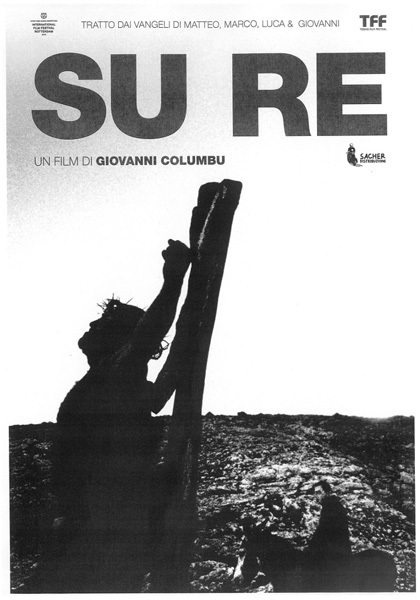
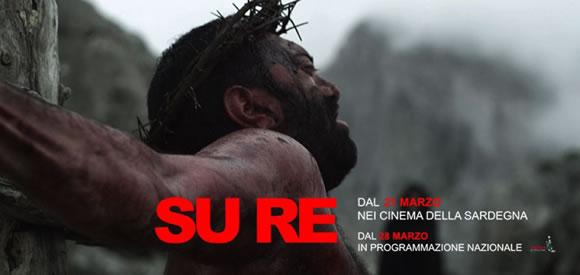
“The Cross is not a Roman pole, but the wood on which God wrote his gospel”.
“La Croce non è un palo dei romani, ma il legno su cui Dio ha scritto il suo vangelo.
(Alda Merini)
-----------------------------------------------------------------
click to activate the icon of slideshow: the small triangle inscribed in the small rectangle, at the top right, in the photostream;
or…. Press the “L” button to zoom in the image;
clicca sulla piccola icona per attivare lo slideshow: sulla facciata principale del photostream, in alto a destra c'è un piccolo rettangolo (rappresenta il monitor) con dentro un piccolo triangolo nero;
oppure…. premi il tasto “L” per ingrandire l'immagine;
www.worldphoto.org/sony-world-photography-awards/winners-...
www.fotografidigitali.it/gallery/2726/opere-italiane-segn...
…………………………………………………………………
Good Friday is an anniversary which in Sicily acquires a cathartic meaning for those who are searching, not only photographically, for popular traditions (we find them widespread throughout Sicily), which are nothing other than a social, cultural event, which merge into a single past and present; from the web "popular traditions are a historical memory linked to customs and rituals that have given shape to the values and beliefs of that culture". Easter in Sicily can be a source of research, it can appear not without contradictions, citing the thoughts of that great Sicilian thinker Leonardo Sciascia, for him Sicily cannot be called Christian referring to the Sicilian festivals, at most it is only in appearance, in those properly pagan explosions tolerated by the Church; Sciascia addresses the topic as an introductory essay in the book "Religious celebrations in Sicily", illustrated with photographs of a young and still unknown Ferdinando Scianna, a book that did not fail to raise some controversy due to the Sicilian thinker's introductory note, thus being in open controversy with the sacredness of that popular Sicilian devotion (the book was criticized by the Holy See newspaper, the Osservatore Romano), Sciascia writes: “what is a religious festival in Sicily? It would be easy to answer that it is anything but a religious holiday. It is, first of all, an existential explosion; the explosion of the collective id, where the collectivity exists only at the level of the id. Since it is only during the celebration that the Sicilian emerges from his condition of a single man, which is the condition of his vigilant and painful superego, to find himself part of a class, of a class, of a city". Another Sicilian thinker, writer and poet, Gesualdo Bufalino, provides interesting indications on the meaning that Sicilians give to these traditional popular events, he says "during Easter every Sicilian feels not only a spectator, but an actor, first sorrowful and then exultant , for a Mystery that is its very existence. The time of the event is that of Spring, the season of metamorphosis, just as the very nature of the rite is metamorphic in which, as in a story from the Puppet Opera, the battle of Good against Evil is fought. Deception, Pain and Triumph, Passion, Death and Resurrection of Christ are present."
In short, Easter in Sicily is a deeply felt anniversary throughout the island since ancient times, it has always had as its fulcrum the emotional participation of the people, with representations and processions which have become rites and traditions which unequivocally characterize numerous Sicilian centres, which they recall the most salient moments narrated in the Gospels and which recall the Passion, Death and Resurrection of Jesus Christ, with processions formed by the various brotherhoods (sometimes with theatrical re-enactments) which have within them contents and symbols often coming from the Spanish domination, which took place in Sicily between the 16th and 17th centuries. This year, on the occasion of Good Friday I went to the pretty town of Licodia Eubea (in the province of Catania), I'll start by saying that in this procession a unique character comes to life in statue form that cannot be found anywhere else place in Sicily, it is called "Ciurciddu" (translated "Circello"), he pulls Christ with a rope tied around his neck while he carries the Cross, this bad character has a profound symbolic-allegorical meaning, he represents "the Evil that exists in the world, the refusal towards the Truth announced by Christ", causing him suffering by pulling him with the rope tied around his neck. The boys and men "carriers of the floats" gather together, preparing for the moment when, once the procession has begun, the "'a Giunta" will take place around 10:00 a.m., or rather the very painful "encounter" between Christ ( who carries the Cross, linked to Ciurciddu) and His Mother of Sorrows (with her heart pierced by a sword, an iconic image of Spanish origin), during the meeting "the bow or greeting takes place" between the two floats, it is the Greeting that Mother and Son do in one of the most characteristic moments of this procession. While the two vares are brought to an ancient church, another event takes place which strongly characterizes this tradition, the "auction of the Cross" takes place, the ability to carry the Cross, weighing 70 kg, on one's shoulder, up to Churc of Calvary (a long uphill journey to reach the upper part of the town), is put up for auction, the highest bidder wins this possibility, after which an extraordinary event occurs: the devotee who wins the auction is embraced by numerous villagers, with great transport and affection, this is because those who participate in the auction certainly do so out of devotion but also possibly because they have had someone in their family with more or less serious health problems, and this is why people hug them and encourage them by showing their closeness . In the afternoon the procession resumes, now the Christ is dead, he is in the vara with the Urn, and is called "'u Signuri' a cascia" (by which term means "the Lord in the coffin"), the two vare (the dead Christ and His Mother of Sorrows) are carried in procession up to the Church of Calvary, where the heavy and ancient Cross carried on the shoulder by the devotee was hoisted; here, even if Christ is dead, the Crucifixion takes place , the mystical moment is accompanied by ancient songs-lamentations by the singers of the SS association. Crucifix; subsequently Christ is placed from the Cross in the urn, and descends back into the center of the town, where in the church of the Capuchin Fathers the devout people "make peace with the Lord", an act of reconciliation and request for forgiveness before the figure of Christ Died. Subsequently, late in the evening, Christ and his Mother are led into the Mother Church.
……………………………………………..
Il Venerdì Santo è una ricorrenza che in Sicilia acquista un significato catartico per chi è alla ricerca, non solo fotografica, delle tradizioni popolari (le troviamo diffuse in tutta la Sicilia), che altro non sono che un evento sociale, culturale, che fondono in un tutt’uno passato e presente; dal web “le tradizioni popolari sono una memoria storica legata ad usanze e ritualità che hanno dato forma ai valori e alle credenze di quella cultura”. La Pasqua in Sicilia può essere fonte di ricerca, essa può apparire non priva di contraddizioni, citando il pensiero di quel grande pensatore Siciliano che fu Leonardo Sciascia, per lui la Sicilia non può dirsi cristiana riferendosi alle feste Siciliane, al massimo lo è solo in apparenza, in quelle esplosioni propriamente pagane, tollerate dalla Chiesa; Sciascia affronta l’argomento come saggio introduttivo nel libro “Feste religiose in Sicilia”, illustrato con fotografie di un giovane ed ancora sconosciuto Ferdinando Scianna, libro che non mancò di sollevare qualche polemica per la nota introduttiva del pensatore Siciliano, essendo così in aperta polemica con la sacralità di quella devozione popolare Siciliana (il libro fu oggetto di una stroncatura da parte del quotidiano della Santa Sede, l’Osservatore Romano), Sciascia scrive: “che cos’ è una festa religiosa in Sicilia? Sarebbe facile rispondere che è tutto, tranne che una festa religiosa. E’, innanzi tutto, un’esplosione esistenziale; l’esplosione dell’es collettivo, dove la collettività esiste soltanto a livello dell’es. Poiché e soltanto nella festa che il siciliano esce dalla sua condizione di uomo solo, che è poi la condizione del suo vigile e doloroso super io, per ritrovarsi parte di un ceto, di una classe, di una città ”. Altro pensatore, scrittore e poeta Siciliano, Gesualdo Bufalino, fornisce indicazioni interessanti sul senso che i Siciliani danno a questi eventi popolari tradizionali, egli dice “durante la Pasqua ogni siciliano si sente non solo uno spettatore, ma un attore, prima dolente e poi esultante, per un Mistero che è la sua stessa esistenza. Il tempo dell’evento è quello della Primavera, la stagione della metamorfosi, così come metamorfica è la natura stessa del rito nel quale, come in un racconto dell’Opera dei Pupi, si combatte la lotta del Bene contro il Male. Sono presenti l’Inganno, il Dolore e il Trionfo, la Passione, la Morte e la Resurrezione di Cristo”.
In breve, la Pasqua in Sicilia è una ricorrenza profondamente sentita in tutta l’isola fin dall’antichità, essa ha sempre avuto come fulcro la commossa partecipazione del popolo, con rappresentazioni e processioni divenuti riti e tradizioni che caratterizzano inequivocabilmente numerosissimi centri Siciliani, che rievocano i momenti più salienti narrati nei Vangeli e che ricordano la Passione, la Morte e la Resurrezione di Gesù Cristo, con cortei formati dalle varie confraternite (a volte con rievocazioni teatrali) che hanno in se contenuti e simbologie spesso provenienti dalla dominazione Spagnola, avvenuta in Sicilia tra il XVI ed il XVII secolo.
Quest’anno, in occasione del Venerdì Santo mi sono recato nel grazioso paese di Licodia Eubea (in provincia di Catania), inizio col dire che in questa processione prende vita, in forma statuaria, un personaggio unico che non si trova in nessun’altro luogo della Sicilia, si chiama “Ciurciddu” (tradotto “Circello”), egli tira con una corda legata al collo il Cristo mentre porta la Croce, questo tristo personaggio ha un profondo significato simbolico-allegorico, egli rappresenta “il Male che c’è nel mondo, il rifuto verso al Verità annunciata dal Cristo”, creandogli sofferenza tirandolo con la corda legata al collo. I ragazzi e gli uomini “portatori delle vare” si riuniscono tra loro, preparandosi al momento in cui, iniziata la processione, si realizzerà attorno alle ore 10:00 “ ‘a Giunta”, ovvero “l’incontro” dolorosissimo tra il Cristo (che porta la Croce, legato a Ciurciddu) e Sua Madre l’Addolorata (col cuore trafitto da una spada, immagine iconica di origine spagnola), durante l’incontro “avviene l’inchino o saluto” tra le due vare, è il Saluto che Madre e Figlio si fanno in uno dei momenti più caratteristici di questa processione. Mentre le due vare vengono portate in una antica chiesa, avviene un altro evento che caratterizza fortemente questa tradizione, ha luogo “l’asta della Croce”, il poter portare in spalla la Croce, del peso di 70 kg, fino alla Chiesa del Calvario (un lungo percorso in salita a raggiungere la parte alta del paese), viene messo all’asta, il maggiore offerente si aggiudica questa possibilità, dopodiché avviene un fatto straordinario: il devoto che si è aggiudicato l’asta viene abbracciato da numerosissimi paesani, con grande trasporto ed affetto, questo perché chi partecipa all’asta lo fa certamente per devozione ma anche possibilmente perché in famiglia ha avuto qualcuno con problemi più o meno gravi di salute, ed è per questo che le persone lo abbracciano e lo incoraggiano mostrandogli la loro vicinanza. Nel pomeriggio riprende la processione, adesso il Cristo è morto, si trova nella vara con l’Urna, ed è chiamato “ ‘ u Signuri ‘ a cascia” (col quale termine si intende “il Signore nella cassa da morto”), le due vare (il Cristo morto e Sua Madre l’Addolorata) vengono portate in processione fin sopra la Chiesa del Calvario, dove la pesante ed antica Croce portata in spalla dal devoto è stata issata, qui, anche se il Cristo è morto, avviene la Crocifissione, il mistico momento è accompagnato da antichi canti-lamentazioni ad opera dei cantori dell’associazione SS. Crocifisso; successivamente il Cristo viene deposto dalla Croce nell’urna, e ridiscende nel centro del paese, ove nella chiesa dei Padri Cappuccini il popolo dei devoti “ fa ‘ a Paci co’ Signuri”, atto di riconciliazione e richiesta di perdono innanzi la figura del Cristo Morto. Successivamente, in tarda serata, il Cristo e Sua Madre vengono condotti nella Chiesa Madre.
……………………………………….
PictionID:42251271 - Title:Sukhoi Su-25 Sukhoi T-8-15 [Su-25 prototype] Khodinka Air Force Museum Sep93 1 - Catalog:15_003169 - Filename:15_003169.tif - --- Image from the Charles Daniels Photo Collection album "Moscow Air Museums" which contains images Mr. Daniels took while visiting Russia----PLEASE TAG this image with any information you know about it, so that we can permanently store this data with the original image file in our Digital Asset Management System.----SOURCE INSTITUTION: San Diego Air and Space Museum Archive
Registration: SU-GCD
Airline: Egypt Air
Aircraft: Airbus A320-232
Construction Number (MSN): 2094
Delivery: 03-11-2003
Flight Details: MS 903 / Borg el Arab Airport (HBE) - Dubai International Airport (DXB)
Like my Facebook fan page: www.facebook.com/KurushPawarPlaneSpotting