View allAll Photos Tagged method
Here are some roll-around carts we use in the shop. I think I've taken this picture 10 times over the years. I don't know why.
This is 12 photos merged in Photoshop. The resultant cropped image is about 17,500 pixels high.
Late last night I became aware of a new photography method that has gotten bigger on flickr lately, the Brenizer Method. Ryan Brenizer discovered this method when he was traveling. He wanted to take photos with wide angles but with bigger aperture, and used his 85mm 1.4 to do so. He focused manually, manually set his aperture and shutter time and started shooting a lot of pictures of the object and around the object he wanted in his photo. He later took all the photos and stiched them together using photoshop and got just what he wanted.
This picture is my first try using this effect. Originally the flowers in the center nearly covered one frame. It's 19 images stitched together as one. This is a low res. version of the picture, a high res. picture would have taken way to long on my old mac.
Watch the photo in a bigger size on www.shutterjoy.com
FAFM : K : Knowledge.
Livre sur lequel j'ai appris à lire, écrire et compter. Les inscriptions manuelles sont celles de ma mère au début de sa carrière d'institutrice.
I learnt how to read, write and count with this book published in 1949.
My mother had written a few words starting with K ; she must have thought there weren't enough examples in the book.
Thomas Aquinas College is a Roman Catholic liberal arts college offering a single integrated academic program. It is located in Santa Paula, California in Ventura County. It offers a unique education with courses based on the Great Books and seminar method. It has school accreditation from the Western Association of Schools and Colleges, a regional accrediting board for California and Guam. It is endorsed by The Newman Guide to Choosing a Catholic College.
Thomas Aquinas offers one degree program: Bachelor of Arts in Liberal Arts.
en.wikipedia.org/wiki/Thomas_Aquinas_College
en.wikipedia.org/wiki/Wikipedia:Text_of_Creative_Commons_...
My first try at brenizer method. Total of 30 images stitched together for this.
Its essentially a 35mm f0.8 view.
Springtime is here and what better time than now to focus on getting shredded for summer of 2022? When I got to a point where progressive resistance no longer worked, I had to figure out new ways to continue to get gym progress. After several years in the gym and trying to stay consistent with …
to know more click here
Horsetail( commonly wrongly called marestail which is a pond weed) is the toughest weed to eliminate from a garden.
Bindweed,couch grass and ground elder are easy in comparison. The roots go down 3 feet or more( some sources say as much as 8 feet) so digging out isn't really an option.It spreads by deep runners or by spores in spring. Once you've got one piece you'll soon be over run and if it gets among your shrubs/plants its virtually impossible to eradicate unless you remove the plants it is growing through.
I've tried glyphosate(Roundup) and bruised the stems to let the chemical do its work but even after spraying almost every week for months on an infested gravel area it was only partially successful. The weed looked sad but didn't die. (don't worry... read on there is a method that works much better!)
An organic method would be to cover the weed with light proof weed supressing membrane or old carpet but will take at least a year to be effective and there is no guarantee of success.
Since writing the above I've learned that tthe weed killer Kibosh( now Kurtail) will kill horse tail. It is very expensive but the bottle you get is concentrated and will dilute to about 20 litres so it will probably last you a lifetime (assuming it doesn't deteriorate with age) unless you have an enormous garden! (or you could share it with a friend)
Once diluted it compares in price with the hand held spray weed klllers common in the shops
www.progreen.co.uk/Weed-Killers/Total-Weed-Killers/Kibosh...
On edit : I've now tried Kibosh and after 7 days all the marestail I've sprayed is black and the top growth at least is very dead. No other weed killer I've used has had much visible effect at all. Time will tell if it has killed the roots completely but it is looking good!
On edit
March 2011 ... still . no sign of any marestail.
I will report back again when plants start growing in spring.
On edit : 20 th April 2011. There are some signs of regrowth of the marestail :^(
I have sprayed each new shoot and they're all turning black. I'll stick with it to see if I can eradicate the evil stuff.
On edit 15th October 2011. The Kurtail has generally been a success. I've had some regrowth but i suspect most is coming from the field next door which I cannot treat. I've also tried it on a gravel garden with great success... no regrowth at all .
I've also taken the liberty of copying this from Kopex in the comments section below
"Timbrel works an absolute dream in treating horsetail on lawns. 25ml Timbrel in 5l of water didn't harm new grass and the horsetail was dead in 2 days. Timbrel is selective and kills everything apart from grass so obviously it can't be used around trees and plants"
On edit : 24.07.16 It appears that Timbrel has been removed from sale .
I'd just like to add I have no links whatsoever with any of the products I've mentioned. I'm a professional gardener and I'm just describing what works for me
Lots of interesting gardening discussions and queries answered here
notthetalk.com/discussion/list/18?start=7281#last
.
first time trying the brenizer method - a total of 25 images. didn't really turn out how I had hoped but still looks fairly nice. playing with different tones in post as well.
Had another crack at taking a half decent pic of the moon and am pleased to say I more or less got it.
As with the last time, to illustrate my method so others can follow and avoid the mistakes I made or point out where my thinking may be wrong, I'll give an account of how I went about taking the shot.
First off, the moon was near full but waning (getting smaller with the darkness extending from the right). To be more correct its phase was waning gibbous. It was a superbly clear night and warm enough so I wasn't freezing like last time I took a serious shot of the moon.
Of course I used a tripod and decent ball head, which were all locked tight and steady. I noticed however that my setup still suffered with some wobble so took extra steps to check that both before I went to take the shot and out in the field.
I took off the battery grip and ended up taking the neck strap off too. The battery grip had too much play in it (I used a cheap Chinese equivalent instead of usual Canon one though believe they'd behave more or less the same since I have the Canon grips for my 40D and 350D and they wobble a bit too). Even the remote shutter release I was careful to hold above, allowing the cord to bend and so eliminating any interference from cord pull/movement at time of button press. This made a surprising difference to shot stability as did removing the weighty and unwieldy strap.
The lens collar on my 400mm prime lens (f/5.6) had been loose from the last time so I fitted some plastic packing material (like white cloth but more spongy) and cut it to size to get a really tight grip. All these measures to minimise vibration etc as necessary when using slow shutter speeds combined with long focal length. Hand holding it's advised to use at least equivalent shutter speed to focal length (so 1/400th second) but ideally one and a half times the focal length so 1/600th second as movement is exaggerated with the considerably smaller angle of view of a telephoto lens. Anything in the distance will be off even more than with something wider, like a standard lens or wide angle. Even mounting your camera on a good quality tripod won't necessarily eliminate all vibration and this is of course more important for night time photography when you're shooting the moon at relatively slow shutter speeds like 1/60th second or whatnot.
So, it being summer and warmer and the night more inviting, I took off - by foot - to the downsland nearby and set up the tripod in the shadow of a hawthorn since the moonlight was very intense and lit up the landscape quite dramatically on this ultra clear night and I wanted to really shade myself from any extraneous light coming in from the side like streetlights etc. There was still plenty of light pollution from the nearby town of some 40,000 residents but I'd done my best to get away from it (being car-less, lazy and a little scared of the dark or rather, what nutter with a hammer might be out there since people are the only real monsters left in the world).
Reviewing the pictures, and after manually adjusting exposure, they still looked quite soft. I should say at this point that along with the 400mm f/5.6 lens I used I also had attached a teleconverter with a 2x magnification (a Kenko Pro 300 Mk1 in this case). This doubles not only focal length but also halves, then halves again, the amount of light coming in so reducing the maximum aperture from f/5.6 to f/11, which is very slow and possibly just outside a normal lens' sweetspot of use, that is in this case from f/5.6 to probably f/9 or f/10 max so no picture taken would really take full advantage of the main glass and strength of the 400mm lens. Though, using the teleconverter and having double the reach is the trade off and worth it! Diffraction is also a point in fact with high (or small) apertures but that's another (and more academic) matter.
So, back to the pictures I'd taken and their general softness. I wasn't best pleased since I'd really worked hard to eliminate any variables I could think of that might be the cause of any possible wobble or shake. Using mirror up or live view on the camera's rear monitor should have helped too so what was wrong, I wondered.
I'd been careful to set the focus point manually as is necessary using the teleconverter (which with a relatively slow f/5.6 lens is unavoidable since you lose AF as another trade off). This was through the lens (TTL) using the viewfinder. This meant I was viewing the moon with my naked eye with dioptric correction to correct short sightedness but with the low viewfinder magnification of the Canon 5DM2 likely not helping much either. What looked sharp wasn't quite as sharp as it could've been as I discovered.
Focusing at infinity is not an option when taking pictures of the moon since most often, the focal point has gone shooting past the subject. As all lenses define infinity differently it really pays to experiment and not just crank the lens focal ring all the way over. You shouldn't just trust blindly that as the moon is a fair way off (some 380,000 km depending on orbit) you'd need to use infinity as the focal point since even subtle differences in how you've turned the focus ring can make a huge difference in how sharp the captured image will be as we'll see.
Despite having dioptric adjustment for short or long-sightedness on the camera's viewfinder and choosing carefully a point where maximum focus looked optimum I had actually misfocused. And this, as I found out, was the cause of not only the current 'soft' shots but also my previous attempt of capturing a nice bright and sharp image of the moon.
So, what did ya do Mr Joe? Well, I used the live view monitor on the back of the camera to make much finer adjustment when I remembered that I could digitally magnify the image by up to 10 times. This was a real revelation to seeing just how sensitive the focus ring was and how precisely - down to the millimeter - it was necessary to fine tune, since I was just out of focus. It really was a case of being fractionally out and the live view monitor really helped enormously (way beyond what I could see through the viewfinder).
Previously I'd been tracking the moon with the live view monitor on since it's amazing just how fast the moon is moving relative to the Earth. At the point I was shooting the moon it was in its ascension, moving up and to the right of frame and it didn't take long at all to see it move out of shot necessitating re-composition and fiddling with the tripod again.
Actually, I tried to take some video footage of the moon moving since it was amazing to watch on the live view monitor, zoomed in digitally 10 times closer as I was, watching all those tiny craters whizz by. Beautiful! You almost had the feeling of looking down on another planet and seeing people going about their business. Um, no. That would just be me getting carried away. It was sweet nonetheless! And sadly something I failed to capture since despite choosing manual settings for video capture, the camera chose to override them and auto over-exposed horrendously, giving me little more than a glowing white blob.
So, what did I learn? Well, that perhaps you don't need such a high shutter speed as I proposed last time since though the moon is moving fast any shutter speed that is a good fraction of a second will be enough to capture it without blur. I went down to 1/40th of a second and that seemed all right. This meant I could select lower ISOs and hopefully capture less noise. I even tried higher apertures and different exposures overall, favouring shooting towards the right, meaning towards capturing a brighter more exposed image rather than what you might initially think by way of attempting to capture more shadow (and thus crater) detail.
So, did I succeed? In most respects, yes, since I learned some more though again my shots were far from matching much of the quality of shots you typically see on the internet. Against our favour perhaps, if you live in a city, is light pollution and if you're not loaded you'll not be able to afford the very greatest of telephoto lenses (500mm f/4 etc) that allow far more light in so I reckon I did all right within the confines of those factors under my control.
As an interesting asides (well for me), was Jupiter was visible (this was likely my Planet X of before rather than Mars). I took some shots but they're naff really since though the normally visible (rising from the east) large white blob clearly had coloured bands you had to go down to the pixel level (and I mean 4 or 5 pixels) to make it out. At least I knew a little more on how Gallilleo felt, perhaps. Hmm... Maybe not. He must have had some seriously good equipment back then to make out what he did.
Post processing was done with Capture One 4.5.3 (last update I could get). Files shot RAW and JPEG (interestingly the in-camera processed JPEGs on examination were extremely soft to be worthless, even the well focused ones). I found that adding saturation as well as very small changes to the usual brightness, contrast and exposure yielded far more impressive detail than using sharpening tools ever could alone. Also, the levels and curves tools seemed to be worth exploring - I'm no Photoshopper so this is maybe another thing I need to try out.
Thank you and goodnight.
Addendum: Just been reading a little about the moon from Kim Long's "The moon book: fascinating facts about the magnificent, mysterious moon" (online version) and it explains the moon's orbit around the earth is actually elliptical so within the lunar cycle, the moon will be at a distance farthest from the earth (apogee) as well as closest (perigee). The moon will appear some 10% larger when it's closer and gain a small amount of additional reflectivity from the sun in this position, so having improved visibility for viewers of different latitudes (North/South) and longitudes (East/West) at certain points of the year. So you can get a closer shot every now and then, then! Interesting...
The lunar perigee has hit the news and is imminent - June 23rd 2013. Better info:
www.timeanddate.com/astronomy/moon/super-full-moon.html
www.timeanddate.com/worldclock/astronomy.html?obj=moon&am...
www.timeanddate.com/worldclock/moonset-moonrise-photograp...
What the the so called super-moon effect means in reality:
www.slate.com/blogs/bad_astronomy/2013/06/20/supermoon_bi...
blog.chron.com/sciguy/2013/06/why-the-super-moon-isnt-tha...
London, UK
Moonrise 9:09pm
Moon sets 4:53am
Moon distance to Earth 221, 997 miles with 99.5% illumination (if it's not cloudy of course, which it's gonna be tomorrow night)
Toghill, Leslie C
TOGHILL, LESLIE CYRIL
Rank: Sergeant
Service No: 612946
Date of Death: 12/02/1942
Age: 23
Service: Royal Air Force, 49 Sqdn.
Panel Reference Panel 95.
Memorial RUNNYMEDE MEMORIAL
Additional Information:
Son of Frederick Henry and Grace Ellen Toghill, of Norwich.
CWGC www.cwgc.org/search-for-war-dead/casualty/1808883/TOGHILL...
In the official Casualty Communique number 173, printed in Flight Magazine on the 19th November, Sergeant L C Toghill is listed amongst those who were “Previously reported missing, now presumed Killed in Action”
12 February, 1942: In recent months, Bomber Command had dropped over 3,000 tons of bombs on the battle cruisers 'Scharnhorst' and 'Gneisenau' and the light cruiser 'Prinz Eugen' as they resided in the French port of Brest. The two larger ships had both been badly damaged, and the threat of further damage had prevented the ships from sailing out into the Atlantic on another raid against allied shipping. In a daring and well-executed operation, the Germans sailed their 3 ships straight up through the English Channel to bring them back to the greater protection of a German port. What followed on the part of the British Command has since been labelled as a catalogue of catastrophes, needless to say that the German warships achieved their destination unharmed. Heavily armed and protected by the Luftwaffe, the Germans exacted a heavy toll during the gallant British attempts to stop their breakout; Fighter Command lost 16 aircraft and the Fleet Air Arm had 6 Swordfish destroyed. Bomber Command's part in the action involved 244 aircraft of which 15 were lost in action, and a further 2 crashing on return. Only 5 Group had been on a 4 hour 'stand by', as bomber Squadrons made frantic efforts to prepare their aircraft. Eventually, 5 Group contributed 64 Hampdens and 15 Manchesters to attack the German warships; 9 Hampdens were reported missing and one crashed on return. 49 Squadron's participation was prompted by a signal from Group received at 10.00hrs requesting 20 aircraft to attack the 'Scharnhorst' and 'Gneisenau' at sea! Cpl Trevor Simpson recalls the urgency with which the preparations were carried out, and he is almost certain that this was the occasion when the Hampdens were taxied into a hangar, bombed up and then taxied out!
In low cloud and rain with extremely poor visibility, only 3 of the squadron's aircraft found the primary target.
It is now believed that two of the aircraft were shot down by German fighters, AE132 piloted by F/Sgt Charles Pollitt and AE396 flown by Sgt Edward Phillips. What we do know for certain is that these two crews plus that of Sgt Mervyn Holt (AE249) disappeared into the dark waters of the North Sea without trace; they are all remembered at Runnymede.
Hampden AE396 (EA-W)
Sgt E.W. Phillips Pilot (Missing)
Sgt A. Jackson W/OP (Missing)
Sgt K.W. Heard Pilot (Missing)
Sgt L.C. Toghill A/G (Missing)
www.bomberhistory.co.uk/49squadron/Roll%20of%20honour/Rol...
Sergeant Edward Walter Phillips, aged 21 - Son of Edward A. and Mary E. Phillips, of Conisbrough, Yorkshire.
CWGC www.cwgc.org/search-for-war-dead/casualty/1804294/PHILLIP...
Sergeant Alexander Jackson, aged 20 - Son of Alexander William and Elsie Jackson, of New Wortley, Leeds, Yorkshire
CWGC www.cwgc.org/search-for-war-dead/casualty/1800975/JACKSON...
Sergeant Kenneth William Heard, aged 20 - Son of John Edward and Emily Winifred Heard, of Leamington Spa, Warwickshire.
CWGC www.cwgc.org/search-for-war-dead/casualty/1799831/HEARD,%...
Tuck, Derrick B
TUCK, DERRICK BERNARD
Rank: Sergeant
Trade: Air Gnr.
Service No: 3000563
Date of Death: 25/06/1945
Age: 19
Service: Royal Air Force Volunteer Reserve
Grave Reference 2. E. 10.
Cemetery MOASCAR WAR CEMETERY
Additional Information:
Son of Albert George and Mabel Gertrude Tuck, of Great Yarmouth, Norfolk.
CWGC www.cwgc.org/search-for-war-dead/casualty/2114827/TUCK,%2...
MOASCAR WAR CEMETERY, Egypt.
Historical Information
Moascar was the name given to the military camp near the town of Ismailia. The desert cemetery was started at Moascar by the military authorities for the burial of war casualties, mainly from the Canal Zone. After the war, further graves were moved into the cemetery from a number of burial grounds in the vicinity where permanent maintenance was not possible.
CWGC www.cwgc.org/find-a-cemetery/cemetery/2009801/MOASCAR%20W...
I can’t find a reference to Derrick in the Official Casualty Lists held at the Flight site, but they are poorly indexed.
I could not find any reference to a crash in Egypt on this day.
.
Winter, Russell H
WINTER, RUSSELL HARRY
Rank: Flying Officer
Trade: W.Op./Air Gnr.
Service No: 169680
Date of Death: 28/07/1944
Age: 29
Service: Royal Air Force Volunteer Reserve, 78 Sqdn.
Grave Reference Grave 11.
Cemetery ST. JORIS COMMUNAL CEMETERY
Additional Information:
Son of George and Lilian Winter, of Norwich; husband of Irene Mabel Winter, of Upper Hillesdon, Norwich.
CWGC www.cwgc.org/search-for-war-dead/casualty/2253042/WINTER,...
Another one who wasn’t readily traceable through the official casualty lists as printed in Flight Magazine.
78 Squadrons were flying Halifax’s at this time.
Bomber Command Diary
27/28 July 1944
30 Mosquitos to Stuttgart and 12 aircraft on Resistance operations. No aircraft lost.
28 July 1944
199 aircraft - 159 Halifaxes, 20 Mosquitos, 20 Stirlings - of Nos 3, 4 and 8 Groups attacked two launching sites and made two further separate raids on the Forêt de Nieppe storage site. All bombing was through cloud but the various methods used were believed to have led to accurate results. 1 Halifax lost from one of the Forêt de Nieppe raids.
28/29 July 1944
494 Lancasters and 2 Mosquitos of Nos 1, 3, 5 and 8 Groups in the last raid of the current series on Stuttgart. German fighters intercepted the bomber stream while over France on the outward flight; there was a bright moon and 39 Lancasters were shot down, 19 per cent of the force.
307 aircraft - 187 Halifaxes, 106 Lancasters, 14 Mosquitos from Nos 1, 6 and 8 Groups - to Hamburg. German fighters again appeared, this time on the homeward flight, and 18 Halifaxes and 4 Lancasters were lost, 12 per cent of the force. The Halifax casualties were 9.6 per cent; No 431 (Canadian) Squadron, flying from Croft airfield in Co. Durham, lost 5 of its 17 aircraft on the raid. This was the first heavy raid on Hamburg since the Battle of Hamburg just a year earlier. The bombing on this raid was not well concentrated. The Germans estimated that only 120 aircraft bombed in the city area, with no recognisable aiming point, though western and harbour areas received the most bombs.
119 aircraft of Nos 1, 4 and 8 Groups attacked the flying bomb stores area at Forêt De Nieppe again. No aircraft lost.
Support and 95 training aircraft on a diversionary sweep over the North Sea, 13 Mosquitos to Frankfurt, 41 RCM sorties, 50 Mosquito patrols, 5 Halifaxes minelaying in the River Elbe. No aircraft lost.
Total effort for the night: 1,126 sorties, 61 aircraft (5.4 per cent) lost.
www.raf.mod.uk/bombercommand/jul44.html
Other casualties from 78 Squadron who died the same day and who are buried in the St Joris Communal Cemetery:-
Flight Lieutenant William Gladstone Hoffman, aged 21, Pilot.
Son of Eagar and Hazel Hoffman; husband of Nan Hoffman, of Forres, Morayshire.
www.cwgc.org/search-for-war-dead/casualty/2253038/HOFFMAN...
The headstones can be seen here
www.inmemories.com/Cemeteries/stjoris.htm
A closer shot of the headstone shows the Star of David.
twgpp.org/information.php?id=2903832
There is a bit more about the cemetery, which attributes Russell Winter and William Hoffman as members of the same crew, of Halifax MZ340 on this Dutch Language site.
translate.google.co.uk/translate?hl=en&sl=nl&u=ht...
There is actually a monument to the crew of the plane, for which there is a photograph on the same site. I’ve tried to tidy up the Google translation of the original piece in Dutch.
Took off at 16.04 on the 28th July from RAF Breighton, England, with a target of the V1 sites and stores in the Forest of Nieppe. 8 miles from the Belgium coast it was hit by German Flak from unit Abt 252 located at Mariakerke, Ostend. The pilot avoided Nieport City, and dropped 16 225kg bombs between St Joris and Kappelle, accidentally killing two civilians at St Joris. The pilot stayed with the damaged aircraft so that the crew could escape. Wireless Operator\Air Gunner Harry Russell Winter was found drowned in the canal with a torn parachute. Halifax EY-X with Pilot William Hoffman aboard crashed at 17.59 at a farm near Great Noordhof.
The crew who survived the crash were F/O W I F Bell, (Navigator), F/O Ronald E F Collier (Bomb Aimer), P/O Kevin W Burns, (Flight Engineer), Sergeant George R G Marley, (Mid-Upper Gunner) and Sergeant Robert C Laing, (Rear Gunner). They were all taken Prisoner. There is a book about the crash, “The Last Flight of Halifax Mk 111 MZ-340 EY-X” by Jean-Pierre Vandorpe.
www.aviationheritage.eu/nl/content/monument-slachtoffers-...
A local comments on a Dutch Forum site that he witnessed the crash, Russell is believed to have struck his head on the door frame and was unconscious when he fell. His parachute did not open.
www.forumeerstewereldoorlog.nl/viewtopic.php?t=8897&s...
Wakefield, Charles A,
WAKEFIELD, CHARLES ALBERT
Rank: Yeoman of Signals
Service No: C/J 39854
Date of Death: 15/02/1942
Age: 42
Service: Royal Navy, H.M.S. President III
Panel Reference 58, 2.
Memorial CHATHAM NAVAL MEMORIAL
Additional Information:
Son of Albert and Mary Louise Wakefield; husband of Ethel Wakefield, of Norwich, Norfolk.
CWGC www.cwgc.org/search-for-war-dead/casualty/2473562/WAKEFIE...
On the 1900 census, the 1 year old Charles A, (Born Hellesdon, Norfolk) was recorded at 159 Aylsham Road, Norwich. At that time this part of Aylsham Road fell within the Parish of St Mary Hellesdon.
This was the household of his parents, Albert E, (aged 25 and a Brickmaker from Heydon, Norfolk) and Louisa, (aged 22 and a Tailoress from Horsford, Norfolk).
The most likely match on the GRO index of marriages is that of a Charles A Wakefield to an Ethel Crossfield that took place in St Georges, Hanover Square, London in the July to September 1929 quarter.
15/02/1942
Empire Spring, steamship
BROWN, Walter T, Act/Able Seaman, C/JX 186153, (President III, O/P), MPK
CHAPMAN, Charles O, Ordinary Telegraphist, P/JX 197809, (President III, O/P), MPK
COX, Albert E G, Convoy Signalmam, C/JX 174046, (Pembroke, O/P), MPK
DIBBEN, Arthur D H, Captain, (Eaglet, O/P), MPK
HARRISON, Arthur, Act/Able Seaman, D/JX 214735, (President III, O/P), MPK
JEFFS, Alexander G, Ordinary Signalman, C/JX 185518, (President III, O/P), MPK
STARKEY, Herbert J, Act/Able Seaman, C/JX 223501, (President III, O/P), MPK
THOMPSON, Robert, Leading Signalman, C/JX 185536, (Pembroke, O/P), MPK
WAKEFIELD, Charles A, Convoy Yeoman of Signals, C/J 39854, (Pembroke, O/P), MPK
WATSON, Lewis T, Convoy Signalmam, C/JX 174071, (Pembroke, O/P), MPK
www.naval-history.net/xDKCas1942-02FEB.htm
Empire Spring
Empire Spring was a 6,946 GRT CAM ship which was built by Lithgows Ltd, Port Glasgow. Launched on 8 March 1941 and completed in June 1941. Torpedoed on 14 February 1942 and sunk by U-576 in the North Atlantic.
en.wikipedia.org/wiki/List_of_Empire_ships_(Si%E2%80%93Sy)#Empire_Spring
She had left the Mersey on the 5th February 1942 in Convoy. The convoy broke up on the 15th February 1942 and the Empire Spring went missing, presumed hit by German Submarine U-576 and sunk with her crew of 42 and 5 Gunners.
www.wrecksite.eu/wreck.aspx?30961
Watson, Arthur C.
WATSON, ARTHUR CHARLES
Rank: Chief Engine Room Artificer
Service No: C/M 34510
Date of Death: 24/08/1940
Age: 37
Regiment/Service: Royal Navy, H.M.S. Penzance
Panel Reference 37, 2.
Memorial CHATHAM NAVAL MEMORIAL
Additional Information:
Son of Henry and Alice Watson; husband of Elsie Edith Watson, of Norwich, Norfolk.
CWGC www.cwgc.org/search-for-war-dead/casualty/2473733/WATSON,...
At 20.38 hours on 24 Aug, 1940, HMS Penzance (L 28) (Cdr A.J. Wavish, RN), escorting the convoy SC-1, was hit by one torpedo from U-37, broke in two and sank in a few minutes southwest of Iceland. When the stern section sank the unsecured depth charges detonated, killing some of the survivors swimming in the water and slightly damaging the U-boat. Nevertheless two ships from the convoy stopped to pick up survivors. Twelve men were picked up by the British steam merchant Fylingdale, but one of them later died of injures and was buried at sea. Seven men were picked up by the Blairmore, which was torpedoed and sunk by the same U-boat later that night. All men from the sloop survived the second sinking, were rescued after about 17 hours by the Swedish motor merchant Eknaren (Master Erik Kallstrom) and landed at Baltimore.
Complement 108 officers and men (90 dead and 18 survivors).
www.uboat.net/allies/merchants/474.html
Webster, Stanley G
WEBSTER, STANLEY GORDON
Rank: Serjeant
Service No: T/45514
Date of Death: 08/07/1942
Regiment/Service: Royal Army Service Corps
Grave Reference 3. G. 7.
Cemetery BEIRUT WAR CEMETERY
Additional Information:
Son of Thomas William and Florence Elizabeth Webster, of Norwich.
CWGC www.cwgc.org/search-for-war-dead/casualty/2188096/WEBSTER...
Woods, Charles W.
Probably
WOODS, CHARLES WILLIAM
Rank: Driver
Service No: T/221302
Date of Death: 14/01/1944
Age: 32
Regiment/Service: Royal Army Service Corps
Grave Reference II. D. 26.
Cemetery BARI WAR CEMETERY
Additional Information:
Son of William and Florance Woods, of Norwich; husband of Hannah Elizabeth Woods, of Norwich.
CWGC www.cwgc.org/search-for-war-dead/casualty/2077260/WOODS,%...
Yallop, John S
(Only match)
YALLOP, JOHN SIDNEY
Rank: Able Seaman
Service No: C/J 96159
Date of Death: 17/09/1940
Service: Royal Navy, H.M.S. Kent
Panel Reference 36, 2.
Memorial CHATHAM NAVAL MEMORIAL
Additional Information:
Husband of M. M. Yallop.
CWGC www.cwgc.org/search-for-war-dead/casualty/2474343/YALLOP,...
Photograph of HMS Kent
www.naval-history.net/Photo06caKent1NP.jpg
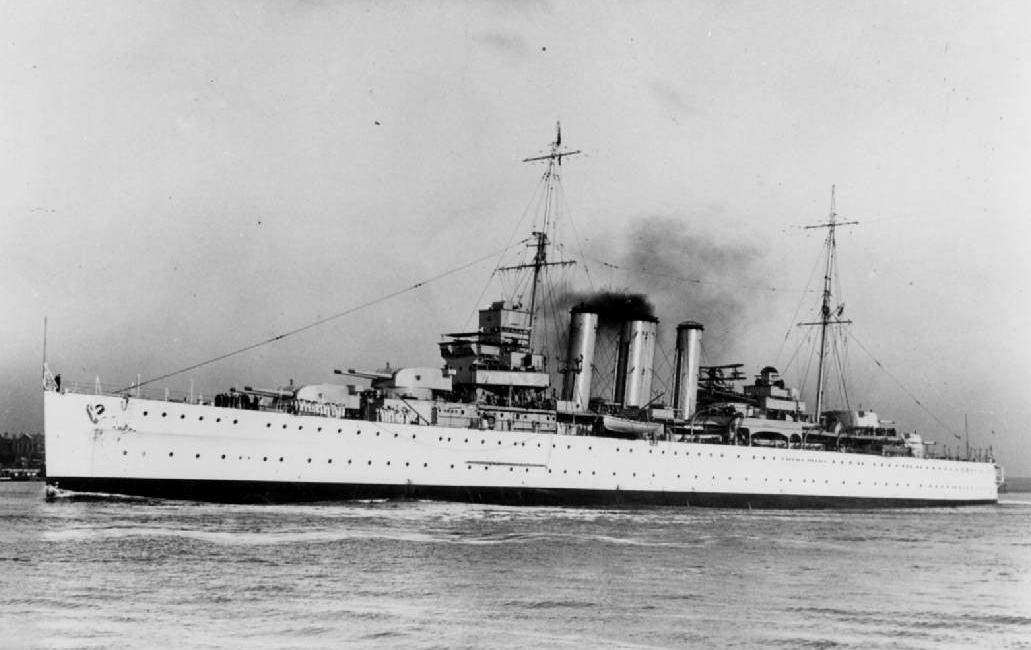
September 1940
17th Carried out bombardment of Fort Cappuzo.
Hit by torpedo from Italian aircraft during air attacks and disabled.
Taken in tow by HMS NUBIAN.
19th Arrived in tow at Alexandria, where emergency repairs were carried out.
www.naval-history.net/xGM-Chrono-06CA-Kent.htm
John was one of 33 crew members killed in the attack including a father and son.
On 15 September 1940 the battleship Valiant, the aircraft carrier Illustrious, Kent, the anti-aircraft cruisers Calcutta and Coventry, and seven destroyers left Alexandria bound for Benghazi. During the night of 16/17 September 1940, aircraft from the Illustrious mined the harbour of Benghazi. They also attacked shipping in the harbour with torpedoes and bombs, sinking two destroyers and two merchant ships. Kent and two destroyers were detached to bombard Bardia while returning to Alexandria. During the night of 17/18 September 1940 the ship was hit in the stern by a torpedo from Italian Savoia-Marchetti SM.79 bombers from the 279th Independent Torpedo Squadron (Italian: Squadriglie Autonomo Aerosiluranti) led by Carlo Emanuele Buscaglia. She was towed back to base by the destroyers with great difficulty.[
en.wikipedia.org/wiki/HMS_Kent_(54)
The Italian Army had crossed the Libyan border into Egypt a few days earlier and had re-taken Fort Capuzzo. The British Army had retreated to prepared position, leaving only a light screen of troops to delay the Italians advance. Part of the deception was to make the screen seen much stronger than it was. In deterring the Italian advance up the coastal road, the Royal Navy bombardment was part of that deception.
5 User-friendly Methods to Help You Write Article t.co/3O869cKJRU #acn (via Twitter twitter.com/AgenciaCN/status/805866233518297089)
A view looking towards the new Method soap factory. I think it would be fun to tour this facility sometime.
Early Brenizer method practice. About 21 shots in all, cropped afterwards. Used PS Elements 2.0. Obvious problems with the stitching. Definitely not smooth blending. It looked better before final stitch was initiated.
Improved version with Microsoft ICE here: www.flickr.com/photos/arcturus15/8221851657/in/photostream/
30 views @ 50mm - f/1.7
Using Brenizer Method Calculation :
Effective focal length : 22mm
Effective aperture : f/0.75
any comment are welcome
feat. Ewen ♥
just enough to create a loop to get my finger in. I then use my fingers to coax out the loose (unknotted) end of the plug.
Description: Although Thomas Smillie, the Smithsonian's first photographer and curator of photography, used images to catalog much of the institution's physical object collection, he also extensively photographed pages of books on topics of personal interest to him as a way of copying the material for future use. Smillie also photographed letters and documents as a method of preserving the Smithsonian's records.
Creator/Photographer: Thomas Smillie
Birth Date: 1843
Death Date: 1917
Born in Edinburgh, Scotland, in 1843, Thomas William Smillie immigrated to the United States with his family when he five years old. After studying chemistry and medicine at Georgetown University, he took a job as a photographer at the Smithsonian Institution, where he stayed for nearly fifty years until his death in 1917. Smillie's duties and accomplishments at the Smithsonian were vast: he documented important events and research trips, photographed the museum's installations and specimens, created reproductions for use as printing illustrations, performed chemical experiments for Smithsonian scientific researchers, and later acted as the head and curator of the photography lab. Smillie's documentation of each Smithsonian exhibition and installation resulted in an informal record of all of the institution's art and artifacts. In 1913 Smillie mounted an exhibition on the history of photography to showcase the remarkable advancements that had been made in the field but which he feared had already been forgotten.
Medium: Cyanotype
Culture: American
Geography: USA
Date: 1890
Collection: Thomas Smillie Collection (Record Unit 95) - Thomas Smillie served as the first official photographer for the Smithsonian Institution from 1870 until his death in 1917. As head of the photography lab as well as its curator, he was responsible for photographing all of the exhibits, objects, and expeditions, leaving an informal record of early Smithsonian collections.
Repository: Smithsonian Institution Archives
Accession number: RU95_Box77_0030
What hopes and fears does this scientific method imply for mankind? I do not think that this is the right way to put the question. Whatever this tool in the hand of man will produce depends entirely on the nature of the goals alive in this mankind. Once these goals exist, scientific method furnishes means to realize them. Yet it cannot furnish the very goals. The scientific method itself would not have led anywhere, it would not even have been born without a passionate striving for clear understanding - Einstein
Men love to wonder, and that is the seed of science - Ralph Waldo Emerson
No amount of experimentation can ever prove me right; a single experiment can prove me wrong - Albert Einstein
Each problem that I solved became a rule, which served afterwards to solve other problems - Rene Descartes
Science and technology revolutionize our lives, but memory, tradition and myth frame our response - Arthur M. Schlesinger
Science is a way of thinking much more than it is a body of knowledge - Carl Sagan
I can live with doubt and uncertainty. I think it's much more interesting to live not knowing than to have answers which might be wrong." - Richard P. Feynman
Went all over the town with Sarah and Jesse and I saw this spot where I knew would make a great image using the Brenizer Method. But I don't why I torture myself with this method?! This took me forever to put together. Maybe it's because my version of photoshop decides to quit unexpectedly when I merge a photo--I had to do it all by hand. It's addictive though, once you start you can't stop. Your eye starts to see things "Brenzified."
Would you all be so kind a nominate me for Portland's best wedding photographer of 2010?! It only takes a minute to fill out the form and put in Daniel Stark Photography in the "wedding photography" section.
Thank you so much!
-----
Watercolor (American English) or watercolour (Commonwealth and Ireland), also aquarelle from French, is a painting method in which the paints are made of pigments suspended in a water-soluble vehicle. The term "watercolor" refers to both the medium and the resulting artwork. The traditional and most common support for watercolor paintings is paper; other supports include papyrus, bark papers, plastics, vellum or leather, fabric, wood, and canvas. Watercolors are usually transparent, and appear luminous because the pigments are laid down in a relatively pure form with few fillers obscuring the pigment colors. Watercolor can also be made opaque by adding Chinese white. In East Asia, watercolor painting with inks is referred to as brush painting or scroll painting. In Chinese, Korean, and Japanese painting it has been the dominant medium, often in monochrome black or browns. India, Ethiopia and other countries also have long traditions. Fingerpainting with watercolor paints originated in China.Although watercolor painting is extremely old, dating perhaps to the cave paintings of paleolithic Europe, and has been used for manuscript illumination since at least Egyptian times but especially in the European Middle Ages, its continuous history as an art medium begins in the Renaissance. The German Northern Renaissance artist Albrecht Dürer (1471–1528) who painted several fine botanical, wildlife and landscape watercolors, is generally considered among the earliest exponents of the medium. An important school of watercolor painting in Germany was led by Hans Bol (1534–1593) as part of the Dürer Renaissance.Despite this early start, watercolors were generally used by Baroque easel painters only for sketches, copies or cartoons (full-scale design drawings). Among notable early practitioners of watercolor painting were Van Dyck (during his stay in England), Claude Lorrain, Giovanni Benedetto Castiglione, and many Dutch and Flemish artists. However, Botanical illustrations and those depicting wildlife are perhaps the oldest and most important tradition in watercolor painting. Botanical illustrations became popular in the Renaissance, both as hand tinted woodblock illustrations in books or broadsheets and as tinted ink drawings on vellum or paper. Botanical artists have always been among the most exacting and accomplished watercolor painters, and even today watercolors—with their unique ability to summarize, clarify and idealize in full color—are used to illustrate scientific and museum publications. Wildlife illustration reached its peak in the 19th century with artists such as John James Audubon, and today many naturalist field guides are still illustrated with watercolor paintings. Many watercolors are more vibrant in pigment if they are higher quality. Some British market watercolors can be found in many craft stores In America and in other countries too.Materials
Paint
Watercolor paint consists of four principal ingredients:
pigments, natural or synthetic, mineral or organic;
gum arabic as a binder to hold the pigment in suspension and fix the pigment to the painting surface;
additives like glycerin, ox gall, honey, preservatives: to alter the viscosity, hiding, durability or color of the pigment and vehicle mixture; and
solvent, the substance used to thin or dilute the paint for application and that evaporates when the paint hardens or dries.
The term "watermedia" refers to any painting medium that uses water as a solvent and that can be applied with a brush, pen or sprayer; this includes most inks, watercolors, temperas, gouaches and modern acrylic paints.
The term watercolor refers to paints that use water soluble, complex carbohydrates as a binder. Originally (16th to 18th centuries) watercolor binders were sugars and/or hide glues, but since the 19th century the preferred binder is natural gum arabic, with glycerin and/or honey as additives to improve plasticity and dissolvability of the binder, and with other chemicals added to improve product shelf life.
Bodycolor refers to paint that is opaque rather than transparent, usually opaque watercolor, which is also known as gouache.[2] Modern acrylic paints are based on a completely different chemistry that uses water soluble acrylic resin as a binder.
Commercial watercolors
Watercolor painters before c.1800 had to make paints themselves using pigments purchased from an apothecary or specialized "colourman"; the earliest commercial paints were small, resinous blocks that had to be wetted and laboriously "rubbed out" in water. William Reeves (1739–1803) set up in business as a colorman about 1766. In 1781 he and his brother, Thomas Reeves, were awarded the Silver Palette of the Society of Arts, for the invention of the moist watercolor paint-cake, a time-saving convenience the introduction of which coincides with the "golden age" of English watercolor painting.
Modern commercial watercolor paints are available in two forms: tubes or pans. The majority of paints sold are in collapsible metal tubes in standard sizes (typically 7.5, 15 or 37 ml.), and are formulated to a consistency similar to toothpaste. Pan paints (actually, small dried cakes or bars of paint in an open plastic container) are usually sold in two sizes, full pans (approximately 3 cc of paint) and half pans (favored for compact paint boxes). Pans are historically older but commonly perceived as less convenient; they are most often used in portable metal paint boxes, also introduced in the mid 19th century, and are preferred by landscape or naturalist painters.
Among the most widely used brands of commercial watercolors today are Daler Rowney, Daniel Smith, DaVinci, Holbein, Maimeri, M. Graham. Reeves, Schmincke, Sennelier, Talens, and Winsor & Newton.
Thanks to modern industrial organic chemistry, the variety, saturation (brilliance) and permanence of artists' colors available today is greater than ever before. However, the art materials industry is far too small to exert any market leverage on global dye or pigment manufacture. With rare exceptions, all modern watercolor paints utilize pigments that were manufactured for use in printing inks, automotive and architectural paints, wood stains, concrete, ceramics and plastics colorants, consumer packaging, foods, medicines, textiles and cosmetics. Paint manufacturers buy very small supplies of these pigments, mill (mechanically mix) them with the vehicle, solvent and additives, and package them.
Color names
Many artists are confused or misled by labeling practices common in the art materials industry. The marketing name for a paint, such as "indian yellow" or "emerald green", is often only a poetic color evocation or proprietary moniker; there is no legal requirement that it describe the pigment that gives the paint its color. More popular color names are "viridian hue" and " chinese white"
To remedy this confusion, in 1990 the art materials industry voluntarily began listing pigment ingredients on the paint packaging, using the common pigment name (such as "cobalt blue" or "cadmium red"), and/or a standard pigment identification code, the generic color index name (PB28 for cobalt blue, PR108 for cadmium red) assigned by the Society of Dyers and Colourists (UK) and the American Association of Textile Chemists and Colorists (USA) and known as the Colour Index International. This allows artists to choose paints according to their pigment ingredients, rather than the poetic labels assigned to them by marketers. Paint pigments and formulations vary across manufacturers, and watercolor paints with the same color name (e.g., "sap green") from different manufacturers can be formulated with completely different ingredients.
Transparency
Watercolor paints are customarily evaluated on a few key attributes. In the partisan debates of the 19th-century English art world, gouache was emphatically contrasted to traditional watercolors and denigrated for its high hiding power or lack of "transparency"; "transparent" watercolors were exalted. Paints with low hiding power are valued because they allow an underdrawing or engraving to show in the image, and because colors can be mixed visually by layering paints on the paper (which itself may be either white or tinted). The resulting color will change depending on the layering order of the pigments. In fact, there are very few genuinely transparent watercolors, neither are there completely opaque watercolors (with the exception of gouache); and any watercolor paint can be made more transparent simply by diluting it with water.
"Transparent" colors do not contain titanium dioxide (white) or most of the earth pigments (sienna, umber, etc.) which are very opaque. The 19th-century claim that "transparent" watercolors gain "luminosity" because they function like a pane of stained glass laid on paper[citation needed] – the color intensified because the light passes through the pigment, reflects from the paper, and passes a second time through the pigment on its way to the viewer—is false: watercolor paints do not form a cohesive paint layer, as do acrylic or oil paints, but simply scatter pigment particles randomly across the paper surface; the transparency consists in the paper being directly visible between the particles.[3] Watercolors appear more vivid than acrylics or oils because the pigments are laid down in a more pure form with no or fewer fillers (such as kaolin) obscuring the pigment colors. Furthermore, typically most or all of the gum binder will be absorbed by the paper, preventing it from changing the visibility of the pigment.[3] Even multiple layers of watercolor do achieve a very luminous effect without fillers or binder obscuring the pigment particles.
Pigments characteristics
Staining is a characteristic assigned to watercolor paints: a staining paint is difficult to remove or lift from the painting support after it has been applied or dried. Less staining colors can be lightened or removed almost entirely when wet, or when rewetted and then "lifted" by stroking gently with a clean, wet brush and then blotted up with a paper towel. In fact, the staining characteristics of a paint depend in large part on the composition of the support (paper) itself, and on the particle size of the pigment. Staining is increased if the paint manufacturer uses a dispersant to reduce the paint milling (mixture) time, because the dispersant acts to drive pigment particles into crevices in the paper pulp, dulling the finished color.
Granulation refers to the appearance of separate, visible pigment particles in the finished color, produced when the paint is substantially diluted with water and applied with a juicy brush stroke; pigments notable for their watercolor granulation include viridian (PG18), cerulean blue (PB35), cobalt violet (PV14) and some iron oxide pigments (PBr7).
Flocculation refers to a peculiar clumping typical of ultramarine pigments (PB29 or PV15). Both effects display the subtle effects of water as the paint dries, are unique to watercolors, and are deemed attractive by accomplished watercolor painters. This contrasts with the trend in commercial paints to suppress pigment textures in favor of homogeneous, flat color.
Grades
Commercial watercolor paints come in three grades: "Artist" (or "Professional"), "Student", and "Scholastic".
Artist Watercolors contain a full pigment load, suspended in a binder, generally natural gum arabic. Artist quality paints are usually formulated with fewer fillers (kaolin or chalk) which results in richer color and vibrant mixes. Conventional watercolors are sold in moist form, in a tube, and are thinned and mixed on a dish or palette. Use them on paper and other absorbent surfaces that have been primed to accept water-based paint.
Student grade paints have less pigment, and often are formulated using two or more less expensive pigments. Student Watercolors have working characteristics similar to professional watercolors, but with lower concentrations of pigment, less expensive formulas, and a smaller range of colors. More expensive pigments are generally replicated by hues. Colors are designed to be mixed, although color strength is lower. Hues may not have the same mixing characteristics as regular full-strength colors.
Scholastic watercolors come in pans rather than tubes, and contain inexpensive pigments and dyes suspended in a synthetic binder. Washable formulations feature colors that are chosen to be non-staining, easily washable, suitable for use even by young children with proper supervision. They are an excellent choice for teaching beginning artists the properties of color and the techniques of painting.
Reserves
As there is no transparent white watercolor, the white parts of a watercolor painting are most often areas of the paper "reserved" (left unpainted) and allowed to be seen in the finished work. To preserve these white areas, many painters use a variety of resists, including masking tape, clear wax or a liquid latex, that are applied to the paper to protect it from paint, then pulled away to reveal the white paper. Resist painting can also be an effective technique for beginning watercolor artists. The painter can use wax crayons or oil pastels prior to painting the paper. The wax or oil mediums repel, or resist the watercolor paint. White paint (titanium dioxide PW6 or zinc oxide PW4) is best used to insert highlights or white accents into a painting. If mixed with other pigments, white paints may cause them to fade or change hue under light exposure. White paint (gouache) mixed with a "transparent" watercolor paint will cause the transparency to disappear and the paint to look much duller. White paint will always appear dull and chalky next to the white of the paper; however this can be used for some effects.
Brushes
A brush consists of three parts: the tuft, the ferrule and the handle.
The tuft is a bundle of animal hairs or synthetic fibers tied tightly together at the base;
The ferrule is a metal sleeve that surrounds the tuft, gives the tuft its cross sectional shape, provides mechanical support under pressure, and protects from water wearing down the glue joint between the trimmed, flat base of the tuft and the handle;
The lacquered wood handle, which is typically shorter in a watercolor brush than in an oil painting brush, has a distinct shape—widest just behind the ferrule and tapering to the tip.
When painting, painters typically hold the brush just behind the ferrule for the smoothest brushstrokes.
Hairs and fibers
Brushes hold paint (the "bead") through the capillary action of the small spaces between the tuft hairs or fibers; paint is released through the contact between the wet paint and the dry paper and the mechanical flexing of the tuft, which opens the spaces between the tuft hairs, relaxing the capillary restraint on the liquid. Because thinned watercolor paint is far less viscous than oil or acrylic paints, the brushes preferred by watercolor painters have a softer and denser tuft. This is customarily achieved by using natural hair harvested from farm raised or trapped animals, in particular sable, squirrel or mongoose. Less expensive brushes, or brushes designed for coarser work, may use horsehair or bristles from pig or ox snouts and ears.
However, as with paints, modern chemistry has developed many synthetic and shaped fibers that rival the stiffness of bristle and mimic the spring and softness of natural hair. Until fairly recently, nylon brushes could not hold a reservoir of water at all so they were extremely inferior to brushes made from natural hair. In recent years, improvements in the holding and pointing properties of synthetic filaments have gained them much greater acceptance among watercolorists.
There is no market regulation on the labeling applied to artists' brushes, but most watercolorists prize brushes from kolinsky (Russian or Chinese) sable. The best of these hairs have a characteristic reddish brown color, darker near the base, and a tapering shaft that is pointed at the tip but widest about halfway toward the root. Squirrel hair is quite thin, straight and typically dark, and makes tufts with a very high liquid capacity; mongoose has a characteristic salt and pepper coloring. Bristle brushes are stiffer and lighter colored. "Camel" is sometimes used to describe hairs from several sources (none of them a camel).
In general, natural hair brushes have superior snap and pointing, a higher capacity (hold a larger bead, produce a longer continuous stroke, and wick up more paint when moist) and a more delicate release. Synthetic brushes tend to dump too much of the paint bead at the beginning of the brush stroke and leave a larger puddle of paint when the brush is lifted from the paper, and they cannot compete with the pointing of natural sable brushes and are much less durable. On the other hand they are typically much cheaper than natural hair, and the best synthetic brushes are now very serviceable; they are also excellent for texturing, shaping, or lifting color, and for the mechanical task of breaking up or rubbing paint to dissolve it in water.
A high quality sable brush has five key attributes: pointing (in a round, the tip of the tuft comes to a fine, precise point that does not splay or split; in a flat, the tuft forms a razor thin, perfectly straight edge); snap (or "spring"; the tuft flexes in direct response to the pressure applied to the paper, and promptly returns to its original shape); capacity (the tuft, for its size, holds a large bead of paint and does not release it as the brush is moved in the air); release (the amount of paint released is proportional to the pressure applied to the paper, and the paint flow can be precisely controlled by the pressure and speed of the stroke as the paint bead is depleted); and durability (a large, high quality brush may withstand decades of daily use).
Most natural hair brushes are sold with the tuft cosmetically shaped with starch or gum, so brushes are difficult to evaluate before purchasing, and durability is only evident after long use. The most common failings of natural hair brushes are that the tuft sheds hairs (although a little shedding is acceptable in a new brush), the ferrule becomes loosened, or the wood handle shrinks, warps, cracks or flakes off its lacquer coating.
Shapes
Natural and synthetic brushes are sold with the tuft shaped for different tasks. Among the most popular are:
Rounds. The tuft has a round cross section but a tapering profile, widest near the ferrule (the "belly") and tapered at the tip (the "point"). These are general purpose brushes that can address almost any task.
Flats. The tuft is compressed laterally by the ferrule into a flat wedge; the tuft appears square when viewed from the side and has a perfectly straight edge. "Brights" are flats in which the tuft is as long as it is wide; "one stroke" brushes are longer than their width. "Sky brushes" or "wash brushes" look like miniature housepainting brushes; the tuft is usually 3 cm to 7 cm wide and is used to paint large areas.
Mops (natural hair only). A round brush, usually of squirrel hair and, decoratively, with a feather quill ferrule that is wrapped with copper wire; these have very high capacity for their size, especially good for wet in wet or wash painting; when moist they can wick up large quantities of paint.
Filbert (or "Cat's Tongue", hair only). A hybrid brush: a flat that comes to a point, like a round, useful for specially shaped brush strokes.
Rigger (hair only). An extremely long, thin tuft, originally used to paint the rigging in nautical portraits.
Fan. A small flat in which the tuft is splayed into a fan shape; used for texturing or painting irregular, parallel hatching lines.
Acrylic. A flat brush with synthetic bristles, attached to a (usually clear) plastic handle with a beveled tip used for scoring or scraping.
A single brush can produce many lines and shapes. A "round" for example, can create thin and thick lines, wide or narrow strips, curves, and other painted effects. A flat brush when used on end can produce thin lines or dashes in addition to the wide swath typical with these brushes, and its brushmarks display the characteristic angle of the tuft corners.
Every watercolor painter works in specific genres and has a personal painting style and "tool discipline", and these largely determine his or her preference for brushes. Artists typically have a few favorites and do most work with just one or two brushes. Brushes are typically the most expensive component of the watercolorist's tools, and a minimal general purpose brush selection would include:
4 round (for detail and drybrush)
8 round
12 or 14 round (for large color areas or washes)
1/2" or 1" flat
12 mop (for washes and wicking)
1/2" acrylic (for dissolving or mixing paints, and scrubbing paints before lifting from the paper)
Major watercolor brush manufacturers include DaVinci, Escoda, Isabey, Raphael, Kolonok, Robert Simmons, Daler-Rowney, Arches, and Winsor & Newton. As with papers and paints, it is common for retailers to commission brushes under their own label from an established manufacturer. Among these are Cheap Joe's, Daniel Smith, Dick Blick and Utrecht.
Sizes
The size of a round brush is designated by a number, which may range from 0000 (for a very tiny round) to 0, then from 1 to 24 or higher. These numbers refer to the size of the brass brushmakers' mould used to shape and align the hairs of the tuft before it is tied off and trimmed, and as with shoe lasts, these sizes vary from one manufacturer to the next. In general a #12 round brush has a tuft about 2 to 2.5 cm long; tufts are generally fatter (wider) in brushes made in England than in brushes made on the Continent: a German or French #14 round is approximately the same size as an English #12. Flats may be designated either by a similar but separate numbering system, but more often are described by the width of the ferrule, measured in centimeters or inches.
Watercolor pencil
Watercolor pencil is another important tool in watercolors techniques. This water-soluble color pencil allows to draw fine details and to blend them with water. Noted artists who use watercolor pencils include illustrator Travis Charest.[4] A similar tool is the watercolor pastel, broader than watercolor pencil, and able to quickly cover a large surface.
Paper
Most watercolor painters before c.1800 had to use whatever paper was at hand: Thomas Gainsborough was delighted to buy some paper used to print a Bath tourist guide, and the young David Cox preferred a heavy paper used to wrap packages. James Whatman first offered a wove watercolor paper in 1788, and the first machinemade ("cartridge") papers from a steam powered mill in 1805.
All art papers can be described by eight attributes: furnish, color, weight, finish, sizing, dimensions, permanence and packaging. Watercolor painters typically paint on paper specifically formulated for watermedia applications. Fine watermedia papers are manufactured under the brand names Arches, Bockingford, Cartiera Magnani, Fabriano, Hahnemühle, Lanaquarelle, The Langton, The Langton Prestige, Millford, Saunders Waterford, Strathmore, Winsor & Newton and Zerkall; and there has been a recent remarkable resurgence in handmade papers, notably those by Twinrocker, Velke Losiny, Ruscombe Mill and St. Armand.
Watercolor paper is essentially Blotting paper marketed and sold as an art paper, and the two can be used interchangeably, as watercolor paper is more easily obtainable than blotter and can be used as a substitute for blotter. Lower end watercolor papers can resemble heavy paper more while higher end varieties are usually entirely cotton and more porous like blotter. Watercolor paper is traditionally torn and not cut.
Furnish
The traditional furnish or material content of watercolor papers is cellulose, a structural carbohydrate found in many plants. The most common sources of paper cellulose are cotton, linen, or alpha cellulose extracted from wood pulp. To make paper, the cellulose is wetted, mechanically macerated or pounded, chemically treated, rinsed and filtered to the consistency of thin oatmeal, then poured out into paper making moulds. In handmade papers, the pulp is hand poured ("cast") into individual paper moulds (a mesh screen stretched within a wood frame) and shaken by hand into an even layer. In industrial paper production, the pulp is formed by large papermaking machines that spread the paper over large cylinders—either heated metal cylinders that rotate at high speed (machinemade papers) or wire mesh cylinders that rotate at low speed (mouldmade papers). Both types of machine produce the paper in a continuous roll or web, which is then cut into individual sheets.
Weight
The basis weight of the paper is a measure of its density and thickness. It is described as the gram weight of one square meter of a single sheet of the paper, or grams per square meter (gsm). Most watercolor papers sold today are in the range between 280gsm to 640gsm. (The previous Imperial system, expressed as the weight in pounds of one ream or 500 sheets of the paper, regardless of its size, obsolete in some areas, is still used in the United States. The most common weights under this system are 300 lb (heaviest), 200 lb 140 lb, and 90 lb.) Heavier paper is sometimes preferred over lighter weight or thinner paper because it does not buckle and can hold up to scrubbing and extremely wet washes. Watercolor papers are typically almost a pure white, sometimes slightly yellow (called natural white), though many tinted or colored papers are available. An important diagnostic is the rattle of the paper, or the sound it makes when held aloft by one corner and shaken vigorously. Papers that are dense and made from heavily macerated pulp have a bright, metallic rattle, while papers that are spongy or made with lightly macerated pulp have a muffled, rubbery rattle.
Finish
All papers obtain a texture from the mold used to make them: a wove finish results from a uniform metal screen (like a window screen); a laid finish results from a screen made of narrowly spaced horizontal wires separated by widely spaced vertical wires. The finish is also affected by the methods used to wick and dry the paper after it is "couched" (removed) from the paper mold or is pulled off the papermaking cylinder.
Watercolor papers come in three basic finishes: hot pressed (HP), cold press (CP, or in the UK "Not", for "not hot pressed"), and rough (R). These vary greatly from manufacturer to manufacturer.
Rough papers are typically dried by hanging them like laundry ("loft drying") so that the sheets are not exposed to any pressure after they are couched; the wove finish has a pitted, uneven texture that is prized for its ability to accent the texture of watercolor pigments and brushstrokes.
Cold pressed papers are dried in large stacks, between absorbent felt blankets; this acts to flatten out about half of the texture found in the rough sheets. CP papers are valued for their versatility.
Hot pressed papers are cold pressed sheets that are passed through heated, compressing metal cylinders (called "calendering"), which flattens almost all the texture in the sheets. HP papers are valued because they are relatively nonabsorbent: pigments remain on the paper surface, brightening the color, and water is not absorbed, so it can produce a variety of water stains or marks as it dries.
These designations are only relative; the CP paper from one manufacturer may be rougher than the R paper from another manufacturer. Fabriano even offers a "soft press" (SP) sheet intermediate between CP and HP.
Sizing
Watercolor papers are traditionally sized, or treated with a substance to reduce the cellulose absorbency. Internal sizing is added to the paper pulp after rinsing and before it is cast in the paper mould; external or "tub" sizing is applied to the paper surface after the paper has dried. The traditional sizing has been gelatin, gum arabic or rosin, though modern synthetic substitutes (alkyl ketene dimers such as Aquapel) are now used instead. The highly absorbent papers that contain no sizing are designated waterleaf.
Dimensions
Most art papers are sold as single sheets of paper in standard sizes. Most common is the full sheet (22" x 30"), and half sheets (15" x 22") or quarter sheets (15" x 11") derived from it. Larger (and less standardized) sheets include the double elephant (within an inch or two of 30" x 40") and emperor (40" x 60"), which are the largest sheets commercially available. Papers are also manufactured in rolls, up to about 60" wide and 30 feet long. Finally, papers are also sold as watercolor "blocks"—a pad of 20 or so sheets of paper, cut to identical dimensions and glued on all four sides, which provides high dimensional stability and portability, though block papers tend to have subdued finishes. The painter simply works on the exposed sheet and, when finished, uses a knife to cut the adhesive around the four sides, separating the painting and revealing the fresh paper underneath.
Today I tried out the Brenizer method! Using a 50mm lens i took about 25 photographs of and around the model. Then used photoshop to photomerge them together.
Various methods developed for resuscitating drowning victims.
Australian Town & Country Journal 1870, and 1871.
A weekly & monthly Sydney journal of local and international news and events, published from 1870 to 1919.
Published by Frank & Christopher Bennett in Sydney. Annual collection in half leather binding. About 800 pages per annual volume, 46cm x 30cm.
He didn’t want to come in out of the rain, so I had to roll him back onto a folded beach towel, grab the ends, and crab-walk him into the house.
Which is why it looks like he was abducted from above.
Because he was.
By a creature whose hands have turned into stiff claws from this method.