View allAll Photos Tagged focusstacking
Continuing with botanical studies -a detailed photo of a grapevine tendril.
One hundred focus stacked images - 2 combined stacks.
Pentax K3, A* 200 f4 macro.
MCCP1731-1831 DPPS_tu5
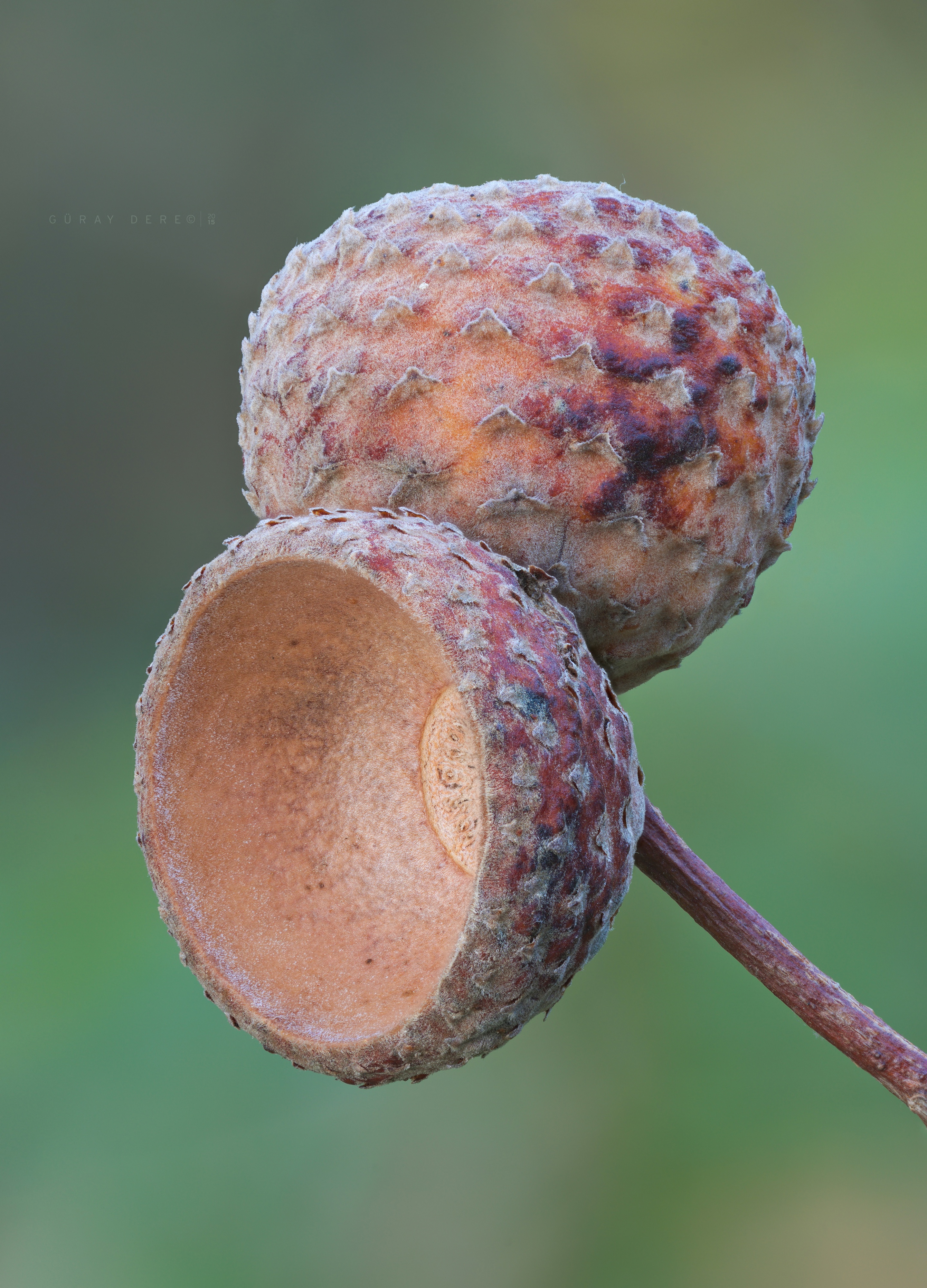
in der Kälte aufgeplatzt, teilweise ausgetrocknet,
vielleicht auch von den wenigen gebliebenen Vögeln
als Nahrungsquelle genutzt
I've been looking for an economical solution to automate my field shooting and I've found on eBay this motorized rail for CNC machines at a cost below 50 €.
As you can see it is easily adaptable to photographic needs and has proven to be accurate beyond any expectation. All my last photos have been made with this and I've tried it up to a magnification ratio of 5: 1 and 20 micron step with great results.
Material: Sea glass (blue spectrum dominant)
Ocean-tumbled glass fragments with frosted surfaces and rounded edges
Colors determined by original manufactured glass sources (bottles, jars, tableware)
Color set (this image):
Aqua / cyan blue (common–less common)
Medium blue
Deep cobalt blue (rare)
Violet / lavender tones (rare)
One very dark piece (appears nearly black → could be very dark blue/purple glass)
Rarity context (relevant to this composition):
Cobalt blue and lavender/purple are considered rare sea glass colors
Blue shades originate from cobalt-containing glass or specialty containers like medicine bottles
Common colors (green, brown, clear) are absent here → this is a selectively curated, higher-value color grouping
Description
Arrangement: Tight cluster of rounded, thicker fragments
Form language:
Smooth, pebble-like shapes, worn
Less angular, more uniform erosion
Surface:
Fine, even frosting → indicates long tumbling
Micro-pitting visible under magnification
Color behavior:
Strong internal glow under lighting
Subtle transitions between blue → violet → near-black
Background: Black, reflective in places, adding depth and specular accents
Observations (material + process)
Pieces appear more mature than typical beach finds
Edges are highly rounded
Surfaces evenly etched
Thickness suggests origin from:
Bottles (aqua/blue)
Possibly tableware or decorative glass (purple tones)
The very dark piece likely transmits blue/purple when backlit (common with “black” sea glass)
Romneya coulteri, a southern California native plant growing in the yard,
After a fog-drippy night this summer,
San Luis Obispo Co., California
Snowy owl at Salsbury State Park in MA. I think a few others were able to better line the Snowy up with the moon. But the Snowy moved right when I was trying to set up so this was the best I could do.
Had to check the Great Horned Owl nest. Never noticed the third chick hiding on the left behind the larger gray one until today... Condie, Saskatchewan,Canada. 3 May 2020
This is a wobbly in camera 10 shot focus stack which Affinity has managed to align and then focus merge - just amazing.
This appears to be a close, backlit view of a translucent yellow-to-amber crystal mass. The image is dominated by angular internal planes, overlapping crystal faces, fractures, and small dark inclusions.
The central crystal is the clearest structural anchor: a large, blocky form with sharply defined faces surrounded by a dense mosaic of smaller intergrown crystals.
The lighting makes the specimen read almost like stained glass or frozen honey, with darker brown margins framing a brighter, more luminous center.
Discussion
Visually, it most closely resembles calcite or a similar translucent cleavage-rich mineral, because the crystal mass shows many non-cubic, slanted internal faces and a strongly fractured, rhombohedral-looking structure.
Calcite is well known for prominent rhombohedral cleavage, wide variation in color, and transparent to translucent forms, including yellow and honey-colored examples.
By contrast, fluorite is more associated with cubic crystals and perfect octahedral cleavage, which is not the dominant geometry here.
Based on the visible structure alone, honey/yellow calcite is the most plausible visual match, but an exact mineral ID is still not conclusive from the photograph alone.
Photographically, the strength of the image is its internal complexity.
It works less as a specimen-record shot and more as an abstract study of transparency, geometry, and light transmission.
The strongest visual elements are:
the bright central zone against the darker perimeter
repetition of angular planes
the large central crystal acting as a focal point
suspended inclusions and cracks that give scale and depth
What weakens it slightly as a pure abstract is that the brightest area at right approaches overexposure, while the upper edge has some darker, murkier zones that pull attention unevenly.
But overall it is visually rich and has strong texture, depth, and internal luminosity.
Polistes dominula.
CANON PowerShot SX50 HS + Raynox DCR-250.
1/13 f/8.0, ISO 80, treppiede.
Focus stacking di 26 scatti con Zerene Stacker.
Esemplare trovato e fotografato inanimato.
Large black longhor beetle, over 1 inch long, on a boat propeller. Prince Albert National Park, Saskatchewan, Canada. 15 August 2022
15 of 20 eggs had hatched 10 days after I found them. The adult oak moth may have laid those eggs the day I found them or any of the pervious 4. See this photo: www.flickr.com/photos/marlinharms/54612201412
Caterpillars are very small, ~3mm (1/8").
San Luis Obispo Co., California
Compare this photo of a caterpillar at Day 19: www.flickr.com/photos/marlinharms/54679902308/
This is a mixed group of marine bivalve shells, not a single species. From shell shape, thickness, and sculpture, most of the large shells appear to be surf clams (Spisula solidissima), with a few probable hard clams/quahogs (Mercenaria mercenaria), at least one small wedge clam/coquina-type shell (Donax sp.), and one small ark shell that looks consistent with a transverse ark (Anadara transversa). Surf clams are characteristically large, thick, pale tan to white, and marked by concentric growth lines; hard clams are broadly triangular-oval and can be dull white, gray, or brown-patterned; transverse arks are thick and strongly ribbed.
Identification and description
Overall confidence: moderate for the group, lower for a few individual shells because the photo shows only exterior views and some shells are worn.
Top center large pale shell
Most likely Atlantic surf clam (Spisula solidissima). It is large, inflated, thick, rounded-triangular, and evenly lined with concentric growth rings.
Top right large tan shell
Also looks like Atlantic surf clam (Spisula solidissima), but more worn and beach-abraded. The broad triangular profile and strong concentric banding fit surf clam well.
Upper left elongated peach shell
Probably another surf-clam-type valve, but more eroded and less certain. The shape and thickness fit that group better than a cockle or mussel.
Center-left large gray-brown shell
Likely hard clam / northern quahog (Mercenaria mercenaria) or a closely related venerid clam. It is broader and more oval-triangular than the surf clams, with a heavier, deeper body and smoother mature surface. Smithsonian’s description of M. mercenaria as a large, broadly triangular-oval shell with distinct growth lines matches this general form.
Center-right glossy orange-brown patterned shell
Probably hard clam / quahog (Mercenaria mercenaria). The warm brown checkered or blotched pattern is more consistent with a quahog than with a surf clam, especially in a younger or less worn shell.
Right-side white shell
Likely a bleached surf clam (Spisula solidissima) or another large clam valve of similar type. The shell is smooth, thick, pale, and bluntly triangular.
Bottom center large cream shell
Another probable surf clam (Spisula solidissima). The shell is broad, thick, pale buff to cream, with concentric growth lines and the typical heavy beach-shell look.
Bottom right large elongated pale shell
Probably surf clam again, though somewhat more elongate. The long, low profile and concentric growth lines still fit that group reasonably well.
Bottom left small yellow-orange shell
Looks like a wedge clam / coquina-type shell (Donax sp.). The small size, wedge shape, smooth exterior, and bright coloration fit Donax better than the larger heavy clams. Species-level ID is not secure from this image alone.
Far lower-left small ribbed patterned shell
Most likely an ark shell, probably transverse ark (Anadara transversa). The thick shell, strong radial ribs, and blockier outline fit ark shells well.
Far right partial pink-and-white shell fragment
Inconclusive from this view. It may be another worn clam valve fragment.
Far lower-right partial gray shell
Also inconclusive; likely another clam valve edge.
What is in the photo, summarized
Majority: large surf clam shells, probably Spisula solidissima
A few others: likely hard clam / quahog shells, Mercenaria mercenaria
Small accent shells: one wedge clam/coquina-type (Donax sp.) and one probable ark shell (Anadara transversa)
Description
This is a collection of weathered marine bivalve shells arranged on a plain background. Most are thick, rounded to triangular clam valves in muted tones of cream, buff, tan, peach, ivory, and brown. Surface textures range from smooth and chalky to glossy and patterned, with visible concentric growth lines on nearly all of them.
The group reads visually as a study in variation of form, age, abrasion, and color within beach-collected shell material.
Forget-me-nots in the cool blue shade of the evening.
If you look closely you can see a couple of aphids enjoying the flowers too.