View allAll Photos Tagged fighter
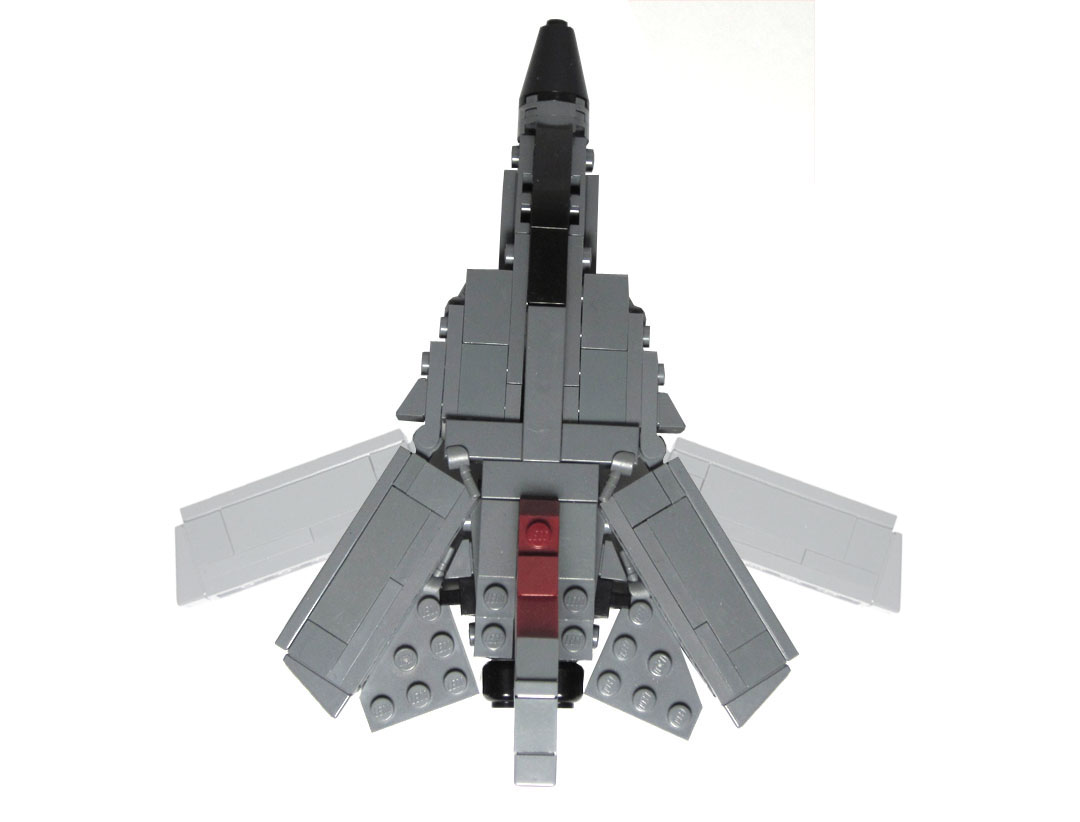
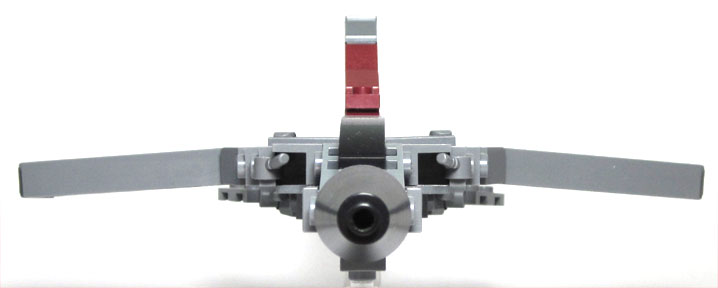
Adjustable wings, retractable landing gear, cockpit lighting
Instructions: rebrickable.com/mocs/MOC-13649
A Small Swarm fighter for precision, low exposure strikes.
Based on Unit 186's Vertical Shuttle, if anyone knows who he is anymore.
This ship is symmetrical along the length as well as the width
Brickshelf (for proof of Symmetry)
I'm not at all thrilled with how this turned out, but I figured it might be good enough to post.
The trans-yellow cheese slope is because I ran out of trans-yellow 1x1's.
EDIT: Hah, yup, already dismantled this one. Definitely wasn't happy with it.
@inthert_builds Tie fighter finally completed. The best companion to his T-65 X-wing, and probably the best shaped/scaled Tie out there. Now next stop, the Tie Interceptor…
This is not a new MOC sadly just a quick updated and revisit my old Fighter plane the FB12 FOXBAT FIGHTER Mark II. Found some old pictures and yet unpublished here.
Build way back in the late 2013 after I decided to upgraded the Foxbat Mark I which i thought could do better in term of design. Fold out gun cannon, landing gear, flap wing, hidden missiles below bay and LED light on the cockpit. One of the first MOC plane i did attempt to make with LED light!
This Foxbat was finally upgraded in2014. Another MOC version of it? Mark III? Maybe ;) Let me know what do you think?
FUN FACTS: Oh I did uploaded this Foxbat MOC in LEGOIdeas but couldn’t even make it to a thousand but i got a lot of good feedbacks and i do appreciated it. My MOC is one of kind.

Common Strike Fighter (CSF) was a development and acquisition program intended to replace a wide range of existing fighter, strike, and ground attack aircraft for the Adrian Republic, Poljebourg, the Duchy of Dahlia (these 3 nations later merged into the United Carpathians in 1971 with the Tongorian Federation joining in 1975 and the Nordic Union.
After a competition between the Metzger X-13 and the Saab X-35, a final design was chosen based on both aircraft, incorporating the best features of them.
The MESA-13 is a second generation double delta fighter aircraft designed primarily to be a high speed interceptor aircraft. Although they were primarily built for air to air combat, they can perform strike missions with a limited capability. The version shown here is armed with GBU-2000 bombs and AGM-65 Maverick missiles.
The MESA-13 Drake is powered by a single turbojet which gives a powerful 77.3 kN thrust when using its afterburner allowing for speeds over mach 2. These jets are known for their reliability and low maintenance requirements which allows them to be dispersed along highways in times of war.
The aircraft is armed with 2x 30mm cannons as well as 6 hardpoints capable of carrying 2,900 kg of munitions or external fuel tanks. It can carry 6 air to air missiles, or for ground attack it can mount either S-8 80mm rockets or 6x 1,000 lb bombs.
(Note: this jet was a collaboration between Matthew McCall and myself)
Stats:
Payload: 6 +1
Agility: Quick +0
Range: 2340km +0
Speed: Mach 2 +2
Low maintenance +1
Can't see anything -1
Uncomfy -1
Hard to fly -1
Faulty Ejection Seats -1
Price: 16₪
Shoryuken! I wanted to have a go at a 3D 8-bit style scene, there are loads of bits that don't quite fit the brief though.
I loved playing Street Fighter II, I used to spend so much money at the arcade trying to perfect Guiles Stance and Magic Throw moves. So many times the result was freezing the machine with someone (usually Zangief) in Handcuffs. Such fond memories :)
Street Fighter V • Cheat Engine table by nepafu and Dead End Thrills • Aspect ratio fix by jackfuste
SFS - Space Fighter System
The Space Fighter System was developed as an answer to protecting the territorial outer space above the Russia-NATO alliance (RNA). After the events of the Orbital War, a new fighter was necessary to meet the stipulations of the Tomar Accord. These earthbound fighters are capable of launching and intercepting outer space threats followed by safely re-entering earth.
The Space Fighter System consists of two primary components - the Jupiter Booster Rocket and a squadron of three Fighters.
The Russian built and designed Jupiter booster Rocket - which was once the work horse for MoonBase One supply runs - was retrofitted to carry three Orion Class Shuttle Fighters on it's fuselage. This departs form the traditional nose mounted method of payload arrangement.
The Orion Class Shuttle was the conventional Shuttle that was once the primary transport for NATO personnel to the International Space Station (ISS) and as well as longer trips to MoonBase One (MB-1). It allowed for decent sized payloads as well as manoeuvrability in orbit and reentry capabilities. It has been since redesigned to be equipped and armoured to preform orbital attack and defense missions.
Armaments - The the Orion Shuttle was converted and armed with two Class V Ion Blasters and two Space Interceptor Missiles. Maneuverability was also improved with the addition of several omnidirectional thrusters. The shuttle's dorsal hull was beefed up with similar cladding as the ventral section (or reentry side).
The Orbital War
The Orbital War was triggered by a series of cyberterrorist attacks which compromised several nation's Orbital Defensive systems. On August 1st - 2057 the systematic orbital bombardment of capital cities launched the world in the first war in orbit. The resulting chaos and nation finger pointing resulted in numerous territorial wars and terrestrial nuclear bombardments. As the slow realisation of the source of the first strikes became apparent, nations banded together to mount an offensive to destroy all orbital weapons systems.
In the months that followed - accusations of "attacks of opportunity" were rampant - traditional enemy nations accused each other of faking security breaks and falsifying records. Others declared self defense and their counter offense was justified retaliation. World travel, relations between nations and world trade plummeted as countries looked inward in a protectionist stance. Commodity prices skyrocketed as countries horded materials further hampering the world rebuilding efforts.
Tomar Accord
On July 2059 World Leaders held the first virtual UN conference - to attempt to settle disputes and create a new diplomatic framework in response to the aftermath of the Orbital war. The Outer Space Treaty - which was previously amended to allow for non conventional weapons in 2049 was completely dismantled and replaced wit the Tomar Accord.
Stepping away from the fundamentals of the Outer Space Treaty, the Tomar Accord reverse the previous declaration that no country can claim sovereignty over outer space. Under the Tomar Accord, a nation's sovereignty is extended perpetuity into outer space.
In addition, with relations at an all time low, nations failed to trust that there would not be another repeat of the Orbital War if man was left in space. By conciliation it was decided that all manned stations was to be prohibited. This resulted in the decommissioning of the ISS and MoonBase One.
The moon, and other celestial bodies shall be no mans lands - and countries are not to set foot without international UN consent.
--
Almost late entry to RWSF contest :D
In recognition of the critical contributions North American P-51 Mustangs made protecting Boeing B-17 Flying Fortress bombers during World War II, three Mustangs escort a Flying Fortress. The Mustangs on the left and the right are Gentleman Jim and Old Crow. The Mustang on the bottom is Mad Max. The Flying Fortress is Yankee Lady.
Seen at the 2021 Thunder Over Michigan Airshow, sponsored by the Yankee Air Museum.
I set myself the challenge of making a completely brick built tri-fighter. There are parts that exist that can be used to provide some extra details, but I like the challenge of replicating the effect in bricks.
I’ve always had a soft spot for this model- I was always quite impressed with the 2005 version that used the click hinges to create the semi-circular ‘wings’ which seemed quite unconventional back then. LEGO traditionally includes a buzz droid minifig with their version, so in that spirit, I asked MisterShramp if he could design a buzz droid to accompany my design. And he really stepped up to the challenge!
I originally thought about using bionicle shoulder armour parts to create the central sphere, but I settled on this design after experimenting with a number of other spherical parts.
The next challenge was to find suitable parts to recreate the semi-circular wings. I went through a number of different ideas- but many of the parts I could find didn’t have the right radius to match the original design. In the end I used bricks with studs on 4 sides with a rigid hose through the middle. The curved tiles help maintain the shape.
After tackling those two challenges, all the other details were pretty intuitive, and the build is surprisingly sturdy too.
The colour scheme also went through a few revisions. Each illustration/ concept art/ scale model I could find had some variation of blue and grey. In the end I went for this pretty subtle pattern. Any thing busier tended to draw attention to the (unavoidable) gaps in the construction of the semi-circles.
Check out MisterShramp's flickr
and instagram if you haven't already- he's got a bunch of really interesting ideas and instructions for his builds too!
www.youtube.com/watch?v=PpjdTwQwWWY
Lyrics:
Give me the lights, give me the hate
give me the pressure
Nowhere to run, nowhere to hide
pain is pleasure
I hear the wolves calling my name
no surrender
Here only the strong survive
Don’t need a sign, nothing divine’s gonna save me
I’m a machine, building a dream is what shaped me
Breaking the door, waging a war, no escaping
Watch me as I touch the sky
The blood I taste, is the price I pay
All my scars will fade
The monsters in head will become the prey
I’m a fighter, cutthroat I’m a winner
Stone cold, my heart is the trigger
I’m a fighter, one shot heavy hitter
Can’t stop I’m a natural killa
I am a lion, fear is a lamb to the slaughter
Cut and I bleed, I don’t retreat, I ain’t a martyr
Killing the dark, I am the light growing stronger
Watch me as I come alive
The blood I taste, is the price I pay
Every blow I take
Nothing ever hurts when you feel no pain
They say worlds gonna forsake me
Their poison in my ears won’t shake me
Feel my inhibitions fading
Rising up, rising up they ain’t gonna break me
Simon asked me to build some CS for what I would later learn was his moonbase. This is the fighter I came up with. I took a page out of 4est's book and rebuilt one of my older MOCs in CS minifigure scale. Only spent about 4 hours on this.
----
August 2015
Boeing B-17G Flying Fortress "Sally B" being escorted by P-47D Thunderbolt "Nellie B" at the Duxford Battle of Britain Air Show 2019. During the second world war the Thunderbolt was initially used to escort the American bombers on raids into Europe but it lacked the range to stay with the bombers into Germany. It proved itself to be a formidable air to ground attack aircraft.