View allAll Photos Tagged alien
You probably didn't know that, but I'm a long-term fan of speculative biology (even before "The Future Is Wild" was released), but I have never taken a part actively.
Things have changed, and some time after I stopped with origami, I decided to start my own xenobiology project. I am still quite early on in the project and I'm aiming to create a global biosphere of an alien planet.
This here is a squid-like animal that lives in the seas of the planet. It moves by flapping with its four fins - when the upper fins go down, the lower fins go up and vice versa - and also by pumping water through the gill chamber on top of the body.
The mouthparts consist of four "C-.like" toothed blades arranged in two concentric pairs.
The jaws open to the sides, rather than up and down, and are suspended within the "lip" musculature, with only the teeth showing.
If you would like to see more of this, let me know, and I will upload more here, or follow this link and visit me on deviantart!
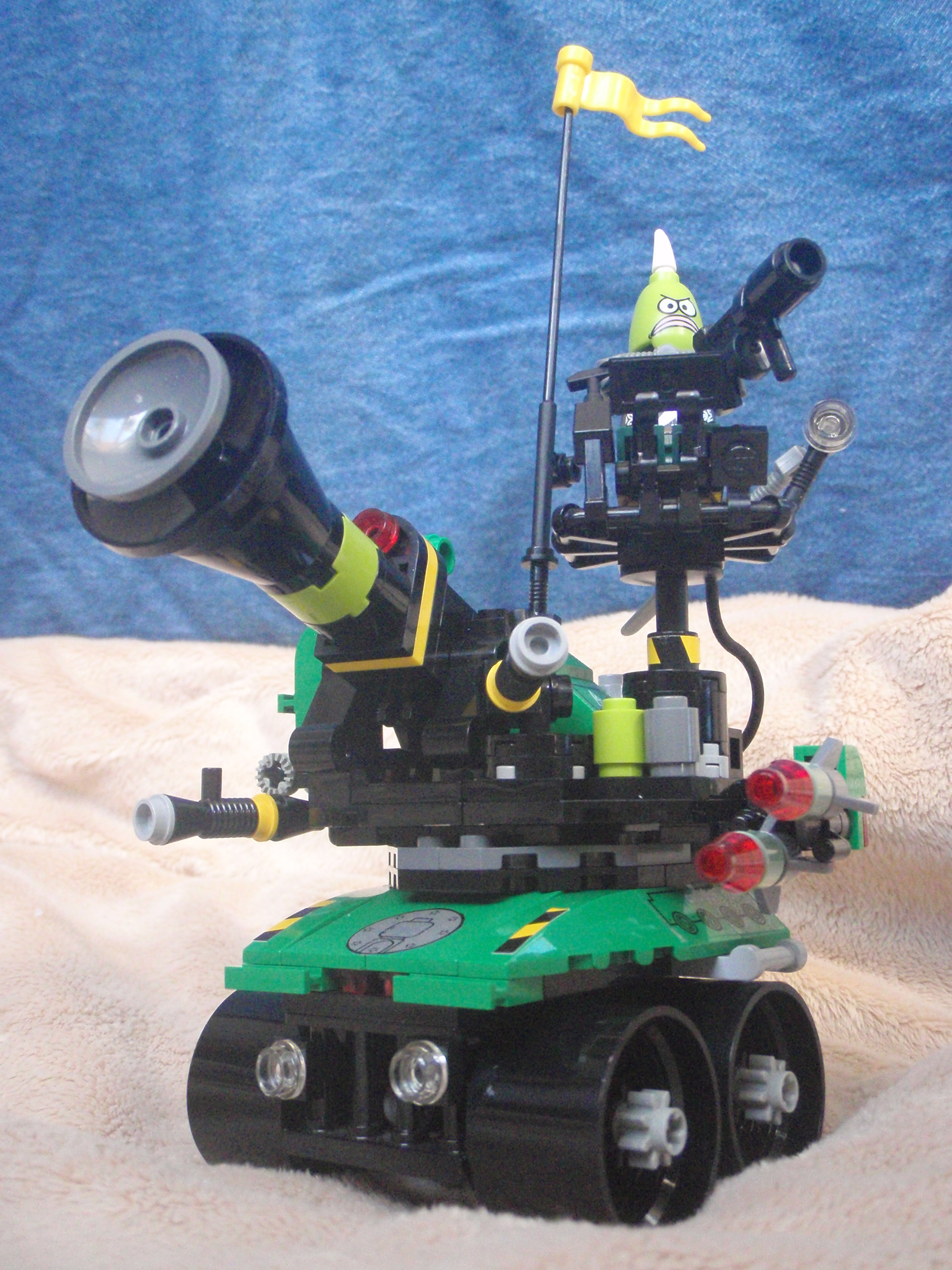
This one is definitely better than my last Alien Viper. This started as a Viper for a different theme but it ended up not fitting, so I changed the cockpit. (You'll probably see the other themed one tomorrow) I'm really proud of this one too, the shape is so unique.
----
Day 8/30
November 2012
The second of two semi-static posed figures is complete. This version depicts the creature as it appears in the deleted "crab-walker" scene from the 1979 film as Lambert and Parker make a desperate attempt to escape the Nostromo. This deleted scene however was thought comical by many, not well executed on film and revealed too much of the creature...reducing it to nothing more than a man in a rubber suit...something Ridley Scott was avoiding by using smoke and shadow.
Hand sculpted, hand painted. 1:18 scale. I borrowed resin cast parts from the original Alien figure I created a year earlier, made modifications to the torso, neck, shoulders
and legs.
When crouched or "crab walking", the figure is approx. 3" high from highest point on head to the feet. When standing, the figure is approx. 5.25" high, still not fully erect as the leg and hip joints limit the full motion (again, this was originally meant to be a static posed figure). Fortunately I was able to add several articulation points to the figure: Ball jointed neck, shoulders, elbows, wrists, hips, knees and ankles. Vacuum formed PETG dome is removable. The tail is static but is attached using a revoltech joint and can be switched out with a longer tail option.
Original was sculpted using Aves FIXIT sculpt, a two part epoxy. Parts were cast in resin and assembled to build this version. Used Model Masters Polly Scale and Tamiya acrylics.
#ALIEN #nostromo #alien79project #avesfixit #avesstudio #20thcenturyfox #hrgiger #miniature #sculpting #art #painting #monsters #deletedscene #crabwalker #lambertandparker #inspacenoonecanhearyouscream
Alien She
Photos and Video by Mario Gallucci
Alien She
Sep 3, 2015 – Jan 9, 2016
Alien She, curated by Astria Suparak + Ceci Moss, is the first exhibition to examine the lasting impact of Riot Grrrl on artists and cultural producers working today. A pioneering punk feminist movement that emerged in the early 1990s, Riot Grrrl has had a pivotal influence, inspiring many around the world to pursue socially and politically progressive careers as artists, activists, authors and educators. Emphasizing female and youth empowerment, collaborative organization, creative resistance and DIY ethics, Riot Grrrl helped a new generation to become active feminists and create their own culture and communities that reflect their values and experiences, in contrast to mainstream conventions and expectations.
Riot Grrrl formed in reaction to pervasive and violent sexism, racism and homophobia in the punk music scene and in the culture at large. Its participants adapted strategies from earlier queer and punk feminisms and ‘70s radical politics, while also popularizing discussions of identity politics occurring within academia, but in a language that spoke to a younger generation. This self-organized network made up of teenagers and twenty-somethings reached one another through various platforms, such as letters, zines, local meetings, regional conferences, homemade videos, and later, chat rooms, listservs and message boards. The movement eventually spread worldwide, with chapters opening in at least thirty-two states and twenty-six countries.* Its ethos and aesthetics have survived well past its initial period in the ‘90s, with many new chapters forming in recent years. Riot Grrrl’s influence on contemporary global culture is increasingly evident – from the Russian collective Pussy Riot’s protest against corrupt government-church relations to the popular teen website Rookie and the launch of Girls Rock Camps and Ladyfest music and art festivals around the world.
Alien She focuses on seven people whose visual art practices were informed by their contact with Riot Grrrl. Many of them work in multiple disciplines, such as sculpture, installation, video, documentary film, photography, drawing, printmaking, new media, social practice, curation, music, writing and performance – a reflection of the movement’s artistic diversity and mutability. Each artist is represented by several projects from the last 20 years, including new and rarely seen works, providing an insight into the development of their creative practices and individual trajectories.
Artists: Ginger Brooks Takahashi (Pittsburgh), Tammy Rae Carland (Oakland), Miranda July (Los Angeles), Faythe Levine (Milwaukee), Allyson Mitchell (Toronto), L.J. Roberts (Brooklyn), Stephanie Syjuco (San Francisco) and more.
Archival Materials from: dumba collective; EMP Museum, Seattle; Interference Archive; Jabberjaw; the Riot Grrrl Collection at the Fales Library & Special Collections, NYU; and many personal collections.
Collaborative Projects and Platforms include: Counterfeit Crochet Project, Feminist Art Gallery (FAG), General Sisters, Handmade Nation, Joanie 4 Jackie, Learning to Love You More, LTTR, projet MOBILIVRE-BOOKMOBILE project, Sign Painters and more
Women’s Studies Professors Have Class Privilege / I’m With Problematic, from the series Creep Lez, Allyson Mitchell, 2012.
Altered t-shirts with iron-on transfer and vinyl letters. Courtesy of the artist and Katharine Mulherin Gallery, Toronto.
Alien She is curated by Astria Suparak and Ceci Moss, and organized by the Miller Gallery at Carnegie Mellon University, Pittsburgh
Alien She is presented in two parts:
Museum of Contemporary Craft
724 NW Davis
Portland, OR 97209
511 Gallery @ PNCA
511 NW Broadway
Portland, OR 97209
Both venues are open Tuesday through Saturday from 11am to 6pm.
Alien She
Photos and Video by Mario Gallucci
Alien She
Sep 3, 2015 – Jan 9, 2016
Alien She, curated by Astria Suparak + Ceci Moss, is the first exhibition to examine the lasting impact of Riot Grrrl on artists and cultural producers working today. A pioneering punk feminist movement that emerged in the early 1990s, Riot Grrrl has had a pivotal influence, inspiring many around the world to pursue socially and politically progressive careers as artists, activists, authors and educators. Emphasizing female and youth empowerment, collaborative organization, creative resistance and DIY ethics, Riot Grrrl helped a new generation to become active feminists and create their own culture and communities that reflect their values and experiences, in contrast to mainstream conventions and expectations.
Riot Grrrl formed in reaction to pervasive and violent sexism, racism and homophobia in the punk music scene and in the culture at large. Its participants adapted strategies from earlier queer and punk feminisms and ‘70s radical politics, while also popularizing discussions of identity politics occurring within academia, but in a language that spoke to a younger generation. This self-organized network made up of teenagers and twenty-somethings reached one another through various platforms, such as letters, zines, local meetings, regional conferences, homemade videos, and later, chat rooms, listservs and message boards. The movement eventually spread worldwide, with chapters opening in at least thirty-two states and twenty-six countries.* Its ethos and aesthetics have survived well past its initial period in the ‘90s, with many new chapters forming in recent years. Riot Grrrl’s influence on contemporary global culture is increasingly evident – from the Russian collective Pussy Riot’s protest against corrupt government-church relations to the popular teen website Rookie and the launch of Girls Rock Camps and Ladyfest music and art festivals around the world.
Alien She focuses on seven people whose visual art practices were informed by their contact with Riot Grrrl. Many of them work in multiple disciplines, such as sculpture, installation, video, documentary film, photography, drawing, printmaking, new media, social practice, curation, music, writing and performance – a reflection of the movement’s artistic diversity and mutability. Each artist is represented by several projects from the last 20 years, including new and rarely seen works, providing an insight into the development of their creative practices and individual trajectories.
Artists: Ginger Brooks Takahashi (Pittsburgh), Tammy Rae Carland (Oakland), Miranda July (Los Angeles), Faythe Levine (Milwaukee), Allyson Mitchell (Toronto), L.J. Roberts (Brooklyn), Stephanie Syjuco (San Francisco) and more.
Archival Materials from: dumba collective; EMP Museum, Seattle; Interference Archive; Jabberjaw; the Riot Grrrl Collection at the Fales Library & Special Collections, NYU; and many personal collections.
Collaborative Projects and Platforms include: Counterfeit Crochet Project, Feminist Art Gallery (FAG), General Sisters, Handmade Nation, Joanie 4 Jackie, Learning to Love You More, LTTR, projet MOBILIVRE-BOOKMOBILE project, Sign Painters and more
Women’s Studies Professors Have Class Privilege / I’m With Problematic, from the series Creep Lez, Allyson Mitchell, 2012.
Altered t-shirts with iron-on transfer and vinyl letters. Courtesy of the artist and Katharine Mulherin Gallery, Toronto.
Alien She is curated by Astria Suparak and Ceci Moss, and organized by the Miller Gallery at Carnegie Mellon University, Pittsburgh
Alien She is presented in two parts:
Museum of Contemporary Craft
724 NW Davis
Portland, OR 97209
511 Gallery @ PNCA
511 NW Broadway
Portland, OR 97209
Both venues are open Tuesday through Saturday from 11am to 6pm.

Alien She
Photos and Video by Mario Gallucci
Alien She
Sep 3, 2015 – Jan 9, 2016
Alien She, curated by Astria Suparak + Ceci Moss, is the first exhibition to examine the lasting impact of Riot Grrrl on artists and cultural producers working today. A pioneering punk feminist movement that emerged in the early 1990s, Riot Grrrl has had a pivotal influence, inspiring many around the world to pursue socially and politically progressive careers as artists, activists, authors and educators. Emphasizing female and youth empowerment, collaborative organization, creative resistance and DIY ethics, Riot Grrrl helped a new generation to become active feminists and create their own culture and communities that reflect their values and experiences, in contrast to mainstream conventions and expectations.
Riot Grrrl formed in reaction to pervasive and violent sexism, racism and homophobia in the punk music scene and in the culture at large. Its participants adapted strategies from earlier queer and punk feminisms and ‘70s radical politics, while also popularizing discussions of identity politics occurring within academia, but in a language that spoke to a younger generation. This self-organized network made up of teenagers and twenty-somethings reached one another through various platforms, such as letters, zines, local meetings, regional conferences, homemade videos, and later, chat rooms, listservs and message boards. The movement eventually spread worldwide, with chapters opening in at least thirty-two states and twenty-six countries.* Its ethos and aesthetics have survived well past its initial period in the ‘90s, with many new chapters forming in recent years. Riot Grrrl’s influence on contemporary global culture is increasingly evident – from the Russian collective Pussy Riot’s protest against corrupt government-church relations to the popular teen website Rookie and the launch of Girls Rock Camps and Ladyfest music and art festivals around the world.
Alien She focuses on seven people whose visual art practices were informed by their contact with Riot Grrrl. Many of them work in multiple disciplines, such as sculpture, installation, video, documentary film, photography, drawing, printmaking, new media, social practice, curation, music, writing and performance – a reflection of the movement’s artistic diversity and mutability. Each artist is represented by several projects from the last 20 years, including new and rarely seen works, providing an insight into the development of their creative practices and individual trajectories.
Artists: Ginger Brooks Takahashi (Pittsburgh), Tammy Rae Carland (Oakland), Miranda July (Los Angeles), Faythe Levine (Milwaukee), Allyson Mitchell (Toronto), L.J. Roberts (Brooklyn), Stephanie Syjuco (San Francisco) and more.
Archival Materials from: dumba collective; EMP Museum, Seattle; Interference Archive; Jabberjaw; the Riot Grrrl Collection at the Fales Library & Special Collections, NYU; and many personal collections.
Collaborative Projects and Platforms include: Counterfeit Crochet Project, Feminist Art Gallery (FAG), General Sisters, Handmade Nation, Joanie 4 Jackie, Learning to Love You More, LTTR, projet MOBILIVRE-BOOKMOBILE project, Sign Painters and more
Women’s Studies Professors Have Class Privilege / I’m With Problematic, from the series Creep Lez, Allyson Mitchell, 2012.
Altered t-shirts with iron-on transfer and vinyl letters. Courtesy of the artist and Katharine Mulherin Gallery, Toronto.
Alien She is curated by Astria Suparak and Ceci Moss, and organized by the Miller Gallery at Carnegie Mellon University, Pittsburgh
Alien She is presented in two parts:
Museum of Contemporary Craft
724 NW Davis
Portland, OR 97209
511 Gallery @ PNCA
511 NW Broadway
Portland, OR 97209
Both venues are open Tuesday through Saturday from 11am to 6pm.
Alien She
Photos and Video by Mario Gallucci
Alien She
Sep 3, 2015 – Jan 9, 2016
Alien She, curated by Astria Suparak + Ceci Moss, is the first exhibition to examine the lasting impact of Riot Grrrl on artists and cultural producers working today. A pioneering punk feminist movement that emerged in the early 1990s, Riot Grrrl has had a pivotal influence, inspiring many around the world to pursue socially and politically progressive careers as artists, activists, authors and educators. Emphasizing female and youth empowerment, collaborative organization, creative resistance and DIY ethics, Riot Grrrl helped a new generation to become active feminists and create their own culture and communities that reflect their values and experiences, in contrast to mainstream conventions and expectations.
Riot Grrrl formed in reaction to pervasive and violent sexism, racism and homophobia in the punk music scene and in the culture at large. Its participants adapted strategies from earlier queer and punk feminisms and ‘70s radical politics, while also popularizing discussions of identity politics occurring within academia, but in a language that spoke to a younger generation. This self-organized network made up of teenagers and twenty-somethings reached one another through various platforms, such as letters, zines, local meetings, regional conferences, homemade videos, and later, chat rooms, listservs and message boards. The movement eventually spread worldwide, with chapters opening in at least thirty-two states and twenty-six countries.* Its ethos and aesthetics have survived well past its initial period in the ‘90s, with many new chapters forming in recent years. Riot Grrrl’s influence on contemporary global culture is increasingly evident – from the Russian collective Pussy Riot’s protest against corrupt government-church relations to the popular teen website Rookie and the launch of Girls Rock Camps and Ladyfest music and art festivals around the world.
Alien She focuses on seven people whose visual art practices were informed by their contact with Riot Grrrl. Many of them work in multiple disciplines, such as sculpture, installation, video, documentary film, photography, drawing, printmaking, new media, social practice, curation, music, writing and performance – a reflection of the movement’s artistic diversity and mutability. Each artist is represented by several projects from the last 20 years, including new and rarely seen works, providing an insight into the development of their creative practices and individual trajectories.
Artists: Ginger Brooks Takahashi (Pittsburgh), Tammy Rae Carland (Oakland), Miranda July (Los Angeles), Faythe Levine (Milwaukee), Allyson Mitchell (Toronto), L.J. Roberts (Brooklyn), Stephanie Syjuco (San Francisco) and more.
Archival Materials from: dumba collective; EMP Museum, Seattle; Interference Archive; Jabberjaw; the Riot Grrrl Collection at the Fales Library & Special Collections, NYU; and many personal collections.
Collaborative Projects and Platforms include: Counterfeit Crochet Project, Feminist Art Gallery (FAG), General Sisters, Handmade Nation, Joanie 4 Jackie, Learning to Love You More, LTTR, projet MOBILIVRE-BOOKMOBILE project, Sign Painters and more
Women’s Studies Professors Have Class Privilege / I’m With Problematic, from the series Creep Lez, Allyson Mitchell, 2012.
Altered t-shirts with iron-on transfer and vinyl letters. Courtesy of the artist and Katharine Mulherin Gallery, Toronto.
Alien She is curated by Astria Suparak and Ceci Moss, and organized by the Miller Gallery at Carnegie Mellon University, Pittsburgh
Alien She is presented in two parts:
Museum of Contemporary Craft
724 NW Davis
Portland, OR 97209
511 Gallery @ PNCA
511 NW Broadway
Portland, OR 97209
Both venues are open Tuesday through Saturday from 11am to 6pm.
Alien She
Photos and Video by Mario Gallucci
Alien She
Sep 3, 2015 – Jan 9, 2016
Alien She, curated by Astria Suparak + Ceci Moss, is the first exhibition to examine the lasting impact of Riot Grrrl on artists and cultural producers working today. A pioneering punk feminist movement that emerged in the early 1990s, Riot Grrrl has had a pivotal influence, inspiring many around the world to pursue socially and politically progressive careers as artists, activists, authors and educators. Emphasizing female and youth empowerment, collaborative organization, creative resistance and DIY ethics, Riot Grrrl helped a new generation to become active feminists and create their own culture and communities that reflect their values and experiences, in contrast to mainstream conventions and expectations.
Riot Grrrl formed in reaction to pervasive and violent sexism, racism and homophobia in the punk music scene and in the culture at large. Its participants adapted strategies from earlier queer and punk feminisms and ‘70s radical politics, while also popularizing discussions of identity politics occurring within academia, but in a language that spoke to a younger generation. This self-organized network made up of teenagers and twenty-somethings reached one another through various platforms, such as letters, zines, local meetings, regional conferences, homemade videos, and later, chat rooms, listservs and message boards. The movement eventually spread worldwide, with chapters opening in at least thirty-two states and twenty-six countries.* Its ethos and aesthetics have survived well past its initial period in the ‘90s, with many new chapters forming in recent years. Riot Grrrl’s influence on contemporary global culture is increasingly evident – from the Russian collective Pussy Riot’s protest against corrupt government-church relations to the popular teen website Rookie and the launch of Girls Rock Camps and Ladyfest music and art festivals around the world.
Alien She focuses on seven people whose visual art practices were informed by their contact with Riot Grrrl. Many of them work in multiple disciplines, such as sculpture, installation, video, documentary film, photography, drawing, printmaking, new media, social practice, curation, music, writing and performance – a reflection of the movement’s artistic diversity and mutability. Each artist is represented by several projects from the last 20 years, including new and rarely seen works, providing an insight into the development of their creative practices and individual trajectories.
Artists: Ginger Brooks Takahashi (Pittsburgh), Tammy Rae Carland (Oakland), Miranda July (Los Angeles), Faythe Levine (Milwaukee), Allyson Mitchell (Toronto), L.J. Roberts (Brooklyn), Stephanie Syjuco (San Francisco) and more.
Archival Materials from: dumba collective; EMP Museum, Seattle; Interference Archive; Jabberjaw; the Riot Grrrl Collection at the Fales Library & Special Collections, NYU; and many personal collections.
Collaborative Projects and Platforms include: Counterfeit Crochet Project, Feminist Art Gallery (FAG), General Sisters, Handmade Nation, Joanie 4 Jackie, Learning to Love You More, LTTR, projet MOBILIVRE-BOOKMOBILE project, Sign Painters and more
Women’s Studies Professors Have Class Privilege / I’m With Problematic, from the series Creep Lez, Allyson Mitchell, 2012.
Altered t-shirts with iron-on transfer and vinyl letters. Courtesy of the artist and Katharine Mulherin Gallery, Toronto.
Alien She is curated by Astria Suparak and Ceci Moss, and organized by the Miller Gallery at Carnegie Mellon University, Pittsburgh
Alien She is presented in two parts:
Museum of Contemporary Craft
724 NW Davis
Portland, OR 97209
511 Gallery @ PNCA
511 NW Broadway
Portland, OR 97209
Both venues are open Tuesday through Saturday from 11am to 6pm.
Alien She
Photos and Video by Mario Gallucci
Alien She
Sep 3, 2015 – Jan 9, 2016
Alien She, curated by Astria Suparak + Ceci Moss, is the first exhibition to examine the lasting impact of Riot Grrrl on artists and cultural producers working today. A pioneering punk feminist movement that emerged in the early 1990s, Riot Grrrl has had a pivotal influence, inspiring many around the world to pursue socially and politically progressive careers as artists, activists, authors and educators. Emphasizing female and youth empowerment, collaborative organization, creative resistance and DIY ethics, Riot Grrrl helped a new generation to become active feminists and create their own culture and communities that reflect their values and experiences, in contrast to mainstream conventions and expectations.
Riot Grrrl formed in reaction to pervasive and violent sexism, racism and homophobia in the punk music scene and in the culture at large. Its participants adapted strategies from earlier queer and punk feminisms and ‘70s radical politics, while also popularizing discussions of identity politics occurring within academia, but in a language that spoke to a younger generation. This self-organized network made up of teenagers and twenty-somethings reached one another through various platforms, such as letters, zines, local meetings, regional conferences, homemade videos, and later, chat rooms, listservs and message boards. The movement eventually spread worldwide, with chapters opening in at least thirty-two states and twenty-six countries.* Its ethos and aesthetics have survived well past its initial period in the ‘90s, with many new chapters forming in recent years. Riot Grrrl’s influence on contemporary global culture is increasingly evident – from the Russian collective Pussy Riot’s protest against corrupt government-church relations to the popular teen website Rookie and the launch of Girls Rock Camps and Ladyfest music and art festivals around the world.
Alien She focuses on seven people whose visual art practices were informed by their contact with Riot Grrrl. Many of them work in multiple disciplines, such as sculpture, installation, video, documentary film, photography, drawing, printmaking, new media, social practice, curation, music, writing and performance – a reflection of the movement’s artistic diversity and mutability. Each artist is represented by several projects from the last 20 years, including new and rarely seen works, providing an insight into the development of their creative practices and individual trajectories.
Artists: Ginger Brooks Takahashi (Pittsburgh), Tammy Rae Carland (Oakland), Miranda July (Los Angeles), Faythe Levine (Milwaukee), Allyson Mitchell (Toronto), L.J. Roberts (Brooklyn), Stephanie Syjuco (San Francisco) and more.
Archival Materials from: dumba collective; EMP Museum, Seattle; Interference Archive; Jabberjaw; the Riot Grrrl Collection at the Fales Library & Special Collections, NYU; and many personal collections.
Collaborative Projects and Platforms include: Counterfeit Crochet Project, Feminist Art Gallery (FAG), General Sisters, Handmade Nation, Joanie 4 Jackie, Learning to Love You More, LTTR, projet MOBILIVRE-BOOKMOBILE project, Sign Painters and more
Women’s Studies Professors Have Class Privilege / I’m With Problematic, from the series Creep Lez, Allyson Mitchell, 2012.
Altered t-shirts with iron-on transfer and vinyl letters. Courtesy of the artist and Katharine Mulherin Gallery, Toronto.
Alien She is curated by Astria Suparak and Ceci Moss, and organized by the Miller Gallery at Carnegie Mellon University, Pittsburgh
Alien She is presented in two parts:
Museum of Contemporary Craft
724 NW Davis
Portland, OR 97209
511 Gallery @ PNCA
511 NW Broadway
Portland, OR 97209
Both venues are open Tuesday through Saturday from 11am to 6pm.
This paper toy is an Alien Monster, created by Mauther.
You may download this papercraft toy template here: Alien Monster Free Paper Toy Download
www.papercraftsquare.com/alien-monster-free-paper-toy-dow...
Alien She
Photos and Video by Mario Gallucci
Alien She
Sep 3, 2015 – Jan 9, 2016
Alien She, curated by Astria Suparak + Ceci Moss, is the first exhibition to examine the lasting impact of Riot Grrrl on artists and cultural producers working today. A pioneering punk feminist movement that emerged in the early 1990s, Riot Grrrl has had a pivotal influence, inspiring many around the world to pursue socially and politically progressive careers as artists, activists, authors and educators. Emphasizing female and youth empowerment, collaborative organization, creative resistance and DIY ethics, Riot Grrrl helped a new generation to become active feminists and create their own culture and communities that reflect their values and experiences, in contrast to mainstream conventions and expectations.
Riot Grrrl formed in reaction to pervasive and violent sexism, racism and homophobia in the punk music scene and in the culture at large. Its participants adapted strategies from earlier queer and punk feminisms and ‘70s radical politics, while also popularizing discussions of identity politics occurring within academia, but in a language that spoke to a younger generation. This self-organized network made up of teenagers and twenty-somethings reached one another through various platforms, such as letters, zines, local meetings, regional conferences, homemade videos, and later, chat rooms, listservs and message boards. The movement eventually spread worldwide, with chapters opening in at least thirty-two states and twenty-six countries.* Its ethos and aesthetics have survived well past its initial period in the ‘90s, with many new chapters forming in recent years. Riot Grrrl’s influence on contemporary global culture is increasingly evident – from the Russian collective Pussy Riot’s protest against corrupt government-church relations to the popular teen website Rookie and the launch of Girls Rock Camps and Ladyfest music and art festivals around the world.
Alien She focuses on seven people whose visual art practices were informed by their contact with Riot Grrrl. Many of them work in multiple disciplines, such as sculpture, installation, video, documentary film, photography, drawing, printmaking, new media, social practice, curation, music, writing and performance – a reflection of the movement’s artistic diversity and mutability. Each artist is represented by several projects from the last 20 years, including new and rarely seen works, providing an insight into the development of their creative practices and individual trajectories.
Artists: Ginger Brooks Takahashi (Pittsburgh), Tammy Rae Carland (Oakland), Miranda July (Los Angeles), Faythe Levine (Milwaukee), Allyson Mitchell (Toronto), L.J. Roberts (Brooklyn), Stephanie Syjuco (San Francisco) and more.
Archival Materials from: dumba collective; EMP Museum, Seattle; Interference Archive; Jabberjaw; the Riot Grrrl Collection at the Fales Library & Special Collections, NYU; and many personal collections.
Collaborative Projects and Platforms include: Counterfeit Crochet Project, Feminist Art Gallery (FAG), General Sisters, Handmade Nation, Joanie 4 Jackie, Learning to Love You More, LTTR, projet MOBILIVRE-BOOKMOBILE project, Sign Painters and more
Women’s Studies Professors Have Class Privilege / I’m With Problematic, from the series Creep Lez, Allyson Mitchell, 2012.
Altered t-shirts with iron-on transfer and vinyl letters. Courtesy of the artist and Katharine Mulherin Gallery, Toronto.
Alien She is curated by Astria Suparak and Ceci Moss, and organized by the Miller Gallery at Carnegie Mellon University, Pittsburgh
Alien She is presented in two parts:
Museum of Contemporary Craft
724 NW Davis
Portland, OR 97209
511 Gallery @ PNCA
511 NW Broadway
Portland, OR 97209
Both venues are open Tuesday through Saturday from 11am to 6pm.
Alien She
Photos and Video by Mario Gallucci
Alien She
Sep 3, 2015 – Jan 9, 2016
Alien She, curated by Astria Suparak + Ceci Moss, is the first exhibition to examine the lasting impact of Riot Grrrl on artists and cultural producers working today. A pioneering punk feminist movement that emerged in the early 1990s, Riot Grrrl has had a pivotal influence, inspiring many around the world to pursue socially and politically progressive careers as artists, activists, authors and educators. Emphasizing female and youth empowerment, collaborative organization, creative resistance and DIY ethics, Riot Grrrl helped a new generation to become active feminists and create their own culture and communities that reflect their values and experiences, in contrast to mainstream conventions and expectations.
Riot Grrrl formed in reaction to pervasive and violent sexism, racism and homophobia in the punk music scene and in the culture at large. Its participants adapted strategies from earlier queer and punk feminisms and ‘70s radical politics, while also popularizing discussions of identity politics occurring within academia, but in a language that spoke to a younger generation. This self-organized network made up of teenagers and twenty-somethings reached one another through various platforms, such as letters, zines, local meetings, regional conferences, homemade videos, and later, chat rooms, listservs and message boards. The movement eventually spread worldwide, with chapters opening in at least thirty-two states and twenty-six countries.* Its ethos and aesthetics have survived well past its initial period in the ‘90s, with many new chapters forming in recent years. Riot Grrrl’s influence on contemporary global culture is increasingly evident – from the Russian collective Pussy Riot’s protest against corrupt government-church relations to the popular teen website Rookie and the launch of Girls Rock Camps and Ladyfest music and art festivals around the world.
Alien She focuses on seven people whose visual art practices were informed by their contact with Riot Grrrl. Many of them work in multiple disciplines, such as sculpture, installation, video, documentary film, photography, drawing, printmaking, new media, social practice, curation, music, writing and performance – a reflection of the movement’s artistic diversity and mutability. Each artist is represented by several projects from the last 20 years, including new and rarely seen works, providing an insight into the development of their creative practices and individual trajectories.
Artists: Ginger Brooks Takahashi (Pittsburgh), Tammy Rae Carland (Oakland), Miranda July (Los Angeles), Faythe Levine (Milwaukee), Allyson Mitchell (Toronto), L.J. Roberts (Brooklyn), Stephanie Syjuco (San Francisco) and more.
Archival Materials from: dumba collective; EMP Museum, Seattle; Interference Archive; Jabberjaw; the Riot Grrrl Collection at the Fales Library & Special Collections, NYU; and many personal collections.
Collaborative Projects and Platforms include: Counterfeit Crochet Project, Feminist Art Gallery (FAG), General Sisters, Handmade Nation, Joanie 4 Jackie, Learning to Love You More, LTTR, projet MOBILIVRE-BOOKMOBILE project, Sign Painters and more
Women’s Studies Professors Have Class Privilege / I’m With Problematic, from the series Creep Lez, Allyson Mitchell, 2012.
Altered t-shirts with iron-on transfer and vinyl letters. Courtesy of the artist and Katharine Mulherin Gallery, Toronto.
Alien She is curated by Astria Suparak and Ceci Moss, and organized by the Miller Gallery at Carnegie Mellon University, Pittsburgh
Alien She is presented in two parts:
Museum of Contemporary Craft
724 NW Davis
Portland, OR 97209
511 Gallery @ PNCA
511 NW Broadway
Portland, OR 97209
Both venues are open Tuesday through Saturday from 11am to 6pm.
Alien She
Photos and Video by Mario Gallucci
Alien She
Sep 3, 2015 – Jan 9, 2016
Alien She, curated by Astria Suparak + Ceci Moss, is the first exhibition to examine the lasting impact of Riot Grrrl on artists and cultural producers working today. A pioneering punk feminist movement that emerged in the early 1990s, Riot Grrrl has had a pivotal influence, inspiring many around the world to pursue socially and politically progressive careers as artists, activists, authors and educators. Emphasizing female and youth empowerment, collaborative organization, creative resistance and DIY ethics, Riot Grrrl helped a new generation to become active feminists and create their own culture and communities that reflect their values and experiences, in contrast to mainstream conventions and expectations.
Riot Grrrl formed in reaction to pervasive and violent sexism, racism and homophobia in the punk music scene and in the culture at large. Its participants adapted strategies from earlier queer and punk feminisms and ‘70s radical politics, while also popularizing discussions of identity politics occurring within academia, but in a language that spoke to a younger generation. This self-organized network made up of teenagers and twenty-somethings reached one another through various platforms, such as letters, zines, local meetings, regional conferences, homemade videos, and later, chat rooms, listservs and message boards. The movement eventually spread worldwide, with chapters opening in at least thirty-two states and twenty-six countries.* Its ethos and aesthetics have survived well past its initial period in the ‘90s, with many new chapters forming in recent years. Riot Grrrl’s influence on contemporary global culture is increasingly evident – from the Russian collective Pussy Riot’s protest against corrupt government-church relations to the popular teen website Rookie and the launch of Girls Rock Camps and Ladyfest music and art festivals around the world.
Alien She focuses on seven people whose visual art practices were informed by their contact with Riot Grrrl. Many of them work in multiple disciplines, such as sculpture, installation, video, documentary film, photography, drawing, printmaking, new media, social practice, curation, music, writing and performance – a reflection of the movement’s artistic diversity and mutability. Each artist is represented by several projects from the last 20 years, including new and rarely seen works, providing an insight into the development of their creative practices and individual trajectories.
Artists: Ginger Brooks Takahashi (Pittsburgh), Tammy Rae Carland (Oakland), Miranda July (Los Angeles), Faythe Levine (Milwaukee), Allyson Mitchell (Toronto), L.J. Roberts (Brooklyn), Stephanie Syjuco (San Francisco) and more.
Archival Materials from: dumba collective; EMP Museum, Seattle; Interference Archive; Jabberjaw; the Riot Grrrl Collection at the Fales Library & Special Collections, NYU; and many personal collections.
Collaborative Projects and Platforms include: Counterfeit Crochet Project, Feminist Art Gallery (FAG), General Sisters, Handmade Nation, Joanie 4 Jackie, Learning to Love You More, LTTR, projet MOBILIVRE-BOOKMOBILE project, Sign Painters and more
Women’s Studies Professors Have Class Privilege / I’m With Problematic, from the series Creep Lez, Allyson Mitchell, 2012.
Altered t-shirts with iron-on transfer and vinyl letters. Courtesy of the artist and Katharine Mulherin Gallery, Toronto.
Alien She is curated by Astria Suparak and Ceci Moss, and organized by the Miller Gallery at Carnegie Mellon University, Pittsburgh
Alien She is presented in two parts:
Museum of Contemporary Craft
724 NW Davis
Portland, OR 97209
511 Gallery @ PNCA
511 NW Broadway
Portland, OR 97209
Both venues are open Tuesday through Saturday from 11am to 6pm.
Alien She
Photos and Video by Mario Gallucci
Alien She
Sep 3, 2015 – Jan 9, 2016
Alien She, curated by Astria Suparak + Ceci Moss, is the first exhibition to examine the lasting impact of Riot Grrrl on artists and cultural producers working today. A pioneering punk feminist movement that emerged in the early 1990s, Riot Grrrl has had a pivotal influence, inspiring many around the world to pursue socially and politically progressive careers as artists, activists, authors and educators. Emphasizing female and youth empowerment, collaborative organization, creative resistance and DIY ethics, Riot Grrrl helped a new generation to become active feminists and create their own culture and communities that reflect their values and experiences, in contrast to mainstream conventions and expectations.
Riot Grrrl formed in reaction to pervasive and violent sexism, racism and homophobia in the punk music scene and in the culture at large. Its participants adapted strategies from earlier queer and punk feminisms and ‘70s radical politics, while also popularizing discussions of identity politics occurring within academia, but in a language that spoke to a younger generation. This self-organized network made up of teenagers and twenty-somethings reached one another through various platforms, such as letters, zines, local meetings, regional conferences, homemade videos, and later, chat rooms, listservs and message boards. The movement eventually spread worldwide, with chapters opening in at least thirty-two states and twenty-six countries.* Its ethos and aesthetics have survived well past its initial period in the ‘90s, with many new chapters forming in recent years. Riot Grrrl’s influence on contemporary global culture is increasingly evident – from the Russian collective Pussy Riot’s protest against corrupt government-church relations to the popular teen website Rookie and the launch of Girls Rock Camps and Ladyfest music and art festivals around the world.
Alien She focuses on seven people whose visual art practices were informed by their contact with Riot Grrrl. Many of them work in multiple disciplines, such as sculpture, installation, video, documentary film, photography, drawing, printmaking, new media, social practice, curation, music, writing and performance – a reflection of the movement’s artistic diversity and mutability. Each artist is represented by several projects from the last 20 years, including new and rarely seen works, providing an insight into the development of their creative practices and individual trajectories.
Artists: Ginger Brooks Takahashi (Pittsburgh), Tammy Rae Carland (Oakland), Miranda July (Los Angeles), Faythe Levine (Milwaukee), Allyson Mitchell (Toronto), L.J. Roberts (Brooklyn), Stephanie Syjuco (San Francisco) and more.
Archival Materials from: dumba collective; EMP Museum, Seattle; Interference Archive; Jabberjaw; the Riot Grrrl Collection at the Fales Library & Special Collections, NYU; and many personal collections.
Collaborative Projects and Platforms include: Counterfeit Crochet Project, Feminist Art Gallery (FAG), General Sisters, Handmade Nation, Joanie 4 Jackie, Learning to Love You More, LTTR, projet MOBILIVRE-BOOKMOBILE project, Sign Painters and more
Women’s Studies Professors Have Class Privilege / I’m With Problematic, from the series Creep Lez, Allyson Mitchell, 2012.
Altered t-shirts with iron-on transfer and vinyl letters. Courtesy of the artist and Katharine Mulherin Gallery, Toronto.
Alien She is curated by Astria Suparak and Ceci Moss, and organized by the Miller Gallery at Carnegie Mellon University, Pittsburgh
Alien She is presented in two parts:
Museum of Contemporary Craft
724 NW Davis
Portland, OR 97209
511 Gallery @ PNCA
511 NW Broadway
Portland, OR 97209
Both venues are open Tuesday through Saturday from 11am to 6pm.
Hola!!!, para ir cogiendo de nuevo el ritmo, poco a poco, al Flickr, subo una foto de una obra de arte que descubrí hace unos dias paeando por Granada.
Es una reproducción del personaje de Alien, realizado con piezas de automóviles. El bicho mide 210 cms de altura y no recuerdo cual es su peso.
El artista que lo hizo es japonés, por desgracia no reciuerdo su nombre.
Me lo encontré en una pequeña tienda de segunda mano en el centro de Granada, en el sitio más insospechado, todo un sueño para un frilki !!!
Alien She
Photos and Video by Mario Gallucci
Alien She
Sep 3, 2015 – Jan 9, 2016
Alien She, curated by Astria Suparak + Ceci Moss, is the first exhibition to examine the lasting impact of Riot Grrrl on artists and cultural producers working today. A pioneering punk feminist movement that emerged in the early 1990s, Riot Grrrl has had a pivotal influence, inspiring many around the world to pursue socially and politically progressive careers as artists, activists, authors and educators. Emphasizing female and youth empowerment, collaborative organization, creative resistance and DIY ethics, Riot Grrrl helped a new generation to become active feminists and create their own culture and communities that reflect their values and experiences, in contrast to mainstream conventions and expectations.
Riot Grrrl formed in reaction to pervasive and violent sexism, racism and homophobia in the punk music scene and in the culture at large. Its participants adapted strategies from earlier queer and punk feminisms and ‘70s radical politics, while also popularizing discussions of identity politics occurring within academia, but in a language that spoke to a younger generation. This self-organized network made up of teenagers and twenty-somethings reached one another through various platforms, such as letters, zines, local meetings, regional conferences, homemade videos, and later, chat rooms, listservs and message boards. The movement eventually spread worldwide, with chapters opening in at least thirty-two states and twenty-six countries.* Its ethos and aesthetics have survived well past its initial period in the ‘90s, with many new chapters forming in recent years. Riot Grrrl’s influence on contemporary global culture is increasingly evident – from the Russian collective Pussy Riot’s protest against corrupt government-church relations to the popular teen website Rookie and the launch of Girls Rock Camps and Ladyfest music and art festivals around the world.
Alien She focuses on seven people whose visual art practices were informed by their contact with Riot Grrrl. Many of them work in multiple disciplines, such as sculpture, installation, video, documentary film, photography, drawing, printmaking, new media, social practice, curation, music, writing and performance – a reflection of the movement’s artistic diversity and mutability. Each artist is represented by several projects from the last 20 years, including new and rarely seen works, providing an insight into the development of their creative practices and individual trajectories.
Artists: Ginger Brooks Takahashi (Pittsburgh), Tammy Rae Carland (Oakland), Miranda July (Los Angeles), Faythe Levine (Milwaukee), Allyson Mitchell (Toronto), L.J. Roberts (Brooklyn), Stephanie Syjuco (San Francisco) and more.
Archival Materials from: dumba collective; EMP Museum, Seattle; Interference Archive; Jabberjaw; the Riot Grrrl Collection at the Fales Library & Special Collections, NYU; and many personal collections.
Collaborative Projects and Platforms include: Counterfeit Crochet Project, Feminist Art Gallery (FAG), General Sisters, Handmade Nation, Joanie 4 Jackie, Learning to Love You More, LTTR, projet MOBILIVRE-BOOKMOBILE project, Sign Painters and more
Women’s Studies Professors Have Class Privilege / I’m With Problematic, from the series Creep Lez, Allyson Mitchell, 2012.
Altered t-shirts with iron-on transfer and vinyl letters. Courtesy of the artist and Katharine Mulherin Gallery, Toronto.
Alien She is curated by Astria Suparak and Ceci Moss, and organized by the Miller Gallery at Carnegie Mellon University, Pittsburgh
Alien She is presented in two parts:
Museum of Contemporary Craft
724 NW Davis
Portland, OR 97209
511 Gallery @ PNCA
511 NW Broadway
Portland, OR 97209
Both venues are open Tuesday through Saturday from 11am to 6pm.
Alien She
Photos and Video by Mario Gallucci
Alien She
Sep 3, 2015 – Jan 9, 2016
Alien She, curated by Astria Suparak + Ceci Moss, is the first exhibition to examine the lasting impact of Riot Grrrl on artists and cultural producers working today. A pioneering punk feminist movement that emerged in the early 1990s, Riot Grrrl has had a pivotal influence, inspiring many around the world to pursue socially and politically progressive careers as artists, activists, authors and educators. Emphasizing female and youth empowerment, collaborative organization, creative resistance and DIY ethics, Riot Grrrl helped a new generation to become active feminists and create their own culture and communities that reflect their values and experiences, in contrast to mainstream conventions and expectations.
Riot Grrrl formed in reaction to pervasive and violent sexism, racism and homophobia in the punk music scene and in the culture at large. Its participants adapted strategies from earlier queer and punk feminisms and ‘70s radical politics, while also popularizing discussions of identity politics occurring within academia, but in a language that spoke to a younger generation. This self-organized network made up of teenagers and twenty-somethings reached one another through various platforms, such as letters, zines, local meetings, regional conferences, homemade videos, and later, chat rooms, listservs and message boards. The movement eventually spread worldwide, with chapters opening in at least thirty-two states and twenty-six countries.* Its ethos and aesthetics have survived well past its initial period in the ‘90s, with many new chapters forming in recent years. Riot Grrrl’s influence on contemporary global culture is increasingly evident – from the Russian collective Pussy Riot’s protest against corrupt government-church relations to the popular teen website Rookie and the launch of Girls Rock Camps and Ladyfest music and art festivals around the world.
Alien She focuses on seven people whose visual art practices were informed by their contact with Riot Grrrl. Many of them work in multiple disciplines, such as sculpture, installation, video, documentary film, photography, drawing, printmaking, new media, social practice, curation, music, writing and performance – a reflection of the movement’s artistic diversity and mutability. Each artist is represented by several projects from the last 20 years, including new and rarely seen works, providing an insight into the development of their creative practices and individual trajectories.
Artists: Ginger Brooks Takahashi (Pittsburgh), Tammy Rae Carland (Oakland), Miranda July (Los Angeles), Faythe Levine (Milwaukee), Allyson Mitchell (Toronto), L.J. Roberts (Brooklyn), Stephanie Syjuco (San Francisco) and more.
Archival Materials from: dumba collective; EMP Museum, Seattle; Interference Archive; Jabberjaw; the Riot Grrrl Collection at the Fales Library & Special Collections, NYU; and many personal collections.
Collaborative Projects and Platforms include: Counterfeit Crochet Project, Feminist Art Gallery (FAG), General Sisters, Handmade Nation, Joanie 4 Jackie, Learning to Love You More, LTTR, projet MOBILIVRE-BOOKMOBILE project, Sign Painters and more
Women’s Studies Professors Have Class Privilege / I’m With Problematic, from the series Creep Lez, Allyson Mitchell, 2012.
Altered t-shirts with iron-on transfer and vinyl letters. Courtesy of the artist and Katharine Mulherin Gallery, Toronto.
Alien She is curated by Astria Suparak and Ceci Moss, and organized by the Miller Gallery at Carnegie Mellon University, Pittsburgh
Alien She is presented in two parts:
Museum of Contemporary Craft
724 NW Davis
Portland, OR 97209
511 Gallery @ PNCA
511 NW Broadway
Portland, OR 97209
Both venues are open Tuesday through Saturday from 11am to 6pm.
Alien She
Photos and Video by Mario Gallucci
Alien She
Sep 3, 2015 – Jan 9, 2016
Alien She, curated by Astria Suparak + Ceci Moss, is the first exhibition to examine the lasting impact of Riot Grrrl on artists and cultural producers working today. A pioneering punk feminist movement that emerged in the early 1990s, Riot Grrrl has had a pivotal influence, inspiring many around the world to pursue socially and politically progressive careers as artists, activists, authors and educators. Emphasizing female and youth empowerment, collaborative organization, creative resistance and DIY ethics, Riot Grrrl helped a new generation to become active feminists and create their own culture and communities that reflect their values and experiences, in contrast to mainstream conventions and expectations.
Riot Grrrl formed in reaction to pervasive and violent sexism, racism and homophobia in the punk music scene and in the culture at large. Its participants adapted strategies from earlier queer and punk feminisms and ‘70s radical politics, while also popularizing discussions of identity politics occurring within academia, but in a language that spoke to a younger generation. This self-organized network made up of teenagers and twenty-somethings reached one another through various platforms, such as letters, zines, local meetings, regional conferences, homemade videos, and later, chat rooms, listservs and message boards. The movement eventually spread worldwide, with chapters opening in at least thirty-two states and twenty-six countries.* Its ethos and aesthetics have survived well past its initial period in the ‘90s, with many new chapters forming in recent years. Riot Grrrl’s influence on contemporary global culture is increasingly evident – from the Russian collective Pussy Riot’s protest against corrupt government-church relations to the popular teen website Rookie and the launch of Girls Rock Camps and Ladyfest music and art festivals around the world.
Alien She focuses on seven people whose visual art practices were informed by their contact with Riot Grrrl. Many of them work in multiple disciplines, such as sculpture, installation, video, documentary film, photography, drawing, printmaking, new media, social practice, curation, music, writing and performance – a reflection of the movement’s artistic diversity and mutability. Each artist is represented by several projects from the last 20 years, including new and rarely seen works, providing an insight into the development of their creative practices and individual trajectories.
Artists: Ginger Brooks Takahashi (Pittsburgh), Tammy Rae Carland (Oakland), Miranda July (Los Angeles), Faythe Levine (Milwaukee), Allyson Mitchell (Toronto), L.J. Roberts (Brooklyn), Stephanie Syjuco (San Francisco) and more.
Archival Materials from: dumba collective; EMP Museum, Seattle; Interference Archive; Jabberjaw; the Riot Grrrl Collection at the Fales Library & Special Collections, NYU; and many personal collections.
Collaborative Projects and Platforms include: Counterfeit Crochet Project, Feminist Art Gallery (FAG), General Sisters, Handmade Nation, Joanie 4 Jackie, Learning to Love You More, LTTR, projet MOBILIVRE-BOOKMOBILE project, Sign Painters and more
Women’s Studies Professors Have Class Privilege / I’m With Problematic, from the series Creep Lez, Allyson Mitchell, 2012.
Altered t-shirts with iron-on transfer and vinyl letters. Courtesy of the artist and Katharine Mulherin Gallery, Toronto.
Alien She is curated by Astria Suparak and Ceci Moss, and organized by the Miller Gallery at Carnegie Mellon University, Pittsburgh
Alien She is presented in two parts:
Museum of Contemporary Craft
724 NW Davis
Portland, OR 97209
511 Gallery @ PNCA
511 NW Broadway
Portland, OR 97209
Both venues are open Tuesday through Saturday from 11am to 6pm.