View allAll Photos Tagged alien
I went for a walk in the woods and stumbled on an alien world, dominated by yellow precipices and lots of flies.
Can anyone narrow down the ID on this fly? I want to say it's from the Tephritidae family, or possibly Drosophilidae. I really don't know. Found in the woods in Maryland between DC and Baltimore.
Thanks to peteandnoewoods for IDing the fungus as Laetiporus sulphureus!
Alien She
Photos and Video by Mario Gallucci
Alien She
Sep 3, 2015 – Jan 9, 2016
Alien She, curated by Astria Suparak + Ceci Moss, is the first exhibition to examine the lasting impact of Riot Grrrl on artists and cultural producers working today. A pioneering punk feminist movement that emerged in the early 1990s, Riot Grrrl has had a pivotal influence, inspiring many around the world to pursue socially and politically progressive careers as artists, activists, authors and educators. Emphasizing female and youth empowerment, collaborative organization, creative resistance and DIY ethics, Riot Grrrl helped a new generation to become active feminists and create their own culture and communities that reflect their values and experiences, in contrast to mainstream conventions and expectations.
Riot Grrrl formed in reaction to pervasive and violent sexism, racism and homophobia in the punk music scene and in the culture at large. Its participants adapted strategies from earlier queer and punk feminisms and ‘70s radical politics, while also popularizing discussions of identity politics occurring within academia, but in a language that spoke to a younger generation. This self-organized network made up of teenagers and twenty-somethings reached one another through various platforms, such as letters, zines, local meetings, regional conferences, homemade videos, and later, chat rooms, listservs and message boards. The movement eventually spread worldwide, with chapters opening in at least thirty-two states and twenty-six countries.* Its ethos and aesthetics have survived well past its initial period in the ‘90s, with many new chapters forming in recent years. Riot Grrrl’s influence on contemporary global culture is increasingly evident – from the Russian collective Pussy Riot’s protest against corrupt government-church relations to the popular teen website Rookie and the launch of Girls Rock Camps and Ladyfest music and art festivals around the world.
Alien She focuses on seven people whose visual art practices were informed by their contact with Riot Grrrl. Many of them work in multiple disciplines, such as sculpture, installation, video, documentary film, photography, drawing, printmaking, new media, social practice, curation, music, writing and performance – a reflection of the movement’s artistic diversity and mutability. Each artist is represented by several projects from the last 20 years, including new and rarely seen works, providing an insight into the development of their creative practices and individual trajectories.
Artists: Ginger Brooks Takahashi (Pittsburgh), Tammy Rae Carland (Oakland), Miranda July (Los Angeles), Faythe Levine (Milwaukee), Allyson Mitchell (Toronto), L.J. Roberts (Brooklyn), Stephanie Syjuco (San Francisco) and more.
Archival Materials from: dumba collective; EMP Museum, Seattle; Interference Archive; Jabberjaw; the Riot Grrrl Collection at the Fales Library & Special Collections, NYU; and many personal collections.
Collaborative Projects and Platforms include: Counterfeit Crochet Project, Feminist Art Gallery (FAG), General Sisters, Handmade Nation, Joanie 4 Jackie, Learning to Love You More, LTTR, projet MOBILIVRE-BOOKMOBILE project, Sign Painters and more
Women’s Studies Professors Have Class Privilege / I’m With Problematic, from the series Creep Lez, Allyson Mitchell, 2012.
Altered t-shirts with iron-on transfer and vinyl letters. Courtesy of the artist and Katharine Mulherin Gallery, Toronto.
Alien She is curated by Astria Suparak and Ceci Moss, and organized by the Miller Gallery at Carnegie Mellon University, Pittsburgh
Alien She is presented in two parts:
Museum of Contemporary Craft
724 NW Davis
Portland, OR 97209
511 Gallery @ PNCA
511 NW Broadway
Portland, OR 97209
Both venues are open Tuesday through Saturday from 11am to 6pm.
Alien She
Photos and Video by Mario Gallucci
Alien She
Sep 3, 2015 – Jan 9, 2016
Alien She, curated by Astria Suparak + Ceci Moss, is the first exhibition to examine the lasting impact of Riot Grrrl on artists and cultural producers working today. A pioneering punk feminist movement that emerged in the early 1990s, Riot Grrrl has had a pivotal influence, inspiring many around the world to pursue socially and politically progressive careers as artists, activists, authors and educators. Emphasizing female and youth empowerment, collaborative organization, creative resistance and DIY ethics, Riot Grrrl helped a new generation to become active feminists and create their own culture and communities that reflect their values and experiences, in contrast to mainstream conventions and expectations.
Riot Grrrl formed in reaction to pervasive and violent sexism, racism and homophobia in the punk music scene and in the culture at large. Its participants adapted strategies from earlier queer and punk feminisms and ‘70s radical politics, while also popularizing discussions of identity politics occurring within academia, but in a language that spoke to a younger generation. This self-organized network made up of teenagers and twenty-somethings reached one another through various platforms, such as letters, zines, local meetings, regional conferences, homemade videos, and later, chat rooms, listservs and message boards. The movement eventually spread worldwide, with chapters opening in at least thirty-two states and twenty-six countries.* Its ethos and aesthetics have survived well past its initial period in the ‘90s, with many new chapters forming in recent years. Riot Grrrl’s influence on contemporary global culture is increasingly evident – from the Russian collective Pussy Riot’s protest against corrupt government-church relations to the popular teen website Rookie and the launch of Girls Rock Camps and Ladyfest music and art festivals around the world.
Alien She focuses on seven people whose visual art practices were informed by their contact with Riot Grrrl. Many of them work in multiple disciplines, such as sculpture, installation, video, documentary film, photography, drawing, printmaking, new media, social practice, curation, music, writing and performance – a reflection of the movement’s artistic diversity and mutability. Each artist is represented by several projects from the last 20 years, including new and rarely seen works, providing an insight into the development of their creative practices and individual trajectories.
Artists: Ginger Brooks Takahashi (Pittsburgh), Tammy Rae Carland (Oakland), Miranda July (Los Angeles), Faythe Levine (Milwaukee), Allyson Mitchell (Toronto), L.J. Roberts (Brooklyn), Stephanie Syjuco (San Francisco) and more.
Archival Materials from: dumba collective; EMP Museum, Seattle; Interference Archive; Jabberjaw; the Riot Grrrl Collection at the Fales Library & Special Collections, NYU; and many personal collections.
Collaborative Projects and Platforms include: Counterfeit Crochet Project, Feminist Art Gallery (FAG), General Sisters, Handmade Nation, Joanie 4 Jackie, Learning to Love You More, LTTR, projet MOBILIVRE-BOOKMOBILE project, Sign Painters and more
Women’s Studies Professors Have Class Privilege / I’m With Problematic, from the series Creep Lez, Allyson Mitchell, 2012.
Altered t-shirts with iron-on transfer and vinyl letters. Courtesy of the artist and Katharine Mulherin Gallery, Toronto.
Alien She is curated by Astria Suparak and Ceci Moss, and organized by the Miller Gallery at Carnegie Mellon University, Pittsburgh
Alien She is presented in two parts:
Museum of Contemporary Craft
724 NW Davis
Portland, OR 97209
511 Gallery @ PNCA
511 NW Broadway
Portland, OR 97209
Both venues are open Tuesday through Saturday from 11am to 6pm.
Alien She
Photos and Video by Mario Gallucci
Alien She
Sep 3, 2015 – Jan 9, 2016
Alien She, curated by Astria Suparak + Ceci Moss, is the first exhibition to examine the lasting impact of Riot Grrrl on artists and cultural producers working today. A pioneering punk feminist movement that emerged in the early 1990s, Riot Grrrl has had a pivotal influence, inspiring many around the world to pursue socially and politically progressive careers as artists, activists, authors and educators. Emphasizing female and youth empowerment, collaborative organization, creative resistance and DIY ethics, Riot Grrrl helped a new generation to become active feminists and create their own culture and communities that reflect their values and experiences, in contrast to mainstream conventions and expectations.
Riot Grrrl formed in reaction to pervasive and violent sexism, racism and homophobia in the punk music scene and in the culture at large. Its participants adapted strategies from earlier queer and punk feminisms and ‘70s radical politics, while also popularizing discussions of identity politics occurring within academia, but in a language that spoke to a younger generation. This self-organized network made up of teenagers and twenty-somethings reached one another through various platforms, such as letters, zines, local meetings, regional conferences, homemade videos, and later, chat rooms, listservs and message boards. The movement eventually spread worldwide, with chapters opening in at least thirty-two states and twenty-six countries.* Its ethos and aesthetics have survived well past its initial period in the ‘90s, with many new chapters forming in recent years. Riot Grrrl’s influence on contemporary global culture is increasingly evident – from the Russian collective Pussy Riot’s protest against corrupt government-church relations to the popular teen website Rookie and the launch of Girls Rock Camps and Ladyfest music and art festivals around the world.
Alien She focuses on seven people whose visual art practices were informed by their contact with Riot Grrrl. Many of them work in multiple disciplines, such as sculpture, installation, video, documentary film, photography, drawing, printmaking, new media, social practice, curation, music, writing and performance – a reflection of the movement’s artistic diversity and mutability. Each artist is represented by several projects from the last 20 years, including new and rarely seen works, providing an insight into the development of their creative practices and individual trajectories.
Artists: Ginger Brooks Takahashi (Pittsburgh), Tammy Rae Carland (Oakland), Miranda July (Los Angeles), Faythe Levine (Milwaukee), Allyson Mitchell (Toronto), L.J. Roberts (Brooklyn), Stephanie Syjuco (San Francisco) and more.
Archival Materials from: dumba collective; EMP Museum, Seattle; Interference Archive; Jabberjaw; the Riot Grrrl Collection at the Fales Library & Special Collections, NYU; and many personal collections.
Collaborative Projects and Platforms include: Counterfeit Crochet Project, Feminist Art Gallery (FAG), General Sisters, Handmade Nation, Joanie 4 Jackie, Learning to Love You More, LTTR, projet MOBILIVRE-BOOKMOBILE project, Sign Painters and more
Women’s Studies Professors Have Class Privilege / I’m With Problematic, from the series Creep Lez, Allyson Mitchell, 2012.
Altered t-shirts with iron-on transfer and vinyl letters. Courtesy of the artist and Katharine Mulherin Gallery, Toronto.
Alien She is curated by Astria Suparak and Ceci Moss, and organized by the Miller Gallery at Carnegie Mellon University, Pittsburgh
Alien She is presented in two parts:
Museum of Contemporary Craft
724 NW Davis
Portland, OR 97209
511 Gallery @ PNCA
511 NW Broadway
Portland, OR 97209
Both venues are open Tuesday through Saturday from 11am to 6pm.
This paper toy is an Alien Monster, created by Mauther.
You may download this papercraft toy template here: Alien Monster Free Paper Toy Download
www.papercraftsquare.com/alien-monster-free-paper-toy-dow...
Alien She
Photos and Video by Mario Gallucci
Alien She
Sep 3, 2015 – Jan 9, 2016
Alien She, curated by Astria Suparak + Ceci Moss, is the first exhibition to examine the lasting impact of Riot Grrrl on artists and cultural producers working today. A pioneering punk feminist movement that emerged in the early 1990s, Riot Grrrl has had a pivotal influence, inspiring many around the world to pursue socially and politically progressive careers as artists, activists, authors and educators. Emphasizing female and youth empowerment, collaborative organization, creative resistance and DIY ethics, Riot Grrrl helped a new generation to become active feminists and create their own culture and communities that reflect their values and experiences, in contrast to mainstream conventions and expectations.
Riot Grrrl formed in reaction to pervasive and violent sexism, racism and homophobia in the punk music scene and in the culture at large. Its participants adapted strategies from earlier queer and punk feminisms and ‘70s radical politics, while also popularizing discussions of identity politics occurring within academia, but in a language that spoke to a younger generation. This self-organized network made up of teenagers and twenty-somethings reached one another through various platforms, such as letters, zines, local meetings, regional conferences, homemade videos, and later, chat rooms, listservs and message boards. The movement eventually spread worldwide, with chapters opening in at least thirty-two states and twenty-six countries.* Its ethos and aesthetics have survived well past its initial period in the ‘90s, with many new chapters forming in recent years. Riot Grrrl’s influence on contemporary global culture is increasingly evident – from the Russian collective Pussy Riot’s protest against corrupt government-church relations to the popular teen website Rookie and the launch of Girls Rock Camps and Ladyfest music and art festivals around the world.
Alien She focuses on seven people whose visual art practices were informed by their contact with Riot Grrrl. Many of them work in multiple disciplines, such as sculpture, installation, video, documentary film, photography, drawing, printmaking, new media, social practice, curation, music, writing and performance – a reflection of the movement’s artistic diversity and mutability. Each artist is represented by several projects from the last 20 years, including new and rarely seen works, providing an insight into the development of their creative practices and individual trajectories.
Artists: Ginger Brooks Takahashi (Pittsburgh), Tammy Rae Carland (Oakland), Miranda July (Los Angeles), Faythe Levine (Milwaukee), Allyson Mitchell (Toronto), L.J. Roberts (Brooklyn), Stephanie Syjuco (San Francisco) and more.
Archival Materials from: dumba collective; EMP Museum, Seattle; Interference Archive; Jabberjaw; the Riot Grrrl Collection at the Fales Library & Special Collections, NYU; and many personal collections.
Collaborative Projects and Platforms include: Counterfeit Crochet Project, Feminist Art Gallery (FAG), General Sisters, Handmade Nation, Joanie 4 Jackie, Learning to Love You More, LTTR, projet MOBILIVRE-BOOKMOBILE project, Sign Painters and more
Women’s Studies Professors Have Class Privilege / I’m With Problematic, from the series Creep Lez, Allyson Mitchell, 2012.
Altered t-shirts with iron-on transfer and vinyl letters. Courtesy of the artist and Katharine Mulherin Gallery, Toronto.
Alien She is curated by Astria Suparak and Ceci Moss, and organized by the Miller Gallery at Carnegie Mellon University, Pittsburgh
Alien She is presented in two parts:
Museum of Contemporary Craft
724 NW Davis
Portland, OR 97209
511 Gallery @ PNCA
511 NW Broadway
Portland, OR 97209
Both venues are open Tuesday through Saturday from 11am to 6pm.
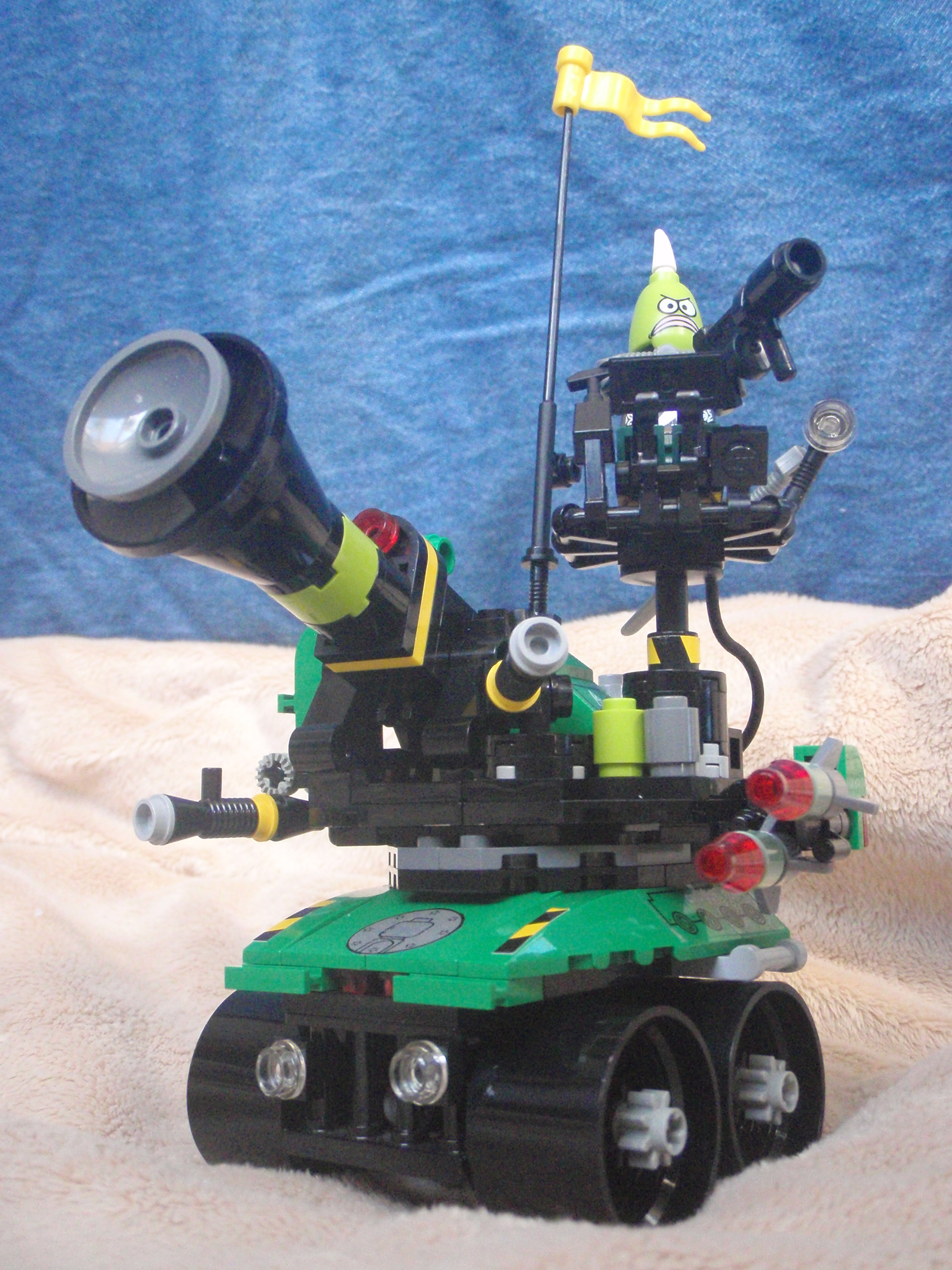
I bought another two Alien Motherships and thought I'd have some fun combining them. Also used parts from theTripod Invader, Fangpyre Mech and other bits and bobs.
Alien She
Photos and Video by Mario Gallucci
Alien She
Sep 3, 2015 – Jan 9, 2016
Alien She, curated by Astria Suparak + Ceci Moss, is the first exhibition to examine the lasting impact of Riot Grrrl on artists and cultural producers working today. A pioneering punk feminist movement that emerged in the early 1990s, Riot Grrrl has had a pivotal influence, inspiring many around the world to pursue socially and politically progressive careers as artists, activists, authors and educators. Emphasizing female and youth empowerment, collaborative organization, creative resistance and DIY ethics, Riot Grrrl helped a new generation to become active feminists and create their own culture and communities that reflect their values and experiences, in contrast to mainstream conventions and expectations.
Riot Grrrl formed in reaction to pervasive and violent sexism, racism and homophobia in the punk music scene and in the culture at large. Its participants adapted strategies from earlier queer and punk feminisms and ‘70s radical politics, while also popularizing discussions of identity politics occurring within academia, but in a language that spoke to a younger generation. This self-organized network made up of teenagers and twenty-somethings reached one another through various platforms, such as letters, zines, local meetings, regional conferences, homemade videos, and later, chat rooms, listservs and message boards. The movement eventually spread worldwide, with chapters opening in at least thirty-two states and twenty-six countries.* Its ethos and aesthetics have survived well past its initial period in the ‘90s, with many new chapters forming in recent years. Riot Grrrl’s influence on contemporary global culture is increasingly evident – from the Russian collective Pussy Riot’s protest against corrupt government-church relations to the popular teen website Rookie and the launch of Girls Rock Camps and Ladyfest music and art festivals around the world.
Alien She focuses on seven people whose visual art practices were informed by their contact with Riot Grrrl. Many of them work in multiple disciplines, such as sculpture, installation, video, documentary film, photography, drawing, printmaking, new media, social practice, curation, music, writing and performance – a reflection of the movement’s artistic diversity and mutability. Each artist is represented by several projects from the last 20 years, including new and rarely seen works, providing an insight into the development of their creative practices and individual trajectories.
Artists: Ginger Brooks Takahashi (Pittsburgh), Tammy Rae Carland (Oakland), Miranda July (Los Angeles), Faythe Levine (Milwaukee), Allyson Mitchell (Toronto), L.J. Roberts (Brooklyn), Stephanie Syjuco (San Francisco) and more.
Archival Materials from: dumba collective; EMP Museum, Seattle; Interference Archive; Jabberjaw; the Riot Grrrl Collection at the Fales Library & Special Collections, NYU; and many personal collections.
Collaborative Projects and Platforms include: Counterfeit Crochet Project, Feminist Art Gallery (FAG), General Sisters, Handmade Nation, Joanie 4 Jackie, Learning to Love You More, LTTR, projet MOBILIVRE-BOOKMOBILE project, Sign Painters and more
Women’s Studies Professors Have Class Privilege / I’m With Problematic, from the series Creep Lez, Allyson Mitchell, 2012.
Altered t-shirts with iron-on transfer and vinyl letters. Courtesy of the artist and Katharine Mulherin Gallery, Toronto.
Alien She is curated by Astria Suparak and Ceci Moss, and organized by the Miller Gallery at Carnegie Mellon University, Pittsburgh
Alien She is presented in two parts:
Museum of Contemporary Craft
724 NW Davis
Portland, OR 97209
511 Gallery @ PNCA
511 NW Broadway
Portland, OR 97209
Both venues are open Tuesday through Saturday from 11am to 6pm.
Alien She
Photos and Video by Mario Gallucci
Alien She
Sep 3, 2015 – Jan 9, 2016
Alien She, curated by Astria Suparak + Ceci Moss, is the first exhibition to examine the lasting impact of Riot Grrrl on artists and cultural producers working today. A pioneering punk feminist movement that emerged in the early 1990s, Riot Grrrl has had a pivotal influence, inspiring many around the world to pursue socially and politically progressive careers as artists, activists, authors and educators. Emphasizing female and youth empowerment, collaborative organization, creative resistance and DIY ethics, Riot Grrrl helped a new generation to become active feminists and create their own culture and communities that reflect their values and experiences, in contrast to mainstream conventions and expectations.
Riot Grrrl formed in reaction to pervasive and violent sexism, racism and homophobia in the punk music scene and in the culture at large. Its participants adapted strategies from earlier queer and punk feminisms and ‘70s radical politics, while also popularizing discussions of identity politics occurring within academia, but in a language that spoke to a younger generation. This self-organized network made up of teenagers and twenty-somethings reached one another through various platforms, such as letters, zines, local meetings, regional conferences, homemade videos, and later, chat rooms, listservs and message boards. The movement eventually spread worldwide, with chapters opening in at least thirty-two states and twenty-six countries.* Its ethos and aesthetics have survived well past its initial period in the ‘90s, with many new chapters forming in recent years. Riot Grrrl’s influence on contemporary global culture is increasingly evident – from the Russian collective Pussy Riot’s protest against corrupt government-church relations to the popular teen website Rookie and the launch of Girls Rock Camps and Ladyfest music and art festivals around the world.
Alien She focuses on seven people whose visual art practices were informed by their contact with Riot Grrrl. Many of them work in multiple disciplines, such as sculpture, installation, video, documentary film, photography, drawing, printmaking, new media, social practice, curation, music, writing and performance – a reflection of the movement’s artistic diversity and mutability. Each artist is represented by several projects from the last 20 years, including new and rarely seen works, providing an insight into the development of their creative practices and individual trajectories.
Artists: Ginger Brooks Takahashi (Pittsburgh), Tammy Rae Carland (Oakland), Miranda July (Los Angeles), Faythe Levine (Milwaukee), Allyson Mitchell (Toronto), L.J. Roberts (Brooklyn), Stephanie Syjuco (San Francisco) and more.
Archival Materials from: dumba collective; EMP Museum, Seattle; Interference Archive; Jabberjaw; the Riot Grrrl Collection at the Fales Library & Special Collections, NYU; and many personal collections.
Collaborative Projects and Platforms include: Counterfeit Crochet Project, Feminist Art Gallery (FAG), General Sisters, Handmade Nation, Joanie 4 Jackie, Learning to Love You More, LTTR, projet MOBILIVRE-BOOKMOBILE project, Sign Painters and more
Women’s Studies Professors Have Class Privilege / I’m With Problematic, from the series Creep Lez, Allyson Mitchell, 2012.
Altered t-shirts with iron-on transfer and vinyl letters. Courtesy of the artist and Katharine Mulherin Gallery, Toronto.
Alien She is curated by Astria Suparak and Ceci Moss, and organized by the Miller Gallery at Carnegie Mellon University, Pittsburgh
Alien She is presented in two parts:
Museum of Contemporary Craft
724 NW Davis
Portland, OR 97209
511 Gallery @ PNCA
511 NW Broadway
Portland, OR 97209
Both venues are open Tuesday through Saturday from 11am to 6pm.
Alien She
Photos and Video by Mario Gallucci
Alien She
Sep 3, 2015 – Jan 9, 2016
Alien She, curated by Astria Suparak + Ceci Moss, is the first exhibition to examine the lasting impact of Riot Grrrl on artists and cultural producers working today. A pioneering punk feminist movement that emerged in the early 1990s, Riot Grrrl has had a pivotal influence, inspiring many around the world to pursue socially and politically progressive careers as artists, activists, authors and educators. Emphasizing female and youth empowerment, collaborative organization, creative resistance and DIY ethics, Riot Grrrl helped a new generation to become active feminists and create their own culture and communities that reflect their values and experiences, in contrast to mainstream conventions and expectations.
Riot Grrrl formed in reaction to pervasive and violent sexism, racism and homophobia in the punk music scene and in the culture at large. Its participants adapted strategies from earlier queer and punk feminisms and ‘70s radical politics, while also popularizing discussions of identity politics occurring within academia, but in a language that spoke to a younger generation. This self-organized network made up of teenagers and twenty-somethings reached one another through various platforms, such as letters, zines, local meetings, regional conferences, homemade videos, and later, chat rooms, listservs and message boards. The movement eventually spread worldwide, with chapters opening in at least thirty-two states and twenty-six countries.* Its ethos and aesthetics have survived well past its initial period in the ‘90s, with many new chapters forming in recent years. Riot Grrrl’s influence on contemporary global culture is increasingly evident – from the Russian collective Pussy Riot’s protest against corrupt government-church relations to the popular teen website Rookie and the launch of Girls Rock Camps and Ladyfest music and art festivals around the world.
Alien She focuses on seven people whose visual art practices were informed by their contact with Riot Grrrl. Many of them work in multiple disciplines, such as sculpture, installation, video, documentary film, photography, drawing, printmaking, new media, social practice, curation, music, writing and performance – a reflection of the movement’s artistic diversity and mutability. Each artist is represented by several projects from the last 20 years, including new and rarely seen works, providing an insight into the development of their creative practices and individual trajectories.
Artists: Ginger Brooks Takahashi (Pittsburgh), Tammy Rae Carland (Oakland), Miranda July (Los Angeles), Faythe Levine (Milwaukee), Allyson Mitchell (Toronto), L.J. Roberts (Brooklyn), Stephanie Syjuco (San Francisco) and more.
Archival Materials from: dumba collective; EMP Museum, Seattle; Interference Archive; Jabberjaw; the Riot Grrrl Collection at the Fales Library & Special Collections, NYU; and many personal collections.
Collaborative Projects and Platforms include: Counterfeit Crochet Project, Feminist Art Gallery (FAG), General Sisters, Handmade Nation, Joanie 4 Jackie, Learning to Love You More, LTTR, projet MOBILIVRE-BOOKMOBILE project, Sign Painters and more
Women’s Studies Professors Have Class Privilege / I’m With Problematic, from the series Creep Lez, Allyson Mitchell, 2012.
Altered t-shirts with iron-on transfer and vinyl letters. Courtesy of the artist and Katharine Mulherin Gallery, Toronto.
Alien She is curated by Astria Suparak and Ceci Moss, and organized by the Miller Gallery at Carnegie Mellon University, Pittsburgh
Alien She is presented in two parts:
Museum of Contemporary Craft
724 NW Davis
Portland, OR 97209
511 Gallery @ PNCA
511 NW Broadway
Portland, OR 97209
Both venues are open Tuesday through Saturday from 11am to 6pm.
Hola!!!, para ir cogiendo de nuevo el ritmo, poco a poco, al Flickr, subo una foto de una obra de arte que descubrí hace unos dias paeando por Granada.
Es una reproducción del personaje de Alien, realizado con piezas de automóviles. El bicho mide 210 cms de altura y no recuerdo cual es su peso.
El artista que lo hizo es japonés, por desgracia no reciuerdo su nombre.
Me lo encontré en una pequeña tienda de segunda mano en el centro de Granada, en el sitio más insospechado, todo un sueño para un frilki !!!
Alien She
Photos and Video by Mario Gallucci
Alien She
Sep 3, 2015 – Jan 9, 2016
Alien She, curated by Astria Suparak + Ceci Moss, is the first exhibition to examine the lasting impact of Riot Grrrl on artists and cultural producers working today. A pioneering punk feminist movement that emerged in the early 1990s, Riot Grrrl has had a pivotal influence, inspiring many around the world to pursue socially and politically progressive careers as artists, activists, authors and educators. Emphasizing female and youth empowerment, collaborative organization, creative resistance and DIY ethics, Riot Grrrl helped a new generation to become active feminists and create their own culture and communities that reflect their values and experiences, in contrast to mainstream conventions and expectations.
Riot Grrrl formed in reaction to pervasive and violent sexism, racism and homophobia in the punk music scene and in the culture at large. Its participants adapted strategies from earlier queer and punk feminisms and ‘70s radical politics, while also popularizing discussions of identity politics occurring within academia, but in a language that spoke to a younger generation. This self-organized network made up of teenagers and twenty-somethings reached one another through various platforms, such as letters, zines, local meetings, regional conferences, homemade videos, and later, chat rooms, listservs and message boards. The movement eventually spread worldwide, with chapters opening in at least thirty-two states and twenty-six countries.* Its ethos and aesthetics have survived well past its initial period in the ‘90s, with many new chapters forming in recent years. Riot Grrrl’s influence on contemporary global culture is increasingly evident – from the Russian collective Pussy Riot’s protest against corrupt government-church relations to the popular teen website Rookie and the launch of Girls Rock Camps and Ladyfest music and art festivals around the world.
Alien She focuses on seven people whose visual art practices were informed by their contact with Riot Grrrl. Many of them work in multiple disciplines, such as sculpture, installation, video, documentary film, photography, drawing, printmaking, new media, social practice, curation, music, writing and performance – a reflection of the movement’s artistic diversity and mutability. Each artist is represented by several projects from the last 20 years, including new and rarely seen works, providing an insight into the development of their creative practices and individual trajectories.
Artists: Ginger Brooks Takahashi (Pittsburgh), Tammy Rae Carland (Oakland), Miranda July (Los Angeles), Faythe Levine (Milwaukee), Allyson Mitchell (Toronto), L.J. Roberts (Brooklyn), Stephanie Syjuco (San Francisco) and more.
Archival Materials from: dumba collective; EMP Museum, Seattle; Interference Archive; Jabberjaw; the Riot Grrrl Collection at the Fales Library & Special Collections, NYU; and many personal collections.
Collaborative Projects and Platforms include: Counterfeit Crochet Project, Feminist Art Gallery (FAG), General Sisters, Handmade Nation, Joanie 4 Jackie, Learning to Love You More, LTTR, projet MOBILIVRE-BOOKMOBILE project, Sign Painters and more
Women’s Studies Professors Have Class Privilege / I’m With Problematic, from the series Creep Lez, Allyson Mitchell, 2012.
Altered t-shirts with iron-on transfer and vinyl letters. Courtesy of the artist and Katharine Mulherin Gallery, Toronto.
Alien She is curated by Astria Suparak and Ceci Moss, and organized by the Miller Gallery at Carnegie Mellon University, Pittsburgh
Alien She is presented in two parts:
Museum of Contemporary Craft
724 NW Davis
Portland, OR 97209
511 Gallery @ PNCA
511 NW Broadway
Portland, OR 97209
Both venues are open Tuesday through Saturday from 11am to 6pm.
Alien She
Photos and Video by Mario Gallucci
Alien She
Sep 3, 2015 – Jan 9, 2016
Alien She, curated by Astria Suparak + Ceci Moss, is the first exhibition to examine the lasting impact of Riot Grrrl on artists and cultural producers working today. A pioneering punk feminist movement that emerged in the early 1990s, Riot Grrrl has had a pivotal influence, inspiring many around the world to pursue socially and politically progressive careers as artists, activists, authors and educators. Emphasizing female and youth empowerment, collaborative organization, creative resistance and DIY ethics, Riot Grrrl helped a new generation to become active feminists and create their own culture and communities that reflect their values and experiences, in contrast to mainstream conventions and expectations.
Riot Grrrl formed in reaction to pervasive and violent sexism, racism and homophobia in the punk music scene and in the culture at large. Its participants adapted strategies from earlier queer and punk feminisms and ‘70s radical politics, while also popularizing discussions of identity politics occurring within academia, but in a language that spoke to a younger generation. This self-organized network made up of teenagers and twenty-somethings reached one another through various platforms, such as letters, zines, local meetings, regional conferences, homemade videos, and later, chat rooms, listservs and message boards. The movement eventually spread worldwide, with chapters opening in at least thirty-two states and twenty-six countries.* Its ethos and aesthetics have survived well past its initial period in the ‘90s, with many new chapters forming in recent years. Riot Grrrl’s influence on contemporary global culture is increasingly evident – from the Russian collective Pussy Riot’s protest against corrupt government-church relations to the popular teen website Rookie and the launch of Girls Rock Camps and Ladyfest music and art festivals around the world.
Alien She focuses on seven people whose visual art practices were informed by their contact with Riot Grrrl. Many of them work in multiple disciplines, such as sculpture, installation, video, documentary film, photography, drawing, printmaking, new media, social practice, curation, music, writing and performance – a reflection of the movement’s artistic diversity and mutability. Each artist is represented by several projects from the last 20 years, including new and rarely seen works, providing an insight into the development of their creative practices and individual trajectories.
Artists: Ginger Brooks Takahashi (Pittsburgh), Tammy Rae Carland (Oakland), Miranda July (Los Angeles), Faythe Levine (Milwaukee), Allyson Mitchell (Toronto), L.J. Roberts (Brooklyn), Stephanie Syjuco (San Francisco) and more.
Archival Materials from: dumba collective; EMP Museum, Seattle; Interference Archive; Jabberjaw; the Riot Grrrl Collection at the Fales Library & Special Collections, NYU; and many personal collections.
Collaborative Projects and Platforms include: Counterfeit Crochet Project, Feminist Art Gallery (FAG), General Sisters, Handmade Nation, Joanie 4 Jackie, Learning to Love You More, LTTR, projet MOBILIVRE-BOOKMOBILE project, Sign Painters and more
Women’s Studies Professors Have Class Privilege / I’m With Problematic, from the series Creep Lez, Allyson Mitchell, 2012.
Altered t-shirts with iron-on transfer and vinyl letters. Courtesy of the artist and Katharine Mulherin Gallery, Toronto.
Alien She is curated by Astria Suparak and Ceci Moss, and organized by the Miller Gallery at Carnegie Mellon University, Pittsburgh
Alien She is presented in two parts:
Museum of Contemporary Craft
724 NW Davis
Portland, OR 97209
511 Gallery @ PNCA
511 NW Broadway
Portland, OR 97209
Both venues are open Tuesday through Saturday from 11am to 6pm.
Alien She
Photos and Video by Mario Gallucci
Alien She
Sep 3, 2015 – Jan 9, 2016
Alien She, curated by Astria Suparak + Ceci Moss, is the first exhibition to examine the lasting impact of Riot Grrrl on artists and cultural producers working today. A pioneering punk feminist movement that emerged in the early 1990s, Riot Grrrl has had a pivotal influence, inspiring many around the world to pursue socially and politically progressive careers as artists, activists, authors and educators. Emphasizing female and youth empowerment, collaborative organization, creative resistance and DIY ethics, Riot Grrrl helped a new generation to become active feminists and create their own culture and communities that reflect their values and experiences, in contrast to mainstream conventions and expectations.
Riot Grrrl formed in reaction to pervasive and violent sexism, racism and homophobia in the punk music scene and in the culture at large. Its participants adapted strategies from earlier queer and punk feminisms and ‘70s radical politics, while also popularizing discussions of identity politics occurring within academia, but in a language that spoke to a younger generation. This self-organized network made up of teenagers and twenty-somethings reached one another through various platforms, such as letters, zines, local meetings, regional conferences, homemade videos, and later, chat rooms, listservs and message boards. The movement eventually spread worldwide, with chapters opening in at least thirty-two states and twenty-six countries.* Its ethos and aesthetics have survived well past its initial period in the ‘90s, with many new chapters forming in recent years. Riot Grrrl’s influence on contemporary global culture is increasingly evident – from the Russian collective Pussy Riot’s protest against corrupt government-church relations to the popular teen website Rookie and the launch of Girls Rock Camps and Ladyfest music and art festivals around the world.
Alien She focuses on seven people whose visual art practices were informed by their contact with Riot Grrrl. Many of them work in multiple disciplines, such as sculpture, installation, video, documentary film, photography, drawing, printmaking, new media, social practice, curation, music, writing and performance – a reflection of the movement’s artistic diversity and mutability. Each artist is represented by several projects from the last 20 years, including new and rarely seen works, providing an insight into the development of their creative practices and individual trajectories.
Artists: Ginger Brooks Takahashi (Pittsburgh), Tammy Rae Carland (Oakland), Miranda July (Los Angeles), Faythe Levine (Milwaukee), Allyson Mitchell (Toronto), L.J. Roberts (Brooklyn), Stephanie Syjuco (San Francisco) and more.
Archival Materials from: dumba collective; EMP Museum, Seattle; Interference Archive; Jabberjaw; the Riot Grrrl Collection at the Fales Library & Special Collections, NYU; and many personal collections.
Collaborative Projects and Platforms include: Counterfeit Crochet Project, Feminist Art Gallery (FAG), General Sisters, Handmade Nation, Joanie 4 Jackie, Learning to Love You More, LTTR, projet MOBILIVRE-BOOKMOBILE project, Sign Painters and more
Women’s Studies Professors Have Class Privilege / I’m With Problematic, from the series Creep Lez, Allyson Mitchell, 2012.
Altered t-shirts with iron-on transfer and vinyl letters. Courtesy of the artist and Katharine Mulherin Gallery, Toronto.
Alien She is curated by Astria Suparak and Ceci Moss, and organized by the Miller Gallery at Carnegie Mellon University, Pittsburgh
Alien She is presented in two parts:
Museum of Contemporary Craft
724 NW Davis
Portland, OR 97209
511 Gallery @ PNCA
511 NW Broadway
Portland, OR 97209
Both venues are open Tuesday through Saturday from 11am to 6pm.
Alien She
Photos and Video by Mario Gallucci
Alien She
Sep 3, 2015 – Jan 9, 2016
Alien She, curated by Astria Suparak + Ceci Moss, is the first exhibition to examine the lasting impact of Riot Grrrl on artists and cultural producers working today. A pioneering punk feminist movement that emerged in the early 1990s, Riot Grrrl has had a pivotal influence, inspiring many around the world to pursue socially and politically progressive careers as artists, activists, authors and educators. Emphasizing female and youth empowerment, collaborative organization, creative resistance and DIY ethics, Riot Grrrl helped a new generation to become active feminists and create their own culture and communities that reflect their values and experiences, in contrast to mainstream conventions and expectations.
Riot Grrrl formed in reaction to pervasive and violent sexism, racism and homophobia in the punk music scene and in the culture at large. Its participants adapted strategies from earlier queer and punk feminisms and ‘70s radical politics, while also popularizing discussions of identity politics occurring within academia, but in a language that spoke to a younger generation. This self-organized network made up of teenagers and twenty-somethings reached one another through various platforms, such as letters, zines, local meetings, regional conferences, homemade videos, and later, chat rooms, listservs and message boards. The movement eventually spread worldwide, with chapters opening in at least thirty-two states and twenty-six countries.* Its ethos and aesthetics have survived well past its initial period in the ‘90s, with many new chapters forming in recent years. Riot Grrrl’s influence on contemporary global culture is increasingly evident – from the Russian collective Pussy Riot’s protest against corrupt government-church relations to the popular teen website Rookie and the launch of Girls Rock Camps and Ladyfest music and art festivals around the world.
Alien She focuses on seven people whose visual art practices were informed by their contact with Riot Grrrl. Many of them work in multiple disciplines, such as sculpture, installation, video, documentary film, photography, drawing, printmaking, new media, social practice, curation, music, writing and performance – a reflection of the movement’s artistic diversity and mutability. Each artist is represented by several projects from the last 20 years, including new and rarely seen works, providing an insight into the development of their creative practices and individual trajectories.
Artists: Ginger Brooks Takahashi (Pittsburgh), Tammy Rae Carland (Oakland), Miranda July (Los Angeles), Faythe Levine (Milwaukee), Allyson Mitchell (Toronto), L.J. Roberts (Brooklyn), Stephanie Syjuco (San Francisco) and more.
Archival Materials from: dumba collective; EMP Museum, Seattle; Interference Archive; Jabberjaw; the Riot Grrrl Collection at the Fales Library & Special Collections, NYU; and many personal collections.
Collaborative Projects and Platforms include: Counterfeit Crochet Project, Feminist Art Gallery (FAG), General Sisters, Handmade Nation, Joanie 4 Jackie, Learning to Love You More, LTTR, projet MOBILIVRE-BOOKMOBILE project, Sign Painters and more
Women’s Studies Professors Have Class Privilege / I’m With Problematic, from the series Creep Lez, Allyson Mitchell, 2012.
Altered t-shirts with iron-on transfer and vinyl letters. Courtesy of the artist and Katharine Mulherin Gallery, Toronto.
Alien She is curated by Astria Suparak and Ceci Moss, and organized by the Miller Gallery at Carnegie Mellon University, Pittsburgh
Alien She is presented in two parts:
Museum of Contemporary Craft
724 NW Davis
Portland, OR 97209
511 Gallery @ PNCA
511 NW Broadway
Portland, OR 97209
Both venues are open Tuesday through Saturday from 11am to 6pm.
Alien 3 set the precedent that xenomorphs born from different hosts inherit some of their genetic qualities. So Gorilla aliens are huge, strong, have long arms, and are arboreal. Also, they spit acid, which is TOTALLY SOMETHING THAT GORILLAS DO.
Featured on Life In Plastic: nerditis.com/2013/04/05/life-in-plastic-kenner-aliens-nec...
Alien She
Photos and Video by Mario Gallucci
Alien She
Sep 3, 2015 – Jan 9, 2016
Alien She, curated by Astria Suparak + Ceci Moss, is the first exhibition to examine the lasting impact of Riot Grrrl on artists and cultural producers working today. A pioneering punk feminist movement that emerged in the early 1990s, Riot Grrrl has had a pivotal influence, inspiring many around the world to pursue socially and politically progressive careers as artists, activists, authors and educators. Emphasizing female and youth empowerment, collaborative organization, creative resistance and DIY ethics, Riot Grrrl helped a new generation to become active feminists and create their own culture and communities that reflect their values and experiences, in contrast to mainstream conventions and expectations.
Riot Grrrl formed in reaction to pervasive and violent sexism, racism and homophobia in the punk music scene and in the culture at large. Its participants adapted strategies from earlier queer and punk feminisms and ‘70s radical politics, while also popularizing discussions of identity politics occurring within academia, but in a language that spoke to a younger generation. This self-organized network made up of teenagers and twenty-somethings reached one another through various platforms, such as letters, zines, local meetings, regional conferences, homemade videos, and later, chat rooms, listservs and message boards. The movement eventually spread worldwide, with chapters opening in at least thirty-two states and twenty-six countries.* Its ethos and aesthetics have survived well past its initial period in the ‘90s, with many new chapters forming in recent years. Riot Grrrl’s influence on contemporary global culture is increasingly evident – from the Russian collective Pussy Riot’s protest against corrupt government-church relations to the popular teen website Rookie and the launch of Girls Rock Camps and Ladyfest music and art festivals around the world.
Alien She focuses on seven people whose visual art practices were informed by their contact with Riot Grrrl. Many of them work in multiple disciplines, such as sculpture, installation, video, documentary film, photography, drawing, printmaking, new media, social practice, curation, music, writing and performance – a reflection of the movement’s artistic diversity and mutability. Each artist is represented by several projects from the last 20 years, including new and rarely seen works, providing an insight into the development of their creative practices and individual trajectories.
Artists: Ginger Brooks Takahashi (Pittsburgh), Tammy Rae Carland (Oakland), Miranda July (Los Angeles), Faythe Levine (Milwaukee), Allyson Mitchell (Toronto), L.J. Roberts (Brooklyn), Stephanie Syjuco (San Francisco) and more.
Archival Materials from: dumba collective; EMP Museum, Seattle; Interference Archive; Jabberjaw; the Riot Grrrl Collection at the Fales Library & Special Collections, NYU; and many personal collections.
Collaborative Projects and Platforms include: Counterfeit Crochet Project, Feminist Art Gallery (FAG), General Sisters, Handmade Nation, Joanie 4 Jackie, Learning to Love You More, LTTR, projet MOBILIVRE-BOOKMOBILE project, Sign Painters and more
Women’s Studies Professors Have Class Privilege / I’m With Problematic, from the series Creep Lez, Allyson Mitchell, 2012.
Altered t-shirts with iron-on transfer and vinyl letters. Courtesy of the artist and Katharine Mulherin Gallery, Toronto.
Alien She is curated by Astria Suparak and Ceci Moss, and organized by the Miller Gallery at Carnegie Mellon University, Pittsburgh
Alien She is presented in two parts:
Museum of Contemporary Craft
724 NW Davis
Portland, OR 97209
511 Gallery @ PNCA
511 NW Broadway
Portland, OR 97209
Both venues are open Tuesday through Saturday from 11am to 6pm.
Alien She
Photos and Video by Mario Gallucci
Alien She
Sep 3, 2015 – Jan 9, 2016
Alien She, curated by Astria Suparak + Ceci Moss, is the first exhibition to examine the lasting impact of Riot Grrrl on artists and cultural producers working today. A pioneering punk feminist movement that emerged in the early 1990s, Riot Grrrl has had a pivotal influence, inspiring many around the world to pursue socially and politically progressive careers as artists, activists, authors and educators. Emphasizing female and youth empowerment, collaborative organization, creative resistance and DIY ethics, Riot Grrrl helped a new generation to become active feminists and create their own culture and communities that reflect their values and experiences, in contrast to mainstream conventions and expectations.
Riot Grrrl formed in reaction to pervasive and violent sexism, racism and homophobia in the punk music scene and in the culture at large. Its participants adapted strategies from earlier queer and punk feminisms and ‘70s radical politics, while also popularizing discussions of identity politics occurring within academia, but in a language that spoke to a younger generation. This self-organized network made up of teenagers and twenty-somethings reached one another through various platforms, such as letters, zines, local meetings, regional conferences, homemade videos, and later, chat rooms, listservs and message boards. The movement eventually spread worldwide, with chapters opening in at least thirty-two states and twenty-six countries.* Its ethos and aesthetics have survived well past its initial period in the ‘90s, with many new chapters forming in recent years. Riot Grrrl’s influence on contemporary global culture is increasingly evident – from the Russian collective Pussy Riot’s protest against corrupt government-church relations to the popular teen website Rookie and the launch of Girls Rock Camps and Ladyfest music and art festivals around the world.
Alien She focuses on seven people whose visual art practices were informed by their contact with Riot Grrrl. Many of them work in multiple disciplines, such as sculpture, installation, video, documentary film, photography, drawing, printmaking, new media, social practice, curation, music, writing and performance – a reflection of the movement’s artistic diversity and mutability. Each artist is represented by several projects from the last 20 years, including new and rarely seen works, providing an insight into the development of their creative practices and individual trajectories.
Artists: Ginger Brooks Takahashi (Pittsburgh), Tammy Rae Carland (Oakland), Miranda July (Los Angeles), Faythe Levine (Milwaukee), Allyson Mitchell (Toronto), L.J. Roberts (Brooklyn), Stephanie Syjuco (San Francisco) and more.
Archival Materials from: dumba collective; EMP Museum, Seattle; Interference Archive; Jabberjaw; the Riot Grrrl Collection at the Fales Library & Special Collections, NYU; and many personal collections.
Collaborative Projects and Platforms include: Counterfeit Crochet Project, Feminist Art Gallery (FAG), General Sisters, Handmade Nation, Joanie 4 Jackie, Learning to Love You More, LTTR, projet MOBILIVRE-BOOKMOBILE project, Sign Painters and more
Women’s Studies Professors Have Class Privilege / I’m With Problematic, from the series Creep Lez, Allyson Mitchell, 2012.
Altered t-shirts with iron-on transfer and vinyl letters. Courtesy of the artist and Katharine Mulherin Gallery, Toronto.
Alien She is curated by Astria Suparak and Ceci Moss, and organized by the Miller Gallery at Carnegie Mellon University, Pittsburgh
Alien She is presented in two parts:
Museum of Contemporary Craft
724 NW Davis
Portland, OR 97209
511 Gallery @ PNCA
511 NW Broadway
Portland, OR 97209
Both venues are open Tuesday through Saturday from 11am to 6pm.
(E. derenbergii x E. cuspidata var. zaragozae)?
The plant has just been described by J.-Michel Moullec.
Alien She
Photos and Video by Mario Gallucci
Alien She
Sep 3, 2015 – Jan 9, 2016
Alien She, curated by Astria Suparak + Ceci Moss, is the first exhibition to examine the lasting impact of Riot Grrrl on artists and cultural producers working today. A pioneering punk feminist movement that emerged in the early 1990s, Riot Grrrl has had a pivotal influence, inspiring many around the world to pursue socially and politically progressive careers as artists, activists, authors and educators. Emphasizing female and youth empowerment, collaborative organization, creative resistance and DIY ethics, Riot Grrrl helped a new generation to become active feminists and create their own culture and communities that reflect their values and experiences, in contrast to mainstream conventions and expectations.
Riot Grrrl formed in reaction to pervasive and violent sexism, racism and homophobia in the punk music scene and in the culture at large. Its participants adapted strategies from earlier queer and punk feminisms and ‘70s radical politics, while also popularizing discussions of identity politics occurring within academia, but in a language that spoke to a younger generation. This self-organized network made up of teenagers and twenty-somethings reached one another through various platforms, such as letters, zines, local meetings, regional conferences, homemade videos, and later, chat rooms, listservs and message boards. The movement eventually spread worldwide, with chapters opening in at least thirty-two states and twenty-six countries.* Its ethos and aesthetics have survived well past its initial period in the ‘90s, with many new chapters forming in recent years. Riot Grrrl’s influence on contemporary global culture is increasingly evident – from the Russian collective Pussy Riot’s protest against corrupt government-church relations to the popular teen website Rookie and the launch of Girls Rock Camps and Ladyfest music and art festivals around the world.
Alien She focuses on seven people whose visual art practices were informed by their contact with Riot Grrrl. Many of them work in multiple disciplines, such as sculpture, installation, video, documentary film, photography, drawing, printmaking, new media, social practice, curation, music, writing and performance – a reflection of the movement’s artistic diversity and mutability. Each artist is represented by several projects from the last 20 years, including new and rarely seen works, providing an insight into the development of their creative practices and individual trajectories.
Artists: Ginger Brooks Takahashi (Pittsburgh), Tammy Rae Carland (Oakland), Miranda July (Los Angeles), Faythe Levine (Milwaukee), Allyson Mitchell (Toronto), L.J. Roberts (Brooklyn), Stephanie Syjuco (San Francisco) and more.
Archival Materials from: dumba collective; EMP Museum, Seattle; Interference Archive; Jabberjaw; the Riot Grrrl Collection at the Fales Library & Special Collections, NYU; and many personal collections.
Collaborative Projects and Platforms include: Counterfeit Crochet Project, Feminist Art Gallery (FAG), General Sisters, Handmade Nation, Joanie 4 Jackie, Learning to Love You More, LTTR, projet MOBILIVRE-BOOKMOBILE project, Sign Painters and more
Women’s Studies Professors Have Class Privilege / I’m With Problematic, from the series Creep Lez, Allyson Mitchell, 2012.
Altered t-shirts with iron-on transfer and vinyl letters. Courtesy of the artist and Katharine Mulherin Gallery, Toronto.
Alien She is curated by Astria Suparak and Ceci Moss, and organized by the Miller Gallery at Carnegie Mellon University, Pittsburgh
Alien She is presented in two parts:
Museum of Contemporary Craft
724 NW Davis
Portland, OR 97209
511 Gallery @ PNCA
511 NW Broadway
Portland, OR 97209
Both venues are open Tuesday through Saturday from 11am to 6pm.
Earlier this month at Camera Club, there was a competition judged by our Chairman. Each image had to represent the title of a TV programme, and he had to guess the programme from the image. He was also choosing a first, second and third overall.
This was one of my images for the evening (we could enter three each). It was representing 'The X Files', which he guessed without much problem. The picture was commended but didn't finish in the top three. Obviously, this image is heavily processed with Photoshop.
It looks better on a black background - press 'L' on your keyboard, or click on the image itself.
Alien She
Photos and Video by Mario Gallucci
Alien She
Sep 3, 2015 – Jan 9, 2016
Alien She, curated by Astria Suparak + Ceci Moss, is the first exhibition to examine the lasting impact of Riot Grrrl on artists and cultural producers working today. A pioneering punk feminist movement that emerged in the early 1990s, Riot Grrrl has had a pivotal influence, inspiring many around the world to pursue socially and politically progressive careers as artists, activists, authors and educators. Emphasizing female and youth empowerment, collaborative organization, creative resistance and DIY ethics, Riot Grrrl helped a new generation to become active feminists and create their own culture and communities that reflect their values and experiences, in contrast to mainstream conventions and expectations.
Riot Grrrl formed in reaction to pervasive and violent sexism, racism and homophobia in the punk music scene and in the culture at large. Its participants adapted strategies from earlier queer and punk feminisms and ‘70s radical politics, while also popularizing discussions of identity politics occurring within academia, but in a language that spoke to a younger generation. This self-organized network made up of teenagers and twenty-somethings reached one another through various platforms, such as letters, zines, local meetings, regional conferences, homemade videos, and later, chat rooms, listservs and message boards. The movement eventually spread worldwide, with chapters opening in at least thirty-two states and twenty-six countries.* Its ethos and aesthetics have survived well past its initial period in the ‘90s, with many new chapters forming in recent years. Riot Grrrl’s influence on contemporary global culture is increasingly evident – from the Russian collective Pussy Riot’s protest against corrupt government-church relations to the popular teen website Rookie and the launch of Girls Rock Camps and Ladyfest music and art festivals around the world.
Alien She focuses on seven people whose visual art practices were informed by their contact with Riot Grrrl. Many of them work in multiple disciplines, such as sculpture, installation, video, documentary film, photography, drawing, printmaking, new media, social practice, curation, music, writing and performance – a reflection of the movement’s artistic diversity and mutability. Each artist is represented by several projects from the last 20 years, including new and rarely seen works, providing an insight into the development of their creative practices and individual trajectories.
Artists: Ginger Brooks Takahashi (Pittsburgh), Tammy Rae Carland (Oakland), Miranda July (Los Angeles), Faythe Levine (Milwaukee), Allyson Mitchell (Toronto), L.J. Roberts (Brooklyn), Stephanie Syjuco (San Francisco) and more.
Archival Materials from: dumba collective; EMP Museum, Seattle; Interference Archive; Jabberjaw; the Riot Grrrl Collection at the Fales Library & Special Collections, NYU; and many personal collections.
Collaborative Projects and Platforms include: Counterfeit Crochet Project, Feminist Art Gallery (FAG), General Sisters, Handmade Nation, Joanie 4 Jackie, Learning to Love You More, LTTR, projet MOBILIVRE-BOOKMOBILE project, Sign Painters and more
Women’s Studies Professors Have Class Privilege / I’m With Problematic, from the series Creep Lez, Allyson Mitchell, 2012.
Altered t-shirts with iron-on transfer and vinyl letters. Courtesy of the artist and Katharine Mulherin Gallery, Toronto.
Alien She is curated by Astria Suparak and Ceci Moss, and organized by the Miller Gallery at Carnegie Mellon University, Pittsburgh
Alien She is presented in two parts:
Museum of Contemporary Craft
724 NW Davis
Portland, OR 97209
511 Gallery @ PNCA
511 NW Broadway
Portland, OR 97209
Both venues are open Tuesday through Saturday from 11am to 6pm.
Alien She
Photos and Video by Mario Gallucci
Alien She
Sep 3, 2015 – Jan 9, 2016
Alien She, curated by Astria Suparak + Ceci Moss, is the first exhibition to examine the lasting impact of Riot Grrrl on artists and cultural producers working today. A pioneering punk feminist movement that emerged in the early 1990s, Riot Grrrl has had a pivotal influence, inspiring many around the world to pursue socially and politically progressive careers as artists, activists, authors and educators. Emphasizing female and youth empowerment, collaborative organization, creative resistance and DIY ethics, Riot Grrrl helped a new generation to become active feminists and create their own culture and communities that reflect their values and experiences, in contrast to mainstream conventions and expectations.
Riot Grrrl formed in reaction to pervasive and violent sexism, racism and homophobia in the punk music scene and in the culture at large. Its participants adapted strategies from earlier queer and punk feminisms and ‘70s radical politics, while also popularizing discussions of identity politics occurring within academia, but in a language that spoke to a younger generation. This self-organized network made up of teenagers and twenty-somethings reached one another through various platforms, such as letters, zines, local meetings, regional conferences, homemade videos, and later, chat rooms, listservs and message boards. The movement eventually spread worldwide, with chapters opening in at least thirty-two states and twenty-six countries.* Its ethos and aesthetics have survived well past its initial period in the ‘90s, with many new chapters forming in recent years. Riot Grrrl’s influence on contemporary global culture is increasingly evident – from the Russian collective Pussy Riot’s protest against corrupt government-church relations to the popular teen website Rookie and the launch of Girls Rock Camps and Ladyfest music and art festivals around the world.
Alien She focuses on seven people whose visual art practices were informed by their contact with Riot Grrrl. Many of them work in multiple disciplines, such as sculpture, installation, video, documentary film, photography, drawing, printmaking, new media, social practice, curation, music, writing and performance – a reflection of the movement’s artistic diversity and mutability. Each artist is represented by several projects from the last 20 years, including new and rarely seen works, providing an insight into the development of their creative practices and individual trajectories.
Artists: Ginger Brooks Takahashi (Pittsburgh), Tammy Rae Carland (Oakland), Miranda July (Los Angeles), Faythe Levine (Milwaukee), Allyson Mitchell (Toronto), L.J. Roberts (Brooklyn), Stephanie Syjuco (San Francisco) and more.
Archival Materials from: dumba collective; EMP Museum, Seattle; Interference Archive; Jabberjaw; the Riot Grrrl Collection at the Fales Library & Special Collections, NYU; and many personal collections.
Collaborative Projects and Platforms include: Counterfeit Crochet Project, Feminist Art Gallery (FAG), General Sisters, Handmade Nation, Joanie 4 Jackie, Learning to Love You More, LTTR, projet MOBILIVRE-BOOKMOBILE project, Sign Painters and more
Women’s Studies Professors Have Class Privilege / I’m With Problematic, from the series Creep Lez, Allyson Mitchell, 2012.
Altered t-shirts with iron-on transfer and vinyl letters. Courtesy of the artist and Katharine Mulherin Gallery, Toronto.
Alien She is curated by Astria Suparak and Ceci Moss, and organized by the Miller Gallery at Carnegie Mellon University, Pittsburgh
Alien She is presented in two parts:
Museum of Contemporary Craft
724 NW Davis
Portland, OR 97209
511 Gallery @ PNCA
511 NW Broadway
Portland, OR 97209
Both venues are open Tuesday through Saturday from 11am to 6pm.
Our neighborhood has been invaded by aliens.
And I don't mean the good kind of alien that does construction, picks vegetables and fruit, cleans your house, and does your laundry.
I'm talking about scary little UFO type extra-terrestrial guys, masquerading as scare crows.
I haven't seen any rusty tin men or scraggly yappy dogs yet.
.
.
LINK TO BLOG: hpgarland.blogspot.com/2010/11/alien-invaders.html
Alien She
Photos and Video by Mario Gallucci
Alien She
Sep 3, 2015 – Jan 9, 2016
Alien She, curated by Astria Suparak + Ceci Moss, is the first exhibition to examine the lasting impact of Riot Grrrl on artists and cultural producers working today. A pioneering punk feminist movement that emerged in the early 1990s, Riot Grrrl has had a pivotal influence, inspiring many around the world to pursue socially and politically progressive careers as artists, activists, authors and educators. Emphasizing female and youth empowerment, collaborative organization, creative resistance and DIY ethics, Riot Grrrl helped a new generation to become active feminists and create their own culture and communities that reflect their values and experiences, in contrast to mainstream conventions and expectations.
Riot Grrrl formed in reaction to pervasive and violent sexism, racism and homophobia in the punk music scene and in the culture at large. Its participants adapted strategies from earlier queer and punk feminisms and ‘70s radical politics, while also popularizing discussions of identity politics occurring within academia, but in a language that spoke to a younger generation. This self-organized network made up of teenagers and twenty-somethings reached one another through various platforms, such as letters, zines, local meetings, regional conferences, homemade videos, and later, chat rooms, listservs and message boards. The movement eventually spread worldwide, with chapters opening in at least thirty-two states and twenty-six countries.* Its ethos and aesthetics have survived well past its initial period in the ‘90s, with many new chapters forming in recent years. Riot Grrrl’s influence on contemporary global culture is increasingly evident – from the Russian collective Pussy Riot’s protest against corrupt government-church relations to the popular teen website Rookie and the launch of Girls Rock Camps and Ladyfest music and art festivals around the world.
Alien She focuses on seven people whose visual art practices were informed by their contact with Riot Grrrl. Many of them work in multiple disciplines, such as sculpture, installation, video, documentary film, photography, drawing, printmaking, new media, social practice, curation, music, writing and performance – a reflection of the movement’s artistic diversity and mutability. Each artist is represented by several projects from the last 20 years, including new and rarely seen works, providing an insight into the development of their creative practices and individual trajectories.
Artists: Ginger Brooks Takahashi (Pittsburgh), Tammy Rae Carland (Oakland), Miranda July (Los Angeles), Faythe Levine (Milwaukee), Allyson Mitchell (Toronto), L.J. Roberts (Brooklyn), Stephanie Syjuco (San Francisco) and more.
Archival Materials from: dumba collective; EMP Museum, Seattle; Interference Archive; Jabberjaw; the Riot Grrrl Collection at the Fales Library & Special Collections, NYU; and many personal collections.
Collaborative Projects and Platforms include: Counterfeit Crochet Project, Feminist Art Gallery (FAG), General Sisters, Handmade Nation, Joanie 4 Jackie, Learning to Love You More, LTTR, projet MOBILIVRE-BOOKMOBILE project, Sign Painters and more
Women’s Studies Professors Have Class Privilege / I’m With Problematic, from the series Creep Lez, Allyson Mitchell, 2012.
Altered t-shirts with iron-on transfer and vinyl letters. Courtesy of the artist and Katharine Mulherin Gallery, Toronto.
Alien She is curated by Astria Suparak and Ceci Moss, and organized by the Miller Gallery at Carnegie Mellon University, Pittsburgh
Alien She is presented in two parts:
Museum of Contemporary Craft
724 NW Davis
Portland, OR 97209
511 Gallery @ PNCA
511 NW Broadway
Portland, OR 97209
Both venues are open Tuesday through Saturday from 11am to 6pm.