View allAll Photos Tagged Tutorial
Swimsuit for my daughter. Part of my commitment to buy USA-made or make it myself to avoid supporting sweatshops and child labor abuses. It's the first time I've ever made a swimsuit, and I'm happy that it fits her so well -- much better than any of her store-bought swimsuits ever have.
Blogged at www.everydaychaos.wordpress.com
***Update: Tutorial available at everydaychaos.wordpress.com/2010/06/14/the-summer-necessi... ***
Aproveitando que muitas meninas pediram e que minha unha do dedão quebrou, aqui está o tutorial do meu mosaico psicodélico...rs
O pincel que está na foto eu não sei o nº, mas coloquei ao lado do palito de laranjeira para ter uma referência do tamanho, eu só o usei para fazer o contorno em preto.
As demais cores utilizei o pincel do próprio esmalte.
Depois de tudo, eu passei o roxinho da Colorama para finalizar.
Quem tiver dúvidas, só comentar.
Beijos meninas e obrigada por terem gostado! :)
Free tutorial on my blog as part of the "12 Gifts of Christmas"!
www.freshlemonsquilts.com/?p=1343
Also includes a giveaway
The first of a series of festive tutorials I'm sharing on my blog this autumn/winter.
You can find the tutorial here:
bugsandfishes.blogspot.co.uk/2012/09/how-to-felt-snowman-...
I've done absolutely not editing on this photo beyond the following little action. You can download it here, but below are the steps I took, in case you'd like to expand upon it. I encourage to do that.
COLOR POPPER
1. convert to Lab mode.
2. command click on the Lightness channel getting a selection.
3. Do Command/control + j making a new layer with that selection.
4. Do Layer > Adjustment > Levels and put "2" in the midpoint box.
5. Do command/control + option/alt + shift + e making a new layer with all the edits.
6. Put that layer in softlight blending mode and set the layer's opacity to 40 percent.
7.Again do command/control + option/alt + shift + e making a new layer with all the edits.
8. Go to channels pallet and choose the lightness channel.
9 Run unsharp mask on the lightness channel with 100% radius 3 threshold three.
10. flatten image and convert to RGB.
sexy hexy tutorial
blogged @ goldiloks.blogspot.com/2010/09/sexie-hexies.html
1. sexyhexy1, 2. sexyhexy2, 3. sexyhexy3, 4. sexyhexy4, 5. sexyhexy5, 6. sexyhexy6, 7. sexyhexy7, 8. sexyhexy8, 9. sexyhexy9, 10. sexyhexy10, 11. sexyhexy11, 12. sexyhexy12, 13. sexyhexy13, 14. sexyhexy14, 15. sexyhexy15, 16. sexyhexy16, 17. sexyhexy17, 18. sexyhexy18, 19. sexyhexy19, 20. sexyhexy20
Created with fd's Flickr Toys
I wrote a tutorial on my blog about attaching amigurumi hair!
You can view it at esshaych.blogspot.com/2009/09/amigurumi-hair-tutorial.html
Simple tutorial of puff tessellation. Start from triangle grid 16 and make double sink in the middle of the paper. Step no 5 and 6 are not flat.
It's not a quilt, but it helps quilters :) Enjoy!
frommartawithlove.com/2012/10/26/diy-ikea-sewing-table-tu...
This is a new jewelry making tutorial that I am almost finished with. The Butterflies are each 1" x 1".
Instructions include the Hook, Clasp, and links.... .
Tangocatgems Original designs
#tutorial hadhart.blogspot.co.id/2017/10/tutorial-origami-tank-orig... #panzer #paper #танк #оригами
add a rope border around the top edge of the base, I made mine using a sugar gun
Add some bows made with thin strips pf modelling paste and leave to dry
I'm doing another workshop in a months time, so I'm going to put more of my tutorials and lessons online as I get closer to the date. This one is specifically related to tonal recovery in Adobe Lightroom 4.
www.frontallobbings.com/2013/05/lightroom-tutorial-tonal-...
This is now on my blog instead. > sommarstaden.blogspot.com/2008/07/hdr-lab-tutorial.html. Updated 2008-12-01.
And in this set -> www.flickr.com/photos/cwiedel/sets/72157604504025005/detail/ you can see some before and after shots.
Por fin pude organizarme y hacer el mini tutorial de la pulsera cintitas.
Los materiales que necesitamos son poquitos: Pinza, alicate, alambre (en este caso es de alpaca) cinta de raso (o la que deseemos) y un par de "pirañas" (aquí se llaman así. Ah, también utilizamos una tijera para cortar la cinta.
Hello all.
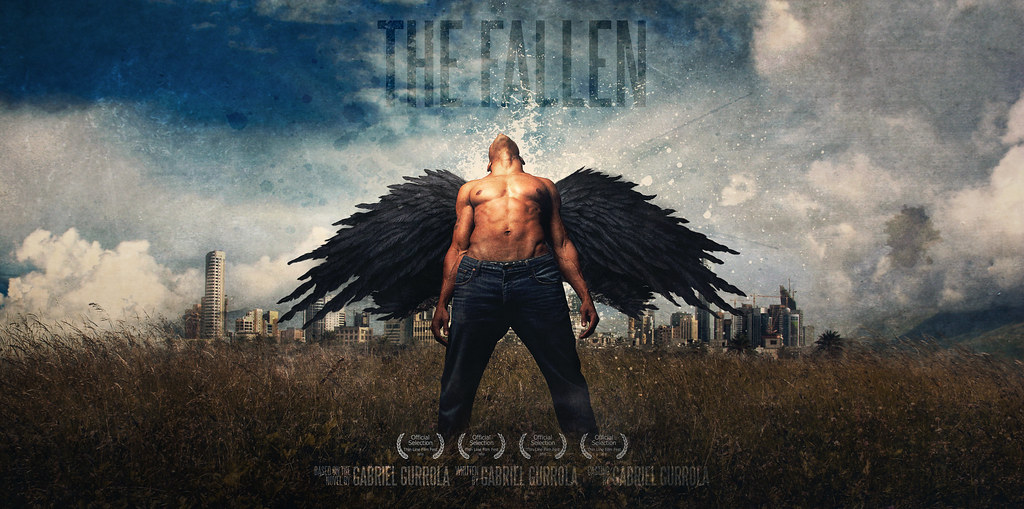
I'm gonna share some love. I will soon post a free video tutorial at my blog. I am converting some video.
In the mean time, here is my finished version.
This project was just for fun. It is by no means up to my standards. I merely produced this video to share some techniques. Please keep tuned in ;)
Video of Post-Production at my blog www.gurrolaphotography.com
View it Large
Strobist:
1 580ex in a mod Soft Box
This is some sort of tutorial on how I do my brick wall backgrounds. Though scrapbooking papers can give you a very realistic and easy brick background, sometimes I love to make a "real" wall with texture and color.
The wall is made out of styrofoam, the window is made of foamboard.
This is the cut wall with the window cutout and sketched lines for the layout of the bricks. Gigi and Holly are watching closely, Holly cuz she finds it interesting, Gigi taking care I don't make mistakes, of course... ; P
Based on a tutorial.
Model: faestock.deviantart.com/art/Medieval-pack6-63319895
Background: fenne-stock.deviantart.com/art/Ach-fields-126159303
Grass brushes: archeleron.deviantart.com/art/My-Grass-Brushes-82240003
Aquí os dejo un tutorial para realizar mediante la técnica de Origami estos bonitos Crane. Si quereis conocer cómo poder combinar estos bonitos "origami crane" pasaros por mi blog:
Espero que os guste!!
Tudo o que precisa:
- 1 retângulo de 27x29cm para a frente do babador (eu fiz um bloquinho usando foundation e juntei uns tecidinhos de borboleta... aqui é a hora de fazer o que der na telha.. um tecidinho bonito também vale!)
- 1 retângulo de 27x29cm para a parte de tras do babador
- 1 retângulo de 27x29cm de contact para plastificar (não mostrado na foto)
- 2 tiras de 5x50cm para amarrar o babador
- linhas e máquina de costura, claro! ;)