Conecta Tutoriales // Adobe User Group
View allAll Photos Tagged Tutorial
I followed a Julieanne Kost tutorial the other day and somehow I must have missed a step because it wasn't supposed to be quite like this. One day I will start again but in the meantime I thought I'd keep this anyway, I quite liked it.
These are 10 images of mine, severely cropped after applying 2 blur filters.
Oi gente....
Fiz um Tutorial (que tá hilário) de um look que eu uso de dia e de noite...
Veja aqui!!!
Estou aguardando o feedback de vcs, gente....
É a primeira vez q eu faço um vídeo e eu tava meio nervosa....rs...
Perdoem os erros, ok?!?
Espero opiniões e sugestões!!
E críticas tbm...
rs
Bjoooooos
EDIT
Meninas....
Disponibilizei o video numa qualidade melhor aki ó
Que feliz!!! Hj o flickr colaborou comigooo.
Mel, esse é especial para vc! É o look do amigo oculto. Finalmente.. Rs...
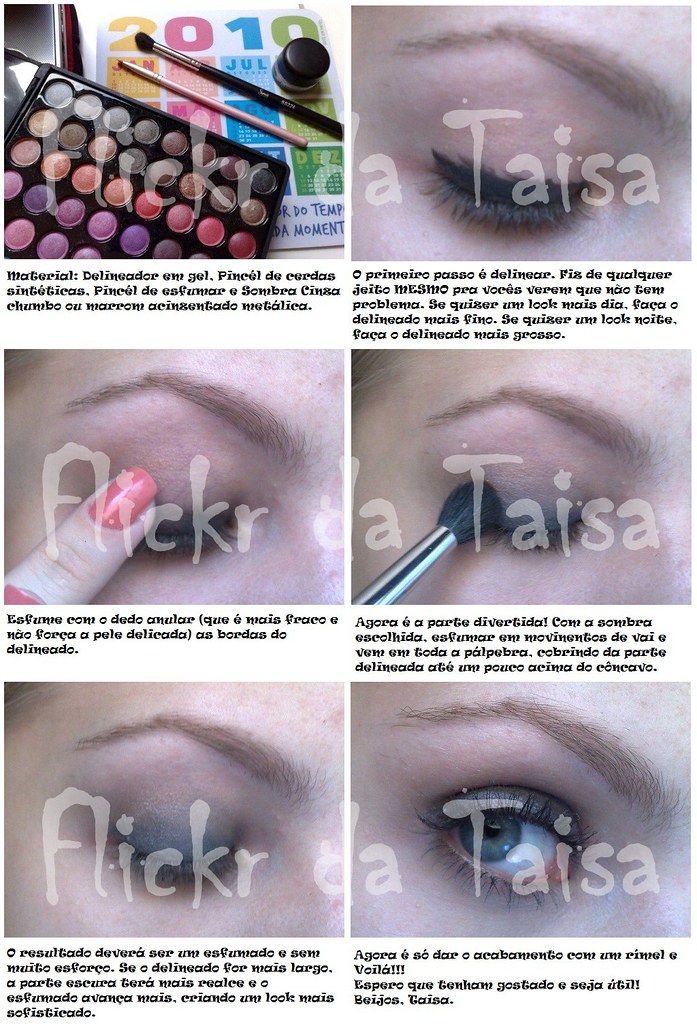
Para ler, no tamanho grande fica melhor. Não tá gigante pq não tem muitos detalhes, então não precisa!
BEIJOS
I've posted a tutorial on how I photoshopped this image on my blog at cymagen.blogspot.com/2007/01/anatomy-of-psd-part-1.html
Well, I must confess: all this "West Dune Customs" stuff I came up with, should have been just something to introduce my new MOC. Obviously it got completely out of control, gaining its own dignity, so I hope you won't be disappointed with the real MOC.
Here it is, a X-34 Tatooine landspeeder revamped in a Classic Space way, another Classic Space - Star Wars mashup from me, after Rey's speeder. What's wrong with me and speeders?
I got the same idea my friend billyburg got, but he's clearly a faster builder than me, so he uploaded his version (billyburg's classic space landspeeder) to Flickr more than a month ago. I love his version so much that I almost gave up building mine; I didn't want to give the impression of copying other people's work. Luckily, this thought lasted just less than a day...
No piece has been cut or glued. For the "snot reversal tecniques" I used on the rear of the speeder and on the side of the seats I have to thank kosbrick and his tutorials.
For the turbines design credits to Larry Lars. As I already wrote, I tried at least three different versions of the turbines, but I ended up using his, the one, eventually, I was happiest with.
I think it's a very hot landspeeder, but I am, obviously, not impartial. Maybe a little too long, but at the West Dune Custom they had to lenghten the chassis to install such a badass engine. ;-)
And the license plate? Well, 1970 is the year I was born, so LL970 was a straight choice... :D
Dec 12
Well since I didn't feel like ordering a bunch of legos flashmasks a decided to try to make my own.
You will need:
-Green stuff (or something like it)
-A thin but hard plastic sheet
-A stud
-A lego head to sculpt on
This is how you can do it for yourself step by step:
1-Cut of the antistud-ring part of a stud.
2-Glue a thin piece of plastic on top of the ring on the side you cut.
(to prevent the sculpting material to get in the antistud)
3-Put it onto a lego head (tip is to take a scrappy head and glue a stud underneath to make it easier to remove it afterwards and then put lots of oil(for example olive oil) on top of the head)
4-Make a thin pretty rough sculpt around the head.
5-Cut out the eye parts and the underline of the mask and sand it.
(sculpt again if needed)
6-Remove it from the head. (It won't stick to the head if ypu use the oil on the head)
7-Paint it as you want.
(8-Add other details to it. You can use for example a hard, thin plasticsheet or just sculpt)
Hope you feel inspired :)
Comment if you did get inspired and what you think of it.
This helmet is not done for what I'm going to use it for. :P
This is actually really old but yesterday I noticed I never posted it, so here it is, a tutorial on light stencils.
I have told you about GIMP, a free Image Manipulation Program. It works really well, and I´d say as well as Photoshop, and the bonus...IT´S FREE!
I took the originals of few of my photos that I´ve manipulated in Photoshop and re-did them in GIMP, getting the same results.
But as always, it´s best to start slowly and get to know the program and first of all, learn how to download GIMP. For those of you who don´t have gimp, here is a link to how to download it:
www.flickr.com/photos/soffia/2339766783/
The tutorial with explanation images is here: www.soffia.net/gimptutorial02.html
1. Select from the menu: File → Open and choose the Image you´re gonna work with
2. Select from the menu: Colors → Brightness-Contrast...
3. Drag the slider up to 20 or write the number 20 in the box next to contrast. Click OK. Play around with different numbers in both brightness and contrast.
This tutorial is done in Photoshop CS3, and you need some basic knowlegde to follow it. The numbers are the exact ones I used.
Step by step snapshots at www.soffia.net/tutorial.html
1. I duplicade the layer twise, on one layer I erase out carefully the mountain with soft eraser, opacity 100 flow around 60. (you can also use masks) One layer is just to have the photo as it is.
2. Name the layers ( image01) mountains, clouds and just_in_case_layer.
3. Go to creatae new fill or adjustment layer and choose Levels. (Image 02) I tweeked the 3 arrows untill I got 8 ~ 0,73 ~ 200
4. Go to creatae new fill or adjustment layer again but this time choose Brightness/Contrast. and put in -12 for brightness and contr. -28 (Image03)
5. Go to creatae new fill or adjustment layer again and choose Hue/Saturation. (Image 04)
take up saturation to 22
6. For now, I´m fairly happy with the mountains, so now I drag the Clouds layer on top of all the layers. (Image 05)
7. Then I merge the mountains with all the adjustment layers by selecting all the layers, and choose merge layers (Image 06)Name the Layer mountains again if it´s called hue/saturation.
8. Now we can work on the clouds, you can turn off the mountains layer by clicking on the eye on the left. Go to creatae new fill or adjustment layer and choose Levels. (Image 02) I tweeked the 3 arrows untill I got 18 ~ 0,84 ~ 215
9. I want a little more contrast in the big cloud so duplicade the clouds layer, name it cloud-contrast go to Image - Adjustment - Levels. Use 59~ 0,64~ 195. The reason why I choose levels from there is cause I only want it to affect the new cloud layer(Image 07)
10. with the cloud-contrast layer picked, go to Image - Adjustment - Brightness/Contrast and put brightness to +36 and contrast +17
11. I find the cloud too red, so go to Image - Adjustment - hue/saturation, in Edit: choose
Reds and take the saturation down to -42. After that I rease around it so the layer would look like this (Image 08)
12. Let´s go to the Clouds layer again, Go to creatae new fill or adjustment layer and choose Brightness/Contrast. put in +45 for brightness (Image03)
13. Go to create new fill or adjustment layer (Image 04) and choose Hue/Saturation. In Edit:
Blues hue: -13 sat: -67
Cyans hue: -10 sat: -57 (or tweek the numbers untill you´re happy with the colors......)
15. Merge the layers by selecting Cloud-contrast,clouds and the all the adjustment layers(image 06) (you can also select the layers and hit Ctrl + E )
16. Turn on the Mountains Layer. Flatten image. Then I did some more adjucstment with hue/sat, cyan -9 and -39 then blues -4 and -22 and Yelloes -35. And then I went to levels and did 8 ~ 1,16 ~ 255.
17. Then I put the lomo gradient fill with 40 % opacity on that layer
I did use the clone stamp to erase out a part of the sky, the dark bottom part... :P
And finally I ran it through Neat Image, a software I bought the other day. neatimage.com/
I could probably spend another hour tweeking and tuning. But let´s say this done for now.
1 » foto original;
2 » Selecione o rosto sem selecionar olhos, boca e narinas;
3 » Após selecionar, copie (ctrl+c), cole (ctrl+v) e duplique a camada colada (ctrl+j). Na cama da meio, aplique um desfoque gaussiano (Menu Filtro/Desfoque/Desfoque gaussiano/5,0 OK). Na última camada (a de cima), você vai aplicar uma alta frequencia (Menu Filtro/Outros/Alta Frequencia - high pass/1,5 OK). A imagem ficará cinza, então mude para sobrepor (overlay) e una as camadas. Obs.: Caso precise arrumar alguma coisa que ficou "embaçada demais", vá na camada do desfoque gaussiano e passe uma borracha macia com uma opacidade baixa.
4 » Boca: Selecione a boca e vá em Menu Camada/Nova camada de preenchimento/Cor sólida. Escolha uma cor que fique boa pra boca e clique em OK. Caso fique borrado, é só usar a borracha macia (sempre usando a borracha macia =))
5 » Como fica a camada =)
6 » Olhos (oba!): Os olhos são que nem a boca. Você seleciona onde você quer a sombra e o lápis. Nesse passo, fiz o lápis e o delineador. Junto à foto tem as camadas. =)
7 » Mesma coisa. Selecione os olhos e pinte com o preenchimento de camada. Caso precise, dê um desfoque gaussiano pra ficar mais realista e tire um pouco da opacidade ou use a borracha, também. Mudei a cor dos olhos, também. Deixei mais viva a cor. É o mesmo passo. =)
8 » Como os olhos ficaram e o blush, que é a mesma coisa. Selecione as maçãs do rosto e vão em Menu Camada/Nova camada de preenchimento/Cor sólida/Escolha a cor OK e tire a opacidade. Será necessário dar uma desfocada (ctrl+f, caso tenha sido o último filtro que você usou =))
9 » Resultado.
Espero que tenham gostado e que eu tenha ajudado! hehe.
Qualquer dúvida, perguntem! =D
about b/w conversions - dedicated to Colormaniac too, who brought up the subject. Link: [youtu.be/XA0Of0QMtIs]
Tutorial.
Duplicate layer, right click on layer and choose duplicate layer, name it 01.
Now you have 2 Layers, called Background and 01. Make sure the 01 layer is chosen.
Go to Layer - New Adjustment layer - Brightness Contrast. brightness 0 contrast +17
Go to Layer - New Adjustment layer - Levels - the numbers are 12, 1,00, 215.
Now I´m happy with the sky for now, so now we´ll fix the rocks in the forground.
Duplicate the Background layer, name it 02, and drag it on top of all the layers.
Go to Image - Adjustment layer - Levels ( nb, now go to IMAGE not LAYER) Set it to 17 , 1,91 , 196
With the Erase tool(or Masks) erase the sky and the hill.
Go to Layer - New Adjustment layer - Hue/Saturation. Choose:
Cyan, -18, -31, 0
Blues, -16, -23, 0
And finally I put a little lomo vignette ( how to? you´ll find that here www.flickr.com/photos/soffia/1398672858/in/set-7215760238...
The opacity on the vignette layer on this photo here is 50%
In this advanced Photoshop tutorial I will show you how to create a nice floating woman in a forest. We will turn the forest from day to night effect in Photoshop and we will mask the sky using Calculations. We will create realistic depth of field using a Depth Map and we’ll paint realistic hair and light effects.
Tutorial here: www.psdbox.com/tutorials/fantasy-photoshop-tutorial-float...
Hey everyone.
Isaac and John asked me to write a small tutorial for my waterfall design to be featured on their awesome site www.brickbuilt.org/.
Check it out here!
Step 1 - Taking the Image
When I first started off using my DSLR, I knew diddly squat about camera settings, auto-bracketing, manual mode etc...
Experimenting with different settings, looking at various tips and tutorials have improved my knowledge vastly on this.
So here we go then…Firstly there are two main ways to create the source images needed for HDR.
- Autobracketing
- One raw image
Autobracketing:
Most DSLR camera’s have the ability to bracket multiple exposures. This is simply a way to tell the camera to take several shots in quick succession, each at different exposures. For example, in this image a -2, 0, +2 setting was used to take three shots.
When deciding on how many auto-bracketing exposures to use, you will need to consider the contrast range of the scene. If there is a higher contrast range, consider using a wider bracket setting.
Now this may not be possible on some cameras. My own Canon 400D only has the ability to bracket 3 shots, but some cameras are able to go as high as nine. Normally 3 exposures are suffice for me when shooting in interior locations, such as churches and other buildings.
When I do need more than 3 exposures, I normally take auto-bracketing off in Aperture Priority mode and fire out 5 or more shots by manually changing the shutter speed each time.
One RAW image:
The other way to produce the 3 shots needed is to take 1 photo and adjust it in a RAW editor such as Lightroom, Aperture or any other one you may use.
The main advantage with this is that you can produce a HDR shot with moving subjects such as cars and people. The downside from experience is that if an image contains dark shadows, the exposure adjusting followed by the HDR process has a tendency to create a lot of noise. The other thing that is debated quite often is that by taking 1 raw image, it doesn’t truly capture the full dynamic data range of a scene.
Camera Settings
-Shoot in RAW – it allows you to capture more dynamic range data than using JPEGs.
-Use a tripod. In some places this can be difficult, especially in churches. Alternatively, try and find some kind of ledge, bench, stack of books or take up an awkward stance and take the image handheld.
-Use Aperture Priority mode on your camera. As you will be combining several images into one, you don’t want your Depth of Field (DOF) to change between shots, as the final image will appear all out of focus.
-Keep the ISO setting to the minimum. The higher the ISO setting, the more noise it will generate. I try to keep mine at 100 whenever I can.
* You can enlarge any of the screenshots below, by clicking on the image and following the high resolution link from there.
** Update: I have loaded the 3 original hi-res exposures for you guys/gals to experiment with. Click on them below and then save. Have fun and it will be great to see what you can come up with.


*** Update 2 - Be sure to check out my latest tutorial which focuses more on the post processing techniques in Photoshop. You can find that tutorial here.
TUTORIAL ♥♥
A lot of people asked me how special shaped bokehs are done. I decided to put together a tutorial and explain things in details.
This is a single shot out of the camera! Nothing was added in Photoshop.
Special thanks to Tony who helped me with the picture formatting!
#28
New Lightroom Tutorial! How to edit golden hour portraits: www.youtube.com/watch?v=xvcUcxrQ_Wk
Taken on:
Sony A7III / Sony GM 85mm f1.4
Model: Georgette
Makeup: Lidija J
Oi meninas, final do ano a gente tem aquele monte de eventos né? É festinha disso, encerramento daquilo, coquetel, amigo secreto, festa de fim de ano da empresa... pensando nisso resolvi hj fazer uma make não muito cheguei, mas bem bonita pra esses tipos de evento.
Fotografei o passo a passo, mas tô com uma preguiça enorme de editar, vcs perdoam???? rs rs rs
O que usei:
- Fixador de Sombra Contém 1G
- Sombra Pérola do trio Hippie Chic NYX
- Sombra 06 Duda Molinos
- Sombra Marrom Cintilante Contém 1G
- Iluminador Sun Light Nivea
- Jumbo Eyeshadow cor Gold NYX
- Rímel Ashtoning AVON
Depois eu aviso quando postar o tutorial tá?
Many of you have requested a Poseable Arms Tutorial, so here it is, as promised! I explained the best I can, but if you have further questions, don't hesitate to ask. Have extra pieces in case of an accident; you may need multiple test trials for this (I know I did :P). I hope you can use this tutorial to improve your figures! View on all sizes for close-ups on the instructions.
What you will need:
-Torso - www.bricklink.com/PL/973.jpg?1
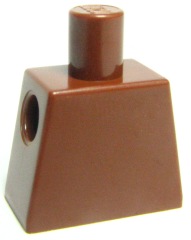
-Arms - www.bricklink.com/PL/981982.jpg?0

-Old skeleton arm - www.bricklink.com/PL/6265.gif?0
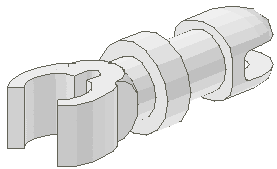
-Lever - www.bricklink.com/PL/4593.gif?0

-A crafting knife
-Superglue
-Andrew
Few people were interested about the 'acrylic' fake nails I made for my Zero, so I decided to make a tutorial so everyone can make their dolls some fancy nails.
You can make any kinds of fake nails with this method, and maybe use other material than straw, but this is just how I do it.
Hope this is helpful!
Edit: Hotglue is perfect for this. Just remember to be quick when you glue them on, a small drop of glue on the hand and quickly place the nail and hold for a few seconds. It's better to be quick than super precise, because if the nail is crooked you can just peel it off and try again. If you wait too long and the glue starts to get cold, it won't stick as well and will come off a lot easier.
As promised, here is the tutorial for my littler R0-XI Droid. I'd love to see your versions of it, so feel free to tag me in your post, if you use the design.
Gostaria do tutorial destes box, para passar para uma amiga muito querida Lelê Ceschini, se alguém tiver, agradeço!
bjos
Want to make a neat semicircle tower for a gatehouse or other project? Then the latest tutorial on Brickbuilt is just what you need!
Tutorials | Creations | Featured Tutorials | Build Logs | Commissions
This tutorial explains how I built the 45° roof of my Riften Watchtower, and also shows the method I used to make the plank siding underneath the roof-line.
Check it out on brickbuilt.
This is the second tutorial geared around the frame warping and a little more on shadowing using PS CS2. Also see below for the first tutorial on creating a OOB as well. Please let me know of any errors or if you have questions here.
Working on a temple and decided to add an interior. Wanted to play around a bit with the floor and found some inspiration looking at -LittleJohn and Katie Walker’s work so I decided to make a tutorial :) Hopefully some people will find it useful. The full build should be done fairly soon so stay tuned ;)
Okay, so I made this tutorial a while back, and I shared it on my Facebook MOC page.
I've got the link to the rest of the tutorial below!It's relatively simple and decently sturdy. Plus, IMO it fits in pretty good with an Oriental setting. :)
Enjoy and God bless!
www.facebook.com/LEGObyNelson/photos/pcb.1083726751661965...
1. Simplicity shorts 2353 pattern tutorial, 2. Cut 2, 3. Shown cut out, 4. I only cut one small notch, 5. Right sides together, pin, 6. Sew center front, 7. Snip some to ease the seam, 8. Fray Check!, 9. Iron bottom hem on both sides, 10. Sew bottom hems on both sides, 11. Fold down and iron elastic casing, 12. Sew along casing line, 13. Cut a piece of elastic 3 1/2" long, 14. Thread the elastic with a bodkin, 15. Put the eye through the bottom opening until it comes out the other side, 16. Thread the eye with the elastic, 17. Try to flatten the elastic over the eye, 18. Pull the elastic through the opening, 19. Don't let the elastic come all the way through, 20. Sewn down elastic, 21. Do the same thing on the other end, 22. Even out the "bunches" above the elastic, 23. Fold in half, right sides together, 24. Sew along back, 25. A few snips for fabric ease, 26. Fold the shorts in on themselves, 27. Create leg holes by folding (sort of like a cootie catcher), 28. Pin in place, 29. Sew up one leg and down the other, 30. Snips for ease, 31. Turn inside out, 32. B: You didn't match up the plaid lines very well, lady.
See the photo set: www.flickr.com/photos/morganannie/sets/72157624438391206/
Image created for a tutorial.... inspired by the amazing James White... signalnoise.com
Check the tutorial out at abduzeedo.com/really-cool-eclipse-effect-photoshop
The latest tutorial on Brickbuilt shows how to build slanted rockwork, like I used in my Risky Endeavor creation.
NEW VIDEO! iPhone Photography Tutorial: Lippen - Surreal Portrait #04 #video
Check link on my Instagram profile for my channel. OR here’s for direct link to video: youtu.be/Ok9e_PtsUGU
Enjoy!
#surreal #icolorama #superimpose #lensdistortions #mextures #iphoneart #mobileart #iphoneonly
•
•
•
•
•
•
•
•
•
•
•
•
#instagram #mobileartistry #shotaward #artsick #fineartphg #expofilm #enter_imagination #graphicroozane #thecreativers #manipulationteam #moodcommunity #launchdsigns #milliondollarvisuals #imaginativeuniverse
#iphoneography #iphone #photography
If you have ever struggled with making a round roof, you'll definitely want to check out this tutorial by Cozei on brickbuilt.
Picture II
For those who did not see the first picture...
This is going to be my first visual tutorial about consciousness and awareness.
It is very easy because the pictures will speak for themselves.
Without words you will understand, what it all means.
Maybe you discover something very important for yourself... :-)))
If you like, ask yourself what you see and how you see.
Next picture tomorrow.
HKD