View allAll Photos Tagged Three
china
Location : Yunnan, Dali three pagoda
Camera use:-Canon EOS 500D
Lens use:-Sigma ultra wide 10-20mm f4-f5.6
Technical Details n Story line:- single raw .
Here, for ur ultimate viewing pleasure, just click EASY VIEW OF MY SLIDE SHOW . to enjoy my photostream . ..
Due to copyright issue, I cannot afford to offer free image. Pls kindly consult my sole permission to use any of my photo.u can email me at : men4r@yahoo.com.
Thanks for viewing!!!!
Don't use this image on Websites/Blog or any other media
without my explicit permission. © All rights reserved.
Three Cedar Waxwings on a branch with two framed by another branch. Gatewood Park, Duck Creek, Dallas, Texas. 9 December 2024
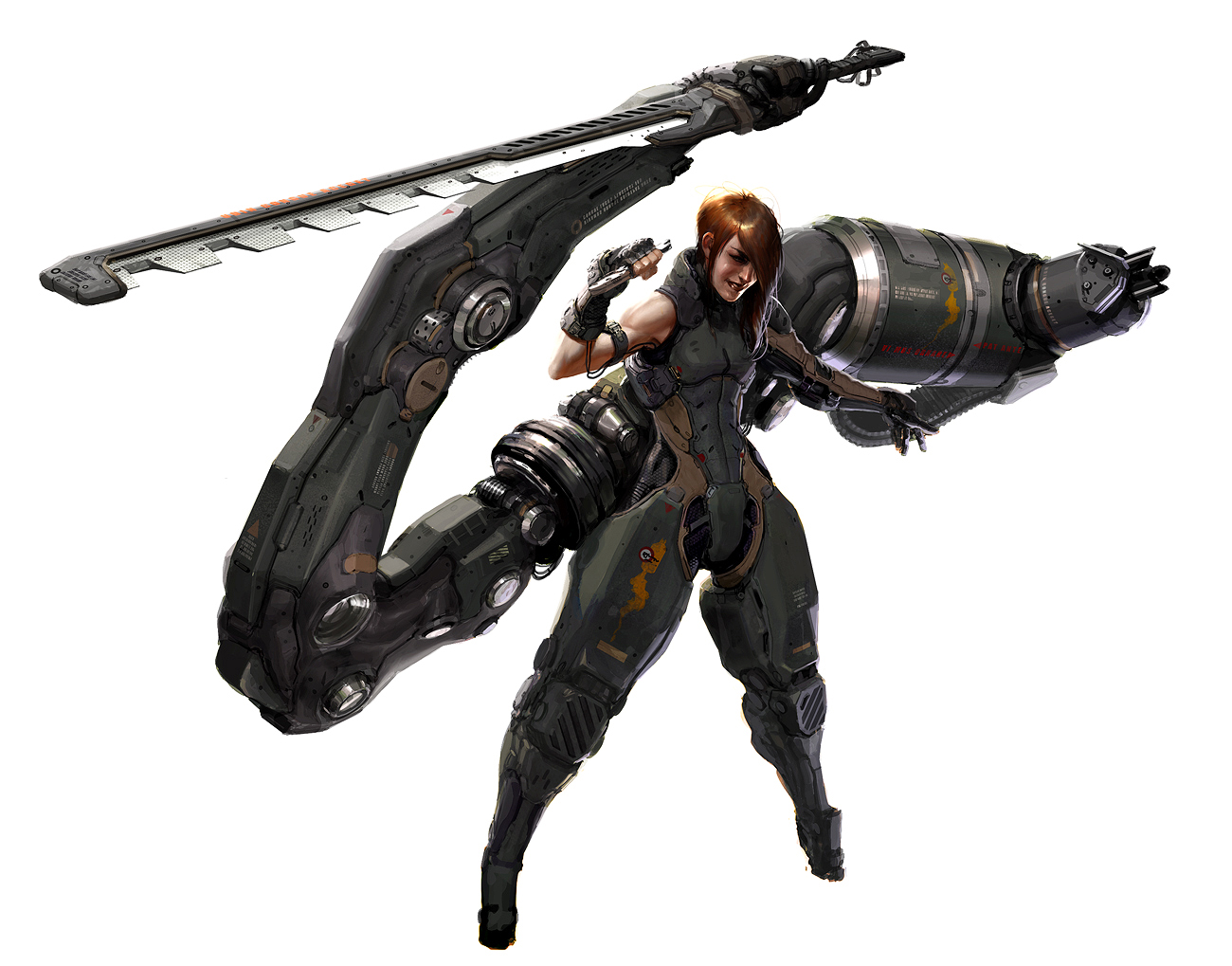
Contrary to it’s name the Three Armed Sloth is a marvel in speed, balance and neural augmentation. The battle armor suit protects the wearer from weapons damage but it also amplifies strength and keeps balance even in high speed and tricky terrain.
Neural connectors gets feed directly from the brain and the suit can therefore react in real time to the wearers moves. It can also feed data and stimulus back to the brain.
Mounted on the back of the suit is the real reason for it’s efficiency in combat. A robotic arm that can wield a multitude of weapons and mimics every move of the suit's right arm. This suit is armed with an Anti-Armor-Vibro-Sword that can cut through steel, stone and armed concrete like it’s made of paper.
On the other end of the robotic arm is the counter weight and the balancing machinery that keeps the suit in the right position and keeps the wearer from feeling any of the additional weight and momentum from the arm. Some arms have mounting points for additional weaponry, like the one seen here. A double barrel Auto-Target-Anti-Personnel-Rail-Gun tracks targets and feeds the results directly into the visual cortex of the wearer.
The wearer carries a "control pad". Shaped like a sword and weighted properly to make the feeling of swinging a sword feel more like the real thing. The controller is equipped with triggers for the various weaponry the suit carries.
-----------------------------------------------------------------
Ever since I saw this great moc by polywen I've been somewhat fascinated by the Galidor heads. Allegra's head in particular. I think it's one of the best minifig heads LEGO ever did.
So I bought one. Since then I've wanted to build something fitting this great LEGO piece. Not long thereafter I stumbled onto this sketch by Trevor Claxton. I knew I had to try to build something like that. I think I have been trying to build this for at least a year. Trying to find the right parts. The right proportions. Now, I really need to be finished with this MOC, or I think I might go insane :)
This is my version of Allegra. Allegra 2.0. This is what Galidor should have been.
Three Little Birds .... Bob Marley.
www.youtube.com/watch?v=HAMjxUKxqlo&NR=1
"Don't worry about a thing,
'Cause every little thing gonna be all right.
Singin': "Don't worry about a thing,
'Cause every little thing gonna be all right!"
Rise up this mornin',
Smiled with the risin' sun,
Three little birds
Pitch by my doorstep
Singin' sweet songs
Of melodies pure and true,
Sayin', ("This is my message to you-ou-ou:")
Singin': "Don't worry 'bout a thing,
'Cause every little thing gonna be all right."
Singin': "Don't worry (don't worry) 'bout a thing,
'Cause every little thing gonna be all right!"
Rise up this mornin',
Smiled with the risin' sun,
Three little birds
Pitch by my doorstep
Singin' sweet songs
Of melodies pure and true,
Sayin', "This is my message to you-ou-ou:"
Singin': "Don't worry about a thing, worry about a thing, oh!
Every little thing gonna be all right. Don't worry!"
Singin': "Don't worry about a thing" - I won't worry!
"'Cause every little thing gonna be all right."
Singin': "Don't worry about a thing,
'Cause every little thing gonna be all right" - I won't worry!
Singin': "Don't worry about a thing,
'Cause every little thing gonna be all right."
Singin': "Don't worry about a thing, oh no!
'Cause every little thing gonna be all right!
Modelo:
La señorita Triple M ;)
Configuración:
1/60
ƒ/13
ISO 100
Sigma 18-200mm F3.5-6.3 DC OS
Canon Speedlite 430 EX ll Con paraguas translucido
Very evocative view of the clouds/mist clinging to the hillsides as we progressed up the Yangtze through the Three Gorges during floods.
Panasonic GX7 || Olympus 15mm f8 Body Cap Lens
--------------------------
About Me - about.me/edwardconde
Follow me on ello - ello.co/edwardconde
These three insanely good photographers go make it all the way in the future of photography, I'm glad they're able to my friends but, above all, as my examples for stunning photography…..creme de la creme :-))
From left to right: Geraldos-Mister Watzpatzkowski and Richard Terborg….
At ScaryCanary Venue, Stourbridge, West Midlands, UK
Polaroid 100 Land Camera
Fuji FP3000B Instant Film
Negative Scan
This photo is from my current ongoing "ScaryCanary Polaroid Portrait Project". ScaryCanary is the independent music venue and gallery that is very much at the centre of the local alternative music scene at. I play there myself on a regular basis and am using up some of my remaining stock of Fuji FP3000B on a series of portraits of people who work, exhibit, perform and "hang out" there.
Three Legs Forward. Try to imagine Two Tone Ska fused with the Stooges.
www.facebook.com/The-ScaryCanary-Polaroid-Portrait-Projec...
The building comes from a large merchant's property which was originally built in Jomfru Anegade in Aalborg in 1585. The construction, with jettied storeys, makes each storey broader and longer than the one beneath it. Rebuilt in "Den Gamle By" (English: The Old Town) in 1926.
In 1914, the museum opened as the world's first open-air museum of its kind, concentrating on town culture rather than village culture. The museum consists of 75 historical buildings collected from 20 townships in all parts of the country. The town itself is the main attraction but most buildings are open for visitors. The rooms are either decorated in the original historical style or organized into larger exhibits.
20180506_9540_7D2-200 Three surfers
With the cargo ship BBC Germany approaching Lyttelton Port at the end of a 12 day voyage from Darwin, Australia.
#9502
Three versions of the Takumar 50mm f1.4.
The earliest, 8 elements Super-Takumar; the 7 elements radio-active, Thorium coated Super-Multi-Coated Takumar; and the last Takumar 50, the SMC.
Each has it's own distinctive characteristics created by the different lens designs and coatings.
German postcard by Ross Verlag, no. 5020/1, 1930-1931. Photo: Universal. Publicity still for The Galloping Kid (Nat Ross, 1922).
Hoot Gibson (1892-1962) was a rodeo champion and pioneering cowboy star of silent Westerns. With his easy combination of light, breezy, boyish charm comedy and riding abilities, Hoot filled a gap between the austere William S. Hart and the flamboyant Tom Mix and appealed both to adults (especially women) and kids. During the 1920s, he was one of the most popular children's matinée heroes, ranking second only to Mix, and one of Universal's top paid stars. In his real life, however, he had an expensive love for fast cars, motorcycles and airplanes and lead a rather painful rags-to-riches-and-back-to-rags career.
Hoot Gibson was born Edmund Richard Gibson in 1892, in Tekamah, Nebraska. As a child he grew up 'horse crazy' and received his first pony at the age of two and a half. His family moved to California when he was seven. At age 13 the adventurous youth ran away from home and joined a circus for a time. At B-Westerns.com, Hoot recalled: "First job I got was on the Postal Telegraph. I was then 15. I rode that for about three months and liked it fairly well. I got a job at the Owl Drug Co., delivering drugs and packages to the different homes throughout southern California or that part of Los Angeles. That is where I got the name of Hoot. It came from Owl and later the boys started calling me Hoot Owl, then it got down to Hoot and Hoot has stuck with me ever since." Later work included punching cows in both Wyoming and Colorado. While working as a horse wrangler, Hoot developed a strong, active interest in the rodeo scene. In 1907 he signed a four-year contract with the Dick Stanley-Bud Atkinson Wild West Show, which toured throughout the US and later Australia. By 1910 Hoot started his film career with the Selig Polyscope Co. as one of the industry's first stuntmen. He was paid $2.50 for performing stunts, training horses and doubling for Selig stars. Director Francis Boggs was looking for experienced cowboys and stunt doubles to appear in his Western short Pride of the Range (Francis Boggs, 1910) starring Tom Mix. Gibson and pal Art Acord did riding and stunting jobs for the film. Gibson made a second film for Boggs The New Superintendent (Francis Boggs, 1911) with Herbert Rawlinson. Hoot lost a solid Hollywood contact in Boggs, however, when the director and his working partner, producer William Nicholas Selig, were both shot in October, 1911, by a mentally disturbed employee. Selig was injured, but Boggs was killed. Gibson also found stunt work in such prolific Western shorts as The Two Brothers (David Wark Griffith, 1910), starring Henry Walthall, and His Only Son (Jack Conway, 1912). Acting for Gibson was then a minor sideline, and Hoot continued to forge a name for himself on the rodeo circuit with his pal Art Acord. In 1912, at age 20, he won the title 'All-Around Champion Cowboy' at the famed annual Pendleton (Oregon) Round-Up. He also won the steer-roping World Championship at the Calgary Stampede. While on the circuit, he met fellow rodeo rider Rose August 'Helen' Wenger. They eventually married and she took on the marquee name of Helen Gibson. She even found film stunt work herself and eventually was chosen to replace Helen Holmes as star of the popular movie serial The Hazards of Helen (J. Gunnis Davis a.o., 1914) during mid-filming. Hoot himself had the job doubling Helen Holmes and doing the stunts from horses to trains in the Universal cliffhanger. Hoot picked up new connections in the film industry with Western star Harry Carey and director John Ford. With Ford, Gibson developed a lasting friendship and working relationship. Gibson gained some momentum as a secondary player in a few of their films, including Cheyenne's Pal (1917), Straight Shooting (1917), The Secret Man (1917) and A Marked Man (1917). With the outbreak of World War I, however, Gibson's film career was put on hold. He joined the US Army, eventually attaining the the rank of sergeant while serving with the Tank Corps, and was honorably discharged in 1919. He returned immediately to Universal and was able to restart his career.
At Universal, Hoot Gibson quickly worked his way up to co-star status in a series of short Westerns, often directed by John Ford. The two-reelers usually co-starred either Pete Morrison or Hoot's wife Helen, or sometimes both. Films such as The Fighting Brothers (John Ford, 1919), The Black Horse Bandit (Harry Harvey, 1919), Rustlers (John Ford, 1919), Gun Law (John Ford, 1919), The Gun Packer (John Ford, 1919) and By Indian Post (John Ford, 1919) eventually led to his solo starring success. During this prolific period, he was also directed by George Holt in The Trail of the Holdup Man (1919), Phil Rosen in The Sheriff's Oath (1920) and Lee Kohlmar in The Wild Wild West (1921). Around this time, Hoot and Helen divorced. In the early 1920s, Hoot went on to marry another Helen, vaudeville actress Helen Johnson. They had one child, Lois Charlotte Gibson, born in 1923. The couple divorced in 1927. By 1921, the demand for cowboy pictures was so great, Gibson began receiving offers for leading roles. Superstardom came with the Western Action (John Ford, 1921), which was taken from The Three Godfathers story. It starred Hoot, Francis Ford and J. Farrell MacDonald as a trio of outlaws on the lam who find a baby. Action propelled Gibson to fame and fortune and he remained at Universal for the next 10 years. Boyd Magers and Bill Russell at B-Westerns.com: "What made Gibson so popular over the years? He was not what one might call handsome, being a little on the homely side, nor did he cut a dashing figure on horseback, although he could ride like a demon. Neither was he a polished scrapper of the Bob Steele school of fisticuffs, but could mix it up with the best of them. He mostly never wore a gun in the standard cowboy hero way, instead shoved it in his belt or boot. So what made this cowboy hero one of the greats? You could call it character, a certain boyish charm, or simply a naturalness that appealed to the western fan. He had a contagious smile, and while most heroes had a sidekick who provided the comedy routine, Hoot was his own best sidekick." During his Universal years, Gibson starred in such classics as the exciting The Ridin' Kid from Powder River (Edward Sedgwick, 1924) , the humorous Chip of the Flying U (Lynn Reynolds, 1926) and the more serious and dramatic The Flaming Frontier (Edward Sedgwick, 1926) with Dustin Farnum, he would occasionally step out of his Western roles for a non-Western feature. By 1925 Hoot Gibson was making approximately $14,500 a week and spending it about as fast as he was making it.
Hoot Gibson successfully made the transition to talkies and, in 1930, married popular Jazz-era actress Sally Eilers, a third party to his previous divorce. The couple made three features together: The Long, Long Trail (Arthur Rosson, 1929), Trigger Tricks (B. Reeves Eason, 1930) and Clearing the Range (Otto Brower, 1931). When she found celluloid success on her own with the Oscar-winning Bad Girl (Frank Borzage, 1931), Sally decided to split from Hoot professionally and personally. They divorced in 1933. Hoot lost his Universal contract in 1930, which signified the start of his decline. During the early 1930s, he secured contracts with the Poverty Row outfits Allied Pictures and First Division Pictures, but the quality of his films suffered. Hoot had already begun to feature race cars and airplanes in his films such as The Flyin' Cowboy (B. Reeves Eason, 1928) and The Winged Horseman (B. Reeves Eason, Arthur Rosson, 1929). Gary Brumburgh at IMDb: "Airplanes in particular became a large, expensive passion of his. In 1933 he crashed his biplane during a National Air Race in Los Angeles, which had pitted him against another cowboy star, Ken Maynard. Fortunately, he survived his injuries." With the advent of talking films, singing cowboys such as Gene Autry and Roy Rogers were becoming the new rage, and both Hoot and Tom Mix felt the kick. Yet he managed a couple of comebacks by pairing up with others stars. He joined old silent film teammate Harry Carey and 'Guinn Big Boy Williams' in the 'Three Mesquiteers' Western Powdersmoke Range (Wallace Fox, 1935), and was billed second to Ray Corrigan in the Republic serial The Painted Stallion (Alan James, Ray Taylor, William Witney, 1937). Gary Brumburgh: "Hoot left films and toured with the Robbins Brothers and Russell Brothers circuses during 1938 and 1939 before retiring from show business altogether. His multiple divorces and reckless spending habits had taken their toll on his finances. For a time he found work in real estate before Monogram Pictures offered the stocky-framed actor a chance to return in 1943. Hoot teamed up with cowboy star Ken Maynard in the popular 'Trail Blazers' series, and the duo were later joined by Bob Steele. Chief Thundercloud replaced a difficult Maynard on a couple of the films, but by the end of the series Gibson and Steele were riding alone together." The nearly dozen films in the series began with Wild Horse Stampede (Alan James, 1943) and ended with Trigger Law (Vernon Keays, 1944), the latter being his last hurrah in films. Hoot then returned to real estate. By the time he appeared as a surprise guest on the popular sitcom I Married Joan (1952) starring Joan Davis, his Western features of the 1930s and 1940s, as well as those of Maynard, Steele and others were a large staple of films seen by a TV audience that couldn't get enough Western fare. He did a favour for old friend John Ford by appearing in a cameo role in the director's The Horse Soldiers (John Ford, 1959), starring John Wayne and William Holden. His last movie spotting was a guest cameo in the 'Rat Pack' film Ocean's Eleven (Lewis Milestone, 1960). Hoot married a fourth and final time in 1942, to 22 year old yodeler and actress Dorothea Dunstan. This marriage took hold and lasted for 20 years until his death. By the 1960s Gibson was on the verge of financial collapse after a series of bad investments. Gary Brumburgh: "Diagnosed with cancer in 1960, rising medical costs forced him to find any and all work available. He was relegated at one point to becoming a greeter at a Las Vegas casino and, for a period, worked at carnivals. It was an unhappy end for a cowboy who brought so much excitement and entertainment to children and adults alike." In 1962, Hoot Gibson died of cancer at the Motion Picture Country Home in Woodland Hills, California, just a couple of weeks after his 70th birthday. He was interred in the Inglewood Park Cemetery in Inglewood, California.
Sources: Gary Brumburgh (IMDb), Boyd Magers and Bill Russell (B-Westerns), Wikipedia and IMDb.
It was hard to know where one of the Three Cities ended and another one began, but one of the three was in the middle! It was nearly time to go back to Valletta to look for somewhere for dinner, and to get back we decided to catch the ferry (rather than the little wooden boat!). Ahead you can see the Bormla sign and also a sculpture of a boat and an airship in steel by Matthew Pandolfino 'Dghajsa tar-Rih'.
Cospicua (officially Bormla) is the largest of Malta's "Three Cities," located across the Grand Harbour from Valletta. It is a historic fortified city famed for its role in the 1565 Great Siege, impressive 18th-century bastions (Cottonera Lines), the Collegiate Church of the Immaculate Conception, and a recently redeveloped maritime dockyard area.
Known as Città Cospicua (conspicuous city) for its resilience, it served as a crucial defensive, residential, and maritime hub under the Knights of St. John.(From Google AI)
A lovely day for a stroll on the beach, but best be quick...
Hand-held. AF.
Take a stroll on the beach with Pelcomb Portraits.
Eye to eye with the classic 727, otherwise known as "The Three Holer," about 1500 feet from touchdown makes for a great start to the day!
do the goats look uncomfortably awkward to you?...
u-ziq...okkervil river | the stand ins
[View On Black for detail]...dedicated to all those awkward [kids] starting school this week...i used to be one a long time ago.
Three superbly restored vehicles are seen in the turning circle at Beachy Head during the 2019 Eastbourne Classic Bus Running Day. From left to right is Ex-Midland Red 319 PHA 319M, Ex-East Kent 7739 GJG 739D and Ex-Roundabout DT39 G29 TGW. Sunday 7th July 2019
PHA 319M - Leyland Leopard - Marshall
GJG 739D - AEC Regent V - Park Royal
G29 TGW - Dennis Dart - Carlyle Dartline 8.5m
Three Shire Heads (also known as Three Shires Head) is the point on Axe Edge Moor where Cheshire, Derbyshire and Staffordshire meet, at UK grid reference SK009685, or 53.213°N 1.987°W.
It is on the River Dane, which marks the Cheshire border in this area. On the east of the river, the border between Staffordshire and Derbyshire runs north-east for about a mile to Cheeks Hill, on the higher regions of Axe Edge Moor. From Cheeks Hill the border runs south then east to the head of the River Dove.
The main landmark is a packhorse bridge. The bridge is Grade II-listed, and was probably constructed in the late 18th century