View allAll Photos Tagged Sentences
MORNING JOURNAL/SAM GREENE
Robert Shaw gives his statement to the court with his attorney Michael Duff in the courtroom of Judge Christopher Rothgery at the Lorain County Court of Common Pleas in Elyria, Ohio, on Wednesday, June 26, 2013. Shaw pleaded guilty to aggravated arson after Shaw making explosive gun targets at the Diamond Products plant in Elyria where he injured himself and set the plant on fire.
24 year-old Charly Pitman, of Brislington, Bristol, was found guilty of riot following a trial at Bristol Crown Court in April. On 7th July 2022 she was sentenced to three years in prison.
During her trial jurors heard how she positioned herself at the front of the crowd challenging police officers as they attempted to separate them from the neighbourhood police station.
They were shown footage of her acting aggressively towards the officers, striking their shields and helmets, and were told her actions caused them and others to fear for their safety.
Judge Julian Lambert said Pitman made a conscious decision not to leave the riot and encouraged others to attack police officers. He added jurors decided quickly there was ‘no basis for self-defence’, as Pitman had claimed during the trial.
Including Pitman, those jailed for offences committed during the riot have been imprisoned for a combined total of 74 years and nine months.
Commemorating the short life of Ramon B. Arabe. Mudered by relative at age of 21 on farm with bolow knife, who served about 8 year prison sentence, on 6 Aug 1984. Here are my pictures at a picnic, taken after his confirmation Christmas1981 at Hydro lake.
These are my personal notes taken during a presentation. I give them here because they may be of some interest. Do not expect the notes to always be in complete sentences, etc.
-----------------------------------
Creationism and Evolution in the U.S., On Anti-Intellectualism and Scientism
Presented by: Massimo Pigliucci (University of Tennessee, Knoxville, Tennessee, USA) (now with the Department of Philosophy at CUNY-City College, New York, New York, USA) (www.ccny.cuny.edu/profiles/Massimo-Pigliucci.cfm)
(en.wikipedia.org/wiki/Massimo_Pigliucci)
21 April 2000
----------
Aspects of anti-intellectualism:
1) Anti-rationalism - says that intellectualism is bad because it leads to moral relativism and leads to skepticism for authority. Also, it says that reason is cold and dull.
2) Anti-elitism - it is not good to have people who know better than you (intellectualism is anti-democratic). This is an American attitude. It is not something you see in Europe. Europeans don’t have a problem with accepting the reality of an intellectual hierarchy in society. As a culture, Americans tend to be skeptical of experts. But, this thinking doesn’t apply to sports experts or health care experts (doctors).
3) Unreflective instrumentalism - thought has no value if it is not practical (the basis for capitalism). This idea leads to disdain for theoretical inquiry.
4) Unreflective hedonism - points out that the media and mass entertainment provide pre-interpreted information to the public, which willingly accepts it without objection, because thinking is hard work, and therefore thinking is not desirable.
5) Post-modernism - the only non-American idea of this list, it originates from France. This idea says that all knowledge is relative (all opinions are equal, and equally good), and therefore you must have equivalency of different cultural traditions. Also, this idea concludes that science has not and should not have special pre-eminence. Advocates of post-modernism are considered the academic and cultural left, but they agree with creationist thinking. This is ironic, because creationists represent the academic and cultural far-right.
Anti-intellectualism converges upon public education by suggesting that book learning is elitist, vocational schooling is preferrable, and social development of students is more important than critical thinking or teaching of information.
A problem on the other side is excess of scientism. Scientism says that the scientific method is the most powerful tool for investigating reality. This is an OK statement and is fairly defensible, though some disagree with it. What isn’t OK to say is that science can solve any problem given enough time and money and resources (though this is what you say to the National Science Foundation!). The problem with this idea is that is gives people a too-high expectation for science. It is important to realize and admit that science does have limits, though. This is difficult to explain to the general public or the media or politicians.
Science is based on philosophical assumptions, but they are well-founded assumptions:
1) realism - says there is a real world to be investigated, and that it is not a figment of one’s imagination.
2) naturalism - says that all things can be explained using only natural laws. Intelligent design advocates reject this, of course.
3) Occam’s Razor - an idea from a 13th century monk that says the simplest explanation is likely the correct one. This is an assumption that works very well, but not always.
4) Hume’s Dictum - extraordinary claims require extraordinary evidence. This was a view held and emphasized by Carl Sagan.
Intellectual snobbism is dangerous and unjustified. No society could exist with only intellectuals. Intellectual achievement is admittedly an arbitrary human value - lots of human societies in history and now lived and live without intellectual advancement, but they were more than happy and content with their lot in life. It is also important to recognize that the products of science are not always good.
Logical fallacies of creationism (this listing is just a subsample):
1) science must be ethical - tree of evil metaphor, with the root of unbelief and the tree of evolution and the fruits of the tree include racism, abortion, alcohol, humanism, drugs, dirty books, hard rock, inflation, etc. Why the metaphor? Well, some consequences of science can lead to things that are not good. Therefore, science is bad. Is genetics bad because Hitler wanted to use eugenics to improve the Aryan race? Is physics bad because we dropped atomic bombs? There is no excuse for scientists to not care or to be unethical, though. Science per se is not bad - it’s what people (scientists, the public, politicians, anybody) do with that science that can be bad (or not).
2) discussions among scientists are a sign of crisis - Gould’s punctuated equilibrium is the classic example. He pushed the idea to sound like it was very different from Darwinism, but it isn’t very different. This argument misses the point of science - changing your mind and progress are what science is all about.
3) evolution is “just” a theory - the old and tired mixing up of 2 definitions of the word “theory”.
4) natural processes occur at random - how can complex human beings be the result of randomness? Well, evolution is not the same as a jumbo jet being assembled from a junkyard by a tornado. Two forces shape evolution - mutations (which are random) and natural selection (which is anything but random).
5) no intermediate fossils - by now, it is quite puzzling why creationists continue to raise this point. Actually, it is not a puzzle. They will always see and point out a gap in the fossil record no matter how many fossils are found to fill pre-existing gaps.
6) the world is easy and simple to understand - this is just plain wrong. The world is not easy to explain. For example, the Flood could not possibly covered the entire world, and could not possibly have created the Grand Canyon. The entire biosphere could not fit onto Noah’s Ark.
7) living organisms are perfect and therefore were designed - this is a very important argument behind why lots of people believe creationism. Watchmaker argument. Well, have you ever wondered why people have hemorrhoids, back pain, and vericose veins? Ever wonder why it takes a year for babies to learn how to walk? It’s because humans aren’t well-designed for bipedal locomotion. This isn’t a perfect design. The design is easy to understand using evolutionary theory - humans relatively recently became bipedal from arboreal & ground-dwelling, knuckle-walking apes. Design? Yes. Perfect design? Well...
8) science is an arbitrary assemblage of disconnected facts - this denies biology, astronomy, geology, and physics. You have to come up with better substitutes for explaining the universe before you can toss these out.
9) education must be democratic - this idea is obvious for many. After all, taxpayers fund public schools, therefore taxpayers must have a say in what is taught and how it is taught. Europeans don’t make this argument, though. To counter this, we can point out examples of other possible equal-time curricula (there are people who are living today that believe these): flat-earthers, geocentrists.
10) science is a religion - well, let’s compare the two:
Religion
- immutable doctrine
- based on faith
- taught by authority
- dogma
Science
- self-correcting
- based on evidence
- discovery by critical thinking
- peer-review & hypothesis-testing
Common mistakes of scientists:
1) We don’t really understand macroevolution [sic] - scientists need to recognize and admit this. For example, the phylogeny of cetaceans (whales) shows that what we know now is incomplete and is a work in progress. Admitting this is not a defeat, but should be an encouraging thing. If everything is already solved, why should new people become scientists? What more would there be to do? While Behe's idea of irreducible complexity is a non-concept, understanding of molecular evolution is at a beginning. Just because we don’t know doesn’t imply or demand a designer. There is plenty we know and there is plenty we don’t know.
2) We don’t have much of a clue as to the origin of life [~sic] - we really don’t know. We may never solve the problem, but we’ll certainly learn more in the future. This is not an evolutionist’s problem, though. Evolution is concerned with what happens after life appears, not how life appears.
3) Anthropic Principle is flawed, but we don’t know the origin of physical constants [sic] - the old fine-tuning argument. There are several versions of the Anthropic Principle. We know something about these things (from quantum mechanics and general relativity and superstring theory).
4) Scientists make mistakes - not admitting this is bad. The classic example is Piltdown Man. Yes, it was a fraud, but the fraud was discovered by scientists (evolutionary biologists, in this case), not creationsists. And it was discovered by finding and learning about numerous other fossil finds. This led to the realization that Piltdown Man didn’t fit in at all, prompting a re-examination. This is a good example of how science works, not how it fails. Science is self-correcting.
What to do?
1) Adapt the style (but not the content) to the audience - there are 3 types of audiences, and your approach has to be different in front of the 3 different types. One type is the teachers and educators (teach them how to teach). Second is the general public (emphasize science is relevant to them - not all the little details, but the big ideas are relevant). The third type is the religious fundamentalists - talking to them is almost a waste of time, but the "almost" makes it worth it. The key with the 3rd type of audience is to teach them to think critically. Remember that it isn’t essential for the entire world’s population to understand evolution, but it is essential for as many people as possible to know how to think critically.
2) Good teaching of science - science is an open-ended inquiry. Science is a process, not just a body of knowledge. Hands-on learning is OK, but not to the exclusion of minds-on learning.
3) Learn from neurobiology - much is known about the psychology of education, but we don’t apply neurobiological knowledge to it. We know nowadays a lot about how the brain works - this should be applied to teaching methodologies. For example, the left brain is the rationalizing hemisphere, and the right brain is the challenging hemisphere. The left side controls what is considered to be acceptable paradigm. The right side supplies seeds of doubt (i.e., critical thinking!!). It turns out that lecture is one of the worse ways for communicating information. [sic]
If you want to change a creationist’s mind, ask questions and put seeds of doubt in their right hemispheres. If they change their minds, it won’t be instantaneous. Just be content to put seeds of doubt and questions in an audience’s mind & in debate opponents’ minds. This sort of thing does work. The threshold for how much seed of doubt is required to result in a change of mind is low in some, and high in others.
4) If all else fails, remind people that teaching creationism is illegal - use this argument as a last resort only.
Lots of Pigliucci’s colleagues say that he’s wasting his time with this interest in creationists. But, there is a need for people to do this work.
-------------------
On 6 October 2015, three judges appointed by the Appeals Chamber of the International Criminal Court (ICC) held a hearing for the purpose of the review concerning the reduction of sentence of Mr Germain Katanga, in the presence of Mr Katanga.©ICC-CPI
Today was the first time ever I discussed verbs, nouns, and adjectives with the children. They got it in about two seconds flat. In Phoenix's case, he'd self-educated about it a bit, but as far as I know today was Halle's first time.
Five members of United Cafeteria and Restaurant Workers union Local 471 are sentenced to six months in jail for clashes on the picket line during their 78-day strike in 1948.
The April 18, 1948 Washington Post article reports on the sentences that were given after the strike was settled.
As the article reports, the harsh sentences were designed to send a message to Local 471 and other unions.
For more information and related images, see flic.kr/s/aHsm1ZnVra
For a deep dive into the 1948 cafeteria workers strike, see washingtonspark.wordpress.com/2018/01/02/against-the-cold...
The image is part of an article published in the Washington Post April 18, 1948.
Phil Spector arrives to court.
The judge in the case against Spector will give the jury it's instructions for deliberations which they are expected to begin in the afternoon.
He is facing a 15 years to life sentence plus an additional 10 years for using a gun in a murder.
Spector, 67, is accused of fatally shooting 40-year-old actress Lana Clarkson around 5 a.m. Feb. 3, 2003 at his Alhambra home. He maintains she committed suicide.
Spector, renowned in music circles for his legendary ``Wall of Sound'' recording technique, is free on $1 million bail. If convicted, he faces 15 years to life imprisonment with a possible added 10-year penalty for use of a firearm.
Criminal Courthouse Building, Downtown LA, CA
In Boston, about 45 demonstrators, including a dozen speakers, out for Pvt. Manning on the day of her sentencing. A number of speakers took up the PVT Manning Support Network's call to urge people to sign the petition at pardon.privatemanning.org that calls on President Obama to issue a pardon. Other speakers expressed the view that this approach will be ineffective and that other approaches need to be considered. Everyone who spoke agreed that the 35 year sentence for acts of whistle-blowing is excessive. A number of folks discussed the issues with onlookers and passers-by.
VIsit www.privatemanning.org to learn more about the heroic whistleblower.
These are my personal notes taken during a geology presentation. I give them here because they may be of some interest. Do not expect the notes to always be in complete sentences, etc.
-----------------------------------
Resetting Evolution’s Clock? End-Cretaceous Extinction and the Origin of Modern Mammals
Presented by: John Hunter (Department of Evolution, Ecology, and Organismal Biology, Ohio State University at Newark, Newark, Ohio, USA) (newark.osu.edu/people/john-hunter)
10 November 2011
----------
The Cretaceous-Tertiary (K-T) event occurred 65.5 million years ago - it was an impact event. There is still some debate among mammalian paleontologists whether this even was significant, in terms of mammal evolution.
The first mammals appeared at over 200 Ma.
Basic terminology - the concept of geologic time (deep time). Earth is 4.55 billion years old. The Moon formed at 4.527 billion years. During most of Earth’s history, single-celled organisms were present. In the last 500 million years or so, more complex life has been present on Earth.
There are three eras of Earth history during which complex life was around - Paleozoic, Mesozoic, Cenozoic. The Mesozoic was the time of dinosaurs and mammal-like reptiles. The Cenozoic was the time of modern mammals.
The first vertebrates appeared at about 450 Ma.
Concept of evolution - in the mid-1800s, Darwin presented a mechanism that explained biologic change through time. Darwin’s book - On the Origin of Species. Darwin also appreciated the concept of extinction.
John Hunter works on mammals. Mammals are vertebrates with hair, two sets of teeth, and nurse their young.
Linnaeus established a biologic classification scheme. It’s old-fashioned now. Linnaeus was not an evolutionist. The Linnaean hierarchy (kingdom, phylum, class, order, family, genus, species) is a pre-evolutionary classification.
A more explicitly evolutionary classification is based on names of groups of organisms of common descent.
Today, there are three groups of living mammals:
1) Monotremes
2) Marsupials - diversified in Australia and South America
3) Placentals
Together, the marsupials and placentals share a common ancestor and are known as the Theria.
There are four groups of living marsupials. These include the Ameridelphia (oppossum), the Marsupicarnivora (Tasmanian devil), bandicoots, and the diprotodonts (koala). The marsupicarnovirans + bandicoots + diprotodonts share a common ancestor - the Australidelphia.
Placental mammals (Placentalia) are much more complex. The majority of modern mammal diversity is in the placental group. Placentals are divided into 20 or so different orders. These include carnivorans, primates, chiropterans (bats), dermopterans (flying lemurs), lagomorphs (rabbits), rodents, Cetartiodactyla (= cetaceans + artiodactyls - whales are now known to be related to artiodactyls; a quick, terrestrial to freshwater to fully marine transition is represented by fossils; the transition occurred in Asia).
How are the different placental orders related? Not sure. Most modern orders first appeared close to the K-T (65 m.y.).
For two-thirds of their history, mammals were small and rat-like. This changed at 65 m.y. Early Cenozoic faunas are post-disaster faunas. In the earliest Cenozoic (first 10 m.y.), little changed among mammals. There were some surviving lineages from the Mesozoic - multituberculates. Earliest Cenozoic mammals also included placentals (their ancestors were present in the Cretaceous), archaic ungulates, small-bodied insectivorous eutherians (proteutherians). These creatures were present in open woodland North America.
During the Paleocene to mid-Eocene, Earth was a hothouse world, especially at the Paleocene-Eocene thermal maximum (PETM). The PETM event was followed by the highest mammalian diversity. From the mid-Eocene to Holocene, Earth was an icehouse world.
Traditional view of placental orders in the Cenozoic - placental mammals radiated out from ~K-T boundary. The first actual fossils are between 65 and 55 m.y.
New view - estimates of divergence times (based on molecular clock studies) indicate that placental orders go back into the Mesozoic (see Cooper & Fortey, 1998). These divergence time estimates are usually two or three times older than what the first fossil occurrences show.
Crown groups vs. stem groups
Sinodelphys - an archaic marsupial; marsupial relative; stem-group marsupial mammal.
Eomaia - an archaic placental; stem-group placental mammal.
Both Sinodelphys and Eomaia are stem-group mammals. Can also have stem-group monotremes & stem-group mammals.
Mammalia - vertebrates with mammary glands.
Theria - vertebrates with live birth
The earliest mammal fossils are over 200 m.y. old.
In the shrew-like mammal fossil Morganucodon (= Morganucodonta), the ear bones are still attached to the lower jaw. The hind limbs are sprawled, like a lizard.
Docodonta - early mammals with bulbous teeth; included a beaver-sized swimmer; included a digging form.
Monotremes - the living platypus has no teeth. Fossil monotremes with teeth are now known from South America, Australia, and Madagascar. Embryonic living monotremes also have teeth.
Jurassic-Cretaceous stem therians - Eutriconodonta; includes a form found with baby dinosaurs in its stomach.
Jurassic-Eocene stem therians - multituberculates; they survived the K-T event; they fluorished after K-T.
Crown therians - the first ones are traditionally considered to be at 125 Ma. They are now known at 160 Ma - Juramaia - a new find.
Late Cretaceous fossil mammals are now known with epipubic bones - such structures support a pouch in the marsupials.
Eutherian mammal history is often considered to be a story set against a backdrop of continental movements, sea level changes, climate changes, etc.
K-T boundary - one of a series of big extinction events. It was the biggest one that mammals have ever experienced. Each extinction was a “resetting” for life, especially in the oceans.
Extinction/speciation rates
Mesozoic (Late Cretaceous) - average mammal species duration = 4 m.y.; extinction rate 0.25/lineage*m.yr.
Cenozoic - average mammal species duration = 2.5 m.y.; extinction rate 0.4/lineage*m.yr.
The K-T was a resetting of the rate at which species originate and go extinct.
The highest increase in mammal species originations was in the post-K-T.
Chicxulub Crater article (2010) - Science 327: 1214.
Archibald et al. (21 May 2010) - Science 328.
Naysayers of the K-T impact-causing extinction story focus on Deccan Traps volcanism. Deccan Traps volcanism peaked at certain times. Non-K-T Deccan Traps volcanism peaks do not correlate with extinctions. The K-T extinction occurs at a peak in Deccan Traps volcanism at 65 m.y.
Very proximal to Chicxulub - sections have meters-thick breccias (tsunami deposits). Farther away, sections have thinner tsunami breccias.
Was the K-T a single event? Or was it a Murder on the Orient Express situation? (= everything did the extinction) Causative factors - impact, volcanism, marine regression, climate change.
Seas were relatively low at the end-Cretaceous. Marine regressions are problematic as an extinction mechanism. Regressions apparently encourage terrestrial diversification.
Sheltering Hypothesis - some terrestrial animals survived an intense thermal pulse from the K-T impact by being in water or going underground. Animals that could shelter - did. This included fish, turtles, crocodilians, amphibians, snakes, etc. These did survive the immediate aftermath of the impact.
Did surviving mammals do this? Did surviving mammals dig & shelter underground?
Size of the elbow - can tell if a mammal was a digger or a swimmer. Diggers have long lever arms. There are lots of elbows in the fossil record but they are usually broken. But can determine lever arm length by looking at ulnar length - can use ulna length as a proxy (this is known based on studying modern forms).
Don’t see digging/swimming mammals above the K-T. Surviving mammals aren’t explained by the Sheltering Hypothesis.
Looked at the St. Mary River Formation (Upper Cretaceous) - mammal fossils are associated with dinosaur nests.
Regional stratigraphy shows a series of transgressive & regressive sedimentary successions. Mammal diversity increased during sea level lows.
Looked at K-T mammal faunal changes in the Little Missouri Badlands of North Dakota. Worked with amateur fossil hunters that started a museum in Bowman, North Dakota.
Hunter (1999) - North Dakota Academy of Sciences Proceedings 53: 141-144.
In North Dakota, the yellowish-colored Ft. Union Formation has the K-T boundary in it - it’s the basal Cenozoic. The Hell Creek Formation is below. The Ft. Union Fm. has a centimeter-scale set of layers at the K-T boundary. Iridium, shocked quartz, spherules - all are found at many K-T sites in the area.
A fossil pollen change is the most ubiquitous marker at the K-T boundary - it occurs everywhere - a nice pollen change.
Worked at Mud Buttes, North Dakota.
A yellowish-colored tonstein (ash horizon; clay horizon) occurs sometimes at the K-T in this area.
The Bug Creek anthill fossil record was looked at a while ago - shows a gradual decline in dinosaurs and a gradual increase in mammal diversity. This pattern was found at 5 to 6 localities (= Bob Sloan research projects). The fossils in that study are from channels in the Hell Creek Formation - the Hell Creek was eroded into. The fossils turn out to have been secondarily deposited - Cretaceous dinosaur fossils with Cenozoic mammal fossils. This created the illusion of gradual change at the K-T. This can occur in places.
The North Dakota sites looked at here don’t have that illusion.
John Hunter collected Cretaceous fossils in North Dakota - these fossil occurrences show that mammals persisted up to the K-T. Rarer taxa did disappear before the K-T bounary, but this can be blamed on sampling artifacts. Rarefaction shows the persistence of mammal taxa to the K-T. Vertebrate diversity did not decline leading up to the K-T, contra what other paleontologists say.
This was the 2002 situation.
The pollen-defined K-T boundary is now better refined.
Looked at the oldest known post-K-T mammal site in North America - 83 centimeters above the K-T.
Leaves and mammals (including aquatics) were found in studied sections. Microstratigraphic sampling was done. Did screen-washing of samples and got small mammal teeth.
Bercovici et al. (2009) - Cretaceous Research.
Above the pollen-defined K-T boundary, there’s lots of mudstone - a freshwater ponding event. This was conducive to the preservation of leaves and terrestrial organisms. Found aquatic plants in mudstones, plus crocodilians and fish.
Found allochthonous marine dinoflagellates in the mudstone - they are much, much older than the host rocks - reworked.
Found a new species of multituberculate - Mesodma n. sp. - like a mouse.
Found larger multituberculates as well.
These mammals and early floras started ~9 to 10,000 years after the K-T event. They continued for ~11 to 13,000 years.
Sedimentation rate estimates for the area - ~79-89 meters per million years.
Previous resolution - the closest-to-the-K-T mammals known were hundreds of thousands of years after K-T. Now, can see that, near the K-T boundary, multituberculates had a spike in abundance. They did well in the post-K-T.
Metatherians (marsupials) crashed at K-T. Eutherians started increasing in abundance after K-T. They diversified.
The faunal transition in North Dakota’s K-T sections was abrupt. There was a catastrophic extinction. At the centimeter-scale, the record is environment-sensitive.
Challenges to this view include molecular studies. These studies show that lineages were present long before the K-T and the post-K-T mammal radiations were ecologic.
Molecular-based mammal phylogenies are very different from morphology-based classifications.
Molecular-based phylogeny: Afrotheria (an endemic African clade), Xenarthra, Laurasiatheria, Euarchontoglires. Molecular studies show these clades separated deep in the Cretaceous.
Afrotheria ---------------------------------\___________
Xenarthra ---------------------------------/
Euarchontoglires --------\_______/
Laurasiatheria ------------/
Afrotheria lineage split - at 103 Ma. Xenarthra lineage split - at 94 Ma. The Euarchontoglires-Laurasiatheria split - at 79 Ma.
There have been several fossil responses to the molecular estimates of divergence times. Molecular studies need to depend on significant ghost lineages. The Mesozoic mammal record is too complete to have significant, unrecognized ghost lineages. The fossil record doesn’t fit the molecular-based divergence timing estimates.
Placental mammals originated in Laurasia.
How to explain the discrepancy between molecular studies and fossil studies?
1) Incomplete fossil record - not likely
2) Molecular clock is wrong - why? Likely because there was punctuated molecular evolution at speciation events.
3) Garden of Eden Hypothesis - . . .
4) Long Fuse Hypothesis - mammals in the Mesozoic are crown-group placentals, but their morphologies are so primitive that they’re not recognized as such.
Resetting evolution’s clock:
- there was a rapid appearance of modern mammals at K-T
- there was a change in diversity dynamics - disturbed habitats, increased rates of extinction and speciation, ecological opportunities
- . . .
Crocodilians have very acidic stomachs - can see corroded bones/teeth if they have gone through a crocodilian’s gut.
Tracking diversity through time - such studies have to be corrected to take into account how much rock record is being compared.
The best mammal K-T survival record is in North America. Only minor records occur elsewhere.
Smaller body-sized mammal lineages were more likely to have survived the K-T event.
Herbivorous lineages didn’t do well at the K-T. Omnivorous forms were more likely to survive K-T and the aftermath.
-----------------------
Audience comment: is the K-T disaster related to increased radiation and increased mutations? If so, this would have consequences for molecular clock studies.
Answer: not sure.
------------------------
Rate or Get this shirt at: ift.tt/16mKQZK
People hate when sentences do not end the way they potato.
Like this design? Come and give Sentences That End In Potato a rating on www.ShirtRater.com.
Like making little things. The fried egg is my favourite. Work includes blackwork, cross stitch, crochet machine work.
The moment a man hears his sentence from a judge. His freedom ends in an instant; for the first time in his life his self-determination is taken from him. Life as he has known it ends and a future in which his every move is controlled begins,
This was my ceramics project for the theme "confront". It had to be a piece that hung out from the wall and, optionally, could be a "confronting" issue. I chose to do both. Here is my artist statement regarding this work:
"As an artist I create with a number of different objectives - sometimes it’s to tell a story, mine or someone else; other times it’s to express and evoke emotion. For this piece, “sentence” I was aiming to make people consider the roles society often forces women into. Personally, as a woman who was raised in a two person working household, obtained degrees in higher education and then chose to stay home while my children were young, the apron is an item that I cherish. I wore an apron almost everyday for a variety of motherly activities, but I chose to don that apron. I could have easily chosen to pursue a career and work outside of the home. This is the goal of feminism, that women have a choice (for anything and everything) the same as men. Society’s aim to decide for women where they are best served is akin to deciding that a criminal should be monitored and detained. Therefore, I made this apron like a convict’s uniform. I gave her the inmate number 01152020, which was the date (January 15, 2020) when the Equal Rights Amendment final received the 38th state ratification. The apron provides three pockets that each hold a key. On the pockets are the photographs of Alice Paul, Betty Friedan, and Shirley Chisholm. These women all served pivotal roles in the evolution of the feminist movement. On each of the keys is a quote by that woman. These keys (and their words) demonstrate the wisdom, knowledge, and bravery of these feminist pioneers to release women from societal prison."
(further information and pictures you can see by clicking on the link at the end of page!)
Schottenstift
Schottenstift Exterior - © Schottenstift
In the heart of Vienna lies the abbey of Our Lady to the Scots, the habitat of Benedictine monks who know themselves addressed by this sentence from the book of Psalms in person.
By the aim of the search for God and by the concrete form of life the monks are associated with the many Benedictine monks and Benedictine nuns all over the world. In addition, they know themselves in solidarity with all people of good will, like them, seeking true life.
Schottenstift - © Schottenstift
Following the Benedictine rules, the monastery but provides also very specific services. In the spirit of Benedictine hospitality the Schottenstift offers »monastery for a limited time", in the as a bed and breakfast run Benediktushaus guests from all over the world are welcome. The pastoral and spiritual care are just as much part of everyday life of the members of the Convention as the teaching in the traditional Scots high school and youth work in the basement. In the spirited Scots parish a lively cultural activity can unfold.
History of the Schottenstift
Duke Henry II Jasomirgott made Vienna the residence of Babenbergerreiches (Kingdom of the Babenberg). To emphasize the importance of the new capital, he convened in 1155 iroschottische (Irish-Scottish) monks from the St. Jakob monastery in Regensburg to Vienna. The new foundation in the first place should be a place of prayer, but then also a place where pilgrims and guests could find admission, a refuge for asylum seekers (the name "Freyung" still today reminds of that) and a center of cultural life.
Scots Church - © S. Gaube, Citype Scots Church - © S. Gaube, Citype
In the years from 1160 to 1200 outside the former city limits arose a mighty Romanesque church, which was a lot bigger than today's church, and the eastern part of the Roman church reached about 25 meters beyond the east wall of the present house of worship. In 1200, the church and convent were consecrated by the Bishop of Passau Wolfger von Ellenbrechtskirchen. Already in 1276 much of this troublesome erected complex fell victim to a fire. Earthquakes in the years 1348 and 1443 again left traces of destruction. In the mid-15th Century thus arose a new monastery.
Scots Church - © S. Gaube, Citype
In 1418 the era of Irish-Scottish monks ended, since in the course of the Melker Reform they were encouraged also to integrate locals into their ranks because junior staff more and more became sparse. The Iroschotten but prefered to return to their mother abbey in Regensburg. The name "Scots" but remained to this day.
Schottenstift Deed - © Schottenstift
Deed of Foundation
The fundamental redesign of Scots Abbey falls in the 17th and 18th Century. 1648, the present church was completed, in the following decades the monastery complex was changed from its very foundations.
Decisive role in these buildings had Abbot Carl Fetzer (1705-1750). Today's "Schottenhof (Court)" under abbot Andreas Wenzel (1807-1831) by the architect Josef Kornhäusel was classicist redesigned. The intensive study of science and close ties to the in 1365 founded University of Vienna resulted yet in the times of irish-scottish monks in the emergence of a first library. Although from those roots today almost nothing remains, the number of medieval manuscripts and incunabula in the following centuries grew. In this regard, wrote Albert P. Huebl (1867-1931) all currently valid printed catalogs. During the reorganization of the monastery, a new library hall was built under Abbot Andreas Wenzel for printed books, whose current division Vincent P. Knauer (1828-1894) had created. Under his leadership, a handwritten nominal catalog of books was created in 1883.
In 1807 on the request of the emperor it came to the foundation of the "Schottengymnasium" which took up the old school tradition of the house on the Freyung and should it continue. The prestigious school has become a main area of work of the monks. Concerning the building structure, the two world wars the Schottenstift on the whole has survived intact, for the Convention itself they entailed great damage, be it the economic troubles after the first world war or the great human bloodletting in the years 1939 to 1945. Numerous brothers fell in the war or did not return, the gates of the school remained closed from 1938 to 1945. The Second Vatican Council for the Scots Abbey, too, entailed the profound reflection upon the peculiarities of the monastic life and the tasks, which a Benedictine community in the world of today should and can shoulder.
The museum in Schottenstift
Schottenstift - © Schottenstift
Important art dating back several centuries
The Vienna Schottenstift on Freyung is among the most important Benedictine monasteries in Austria. Yet in the 15th Century, the Abbey of the Scots developed into a center of the Vienna spiritual and city life. Not coincidentally shows the Scots masters altar the first topographically correct view of the city of Vienna. The reign of Barockabtes (Baroque abbot) Carl Fetzer (1705-1750) was an economic and cultural heyday. The 1826-1832 by Josef Kornhäusel designed Prelature now houses the "Museum in the Abbey of the Scots". In addition to an extensive collection of paintings, furniture, tapestries, vestments and liturgical utensils and vestments, it shows an impressive documentation of the monastery history.
Schottenstift - © Schottenstift
Scots Champion - © Schottenstift Scots Masters - © Schottenstift
The high altar of the original Gothic collegiate church was removed about 1640. Today, the altar of the "Wiener Scots Master (Schottenmeister)", originating from 1469 to 1480, is a masterpiece of late Gothic painting in Austria and the center of the museum in Schottenstift. History, development process, workshop operations, among others, illustrates an informative documentary, which complement the successor works to Flemish painting of the 17th Century by Josse de Momper the Younger and David Vinckboons.
In Schottenstift the Interested visitor finds in addition to major religious paintings (among others by Peter Paul Rubens, Jan Cossiers and Giovanni Battista Pittoni), portrait and landscape painting of the 17th and 18th Century (eg by Johann Christian Brand, Christian Seybold, Christoph Paudiss and Simon de Vos) and Vienna Biedermeier painting by Johann Baptist Drechsler, Johann Knapp, Thomas Ender and Johann Peter Krafft. Works of the Dutch and Austrian still life painting of the 17th and 18th Century complement the valuable private collection. The large-sized former Baroque high altar painting by Joachim von Sandrart »The heavenly glory" (1671) in Prälatensaal is, like the lecture hall with works of Austrian baroque painters, as Peter Paul Strudel and Tobias Pock, integrated into the museum complex.
Cancer has been a beast in my life. The ultimate robber baron, a ruling force in my life, in my life choices, in love, in loss, in
redemption, in my future............................
I have never been given a diagnosis of cancer. Yet cancer charged into my life like a bull from early childhood without me even knowing it. As a young child, my father was diagnosed with cancer. Not just cancer, but malignant melanoma....a serious cancer today, but a virtual death sentence in the early 1960's. The family folklore goes that soon after his father's death from lung cancer (yes, he was a smoker); my father threw out his pipes and cigars and cigarettes and quit smoking cold turkey. Soon afterward, he was diagnosed. Like many daughters of Eastern European parentage in the mid 20th century, the word 'cancer' was only spoken of in whispers and never to a child. [....] Cancer taught me to survive against the odds even when I wanted to die. To speak the truth in love, to live with courage and take risks, to live confidently, to love fiercely like there is no
tomorrow- and for those of us left to survive, we must live the legacy of the lost loves, and move on.
These are my personal notes taken during a geology presentation. I give them here because they may be of some interest. Do not expect the notes to always be in complete sentences, etc.
-----------------------------------
Neptune's World: the Fascinating Origin of Earth's Oceans of Water
Presented by: Robert Malcuit (Denison University, Granville, Ohio, USA) (denison.edu/people/robert-malcuit)
21 September 2010
----------
Albarede (2009) - Nature - he’s a French geochemist who published an article in last fall’s Nature that inspired this study.
Earth’s water: ~97% is in the oceans, ~2% is in glaciers & ice caps, ~1% is in other places (atmosphere, lakes, streams).
Earth’s special features:
- liquid water at the surface
- free oxygen in the atmosphere
- highly developed biological systems
- strong magnetic field (for the Earth)
- very large moon (mass ratio 1:81)
- only planet with “true granite”
- only planet with continental crust (granitic rocks - true granite + others)
- only planet with plate tectonics (continents moving around)
The free atmospheric oxygen, biologic systems, and strong magnetic field are related to the presence of the large moon.
The true granite, continental crust, and plate tectonics features are all associated with water.
Earth is the Water Planet. But traditionally, there’s been no reasonable explanation for the presence of a large volume of water.
Ocean water origin models: 1) simplest source; 2) far-out source; 3) intermediate source
1) The simplest source model refers to outgassing from the mantle. This model assumes that the water was originally associated with meteoritic debris that accreted to form the Earth. This is a commonly held view, frequently heard in geology teaching.
2) The far-out source model was championed by Carl Sagan. Water was delivered to Earth by water-rich comets from the Kuiper Belt/Oort Cloud. 1st problem - the deuterium/hydrogen ratio (D/H ratio) of Earth’s ocean water is not the same as the cometary water D/H ratio. 2nd problem - lots of far-out comets can’t get to Earth with Jupiter’s gravitational well in the way.
3) The intermediate source model holds that Earth’s ocean water was delivered from the impact of water-rich carbonaceous chondrites from the outer Asteroid Belt. The D/H ratio of Earth’s ocean water is similar to the D/H ratio in water-rich carbonaceous chondrites.
D/H Ratios
Earth’s oceans - 149 ±3 x 10 to the minus 6 power
(www.flickr.com/photos/jsjgeology/15349375264)
Comets - 310 ±40 x 10 to the minus 6 power
(upload.wikimedia.org/wikipedia/commons/b/ba/Comet_Hale-Bo...)

Sun & Jupiter - 20 ±4 x 10 to the minus 6 power
(upload.wikimedia.org/wikipedia/en/6/6f/Red_Hot_Sun.PNG)

(upload.wikimedia.org/wikipedia/commons/e/e2/Jupiter.jpg)
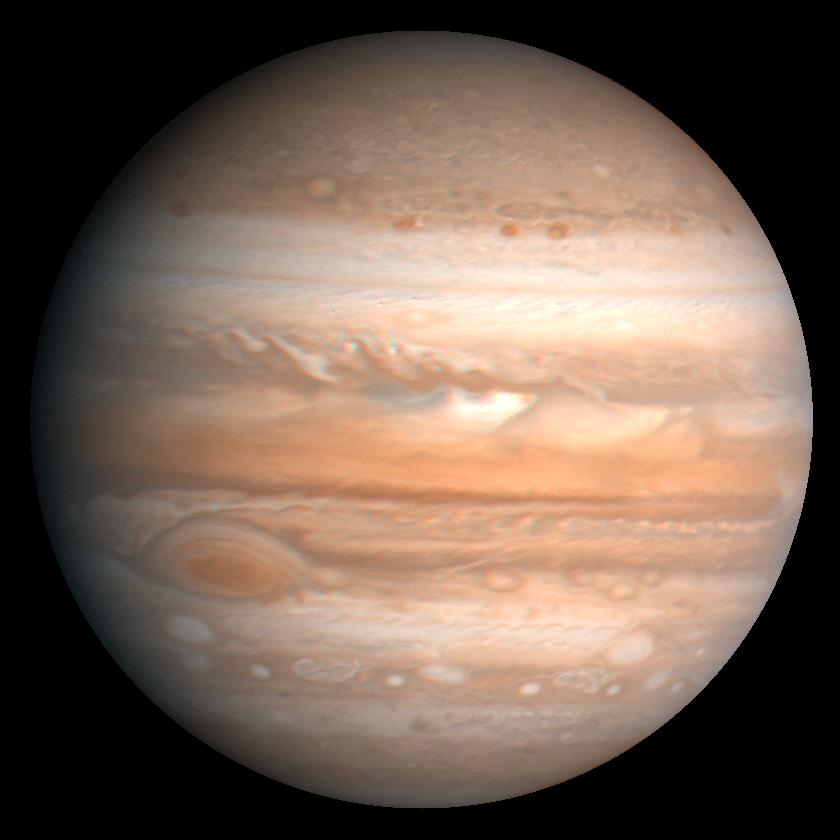
Carbonaceous chondrites - 140 ±2 x 10 to the minus 6 power
(ranges from 120 to 280 x 10 to the minus 6 power) (they come from ~2.5 AU)
(www.flickr.com/photos/jsjgeology/albums/72157645997754616)
Martian mantle - 300 x 10 to the minus 6 power (perhaps a cometary source)
(www.flickr.com/photos/jsjgeology/5868035894)
The D/H ratio of Earth’s ocean is similar to that of carbonaceous chondrites.
Looking at the K/U ratio of the Moon, Earth, Mars, and meteorites. K is a volatile element. U is a refractory element. The K/U ratio is a volatility index.
Moon - K/U = ~3000
The Moon lacks ~95% of the nebular K inventory.
(upload.wikimedia.org/wikipedia/commons/c/c9/Moon.jpg)
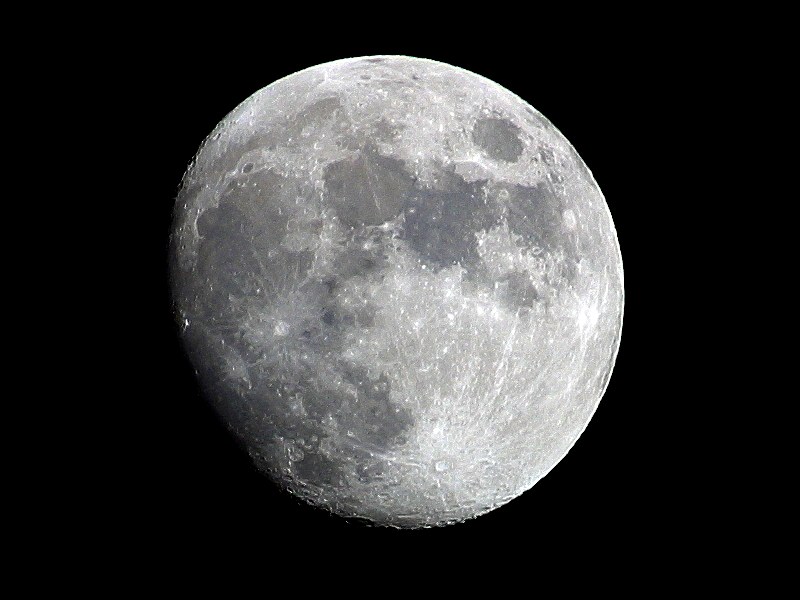
Earth - K/U = ~10,000
Earth lacks ~85% of the nebular K inventory.
(upload.wikimedia.org/wikipedia/commons/thumb/4/43/The_Ear...)

Mars - K/U = ~20,000
Mars lacks ~70% of the nebular K inventory.
(i.space.com/images/i/000/020/137/original/nasa-hubble-mar...)

Earth is also depleted, from 92 to 98%, of the nebular inventory of Zn, Ag, Sb, As, Sn, Pb, S.
Early water would’ve been removed from Earth along with all of these volatile elements.
K index - K is depleted in Mars (SNC meteorites - www.flickr.com/photos/jsjgeology/5868035894), Earth, Vesta (eucrite meteorites - www.flickr.com/photos/jsjgeology/14785947504), Moon, and the parent body of angrite meteorites (www.flickr.com/photos/jsjgeology/5867996330). Vesta and the Moon probably originally came from within the orbit of Mercury.
Using Pb-206-Pb-204 dating, Earth is 100 million years younger than it should be. Lead is a volatile element - it apparently was removed and reintroduced - that accounts for the anomalously young date using this method.
How much water is needed to be introduced to Earth?
Earth’s oceans have 1.664 billion cubic kilometers of water.
If you add mantle water, then double this value. Most water-rich asteroids we know have 10% water. So, need an asteroidal body 10x the size of this double value (= 3.328 billion cubic kilometers) introduced to Earth.
Albarede (2009) - Nature 10/29/2009 - talks about the volatile accretion history of the terrestrial planets & dynamic implications.
See also Nature 464 (29 April 2010) - two groups of astronomers found a water-loaded asteroid (24 Themis). This discovery supports the prediction of Albarede (2009).
Alberede model - Malcuit suggests there’s no need for a lunar giant impact, and change the T-Tauri phase to an X-Wind phase.
Earth’s oceans originated from smearing of water-rich asteroids during close encounters.
Beginning of the solar system - got a bipolar outflow. Dehydration took place in the accretion disc.
Iron Line - at 0.4 AU & at 1100° C - iron & nickel condense here. This is at the orbit of Mercury (upload.wikimedia.org/wikipedia/commons/thumb/9/93/MESSENG...). Mercury is very heavy (lots of iron & nickel) - it’s at the Iron Line - that’s why Mercury is heavy.

Snow Line - at 5 AU & below 0° C.
Get spherical bodies with clay minerals interlayered with water.
Jupiter controls our lives. It occurs at 5.2 AU.
Mars - at 1.52 AU. Zone of asteroids - 2.0 to 4.1 AU. Three asteroid belts in this zone. Themis is at ~3.2 AU.
Hypothetical water-rich planetoid - here named Aquarius.
Ceres (upload.wikimedia.org/wikipedia/commons/a/a1/PIA19547-Cere...) is the largest body in the Asteroid Belt. Ceres is ~1/4 the diameter of the Moon & has ~1/4 of the mass of the Asteroid Belt.
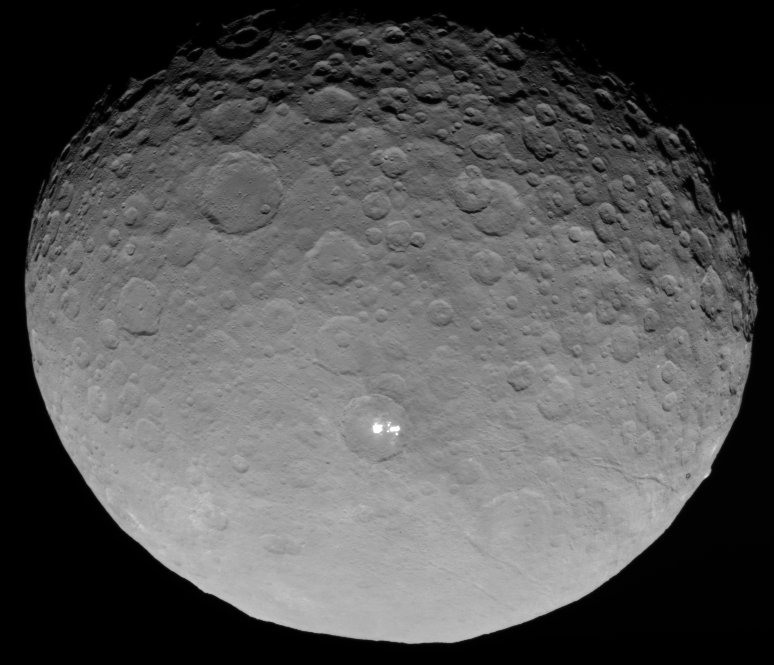
Vesta, according to the K index, should’ve formed inside the orbit of Mercury.
Seeing evidence that the early solar system had reorganization events involving shifting close things out and shifting asteroidal bodies in.
The zonation seen in the Asteroid Belt is the result of orbital resonances with Jupiter.
The time scale for resonance escape (perturbation events; “cracks”) is 100,000 to 150,000 years - can get escapes on short time scales.
Gravitational perturbation sequence - if Aquarius was located in the Asteroid Belt, and its orbit elongated to the point of crossing Earth’s orbit, Jupiter would grab it at that eccentricity.
If Aquarius had a more Earth-like orbit, it had to have smeared around Earth to get water transfer, otherwise a big impact results in water vaporization and no water stays on Earth.
Malcuit modeled prograde encounters between Aquarius and Earth (prograde = counterclockwise orbit, as seen looking down from the North Pole). Models indicate grazing collisions/encounters with the water-rich asteroid. These grazing encounters are important for getting the late veneer of the Alberede (2009) model.
Tidal Capture of Moon - at 3.95 Ga.
X-Wind Model - accounts for the origin of CAIs (= calcium-aluminum inclusions in chondrite meteorites).
The T-Tauri episode remelts the magma ocean region of the Moon & aids in the magnetization of lunar anorthosite crust. The T-Tauri episode also remelted Mercury’s surface.
The D/H ratio is the key factor that needs to be explained for the origin of Earth’s oceans.
There’s a special brand of water-rich asteroids, here named Aquarioids, that need to have grazed Earth & Venus to get their waters. Remember that Venus had water once (upload.wikimedia.org/wikipedia/commons/thumb/8/85/Venus_g...).

The Martian atmosphere has a much higher D/H compared with the Martian mantle (known from SNC meteorites).
The Moon was captured about 600 m.y. after time zero (as defined by the oldest CAIs).
Then, we’ve got the cool early Earth (evidence from 4.404 b.y. zircon crystals - www.onlineminerals.com/images/geo1.jpg) from ~100 m.y. on to 3.95 Ga.

Retrograde encounters (clockwise approach when viewed from North Pole) - get a lot of collisions in the models.
T-Tauri episode - a much lower energy event than the X-Wind event.
When you have a glass of water this afternoon, think about where it came from.
----------------------------------