View allAll Photos Tagged Positioning.
Awesome Impressed with how fast it came, less then a week. Just as shown in the pics. Great quality. I cant stop fucking it. Came in a discrete plain brown box reenforced with nylon straps. Would defiantly purchase from this seller again. The hair is just a wig it comes off, which I like now i can put on any kind of wig. You cannot see in the pics, but the mouth opens and is functional, probably the best. It is really soft, it has a skeleton. So when moving her around it does flop around. But again well worth the money. This doll is a great product. The face is perfect for touching and mouth create a real great blowjob with same sounds from the mouth and saliva when you use lubrificant. Breast of course is perfect for touching and make a tit without using hands. Very pleasant. vagina is good when she is on the back, and in this position, asshole is amazing. More convenient than a real girl. Take care of your full silicone infant dolls see: www.sexylovedolls.
com/
Highest Explore Position #222 ~ On September 27th 2008.
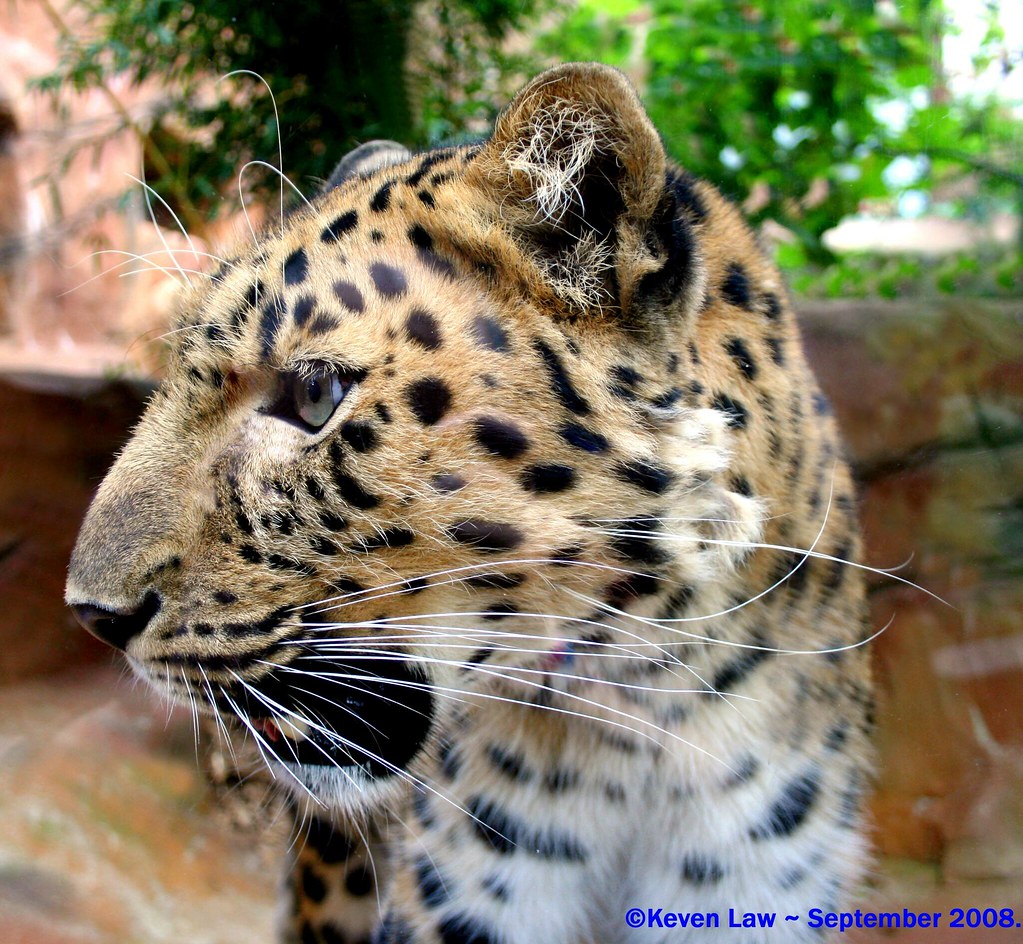
Amur Leopard - Colchester Zoo, Colchester, Essex, England - September 2008.
Click here to see the Larger image
Click here to see My most interesting images
This is the same Leopard that's on my profile page...and was taken through the glass, after he came up to me and stopped and had a look around..:O))
I had to clone out my reflection on the glass as well...:O)))
From Wikipedia, the free encyclopedia ~ The Amur Leopard (Panthera pardus orientalis) is critically endangered. It is one of the rarest felids in the world with an estimated 27 to 32 individuals remaining in the wild (2007 snow track count).
Its common names are Amur leopard from Amur River or Far Eastern Leopard.
Appearance ~ Of the eight subspecies the Amur, or Far Eastern leopard (Panthera pardus orientalis) shows the strongest divergence in coat pattern. The coat is pale cream (especially in winter) and has widely spaced rosettes with thick, black rings and darkened centres. The length of the coat varies between 2.5cm in summer and 7.5cm in winter.
Status in the wild and in zoos ~ The Amur leopard (Panthera pardus orientalis) is the northernmost of the eight leopard subspecies. The Amur leopard's range is overlapping with that of the Amur tiger or Siberian Tiger which range extends further to the north. The Amur leopard's historic range extended throughout northeastern ("Manchurian") China, the southern part of Primorsky Krai in Russia and the Korean Peninsula. This range shrank dramatically during the 20th century, due primarily to habitat loss and hunting. Today, it is critically endangered with only 27 to 34 individuals remaining in Southwest Primorye. There are probably up to 10 animals scattered throughout the Chinese Jilin and Heilongjiang Provinces, with the majority of animals concentrated near the Russian border.
The Amur leopard probably went extinct in the wild in South Korea in the late 1960s, although some recent, unconfirmed reports suggest that a few leopards may remain in and around the demilitarized zone between North and South Korea. There are likely still leopards in the rugged northern region of North Korea near the Chinese border, and it is also likely that animals from Southwest Primorye in Russia occasionally cross the border into North Korea, but reliable information is lacking.
The Amur leopard is listed as Endangered by the IUCN and is on CITES Appendix I for protection status.
There are approximately 300 Amur leopards in captivity, mostly in zoos in Europe, North America and countries of the former Soviet Union. Most, but not all, of these leopards are in zoos participating in managed conservation breeding programmes.
Ecology ~ Male Amur leopards weigh 32-48 kg, with exceptionally large males up to 60-75 kg. Females are smaller than the males at 25-43 kg.
The main prey species of the Amur leopard are roe and sika deer, along with hares and badgers.
Whilst it has been found in other regions that leopards do not do well in areas where they share territory with tigers, this has not proved to be the case in Russia. Studies have indicated that an increased tiger population in the Southwest Primorye area has not adversely affected the leopard population.
Amur leopards in zoos show some evidence of breeding seasonalilty with a peak in births in late spring/early summer. After a gestation period of around 12 weeks cubs are born in litters of 1-4 individuals, with an average litter size of just over 2. The cubs will stay with their mother for up to two years before becoming fully independent. Females first breed at an age of 3-4 years.
In the wild, leopards live for 10-15 years and they may reach 20 years in captivity.
Camera info:
ISO 200
f/5.6
1/200
580EX at 1/64 power
Shot on a Canon Rebel T1i using an EF85mm 1.8 lens
Exercise #2....I took a shot of Mickey with the flash 45° to my left, then a shot from the flash's point of view.
Now its done. Thanks to Hans Kerensky, I managed to put this back properly. Left photo is the cocked position and right is the proper open position when the shutter is pressed.
This kind of boat is completely round. The shape is based upon old traditions in these parts, traditions maintained by a small number of families for fishing purpose - but just as often to entertain tourists. Whatever; a great voyage!
Diamond League athletics at the Birmingham Grand Prix, Alexander Stadium. Heat 1 of the 100m was won by Mike Rodgers (USA) ahead of Chijindu (CJ) Ujah (GBR) and Julian Forte (JAM). Jimmy Vicaut (FRA) qualified for the final but did not start.
Esna I, Ägypten/Egypt 2011, C-Print, DiaSec Face
Collection
The foundation of the collection consists of 205 mostly French and Dutch paintings from the 17th and 18th centuries which Margravine Karoline Luise acquired 1759-1776. From this collection originate significant works, such as The portrait of a young man by Frans van Mieris the Elder, The winter landscape with lime kiln of Nicolaes Pieterszoon Berchem, The Lacemaker by Gerard Dou, the Still Life with hunting equipment and dead partridge of Willem van Aelst, The Peace in the Chicken yard by Melchior de Hondecoeter as well as a self-portrait by Rembrandt van Rijn. In addition, four still lifes of Jean Siméon Chardin and two pastoral scenes by François Boucher, having been commissioned directly by the Marchioness from artists.
A first significant expansion the museum received in 1858 by the collection of canon Johann Baptist von Hirscher (1788-1865) with works of religious art of the 15th and 16th centuries. This group includes works such as two tablets of the Sterzinger altar and the wing fragment The sacramental blessing of Bartholomew Zeitblom. From 1899 to 1920, the native of Baden painter Hans Thoma held the position of Director of the Kunsthalle. He acquired old masterly paintings as the tauberbischofsheim altarpiece by Matthias Grünewald and drove the expansion of the collection with art of the 19th century forward. Only his successors expanded the holdings of the Art Gallery with works of Impressionism and the following generations of artists.
The permanent exhibition in the main building includes approximately 800 paintings and sculptures. Among the outstanding works of art of the Department German painters of the late Gothic and Renaissance are the Christ as Man of Sorrows by Albrecht Dürer, the Carrying of the Cross and the Crucifixion by Matthias Grünewald, Maria with the Child by Lucas Cranach the Elder, the portrait of Sebastian Brant by Hans Burgkmair the elder and The Nativity of Hans Baldung. Whose Margrave panel due to property disputes in 2006 made it in the headlines and also led to political conflicts. One of the biggest buying successes which a German museum in the postwar period was able to land concerns the successive acquisition of six of the seven known pieces of a Passion altar in 1450 - the notname of the artist after this work "Master of the Karlsruhe Passion" - a seventh piece is located in German public ownership (Wallraf-Richartz Museum, Cologne).
In the department of Dutch and Flemish paintings of the 16th century can be found, in addition to the aforementioned works, the portrait of the Marchesa Veronica Spinola Doria by Peter Paul Rubens, Moses strikes the rock and water flows for the thirsty people of Israel of Jacob Jordaens, the still life with kitchen tools and foods of Frans Snyders, the village festival of David Teniers the younger, the still life with lemon, oranges and filled clay pot by Willem Kalf, a Young couple having breakfast by Gabriel Metsu, in the bedroom of Pieter de Hooch, the great group of trees at the waterfront of Jacob Izaaksoon van Ruisdael, a river landscape with a milkmaid of Aelbert Jacobsz. Cuyp as well as a trompe-l'œil still life of Samuel van Hoogstraten.
Further examples of French paintings of the 17th and 18th centuries are, the adoration of the golden calf of Claude Lorrain, preparations for dance class of the Le Nain brothers, the portrait of Marshal Charles-Auguste de Matignon by Hyacinthe Rigaud, the portrait of a young nobleman in hunting costume of Nicolas de Largillière, The storm of Claude Joseph Vernet and The minuet of Nicolas Lancret. From the 19th century can be found with Rocky wooded valley at Civita Castellana by Gustave Courbet, The Lamentation of Eugène Delacroix, the children portrait Le petit Lange of Édouard Manet, the portrait of Madame Jeantaud by Edgar Degas, the landscape June morning near Pontoise by Camille Pissarro, homes in Le Pouldu Paul Gauguin and views to the sea at L'Estaque by Paul Cézanne further works of French artists at Kunsthalle.
One focus of the collection is the German painting and sculpture of the 19th century. From Joseph Anton Koch, the Kunsthalle possesses a Heroic landscape with rainbow, from Georg Friedrich Kersting the painting The painter Gerhard Kügelgen in his studio, from Caspar David Friedrich the landscape rocky reef on the sea beach and from Karl Blechen view to the Monastery of Santa Scolastica. Other important works of this department are the disruption of Adolph Menzel as well as the young self-portrait, the portrait Nanna Risi and The Banquet of Plato of Anselm Feuerbach.
For the presentation of the complex of oeuvres by Hans Thoma, a whole wing in 1909 at the Kunsthalle was installed. Main oeuvres of the arts are, for example, the genre picture The siblings as well as, created on behalf of the grand-ducal family, Thoma Chapel with its religious themes.
Of the German contemporaries of Hans Thoma, Max Liebermann on the beach of Noordwijk and Lovis Corinth with a portrait of his wife in the museum are represented. Furthermore the Kunsthalle owns works by Ferdinand Georg Waldmüller, Carl Spitzweg, Arnold Böcklin, Hans von Marées, Wilhelm Leibl, Fritz von Uhde, Wilhelm Trübner and Max Klinger.
In the building of the adjacent Orangerie works of the collection and new acquisitions from the years after 1952 can be seen. In two integrated graphics cabinets the Kupferstichkabinett (gallery of prints) gives insight into its inventory of contemporary art on paper. From the period after 1945, the works Arabs with footprints by Jean Dubuffet, Sponge Relief RE 48; Sol. 1960 by Yves Klein, Honoring the square: Yellow center of Josef Albers, the cityscape F by Gerhard Richter and the Fixe idea by Georg Baselitz in the Kunsthalle. The collection of classical modernism wandered into the main building. Examples of paintings from the period to 1945 are The Eiffel Tower by Robert Delaunay, the Improvisation 13 by Wassily Kandinsky, Deers in the Forest II by Franz Marc, People at the Blue lake of August Macke, the self-portrait The painter of Ernst Ludwig Kirchner, the Merzpicture 21b by Kurt Schwitters, the forest of Max Ernst, Tower gate II by Lyonel Feininger, the Seven Deadly Sins of Otto Dix and the removal of the Sphinxes by Max Beckmann. In addition, the museum regularly shows special exhibitions.
Sammlung
Den Grundstock der Sammlung bilden 205 meist französische und niederländische Gemälde des 17. und 18. Jahrhunderts, welche Markgräfin Karoline Luise zwischen 1759 und 1776 erwarb. Aus dieser Sammlung stammen bedeutende Arbeiten, wie das Bildnis eines jungen Mannes von Frans van Mieris der Ältere, die Winterlandschaft mit Kalkofen von Nicolaes Pieterszoon Berchem, Die Spitzenklöpplerin von Gerard Dou, das Stillleben mit Jagdgeräten und totem Rebhuhn von Willem van Aelst, Der Friede im Hühnerhof von Melchior de Hondecoeter sowie ein Selbstbildnis von Rembrandt van Rijn. Hinzu kommen vier Stillleben von Jean Siméon Chardin und zwei Schäferszenen von François Boucher, die die Markgräfin bei Künstlern direkt in Auftrag gegeben hatte.
Eine erste wesentliche Erweiterung erhielt das Museum 1858 durch die Sammlung des Domkapitulars Johann Baptist von Hirscher (1788–1865) mit Werken religiöser Kunst des 15. und 16. Jahrhunderts. Zu dieser Gruppe gehören Werke wie zwei Tafeln des Sterzinger Altars und das Flügelfragment Der sakramentale Segen von Bartholomäus Zeitblom. Von 1899 bis 1920 bekleidete der aus Baden stammende Maler Hans Thoma die Position des Direktors der Kunsthalle. Er erwarb altmeisterliche Gemälde wie den Tauberbischofsheimer Altar von Matthias Grünewald und trieb den Ausbau der Sammlung mit Kunst des 19. Jahrhunderts voran. Erst seine Nachfolger erweiterten die Bestände der Kunsthalle um Werke des Impressionismus und der folgenden Künstlergenerationen.
Die Dauerausstellung im Hauptgebäude umfasst rund 800 Gemälde und Skulpturen. Zu den herausragenden Kunstwerken der Abteilung deutsche Maler der Spätgotik und Renaissance gehören der Christus als Schmerzensmann von Albrecht Dürer, die Kreuztragung und Kreuzigung von Matthias Grünewald, Maria mit dem Kinde von Lucas Cranach der Ältere, das Bildnis Sebastian Brants von Hans Burgkmair der Ältere und die Die Geburt Christi von Hans Baldung. Dessen Markgrafentafel geriet durch Eigentumsstreitigkeiten 2006 in die Schlagzeilen und führte auch zu politischen Auseinandersetzungen. Einer der größten Ankaufserfolge, welche ein deutsches Museum in der Nachkriegszeit verbuchen konnte, betrifft den sukzessiven Erwerb von sechs der sieben bekannten Tafeln eines Passionsaltars um 1450 – der Notname des Malers nach diesem Werk „Meister der Karlsruher Passion“ – eine siebte Tafel befindet sich in deutschem öffentlichen Besitz (Wallraf-Richartz Museum, Köln).
In der Abteilung niederländischer und flämischer Malerei des 16. Jahrhunderts finden sich, neben den erwähnten Werken, das Bildnis der Marchesa Veronica Spinola Doria von Peter Paul Rubens, Moses schlägt Wasser aus dem Felsen von Jacob Jordaens, das Stillleben mit Küchengeräten und Lebensmitteln von Frans Snyders, das Dorffest von David Teniers dem Jüngeren, das Stillleben mit Zitrone, Orangen und gefülltem Römer von Willem Kalf, ein Junges Paar beim Frühstück von Gabriel Metsu, Im Schlafzimmer von Pieter de Hooch, die Große Baumgruppe am Wasser von Jacob Izaaksoon van Ruisdael, eine Flusslandschaft mit Melkerin von Aelbert Jacobsz. Cuyp sowie ein Augenbetrüger-Stillleben von Samuel van Hoogstraten.
Weitere Beispiele französischer Malerei des 17. bzw. 18. Jahrhunderts sind Die Anbetung des Goldeen Kalbes von Claude Lorrain, die Vorbereitung zur Tanzstunde der Brüder Le Nain, das Bildnis des Marschalls Charles-Auguste de Matignon von Hyacinthe Rigaud, das Bildnis eines jungen Edelmannes im Jagdkostüm von Nicolas de Largillière, Der Sturm von Claude Joseph Vernet und Das Menuett von Nicolas Lancret. Aus dem 19. Jahrhundert finden sich mit Felsiges Waldtal bei Cività Castellana von Gustave Courbet, Die Beweinung Christi von Eugène Delacroix, dem Kinderbildnis Le petit Lange von Édouard Manet, dem Bildnis der Madame Jeantaud von Edgar Degas, dem Landschaftsbild Junimorgen bei Pontoise von Camille Pissarro, Häuser in Le Pouldu von Paul Gauguin und Blick auf das Meer bei L’Estaque von Paul Cézanne weitere Arbeiten französischer Künstler in der Kunsthalle.
Einen Schwerpunkt der Sammlung bildet die deutsche Malerei und Skulptur des 19. Jahrhunderts. Von Joseph Anton Koch besitzt die Kunsthalle eine Heroische Landschaft mit Regenbogen, von Georg Friedrich Kersting das Gemälde Der Maler Gerhard Kügelgen in seinem Atelier, von Caspar David Friedrich das Landschaftsbild Felsenriff am Meeresstrand und von Karl Blechen den Blick auf das Kloster Santa Scolastica. Weitere bedeutende Werke dieser Abteilung sind Die Störung von Adolph Menzel sowie das Jugendliche Selbstbildnis, das Bildnis Nanna Risi und Das Gastmahl des Plato von Anselm Feuerbach.
Für die Präsentation des Werkkomplexes von Hans Thoma wurde 1909 in der Kunsthalle ein ganzer Gebäudetrakt errichtet. Hauptwerke des Künstlers sind etwa das Genrebild Die Geschwister sowie die, im Auftrag der großherzöglichen Familie geschaffene, Thoma-Kapelle mit ihren religiösen Themen.
Von den deutschen Zeitgenossen Hans Thomas sind Max Liebermann mit Am Strand von Noordwijk und Lovis Corinth mit einem Bildnis seiner Frau im Museum vertreten. Darüber hinaus besitzt die Kunsthalle Werke von Ferdinand Georg Waldmüller, Carl Spitzweg, Arnold Böcklin, Hans von Marées, Wilhelm Leibl, Fritz von Uhde, Wilhelm Trübner und Max Klinger.
Im Gebäude der benachbarten Orangerie sind Werke der Sammlung und Neuankäufe aus den Jahren nach 1952 zu sehen. In zwei integrierten Grafikkabinetten gibt das Kupferstichkabinett Einblick in seinen Bestand zeitgenössischer Kunst auf Papier. Aus der Zeit nach 1945 finden sich die Arbeiten Araber mit Fußspuren von Jean Dubuffet, Schwammrelief >RE 48:Sol.1960< von Yves Klein, Ehrung des Quadrates: Gelbes Zentrum von Josef Albers, das Stadtbild F von Gerhard Richter und die Fixe Idee von Georg Baselitz in der Kunsthalle. Die Sammlung der Klassischen Moderne wanderte in das Hauptgebäude. Beispiele für Gemälde aus der Zeit bis 1945 sind Der Eiffelturm von Robert Delaunay, die Improvisation 13 von Wassily Kandinsky, Rehe im Wald II von Franz Marc, Leute am blauen See von August Macke, das Selbstbildnis Der Maler von Ernst Ludwig Kirchner, das Merzbild 21b von Kurt Schwitters, Der Wald von Max Ernst, Torturm II von Lyonel Feininger, Die Sieben Todsünden von Otto Dix und der Abtransport der Sphinxe von Max Beckmann. Darüber hinaus zeigt das Museum regelmäßig Sonderausstellungen.
The photos are starting to revert back to graininess...
The photo shoot was a bit of a disaster today. While getting stuff positioned, the heli sort of rolled off the photo setup and shattered onto the floor. After making repairs, I took some photos and got up to upload, but on my way back I lost my balance and knocked over part of my drum kit with my face. Fun.
The build features opening doors, spinning rotors, seating for four and a driver, and a "working" gyroscope. Still not happy with the front though...
We had gone through Teston, pronounced Teeston, a few weeks ago when we saw the old cricket ball factory, and on the other side of the road was the lane leading to the church.
I didn't know if it was open, but we parked up and I grabbed my cameras and we walked to the church, the west door in the base of the church was open, and inside a warden was leaning the church.
I said "hello" loudly, and she turned round and confirmed it was OK to enter and take shots.
--------------------------------------------
A rarity in Kent, this ragstone church sits in a delightful position on what was once the main road from Maidstone to Tonbridge. It was rebuilt in 1710 and enlarged in 1846 and the character is almost of a church the late Victorians didn't mess about with. Inside it is tall and light with a rather jaunty arrangement of ceilings (see also St Mary's Platt). Behind the altar is the original Decalogue and Lord's Prayer set there by law when the church was built. In the north transept is the fine Royal Arms signed and dated 1811 by John Adams. In the south chancel wall is a medieval window re-used as a sedilia - a very odd thing to do at the time! The church contains six fine hatchments - not all to the same family. This is unusual and allows us to study many different types of heraldry.
www.kentchurches.info/church.asp?p=Teston
-------------------------------------------
TESTON.
LIES the next parish eastward from Watringbury. It is vulgarly called Teeson. In the book of Domes day it is written TESTAN, and in the Textus Roffensis, TERSTANA.
This parish is a borough, and has a court leet of itself, where the borsholder is chosen, and the inhabitants of it owe no service to the court leet holden for the hundred of Twyford; but a constable for that hundred may be chosen there out of this borough.
TESTON is beautifully situated on the side of a hill, declining southward towards the river Medway, which is its southern boundary opposite to West Farleigh. The soil is in general a fertile loam, covering the quarry rock, which at the same time that it is dry and healthy, is exceeding kindly for corn, fruit and hop plantations. The high road from Maidstone towards Watringbury and Tunbridge, leads along the lower part of this parish, between which and the river the neat kept grass lands, separated from the road by a handsome white railed sence, have a very pleasing effect. Hence the road branches off, to the right to Ofham and Town Malling, and to the left to Cocks heath, Yalding, and the Weald, across the river, over which there is here a losty stone bridge of seven arches, which, notwithstanding its height, is frequently rendered impassable from the sudden overflowings of the river, which here at times frequently rises near eighteen feet above its usual surface, in the space of twenty-four hours, and as quickly falls again, unless it is again augmented by repeated rains. Teston park pales adjoin the northern side of the Maidstone road, hence the park rises to Teston-house, which being of white stucco, is a conspicuous object to the neighbouring country, and with the adjoining grounds, some years since, were greatly ornamented and laid out in the modern taste by Mrs. Bouverie; at the back of the house the ground keeps rising, and the park which is well covered with fine large trees, as well as modern plantations of various sorts, extends to the woods, which are remarkably well filled with large oak trees, and to East-Malling heath, but in these parts it is a more wet and deeper soil, and less fertile than the more southern parts of this parish. From Teston house there is a most beautiful view, having in front the river Medway, the bridge, the cascades at Tutsham, and the lock below them, with the pretty village of West Farleigh, and its church, on the opposite hill. South-westward the prospect extends along the valley, where nature and art combine their powers to render the scene more delightful, having the river Medway meandring its silver stream through part of it, the elegant mansion and church of Mereworth beyond, and at the extremity the losty woods on the range of hills, above the town of Tunbridge. The village, with the church and the vicarage, a neat modern built sashed house stand mostly within the western pales of the park, at no great distance from Teston house, close to the front of which the high Maidstone road passed, till not many years since the late Sir Philip Boteler procured it to be altered to its present situation, at a greater distance, where it now forms a kind of half circle midway, between the house and the river.
The western extremity of this parish is the boundary of the Weald, that is from the hill above Watringbury, across the river, towards the hill above Burston in Hunton, excluding Teston from its district.
Dr. Plott mentions his having discovered a piece of a Roman way, which seemed to have passed the Medway about Teston, and which he thought crossed Cocks-heath, and pointed towards Lenham, but I believe it was merely founded on his own conjecture.
Willow weed, or lysamacbia, grows much on each side of the highway near Teston-bridge.
Tanacetum, or garden tansey, grows in great plenty in the meadows on the bank of the Medway, between Teston and Barming.
TESTON was part of those vast possessions with which William the Conqueror enriched his half-brother, Odo, bishop of Baieux, whom he afterwards made earl of Kent, and it is accordingly thus entered in the survey of Domesday, under the general title of that prelate's lands:
Adeold held Testan of the bishop (of Baieux) and Robert now holds it to ferme. It was taxed at one suling. The arable land is . . . In demesne there are two carucates and an half, and seven villeins, with three borderers having one carucate. There are twelve servants, and one mill of three shillings, and eight acres of meadow. Wood for the pannage of twenty bogs.
In the time of king Edward the Confessor, it was worth one hundred shillings, and afterwards sixty shillings, now one hundred shillings. Edward held it of king Edward.
On the disgrace of the bishop of Baieux, about four years after taking the above survey, this estate, among the rest of his possessions, became consiscated to the crown, whence it seems to have been granted by the Conqueror to Robert, son of Hamon de Crevequer; whose descendant, Hamon de Crevequer, died possessed of it in the 47th year of king Henry III. holding it in capite, as a member of the manor of Chat ham, which was held of the king in capite by barony. (fn. 1) He left Robert, his grandson, his heir, who afterwards took part with the discontented barons against the king; upon which this manor was seized on, among the rest of his estates; and it seems to have remained in the hands of the crown till king Edward I. gave it to Eleanor his queen, who in the 18th year of that reign, made a donation of it, with other premises, to the priory of Christ-church, in Canterbury, in exchange for the port of Sandwich, which gift king Edward I. confirmed that year. (fn. 2) King Edward II. by his charter, in his 10th year, granted to the prior of Christ-church, free warren in all the demesne lands which the priory possessed here in the time of his grandfather, or at any time since.
The manor of Teston continued part of the possessions of the priory of Christ-church till the dissolution of it in the 31st year of king Henry VIII. when it was, together with all its lands and revenues, surrendered up to the king, who that year granted this manor, among other premises, to Sir Thomas Wyatt, to hold in capite, whose son of the same name having raised a rebellion in the 1st year of queen Mary, was attainted, and his estates forfeited to the crown; and the queen next year granted this manor to Sir John Baker, her attorney general, (fn. 3) to hold in capite, and in his descendants it continued down to Sir John Baker, bart. of Sisinghurst, who after the death of Charles I. alienated it to Mr. Jasper Cleyton, of London, and he passed it away by sale in the reign of king Charles II. to Sir Oliver Boteler, bart. of Berham-court, in this parish, whose grandson, Sir Philip Boteler, bart. of the same place, died possessed of it in 1772, without issue, and by will devised one moiety of his estates to Mrs. Elizabeth Bouverie, of Chart Sutton, and the other to Elizabeth, viscountess dowager Folkestone; and William Bouverie, earl of Radnor, both since deceased, and on a partition of his estates, this manor was, among others, allotted to Mrs. Elizabeth Bouverie, now of Berham-court, alias Teston-house, in this parish, the present possessor of it.
TESTON-HOUSE, formerly known by the name of Berham-court, was once the mansion or residence of the family of Berham, usually called Barham, whose original name was Fitz Urse.
Randal Fitz Urse was one of those four knights, (the other three were, William Tracy, Richard Britton, and Hugh Morvill) belonging to Henry II.'s houshold, men said by historians to have been eminent for their birth, who undertook to murder archbishop Thomas Becket, which they accomplished in the cathedral church of Canterbury, on December 30, anno 1170. (fn. 4)
After this Randal Fitz Urse fled into Ireland, and there altered his name to Mac-Mahon, which in the Irish tongue signifies as much as, the son of a bear; upon his flight Robert de Berham, his kinsman, entered on his estate in this parish, and from him it descended to John de Berham, who was by Henry, prior of Christ-church, created a public notary of the diocese of Canterbury, in the year 1309, an office at that time of much trust and eminence, which the prior was impowered to invest any person with, by a commission granted to him by Bassianus de Alliate, count palatine of Milan, who had received such power originally from the emperor. The family of Berham bore for their arms, Argent, three bears passant sable, muzzled or. There was a branch of this family settled at Wadhurst, in Suffex, of which was Nicholas Berham, sergeant at law; and another branch was of Boughton Monchelsea, in this county, of which was Robert Berham, who was comptroller of the pipe. Both of these bore the above coat of arms, with a fess gules, and on it a fleur de lis, between two martlets or. (fn. 5)
In the descendants of John de Berham abovementioned, this seat continued down to Thomas Berham, esq. of Berham-court, who left one daughter and heir Anne, who carried this estate of Berhamcourt in marriage to Sir Oliver Boteler, of Shambrooke, in Bedfordshire, on which he removed hither, and was knighted by king James I. at Whitehall, in 1604. This family is descended from Thomas Pincerna, who lived in the reign of king John, and sealed with a covered cup, with this inscription, as appears by the old deeds of the family, encircling the seal, Sigillum Thoma Pincerne, probably from his being chief butler to that prince, whence his successors assumed the name of Butler or Boteler. His descendant was Robert le Boteler, called in a Latin deed without date, Robertus Pinceruna, as is supposed, likewise from his office; and he left issue three sons, Robert, called in a Latin deed without date, Le Boteler; Thomas; and William, who was a priest. The descendants of Robert le Boteler, who afterwards wrote themselves Boteler only, settled first at Yatton, and afterwards at Droitwich, in Worcestershire, when they altered their name to Butteler, after which about king Henry VIIIth.'s reign, George Butteler, esq. removed his residence to Sharnbrooke, in Bedfordshire. His descendant, Oliver Butteler, esq. of Sharnbrooke, first changed the spelling of his name again to Boteler, and having married Anne, daughter and sole heir of Thomas Berham, esq. of Berham-place, removed hither as has been already mentioned. He bore for his arms, first, Boteler, argent on a chief sable, three cups or; secondly, Boteler again, Gules, a chevron between three cups, or, quartered with Wibbe, Froxmore, Bachecott, and Berham. He died in London, in 1632, and was buried at Teston, whose eldest son, Sir John Boteler, of Berham-court, dying without issue, was succeeded by his next surviving brother William, who during his eldest brother's life resided at Saltwood, and on his death became his heir, and removed to Berham-court. He was a man of exemplary loyalty, and firm in his attachment to his royal master king Charles I. by whom he was first knighted, and afterwards, in 1641, created a baronet, and became one of the gentlemen pensioners. In 1642 he joined with the neighbouring gentry in presenting a petition to the house of commons for a peace, which was delivered by captain Richard Lovelace, for which by order of the house, Sir William was imprisoned in the Fleet for seven weeks, whence he was released on giving 20,000l. bail.
He afterwards suffered greatly; his house of Berham-court being broken open, robbed and plundered of almost every thing valuable in it, and the rest destroyed, and he himself, with his son, forced to compound for his estate for 3011l. and upwards.
Sir William Boteler afterwards raised and armed a regiment, at his own expence, for the king's service, at the head of which he was slain, together with Sir John Clerke, of Ford, in this county, in the fight between the king's forces and those of the parliament, under Sir William Waller, at Cropredy bridge, in 1644. (fn. 6)
His only son and heir Sir Oliver, bart. was of Berham-court, and left a son Philip, and a daughter Joane, who married Christopher Rhodes, esq.
Sir Philip Boteler, bart. the son, resided at Berhamcourt, and married in 1690 Anne, daughter of Sir Edward Desbouverie, of Cheshunt, in Hertfordshire, by whom he had one son and heir, Sir Philip Boteler, bart. of Berham-court, which afterwards dropped that name, and acquired the name of Teston-house. He was a gentleman of a most amiable disposition and politeness of manners, whose benevolence and goodness of heart made him universally respected and beloved by all who knew him. He died at Teston in 1772, where he was buried. He married Elizabeth, only daughter and heir of Thomas Williams, esq. of Cabalva, in Radnorshire, by whom he had an only daughter Elizabeth, who died unmarried in his life-time, æt. 15. By his will he gave one moiety of all his estates, both real and personal, without any specific allotment, to Mrs. Elizabeth Bouverie, of Chart Sutton, and the other moiety to Elizabeth, viscountess dowager Folkestone, and William Bouverie, earl of Radnor, since deceased. They by private agreement made a partition of these estates, in which Teston manor and advowson, and the house, formerly called Berham-place, were, among others allotted to Mrs. Elizabeth Bouverie, of Chart Sutton above-mentioned, who is the present possessor of Teston-house, with the park, gardens and lands belonging to it, which by her improvements has become a most elegant residence, and an ornament to the adjacent country.
Mrs. Elizabeth Bouverie is descended from Laurence de Bouverie, or Des Bouveries, of an antient extraction in Flanders, who renouncing the Romish religion, came into England in 1567. His grandson, Edward Desbouverie, was knighted in 1684, and died at his feat at Cheshunt, in 1694, leaving by Anne his wife, daughter and coheir of Jacob de la Forterie, of London, several sons and daughters. Of whom William, the eldest son, was created a baronet in 1713, and was ancestor to the present earl of Radnor; and Christopher, the youngest son was knighted, and was of Chart Sutton, in this county, and left by Elizabeth his wife, daughter and heir of Ralph Freeman, esq. of Beechworth, in Surry, two sons; Freeman, who died s.p. in 1734, æt. 20, and John, heir to his brother, who died on his travels in Asia, s.p. in 1750, æt. 29, and two daughters; Anne, married to John Harvey, esq. of Beechworth, and Elizabeth, devisee of the moiety of Sir Philip Boteler's estates. Of Sir Edward Desbouverie's daughters, Anne married Sir Philip Boteler, bart. and was aunt to Mrs. Elizabeth Bouverie abovementioned. Mrs. Bouverie bears for her arms, first, Bouverie, party per fess or and argent, an Imperial eagle sable; second, Bouverie again, gules, a bend vaire quar tered with Forterie, Frebody, Marsh, Laurence, and others. (fn. 7)
There are no parochial charities.
This parish is within the ECCLESIASTICAL JURISDICTION of the diocese of Rochester and deanry of Malling.
The church, which is dedicated to St. Peter and St. Paul, is a small, but neat building, with a square tower at the west end. In it are several monuments of the family of Boteler.
Robert de Crevequer, at the time of his founding the priory of Leeds, in 1119, gave to it all the churches of his estates, among which was this of Teston, with sixteen acres of land in the parish, together with all their customs, goods, liberties and privileges. (fn. 8)
Walter, bishop of Rochester, in the reign of king Stephen, appropriated this church, and Lamberhurst, to the above-mentioned priory, on the petition of Daniel de Crevequer; and he received the prior and canons into the parsonages, and instituted the canons parsons canonically in those churches.
After which a vicarage was endowed here by the prior and convent, with a reservation of twenty shillings yearly pension to themselves out of it; which pension, on the dissolution of the priory in the reign of king Henry VIII. came into the hands of the crown, and was soon afterwards granted by that king, by his dotation charter, in his 33d year, to his new-erected dean and chapter of Rochester, who are now entitled to it.
¶But the parsonage, together with the advowson of the vicarage, remained in the hands of the crown in the reign of king Charles I whence the same was granted to Sir William Boteler, bart. from whom it descended to Sir Philip Boteler, bart. who died possessed of it in 1772, since which it has passed by his will, in like manner as Teston manor and house, to Mrs. Elizabeth Bouverie, the present possessor of the parsonage and advowson of the vicarage of Teston.
This vicarage is now a discharged living in the king's books, of the clear yearly certified value of forty-seven pounds, the yearly tenths of which are thirteen shillings.
In Position, an art exhibition by Brendan Fernandes at the Varley Art Gallery
This entire batch is a test to my post editing skills due to poor lighting...
History in the course of time
More than 800 years of history Bernhardsthal is more than 800 years of history of a local community in a border and bridge position at a central point in Europe.
History of Bernhardsthal
Again and again, it was more than the fate of the locals alone which had been decided here - again and again it was the pan-European movement that captured the place. One by one, they appeared in the Thaya-March area: Illyrians and Celts, Quads and Herulians, Huns and Lombards, Slavs and Avars, Bavarians and Franks, Magyars and Mongols, Hussites and Utraquists, Hajduks and Swedes, Turks and Kurds, Frenchmen, Prussians and Russians. They cleared and missioned, blackmailed and burned, remained, or passed by like a wild hunt. Between confrontation and penetration, construction and destruction, fear and hope, a year is a fixed point: the first documentary mention of the place - 1171.
1171 - what happened in Europe at this time? In the Roman-German empire, Emperor Frederick I Babarossa ruled. It was the time of the castles and knights and monastic culture, of the manorial systems and evolution of the town charter and of new German settlement waves which captured even Bohemia and the distant Transylvania. Just, in 1156, the Emperor of Austria had been loyal to the duchy on the other side, the Bohemian duke Vladislav II, and received the royal crown. Court Days and Princely councils, expeditions to Italy, the defeat of Henry the Lion underlined the power of the central European empire, which in the south even reached Sicily. Bruges and Venice were the highly evolving trade centers in Europe. Political movement had captured the continent: In the Russian area, Kiev's pre-eminence fell, new centers in the north-east announced themselves - Moscow was first mentioned in 1147.
In the southeast, Serbian unity was just founded in 1171, Serbia and Bulgaria began to shake off Byzantine rule. Hungary was about to restore its supremacy in Dalmatia, Croatia and Bosnia. In England, Henry II succeeded in sustaining his claim to power, and Thomas Becket, Archbishop of Canterbury, was murdered by royal knights in 1170. In 1171 the English conquest of Ireland began. In Egypt, Saladin began to expand, which was to lead to Tripoli, Damascus, and Jerusalem. In China, above all, the South was booming in economic development. Already, paper money and book printing, gunpowder and magnet needle were used.
But back to Bernhardsthal: With the world, the place has been connected since ancient times to the nearby Amber Road, which led from the Adriatic to the Baltic Sea. Events all around the world repeatedly stamped the centuries of its history.
Prehistory and Time of the Teutons: Archaeological finds earmark the Bernhardsthaler area as a significantly older settlement basis, as the year 1171 suggests - stretching back to the Neolithic, Bronze Age and older and younger Iron Age. Hallstatt burial mounds point to Illyrians, followed by the Celts.
9th century: Franconian mission movement and Great Moravian empire. The Slavic tribes lived in the Weinviertel (Wine District) and were interspersed with the Germanic population.
10th century: Magyar collision and German counter-movement. Emergence of Magyar riders also in the March-Thaya area. By the counteroffensive of the German kingship, a new settlement wave follows east. From 976, the Babenbergs in the regained marches area on the Danube came to power.
11th century: Stabilization of borders. Around 1045, the boundary was essentially stabilized. Thus the framework for settlement and integration into the social structure of the empire had also been drawn. The settler wave also captured the Wine District and the Bavarian population came to the fore, marking the time as the peasant clearing.
12th century: the first documentary mention. In the year 1171, the name Bernhardsthal was mentioned for the first time in the Klosterneuburg Tradition Codex, when the monastery Klosterneuburg acquired land here.
13th century: First, the Mongols appeared, hordes of riders who broke in over the Russian steppes, triumphed in 1241 near Liegnitz in Silesia, in the same year at Muhi on the Sjo in Hungary, pervading Moravia, sprawling to the Wine District. Before and after, however, the Thaya-March area was a multiple site of Bohemian and Hungarian incursions, condensed under Premysl Otakar II until the great decision. When the last Babenberger died in 1246, that Premysl Otakar had attacked southwards on Austria and across Styria and Carinthia to the Adriatic, and had penetrated eastward into Upper Hungary. To the south of the Bernhardsthaler area, on the Marchfeld near Dürnkrut, he lost battle and life against Rudolf von Habsburg. The consequences of the event, the retreat of the beaten ones, the advance of the victors, also touched Bernhardsthal.
14th century: from 1328 to 1336 the incursions of the Bohemian king John of Luxembourg lined up. Among the castles conquered by the Bohemians was also Bernhardsthal, which was then owned by the Haunvelder. The Hungarians under Charles I of Anjou also contributed, and also laid their hands on Bernhardsthal. The Wehinger, who had now been entrusted with Bernhardsthal, temporarily secured the market right for the place. A dangerous approach to the end of the century. First pirates from Moravia.
15th century: robber barons, Hussites and Utraquists. Bands or groups of robbers from Austria, Moravia and Hungary - with centers in Hohenau and Laa - troubled the Thaya-March area. In 1470 Bernhardsthal was sold to the Liechtensteiner.
16th century: Emerging Turkish danger. In 1529 they stood at the gates of Vienna. For the first time, one made acquaintance up the river March with the pillagers. After the retaliation, the Habsburgs - from Ferdinand I now also King of Bohemia and Hungary - ruled the west and north-west of the Hungarian kingdom. The Danubian and Alpine countries, Bohemia and Hungary should face a common development. The Thaya-March region was now the stage of the eastern front of the Turks.
17th century: Hajduks and Swedes. In Hungary, an uprising had broken out. In 1605, pillagers of Hajduks crossed the March and also plundered Bernhardsthal. A little later, the Mercenary regiments of the Thirty Years' War struck the gates. It was not until 1648, when the peace was concluded, that marauding and quartering, extortion, robbery, and murders ended. In 1163 Turks again crossed the March, plundered and forced prisoners into slavery - even Bernhardsthal was in flames.
18th century: Kurutzs and imperial occupation. Around 1704, due to the incursions of Kurutzs the wine-producing region and South Moravia too were again threatened by fear and distress. In 1705 they also attacked Bernhardsthal. In the next few years, imperial units remained present to protect the places at risk. In the following decades but Austria, under Maria Theresia, faced the defense of its superpower status and at the same time its consolidation.
19th century: Frenchmen, Prussia and Cholera: In 1805 Bernhardsthal saw Frenchmen on the advance, before and after their victory in Austerlitz. In 1809 the place saw the French for the second time. The year 1866 brought the Prussians also to Bernhardsthal as the winner of Königsgrätz. They were quartered as well as before the French which brought a lot of stress for the place. The cholera in the years 1831 and 1866 supplemented the picture of the 19th century.
20th century: Two great wars went over Europe in this century. Bernhardsthal also had to pay its duty. Bernhardsthaler found distant graves on theaters of war of both wars. Nevertheless, after 1945, the place steered into an impressive phase of peaceful construction.
Geschichte im Wandel der Zeit
Über 800 Jahre Geschichte Bernhardsthal sind über 800 Jahre Geschichte einer Ortsgemeinschaft in einer Grenz- und Brückenposition an einem zentralen Punkt Europas.
Geschichte Bernhardsthal
Immer wieder war es mehr als das Schicksal der Ortsbewohner allein, das hier entschieden worden ist, - immer wieder war es gesamteuropäische Bewegung, die den Platz erfasste. Nacheinander tauchten sie im Thaya-March- Bereich auf: Illyrer und Kelten, Quaden und Heruler, Hunnen und Langobarden, Slawen und Awaren, Baiern und Franken, Magyaren und Mongolen, Hussiten und Utraquisten, Heiducken und Schweden, Türken und Kurutzen, Franzosen, Preußen und Russen. Sie rodeten und missionierten, erpreßten und brandschatzten, blieben oder zogen vorbei gleich einer wilden Jagd. Zwischen Auseinandersetzung und Durchdringung, Aufbau und Zerstörung, Angst und Hoffnung tritt ein Jahr als fixer Punkt: Die erste urkundliche Nennung des Ortes - 1171.
1171 - was geschah in Europa in dieser Zeit? Im römisch-deutschen Reich herrrschte Kaiser Friedrich I. Babarossa. Es war die Zeit der Burgen und Ritter und klösterlicher Kultur, der Grundherrschaften und Stadtrechtsentwicklung und neuer deutscher Siedlungswellen, die selbst Böhmen erfassten und das ferne Siebenbürgen. Eben, 1156 hatte der Kaiser Österreich zum Herzogtum jenseits der Grenze, der Böhmenherzog Vladislav II., freu treu und Hilfe die Königskrone erhalten. Hof- und Fürstentage, Italienzüge, die Niederwerfung Heinrichs des Löwen unterstrichen die Machtstellung des zentraleuropäischen Kaisertums, das im Süden selbst auf Sizilien griff. Brügge und Venedig waren die sich groß entwickelnden Handeslzentren Europas. Politische Bewegung hatte den Kontinent erfasst: Im russischen Bereich ging die Vormachtsstellung Kievs zurück, neue Zentren im Nordosten kündigten sich an - Moskau war 1147 erstmals erwähnt worden.
Im Südosten wurde eben 1171 die serbische Einheit begründet, Serbien und Bulgarien setzten an, die byzantinische Herrschaft abzuschütteln, Ungarn war kurz davor, seine Oberhoheit in Dalmatien, Kroatien und Bosnien wiederherzustellen. Im Westen setzte in England Heinrich II. seinen Herrschaftsanspruch nachhalktig durch, 1170 wurde Thomas Becket, der Erzbischof von Canterbury von königlichen Rittern ermordet, 1171 begann die englische Eroberung Irlands. In Ägypten setzte Saladin zur Expansion an, die bis Tripolis, Damskus und Jerusalem führen sollte. In China stand vor allem der Süden in blühender wirtschaftlicher Entwicklung. Schon wurden Papiergeld und Buchdruck; Schießpulver und Magnetnadel verwendet.
Aber zurück zu Bernhardsthal: Mit der Welt war der Platz seit altersher über die unweit vorüberführende Bernsteinstraße verbunden, die von der Adria zur Ostsee führte. Die Welt rundum drückte den Jahrhunderten seiner Geschichte immer wieder den Stempel auf.
Urgeschichte und Germanenzeit: Die Bodenfunde weisen den Bernhardsthaler Raum als bedeutend älteren Siedlungsgrund aus, als die Jahreszahl 1171 vermuten lässt - zurückreichend bis in die Jungsteinzeit, Bronzezeit und ältere und jüngere Eisenzeit. Hallstattliche Hügelgräber weisen auf Illyrer hin, auf die die Kelten folgten.
9. Jahrhundert: Fränkische Missionsbewegung und Großmährisches Reich. Im Weinviertel lebten Slawenstämme, von germanischer Restbevölkerung durchsetzt.
10. Jahrhundert: Magyarenanprall und deutsche Gegenbewegung. Auftauchen von Magyarenreitern auch im March-Thaya-Bereich. Durch die Gegenoffensive des deutschen Königtums folge eine neue Siedlungswelle in Richtung Osten. Ab 976 gelangen im rückgewonnenen Markengebiet an der Donau die Babenberger zur Herrschaft.
11. Jahrhundert: Stabilisierung der Grenzen. Um 1045 wurde die Grenzlage im wesentlichen stabilisiert. Dadurch war auch der Rahmen für Besiedelung und Einordnung in die Gesellschaftsstruktur des Reiches gezogen. Die Siedlerwelle erfasste auch das Weinviertel und ließ das bairische Bevölkerungselement in den Vordergrund treten undprägt die Zeit als die bäuerliche Rodung.
12. Jahrhundert: Die erste urkundliche Nennung. Im Jahre 1171 wurde der Name Bernhardsthal zum ersten mal urkundlich - im Klosterneuburger Traditionskodex - erwähnt, als das Stift Klosterneuburg hier Grundbesitz erwarb.
13. Jahrhundert: Zunächst tauchten die Mongolen auf, Reiterscharen, die über die russiche Steppen hereinbrachen, 1241 bei Liegnitz in Schlesien, im selben Jahr bei Muhi am Sjo in Ungarn siegreich, Mährend durchziehend, bis ins Weinviertel ausschwörmend. Vorher und nachher aber war der Thaya-March-Bereich mehrfach Schauplatz böhmischer und ungarischer Einfälle, verdichtet unter Premysl Otakar II. bis zur großen Entscheidung. Als 1246 der letzte Babenberger gestorben war, hatte jener Premysl Otakar südwärts auf Österreich und über Steiermark und Kärnten bis an die Adria gegriffen und war ostwärts in Oberungarn eingedrungen. Südlich des Bernhardsthaler Raumes, auf dem Marchfeld bei Dürnkrut verlor er gegen Rudolf von Habsburg Schlacht und Leben. Die folgen des Geschehens, der Rückzug der Geschlagenen, der Vormarsch der Sieger, berührte auch Bernhardsthal.
14. Jahrhundert: Ab 1328 bis 1336 reihten sich die Einfälle des Böhmenkönig Johann von Luxemburg. Unter den Burgen die die Böhmen eroberten war auch Bernhardsthal das damals im Besitz der Haunvelder war. Auch die Ungarn unter Karl I. von Anjou wirkten ein und legten ebenfalls die Hand auf Bernhardsthal. Die nun mit Bernhardsthal belehnten Wehinger erwirkten 1370 für den Ort vorübergehend das Marktrecht. Ein gefährlicher Anssatz zum Ende des Jahrhunderts. Erste Raubritterzüge aus Mähren.
15. Jahrhundert: Raubritter, Hussiten und Utraquisten. Raubgruppen aus Östereich, Mähren und Ungarn - mit Zentren in Hohenau und Laa - beunruhigten den Thaya-March-Bereich. 1470 wurde Bernhardsthal an die Liechtensteiner verkauft.
16. Jahrhundert: Aufkommenden Türkengefahr. 1529 standen sie vor den Toren Wiens. Erstmals machte man marchaufwärts mit den Streitscharen Bekanntschaft. Nach dem gegenscglag beherrschten die Habsburger - ab Ferdinand I. nun auch König von Böhmen und Ungarn - den Westen und Nordwesten des ungarischen Königreiches. Die Donau- und Alpenländer, Böhmen und Ungarn sollten einer gemeinsamen Entwicklung entgegengehen. Die Thaya-March-Region war nun Etappe der nach Osten vorgeschobenen Türkenfront.
17. Jahrhundert: Heiducken und Schweden. In Ungarn war ein AUfstand ausgebrochen. 1605 überschritt eine Streitschar der Heiducken die March und plünderten auch Bernhardsthal. Wenig später pochten die Landsknechtsregimenter des Dreißigjährigen Krieges an die Tore. Erst der Friedensschluss 1648 ließ das Marodieren und Einquartiern, Erpresse, Rauben und Morden ausklingen. 1163 überquerten erneut Türken die March, plünderten und trieben Gefangene in die Sklaverei - auch Bernhardsthal stand in Flammen.
18. Jahrhundert: Kurutzen und kaiserliche Besatzung. Kurutzeneinfälle trieben das Land um 1704 auch das Weinviertel und Südmähren erneut in Angst und Not. 1705 überfielen sie auch Bernhardsthal. In den nächsten Jahren blieben kaiserliche Einheiten zum Schutz der gefährdeten Orte präsent. In den folgenden Jahrzehnten aber ging Österreich unter Maria Theresia der Verteidigung seiner Großmachtstellung und gleichzeitig ihrer Festigung entgegen.
19. Jahrhundert: Franzoßen, Preußen und Cholera: 1805 sah Bernhardsthal Franzosen auf dem Vormarsch, vor und nach ihrem Sieg in Austerlitz. 1809 sah der Ort die Franzosen zum zweiten Mal. Das Jahr 1866 brachte die Preußen als Sieger von Königsgrätz auch nach Bernhardsthal. Sie wurden ebenso einquartiert wie vorher die Franzosen was für den Ort starke Belastungen brachte. Die Cholera in den Jahren 1831 und 1866 ergänzte das Bild des 19. Jhd.
20. Jahrhundert: Zwei große Kriege gingen in diesem Jahrhundert über Europa hinweg. Auch Bernhardsthal hatte seinen Zoll zu zahlen. Auf den Kriegsschauplätzen beider Kriege fanden Bernhardsthaler ferne Gräber. Dennoch steuerte der Ort nach 1945 in eine eindrucksvolle Phase des friedlichen Aufbaues.
www.bernhardsthal.gv.at/system/web/zusatzseite.aspx?detai...
Corporal Gérald Lafortune holds his position along side Slovanian Armed Forces members while conducting a simulated attack during EX ALLIED SPIRIT IV at the Joint Multinational Readiness Center Training area in Hohenfels, Germany on January 30, 2016 during Operation REASSURANCE.
Photo: Corporal Nathan Moulton, Land Task Force Imagery, OP REASSURANCE
RP001-2016-0001-164
~
Le caporal Gérald Lafortune maintient sa position aux côtés des membres des forces armées slovènes lors d’une attaque simulée au cours de l’exercice ALLIED SPIRIT IV, dans le secteur d’entraînement du Joint Multinational Readiness Center, à Hohenfels, en Allemagne, le 30 janvier 2016, dans le cadre de l’opération REASSURANCE.
Photo : Caporal Nathan Moulton, Service d’imagerie de la Force opérationnelle terrestre, OP REASSURANCE
RP001-2016-0001-164
American Speedfest 8 Returned to Brands Hatch for another Fantastic American themed weekend Featuring the likes of Euro Nascar Legends and even Angelo American Formula 5000's Racing this weekender event was shaping up to be a good one.
The First Day was mostly focused on Qualifying with many of the Races taking Place on the Sunday. Each of the Teams was both busy in the outer Paddock and the Pitlane getting their cars ready for a shakedown session in which they would have to Qualify to see who could be the Fastest and take Pole Position for each of the Races come Sunday.
Angelo American Formula 5000
The Formula 5000's made a Thunderous return to the Brands Hatch circuit, Built during a time where many Formula 1 cars from the likes of Lotus Williams and McLaren we using Ground Effect and pushing up the speeds of their cars.
Formula 5000's took speeds to a whole new level by using V8 Engines to power their cars which were found to be even faster than those Formula 1 cars of that era on the straights of different race tracks. Chevron B37's and McRae GM1'S were amongst the field and Qualifying looked to be very close indeed.
In First Place taking Pole Position and The Fastest Lap was (Neil Glover) in his Chevron B37 with a Lap Time of 47.039 with an average speed of 92.44mph. An Insanely Fast Lap Time for Brands Hatches Indy Circuit.
In Second Place was (Mark Campfield) in his Chevron B24 with A Lap Time Of 47.694 and an Average Speed of 91.17mph still Impressively quick for Chevron Power.
In Third Place was (Greg Thornton) in his Chevron B24 with A Lap Time Of 47.775 with an Average Speed of 91.02mph showing the power of the Chevron Engine through every turn.
A Tightly Packed Grid for Sundays Race and it looks like its a Chevron Front Row lockout but who's car will have the power to Triumph over the others? only time will tell.
Bernie's Sports And V8's
Bernie's V8's were up next and showcased a lot of Impressive V8 Powered Machinery on the grid. Talbot Sunbeams, Austin Healey's and even MGB GT V8 powered Machinery hitting the Track during Qualifying. Lets see what V8 Power can do and which Drivers managed to tame the Beasts and make it into the top three.
In First Place Taking Pole Position and the Fastest Lap was the Duo of (Elis Mar/Elis Mat) in their Talbot Sunbeam Lotus with a Lap Time of 54.533 and an Average speed of 79.74mph. Fast and Furious Driving on display once again.
In Second Place was (James Plant) in his Austin Healey 106 with a Lap Time of 54.964 and an Average Speed of 79.11mph. Very Quick and Consistent Laps seen from James behind the wheel too.
In Third Place was the Duo of (Can/Wilson) in their Aston Martin V8 Vantage with a lap time of 55.397 and an Average speed of 78.49mph. Showing just how much power and Grunt that Aston has.
Another Fantastic set of V8 Powered Machines on Display showing the true power of the American Built V8'S and how they changed the game in terms of Racing and Road Going Cars. Who will win the Race on Sunday. Will have to wait and see.
Legends Cars Championship
Referred to as the Little Pocket Rockets these small Looking Cars may not loo like they have anything Special to offer but just wait until you see what these little Wolves in Sheep's clothing can do once out on the Track.
Using Motorbike Engines of 1200cc they Really do show on Track just how lightweight and fast they are and Slip Streaming is commonly a way of being able to Achieve a Faster Lap time by using the Driver in fronts Slip Stream to aid in the Aerodynamics of the Car and Reduce Drag. Lets see what Happened during Qualifying Heat 2
In First Place Taking Pole and Setting The Fastest Lap was (Chris Dewey) in his Legend with a Lap Time Of 56.700 with an Average Speed of 76.69mph. Crazy Fast for Something so small and yet very Agile in Control.
In Second Place was (Stephen Whitelegg) in his Legend 34 Ford Coupe with a Lap Time of 56.740 and an Average Speed of 76.64mph. First And Second look to be very close together Thanks to the aids in Slip Streaming down the Brabham Straight to gain positions or Fastest Laps.
In Third Place was (Miles Rudman) in his Legend 34 Coupe with a Lap Time Of 56.878. Very Close between the Top three and it just goes to show how Important Slip Streaming is to Gain an Advantage in this Qualifying Session.
Exciting Stuff Ahead of The
Legends Races on Sunday where One of the Drivers will Win the Race and Take the Victory, Who Will it be? Only Time Will Tell.
Nascar Whelen Euro Series-Pro
The Main Highlight Event of the Day and the Nascar's with their Thunderous Powered V8 Engines Roared onto the Indy Circuit and with Two Formation Laps Completed to Warm Up the Tyres every car was released to Start Qualifying. Lets See How the Grid Will Shape Up.
In First Place to Take Pole and The Fastest Lap was (Alon Day) in his Chevrolet Camaro Caal Racing with a Lap Time of 48.903 and an Average Speed of 88.92mph. I wonder if Marty McFly and Dock Brown were part of their Race Team to Achieve that Impressive Lap Time? Non the Less Amazing Work by Alon Day.
In Second Place was (Loris Hezemans) in his Ford Mustang Hedrik's Motorsport) with a Lap Time of 49.000 and an Average Speed of 88.74mph. Another Fast and Consistent Lap From Loris showing the Balance Between Driver and Car.
In Third Place was (Nicolo Rocca) in his Chevrolet Camaro DF1 Racing) with A Lap Time of 49.292 and an Average Speed of 88.22mph. All Three Drivers seem to be very close in terms of Lap Times and this will make for some Exciting Racing Come Race Day.
Close and Competitive Racing in Nascar-Pro but who will have the Power to Push even Harder and take Home The Victory come Race Day. We will have to wait and See.
EuroNascar-2
Euro Nascar-2 is A a series of Slightly Lower Tuned Nascar's that Features as a Way of Getting Drivers ready to head to the Big Time Nascar Racing that takes Place at Daytona and Indianapolis.
Drivers must First Prove themselves worthy by Starting out from the Bottom and Only The Best Drivers in the World can make it into Nascar's Top Level Racing Teams.
Lets See how the Grid Lines up and see who managed to Qualify the Fastest and take Pole Position.
In First Place and Taking Pole Position and The Fastest Lap was (Advait DeoDHar) in his Ford Mustang Caal Racing with A Lap Time Of 49.918 and An Average Speed of 87.11mph. A Really Well Controlled Lap and a very Focused Mind to Achieve such a Drive.
In Second Place was (Tobias Dauenhauer) in his Ford Mustang Hendriks Motorsport with a Lap Time Of 50.110 and an Average Speed Of 86.78mph. Really Well Done and a very Quick Driver and Car underneath Him.
In Third Place was (Justin Kunz ) in his Chevrolet Camaro DF1 Racing with A Lap Time Of 50.161. Very Fast and Consistent with the Top Three all Very Close and Ready to take on the Race and see who can Battle and Fight for a Victory.
An Exciting Qualifying Session for both Nascar-Pro and Euro Nascar-2 with Each set of Driver Showing the Speed Power and Machinery of the Great American State. Looking Forward To Seeing what Happens During The Race.
Pickup Trucks Championship
The Pickup Trucks Returned to Brands Hatch for Another High Speed Weekend of Flat Out Racing around the Indy Circuit. With Light Weight Chassis and Powerful Engines it was shaping up to be a very Large and Competitive Grid for Pickup Trucks.
In First Place Taking Pole Position and the Fastest Lap was (Reece Jones) in his Pick Up Truck 2000 with a Lap Time of 52.634 with an Average Speed of 82.61mph.
In Second Place was (George Turiccki) in his Pickup Truck 2000 with A Lap Time of 52.706mph and an average speed of 82.50mph.
In Third Place was (Mark Willis) in his Pickup Truck 2000 with A Lap Time of 52.976 and an Average Speed of 82.08mph.
Three Very Quick and Capable Drivers all Fighting for the Victory In Tomorrow's Race but who will be up to the challenge of Taking 1st Place and Winning. Only One Way To Find Out.
Speedfest Silhouettes
Formally Known as the Silhouettes the Super Silhouettes Brought with them some fast and impressive Space Frame Machinery to the track.
With Aero Packages and Light Weight Monacock Chassis these Monsters were going to be something Amazing to watch Race.
But First Lets See how Qualifying Shapes up.
In First Place Taking Pole and The Fastest Lap was (Ray Harris in his Ginetta G40r with a Lap Time of 50.564 and an Average speed of 86.00mph. Either Crazy or Insane I would Describe that Incredible Lap of Brands. Amazing Work.
In Second Place was (Malcom Blackman) in his Vauxhall Tigra with A Lap Time of 50.805 and an Average Speed of 85.59mph Another Crazy Quick and on the Edge Lap.
In Third Place was (Lewis Smith) in his Mercedes SLK with a Lap Time of 51.313 and an Average Speed of 84.74mph. Three Very Fast and Capable Drivers in this Qualifying Session.
Incredible Speed and Fast Reflex Driving From Each Driver out there. It will be Exciting to see who can bring home a Victory and push their Machinery past its Limits and into New Territory. Another Race I'm Looking Forward to Seeing.
A Brilliant End to the Days Qualifying and seeing all that Machinery out there was Fantastic. Congratulations to all of the Qualifiers who made the Top Three in Every Support Race. Looking Ford To Tomorrow and a Very Fierce Set Of Battles Thought the Day.
The Red Fort was the residence of the Mughal emperor of India for nearly 200 years, until 1857. It is located in the centre of Delhi and houses a number of museums. In addition to accommodating the emperors and their households, it was the ceremonial and political centre of Mughal government and the setting for events critically impacting the region.
The Red Fort was built as the fortified palace of Shahjahanabad, capital of the fifth Mughal Emperor Shah Jahan, in 1648. Named for its massive enclosing walls of red sandstone, it is adjacent to the older Salimgarh Fort, built by Islam Shah Suri in 1546. The imperial apartments consist of a row of pavilions, connected by a water channel known as the Stream of Paradise (Nahr-i-Behisht). The Red Fort is considered to represent the zenith of Mughal creativity under Shah Jahan. Although the palace was planned according to Islamic prototypes, each pavilion contains architectural elements typical of Mughal buildings, reflecting a fusion of Timurid, Persian and Hindu traditions. The Red Fort’s innovative architectural style, including its garden design, influenced later buildings and gardens in Delhi, Rajasthan, Punjab, Kashmir, Braj, Rohilkhand and elsewhere. With the Salimgarh Fort, it was designated a UNESCO World Heritage Site in 2007 as part of the Red Fort Complex.
The Red Fort is an iconic symbol of India. On Independence Day, the prime minister hoists the national flag at the main gate of the fort and delivers a nationally-broadcast speech from its ramparts.
NAME
Its English name, "Red Fort", is a translation of the Hindustani Lal Quila (لال قلعہ, लाल क़िला) deriving from its red-sandstone walls. As the residence of the imperial family, the fort was originally known as the "Blessed Fort" (Quila-i-Mubarak). Agra Fort is also called Lal Quila.
HISTORY
Emperor Shah Jahan commissioned construction of the Red Fort in 1638, when he decided to shift his capital from Agra to Delhi. Its design is credited to architect Ustad Ahmad Lahauri. The fort lies along the Yamuna River, which fed the moats surrounding most of the walls. Construction began in the sacred month of Muharram, on 13 May 1638. Supervised by Shah Jahan, it was completed in 1648. Unlike other Mughal forts, the Red Fort's boundary walls are asymmetrical to contain the older Salimgarh Fort. The fortress-palace was a focal point of the medieval city of Shahjahanabad, which is present-day Old Delhi. Its planning and aesthetics represent the zenith of Mughal creativity prevailing during Shah Jahan's reign. His successor Aurangzeb added the Pearl Mosque to the emperor's private quarters, constructing barbicans in front of the two main gates to make the entrance to the palace more circuitous.
The administrative and fiscal structure of the Mughals declined after Aurangzeb, and the 18th century saw a degeneration of the palace. When Jahandar Shah took over the Red Fort in 1712, it had been without an emperor for 30 years. Within a year of beginning his rule, Shah was murdered and replaced by Farukhsiyar. To raise money, the silver ceiling of the Rang Mahal was replaced by copper during this period. Muhammad Shah, known as 'Rangila' (the Colourful) for his interest in art, took over the Red Fort in 1719. In 1739, Persian emperor Nadir Shah easily defeated the Mughal army, plundering the Red Fort including the Peacock Throne. Nadir Shah returned to Persia after three months, leaving a destroyed city and a weakened Mughal empire to Muhammad Shah. The internal weakness of the Mughal empire made the Mughals titular heads of Delhi, and a 1752 treaty made the Marathas protectors of the throne at Delhi. The 1758 Maratha conquest of Lahore and Peshawar placed them in conflict with Ahmad Shah Durrani. In 1760, the Marathas removed and melted the silver ceiling of the Diwan-i-Khas to raise funds for the defence of Delhi from the armies of Ahmed Shah Durrani. In 1761, after the Marathas lost the third battle of Panipat, Delhi was raided by Ahmed Shah Durrani. Ten years later, Shah Alam ascended the throne in Delhi with Maratha support. In 1783 the Sikh Misl Karorisinghia, led by Baghel Singh Dhaliwal, conquered Delhi and the Red Fort. The Sikhs agreed to restore Shah Alam as emperor and retreat from the fort if the Mughals would build and protect seven Gurudwaras in Delhi for the Sikh gurus.
During the Second Anglo-Maratha War in 1803, forces of British East India Company defeated Maratha forces in the Battle of Delhi; this ended Maratha rule of the city and their control of the Red Fort. After the battle, the British took over the administration of Mughal territories and installed a Resident at the Red Fort. The last Mughal emperor to occupy the fort, Bahadur Shah II, became a symbol of the 1857 rebellion against the British in which the residents of Shahjahanbad participated.
Despite its position as the seat of Mughal power and its defensive capabilities, the Red Fort was not defended during the 1857 uprising against the British. After the rebellion failed, Bahadur Shah II left the fort on 17 September and was apprehended by British forces. He returned to Red Fort as a prisoner of the British, was tried in 1858 and exiled to Rangoon on 7 October of that year. With the end of Mughal reign, the British sanctioned the systematic plunder of valuables from the fort's palaces. All furniture was removed or destroyed; the harem apartments, servants' quarters and gardens were destroyed, and a line of stone barracks built. Only the marble buildings on the east side at the imperial enclosure escaped complete destruction, but were looted and damaged. While the defensive walls and towers were relatively unharmed, more than two-thirds of the inner structures were destroyed by the British; steps were later taken by Lord Curzon to repair some damage.
1911 saw the visit of the British king and queen for the Delhi Durbar. In preparation of the visit, some buildings were restored. The Red Fort Archaeological Museum was also moved from the drum house to the Mumtaz Mahal.
The INA trials, also known as the Red Fort Trials, refer to the courts-martial of a number of officers of the Indian National Army. The first was held between November and December 1945 at the Red Fort.
On 15 August 1947, the first Prime Minister of India Jawaharlal Nehru raised the Indian national flag above the Lahore Gate. On each subsequent Independence Day, the prime minister has raised the flag and given a speech that is broadcast nationally.
After Indian Independence the site experienced few changes, and the Red Fort continued to be used as a military cantonment. A significant part of the fort remained under Indian Army control until 22 December 2003, when it was given to the Archaeological Survey of India for restoration. In 2009 the Comprehensive Conservation and Management Plan (CCMP), prepared by the Archaeological Survey of India under Supreme Court directions to revitalise the fort, was announced.
As the largest monument in Delhi, is one of its most popular tourist destinations and attracts thousands of visitors every year.
THE FORT TODAY
Every year on 15 August (the day India achieved independence from the British), the Prime Minister hoists the national flag at the Red Fort and delivers a nationally-broadcast speech from its ramparts. The Red Fort, the largest monument in Delhi, is one of its most popular tourist destinations and attracts thousands of visitors every year.
A sound and light show describing Mughal history is a tourist attraction in the evenings. The major architectural features are in mixed condition; the extensive water features are dry. Some buildings are in fairly-good condition, with their decorative elements undisturbed; in others, the marble inlaid flowers have been removed by looters. The tea house, although not in its historical state, is a working restaurant. The mosque and hamam are closed to the public, although visitors can peer through their glass windows or marble latticework. Walkways are crumbling, and public toilets are available at the entrance and inside the park.
The Lahore Gate entrance leads to a mall with jewellery and craft stores. There are a museum of "blood paintings", depicting young 20th-century Indian martyrs and their stories, an archaeological museum and an Indian war-memorial museum. Although, Red Fort is still one of the most beautiful and well designed forts in the world.
ARCHITECTURE
The Red Fort has an area of 103.06 ha enclosed by 2.41 kilometres of defensive walls, punctuated by turrets and bastions and varying in height from 18 metres on the river side to 33 metres on the city side. The fort is octagonal, with the north-south axis longer than the east-west axis. The marble, floral decorations and double domes in the fort's buildings exemplify later Mughal architecture.
It showcases a high level of ornamentation, and the Kohinoor diamond was reportedly part of the furnishings. The fort's artwork synthesises Persian, European and Indian art, resulting in a unique Shahjahani style rich in form, expression and colour. Red Fort is one of the building complexes of India encapsulating a long period of history and its arts. Even before its 1913 commemoration as a monument of national importance, efforts were made to preserve it for posterity.
The Lahori and Delhi Gates were used by the public, and the Khizrabad Gate was for the emperor. The Lahore Gate is the main entrance, leading to a domed shopping area known as the Chatta Chowk (covered bazaar).
MAJOR STRUCTURES
The most-important surviving structures are the walls and ramparts, the main gates, the audience halls and the imperial apartments on the eastern riverbank.
LAHORI GATE
The Lahori Gate is the main gate to the Red Fort, named for its orientation towards the city of Lahore. During Aurangzeb's reign, the beauty of the gate was spoiled by the addition of bastions (Like a veil drawn across the face of a beautiful woman). Every Indian Independence Day since 1947, the national flag has flown and the Prime Minister has made a speech from its ramparts.
DELHI GATE
The Delhi Gate is the southern public gate, in layout and appearance similar to the Lahori Gate. Two life-size stone elephants, on either side of the gate, face each other.
WATER GATE
A minor gate, the Water Gate is at the southeastern end of the walls. It was formerly on the riverbank; although the river has changed course since the fort's construction, the name has remained.
CHHATTA CHOWK
Adjacent to the Lahori Gate is the Chhatta Chowk, where silk, jewellery and other items for the imperial household were sold during the Mughal period. The bazaar leads to an open outer court, where it crosses the large north-south street which originally divided the fort's military functions (to the west) from the palaces (to the east). The southern end of the street is the Delhi Gate.
NAUBAT KHANA
The vaulted arcade of the Chhatta Chowk ends in the centre of the outer court, which measured 160 m × 110 m. The side arcades and central tank were destroyed after the 1857 rebellion.
In the east wall of the court stands the now-isolated Naubat Khana (also known as Nakkar Khana), the drum house. Music was played at scheduled times daily next to a large gate, where everyone except royalty was required to dismount.
DIWAN-I-AAM
The inner main court to which the Nakkar Khana led was 160 m wide and 130 m deep, surrounded by guarded galleries. On the far side is the Diwan-i-Aam, the Public Audience Hall.
The hall's columns and engrailed arches exhibit fine craftsmanship, and the hall was originally decorated with white chunam stucco. In the back in the raised recess the emperor gave his audience in the marble balcony (jharokha).
The Diwan-i-Aam was also used for state functions. The courtyard (mardana) behind it leads to the imperial apartments.
NAHR-I-BEHISHT
The imperial apartments consist of a row of pavilions on a raised platform along the eastern edge of the fort, overlooking the Yamuna. The pavilions are connected by a canal, known as the Nahr-i-Behisht ("Stream of Paradise"), running through the centre of each pavilion. Water is drawn from the Yamuna via a tower, the Shahi Burj, at the northeast corner of the fort. The palace is designed to emulate paradise as described in the Quran. In the riverbed below the imperial apartments and connected buildings was a space known as zer-jharokha ("beneath the latticework").
MUMTAZ MAHAL
The two southernmost pavilions of the palace are zenanas (women's quarters), consisting of the Mumtaz Mahal and the larger Rang Mahal. The Mumtaz Mahal houses the Red Fort Archaeological Museum.
RANG MAHAL
The Rang Mahal housed the emperor's wives and mistresses. Its name means "Palace of Colours", since it was brightly painted and decorated with a mosaic of mirrors. The central marble pool is fed by the Nahr-i-Behisht.
KHAS MAHAL
The Khas Mahal was the emperor's apartment. Connected to it is the Muthamman Burj, an octagonal tower where he appeared before the people waiting on the riverbank.
DIWAN-I-KHAS
A gate on the north side of the Diwan-i-Aam leads to the innermost court of the palace (Jalau Khana) and the Diwan-i-Khas (Hall of Private Audience). It is constructed of white marble, inlaid with precious stones. The once-silver ceiling has been restored in wood. François Bernier described seeing the jewelled Peacock Throne here during the 17th century. At either end of the hall, over the two outer arches, is an inscription by Persian poet Amir Khusrow:
If heaven can be on the face of the earth,
It is this, it is this, it is this.
HAMMAM
The hammam were the imperial baths, consisting of three domed rooms floored with white marble.
MOTI MASJID
West of the hammam is the Moti Masjid, the Pearl Mosque. A later addition, it was built in 1659 as a private mosque for Aurangzeb. It is a small, three-domed mosque carved in white marble, with a three-arched screen leading down to the courtyard.
HIRA MAHAL
The Hira Mahal is a pavilion on the southern edge of the fort, built under Bahadur Shah II and at the end of the Hayat Baksh garden. The Moti Mahal on the northern edge, a twin building, was destroyed during (or after) the 1857 rebellion.
SHAHI BURJ
The Shahi Burj was the emperor's main study of the; its name means "Emperor's Tower", and it originally had a chhatri on top. Heavily damaged, the tower is undergoing reconstruction. In front of it is a marble pavilion added by Aurangzeb.
HAYAT BAKHSH BAGH
The Hayat Bakhsh Bagh is the "Life-Bestowing Garden" in the northeast part of the complex. It features a reservoir (now dry) and channels, and at each end is a white marble pavilion (Savon and Bhadon). In the centre of the reservoir is the red-sandstone Zafar Mahal, added about 1842 under Bahadur Shah II.
Smaller gardens (such as the Mehtab Bagh or Moonlight Garden) existed west of it, but were destroyed when the British barracks were built. There are plans to restore the gardens. Beyond these, the road to the north leads to an arched bridge and the Salimgarh Fort.
PRINCES´ QUARTER
North of the Hayat Bakhsh Bagh and the Shahi Burj is the quarter of the imperial princes. This was used by member of the Mughal royal family and was largely destroyed by the British forces after the rebellion. One of the palaces was converted into a tea house for the soldiers.
WIKIPEDIA
Mixed Media on Margaret Washington's tithing record Acrylic Paint, Oil Pastels, Ink, Found Ephemera from an abandoned church & hospital, Junk Mail, Magazine & Scrap Papers, Masking Tape
Created by Diane Irby
January, 2014
A new interpretation of a timeless design
To mark the 50th anniversary of the iconic Berlinette, Design Yann Jarsalle and Concept and Show Car Director Axel Breun reinterpreted the original design cues to include the new Renault design language introduced by Laurens van den Acker with the DEZIR concept car, and which will soon be rolled out in the company’s future models. The new front-end look, with the upright, confident diamond, has been adapted for this very low and wide car. The Renault Alpine A 110-50 is a car of today; a bold embodiment of RENAULT’s passion for motorsport.
“For everybody on the team, it was a dream come true to work on an Alpine concept car. We wanted to put this car firmly in the modern day, while resonating with its heritage” Laurens van den Acker, Senior VP, Corporate Design.
The Renault Alpine A 110-50 concept car translates the most characteristic design features of the original A 110 in a modern and spectacular way with:
- the sculpted forms of its elegant, flowing bodywork, enhanced by lights over which air seems to flow effortlessly.
- the half-domed additional lamps, with a technical but nostalgic interpretation, thanks to full LED yellow lighting – as it should be!
- a characteristic 3D rear window, which reveals the mid-rear engine.
- air intakes on each side echo the ducts on the rear wheel arches of the Berlinette. The right-hand opening is for gearbox cooling, the left is for the engine bay.
Produced by Faster, the carbon-fibre bodywork features a new shade of blue which refreshes and reinterprets the famous original ‘Alpine Blue’. Every opening panel does so with dynamics worthy of the finest GTs, with the bonnet hinged at the front and the engine bay cover opening towards the rear. The doors feature a scissor motion.
“The car is very curvy, like the Berlinette, while expressing the three key words of our new design policy: simple, sensual and friendly” Axel Breun.
// Un dessin intemporel réinterprété
Pour fêter les 50 ans de cette icône qu’est la Berlinette, Yann Jarsalle, Designer et Axel Breun, Directeur Concept et Show Cars chez Renault Design, ont réinterprété les codes stylistiques d’origine tout en intégrant le nouveau langage formel de Renault initié par Laurens van den Acker sur le concept-car DEZIR et bientôt décliné sur les futures modèles de la marque. La nouvelle identité visuelle de face avant, avec le losange droit et fier, est adaptée sur cette voiture très basse et large. Renault Alpine A 110-50 se place dans notre temps et incarne avec force la passion de RENAULT pour le sport automobile.
« Ce fut un rêve pour tous les membres de l’équipe de travailler sur un concept-car Alpine. Nous avons souhaité inscrire la voiture dans la modernité avec des clins d’œil au passé. » Laurens van den Acker, Directeur du Design Industriel
Le concept-car Renault Alpine A 110-50 traduit les éléments stylistiques les plus emblématiques de l’A 110, de façon spectaculaire et actuelle avec :
- le traité sculpté d’une carrosserie élégante et fluide, mise en valeur par des jeux de lumière sur laquelle l’air semble glisser sans contrainte.
- les projecteurs additionnels « bombés » en demi-cercle, avec une interprétation à la fois technique et nostalgique, grâce à un éclairage full-LED de couleur jaune, comme il se doit !
- une lunette tridimensionnelle bien typée, qui laisse apparaître le moteur en position centrale arrière.
- une entrée d’air sur chaque flanc qui rappelle l’écope des ailes arrière de la Berlinette. Celle de droite assure le refroidissement de la boîte de vitesses, celle de gauche, celui du compartiment moteur.
Réalisée chez Faster, la carrosserie en carbone arbore une nouvelle couleur bleue qui réinterprète le « bleu Alpine » pour le réactualiser. Chaque ouvrant dispose d’une cinématique digne des plus belles G.T. Le capot avant s’ouvrant vers l’avant et le capot arrière vers l’arrière. Les portes s’ouvrent en élytre.
« La voiture est très sculptée comme l’était la Berlinette, tout en exprimant les trois mots clés de notre nouveau design : simple, sensuel, chaleureux. » Axel Breun.
On top of Point Danger, just on the NSW side of the border, this place has unobstructed ocean views to the east and south. Maybe when I win lotto...several dozen times.
www.medilaw.tv - Illustrates the surgical technique for performing a posterior cervical discectomy, also known as a cervical microdiscectomy. This procedure is used to remove part of an intervertebral disc that is compressing the spinal cord or a nerve root. Also shown is the patient position, skin preparation and incision, the surgical approach, foraminotomy, the removal of the pathological disc material fragment and then finally wound closure.
A Posterior Discectomy, also known as a posterior foraminodiscectomy, is a procedure that removes part of an inter-vertebral disc that has herniated postero-laterally or posteriorly and is causing symptoms. Cervical disc herniations are very common and often do not cause any symptoms. An acute disc herniation can cause symptoms such as arm pain, numbness, pins and needles, and weakness. The size of the herniation is not related to the amount of arm pain or symptoms. Usually these symptoms will improve without surgery in six to twelve weeks. If the symptoms are not controlled after six to twelve weeks of conservative treatments, then your surgeon will consider operating.
A posterior discectomy aims to relieve pressure on the spinal nerve and reduce the resulting arm symptoms. A posterior discectomy can not repair the disc nor relieve the neck pain caused by a damaged disc. A disc can only heal over time by forming a scar.
INDICATIONS
The indications for a posterior discectomy are persisting arm pain, paresthesia or pins and needles, numbness or weakness, that has been shown by physical examination, radiography and spinal injections to be due to spinal nerve compression, and that has not responded to six weeks of conservative treatment. If there is severe muscle weakness, or severe pain that is not controlled by strong pain relievers, your clinician may recommend immediate surgery to relieve the symptoms.
ALTERNATIVES
The non-surgical alternatives to posterior discectomy may be
-- activity modification
-- weight loss
-- aerobic exercise, such as walking, cycling, and swimming
-- strength and flexibility exercises
-- physical therapy
-- hydrotherapy
-- heat and cold pads
-- acupuncture
-- pain-relieving medications such as acetaminophen or paracetamol, non-steroidal anti-inflammatory drugs, glucosamine, chondroitin, steroid and local anesthetic injections
The surgical alternatives to posterior discectomy may be
-- surgical fusion
-- disc replacement surgery, or arthroplasty
BEFORE
Before the posterior discectomy
- a doctor will perform a medical examination and any necessary tests to ensure that your general health will permit an anesthetic to be given and the procedure to be performed
- you will be advised when to stop any medications that will increase your bleeding risk ie aspirin, non-steroidal anti-inflammatories, anti-coagulants, vitamin E, glucosamine and some herbal medicines (chamomile, danshen, garlic, gingko, dwvil's claw, ginseng, fish oil, willow bark, feverfew, goji berries)
- you may be admitted into the hospital on the day before or on the morning of the procedure
- don't eat or drink anything for six hours before the procedure
- wear loose-fitting clothes that are easy to take off and put on. Do not wear any jewelry.
- before the procedure, the skin on your neck will be cleaned and you will be given a general health check. The skin on your neck may be shaved.
- an intra-venous line will be placed in to a vein in your arm to administer fluid and medications
- you may be given a sedating medication to make you drowsy before being given your anesthetic
- you will be given a general anesthetic that will put you to sleep
- let your doctor know if you develop a fever, cold or flu symptoms before your scheduled procedure
GOALS
The goals of a posterior discectomy are to remove the parts of the disc that are pressing on the spinal nerves, while maintaining spinal stability, motion and alignment. This should decrease arm pain, weakness and numbness.
TECHNIQUE
You will be lying on your front. Your neck will be cleaned. An incision will be made in the middle of the neck. The overlying muscles will be moved to the side. Your surgeon will confirm the position of the correct vertebra for the procedure by using x-ray imaging. The lamina and facet joint overlying the intervertebral foramen will be detached, in a process called a foraminotomy. The spinal nerve will be gently moved to the side, and any disc compressing the nerve removed, a process called a discectomy. The muscles will be replaced, and the wound closed with sutures. medical legal animations
"SALVINI VUOLE PALAZZO CHIGI! - SCOMPARE IL LOGO DELLA LEGA NORD: D’ORA IN POI SI POTRÀ USARE SOLO IL SIMBOLO CON LA SCRITTA SALVINI PREMIER"
*Flashback* Part 3, Image 12
Geological Research vessel, Glomar Challenger, here we were approaching the first drill site after leaving Abidjan, Ivory coast. February 1975.
The image shows the acoustic beacon ready to be released at the drill site.
On top of the beacon assembly is a ring of glass spheres enclosed in protective plastic covers to keep the top of the beacon facing the surface of the ocean, an anchor kept the device in place on the ocean floor.
After dropping the beacon the ship continued on it course for about twenty minutes then a 180 º turn was executed that brought the ship back to the site, by then the beacon settled on the ocean bed and emitted an acoustic signal every 10 seconds. Four Hydrophones below the ship picked up the signal and the positioning computer evaluated that info and send signals to the electric propulsion systems, consisting of the main propulsion bow and stern thrusters to maintain position over the drill site.
Kodachrome Slide # 2372. Scanned on Epson Perfection V 500 Scanner.
Please press L to VieW on BLacK
1-12-13 Wyndham Street Races
With the booming popularity of nostalgic-styled motorcycles, Kawasaki drew from the vaults of history to create the W650. This addition to Kawasaki's line-up is reminiscent of the styling and technological design features of the Kawasaki W1 and W1SA parallel twin-cylinder motorcycles of the late '60s and early '70s. Swing a leg over it and experience some Good Times.
Improved comfort and handling for this classic remake.
Kawasaki drew from the vaults of its own history when it created the W650. Reminiscent of the styling and technological design features of the Kawasaki W1 and W1SA parallel twin-cylinder motorcycles of the late ’60s and early ’70s, the W650 piqued the interest of enthusiasts everywhere.
It only gets better in 2001. A new seat and redesigned tank pads enhance rider comfort, while revised steering geometry and front suspension changes improve handling.
The W650’s twin cylinder, air-cooled 676cc engine churns out plenty of responsive low- and mid-range power, due in part to its long-stroke 360 degree crankshaft that has both pistons rising and falling together. A modern four-valve cylinder head helps give the W650 a healthy top-end, too. The valves are actuated by a single overhead camshaft that is driven by a hypoid gear, where the bevel shaft is offset to one side of the gears for less noise and friction, and increased durability.
The pair of constant velocity carburetors are equipped with the Kawasaki Throttle Responsive Ignition Control (K-TRIC) throttle position sensor. Connected to the Digital Ignition system, K-TRIC varies ignition timing according to throttle position and engine rpm so that the ignition compensates for differing engine loads for crisp throttle response and better fuel efficiency.
Other modern engine features include a lightweight and compact rare-earth magnet generator rotor, wet sump, balancer shaft to help eliminate vibration, pushbutton electric starting and a slick-shifting five-speed transmission with Kawasaki’s Positive Neutral Finder that makes shifting into neutral when stopped a breeze. The W650 also runs much cleaner than the machines that inspired its design due to the Kawasaki Clean Air (KCA) system. Fresh air is fed into the exhaust just beyond the exhaust valves for reduced emissions.
The W650’s chassis design is clean and simple. A traditional double-cradle frame uses a hefty square-section backbone for rigidity. A half-degree increase in the steering angle plus a 2mm larger axle and new front hub featuring larger bearings improve handling. A steel swingarm and twin shocks with adjustable preload provide the rear suspension, while the ride up front has been improved with new fork springs and revised rebound and compression damping. Braking power is supplied by a 300mm front disc and rear drum.
This machine is finished off in classic Kawasaki W-model styling. A shapely gas tank features high quality paint and chrome with redesigned rubber knee pads that are thinner, lighter and have smoother edges. The shape of the long seat was slightly altered and padded ribs added to make it more comfortable. It still has plenty of room for both rider and passenger, plus it’s finished with a retro-looking white bead. A wide, chromed handlebar helps put the rider in an upright, natural position. Modern instrumentation that is re-angled toward the rider for better visibility includes a liquid crystal display for the odometer and trip meter.
The Kawasaki W650 recalls the great machines that helped to lay the foundation of Kawasaki performance. While its styling is a trip into the past, its modern features have the W650 pointed directly into the future.
2001 W650 FEATURES
Parallel-Twin 676cc Engine with Balancer
Broad torque at low- and mid-range
Smooth and reliable
Balancer smoothes vibration
Engine rubber-mounted in chassis for greater rider comfort
Durable bevel cam drive
Four Valves Per Cylinder
Better breathing for more power and low end torque
Single overhead cam design is simple, lightweight, and practical
Five-Speed Transmission
Ratios designed for great acceleration and relaxed highway cruising
Exclusive Positive Neutral Finder
34mm CVK Carburetors With Kawasaki Throttle Responsive Ignition Control (K-TRIC)
A position sensor monitors throttle position so that its micro-computer can determine the best ignition timing for more power and better fuel economy
Double Cradle Frame with Square Section Backbone
Compact and stable
Riding Comfort
Long seat for two-up riding
Traditional styling offers upright seating position
Kawasaki Clean Air (KCA) Exhaust System
Feeds air into exhaust port to reduce emissions
Front Disc Brake
300mm front disc brake with dual piston caliper provides sure stops
Centerstand
Simplifies servicing, cleaning or parking
Maintenance-free Battery
Longer lifespan, hassle free
Spin-on Oil Filter
Automotive spin-on style simplifies oil changes
Revised for 2001:
Double Cradle High Tensile Steel Frame
Comfortable Riding Position
Electronic Instrumentation
39mm Conventional Front Forks
Plated Wire-Spoked Wheels
New for 2001:
Pearl Boulogne / Pearl Ivory
Specifications:
Model
EJ650-A3
Engine Type
4-stroke, air-cooled
Displacement
676 cc.
Bore x Stroke
72 x 83 mm.
Compression Ratio
8.6:1
Valve System
SOHC, 8 valves
Carburetion
Keihin CVK34 x 2
Ignition
Digital with K-Tric
Starting
Electric and kick starter
Transmission
5-speed
Frame type
Double-cradle, high tensile steel
Rake
27 degrees
Wheelbase
57.1"
Suspension, Front
39 mm conventional front fork
Suspension, Rear
Dual hydraulic shocks with 5-way preload adjustment
Tire Front
100/90-19
Tire Rear
130/80-18
Brakes, Front
Single 300 mm. disc with two-piston caliper
Brakes, Rear
160 mm. drum
Seat Height
31.5"
Fuel Capacity
4.0 gallons
Dry Weight
434 pounds
Source: www.totalmotorcycle.com/photos/2001models/2001models-Kawa...