View allAll Photos Tagged Clock
La estantería, puesta del revés, sirve de jaula para conejitos traviesos. Aunque Clock daba tanta penita ahí colgado que lo perdoné enseguida ^ ^U
The Prague astronomical clock, or Prague orloj, is a medieval astronomical clock installed in 1410, making it the third-oldest astronomical clock in the world and the oldest one still working. The astronomical dial has a background that represents the standing Earth and sky, and surrounding it operates four main moving components: the zodiacal ring, an outer rotating ring, an icon representing the Sun, and an icon representing the Moon.
Baroque ceremonial clock, court watchmaker Johann Martin Arzt, Munich circa 1775, National Museum, Munich, Upper Bavaria
Another view of the iconic clock tower at the West Side Market. What a landmark in the bustling Ohio City neighborhood.
Cleveland, OH USA
My uncle left me this clock when he passed away. It doesn't work but I still love it.
Don't use this image on websites, blogs or other media without explicit permission.
© All rights reserved
Late 13c - 15c Church of St Peter & St Paul, Watlington Norfolk, built of carstone - restored 1900-02.
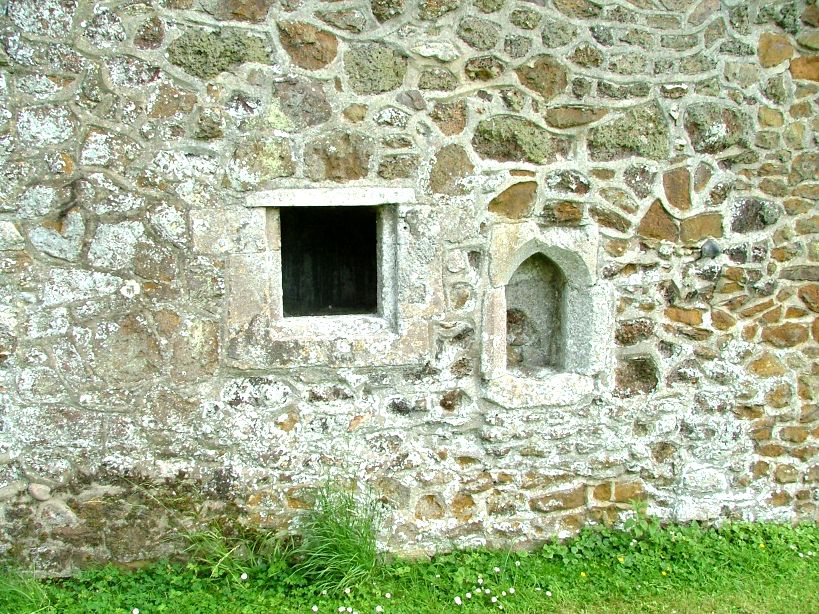
The Norman church, of which only the base of the tower survives. Its second stage perhaps late 13c, built before major rebuilding took place c1300 when the present belfry was added, the nave rebuilt with aisles and south porch This was followed c1340 by the chancel and new nave windows. North of the chancel stood a sacristy, now lost, though on the outside wall its aumbrey and piscina can still be seen. www.norfolkchurches.co.uk/watlington/images/dscf1045.jpg
In the 15c the tower was given a new west window, a set of pinnacles, a small spire (now gone) and an octagonal brick stair turret to the second stage. At this time the nave roof was lowered with added clerestory and separate aisle roofs.
The tower has 6 bells, two of c1450, the rest of 1910. The tower c1920 clock is in memory of those from the village who perished in WWl.
A complete set of 15c bench ends, font and screen survive.
This is a Junghans ATO clock, which dates back to the early 1950's or so. It is an electro-mechanical clock. There is a curved magnetized rod attached to the bottom of the pendulum. A solenoid coil, on the left, is briefly energized when the escapement closes a switch. The energized coil generates a magnetic field, which pulls the pendulum to the left.
The clock has a glass case, which is removed for this photo.
The three-faced clock in the middle of Milngavie was an original feature of Copland & Lye department store on 165 Sauchiehall Street, Glasgow. The Clock was gifted to Milngavie when the town centre was pedestrianised. The initials of the department store "C & L" can be seen at the top of the clock.