View allAll Photos Tagged virtuous
"Bask in her beauty and be rewarded."
A stealth pun! Purity and unicorns all in one - though her special ability enrages your local allies to do more damage, oddly enough. Must be frustration.
The 2017 Genesis G90 flagship sedan will compete at the top of the premium luxury car segment with technological innovations and the highest levels of refinement, convenience and dynamic performance. To ensure driver confidence and occupant safety, the G90 features a comprehensive array of standard safety technology in the premium luxury class including Automatic Emergency Braking (AEB) with Pedestrian Detection, Driver Attention Alert (DAA) and Smart Blind Spot Detection.
Turkmenistan, Mary, view of man crossing the street with crane and mosque with minaret in the background against clear blue sky
The Virtuous Well near the village of Trellech in Wales is a sacred well with a history going back to medieval times and beyond. It was originally referred to in early Welsh documents as Annis's Well after a certain Celtic goddess, the name being later Christianised to St.Anne's Well, by which it also known by some to this day.
The water from the well is supposed to have healing properties and so it was much visited by travellers and Christiam pilgrims in medieval times and since. But it is also said that Druidic rites were held here too. Legend has it that on Midsummer's Eve night pixies and fairies dance around the well. The tree next to the well is festooned with streamers and colourful rags - placed there by Christian devotees of St. Anne or pagan worshipers - I know not which, maybe both.
About half a mile from the well are three ancient standing stones, believed to have once been part of a stone circle and also nearby a huge man-made 'tump' or mound, originally the site of a small castle. So the village and its surrounding are rich in historical monuments and legend. More photos to come.
And here's some music from South African pianist, Abdullah Ibrahim's album Water From An Ancient Well.
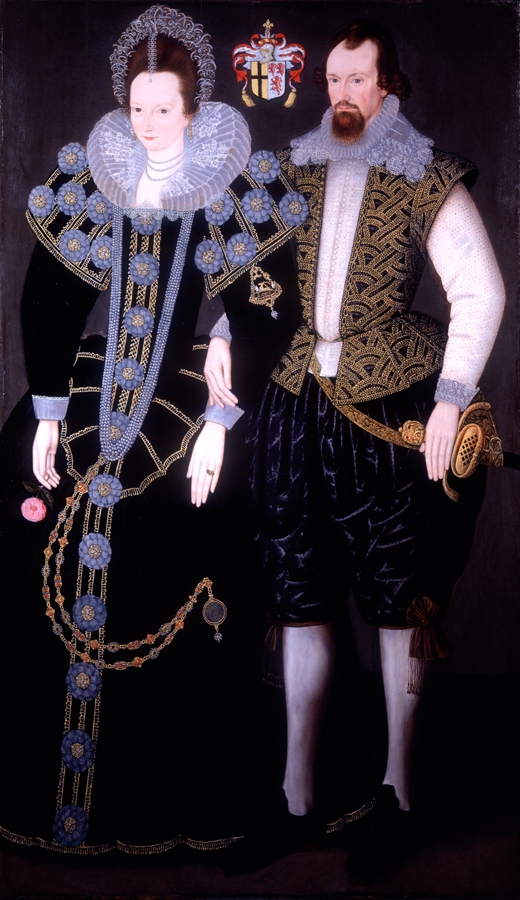
"This is ye portraiture of Ann ye wife of Robert Suckling of Wodeton esq who had issue by him 5 sons and 4 daughters. Her parentage was as Honorable as antient being ye daughter of Sir Thomas Woodhouse of Kimberly knight & baronet & Dame Blanch daughter to ye Lord John Cary baron of Hunsdon. She lived a pious & virtuous life and ended her dayes about ye six & thirty yeare of her age July ye first 1653" (possibly as a result of childbirth)
Ann bc 1617 was the daughter of Sir Thomas Wodehouse 2nd Bart. 1658 and Blanche daughter of Sir John Carey, 3rd Baron Hunsdon and Mary Hyde flic.kr/p/hs4C48
She was the sister of Elizabeth Strutt of Kimberley www.flickr.com/gp/52219527@N00/794nhe whose monument is also by William Wright possibly commissioned by her father
Their 6 x great grandparents John Wodehouse 1465 & Constance Gedding 1487 are also here www.flickr.com/gp/52219527@N00/Mrt805
She m 1633 Robert son of Charles Suckling 1644 by Mary daughter of Stephen Drury 1599 of Aylesham
Children
1. Charles 1673
2.Blanche m Edward Osbourn (perhaps parents of Ralph Osborne 1689 rector www.flickr.com/gp/52219527@N00/zm831z )
3.Anne 1662 m Augustine Scottow
4.Elizabeth 1708 m Abraham Castell
5.Robert 1641 - 1707 m Sarah www.flickr.com/gp/52219527@N00/VbDf44 daughter of Maurice Shelton and Elizabeth Kemp (who built the hall and were great grandparents of Admiral Horation Nelson )
6. Philip 1647-49
7.Lucy 1720 m Thomas 1702 son & heir of William Stone & Catherine sole heir of William Stanhow of Bedingham 1659 (parents of Robert Stone 1688 www.flickr.com/gp/52219527@N00/GD7B3X
8.Philip 1652-1679
- Woodton church Norfolk
Turkmenistan, Mary, view of man crossing the street with crane and mosque with minaret in the background against clear blue sky
Rumors have swirled for months that if Hillary Clinton succeeds in her bid to come to be the upcoming U.S. president, she would appoint Fb main working officer Sheryl Sandberg as Treasury Secretary.
But Sandberg shot down those people rumors nowadays at the Virtuous Circle convention,...
First 1000 businesses who contacts honestechs.com will receive a business mobile app and the development fee will be waived. Contact us today.
#electronics #technology #tech #electronic #device #gadget #gadgets #instatech #instagood #geek #techie #nerd #techy #photooftheday #computers #laptops #hack #screen
honestechs.com/2016/10/12/sheryl-sandberg-shoots-down-rum...
Kartikeya (/ˌkɑrtɪˈkeɪjə/), also known as Skanda, Murugan and Subramaniyan, is the Hindu god of war. He is the commander-in-chief of the army of the devas (gods) and the son of Shiva and Parvati.
Murugan is often referred to as "Tamil Kadavul" (meaning "God of Tamils") and is worshiped primarily in areas with Tamil influences, especially South India, Sri Lanka, Mauritius, Malaysia, Singapore and Reunion Island. His six most important shrines in India are the Arupadaiveedu temples, located in Tamil Nadu. In Sri Lanka, Hindus as well as Buddhists revere the sacred historical Nallur Kandaswamy temple in Jaffna and Katirkāmam Temple situated deep south.[1] Hindus in Malaysia also pray to Lord Murugan at the Batu Caves and various temples where Thaipusam is celebrated with grandeur.
In Karnataka and Andhra Pradesh, Kartikeya is known as Subrahmanya with a temple at Kukke Subramanya known for Sarpa shanti rites dedicated to Him and another famous temple at Ghati Subramanya also in Karnataka. In Bengal and Odisha, he is popularly known as Kartikeya (meaning 'son of Krittika').
Other names[edit]
Like most Hindu deities, Subrahmanya is known by many other names, including Senthil, Vēlaṇ, Kumāran (meaning 'prince or child or young one'), Swaminatha (meaning 'smart' or 'clever'), Saravaṇa, Arumugam or Shanmuga (meaning 'one with six faces'), Dandapani (meaning God with a Club), Guhan or Guruguha (meaning 'cave-dweller'), Subrahmanya, Kartikeya and Skanda (meaning 'that which is spilled or oozed).[3][4] He was also known as Mahasena and the Kadamba Dynasty kings worshiped him by this name.[5]
Vedas[edit]
The Atharva Veda describes Kumaran as 'Agnibhuh' because he is form of 'Agni' (Fire God) & Agni hold in his hand when kumaran born. The Satapatha Brahmana refers to him as the son of Rudra and the six faces of Rudra. The Taittiriya Aranyaka contains the Gayatri mantra for Shanmukha. The Chandogya Upanishad refers to Skanda as the "way that leads to wisdom". The Baudhayana Dharmasutra mentions Skanda as 'Mahasena' and 'Subrahmanya.' The Aranya Parva canto of the Mahabharata relates the legend of Kartikeya Skanda in considerable detail. The Skanda Purana is devoted to the narrative of Kartikeya.[6] The Upanishads also constantly make a reference to a Supreme Being called Guha, the indweller.
The first elaborate account of Kartikeya's origin occurs in the Mahabharata. In a complicated story, he is said to have been born from Agni and Svaha, after the latter impersonated the six of the seven wives of the Saptarishi (Seven Sages). The actual wives then become the Pleiades. Kartikeya is said to have been born to destroy the Asura Mahisha.[7] (In later mythology, Mahisha became the adversary of Durga.) Indra attacks Kartikeya as he sees the latter as a threat, until Shiva intervenes and makes Kartikeya the commander-in-chief of the army of the Devas. He is also married to Devasena, Indra's daughter. The origin of this marriage lies probably in the punning of 'Deva-sena-pati'. It can mean either lord of Devasena or Lord of the army (sena) of Devas. But according to Shrii Shrii Anandamurti, in his master work on Shiva[8] and other works, Kartikeya was married to Devasenā and that is on the ground of his name as Devasena's husband, Devasenāpati, misinterpreted as Deva-senāpati (Deva's general) that he was granted the title general and made the Deva's army general.[9]
Tolkappiyam, possibly the most ancient of the Tamil literature mentions him as "Seyon", the three other gods referred in Tolkappiyam are "Maayon", "Indhiran" and "Kotravai(see:Durga). Extant Sangam works, dated between the 3rd century BCE and 5th century CE glorified Murugan, "the red god seated on the blue peacock, who is ever young and resplendent," as "the favoured god of the Tamils."[10] The Sangam poetry divided space and Tamil land into five allegorical areas (tinai) and according to the Tirumurugarruppatai ( c. 400–450 AD) attributed to the great Sangam poet Nakkiirar, Murugan was the presiding deity the Kurinci region (hilly area). (Tirumurugaruppatai is a deeply devotional poem included in the ten idylls (Pattupattu) of the age of the third Sangam). The other Sangam era works in Tamil that refer to Murugan in detail include the Paripaatal, the Akananuru and the Purananuru. One poem in the Paripaatal describes the veneration of Murugan thus:
"We implore thee not for boons of enjoyment or wealth,
But for thy grace beatific, love and virtuous deeds."
According to the Tamil devotional work, Thiruppugazh, "Murugan never hesitates to come to the aid of a devotee when called upon in piety or distress". In another work, Thirumurukkarrupatai, he is described as a god of eternal youth;
His face shines a myriad rays light and removes the darkness from this world.[11]
The references to Murugan can be traced back to the first millennium BCE. There are references to Murugan in Kautilya's Arthashastra, in the works of Patanjali, in Kalidasa's epic poem the Kumarasambhavam. The Kushanas, who governed from what is today Peshawar, and the Yaudheyas, a republican clan in the Punjab, struck coins bearing the image of Skanda. The deity was venerated also by the Ikshvakus, an Andhra dynasty, and the Guptas.[6] The worship of Kumāra was one of the six principal sects of Hinduism at the time of Adi Shankara. The Shanmata system propagated by him included this sect. In many Shiva and Devi temples of Tamil Nadu, Murugan is installed on the left of the main deity. The story of His birth goesas follows:
Sati immolated herself in a pyre as her father King Daksha had insulted Shiva, her Lord. She was reborn as Parvathi or Uma, daughter of the King of Himalayas, Himavan. She then married her Lord Shiva. The Devas were under onslaught from the Asuras whose leader was Soorapadman. He had been granted boons that only Lord Shiva or his seed could kill him. Fearless he vanquished the Devas and made them his slaves. The Devas ran to Vishnu for help who told them that it was merely their fault for attending Daksha's yagna, without the presence of Lord Shiva. After this, they ran to Shiva for help. Shiva decided to take action against Soorapadman's increasing conceit. He frowned and his third eye- the eye of knowledge- started releasing sparks. These were six sparks in total. Agni had the responsibility to take them to Saravana Lake. As he was carrying them, the sparks were growing hotter and hotter that even the Lord of Fire could not withstand the heat. Soon after Murugan was born on a lotus in the Saravana Lake with six faces, giving him the name Arumukan. Lord Shiva and Parvati visited and tears of joy started flowing as they witnessed the most handsome child. Shiva and Parvathi gave the responsibility of taking care of Muruga to the six Krittika sisters. Muruga grew up to be a handsome, intelligent, powerful, clever youth. All the Devas applauded at their saviour, who had finally come to release them from their woes. Murugan became the supreme general of the demi-gods, then escorted the devas and led the army of the devas to victory against the asuras.
Though slightly varying versions occur in the Puranas, they broadly follow the same pattern. By this period, the identification of Shiva/Rudra with Agni, that can be traced back to the Vedas and Brahmanas, had clearly made Kartikeya the son of Shiva.[citation needed]
The Skanda Purana narrates that Shiva first wed Dakshayani (also named Sati), the first incarnation of Adi Shakthi the granddaughter of Brahma, and the daughter of Daksha. Daksha was a Vishnu devotee and never liked Shiva, who symbolized destruction of evil, detachment, and who lives a simple life . Daksha publicly insults Shiva in a Yagna ceremony, and Dakshayani immolates herself. The Yagna is destroyed by Shiva's avatar Virabhadra. Virabhadra broke the sacrificial vessels, polluted the offerings, insulted the priests and finally cut off Daksha's head, trampled on Indra, broke the staff of Yama, scattered the gods on every side; then he returned to Kailash.[12] Taraka believed that, because Shiva is an ascetic and his earlier marriage was conducted with great difficulty, his remarriage was out of the question, hence his boon of being killed by Shiva's son alone would give him invincibility.
The Devas manage to get Shiva married to Parvati (who was Dakshayani, reborn), by making Manmatha (also known as Kama), the God of love awaken him from his penance, but Manmatha incurred the Lord's wrath indicated by the opening his third eye – "Netri Kann", and being destroyed and resurrected. Shiva hands over his effulgence of the third eye used to destroy Manmatha to Agni, as he alone is capable of handling it until it becomes the desired offspring. But even Agni, tortured by its heat, hands it over to Ganga who in turn deposits it in a lake in a forest of reeds (sharavanam). Then Goddess Parvati, took the form of this water body as she alone is capable of taming the Tejas of Shiva, her consort. . The child is finally born in this forest (vana) with six faces: eesanam, sathpurusham, vamadevam, agoram, sathyojatham and adhomugam. He is first spotted and cared for by six women representing the Pleiades — Kritika in Sanskrit. He thus gets named Kartikeya. As a young lad, he destroys Tarakasur. He is also called Kumara (Tamil and Sanskrit for "youth")
Historically, God Kartikeya was immensely popular in the Indian subcontinent. One of the major Puranas, the Skanda Purana is dedicated to him. In the Bhagavad-Gita (Ch.10, Verse 24), Krishna, while explaining his omnipresence, names the most perfect being, mortal or divine, in each of several categories. While doing so, he says: "Among generals, I am Skanda, the lord of war."
Kartikeya's presence in the religious and cultural sphere can be seen at least from the Gupta age. Two of the Gupta kings, Kumaragupta and Skandagupta, were named after him. He is seen in the Gupta sculptures and in the temples of Ellora and Elephanta. As the commander of the divine armies, he became the patron of the ruling classes. His youth, beauty and bravery was much celebrated in Sanskrit works like the Kathasaritsagara. Kalidasa made the birth of Kumara the subject of a lyrical epic, the Kumaarasambhavam. In ancient India, Kartikeya was also regarded as the patron deity of thieves, as may be inferred from the Mrichchakatikam, a Sanskrit play by Shudraka, and in the Vetala-panchvimshati, a medieval collection of tales. This association is linked to the fact that Kartikeya had dug through the Krauncha mountain to kill Taraka and his brothers (in the Mrichchakatikam, Sarivilaka prays to him before tunnelling into the hero's house).
However, Kartikeya's popularity in North India receded from the Middle Ages onwards, and his worship is today virtually unknown except in parts of Haryana. There is a very famous temple dedicated to Him in the town of Pehowa in Haryana and this temple is very well known in the adjoining areas, especially because women are not allowed anywhere close to it. Women stay away from this temple in Pehowa town of Haryana because this shrine celebrates the Brahmachari form of Kartikeya. Reminders of former devotions to him include a temple at Achaleshwar, near Batala in Punjab, and another temple of Skanda atop the Parvati hill in Pune, Maharashtra. Another vestige of his former popularity can be seen in Bengal and Odisha, where he is worshipped during the Durga Puja festivities alongside Durga. Lord Subramanya is the major deity among the Hindus of northern Kerala. Lord Subramanya is worshipped with utmost devotion in districts of Dakshina Kannada and Udupi in the state of Karnataka. Rituals like nagaradhane are unique to this region.Temples[edit]
The main temples of Murugan are located in Tamil Nadu and other parts of south India. They include the Aru Padaiveedu (six abodes) — Thiruchendur, Swamimalai, Pazhamudircholai, Thirupparangunram, Palani (Pazhani), Thiruthani and other important shrines like Mayilam, Sikkal, Marudamalai, Kundrathur, Vadapalani, Kandakottam, Thiruporur, Vallakottai, Vayalur, Thirumalaikoil, Pachaimalai and Pavalamalai near Gobichettipalayam. Malai Mandir, a prominent and popular temple complex in Delhi, is one of the few dedicated to Murugan in all of North India apart from the Pehowa temple in Haryana.There are many temples dedicated to Lord Subramanya in Kerala. Amongst them are Atiyambur Sri Subramanya Temple in Kanhangad Kasaragod, Payyannur Subramanya Swamy temple in Payyanur, Panmana Subramanya Swamy temple in Panmana and the Subramanya temple in Haripad. There is a temple in Skandagiri, Secunderabad and one in Bikkavolu, East Godavari district in the state of Andhra Pradesh. In Karnataka there is the Kukke Subramanya Temple where Lord Murugan is worshiped as the Lord of the serpents. Aaslesha Bali, Sarpa Samskara with nagapathista samarpa are major prayers here. There is a temple called Malai Mandir in South Delhi. Malai means hill in Tamil. Mandir means temple in Hindi.
The key temples in Sri Lanka include the sylvan shrine in Kataragama / (Kadirgamam) or Kathirkamam in the deep south, the temple in Tirukovil in the east, the shrine in Embekke in the Kandyan region and the famed Nallur Kandaswamy temple in Jaffna. There are several temples dedicated to Lord Murugan in Malaysia, the most famous being the Batu Caves near Kuala Lumpur. There is a 42.7-m-high statue of Lord Murugan at the entrance to the Batu Caves, which is the largest Lord Murugan statue in the world. Sri Thandayuthapani Temple in Tank Road, Singapore is a major Hindu temple where each year the Thaipusam festival takes place with devotees of Lord Muruga carrying Kavadis seeking penance and blessings of the Lord.
In the United Kingdom, Highgate Hill Murugan temple is one of the oldest and most famous. In London, Sri Murugan Temple in Manor park is a well-known temple. In Midlands, Leicester Shri Siva Murugan Temple[20] is gaining popularity recently. Skanda Vale[21] in West Wales was founded by Guruji, a Tamil devotee of Subramaniam, and its primary deity is Lord Murugan. In Australia, Sydney Murugan temple in Parramatta (Mays Hill), Perth Bala Muruguan temple in Mandogalup and Kundrathu Kumaran temple in Rockbank, Melbourne are major Hindu temples for all Australian Hindus and Murugan devotees. In New Zealand, there is a Thirumurugan Temple in Auckland and a Kurinji Kumaran Temple in Wellington, both dedicated to Lord Murugan. In the USA, Shiva Murugan Temple[22] in Concord, Northern California and Murugan Temple of North America[23] in Maryland, Washington DC region are popular. In Toronto, Canada, Canada Kanthasamy Temple is known amongst many Hindus in Canada. In Dollard-des-Ormeaux, a suburb of the city of Montreal in Canada, there is a monumental temple of Murugan. The Sri Sivasubramaniar Temple, located in the Sihl Valley in Adliswil, is the most famous and largest Hindu temple in Switzerland.[24]
Kartikeya (/ˌkɑrtɪˈkeɪjə/), also known as Skanda, Murugan and Subramaniyan, is the Hindu god of war. He is the commander-in-chief of the army of the devas (gods) and the son of Shiva and Parvati.
Murugan is often referred to as "Tamil Kadavul" (meaning "God of Tamils") and is worshiped primarily in areas with Tamil influences, especially South India, Sri Lanka, Mauritius, Malaysia, Singapore and Reunion Island. His six most important shrines in India are the Arupadaiveedu temples, located in Tamil Nadu. In Sri Lanka, Hindus as well as Buddhists revere the sacred historical Nallur Kandaswamy temple in Jaffna and Katirkāmam Temple situated deep south.[1] Hindus in Malaysia also pray to Lord Murugan at the Batu Caves and various temples where Thaipusam is celebrated with grandeur.
In Karnataka and Andhra Pradesh, Kartikeya is known as Subrahmanya with a temple at Kukke Subramanya known for Sarpa shanti rites dedicated to Him and another famous temple at Ghati Subramanya also in Karnataka. In Bengal and Odisha, he is popularly known as Kartikeya (meaning 'son of Krittika').
Other names[edit]
Like most Hindu deities, Subrahmanya is known by many other names, including Senthil, Vēlaṇ, Kumāran (meaning 'prince or child or young one'), Swaminatha (meaning 'smart' or 'clever'), Saravaṇa, Arumugam or Shanmuga (meaning 'one with six faces'), Dandapani (meaning God with a Club), Guhan or Guruguha (meaning 'cave-dweller'), Subrahmanya, Kartikeya and Skanda (meaning 'that which is spilled or oozed).[3][4] He was also known as Mahasena and the Kadamba Dynasty kings worshiped him by this name.[5]
Vedas[edit]
The Atharva Veda describes Kumaran as 'Agnibhuh' because he is form of 'Agni' (Fire God) & Agni hold in his hand when kumaran born. The Satapatha Brahmana refers to him as the son of Rudra and the six faces of Rudra. The Taittiriya Aranyaka contains the Gayatri mantra for Shanmukha. The Chandogya Upanishad refers to Skanda as the "way that leads to wisdom". The Baudhayana Dharmasutra mentions Skanda as 'Mahasena' and 'Subrahmanya.' The Aranya Parva canto of the Mahabharata relates the legend of Kartikeya Skanda in considerable detail. The Skanda Purana is devoted to the narrative of Kartikeya.[6] The Upanishads also constantly make a reference to a Supreme Being called Guha, the indweller.
The first elaborate account of Kartikeya's origin occurs in the Mahabharata. In a complicated story, he is said to have been born from Agni and Svaha, after the latter impersonated the six of the seven wives of the Saptarishi (Seven Sages). The actual wives then become the Pleiades. Kartikeya is said to have been born to destroy the Asura Mahisha.[7] (In later mythology, Mahisha became the adversary of Durga.) Indra attacks Kartikeya as he sees the latter as a threat, until Shiva intervenes and makes Kartikeya the commander-in-chief of the army of the Devas. He is also married to Devasena, Indra's daughter. The origin of this marriage lies probably in the punning of 'Deva-sena-pati'. It can mean either lord of Devasena or Lord of the army (sena) of Devas. But according to Shrii Shrii Anandamurti, in his master work on Shiva[8] and other works, Kartikeya was married to Devasenā and that is on the ground of his name as Devasena's husband, Devasenāpati, misinterpreted as Deva-senāpati (Deva's general) that he was granted the title general and made the Deva's army general.[9]
Tolkappiyam, possibly the most ancient of the Tamil literature mentions him as "Seyon", the three other gods referred in Tolkappiyam are "Maayon", "Indhiran" and "Kotravai(see:Durga). Extant Sangam works, dated between the 3rd century BCE and 5th century CE glorified Murugan, "the red god seated on the blue peacock, who is ever young and resplendent," as "the favoured god of the Tamils."[10] The Sangam poetry divided space and Tamil land into five allegorical areas (tinai) and according to the Tirumurugarruppatai ( c. 400–450 AD) attributed to the great Sangam poet Nakkiirar, Murugan was the presiding deity the Kurinci region (hilly area). (Tirumurugaruppatai is a deeply devotional poem included in the ten idylls (Pattupattu) of the age of the third Sangam). The other Sangam era works in Tamil that refer to Murugan in detail include the Paripaatal, the Akananuru and the Purananuru. One poem in the Paripaatal describes the veneration of Murugan thus:
"We implore thee not for boons of enjoyment or wealth,
But for thy grace beatific, love and virtuous deeds."
According to the Tamil devotional work, Thiruppugazh, "Murugan never hesitates to come to the aid of a devotee when called upon in piety or distress". In another work, Thirumurukkarrupatai, he is described as a god of eternal youth;
His face shines a myriad rays light and removes the darkness from this world.[11]
The references to Murugan can be traced back to the first millennium BCE. There are references to Murugan in Kautilya's Arthashastra, in the works of Patanjali, in Kalidasa's epic poem the Kumarasambhavam. The Kushanas, who governed from what is today Peshawar, and the Yaudheyas, a republican clan in the Punjab, struck coins bearing the image of Skanda. The deity was venerated also by the Ikshvakus, an Andhra dynasty, and the Guptas.[6] The worship of Kumāra was one of the six principal sects of Hinduism at the time of Adi Shankara. The Shanmata system propagated by him included this sect. In many Shiva and Devi temples of Tamil Nadu, Murugan is installed on the left of the main deity. The story of His birth goesas follows:
Sati immolated herself in a pyre as her father King Daksha had insulted Shiva, her Lord. She was reborn as Parvathi or Uma, daughter of the King of Himalayas, Himavan. She then married her Lord Shiva. The Devas were under onslaught from the Asuras whose leader was Soorapadman. He had been granted boons that only Lord Shiva or his seed could kill him. Fearless he vanquished the Devas and made them his slaves. The Devas ran to Vishnu for help who told them that it was merely their fault for attending Daksha's yagna, without the presence of Lord Shiva. After this, they ran to Shiva for help. Shiva decided to take action against Soorapadman's increasing conceit. He frowned and his third eye- the eye of knowledge- started releasing sparks. These were six sparks in total. Agni had the responsibility to take them to Saravana Lake. As he was carrying them, the sparks were growing hotter and hotter that even the Lord of Fire could not withstand the heat. Soon after Murugan was born on a lotus in the Saravana Lake with six faces, giving him the name Arumukan. Lord Shiva and Parvati visited and tears of joy started flowing as they witnessed the most handsome child. Shiva and Parvathi gave the responsibility of taking care of Muruga to the six Krittika sisters. Muruga grew up to be a handsome, intelligent, powerful, clever youth. All the Devas applauded at their saviour, who had finally come to release them from their woes. Murugan became the supreme general of the demi-gods, then escorted the devas and led the army of the devas to victory against the asuras.
Though slightly varying versions occur in the Puranas, they broadly follow the same pattern. By this period, the identification of Shiva/Rudra with Agni, that can be traced back to the Vedas and Brahmanas, had clearly made Kartikeya the son of Shiva.[citation needed]
The Skanda Purana narrates that Shiva first wed Dakshayani (also named Sati), the first incarnation of Adi Shakthi the granddaughter of Brahma, and the daughter of Daksha. Daksha was a Vishnu devotee and never liked Shiva, who symbolized destruction of evil, detachment, and who lives a simple life . Daksha publicly insults Shiva in a Yagna ceremony, and Dakshayani immolates herself. The Yagna is destroyed by Shiva's avatar Virabhadra. Virabhadra broke the sacrificial vessels, polluted the offerings, insulted the priests and finally cut off Daksha's head, trampled on Indra, broke the staff of Yama, scattered the gods on every side; then he returned to Kailash.[12] Taraka believed that, because Shiva is an ascetic and his earlier marriage was conducted with great difficulty, his remarriage was out of the question, hence his boon of being killed by Shiva's son alone would give him invincibility.
The Devas manage to get Shiva married to Parvati (who was Dakshayani, reborn), by making Manmatha (also known as Kama), the God of love awaken him from his penance, but Manmatha incurred the Lord's wrath indicated by the opening his third eye – "Netri Kann", and being destroyed and resurrected. Shiva hands over his effulgence of the third eye used to destroy Manmatha to Agni, as he alone is capable of handling it until it becomes the desired offspring. But even Agni, tortured by its heat, hands it over to Ganga who in turn deposits it in a lake in a forest of reeds (sharavanam). Then Goddess Parvati, took the form of this water body as she alone is capable of taming the Tejas of Shiva, her consort. . The child is finally born in this forest (vana) with six faces: eesanam, sathpurusham, vamadevam, agoram, sathyojatham and adhomugam. He is first spotted and cared for by six women representing the Pleiades — Kritika in Sanskrit. He thus gets named Kartikeya. As a young lad, he destroys Tarakasur. He is also called Kumara (Tamil and Sanskrit for "youth")
Historically, God Kartikeya was immensely popular in the Indian subcontinent. One of the major Puranas, the Skanda Purana is dedicated to him. In the Bhagavad-Gita (Ch.10, Verse 24), Krishna, while explaining his omnipresence, names the most perfect being, mortal or divine, in each of several categories. While doing so, he says: "Among generals, I am Skanda, the lord of war."
Kartikeya's presence in the religious and cultural sphere can be seen at least from the Gupta age. Two of the Gupta kings, Kumaragupta and Skandagupta, were named after him. He is seen in the Gupta sculptures and in the temples of Ellora and Elephanta. As the commander of the divine armies, he became the patron of the ruling classes. His youth, beauty and bravery was much celebrated in Sanskrit works like the Kathasaritsagara. Kalidasa made the birth of Kumara the subject of a lyrical epic, the Kumaarasambhavam. In ancient India, Kartikeya was also regarded as the patron deity of thieves, as may be inferred from the Mrichchakatikam, a Sanskrit play by Shudraka, and in the Vetala-panchvimshati, a medieval collection of tales. This association is linked to the fact that Kartikeya had dug through the Krauncha mountain to kill Taraka and his brothers (in the Mrichchakatikam, Sarivilaka prays to him before tunnelling into the hero's house).
However, Kartikeya's popularity in North India receded from the Middle Ages onwards, and his worship is today virtually unknown except in parts of Haryana. There is a very famous temple dedicated to Him in the town of Pehowa in Haryana and this temple is very well known in the adjoining areas, especially because women are not allowed anywhere close to it. Women stay away from this temple in Pehowa town of Haryana because this shrine celebrates the Brahmachari form of Kartikeya. Reminders of former devotions to him include a temple at Achaleshwar, near Batala in Punjab, and another temple of Skanda atop the Parvati hill in Pune, Maharashtra. Another vestige of his former popularity can be seen in Bengal and Odisha, where he is worshipped during the Durga Puja festivities alongside Durga. Lord Subramanya is the major deity among the Hindus of northern Kerala. Lord Subramanya is worshipped with utmost devotion in districts of Dakshina Kannada and Udupi in the state of Karnataka. Rituals like nagaradhane are unique to this region.Temples[edit]
The main temples of Murugan are located in Tamil Nadu and other parts of south India. They include the Aru Padaiveedu (six abodes) — Thiruchendur, Swamimalai, Pazhamudircholai, Thirupparangunram, Palani (Pazhani), Thiruthani and other important shrines like Mayilam, Sikkal, Marudamalai, Kundrathur, Vadapalani, Kandakottam, Thiruporur, Vallakottai, Vayalur, Thirumalaikoil, Pachaimalai and Pavalamalai near Gobichettipalayam. Malai Mandir, a prominent and popular temple complex in Delhi, is one of the few dedicated to Murugan in all of North India apart from the Pehowa temple in Haryana.There are many temples dedicated to Lord Subramanya in Kerala. Amongst them are Atiyambur Sri Subramanya Temple in Kanhangad Kasaragod, Payyannur Subramanya Swamy temple in Payyanur, Panmana Subramanya Swamy temple in Panmana and the Subramanya temple in Haripad. There is a temple in Skandagiri, Secunderabad and one in Bikkavolu, East Godavari district in the state of Andhra Pradesh. In Karnataka there is the Kukke Subramanya Temple where Lord Murugan is worshiped as the Lord of the serpents. Aaslesha Bali, Sarpa Samskara with nagapathista samarpa are major prayers here. There is a temple called Malai Mandir in South Delhi. Malai means hill in Tamil. Mandir means temple in Hindi.
The key temples in Sri Lanka include the sylvan shrine in Kataragama / (Kadirgamam) or Kathirkamam in the deep south, the temple in Tirukovil in the east, the shrine in Embekke in the Kandyan region and the famed Nallur Kandaswamy temple in Jaffna. There are several temples dedicated to Lord Murugan in Malaysia, the most famous being the Batu Caves near Kuala Lumpur. There is a 42.7-m-high statue of Lord Murugan at the entrance to the Batu Caves, which is the largest Lord Murugan statue in the world. Sri Thandayuthapani Temple in Tank Road, Singapore is a major Hindu temple where each year the Thaipusam festival takes place with devotees of Lord Muruga carrying Kavadis seeking penance and blessings of the Lord.
In the United Kingdom, Highgate Hill Murugan temple is one of the oldest and most famous. In London, Sri Murugan Temple in Manor park is a well-known temple. In Midlands, Leicester Shri Siva Murugan Temple[20] is gaining popularity recently. Skanda Vale[21] in West Wales was founded by Guruji, a Tamil devotee of Subramaniam, and its primary deity is Lord Murugan. In Australia, Sydney Murugan temple in Parramatta (Mays Hill), Perth Bala Muruguan temple in Mandogalup and Kundrathu Kumaran temple in Rockbank, Melbourne are major Hindu temples for all Australian Hindus and Murugan devotees. In New Zealand, there is a Thirumurugan Temple in Auckland and a Kurinji Kumaran Temple in Wellington, both dedicated to Lord Murugan. In the USA, Shiva Murugan Temple[22] in Concord, Northern California and Murugan Temple of North America[23] in Maryland, Washington DC region are popular. In Toronto, Canada, Canada Kanthasamy Temple is known amongst many Hindus in Canada. In Dollard-des-Ormeaux, a suburb of the city of Montreal in Canada, there is a monumental temple of Murugan. The Sri Sivasubramaniar Temple, located in the Sihl Valley in Adliswil, is the most famous and largest Hindu temple in Switzerland.[24]
"To the memory of the trewly virtuous Penelope, the daughter of Sir Raynold Mohun knight and baronet, for a short tyme wife unto William Drew of Broad Hembury in the county of Devon esquire
My name was Mohun, my fates like various weare
My short lifes often changed makes it cleare
A virgin starre on earth, a while I shind
With noted splendour, chiefly of the mynd
Till by William Drew me to to his nuptial bed
Thence soone by gods high call to heav'n I fled
Not without hope in Christ, to be a gemme
Set in the walles of new Jerusalem
Who was buried the 30 day of March 1637"
Penelope b1609 was the daughter of Sir Reginald Mohun by 3rd wife Dorothy www.tudorplace.com.ar/images/Mohun,Reginald_Dorothy.jpg daughter of John Chudleigh and Elizabeth Speke widow of Hugh Pollard
She was the sister of Dorothy Carew of Broadclyst www.flickr.com/gp/52219527@N00/Xy4375
Penelope m (3rd wife) William Drewe on 3 Nov 1636 (date of licence) widower of Katherine Symes & Elizabeth Fulford 1635 grand daughter of Sir Thomas Fulford 1610 wife Ursula Bampfylde flic.kr/p/oFZ4fu , who m4 ..... Pollard of Kings Nympton
Picture Mike Searle CCL
Bridget Knatchbull 1625 flic.kr/p/D2roWG
"This virtuous Lady named Bridget, descended from ye ancient Family of the Barons of Astley, was the Second Daughter of John Astley, who, whilst he lived was cheefe Gentilman of the Privie Chamber to Elizabeth l, and Master and Treasurer of hir Mas. Jewells and Plate.
She was married to Sr. Norton Knatchbull Knt. d1636 with whome when she had lived 33 Yeares and 3 Months www.flickr.com/photos/52219527@N00/1005963283/in/photostr... they had no issue
She departed this Life the 4th of November 1625 in the 55th Yeare of her Age, and in the First Yeare of the Rayne of King Charles, and here lied interred. To whose Memory, the said Sr. Norton, her Husband, caused this Monument To be Made".
"The Dust close’d up within this Marble Shrine/Was (when it breath’d) a Blossom Feminine,/Brought up in Courte; The Ill whereof, & Good,/She quickly found, in Competition stood./The Good Ill Courte She, therefore, soon forsooke;/And, happy in her Choice, an Husband tooke./Yet, ‘tho She were with happy Hymen Bless’t,/She found The World could yeild no Perfect Rest;/ And, therefore, having, Three and Thirty Yeares,/Liv’d in True Love with him that loved her deere,/She left him too, and all that Worlly is,/To gaine an Everlasting Crowne of Blisse. Nobil … pijs prognata Parentibus, Anlam/Reginae, Virto, Virginis Ingreditur./Paulo ter Senos cum plus adoleverat Annos,/Aedibus, ad Sponsum, Principis Egreditur./Fansta prius Caelebs, magè Jansta Marita Marito/Nupta triennalis terq decinnis erat./Aggreditur tandem Caelum, quo Vota trahebant./Hinc Dolor huic Mundo est, quod valedixit ?".
Lafayette, IN - Virtuous Cycles: This Xtracycle Dealer has a Radish on the floor and is knowledgeable about cargo bike and bike-hauling.
76:5 [whereas,] behold, the truly virtuous shall drink from a cup flavoured with the calyx of sweet-smelling flowers:
Al-Insan (Man) The Quran
"Here lyeth the bodye of Barbara the wife of John Plumleigh of Dartmouth who departed this life the thirde day of September 1610
Here lyeth the wife of John Plumleigh who Barbara had to name
Whose virtuous life and Godly death hath left her lasting Fame
Of Rich and Poore she was beloved to Ye one a Neighbour kind
To the other still in all distress, a tender harted frende
Two sons and daughters 4 she bare unto her husband deare
And dyed when age had neere run out ye Four and XXXth yeare
Whose corps have thou O Death destroy, yet Christ shall raise again
And it conjoin with Soul in blisse for ever to remain
For Death to Life A Passage Is, as Scriptures ALL accord
Blest are the Dead therefore that die in favour of ye Lord"
Brass figure of Barbara wife of John Plumleigh with her 2 sons & 4 daughters below - Barbara wears a kind of French hood with dependent cover-chief, ruff, and richly embroidered stomacher and petticoat, with fathingale over, close sleeves with cuffs, the hands raised in prayer, the feet in shoes with rosettes.
Barbara was the daughter of Stephen Eyre
She m (1st wife) John Plumleigh 7th son of John Plumleigh of Dartmouth, both mayors of Dartmouth, by 2nd wife Anne daughter of John Fortescue of Fallopit & Honoria daughter of Edmund Speccott of Thornbury
Children
1. Richard Plumleigh 1596–1636 m Elizabeth daughter of William Nutbrowne, by whom he had two sons, Charles and Philip, and a daughter, Elizabeth.
2. George James Plumleigh 1601–1649 m Joan- by whom he had a son John
1. Rachel Plumleigh b1596
2. Anne Plumleigh 1602–1640 m Nicholas Ford of Ford
3. Barbara 1604 - m 1626 Thomas Woodward of London
Husband John m2 (within 2 months - 17 Dec. 1610), Margaret, daughter of Nicholas Martin of Exetor, relict of John Ellacott, merchant of Exetor, by whom he had one daughter Jane wife of Nicholas Roope. His will, Nov. 1641 proved 1641-2.
( Margaret's memorial is nearby inscribed; "Hereunder lyeth ye Body of Margaret the second wife of John Plumleigh of Dartmouth Gentleman, who was the daughter of Nicholas Martin of Exon, Esq: who departed this life ye 25 of Februar 1638. She lived vertously and died Godly" )
ancestors.familysearch.org/en/KHCD-7QR/barbara-eyre-1572-...
- Church of St. Petrox, Dartmouth
Vonderene www.findagrave.com/memorial/199664818/barbara-plumleigh
Signs / Great Mills Road in Great Mills / Lexington Park, Maryland on Monday evening, 2 April 2012 by Elvert Barnes Photography
McKay's Food & Drug Center - 46075 Signature Lane, Lexington Park MD
Virtuous Woman Hair Studio - 46037 Signature Lane, Lexington Park MD
Jacob's Well Christian Books & Gifts - 46035 Signature Lane, Lexington Park MD
Daughters of Sir George Manners 1573-1623 and wife Grace Pierrepoint flic.kr/p/dAgFEN
Elizabeth - "A Virtuous woman is a crown to her husband" and her sister Eleanor "The wise woman buildeth her house"
Elizabeth dsp m Robert Sutton Baron Lexinton d1668 www.flickr.com/gp/52219527@N00/9B966z , son of Sir William Sutton and Susan Cony www.flickr.com/photos/52219527@N00/6774153558/ of Averham
Eleanor m Sir Lewis Watson 1st Baron Rockingham d1652), son of Sir Edward Watson and Anne Digby www.flickr.com/photos/52219527@N00/5362887769/ and widower of Katherine Bertie 1610 www.flickr.com/gp/52219527@N00/M8kN5D
Children
1 Edward 2nd Baron m Anne daughter of Thomas Wentworth flic.kr/p/b2AzRP & Arabella daughter of John Holles and Anne (Stanhope
1. Elizabeth m Charles Dymoke of Scrivelsby , son of Edward Dymoke
1. Grace m Edward son of Edward www.flickr.com/gp/52219527@N00/36zNi0 eldest surviving son of Sir Edward Barkham 1667 Lord Mayor of London, Lord of the manor, & Jane Crowche / Crouch 1661 www.flickr.com/gp/52219527@N00/8587X6 at South Acre Norfolk
Daughters of Sir George Manners 1573-1623 and wife Grace Pierrepoint - Church of All Saints, Bakewell, Derbyshire
The 2017 Genesis G90 flagship sedan will compete at the top of the premium luxury car segment with technological innovations and the highest levels of refinement, convenience and dynamic performance. To ensure driver confidence and occupant safety, the G90 features a comprehensive array of standard safety technology in the premium luxury class including Automatic Emergency Braking (AEB) with Pedestrian Detection, Driver Attention Alert (DAA) and Smart Blind Spot Detection.
The 2017 Genesis G90 flagship sedan will compete at the top of the premium luxury car segment with technological innovations and the highest levels of refinement, convenience and dynamic performance. To ensure driver confidence and occupant safety, the G90 features a comprehensive array of standard safety technology in the premium luxury class including Automatic Emergency Braking (AEB) with Pedestrian Detection, Driver Attention Alert (DAA) and Smart Blind Spot Detection.
This is Primal Rage's Slashfang. He's a sabertoothed tiger and one of the good Virtuous Beasts sent to fight Necrosan the dracolich. I think there was going to be one last version of Primal Rage released that would include these guys in the final battle. It's too bad that never happened. Slashfang is the second hardest figure to find.
View at full size to read his description. Here you can see a preview of what Necrosan looked like. I am on the look out for that figure so if anyone has one they know of please tell me. I am willing to buy.
Yesterday, I caught a great photo at the end of my outing, after enduring mostly grey sky. Just as I'd returned to the truck, the clouds lifted and the Lammermuirs, like an old reclusive and reluctantly virtuous Scottish Victorian dame, lifted her silky drawers and revealed her majesty: no hidden peaks, but some intriguing folds and cleuchs. Today, it was much more dramatic. I'd started out with the intention of returning to The Hopes to get a better photo of the awesome cornices. I'd elected to use the back roads, but was frustrated at every turn. The wind was ripping the snow off the fields and dumping the fine powder accumulations on the east/west roads, especially through the gates, fallen dykes and derelict hedgerows. After several abortive (and highly entertaining) drift closed dead ends, I finally made it to The Hopes. The drifting was so convincing I thought I might end up stuck there, so I decided that discretionary retreat was the better part of valour. The best vantage point I could think of was on the Duns road out of Gifford, closed (no great surprise), The video shots taken from the road-end show the fearsome rate of snow being scoured off the plateau. Absolutely magnificent. The Lammermuirs transformed from boring, eco-dessert to something akin to the Greenland ice-sheet.
This project fills me with virtuous feeling, since I am using up lots of odd balls of wool-acrylic blend that I have sitting about. The pattern is Soft Waves by Jan Eaton, in her 200 Ripple Patterns book.
Here lies Interred the Body of
MARY HASELTON
A Young Maiden of this Town
Born of Roman Catholic Parents
And Virtuously brought up
Who being in the Act of Prayer
Repeating Her Vespers
Was instantaneously killed by a flash
Of lightning August the 16th 1785
Aged 9 Years
Not Siloam’s ruinous tower the Victims slew
Because above the many sinn’d the few
Nor here the fated lightning wreaked its rage
By Vengeance sent for crimes matur’d by age
For whilst the Thunder’s awful voice was heard
The little suppliant with it’s hands uprear’d
Addrefs’d her God in prayers the Priest had taught
His mercy crav’d and his protection sought
Learn reader hence that Wisdom to adore
Thou cans’t ner scan: & fear his boundlefs Power
Safe shalt thou be if thou perform’st his will
Blest if he spares and more blest should he kill
Misguided Georgian moralisation again
Within the same preaching generation
That cast judgement on Sarah Lloyd fifteen years later
Divine intervention; a reward, no less
Through her devotion, a young brain moved automatically
Before three million volts passed through it.
Siloam’s tower collapsed in Jerusalem:
Jesus refers to it in Luke’s gospel
As he questions the death of eighteen people, innocent or not.
Our final wish for Mary must be
That her last second on earth
Was filled with a kind of exalted light.
Along the route of the Virtue Tweed Ride in Portland, OR.
The Prudent Cyclist has more on the ride.
There's also an account of the later Vice Tweed Ride available on the same site if you're curious.
Near here unto are interred the mortal remains of Mary one of the daughters of John Rogers gent & wife of Joshua Blackwell gent by whom he had issue Samuel, Elizabeth, John, Frances & Thomas, of these Frances dyed early & before her mother and is interred by her. the rest are still living to the comfort of their father. In her person she was amiable, in her conversation affable & innocent, a tender & loving mother, a virtuous & indearing wife, but what is more praise worthy, she was truly pious & good. She was dear to her relations, but most dear to her husband and tho this marble (the last durable pledge of his true affection) will fail, yet the rewards & fruits of her virtuous & good actions will remain to her happiness for ever more
She dyed ye 22nd day of May 1699 in ye 33rd year of her age. (possibly due to childbirth) - Church of St Mary Stamford Lincolnshire
Grave of Warren Hastings 1732- 1818 First Governor General of India
Interior wall memorial - " In ta vault just beyond the eastern extremity of this church, lies the body of the Right Honorable Warren Hastings of Daylesford House in this parish. The first Governor General of the British Territories of India. A member of His Majesty's Most Honourable Privy Council. LLD & ERS. The last public effort of whose eminently virtuous and lengthen'd life was the re-erection of this sacred edifice which he superintended with singular energy and interest to its completion; And in which Alas ! the holy rites of sepulture were very shortly afterwards performed over his mortal remains. He died on the 22nd of August 1818 aged 85 years and 8 months.
Lord now lettest thou thy servant depart in peace"
Born into a poor family on 6th December 1732 in Churchill, Oxon in 1732, the son of Penystone Hastings by Hester Hastings www.flickr.com/gp/52219527@N00/87DzX0 who was buried on the 15th December soon after he was born.
In 1743 he attended Westminster School, where he became king's scholar and captain of the school in 1747. In 1750 he travelled to Calcutta [Kolkata] to work as a writer in the East India Company's Bengal service. His first appointment was at Cossimbazar, near the nawab's capital at Murshidabad.
He m1 1756 Mary Elliott (d. 1759) widow of Captain John Buchanan.
He m2 Anna Maria Apollonia Chapuset (1747-1837) (Marian) widow of Baron Christoph Carl Adam von Imhoff, who he met whilst sailing from Britain to Madras in 1769.
He spent 2 successful years at Madras and his management of the company's commercial concerns was particularly commended. In 1772 the directors of the East India Company appointed him as governor of Bengal. From the outset of his government Hastings felt obliged to impress on British opinion the importance of what Britain had acquired in Bengal. He believed that Bengal must be governed in ways to which its people were presumed to be accustomed. Indian methods of government and Indian law must be preserved. During his time as governor he moved the central government to Calcutta under direct British control and remodelled the justice system. In 1774 he acquired the new title of governor-general.
He retired in 1785 and returned to England. In 1786,
Edmund Burke introduced an impeachment process against him on charges of corruption, and following a trial that lasted from 1788 to 1795, Hastings was acquitted.
In his later years he received an honorary doctorate from Oxford University and was made a privy counsellor.
He died in 1822 and was buried in Daylesford churchyard.
He retired in 1785 and returned to England. In 1786, Edmund Burke introduced an impeachment process against him on charges of corruption, and following a trial that lasted from 1788 to 1795, he was acquitted.
In 1793 he bought back Daylesford manor which the Hastings family had owned since the 13c, but had had to sell in 1709 due to the decline in their fortunes due to their loyalty to King Charles l in the Civil War.
In his later years he received an honorary doctorate from Oxford University and was made a privy counsellor.
In the following years, he remodelled Daylesford House to the designs of Samuel Pepys Cockerell, modelling it on the grand house he had built at Alipore in India.
Before his death he also rebuilt the medieval church using the old materials which (sadly fo him) was rebuilt yet again in 1859-63 for Harman Grisewood owner of the estate, by architect John Loughborough Pearson
Before his death he rebuilt the medieval church using the old materials which (sadly fo him) was rebuilt yet again 1859-63 for Harman Grisewood owner of the estate, by architect John Loughborough Pearson
In his later years he received an honorary doctorate from Oxford University and was made a privy counsellor.
In accordance with a settlement of 1798 he left the property to his wife Marian for her life with reversion to Sir Charles Imhoff, www.flickr.com/gp/52219527@N00/rxvL88 her son by her first husband. Marian died in 1837, and Charles subsequently remained in possession of the manor until 1853 when he sold it to Mr. Harman Grisewood, who retained it till his death in 1874 )
en.wikipedia.org/wiki/Warren_Hastings
- Church of St Peter, Daylesford Gloucestershire
Tributes to the great freedom fighters Bhagat Singh ji, Rajguru ji and Sukhdeepkaur ji on their martyrdom day. They will keep inspiring us to lead a virtuous life.
Source: The sad case of Mrs. Kate Southern! The beautiful, virtuous Georgia wife, who, being maddened to insanity by the outrageous taunts of a bad woman who had enticed her husband away, killed her (Philadelphia, Pa.: Old Franklin Pub. House, 1878); 24 cm. Call # LM Sa15 c.1.
McDade, T.M. Murder 894.