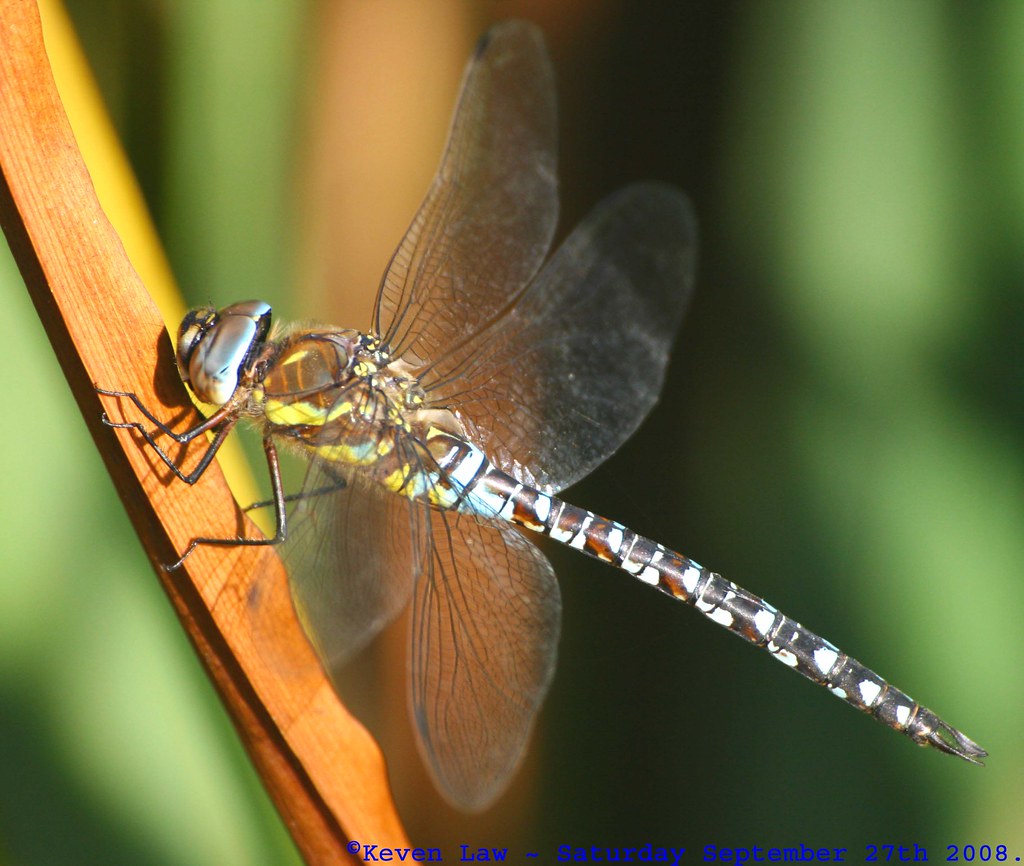
View allAll Photos Tagged positioning

Fetal position is my favorite!

always nice to find some shade when the sun beats down on Edmonton 😎


*********************

HIT THE 'L' KEY FOR A BETTER VIEW! Thanks for the favs and comments. Much Appreciated.


*********************

All of my photographs are under copyright ©. None of these photographs may be reproduced and/or used in any way without my permission.


© VanveenJF Photography

calaruega sunset, nasugbu, batangas, philippines..


Explored: highest position #458

-Added to the Cream of the Crop pool as most favorited.

These Flip Flops were just lying on the stones in this position.

The owner was long gone...

I wonder if they are still there?

[FR]


Comment ?

Mais comment une telle structure a pu être construite à plus de 3100m d'altitude ??


Le Fort Chaberton, appelé aussi le « Cuirassé des nuages », faisait l'orgueil des militaires italiens et était alors réputé comme le plus haut et l'un des plus puissants du monde. Sa position était inexpugnable, le mettant hors de portée de la plupart des pièces d'artillerie de l'époque.


Ambiance angoissante au possible qui s'était accentuée avec le cumul de fatigue de la nuit précédente.


Des amis m'ont parlé d'une ancienne base militaire située au Mont Chaberton, à 3131 m d'altitude.

Celui-ci est situé à proximité de Montgenèvre.


Il est 16h00 passé du 11 octobre, c'est parti pour une nouvelle randonnée de plus de 1200m de dénivelés positifs sur 7,5km avec un sac un peu plus lourd (25kg).

Franchement, j'avais hésité à monter.

Le mental me disait "T'es fatigué, rentre chez toi" et le cœur me disait "Vas-y, c'est le moment, tu kiffes ça.

Tu auras l'occasion de dormir un peu plus tard". 💪


Ne connaissant pas les lieux, je l'ai tout de suite trouvé oppressant, rude.

Voir ces ruines d'une dizaine de mètres de haut au bord de la falaise n'était pas très accueillant et angoissant. 😨


Heureusement, j'avais une eau chaude, un hamburger, du chocolat noir et un chausson aux pommes pour me sentir comme à la maison (ou presque).


Mais avant ça, un repérage s'imposait.

Je reconnais que ce n'est pas un lieu facile car difficile d'accès et il n'y a pas trop de recul une fois arrivé au sommet.

En effet, si on recule un peu trop, on se retrouve en bas de la montagne...

Dans mes compositions, je voulais garder la Voie Lactée mais pas évident avec le manque de recul.

De plus, le Fort de Chaberton est exposé nord; ce qui n'arrange en rien avec la position de la Voie Lactée dans le ciel.


La pollution lumineuse était assez présente permettant d'éclairer les ruines.


La montée s'est faite essentiellement au mental, je suis arrivé dans la pénombre.


C'est dans ces cas-là où le mental peut prendre le dessus et où il est impératif de garder son calme pour limiter le stress et une accumulation de fatigue.


Heureusement, le Mont Viso n'était pas très loin et veillait sur moi.

Nous pouvons l'apercevoir sur chacune de ces trois photographies.


Photographie réalisée en pleine nuit avec un Sony A7S muni d'un objectif Samyang 35mm f/1.4.


Place au rêve,

Jeff


[EN]


How ?

But how could such a structure be built at an altitude of more than 3100m??


Fort Chaberton, also called the “Battleship of the Clouds”, was the pride of the Italian military and was then renowned as the tallest and one of the most powerful in the world. Its position was impregnable, putting it beyond the range of most artillery pieces of the time.


An extremely distressing atmosphere which had been accentuated with the accumulation of fatigue from the previous night.


Friends told me about a former military base located at Mont Chaberton, at an altitude of 3131 m.

This is located near Montgenèvre.


It's past 4:00 p.m. on October 11, we're off for a new hike of more than 1200m of positive elevation over 7.5km with a slightly heavier bag (25kg).

Frankly, I was hesitant to go up.

My mind told me “You’re tired, go home” and my heart told me “Go ahead, it’s time, you love it.

You will have the opportunity to sleep a little later." 💪


Not knowing the place, I immediately found it oppressive and harsh.

Seeing these ruins about ten meters high at the edge of the cliff was not very welcoming and distressing. 😨


Luckily, I had hot water, a hamburger, dark chocolate and an apple turnover to make me feel at home (or almost).


But before that, a scouting was necessary.

I recognize that it is not an easy place because it is difficult to access and there is not much back once you reach the summit.

Indeed, if we go back a little too far, we find ourselves at the bottom of the mountain...

In my compositions, I wanted to keep the Milky Way but not easy with the lack of perspective.

In addition, Fort de Chaberton faces north; which does not suit the position of the Milky Way in the sky.


Light pollution was present enough to illuminate the ruins.


The climb was mainly done mentally, I arrived in the dark.


It is in these cases where the mind can take over and where it is imperative to remain calm to limit stress and an accumulation of fatigue.


Fortunately, Monte Viso was not very far away and was watching over me.

We can see it in each of these three photographs.


Photograph taken in the middle of the night with a Sony A7S equipped with a Samyang 35mm f/1.4 lens.


Make way for the dream,

Jeff

Pontefract (or Pomfret) Castle is a castle ruin in the town of Pontefract, in West Yorkshire, England. King Richard II is thought to have died there. It was the site of a series of famous sieges during the 17th-century English Civil War.


The castle, on a rock to the east of the town above All Saints' Church, was constructed in approximately 1070 by Ilbert de Lacy on land which had been granted to him by William the Conqueror as a reward for his support during the Norman Conquest. There is, however, evidence of earlier occupation of the site. Initially the castle was a wooden structure which was replaced with stone over time. The Domesday Survey of 1086 recorded "Ilbert's Castle" which probably referred to Pontefract Castle.


Robert de Lacy failed to support King Henry I during his power struggle with his brother, and the King confiscated the castle from the family during the 12th century. Roger de Lacy paid King Richard I 3,000 marks for the Honour of Pontefract, but the King retained possession of the castle. His successor King John gave de Lacy the castle in 1199, the year John ascended the throne. Roger died in 1213 and was succeeded by his eldest son, John. However, the King took possession of Castle Donington and Pontefract Castle. The de Lacys lived in the castle until the early 14th century. It was under the tenure of the de Lacys that the magnificent multilobate donjon was built.


In 1311 the castle passed by marriage to the estates of the House of Lancaster. Thomas, Earl of Lancaster (circa 1278–1322) was beheaded outside the castle walls six days after his defeat at the Battle of Boroughbridge, a sentence placed on him by King Edward II himself in the great hall. This resulted in the earl becoming a martyr with his tomb at Pontefract Priory becoming a shrine. It next went to Henry, Duke of Lancaster and subsequently to John of Gaunt, third son of King Edward III. He made the castle his personal residence, spending vast amounts of money improving it.


In the closing years of the 14th century, Richard II banished John of Gaunt’s son Henry Bolingbroke, Duke of Hereford, from England. Following the death of John of Gaunt, Duke of Lancaster, in 1399, Richard II seized much of the property due to Bolingbroke. Richard then shared some of the seized property around among his favourites. The castle at Pontefract was among such properties which was under threat. These events aroused Bolingbroke to return to England to claim his rights to the Duchy of Lancaster and the properties of his father. Shakespeare's play Richard II (Act 2, scene 1, 277) relates Bolingbroke’s homecoming in the words of Northumberland in the speech of the eight tall ships:-


NORTHUMBERLAND

Then thus: I have from Port Le Blanc,

A bay in Brittany, receiv’d intelligence,

That Harry Duke of Herford, Rainold Lord Cobham,

Thomas, son and heir to th’ Earl of Arundel,

That late broke from the Duke of Exeter,

His brother, Archbishop late of Canterbury,

Sir Thomas Erpingham, Sir John Ramston,

Sir John Norbery, Sir Robert Waterton, and Francis Quoint—

All these, well furnished by the Duke of Brittany

With eight tall ships, three thousand men of war,

Are making hither with all due expedience,

And shortly mean to touch our northern shore


When Bolingbroke landed at Ravenspur on the Humber, he made straight way for his castle at Pontefract. King Richard II, being in Ireland at the time, was in no position to oppose Bolingbroke. Bolingbroke soon deposed Richard and took the crown for himself as Henry IV.


Richard II was captured by Henry Bolingbroke's supporters in August 1399 and was initially imprisoned in the Tower of London. Sometime before Christmas that year he was moved to Pontefract Castle (via Knaresborough) where he remained under guard until his death, perhaps on 14 February 1400. William Shakespeare's play Richard III mentions this incident:


Pomfret, Pomfret! O thou bloody prison,

Fatal and ominous to noble peers!

Within the guilty closure of thy walls

Richard the second here was hack'd to death;

And, for more slander to thy dismal seat,

We give thee up our guiltless blood to drink.


Various chroniclers suggest that Richard was starved to death by his captors, and others suggest he starved himself. A contemporary French chronicler suggested that Richard II had been hacked to death, but this is, according to the ODNB, "almost certainly fictitious"


Richard III had two relatives of Elizabeth Woodville beheaded at Pontefract Castle on 25 June 1483 – her son, Sir Richard Grey, and her brother, Anthony Woodville, 2nd Earl Rivers.


n 1536, the castle's guardian, Thomas Darcy, 1st Baron Darcy de Darcy handed over the castle to the leaders of the Pilgrimage of Grace, a Catholic rebellion from northern England against the rule of King Henry VIII. Lord Darcy was executed for this alleged "surrender", which the king viewed as an act of treason.


In 1541, during a royal tour of the provinces, it was alleged that King Henry's fifth wife, Queen Catherine Howard, committed her first act of adultery with Sir Thomas Culpeper at Pontefract Castle, a crime for which she was apprehended and executed without trial. Mary, Queen of Scots was lodged at the castle on 28 January 1569, travelling between Wetherby and Rotherham.


On his way south to London, King James rode from Grimston Park to view Pontefract Castle on 19 April 1603 and stayed the night at the Bear Inn at Doncaster. The castle was included in English jointure property of his wife, Anne of Denmark.


Royalists controlled Pontefract Castle at the start of the English Civil War. The first of three sieges began in December 1644 and continued until the following March when Marmaduke Langdale, 1st Baron Langdale of Holme arrived with Royalist reinforcements and the Parliamentarian army retreated. During the siege, mining and artillery caused damage and the Piper Tower collapsed as a result. The second siege began on 21 March 1645, shortly after the end of the first siege, and the garrison surrendered in July after hearing the news of Charles I's defeat at the Battle of Naseby. Parliament garrisoned the castle until June 1648 when Royalists sneaked into the castle and took control. Pontefract Castle was an important base for the Royalists, and raiding parties harried Parliamentarians in the area.


Oliver Cromwell led the final siege of Pontefract Castle in November 1648. Charles I was executed in January, and Pontefract's garrison came to an agreement and Colonel Morrice handed over the castle to Major General John Lambert on 24 March 1649. Following requests from the townspeople, the grand jury at York, and Major General Lambert, on 27 March Parliament gave orders that Pontefract Castle should be "totally demolished & levelled to the ground" and materials from the castle would be sold off. Piecemeal dismantling after the main organised activity of slighting may have further contributed to the castle's ruined state.


It is still possible to visit the castle's 11th-century cellars, which were used to store military equipment during the civil war.


Little survives of what "must have been one of the most impressive castles in Yorkshire" other than parts of the curtain wall and excavated and tidied inner walls. It had inner and outer baileys. Parts of a 12th-century wall and the Piper Tower's postern gate and the foundations of a chapel are the oldest remains. The ruins of the Round Tower or keep are on the 11th-century mound. The Great Gate flanked by 14th-century semi-circular towers had inner and outer barbicans. Chambers excavated into the rock in the inner bailey possibly indicate the site of the old hall and the North Bailey gate is marked by the remains of a rectangular tower.


The castle has several unusual features. The donjon has a rare Quatrefoil design. Other examples of this type of Keep are Clifford's Tower, York and at the Château d'Étampes in France. Pontefract also has an torre albarrana, a fortification almost unknown outside the Iberian Peninsula. Known as the Swillington Tower, the detached tower was attached to the north wall by a bridge. Its purpose was to increase the defender's range of flanking fire.


Wakefield Council, who manage the site, commissioned William Anelay Ltd to begin repairs on the castle in September 2015, but work stopped in November 2016 when Anelay went into administration. The Council then engaged Heritage Building & Conservation (North) Ltd, who began work on the site in March 2017. A new visitor centre and cafe were opened in July 2017; but in April 2018 the council announced that they had terminated the contract with HB&C (North) Ltd, as no work had been done since mid-March, and they had not had any reassurances that the work would restart. On Yorkshire Day 2019, the restoration was completed, and the castle was removed from Historic England's "Heritage At Risk" list.

Arrival of Geese, Dusk. San Joaquin Valley, California. December 3, 2016. © Copyright 2016 G Dan Mitchell - all rights reserved.


Geese land in a wetland pond at dusk


In an earlier post I alluded to my occasional good fortune in being the recipient of unanticipated events while out photographing, in this case the unexpected arrival of a dusk flock of geese right in front of the spot where I was standing and quietly watching the dusk light fade, thinking that I had finished my photography for the day. In that last moment, a flock took to the air a good distance away across wetland ponds, expanded the circle of its flight, and without warning began to land in the pond next to my position.


The relationships between luck and skill and preparation are complex, but there is no denying that luck plays a role in photographing the natural world. While I could tell that the sky was becoming beautiful, and while I am prepared to make technical and esthetic decision about how to photograph things as they happen, the fact that this flock took off in the dusk light and then landed perhaps fifty feet from my position is certainly nothing for which I can take credit. It does pay to be prepared, to have done this enough times to have a good chance of making the right decisions quickly when the opportunity arrives and, perhaps most of all, to be out there in the field as much as possible. One moment like this one makes it worthwhile.


G Dan Mitchell is a California photographer and visual opportunist. His book, "California's Fall Color: A Photographer's Guide to Autumn in the Sierra" is available from Heyday Books and Amazon.

Blog | About | Flickr | Twitter | Facebook | Google+ | LinkedIn | Email


All media © Copyright G Dan Mitchell and others as indicated. Any use requires advance permission from G Dan Mitchell.

When I left for a meeting, yesterday afternoon, this Monarch caterpillar had been hanging in its, pre-chrysalis, "J" position for about 12 hours. When I got back it had just burst though its old skin and was becoming a chrysalis. This is the first minute of that transformation.


If you don't know the process - when the caterpillar has reached its last "instar" size, it looks for a place to anchor itself. Once it finds a "suitable place" it spins a silk anchor attaching itself there permanently. It then hangs, inverted, in a "J" shape.


While it looks like nothing is happening during that next 10-12 hours, in fact the Monarch is transforming itself from the inside out. If you were to watch it closely you would be able to see it become fatter and take on a green tint - that's because it's becoming this bright green blob on the inside. Once the "green blob" is too large for the old caterpillar skin, the skin splits apart and this video shows what happens next.


The black "scarf" at the top of the new chrysalis is its old skin - which falls off shortly after this video ends.


There are now three Monarch chrysalises, two more monarch caterpillars and two Spicebush Swallowtail caterpillars in the living room. We'll release each of them as they hatch. :)

Well, no surprise, the most sponsored racer gets the pole position. Don't call him Ted; don't even think about Teddy; it's Theodore. A light, strong frame, big engines, and accurate thrusters...yeah, pole position.


=======================


See my previous post for details on the racing league. And check out Ted Andes for the inspiration for the build. As with all of my builds, I try to get the digital instructions up on my Brickshelf page (LDraw format). So check it out.

El casco antiguo de Graz fue declarado Patrimonio de la Humanidad por la Unesco en 1999.

A orillas del río Mur se encuentra una colina llamada Schlossberg, que tiene una altura de 475 metros.

Hace más de 1.000 años se construyó un castillo que dio el nombre a la ciudad (que se deriva de la palabra eslovena gradec, que significa "pequeño castillo"). Desde el año 1125 la colina albergó una impresionante fortaleza. En 1809 Napoleón ordenó destruirla. En dicha colina se edificó en 1560 la Torre del reloj, uno de los símbolos de la ciudad. Entre las diferentes calles que forman parte del distrito Innere Stadt destaca la calle Sporgasse. La calle es más antigua que la ciudad ya que fueron los romanos, los primeros que trazaron una vía que iba desde el valle del río Mur hasta la ciudad romana de Savaria (actual Szombately, en Hungría). Los artesanos que trabajaban en esta calle son los que dieron el nombre a la calle. En la actualidad, la Sporgasse es una calle dedicada al comercio.


es.wikipedia.org/wiki/Casco_histórico_de_Graz


Innere Stadt (German pronunciation: [ˈɪnəʀə ʃtat]) is the 1st district of the Austrian city of Graz, capital of the federal state of Styria. It is the part of the Old Town (in German: Altstadt) containing the Schloßberg and the city park (Stadtpark). The district borders are formed by the Mur river between Radetzkybrücke and Keplerbrücke, the Wickenburggasse, the Glacis, Jakominiplatz and the Radetzkystraße. The district covers an area of 1.16 km² and -as of 2011- has a population of 3,545.

In 1999, the Old Town was declared a UNESCO World Heritage Site.


en.wikipedia.org/wiki/Innere_Stadt_(Graz)


Graz [ˈɡʁaːt͡s] es una ciudad austríaca, capital del estado federado de Estiria (en alemán, Steiermark). Con una población de 269.997 habitantes (1-1-2014) es la segunda ciudad más grande del país. Ciudad universitaria por excelencia, fue nombrada Capital Europea de la Cultura en el año 2003.

Graz está situada a orillas del río Mura al sureste de Austria. Se encuentra a 189 kilómetros de Viena, la capital de país.

La primera mención de la ciudad apareció en un documento escrito por el margrave de Estiria Leopoldo I. En la actualidad no se dispone del original aunque existe una copia del siglo XV.

El último representante de la dinastía Otakar fue Otakar IV de Estiria, margrave de Estiria y duque desde 1180. Otakar no tenía descendencia y había contraído la lepra. En el año 1186 Otakar se reunió con el duque Leopoldo V, de la Casa de Babenberg, en la localidad de Enns donde firmaron el Pacto de Georgenberger mediante el cual Otokar designaba a los Babenberg como sucesores.

En 1379 Graz se convierte en la residencia de los Habsburgo al ser nombrada capital de la Austria interna (en alemán Innerösterreich), territorio que comprendía Estiria, Carintia, Carniola y algunas posesiones en Italia. La estancia de la familia imperial se prolongó hasta 1619.

El 10 de abril de 1797, las tropas francesas hicieron su entrada en Graz por primera vez. Dos días más tarde, Napoleón llegó a Graz, donde permaneció unos días hasta su marcha a Göss, cerca de Leoben. El 14 de noviembre de 1805, el ejército francés, al mando del general Marmont, invadió la ciudad por segunda vez. La ocupación finalizó el 11 de enero de 1806 con la retirada de las tropas galas. El 30 de mayo de 1809 se produjo la tercera incursión de la legión francesa, esta vez bajo las órdenes de MacDonald. El 4 de enero de 1810 los franceses abandonaron Graz definitivamente.

Durante la Segunda Guerra Mundial el 16 % de los edificios fueron destruidos y 1788 personas perdieron la vida como consecuencia de la ofensiva. El casco histórico no se vio afectado por los ataques, a excepción de la Tummelplatz. La estación central y las plantas industriales del sur y el oeste de la ciudad fueron los objetivos de los bombardeos.

En los años posteriores a la proclamación de la independencia del país en 1955, se produjeron muchos de los cambios que conformaron la imagen actual de la ciudad. En el plano cultural destaca la creación de varios festivales. En 1968 se celebró la primera edición del steirische herbst, el festival de arte contemporáneo más antiguo de Europa. En 1985 se inauguró el Styriarte, festival dedicado a la música clásica. Ambos festivales se celebran cada año y son de gran importancia para la capital de Estiria. La fisionomía de Graz va a experimentar sucesivas modificaciones y ampliaciones. Así pues, se construyeron nuevos puentes y en 1972 se abrió la primera zona peatonal. A finales de los años 80 tiene lugar un importante crecimiento de la zona sureste. En 1988, Puntigam fue considerado como distrito independiente de Straßgang, quedando establecidos los diecisiete distritos en los que se divide Graz hoy en día.

En 1993 la ciudad recibió un premio de la organización ecologista Greenpeace. Ese mismo año organizó el Mes de la cultura europeo por encargo de la Unión Europea.

El casco antiguo de Graz fue declarado Patrimonio de la Humanidad por la Unesco en 1999.

Graz cuenta con 4 universidades que reúnen a cerca de 40 000 estudiantes. Es la segunda ciudad universitaria más importante de Austria después de Viena. Uno de cada 7 habitantes de Graz estudia.


es.wikipedia.org/wiki/Graz


Graz (/ɡrɑːts/ GRAHTS, German: [ɡʁaːts]) is the capital of the Austrian province Styria and the second-largest city in Austria after Vienna. On 1 January 2019, it had a population of 328,276 (292,269 of whom had principal residence status). In 2015, the population of the Graz larger urban zone who had principal residence status stood at 633,168. Graz has a long tradition as seat of universities: its six universities have almost 60,000 students. Its historic centre is one of the best-preserved city centres in Central Europe.[5]

For centuries, Graz was more important to Slovenes and Croats, both politically and culturally, than the capitals of Ljubljana, Slovenia and Zagreb, Croatia; it remains influential to this day.[6] In 1999, Graz's historic centre was added to the UNESCO list of World Heritage Sites and in 2010, the site was extended with Eggenberg Palace (German: Schloss Eggenberg). Graz was the Cultural Capital of Europe in 2003 and became a City of Culinary Delights in 2008.

The name of the city, Graz, formerly spelled Gratz, most likely stems from the Slavic gradec, "small castle". Some archaeological finds point to the erection of a small castle by Alpine Slavic people, which over time became a heavily defended fortification. In literary Slovene and Croatian, gradec still means "small castle". The German name 'Graz' first appears in records in 1128.

Graz is situated on the Mur river in southeast Austria. It is about 200 km (120 mi) southwest of Vienna. The nearest larger urban centre is Maribor in Slovenia which is about 50 km (31 mi) away. Graz is the capital and largest city in Styria, a green and heavily forested area.

The oldest settlement on the ground of the modern city of Graz dates back to the Copper Age. However, no historical continuity exists of a settlement before the Middle Ages. During the 12th century, dukes under Babenberg rule made the town into an important commercial center. Later, Graz came under the rule of the Habsburgs and, in 1281, gained special privileges from King Rudolph I.

In the 14th century, Graz became the city of residence of the Inner Austrian line of the Habsburgs. The royalty lived in the Schlossberg castle and from there ruled Styria, Carinthia, most of today's Slovenia, and parts of Italy (Carniola, Gorizia and Gradisca, Trieste).

In the 16th century, the city's design and planning were primarily controlled by Italian Renaissance architects and artists. One of the most famous buildings built in this style is the Landhaus, designed by Domenico dell'Allio, and used by the local rulers as a governmental headquarters.

Karl-Franzens-Universität, also called the University of Graz, is the city's oldest university, founded in 1585 by Archduke Karl II. For most of its existence, it was controlled by the Catholic church, and was closed in 1782 by Joseph II in an attempt to gain state control over educational institutions. Joseph II transformed it into a lyceum where civil servants and medical personnel were trained. In 1827 it was re-instituted as a university by Emperor Franz I, thus gaining the name 'Karl-Franzens Universität,' meaning 'Charles-Francis University.' Over 30,000 students currently study at this university.

The astronomer Johannes Kepler lived in Graz for a short period. There, he worked as a math teacher and was a professor of mathematics at the University of Graz, but still found time to study astronomy. He left Graz to go to Prague when Lutherans were banned from the city.

Ludwig Boltzmann was Professor for Mathematical Physics from 1869 to 1890. During that time, Nikola Tesla studied electrical engineering at the Polytechnic in 1875. Nobel Laureate Otto Loewi taught at the University of Graz from 1909 until 1938. Ivo Andric, the 1961 Nobel Prize for Literature Laureate obtained his doctorate at the University of Graz. Erwin Schrödinger was briefly chancellor of the University of Graz in 1936.

Graz lies in Styria, or Steiermark in German. Mark is an old German word indicating a large area of land used as a defensive border, in which the peasantry is taught how to organize and fight in the case of an invasion. With a strategic location at the head of the open and fertile Mur valley, Graz was often assaulted (unsuccessfully), e.g. by the Hungarians under Matthias Corvinus in 1481, and by the Ottoman Turks in 1529 and 1532. Apart from the Riegersburg Castle, the Schlossberg was the only fortification in the region that never fell to the Ottoman Turks. Graz is home to the region's provincial armory, which is the world's largest historical collection of late medieval and Renaissance weaponry. It has been preserved since 1551, and displays over 30,000 items.

From the earlier part of the 15th century, Graz was the residence of the younger branch of the Habsburgs, which succeeded to the imperial throne in 1619 in the person of Emperor Ferdinand II, who moved the capital to Vienna. New fortifications were built on the Schlossberg at the end of the 16th century. Napoleon's army occupied Graz in 1797. In 1809, the city withstood another assault by the French army. During this attack, the commanding officer in the fortress was ordered to defend it with about 900 men against Napoleon's army of about 3,000. He successfully defended the Schlossberg against eight attacks, but they were forced to give up after the Grande Armée occupied Vienna and the Emperor ordered to surrender. Following the defeat of Austria by Napoleonic forces at the Battle of Wagram in 1809, the fortifications were demolished using explosives, as stipulated in the Peace of Schönbrunn of the same year. The belltower and the civic clock tower, often used as the symbol of Graz, were spared after the people of Graz paid a ransom for their preservation.

Archduke Karl II of Inner Austria had 20,000 Protestant books burned in the square of what is now a mental hospital, and succeeded in returning Styria to the authority of the Holy See. Archduke Franz Ferdinand was born in Graz, in what is now the Stadtmuseum (city museum).

The more recent population figures do not give the whole picture as only people with principal residence status are counted and people with secondary residence status are not. Most of the people with secondary residence status in Graz are students. At the end of 2016 there were 33,473 people with secondary residence status in Graz.

Oceanic climate is the type found in the city, but due to the 0 °C isotherm, the same occurs in a humid continental climate with based in Köppen system (Cfb/Dfb borderline). Wladimir Köppen himself was in town and conducted studies to see how the climate of the past influenced the Continental Drift theory. Due to its position southeast of the Alps, Graz is shielded from the prevailing westerly winds that bring weather fronts in from the North Atlantic to northwestern and central Europe. The weather in Graz is thus influenced by the Mediterranean, and it has more hours of sunshine per year than Vienna or Salzburg and also less wind or rain. Graz lies in a basin that is only open to the south, causing the climate to be warmer than would be expected at that latitude. Plants are found in Graz that normally grow much further south.

Politically, culturally, scientifically and religiously, Graz was an important centre for all Slovenes, especially from the establishment of the University of Graz in 1586 until the establishment of University of Ljubljana in 1919. In 1574, the first Slovene Catholic book [sl] was published in Graz, and in 1592, Hieronymus Megiser published in Graz the book Dictionarium quatuor linguarum, the first multilingual dictionary of Slovene.

The Styrian Slovenes did not consider Graz a German city, but their own, a place to study while living at their relatives' homes and to fulfill one's career ambitions. The student associations in Graz were a crucible of the Slovene identity, and the Slovene students in Graz were more nationally aware than some others. This led to fierce anti-Slovene efforts of German nationalists in Graz before and during World War II.

Many Slovenian Styrians study there. Slovenes are among the professors at the Institute for Jazz in Graz. Numerous Slovenes have found employment there, while being formerly unemployed in Slovenia. For the Slovene culture, Graz remains permanently important due to its university and the Universalmuseum Joanneum archives containing numerous documents from the Slovenian Styria.

A symposium on the relation of Graz and the Slovenes was held in Graz in 2010, at the occasion of the 200th anniversary of the establishment of the first and oldest chair of Slovene. It was established at the Lyzeum of Graz in July 1811 on the initiative of Janez Nepomuk Primic [sl]. A collection of lectures on the topic was published. The Slovenian Post commemorated the anniversary with a stamp.

For the year that Graz was Cultural Capital of Europe, new structures were erected. The Graz Museum of Contemporary Art (German: Kunsthaus) was designed by Peter Cook and Colin Fournier and is situated next to the Mur river. The Island in the Mur is a floating platform made of steel. It was designed by American architect Vito Acconci and contains a café, an open-air theatre and a playground.

The historic centre was added to the UNESCO World Heritage List in 1999 due to the harmonious co-existence of typical buildings from different epochs and in different architectural styles. Situated in a cultural borderland between Central Europe, Italy and the Balkan States, Graz absorbed various influences from the neighbouring regions and thus received its exceptional townscape. Today the old town consists of over 1000 buildings, their age ranging from Gothic to contemporary.

The most important sights in the historic centre are:

Town Hall (Rathaus). The Schlossberg hill, a hill dominating the historic centre (475 m (1,558.40 ft) high), site of a demolished fortress, with views over Graz. The Clock Tower (Uhrturm) is a symbol of Graz, at the top of the Schlossberg hill. The New Gallery (Neue Galerie), a museum of art. The Schlossberg hill funicular (Schlossbergbahn), a funicular railway up the Schlossberg hill. The seat of Styria's provincial parliament (Landhaus), a palace in Lombardic style. It is one of the most important examples of Renaissance architecture in Austria and was built by Italian architect Domenico dell'Allio between 1557 and 1565.

The Armoury (Landeszeughaus) is the largest of its kind in the world.

The Graz Opera House (Opernhaus), the principal venue for opera, ballet, and operetta performances. It is the 2nd largest opera house in Austria.

The Graz Theatre (Schauspielhaus), Graz's principal theatre for productions of plays.

The Cathedral (Dom), a rare monument of Gothic architecture. Once, there were many frescos on the outer walls; today, only a few remain, like the Landplagenbild ("picture of plagues") painted in 1485, presumably by Thomas von Villach. The three plagues it depicts are locusts, pestilence and the invasion of the Turks, all of them striking the town in 1480. It features the oldest painted view of Graz.

The mausoleum of Emperor Ferdinand II next to the cathedral, the most important building of Mannerism in Graz. It includes both the grave where Ferdinand II and his wife are buried, and a church dedicated to St Catherine of Alexandria.

The Castle (Burg), with Gothic double staircase, built between 1438 and 1453 by Emperor Frederick III, because the old castle on the Schlossberg hill was too small and uncomfortable. The castle remained the residence of the Inner Austrian Court until 1619. Today, it serves as residence for the Styrian government.

The Painted House (Gemaltes Haus) in Herrengasse 3. It is completely covered with frescos (painted in 1742 by Johann Mayer).

The Museum of Contemporary Art Graz (Kunsthaus)

The Island in the Mur (Murinsel), an artificial island in the Mur river.

Buildings, inner courtyards (e. g. Early Renaissance courtyard of the Former House of Teutonic Knights in Sporgasse 22) and roofscape of the old town.

The Old Town and the adjacent districts are characterized by the historic residential buildings and churches found there. In the outer districts buildings are predominantly of the architectural styles from the second half of the 20th century.

In 1965 the Grazer Schule (School of Graz) was founded. Several buildings around the universities are of this style, for example the green houses by Volker Giencke and the RESOWI center by Günther Domenig.

Before Graz became the European Capital of Culture in 2003, several new projects were realized, such as the Stadthalle, the Kindermuseum (museum for children), the Helmut-List-Halle, the Kunsthaus and the Murinsel.


en.wikipedia.org/wiki/Graz


Intern Position Available

--------------------------

We are saddened to report that #InternLogan (aka. KRUSAH) will be leaving us to head back to the mountains of Montana. It seems like only last week it was Logan's third day on the job he was in Kodiak, AK on the job with us and our creepy white van in the midst of it all! He jumped right into the fast paced environment (along with my large amount of energy) and was also super motivated to help us out on a daily basis here in the office. #InternLogan kept things running smoothy with production, editing photos, and being a social media wiz so we could go out and catch a waves at the end of the day! We wish him good luck as he sets off on his constant search of deep snow and endless turns on whatever board he can get his hands on. We now look forward to finding and welcoming a new round of interns for another ‪#‎InternChallenge‬. Please see below for more info...


We are looking to fill a Photo Intern Position at Justin Bastien Productions office in Ventura, California starting August 1st. If you or anyone you know is interested in the minimum, 6 month position please contact me at justin@justinbastien.com. We are looking for someone with a strong work ethic, who is professional, well organized, with good communication skills and has at least mid level skills in Adobe Lightroom. Additional skills that would be helpful include: Research, Social Media, Website Design, Printing and Video Editing. This is a position at our office in Ventura, not a location photo assisting position.

For more information on Justin Bastien Productions visit our website at:

justinbastien.com

Thanks,

Justin


Gare Liège-Guillemins/Station Luik-Guillemins - Liège/Luik - Belgium


Highest position Explore: #60 on Saturday, January 14, 2012

Avalon Passion is maneuvering into position in the lower lock set of the Iron Gate 1 dam.


The dam site has an international access road (in front of the ship) connecting Romania on the right to Serbia on the left.


The Iron Gate I and II locks each have two lock chambers 310 m wide and 34 m long, located on the Danube right and left banks.


The lock chambers on the right bank (√jerdap I and II) are maintained by Serbia while those on the left bank (Portile de Fier I and II) are maintained by Romania. Described from looking down river.


It takes about an hour and a half to go through each lock set.

1 strobe with softbox positioned 90(ish) degree to the right. Small reflector on 90(ish) left.

Pick of the Month - April 2015


Locomotive backing into position to couple with waiting passenger wagons.


Manx Steam Railroad

Isle of Man, UK

From my position of shelter from the rain I was able to record the arrival Konstal tram units HZ 270 & 271 at plac Wszystkich Świętych in Kraków while they were working a Line 1 service.


All images on this site are exclusive property and may not be copied, downloaded, reproduced, transmitted, manipulated or used in any way without expressed written permission of the photographer. All rights reserved – Copyright Don Gatehouse

“A nuclear-propelled spacecraft, shown being assembled in an orbit around the earth, prepares for take-off to Mars. An orbital assembly team is depicted swinging a second stage assembly into position, using space tugs. This second stage will brake the craft into its orbit around Mars. A cluster of four cylinders (upper right), will house the astronauts during the long Martian voyage. At right angles to the astronauts’ quarters are temporary living quarters of the assembly team, which will spend nearly four months in earth orbit assembling the spacecraft for the Mars mission. This “typical” Mars mission was conceived by scientists at the Westinghouse Electric Corporation’s Astronuclear Laboratory and was described by Dr. William M. Jacobi of Westinghouse, at the American Institute of Astronautics and Aeronautics meeting. Heart of the system is a nuclear reactor (housed in the engine at lower left) which Westinghouse is developing in connection with the Rover Program, the nation’s effort to develop nuclear rocket propulsion systems for advanced space missions. The reactor will be incorporated into the NERVA (Nuclear Engine for Rocket Vehicle Application) engine under development by Aerojet-General Corporation for the AEC-NASA Space Nuclear Propulsion Office, based on a concept originated by the Los Alamos Scientific Laboratory.”


Additionally. It’s very long but incredibly informative, enlightening & pertinent, with LOTS of content I wasn’t aware of. Not to mention, who knows how long it’ll continue to be available online:


“Before his death, renowned science fiction writer, inventor, and futurist Arthur C. Clarke (1917–2008) confidently declared the space age had not yet begun, and would only commence when reliable nuclear-powered space vehicles become available to drastically reduce the cost of moving humans and heavy payloads from the surface of the earth to the farthest reaches of the solar system. It is a little appreciated fact that Pittsburgh’s Westinghouse Electric Company played a central role in bringing that vision much closer to reality through its participation in the Nuclear Energy for Rocket Vehicle Applications (NERVA) program between 1959 and 1973. With recently renewed interest in the human exploration of Mars and destinations in the outer solar system, attention is once again focusing on the remarkable accomplishments that Westinghouse made in the development of the largely untapped potential of the nuclear thermal rocket.


As early as 1949, the Los Alamos National Laboratory, Los Alamos, New Mexico, conducted research to develop a solid core nuclear thermal rocket engine to power intercontinental ballistic missiles. The idea of a nuclear-powered rocket had already captured the imagination of many serious science fiction writers, evidenced by Robert A. Heinlein’s 1948 novel Space Cadet that featured a sleek nuclear-powered rocket ship that inspired the 1950 CBS television series Tom Corbett, Space Cadet, starring Frankie Thomas (1921–2006). With encouragement from science advisor Willy Ley, in 1951 Joseph Lawrence Greene, writing under the pseudonym Carey Rockwell at the publishing house of Grosset and Dunlap, launched Tom Corbett, Space Cadet, a juvenile novel series that fired the imagination of an entire generation of America’s youth with images of a streamlined manned single-stage-to-deep space atomic-powered rocket called the Polaris.


Similar to the nuclear rocket engine eventually developed under the NERVA program, the Polaris employed turbo-pumps to supply propellant to a uranium-fueled reactor core. Virtually all of the single-stage rockets of the golden age of science fiction were described at the time as using some form of atomic energy for propulsion. In a classic example of scientific theory inspiring art and, in turn, inspiring practical engineering concepts, by 1957 Los Alamos Laboratory had acquired a test facility at Jackass Flats, Nevada, to test the first KIWI series of nuclear rocket engines as part of Project Rover. Because these were ground tests rather than actual flight tests, the early engines were named after the flightless Kiwi bird endemic to New Zealand. The trials were conducted with the engines mounted upside down on their test stands with the rocket plume firing upward into the atmosphere.


In 1959, the Westinghouse Electric Company of Pittsburgh and its Bettis Atomic Power Laboratory in nearby West Mifflin, also in Allegheny County, were busy building nuclear reactors for the U.S. Navy and had also designed the nation’s first commercial nuclear power plant at Shippingport, Beaver County, that went online in December 1957. In anticipation of landing more lucrative government contracts, John Wistar Simpson, Frank Cotter, and Sidney Krasik convinced Westinghouse CEO Mark W. Cresap Jr. in 1959 to approve the creation of the Westinghouse Astronuclear Laboratory (WANL) to investigate the feasibility of building nuclear rocket engines.


Authorized in May 1959, WANL officially became a Westinghouse division on July 26, 1959, and consisted of just six employees with Simpson at the helm. Krasik, a Cornell University physicist, served as technical director and Cotter worked as Simpson’s executive assistant and marketing director. Born in 1914, Simpson graduated from the United States Naval Academy, Annapolis, Maryland, joined Westinghouse in 1937, and earned an MS from the University of Pittsburgh in 1941. Working in the switchgear division of Westinghouse’s East Pittsburgh plant, Simpson helped develop electric switchboards that could survive the extreme impacts experienced by naval vessels under bombardment in the Pacific Theater during World War II. In 1946, he took a leave of absence from Westinghouse to work at Oak Ridge National Laboratory in Oak Ridge, Tennessee, to familiarize himself with atomic power. Upon his return three years later, he became an assistant manager in the engineering department of Westinghouse’s Bettis Atomic Power Laboratory. He subsequently managed the construction of the Shippingport Atomic Power Station in 1954 and the following year was promoted to general manager of the Bettis Laboratory. He was elected a Westinghouse vice president in 1958. By 1959 Simpson and his team had become enthusiastic about taking on the new challenge of building nuclear-powered rockets to explore the solar system.


WANL was first headquartered in a shopping mall in the Pittsburgh suburb of Whitehall. By 1960 its staff and the leaders of Aerojet General had pooled resources to compete for the lucrative NERVA program contract from NASA’s Space Nuclear Propulsion Office (SNPO). Aerojet and Westinghouse won the contract to develop six nuclear reactors, twenty-eight rocket engines, and six Rocket In Flight Test (RIFT) flights the following year. With a substantial contract in hand, WANL increased its staff to 150 and relocated to the former site of the Old Overholt Distillery. By 1963, Westinghouse and its collaborators employed eleven hundred individuals on the project, based near the small town of Large, thirteen miles south of Pittsburgh in Allegheny County. Large was named for a former distillery founded during the early nineteenth century by Joseph Large. Together, Aerojet and Westinghouse developed the NRX-A series of rocket test engines based on an 1120 megawatt Westinghouse reactor. Assembled at Large, the reactors were loaded on rail cars for delivery to the nuclear test facility at Jackass Flats for field testing.


The initial objective of the NERVA program was to build a rocket engine that could deliver at least eight hundred seconds of specific impulse, fifty-five thousand pounds of thrust, at least ten minutes of continuous operation at full thrust, and the ability to start-up on its own with no external energy source. Seventy pounds per second of liquid hydrogen pumped from the propellant tank into the reactor nozzle would provide regenerative cooling for the rocket nozzle. The cylindrical graphite core of the nuclear reactor was surrounded by twelve beryllium plates mounted on control drums to reflect neutrons. The drums, also containing boral plates on opposite sides to absorb neutrons, were rotated to control the chain reaction in the core. The core consisted of clusters of hexagonal graphite fuel elements, the majority of which consisted of six fueled element sectors and one unfueled sector. The fuel, pyrographite-coated beads of uranium dicarbide, was coated with niobium carbide to prevent corrosion caused by exposure to hydrogen passing through the core. Each fuel rod cluster was supported by an Inconel tie rod that passed through the empty center section of each fuel rod cluster, and a lateral support and seal was used to prevent any of the hydrogen from bypassing the reactor core. Inconel is a high-temperature alloy, one version of which was being used at the time as the skin on the famous X-15 rocket plane.


The solid core nuclear thermal rocket used highly enriched uranium embedded in a graphite matrix. As the highly fissionable uranium 235 atoms absorb a neutron they split to form lighter elements, more neutrons, and a large amount of thermal energy. The nuclear rocket uses the thermal energy generated by a nuclear chain reaction to heat hydrogen, forced through narrow channels in the reactor core. The hydrogen propellant is delivered under pressure to the reactor core using turbo-pumps. The nuclear chain reaction in the reactor core causes the hydrogen to become superheated and expelled through the rocket nozzle at extremely high velocity as an explosively expanding reaction mass resulting in a high specific impulse of 825 seconds. In a chemical rocket, where a fuel (such as liquid hydrogen) and an oxidizer (such as liquid oxygen) are brought together and burned in a combustion chamber, the maximum specific impulse achievable is only about 450 seconds. Specific impulse is a measure of efficiency of a rocket and is defined by Konstantin Tsiolkovsky’s rocket equation as the pounds of thrust produced for the pounds of fuel consumed per second and is expressed in seconds.


With a high specific impulse, the ability to conduct multiple shutdowns and restarts, and a highly favorable energy to weight ratio, the nuclear rocket was the kind of vehicle that the early rocket pioneers Robert Goddard, Herman Oberth, Wernher von Braun, and Tsiolkovsky had long envisioned. As early as 1903, Tsiolkovsky, a Russian mathematics teacher, had hoped that it might be possible to somehow extract atomic energy from radium in order to power a rocket, but it was not until 1938 that Otto Hahn in Germany first succeeded in causing uranium to fission. Hahn’s former colleague Lise Meitner, living in exile in Sweden, realized the significance of what he had done—and the door to the atomic age flung open!


The power density of traditional chemical rockets is puny compared to the extraordinarily high power density of a nuclear rocket engine. Chemical rockets consist of numerous throwaway stages and require an enormous volume of their mass devoted to carrying both a propellant and an oxidizer. A nuclear rocket can be built as a single-stage vehicle, and requires no oxidizer because it heats a propellant that serves as the reaction mass, and is also able to undergo numerous shutdowns and restarts, making lengthy missions to the ends of the solar system both possible and economical. While the inefficiencies inherent in chemical rockets result in nominal costs of $3,500 to $5,000 per pound to deliver payload to low earth orbit, the more favorable propellant to payload mass ratio of the nuclear rocket promises costs in the range of just $350 to $500 per pound.


After radiation safety concerns were raised by SNPO at NASA over launching nuclear-powered rockets directly from the earth’s surface, von Braun at the Marshall Space Flight Center in Huntsville, Alabama, developed a proposal to boost a nuclear-propelled second-stage NERVA rocket to the edge of space using his Saturn V first-stage before firing the nuclear rocket engine after it was well above the densest part of the atmosphere. There is some debate as to whether this precaution is necessary for a well-designed nuclear rocket, but the prevailing cautiousness regarding anything nuclear renders it unlikely that direct ascent from the earth’s surface will be found acceptable anytime soon. The early NERVA rocket engine tests were, in fact, open atmospheric tests.


Westinghouse Astrofuel’s fabrication plant at Cheswick, Allegheny County, supplied nuclear fuel for the NERVA project. Fuel element corrosion was tested by heating the fuel elements by their own resistance, first at the Large site, and later at a new facility at Waltz Mill, Westmoreland County. In order to ensure fuel corrosion resistance and the stability of dimensional tolerances to several thousandths of an inch, the materials in the core elements were extruded into a bar possessing a hexagonal cross section having nineteen longitudinal holes. The extrusion was then polymerized, baked at a low temperature, and graphitized at a higher temperature of about 2200 degrees Centigrade. The resulting unfinished fuel element was subjected to a high-temperature chemical vapor process to coat the surfaces of the longitudinal channels with a gas mixture of niobium pentachloride, hydrogen, and methane. This mixture reacted with the graphite to form a niobium carbide coating intended to prevent corrosion of the core when it was exposed to the hydrogen propellant. The great challenge was to achieve a good match between the thermal expansion coefficients of the graphite and the niobium carbide to prevent cracking.


On September 24, 1964, the NRX-A2 established proof of concept by providing six minutes of power. By April 23, 1965, Aerojet and Westinghouse tested the NRX-A3 nuclear rocket engine at full power for sixteen minutes and demonstrated a three-minute restart. Pulse cooling was also introduced at this time in which bursts of LH₂ were used to cool the reactor core. This was followed by a test of the NRX/Engine System Test (EST) engine equipped with Aerojet’s new nozzle and turbo-pump mounted next to the engine in place of the earlier Rocketdyne pump that had been housed separately behind a concrete wall. This permitted full operational testing of all of the equipment in a high radiation environment typical of an actual spaceflight. In 1966, Aerojet and Westinghouse commenced an additional series of tests to demonstrate ten startups on the NRX-A4/EST and full power operation of the NRX-A5 engine for two periods totaling thirty minutes of operation. On December 13, 1967, the NRX-A6 reached sixty minutes of operation at full power. According to data compiled by Aerojet and Westinghouse, on June 11, 1969, the XE engine was started twenty times for a total of three hours and forty-eight minutes, eleven of which were at full power. By 1970, the proposed NERVA I concept vehicle that evolved out of this work was projected to be capable of delivering 1500 MW of power and 75,000 pounds of thrust. It also had a projected lifetime runtime of ten hours and could be started and stopped 60 times while delivering 825 seconds of specific impulse for each hour of continuous operation. Especially encouraging was the fact that it was projected to have a total weight of less than fifteen thousand pounds.


Capable of starting up on its own in space and reaching full power in less than one minute, the design operating temperature of the reactor was 2071 degrees Centigrade and its reliability was projected to be at least 0.997. The .003 projected failure rate covered all forms of operational deficiencies, not just a catastrophe such as a crash or explosion. In one test conducted at Jackass Flats on January 12, 1965, a KIWI-TNT nuclear rocket engine reactor was intentionally exploded to more accurately assess the consequences and cleanup implications of a truly catastrophic launch pad accident. Off-site radiation from the test was judged to be statistically insignificant, adding just 15 percent to an individual’s average annual exposure at a distance of 15 miles from ground zero, and technicians were able to thoroughly clean up the site at ground zero within a matter of weeks.


Aerojet and Westinghouse prepared to begin construction of five reactors and five NERVA I rocket test engines for actual flight testing from the Kennedy Space Center on Merritt Island in Florida beginning in 1973, the year the federal government terminated the NERVA program. Total government expenditure by that time on the combined Rover/ NERVA program from 1955 to 1973 had reached more than $1.45 billion (equivalent to roughly $4.5 billion today). As a result of the cancellation of this program, a NASA plan to use a NERVA-type vehicle to place humans on Mars by 1981 was quietly shelved.


Based on the rapid improvements made to the design of the NRX engines in little more than a dozen years, it has been argued that with subsequent improvements in materials science, coupled with a better understanding of physics, the solid core nuclear thermal rocket would have been improved to the point where it could have delivered at least 1000 seconds of specific impulse, 3000 MW of power, and been capable of perhaps 180 recycles. Such a rocket would have been capable of continuously cycling back and forth to Mars about fifteen times with each transit taking as little as 45 to 180 days depending upon the transfer orbit configuration chosen, instead of the six to nine months required for a chemical powered rocket to make the same trip. The faster transit would actually lower astronauts’ exposure to radiation from cosmic rays, the van Allen radiation belts, and solar flares; it would also make it possible to launch heavier vehicles with larger crews and better shielding against cosmic radiation.


After the NERVA program ended, the Westinghouse Astronuclear Laboratory in Pittsburgh continued to work on several other projects, including the development of a nuclear-powered artificial heart. Amidst a changing political climate concerned with finding “green” energy sources, the laboratory became the Westinghouse Advanced Energy Systems Division (AESD) in 1976. Engineers at AESD experimented with a heliostat and worked on the Solar Total Energy Project in Shenandoah, Georgia, that used five acres of solar collectors to power a knitting factory. AESD also worked on a prototype for a magnetohydrodynamic system which reuses exhaust gases to increase the electrical output of a coal-powered plant by 30 percent. Following Westinghouse’s shuttering of AESD, several former employees formed Pittsburgh Materials Technology Inc. in 1993 at the former Westinghouse Astronuclear Laboratory. Pittsburgh Materials Technology specializes in producing high temperature specialty metal alloys for government and industrial customers.


During the 1970s, Westinghouse Electric Corporation sold its home appliance division and oil refineries, and in 1988 closed its East Pittsburgh manufacturing plant. In 1995, the company purchased CBS and the following year acquired Infinity Broadcasting. Renaming itself CBS Corporation in 1997, it sold off the nuclear energy business to British Nuclear Fuels Ltd. which, in turn, sold it to Toshiba in 2006. Under the wing of Toshiba, the nuclear energy business continues to operate under the name Westinghouse Electric Company and, because of rapid expansion in overseas demand for nuclear power plants, moved its corporate headquarters in 2009 to a new larger campus in Cranberry Township, Butler County.


In 1963, when Cresap died, Simpson was responsible for eighteen major Westinghouse divisions. Six years later he became president of Westinghouse Power Systems. He earned the Westinghouse Order of Merit and was elected to the National Academy of Engineering in 1966. In 1971, he won the prestigious Edison Medal. A member of the board of governors of the National Electric Manufacturers Association (NEMA) and chairman of NEMA’s Power Equipment Division, he was also a fellow of the American Nuclear Society where he served on the board of directors, on the executive committee, and as chairman of the finance committee. In 1995, the American Nuclear Society published his book Nuclear Power from Underseas to Outer Space, in which he recounted his experiences at Westinghouse. The book includes a detailed description of the company’s astronuclear program. Simpson died at the age of ninety-two on January 4, 2007, at Hilton Head, South Carolina.


The Westinghouse Astronuclear Laboratory was a product of an era of bold optimism in the promise of science and technology to solve problems and to bring to fruition a vision long shared by rocket pioneers Sergei Korolev, Stanislaw Ulam, Freeman Dyson, Tsiolkovsky, Goddard, Oberth, von Braun, and many others to eventually spread mankind across the vast solar system. Much of the science fiction of the era, such as the Tom Corbett television and juvenile novel series, was grounded in hard science as it was understood at the time. Overtaken by the social and political upheavals that accompanied the growing disillusionment with the Vietnam War and social dissension at home, the NERVA program nonetheless achieved remarkable successes that were ultimately cut short by shifting political events and a narrowing of national horizons. Despite a long hiatus, those successes are now inspiring a new generation of aerospace engineers to once again think boldly and embrace the difficult challenges articulated by President John F. Kennedy, a strong early supporter of the NERVA Program, at Rice University, Houston, Texas, in 1962: “We choose to go to the moon in this decade, and do the other things, not because they are easy, but because they are hard.”


The collaboration of Westinghouse Electric and Aerojet General in tackling the difficult work of developing a viable solid core nuclear thermal rocket engine is a down payment on the eventual human exploration and settlement of the solar system. The full utilization of such nuclear technology will make possible the fulfillment of the dream first enunciated by Tsiolkovsky who more than a century ago proclaimed, “The earth is the cradle of mankind, but a man cannot live in the cradle forever.” Nurtured by the dreamers in the cradle of western Pennsylvania’s Three Rivers Valley for a brief but shining period of fourteen years, the dream of one day boldly setting off into the new frontier moved a little closer to reality.”


At:


paheritage.wpengine.com/article/aiming-stars-forgotten-le...

Credit: “PENNSYLVANIA HERITAGE” website


Although no signature is visible, to me, there’s a Ludwik Źiemba influence visible, although not as exquisitely detailed or precise. Maybe by one of his protégés? ¯\_(ツ)_/¯

Tail - Claws - Claws - Tail

Church of St Mary, Hemyock Devon built of local flints and cherts, occupies a central position in the village bordering St Margaret's brook www.flickr.com/gp/52219527@N00/Ga6586dQg8

Hemyock is the largest village on the Blackdown Hills. It has a very long history with prehistoric remains being found, from about 100 BC to well beyond. In the middle ages local iron ores were smelted in small bloomeries (furnaces) to produce pure iron.

In Saxon times the battle of Hemyock was fought at Simonsburrow between the native Britons and King Ime's Saxon army, which put an end (temporarily) to the Kings expansion to the west.

The name Hemyock could have originated from the British stream name "Samiaco" (meaning summer), other authorities suggest a Saxon origin from a personal name "Hemman" coupled with a Saxon word for a bend or a hook (occi).

Hemyock gave its name to the Hemyock Hundred, a central town surrounded by hamlets of 7 parishes, that was an administrative unit of local government during the Saxon period.

After the Norman conquest a castle, now a ruin, was built adjacent to the church.

From the 1500's to the early 1800's much of the parishes wealth came from the production of wool.

The church has had its dedication changed several times. In the 1400s it was St Mary's, after the reformation St. George and by the mid 1700s it was St. Peter's, reverting to St. Mary's in the 1760s

The first written record dates from the year 1268, but it is obvious that parts of the building are much older. Remains of Norman arches may be seen in the interior walls of the tower and it would appear that the first church on the site could have been cruciform in shape with the tower at the centre.

Originally the church had a spire on top of the tower, but it was removed in the late 1600s and this may be the reason why the present tower is not very high.

It now consists of a chancel, north east chancel chapel & vestry, nave, north and south aisles and early Norman three stage battlemented west tower with inset south porch .

Inside the building, the bowl of the font survives from 1200. www.flickr.com/gp/52219527@N00/v7S42amH60


The southern aisle was formally a chantry dedicated to St. Katherine. There is a piscina there and hagioscopes on each side of the chancel arch give a view of the main altar to the side altars

Partial rebuilding of 1847 by Richard Carver of Taunton included a new west gallery replacing two older ones, new windows & furnishings. 15c alterations were largely destroyed, but Carver's work respected certain intriguing peculiarities of the medieval ground plan which was retained along with the tower .

The tower has early Norman arches to the north, south and east. There is no evidence of a west arch, although it may have been destroyed when the late 19c west window was inserted. The north arch alone is visible externally. There is no masonry joint between the west face of the tower and the adjoining south tower porch, and the quoining of the south-west angle of the tower stops at the level of the parapet of the porch. This suggests that it is a contemporary build. The north-west angle has been disturbed by the addition of a buttress. Furthermore the south wall of the tower porch is on the line of the old nave south wall, the present south arcade, ie. the tower arch facing the nave and the chancel arch are off centre to the present nave. The possibility of the west tower having once been a crossing tower has been suggested, although the close proximity of a stream to the west, and the lack of any evidence of a west tower arch disputes this . The puzzle is complicated further by the existence of a medieval flight of stairs that runs from the tower porch to what is now a west nave gallery; the point at which the stairs enter the nave west wall is between the line of the present south arcade and the south impost of the Norman east tower arch. Where can they have led originally? Possibly there was a screen intended to house relics www.flickr.com/gp/52219527@N00/W4wb74mK82.

The registers date from 1635.

On the west wall are the lists of the village charities, together with a list of the "Dog Whippers" who kept the church free of dogs during services


www.google.com/local/place/fid/0x486d924d4da92367:0xf1d63...

Positioned for the afternoon and night photo session, CSX 4621 has been parked, "blue flagged," and even a derailer put in place, just to make sure the engine doesnt roll out of the yard. Even though the engine currently has no means of propulsion, either missing its prime mover or traction motors, I think the later is missing. Western Maryland 501 sits along side and 734 can just barley be seen behind 501.


Taken during the "Fireball Photo Experience" photo charter held at the Western Maryland Scenic Railroad

*This image was taken on private property with permission from the crew and event organizers. Please do not trespass!*

Explored :: position 316 on Thursday, Jan 26, 2012


♥ o ♥ o ♥ Huge thanks to all of you wonderful friends for your comments and favs! ♥ o ♥ o ♥


♥ ~ ♥ ~ ♥ Thank you all so much for your kind visits and comments! Apologies if I cannot always reciprocate ♥ ~ ♥ ~ ♥


When I don’t have enough time to prepare a fancy dessert, this is one of my favourite choices! An Asian meal requires lots of prep (lots of ingredients which need chopping, roasting, portioning in small bowls, etc). Making meringue for dessert is ideal since you can get on with other things both while making and baking it. Then, before you start cooking the main meal, just trim some fresh fruit, steep with spirits, whip some cream with and flavour with the same spirits, then layer. Decorate with sprigs of fresh herbs such as mint for an impressive-looking but easy dessert! ( visit my gourmet webzine to find out how to make Perfect Meringues)


I had some exceptionally sweet strawberries for this time of year, so I used Cointreau, a French orange liqueur. Along with the liqueur, I also added a little brown sugar to the whipped cream. It was the perfect finale to my Asian meal of Pot Sticker Dumplings to start, followed by Vietnamese-style Lemongrass Chicken , Chinese Curried Prawn Noodles, and steamed Chinese vegetables.

I am doing the 2011 strobist class on Flickr, and here is the assignment result for Strobist L102 1.1 Position: Angle.


Handy Manny and Philipe kindly dropped in to model for me here on white seamless (A3). Lit with a 580EXII triggered by Cactus v4s. Light positions as indicated on the diagram. Exposures were kept the same for each shot using a Sekonic light meter.


If you are reading this, and have no idea what Strobist is... Check out Strobist 102 lessons. This exercise is specifically for 1.1 Position: angle lesson which is all about observing how things look different when you get your flash off the camera and hitting your subject from different angles.


Which one makes Manny look best do you think?


This golden eagle just spotted a potential prey, hence, the intense focus...


Have a fabulous day, everyone...

This old Baptist church is perfectly positioned to catch the last winter light. If sun suggests a break at any point before nightfall, some part of this structure is sure to see it. The one-room building dates to 1843 or 1856, depending on who you're asking, built by the families Viditoe and King – among others. For many years, it sat unlocked, and I spent countless hours watching every mood of light through the windows. But the door has been bolted throughout this past decade, and sadly so. Like most tiny chapels, the story it tells is one of longterm lingering. No one has an exact plan for the future, so the present lies vacant and rarely used. I guess that leaves the past. Don't look at me – I don't live in service of Sunday services. Aging architecture is the texture to my landscape, means as much to me as rolling fields and cresting waves by Fundy below. I'll leave religious purpose up to others. I've got all I need just standing here.


January 23, 2025

St. Croix Cove, Nova Scotia


Year 18, Day 6283 of my daily journal.


bluesky | etsy | facebook | instagram

substack | threads | tumblr | youtube


You can support my work

get things in the mail

and see everything

first on Patreon

EXPLORE! Highest position: 251 on Saturday, February 7, 2009


In the UK we have the Royal Photographic Society. I don't doubt that many of you will know who the 'RPS' are, but they have been around since the 19th century and are widely respected across the photographic world.


I have been a member of the RPS for a few years now and hold two distinctions with them. LRPS and ARPS. They contacted me recently about some photos I have uploaded on Flickr and said they were doing an article on the photosharing website.


I've uploaded it for you so you can see.

Well done Flickr!


www.flickr.com/photos/samcornwell/3257746657/

front cover


www.flickr.com/photos/samcornwell/3257746441/in/photostream/

Article title


www.flickr.com/photos/samcornwell/3257746145/in/photostream/

YAY! My double page spread.

St Andrews beach

Amazing what a little moving about changes things.


Ljubljana is the capital and largest city of Slovenia. it has been the cultural, educational, economic, political, and administrative center of independent Slovenia since 1991. Its central geographic location within Slovenia, transport connections, concentration of industry, scientific and research institutions, and cultural tradition are contributing factors to its leading position.

Šibenik

Explore highest position: 319 on Saturday, May 17, 2014

In Explore dal 19.03.2015 - Highest position: 188 on Thursday, March 19, 2015


Wiew my set "Flora" www.flickr.com/photos/7728475@N07/sets/72157600782636343/


All of my photographs are copyrighted and all rights reserved. They may not be used or reproduced in any way without my written permission. If you'd like to use one of my images for any reason, please contact me. Use without permission is ILLEGAL.

Santo Stefano di Sessanio è un comune italiano di 114 abitanti della provincia dell'Aquila in Abruzzo. È tra i comuni meno popolati della provincia e della regione, e faceva parte della Comunità montana Campo Imperatore-Piana di Navelli. Compreso all'interno del Parco nazionale del Gran Sasso e Monti della Laga, ne costituisce una delle porte di accesso nella sua parte meridionale. Le prime notizie di contrade comprese nel territorio comunale di Santo Stefano di Sessanio di proprietà del monastero di San Vincenzo al Volturno le dobbiamo al Chronicon Vulturnense e risalgono all'inizio del IX secolo. La prima notizia certa dell'esistenza dell'insediamento detto Santo Stefano è dell'anno 1239. L'opera capillare degli ordini monastici determina un aumento delle terre coltivabili, il ripopolamento delle campagne anche ad alte quote, nonché la nascita e il consolidamento di borghi fortificati, tanto più sicuri quanto più in posizione elevata.

Dal XII secolo Santo Stefano fu compreso nel distretto feudale della baronia di Carapelle che includeva anche Carapelle Calvisio, Castelvecchio Calvisio, Calascio e Rocca Calascio. Santo Stefano seguì le vicende storiche della baronia fino al 1806, anno di abolizione della feudalità. Il borgo divenne dominio nell'ordine delle famiglie Pagliara, Plessis, Colonna, Celano, Caldora, Accrocciamuro, Piccolomini Todeschini, Del Pezzo, Cattaneo, Medici e Borbone. Nel 1474, sotto gli Aragonesi, l'abolizione della tassa sugli animali e il riordino dei pascoli di Puglia consentono un forte sviluppo della pastorizia e della transumanza al punto che in quell' anno Santo Stefano, Calascio, Rocca Calascio e Carapelle hanno nella dogana di Puglia ben 94.070 pecore. Costanza, figlia unica di Innico Piccolomini, cedette la Baronia di Carapelle a Francesco I de' Medici, granduca di Toscana, nel 1579. Queste terre apparterranno ai Medici fino al 1743. In questo periodo Santo Stefano raggiunge il massimo splendore come base operativa della Signoria di Firenze per il fiorente commercio della lana "carfagna", qui prodotta e poi lavorata in Toscana e venduta in tutta Europa. Nel XIX secolo con l'Unità d'Italia e la privatizzazione delle terre del Tavoliere delle Puglie ha termine l'attività millenaria della transumanza e inizia un processo di decadenza del borgo che vede fortemente ridotta la popolazione a causa del fenomeno dell'emigrazione. Nel XXI secolo l'antico borgo sta avendo una rinascita grazie al turismo. Infatti nel 1994 è arrivato in paese un giovane imprenditore, Daniele Kihlgren, milanese di origini svedesi, che ha acquistato gran parte del borgo per realizzarci un albergo diffuso ed ha attirato, grazie al progetto di recupero conservativo del paesaggio, delle tradizioni e degli immobili, l'interesse della stampa nazionale ed internazionale. Ciò ha richiamato nuovi investitori, facendo sviluppare in modo considerevole tutte le attività economiche della zona. Il 6 aprile 2009 il paese è stato colpito dal terremoto che ha abbattuto la Torre Medicea, simbolo del borgo, e alcune abitazioni, danneggiandone molte altre. Il restauro della torre è stato ultimato a ottobre 2021 a seguito di un intervento durato tre anni e costato circa un milione di euro. Il borgo medioevale ha visto nel tempo molti lavori di restauro che hanno riportato il paese in una condizione pre terremoto.


Santo Stefano di Sessanio is an Italian municipality of 114 inhabitants in the province of L'Aquila in Abruzzo. It is among the least populated municipalities in the province and the region, and was part of the Campo Imperatore-Piana di Navelli mountain community. Included within the Gran Sasso and Monti della Laga National Park, it is one of the access gates in its southern part. The first news of districts included in the municipal territory of Santo Stefano di Sessanio owned by the monastery of San Vincenzo al Volturno are due to the Chronicon Vulturnense and date back to the beginning of the 9th century. The first certain news of the existence of the settlement called Santo Stefano is from the year 1239. The widespread work of the monastic orders determined an increase in cultivable land, the repopulation of the countryside even at high altitudes, as well as the birth and consolidation of fortified villages, all the safer the higher they were in a position.

From the 12th century Santo Stefano was included in the feudal district of the barony of Carapelle which also included Carapelle Calvisio, Castelvecchio Calvisio, Calascio and Rocca Calascio. Santo Stefano followed the historical events of the barony until 1806, the year of the abolition of feudalism. The village became a dominion in the order of the Pagliara, Plessis, Colonna, Celano, Caldora, Accrocciamuro, Piccolomini Todeschini, Del Pezzo, Cattaneo, Medici and Borbone families. In 1474, under the Aragonese, the abolition of the tax on animals and the reorganization of the pastures of Puglia allowed a strong development of sheep farming and transhumance to the point that in that year Santo Stefano, Calascio, Rocca Calascio and Carapelle had 94,070 sheep in the customs of Puglia. Costanza, the only daughter of Innico Piccolomini, ceded the Barony of Carapelle to Francesco I de' Medici, Grand Duke of Tuscany, in 1579. These lands belonged to the Medici until 1743. In this period Santo Stefano reached its maximum splendor as an operational base of the Signoria of Florence for the flourishing trade of "carfagna" wool, produced here and then processed in Tuscany and sold throughout Europe. In the 19th century, with the Unification of Italy and the privatization of the lands of the Tavoliere delle Puglie, the thousand-year-old activity of transhumance ended and a process of decline of the village began, which saw a strong reduction in the population due to the phenomenon of emigration. In the 21st century, the ancient village is experiencing a rebirth thanks to tourism. In fact, in 1994 a young entrepreneur, Daniele Kihlgren, a Milanese of Swedish origin, arrived in the village and bought a large part of the village to build a widespread hotel. Thanks to the conservative recovery project of the landscape, traditions and buildings, he attracted the interest of the national and international press. This attracted new investors, causing all the economic activities in the area to develop considerably. On 6 April 2009 the village was hit by the earthquake that knocked down the Torre Medicea, the symbol of the village, and some houses, damaging many others. The restoration of the tower was completed in October 2021 following an intervention that lasted three years and cost around one million euros. The medieval village has seen many restoration works over time that have brought the village back to a pre-earthquake condition.


Santo Stefano di Sessanio est une commune italienne de 114 habitants dans la province de L'Aquila dans les Abruzzes. C'est l'une des communes les moins peuplées de la province et de la région et faisait partie de la communauté de montagne Campo Imperatore-Piana di Navelli. Inclus dans le Parc National du Gran Sasso et des Monti della Laga, il constitue l'une des portes d'accès à sa partie sud. Les premières nouvelles des quartiers inclus dans le territoire municipal de Santo Stefano di Sessanio appartenant au monastère de San Vincenzo al Volturno proviennent du Chronicon Vulturnense et remontent au début du IXe siècle. La première nouvelle certaine de l'existence de la colonie appelée Santo Stefano remonte à l'année 1239. Le travail étendu des ordres monastiques a déterminé une augmentation des terres cultivables, le repeuplement des campagnes même à haute altitude, ainsi que la naissance et consolidation des villages. fortifiés, d'autant plus sûrs que leur position est plus élevée.

À partir du XIIe siècle, Santo Stefano était inclus dans le district féodal de la baronnie de Carapelle qui comprenait également Carapelle Calvisio, Castelvecchio Calvisio, Calascio et Rocca Calascio. Santo Stefano a suivi les événements historiques de la baronnie jusqu'en 1806, année de l'abolition du féodalisme. Le village devint une domination de l'ordre des familles Pagliara, Plessis, Colonna, Celano, Caldora, Accrocciamuro, Piccolomini Todeschini, Del Pezzo, Cattaneo, Medici et Borbone. En 1474, sous les Aragonais, l'abolition de l'impôt sur les animaux et la réorganisation des pâturages des Pouilles permirent un fort développement du pastoralisme et de la transhumance au point que cette année-là, Santo Stefano, Calascio, Rocca Calascio et Carapelle eurent dans les douanes des Pouilles, pas moins de 94 070 moutons. Costanza, fille unique d'Innico Piccolomini, céda la baronnie de Carapelle à François Ier de Médicis, grand-duc de Toscane, en 1579. Ces terres appartenaient aux Médicis jusqu'en 1743. À cette époque, Santo Stefano atteignit sa splendeur maximale en tant que centre opérationnel base de la Seigneurie de Florence pour le commerce florissant de la laine "carfagna", produite ici puis travaillée en Toscane et vendue dans toute l'Europe. Au XIXe siècle, avec l'unification de l'Italie et la privatisation des terres de Tavoliere delle Puglie, l'activité millénaire de transhumance a pris fin et un processus de déclin du village a commencé, qui a vu la population fortement réduite en raison de la phénomène d'émigration. Au 21ème siècle, l'ancien village connaît une renaissance grâce au tourisme. En effet, en 1994, un jeune entrepreneur, Daniele Kihlgren, milanais d'origine suédoise, arrive dans la ville et achète une grande partie du village pour y construire un vaste hôtel. Grâce au projet conservateur de récupération du paysage, des traditions et des bâtiments, il a suscité l'intérêt de la presse nationale et internationale. Cela a attiré de nouveaux investisseurs, ce qui a permis à toutes les activités économiques de la région de se développer considérablement. Le 6 avril 2009, la ville a été frappée par un tremblement de terre qui a détruit la tour Médicis, symbole du village, et quelques maisons, endommageant de nombreuses autres. La restauration de la tour a été achevée en octobre 2021 après une intervention de trois ans qui a coûté environ un million d'euros. Le village médiéval a connu au fil du temps de nombreux travaux de restauration qui ont ramené la ville à l'état d'avant le tremblement de terre.

Based on the 1986 model year E30 3-Series, the E30 M3 used the BMW S14 engine.


In contrast to later M3 iterations, the E30 M3 was campaigned by BMW as well as other racing teams including Prodrive and AC Schnitzer in many forms of motor sport including rallying and racing. The latter included campaigns in the World Touring Car Championship, Deutsche Tourenwagen Meisterschaft, British Touring Car Championship, Italian Touring Car Championship, French Touring Car Championship and the Australian Touring Car Championship. The production of the E30 road car was to homologate the M3 for Group A Touring Car racing. It was to compete with various models including the "2.3-16V" variant of the Mercedes-Benz W201 190E that was introduced in 1983.


In full race trim, the naturally aspirated 2.3 L S14 engine produced approximately 300 hp (224 kW; 304 PS). With the introduction of the 2.5 L evolution engine into racing in 1990, power increased to approximately 380 hp (283 kW; 385 PS).


The E30 M3 road car[edit]

The road car engine produced 195 PS (143 kW) with a catalytic converter and 215 PS (158 kW) without a catalytic converter for the later version.


The "Evolution" model (also called "EVO2") produced up to 220 PS (160 kW). Other Evolution model changes included larger wheels (16 X 7.5 inches), thinner rear and side window glass, a lighter bootlid, a deeper front splitter and additional rear spoiler. It was only available in coupe and convertible bodies, no saloon option was available.


Later the "Sport Evolution" model production run of 600 (sometimes referred as "EVO3") increased engine displacement to 2.5 L and produced 238 PS (175 kW). Sport Evolution models have enlarged front bumper openings and an adjustable multi-position front splitter and rear wing. Brake cooling ducts were installed in place of front foglights. An additional 786 convertibles were also produced.


[Text from Wikipedia]


en.wikipedia.org/wiki/BMW_M3

The Rochdale Canal in Todmorden, Calderdale, West Yorkshire.


It is a broad canal because its locks are wide enough to allow vessels of 14 feet width. The canal runs for 32 miles across the Pennines from the Bridgewater Canal at Castlefield Basin in Manchester to join the Calder and Hebble Navigation at Sowerby Bridge in West Yorkshire.


The Canal was conceived in 1776, when a group of 48 men from Rochdale raised £237 and commissioned James Brindley to conduct a survey of possible routes between Sowerby Bridge and Manchester.


The promoters, unsure as to whether to build a wide or a narrow canal, postponed the decision until an Act of Parliament had been obtained. The first two attempts to obtain an act failed after being opposed by mill owners, concerned about water supply. The promoters, to understand the mill owners' position, asked William Jessop to survey the parts of the proposed canal that were causing most concern. Jessop gave evidence to the Parliamentary committee, and in 1794 an act was obtained which created the Rochdale Canal Company and its construction.


When an Act of Parliament was sought in 1965, to authorise the abandonment of the canal, the Inland Waterways Association petitioned against it, and when it was finally passed, it contained a clause that ensured the owners would maintain it until the adjacent Ashton Canal was abandoned. Discussion of the relative merits of restoring the canal or the Huddersfield Narrow Canal in 1973 led the formation of societies to promote both schemes in 1974.


The Rochdale Canal Society wanted to see the canal fully re-opened, as part of a proposed Pennine Park. They worked hard both to protect the line of the canal and to begin the process of refurbishing it. A new organisational structure was created in 1984, with the formation of the Rochdale Canal Trust.


In 1997, the Rochdale Canal Trust was restructured, in response to announcements that there might be large grants available as part of the millennium celebrations. The canal was still at this point owned by a private company, and the Millennium Commission would not make grants to a scheme which was for private profit, rather than public benefit. The restructuring would allow the Trust to take over responsibility for the canal. However, the plan was rejected by the Commission, and to access the grant of £11.3 million, the Waterways Trust took over ownership of the canal.


Information Source:

en.wikipedia.org/wiki/Rochdale_Canal


Sam Tordoff,James Cole,Jason Plato and the rest of the pack jockey for position going through Luffield Corner during the opening lap of the final BTCC race of the day at Silverstone.

EXPLORE: Highest position: 265 on Monday, February 25, 2008


Silver Gull (Larus novaehollandiae), Sydney, Australia

ZO Zortron: I'm Zap Power Force Officer Zortron. We are here under the authority of Mayor Palmer. We'll take your statement of this incident and receive the F.E.s* into our custody.


Hawkman: ...


Stronger: Who are you?


ZO Zortron: As I said, I'm ZAP Officer Zortron. We have the necessary tools to restrain these F.E.s and contain them in custody.


Tackle: Psh.


Hawkman: Look, I'll contact the Justice League. If Palmer has some sort of super force on the police payroll now, that's fine. But we don't know you, so we're not going to turn these creeps over to you till we do.


ZO Zortron: Fine, just do it quickly. Your leadership will confirm our position and mission.


Tackle: Police officers carrying cases. We're unimpressed so far.


Blazord: You don't want us to open these cases, little girl.


Stronger: Okay, that's enough. Tackle, let Hawkman sort this out. You, watch your tone or I'll feed you your case. "Little man."

__________________________________

*Foreign Entities. A Justice League assigned designation for hostiles coming through the warp.

Flash positioned infront of subject bouncing off wall


YONGNUO YN-560 II


500px | Facebook | Twitter

1 2 ••• 10 11 13 15 16 ••• 79 80