View allAll Photos Tagged millennials
A photo posted by Foodstirs (@foodstirs) on Dec 12, 2016 at 6:13pm PST
//platform.instagram.com/en_US/embeds.js
Sarah Michelle Gellar didn’t always know how to bake. But now she’s the cofounder of Foodstirs, a company that delivers organic DIY baking mixes to your door. Her...
www.ourstyle.life/5-things-every-millennial-should-know-h...
Telefónica, en colaboración con The Financial Times, desarrolló el más grande estudio sobre la generación del milenio. Un total de 12.171 jóvenes fueron encuestados de manera virtual en 27 países. A todos se les preguntó por su relación con la tecnología, su entorno social y económico y su visión sobre las oportunidades. Resultado de ello es el más completo análisis sobre los jóvenes a nivel mundial.
Tariq Al Olaimy, Co-Founder, 3BL Associates, Bahrain at the World Economic Forum on the Middle East and North Africa 2017. Copyright by World Economic Forum / Benedikt von Loebell
When recruiting, Monica G points Millennials to the benefits of the position.
#TalentConnector "Tweetup"
SHRM 2012 Talent Management Conference & Exposition in Washington D.C.
For more recruiting tips, visit the Clearance Jobs Resource Center:
(May 28, 2012) Scenes from the Millennial Program meeting during the 2012 SEIU Convention ~ Denver, CO ~ Photo by David Sachs / SEIU
Zhang Lifen, Professor, School of Journalism, Fudan University, People's Republic of China at the World Economic Forum - Annual Meeting of the New Champions in Tianjin, People's Republic of China 2016. Copyright by World Economic Forum / Sikarin Thanachaiary
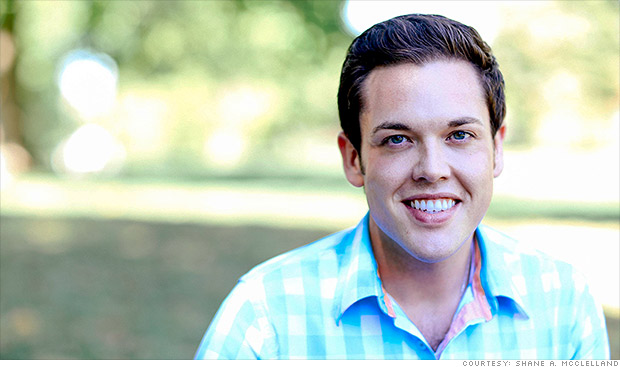
Gene E. Phillips 11/23/2013 | Image source: i2.cdn.turner.com/money/dam/assets/131029081500-student-l...
Michelle Arevalo-Carpenter, Chief Executive Officer, Impacto Quito, Ecuador; Global Shaper at the World Economic Forum on Latin America in Riviera Maya, Mexico 2015. Copyright by World Economic Forum / Benedikt von Loebell
(May 28, 2012) Scenes from the Millennial Program meeting during the 2012 SEIU Convention ~ Denver, CO ~ Photo by David Sachs / SEIU
Published in the Shepherdstown (WV) Observer, February, 2019
In the millennial revision of the American Civil War, when many question why we should still have statues of swashbuckling heroes of the Confederate States of America perched on prime public lands, or plaques on County Courthouses that honor the rebellion but not the savagery of the slavery that it fought to protect, there is the “Grey” area of Belle Boyd. She curiously cohabitates both sides of what originally was the story of a woman defending the Secession, fatally shooting an American soldier who forcibly hung the Stars and Stripes on her front porch. As a Confederate spy for the rest of the war, she aided those fighting for a flag that represented a lifestyle dependent on the ownership of other humans in order for themselves to thrive as Capitalists.
That event occurred in downtown Martinsburg in 1861, before it became West Virginia after separating from Virginia, which had separated from the United States, which had separated from the British during the Revolutionary War. The trail of who revolted from whom, and why, gets ever more convoluted as decades pass. And in the case of Miss Boyd, who grew up in a slave-owning family and used her own slave as an accomplice while spying for the Confederate Army camped nearby, the narrative becomes entwined in ways that the lore of other Confederate personalities does not.
Her home is now the Berkeley County Historical Museum and Visitors Center; it’s striking that a portion of it houses a permanent exhibit of local African-American history. Although large portraits of Stonewall Jackson and Robert E. Lee dominate the parlor, at least reminders of the real issues of the war are enclosed in one building, starting with the name of its address on “Race Street” (presumably taken from the channel of water that flowed from a nearby mill). It surprisingly also includes a display of artifacts and history of early Jewish settlers, businesses and synagogues in town.
Two of Boyd’s three spouses were Union Army officers, both active duty and former military. And most ironically, her death in 1900 occurred in Wisconsin where she was giving a speech to a local GAR (Grand Army of the Republic) chapter, whose members then participated as her pallbearers and maintained her gravesite for decades afterward. The fact that she was lecturing to a group of Union veterans is perhaps most intriguing, even more so than the “intrigue” she engaged in while spying for the South.
To imagine inviting an enemy combatant who killed a fellow American Soldier to speak at your veterans group is even more curious when you look at the make-up of the GAR at that time. It was a huge post-war organization with hundreds of thousands of both white and black Union military veterans, and had considerable political influence. One of its efforts was to include black veterans in government pensions and benefits, although ultimately that did not succeed. The word “revolutionary” to describe this effort is understated, and like the rest of the pre-Jim Crow era, seems like a dream interrupted by the rise of the KKK.
Perhaps the local Wisconsin Dells GAR chapter was merely progressive and hired Boyd to entertain them with her spy adventures. But my skeptical mind tells me it had more to do with her gender. After all, she had a reputation for using her “feminine wiles” to get the information she passed on to the Confederate Army, and although she stayed mum about exactly how far she went in order to get that intel, she allowed others to imagine that she traded sexual favors, or at least the promise of them, to unwitting soldiers. She was nicknamed the “Cleopatra of the Secession” and the “Siren of the Shenandoah.”
After her death, efforts were made by the United Daughters of the Confederacy to bring her body back to Virginia, making it another Southern Shrine. Funding and support for re-interment was eventually abandoned and she still lies in that Wisconsin cemetery plot, maintained by the local GAR until it was finally disbanded.
Even more notable is the absence of recognition from her hometown of Martinsburg. In the well-documented introduction of the 1998 version of Boyd’s autobiographical book “Belle Boyd in Camp and Prison,” a local member of the United Daughters of the Confederacy is quoted in 1936 saying, “here…. she is neither revered or respected.” Another member said that “it is unfortunate that….one whose life was so sordid and whose adventures were always so shady should forever be recalled.” Evidently, it was one thing to use the affections of the enemy to spy on them, but treasonous to marry one, or two, after the war was over. One Martinsburg historian called Boyd a “closed subject,” due to divided loyalties that still persisted more than a century after the war.
In spite of intermittent support by Confederate organizations and publications, Belle Boyd’s sexualized image as a scandalous “loose” Southern woman marrying into Northern nobility, made her the equivalent of an orphan to the cause that she murdered a man for. And for us Yanks, which evidently includes anyone taught that the war was fought against an indefensible evil, she was from the wrong side of the tracks; illegitimate by choice, born of the wrong stock of political thought, taking actions conceived in sin that spawned a profitable story-telling in her later years.
While her oversized childhood house does include a history of black Berkeley County residents, it is confined to its tiniest room, the one that all the slaves of the family had to share. And although an entire house is named in her memory, the amnesia and apathy towards her exploits seem more significant than her espionage abilities. I doubt few in Martinsburg would notice if the home, or her name, disappeared; they are likely too busy with their present-day lives to insist that her monument remain because “it’s part of our history.” That “teaching” defense--- the justification to leave Confederate heroes standing in our town squares-- has yet to yield any measurable results as a learning tool. I see no proof as to how successful that lesson has been, particularly among those who still struggle to accept that we have always been a country of white and black, immigrants, and believers of all religions.
The repurposed house of Belle Boyd, as a historical exhibit, is the rare hybrid representation of someone who lived on the Confederate side of the Civil War. And because it acknowledges those Americans who were at the mercy of Our Peculiar Institution, it really does “teach us about our history.”
For that alone, it is definitely worth the visit.
Rafael Moreno Valle Rosas, Governor of Puebla, Mexico at the World Economic Forum on Latin America in Riviera Maya, Mexico 2015. Copyright by World Economic Forum / Benedikt von Loebell
(May 28, 2012) Scenes from the Millennial Program meeting during the 2012 SEIU Convention ~ Denver, CO ~ Photo by David Sachs / SEIU
Eman Akbar Rafay, Researcher, Public Policy, Diwan of the Royal Court, Oman at the World Economic Forum on the Middle East and North Africa 2017. Copyright by World Economic Forum / Benedikt von Loebell
Felipe Kast Sommerhoff, Founder and President, Evolución Política, Chile; Young Global Leader at the World Economic Forum on Latin America in Riviera Maya, Mexico 2015. Copyright by World Economic Forum / Benedikt von Loebell
When recruiting Millennials, Judy Talis recommends offering opportunities.
T2: Talent Tomorrow
SHRM 2012 Talent Management Conference & Exposition in Washington D.C.
For more recruiting tips, visit the Dice Resource Center:
Millennial development on the eastern side of the Isle of Dogs, overlooking the exit from South Dock
Daisy Guo Xiaoqian, Co-Founder and Chief Operations Officer, Tezign (Shanghai) Information & Technology Co., People's Republic of China; Global Shaper at the World Economic Forum - Annual Meeting of the New Champions in Tianjin, People's Republic of China 2016. Copyright by World Economic Forum / Sikarin Thanachaiary
Kimberly Voxland @KVoxland shares her strategy for recruiting Millennials.
T2: Talent Tomorrow
SHRM 2012 Talent Management Conference & Exposition in Washington D.C.
For more recruiting tips, visit the Dice Resource Center:
This official House Republican Conference photograph is being made available for publication by news organizations and/or for personal use printing by the subject(s) of the photograph. The photograph may not be manipulated in any way or used in materials, advertisements, products, or promotions, including but not limited to such use that in any way suggest approval or endorsement of the House Republican Conference, the Chairman of the Conference, or any Member of the Conference.
Informationen zur Millennial Studie unter: blog.telefonica.de/2013/06/telefonica-millennials-studie-...
Omar Al Al Razzaz, Minister of Education of the Hashemite Kingdom of Jordan at the World Economic Forum on the Middle East and North Africa 2017. Copyright by World Economic Forum / Benedikt von Loebell
DAVOS/SWITZERLAND, 25JAN13 - Meghann Gunderman, Executive Director, The Foundation For Tomorrow, USA; Global Shaper during the session 'Meeting Millennial Expectations' at the Annual Meeting 2013 of the World Economic Forum in Davos, Switzerland, January 25, 2013. .
.
Copyright by World Economic Forum.
.
swiss-image.ch/Photo Remy Steinegger
This official House Republican Conference photograph is being made available for publication by news organizations and/or for personal use printing by the subject(s) of the photograph. The photograph may not be manipulated in any way or used in materials, advertisements, products, or promotions, including but not limited to such use that in any way suggest approval or endorsement of the House Republican Conference, the Chairman of the Conference, or any Member of the Conference.
Mohannad Khatib, News Presenter, Sky News Arabia, United Arab Emirates at the World Economic Forum on the Middle East and North Africa 2017. Copyright by World Economic Forum / Benedikt von Loebell
Stepfanie Rennert @StefanieRennert from @Mashable shares her tip for recruiting Millennials.
#TalentConnector Tweetup
SHRM 2012 Talent Management Conference & Exposition in Washington D.C.
For more recruiting tips, visit the Dice Resource Center:
Amy Thompson from @SHRM & @fwi recommends offering work-flex benefits when trying to recruit Millennials.
T2: Talent Tomorrow
SHRM 2012 Talent Management Conference & Exposition in Washington D.C.
For more recruiting tips, visit the Dice Resource Center:
(May 28, 2012) Scenes from the Millennial Program meeting during the 2012 SEIU Convention ~ Denver, CO ~ Photo by David Sachs / SEIU