View allAll Photos Tagged gmail
Please NOTE and RESPECT the copyright.
(c) Bob Cuthill Photography - All rights reserved
This image may not be copied, reproduced, published or distributed in any medium without the expressed written permission of the copyright holder.
bobcuthillphotography@gmail.com
“The Eye Moment photos by Nolan H. Rhodes”
“Theeyeofthemoment21@gmail.com”
“www.flickr.com/photos/the_eye_of_the_moment”
“Any users, found to replicate, reproduce, circulate, distribute, download, manipulate or otherwise use my images without my written consent will be in breach of copyright laws.”
Visitad este Grupo / Visit this group / Visiter ce groupe / Besuchen Sie diese Gruppe :
“The-Eye-of-the-Moment-Photos-by-Nolan-H.-Rhodes”
www.flickr.com/photos/the_eye_of_the_moment
theyeofthemoment21@gmail.com
Please don't use this image without my explicit permission. © All rights reserved
“The Eye Moment photos by Nolan H. Rhodes”
“Theeyeofthemoment21@gmail.com”
“www.flickr.com/photos/the_eye_of_the_moment”
“Any users, found to replicate, reproduce, circulate, distribute, download, manipulate or otherwise use my images without my written consent will be in breach of copyright laws.”
HISTORY OF THE CONEY ISLAND MERMAID PARADE…. The Coney Island Mermaid Parade is a parade that celebrates the beginning of the summer season (late June) in Coney Island, New York. The 2017 parade (35th Annual was held on Saturday, June 17, 2017, at 1 pm.
The parade The Mermaid Parade is held in celebration of the beginning of the summer season, and so it traditionally takes place on the Saturday closest to the calendar start of summer, June 21, regardless of the weather. The tradition began in 1983, when the first event of this kind was conceptualized and organized by Dick Zigun, who is sometimes dubbed the "Mayor of Coney Island", and who was the founder of the non-profit arts group Coney Island USA. The last nine parades (up to 2015) were held on June 21, 2008; June 20, 2009; June 19, 2010; June 18, 2011; June 23, 2012; June 22, 2013; June 21, 2014; June 20, 2015; and June 18, 2016. Each year the Mermaid Parade features a merman and mermaid King and Queen. In 2005 the King was David Johansen (Buster Poindexter) and the Queen was Karmen Guy (Mad Juana). In other years, David Byrne, Queen Latifah, Adam Savage, Harvey Keitel, and Moby have filled the royal seats. In the 2010 parade, the King was Lou Reed and the Queen Laurie Anderson. In 2013, Carole Radziwill from The Real Housewives of New York City was titled the queen. The parade pays homage to the Coney Island Mardi Gras parades of the early 20th century. During this era, Coney Island was the primary amusement park destination for those in the New York area. Like the much larger annual Village Halloween Parade, the Mermaid Parade evokes the artistic spirit of Mardi Gras. www.coneyisland.com (information obtained from Wikepedia)
“The Eye Moment photos by Nolan H. Rhodes”
“Theeyeofthemoment21@gmail.com”
“www.flickr.com/photos/the_eye_of_the_moment”
“Any users, found to replicate, reproduce, circulate, distribute, download, manipulate or otherwise use my images without my written consent will be in breach of copyright laws.”
“The Eye Moment photos by Nolan H. Rhodes”
“Theeyeofthemoment21@gmail.com”
“www.flickr.com/photos/the_eye_of_the_moment”
“Any users, found to replicate, reproduce, circulate, distribute, download, manipulate or otherwise use my images without my written consent will be in breach of copyright laws.”
Nature beauty shot in different prospective, a beauty of its own.
like it? Contact me at cbhong76@gmail.com
Flamingo (disambiguation)
Flamingos or flamingoes /fləˈmɪŋɡoʊz/ are a type of wading bird in the genus Phoenicopterus, the only genus in the family Phoenicopteridae. There are four flamingo species in the Americas and two species in the Old World.
Etymology
Flamingo comes from Spanish flamenco, "with the colour of flame", in turn coming from Provençal flamenc from flama "flame" and Germanic-like suffix -ing, with a possible influence of words like Fleming. A similar etymology has the Latinate Greek term Phoenicopterus (from Greek: φοινικόπτερος phoinikopteros), literally "blood red-feathered".
Taxonomy and systematics
Traditionally, the long-legged Ciconiiformes, probably a paraphyletic assemblage, have been considered the flamingos' closest relatives and the family was included in the order. Usually the ibises and spoonbills of the Threskiornithidae were considered their closest relatives within this order. Earlier genetic studies, such as those of Charles Sibley and colleagues, also supported this relationship. Relationships to the waterfowl were considered as well, especially as flamingos are parasitized by feather lice of the genus Anaticola, which are otherwise exclusively found on ducks and geese. The peculiar presbyornithids were used to argue for a close relationship between flamingos, waterfowl, and waders. A 2002 paper concluded they are waterfowl, but a 2014 comprehensive study of bird orders found that flamingos and grebes are not waterfowl, but rather are part of Columbea along with doves, sandgrouse, and mesites.
Species
Six flamingo species are recognized by most sources, and these are generally placed in one genus. Two species, the Andean and the James's flamingo, are often placed in the genus Phoenicoparrus instead of Phoenicopterus.
Old World:
1, Greater flamingo (P. roseus) - Parts of Africa, S. Europe and S. and SW Asia (most widespread flamingo).
2, Lesser flamingo (P. minor) - Africa (e.g. Great Rift Valley) to NW India (most numerous flamingo).
New World:
1, Chilean flamingo (P. chilensis) - Temperate S. South America.
2, James's flamingo (P. jamesi) - High Andes in Peru, Chile, Bolivia and Argentina.
3, Andean flamingo (P. andinus) - High Andes in Peru, Chile, Bolivia and Argentina.
4, American flamingo (P. ruber) - Caribbean islands, Caribbean Mexico, Belize and Galapagos islands.
Prehistoric species of flamingo:
1, Phoenicopterus croizeti (Middle Oligocene – Middle Miocene of C Europe)
2, Phoenicopterus floridanus (Early Pliocene of Florida)
3, Phoenicopterus stocki (Middle Pliocene of Rincón, Mexico)
4, Phoenicopterus copei (Late Pleistocene of W North America and C Mexico)
5, Phoenicopterus minutus (Late Pleistocene of California, USA)
6, Phoenicopterus aethiopicus
7, Phoenicopterus eyrensis (Late Oligocene of South Australia)
8, Phoenicopterus novaehollandiae (Late Oligocene of South Australia)
Relationship with grebes
Recent molecular studies have suggested a relation with grebes, while morphological evidence also strongly supports a relationship between flamingos and grebes. They hold at least eleven morphological traits in common, which are not found in other birds. Many of these characteristics have been previously identified on flamingos, but not on grebes. The fossil palaelodids can be considered evolutionarily, and ecologically, intermediate between flamingos and grebes.
For the grebe-flamingo clade, the taxon Mirandornithes ("miraculous birds" due to their extreme divergence and apomorphies) has been proposed. Alternatively, they could be placed in one order, with Phoenocopteriformes taking priority.
Description
Flamingos often stand on one leg, the other leg tucked beneath the body. The reason for this behaviour is not fully understood. Recent research indicates that standing on one leg may allow the birds to conserve more body heat, given that they spend a significant amount of time wading in cold water. However, the behaviour also takes place in warm water. As well as standing in the water, flamingos may stamp their webbed feet in the mud to stir up food from the bottom.
Young flamingos hatch with greyish reddish plumage, but adults range from light pink to bright red due to aqueous bacteria and beta-Carotene obtained from their food supply. A well-fed, healthy flamingo is more vibrantly colored and thus a more desirable mate; a white or pale flamingo, however, is usually unhealthy or malnourished. Captive flamingos are a notable exception; many turn a pale pink as they are not fed carotene at levels comparable to the wild.
Behaviour and ecology
Feeding:
Flamingos filter-feed on brine shrimp and blue-green algae. Their beaks are specially adapted to separate mud and silt from the food they eat, and are uniquely used upside-down. The filtering of food items is assisted by hairy structures called lamellae which line the mandibles, and the large rough-surfaced tongue. The pink or reddish color of flamingos comes from carotenoids in their diet of animal and plant plankton. These carotenoids are broken down into pigments by liver enzymes. The source of this varies by species, and affects the saturation of color. Flamingos whose sole diet is blue-green algae are darker in color compared to those who get it second hand (e.g. from animals that have digested blue-green algae).
Lifecycle:
Flamingos are very social birds; they live in colonies whose population can number in the thousands. These large colonies are believed to serve three purposes for the flamingos: avoiding predators, maximizing food intake, and using scarce suitable nesting sites more efficiently. Before breeding, flamingo colonies split into breeding groups of between about 15 and 50 birds. Both males and females in these groups perform synchronized ritual displays. The members of a group stand together and display to each other by stretching their necks upwards, then uttering calls while head-flagging, and then flapping their wings. The displays do not seem to be directed towards an individual but instead occur randomly. These displays stimulate "synchronous nesting" (see below) and help pair up those birds who do not already have mates.
Flamingos form strong pair bonds although in larger colonies flamingos sometimes change mates, presumably because there are more mates to choose from. Flamingo pairs establish and defend nesting territories. They locate a suitable spot on the mudflat to build a nest (the spot is usually chosen by the female). It is during nest building that copulation usually occurs. Nest building is sometimes interrupted by another flamingo pair trying to commandeer the nesting site for their own use. Flamingos aggressively defend their nesting sites. Both the male and the female contribute to building the nest, and to defending the nest and egg.[citation needed] Occasional same-sex pairs have been reported.
After the chicks hatch, the only parental expense is feeding. Both the male and the female feed their chicks with a kind of crop milk, produced in glands lining the whole of the upper digestive tract (not just the crop). Production is stimulated by a hormone called prolactin. The milk contains fat, protein, and red and white blood cells. (Pigeons and doves—Columbidae—also produce a crop milk (just in the glands lining the crop), which contains less fat and more protein than flamingo crop milk.)
For the first six days after the chicks hatch, the adults and chicks stay in the nesting sites. At around seven to twelve days old, the chicks begin to move out of their nests and explore their surroundings. When they are two weeks old, the chicks congregate in groups, called "microcrèches", and their parents leave them alone. After a while, the microcrèches merge into "crèches" containing thousands of chicks. Chicks that do not stay in their crèches are vulnerable to predators.
Status and conservation
In captivity
The first flamingo hatched in a European zoo was a Chilean flamingo at Zoo Basel in Switzerland in 1958. Since then, over 389 flamingos have grown up in Basel and been distributed to other zoos around the globe.
An 83-year-old greater flamingo, believed to be the oldest in the world, died at the Adelaide Zoo in Australia in January, 2014.
[Credit: en.wikipedia.org]
Me parece increible. Esta noche, aprovechando que teníamos una buena luna y cielo despejado, los amigos del grupo Rincones de Cantabria hicimos una kdd nocturna para poner en práctica las técnicas que aprendieron en el taller de fotografia que tuvo lugar en Alto Campoo el mes pasado y al que yo no pude acudir.
Hoy estoy muy contento porque he aprendido mucho, con compañeros así da gusto salir a afotar. Además de enseñarte cosas nuevas, te llevan incluso café - un lujo.
Bueno, pues esto que veis está tomado a las 23:55 horas!!!!!!!!!!!!!!
Increible, verdad?. una exposición de 8 minutos, y podeis ver el movimiento de las estrellas en el cielo. Una pasada. Pensé que no iba a sacar nada, pero los ficheros raw dan para mucho....
Ver en grande - Best view large
Cómo/How I did it
El "truco" de esta fotografía está en calcular adecuadamente el tiempo de exposición, usando la sensibilidad más baja para reducir el ruido. Y después, en casa, como casi siempre, un hdr a partir de un solo raw con 3 exposiciones -1,0 y 1ev, mezcla 50% con capa cero ajustada en ACR, y ajustes generales de contraste y enfoque.
Por cierto, prometo que no he usado ningún filtro. El color del cielo es tal cual, una mezcla entre rosado y azul. La luz de la izquierda procede del reflejo de la Luna.
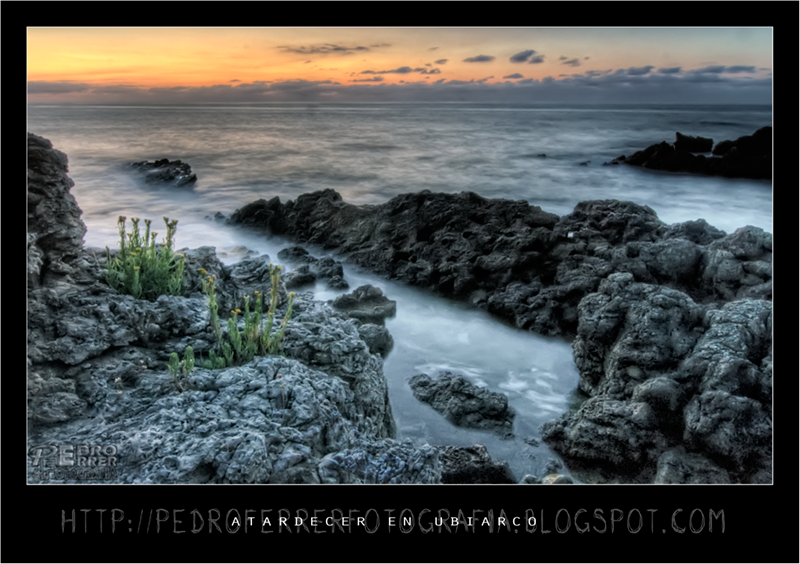
Visita mi fotolog - Visit my photolog - http://pedroferrerfotografia.blogspot.com<
Copyright © 2009 Pedro Ferrer. All Rights Reserved. Todos los derechos reservados.
Please don't use this image on websites, blogs or other media without my explicit permission.
Contact: fieraz@gmail.com
Por favor, no utilices esta imagen en páginas web, blogs u otros medios sin mi permiso explícito.
Contacto: fieraz@gmail.com
All rights reserved for © Nakshatra Photography E-mail: nakshatra.photoart@gmail.com, call: +91 033 8583070207
At the local Show & Shine last Saturday I saw someone park their vehicle near the grain elevator to take pictures. I asked if I could take some too. Took a couple shots and liked the feel and mood of this one.. the original is below.
Follow me on: - Instagram - 500px - Twitter
______________________________________
Please NOTE and RESPECT the copyright.
© Bob Cuthill Photography - All rights reserved
This image may not be copied, reproduced, published or distributed in any medium without the expressed written permission of the copyright holder.
BobCuthillPhotography@gmail.com
______________________________________
Aragon Ballroom
Chicago, IL
May 9th, 2014
All photos © Joshua Mellin per the guidelines listed under "Owner settings" to the right.
Turismo rural. En Cantabria en los últimos años han proliferado los establecimientos de turismo rural. Tenemos una tierra muy bella en la que prima el paisaje, y las infraestructuras hoteleras no pueden competir con el modelo que se impone en la costa mediterránea, con grandes edificios. Aquí los turistas buscan lugares pequeños, más acogedores, con ambiente tranquilo, en un entorno natural o como mucho rural. Casas antiguas o al menos que lo parezcan, cambiando la comodidad de sus apartamentos en rascacielos de gran ciudad por una pequeña chimenea de leña y unos muros de piedra.
Un compañero de trabajo tiene una cabaña en el monte, a dos kilómetros de Treceño, en el municipio de Valdáliga. Este compañero es un seguidor de mis fotografías, y me pidió que le hiciese un reportaje de su refugio con "el toque fieraz".
Y aquí teneis esta serie. Si además os gusta el lugar y quereis pasar allí unos dias tranquilos, haciendo barbacoas, jugando al mus con una botelluca de orujo o tumbados en una hamaca a la sombra de los árboles leyendo un buen libro, podeis encontrar más información en el siguiente enlace:
Alquiler Cabaña de Piedra Silla de la Reina - Treceño
Ver en grande(muy, muy grande) - Best view large(well, not large, but HUGE)

Cómo/How I did it
Hdr a partir de 3 raw, de los cuales obtengo 7 exposiciones, mezcla selectiva con capa 0 con procesado tradicional, y un poco de pintura en modo superponer para oscurecer ciertas zonas.
Lo cierto es que estos interiores agradecen mucho este tipo de procesados, destacando las texturas de la madera y la piedra. Esta vez los parámetros utilizados para el hdr y los tratamientos posteriores han sido bastante "mecanizados" y he conseguido procesar toda la serie en tan sólo 4 horitas. Ha ayudado mucho mi nuevo pc, que va como un avión.
Por cierto, en esta serie, al ser un "encargo", no he querido firmar mis trabajos, y si alguien quiere ver los detalles puede bajarse los originales con el máximo de resolución (3456x2304) 8mb de peso.
Visita mi fotolog - Visit my photolog<
Copyright © 2009 Pedro Ferrer. All Rights Reserved. Todos los derechos reservados.
Please don't use this image on websites, blogs or other media without my explicit permission.
Contact: fieraz@gmail.com
Por favor, no utilices esta imagen en páginas web, blogs u otros medios sin mi permiso explícito.
Contacto: fieraz@gmail.com
JohnFitzPatrickLeisen@hotmail.com
jackleisen@gmail.com
flickeflu.com/photos/jackleisen
www.flickriver.com/search/jackleisen/
Please "Don't Sidecar Your Photographs" With Awards
If You Need An Award "Just Ask" Thank you,.!!
Don't use this image on websites, blogs or other media without my
explicit permission. Please respect "My Copyright ©2014" - All rights reserved.
“The Eye Moment photos by Nolan H. Rhodes”
“Theeyeofthemoment21@gmail.com”
“www.flickr.com/photos/the_eye_of_the_moment”
“Any users, found to replicate, reproduce, circulate, distribute, download, manipulate or otherwise use my images without my written consent will be in breach of copyright laws.”
“The Eye Moment photos by Nolan H. Rhodes”
“Theeyeofthemoment21@gmail.com”
“www.flickr.com/photos/the_eye_of_the_moment”
“Any users, found to replicate, reproduce, circulate, distribute, download, manipulate or otherwise use my images without my written consent will be in breach of copyright laws.”
Viola sororia.
These are growing in the lawn. I picked a few and setup these shots.
Nikon D7000
105 mm
32 mm ext tubes
SB-28 @ 25% power
Purple shopping bag for the background.
“The Eye Moment photos by Nolan H. Rhodes”
“Theeyeofthemoment21@gmail.com”
“www.flickr.com/photos/the_eye_of_the_moment”
“Any users, found to replicate, reproduce, circulate, distribute, download, manipulate or otherwise use my images without my written consent will be in breach of copyright laws.”
“The Eye Moment photos by Nolan H. Rhodes”
“Theeyeofthemoment21@gmail.com”
“www.flickr.com/photos/the_eye_of_the_moment”
“Any users, found to replicate, reproduce, circulate, distribute, download, manipulate or otherwise use my images without my written consent will be in breach of copyright laws
Please NOTE and RESPECT the copyright.
(c) Bob Cuthill Photography - All rights reserved
This image may not be copied, reproduced, published or distributed in any medium without the expressed written permission of the copyright holder.
BobCuthillPhotography@gmail.com
“The Eye Moment photos by Nolan H. Rhodes”
“Theeyeofthemoment21@gmail.com”
“www.flickr.com/photos/the_eye_of_the_moment”
“Any users, found to replicate, reproduce, circulate, distribute, download, manipulate or otherwise use my images without my written consent will be in breach of copyright laws.”
Lollapalooza 2013
Grant Park
Chicago, IL
August 4th, 2013
All photos © Joshua Mellin per the guidelines listed under "Owner settings" to the right.
Please don't use this image on websites, blogs or other media without my explicit permission. If you wish to use this image, please, contact me through flickrmail or at vicenc.feliu@gmail.com. © All rights reserved...
I just found this blog, http://sabreur76.wordpress.com/, offering my material for commercial sale. The person doing this is using a gmail account: sabreur76@gmail.com. This is not me, please, don't support this person. I have locked down access to my photostream until he or she takes down the blog. Thanks!
The soldiers who stand guard at the Tomb of the Unknown Soldier are hand picked and rigorously trained. They have come from every state in the union, every walk of life. There are men and women. For some this is their first unit in the Army, others are veterans of many years. Over the years there have been Regular Army and Draftees.
The duty is not for everyone. Over 80% of the soldiers who tryout for this duty do not make it.
Each soldier must have strong military bearing, discipline, stamina and present an outstanding soldierly appearance. Each Sentinel must be able to flawlessly perform seven different types of walks, honors and ceremonies. They must retain vast amounts of knowledge concerning the Tomb, Arlington National Cemetery, the United States Army and their unit.
One of the first reactions of visitors at the Tomb, is to comment on how tall the soldiers are. While you might not notice the difference in height, a Tomb Guard can tell what Relief is working . . . . just based on their height.
There are three Relief's assigned to the Tomb Guard Platoon, each consisting of 9 enlisted soldiers (they use the same break-down as a Light Infantry Squad). The heights are equal on each Relief, with the tallest assigned to the 1st Relief.
1st Relief 6'2" to 6'4"
2nd Relief 6' to 6'2"
3rd Relief 5'11" to 6'
Each Relief is commanded by a Staff Sergeant (E-6) and has two "Teams", each consisting of an Assistant Relief Commander (E-5) and 4 Sentinels (E-4 and below), for a total of 9 soldiers per Relief. The Headquarter (HQ) Relief consists of the Sergeant of the Guard, Assistant Sergeant of the Guard, the Primary Trainer and a Driver.
If you have ever watched the Changing of the Guard, you will have noticed that not all Guards do the same thing. The Tomb is completely run by Non-Commissioned Officers (NCO). There are six different levels of responsibility at the Tomb:
Sentinel:
This soldier has the hardest job - to stand watch at the Tomb. They do this in one hour shifts, 24 hours a day, 365 days a year. These soldiers typically have the rank of Private First Class (PFC) through Specialist (SPC) and the average age is 22. The sentinels do not wear rank insignia on their uniforms so that they do not outrank the Unknowns, whatever their rank may have been. Soldiers serving in other roles, like Relief Commander and Assistant Relief Commander, do wear insignia of their rank when changing the guard only. They have a separate uniform worn when they actually guard the Unknowns or are "Posted".
Assistant Relief Commander (ARC):
An NCO with the rank of Corporal (CPL) or Sergeant (SGT), this is the Relief Commander's right hand. Each Relief Commander has two ARC assigned. The average age for an ARC is 24.
Relief Commander (RC):
An NCO with the Rank of Staff Sergeant (SSG). The RC has the greatest responsibility on a day-to-day basis. The RC is not only responsible for conducting the Changing of the Guard, but also for the welfare and morale of the Relief as a whole. In the absence of the Sergeant of the Guard, the RC is responsible for everything that happens at the Tomb. The RC typically has served in two different units in the Army, and the average age is 27. In this photo you see the RC (on the left) with the Relief Sentinel at the hourly Changing of the Guard.
Assistant Sergeant of the Guard (ASOG):
The ASOG is typically the senior Staff Sergeant (SSG) in the Platoon. The ASOG has the primary duty of conducting the daily administrative duties, to include oversight of the initial training phase for new Sentinels. The ASOG assumes the duties and responsibilities of the Sergeant of the Guard in his absence.
Sergeant of the Guard (SOG):
The buck stops here! The SOG is the Platoon Sergeant for the Tomb Guards , and holds the rank of Sergeant First Class (SFC). The primary duties and responsibilities of the SOG include Presidential Wreath Ceremonies, as well as the overall responsibility for the conduct and actions of the Platoon. The SOG has served in many different leadership positions in the Army, and typically has been a Platoon Sergeant once before. The SOG is the most experienced NCO in the Platoon, and has the added responsibility of mentoring and developing the junior NCO's. The average age of the SOG is 30.
(Technical note: I have to confess that the DoF and bokeh here are nothing more than Photoshop trickery. There is no way anyone could get this kind of blur at a f/6.3. Sorry if I misled you. Best; V)
“The Eye Moment photos by Nolan H. Rhodes”
“Theeyeofthemoment21@gmail.com”
“www.flickr.com/photos/the_eye_of_the_moment”
“Any users, found to replicate, reproduce, circulate, distribute, download, manipulate or otherwise use my images without my written consent will be in breach of copyright laws.”
Pre-Wedding: Nguyên Hiếu - Trinh Vdi
Photographed by Chisttin Nguyễn
Location: Sài Gòn
------------------
Mọi chi tiếc chụp ảnh liên hệ
Contact: 0902.80.88.99
Mail: chisttin145@gmail.com
-------------------
♥ Like Fanpage: Meomeo Studio ♥
-------------------
MeoMeo Studio
My flickr: www.flickr.com/photos/chisttin_nru145/
My facebook: www.facebook.com/chisttin
= = = = = = = = = = = = = = = = = = = = = = = = = = = =
Francisco Aragão © 2014. All Rights Reserved.
Use without permission is illegal.
Attention please !
If you are interested in my photos, they are available for sale. Please contact me by email: aragaofrancisco@gmail.com. Do not use without permission.
Many images are available for license on Getty Images
= = = = = = = = = = = = = = = = = = = = = = = = = = = =
Portuguese
Casa Cálem
Qualidade desde 1859
Entre as cerca de 40 marcas históricas de Vinho do Porto, a Porto Cálem sobressai como uma das mais famosas entre elas. Sendo um dos líderes de mercado em Portugal com a sua famosa gama de Vinho do Porto Velhotes Tawny, Ruby e White, praticamente todas as famílias portuguesas conhecem o nome Porto Cálem.
Fundada em 1859, por António Alves Cálem, a Porto Cálem manteve-se na mesma família durante quatro gerações e sempre prestou grande atenção à produção de Vinhos do Porto de qualidade, resultando num reconhecimento por parte de todo o Mundo do Vinho. No seu início, dedicava-se à exportação de vinhos para o Brasil em troca de madeira exótica, com frota própria, símbolo ainda hoje presente no logotipo da empresa: a Caravela.
Em 1998, a Porto Cálem passou a fazer parte da Sogevinus SGPS, S.A.. O grupo Sogevinus tem a seu cargo um universo de empresas direccionadas para a produção e comercialização de vinhos do Porto e D.O.C Douro, investimentos em quintas para assegurar a produção de vinhos de gama alta, distribuição de bebidas, bem como variadíssimos projectos na área do Turismo.
A Porto Cálem tem uma invejável lista de prémios e louvores para a gama completa de produtos, especialmente para os Premium Vintages, Late Bottled Vintages e Tawnies de Idade. O primeiro Vintage produzido pela Porto Cálem foi o Vintage 1870, e os primeiros prémios incluem medalhas obtidas em Bordéus, Marselha e Bruxelas em 1897.
Os Vinhos do Porto da Cálem ganharam medalhas de topo em importantes concursos internacionais de vinhos realizados em diversos países: Portugal, Reino Unido, França, Bélgica, Suíça, Itália, Eslovénia, EUA e Japão. Como exemplo, podemos indicar a medalha de Ouro no Vinalies Internationales para o Porto Cálem Vintage 2002; o Troféu Melhor Vinho do Porto para o Porto Cálem Vintage 2000 no International Wine & Spirit Competition; o Melhor Vinho Generoso para o Porto Cálem 20 Years Old no Japan International Wine Challenge; Best in Class para o Porto Cálem Colheita 1989 no International Wine & Spirit Competition; Porto Cálem Empresa do Ano no Vinitaly 2005. O Porto Cálem Vintage 2003 por sua vez ganhou várias medalhas de Ouro em 2006, nomeadamente no Concours Mondial de Bruxelles, Vino Ljubljana, Bacchus, Wine Masters Challenge.
Mais recentemente, a reabilitação das Caves Cálem recebeu o Prémio “Best of Wine Tourism 2006”, na categoria de arquitectura atribuída em S. Francisco, nos EUA. Trata-se de um concurso internacional promovido pela rede de capitais de grandes vinhedos (Porto, Bordéus, Melbourne, S. Francisco, Bilbao, Florença, Mendoza e Cidade do Cabo), destinado a premiar a oferta de excelência na área do enoturismo.
A Porto Cálem ciente da importância da existência formal de um Sistema de Gestão da Qualidade, como componente da sua estratégia para manter o crescimento e o sucesso da empresa, apostou na implementação e certificação segundo a Norma NP EN ISO 9001:2000 (Empresa certificada desde Novembro de 2001).
A aposta na Qualidade dos produtos que fornece, a Porto Cálem persegue objectivos que proporcionem cada vez maior satisfação aos seus clientes, colaboradores e accionistas vislumbrando sempre a sua política de melhoria contínua.
English
Quality since 1859
Porto Cálem is one of the highest awareness Port Wine brands, among more than 40 others.
Almost all Portuguese families know Porto Cálem, as recognized market leader in this country, especially through its product ranges Velhotes Tawny, Ruby and White.
Founded in 1859, by António Alves Cálem, Porto Cálem was by this time dedicated only to wine exports to Brazil in exchange of exotic woods and by means of its own fleet. In fact, those activities are still remembered today through Porto Cálem brand logotype where a caravel stands for this proud history.
Porto Cálem was kept in the family for four generations, always developing business around quality Port wines, from which resulted high recognition all over the world.
Today, and since 1998, Porto Cálem is part of Sogevinus SGPS, S.A.
Sogevinus Group handles a large number of companies which address their activity to the production and trade of Port and D.O.C. Douro Wines. Also invests in vineyards to ensure high quality standards in the wines produced. Furthermore, it has interests in drinks distribution and manages several different tourism projects.
Porto Cálem product range has granted along its history an outstanding number of prizes and awards, especially on the Premium Vintages, Late Bottled Vintages and Aged Tawny.
The first Vintage Port ever produced by Porto Cálem was the Vintage Port 1870 and the initial awards include Medals from Bordeaux, Marseille and Brussels 1897 wine competitions.
From then on, Porto Cálem Wines have won important awards in the most important international wine competitions from Portugal, United Kingdom, France, Belgium, Switzerland, Italy, Slovene, USA and Japan. Latest examples include Gold Medal in Vinalies Internationales for Porto Cálem Vintage 2002, Best Port Wine Trophy for Porto Cálem Vintage 2000 in International Wine & Spirit Competition, Best Fortified for Porto Cálem 20 Years Old in Japan International Wine Challenge; Best in Class for Porto Cálem Colheita 1989 in International Wine & Spirit Competition; Porto Cálem Company of the Year in the Vinitaly 2005. Porto Cálem Vintage 2003 as also won several Gold Medals in 2006, namely in Concours Mondial de Bruxelles, Vino Ljubljana, Bacchus and Wine Masters Challenge.
Also in 2006, the rehabilitation of Cálem cellars granted the award Best of Wine Tourism 2006”, in the category of Architecture, in S. Fancisco competition, USA.
This competition is promoted by the main wine capitals such as Porto, Bordeaux, Melbourne, S. Francisco, Bilbao, Florence, Mendoza and Cape Town, with the purpose of rewarding Excellency in the wine sector.
As part of a sustainable growth strategy, Porto Cálem presents a formal Quality Management System according to the NP EN ISO 9001:2000, which was officially recognized in 2001 with a Certification diploma.
Commitment with product quality and continuous improvement, grants increasing satisfaction to Porto Cálem clients, consumers, collaborators and stockholders.
Sales of Porto Cálem reached more than 3.7 million bottles (750 ml) in 2005, maintaining a stock of about 8 million litres.
Porto Cálem main market has always been Portugal, but exports have maintained a high significance along its history. The brand logotype - the caravel in which Port Cálem was exported to Brazil - show exactly that importance. In 1880, Brazil represented 40% of total exports.
Today, European Union and North America show special relevance in Porto Cálem exports, but it can be easily found in more than 30 countries and regions among which we can name Brazil, Puerto Rico, Eastern Europe and even New Zealand. It is also a recognized market leader in Denmark, France, Benelux and United Kingdom.
Porto Cálem benefits from the special attention given by the company to the production and crop of high quality grapes in the Douro region, especially in Cima Corgo and Douro Superior areas.
Known as the “Port Wine Cathedral”, we can find in these regions some of the best vines, the finest grape varietals and the most famous vineyard estates (“Quintas”).
Quinta do Arnozelo, the estate where Porto Cálem grapes are grown, is set here. To grant our wines high quality standards, we furthermore have our Winemaking Centre (São Martinho da Anta) located in Douro. This way, we gather the best and most advanced technology in the field with the traditional high competence and experience on winemaking of the region.
After the winemaking process in Douro, the ageing of Porto Cálem Wines takes place in the company cellars in Vila Nova de Gaia. Located in the Douro opposite margin of the Porto “Ribeira” (historical riverside of the city), next to D. Luiz I bridge, these cellars show perfect conditions to successfully age the Port Wines, as per their cool and dry air, and little light. This way, Porto Cálem wines age in oak casks for years and years…
It is also in these cellars, that Porto Cálem welcomes every year around 120.000 visitors and from where the Port Wines are exported to markets abroad.
http://www.calem.pt/