View allAll Photos Tagged fireproof
The Fireproof Building, located at a 100 Meeting Street, was originally built as the Charleston District Record Building to the design of Robert Mills in 1827. After 1865, it was used for Charleston County offices. It is currently home of the South Carolina Historical Society (SCHS), a private, non-profit organization founded in 1855. The SCHS is the state's oldest and largest private repository of books, letters, journals, maps, drawings, and photographs about South Carolina history.
The first fireproof structure in the nation built specifically to protect documents, the building is in the Palladian style with Doric porticoes facing north and south. A central three-story oval stairwell with cantilevered stone stairs is lit by skylights located in the cupola. Inside, an oval hall contains a cantilevered stone staircase, lit by a cupola. Of such sound construction, the Fireproof Building survived the 1886 earthquake unharmed, except for the exterior stairs.
National Register #69000161 (1969)
Text of Memphis Factory card mailed in 1922:
"This immense fireproof steel and concrete building, with brick and stone trimmings, was officially reported by the Tennessee Factory Inspector at 100 per cent - this means that it is perfect as a model in hygiene and efficiency. In it all Rawleigh products sold in the South are made. It is noted for its architectural excellence. Its five light and airy floors are equipped better than any similar plant in the South. It has the largest number of employees of any similar industry in Memphis. It carries the largest stocks, produces the greatest number and variety of Products sold in the South."
"LOOK FOR THE RAWLEIGHMAN SOON"
Text of Memphis Stock Dip factory card:
"Of the 200,000,000 head of live stock on American farms more are protected against disease and parasites by Rawleigh's Dip & Disinfectant than by any other similar preparation. These two dip factories, the largest in the world, are used exclusively in manufacturing Rawleigh's Dip & Disinfectant, a preparation 4 1/2 times stronger than carbolic acid and having 50 farm uses. Their combined daily output of Dip is sufficient to make 200,000 gallons of antiseptic solution."
"WRITE YOUR FRIENDS ABOUT RAWLEIGH'S"
Fireproof grass trees, have a resin that resists the heat blast of the fire and will flower profusely soon after a fire providing much needed food for animals and insects. The blackened trees also withstand the fire, and start bursting forth with fresh new growth up and down the tree trunks
annex across the street from Rosslyn Million Dollar Fireproof Hotel (1913) • both designed by John Parkinson (1861-1935), who also designed Union Station, City Hall, LA Coliseum • John Parkinson photo gallery
• hotel built on the site of Clune's Theater (1909), an early nickelodeon operated by pioneer exhibitor and filmmaker, William H. "Billy" Clune (1862-1927) • renovation of original hotel completed 07/2009, now Rosslyn Lofts • annex now homeless housing
• Hotel Rosslyn Annex, National Register # 13000589, 2013
ON THE MEZZANINE:
The Hotel Utica (circa 1912) was originally built as a 10-story building of fireproof construction with 200 rooms, four dining rooms, a ballroom, an assembly hall, a restaurant for ladies and a grill and cafe for gentlemen. The top four floors were added in 1926, which increased the total number of rooms to 250. Famous guests included: Judy Garland, Mickey Mantle, President Franklin Delano Roosevelt and Mrs. Eleanor Roosevelt, Hopalong Cassidy, Mae West, Bobby Darin, and then current U.S. Vice President Dick Cheney. As business declined, the hotel ceased operating in 1972. It then became two adult care residences, the Hunter House and then Loretto Adult Residence. After a period of vacancy, it was purchased by local investors Joseph R. Carucci and Charles N. Gaetano. They undertook a $13 million dollar rehabilitation from 1999-2001 that was patterned on the restoration of The Willard Hotel in Washington, D.C. In 2001, The Hotel Utica became a member of The National Trust for Historic Preservation'sHistoric Hotels of America. After years of Carucci and Gaetano failing to pay property and school taxes, and falling behind on the remaining $6.3 million on what originally was a $5 million U.S. Department of Housing and Urban Development loan, the hotel remains for sale, and sits currently on the City of Utica's forclosure list. The Hotel Utica is a member of the reservation company Choice Hotels International. The Hotel Utica (circa 1912) was originally built as a 10-story building of fireproof construction with 200 rooms, four dining rooms, a ballroom, an assembly hall, a restaurant for ladies and a grill and cafe for gentlemen. The top four floors were added in 1926, which increased the total number of rooms to 250. Famous guests included: Judy Garland, Mickey Mantle, President Franklin Delano Roosevelt and Mrs. Eleanor Roosevelt, Hopalong Cassidy, Mae West, Bobby Darin, and then current U.S. Vice President Dick Cheney. As business declined, the hotel ceased operating in 1972. It then became two adult care residences, the Hunter House and then Loretto Adult Residence. After a period of vacancy, it was purchased by local investors Joseph R. Carucci and Charles N. Gaetano. They undertook a $13 million dollar rehabilitation from 1999-2001 that was patterned on the restoration of The Willard Hotel in Washington, D.C. In 2001, The Hotel Utica became a member of The National Trust for Historic Preservation'sHistoric Hotels of America. After years of Carucci and Gaetano failing to pay property and school taxes, and falling behind on the remaining $6.3 million on what originally was a $5 million U.S. Department of Housing and Urban Development loan, the hotel remains for sale, and sits currently on the City of Utica's forclosure list. The Hotel Utica is a member of the reservation company Choice Hotels International.
In spite of the termination of installing further asbestos-containing spray-applied fireproofing at the north WTC structure during construction in early 1970, many tons of asbestos fireproofing had already been installed in the building.
It is reported that spray-applied asbestos fireproofing installed during early construction of the WTC experienced adhesion problems and large quantities of the asbestos material had simply delaminated off of structural components from unprotected exposure to the elements. As a protective measure, tarps were employed both to reduce exposure of the building materials to unfavorable weather conditions, and also to help reduce dispersal of asbestos overspray into the general surroundings (thanks to Dr. Irving Selikoff's intervention).
THE NEW ILLIANA HOTEL, WHITING, IND.
NEW -- MODERN -- FIREPROOF
Date: circa 1930
Source Type: Postcard
Publisher, Printer, Photographer: E. C. Kropp Company (#13, #16138)
Postmark: None
Collection: Steven R. Shook
Copyright 2007. Some rights reserved. The associated text may not be reproduced or transmitted in any form or by any means, electronic, mechanical, photocopying, recording, or otherwise, without prior written permission of Steven R. Shook.
VIEW FROM THE MEZZANINE:
The Hotel Utica (circa 1912) was originally built as a 10-story building of fireproof construction with 200 rooms, four dining rooms, a ballroom, an assembly hall, a restaurant for ladies and a grill and cafe for gentlemen. The top four floors were added in 1926, which increased the total number of rooms to 250. Famous guests included: Judy Garland, Mickey Mantle, President Franklin Delano Roosevelt and Mrs. Eleanor Roosevelt, Hopalong Cassidy, Mae West, Bobby Darin, and then current U.S. Vice President Dick Cheney. As business declined, the hotel ceased operating in 1972. It then became two adult care residences, the Hunter House and then Loretto Adult Residence. After a period of vacancy, it was purchased by local investors Joseph R. Carucci and Charles N. Gaetano. They undertook a $13 million dollar rehabilitation from 1999-2001 that was patterned on the restoration of The Willard Hotel in Washington, D.C. In 2001, The Hotel Utica became a member of The National Trust for Historic Preservation'sHistoric Hotels of America. After years of Carucci and Gaetano failing to pay property and school taxes, and falling behind on the remaining $6.3 million on what originally was a $5 million U.S. Department of Housing and Urban Development loan, the hotel remains for sale, and sits currently on the City of Utica's forclosure list. The Hotel Utica is a member of the reservation company Choice Hotels International. The Hotel Utica (circa 1912) was originally built as a 10-story building of fireproof construction with 200 rooms, four dining rooms, a ballroom, an assembly hall, a restaurant for ladies and a grill and cafe for gentlemen. The top four floors were added in 1926, which increased the total number of rooms to 250. Famous guests included: Judy Garland, Mickey Mantle, President Franklin Delano Roosevelt and Mrs. Eleanor Roosevelt, Hopalong Cassidy, Mae West, Bobby Darin, and then current U.S. Vice President Dick Cheney. As business declined, the hotel ceased operating in 1972. It then became two adult care residences, the Hunter House and then Loretto Adult Residence. After a period of vacancy, it was purchased by local investors Joseph R. Carucci and Charles N. Gaetano. They undertook a $13 million dollar rehabilitation from 1999-2001 that was patterned on the restoration of The Willard Hotel in Washington, D.C. In 2001, The Hotel Utica became a member of The National Trust for Historic Preservation'sHistoric Hotels of America. After years of Carucci and Gaetano failing to pay property and school taxes, and falling behind on the remaining $6.3 million on what originally was a $5 million U.S. Department of Housing and Urban Development loan, the hotel remains for sale, and sits currently on the City of Utica's forclosure list. The Hotel Utica is a member of the reservation company Choice Hotels International.
PAINTED SIGN ON THE SIDE OF THE HOTEL:
The Hotel Utica (circa 1912) was originally built as a 10-story building of fireproof construction with 200 rooms, four dining rooms, a ballroom, an assembly hall, a restaurant for ladies and a grill and cafe for gentlemen. The top four floors were added in 1926, which increased the total number of rooms to 250. Famous guests included: Judy Garland, Mickey Mantle, President Franklin Delano Roosevelt and Mrs. Eleanor Roosevelt, Hopalong Cassidy, Mae West, Bobby Darin, and then current U.S. Vice President Dick Cheney. As business declined, the hotel ceased operating in 1972. It then became two adult care residences, the Hunter House and then Loretto Adult Residence. After a period of vacancy, it was purchased by local investors Joseph R. Carucci and Charles N. Gaetano. They undertook a $13 million dollar rehabilitation from 1999-2001 that was patterned on the restoration of The Willard Hotel in Washington, D.C. In 2001, The Hotel Utica became a member of The National Trust for Historic Preservation'sHistoric Hotels of America. After years of Carucci and Gaetano failing to pay property and school taxes, and falling behind on the remaining $6.3 million on what originally was a $5 million U.S. Department of Housing and Urban Development loan, the hotel remains for sale, and sits currently on the City of Utica's forclosure list. The Hotel Utica is a member of the reservation company Choice Hotels International. The Hotel Utica (circa 1912) was originally built as a 10-story building of fireproof construction with 200 rooms, four dining rooms, a ballroom, an assembly hall, a restaurant for ladies and a grill and cafe for gentlemen. The top four floors were added in 1926, which increased the total number of rooms to 250. Famous guests included: Judy Garland, Mickey Mantle, President Franklin Delano Roosevelt and Mrs. Eleanor Roosevelt, Hopalong Cassidy, Mae West, Bobby Darin, and then current U.S. Vice President Dick Cheney. As business declined, the hotel ceased operating in 1972. It then became two adult care residences, the Hunter House and then Loretto Adult Residence. After a period of vacancy, it was purchased by local investors Joseph R. Carucci and Charles N. Gaetano. They undertook a $13 million dollar rehabilitation from 1999-2001 that was patterned on the restoration of The Willard Hotel in Washington, D.C. In 2001, The Hotel Utica became a member of The National Trust for Historic Preservation'sHistoric Hotels of America. After years of Carucci and Gaetano failing to pay property and school taxes, and falling behind on the remaining $6.3 million on what originally was a $5 million U.S. Department of Housing and Urban Development loan, the hotel remains for sale, and sits currently on the City of Utica's forclosure list. The Hotel Utica is a member of the reservation company Choice Hotels International.
William Boyce Thompson provided the money for this fine, fireproof building built in 1916 to 1921 as a memorial to his father and his wife's father, Richard O. Hickman. His father, William Thompson, built many of the original buildings in Alder Gulch. William Boyce Thompson was born in the white house preserved behind the present museum building.
Thompson-Hickman Museum
The library, housed in a beautiful room upstairs, was started by Mrs. McNulty and the Virginia City Women's Club in the early 1900's. The collection of artifacts in the museum was begun in 1920 by Jim Elmsie, a carpenter. It is now maintained by the Vigilante Club of Virginia City, founded in 1938 when there was a movement to split up Madison County and give half to Beaverhead and half to Gallatin.
Clint was very surprised to see his book on freaks, Learned Pigs & Fireproof Women, randomly appear in the movie Magnolia.
Magnolia, BTW, was kind of disappointing. A reluctant 3/5 stars (2.8/5 rounded up), and a "high" 5/10 (5.4/10 rounded down).
Clint.
holding book.
TV, skull.
book: Learned Pigs And Fireproof Women. movie: Magnolia.
funny face.
upstairs, Clint and Carolyn's house, Alexandria, Virginia.
June 18, 2010.
... Read my blog at ClintJCL.wordpress.com
... Read Carolyn's blog at CarolynCASL.wordpress.com
Home to Engine 1, Aerial 1, BC 1, Truck 41, Boat 1. Any exterior and apparatus shots were filmed here for the movie "Fireproof".
Manufacturer: probably WAKU
Design / Colours: Mustard-Yellow glossy glaze, lower part with rhombus-relief decor, cream-white glaze inside
Height: ca. 14 cm
50s
Another look at the former Delaware, Lackawanna & Western Railroad Station. The DL&W Railroad came to Syracuse in 1848 and built its first passenger station at West Onondaga and Clinton Streets. A second larger station was built next to the Armory and was replaced by the present building which was built in 1941. Architect Frederick B. O'Connor's flat-roofed rectangular Art Modern design has a streamlined appearance which was symbolic of speed and transportation. Constructed with a polished granite base, buff-colored brick and limestone trim, the building was touted as "completely fireproof". The interior was trimmed with aluminum and had travertine floors. Trains ran on elevated tracks behind the building that were built in the 1930s when new regulations prohibited rail lines from running at street-level through the city. The station served passengers until 1958. After closing as a passenger station, it was sold in 1961. Since its sale and subsequent remodeling, the former station has functioned as an office building, a bus terminal and a restaurant. Most recently, in 1986, a real estate appraisal company moved into the building and renovated the facility. The front extension was added in 1961. Located in Armory Square, at 225 South Clinton Street in Syracuse, NY. (100)
At the time of its construction the Albert Dock was considered a state of the art docking system. Built almost entirely from cast iron, stone and brick, the Albert Dock was designed to be fireproof and upon completion was the world's first non-combustible warehouse system. It provided 1,290,000 square feet (120,000 m2) of warehouse space and its dock basin had a water area of 7.75 acres (3.14 ha). In its construction over 23 million bricks were used as well as 47,000 tonnes of mortar. In total it cost £782,265 (approximately £41m today) whilst today its estimated to be worth £230 million.
The building's design complements many existing construction techniques with, what were considered at the time, radical solutions. The warehouses are supported by large load-bearing walls that range from being 3 feet (0.91 m) in diameter at the base to 19 inches (480 mm) on the fourth level. One of the most advanced architectural features is the use of stressed skin roofing, which at the time of construction was virtually unheard of. Huge iron trusses are crossed with riveted and galvanised wrought iron plates, creating a shape similar to an upturned boat hull that acts to support the roof above. The floors in the warehouses are supported by large iron columns and the spaces themselves were considered 'highly flexible', with the addition of new windows, stairwells and lift shafts being possible without any risk to the building's structural integrity.
Huge cast iron columns line the Albert Dock's quayside helping to support the building above
The advanced design stretches far beyond what is visible from the ground. Whilst the structures themselves are free from any wood, the foundations used to support them contain 13,729 piles of timber, which would stretch for 48 miles (77 km) in length if laid end to end. Such heavily supportive foundations were needed because the construction land was reclaimed from the River Mersey to build upon. Given the 'quicksand' nature of the Mersey's tidal silt the piles were needed to provide maximum stability. The resultant effect of the dock being constructed where it was is that the north and west stacks (now Merseyside Maritime Museum and Colonnades) rise and fall with every tide.
One of the most notable features of the Albert Dock are the huge cast iron columns that line the quayside. At 15 feet (4.6 m) high and almost 13 feet (4.0 m) feet in circumference, the columns are based upon the Greek Doric style of architecture. Hartley's decision to use cast iron was an economic one as at the time it was cheaper than granite. Nonetheless, because of the huge dock walls that were built, the Albert Dock's construction required so much granite that the dock trustee's had to open their own mine in Kirkcudbrightshire in Scotland. The quality of the build materials used as well as the docks sheer size are considered a strong illustration of the great prosperity that the Port of Liverpool afforded the city at the time and the building's style is described as cyclopean classicism.
The concept behind this shot is not about being demonic, but rather fighting through the fiery trials of life. Also, it was an exercise on off-camera flash and using reflectors.
Nikon D7000
18mm
F3.5
ISO 125, 1/3 Sec
sb600 Cam Left
White linen bed sheet cam left reflecting.
These are fireproof pants. They were delivered to Governor Scott Walker of Wisconsin. Background info is at WTF's site: www.wiwtf.org/
Kyuu-Shimoda-tei(residence), Takasaki-shi(city) Gunma-ken(Prefecture), Japan
群馬県高崎市(ぐんまけん たかさきし) 旧下田邸(きゅう しもだてい)
St. Louis, MO (est. 1764. pop. ~300K)
• Merchants Laclede Building aka Laclede Building • "fireproof" bldg. has wrought iron frame w/ hollow brick firewalls, facade brick • designed for banks & brokerage firms • later tenants include banks, brokers, lawyers, ad firms • Ozark Airlines founded here • renovated & opened as a Hilton Hotel, 2005
Marker:
The eight-story Merchant Laclede Building named after the merger of two of its bank tenants, is an early example of St. Louis’ tall fireproof office buildings. Completed in 1889, some of its offices contain fireplaces.
The building was designed for the banks in the area during the 1880s when the St. Louis economy surged. By 1890, St. Louis’ population grew to fifth largest in the nation.
Notice the decorative terra cotta relief panels with varied designs accenting the building. Look closely at one of the panels high above Olive Street for particularly mischievous subject matter.
• City Landmark # 95
• National Register # 98000994, 1998
The First Church of Christ, Scientist, at 13 Waterhouse Street, was designed in 1917 by church member Giles M. Smith of the noted Boston architectural firm of Bigelow and Wadsworth (later Bigelow, Wadsworth, Hubbard and Smith), who patterned it after Thomas Jefferson's The Rotunda at the University of Virginia and the Pantheon in Rome. Due to cost constraints, the 6-story domed building was built in two phases between 1924 and 1930. The dome itself was designed and built by the noted Guastavino Fireproof Construction Company. Guastavino used its patented tile arch system consisting of Akoustolith, a porous ceramic material resembling stone, on the interior, with limestone on the exterior. The first services in the completed building were held on April 30, 1930, and after becoming debt free, it was dedicated on May 23, 1937. First Church of Christ, Scientist is still located in the building and is still an active branch of the Christian Science Mother Church.
Handmade and Custom Leather Accessories
Roman Tobacco Pouch
* The Roman Tobacco pouch is handmade out of
pure cow leather, and is %100 FIREPROOF, as all pure
leather products are.
* It provides the user with a sleek way of keeping their
tobacco in a manner that is both tidy and compact, as
well as aesthetic.
* The pouch holds compartments for the tobacco and the
rolling papers.
* The pouch is sealed using a pure leather
strap with metallic detail that is attached around the body of the pouch.
* The tobacco pouch is 21 cm in height and 16 cm in width. It fits 12.5g and 25g, as well as 50g of tobacco. When the pouch is tied up and closed the height measures just 7 cm.
Every item you buy from us comes with a gift packaging that looks like:
img3.etsystatic.com/il_fullxfull.291772539.jpg
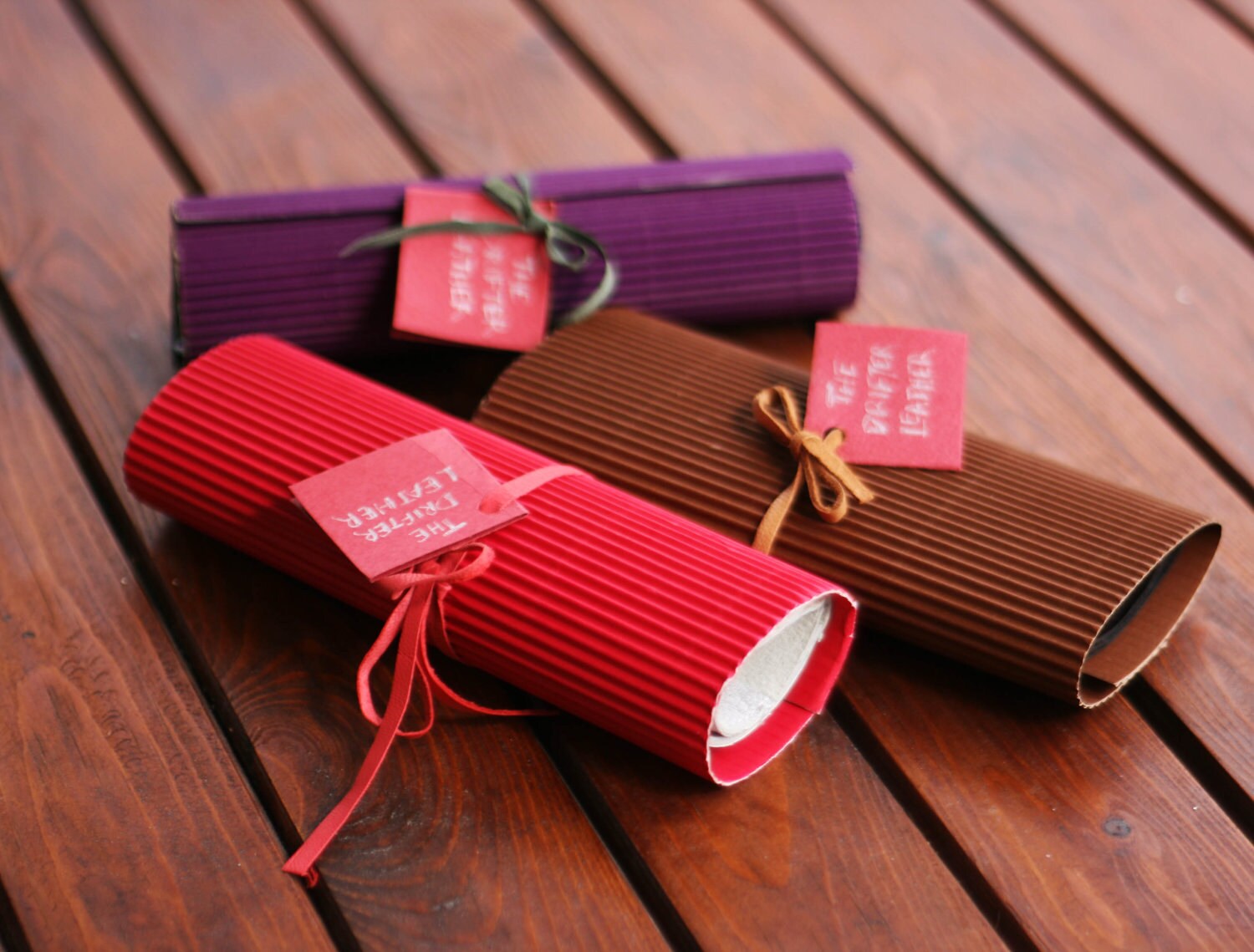
We ship all across the planet!
www.etsy.com/listing/66108668/roman-leather-tobacco-pouch...
Manufacturer: Melitta, Minden, Germany
Basemark: no mark, but typical fireproof "spider-net" base
Decor/Colours: dark chocolate-brown glossy glaze
Form: stylish simple clear , integrated drip catcher at the spout
Height: ca. 14 cm (with lid: 17 cm)
Diameter (max): ca. 18,5 cm (incl. spout and handle)
Design: ??? Jupp Ernst ???
50s