View allAll Photos Tagged fireproof
The only institution of its kind in Central Kansas. Is a commodious, substantial, fireproof, brick structure, fully equipped for efficient hospital service for forty patients.
Situated on the crest of a high ridge of land on West Broadway the hospital is surrounded with beautiful lawns, shade trees, flower beds, and all that can add to its natural beauty.
The building has two stories and a basement. The arrangement is such that sunlight enters every room. Steam heat, electric lights, elevator and all modern conveniences have been installed. A separate building for the laundry work of the hospital is located on the grounds. A brick addition was constructed and equipped in 1910 at a cost of $25,000.
Both private rooms and wards are available. Private rooms are located on the first and second floors. They are egantly furnished by various business firms of the city and every eff:rt was made to impart a homelike atmosphere and eliminate the ordinary features of hospital life.
There are several semi-private rooms tor patients of more moderate means.
The men's ward is on the first floor and will accommodate eight patients. It is large, well lighted and ventilated. The same nursing and attention will be given as to those occupying private rooms.
The women's ward is on the second floor and is neatly furnished.
The drug room has an ample stcck so that all prescriptions can be filled at the hospital.
The hospital is equipped with a Morton-Wimshurst-Holtz machine of the latest design; a new Scheidel sixteen-inch coil X-Ray, capable of taking skiagraphs through the body when desired.
An electrical vibrator is used for patients unable to leave their apartments. An electric bath cabinet and hot air apparatus have been installed especially adapted for the treatment of chronic arthritis and rheumatic cases.
On the first floor is located a room equipped for free dispensary work. There are many of the poorer class who take advantage of this and receive both medical and surgical service.
The operating rooms are located on the second floor; the main operating room is used only for non-infective cases and was so designed as to afford plenty of light and be readily fumigated. The second operating room is for all infective cases.
The sterlizing room adjoins the operating room and has all mcdern equipments.
Most careful attention is paid to the dietary. Expense, time and attention are not spared in providing the best.
The hospital has two fine ambulances for the service of its patients which can be called at any hour.
They are all Sisters of St. Dominic and of long hospital experience. Special nurses will be provided for patients desiring services of same at additional rates.
Transcribed from Biographical history of Barton County, Kansas. ; Illustrated. Published by Great Bend Tribune, Great Bend, KS : 1912. 318 p. : ill. ; 28 cm. Transcribed by Carolyn Ward, July 2006.
NYC_Madison_921
Presbyterian Church Parish House, 921 Madison Avenue, New York, New York(James Gamble Rogers : 1916)
"7-sty fireproof parish house, 47×100"
Dated 1946.
Occupies 1,200 acres adjoining Woodward on the north. The modern fireproof buildings, including the school, are connected by cement walks and graveled roads; many flower beds decorate the grounds. Believing that color and beauty are helpful in training those admitted to the institution, much effort has been expended to provide attractive surroundings and to give instruction that will appeal to limited mentalities. The inmates find much delight in the brilliantly colored flowers in the greenhouses maintained by the institution.
A beauty shop has been established, where patients are taught to improve their appearance. the staff members dress in bright uniforms. There are no uniforms for the patients, the women and girls selecting attractive prints for dresses. They are taught to produce fine crocheted linens and other articles of handiwork that appeal to them.
In the administration building, there is a modern, well-equipped surgery, dental clinic, and a clinical and X-ray laboratory.
The school is modern in every respect. In the classrooms all desks and other furniture are decorated in bright colors. The school has a capacity of 300 children, and is not graded. Primary, junior, intermediate, and senior courses in clude craft and vocational training. Special attention is paid to instruction in both instrumental and vocal music. A large band, and a choir give weekly concerts. The children also present plays and other entertainments. The assembly hall has a well-equipped stage, and seats 1,000. Movies, dances, and other entertainments are provided.
~source: Iowa: A Guide to the Hawkeye State, pg 510 ( 4th Printing, published in 1949. The original book was published in 1938)
Built as a warehouse in 1909 the current facade dates from 1922. It is now a residential building with ground-floor retail.
King's Stanley is situated approximately two miles west of Stroud in the County of Gloucestershire, UK
Stanley Mill. Built in 1812 for the manufacture of woollen cloth. The main building was one of the first in England of "fireproof" construction, with iron columns.
1812 Present buildings begun
1813 Feb. Sold to Harris and Maclean for £8,655. Reference to new erected dyehouses, wool-lofts, woolstores, workshops, clothrooms, counting houses, etc. Canal accounts show delivery of stone, bricks, timber, iron and slates. Timber and some stone came from the Forest of Dean. The iron work was made by Benjamin Gibbons of the Earl of Dudley’s Level New Furnaces. This plant built in 1802-3 continued to run until 1954.
1824 First reference to a steam engine at Stanley.
1834 Maclean, Stephens and Co made superfine cloth and kerseymere.
1834. At Stanley, a steam engine of 40 hp. (bought from Boulton and Watt 1824) and 5 water wheels on a fall of 16 feet, equal to 200hp. The supply of water in summer was so irregular it caused interruptions in the work several hours a day.
All machinery considered dangerous was fenced off as far as was practicable. Hours worked, 11 to 12 and in some departments 13. No children under 9 were employed and very few under 10. The youngest, up to 12 or 13, were employed as piecers working up to 101/2 to 11 hours. The older ones worked 11 to 12 hours.
Refractory or disorderly children were dismissed.
1839. At Stanley, a steam engine of 50 hp. and 5 water wheels, 1 of 30hp. and 4 of 25 hp.
c. 1839 Sold to Nathaniel Marling for £27,000.
1854 Weaving shed built in front of main building, probably replacing an earlier building on the site.
1867 High pressure condensing engine installed.
1868 80hp. Turbine added.
Boso-no-Mura Museum, Inba-gun(county) Chiba-ken(Prefecture), Japan
Red Riding Hood Tobacco pouch
* The Red Riding Hood Tobacco pouch is handmade out of
pure cow leather, and is %100 FIREPROOF, as all pure
leather products are.
* It provides the user with a sleek way of keeping their
tobacco in a manner that is both tidy and compact, as
well as aesthetic.
* The pouch holds compartments for the tobacco and the
rolling papers.
* The pouch is sealed using a pure leather
strap that is tied around the body of the pouch.
* Metallic detail is also featured around the frame
of the pouch.
* The tobacco pouch is 21 cm in height and 17 cm in width.The pouch fits 12.5g and 25g, as well as 50g of tobacco. When the pouch is tied up and closed the height measures just 7 cm.
Every item you buy from us comes with a gift packaging that looks like:
img3.etsystatic.com/il_fullxfull.291772539.jpg
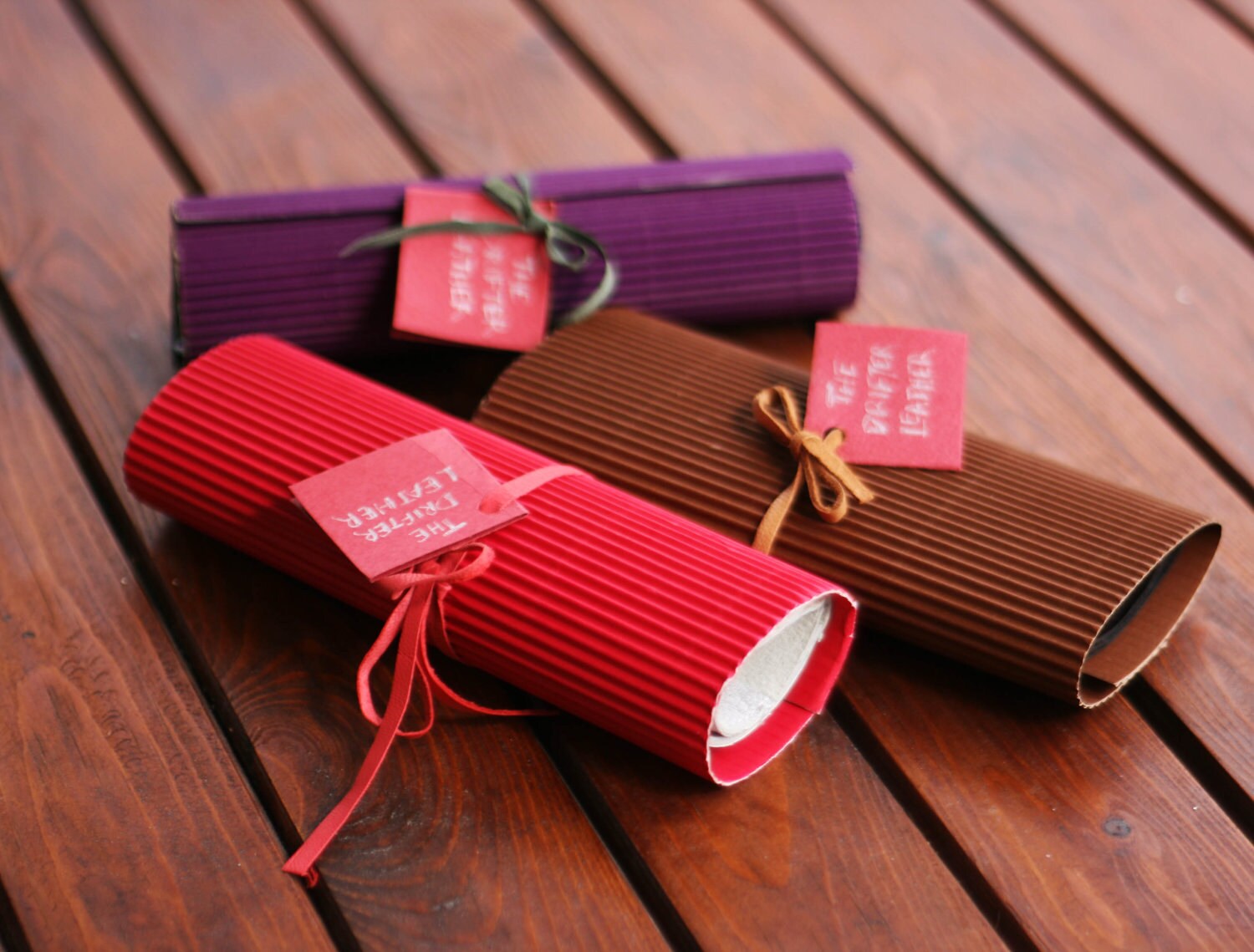
We ship all across the planet!
www.etsy.com/listing/56669423/red-riding-hood-leather-tob...
The five-storey, 432,000 square foot McCormick’s factory was opened in 1914 and produced candy and cookie products until its closure in early 2007. Built of concrete and steel and constructed to be fireproof, at the time it was considered one of the finest factories in North America. Its most distinct architectural features are its white terra cotta glaze and the extensive window coverage, which gave it the nickname “the Sunshine Palace”.
The first floor contains storage space, flour and sugar silos, administrative offices, and a bakery with long conveyor belt ovens which still remain there today.
The second floor was the area designated for the production of crackers. There is also a laboratory containing now empty cabinets which used to hold chemicals and such.
The third floor was intended for the production of chocolate and also housed the employee cafeteria.
The fourth floor was used to make candy and has skylights and roof vents which helped cool the candy during production. In one area a number of metal rods hang from the ceiling which occasionally clang together creating sounds much like wind chimes.
The fifth floor has two distinct areas, one of which was used to produce jelly beans and the other which contains executive offices and a boardroom. The office area looks out onto Dundas Street and provides a great view as well as access to the rooftop, however we did not venture out that far since it appeared to be unstable.
Mid-Century Executive Tanker Desk Chair by General Fireproofing Company in Leather - 18 3/4" Floor to Seat x 33" Tall x 19 1/2" Wide x 21" Deep - $450
PRIAULX / HASSID / KROHN
BMW Team MarcVDS
Images are copyright, all rights reserved. Do not use without my express permission.
King's Stanley is situated approximately two miles west of Stroud in the County of Gloucestershire, UK
Stanley Mill. Built in 1812 for the manufacture of woollen cloth. The main building was one of the first in England of "fireproof" construction, with iron columns.
1812 Present buildings begun
1813 Feb. Sold to Harris and Maclean for £8,655. Reference to new erected dyehouses, wool-lofts, woolstores, workshops, clothrooms, counting houses, etc. Canal accounts show delivery of stone, bricks, timber, iron and slates. Timber and some stone came from the Forest of Dean. The iron work was made by Benjamin Gibbons of the Earl of Dudley’s Level New Furnaces. This plant built in 1802-3 continued to run until 1954.
1824 First reference to a steam engine at Stanley.
1834 Maclean, Stephens and Co made superfine cloth and kerseymere.
1834. At Stanley, a steam engine of 40 hp. (bought from Boulton and Watt 1824) and 5 water wheels on a fall of 16 feet, equal to 200hp. The supply of water in summer was so irregular it caused interruptions in the work several hours a day.
All machinery considered dangerous was fenced off as far as was practicable. Hours worked, 11 to 12 and in some departments 13. No children under 9 were employed and very few under 10. The youngest, up to 12 or 13, were employed as piecers working up to 101/2 to 11 hours. The older ones worked 11 to 12 hours.
Refractory or disorderly children were dismissed.
1839. At Stanley, a steam engine of 50 hp. and 5 water wheels, 1 of 30hp. and 4 of 25 hp.
c. 1839 Sold to Nathaniel Marling for £27,000.
1854 Weaving shed built in front of main building, probably replacing an earlier building on the site.
1867 High pressure condensing engine installed.
1868 80hp. Turbine added.
Marcus Whitman Hotel
Walla Walla, Washington
Fireproof - Air Conditioned - Ultra Modern Rooms - Excellent Food.
Cocktail Lounge
Teknitone by E.B. Thomas
E-10825
CAPA-022098
An underground fireproof locomotive at work. Diesel locomotives like this can be seen at the South Tynedale Railway in Alston
King's Stanley is situated approximately two miles west of Stroud in the County of Gloucestershire, UK
Stanley Mill. Built in 1812 for the manufacture of woollen cloth. The main building was one of the first in England of "fireproof" construction, with iron columns.
1812 Present buildings begun
1813 Feb. Sold to Harris and Maclean for £8,655. Reference to new erected dyehouses, wool-lofts, woolstores, workshops, clothrooms, counting houses, etc. Canal accounts show delivery of stone, bricks, timber, iron and slates. Timber and some stone came from the Forest of Dean. The iron work was made by Benjamin Gibbons of the Earl of Dudley’s Level New Furnaces. This plant built in 1802-3 continued to run until 1954.
1824 First reference to a steam engine at Stanley.
1834 Maclean, Stephens and Co made superfine cloth and kerseymere.
1834. At Stanley, a steam engine of 40 hp. (bought from Boulton and Watt 1824) and 5 water wheels on a fall of 16 feet, equal to 200hp. The supply of water in summer was so irregular it caused interruptions in the work several hours a day.
All machinery considered dangerous was fenced off as far as was practicable. Hours worked, 11 to 12 and in some departments 13. No children under 9 were employed and very few under 10. The youngest, up to 12 or 13, were employed as piecers working up to 101/2 to 11 hours. The older ones worked 11 to 12 hours.
Refractory or disorderly children were dismissed.
1839. At Stanley, a steam engine of 50 hp. and 5 water wheels, 1 of 30hp. and 4 of 25 hp.
c. 1839 Sold to Nathaniel Marling for £27,000.
1854 Weaving shed built in front of main building, probably replacing an earlier building on the site.
1867 High pressure condensing engine installed.
1868 80hp. Turbine added.
Eureka County Courthouse, 10 South Main Street, Eureka, Nevada. The Nevada legislature created Eureka County in 1873. Officials renovated a former ice rink donated by Judge John O'Darrow to serve as the first county courthouse. A fortified jail and fireproof vault were added to the 40-by-100-foot wooden building located at the intersection of Main and Bateman Streets. After fire destroyed hundreds of buildings in the town of Eureka in 1879, officials became concerned about their wooden courthouse and accepted plans from George C. Costerisan for a more formidable structure. The county hired R. Ryland to construct the courthouse. He withdrew from the project shortly after the completion of the exterior, at which point Costerisan finished the interior. J.S. Whitton supervised the construction, and McNally and Hawkins of San Francisco provided the heating and plumbing. Construction of this two-story brick structure began in 1879 and was completed in 1880. The building was added to the already existing jail which remained in use through the 1980s. Construction of the courthouse cost $38,000. It was designed in a modest Italianate, turn-of-the-century style, but additional expenses for a vault and other fixtures brought the price to $50,000. The brick two-story structure measures 50-by-80-feet and stands fifty-one feet high. A second-floor balcony supported by brackets rests over the main entrance. Exterior accents include brick pilasters that rise to a metal-bracketed cornice, and a parapet wall with detailed brickwork. The large iron shutters adjacent to the windows and doors of the courthouse (and other buildings of the town) protected the windows from fires and other damages.
Interior details consist of an imported Spanish cedar judge's bench and balustrade and gilded accents throughout. Two of the original walk-in
safes are still useable. The doors are 6 inches thick iron with lovely summer scenes painted on them.The second-floor courtroom is recognized as the best preserved in Nevada. It measures forty-five square feet with a nineteen-foot high ceiling of pressed metal. A suspended gallery at the rear provides seating for one hundred. The semi-circular witness box placed in front of the judge's bench is distinctive because of its shape and its unusual location. When it was completed, it was the finest courthouse in the state of Nevada outside Virginia City. The building is one of two nineteenth-century Nevada courthouses still in use today; the other is the one located in Virginia City.
The two large bells in front of the courthouse were rung as fire alarms by two of Eureka's several volunteer fire companies. One was cast in Cincinnati, Ohio, and the other in San Francisco. Each bell was identified by its tone.
18 Modern Fireproof Units
Radiant Heat - Tile Shower Baths - Air Conditioned
"EXCELLENT FOOD"
On U.S. Routes 1-15-501
5 Miles South of Sanford, North Carolina
Phone 1227-J-I
Mailed from Augusta, Georgia to Miss Barbara Cole of Brockton, Massachusetts on August 6, 1953:
Hi Honey
I sure miss you very much. You be a real good girl and I will see you Christmas say hello to mom & dad and Sis. Good by for now. Love, Uncle Fred
Ben Minter
CAPA-012243
At the junction of Northumberland Street and Park Road in Toxteth, Liverpool. Sadly, the day was overcast, but I plan to return here on a sunnier day.
[The Masonic Temple, Danville series contains 15 images] This is a creative commons image, which you may freely use by linking to this page. Please respect the photographer and his work.
The Masonic Temple (1921) in Danville is located at 105 S. Union Street in the Danville Historic District [Virginia Department of Historic Resources ID 108-0111-065]. It is also listed in the National Register of Historic Places. Danville prospered for many years as a tobacco and textile center.
The building designed by West Virginia architect Fred F. Farris, cost $550,000 to build in 1921. It is fire-proof and was Danville’s first skyscraper; the styling is eclectic. It has two 10-story blocks of concrete and steel with a face of glazed, white architectural terra-cotta. The basic shape is in the form of a “U”. At the center of the “U” is a Tudor arched screen, a sculpted eagle crowning the entrance. Gothic ornamentation decorates the metal awning below the arch. Elaborate relief work follows the curved of the arch and is continued on both sides of the lobby entrance. The lobby ceiling had been dropped, hiding a barrel-vaulted skylight; but it will eventually be restored to its former state. Some nice relief work is above the doors to the elevators, the original ones installed at the time of construction.
At the base of the building are bays with Tudor arches containing various shops. A reason the building is so tall was to accommodate offices for various professionals—insurance companies, utilities, lawyers, doctors, dentists, etc. The styling of most floors is utilitarian, windows being 3 over 3; on the 9th floor the windows are taller and 6 over 6. Windows on the 10th level have Tudor arches between ornamented capitals
I was unable to tour the interior, which apparently has some spectacular rooms. I was fortunate enough to meet a member of the owner’s family, who provided some details on the structure. I was in Danville around 9 in the morning when these photos were taken; the lighting was not the best, but I wasn’t about to let the opportunity pass.
This work is licensed under a Creative Commons Attribution-NonCommercial-ShareAlike 3.0 Unported License
[AAA logo]
Fireproof and Strictly Modern
On U.S. Highway 90 - 2½ Blocks West of City Limits
Published by R. C. Shaul, 143 S. Albany Ave., Chicago, Ill.
Kyuu-Shimoda-tei(residence), Takasaki-shi(city) Gunma-ken(Prefecture), Japan
群馬県高崎市(ぐんまけん たかさきし) 旧下田邸(きゅう しもだてい)
Fourth album being given out free because they want to give us something back after so much support
Cricket Bat86 before you say anything we are NOT sad
Aluminum and fireproof upholstered chairs especially designed for the superliner SS United States circa 1952.
nrhp # 100006140- Downtown Van Wert Historic District-
🏨 A Historic Anchor of Downtown Van Wert
The Marsh Hotel—often called Hotel Marsh—opened in 1915 as a modern, fireproof, first‑class hotel right on East Main Street. It quickly became one of the most respected hostelries in northwest Ohio, known for its dining room, elegant furnishings, and surprisingly advanced amenities for the era, including electric call bells and both gas and electric lighting.
🚉 A Transportation Hub on the Lincoln Highway
One of the most fascinating aspects is its role as a control station for the Lincoln Highway, the nation’s first transcontinental automobile route. Even more intriguing: for a time, the hotel served as the Van Wert station for an interurban railroad, making it a true multimodal hub in the early 20th century.
That combination—rail, road, and lodging—puts it in the same lineage as other Midwest “railway hotels,” where civic ambition and transportation innovation met.
Architecture & Renovation
• Built by George Marsh at a cost of $28,757 (brick supplied by Rupright Brothers)
• Extensively remodeled in 1931 for $160,000, giving it the look you see today
• Classic early‑20th‑century commercial brick architecture with arched windows and a prominent cornice
• The upper floors are no longer used for lodging, but the lobby, dining room, and basement now function as a banquet and event venue, especially for weddings and receptions
from Copilot
Sorry John if you wind up seeing this ha! He had a lot of interesting things to say about the depot, very positive and reassuring. Ellis Island's recently renovated intake building had been abandoned for 40 years and was in worse shape, it is now glowing and shining.
John Ochsendorf is an award-winning structural designer and historian of construction; he is structural engineer at MIT. Trained in structural mechanics at Cornell, Princeton, and the University of Cambridge, he conducts research on the structural safety of historic monuments and the design of more sustainable infrastructure. He has collaborated on the design of several award-winning buildings around the world, and is a pioneer in the engineering use of traditional construction technologies for contemporary design. Ochsendorf is the author of Guastavino Vaulting: The Art of Structural Tile (Princeton Architectural Press, 2010) and is a recipient of the Rome Prize from the American Academy in Rome and a MacArthur Fellowship from the John D. and Catherine T. MacArthur Foundation.
Built in 1928 as the Lane Hotel for Little Rock owner S.A. Lane, this five-story structure was advertised as the first fireproof building in Arkansas. John Parks Almand designed the Spanish Colonial style building, which cost $150,000 to build. One-time occupants of the Lane included aviator Amelia Earhart, boxer Jack Dempsey, and actor Errol Flynn.
In 1935 Earl Harris of the Harris Bakery bought the building and changed the name to the Harris Hotel, which was known as the “Palace of the Ozarks.” The Orchard Room, added to the back of the hotel around 1939, was a popular restaurant.
From 1948 to 1963 Warren Felker and the Arkansas Hotel Company ran the property as The Hotel Arkansas. In 1967 the Defenders of the Christian Faith bought the building and opened it as The Defender’s Townhouse, beginning the building’s use as a retirement home. In 1977 Joe and Dera Keen bought it and renamed it the Rogers Townhouse. Since 1999 it has been known as the Peachtree at the Lane.
It was placed on the National Register of Historic Places in 1988.
It’s formal: Samsung has provided up on the Galaxy Observe 7. The telephones — and the considered-to-be-safe replacements — are exploding. Now Samsung has to get all individuals telephones back again in advance of a lot more of ’em pop.
The issue, then: how does Samsung get them back again...
First 1000 businesses who contacts honestechs.com will receive a business mobile app and the development fee will be waived. Contact us today.
#electronics #technology #tech #electronic #device #gadget #gadgets #instatech #instagood #geek #techie #nerd #techy #photooftheday #computers #laptops #hack #screen
honestechs.com/2016/10/11/heres-the-tremendous-powerful-f...
Despite being a fireproof building, Chicago's 1st McCormick Place Exposition Center was gutted by fire.
Basemark: Waffelboden in the middle marked 165/4R 1,0l
Maybe this piece is by Waku? or by Porta-Keramikwerke J. Brauers, Porta-Westfalica-Barkhausen ???
Update: Heisterholz Keramik! Found an item with a label and very same numbering and shape.
CHICKASHA Hotel, located at the intersection of Chickasha Avenue & 2nd Street in Chickasha Oklahoma. Closed. This Hotel had around 191 "Fireproof" rooms. Today, This Hotel looks to have been closed for some time now. The Life of this Hotel is Unknown at this time..
**The two-story structure built in 1902 at 114-118 W. Chickasha Ave., precedes statehood and at one time housed the Savoy Hotel, which was called the Schafer House. Built in 1909, the three-story Speake Building stands at 120 W Chickasha Ave. It has been variously known as the Commercial Rooming House and Del Monte Hotel. In 1910, the New Chickasha Hotel (originally the Price Building) was constructed at 122-124 W. Chickasha Ave. It was also the Josephine, Albany Hotel, Harvard Hotel and Cheaney Hotel.
The 1910 construction underwent expansions in 1917, 1922, 1929 and 1985, as well as a significant alteration in 1950.
In November 2009, the Oklahoma Housing Finance Agency approved an application by the new owner to transform the upper floors of the property into apartments designed to qualify as affordable housing units.
In addition, the entire property, including the first floor commercial/office space, will be renovated inside and out under historical restoration tax-credit guidelines.
The architectural work is currently in progress, with construction to begin this summer. By the projected completion date of November 2011, in excess of $5,000,000 will be invested in the project.
**Info is from the website - chickashanews.com/ ....
Photo Taken: July 7 2010
Photo Taken By: Randy A. Carlisle
ALL Photos (Unless otherwise stated) Copyright RAC Photography
"Preserving AMERICAs History Thru Photography"
... ***NO Photos are to be posted on ANY other website, or any kind of publication Without MY Permission. No Exceptions! They are not to be "Lifted", Borrowed, reprinted, or by any other means other than viewing here on Facebook or Flickr. If you want to use a photo of mine for anything, please email First. I'll assist you any way I can. Thank You for your understanding. ALL Photos are For Sale.***
Built 1822-27 at no. 100 Meeting Street. Originally built as a fireproof state office building for records to be kept safe.
"Charleston is the largest city in the U.S. state of South Carolina, the county seat of Charleston County, and the principal city in the Charleston–North Charleston metropolitan area. The city lies just south of the geographical midpoint of South Carolina's coastline on Charleston Harbor, an inlet of the Atlantic Ocean formed by the confluence of the Ashley, Cooper, and Wando rivers. Charleston had a population of 150,277 as of the 2020 U.S. Census. The 2020 population of the Charleston metropolitan area, comprising Berkeley, Charleston, and Dorchester counties, was 799,636 residents, the third-largest in the state and the 74th-largest metropolitan statistical area in the United States.
Charleston was founded in 1670 as Charles Town, honoring King Charles II, at Albemarle Point on the west bank of the Ashley River (now Charles Towne Landing) but relocated in 1680 to its present site, which became the fifth-largest city in North America within ten years. It remained unincorporated throughout the colonial period; its government was handled directly by a colonial legislature and a governor sent by Parliament. Election districts were organized according to Anglican parishes, and some social services were managed by Anglican wardens and vestries. Charleston adopted its present spelling with its incorporation as a city in 1783. Population growth in the interior of South Carolina influenced the removal of the state government to Columbia in 1788, but Charleston remained among the ten largest cities in the United States through the 1840 census.
Charleston's significance in American history is tied to its role as a major slave trading port. Charleston slave traders like Joseph Wragg were the first to break through the monopoly of the Royal African Company and pioneered the large-scale slave trade of the 18th century; almost one half of slaves imported to the United States arrived in Charleston. In 2018, the city formally apologized for its role in the American Slave trade after CNN noted that slavery "riddles the history" of Charleston." - info from Wikipedia.
The fall of 2022 I did my 3rd major cycling tour. I began my adventure in Montreal, Canada and finished in Savannah, GA. This tour took me through the oldest parts of Quebec and the 13 original US states. During this adventure I cycled 7,126 km over the course of 2.5 months and took more than 68,000 photos. As with my previous tours, a major focus was to photograph historic architecture.
Now on Instagram.
11730 Gulf Blvd., Treasure Island, St. Petersburg, Florida
52 furnished apts., Fireproof, Soundproof. Telephone and maid service, Central Heating. Directly on the Gulf of Mexico. Unexcelled sand bathing beach. Efficiency apts. or 1 and 2 bedroom apts. Rentals: day, week or month - open year 'round. BARTKE'S RESTAURANT - "elegance in leisurely dining" - Cocktail Lounge - Air conditioned. Telephone 22-1121.
********************************************************************************************
The Tropic Terrace Apartment Motel is currently under the management of Violet Bladowski.
Phone: (727) 367-2727 | Toll Free: (877) 255-9988 | email: Reservations@TropicTerraceFlorida.com