View allAll Photos Tagged dialect
This sign is in a Dutch dialect and it hangs on our garage door :), it says:
Everyone here is a vegetarian except the dog.
We hope it keeps the bad guys out :)
HaPpY CrAzY Tuesday
Thank you for your views, faves and or comments, they are greatly appreciated !!!
Don't use this image on websites, blogs or other media without my explicit permission !!!
© all rights reserved Lily aenee
A small waterfall on the upper River Swale near Keld. "force" is local dialect for "falls" and has no connection to the size or power of the waterfall.
*explore-march 11, 2008. thank you all very much for the visits, faves and comments.* Sunset, also called sundown in some American English dialects, is the time at which the sun disappears below the horizon in the west. It should not be confused with dusk, which is the point at which darkness falls, some time after the beginning of twilight when the sun itself sets. -Wikipedia
so, this is sundown or sunset.
Many thanks for your visits, faves and comments. Cheers.
The name Mutdapilly is believed to be a combination word from the Yuggera language (Yugarabul dialect) where mudtherri means sticky or muddy and pilly means gully. (Source: Wikipedia)
© Chris Burns 2015
__________________________________________
All rights reserved.
This image may not be copied, reproduced, distributed, republished, downloaded, displayed, posted or transmitted in any form or by any means, including electronic, mechanical, photocopying and recording without my written consent.
che te brillet de lontan...
La Madonna della Guardia della Basilica di Tortona, Piemonte
( ripresa da un'angolatura diversa , in un parcheggio scoperto per caso )
Oh, my beautiful little Madonna, who are shining from afar...( from an old song, in Milanese dialect )
Per Donatella
The term Vucciria is a dialectal corruption of the French word boucherie, which means butcher's shop. It is in fact in this market, precisely the "Vucciria", that, at the time of the Angevins, the slaughter of animals took place. Later it also became a fish and fruit market.
Today, unfortunately, the Vucciria is languishing a lot and in the little square that you see in this shot the only ones left are the street food vendors (meat, offal and all sorts of things are roasted on the grill and served to tourists).
The old market, however, comes alive at night for the movida and welcomes all sorts of young people looking for a beer and something to eat.
Honestly, I don't think it's a very popular place at night, with so many "hot heads" ready to steal and fight.
© Magnus Lögdberg
cykelbron . Frösön (Frey's island; Swedish pronunciation: [fɾøːsøːn]; [fɾøːsœʏːa] in the local dialect, Jamtlandic) is a small island in the lake Storsjön located west of the city Östersund in Jämtland. For ages this island was the regional centre of Jämtland.
Frösön is the location of "Frösöstenen", the northernmost runestone in the world, dating from 1030-1050 AD. Frösön was a separate köping until 1974 but was merged with Östersund at that time.
The island is named after Freyr, the Norse God of fecundity and love.
The Swedish composer Wilhelm Peterson-Berger had a summer house (and from 1930 a permanent home) on the island. In 1896 Peterson-Berger composed a set of piano pieces entitled Frösöblomster (Flowers of Frösön), and his opera Arnljot from 1910 is partly based on the runic inscriptions on Frösö Runestone.
TERAPI-ENTRENANDO, PARA NO DESFALLECER. 👍💪💪💪💪💪💖💖
La isla Dragonera (Sa Dragonera en dialecto mallorquín) es un islote perteneciente al archipiélago de las Baleares, España.
Se encuentra situada al oeste de la isla de Mallorca y está protegida como espacio natural con la categoría de Parque natural.
Se cree que su nombre procede del vocablo latino traco(onis) (traconaria, dragonera) que significa "hendidura en la tierra, resquebrajamiento, pasos subterráneos" haciendo referencia a la hendidura con agua dulce en una cueva de la isla, y no –en contra de lo que parece– a "dragones" (que es el nombre que se da a las lagartijas en Baleares).
De wikipedia.
✌✌✌✌👍👍👍💖💖💖💖😄😄
Traduzione : ragazzi, siamo a Genova
Ma sei rincoglionito ?, ma sei scemo ? :-)
Pubblicità anti- Covid per le vie di Ge Sampierdarena
Boys, we are in Genoa
Are you a stupid ? (if you don't wear a mask). In dialect
“En général, la recherche non-dialectique part d'une petite partie et en établit les connexions en vue de reconstruire le tout plus large. A l'inverse, la recherche dialectique commence par le tout, le système ou autant de celui-ci que l'on comprend à ce stade, pour ensuite examiner la partie afin de voir comment elle s'imbrique et comment elle fonctionne, ceci menant éventuellement à une compréhension du tout plus complète qu'au point de départ.”
Bertell Ollman
Small marina in Muggia. Very nice place :)
Muggia is an Italian town in the region of Friuli-Venezia Giulia on the border with Slovenia. Lying on the eastern flank of the Gulf of Trieste, Muggia is the only Italian port town in Istria. The town's architecture is marked by its Venetian and Austrian history, and its harbour hosts a modern 500-berth marina for yachts (Porto San Rocco). Muggia originated as a prehistoric fortified village (castelliere), around 8th-7th century BC. The territory was conquered in 178–177 BC by the Romans, who created here a settlement. In 1420 it became part of the Republic of Venice and in 1797, Muggia became part of the Austrian Empire. After World War I and the dissolution of Austria-Hungary, the town was annexed to the Kingdom of Italy and incorporated into the Province of Trieste. Muggia provides many evident traces of its Venetian traditions and origin, as showed by the dialect, the gastronomic traditions, the gothic-venetian style of some houses, the loggias, the ogive arches, the ancient coats of arms on the façades but mostly the main square, a true Venetian "campiello".
---------------------------------------------------------------------------------------
Miasteczko Muggia i niewielka przystań. Ładnie tam było :)
Muggia - miejscowość we Włoszech na półwyspie Istria, w regionie Friuli-Wenecja Julijska, w prowincji Triest. Jest jedynym włoskim miastem portowym na półwyspie Istria. W architekturze miasta dominują wpływy weneckie i austriackie, zaś w porcie znajduje się nowoczesna przystań dla jachtów z 500 miejscami postojowymi (Porto San Rocco). Muggia powstała jako prehistoryczna ufortyfikowana wioska (castelliere) około VIII-VII wieku p.n.e. Obszar ten został podbity w latach 178–177 p.n.e. przez Rzymian, którzy stworzyli tutaj osadę. W 1420 r. Muggia stała się częścią Republiki Weneckiej, a w 1797 r. weszła w skład Cesarstwa Austriackiego. Po I wojnie światowej i rozpadzie Austro-Węgier miasto zostało przyłączone do Królestwa Włoch i włączone do prowincji Triest. W Muggii można znaleźć wiele śladów weneckich tradycji i kultury, o czym świadczą dialekt, tradycje gastronomiczne, gotycko-wenecki styl niektórych domów, loggie, ostrołuki, starożytne herby na fasadach, ale przede wszystkim główny plac, prawdziwe weneckie „campiello”.
……………………………….
Poster:
Locandina:
pad.mymovies.it/filmclub/2022/09/120/coverlg_home.jpg
pad.mymovies.it/filmclub/2022/09/120/locandina.jpg
www.cinematografo.it/image-service/version/c:M2QyY2FiZTct...
www.artribune.com/wp-content/uploads/2024/06/vangelo-seco...
www.nuovodialogo.com/wp-content/uploads/2024/05/vangelo-s...
.............................................................................
click to activate the small icon of slideshow: the small triangle inscribed in the small rectangle, at the top right, in the photostream (it means the monitor);
or…. Press the “L” button to zoom in the image;
clicca sulla piccola icona per attivare lo slideshow: sulla facciata principale del photostream, in alto a destra c'è un piccolo rettangolo (rappresenta il monitor) con dentro un piccolo triangolo nero;
oppure…. premi il tasto “L” per ingrandire l'immagine;
www.fotografidigitali.it/gallery/2726/opere-italiane-segn...
………………………………………………………………………
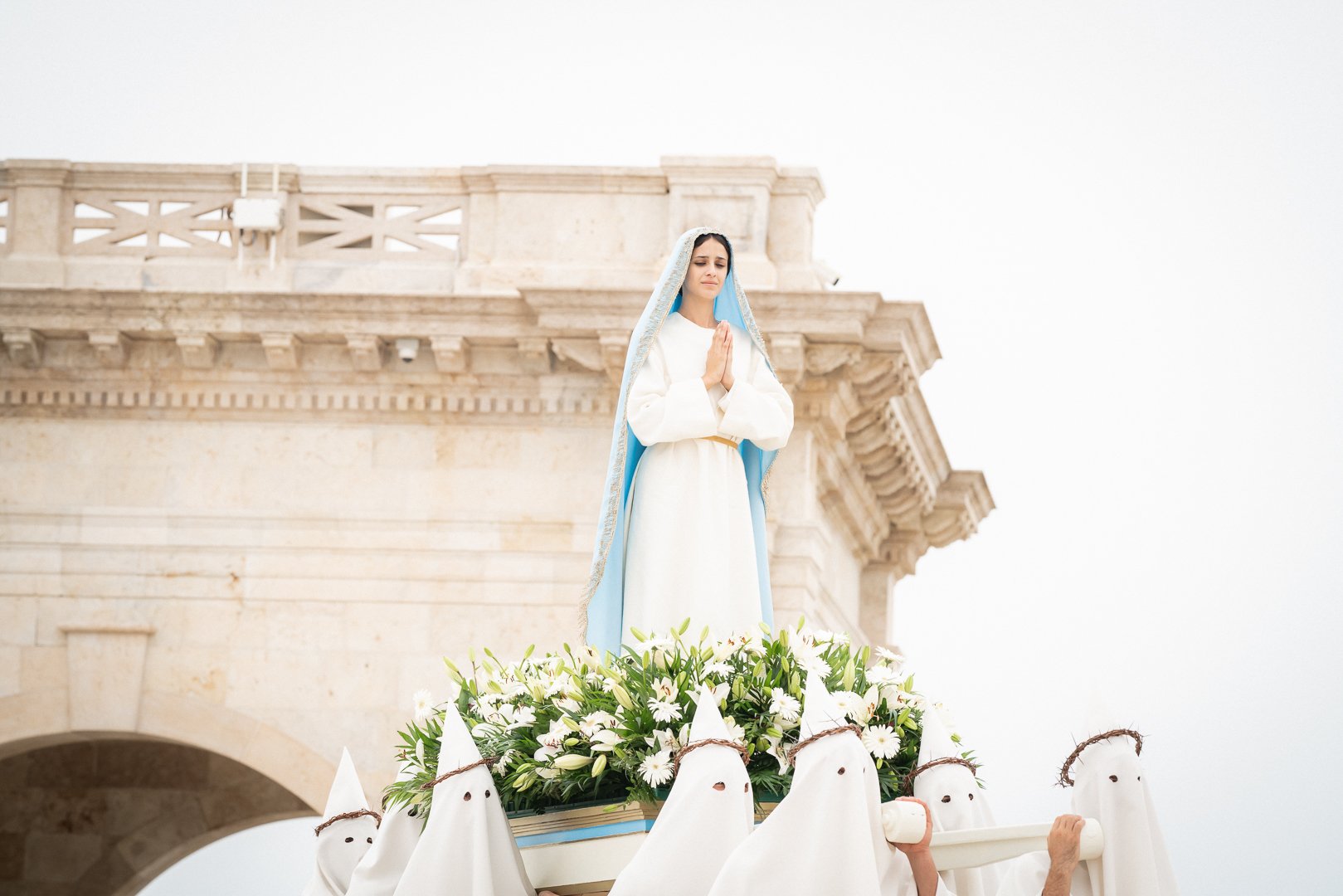
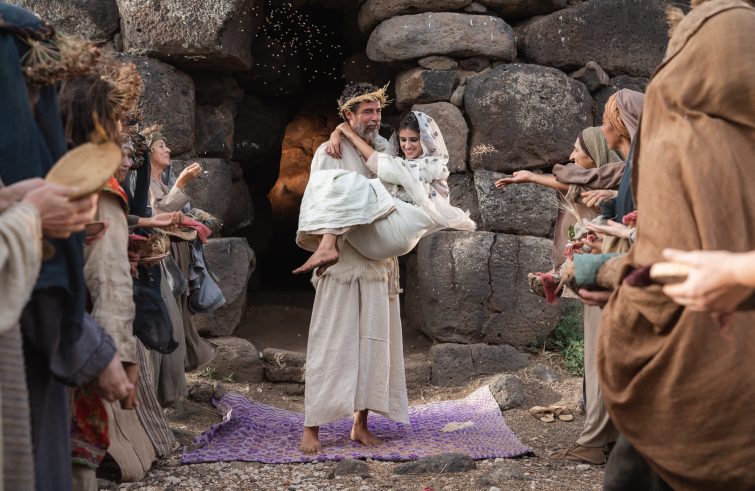
I propose here, on Flickr, a photographic story, with descriptive text, of a traditional Sicilian popular festival that is always highly anticipated, it takes place in the town of Fiumedinisi (Messina), in the last 18 years what is called the "Great Feast" has been celebrated only 3 times, always on the second Sunday of August, it was celebrated in 2007, in 2016, this year 2025, in all three editions I took photographs, those that I now present are almost all of the "Great Feast" of this year 2025. The town of Fiumedinisi is inextricably linked to her patron saint, Our Lady of the Annunciation, every year a traditional procession is held on March 24th and 25th, on the 24th the procession is made by the faithful on their knees, they carry a large lit candle with which they help themselves to support themselves, it takes place along a straight path in what is called "street of float" (it joins two churches), the next day there is another traditional procession, the two "Sacred Float," that of the Our Lady of the Annunciation and that of the Archangel Gabriel, are carried on the shoulders, followed by the faithful, through the narrow streets of the town. Then comes the "Great Feast" in August, also linked to the Annunciation, which occurs every year after many years. It is on Christmas Eve that it is announced whether that year will be the year of the Great Feast. At Christmas, "the Son of Man" is born, incarnated in Mary's womb. It is the Archangel Gabriel who announces to Mary the conception of the Son of the Most High. The iconography of the Sacred Representations depicts him kneeling before her, offering her a lily, a symbol of Mary's purity. The "Great Feast" in August has ancient origins dating back to the 16th century, the period of Spanish rule in Sicily. It was initially celebrated on March 25th, the religious feast of the Annunciation of the Lord. Later, towards the end of the 19th century, it was moved to August to allow the many emigrants from all over the world to attend. In short, the "Great Feast" includes a "morning procession" led by three young men who will impersonate the three main characters on the "living float"—the Mary, the Archangel Gabriel, and the Eternal Father. Around 11:00 a.m., the "Great Living Float," a very heavy object carried on shoulders, will make its first journey along the "street of float" (the one traveled on one's knees in March, but also on the eve of the Great Feast) with the barefoot bearers in ordinary clothing. In the afternoon, many boys and girls dressed as angels take their places on special seats on the "Great Living Float", the "three characters" (the Mary, the Archangel Gabriel, and the "Eternal Father" at the top) take their places. Now the Great Float will make the same journey in reverse, carried on the shoulders of devotee-bearers dressed entirely in white, barefoot, thus arriving in the square in front of the church-sanctuary dedicated to Maria SS Annunziata. Once the journey has finished and the Float has been placed on the ground, the ceremony includes, and ends, with an ancient dialect song sung by the children, with microphones, who dress up as Mary and the Archangel Gabriel. A curiosity, this "Great Float", an enormous metal and wood structure, extremely heavy, requires perfect coordination between the bearers. It is essential to raise and lower it in perfect synchrony, with all its "inhabitants" atop it. It is therefore crucial to avoid any oscillations that would be transmitted to the children seated at various heights, and to the Eternal Father, seated very high up. The moments preceding the float's departure, and those following its arrival, are of great concentration, silence is absolute, the launch occurs at the third blow of the hammer, all the devotee-bearers rise in perfect synchrony and "the magic comes to life"...! The Great Machine travels the "street of float" upon its arrival, there is maximum silence, and at the third blow of the hammer the devotee-bearers lower themselves, placing the incredible Living Float on the ground, renewing before our eyes an event of beauty and absolute wonder, the unique magic of an ancient Sicilian feast tradition.
…………………………………
Propongo qui, su Flickr, un racconto fotografico, con testo descrittivo, di una festa tradizionale popolare siciliana sempre molto attesa, si svolge nel paese di Fiumedinisi (Messina), negli ultimi 18 anni quella che è chiamata la “Festa Grande” si è celebrata solo 3 volte, sempre la seconda domenica di agosto, è stata celebrata nel 2007, nel 2016, quest’anno 2025, in tutte e tre le edizioni ho realizzato fotografie, quelle che ora presento sono quasi tutte della “Festa Grande” di quest’anno 2025. Il paese di Fiumedinisi è indissolubilmente legato alla sua santa patrona, Maria SS. Annunziata, ogni anno si tiene una tradizionale processione il 24 e 25 marzo, il 24 la processione viene fatta dai fedeli in ginocchio, essi recano una grossa candela accesa con la quale si aiutano nel sostenersi, si svolge lungo un percorso rettilineo in quella che è chiamata “strada vara” (unisce due chiese), il giorno dopo si ha un’altra processione, classica, le due “Sacre Vare”, quella di Maria SS. Annunziata e quella dell’Arcangelo Gabriele, vengono portate in spalla, seguite dai fedeli, nelle stradine del paese; poi la “Festa Grande” di agosto, legata anch’essa all’Annunciazione, che avviene ogni volta dopo molti anni: è la notte di Natale che si annuncia se quello sarà l’anno della Festa Grande, a Natale nasce “il Figlio dell’Uomo” incarnatosi nel ventre materno di Maria, è l’Arcangelo Gabriele che annuncia a Maria il concepimento del Figlio dell’Altissimo, l’iconografia delle Sacre Rappresentazioni lo raffigura inginocchiarsi al cospetto di Lei porgendole un giglio, simbolo della purezza di Maria. La “Festa Grande” di agosto ha origini antiche che risalgono al XVI secolo, periodo della dominazione spagnola in Sicilia, essa inizialmente veniva celebrata il 25 marzo, con la ricorrenza religiosa dell’Annunciazione del Signore, successivamente verso la fine del XIX secolo venne spostata ad agosto, per consentire ai molti emigrati, provenienti da ogni dove, di potervi assistere. In maniera sintetica, la “Festa Grande” prevede una “processione mattutina” con in testa i tre ragazzi che impersoneranno sulla “vara vivente” i tre principali personaggi, la Maria, l’Arcangelo Gabriele ed il Padre Eterno; verso le ore 11:00 la “Grande Vara Vivente”, pesantissima, portata in spalla farà un primo viaggio lungo la “strada vara” (quella che viene percorsa in ginocchio a marzo, ma anche la vigilia della Festa Grande) con i portatori scalzi, in abiti comuni; il pomeriggio sulla “Grande Vara Vivente” prendono posto su appositi seggiolini tanti bimbi e bimbe, vestiti da angeli, prendono posto i “tre personaggi” (Maria, l’Arcangelo Gabriele, in alto prende posto il “Padre Eterno”), adesso la Grande Vara farà lo stesso percorso inverso, portata sulle spalle dei devoti-portatori vestiti completamente di bianco, scalzi, così giungendo nella piazza davanti la chiesa-santuario dedicata a Maria SS Annunziata, terminato il percorso e deposta a terra la vara, la cerimonia prevede, e termina, con un antico canto dialettale intonato dai ragazzi, microfonati, che vestono i panni di Maria e dell’Arcangelo Gabriele. Una “curiosità”, questa “Vara Ranni” (dialettalmente, Vara Grande), enorme struttura in metallo e legno, pesantissima, necessita di una perfetta coordinazione tra i portatori, è fondamentale alzarla ed abbassarla in perfetto sincronismo, con sopra tutti i suoi “abitanti”, importantissimo quindi evitare qualsiasi oscillazione che si trasmetterebbe sui bimbi seduti a varie altezze, ed al Padre Eterno, seduto molto in alto: gli attimi che precedono la partenza della vara, e quelli che fanno seguito all’arrivo sono di grande concentrazione, il silenzio è massimo, la partenza avviene al terzo colpo di martello, tutti i devoti-portatori si alzano in perfetta sincronia e “la magia prende vita”…! La Grande Macchina percorre la “strada vara”, al suo arrivo, silenzio massimo, al terzo colpo di martello i devoti-portatori si abbassano deponendo a terra quella incredibile Vara Vivente che rinnova davanti ai nostri occhi un evento fatto di bellezza ed assoluta meraviglia, magia unica di una antica tradizione popolare Siciliana.
..........................................
Dopo 9 anni torna l’emozionante Festa della Vara a Fiumedinisi
FIUMEDINISI (ME) - Festa della Vara edizione 2025
I momenti emozionanti della Vara di Fiumedinisi in processione con tanti angioletti
Fiumedinisi ( ME ) - Festa della Vara - I Viaggi - 09 /08 / 2025
Fiumedinisi ( ME ) - Festa della Vara - 10 / 08 /2025
……………………………………………
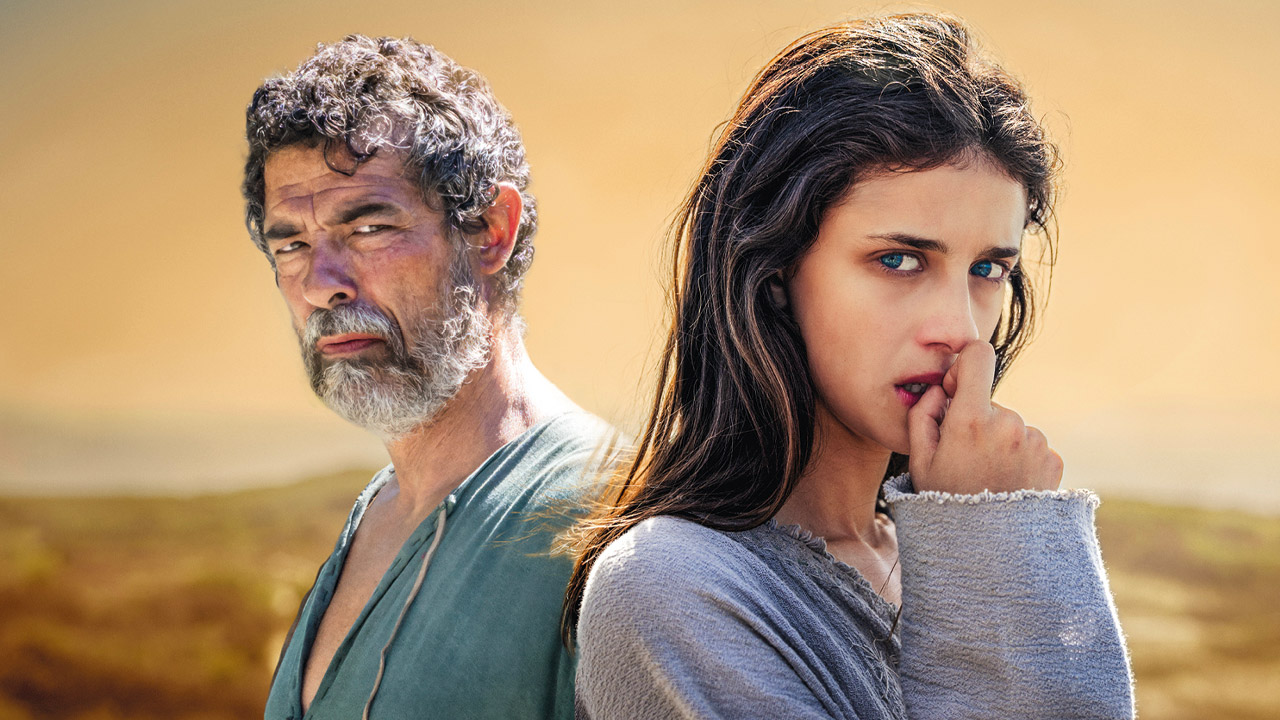
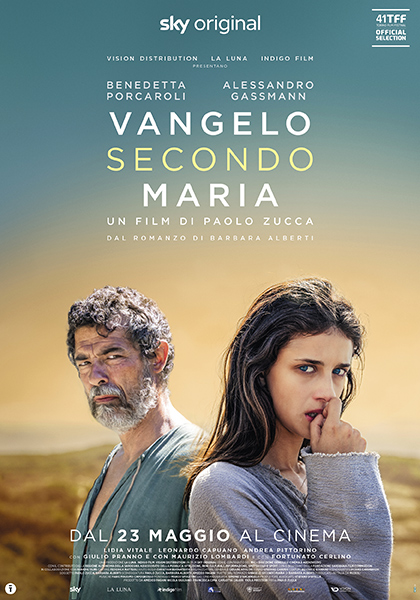
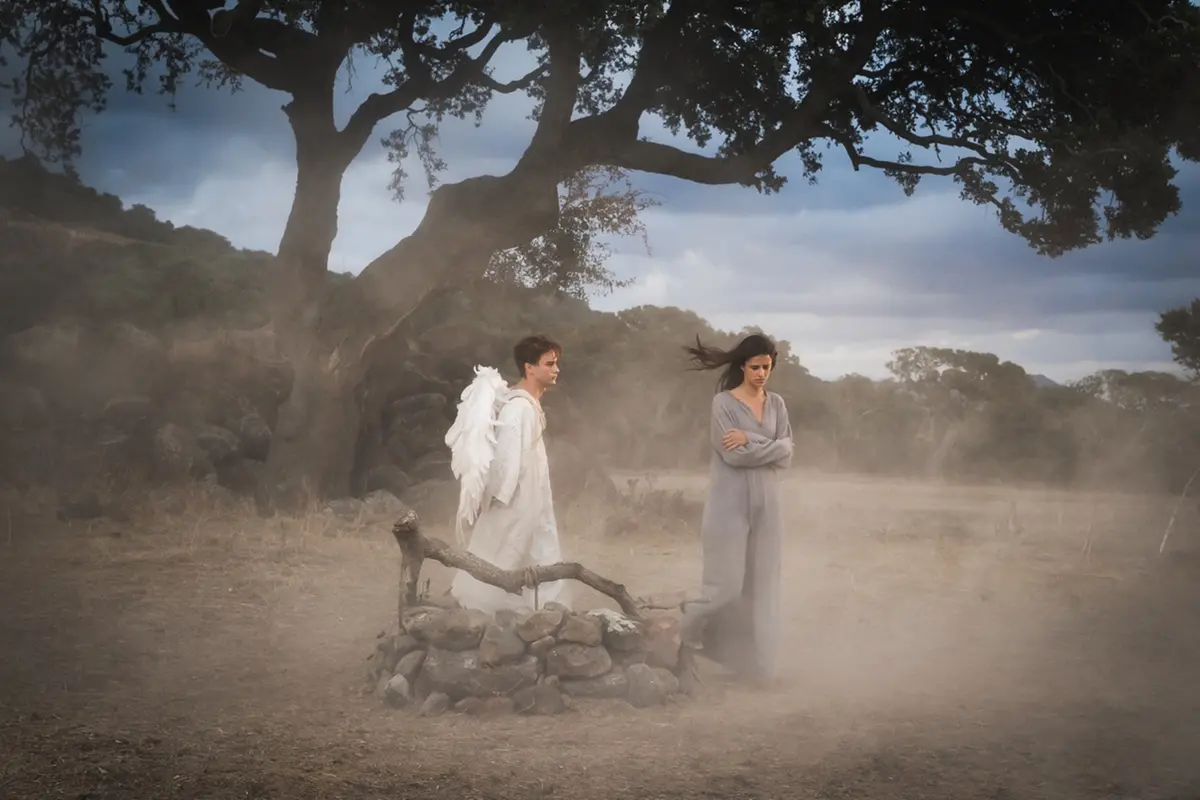
VANGELO SECONDO MARIA (2024) Trailer | Benedetta Porcaroli, Alessandro Gassmann
Benedetta Porcaroli e Alessandro Gassmann sul film | Vangelo Secondo Maria
Vangelo secondo Maria, incontro stampa con Alessandro Gassmann, Benedetta Porcaroli, Barbara Alberti
Vangelo secondo Maria, di Paolo Zucca - Clip 2
Vangelo secondo Maria - Prima Clip Ufficiale
Effetto Notte (TV2000) - “Il Vangelo secondo Maria”, Alessandro Gassmann e Benedetta Porcaroli
Vangelo secondo Maria, Barbara Alberti: più che scomodare la Madonna, l'ho fatta sorridere
................................................
Located in Talicud Island, Samal, Davao del Norte, this beach was named for a lady. "Babu" is a local Muslim dialect title for lady.
"Force" is local dialect for "falls", rather than referring to the power of the river! These are the lower of two sets of falls on the upper river Tees.
As I took this photo from this shed an old man on bicycle stopped next to me. I heavy local dialect he asked me what I was taking photos of.
I told him of the shed, because I like it and because it has the same roof tiles as my house. I told him my house was built in 1933 and I wondered how old the shed might be.
He said: "Well, I can tell you, because my father built it in 1922." Pretty good timing to get the info you want right away!
OLYMPUS DIGITAL CAMERA
Olympus OM-D E-M10 MKII, M.Zuiko 40-150mm f4-5.6 R
Camogli (Camuggi in Genoese dialect) is a small Italian fishing village and tourist resort located on the west side of the peninsula of Portofino, on the Golfo Paradiso at the Riviera di Levante, in the province of Genoa on the Italian Riviera. As of 31 December 2010 its population was of 5582 inhabitants. The name Camogli is of disputed but ancient origins. Camogli is one of the largest part of the Parco Naturale Regionale di Portofino, and a part of the Portofino Marine Protected Area. (from Wikipedia)
"Force" is local dialect for "falls", rather than referring to the power of the river! These are the lower of two sets of falls on the upper river Tees. The colour of the water is due to the high peat content, washed off the moors.
The Val Bregaglia is an alpine valley of Switzerland and Italy at the base of which runs the river Mera. The local dialect is a variety of Lombard with similarities to neighboring dialects of Romansh. The Bregaglia Range is a popular mountaineering destination, and includes such peaks as Monte Disgrazia, Piz Cengalo and Piz Badile.
Early 18th Century gritstone guide stoop on the heather clad Beeley Moor in the Derbyshire Peak District. With Pointing Fingers to aid the traveller aiming for Chatsworth, Bakewell, Chesterfield or Offerton (the local dialect name for Alfreton). The ancient packhorse holloway to Chesterfield is still visible through the heather.
'Schäl Sick' is Cologne dialect and means something like 'wrong' riverside of the Rhine. This dates back to the romans who settled on left bank of the river. With a twinkle in one's eye this phrase is still used for those parts of Cologne situated east of the Rhine :o)
This beautiful dirt road lined with poplars, still partially bare in the early Spring, leads to the farmstead called Mugnaga (which in the Milanese dialect is the word for "apricot"), a large farmstead producing milk, cheese, honey, corn, wheat, and other agricultural products (and hosting a nursery). It was still lockdown time, and I allowed myself a brief sunrise session while going to work. I was lucky enough to find a man and his dog strolling along the dirt road towards the farmstead, in the distance, bathed in the golden light.
In this area there are several traditional Padan farmsteads, which are still inhabited and active - in the Padan plain there are so many dead relics of our rural history... - some of them are fairly ancient, dating back from the 19. or even the 17. century and they are often protected as they have historical and/or artistic value. Italy is quite rich in cultural heritage but well, protection often means, say, that a building of interest cannot be demolished, but can be abandoned to its own (sad) fate. The people who are still living and working in these farmsteads are preserving the memory of generations upon generations of peasants who were the workforce of what had long been the most advanced agricultural region in Europe. They lived in the landowners' farmsteads and worked in the attached fields - families upon families who were payed-in-kind (milk, butter, corn, flour...) and were so poor that when they transferred from one farmstead to another the whole (and quite often numerous) family plus their scant belongings could easily fit in a cart.
I have obtained this picture by blending an exposure bracketing [-2.0/-1.0/0/+1.0/+2.0 EV] by luminosity masks with the Gimp (EXIF data, as usual, refer to the "normal" exposure shot), then I added some final touches with Nik Color Efex Pro 4. Raw files processed with Darktable.
My good old Hanhel tripod caused much trouble on that morning - I had to painstakingly offset against slight horizontal deviations between the five shots of the exposure bracketing, ranging from 3 up to 7 pixels. Luckily it was just a simple horizontal deviation, and I was able to compensate for it. I have just grabbed my new tripod (Rollei C6i carbon), can't wait for trying it! (Incidentally, I have just confirmed the rule that we talk about our poor tripods only when they cause trouble ;-))
Attrazione fatale verso il vuoto
Seconda cascata del Saut , formata dalle acque che scendono dal Marguareis e che , insieme ad altri affluenti , alimentano il torrente Pesio
Parco Naturale del Marguareis , Piemonte
The great jump
Falls of the Saut (= jump in the dialect of Piemonte )
Bord Waalk
That’s not a typo! Apparently, it’s Bird Walk in the Northumbrian dialect. And, it’s the name of an art trail in and around Amble featuring birds.
This piece is called Tern Wings – obvious really. There is something quite dynamic about it (in real life) – you get the impression that they are about to take off. All of which is difficult to portray in a still image.
P105-5383 Taken at: Amble, Northumberland, England
Wow, along with a flood of birthday calls and texts today, this cutie sang 'Happy Birthday' to me! Unbeknownst to him, I'm quite fluent in Gnatcatcher dialect... and translated the song as "Happy birthday to you, happy birthday to you... you look like a monkey and act like one, too!" Gee, and he looked so angelic! Lol
INDONESIEN, Java, Am Vulkan - Tangkuban Perahu (Krater )
Tangkuban Perahu (spelt Tangkuban Parahu in the local Sundanese dialect) is a stratovolcano 30 km north of the city of Bandung, the provincial capital of West Java, Indonesia. It erupted in 1826, 1829, 1842, 1846, 1896, 1910, 1926, 1929, 1952, 1957, 1961, 1965, 1967, 1969, 1983, and 2013. It is a popular tourist attraction where tourists can hike or ride to the edge of the crater to view the hot water springs and boiling mud up close, and buy eggs cooked on the hot surface.[Together with Mount Burangrang and Bukit Tunggul, it is a remnant of the ancient Mount Sunda after the plinian eruption caused the Caldera to collapse.
Tuennes (Rhenish dialect for Antonius) and Schael (an artificial noun meaning being cross-eyed and sometimes also duplicitous) are two figures invented for the puppet theatre of Cologne in the 19th century. The one (Schael) represents the smart and well-dressed city dweller, the other (Tuennes) the honest but simple country folk. Their dialogues are often grotesque and funny, but also capable of revealing the madness and the power structures of society. Small wonder that Tuennes and Schael have become central elements of the Cologne Carnival. The two bronze statues stand in front of the Great St. Martin Church, Cologne. Fuji X-Pro1.
Perth Bridge (also known as Smeaton's Bridge, locally, the Old Bridge, and in the local dialect of Scots, the Auld Brig) is a toll-free bridge in the city of Perth, Scotland. A Category A listed structure, it spans the River Tay, connecting Perth, on the western side of the river, to Bridgend, on its eastern side, carrying both automotive and pedestrian traffic of West Bridge Street (the A85). An earlier bridge was demolished at the same location in 1621 (its location marked by a stone tablet at the bottom of the High Street), and many unsuccessful attempts were made to replace it. A subscription was started by James VI and several noblemen to help with the construction cost, but the king's death in 1625 suspended the scheme and a series of ferryboats were instead used.
"Force" is local dialect for "falls" and does not refer to the power or flow of the river, hence these are the lower falls on the upper river Tees (and consist of a series of smaller falls rather than one large one).
Kevelaer, Klein-Kevelaer, Wetten en Twisteden behoorden tot het Overkwartier van Gelder en dus tot de Zuidelijke Nederlanden. In 1701, tijdens de Spaanse Successieoorlog werd het gebied door Pruisen ingenomen, samen met de andere gemeenten die vanaf 1713 officieel Pruisisch Opper-Gelre vormden. Als deel van de Spaanse Nederlanden viel de stad onder het bisdom Roermond. Ook onder Pruisisch bewind bleef Kevelaer onder het bisdom Roermond, in 1801 ging Kevelaer tot het bisdom Aken behoren, en vanaf ongeveer 1823 werd het ingedeeld bij het bisdom Münster. Door het bisdom Münster werd het toen ook verplicht gesteld preken, kerkboeken etc. in de Hoogduitse taal te gebruiken; tot dan werd een Nederduits dialect gebruikt, dat nu nog als 'Kevelaers plat' wordt gesproken door de oudere inwoners van de plaats. Het huidige dialect wordt tot het Nederfrankisch gerekend.[2]
Switzerland, Canton of Bern, Thun
Thun is a town in the canton of Bern in Switzerland. It is located where the Aare flows out of Lake Thun (Thunersee). Besides tourism, machine and precision instrument engineering, the largest garrison in the country, the food industry, armaments, and publishing are of economic importance to Thun. The official language of Thun is German, but the main spoken language is the local variant of the Alemannic Swiss German dialect.
Manarola may be the oldest of the towns in the Cinque Terre, with the cornerstone of the church, San Lorenzo, dating from 1338. The local dialect is Manarolese, which is marginally different from the dialects in the nearby area. The name "Manarola" is probably a dialectical evolution of the Latin, "magna rota". In the Manarolese dialect this was changed to "magna roea" which means "large wheel", in reference to the mill wheel in the town.
Duivenchappers (lokaal dialect voor duivenmelkers). Prachtige duiventil hebben die zeg.
____________________________________________
Maandag 29 juli 2013 - Vrijdag 16 augustus 2013 (P1140653)
Fist sized fallen flowers, from a tree... Raked up promptly by ground.keeping staff... Pity! I intended to show friends this beautiful mass of flowers on the ground..... Too late.
I was told by a waitress the tree produces an edible fruit... Raw or cooked...
She says the Fijian name for this fruit tree is ... Vala, or vutu... Depending on the dialect you speak .
Mahjong - In Chinese, the game was originally called 麻雀 (pinyin: máquè)—meaning sparrow—which is still used in some southern dialects. It is said that the clacking of tiles during shuffling resembles the chattering of sparrows. There are 3 suits of 9 tiles and 15 special tiles depicting flowers, dragons, the four winds and the seasons. It has been so long since I played I have completely forgotten the rules but I still have my set of beautiful pieces.
There is also a 'pairs' Mahjong game for phones etc. which uses the traditional mahjong tile symbols.
Info taken from Wikipedia - en.wikipedia.org/wiki/Mahjong
Created for the Shock of the New group contest Games
Thank you for taking the time to visit, comment, fave or invite. I really appreciate them all.
All photos used are my own.
All rights reserved. This photo is not authorized for use on your blogs, pin boards, websites or use in any other way. You may NOT download this image without written permission from lemon~art.
Marlin: Dory! This is not whale. You're speaking like, upset stomach.
Dory: Maybe I should try humpback.
Marlin: No, don't try humpback.
Dory: Woooooo! Woooooo!
:)
OH yeah. HBW!
Zambezi River means the “Great River” in the local Tonga dialect
The Zambezi is the fourth longest river in Africa, after the Nile, Congo, and Niger Rivers. It is the longest east flowing river in Africa.
It flows through six countries on its journey from its source in north-western Zambia to the Indian Ocean, an amazing 2 700 km.
This river evokes mystery and excitement with few rivers in the world remaining as pristine or as little explored.
A small waterfall on the upper River Swale near Keld. "Force" is local dialect for "falls" and has no connection to the size or power of the waterfall.
Perth Bridge (also known as Smeaton's Bridge, locally, the Old Bridge and in the local dialect of Scots, "the Auld Brig") is a toll-free bridge in the city of Perth, Scotland. It spans the River Tay, connecting Perth, on the western side of the river, to Bridgend, on its eastern side, carrying both automotive and pedestrian traffic of West Bridge Street (the A85). It is a Category A listed structure.
The bridge was completed in October 1771, which places it in the Georgian era; however, its plaque states the year in which construction began, 1766, as its "built" date. The engineer of its construction was John Smeaton, after whom the bridge is named.
Funded by Thomas Hay, 9th Earl of Kinnoull, the government, and public subscription, the bridge was put to the test three years after its completion. In February 1774, during a quick thaw, broken ice became wedged under the arches and created a natural dam. Large sections of Perth, including both of its Inches, were flooded. The bridge, however, stood firm. It has survived many subsequent floods, and marks documenting these levels are visible on one of its piers.
An increase in traffic resulted in the bridge being widened in 1869 by A.D. Stewart. Its stone parapets were removed, and footpaths projected over iron brackets.
Text Source: Wikipedia
This work is based upon my original painting "Promote Global Peace" for which my talented daughter, Karen, wrote a poem, which I am sharing again:
Shrinking World
(Written as a collaboration with my painting “Promote Global Peace”)
Our world,
so vast and so open.
Continents separated by immeasurable amounts of water.
Landscapes reaching beyond the eye’s capacity.
Hundreds of languages,
thousands of dialects.
People a world apart,
brought together through Technology.
Days become hours,
hours, seconds.
The language barrier is broken.
Our world slowly shrinks.
Ideas exchanged,
cultures fused,
minds opened,
stereotypes shattered.
Beautiful Technology
bringing us closer to people a world away.
Working together
we get the best of both worlds.
The best of ALL worlds.
Technology…
why not use it to bring peace to this shrinking world?
By: Karen Lewis
I feel it even more important today to share this message. The world seems to be straying away from love, peace, respect and understanding and getting closer and closer to a world war!
It is beyond time for us to come together globally, recognize our differences and find mutual solutions for all of our children's sake. War definitely is no solution it only causes more pain through violence and hate and at the rate we are going we may bring an end to the world as we know it. Everyone beware and be wise, please!
HSS 😊😊😍
With heartfelt and genuine thanks for your kind visit. Have a wonderful and beautiful day, be well, keep your eyes open, appreciate the beauty surrounding you, enjoy creating, stay safe and laugh often! ❤️❤️❤️
Wooden idyllic house -Huuske (dialect) - with a bench to rest.
Houten idyllisch huisje -Huuske (dialect) - met een bank om uit te rusten.
In South Derbyshire, where I lived for most of my life, the local dialect is very distinctive and unintelligible to most outsiders.
They have a phrase to describe a landscape that is full of hills and dips: "It were all 'umps an' 'ollers". In regular English meaning: It was all humps and hollows :)
It came to mind when I looked at this one for some reason...even though this is Clackmannanshire, north central Scotland, where I now live.
Thanks to my Flickr friend Bob Cat for the belated title inspiration.
"Force" is local dialect for "falls" and does not refer to the power or flow of the river, hence these are the higher (upstream) falls on the upper river Tees, as well as being the larger of the falls.
misty: youtu.be/rPOlakkBlj8 (Ella FitzGerald)
Mírame, las brumas embellecen mi paisaje interior, desdibujando los contornos de mi camino a seguir.
Mírame, solitario por este paraíso que me tú me descubriste y esperando esa voz que era música a mis oídos, la mano que me guíe por este paisaje nebuloso de ensueño otra vez.....
Mírame, que necesito sentirte cerca en este otoño de niebla en mi corazón.
Estaba estos días a vueltas con una palabra que me encanta: brétema, que es uno de los más de 70 términos que tenemos los gallegos de referirnos a lluvias y más elementos nebulosos que por aquí tanto abundan.
Esta palabra no existe propiamente en castellano, ni siquiera en los dialectos leoneses. La Pardo Bazán la empleó en sus libros, definiéndola como «neblina húmeda». Según algunos diccionarios, la brétema es una niebla o neblina acuosa, a modo de nube rastrera. El orvallo, que es otro término muy utilizado para estos días con niebla, es menos espeso que la brétema; podría decirse que el primero es cuando es "tan lloviznosa y tan mansa que parece columpiarse en el aire a merced del tiempo", como describe tan poéticamente un autor de uno de los diccionarios clásicos más completos que existían sobre esta lengua ;) .
Según Corominas, en su impresionante Diccionario Etimológico, brétema proviene probablemente del gótico brêthms, vapor. Como curiosidad, añadiré que lo relaciona con el término inglés breath, aliento; así que mira tú por dónde estamos relacionados con los pérfidos albiones ;).
Y una coplilla popular, con el mismo término:
Aló, entre a espesa brétema
vexo vir un bergantín
Traerá o meu queridiño
para unirse a min?
.