View allAll Photos Tagged conditioning
Pavlov
Dans sa célèbre expérience, Pavlov sonnait une cloche chaque fois qu’il servait de la nourriture à un chien. Puis un jour, Pavlov sonna la cloche mais ne servit aucune nourriture au chien : celui-ci saliva quand même.
Before knowing the weather condition of the Himalayan region we should understand its geography. The Himalayan region covers an area of 2,250 km with an average width of 200 km.
The forest belt of the Himalayan region consists of Oak, Rhododendron, Birch, Pine, Deodar, and Fir. And the monsoon season in this region lasts for mid June till the end of September. The Himalayas influences the meteorological conditions in the Indian subcontinent to the south and in the Central Asian highlands to the north to a great extent. It acts a climatic divider circulating the air and water system to a great extent. Because of its altitude and location it blocks the passage of the cold winds coming from the north to the Indian sub continent thereby making India's climate much more moderate. It also influences the rainfall pattern in India. The combined effect of rainfall, latitude and altitude largely influences the forests belts in the Himalayan region. The rainfall is mostly recorded during the monsoon time of June to September but it decreases as you travel from east to west. The snow-capped ranges of the Himalayas stretch 2, 250 km from the Namcha Barwa to Nanga Parbat on the Indus. The range extends from east to west up to central-Nepal and then takes a southeast to northwest direction.
www.himalaya2000.com/himalayan-facts/climate-of-himalayas...
Night after night... floating in warm waves of expectation. He always ends up here... with me
♬♬ youtu.be/-I2i5cPHgW8 ♬♬
In pristine condition, probably It just emerged from its Pupa,
Please see this video of Monarch emerging.
Spotted this beautiful Polish-built Lim-5, a licence-built version of the Soviet MiG-17F, putting on an incredible show! This specific aircraft, serial number 1211, spent decades in military service before being carefully restored to flying condition.
The real spectacle is the afterburner, producing a huge burst of orange flame from the tailpipe even in broad daylight. Hearing that vintage jet engine roar and watching it streak across the sky feels like taking a step right back into the Cold War.
Rainy lake completely frozen.
Our visit to Washington turned out to be a miracle. Unlike usual wet rainy November days in Washington, the weather remained sunny (and freezing cold) for more than a week. The weather was so good that even the road to rainy lake was still open at the time we went there!
We tried to make it to Maple pass but couldn't due to extremely slippery trail condition. The frozen rainy lake was an amazing alternative!
After missing the first two days of Texans training camp before agreeing to a five-year, $14 million contract Saturday, outside linebacker Brian Cushing is eager to get on the practice field today with his new teammates.
Cushing, the first-round draft choice from Southern California, is getting $10.435 million in guaranteed money to become the starter on the strong side and help improve a defense that ranked 22nd last season, including 23rd against the run.
“I’m just relieved and excited to have this done,” Cushing said. “I’m ready to play football and help the team win.”
Cushing (6-3, 262) was in Los Angeles when agent Tom Condon reached the agreement with general manager Rick Smith and director of football administration Chris Olsen.
Cushing’s contract could be worth a maximum of $18 million over five years.
In the fifth year of his deal, there’s a clause that could earn him an additional $4 million in an escalator bonus.
Odds are that Cushing’s contract will be extended before he enters the fifth season in 2013.
Smith and Olsen will have all eight of their draft choices under contract when the Texans take the field for the third day of two-a-day drills at their Methodist Training Center.
“It’s very important to have him signed,” coach Gary Kubiak said. “Rick and Chris were up at 3 in the morning trying to get it done. They’ve done a good job.
“Brian’s two days behind now, but he didn’t miss anything we did in the offseason program, so that’s a good thing. He wanted to be here while we were working on the contract, but he couldn’t.”
Rookies who have signed with the Texans report a week early for conditioning and meetings before practicing for the first time with the veterans. Cushing wanted to report with the rookies.
He was working out at Reliant Stadium last week when the Texans had to explain league rules that forced him to leave.
Cushing took what turned out to be a quick trip back to Los Angeles. He returned to Houston on Saturday afternoon.
Texans coaches are excited to get him on the practice field.
“We’re going to put the pads on (Sunday morning), and I know he’s chomping at the bit to get out there,” Kubiak said.
After the Texans used the 15th pick in the first round on Cushing, they inserted him into the starting lineup. He impressed his coaches in the organized team activities and minicamp.
“We like his presence on the ball,” Kubiak said, meaning Cushing has a knack for finding the ball and making plays. “He’s playing over the tight end, and we’re going to ask him to do a great deal. We think he can handle it.
“Brian’s very athletic. He’s physical against the run. He can rush the passer. He can drop into coverage. We brought him here for a reason, and we’re going to put him to work real fast.”
Frank Bush, who is in his first season as defensive coordinator, has to make calls that maximize Cushing’s strengths. The faster Cushing learns, the quicker Bush plans to utilize all his talent.
“We’re going to try to take advantage of all his talent,” Bush said. “Because he’s such a talented kid, there are a lot of things we can do with him.”
The coaches say they think Cushing has everything it takes to become a star at his position.
“Brian can turn and run with the tight end,” Bush said. “He’s big and strong enough to strike them at the line of scrimmage and nullify some of their speed down the field, so we’re comfortable with him in coverage.
“His ability also gives us a chance to be aggressive toward the quarterback. He’s a big guy who’s shown he can get there.”
Bay City's City Hall is a remarkable example of Richardsonian Romanesque landmark built in 1897. The Bay City City Hall Has been preserved and restored to it's current beautiful condition. I have photographed its interior and details several times over the last few years. Some examples are contained in my Bay City album: www.flickr.com/photos/110399462@N02/albums/72157651820670...
218b 4 - TAC_0826 - lr-ps
This rare VW 411 was not in an excellent condition anymore. In 2017 i spotted this VW estate for the first time, shiny and pride. Now it had lots of rust spots...
The VW Typ 4 411 Serie was announced in May 1968. It went for sale in August that same year.
Available were a 2-door and a 4-door fastback sedan, and a 2-door estate version.
The design was developed by Carrozzeria Pininfarina in cooperation with engineer Heinz Heinrich Nordhoff (1899-1968).
The first 411 series had single oval headlights. Since 1969 they were replaced by twin round headlights.
The renewed version 412 was launched in Aug. 1972.
Private import in 1999.
1679 cc air-cooled rear W 015642 Boxer petrol engine.
1046 kg.
Production VW Typ 4 411/412: Aug. 1968-June 1974.
Original first reg. number: Febr. 27, 1973.
New Dutch reg. number: June 22, 1999 (private import).
Same owner since NL import.
Amsterdam,-Centrum, Plantage Parklaan, June 10, 2026.
© 2026 Sander Toonen Halfweg | All Rights Reserved
322/365....I'm grateful for air conditioning on a hot day (we arrived in Palm Springs today and I remembered what hot is!)....
...for my 30 days of gratitude project....
The Erbdrostenhof forms a part of the baroque island
Erbdrostenhof
This masterpiece by the baroque architect Johann Conrad Schlaun built between the years 1753 and 1757 forms, together with the Clemens and Dominican churches, the “baroque island” at the Salzstrasse. Another particularity: Münster’s most beautiful nobility court stands diagonally on a rectangular plot of land.
The exterior of the Erbdrostenhof was faithfully reconstructed after the war, serving as the office of the Westphalian State Conservator today. Of the interior elements, only the staircase and the banqueting hall on the first floor were restored to their erstwhile condition.
The building is accessible to the public only for events in the banqueting hall.
Erbdrostenhof
Salzstraße 38
For my art exam on The Human Condition. This is development work. It is all seperate works, i have just merged them together in photoshop.
All images are inspired by Francis Picabia : www.askart.com/AskART/photos/COL20080204_5647/153.jpg

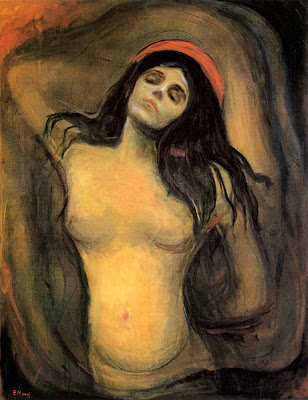
Image 3 also has influences from Edvard Munch: 1.bp.blogspot.com/_Qfmy1iBc5N8/SKdlxixVZJI/AAAAAAAAAxw/yF...
Images 4 and 5 have influences from Arnulf Rainer: www.tate.org.uk/servlet/ViewWork?cgroupid=999999961&w...
www.tate.org.uk/servlet/ViewWork?cgroupid=999999961&w...
Image 1 and 2: watercolours
Image 3: colour photocopy of img2 with oil paint on top
Image 4: colour photocopy of img2 with added photos and chalk pastels
Image 5: chalk pastels
This photo is a tribute to those people who volunteer their time to restore and maintain these old steam locomotives in working condition. In this photo, two men are performing minor maintenance tasks while waiting the two hours or more that it takes to fire this engine up. This engine runs a tourist loop at New Hope Pa. and was out of service in 2014. Hopefully it will be back this year. Parts have to be hand made and there are not many people that know how to repair or operate them anymore.
This year we are lucky and there are more sightings of the various kingfishers from abroad namely, Blue Ear, Black Back, Ruddy and Comm King.
Was looking for more reach for shooting these birds and went surfing on ebay and came across this really attractive deal of the Oly FT 300mm f2.8 lens in mint condition. Always wanted to own such a prime but the weight have put me off over the years. Since this is such a great deal I press the buy now button and been fooling around with the lens over the last couple of days. I love the sharpness, color and bokeh. No regret at all.
My daughter has inherited my 300f4/EM1.2 combo so I am left with my Sony 100-400.
This lens works well with the EM1.0 and 1.2 as well as my aging E5 which has less than 13k shutter count. Love the images from the E5 still. I still have my Little Tuna as well with both the TCs, 50mmf2 and PL14-150 which is still one of my favourite lens .
Looking forward to trying this combo out when the new Oly body is release next year. .
Thank you my friends for popping by.
I really appreciate your visits, comments & favourites.
Wishing all my Flickr friends a beautiful weekend.
Thank you
💓💓💓💓💓
Astana - Capital City of Kazakhstan
The city was renamed into Nursultan in honor of the former President Nursultan Nasarbajew.
A Golden Clockwork of Impermanent Silhouette
What do you see in a sunset?
Metamodernist art by JJFBbennett
The neat, symmetrical rows of the cabin provided a brief sanctuary—a manufactured illusion of control. Beyond the glass, the landscape blurred into a predictable hum of gravity and linear geography, the very architecture we build to mark where the self ends and the raw universe begins.
Then, the acceleration shifted from the tracks to the mind.
The rigid symmetry fractured. Looking out, or perhaps looking inward, I saw the horizon collapse into the golden light. The human form ceased to be a solid permanence and revealed itself as a luminous, intricate lattice—a cosmic mechanism of ticking gears and radiant energy suspended against a bruised and burning sky.
What we call the self is merely a temporary alignment, a fleeting, symmetrical arrangement of molecules and conditioned thought. Like a sunset caught in the teeth of golden cogs, we are fluid, transient, and perpetually dissolving. In this collision of light and shadow, the comforting architecture of the past shattered, leaving no boundary between the observer and the infinite expanse. The illusion of control washed away, replaced by the beautiful, terrifying truth of our own impermanence.
Metamodernism, Art Philosophy, Life Transitions, Digital Surrealism,
Blogger:
www.jjfbbennett.com/2026/07/my-psychological-landscape-sp...
YouTube:
Chinese New Year! In my photographs so far there hasn't been much of an indication of the time of year. Down at the waterfront you couldn't miss it.
Unfortunately, it being the New Year meant that things were shut or otherwise different from normal. Typically the famous Clock Tower at the Kowloon waterfront is lit at night. Not this time...
Another thing you're missing: Right behind us was a small crowd watching the rehearsals for the New Year Parade. I imagine it looked a bit weird; one tourist looking the opposite way entirely.
-
Hong Kong! Again! After the first time not working out so well (mostly due to my condition) me and my best friend Michael returned to do the bits we missed out on and generally have a few different experiences than before.
-
The area that was to become West Palm Beach was settled in the late 1870s and 1880s by a few hundred settlers who called the vicinity "Lake Worth Country." These settlers were a diverse community from different parts of the United States and the world. They included founding families such at the Potters and the Lainharts, who would go on to become leading members of the business community in the fledgling city. The first white settlers in Palm Beach County lived around Lake Worth, then an enclosed freshwater lake, named for Colonel William Jenkins Worth, who had fought in the Second Seminole War in Florida in 1842. Most settlers engaged in the growing of tropical fruits and vegetables for shipment the north via Lake Worth and the Indian River. By 1890, the U.S. Census counted over 200 people settled along Lake Worth in the vicinity of what would become West Palm Beach. The area at this time also boasted a hotel, the "Cocoanut House", a church, and a post office. The city was platted by Henry Flagler as a community to house the servants working in the two grand hotels on the neighboring island of Palm Beach, across Lake Worth in 1893, coinciding with the arrival of the Florida East Coast railroad. Flagler paid two area settlers, Captain Porter and Louie Hillhouse, a combined sum of $45,000 for the original town site, stretching from Clear Lake to Lake Worth.
On November 5, 1894, 78 people met at the "Calaboose" (the first jail and police station located at Clematis St. and Poinsettia, now Dixie Hwy.) and passed the motion to incorporate the Town of West Palm Beach in what was then Dade County (now Miami-Dade County). This made West Palm Beach the first incorporated municipality in Dade County and in South Florida. The town council quickly addressed the building codes and the tents and shanties were replaced by brick, brick veneer, and stone buildings. The city grew steadily during the 1890s and the first two decades of the 20th century, most residents were engaged in the tourist industry and related services or winter vegetable market and tropical fruit trade. In 1909, Palm Beach County was formed by the Florida State Legislature and West Palm Beach became the county seat. In 1916, a new neo-classical courthouse was opened, which has been painstakingly restored back to its original condition, and is now used as the local history museum.
The city grew rapidly in the 1920s as part of the Florida land boom. The population of West Palm Beach quadrupled from 1920 to 1927, and all kinds of businesses and public services grew along with it. Many of the city's landmark structures and preserved neighborhoods were constructed during this period. Originally, Flagler intended for his Florida East Coast Railway to have its terminus in West Palm, but after the area experienced a deep freeze, he chose to extend the railroad to Miami instead.
The land boom was already faltering when city was devastated by the 1928 Okeechobee hurricane. The Depression years of the 1930s were a quiet time for the area, which saw slight population growth and property values lower than during the 1920s. The city only recovered with the onset of World War II, which saw the construction of Palm Beach Air Force Base, which brought thousands of military personnel to the city. The base was vital to the allied war effort, as it provided an excellent training facility and had unparalleled access to North Africa for a North American city. Also during World War II, German U-Boats sank dozens of merchant ships and oil tankers just off the coast of West Palm Beach. Nearby Palm Beach was under black out conditions to minimize night visibility to German U-boats.
The 1950s saw another boom in population, partly due to the return of many soldiers and airmen who had served in the vicinity during the war. Also, the advent of air conditioning encouraged growth, as year-round living in a tropical climate became more acceptable to northerners. West Palm Beach became the one of the nation's fastest growing metropolitan areas during the 1950s; the city's borders spread west of Military Trail and south to Lake Clarke Shores. However, many of the city's residents still lived within a narrow six-block wide strip from the south to north end. The neighborhoods were strictly segregated between White and African-American populations, a legacy that the city still struggles with today. The primary shopping district remained downtown, centered around Clematis Street.
In the 1960s, Palm Beach County's first enclosed shopping mall, the Palm Beach Mall, and an indoor arena were completed. These projects led to a brief revival for the city, but in the 1970s and 1980s crime continued to be a serious issue and suburban sprawl continued to drain resources and business away from the old downtown area. By the early 1990s there were very high vacancy rates downtown, and serious levels of urban blight.
Since the 1990s, developments such as CityPlace and the preservation and renovation of 1920s architecture in the nightlife hub of Clematis Street have seen a downtown resurgence in the entertainment and shopping district. The city has also placed emphasis on neighborhood development and revitalization, in historic districts such as Northwood, Flamingo Park, and El Cid. Some neighborhoods still struggle with blight and crime, as well as lowered property values caused by the Great Recession, which hit the region particularly hard. Since the recovery, multiple new developments have been completed. The Palm Beach Mall, located at the Interstate 95/Palm Beach Lakes Boulevard interchange became abandoned as downtown revitalized - the very mall that initiated the original abandonment of the downtown. The mall was then redeveloped into the Palm Beach Fashion Outlets in February 2014. A station for All Aboard Florida, a high-speed passenger rail service serving Miami, Fort Lauderdale, West Palm Beach, and Orlando, is under construction as of July 2015.
Credit for the data above is given to the following website: