View allAll Photos Tagged ae
Rose is now at [ae] Available in a range of 6 realistic skintones for Catwa, LeLutka, Omega and Classic Avatars. 12 Eyebrow options included.
Face: [ae] Rose Head Applier
Skin: [ae] Body Appliers
Head: Lelutka Cate (Bento)
Body: Maitreya Lara
Eyes: Ikon
Automotor Aes - 11 en viaje de pruebas pasando por el sector de Hospital , para seguir a su destino en la Localidad de Rancagua .
These passenger cars were found mainly on longer distance intrastate passes. AE 51 was air conditioned in 1935, was recoded to BE 51, and then in 1983 was recoded back to AE.
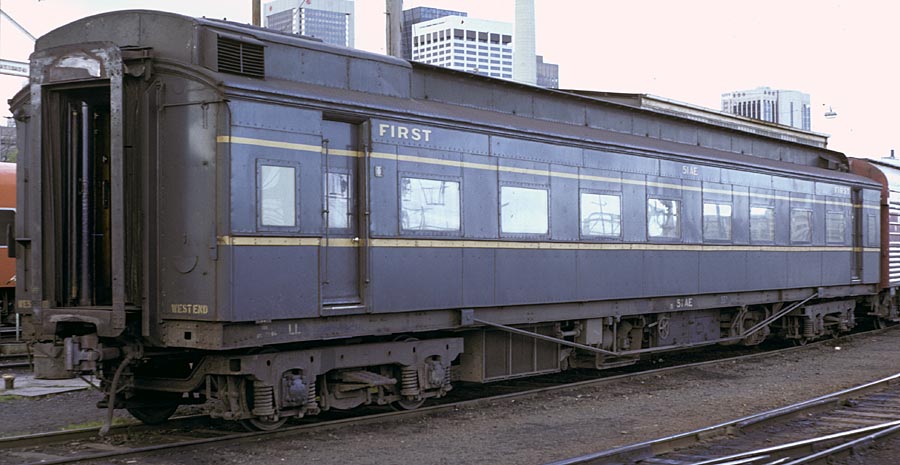
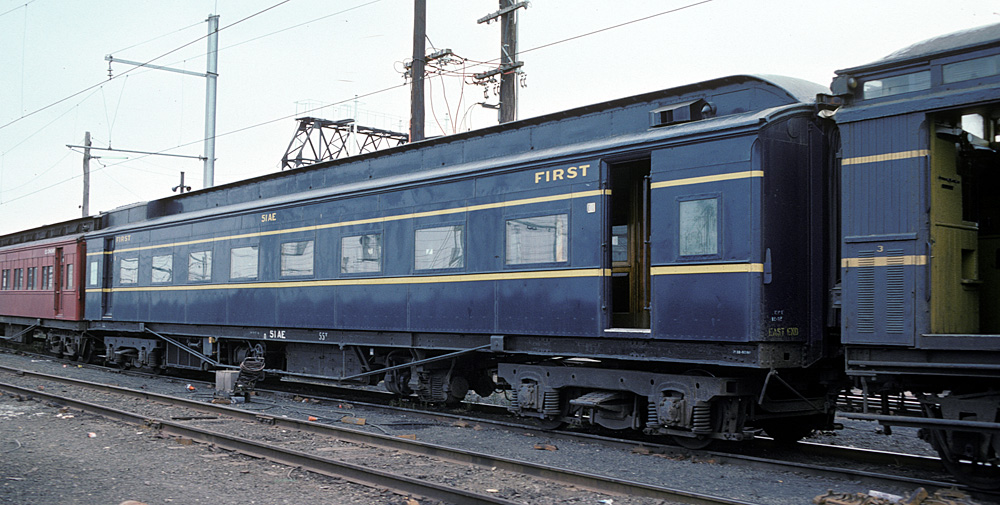
This model was built for Octrainber. It's built in O-scale (1:45), which ends up being 8 studs wide and 63 studs long (coupler to coupler).
The model contains 120 yellow flags. I have a love-hate relationship with flags - I love the thin line they produce and the building challenges they introduce (getting them into the doors was particularly challenging), but I hate the extra weight due to the extra parts needed to incorporate them in a build. Same goes for the modified plate with handles (there are 60 of those in rare dark blue).
I actually had two other carriages planned for Octrainber. One, a dark red AE passenger car with wood panelling, was relying on the arrival of my LUGBULK order. It's now over six months since I placed my order and it still hasn't arrived. My contingency car, an Overland passenger car, was relying on the arrival of a few BrickLink orders made three weeks ago. I received one order last week, one today, and I'm still waiting on the last one (including black phone handsets). Apparently, if you live in Australia, you need to start planning for Octrainber in SHIPtember, which kind of defeats the purpose.
EDIT 3/11/17 (given the recent purity discussion ;-)
Purity Declaration: This is a pure LEGO build apart from the use of bearings for the wheels, vinyl for the yellow lettering and printed labels for the white lettering. The integrity of the model does not rely on any of these non-LEGO elements.
I managed to nab an AE-1 Program & 50mm from craigslist yesterday for $10. I thought, even if I don't like it I can just take purty pictures of it and sell it on ebay for a profit. The guy I bought it from was like "you can still get film for that?"
But this is Josh's AE-1 from that day we adventured Dinkytown.
Canon A-1 | Ektachrome 100GX (expired 2008) X-pro'd | -2/3EV | 50mm f/1.8 | 2010
My little tank of a camera. Canon AE-1 Program with a 50mm 1.4 lens. This thing never fails and I love the way it feels in my hands. The solid sound of the old shutter brings me back to when i first started shooting. I wish more cameras were made like this but at least the magic of film photography is still alive and well. I hope to use my film cameras more in the future.
Basta pasear a lo largo de la línea del tren durante la mañana para encontrarse con sorpresas. La lógica de Fesub es muy fácil, así que el AES-8, que pasó por Concepción a Mercado a las 8.30, se devolvería a las 9 con el último Biotrén mañanero del día. Y aquí está.
Ellie Watercolour
For details please go to:
craf-tscrap.blogspot.ca/2015/04/avery-elle-watercolour.html
Thanks for taking the time!
Kim
Only a selection of images from each photo-shoot are posted here. If you'd like to see additional images from certain models you'll need to subscribe to my Patreon account where I will be publishing content I don't post here. You'll also have the option to make fan requests for more photos, or new photo-shoots, with your favourite models. My subscription rates are very low , staring from only $1/month, so check it out as I could really do with your support. - www.patreon.com/realitydysfunction
Instagram: @realitydysfunction www.instagram.com/realitydysfunction
The Canon AE-1 is a 35 mm single-lens reflex (SLR) film camera that was produced in Japan from 1976 to 1984. It uses an electronically controlled shutter, manual or shutter speed priority, with a speed range of 2 to 1/1000 second plus bulb and flash X-sync of 1/60th second.
The AE-1 is a historically significant SLR, both because it was the first microprocessor-equipped SLR and because of its sales. Backed by a major advertising campaign, the AE-1 sold over one million units, which made it an unprecedented success in the SLR market.
I've wanted to try this model ever since I had the AE-1 Program.
Manufactured by Canon Camera Co. Inc, Tokyo , Japan
Model: 1977, produced between 1976-1984
35mm film SLR camera
Lens: Canon FD 50mm f/1.8 SC Mount: Canon FD breech-lock mount, accepts New FD (FDn) lenses also; filter thread: 52mm, serial no. 5062062
This is the Standard lens, other normal lens Canon FD 50mm f/1.4 SSC. There are many Canon lenses for the camera
Aperture: up to f/22,setting: ring and scale on the lens for manual setting
Focus range: 0.6-10m +inf
DOF pre-view: button on the right of the lens flange
Lens release: press the silver button on the lens and turn to anti-clocwise
Focusing: manual, via Canon standard split image rangefinder with microprism collar
Shutter: cloth focal plane electronic shutter travelled horizontally, speeds: 2-1/1000 +B
setting : dial on left of the top plate
Shutter release: on the top plate, w/ cable release socket, w/ lock lever, L means the shutter locked; when on A, pressing half way, the meter is readable in the finder
Cocking lever: 120° stroke (partial strokes enabled). Ready position at 30°. Canon Winder A also optional for power winding.
Frame counter: counts up, auto-reset, on the top plate
Viewfinder: fixed eye-level SLR pentaprism, Split-image rangefinder encircled by microprism rangefinder at center with a fresnel matte screen. Exposure meter needle, aperture scale, over-exposure warning zone, stopped-down aperture metering needle and battery check indicator, and under-exposure warning LED and Manual control (M) signal are visible
Exposure meter: center-weighted CdS meter with shutter-priority automatic exposure, full-aperture TTL metering
Film speed range: 25-3200 ASA; setting: lift the knurled ring on the winding button and then set. If the speeds dial turns when you setting the ASA, turn it to B or 1000.
Metering range: EV 1-18 at 100 ASA/ISO
Exposure setting: shutter priority auto; set to A, while pressing the AE lock button on the lens turn the aperture ring of the lens; needle pointing along a vertical f-stop scale on the right side of the viewfinder. Shutter release lock lever must be on A.
Manual: TTL stopped-down match needle manual metering
Back-light control switch: silver button, on the right of the lens flange; Exposure compensation range: +1.5 EV.
Exposure preview switch: black button, on the right of the lens flange
Re-wind lever: folding cranck, on right of the top plate
Re-wind release: small knob on the bottom plate
Flash PC socket: Flash sync 1/60, auto-switching
Hot-shoe: the dedicated flas units are Speedlites.
Self-timer: release lock lever sets to S , then release the shutter, the red LED blinks when self timer working; before the shutter release, you can cancel it by pressing the battery check button
Back cover: hinged, remowable, w/ memory slot
Engraving on the bottom plate: Canon, Japan
Tripod socket: ¼”
Strap lugs
Body: metal; Weight: 798g
Battery: 4LR44 6V battery or 4x LR44 1.5 V batteries
Attention: the camera is fully battery dependant
Battery chamber: on front of the camera
Battery check: black button beside the re-wind lever. If the battery is in very good condition, in the viewfinder, metering needle stays below the index near 5.6. If it stays on index, it is in low condition and over the index the battery must be replaced.
On/off switch: shutter release lock lever must be on L
The winder terminals and coupling sockets are in the bottom plate.
serial no. 517 823
Date code: inside the film spool, R 217 means the production year 1977 and month
Canon SLR Date Codes is as to: Bob Atkins
More info: in Canon Museum, in Wikipedia, in Camerapedia, Manual in Butkus org