View allAll Photos Tagged Unique
The Whoreshop! - Unique Sheer Top
Available here: [The Whoreshop Mainstore! maps.secondlife.com/secondlife/Tepati%20Bay/164/161/2000]
Within the Llanafon Fawr church yard is a gravestone unique in Britain as it stated the name of the murdered victim and also the name of his murderer. It reads (in both Welsh and English) - 'John Price Who Was Murdered On The Darren Hill In This Parish By R Lewis April 21 1826'.
Cappadocia ( also Capadocia; Turkish: Kapadokya, Greek: Καππαδοκία Kappadokía, from Ancient Greek: Καππαδοκία, from Old Persian: Katpatuka ) is a historical region in Central Anatolia, largely in the Nevşehir, Kayseri, Kırşehir, Aksaray, and Niğde Provinces in Turkey.
According to Herodotus, in the time of the Ionian Revolt (499 BC), the Cappadocians were reported as occupying a region from Mount Taurus to the vicinity of the Euxine (Black Sea). Cappadocia, in this sense, was bounded in the south by the chain of the Taurus Mountains that separate it from Cilicia, to the east by the upper Euphrates, to the north by Pontus, and to the west by Lycaonia and eastern Galatia.
The name, traditionally used in Christian sources throughout history, continues in use as an international tourism concept to define a region of exceptional natural wonders, in particular characterized by fairy chimneys and a unique historical and cultural heritage
Cappadocia lies in central Anatolia, in the heartland of what is now Turkey. The relief consists of a high plateau over 1000 m in altitude that is pierced by volcanic peaks, with Mount Erciyes (ancient Argaeus) near Kayseri (ancient Caesarea) being the tallest at 3916 m. The boundaries of historical Cappadocia are vague, particularly towards the west. To the south, the Taurus Mountains form the boundary with Cilicia and separate Cappadocia from the Mediterranean Sea. To the west, Cappadocia is bounded by the historical regions of Lycaonia to the southwest, and Galatia to the northwest. The Black Sea coastal ranges separate Cappadocia from Pontus and the Black Sea, while to the east Cappadocia is bounded by the upper Euphrates, before that river bends to the southeast to flow into Mesopotamia, and the Armenian Highland. This results in an area approximately 400 km (250 mi) east–west and 250 km (160 mi) north–south. Due to its inland location and high altitude, Cappadocia has a markedly continental climate, with hot dry summers and cold snowy winters. Rainfall is sparse and the region is largely semi-arid.
A well-preserved town situated on a unique site with outstanding religious heritage features, Le Puy-en-Velay is a haven of peace and a source of spiritual inspiration. Here, visitors can relax and recharge their batteries. Internationally recognised as a starting point for St. James Way (the pilgrimage route to Santiago de Compostela), the town of Le Puy-en-Velay is also a great family holiday location in the centre of the Haute-Loire.
The religious architectural heritage of Le Puy-en-Velay
The sheer majesty of the town is further reinforced by the high cultural quality of its architecture. Be sure to visit the Cathedral of Notre-Dame du Puy, listed as a UNESCO World Heritage site, and the departure for the Way of Saint James pilgrimage route. Inside the cathedral are several interesting works including the statue of the Black Virgin and a 12th century cloister.
Other religious monuments look down over the city. Perched on the Corneille rock is the high statue of Notre-Dame-de-France (the town's protective virgin), and you can't miss the Chapel of Saint Michel d’Aiguilhe towering 82 m (269 ft) high atop "Le Rocher" rock.
An attractive town, Le Puy-en-Velay is also known for its ancient buildings and well preserved architecture. The very stones and paths of the town are a testament to architectural skill. The charming historical streets winding their way up to the cathedral provide a great place to stop off in one of the many restaurants where local specialities are served, including AOC (controlled origin) Le Puy lentils and of course the famous Velay Vervaine, a precious liquor offering digestive benefits (to be consumed in moderation).
Throw on the blinders,
ignore the signs.
Sink even deeper,
swallow the lie.
Seal all the exits,
tie your own hands.
Burn all the bridges,
head in the sand.
How far did you think that you could run?
You crossed the last meridian.
And it's all coming down now,
as the clock ticks by.
Your life is passing by.
Awaken.
- Lamb of God
takeshiyamada.weebly.com/
The Sea Rabbit (Monafluffchus americanus) of Coney Island, Brooklyn, New York – This unique sea-dwelling rabbit, which is actually a close relative of the sea lion, was officially discovered and investigated by Henry Hudson when he first visited this land to colonize the area by order of the Dutch government. It was named New Amsterdam -- today’s New York City. This island was named after he saw the beach covered with strange swimming wild rabbits. The word “Coney Island” means “wild rabbit island” in Dutch (originally Conyne Eylandt, or Konijneneiland in modern Dutch spelling). Sea rabbits were also referred mermaid rabbit, merrabbit, rabbit fish or seal rabbit in the natural history documents in the 17th century. The current conservation status, or risk of extinction, of the sea rabbit is Extinct in the Wild.
This website features two species of sea rabbits, which have been taken care of by Dr. Takeshi Yamada (山田武司) at the Coney Island Sea Rabbit Repopulation Center, which is a part of the Marine biology department of the Coney Island University in Brooklyn, New York. They are – Coney Island Sea Rabbit (Monafluffchus americanus) called “Seara” and Coney Island Tiger-striped Sea Rabbit (Monafluffchus konjinicus) called “Stripes”.
The photographs and videos featured in this website chronicle adventures of the Coney Island sea rabbits and the world as seen by them. This article also documented efforts of Dr. Takeshi Yamada for bringing back the nearly extinct sea rabbits to Coney Island in the City of New York and beyond. Dr. Yamada produced a series of public lectures, workshops, original public live interactive fine art performances and fine art exhibitions about sea rabbits at a variety of occasions and institutions in the City of New York and beyond. Dr. Yamada is an internationally active educator, book author, wildlife conservationist and high profile artist, who lives and works in Brooklyn, New York.
-----------------------------------------------------------------------------------------------
Sea Rabbit
Other Common Names: Coney Island Sea Rabbit, Beach Rabbit, Seal Rabbit, mer-rabbit, merrabbit, Atlantic Sea Rabbit.
Latin Name: Monafluffchus americanus
Origin: Atlantic coast of the United States
Description of the specimen: In the early 17th century’s European fur craze drove the fleet of Dutch ships to the eastern costal area of America. Then Holland was the center of the world just like the Italy was in the previous century. New York City was once called New Amsterdam when Dutch merchants landed and established colonies. Among them, Henry Hudson is probably the most recognized individual in the history of New York City today. “This small island is inhabited by two major creatures which we do not have in our homeland. The one creature is a large arthropod made of three body segments: the frontal segment resembles a horseshoe, the middle segment resembles a spiny crab and its tail resembles a sharp sword. Although they gather beaches here in great numbers, they are not edible due to their extremely offensive odor. Another creature which is abundant here, has the head of wild rabbit. This animal of great swimming ability has frontal legs resemble the webbed feet of a duck. The bottom half of the body resembles that of a seal. This docile rabbit of the sea is easy to catch as it does not fear people. The larger male sea rabbits control harems of 20 to 25 females. The meat of the sea rabbit is very tender and tasty.” This is what Hadson wrote in his personal journal in 1609 about the horseshoe crab and the sea rabbit in today’s Coney Island area of Brooklyn, New York. Sadly, just like the Dodo bird and the Thylacine, the sea rabbit was driven to extinction by the European settlers’ greed. When Dutch merchants and traders arrived here, sea rabbits were one of the first animals they hunted down to bring their furs to homeland to satisfy the fur craze of the time. To increase the shipment volume of furs of sea rabbit and beavers from New Amsterdam, Dutch merchants also started using wampum (beads made of special clam shells) as the first official currency of this country.
At the North Eastern shores of the United States, two species of sea rabbits were commonly found. They are Coney Island Sea Rabbit (Monafluffchus americanus) and Coney Island Tiger-striped Sea Rabbit (Monafluffchus konjinicus). Sadly, due to their over harvesting in the previous centuries, their conservation status became “Extinct in the Wild” (ET) in the Red List Endangered species by the International Union for Conservation of Nature (IUCN). Currently, these sea rabbits are only found at breeding centers at selected zoos and universities such as Coney Island Aquarium and Coney Island University in Brooklyn, New York. The one shown in this photograph was named "Seara" and has been cared by Dr. Takeshi Yamada at Coney Island University.
The sea rabbit is one of the families of the Pinniped order. Pinnipeds (from Latin penna = flat and pes/pedis = foot) are sea-mammals: they are homeothermic (i.e having high and regulated inner temperature), lung-breathing (i.e dependant on atmospheric oxygen) animals having come back to semi aquatic life. As soon as they arrive ashore, females are caught by the nearest adult male. Males can maintain harems of about 20 females on average. Several hours to several days after arriving ashore, pregnant females give birth to eight to ten pups with a dark brown fur. As soon as birth occurs, the mother’s special smell and calls help her pups bond specifically to her. The mother stays ashore with her pup for about one week during which the pup gains weight. During the first week spent with her newborn, the mother becomes receptive. She will be impregnated by the bull, which control the harem. Implantation of the embryo will occur 3 months later, in March-April. During the reproductive period, the best males copulate with several tens females. To do so, males have to stay ashore without feeding in order to keep their territory and their harem. In mid-January, when the last females have been fecundated, males leave at sea to feed. Some of them will come back later in March-April for the moult. The other ones will stay at sea and will come back on Coney Island only in next November. After fecundation, the mother goes at sea for her first meal. At sea, mothers feed on clams, crabs, shrimps, fish (herring, anchovy, Pollock, capelin etc.) and squids. When she is back, the mother recovers her pups at the beach she left them. Suckling occurs after auditive and olfactory recognition had occured. In March-April, the dark brown fur is totally replaced by an adult-like light brownish grey fur during the moult that lasts 1-2 months. This new fur is composed by 2 layers. Externally, the guard fur is composed by flat hairs that recover themselves when wet. By doing so, they make a water-proof barrier for the under fur. The underfur retains air when the seal is dry. Because of isolating properties of the air, the underfur is the insulating system of the fur. In March-April, the fur of adults is partially replaced. First reproduction occurs at 1-yr old in females. Males are physiologically matures at 1 year old but socially matures at +2 years old.
NOTE: The name of Coney Island is commonly thought to be derived from the Dutch Konijn Eylandt or Rabbit Island as apparently the 17th century European settlers noted many rabbits running amuck on the island.
www.takeshiyamada.weebly.com/performances.html
www.takeshiyamada.weebly.com/sea-rabbit-center.html
===========================================
www.flickr.com/photos/searabbits23/
www.flickr.com/photos/searabbit22
www.flickr.com/photos/searabbit021/
www.flickr.com/photos/searabbit20
www.flickr.com/photos/searabbit19
www.flickr.com/photos/searabbit18
www.flickr.com/photos/searabbit17
www.flickr.com/photos/searabbit16
www.flickr.com/photos/searabbit15
www.flickr.com/photos/searabbit14
www.flickr.com/photos/searabbit13
www.flickr.com/photos/searabbit12
www.flickr.com/photos/searabbit11
www.flickr.com/photos/searabbit10
www.flickr.com/photos/searabbit9
www.flickr.com/photos/searabbit8
www.flickr.com/photos/searabbit7
www.flickr.com/photos/searabbit6
www.flickr.com/photos/searabbit5
www.flickr.com/photos/searabbit4
www.flickr.com/photos/searabbit3
www.flickr.com/photos/searabbit2
www.flickr.com/photos/searabbit1
www.flickr.com/photos/diningwithsearabbits03
www.flickr.com/photos/diningwithsearabbits02
www.flickr.com/photos/diningwithsearabbits01
www.flickr.com/photos/yamadaimmortalized2/
www.flickr.com/photos/takeshiyamadaimmortalized/
www.flickr.com/photos/yamadabellhouse2014/
www.flickr.com/photos/museumofworldwonders3/
www.flickr.com/photos/museumofworldwonders2
www.flickr.com/photos/museumofworldwonders/
www.flickr.com/photos/takeshiyamadapaintings/
===========================================
For any questions, please email contact Takeshi Yamada, Art & Rogue Taxidermy, Museum of World Wonders, official website. www.takeshiyamada.weebly.com/
================================================
For any questions, please contact Dr. Takeshi Yamada. His email address is posted in the chapter page (the last page or the first page).
(Updated April 7, 2015)
Lots of things are described as 'unique' or even 'very unique' (as opposed to 'slightly unique'?) but very few things are worthy of the description. But we think this bus suits the bill as it was the only Atkinson double decker ever to grace our roads.
Atkinson, based in Walton-le-Dale near Preston, was a respected lorry manufacturer. But in the 1950s it branched out into bus manufacture, with its 'Alpha' single deck type using the popular and well-regarded engines made by L. Gardner & Sons of Patricroft, Salford. It sold in fairly small numbers on and off through the 1950s and a few were made in the 1960s - the biggest customers were north west companies Lancashire United and the North Western Road Car Company.
One of the Alpha's customers was the delightfully-named Stalybridge, Hyde, Mossley and Dukinfield Joint Board - or 'SHMD' for short. This little group of towns nestling in the Pennine foothills liked Gardner engines and chose the Atkinson single decker several times in the mid 1950s. The next logical step was a double decker - and Atkinson duly obliged with this bus, number 70 delivered in 1955. One might have thought that Atkinson might have looked for other orders, but either they didn't try very hard or were unsuccessful - so 70 was the first and last one to hit the roads of Britain.
Its unusual nature extended to the coachwork - usual supplier Northern Counties provided bodywork with a central entrance, which was briefly in vogue at SHMD. The striking colour scheme was bottle green with cream and pale green lining, plus a silver roof: this was replaced in later life with a much plainer mid-green livery.
For a one-off, 70 led a full life of fifteen years in service. After withdrawal its historivc nature was recognised and it still exists today, painted in its later livery and on display at the Museum of Transport Greater Manchester. If you'd like to know more about the Museum of Transport and its collection of vintage buses, go to www.gmts.co.uk.
Construction of Broken Hill's Technical College commenced in 1900. Unveiled on the 1st of May 1901, it served as a Technical College, Art Gallery, and Museum. In 1903 George McCulloch, of Broken Hill Mining Company's "Syndicate of Seven", donated a number of original British works which became the nucleus of the Broken Hill Gallery collection. The gallery was opened on the 11th of October 1904 by Lord Northcote, Governer General of Australia. In 1916 the Principal of the Technical College, Mr P C Riddell saw the benefit of establishing partnerships with Sydney galleries and museums. This led in 1918 to the arrival of the first of many exhibitions on loan from the Sydney Technological Museum, the British Museum, and other sources. The Art Gallery's collection grew through the purchase of works by prominent Australian artists such as Norman Lindsay. The art collection was moved to the new Civic Centre in the late 1960s and the Museum was closed on the 13th of November 1987. The Library was established on the site of the Museum in 1991.
The Museum's Bird Collection:
In 1932 a collection of 42 birds was established at the Museum, most of which were donated by Mr W D K Magillivray, one of the founders of the Barrier Field Naturalists' Club. A co-founder of this club in 1920 was Albert Morris, who remained the club secretary until his death in 1939. Albert Morris advised planting a belt of vegetation around Broken Hill to reduce the impact of dust storms in the city, and in pursuit of this goal collected about 7000 plan specimens from far west New South Wales. Another prominent member of the Barrier Naturalists' Club was Sir Maurice Mawby, noted for his contribution to Australian mining, and for his achievements as a student of the Broken Hill Technical College. The birds remaining at the College are a part of the original display.
Source: Broken Hill Tafe.
Trekking in Nepal is part of adventure trekking tourism and Adventure Trekking in Nepal and Trekking in Himalaya. Natures to renew one’s own self regard, to relive oneself, to realize Nepal beauty, to interact with its generous, friendly peoples are highlights of Trekking in Nepal. Trekking is one long term activity that draws repeat visitors. So, Nepal is final purpose for trekking. Offers numerous options walking excursion to meet snowy peaks, their foot hills, valleys but however there is amazing for each who hope Trek in Nepal hill, mountain area. Typical trekking and Hiking in Nepal as unique combination of natural glory, spectacular trekking trips to hard climbing and Everest Base Camp Trek is most rewarding way to skill Nepal natural beautification and cultural array is to walking, trekking, width and the height of country. Trekking is important of Travel Nepal for Trekking Tours in Himalaya on description Nepal Tour of large range of ecological features for Nepal Travel Holiday. The country nurtures a variety of flora and scenery. Addition to natural atmosphere is rich Himalayan culture. Many of visitor trek to different part of Nepal every year to experience its rustic charm, nature and culture. Most treks through areas between 1000 to 5185m, though some popular parts reach over 5648 meters. Trekking is not climbing, while the climb of Himalayan peaks and enjoy walking Holiday in Nepal and Trekking Tours Nepal might be an attraction for travelers. Every travelers knows for the Trekking in Nepal from all over the words an inspiring knowledge. Attraction for your Travel Holiday in Nepal of beauty and its excellent culture.
Nepal Trekking heartily welcome your Travel Holiday in Nepal. We are honest your travel and Travel and Trekking in Nepal with us from our try to be fully satisfy client in our country and we anticipate good suggestion from you for our agency always. Client gratify is our motto and continually faithful frequently in our service when you are in any types of travel activities in Nepal. We presume to positives feedback in future and increase Nepal travelers with us every year. All the crews from our agency in Nepal are expert in Travel and Tourism in Nepal, as well as trekking and Peak Climbing in Nepal. Customer’s security, safety, relaxed and enjoyment always in high priority. Adventure Guided Walking make sure that every knowledge with us how to satisfy and remarkable Holiday in Nepal. Hope you confident to make trips inquiries and our company quick responds to you make joyful Holiday Travel.
We organize Holiday Tours in Nepalas well as adventure trekking in himalaya, luxury Trek in Nepal well skill in travel trekking related field similar to Everest Trekking, Annapurna Trekking and Langtang Trekking related in travel and tourism industry based on own experience. treks adventure in Nepal always welcome to you in Nepal for Trekking Tour in Nepal from surrounding countries for adventure Hiking Holiday Tour with us from you, family, friend, research group, officially Nepal visitors or individual travelers in Nepal Adventure Tours in Himalaya for Nepal holiday to see how you could benefit from Nepal holiday by letting us our serving of your holiday travel in Nepal, trek tour Nepal and Trek in Nepal. We have countless opportunity for travel, Trekking in Nepal focus eco Tourism in Nepal opportunities to meet with local people in remote areas of Nepal Trekking to understand their invite travelers for Tours Holiday in Nepal from different country for tour in Nepal for Trekking Holiday in Nepal in countryside for Adventure Tours Nepal in remotes area of Nepal Treks increase tourism. Hiking in Nepal, Holiday Travel, Trekking in Himalaya, Adventure Activities in Nepal and Himalaya Adventure Trekking, Expedition in Nepal, Adventure Himalaya, Adventure Holiday Trekking are equally way will make fully satisfaction is our motto. We deeply sincerely to consideration how client delighted from Nepal Travel by our trekking agency in Nepal fully travel information in Nepal for walking trekking in Nepal acclimatize for high pass trekking. Travelers happy is positives feedback for us in future, Nepal travelers who exceptionally interested tours Walking in Nepal, Visit in Nepal to explore Adventure Nepal Himalaya. We arrange trek to difficult part of Nepal which is class of word Adventure Trekking it is in world hard trekking route in Nepal that we well organize. Grateful your budget Tours in Nepal and Travel Holiday, Nepal Trekking Tours, trekking adventure with us in Nepal, Cheap Holiday Travel. Great Nepal traveling and Trek Nepal to mountain pass, stunning scenery is best travel activities in Nepal. Trekkin in Himalaya greatly a distinctive cultural treks knowledge with Nepal Travel Holiday. Further interested to Travel Holiday walking and we highly provided best service of Holiday Tours Package in Nepal for your vacation.
Annapurna trekking region of Nepal enjoy with magnificent view close to highest and impressive mountain range in the world. Day exploration in Pokhara and morning morning flight to Jomsom or drive to Besishisahar from Kathmandu begin of trek. High destination, Muktinath 3800m and in generally highest point of whole Annapurna is 5416m. Thorangla la is situated in Buddhist Monastery, an eternal flame, and Hindus Vishnu Tempe of Juwala Mai making it a pilgrimage site for both Hindus and Buddhists and Muktinath is on the way down from popular trekking it call Thorang la pass which is incredible view in Annapurna region. Whenever possible we will arrive at lodging mid-afternoon, which should leave plenty time for explore the local villages, enjoy the hot springs at Tatopani, continue to Ghorepani where there is forever the possibility of sunrise hike to Poon Hill for spectacular views of Dhaulagiri, Fishtail, Nilgiri and the Annapurna Himalaya range. Continue on to Birethanti finally between with the Baglung road where we will catch cab to Pokhara, next day drive or fly to Kathmandu.
region, although fairly effortless compare to some of other trek, takes you high along trails to Tengboche monastery Everest Solu Khumbu is the district south and west of Mount Everest. It is inhabited by sherpa, cultural group that has achieve fame because of the develop of its men on climbing expeditions. Khumbu is the name of the northern half of this region above Namche, includes highest mountain (Mt. Everest 8848m.) in the world. Khumbu is in part of Sagarmatha National Park. This is a short trek but very scenic trek offers really superb view of the world's highest peaks, including Mt. Everest, Mt. Lhotse, Mt. Thamserku, Mt. Amadablam and other many snowy peaks. Fly from Kathmandu to Lukla it is in the Khumbu region and trek up to Namche Bazzar, Tyangboche and into the Khumjung village, a very nice settlement of Sherpas people. This trek introduction to Everest and Sherpa culture with great mountain views, a very popular destination for first time trekkers in Nepal. Justifiably well-known world uppermost mountain (8848m.) and also for its Sherpa villages and monasteries. Few days trek from Lukla on the highland, takes you to the entry to Sagarmatha National Park and town of Namche Bazaar is entrance of Everest Trek. Environment of the towering Himalayas is a very delicate eco-system that is effortlessly put out of balance.
Langtang trekking region mixture of three beautiful trek taking us straight into some of the wildest and most pretty areas of Nepal. Starting from the lovely hill town of Syabrubensi our trek winds during gorgeous rhododendron and conifer forests throughout the Langtang National Park on the way to the higher slopes. Leads up to the high alpine yak pastures, glaciers and moraines around Kyanging. Along this route you will have an chance to cross the Ganja La Pass if possible from Langtang Valley. Trail enters the rhododendron (National flower of Nepal) forest and climbs up to alpine yak pastures at Ngegang (4404m). From Ngegang we make a climb of Ganja La Pass (5122m). We start southwest, sliding past Gekye Gompa to reach Tarkeghyang otherwise we take a detour and another unique features of trekking past, the holy lakes of Gosainkund (4300 m.) cross into Helambu via Laurebina to Ghopte (3430 m) and further to Trakegyang. Northern parts of the area mostly fall within the boundaries of Langtang National park.
Peak Climbing in Nepal is great view of Himalayas and most various geological regions in asia. Climbing of peaks in Nepal is restricted under the rules of Nepal Mountaineering Association. Details information and application for climbing permits are available through Acute Trekking. First peak climbing in Nepal by Tenzing Norgey Sherpa and Sir Edmund Hilary on May 29, 1953 to Mt. Everest. Trekking Agency in Nepal necessary member from Nepal Mountaineering Association. Our agency will arrange equipment, guides, high altitude porters, food and all necessary gears for climbing in Nepal. Although for some peaks, you need to contribute additional time, exertion owing to improved elevation and complexity. Climbing peaks is next step beyond simply trekking and basic mountaineering course over snow line with ice axe, crampons, ropes etc under administration and coaching from climbing guide, who have substantial mountaineering knowledge and for your climbing in mountain.
Everest Base Camp Trek well noon its spectacular mountain peaks and the devotion and openness of its inhabitants, the Everest region is one of the most popular destination for tourists in Nepal. While numerous of the routes through the mountains are difficult, there are plenty places to rest and enjoy a meal along the way. Additionally, don't worry about receiving lost. Just ask a local the way to the next village on your route, and they will direct you. Most Sherpas under the age of fifty can at least understand basic English, and many speak it fluently.
Annapurna Base Camp Trek is the major peaks of the western portion of the great Annapurna Himalaya, Annapurna South, Fang, Annapurna, Ganagapurna, Annapurna 3 and Machhapuchhare and including Annapurna first 8091 meters are arranged almost exactly in a circle about 10 miles in diameter with a deep glacier enclosed field at the center. From this glacier basin, known as the Annapurna base camp trek (Annapurna sanctuary trek), the Modi Khola way south in a narrow ravine fully 12 thousand ft. deep. Further south, the ravine opens up into a wide and fruitful valley, the domain of the Gurungs. The center and upper portions of Modi Khola offer some of the best short routes for trekking in Nepal and the valley is situated so that these treks can be easily joint with treks into the Kali Gandaki (Kali Gandaki is name of the river in Nepal) region to the west.
Upper Mustang Trekking name Make an escapade beginning from world deepest gorge Kaligandaki valley into world's highest area of Lo-Mangthang valley that passes through an almost tree-less barren landscape, a steep stony trail up and down hill and panorama views of high Annapurna Himalaya including Nilgiri, Annapurna, Dhaulagiri and numerous other peaks. The trek passes through high peaks, passes, glaciers, and alpine valleys. The thousands years of seclusion has kept the society, lifestyle and heritage remain unaffected for centuries and to this date.
Helicopter Tour in Nepal having high mountains and wonderful landscape of countryside but is effortlessly reachable by land transport, is known as helicopter tours country. Helicopter services industry in Nepal is now well well-known with many types and categories of helicopters for the fly to different of Nepal. The pilots are very knowledgeable expert with 1000 of flying hours knowledge in Nepal. We have service for helicopter is outstanding reputations and established records for reliable emergency and rescue flight too. Here we would like to offer some of amazing helicopter tour in Himalaya country of Nepal. Further more details information about Nepal tour itinerary for helicopter tour in different part of Nepal contact us without hesitation.
Kathmandu Pokhra Tour is an exclusive tour package specially designed for all level travelers. Kathmandu Pokhara tour package is effortless tour alternative for Nepal visitors. This tour package vacation the historically significant and ethnically rich capital (Kathmandu ) of Nepal and the most stunning city of world by the nature, Pokhara. Mountain museum and world peace stupa are another charming of Pokhara tour. Pokhara is the center of escapade tourism in Nepal. Package tour to Kathmandu Pokhara is design to discover highlighted areas of Kathmandu and Pokhara valley. Nepal is the country which is socially and geographically different that’s why we powerfully recommend you discover Nepal to visit once in life time. It is hard to explore all Nepal in one Nepal tours trip in this way we design this trip to show you the highlights of Nepal especially in Kathmandu and Pokhara.
Adventure trekking in the southern part of the asia continent there lays a tiny rectangular kingdom squeezed between two hugely populated countries, China to the north and India to the south, this country is Nepal a world of its own. Adventure trekking is a type of tourism, involving exploration or travel to remote, exotic and possibly hostile areas. Adventure trekking in Nepal is rapidly growing in popularity, as tourists seek different kinds of vacations. The land of contrast is presumably the exact way to define the scenery of Nepal for you will find maximum world highest peaks high high up above the clouds determined for the gods above. Straight, active and attractive learning experience adventure trekking in Nepal that engross the whole person and have real adventure. Mt. Everest, Kanchenjunga, Daulagiri, and Annapurna and many more are there for the offering for mountain-lovers, adventurers and travelers.
Trekking in Nepal - Nepal Trekking - Tea House Trekking - Lodge Trekking - Kathmandu Pokhara Tour - High Pass Trekking - Luxury Trekking in Nepal - Luxury Tour in Nepal - Helicopter Tour in Nepal - Nepal Helicopter Tour - Annapurna Trekking - Annapurna Base Camp Trek - Annapurna Sanctuary Trek - Annapurna Panirama Trekking - Ghorepani Trekking - Jomsom Muktinath Trekking - Annapurna Circuit Trekking - Annapurna Round Trekking - Tilicho Mesokanto Trekking - Tilicho Lake Mesokanto Pass Trekking - Upper Mustang Trekking - Everest Trekking - Everest Base Camp Trek - Everest Panorama Trekking - Gokyo Trekking - Gokyo Everest Trekking - Renjola Pass Trekking - Kongmala Pass Trekking - Three Pass Trekking - Jiri Everest Trekking - Langtang Trekking - Langtang Valley Trekking - Gosaikunda Trekking - Helambu Trekking - Tamang Heritage Trekking - Chisapani Nagarkot Trekking - Kathmandu Valley Cultural Trekking - Langtang Gosaikunda Helambu Trekking - Ganjala Pass Trekking - Peak Climbing in Nepal - Nepal Peak Climbing - High Pass Trekking - Nepal For All Season - Package Tour in Nepal - Island Peak Climbing - Mera Peak Climbing - Pisang Peak Climbing - Adventure Trekking - Adventures Trekking - Mustang Trekking - Upper Mustang Trek - Lower Mustang Trekking - Seasonal Package Trekking Tours in Nepal - Annapurna Trekking Region - Annapurna Base Camp Trek - Everest Trekking Region - Gokyo Trekking - Langtang Trekking Region - Tea House Trek or Lodge Trek - Three Pass Trekking or Everest High Pass Trekking
Unique fetish store on South Broadway. Their window displays are always interesting. :)
© Web-Betty: digital heart, analog soul
Unique collection of quote expressing your feeling.
You can download and share image about inspirational quotes of life .
Below are some unique quote you can read :
Inspirational quotes on social media aren’t really a problem an author – and good buddy of Oprah –...
A Heisler three-truck steam locomotive sits next to the Mount Rainier Railroad and Logging Museum in Elbe, Wash. The first Heislers were built by the Dunkirk Engineering Company of Dunkirk, N.Y., at the time producer of their own design of geared locomotive (called the Dunkirk), of which the Heisler was the better locomotive. In 1894 the Stearns Manufacturing Company of Erie, Pa., started to produce Heislers, and did so until 1904. Reorganized as the Heisler Locomotive Works in 1907, the company produced locomotives of the Heisler design until 1941. #10 was built in 1912 by the Heisler Locomotive Works for the Blue Jay Lumber Co, of Raleigh, WV. Named the "P. J. Lynch”, it was the first three-truck Heisler and the only 78-ton Heisler ever built. The "P. J. Lynch" worked for a number of loggers in West Virginia until sold by a dealer in 1922 to the Standard Lumber Co., of Standard, Calif., where it was numbered #10. After Standard Lumber became Pickering Lumber in 1926, #10 worked for nearly another forty years before retiring in 1963. The engine was then shipped with two other Pickering locomotives to a scrap yard in Stockton, Calif., where it sat until 1966. At that time, Gus Peterson of Klamath, Calif., was building a tourist railroad on part of his timber holdings in the California Redwoods. He moved #10 to Klamath and, by late 1967, the engine was steaming on the Klamath & Hoppow Valley Railroad. An oil burner, #10 weighs 156,000 lbs. With 40” drivers and 18” x 15” cylinders, it operated at a boiler pressure of 180 psi delivering 30,000 pounds tractive effort. In 1982, #10 was bought by the Mount Rainier Scenic Railroad (MRSR). Mount Rainier Railroad and Logging Museum, 54124 Mountain Hwy E, Elbe, Wash. 15 June 2022
Little plantlets are born of the leaf-notches on the fringes of the leaves of mother plant… a natural display of cloning.
My experience:
I found an amazing tendency and survival strategy, where even a plantlet grown out of a leaf, gives birth to still smaller plantlets(coming in my latter photographs). I observed this in the beginning of winter season- a possible reproductive strategy of this species in the forthcoming dry and cold climate.
I confess that many things I didn’t know before I cultivated some serious hobbies like travelling, gardening, and of course photography. My passionate hobbies brought me to such a close proximity of so many things in the nature for making me understand their hidden mysteries and natural laws behind their beauties and success…that none of my text books and college laboratories had ever provided.
A little note on bryophyllum : An unique example of cloning in nature
Bryophyllum is a plant genus of the Crassulaceae family that has sometimes been included within the genus Kalanchoe. There are about forty species in the group, native originally of South Africa, Madagascar, and possibly Asia. The plants are notable for their interesting vegetative reproduction, a strategic adaptive growing of new plantlets on the fringes of the leaves; these eventually drop off and root. These plantlets arise from mitosis of meristematic-type of tissues in the notches of the leaves. This might be one of the finest example of cloning in nature.
Source: [en.wikipedia.org/wiki/Bryophyllum] + Others
[ NB: Need a little break before resuming to my USA trip.]
The "Labor Secretary" Four: A Historic 1961 First Day Cover
Historical Significance:
This First Day Cover is a remarkable piece of American political and labor history. While it commemorates the 50th Anniversary of the First Successful Workmen’s Compensation Legislation, it is uniquely significant for bearing the autographs of four giants of 20th-century labor policy—all of whom served as the U.S. Secretary of Labor.
John T. Dunlop (1914–2003): (Top Left) A legendary labor economist and Harvard professor. In 1961, he was a key advisor to the Kennedy administration. He later served as the 14th U.S. Secretary of Labor (1975–1976) under President Gerald Ford.
W. J. Usery Jr. (1923–2016): (Top Right) "Bill" Usery was a union leader appointed by JFK to the Missile Sites Labor Commission in 1961. He became the 15th U.S. Secretary of Labor (1976–1977), also under President Ford.
George P. Shultz (1920–2021): (Bottom Left, signed "Geo. P. Shultz") A renowned professor and labor expert in 1961. He later served as the 11th U.S. Secretary of Labor (1969–1970) under President Nixon, before famously serving as Secretary of the Treasury and Secretary of State.
W. Willard Wirtz (1912–2010): (Bottom Right) In 1961, he was the U.S. Under Secretary of Labor. He became the 10th U.S. Secretary of Labor (1962–1969), serving through the remainder of the Kennedy and Johnson administrations.
Artist Spotlight: Henry Day Lowry (c. 1891–1976)
The cachet was designed by Henry Day Lowry (who signed as "Day Lowry"), a prolific illustrator affiliated with the Everett Waddey Company of Richmond, VA. A WWI aviator and alumnus of the New York Art Students League, Lowry brought a disciplined, lithographic precision to his work. His "Aristocrat" cachet line is celebrated for its professional, document-style aesthetic, providing the perfect canvas for this historic gathering of signatures.
Day Lowry a/k/a H. Day Lowry or Henry Day Lowry, was affiliated with the Everett Waddey Company (lithographers) of Richmond, VA. His first day cover artwork is defined in "Aristocrat" cachets. The 1940 Famous American series cachets were designed by Henry Day Lowry, a World War I aviator, who studied at the New York Art Student's League and who was at that a designing artist for the Everett Waddey Company, a Richmond printing house. My guess is that he is perceived more as an "illustrator" than an "artist," which may explain why there isn't more known about him. Apparently his work is not collected as "art." My research tells me that he died in 1976. Henry Day Lowry Metropolitan Engraving Company (1922).
Henry Day Lowry - Born in Lexington, Kentucky on 8 Oct 1891 to Oscar Eugene Lowry and Ada Virginia Day. Henry Day Lowry had 2 children. He passed away on 10 Dec 1976 in Richmond, Virginia, USA.
Technical Details:
Stamp: 4¢ Workmen's Compensation Scott (#1186)
Postmark: Sept 4, 1961 - Milwaukee, WI
Condition: 10/10; signatures verified against archival PSA examples.
Rarity: Likely unique due to the specific combination of four future Secretaries on a topically relevant 1961 issue.
This particular FDC illustration cancel is taken from the Official State Seal of Wisconsin, which was used for the Milwaukee first-day cancellation to honor the state's pioneering role in labor legislation. This cover features a Special Pictorial Slogan Cancel that incorporates the full Wisconsin coat of arms.
Symbolism of the Cancel Elements
Each of the icons represents a key pillar of Wisconsin’s identity and its industrial heritage:
Forward (Top): This is the official state motto of Wisconsin, representing the state's progressive spirit and its drive for leadership in social reforms like Workmen's Compensation.
Plow (Top Left): This represents Agriculture, the backbone of the state's early economy.
Crossed Pick and Shovel (Top Right): These symbolize Mining, specifically the lead and iron industries that were vital at the time of the state's founding.
Arm and Hammer (Bottom Left): This represents Manufacturing and the physical labor of the workforce—a perfect tie-in for a stamp honoring Labor Secretary signatories.
Anchor (Bottom Right): This symbolizes Navigation and Shipping, acknowledging Wisconsin's critical ports on the Great Lakes and the Mississippi River.
Why Milwaukee?
Milwaukee was chosen as the only First Day of Issue city because Wisconsin passed the first successful and constitutional workmen’s compensation law in the United States in 1911.
Calligraphy for the campaign to launch of the first licensed shopping mall premium class in Kazakhstan, which brings together such brands as Chanel, Louis Vuitton, Prada, YSL and many other. The phrase in the three languages, combining a type and calligraphy is used in all materials of the campaign.
Client: Capital Partners
Agency: McCann Erickson Kazakhstan
Creative Director: Sergey Radionov
Art Director: Inna Plavskaya
Photographer: Andre Pinces
Unique one of a kind beaded bracelet, bright, colorful and fit for Spring time.
As all my jewelry, this bracelet is unique and outstanding; assuring you will be the center of attention anywhere you travel.
The shape and the colors of this bracelet was inspired by "Farbstudie Quadrate" by Wassily Kandinsky.
ww1.prweb.com/prfiles/2012/01/31/9153217/Farbstudie%20Qua...
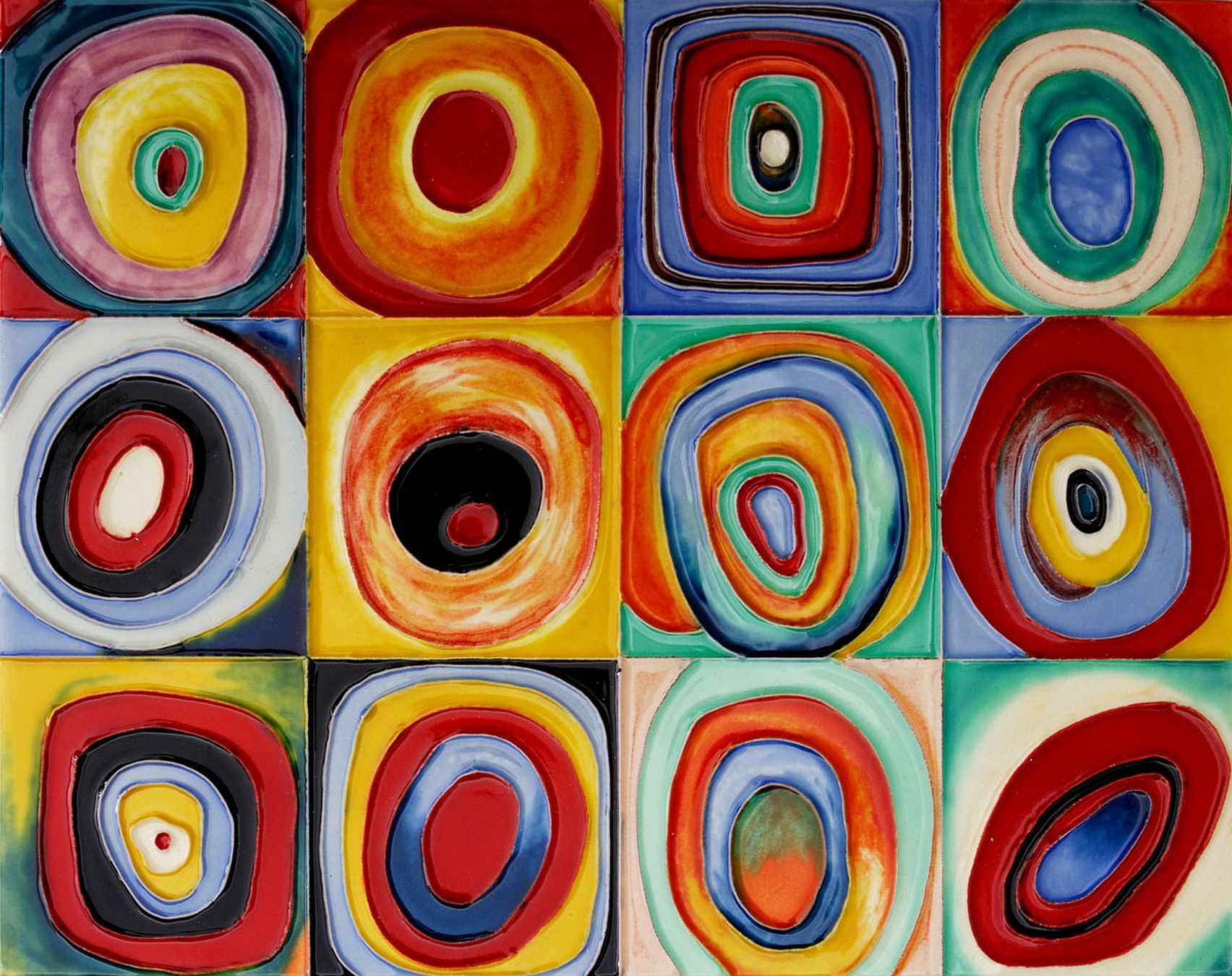
This bracelet has been created for the Etsy Beadweaver's (EBWC) April Challenge. The theme of this month's challenge is "INSPIRED BY KANDINSKY ".
Please visit the EBW blog etsy-beadweavers.blogspot.com between the 9th and 15th to view all entries and vote for your favorite piece.
This unique black leather motorcycle suit is an exact copy of that worn by the Dutch police, except for the full zip and the colour (they now wear blue pants and yellow jackets...).
If you like sex with cops, this is the suit to present yourself in :)
- made to measure by RoB in Amsterdam, using superior leather (thick yet supple, smooth and shiny)
- black with reflective stripes
- consist of 3 pieces that can be zipped together or worn separately: pants, vest and jacket
- jacket has soft safety pads at shoulders & elbows; pants have padded hips & knees
- pants are equipped with full zip with 2 pullers; extra: pen holder on each side
- vest is tight-fitting but body length can be adjusted
- size: 48 European (according to label)
- this suit fits tightly if your waist is 31/32; the jacket can be comfortably worn with an extra sweater underneath
- price: 1450 euros for the set (accessories not included but we can talk about that)
Architecturally unique, this Jami mosque is distinct in its layout as well as in its materials. It is the first mosque in this region to be constructed according to the principles of Mughal courtyard architecture. Atypical of mosques, this building is elongated along the east-west rather than the usual north-south axis. Red brick is utilized rather than the pink sandstone and marble more commonly associated with Mughal buildings. Quite likely, the decision to use brick was made out of practical concerns of cost and availability, since Thatta does not have much stone. The surfaces are decorated with glazed tiles.
The mosque was commissioned by the Mughal emperor Shah Jahan as a gesture of gratitude to the people of Thatta for sheltering him during his youth after his father Emperor Jahangir banished him from Delhi. Several Persian inscriptions on site date the foundation of the mosque to 1644 and its completion to 1647. The floor was paved with stone in 1657. Repair work done during the seventies by the Endowment (Awqaf) Department added a garden to the eastern side.
More details here: