View allAll Photos Tagged Testbed
As the 1960s dawned, the US Marine Corps needed a replacement for the Sikorsky HR2S (CH-37) Mojave that served as the USMC's primary heavy-lift helicopter. In 1962, the USMC issued a requirement for a new helicopter with a range of 120 miles and a capacity of 8000 pounds. Sikorsky responded with an expanded version of their S-61/CH-3, and fought off stiff competition from Boeing Vertol's CH-47 Chinook to win the contract. Named the S-65 by Sikorsky, the USMC named it the CH-53A Sea Stallion. The first entered service in 1966.
Though perhaps better known for its service with the USAF as the HH/MH-53 "Super Jolly Green Giant," the CH-53 has actually enjoyed much longer service with the USMC. Marine CH-53As were first deployed to Vietnam in 1967, where they took over heavy lift duties from Marine CH-46s and supplemented the Army's CH-54 Tarhes. Problems with operating in tropical "hot and high" climate led to the creation of the CH-53D with uprated engines. The D model was also adopted for the executive transport role as the VH-53D and as an aerial minesweeper for the Navy, the slightly different RH-53D Seadragon. (Navy RH-53Ds were also used on the disastrous Operation Eagle Claw, the attempted rescue of the Iranian Embassy hostages in Tehran in 1980, as Iran already operated RH-53Ds acquired during the Shah's regime.)
Despite the CH-53D's impressive lift power, the Marines needed still more, and so Sikorsky responded with the CH-53E, with a third engine. The D models were gradually retired, with the last leaving service in 2012; E models remain the Marines' principal heavy transport helicopter, though they themselves are being replaced by new-build CH-53K King Stallions and MV-22 Ospreys. D variants are in service with Germany as the CH-53G (significantly upgraded over time) and Israel as the CH-53 Yas'ur (Petrel, also significantly upgraded).
This Sea Stallion is unique. BuNo 153299 was built as a CH-53A in 1966, but not delivered to HMH-461 ("Sea Stallions") at MCAS New River, North Carolina, until 1969; in the meantime, it flew with the Naval Air Test Center at NAS Patuxent River, Maryland. It would divide its time between HMH-461 and HMH-361 ("Flying Tigers") at New River until 1971, when it was sent to a Marine Reserve detachment at NAS Willow Grove, Pennsylvania.
In 1975, 153299 was bailed to NASA as a testbed, and was redesignated NCH-53A. It would remain with NASA until 1981, operating out of Atlantic City, New Jersey; after 1981, it was operated by the Naval Air Development Center (NADC), back at Willow Grove. It was retired in 1988, though records are unclear as to why or if it was actually retired. 153299 sat forgotten in the old blimp hangar at NAS Lakehurst, New Jersey until 1999, when it was donated to the Combat Air Museum in Topeka, Kansas.
Today, 153299 is on permanent display, and has been well taken care of by the CAM. The overall glossy engine gray scheme was used for Navy test helicopters into the 1990s. It carries no unit markings.
Thursday, October 18th. Dual-Polarized
Phased Array Radar
National Weather Radar Testbed Advanced Technology
Demonstrator tour, ribbon cutting and reception.
X-34 Technology Testbed Demonstrator. Technicians from Dryden Flight Research Center, Edwards, CA, assisted in upgrading the A-1 vehicle with structural modifications and integrating avionics, hydraulics, landing gear, and other hardware needed to turn it into a flight vehicle--now known as A-1A--for unpowered glide tests in New Mexico.
October 1999
NASA (National Air & Space Administration)
NF-106B-31-CO Delta Dart (N607NA) Ex 57-2507
Chase Plane for NF-106B SST testbed.
NASA Lewis Research Center Cleveland Ohio 1981.
NF-106B-31-CO Delta Dart (N607NA) Ex 57-2507
Seen at Selfridge ANGB Michigan 1978.
NF-106B-31-CO Delta Dart (N816NA) Ex 57-2516
Storm Hazards Research and Vortex Flap Research.
NASA Langley Research Center, Langley Field, Virginia 1982.
More info :
www.f-106deltadart.com/photo_gallery/index.php/NASA-Research
This isn't really EMD's Tier 4 proto. They bill it as a Tier 3.5 testbed. It's a heavily modified SD60 that's designated as an SD59MX. I think there are 3 of them.
It's been a while since I built a yellow and gray and this build was a fun change from the army of ACes and ESs I've been building lately, so it has a shot at being built. Someday.

Grumman F-14A Tomcat
157982 YF-14A
Prototype #3 Nonstructural Demonstration Testbed
Constructed in Calverton, NY in 1971
Cradle of Aviation Museum, Garden City, NY.
In February 1969, the U.S. Navy selected Grumman Aerospace Corporation to produce a new fighter for air superiority, fleet air defense and precision strike capability against ground targets. That fighter became the F-14 Tomcat, last in a long line of Grumman cats for the Navy.
The F-14’s first flight was on December 21, 1970 at Calverton, New York. The first Tomcats deployed with Navy training squadron VF-124 on October 8, 1972 at NAS Miramar, California.
The Tomcat has a crew of two; the Pilot and the Radar Intercept Officer who operates the AWG-9 weapons control system. The F-14 has visual and all weather attack capability to deliver ordnance in the air-to-air role. It can detect hostile aircraft at ranges over 100 miles and has the ability to launch missiles at six different targets at once. The Tomcat also has the capability to "look down and shoot down" extremely small targets and operate in a hostile electronic environment. On the weapon stations the F-14 carries up to six AIM-54 Phoenix long-range missiles, or six AIM-7 Sparrow medium-range missiles, and up to four AIM-9 Sidewinder short-range missiles. A mixed load is usually carried. Internally the F-14 is equipped with a M61A1 Vulcan rotating cannon with 675 rounds of 20mm ammunition.
With the LANTIRN targeting system pod the F-14 can deliver various laser-guided bombs precisely on target. Augmented with the Tactical Air Reconnaissance Pod System (TARPS), the F-14 is the Navy’s only manned tactical reconnaissance platform.
Two other versions, the F-14B (F-14A+) and F-14D with General Electric F110 engines, were produced. By July 1992 a total of 632 F-14s were produced for the U.S. Navy and 80 for Iran for a total of 712 aircraft. Many F-14As were converted to F-14B and F-14D configuration until 1994.
The Tomcat in our collection is the third pre-production aircraft built having first flown on December 28, 1971 at the Grumman Flight Test Facility at Calverton, New York. Primarily used for determining structural loads and flight characteristics under many extreme conditions No. 3 last flew in 1990. The museum obtained this aircraft in 1995 and moved it over-the-road from Calverton in one piece.
Airbus A380-861
MSN 004 [Engine Alliance testbed]
F-WWDD 'VNO'
Airbus S.A.S.
Reference shot.
Compare with the finished article: www.flickr.com/photos/a380spotter/4717352773/
Taken with my Nokia N86 8MP mobile.
Airbus A380-841
MSN 001
F-WWOW '001 GD' [Prototype/Rolls-Royce Trent testbed]
Airbus S.A.S.
Copyright © 2014 A380spotter. All rights reserved.
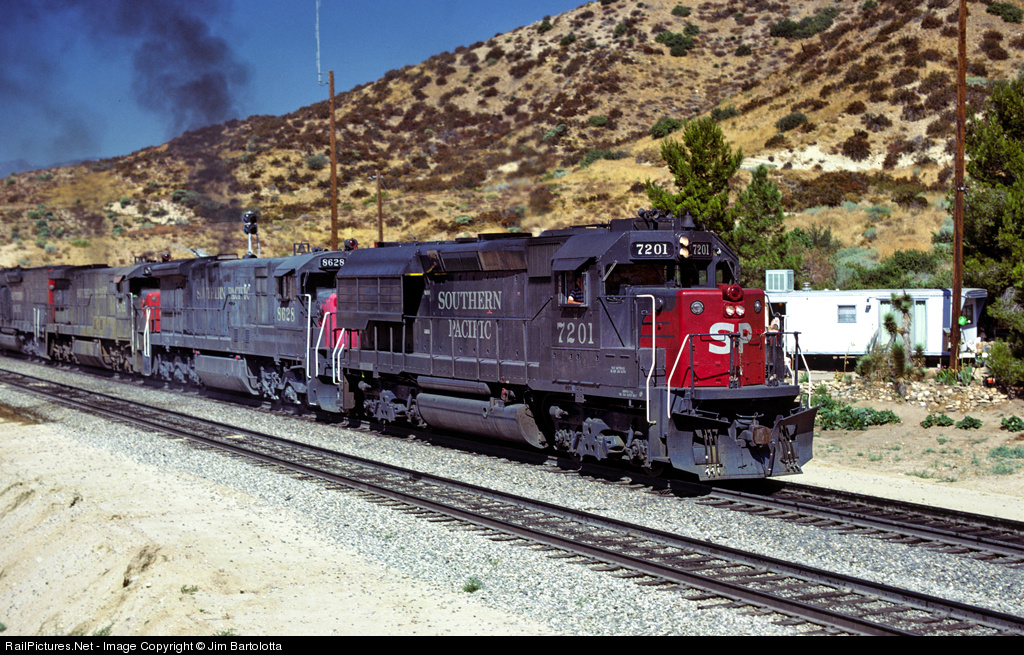
The GP40X was EMD's testbed for the future GP50 and introduced the unpopular HT-B truck. The 'elephant ears' version shown here was an experiment in normalizing the tunnel motor concept. The ears eventually were removed and the HT-B trucks were never reproduced. I needed a powered SP unit to haul around some heavy trains so all those unique qualities fit the bill just right. Originally I wanted to build the UP version, but the SP is more iconic with those elephant ears. The UP version will follow someday.
(The following is a mostly fictional history.)
With the success of the RF-4C reconnaissance version of the Phantom II, McDonnell Douglas offered later customers of the Phantom a revised version of the F-4E (itself derived from the RF-4C testbed). This combined the more robust airframe and powerful engines of the F-4E with the camera systems of the RF-4C. This was intended solely for the export market, as the USAF was satisfied with the RF-4C, and was mainly built according to Luftwaffe specifications. Unlike USAF photo Phantoms, the RF-4E could be configured to carry limited amounts of ordnance, mainly AIM-9 Sidewinders for self-defense, though Luftwaffe RF-4Es were also configured to carry bombs as secondary strike aircraft. Customers for the standard RF-4E included Germany, Israel, Iran, Greece, and Turkey.
The FIRAF had no interest in the F-4E, though MDD did approach the service with offers, mainly for several dozen not supplied to Iran after the 1979 revolution (these were later supplied to Egypt and Israel); the FIRAF wanted the F-15 and F-16 as its eventual mainstays. However, in 1981, Minister of Defense Akela Canis (himself a former Phantom pilot) met with MDD with an interest towards acquiring RF-4s, as the SA-81B Jaguar was having teething problems and might fail. MDD responded by offering the FIRAF 16 half-completed RF-4Es that had been part of an Iranian order. Canis agreed, but required that changes be made to the aircraft: they would retain the APQ-120 radar of the F-4E—thus retaining the ability to carry and fire the AIM-7 Sparrow—and use the slatted wing of the standard F-4E. This was to give the FIRAF’s photo Phantoms a better ability to defend itself and also act as fighters if necessary. It retained the three camera bays of the RF-4E, with the ability to carry KS-72, KS-87, or KA-91 cameras, and a small photoflash cartridge bay in the rear fuselage. It would not have the ability to carry ground ordnance.
MDD agreed to the changes, but since the aircraft were variants on the RF-4E design, could not come up with a designation that hadn’t already been taken. Canis suggested RF-4CS (later remarking that it was “off the top of my head”) and the designation stuck, despite the fact that the aircraft bore little resemblance to the RF-4C.
Since the RF-4CS was deemed a low-priority necessity for the FIRAF, conversion on the 16 aircraft was slow, with the first not reaching the FIRAF until April 1984. By this time, it was felt that war with the Warsaw Pact was likely, and so an emergency order for another 18 RF-4CS was placed with MDD. These were modified directly from F-4Es retired by the USAF, and considerable delay was run into because of the need to refurbish these high-time aircraft. However, the first 16 had already entered service, 12 with the first RF-4CS squadron, the 6th RS and six with the 4th RS. Both squadrons were deployed to Europe in fall 1984 as a composite unit, with rebuilt RF-4CS arriving and being integrated as they did so; the 4th RS was able to “stand up” as a full squadron in April 1985. The last batch of RF-4CS arrived in time to outfit the 7th RS by spring 1986, bringing the total number in service to 36 aircraft.
The RF-4CS did well in FIRAF service, often proving a surprise for Pact MiGs that engaged what they thought were unarmed RF-4s and instead finding themselves fighting fully-armed RF-4CS. Moreover, the RF-4CS could fire Sparrows, which gave it a reach unavailable to other reconnaissance aircraft, and could turn with all but the latest Soviet designs. Since there was no production line for the RF-4CS, squadrons could not make good any losses. Additionally, several others were grounded during the war due to fatigue cracks and had to be used as “hangar queens,” parts supplies. This played a large part in the decision at war’s end to retire the RF-4CS rather than keep it in service; moreover, the SA-81B Jaguar had done much better than anticipated.
Without fanfare, all three RF-4CS squadrons were deactivated in 1988, and the aircraft sent to AMARC for disposal.
This "RF-4CS" was converted from Academy's 1/144 F-4E kit; as there is no 1/144 scale RF-4 kit, I had to write a fictional history as to why my fictional air force would have it! (Ah, alternative history is fun.) Other than camera windows painted on the gun housing and nose, it's otherwise a standard F-4E. Decals are right out of the kit, though the tail logo of a snow owl and tailcode were hand-painted and hand lettered. The camouflage scheme of medium green, military brown and flat black is based loosely on the scheme carried by JASDF F-4Es and RF-4Es. (The white streaks in the black paint are due to fogging from canned air; should've taken the picture later.) It carries a warload of two drop tanks and four AIM-7M Sparrows, though the latter can't be seen under the fuselage.
Oshkosh testbed no 000X
Prototype fusion-drive test unit. The coils on the side are very early prototypes for the faster-than-light systems used in today's cargo and star ships.
Popular myth had it that this testbed could actually hover. However, it could not. The unit was built merely to stress test the drive system. 000X used a standard Oshkosh power cell propulsion system to maneuver it into position and around the test site.
With a second prototype rendering 000X defunct, her fusion drive units were removed for preservation in the US museum of space travel. Oshkosh 000X was sold to Clyde engineering of Scotland for spares, and was scrapped on site.
pictionid72689951 - catalog07.01.b-00740 - title--boeing b-47e stratojet-- - filename07.01.b-00740.jpg- filename07.01.a-00261.jpg -Image scanned from a 35mm Slide--Please tag this photo so that the data can be stored with our Digital Asset Management System. -Repository: San Diego Air and Space Museum Archive
Deregistered Aircraft / Reserved N-Number N932ML / NC-9D /NC-9D MSN 47547/ Firebird II USN168277
All rights reserved © Paul Larson
Date: 2017
The XK120 was launched in roadster form at the 1948 London Motor Show as a testbed and show car for the new Jaguar XK engine. It caused a sensation, which persuaded Jaguar founder and design boss William Lyons to put it into production.
The "120" in its name referred to its 120 mph (193 km/h) top speed (faster with the windscreen removed), which made the XK120 the world's fastest standard production car at the time of its launch.
It was available in two open versions, first as the roadster (designated OTS, for open two-seater, in America), then also as a drophead coupé (DHC) from 1953 – and also as a closed, or "fixed-head" coupé (FHC) from 1951. The DHC was a more deluxe open model, with wind-up windows, and wood-veneer dashboard and interior door caps, as on the FHC.
The roadster was successful in racing.
(Wikipedia)
- - -
Der Jaguar XK 120 war ein zweisitziger Roadster, den Jaguar 1948 als Nachfolger des S.S.100 auf den Markt brachte.
Der Jaguar XK 120 OTS (Open Two Seater, so die etwas umständliche Bezeichnung für den Roadster) besaß einen Sechszylinder-Reihenmotor mit 3442 cm³ Hubraum und 160 bhp.
Ab 1951 gab es den Jaguar XK 120 FHC (Fixed Head Coupé), ein Coupé mit gleicher Motorisierung und 194 km/h Höchstgeschwindigkeit. Bis zur Einstellung 1954 wurden 2678 Stück gebaut.
1953 kam der Jaguar XK 120 DHC (Drop Head Coupé), ein Cabriolet mit gefüttertem Stoffdach und der gleichen Motorisierung, auch als SE, dazu. Es wurde allerdings nur ein Jahr lang angeboten und erreichte in diesem Zeitraum die Stückzahl von 1767 Exemplaren.
(Wikipedia)
Airbus A380-861
MSN 004 [Engine Alliance testbed]
F-WWDD 'VNO'
Airbus S.A.S.
[300 mm - NO CROP]
Copyright © 2012 A380spotter. All rights reserved.
Airbus A380-861
MSN 004 [Engine Alliance testbed]
F-WWDD 'VNO'
Airbus S.A.S.
Reference shot.
Taken with my Nokia N86 8MP mobile.
I created these illustrations for a video that promotes Philadelphia as the perfect testbed for the google high speed fiber initiative. The video will go live on Friday, but I thought I'd get them up ahead of time. To find out more about the public-private partnership in Philly to promote the City of Firsts as a site for this project, please visit gigabitphilly.com And if you have ideas for how Philly could use an ultra high bandwidth data network that connects individuals, industry, and government, please submit your ideas here. You can also show your support by coming to the press conference with Philadelphia Mayor tomorrow (Thursday, March 25) at 2:30 at City Hall on the 2nd floor. A high speed data network in Philly has the potential to accelerate our medical, film production, university, technology, financial services, and community sectors by letting people share massive amounts of data rapidly---that means rich interactivity, problem solving, and communication. Gigabit Philly Videos GigabitPhilly Site GigabitPhilly Facebook Fanpage Follow GigabitPhilly on Twitter Can you imagine Gigabit Philly? ---Jonny Goldstein
Airbus A380-861
MSN 004 [Engine Alliance testbed]
F-WWDD 'VNO'
Airbus S.A.S.
Copyright © 2012 A380spotter. All rights reserved.
Mark 21 Spitfire with contra-rotating 6 blade Rotol propeller. A few Mark 21s were given this set up and did precious work as a testbed for later Mark 22 Spitfires and Seafires.
In one of the great ironies of aviation history, the KC-135 Stratotanker, the most successful aerial tanker ever built, was never meant to serve more than ten years, let alone the over fifty it has. With jet bombers such as the B-47 and B-52 coming into service, Strategic Air Command’s fleet of KB-29s and KC-97s clearly would not be adequate—an all-jet tanker was needed as well. Lockheed won the USAF competition in 1954 with its L-193 proposal, but it would be some time before the L-193 would be operational.
Needing jet tankers immediately, the USAF turned to Boeing, which already had a four-engined jet transport flying—the Model 367 “Dash 80” private-venture demonstrator. Boeing, since it was already producing both the B-47 and the B-52, as well as the KC-97, had no trouble convincing the USAF that the Dash 80 could be converted to the tanker role, and the USAF duly ordered 250 “interim” KC-135As until the L-193 could come online.
In the end, the L-193 never made it off the drawing board: the KC-135 was easy to fly, easy to operate, and had all the speed and range necessary for its mission. The 250 “interim” aircraft would grow to a final order of over 800 airframes. In the process, the KC-135’s success also ensured that airlines took a closer look at the Dash 80, which resulted in an upscaled version: the very successful 707. The KC-135A was and remains often confused with the 707, which is larger and wider than the tanker; further complicating the issue is many air forces converting retired 707-320 airliners to essentially KC-135 standard.
The KC-135A Stratotanker entered service in June 1957, having first flown the year before. Immediately it showed itself to be a vast improvement over piston-engined tankers in speed and ability to transfer fuel. Because it used the same jet propulsion as the B-47 and B-52, it did not need double fuel systems as the KC-97 did; in a pinch, the KC-135 could even transfer some of its own fuel if necessary. It revolutionized air refuelling technology and nuclear attack strategy, as KC-135s could reach station behind the “fail-safe” line quickly if the B-52s needed to remain longer.
Though SAC had always intended the KC-135 to be exclusively for the refuelling of its bomber force, the Vietnam War was to bring the KC-135 into the tactical role as well. Jet fighters used over Vietnam, namely the F-105 Thunderchief and F-4 Phantom II, had the range to reach North Vietnam from bases in Thailand, but once there would have almost no fuel and could not carry any ordnance worth the trip. By deploying KC-135s to “anchor tracks” over Laos and the Gulf of Tonkin under Operation Young Tiger, SAC tanker crews could refuel the F-105 strike aircraft and their F-4 escorts before they crossed into hostile territory, allowing the fighters to have the fuel necessary for extended operations, and carry heavy ordnance loads. Vietnam proved that the Stratotanker was more than useful in the tactical strike role, and though the tankers remained under the control of SAC until 1991, they were to prove vital again and again worldwide in trouble spots. Without tanker support, missions over both North Vietnam and Iraq would have been near impossible—leading to the famous tanker crew motto: “No one kicks ass without tanker gas.”
By the 1980s, the KC-135A fleet was aging and there was no replacement in sight. The JT3D turbojets used by the A model was very loud, left clouds of brown smoke when its water injection was used, and was not as fuel efficient as later turbofans. This was partially mitigated by converting 161 aircraft to KC-135Es, using TF33 turbofans removed from retired 707s, but this was only a partial solution. The USAF decided to convert most of the fleet to KC-135R standard, though a few high-time “stovepipe” KC-135As remained in service into the early 1990s and saw action during the First Gulf War before being retired.
55-3131 was originally constructed as a KC-135A, but in 1960, it was converted to a JKC-135A (later NKC-135A) testbed aircraft. It was used to test radio wave function at high altitude, as well as the ionosphere, using sensors and cameras; the latter gained her the nickname (and later nose art) of "Aurora Explorer." 55-3131 was later fitted with a dummy fuselage radome to test the feasilbility of the E-3 Sentry proposal, and was also used in testing materials used in the KC-135R program. It was withdrawn from service in 1992, having spent its entire career with the 4950th Test Wing at Wright-Patterson AFB, Ohio, and was scrapped in 2010.
Though later 55-3131 was painted white over gray, the same scheme as Military Airlift Command in the 1970s, in the 1960s it was still bare metal. Where this picture was taken is unknown, but 55-3131 shows the various aerials and domes used in its role as a NKC-135.
(Disclaimer: I found this picture among other photos in my dad’s slides. I’m not sure who took them; some of them may be his. If any of these pictures are yours or you know who took them, let me know and I will remove them from Flickr, unless I have permission to let them remain. These photos are historical artifacts, in many cases of aircraft long since gone to the scrapyard, so I feel they deserve to be shared to the public at large—to honor the men and women who flew and maintained them.)
Airbus A380-861
MSN 004 [Engine Alliance testbed]
F-WWDD 'VNO' ['#A380' 'iflyA380.com' decals]
Airbus S.A.S.
Copyright © 2016 A380spotter. All rights reserved.
Please bear with me; it's a long story. This aircraft is currently undergoing reconstruction. The nose section is from 44-85813, an aircraft used as an engine testbed by Curtiss-Wright. This aircraft, civil registration N6694C, crashed in 1980 - registration cancelled. Major parts of another B-17, one used for atomic tests in Nevada, 44-83722 are being used; its civil registration, N3154S, is being adopted but will now be associated with 44-85813.
This C-135A Stratolifter, s/n 60-0377 and MSN 18152, was used as a flying testbed for the B-2 "Stealth Bomber" avionics program.
Online information indicates that this aircraft is in the inventory of the Air Force Flight Test Museum at Edwards AFB.*
Photographed at Edwards Air Force Base
November 1999
(Scanned 35mm color film negative)
*References:
Honeywell Aviation Services - Convair CV-580 (CV-340 Turboprop Conversion) - N580HW (c/n 2)
This aircraft was the second Convair 340 (CV-340) ever built. It was delivered to United Air Lines (UAL) as N73102, one of many wearing the name "Mainliner Convair" on September 2, 1952. Frontier Airlines would then be the next operator of the aircraft (same registration) in August 1966. After Frontier, the airplane would be purchased by Gem State Airlines and re-registered as N116GS in May 1979. Gem State as then renamed Golden Gate Airlines in 1980. In February 1984, Aspen Airways would buy the aircraft and re-register it as N113AP. Then in March 1991, Aspen Airways sold the aircraft to Renown Aviation, Renown then soon selling it to Allied Signal in January 1992. Allied Signal registered the aircraft as N580AS and equipped it as a flying testbed. Allied Signal and Honeywell merged in 1999, the aircraft now wears Honeywell titles and is registered as N580HW.
Thursday, October 18th. Dual-Polarized
Phased Array Radar
National Weather Radar Testbed Advanced Technology
Demonstrator tour, ribbon cutting and reception.
Honeywell operates Boeing 757-225 N757HW as an engine testbed at Phoenix Sky Harbor Airport. It is powered by a pair of Rolls royce RB211-535E4B37 turbofans. It carries a third jet engine on the right side of the forward fuselage.
A photo taken in 1966 of an Avro 707A.
The 707 was a prototype designed in post-war Britain as a test bed for the development of the Avro 698 (Vulcan) bomber and first flew in 1949.
In total 5 variants were built and flown to de-bug the Delta wing design and flight characteristics. One of the 707s would eventually be used to develop fly-by-wire technologies. WD280 was the third prototype built and was used to test high speed flight.
Now on display at the RAAF Museum at Point Cook, Victoria in Australia.
Week 3 of the Hazard Services - Probabilistic Hazard Information (HS-PHI) experiment in the NOAA Hazardous Weather Testbed (HWT) at the National Weather Center in Norman, OK. The HS-PHI experiment is part of the Experimental Warning Program. This is the third year of the HS-PHI experiment in the HWT.The HS-PHI experiment advances the Forecasting A Continuum of Environmental Threats (FACETs) initiative by testing software which allows National Weather Services (NWS) forecasters to issue Probabilistic Hazard Information (PHI) at the severe weather warning time and space scales.
General Dynamics YF-16A "Fighting Falcon" 75-0750
Photo taken - Edwards AFB 1982
Aircraft: 75-0750
LM Aero T/V: 61-6
Plant: General Dynamics
Local C/N:
Delivered USAF: 50750 F-16A
1978 - Assigned USAF 6516 TS
A full-systems F-16A which was used for avionics systems testing and reliability and maintainability testing in the F-16 FSD and FSD follow-on test programs.
1978 - The nose was modified to house the APG-65 radar which was more powerful. It is the radar used in the F/A-18.
1979 - Used for electromagnetic hardness ground testing at Kirtland AFB.
1980 - Stored. To General Dynamics at Fort Worth for modification work (AFTI).
1982 - Dorsal Spine. The 6th Full-Scale Development (FSD) aircraft was modified as Advanced Fighter Technology Integration (AFTI) testbed, which included the canards from the YF-16 CCV and a dorsal spine. The dorsal spine would eventually make it to some production model F-16s. First program was the Digital Flight Control System (DFCS) in which a total of 108 flights were executed until July of 1983.
1984 - The second program within the AFTI framework was the Automated Maneuvering Attack System (AMAS) which lasted untill April of 1987.
1987 - To General Dynamics at Fort Worth for modification work.
1988 - In the late eighties, the Advanced Fighter Technology Integration (AFTI) F-16 testbed (formerly the 6th FDS aircraft) was fitted with a dorsal spine, wing-root mounted Lantirn-style pods, and FLIR turrets on the nose. It was also upgraded with an F-16C block 25 wing and with block 40 F-16C features such as APG-68 radar and a LANTIRN interface. It was used as a CAS testbed in support of the proposed A-16, testing low-level battlefield interdiction techniques such as automatic target handoff-systems. This program lasted untill January of 1992.
1992 - Stored. To Lockheed at Fort Worth for modification work.
1993 - Used in the Talon Sword Bravo test program which demonstrated cooperative engagement techniques where the aircraft fires at a target based on targeting information datalinked from a distant sensor. The weapon principally investigated was the AGM-88 High-speed Anti-Radiation Missile (HARM).
1994 - To Lockheed at Fort Worth for modification work.
1995 - Used jointly by NASA and the USAF at Edwards AFB, California for the Embedded Global Positioning and Inertial Navigation System (EGI) program, including evaluation of the reliability of GPS in jamming environments.
1996 - Used in the Automated Ground Collision Avoidance System (AGCAS) program.
1997 - Stored. To Lockheed at Fort Worth for modification work (J/IST).
2000 - NASA dropped out of the AFTI testing program and the aircraft continued to be tested by the USAF. This includes testing for the "Power-by-Wire" technology and testing for the F-35 program under the Joint Strike Fighter Integrated Subsystem Technologies (J/IST) program.
2001 - Preserved. Wright Patterson AFB, Ohio located in the experimental aircraft hangar. It was flown into the museum on February 11th, 2001 having been retired just the previous month on January 9th, 2001.
Palomar Observatory is a privately owned astronomical observatory located in San Diego County, California (USA), 145 kilometers (90 mi) southeast of Los Angeles, California, in the Palomar Mountain Range. It is owned and operated by the California Institute of Technology (Caltech) located in Pasadena, California. Research time is granted to Caltech and its research partners, which includes the Jet Propulsion Laboratory (JPL) and Cornell University.
The observatory operates several telescopes, including the famous 200-inch Hale Telescope (5.1 m) and the 48-inch Samuel Oschin Telescope (1.2 m). In addition, other instruments and projects have been hosted at the observatory, such as the Palomar Testbed Interferometer and the historic 18-inch Schmidt telescope (0.46 m), Palomar Observatory's first telescope, dating from 1936.
History
Hale's vision for large telescopes and Palomar Observatory
Astronomer George Ellery Hale, whose vision created the Palomar Observatory, built the world's largest telescope four times. He published an article in the April 1928 issue of Harper's Magazine called "The Possibilities of Large Telescopes". This article contained Hale's vision for building what was to become the 200-inch Palomar reflector; it was an invitation to the American public to learn about how large telescopes could help answer questions relating to the fundamental nature of the universe. Hale hoped that the American people would understand and support his project. In fact the 200-inch telescope was the most important telescope in the world from 1949 until 1992 when the Keck I telescope (at approximately 10 metres (390 in)) on Mauna Kea in Hawaii became the world's largest.
Hale followed this article with a letter to the International Education Board (later absorbed into the General Education Board) of the Rockefeller Foundation dated April 28, 1928, in which he requested funding for this project. In his letter, Hale stated:
"No method of advancing science is so productive as the development of new and more powerful instruments and methods of research. A larger telescope would not only furnish the necessary gain in light space-penetration and photographic resolving power, but permit the application of ideas and devices derived chiefly from the recent fundamental advances in physics and chemistry."
Etymology
The word palomar is a Spanish term dating from the time of Spanish California that means pigeon house (in the same sense as henhouse). The name may be in reference to the large shoals of pigeons that can be seen during the spring and autumn months atop Palomar Mountain, or reminiscent of an old pigeon-raising facility built there by the Spaniards.
The Hale Telescope
The 200-inch telescope is named after astronomer George Hale. It was built by Caltech with a $6 million grant from the Rockefeller Foundation, using a Pyrex blank manufactured by Corning Glass Works. The telescope (the largest in the world at that time) saw first light January 26, 1949 targeting NGC 2261. The American astronomer Edwin Powell Hubble, perhaps the most important observer of the 20th century, was given the honor of being the first astronomer to use the telescope.
Astronomers using the Hale Telescope have discovered distant objects at the edges of the known universe called quasars and have given us the first direct evidence of stars in distant galaxies. They have studied the structure and chemistry of intergalactic clouds leading to an understanding of the synthesis of elements in the universe and have discovered thousands of asteroids. A one-tenth-scale engineering model of the telescope at Corning Community College in Corning, New York, home of the Corning Glass Works (now Corning Incorporated) was used to discover at least one minor planet, (34419) Corning †.
Architecture and design
Hale Telescope Dome
According to the Observatory's Public Affairs Office, Russell W. Porter was primarily responsible for the Art Deco architecture of the Observatory's buildings, most notably the dome of the 200–inch Hale Telescope. Porter was also responsible for much of the technical design of the Hale Telescope and Schmidt Cameras, producing a series of cross-section engineering drawings that are considered among the finest examples of such work.] Porter worked on the designs in collaboration with many engineers and Caltech committee members. The gleaming white building on Palomar Mountain that houses the 200–inch Hale Telescope is considered by many to be "The Cathedral of Astronomy".
The Palomar Observatory is an active research facility. However, parts of it are open to the public during the day. Visitors can take self-guided tours of the 200-inch telescope daily from 9 a.m. to 3 p.m. Guided tours of the 200-inch Hale Telescope dome and observing area are available Saturdays and Sundays from April through October. Details are available at the Observatory's web site. There is a visitor's center and a gift shop on the grounds. Behind-the-scenes tours for the public are offered through the community support group, Friends of Palomar support group. Periodic tours are also organized by the Reuben H. Fleet Science Center in San Diego. The observatory is located off State Route 76 in northern San Diego County, California, is two hours' drive from downtown San Diego, and three hours' drive from central Los Angeles ( UCLA, LAX airport ).
PictionID:44795826 - Catalog:16_005966 - Title:Douglas B-66 Destroyer: RB-66A Rhor photo - Filename:16_005966.tif - - - - - Image from the Ray Wagner Collection. Ray Wagner was Archivist at the San Diego Air and Space Museum for several years and is an author of several books on aviation --- ---Please Tag these images so that the information can be permanently stored with the digital file.---Repository: San Diego Air and Space Museum
The XK120 was launched in roadster form at the 1948 London Motor Show as a testbed and show car for the new Jaguar XK engine. It caused a sensation, which persuaded Jaguar founder and design boss William Lyons to put it into production.
The "120" in its name referred to its 120 mph (193 km/h) top speed (faster with the windscreen removed), which made the XK120 the world's fastest standard production car at the time of its launch.
It was available in two open versions, first as the roadster (designated OTS, for open two-seater, in America), then also as a drophead coupé (DHC) from 1953 – and also as a closed, or "fixed-head" coupé (FHC) from 1951. The DHC was a more deluxe open model, with wind-up windows, and wood-veneer dashboard and interior door caps, as on the FHC.
The roadster was successful in racing.
(Wikipedia)
- - -
Der Jaguar XK 120 war ein zweisitziger Roadster, den Jaguar 1948 als Nachfolger des S.S.100 auf den Markt brachte.
Der Jaguar XK 120 OTS (Open Two Seater, so die etwas umständliche Bezeichnung für den Roadster) besaß einen Sechszylinder-Reihenmotor mit 3442 cm³ Hubraum und 160 bhp.
Ab 1951 gab es den Jaguar XK 120 FHC (Fixed Head Coupé), ein Coupé mit gleicher Motorisierung und 194 km/h Höchstgeschwindigkeit. Bis zur Einstellung 1954 wurden 2678 Stück gebaut.
1953 kam der Jaguar XK 120 DHC (Drop Head Coupé), ein Cabriolet mit gefüttertem Stoffdach und der gleichen Motorisierung, auch als SE, dazu. Es wurde allerdings nur ein Jahr lang angeboten und erreichte in diesem Zeitraum die Stückzahl von 1767 Exemplaren.
(Wikipedia)
Airbus A380-861
MSN 004 [Engine Alliance testbed]
F-WWDD 'VNO'
Airbus S.A.S.
Reference shot.
Taken with my Nokia N86 8MP mobile.
N15HF North American Sabreliner 60 former Williams International Company EJ-22 Engine Testbed Detroit Willow Run Ypsilanti 27 November 2015
Reshade 0.18.1 Framework Extreme Eyecancer Mod Testbed 0.2B
Blackfire's mod + TOD + Reli2
Ini tweaks + POM enabled
Lite TOD, light shadows, nohud, dof %25-50, adjusted brightess, contrast and gamma + exposure. MSAA Disabled. SSAO enabled.
80º FoV,
Custom helmet mesh lens texture (reworked)
------
Framework Config
SweetFX
{ SMAA
Tonemap
Vibrance
Film Grain
Letterbox }
McFX
{ Fisheye CA }
GemFX
{ LensDirt
Ambient Light + ambient light controls for Bloom, Lens and vibrance + advanced eye adaptation }
& Improved performance again, render mode 8bit
Honeywell Aviation Services - Convair CV-580 (CV-340 Turboprop Conversion) - N580HW (c/n 2)
This aircraft was the second Convair 340 (CV-340) ever built. It was delivered to United Air Lines (UAL) as N73102, one of many wearing the name "Mainliner Convair" on September 2, 1952. Frontier Airlines would then be the next operator of the aircraft (same registration) in August 1966. After Frontier, the airplane would be purchased by Gem State Airlines and re-registered as N116GS in May 1979. Gem State as then renamed Golden Gate Airlines in 1980. In February 1984, Aspen Airways would buy the aircraft and re-register it as N113AP. Then in March 1991, Aspen Airways sold the aircraft to Renown Aviation, Renown then soon selling it to Allied Signal in January 1992. Allied Signal registered the aircraft as N580AS and equipped it as a flying testbed. Allied Signal and Honeywell merged in 1999, the aircraft now wears Honeywell titles and is registered as N580HW.
Airbus A380-861
MSN 004 [Engine Alliance testbed]
F-WWDD 'VNO'
Airbus S.A.S.
Reference shot.
Taken with my Nokia N86 8MP mobile.
Between their use of the Daimler-based Dennis testbed, and their purchase of Dominators Tayside Regional Council also borrowed UFP234S from Leicester to try. Note the same ‘on hire’ board in the front window.
This is a Ron Doig picture ©Glasgow Vintage Vehicle Trust
Written on back of print:
"The GP-40X -- 6 units and a 3500 hp testbed model, designed with a high traction radical truck. SP owned a few and I found traction qualities were poor. The six units were originally numbered 9000-9005, but the 9001 was the first one built, the class engine. This train is at Clearfield, UT. 6/5/79."
This photograph is part of the Doug Harrop Collection of the Western Crossroads Railway Museum, comprising 14 albums of large-format black and white prints of Mr. Harrop's railroad photography.
Testing prototype SAS HBAs is difficult to do when your testbed is mounted in a full rack. Power supply is resting on a keyboard tray and the disk drives are dangling where I could fit them.
I ran the SAS cables from the SAS controller over the processor boards, threaded them between the fans and powersupply before bringing the cables out through an unoccupied disk slot on the front. I also had to run power from the back of the rack to the front. Zip Ties keeps it all somewhat secure.