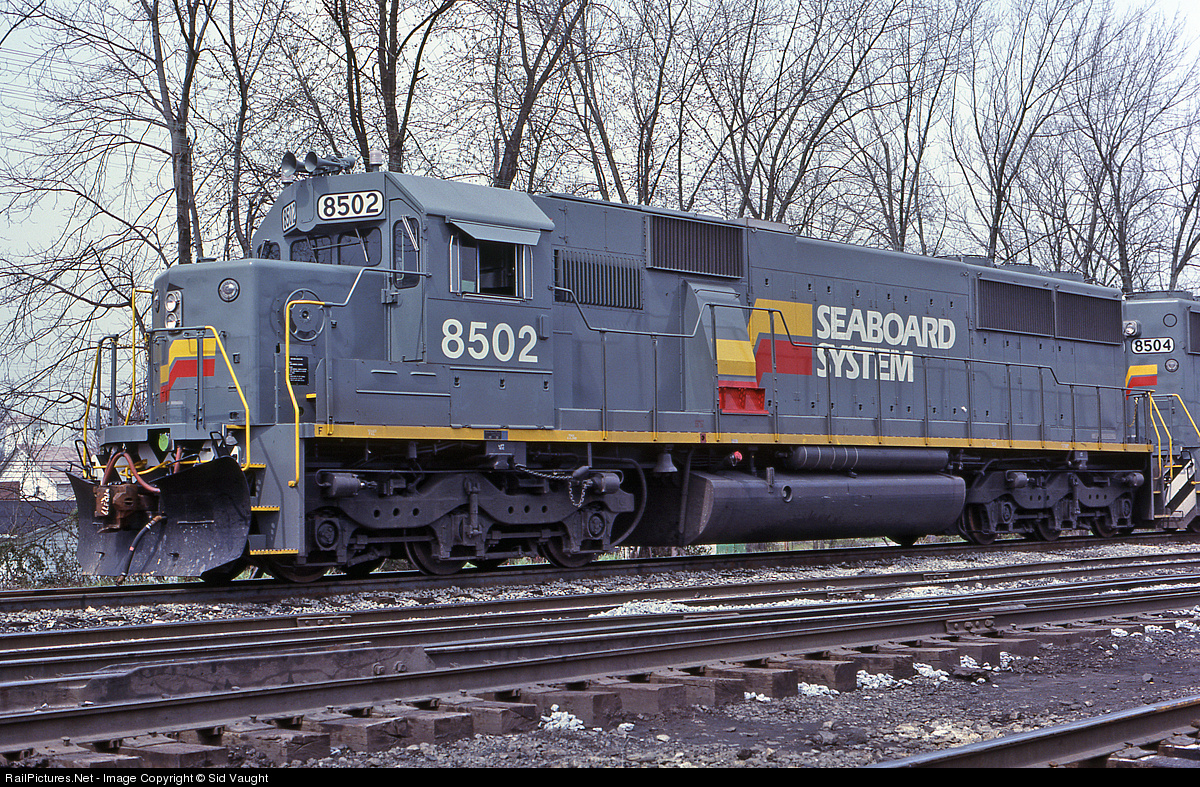
View allAll Photos Tagged System
the biggest cave system in Africa ....
The Cango Caves are located in Precambrian limestones at the foothills of the Swartberg range near the town of Oudtshoorn, in the Western Cape Province of South Africa. The principal cave is one of the country's finest, best known, and most popular tourist caves and attracts many visitors from overseas. Although the extensive system of tunnels and chambers go on for over 4 km (2.5 mi), only about a quarter of this is open to visitors, who may proceed into the cave only in groups supervised by a guide. Thx to Wikipedia..
Andrew Barclay 0-4-0 saddle tank 'No.19' (works No.1614 built in 1918) was captured in the rain on the moors near Minnivey Colliery on 27th August 1971 as it was returning to Dunaskin with empty tippler wagons. The wooden-bodied wagon was a semi-permanent fixture to the locomotive and acted as an auxiliary coal tender. Supplied new to the Dalmellington Ironworks, it was transferred to the National Coal Board Area No.5 on vesting day on 1st January 1947 and, apart from works visits was maintained and worked at Dunaskin Loco Shed serving the Waterside System throughout its commercial service. Purchased by the Ayrshire Railway Preservation Group in 1980, it remains at Dunaskin to this day.
© Gordon Edgar - All rights reserved. Please do not use my images without my explicit permission
The water recovery system on the International Space Station allows to recycle up to 90% of the water.
Astronauts living and working 400 km above our planet might prefer not to think about it, but the water they drink is recycled from their colleague’s sweat and exhaled breath – collected as condensation on the Space Station’s walls.
Water is precious on Earth but even more so in space where all drinkable water must be transported from home or recycled. As we explore further from our home planet providing water and food to astronauts will become more and more challenging so just like on Earth reduce, reuse, and recycle is the mantra for off-world explorers and their space agencies.
While Earth-observing satellites monitor our precious water resources, technologies developed for human space missions also serve global needs in harsh environments here on Earth.
Credits: ESA
Manufacturer: BAE Systems, Woodford
Operator: Jota Aviation
Type: Avro RJ100 (G-JOTA)
Locations: Gibraltar International Airport
When fools become great people can only become very small!
(to see further pictures and read other information please go to the end of page!)
Flaktowers
Flakturm, Arenbergpark
Picture: Flakturm, Arenbergpark
The Vienna flak towers are six large, of reinforced concrete erected defensive and protective structures in Vienna, which were built in the years 1942-1945 as giant bomb shelters with fitted anti-aircraft guns and fire control. The architect of the flak towers was Friedrich Tamms (1904-1980).
Flakturm, Arenbergpark
Image: Terrace of the flak tower in Arenbergpark
The system of the Vienna flak towers consists as a whole of six buildings, three turrets, each with a Feuerleitturm (fire-control tower). The three bunker pairs are arranged in a triangle in the approximate middle of which the Stephansdom is situated. The towers are of different heights, but their upper platforms are in exactly the same altitude, so that an overall coordination of air defense was possible. The maximum operating radius of the four main guns (12.8 cm twin) of each tower was under ideal conditions 20 km. The smaller platforms of combat and fire-control towers were provided for 2 cm anti-aircraft guns, but they were never used in Vienna. In addition to its military crew the flak towers in Vienna served as makeshift hospitals, housed radio stations and partly war-relevant technical companies and offered on a large scale air raid shelters for the population.
Flakturm Augarten
Picture: Flakturm, Augarten
After the war, the Red Army undertook blasting tests in Gefechtsturm (flak tower with battle platform) Augarten, but a removal of the towers failed because of the proximity to residential areas. Nowadays, a removal of the towers would be possible, but now existing only an official decision as to the two anti-aircraft towers in Augarten from 5 April 2000 (GZ 39.086/2/2000) because all six buildings ex lege have been put under monument protection. Today, the towers are partially owned by the City of Vienna and partly owned by the Republic of Austria. There were repeatedly attempts to rebuild the flak towers and make it usable. The ideas range from depot for important backup data to a café or hotel.
Planning
Flakturm, Arenbergpark
Picture: Flakturm, Arenbergpark - Notstiege (Emergency flight of stairs)
Flakturm, Arenbergpark
Picture: Flakturm, Arenbergpark
Elevator shaft to the left, original instructions for lift usage right
After the battles of World War II also spread more and more to Vienna, Adolf Hitler ordered on 9 September 1942 the construction of flak towers in Vienna. The Air Force leadership provided for this purpose as building sites the Schmelz (Vienna), the Prater and Floridsdorf but Hitler rejected these places since the city center would not have been adequately protected because of the large distances. After discussions with Reichsstatthalter (Reich Governor) Baldur von Schirach, the final locations were determined. Instead of the Augarten, however, was initially the Roßauer barracks under discussion. The decisive factor for the choice of the places were on the one hand, the easy availability of the building ground and on the other hand the possibility to establish railway connections. The plan provided after the victorious end of the war to disguise the flak towers with marble and devote them as monuments to the fallen German soldiers. As with all the flak towers Friedrich Tamms was responsible for the planning, he was represented in Vienna by Anton Ruschitzka, construction management held Franz Fuhrmann from Vienna's city building department. The military leadership rested with Major Wimberger, which, however, had no mission staff. The material procurement was carried out by the Organisation Todt.
Construction
Flakturm, Arenbergpark
Picture: Flakturm, Arenbergpark
Emergency Exit Photo: Flakturm, Arenbergpark
With the construction of the flak towers the companies Philipp Holzmann and Gottlieb Tesch were commissioned, smaller firms being integrated via joint ventures. Since the availability of local workers due to conscription declined steadily, more and more prisoners of war, foreign and forced laborers were used in the course of the war. Cement was delivered primarily from Mannersdorf at Leithagebirge, to a lesser extent from Rodaun (situated in the outskirts of Vienna). The gravel stemmed from the gravel pits Padlesak in Felixdorf and Gustav Haager at Heidfeld at the Bratislava railway (Pressburger Bahn), about in the area of today's airport Wien-Schwechat. Sand was delivered in ships over the Danube Canal, which is why in the area of Weißgerberlände sand silos of the United Baustoffwerke AG were built. In this area was already in 1918 a feeder track of the tram through the Drorygasse. Although this was already in 1925 shut down it was restored in 1941 and enlarged in the following year after the construction of a new silo to two tracks. For the then due to the excavation of the foundations coming up overburden, at the Kratochwijlestraße (then Weissenbachstraße) in 22 District was created a landfill, which also got a tram connection.
This report is based on an article in the
WIKIPEDIA - The Free Encyclopedia
and is licensed under the GNU license
Free Documentation Creative Commons CC -BY- SA 3.0 Unported.
On Wikipedia there is List of the authors Available .
de.wikipedia.org
The monstrous remnants of the "Third Reich"
District II (Leopoldstadt), anti-aircraft towers in the Augarten, tram line 31 from metro station Scots ring/Schottenring (U2, U4).
On 15 March 1938 gathered some 200 000 Wiener (Viennese people) on Heldenplatz in order to celebrate the "Anschluss" of Austria to the so-called fatherland Germany, something, since the end of the first World War I many had been longing for. Adolf Hitler himself appeared on the balcony of the Neue Burg and announced: "As leader and Chancellor of the German nation and the Reich I report before story now the entry of my home in the German Reich". Then he boarded a plane back to Germany, the rest, as they say, is history. A few years later the magnificent Heroes Square (Heldenplatz) was dug up to plant vegetables there, they needed food for the distraught people who suffered the privations in Hitler's zusammenbrechendem (breaking down) "millennial Reich".
Right: Gefechtsturm in the Augarten
In Leopoldstadt
Below: The Leitturm (control tower) in Arenbergpark
In III. District highway (Landstraße).
The already existing and sometimes bombastic Viennese architecture the occupiers seems to have pleased, no major buildings were added during their reign. On 9 September 1942, however, Hitler decreed that the city center of Vienna like in Berlin and Hamburg should be protected by some huge flak towers, three pairs should form a defensive triangle, St. Stephen's Cathedral was the center. 1943/44, the German troops began the construction of two flak towers in the Augarten and defaced in this way Austria's oldest still existing and in 1712 laid out baroque garden. Another pair of flak towers emerged in Arenberg Park in III. District (Landstraße), a third near the Mariahilferstraße (in Esterházypark and in the courtyard of the barracks Stiftskaserne) in the VI. resp. VII. District (Mariahilf/Neubau). The towers have been made of almost indestructible, 2.5 to 3.5 meters thick reinforced concrete and were self-sufficient, and they possessed their own water and power supply, first aid station and air filters if it should come to a gas attack. Each pair of flak towers contained a big, provided with a heavy gun flak tower and a smaller control tower for communication. The first is either a square tower in the style of a fortress, like the one in the Arenbergpark (neunstöckig - nine storeys), 41.6 meters high, 57 meters in diameter) or a round tower, in fact, sixteen -sided, as in the Augarten Park and the yard of the Stiftskaserne Barracks (zwölfstöckig - twelve storeys, 50.6 meters high, 43 meters in diameter). The heaviest artillery gun (105-128 mm) was standing on the roof, on the projecting balconies below there were lighter guns (20 to 30 millimeters). The Leittürme, from which the air defense was coordinated, were all rectangular (neunstöckig - nine storeys, 39 to 51.4 meters high, 24 to 39 feet long) and equipped with a lighter gun, they possessed communication devices and searchlights on the roof. Toward the of the war the towers only just were functional. They also served as air-raid shelter for the people in the area and each tower had space for 30 000 people. In the event that the war ended with a victory, the architect, the builder of the Reichsautobahn Friedrich Tamms, already had prepared designs to dress up the towers with black marble plates in which the names of the dead German soldiers should be engraved in gold letters. So the towers would also have been victory and war memorials (and thus in a strange way similar to the Mausoleum of Theodoric in Ravenna or the Castel de Monte in Apulia).
In the bureau of an architect of Berlin were even found plans to demolish the Jewish Quarter in the Leopoldstadt and to build a huge Nazi forum. Today, however, there is in Leopoldstadt again a thriving Jewish life and the flak towers are frozen monuments to the darkest times of Viennese history (in fact, the Russians tried to destroy the tower in Augarten with dynamite, which later on was mistaken for the vandalism of a few schoolboys, by mistake a forgotten weapon depot setting on fire).
In a famous quote Hitler Vienna compared with a pearl, which he wanted to give a socket. Towards the end of war, however, this socket only consisted of bombed-out buildings and abandoned flak towers, silent witnesses of the delusion of their builder. As a result, only the Leitturm was used in Esterhazy Park, and today in it the house of the sea (Zoo - Haus des Meeres) is accommodated. Outside there is a climbing wall with 25 different routes, and the vertical wall and the projecting balconies give a perfect imitation of an overhanging cliff of 34 meters of height. A conservatory (or biotope) with a miniature rain forest along with monkeys and birds has been added on one side; it is entered through a door that only with difficulty could be broken in the two and a half meters thick reinforced concrete, but this also ensures a uniform temperature for aquariums and vivariums in the tower.
The stable temperatures also have the Museum of Applied Arts (MAK) brought to take advantage of the flak tower in Arenberg Park as a magazine and occasional exhibition space; in the meantime it is known as Contemporary Art Tower (CAT).
A former air-raid shelter at the base of the Leitturm in Esterhazy Park now contains the Museum of Medieval legal history: the history of torture
Excerpts from
Duncan J. D. Smith; Only in Vienna
A travelling guide to strange places, secret places and hidden attractions
Translated from English by Brigitte Hilzensauer
Photographs by Duncan JD Smith
"The streets of Vienna are paved with culture, the streets of other cities with asphalt". Karl Kraus (1874-1936)
Vienna is certainly one of the greatest and also the most homogeneous capitals in Europe. And it is one of the most fascinating. The overabundance of travel guides that are out there to buy, presents the not too demanding visitor a magical (and easily accessible) abundance of museums, churches, palaces and culinary venues, and they recount the history of the city since the times of the Romans over those of the Habsburg Empire to the present.
Courtesy
Christian Brandstätter Verlag mbH
The publishing service for museums, businesses and public authorities
www.brandstaetter - verlag.at
Total, totalitarian, dead
Picture: Flak tower in 1943 /44, Augarten
At the zero point of the knowledge about the progress of the world stands since 11 September 2001 "Ground Zero". The debris field of the World Trade Center was used as a metaphor, which for its part marks a zero point. "Ground Zero" is called the area that lies in the center of a nuclear explosion. In Hiroshima and Nagasaki this area has been explored, the experiments that began with Albert Einstein's warning of a nuclear policy of Nazi Germany, were successful beyond measure. The name for the nuclear program, "Manhattan Project". With the beginning of the new millennium "Ground Zero" is real returned to where it had once taken its nominal starting point. The skyscraper obviously is able to stimulate the imagination of physicists, ballistics and aeronauts. In the skyscraper the obsessions of the 20th century are concentrated, self-sufficiency and utopia become one in the sky billowing tower. It is the exalted and the sublime. It provides a beacon, of the construction as well as of the destruction.
As the World Trade Center each of the Viennese "flak towers" come along as pairs: One serves as control tower, the other as a flak tower. The central component is the platform, it was needed in high altitudes in order to have a clear field of fire over the city. The tower architecture, which thereby became necessary, one used for bunker systems, no fewer than 40,000 people should here find shelter. For other facilities there was also space: the Gaupropagandaleitung (Regional propaganda direction) for example, the radio station, a munitions factory. At three locations in the city - the triangle that they abzirkelten (encircled), took in Vienna's historic center - in the years 1943/44 had established an own self-contained world, with it corresponded an outside, the world of total war. The flak towers gave this world the architectural icon.
On 14 February 1943, the British Air Force had carpet bombings on German cities announced after it adversary those commitments to civility, just in war of some validity, namely to protect non- military targets, long ago had abandoned. It was a strategy that should give World War II a decisive turn. The Germans had their production concentrated on weapons with immediate penetrating power, especially on fighter planes and tanks. The Allies, however, swore on sustainability, on long-range bombers that now more and more were used. Against such so-called "flying fortresses" should prepare the city's flak towers.
On 18 February 1943 already, the Nazi regime had reacted propagandistically. Joseph Goebbels delivered in the Sportpalast (Sports Palace) those infamous speech in which an unleashed crowd at the top of its voice loud the hysterical question "Do you want total war?" applauded. From then on, the action would no longer overridingly occur on the fronts. Now, as Goebbels put it, the "phalanx of the homeland" was at stake. The war would be carried to the cities. In their midst, in the urban milieu that would now lose all nonchalance and any worth of life. Also, and just that is what the flak towers stand for: their comfort is the security wing, their promise the ammunition depot. They guarantee offensive and defensive in one. In this hard as reinforced concrete alignment, imagined the regime each of every Volksgenossen (member of the German nation).
The flak towers are the architecture of total war par excellence: monumental exclamation marks for military preparedness, towering icons of the resistiveness, uniform archetypes of a technical, an instrumental progress, to which the Nazi state with due atavism was always committed. Furthermore, comes to some extent the domestic political effect: The flak towers are citadels against the own population, reduits in the face of a psychological and social situation, which solely by forced violence, by martial law and concentration camps could be overmastered.
The prototype of the flak towers built up in Berlin, as well as their principle was conceived in the capital, especially by Albert Speer, the Minister for the war economy. But as a kind of urban identification mark they stand in Vienna, and also for this the logic of total war can be used. It is the logic of destruction, the so-called "Nero-command", which after Hitler's disposal would have provided the destruction of all remaining infrastructure in the German Reich. It is the logic of a perverted Darwinism, which would have applied the dictum of unworthy life in the moment of defeat on the own population.
In one of his table talks in May 1942, Hitler blustered about the "huge task to break ... the supremacy of Vienna in the cultural field ...". The hatred toward the city of his youth was notorious, and one may assume that the flak towers, whose placement the "Führer" personally ordered, the enemy, in a manner of speaking, definitely should stake out a target area. Because naturally, the towers would increasingly attract attacks on themselves. But they have the war unscathed as hardly another building survived. That they are standing for the long shot, the totalitarism this very day is clear. To eliminate them, would mean to turn the city with them in rubble.
Here's a nice Appalachian kitty to cuddle up with this weekend. I wanted a friend for my Chessie GP38 and I was smitten by a photo of an old SD18 so here it is. It helps that I've now made numerous early SDs so I could focus even more on the details here. I've got one more piece of Chessie to complete my Chessie set.
I'm quite sad I can't get a gray border around the D-pad. Revamp of an old MOC, and I think it's quite a bit better. Video
Radiator/Cooling System Service Brampton. Vehicles can overhead and cause major issues. We offer Cooling system maintenance services at Valvoline Brampton. This includes Radiator Flush, Coolant Replacement and top up, Radiator Repair. No appointment required. Visit our Airport Road location in Brampton.
Visit us at: valvolineexpresscare.ca/services/radiator-flush-brampton/
The TOC says, you can ONLY thumb through ONE of these lusty Librarians! So who's decimals will you defile? 1) 100-199 2) 300-399 3) 500-599 4) 700-799 ?
The Pyramid/Tesla Energy Connection
Nikola Tesla regarded the Earth as one of the plates of a capacitor, the ionosphere forming the other plate. Recent measurements have shown that the voltage gradient between the two is 400,000 volts. With this principle, he said he was able, through his invention, to provide free energy to anyone, inexhaustible in quantity, anywhere on earth. That is why he had built a first prototype, the Wardenclyffe Tower, in which was to apply his famous pyramid effect. What is it exactly?
"The lines of force of the electric charge additioned to the fields from the sun act on the walls of a pyramid.The magnetic equipotentials show a high magnetic density in the summit. The voltage of the electric field increases of 100 V per meter. The terrestrial negative field reaches its maximum value at the summit of the pyramid; at the top of the pyramid of Giza, the voltage is 14,600 V. This pyramid is itself a capacitor, it accumulates an electrical charge. If an excess load is added, a discharge occurs at the top, and, as we know currently, that top was adorned with a solid gold capstone, an excellent conductor."Tesla wanted his tower to be high to increase the voltage at the top. He wanted to create an artificial lightning in the tower. In the discharge tube of a natural flash , the temperature rises to 30 000 ° C. Tesla did not want to manage such high temperatures because it is a waste of energy. Tesla's Wardenclyffe tower would have used a transformer to produce a high voltage, which would have generated, instead of a natural lightning, a "discharge of high energetic ion abundance".To accentuate the pyramid effect, he had imagined to give the tower the octagonal shape of a pyramid topped by a half sphere. Why octogonal? Tesla does not explain, but when we read his memoirs, we understand that he sensed a scientific discipline that did not yet exist, geobiology, and the theory of waves of forms. From the perspective of traditional physics, the fact that the tower is octagonal is insignificant. It could be square or have an infinite number of faces, that is conic. "In all cases the voltage would have been the same, its shape just gave it stability." This raises two objections. The octagonal shape is not a guarantee of stability comparing to the square shape. If he was really looking for stability, a hyperbolic rise, like that of the Eiffel Tower, would have been better suited. The octagonal shape has very special wave characteristics, it is possible that this pure genius sensed it without being able to theorize it.As for the square shape of the pyramids, the engineer Gustave Eiffel has chosen it for his tower, precisely because it is a guarantee of stability, as the four legs and the widening elevation. Built in 1889, our national tower was already fairly well known to be his model. As Wardenclyffe Tower, the Eiffel Tower has a pyramid effect which makes it pick at the top, even without a storm, a DC current. Its lightning rod "makes" thus some electricity that goes down in a cable to be delivered to the earth.This waste is not limited to the Eiffel Tower. All roofs and metal frames make the same production, stupidly given to the earth. The Vril energy is free, it is its biggest flaw in a world of profit. The fact that it is completely environmentally friendly and inexhaustible has no interest for the capital. The fact that it is beneficial for both the human mind and the health of people, animals and plants thanks to the virtues of water of lightning, has even much less interest for profiteers. Unfortunately, Tesla was never able to finish his tower. He did not have the opportunity to carry out the planned experiments on Long Island that sought to bring rain in the deserts. Others before him had managed that. We know that Egypt has not always been desertic. The Greek historian Herodotus wrote that "Egypt is a gift of the Nile." But it was in the 5th century BC. Since then, its climate has not changed much, and yet it has not always been so. The predynastic Egypt was rather a gift of the pyramids... "In the pre-dynastic period, the Egyptian climate is much less arid than it is nowadays. Large areas of Egypt are covered with savanna and traversed by herds of ungulates. The foliage and wildlife then are much more prolific and the Nile region is home to large populations of waterfowl. Hunting is a common activity for the Egyptians and it is also during this period that many animals are domesticated for the first time."
www.apparentlyapparel.com/news/the-pyramid-energy-tesla-c...
"....If we could produce electric effects of the required quality, this whole planet and the conditions of existence on it could be transformed. The sun raises the water of the oceans and winds drive it to distant regions where it remains in state of most delicate balance. If it were in our power to upset it when and wherever desired, this mighty life-sustaining stream could be at will controlled. We could irrigate arid deserts, create lakes and rivers and provide motive power in unlimited amount. This would be the most efficient way of harnesing the sun to the uses of man......" ( Nikola Tesla, June 1919 )
Nikola Tesla, inventor of alternating current motors, did the basic research for constructing electromagnetic field lift-and-drive aircraft/space craft. From 1891 to 1893, he gave a set of lectures and demonstrations to groups of electrical engineers. As part of each show, Tesla stood in the middle of the stage, using his 6' 6" height, with an assistant on either side, each 7 feet away. All 3 men wore thick cork or rubber shoe soles to avoid being electrically grounded. Each assistant held a wire, part of a high voltage, low current circuit. When Tesla raised his arms to each side, violet colored electricity jumped harmlessly across the gaps between the men. At high voltage and frequency in this arrangement, electricity flows over a surface, even the skin, rather than into it. This is a basic circuit which could be used by aircraft / spacecraft.
The hull is best made double, of thin, machinable, slightly flexible ceramic. This becomes a good electrical insulator, has no fire danger, resists any damaging effects of severe heat and cold, and has the hardness of armor, besides being easy for magnetic fields to pass through.
The inner hull is covered on it's outside by wedge shaped thin metal sheets of copper or aluminum, bonded to the ceramic. Each sheet is 3 to 4 feet wide at the horizontal rim of the hull and tapers to a few inches wide at the top of the hull for the top set of metal sheets, or at the bottom for the bottom set of sheets. Each sheet is separated on either side from the next sheet by 1 or 2 inches of uncovered ceramic hull. The top set of sheets and bottom set of sheets are separated by about 6 inches of uncovered ceramic hull around the horizontal rim of the hull.
The outer hull protects these sheets from being short-circuited by wind blown metal foil (Air Force radar confusing chaff), heavy rain or concentrations of gasoline or kerosene fumes. If unshielded, fuel fumes could be electrostatically attracted to the hull sheets, burn and form carbon deposits across the insulating gaps between the sheets, causing a short-circuit. The space, the outer hull with a slight negative charge, would absorb hits from micrometeorites and cosmic rays (protons moving at near the speed of light). Any danger of this type that doesn't already have a negative electric charge would get a negative charge in hitting the outer hull, and be repelled by the metal sheets before it could hit the inner hull. This wouldn't work well on a very big meteor, I might add.
The hull can be made in a variety of shapes; sphere, football, disc, or streamlined rectangle or triangle, as long as these metal sheets, "are of considerable area and arranged along ideal enveloping surfaces of very large radii of curvature," p. 85. "My Inventions", by Nikola Tesla.
The power plant for this machine can be a nuclear fission or fusion reactor for long range and long-term use to run a steam engine, which turns the generators. A short range machine can use a hydrogen oxygen fuel cell to run a low-voltage motor to turn the generators, occasionally recharging by hovering next to high voltage power lines and using antennas mounted on the outer hull to take in the electricity. The short-range machine can also have electricity beamed to it from a generating plan on a long-range aircraft / spacecraft or on the ground.
(St. Louis Post-Dispatch, Nov. 24, 1987, Vol 109, No. 328, "The Forever Plane" by Geoffrey Rowan, p. D1, D7.)
("Popular Science", Vol 232, No. 1, Jan. 1988, "Secret of Perpetual Flight? Beam Power Plane," by Arthur Fisher, p. 62-65, 106)
One standard for the generators is to have the same number of magnets as field coils. Tesla's preferred design was a thin disc holding 480 magnets with 480 field coils wired in series surrounding it in close tolerance. At 50 revolutions per minute, it produces 19,400 cycles per second.
The electricity is fed into a number of large capacitors, one for each metal sheet. An automatic switch, adjustable in timing by the pilot, closes, and as the electricity jumps across the switch, back and forth, it raises it's own frequency; a switch being used for each capacitor.
The electricity goes into a Tesla transformer; again, one transformer for each capacitor. In an oil tank to insulate the windings and for cooling, and supported internally by wood, or plastic, pipe and fittings, each Tesla transformer looks like a short wider pipe that is moved along a longer, narrower pipe by an insulated non-electric cable handle. The short pipe, the primary, is 6 to 10 windings (loops) of wire connected in series to the long pipe. The secondary is 460 to 600 windings, at the low voltage and frequency end.
The insulated non-electric cable handle is used through a set of automatic controls to move the primary coil to various places on the secondary coil. This is the frequency control. The secondary coil has a low frequency and voltage end and a maximum voltage and frequency end. The greater the frequency the electricity, the more it pushes against the earth's electrostatic and electromagnetic fields.
The electricity comes out of the transformer at the high voltage end and goes by wire through the ceramic hull to the wide end of the metal sheet. The electricity jumps out on and flows over the metal sheet, giving off a very strong electromagnetic field, controlled by the transformer. At the narrow end of the metal sheet, most of the high-voltage push having been given off; the electricity goes back by wire through the hull to a circuit breaker box (emergency shut off), then to the other side of the generators.
In bright sunlight, the aircraft / spacecraft may seem surrounded by hot air, a slight magnetic distortion of the light. In semi-darkness and night, the metal sheets glow, even through the thin ceramic outer hull, with different colors. The visible light is a by-product of the electricity flowing over the metal sheets, according to the frequencies used.
Descending, landing or just starting to lift from the ground, the transformer primaries are near the secondary weak ends and therefore, the bottom set of sheets glow a misty red. Red may also appear at the front of the machine when it is moving forward fast, lessening resistance up front. Orange appears for slow speed. Orange-yellow is for airplane-type speeds. Green and blue are for higher speeds. With a capacitor addition, making it oversized for the circuit, the blue becomes bright white, like a searchlight, with possible risk of damaging the metal sheets involved. The highest visible frequency is violet, like Tesla's stage demonstrations, used for the highest speed along with the bright white. The colors are nearly coherent, of a single frequency, like a laser.
A machine built with a set of super conducting magnets would simplify and reduce electricity needs from a vehicle's transformer circuits to the point of flying along efficiently and hovering with little electricity.
When Tesla was developing arc lights to run on alternating current, there was a bothersome high-pitched whine, whistle, or buzz, due to the electrodes rapidly heating and cooling. Tesla put this noise in the ultrasonic range with the special transformer already mentioned. The aircraft / spacecraft gives off such noises when working at low frequencies.
Timing is important in the operation of this machine. For every 3 metal sheets, when the middle one is briefly turned off, the sheet on either side is energized, giving off the magnetic field. The next instant, the middle sheet is energized, while the sheet on either side is briefly turned off. There is a time delay in the capacitors recharging themselves, so at any time, half of all the metal sheets are energized and the other half are recharging, alternating all around the inner hull. This balances the machine, giving it very good stability. This balance is less when fewer of the circuits are in use.
Fairly close, the aircraft / spacecraft produces heating of persons and objects on the ground; but by hovering over an area at low altitude for maybe 5 or 10 minutes, the machine also produces a column of very cold air down to the ground. As air molecules get into the strong magnetic fields that the machine is transmitting out, the air molecules become polarized and from lines, or strings, of air molecules. The normal movement of the air is stopped, and there is suddenly a lot more room for air molecules in this area, so more air pours in. This expansion and the lack of normal air motion make the area intensely cold.
This is also the reason that the aircraft / spacecraft can fly at supersonic speeds without making sonic booms. As air flows over the hull, top and bottom, the air molecules form lines as they go through the magnetic fields of the metal sheet circuits. As the air molecules are left behind, they keep their line arrangements for a short time; long enough to cancel out the sonic boom shock waves.
Outside the earth's magnetic field, another propulsion system must be used, which relies on the first. You may have read of particle accelerators, or cyclotrons, or atomsmashers. A particle accelerator is a circular loop of pipe that, in cross-section, is oval. In a physics laboratory, most of the air in it is pumped out. The pipe loop is given a static electric charge; a small amount of hydrogen or other gas is given the same electric charge so the particles won't stick to the pipe. A set of electromagnets all around the pipe loop turn on and off, one after the other, pushing with one magnetic pole and pulling with the next, until those gas particles are racing around the pipe loop at nearly the speed of light. Centrifugal force makes the particles speed closer to the outside edge of the pipe loop, still within the pipe. The particles break down into electrons, or light and other wavelengths, protons or cosmic rays, and neutrons if more than hydrogen is put in the accelerator.
At least 2 particle accelerators are used to balance each other and counter each other's tendency to make the craft spin. Otherwise, the machine would tend to want to start spinning, following the direction of the force being applied to the particles. The accelerators push in opposite directions.
As the pilot and crew travel in space, outside the magnetic field of a world, water from a tank is electrically separated into oxygen and hydrogen. Waste carbon dioxide that isn't used for the onboard garden, and hydrogen (helium if the machine is using a fusion reactor) is slowly, constantly fed into the inside curves of both accelerators.
The high-speed particles go out through straight lengths of pipe, charged like the loops and in speeding out into space, push the machine along. Doors control which pips the particles leave from. This allows very long-range acceleration and later deceleration at normal (earth) gravity. This avoids the severe problems of weightlessness, including lowered physical abilities of the crew.
It is possible to use straight-line particle accelerators, even as few as one per machine, but these don't seem as able to get the best machine speed for the least amount of particles pushed out.
Using a constant acceleration of 32.2 feet per second per second provides earth normal gravity in deep space and only 2 gravities of stress in leaving the earth's gravity field. It takes, not counting air resistance, 18 minutes, 58.9521636 seconds to reach the 25,000 miles per hour speed to leave the earth's gravity field. It takes about 354 days, 12 hours, 53 minutes and 40 seconds (about) to reach the speed of light - 672,487,072.7 miles per hour. It takes the same distance to decelerate as it does to speed up, but this cuts down the time delay that one would have in conventional chemical rocketry enormously, for a long journey.
A set of super conducting magnets can be charged by metal sheet circuits, within limits, to whatever frequency is needed and will continue to transmit that magnetic field frequency almost indefinitely.
A short-wave radio can be used to find the exact frequencies that an aircraft / spacecraft is using, for each of the colors it may show whole a color television can show the same overall color frequency that the nearby, but not extremely close, craft is using This is limited, as a machine traveling at the speed of a jet airliner may broadcast in a frequency range usually used for radar sets.
The craft circuits override lower frequency, lower voltage electric circuits within and near their electromagnetic fields. One source briefly mentioned a 1941 incident, where a short-wave radio was used to override automobile ignition systems, up to 3 miles away. When the short-wave radio was turned off, the cars could work again. How many UFO encounters have been reported in which automobile ignition systems have suddenly stopped?
I figure that things would not be at all pleasant for drivers of modern cars with computer controlled engine and ignition systems. Computer circuitry is sensitive to small changes in voltage and a temporary wrong-way voltage surge may wipe the computer memory out. It could mean that a number of drivers would suddenly be stranded with their cars not working should such a craft fly low over a busy highway. Only diesel engines, already warmed up, and Stanley Steamer type steam engine cares are able to continue working in a strong electromagnetic field. In May, 1988, it was reported that the U.S. Army had lost 5 Blackhawk helicopters and 22 crewmen in crashes caused by ordinary commercial radio broadcasting overriding the computer control circuits of those helicopters. Certainly, computer circuits for this aircraft / spacecraft can and must be designed to overcome this weakness.
One construction arrangement for this craft to avoid such interference is for the metal sheet circuits to be more sharply tuned. Quartz or other crystals can be used in capacitors; in a very large number of low-powered, single frequency circuits, or as part of a frequency control for the metal sheet circuits.
The aircraft / spacecraft easily overrides lower frequency and lower voltage electric circuits up to a 6 mile wide circle around it, but the effect is usually not tuned for such a drastic show. It can be used for fire fighting: by hovering at a medium-low height at low frequency, it forms a double negative pole magnet of itself and the ground, the sides being a rotation of positive magnetic pole.
It polarizes the column of air in this field. The air becomes icy cold. If it wouldn't put the fire out, it would slow it down.
Tesla went broke in the early 1900's building a combination radio and electric power broadcasting station. The theory and experiments were correct but the financiers didn't want peace and prosperity for all.
The Japanese physicist who developed super conducting material with strong magnetism allows for a simplified construction of the aircraft / spacecraft. Blocks of this material can be used in place of the inner hull metal sheets. By putting electricity in each block, the pilot can control the strength of the magnetic field it gives off and can reduce the field strength by draining some of the electric charge. This allows the same amount of work to be done with vastly less electricity used to do it.
It is surprising that Jonathan Swift, in his "Gulliver's Travels", 1726, third book, "A Voyage to Laputa", described an imagined magnetic flying island that comes close to being what a large super conducting aircraft / spacecraft can be build as, using little or no electric power to hover and mover around.
www.thelivingmoon.com/41pegasus/02files/Tesla_Saucer.html
Before our study group, Summerville, South Carolina #2, made a trip to A.R.E headquarters in Virginia Beach, Va., in April, 2009, Jerry Ingle, set into motion an ideal that generated a monumental synchronicity. For years, Jerry, a long-time member of our group, had been interested in Nikola Tesla. He saw many parallels between his talents and those of Edgar Cayce and hoped to somehow connect them. As a psychic, Edgar Cayce had been consulted by engineers about their inventions. Cayce was willing to help as long as it would ultimately be of service to humanity. While there are suggestions that both Thomas Edison and his former associate, Nikola Tesla, consulted Cayce separately; there is no documentation in the A.R.E. archives.
Nikola Tesla was an electrical engineer who invented the alternating current Niagara power system that made Edison's direct current obsolete. He sold Westinghouse 40 patents that broke the General Electric monopoly. In 1893 he demonstrated the use of wireless radio control with a torpedo-like boat. He invented wireless transmission of electricity, an electric car that ran by tapping into the electricity of the Earth, the microwave, and the TV remote control, just to name a few. A court recently ruled that while Marconi had been given credit for the invention of the radio and made a fortune on it, Tesla was the true inventor.
Tesla was concerned with harnessing nature to meet the needs of humankind and foresaw the end of World War I as a synthesis of history, philosophy, and science,. He had the amazing ability to construct a machine in his mind and then, by operating the device in his mind, make improvements to the design. He could develop and perfect his inventions by drawing only upon the creative forces, without actually touching anything material. Just as the Cayce readings suggest, "Mind is the builder, physical is the result."
Another inventor that Edgar Cayce met was a man named Marion L. Stansell. During World War I, while stationed in France, Stansell had a near death experience with a vision. During the experience, a "spirit guide" escorted him to another dimension where he was given a formula for a mechanical device. He was told that this device would save the planet from environmental destruction in the next millennium.
On February 1, 1928, Edgar Cayce gave a reading which confirmed that Stansell was able to see the blueprints for a revolutionary type of motor in his dreams and visions. According to the readings, the motor was designed in the spirit realm by De Witt Clinton, deceased governor of New York, who in his last incarnation was the force behind the development of the Erie Canal.
Stansell needed the assistance of Edgar Cayce to relay precise technical information from Clinton in the spirit realm to Stansell and a team of like-minded entrepreneurs in the material world. The Stansell motor readings were conducted over a two-year period. One could speculate that Mr. Cayce did the same for Nikola Tesla, and that these readings were a continuation of that work, but if so, there is no record of it.
Jerry believed that there was a deep connection between the work of Cayce and Tesla and their interest in the connection between electricity and psychic phenomena. At A.R.E., Jerry found his way to the vault, where the Cayce records are kept, hoping to discover a way to get these plans into the hands of present-day inventors.
There, he and an A.R.E. volunteer named Harry talked excitedly for some time about Tesla. Suddenly, a man came to the door of the vault. "Does anybody know if there was ever a connection between Edgar Cayce and Nikola Tesla?"
"Here is the guy who can tell you," said Harry as he pointed toward Jerry. Jerry turned to face Nikola Lonchar — the President of Nikola Tesla's Inventors Club, a man who was dedicated to locating and preserving Tesla's work. The organization was made up of scientists who wanted to be sure Tesla's work was not lost! This was the first visit to A.R.E. by anyone from the Tesla organization.
Jerry was able to supply the visitor with the information he needed. The two sat in the lobby of the A.R.E. Visitor Center, oblivious to their surroundings, talking about an interest that held them both captive. Jerry was invited to speak at the next Nikola Tesla Inventors conference.
Nikola Lonchar was at A.R.E. for only one day. During this small window of time, he and Jerry had converged at the same place, at the same time, both equipped with a desire to be of service to Cayce, to Tesla, and to humanity. That's synchronicity in motion.
www.edgarcayce.org/about-us/blog/blog-posts/synchronicity...
Hey everyone!
So, I'm actually posting something quite new for the first time in a very long while and I actually feel good about it. It was my friend's (the one in the photo) mom's birthday yesterday and she invited me and a couple of other close people out for dinner to celebrate and it was actually quite fun. Drank so much champagne and ate too much and just had adult conversations with the other people there. I took this just before we left for the party and it was totally spontaneous. There's something about this that takes me back to my older photos and I really love my older photos so yeah, I might start focusing on taking photos like these.
Anyway, more exciting news. I'm going to be taking new photos this coming week and I'm so excited. I've been meaning to take my camera out for a spin because I've been feeling a bit rusty lately (in terms of taking photos, editing, updating etc) so yeah, new stuff coming
Thanks for the support (comments, views, favorites, etc) and for everything so far! I know that I haven't been updating that much but that'll hopefully change soon.
Digital images from rawpixel's own physical collection of antique chromolithographic plates
Free download under CC Attribution (CC BY 4.0). Please credit the artist and rawpixel.com.
Higher resolutions with no attribution required can be downloaded: www.rawpixel.com/board/427285/rawpixel-original-lithographs
Key System - National City Lines - 'Bridge Unit' 138 on an E Line service, on 55th Street near Vicente Way, on April 12, 1958. All services ended 8 days later, and were replaced by motor buses..
Most of the Bridge Units - including 138 - were scrapped, but some were sold on, to Buenos Aires, and six units were originally preserved, but two of these were later scrapped. Today, one is at the Orange Empire Railway Museum in southern California, and three are at the Western Railway Museum, Rio Vista. The units sent to Buenos Aires were withdrawn and scrapped in the mid-70s..
Today, this a tree-lined dead--end street, but the taller building on the right is still there..
Restored from an over-exposed faded unfocussed grainy original..
Original slide - photographer unknown
It works better, it looks better and only uses 1/3 of the pneumatic cylinders, also way faster! Now i just have to catch up for the exterior...
Ferrahk, Rahkshi of Magnetism.
A dangerous beast that has the power to control magnetic fields around it. Having this power has lead to getting spots of ferrofluids around it's body, hence all the little black spikes.
(my take on one of many Rahkshi powers, it's not trying to be looking canon or anything) .
GP38 #3829 brings westbound SLN3 into Niagara Falls, NY on 9/1/85. In the early days of the Sea-Land landbridge service some containers moved on regular flats. When this happened the preferred routing was the C&O route west of Buffalo through Canada to Detroit & Chicago as it was shorter and required fewer crews. When double stacks were used, the B&O west of Buffalo to New Castle, PA and beyond was used as the Detroit River tunnel on the C&O could not accommodate high cars at that time.(CSS1228c)
All-digital this year (and for the foreseeable future), though I tried.
2011.09.21
日比谷 アドアーズ 銀座addict店
麻雀格闘倶楽部で時間を潰しながら電車の運行再開を待つ…
iPhone 4,Hipstamatic,TiltShift Generator,Lo-Mob
Seen parked in the Square, Winchester, this is a rare Alvis Speed 20 SA, which left the Coventry factory on the 31st of December 1931, chassis number 9335.
The Alvis Speed 20 was a British touring car that was made between late 1931 and 1936 by Alvis Car and Engineering Company in Coventry. It was developed during 1931 to compete with other manufacturers who were marketing "Sports Cars", a new thing at the time. Previously such cars were "Sporting Cars" and were hotted-up versions of standard products.
The 87 bhp (65 kW) 6 cylinder 2,511cc engine for the Speed 20 was a heavily modified version of the one used in their preceding Silver Eagle cars with a four bearing crankshaft and overhead pushrod operated valves fitted with multiple small helical springs. Triple HV4 type SU carburettors were fitted and ignition was by both coil and a polar induction magneto, the engine and single plate clutch unit sat on flexible conical rubber mountings in a system used by Alvis from 1925.
The chassis was new and lowered by making it a "double drop" type where the side rails go over the front and rear axles. A centralised one-shot lubrication system was fitted allowing oil to be provided to moving suspension parts through a maze of pipework. Both front and rear suspension used underslung half-elliptic leaf springs, the front spring being fitted transversely, and telecontrolled adjustable friction dampers were fitted, enabling the stiffness of the suspension could be adjusted whilst driving. Steering is via a steering box, the drop arm of which is connected to a short link arm operating a bell crank mounted on the inside of the offside chassis rail, the bell crank is connected to the two track rods which pass under the chassis.
The powerful self-servo ‘floating cam’ brakes, with 14 in (356 mm) drums, were mechanically operated in a special design whereby all the components were held in either tension or compression, resulting in no loss of motion in the system. The four-speed manual non-synchromesh gearbox was mounted in-unit with the engine.
As with many upmarket engineering companies of the time, Alvis did not produce their own coachwork, relying instead on the many available coachbuilders in the Midlands area. A total of 351 SA chassis were produced; 96 with Charlesworth saloon bodies, 64 with Cross & Ellis sports, including the car in the photo, and 130 bodied by Vanden Plas, saloons, sports and coupes. The remaining 61 chassis were fitted with bespoke bodies by such makers as Mayfair, Thrupp & Maberley, Carlton, Duple, Carbodies, Mulliner and Grose, to name but a few. Several were sold "out to the trade" as "chassis only" and bodied locally by their owners and have not been recorded. Approximately 91 cars are thought to survive world-wide
After 4.5 years I'm revisiting my Hecaton frames and updating them with parts that weren't available when they were first made.
Mobile Frame Zero: Rapid Attack Stats:
White Recon by Fire: 2Ra+d8 (cannons) 2Y (antenna arrays) 2W.
Yellow Soldier: 2Rd (gun) 1B (armor plate) 1G (levitator) 1Y (antenna array) 2W.
Red Brawler: 2Rh+d8 (close in weapons system) 2B (armor plate) 1Gd8 (no ranged weapons) 2W.
Updated: v3 of my Solar System images! 🔭
(Composite, not to scale)
• Sun/Mercury: Mercury Transit, Nov 11, 2019
• Venus: Mar 21, 2020
• Earth's Moon: Jul 29, 2017
• International Space Station: Jun 1, 2020 (with Crew-Dragon DM-2 docked at the top end)
• Mars: Sep 28, 2020
• Comet C/2020 F3 (NEOWISE): Jul 20, 2020
• Jupiter: Sep 28, 2020
• Saturn: Sep 28, 2020
• Uranus: Oct 16, 2017
• Neptune: working on capturing it soon!
Equipment:
• Orion SkyQuest XT10 Dobsonian (for all except the comet)
• Canon 60D
Thanks to fellow Solar System Ambassador, Brandon Porter (Crystal Coast Stargazers) for helping process my raw video of Mars, Jupiter & Saturn!
Ancient tower of Inoi .....North of Elefsina the old road of Thiva (THEBES) winds a across a rugged countryside. As one descends into a deep, sunken valley, the remains of a stone tower. It was probably part of a system of ancient watch-towers along the frontier between Attica and Boeotia. A quote from "The Companion Guide to Greece"
By Brian De Jongh
IR HDR. IR converted Canon Rebel XTi. AEB +/-2 total of 6 exposures processed with Photomatix. Tokina 11-16mm lens
High Dynamic Range (HDR)
High-dynamic-range imaging (HDRI) is a high dynamic range (HDR) technique used in imaging and photography to reproduce a greater dynamic range of luminosity than is possible with standard digital imaging or photographic techniques. The aim is to present a similar range of luminance to that experienced through the human visual system. The human eye, through adaptation of the iris and other methods, adjusts constantly to adapt to a broad range of luminance present in the environment. The brain continuously interprets this information so that a viewer can see in a wide range of light conditions.
HDR images can represent a greater range of luminance levels than can be achieved using more 'traditional' methods, such as many real-world scenes containing very bright, direct sunlight to extreme shade, or very faint nebulae. This is often achieved by capturing and then combining several different, narrower range, exposures of the same subject matter. Non-HDR cameras take photographs with a limited exposure range, referred to as LDR, resulting in the loss of detail in highlights or shadows.
The two primary types of HDR images are computer renderings and images resulting from merging multiple low-dynamic-range (LDR) or standard-dynamic-range (SDR) photographs. HDR images can also be acquired using special image sensors, such as an oversampled binary image sensor.
Due to the limitations of printing and display contrast, the extended luminosity range of an HDR image has to be compressed to be made visible. The method of rendering an HDR image to a standard monitor or printing device is called tone mapping. This method reduces the overall contrast of an HDR image to facilitate display on devices or printouts with lower dynamic range, and can be applied to produce images with preserved local contrast (or exaggerated for artistic effect).
In photography, dynamic range is measured in exposure value (EV) differences (known as stops). An increase of one EV, or 'one stop', represents a doubling of the amount of light. Conversely, a decrease of one EV represents a halving of the amount of light. Therefore, revealing detail in the darkest of shadows requires high exposures, while preserving detail in very bright situations requires very low exposures. Most cameras cannot provide this range of exposure values within a single exposure, due to their low dynamic range. High-dynamic-range photographs are generally achieved by capturing multiple standard-exposure images, often using exposure bracketing, and then later merging them into a single HDR image, usually within a photo manipulation program). Digital images are often encoded in a camera's raw image format, because 8-bit JPEG encoding does not offer a wide enough range of values to allow fine transitions (and regarding HDR, later introduces undesirable effects due to lossy compression).
Any camera that allows manual exposure control can make images for HDR work, although one equipped with auto exposure bracketing (AEB) is far better suited. Images from film cameras are less suitable as they often must first be digitized, so that they can later be processed using software HDR methods.
In most imaging devices, the degree of exposure to light applied to the active element (be it film or CCD) can be altered in one of two ways: by either increasing/decreasing the size of the aperture or by increasing/decreasing the time of each exposure. Exposure variation in an HDR set is only done by altering the exposure time and not the aperture size; this is because altering the aperture size also affects the depth of field and so the resultant multiple images would be quite different, preventing their final combination into a single HDR image.
An important limitation for HDR photography is that any movement between successive images will impede or prevent success in combining them afterwards. Also, as one must create several images (often three or five and sometimes more) to obtain the desired luminance range, such a full 'set' of images takes extra time. HDR photographers have developed calculation methods and techniques to partially overcome these problems, but the use of a sturdy tripod is, at least, advised.
Some cameras have an auto exposure bracketing (AEB) feature with a far greater dynamic range than others, from the 3 EV of the Canon EOS 40D, to the 18 EV of the Canon EOS-1D Mark II. As the popularity of this imaging method grows, several camera manufactures are now offering built-in HDR features. For example, the Pentax K-7 DSLR has an HDR mode that captures an HDR image and outputs (only) a tone mapped JPEG file. The Canon PowerShot G12, Canon PowerShot S95 and Canon PowerShot S100 offer similar features in a smaller format.. Nikon's approach is called 'Active D-Lighting' which applies exposure compensation and tone mapping to the image as it comes from the sensor, with the accent being on retaing a realistic effect . Some smartphones provide HDR modes, and most mobile platforms have apps that provide HDR picture taking.
Camera characteristics such as gamma curves, sensor resolution, noise, photometric calibration and color calibration affect resulting high-dynamic-range images.
Color film negatives and slides consist of multiple film layers that respond to light differently. As a consequence, transparent originals (especially positive slides) feature a very high dynamic range
Tone mapping
Tone mapping reduces the dynamic range, or contrast ratio, of an entire image while retaining localized contrast. Although it is a distinct operation, tone mapping is often applied to HDRI files by the same software package.
Several software applications are available on the PC, Mac and Linux platforms for producing HDR files and tone mapped images. Notable titles include
Adobe Photoshop
Aurora HDR
Dynamic Photo HDR
HDR Efex Pro
HDR PhotoStudio
Luminance HDR
MagicRaw
Oloneo PhotoEngine
Photomatix Pro
PTGui
Information stored in high-dynamic-range images typically corresponds to the physical values of luminance or radiance that can be observed in the real world. This is different from traditional digital images, which represent colors as they should appear on a monitor or a paper print. Therefore, HDR image formats are often called scene-referred, in contrast to traditional digital images, which are device-referred or output-referred. Furthermore, traditional images are usually encoded for the human visual system (maximizing the visual information stored in the fixed number of bits), which is usually called gamma encoding or gamma correction. The values stored for HDR images are often gamma compressed (power law) or logarithmically encoded, or floating-point linear values, since fixed-point linear encodings are increasingly inefficient over higher dynamic ranges.
HDR images often don't use fixed ranges per color channel—other than traditional images—to represent many more colors over a much wider dynamic range. For that purpose, they don't use integer values to represent the single color channels (e.g., 0-255 in an 8 bit per pixel interval for red, green and blue) but instead use a floating point representation. Common are 16-bit (half precision) or 32-bit floating point numbers to represent HDR pixels. However, when the appropriate transfer function is used, HDR pixels for some applications can be represented with a color depth that has as few as 10–12 bits for luminance and 8 bits for chrominance without introducing any visible quantization artifacts.
History of HDR photography
The idea of using several exposures to adequately reproduce a too-extreme range of luminance was pioneered as early as the 1850s by Gustave Le Gray to render seascapes showing both the sky and the sea. Such rendering was impossible at the time using standard methods, as the luminosity range was too extreme. Le Gray used one negative for the sky, and another one with a longer exposure for the sea, and combined the two into one picture in positive.
Mid 20th century
Manual tone mapping was accomplished by dodging and burning – selectively increasing or decreasing the exposure of regions of the photograph to yield better tonality reproduction. This was effective because the dynamic range of the negative is significantly higher than would be available on the finished positive paper print when that is exposed via the negative in a uniform manner. An excellent example is the photograph Schweitzer at the Lamp by W. Eugene Smith, from his 1954 photo essay A Man of Mercy on Dr. Albert Schweitzer and his humanitarian work in French Equatorial Africa. The image took 5 days to reproduce the tonal range of the scene, which ranges from a bright lamp (relative to the scene) to a dark shadow.
Ansel Adams elevated dodging and burning to an art form. Many of his famous prints were manipulated in the darkroom with these two methods. Adams wrote a comprehensive book on producing prints called The Print, which prominently features dodging and burning, in the context of his Zone System.
With the advent of color photography, tone mapping in the darkroom was no longer possible due to the specific timing needed during the developing process of color film. Photographers looked to film manufacturers to design new film stocks with improved response, or continued to shoot in black and white to use tone mapping methods.
Color film capable of directly recording high-dynamic-range images was developed by Charles Wyckoff and EG&G "in the course of a contract with the Department of the Air Force". This XR film had three emulsion layers, an upper layer having an ASA speed rating of 400, a middle layer with an intermediate rating, and a lower layer with an ASA rating of 0.004. The film was processed in a manner similar to color films, and each layer produced a different color. The dynamic range of this extended range film has been estimated as 1:108. It has been used to photograph nuclear explosions, for astronomical photography, for spectrographic research, and for medical imaging. Wyckoff's detailed pictures of nuclear explosions appeared on the cover of Life magazine in the mid-1950s.
Late 20th century
Georges Cornuéjols and licensees of his patents (Brdi, Hymatom) introduced the principle of HDR video image, in 1986, by interposing a matricial LCD screen in front of the camera's image sensor, increasing the sensors dynamic by five stops. The concept of neighborhood tone mapping was applied to video cameras by a group from the Technion in Israel led by Dr. Oliver Hilsenrath and Prof. Y.Y.Zeevi who filed for a patent on this concept in 1988.
In February and April 1990, Georges Cornuéjols introduced the first real-time HDR camera that combined two images captured by a sensor3435 or simultaneously3637 by two sensors of the camera. This process is known as bracketing used for a video stream.
In 1991, the first commercial video camera was introduced that performed real-time capturing of multiple images with different exposures, and producing an HDR video image, by Hymatom, licensee of Georges Cornuéjols.
Also in 1991, Georges Cornuéjols introduced the HDR+ image principle by non-linear accumulation of images to increase the sensitivity of the camera: for low-light environments, several successive images are accumulated, thus increasing the signal to noise ratio.
In 1993, another commercial medical camera producing an HDR video image, by the Technion.
Modern HDR imaging uses a completely different approach, based on making a high-dynamic-range luminance or light map using only global image operations (across the entire image), and then tone mapping the result. Global HDR was first introduced in 19931 resulting in a mathematical theory of differently exposed pictures of the same subject matter that was published in 1995 by Steve Mann and Rosalind Picard.
On October 28, 1998, Ben Sarao created one of the first nighttime HDR+G (High Dynamic Range + Graphic image)of STS-95 on the launch pad at NASA's Kennedy Space Center. It consisted of four film images of the shuttle at night that were digitally composited with additional digital graphic elements. The image was first exhibited at NASA Headquarters Great Hall, Washington DC in 1999 and then published in Hasselblad Forum, Issue 3 1993, Volume 35 ISSN 0282-5449.
The advent of consumer digital cameras produced a new demand for HDR imaging to improve the light response of digital camera sensors, which had a much smaller dynamic range than film. Steve Mann developed and patented the global-HDR method for producing digital images having extended dynamic range at the MIT Media Laboratory. Mann's method involved a two-step procedure: (1) generate one floating point image array by global-only image operations (operations that affect all pixels identically, without regard to their local neighborhoods); and then (2) convert this image array, using local neighborhood processing (tone-remapping, etc.), into an HDR image. The image array generated by the first step of Mann's process is called a lightspace image, lightspace picture, or radiance map. Another benefit of global-HDR imaging is that it provides access to the intermediate light or radiance map, which has been used for computer vision, and other image processing operations.
21st century
In 2005, Adobe Systems introduced several new features in Photoshop CS2 including Merge to HDR, 32 bit floating point image support, and HDR tone mapping.
On June 30, 2016, Microsoft added support for the digital compositing of HDR images to Windows 10 using the Universal Windows Platform.
HDR sensors
Modern CMOS image sensors can often capture a high dynamic range from a single exposure. The wide dynamic range of the captured image is non-linearly compressed into a smaller dynamic range electronic representation. However, with proper processing, the information from a single exposure can be used to create an HDR image.
Such HDR imaging is used in extreme dynamic range applications like welding or automotive work. Some other cameras designed for use in security applications can automatically provide two or more images for each frame, with changing exposure. For example, a sensor for 30fps video will give out 60fps with the odd frames at a short exposure time and the even frames at a longer exposure time. Some of the sensor may even combine the two images on-chip so that a wider dynamic range without in-pixel compression is directly available to the user for display or processing.
en.wikipedia.org/wiki/High-dynamic-range_imaging
Infrared Photography
In infrared photography, the film or image sensor used is sensitive to infrared light. The part of the spectrum used is referred to as near-infrared to distinguish it from far-infrared, which is the domain of thermal imaging. Wavelengths used for photography range from about 700 nm to about 900 nm. Film is usually sensitive to visible light too, so an infrared-passing filter is used; this lets infrared (IR) light pass through to the camera, but blocks all or most of the visible light spectrum (the filter thus looks black or deep red). ("Infrared filter" may refer either to this type of filter or to one that blocks infrared but passes other wavelengths.)
When these filters are used together with infrared-sensitive film or sensors, "in-camera effects" can be obtained; false-color or black-and-white images with a dreamlike or sometimes lurid appearance known as the "Wood Effect," an effect mainly caused by foliage (such as tree leaves and grass) strongly reflecting in the same way visible light is reflected from snow. There is a small contribution from chlorophyll fluorescence, but this is marginal and is not the real cause of the brightness seen in infrared photographs. The effect is named after the infrared photography pioneer Robert W. Wood, and not after the material wood, which does not strongly reflect infrared.
The other attributes of infrared photographs include very dark skies and penetration of atmospheric haze, caused by reduced Rayleigh scattering and Mie scattering, respectively, compared to visible light. The dark skies, in turn, result in less infrared light in shadows and dark reflections of those skies from water, and clouds will stand out strongly. These wavelengths also penetrate a few millimeters into skin and give a milky look to portraits, although eyes often look black.
Until the early 20th century, infrared photography was not possible because silver halide emulsions are not sensitive to longer wavelengths than that of blue light (and to a lesser extent, green light) without the addition of a dye to act as a color sensitizer. The first infrared photographs (as distinct from spectrographs) to be published appeared in the February 1910 edition of The Century Magazine and in the October 1910 edition of the Royal Photographic Society Journal to illustrate papers by Robert W. Wood, who discovered the unusual effects that now bear his name. The RPS co-ordinated events to celebrate the centenary of this event in 2010. Wood's photographs were taken on experimental film that required very long exposures; thus, most of his work focused on landscapes. A further set of infrared landscapes taken by Wood in Italy in 1911 used plates provided for him by CEK Mees at Wratten & Wainwright. Mees also took a few infrared photographs in Portugal in 1910, which are now in the Kodak archives.
Infrared-sensitive photographic plates were developed in the United States during World War I for spectroscopic analysis, and infrared sensitizing dyes were investigated for improved haze penetration in aerial photography. After 1930, new emulsions from Kodak and other manufacturers became useful to infrared astronomy.
Infrared photography became popular with photography enthusiasts in the 1930s when suitable film was introduced commercially. The Times regularly published landscape and aerial photographs taken by their staff photographers using Ilford infrared film. By 1937 33 kinds of infrared film were available from five manufacturers including Agfa, Kodak and Ilford. Infrared movie film was also available and was used to create day-for-night effects in motion pictures, a notable example being the pseudo-night aerial sequences in the James Cagney/Bette Davis movie The Bride Came COD.
False-color infrared photography became widely practiced with the introduction of Kodak Ektachrome Infrared Aero Film and Ektachrome Infrared EIR. The first version of this, known as Kodacolor Aero-Reversal-Film, was developed by Clark and others at the Kodak for camouflage detection in the 1940s. The film became more widely available in 35mm form in the 1960s but KODAK AEROCHROME III Infrared Film 1443 has been discontinued.
Infrared photography became popular with a number of 1960s recording artists, because of the unusual results; Jimi Hendrix, Donovan, Frank and a slow shutter speed without focus compensation, however wider apertures like f/2.0 can produce sharp photos only if the lens is meticulously refocused to the infrared index mark, and only if this index mark is the correct one for the filter and film in use. However, it should be noted that diffraction effects inside a camera are greater at infrared wavelengths so that stopping down the lens too far may actually reduce sharpness.
Most apochromatic ('APO') lenses do not have an Infrared index mark and do not need to be refocused for the infrared spectrum because they are already optically corrected into the near-infrared spectrum. Catadioptric lenses do not often require this adjustment because their mirror containing elements do not suffer from chromatic aberration and so the overall aberration is comparably less. Catadioptric lenses do, of course, still contain lenses, and these lenses do still have a dispersive property.
Infrared black-and-white films require special development times but development is usually achieved with standard black-and-white film developers and chemicals (like D-76). Kodak HIE film has a polyester film base that is very stable but extremely easy to scratch, therefore special care must be used in the handling of Kodak HIE throughout the development and printing/scanning process to avoid damage to the film. The Kodak HIE film was sensitive to 900 nm.
As of November 2, 2007, "KODAK is preannouncing the discontinuance" of HIE Infrared 35 mm film stating the reasons that, "Demand for these products has been declining significantly in recent years, and it is no longer practical to continue to manufacture given the low volume, the age of the product formulations and the complexity of the processes involved." At the time of this notice, HIE Infrared 135-36 was available at a street price of around $12.00 a roll at US mail order outlets.
Arguably the greatest obstacle to infrared film photography has been the increasing difficulty of obtaining infrared-sensitive film. However, despite the discontinuance of HIE, other newer infrared sensitive emulsions from EFKE, ROLLEI, and ILFORD are still available, but these formulations have differing sensitivity and specifications from the venerable KODAK HIE that has been around for at least two decades. Some of these infrared films are available in 120 and larger formats as well as 35 mm, which adds flexibility to their application. With the discontinuance of Kodak HIE, Efke's IR820 film has become the only IR film on the marketneeds update with good sensitivity beyond 750 nm, the Rollei film does extend beyond 750 nm but IR sensitivity falls off very rapidly.
Color infrared transparency films have three sensitized layers that, because of the way the dyes are coupled to these layers, reproduce infrared as red, red as green, and green as blue. All three layers are sensitive to blue so the film must be used with a yellow filter, since this will block blue light but allow the remaining colors to reach the film. The health of foliage can be determined from the relative strengths of green and infrared light reflected; this shows in color infrared as a shift from red (healthy) towards magenta (unhealthy). Early color infrared films were developed in the older E-4 process, but Kodak later manufactured a color transparency film that could be developed in standard E-6 chemistry, although more accurate results were obtained by developing using the AR-5 process. In general, color infrared does not need to be refocused to the infrared index mark on the lens.
In 2007 Kodak announced that production of the 35 mm version of their color infrared film (Ektachrome Professional Infrared/EIR) would cease as there was insufficient demand. Since 2011, all formats of color infrared film have been discontinued. Specifically, Aerochrome 1443 and SO-734.
There is no currently available digital camera that will produce the same results as Kodak color infrared film although the equivalent images can be produced by taking two exposures, one infrared and the other full-color, and combining in post-production. The color images produced by digital still cameras using infrared-pass filters are not equivalent to those produced on color infrared film. The colors result from varying amounts of infrared passing through the color filters on the photo sites, further amended by the Bayer filtering. While this makes such images unsuitable for the kind of applications for which the film was used, such as remote sensing of plant health, the resulting color tonality has proved popular artistically.
Color digital infrared, as part of full spectrum photography is gaining popularity. The ease of creating a softly colored photo with infrared characteristics has found interest among hobbyists and professionals.
In 2008, Los Angeles photographer, Dean Bennici started cutting and hand rolling Aerochrome color Infrared film. All Aerochrome medium and large format which exists today came directly from his lab. The trend in infrared photography continues to gain momentum with the success of photographer Richard Mosse and multiple users all around the world.
Digital camera sensors are inherently sensitive to infrared light, which would interfere with the normal photography by confusing the autofocus calculations or softening the image (because infrared light is focused differently from visible light), or oversaturating the red channel. Also, some clothing is transparent in the infrared, leading to unintended (at least to the manufacturer) uses of video cameras. Thus, to improve image quality and protect privacy, many digital cameras employ infrared blockers. Depending on the subject matter, infrared photography may not be practical with these cameras because the exposure times become overly long, often in the range of 30 seconds, creating noise and motion blur in the final image. However, for some subject matter the long exposure does not matter or the motion blur effects actually add to the image. Some lenses will also show a 'hot spot' in the centre of the image as their coatings are optimised for visible light and not for IR.
An alternative method of DSLR infrared photography is to remove the infrared blocker in front of the sensor and replace it with a filter that removes visible light. This filter is behind the mirror, so the camera can be used normally - handheld, normal shutter speeds, normal composition through the viewfinder, and focus, all work like a normal camera. Metering works but is not always accurate because of the difference between visible and infrared refraction. When the IR blocker is removed, many lenses which did display a hotspot cease to do so, and become perfectly usable for infrared photography. Additionally, because the red, green and blue micro-filters remain and have transmissions not only in their respective color but also in the infrared, enhanced infrared color may be recorded.
Since the Bayer filters in most digital cameras absorb a significant fraction of the infrared light, these cameras are sometimes not very sensitive as infrared cameras and can sometimes produce false colors in the images. An alternative approach is to use a Foveon X3 sensor, which does not have absorptive filters on it; the Sigma SD10 DSLR has a removable IR blocking filter and dust protector, which can be simply omitted or replaced by a deep red or complete visible light blocking filter. The Sigma SD14 has an IR/UV blocking filter that can be removed/installed without tools. The result is a very sensitive digital IR camera.
While it is common to use a filter that blocks almost all visible light, the wavelength sensitivity of a digital camera without internal infrared blocking is such that a variety of artistic results can be obtained with more conventional filtration. For example, a very dark neutral density filter can be used (such as the Hoya ND400) which passes a very small amount of visible light compared to the near-infrared it allows through. Wider filtration permits an SLR viewfinder to be used and also passes more varied color information to the sensor without necessarily reducing the Wood effect. Wider filtration is however likely to reduce other infrared artefacts such as haze penetration and darkened skies. This technique mirrors the methods used by infrared film photographers where black-and-white infrared film was often used with a deep red filter rather than a visually opaque one.
Another common technique with near-infrared filters is to swap blue and red channels in software (e.g. photoshop) which retains much of the characteristic 'white foliage' while rendering skies a glorious blue.
Several Sony cameras had the so-called Night Shot facility, which physically moves the blocking filter away from the light path, which makes the cameras very sensitive to infrared light. Soon after its development, this facility was 'restricted' by Sony to make it difficult for people to take photos that saw through clothing. To do this the iris is opened fully and exposure duration is limited to long times of more than 1/30 second or so. It is possible to shoot infrared but neutral density filters must be used to reduce the camera's sensitivity and the long exposure times mean that care must be taken to avoid camera-shake artifacts.
Fuji have produced digital cameras for use in forensic criminology and medicine which have no infrared blocking filter. The first camera, designated the S3 PRO UVIR, also had extended ultraviolet sensitivity (digital sensors are usually less sensitive to UV than to IR). Optimum UV sensitivity requires special lenses, but ordinary lenses usually work well for IR. In 2007, FujiFilm introduced a new version of this camera, based on the Nikon D200/ FujiFilm S5 called the IS Pro, also able to take Nikon lenses. Fuji had earlier introduced a non-SLR infrared camera, the IS-1, a modified version of the FujiFilm FinePix S9100. Unlike the S3 PRO UVIR, the IS-1 does not offer UV sensitivity. FujiFilm restricts the sale of these cameras to professional users with their EULA specifically prohibiting "unethical photographic conduct".
Phase One digital camera backs can be ordered in an infrared modified form.
Remote sensing and thermographic cameras are sensitive to longer wavelengths of infrared (see Infrared spectrum#Commonly used sub-division scheme). They may be multispectral and use a variety of technologies which may not resemble common camera or filter designs. Cameras sensitive to longer infrared wavelengths including those used in infrared astronomy often require cooling to reduce thermally induced dark currents in the sensor (see Dark current (physics)). Lower cost uncooled thermographic digital cameras operate in the Long Wave infrared band (see Thermographic camera#Uncooled infrared detectors). These cameras are generally used for building inspection or preventative maintenance but can be used for artistic pursuits as well.
en.wikipedia.org/wiki/Infrared_photography
.