View allAll Photos Tagged Relocation
Reflected in a puddle is the neon sign for the bookshop Foyles, now relocated to a new premises nearby.
Originally Ross Dress for Less. Old Navy was previously Cato Fashions and Dressbarn. Shoe Dept was a GAP Factory Outlet.
Pennsdale (Muncy), PA. December 2021.
------------------------------------------------------------------------------------------
If you would like to use THIS picture in any sort of media elsewhere (such as newspaper or article), please send me a Flickrmail or send me an email at natehenderson6@gmail.com
Taken at Attenborough NR, Attenborough, Nottinghamshire.
We started off at Warren Hills In Leicestershire which is quite close to the highest point in the county. It was so cold and windy with hail/snow showers we decided to relocate to Attenborough as we saw not a single bird.
There are always a couple around picking up any food left behind from people feeding the swans and ducks here.
An element from a Leeds City Council show garden at Chelsea flower show. Now in Roundhay Park, Leeds.
As we relocated to the CC Sub on Tuesday, John and I decided to follow the CSXT E&BV Sub out of Martin that runs towards Hazard. Figuring it would be only a site seeing trip, we were surprised to bump into this westbound load with 99 cars heading for Martin. At Garrett the mainline runs right thru the heart of this small town as they pass right in front of this small business. This coal train is only 15 miles from Martin. This is an old ex-C&O branchline off the Big Sandy that runs to Deane and then onto Hazard via Rockhouse Sub.
WEEK 43 – Southaven Burlington Relocation: Old Store, Set I
(cont.) ...these sorts of scenes were present here even earlier than March; you'll see plenty more throughout this photoset, including this view looking across the store. I'm standing in one of the bath and bedding aisles for this shot. The fitting rooms are nearby, across the way on the left, with lingerie on the right. Lots of empty carpet in the foreground... not a great sign. And no, your eyes (cynical though they may be, haha!*) don't deceive you – it does indeed look even worse beyond that.
* - Yes, I know the song reference was at the previous photo, but the link worked better here, so deal with it XD
(c) 2017 Retail Retell
These places are public so these photos are too, but just as I tell where they came from, I'd appreciate if you'd say who :)
Now relocated to RAF Lossiemouth, this 6 Squadron Typhoon is captured on a missed approach into the Sun to RAF Leuchars on 15.05.14.
Canon EOS 7D + 300mm f2.8
en.wikipedia.org/wiki/Carmel-by-the-Sea,_California
Carmel-by-the-Sea (/kɑːrˈmɛl/),[8] commonly known simply as Carmel, is a city in Monterey County, California, located on the Central Coast of California. As of the 2020 census, the town had a total population of 3,220, down from 3,722 at the 2010 census. Situated on the Monterey Peninsula, Carmel is a popular tourist destination, known for its natural scenery and rich artistic history.
The Spanish founded a settlement in 1797, when Mission San Carlos Borromeo de Carmelo was relocated by St. Junípero Serra from Monterey. Mission Carmel served as the headquarters of the Californian mission system, until the Mexican secularization act of 1833, when the area was divided into rancho grants. The settlement was largely abandoned by the U.S. Conquest of California in 1848 and stayed undeveloped until Santiago J. Duckworth set out to build a summer colony in 1888. When the Carmel Development Company was formed in 1902, Carmel came to grow and prosper as an art colony and seaside resort, which incorporated in 1916.
Housing in Broken Hill is as interesting and varied as the public buildings and ranges from simple cottages to more substantial residences built in stone, brick, or iron. The need for lightweight, easily transported building materials resulted in an almost universal use of galvinised iron for roofing, and galvanised iron or rarely weatherboard for cladding of more modest houses. Entire buildings were also relocated - Silverton buildings were moved to Broken Hill after the decline of the mining there in 1885. Galvanised iron was also used for fencing. The earliest cottages were often built without verandahs, but the need for protection from the heat meant they were soon added. Roofs are generally at a 30 - 35° pitch with either straight, concave, or bull-nose verandahs at the front of the houses.
There is a variety of configurations in house plans and elevations. The typical modest cottage - a transformation of a simple tent - had one or two rooms with rear skillions added as required. The more substantial double fronted houses were two or three rooms deep and sometimes had projecting front rooms or bays. In some cases, iron cladding on front elevations was pressed to appear like stone in order to provide a greater air of solidarity to an otherwise lightweight construction. Interiors were lined with timber panelling, pressed metal ceilings, lath and plaster wall, and ceiling linings, sometimes Hessian, newspaper, and wallpaper. Usually only the front and backs of iron houses were painted, leaving the sides and roofs in unpainted galvanised iron finish.
As these iron houses were extended, the roof from the top ridge to the rear wall continued; often a single skillion slope resulted in a low ceiling at the back of the house. This long slope of the rear roof is a unique and sometimes startling element of the extension of houses in Broken Hill. Some modest homes had been clad over with "fake brick" or "plastic timber" to conceal their humble corrugated iron origins, but in more recent times, these later changes have been reversed and original details have been reinstated.
Much of Broken Hill's housing was constructed prior to World War I (WWI). The most common style was the corrugated iron "tinny" but there were also more substantial houses constructed in stone with brick dressings based on the South Australian residential vernacular style. Some of these were houses built as church rectories or for senior mining officials. The mines provided a range of company housing including the BHP flats at Proprietary Square which were added in 1938 to the offices built in 1919. The mining companies provided low interest loans for employee housing, established housing co-operatives, and constructed housing for senior staff. Community amenities and recreational facilities were also provided.
The Rainbow Avenue dwellings in South Broken Hill date from the 1920s and other company housing, often with extensive landscaping and communal facilities, was erected during the boom period at Broken Hill in the 1940s and 1950s. Examples include the residences at Junction Circle, North Mine, Zinc Mine, and NBHC Mine.
Housing built in the city between the two world wars adopted the styles used elsewhere in Australia such as the Californian Bungalow, Neo-Tudor, and Spanish Mission. However, each style was often expressed in galvanised iron with pressed metal facades that created a unique Broken Hill character.
In the 1940s and 1950s, removal of original timber verandah posts from early cottages and replacement with elaborate concrete columns was common. In the 1960s, wrought metal posts replaced the timber posts. Many of these modest houses have now been upgraded and lovingly restored by re-exposing original corrugated iron cladding and in some cases reinstating timber verandah detailing, thereby contributing to the revival of the housing areas of Broken Hill.
Source: Broken Hill: A Guide to the Silver City by Elizabeth Vines with Photography By Bruce Tindale.
WEEK 16 – Barnes & Noble Ole Miss: Reunionited and It Feels So Good (II)
Joining the café is the store’s meager food selection, which makes much better sense placement-wise than the old Union store’s setup, which had food on the lower level but Starbucks upstairs. They may also have cut their food selection from before; that I’m not sure on, although what I am pretty sure about is that all the stuff is infrequently purchased and very overpriced, so I wouldn’t blame them for trimming it down, haha!
Something to note here is that the café line is set up with a very large queue separated by that divider wall you see on the right; clearly designed to accommodate much higher volume (as can be reasonably expected from a college bookstore coffee shop!) than your usual two- or three-register setup. Good, efficient use of space.
(c) 2021 Retail Retell
These places are public so these photos are too, but just as I tell where they came from, I'd appreciate if you'd say who :)
WEEK 43 – Southaven Burlington Relocation: Old Store, Set I
I've uploaded a few pictures from this store before, but not terribly many, so I'll give you a quick rundown of the situation here. As you may be able to tell from the architecture, Southaven's old Burlington called the right half of the town's former Super Kmart Center home prior to its relocation. Per some internet sleuthery, I pinpointed September 2004 as the closure date for Kmart, and 2007 (possibly even September of that year as well) for Burlington's grand opening. So they lasted a good ten years here, which isn't too shabby by any means! It was probably just time for a change, seeing as how the chain's image and model has shifted from large stores in sleepier retail areas to smaller stores in trendier centers nowadays. (I guess they must be taking advantage of being one of the kings of retail right now, seeing how well the off-price sector is doing as to the rest! They think they're a cool cat too, ditching the “Coat Factory” and all XD )
Indeed, whereas this location was an 80,000 square foot space on Stateline Road, their new store is half that size on Goodman Road. Burlington's gain is Stateline's loss, however, as I would argue that they were one of the (if not *the*) major draws on Stateline... but luckily, the space has already been leased out to a new tenant! Just who that new tenant is, however, will be revealed later on in this series ;) Suffice to say they'll fit in well in this area...!
Burlington Coat Factory (now closed) // 550 Stateline Road W, Southaven, MS 38671
(c) 2017 Retail Retell
These places are public so these photos are too, but just as I tell where they came from, I'd appreciate if you'd say who :)
A Toronto Airport Shuttle DMU passes the former site of Cabin D at Bathurst and searchlight signals. Cabin D has been relocated to the Toronto Railway Museum at the John St. Roundhouse.
Constructed between 1826 and 1828, the church was designed by Charles Hutchens of Torpoint. It was one of the twelve churches in Cornwall financed by the Church Building Commissioners with funds allocated for church construction after the Battle of Waterloo. Made from local grey granite ashlar in the "Commissioners' Gothic" style, the structure featured a five-bay rectangular nave, a shallow three-sided apse on the east side, and a west tower. The internal galleries along the north, west, and south walls allowed the church to accommodate 1,500 people.
Constructed during a period of rapid local population growth fueled by the thriving mining industry, the church eventually became too large as the industry waned in the latter half of the 19th century. The removal of the galleries in 1931 subsequently undermined the building's stability.
In 1956, the Old Church was deemed unsafe because of structural issues and subsequently closed. The congregation relocated to the previous hall building across Church Street, which now functions as the parish church of St Day.
By the 1980s, the structure of the Old Church had significantly deteriorated. In 1985, vandalism led to a partial collapse of the roof, which subsequently resulted in the demolition of the remaining roof using explosives.
The building remained in a dilapidated state, strewn with rubble, for many years until 1988, when the St Day Old Church Appeal Committee was established to rescue the structure. Essential renovations, such as the installation of a new lightning conductor, were completed in 1994. Following The Trevithick Trust's acquisition of the Old Church lease from the Diocese of Truro in 1999, the church underwent significant structural stabilization, reopening its doors to the public.
Click here for more photographs of St Day Old Church please click here: www.jhluxton.com/England/Cornwall/St-Day
© All rights reserved
Cow horses are bred with a desire to work cattle. This is my buckskin, Sam, aka "Scarface".
This is another picture that needed a little something to make it more interesting than how it came out of my camera. You can tell more if you enlarge it.
34092 "City of Wells" approaches Ingrow West with the 16:30 from Keighley on the 30th August 1987. Note the turnout leading nowhere in the foreground. This was before Ingrow West was developed as a mini-steam centre by the relocated Dinting operation.
I hadn't seen them for almost 10 days.......but tonight I watched as
mom herded the two pups back to their first den (under my deck!)
This handsome pup has really grown!
iss065e081498 (May 28, 2021) --- NASA astronaut and Expedition 65 Flight Engineer Mark Vande Hei works to relocate the Multi-use Variable-g Platform (MVP) inside the Kibo laboratory module. The MVP is a space biology research platform that can produce up to 2 g of artificial gravity housing samples such as fruit flies, flatworms, plants, fish, cells, protein crystals and many others.
This church was relocated from Wolseley, South Australia to its present location at Old Tailem Town, Tailem Bend. A journey of approx 200kms.
Tsukiji Market is still one of the very popular tourist destinations in Tokyo in spite of its relocation to Toyosu market. Taken in June, 2018
climbing up the old concrete walkway up the bluffs reveals the remains of the once proud McKinley Elementary School. The school was built in 1910 and served students till the late 1970's.It is now privately owned and decaying....
The school has a unique location along the wooded bluffs in East Moline,IL.
Happy (school) fence Friday...!
Frankfurter Feldbahnmuseum e. V.: located in Rebstock Park in the Bockenheim district of Frankfurt am Main, this museum houses a vast collection of over 70 locomotives and some 200 carriages and wagons, all on 600 mm gauge track. The association was founded in 1975 and, after four relocations, finally settled permanently in Rebstock. There, it has three buildings to house its collection and a small 1.3 km long track. It opens to the public approximately once a month, offering running trains pulled by steam, diesel, or gasoline locomotives.
The steam locomotive with tender "Jacobi" leaving the workshops. It is a 0-6-2 build by Jung in 1906 (works number 989).
Winter frostiness by the old railway lines which, during the work to raise the Downslink path, were relocated to a position to the side.
Difficult to believe now that this path was part of the Shoreham - Steyning line www.youtube.com/watch?v=VndcQ11o0dw
Marble Arch is a 19th-century white marble-faced triumphal arch in London, England. The structure was designed by John Nash in 1827 to be the state entrance to the cour d'honneur of Buckingham Palace; it stood near the site of what is today the three-bayed, central projection of the palace containing the well-known balcony. In 1851, on the initiative of architect and urban planner Decimus Burton, a one-time pupil of John Nash, it was relocated to its current site. Following the widening of Park Lane in the early 1960s, the site became a large traffic island at the junction of Oxford Street, Park Lane and Edgware Road, isolating the arch.
Source: en.wikipedia.org/wiki/Marble_Arch
IMG_1006
Remodel, Week 16
(cont.) Welp, as of the following week, I got my answer: it was a temporary relocation of the pharmacy! l_dawg2000 (and/or my mom; can’t remember who got to me first XD ) actually informed me of this, as I wasn’t in town that weekend. (He’s also already posted his own picture of it, which you can see here.) But the next weekend, I made sure to get my own photo of the tiny structure, even if I had to do it very quickly while we were in the checkout line! (As a result, please pardon the person visible on the right of the photograph :P )
For being a temporary pharmacy, this setup looks very complex… as it should, I suppose, considering that those are dozens of customers’ prescriptions and records they have to keep protected within that cramped little space. If you zoom in through the windows, you can see that this mini-pharmacy box even has its own drop ceiling and lighting, which is even more impressive! (I’d bet that that also makes it even more claustrophobic in there for the poor employees, though…) The only downsides to this temporary setup (besides the aforementioned issue of space) are the facts that when it gets busy, customers waiting in line will now interfere with the flow of shoppers exiting the checkouts, and, as those yellow signs at the pickup counter read, they’re only able to do prescription checkouts right now (no other services).
And in the interim, what’s becoming of the old pharmacy, you ask? Well, I’ll show you! Stay tuned for Part 2 of this update tomorrow… :)
(c) 2017 Retail Retell
These places are public so these photos are too, but just as I tell where they came from, I'd appreciate if you'd say who :)
The Rochdale Canal in Sowerby Bridge, Calderdale, West Yorkshire.
The Rochdale is a broad canal because its locks are wide enough to allow vessels of 14 feet width. The canal runs for 32 miles (51 km) across the Pennines from the Bridgewater Canal at Castlefield Basin in Manchester to join the Calder and Hebble Navigation at Sowerby Bridge in West Yorkshire. As built, the canal had 92 locks. Whilst the traditional lock numbering has been retained on all restored locks, and on the relocated locks, the canal now has 91. Locks 3 and 4 have been replaced with a single deep lock, Tuel Lane Lock, which is numbered 3/4.
The Rochdale Canal was conceived in 1776, when a group of 48 men from Rochdale raised £237 and commissioned James Brindley to conduct a survey of possible routes between Sowerby Bridge and Manchester. Brindley proposed a route similar to the one built, and another more expensive route via Bury. Further progress was not made until 1791, when John Rennie was asked to make a new survey in June, and two months later to make surveys for branches to Rochdale, Oldham and to a limeworks near Todmorden. Rennie at the time had no experience of building canals.
The promoters, unsure as to whether to build a wide or a narrow canal, postponed the decision until an Act of Parliament had been obtained. The first attempt to obtain an act was made in 1792, but was opposed by mill owners, concerned about water supply. Rennie proposed using steam pumping engines, three in Yorkshire, eight in Lancashire, and one on the Burnley Branch, but the mill owners argued that 59 mills would be affected by the scheme, resulting in unemployment, and the bill was defeated. In September 1792, William Crosley and John Longbotham surveyed the area in an attempt to find locations for reservoirs which would not affect water supplies to the mills. A second bill was presented to Parliament, for a canal which would have a 3,000-yard (2,700 m) tunnel and 11 reservoirs. Again the bill was defeated, this time by one vote. The promoters, in an attempt to understand the mill owners' position, asked William Jessop to survey the parts of the proposed canal that were causing most concern. Jessop gave evidence to the Parliamentary committee, and on 4 April 1794 an act was obtained which created the Rochdale Canal Company and authorised construction.
Rennie's estimated cost in the second bill was £291,000, and the company was empowered to raise the money by issuing shares, with powers to raise a further £100,000 if required. The estimate was for a narrow canal, whereas the act authorised a broad canal, and so the capital was never going to be adequate. The summit tunnel was abandoned in favour of 14 additional locks saving £20,000. Jessop proposed constructing each lock with a drop of 10 feet (3.0 m), resulting in efficient use of water and the need to manufacture only one size of lock gate.
The canal opened in stages as sections were completed, with the Rochdale Branch the first in 1798 and further sections in 1799. The bottom nine locks opened in 1800 and boats using the Ashton Canal could reach Manchester. Officially, the canal opened in 1804, but construction work continued for more three years. A 1.5-mile (2.4 km) branch from Heywood to Castleton opened in 1834.
Apart from a short profitable section in Manchester linking the Bridgewater and Ashton Canals, most of the length was closed in 1952 when an act of parliament was obtained to ban public navigation. The last complete journey had taken place in 1937, and by the mid 1960s the remainder was almost unusable. Construction of the M62 motorway in the late 1960s took no account of the canal, cutting it in two.
When an Act of Parliament was sought in 1965, to authorise the abandonment of the canal, the Inland Waterways Association petitioned against it, and when it was finally passed, it contained a clause that ensured the owners would maintain it until the adjacent Ashton Canal was abandoned. Discussion of the relative merits of restoring the canal or the Huddersfield Narrow Canal in 1973 led the formation of societies to promote both schemes in 1974. The Rochdale Canal Society wanted to see the canal fully re-opened, as part of a proposed Pennine Park
The Rochdale Canal Society worked hard both to protect the line of the canal and to begin the process of refurbishing it. A new organisational structure was created in 1984, with the formation of the Rochdale Canal Trust Ltd, who leased the canal from the owning company. The MSC-funded restoration was approaching Sowerby Bridge, where planners were proposing a tunnel and deep lock to negotiate a difficult road junction at Tuel Lane, so that a connection could be made with the Calder and Hebble Navigation. The entire eastern section from Sowerby Bridge to the summit at Longlees was open by 1990, although it remained isolated from the canal network.
In 1997, the Rochdale Canal Trust was restructured, in response to announcements that there might be large grants available as part of the millennium celebrations. The canal was still at this point owned by a private company, and the Millennium Commission would not make grants to a scheme which was for private profit, rather than public benefit. The restructuring would allow the Trust to take over responsibility for the canal from the Rochdale Canal Company. However, the plan was rejected by the Commission, and in order to access the grant of £11.3 million, the Waterways Trust took over ownership of the canal. As restoration proceeded, boats could travel further and further west, and the restoration of the sections through Failsworth and Ancoats were a significant part of the re-development of the north Manchester districts. The restored sections joined up with the section in Manchester below the Ashton Canal junction, which had never been closed, and on 1 July 2002 the canal was open for navigation along its entire length.
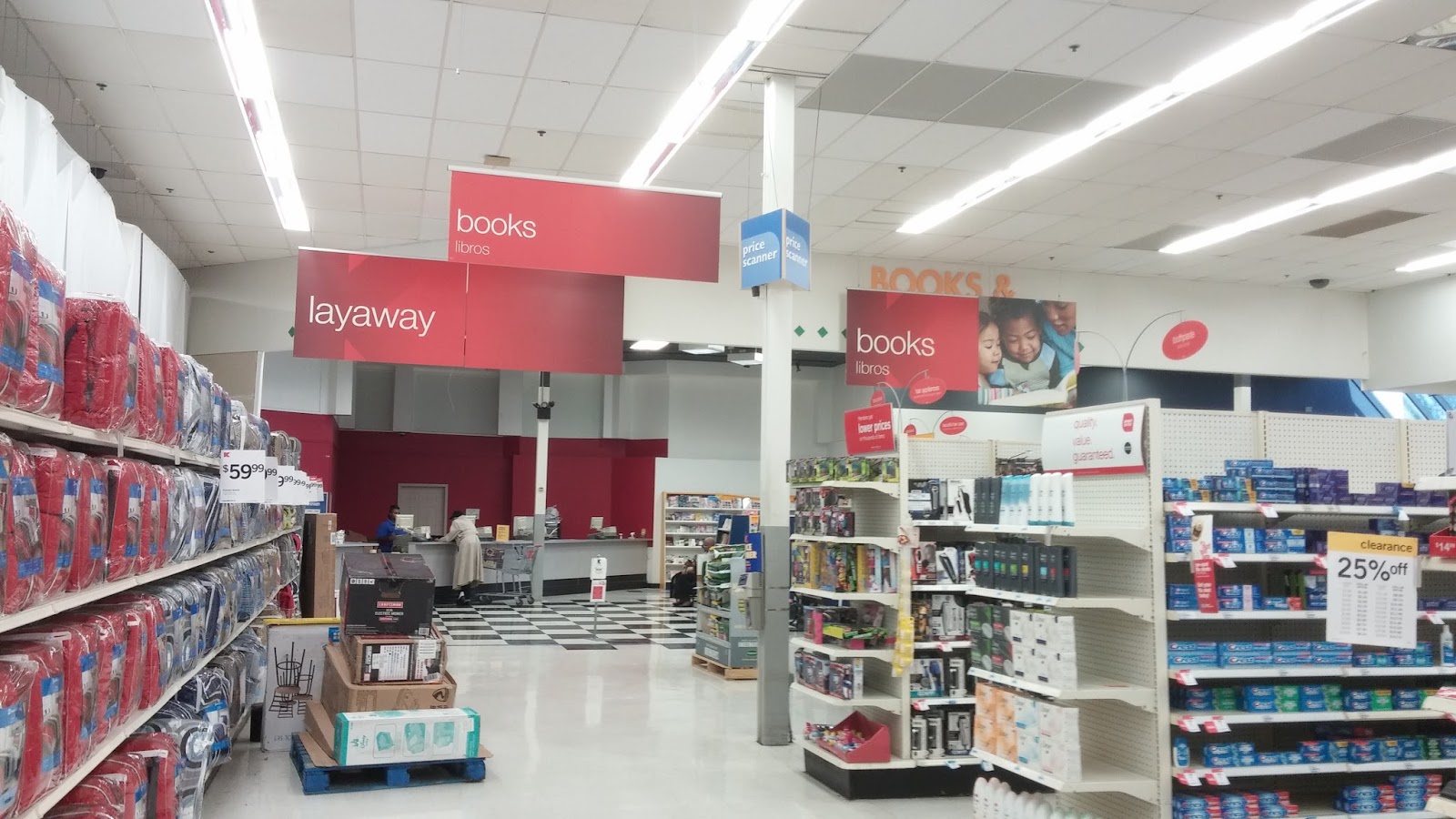
WEEK 1 – Memphis Kmart Closing, I
Prior to the liquidation, books occupied the former café space, but for the closing sale they had been consolidated out here in front of the former pharmacy. Something else I'm kicking myself for: if I had seen that copy of Jimmy Fallon's “Your Baby's First Word Will Be Dada,” I definitely would've bought it!
(c) 2017 Retail Retell
These places are public so these photos are too, but just as I tell where they came from, I'd appreciate if you'd say who :)
Troy, PA. August 2019.
------------------------------------------------------------------------------------------
If you would like to use THIS picture in any sort of media elsewhere (such as newspaper or article), please send me a Flickrmail or send me an email at natehenderson6@gmail.com
WEEK 47 – Southaven Burlington Relocation: Old Store Closing
So with that, we wrap up our interior shots of the Stateline Road Burlington, and step outside as we prepare to say our goodbyes. This shot is taken from an angle slightly behind the one I uploaded yesterday… (cont.)
Burlington Coat Factory (now closed) // 550 Stateline Road W, Southaven, MS 38671
(c) 2017 Retail Retell
These places are public so these photos are too, but just as I tell where they came from, I'd appreciate if you'd say who :)
WEEK 52 – Southaven Burlington Relocation: Finale (Buck's Bargain Center)
Looking even further past the front area of the store, we see the Hardware department right next to Tools, along with more of the central actionway in the foreground. The actionway appeared to be comprised (besides the carts, of course) mostly of large equipment that can't be placed on shelves: again, like you might find inside the entrance of a Lowe's or Home Depot.
There's plenty more to talk about regarding Buck's salesfloor presentation, especially in the “Burlington comparisons” category, but I can't squeeze it all into this description! So be sure to come back tomorrow for more of the stour...
(c) 2017 Retail Retell
These places are public so these photos are too, but just as I tell where they came from, I'd appreciate if you'd say who :)
They're not by any means under the Federal witness protection program but the floral MOCs have been moved to a much safer spot on the wall at the top of the stairs together with other sets built on display. Wasn't even looking for them when I got in the store but one of the staff who recognized me pointed out their new location. They'll remain on display as long as the original Flower Box remains on display at the LEGO House.
Up at the front of the store, another change that took place was the relocation of the recycling bins from a spot along the front end itself to this new alcove right beside the restrooms. Previously, this space had been home to three community display boards that, evidently, the store decided to remove.
Personally, I like this location for the recycling bins better, both in that they're closer to the doors and in that their previous location was, in my opinion, kinda awkward (even more so now, given that the manager's office they were up against is now a family restroom). Too bad I didn't get to make much use of their new spot, seeing as how we had finally received curbside recycling service by this time! :P
(c) 2018 Retail Retell
These places are public so these photos are too, but just as I tell where they came from, I'd appreciate if you'd say who :)
Virginia House
Virginia House was formerly an English manor house that was relocated to Richmond in 1925. The home is now owned and operated by the Virginia Historical Society.
Virginia House was completed a few months before the stock market crash of 1929. Designed by Alexander and Virginia Weddell, the home is situated on a hillside overlooking the historic James River and was constructed from the materials of a sixteenth century English manor house. Although Virginia House was a blend of three romantic English Tudor designs, it was for its time a thoroughly modern home complete with seven full baths, central heat, modern kitchen, and commodious closets.
Mrs. Weddell's appreciation of style is evident as the visitor moves through rooms decorated with English and Spanish antiques, silk draperies, Oriental carpets, and fine silver and china. The nearly eight acres of gardens and grounds that Virginia House rests on were designed by Charles Gillette and provide a rich backdrop to the house throughout the year. The house has been preserved much as it was when the Weddells resided there.
Source: www.vahistorical.org/your-visit/virginia-house
Origins of Virginia House
The Priory of the Augustinian Order of the Holy Sepulcher of Jerusalem was established by Henry de Newburgh, first earl of Warwick, in 1109. The building that housed the order was completed sometime around 1119. Warwick was the seat of all the Holy Sepulcher houses in Britain and enjoyed a golden age for close to a century.
When Henry VIII broke from the Catholic Church in 1536, he confiscated the priory at Warwick. The hundreds of monasteries and nunneries that were closed throughout Britain in the sixteenth century were sold to the king's favorites. The first owner of the priory was Thomas Hawkins, alias Fisher, a fishmonger, who acquired the building and lands during the short reign of Edward VI. Fisher later purchased much of the land surrounding the priory and eventually dismantled most of the monastic buildings and built a house he called "Hawk's Nest," set in a landscaped park. It was at his Tudor manor house that Fisher entertained the newly crowned Elizabeth I. The curvilinear Dutch gables were added to the front façade around 1620, during the reign of James I. The fortunes of the priory at Warwick rose and fell with its subsequent owners, among whom were Henry Wise, royal gardener to Queen Anne, who acquired the house in 1709. The Lloyd banking family bought the priory in the mid-nineteenth century but were forced to sell it in the early part of the twentieth century.
In 1925, Alexander and Virginia Weddell bought the priory at a demolition sale. The Weddells had the house dismantled and rebuilt part of it in Richmond, Virginia, where they hoped the west wing would serve as a museum for the Virginia Historical Society. They planned that the remainder of the house would one day serve as the society's headquarters. With these plans in mind, in 1929 the Weddells deeded Virginia House to the VHS and maintained a lifetime tenancy for themselves.
Packing and shipping
The company that was to demolish the priory felt the stones would crumble in the process, so they decided to make a small explosion in the middle of the building and send only those stones that survived the blast to America. To their amazement, most of the stones fell intact. The more fragile ornaments were packed in boxes with sand to cushion them. The ship bringing the stones to America had to turn back to port as it was taking on water. Consequently, when the stones arrived in Richmond they were soaked in seawater and had to be washed and dried. The first group of stones arrived in Richmond in the spring of 1926. The stones were stored and sorted in a barn on the corner of Massie and Canterbury roads in Windsor Farms over a period of six months.
Construction and design
The west wing of the house is, on the exterior, a replica of Sulgrave Manor, a submanorial house in Northamptonshire, England, belonging at one time to Lawrence Washington, an ancestor of America's first president, George Washington. The center section of the house is a reproduction of the priory in Warwickshire, England. This priory section exhibits the curvilinear gables that the English adopted from the Low Countries in the early seventeenth century. The strapwork design seen on the parapets and on the exterior and interior balustrades was also imported from the Low Countries. Wormleighton Manor, a Spencer-Churchill family estate in England, was the model for the east wing. The architect of Virginia House was Henry Grant Morse, who was primarily a designer of public buildings. Morse traveled in the English countryside with Mr. and Mrs. Weddell as they looked for a model for the house they hoped to build in Windsor Farms.
William Lawrence Bottomley designed the loggia, incorporating columns imported from Spain on the south side. The painted ceiling in the loggia came in part from a sixteenth-century house that once stood on the site of Knole in England. A frieze of old tiles on the walls of the loggia illustrates the early use of gunpowder. The roof of the loggia is a belvedere from which the visitor can have a view of the gardens of Virginia House and the historic James River beyond. Beyond the loggia, the east wall of the west wing bears mason's marks from various periods, some surviving perhaps from the original priory. A porch, built after the completion of the main house, extends from Mrs. Weddell's bedroom. Mrs. Weddell would retreat to her porch on hot summer nights to catch the breezes from the river and, in the morning, she and Mr. Weddell would have breakfast served to them there.
House museum
Virginia House was completed in 1928, and in 1929 it was presented to the Virginia Historical Society with the Weddells retaining lifetime tenancy. Virginia House became the sole responsibility of the VHS in 1948 after Ambassador and Mrs. Weddell, and Mrs. Weddell's personal maid Violet Andrews, were killed in a train crash on New Year's Day.
Today Virginia House is owned and operated by the Virginia Historical Society. The museum and gardens are open by appointment only. The site is also available for meetings and special events.
Source: www.vahistorical.org/your-visit/virginia-house/house
Many of the Nubians you’ll find living at either Nubian village were relocated here during the latter half of the twentieth century as construction of the High Dam in Aswan neared completion. The construction of the dam essentially meant that the Nubian communities had no option but to move
Taken @Aswan, Egypt
Wolfgang Buttress's UK pavilion for the World Expo 2015 in Milan, relocated to Kew Gardens in June 2016
Remodel, Week 5
(cont.) ...and on that note, a fair amount of the merchandise that used to be housed over near the bakery has already found itself relocated to make room for the produce walk-in cooler. As you can see here, prepackaged bread, as well as (on the other side of this shelving) prepackaged muffins, bagels, and tortillas, have all been temporarily placed between the meat department's coffin coolers and the beer aisle, which runs perpendicular to said coolers. In the background of this photo, you can get a better, more zoomed-out indication of just how large the produce cooler will be. Also, for reference, here's a shot taken from over at the bakery, looking toward the spot where I was standing for this pic.
(c) 2017 Retail Retell
These places are public so these photos are too, but just as I tell where they came from, I'd appreciate if you'd say who :)
NS H53 emerges from Enola Yard on their way back to Northumberland, PA with SD40E trio 6311, 6303 and 6327 for power.
WEEK 51 – Barnes & Noble Ole Miss Relocation Revisited (I)
I have this strange tendency to upload photos from Oxford anytime EXCEPT when I’m actually in town. Which, you know, is a majority of the year, so it’s pretty talented that I do this. I did the same thing this exact time last year, as a matter of fact (you might recall my Oxford Walmart album update). This time we’re doing another album update, as Albertsons Florida Blog correctly guessed on Tuesday, and as is clear from the photo you’re looking at above this spiel: the next chapter in the Ole Miss Barnes & Noble campus bookstore saga. (cont.)
Barnes & Noble at Ole Miss (inside the University of Mississippi's Jackson Avenue Center/former Oxford Mall; now closed) // 1111 Jackson Avenue W, Oxford, MS 38655
(c) 2019 Retail Retell
These places are public so these photos are too, but just as I tell where they came from, I'd appreciate if you'd say who :)