View allAll Photos Tagged Protection
Original Caption: Religion Plays an Important Part in the Lives of Residents. The Largest Group of Churchgoers Are Roman Catholics. Members of the New Ulm Cathedral Parish Are Shown Attending a Folk Guitar Mass This Weekly Event Was Begun for the Younger People and Has Become the Most Popular Mass with Standing Room Only. The Church Interior Is Decorated with Baroque Carvings Reminiscent of Churches in Southern Germany's Bavarian.
U.S. National Archives’ Local Identifier: 412-DA-15938
Photographer: Schulke, Flip, 1930-2008
Subjects:
New Ulm (Brown county, Minnesota, United States) inhabited place
Environmental Protection Agency
Project DOCUMERICA
Persistent URL: arcweb.archives.gov/arc/action/ExternalIdSearch?id=558388
Repository: Still Picture Records Section, Special Media Archives Services Division (NWCS-S), National Archives at College Park, 8601 Adelphi Road, College Park, MD, 20740-6001.
For information about ordering reproductions of photographs held by the Still Picture Unit, visit: www.archives.gov/research/order/still-pictures.html
Reproductions may be ordered via an independent vendor. NARA maintains a list of vendors at www.archives.gov/research/order/vendors-photos-maps-dc.html
Access Restrictions: Unrestricted
Use Restrictions: Unrestricted
Poetic
CD :
Happy Mondays
Bummed
Factory
FAC220
Artwork by Central Station Design
'Shaun Ryder is the greatest poet since W. B. Yeats'
Anthony H. Wilson
Postcard :
Pentone
Poetic
Asbury & Asbury
Use Hearing Protection
GMA
Original Caption: Land Stripped by the Hanna Coal Company Off Route 100. 10/1973
U.S. National Archives’ Local Identifier: 412-DA-12350
Photographer: Calonius, Erik
Subjects:
Ohio (United States) state
Environmental Protection Agency
Project DOCUMERICA
Persistent URL: research.archives.gov/description/554802
Repository: Still Picture Records Section, Special Media Archives Services Division (NWCS-S), National Archives at College Park, 8601 Adelphi Road, College Park, MD, 20740-6001.
For information about ordering reproductions of photographs held by the Still Picture Unit, visit: www.archives.gov/research/order/still-pictures.html
Reproductions may be ordered via an independent vendor. NARA maintains a list of vendors at www.archives.gov/research/order/vendors-photos-maps-dc.html
Access Restrictions: Unrestricted
Use Restrictions: Unrestricted
We visited Kingston Maurward College yesterday which is used as a land-based college, but they are also open to the public and let visitors wander around the farm areas, gardens and grounds. They have a lovely lake where you can do a circular walk around it. There was so much noise from the canada geese as they tried to keep their chosen partners safe from marauding male geese intent of making a play for the females. One more in comments
Original Caption: Slag Heap Above Housing on Buffalo Creek near Logan, West Virginia. Slag Heaps Are One of the Items Which Make Mining Families Mad. They Can Be Ignited by Spontaneous Combustion, Lightning, Fire Or Variety of Other Things, and Burn Indefinitely 04/1974
U.S. National Archives’ Local Identifier: 412-DA-14015
Photographer: Corn, Jack, 1929-
Subjects:
West Virginia (United States) state
Environmental Protection Agency
Project DOCUMERICA
Persistent URL: catalog.archives.gov/id/556467
Repository: Still Picture Records Section, Special Media Archives Services Division (NWCS-S), National Archives at College Park, 8601 Adelphi Road, College Park, MD, 20740-6001.
For information about ordering reproductions of photographs held by the Still Picture Unit, visit: www.archives.gov/research/order/still-pictures.html
Reproductions may be ordered via an independent vendor. NARA maintains a list of vendors at www.archives.gov/research/order/vendors-photos-maps-dc.html
Access Restrictions: Unrestricted
Use Restrictions: Unrestricted
Original Caption: Mr. August Vogel Chops Wood to Feed the Wood Burning Kitchen Stove He and His Wife Still Use for Cooking. The Town Is a County Seat Trading Center of 13,000 in a Farming Area of South Central Minnesota. It Was Founded in 1854 by a German Immigrant Land Company That Encouraged Its Kinsmen to Emigrate From Europe. The Town Has Grown Steadily Since 1950 with the Arrival of Several Manufacturing Firms.
U.S. National Archives’ Local Identifier: 412-DA-15865
Photographer: Truman, Gary
Subjects:
New Ulm (Brown county, Minnesota, United States) inhabited place
Environmental Protection Agency
Project DOCUMERICA
Persistent URL: arcweb.archives.gov/arc/action/ExternalIdSearch?id=558315
Repository: Still Picture Records Section, Special Media Archives Services Division (NWCS-S), National Archives at College Park, 8601 Adelphi Road, College Park, MD, 20740-6001.
For information about ordering reproductions of photographs held by the Still Picture Unit, visit: www.archives.gov/research/order/still-pictures.html
Reproductions may be ordered via an independent vendor. NARA maintains a list of vendors at www.archives.gov/research/order/vendors-photos-maps-dc.html
Access Restrictions: Unrestricted
Use Restrictions: Unrestricted
ODC-Fresh Start
I was going to put a potted plant on the table, but I have so many plants around the patio now that I thought I'd go with a decoration instead. The UV spray will keep the decoration from fading in the sun. It beats down on this area all morning!
The Ayutthaya Historical Park (Thai: อุทยานประวัติศาสตร์พระนครศรีอยุธยา (Pronunciation)) covers the ruins of the old city of Ayutthaya, Thailand. The city of Ayutthaya was founded by King Ramathibodi I in 1350:222 The city was captured by the Burmese in 1569; though not pillaged, it lost "many valuable and artistic objects.":42–43 It was the capital of the country until its destruction by the Burmese army in 1767.
In 1969 the Fine Arts Department began with renovations of the ruins, which became more serious after it was declared a historical park in 1976. A part of the park was declared a UNESCO World Heritage Site in 1991. Thirty-five kings ruled the Ayutthaya kingdom during its existence. King Narai (1656-1688) held court not only in Ayutthaya but also from his palace in the nearby city of Lopburi, from where he ruled 8–9 months in the year.
PARK SITES
Wat Chaiwatthanaram
Wat Kasatrathiraj
Wat Kudi Dao
Wat Lokayasutharam
Wat Mahathat
Wat Phanan Choeng
Wiharn Phra Mongkhon Bopit
Wat Phra Ram
Wat Phra Sri Sanphet
Wat Ratchaburana, Ayutthaya
Wat Chai Mongkhon
Wat Yai Chai Mongkhon
Phra Chedi Suriyothai
Ayutthaya historical Study Centre
Japanese Settlement
Wat Phu Khao Thong
Elephant Camp
UNESCO WORLD HERITAGE SITE
In 1991, a part of Ayutthaya Historical Park was declared a UNESCO World Heritage Site under criteria III as an excellent witness to the period of development of a true national Thai art. The inscribed area covered only 289 ha on central and southwest part of Ayutthaya island; as a result, only certain groups of historical sites are under UNESCO protection. The sites including Wat Ratchaburana, Wat Mahathat, Wat Phra Sri Sanphet, Wat Phra Ram and Wiharn Phra Mongkhon Bopit. The sites that are not part of World Heritage Sites are the sites outside Ayutthaya Island; for example, Wat Yai Chai Mongkon, Wat Phanan Choeng, Wat Chaiwatthanaram and Wat Phu Khao Thong.
__________________________
AYUTTHAYA
(/ɑːˈjuːtəjə/; Thai: อยุธยา, Thai pronunciation: [ʔajúttʰajaː]; also spelled Ayudhya) was a Siamese kingdom that existed from 1351 to 1767. Ayutthaya was friendly towards foreign traders, including the Chinese, Vietnamese, Indians, Japanese and Persians, and later the Portuguese, Spaniards, Dutch and French, permitting them to set up villages outside the walls of the capital, also called Ayutthaya.
In the sixteenth century, it was described by foreign traders as one of the biggest and wealthiest cities in the East. The court of King Narai (1656–88) had strong links with that of King Louis XIV of France, whose ambassadors compared the city in size and wealth to Paris.
By 1550, the kingdom's vassals included some city-states in the Malay Peninsula, Sukhothai, and parts of Cambodia.
In foreign accounts, Ayutthaya was called Siam, but many sources say the people of Ayutthaya called themselves Tai, and their kingdom Krung Tai "The Tai country" (กรุงไท).
HISTORICAL OVERVIEW
ORIGINS
According to the most widely accepted version of its origin, the Thai state based at Ayutthaya in the valley of the Chao Phraya River rose from the earlier, nearby Lavo Kingdom (at that time, still under the control of the Khmer Empire) and Suvarnabhumi. One source says that in the mid-fourteenth century, due to the threat of an epidemic, King Uthong moved his court south into the rich floodplain of the Chao Phraya River onto an island surrounded by rivers. The name of the city indicates the influence of Hinduism in the region as it is the Thai pronunciation of the famous Indian city of Ayodhya. It is believed that this city is associated with the Thai national epic, the Ramakien, which is the Thai version of the Ramayana.
CONQUESTS AND EXPANSION
Ayutthaya began its hegemony by conquering northern kingdoms and city-states like Sukhothai,:222 Kamphaeng Phet and Phitsanulok. Before the end of the fifteenth century, Ayutthaya launched attacks on Angkor, the classical great power of the region. Angkor's influence eventually faded from the Chao Phraya River Plain while Ayutthaya became a new great power.
The emerging Kingdom of Ayutthaya was also growing powerful. Relations between the Ayutthaya and Lan Na had worsened since the Ayutthayan support of Thau Choi's rebellion In 1451, Yuttitthira, a noble of the Kingdom of Sukhothai who had conflicts with Borommatrailokkanat of Ayutthaya, gave himself to Tilokaraj. Yuttitthira urged Borommatrailokkanat to invade Phitsanulok, igniting the Ayutthaya-Lan Na War over the Upper Chao Phraya valley (the Kingdom of Sukhothai). In 1460, the governor of Chaliang surrendered to Tilokaraj. Borommatrailokkanat then used a new strategy and concentrated on the wars with Lanna by moving the capital to Phitsanulok. Lan Na suffered setbacks and Tilokaraj eventually sued for peace in 1475.
However, the kingdom of Ayutthaya was not a unified state but rather a patchwork of self-governing principalities and tributary provinces owing allegiance to the king of Ayutthaya under The Circle of Power, or the mandala system, as some scholars suggested. These principalities might be ruled by members of the royal family of Ayutthaya, or by local rulers who had their own independent armies, having a duty to assist the capital when war or invasion occurred. However, it was evident that from time to time local revolts, led by local princes or kings, took place. Ayutthaya had to suppress them.
Due to the lack of succession law and a strong concept of meritocracy, whenever the succession was in dispute, princely governors or powerful dignitaries claiming their merit gathered their forces and moved on the capital to press their claims, culminating in several bloody coups.
Beginning in the fifteenth century, Ayutthaya showed an interest in the Malay Peninsula, but the great trading ports of the Malacca Sultanate contested its claims to sovereignty. Ayutthaya launched several abortive conquests against Malacca which was diplomatically and economically fortified by the military support of Ming China. In the early fifteenth century the Ming admiral Zheng He had established a base of operation in the port city, making it a strategic position the Chinese could not afford to lose to the Siamese. Under this protection, Malacca flourished, becoming one of Ayutthaya's great foes until the capture of Malacca by the Portuguese.
FIRST BURMESE WARS
Starting in the middle of 16th century, the kingdom came under repeated attacks by the Taungoo Dynasty of Burma. The Burmese–Siamese War (1547–49) began with Burmese an invasion and a failed siege of Ayutthaya. A second siege (1563–64) led by King Bayinnaung forced King Maha Chakkraphat to surrender in 1564. The royal family was taken to Bago, Burma, with the king's second son Mahinthrathirat installed as the vassal king. In 1568, Mahinthrathirat revolted when his father managed to return from Bago as a Buddhist monk. The ensuing third siege captured Ayutthaya in 1569 and Bayinnaung made Mahathammarachathirat his vassal king.
After Bayinnaung's death in 1581, uparaja Naresuan proclaimed Ayutthaya's independence in 1584. The Thai fought off repeated Burmese invasions (1584–1593), capped by an elephant duel between King Naresuan and Burmese heir-apparent Mingyi Swa in 1593 during the fourth siege of Ayutthaya in which Naresuan famously slew Mingyi Swa (observed 18 January as Royal Thai Armed Forces day). The Burmese–Siamese War (1594–1605) was a Thai attack on Burma, resulting in the capture of the Tanintharyi Region as far as Mottama in 1595 and Lan Na in 1602. Naresuan even invaded mainland Burma as far as Taungoo in 1600, but was driven back.
After Naresuan's death in 1605, northern Tanintharyi and Lan Na returned to Burmese control in 1614.
The Ayutthaya Kingdom's attempt to take over Lan Na and northern Tanintharyi in 1662–1664 failed.
Foreign trade brought Ayutthaya not only luxury items but also new arms and weapons. In the mid-seventeenth century, during King Narai's reign, Ayutthaya became very prosperous. In the eighteenth century, Ayutthaya gradually lost control over its provinces. Provincial governors exerted their power independently, and rebellions against the capital began.
SECOND BURMESE WARS
In the mid-eighteenth century, Ayutthaya again became ensnared in wars with the Burmese. The Burmese–Siamese War (1759–60) begun by the Konbaung Dynasty of Burma failed. The Burmese–Siamese War (1765–67) resulted in the sack of the city of Ayutthaya and the end of the kingdom by debellatio in April 1767.
KINGSHIP OF AYUTTHAYA KINGDOM
The kings of Ayutthaya were absolute monarchs with semi-religious status. Their authority derived from the ideologies of Hinduism and Buddhism as well as from natural leadership. The king of Sukhothai was the inspiration of Inscription 1 found in Sukhothai, which stated that King Ramkhamhaeng would hear the petition of any subject who rang the bell at the palace gate. The king was thus considered as a father by his people.
At Ayutthaya, however, the paternal aspects of kingship disappeared. The king was considered the chakkraphat (Sanskrit chakravartin) who through his adherence to the law made all the world revolve around him. According to Hindu tradition, the king is the avatar of Vishnu, destroyer of demons, who was born to be the defender of the people. The Buddhist belief in the king is as righteous ruler (Sanskrit: dharmaraja), aiming at the well-being of the people and who strictly follows the teaching of Gautama Buddha.
The kings' official names were reflections of those religions: Hinduism and Buddhism. They were considered as the incarnation of various Hindu gods: Indra, Shiva or Vishnu (Rama). The coronation ceremony was directed by brahmins as the Hindu god Shiva was "lord of the universe". However, according to the codes, the king had the ultimate duty as protector of the people and the annihilator of evil.
According to Buddhism, the king was also believed to be a bodhisattva. One of the most important duties of the king was to build a temple or a Buddha statue as a symbol of prosperity and peace.
For locals, another aspect of the kingship was also the analogy of "The Lord of the Land" or "He who Rules the Earth" (Phra Chao Phaendin). According to the court etiquette, a special language, Rachasap (Sanskrit: Rājāśabda, "Royal Language"), was used to communicate with or about royalty. In Ayutthaya, the king was said to grant control over land to his subjects, from nobles to commoners, according to the Sakna or Sakdina system codified by King Borommatrailokkanat (1448–88). The Sakdina system was similar to, but not the same as feudalism, under which the monarch does not own the land. While there is no concrete evidence that this land management system constituted a formal palace economy, the French François-Timoléon de Choisy, who came to Ayutthaya in 1685, wrote, "the king has absolute power. He is truly the god of the Siamese: no-one dares to utter his name." Another 17th-century writer, the Dutchman Jan van Vliet, remarked that the King of Siam was "honoured and worshipped by his subjects second to god." Laws and orders were issued by the king. For sometimes the king himself was also the highest judge who judged and punished important criminals such as traitors or rebels.
In addition to the Sakdina system, another of the numerous institutional innovations of Borommatrailokkanat was to adopt the position of uparaja, translated as "viceroy" or "prince", usually held by the king's senior son or full brother, in an attempt to regularise the succession to the throne - a particularly difficult feat for a polygamous dynasty. In practice, there was inherent conflict between king and uparaja and frequent disputed successions. However, it is evident that the power of the Throne of Ayutthaya had its limit. The hegemony of the Ayutthaya king was always based on his charisma in terms of his age and supporters. Without supporters, bloody coups took place from time to time. The most powerful figures of the capital were always generals, or the Minister of Military Department, Kalahom. During the last century of Ayutthaya, the bloody fighting among princes and generals, aiming at the throne, plagued the court.
SOCIAL AND POLITICAL DEVELOPMENT
THE REFORMS OF KING
Borommatrailokkanat (r.1448–1488) placed the king of Ayutthaya at the centre of a highly stratified social and political hierarchy that extended throughout the realm. Despite a lack of evidence, it is believed that in the Ayutthaya Kingdom, the basic unit of social organisation was the village community composed of extended family households. Title to land resided with the headman, who held it in the name of the community, although peasant proprietors enjoyed the use of land as long as they cultivated it. The lords gradually became courtiers (อำมาตย์) and tributary rulers of minor cities. The king ultimately came to be recognised as the earthly incarnation of Shiva or Vishnu and became the sacred object of politico-religious cult practices officiated over by royal court brahmans, part of the Buddhist court retinue. In the Buddhist context, the devaraja (divine king) was a bodhisattva. The belief in divine kingship prevailed into the eighteenth century, although by that time its religious implications had limited impact.With ample reserves of land available for cultivation, the realm depended on the acquisition and control of adequate manpower for farm labour and defence. The dramatic rise of Ayutthaya had entailed constant warfare and, as none of the parties in the region possessed a technological advantage, the outcome of battles was usually determined by the size of the armies. After each victorious campaign, Ayutthaya carried away a number of conquered people to its own territory, where they were assimilated and added to the labour force. Ramathibodi II (r.1491–1529) established a corvée system under which every freeman had to be registered as a phrai (servant) with the local lords, Chao Nai (เจ้านาย). When war broke out, male phrai were subject to impressment. Above the phrai was a nai (นาย), who was responsible for military service, corvée labour on public works, and on the land of the official to whom he was assigned. Phrai Suay (ไพร่ส่วย) met labour obligations by paying a tax. If he found the forced labour under his nai repugnant, he could sell himself as a that (ทาส, slave) to a more attractive nai or lord, who then paid a fee in compensation for the loss of corvée labour. As much as one-third of the manpower supply into the nineteenth century was composed of phrai. Wealth, status, and political influence were interrelated. The king allotted rice fields to court officials, provincial governors, military commanders, in payment for their services to the crown, according to the sakdi na system. The size of each official's allotment was determined by the number of commoners or phrai he could command to work it. The amount of manpower a particular headman, or official, could command determined his status relative to others in the hierarchy and his wealth. At the apex of the hierarchy, the king, who was symbolically the realm's largest landholder, theoretically commanded the services of the largest number of phrai, called phrai luang (royal servants), who paid taxes, served in the royal army, and worked on the crown lands.
However, the recruitment of the armed forces depended on nai, or mun nai, literally meaning 'lord', officials who commanded their own phrai som, or subjects. These officials had to submit to the king's command when war broke out. Officials thus became the key figures to the kingdom's politics. At least two officials staged coups, taking the throne themselves while bloody struggles between the king and his officials, followed by purges of court officials, were always seen.
King Trailok, in the early sixteenth century, established definite allotments of land and phrai for the royal officials at each rung in the hierarchy, thus determining the country's social structure until the introduction of salaries for government officials in the nineteenth century.
Outside this system to some extent were the sangha (Buddhist monastic community), which all classes of men could join, and the Overseas Chinese. Wats became centres of Thai education and culture, while during this period the Chinese first began to settle in Thailand and soon began to establish control over the country's economic life.
The Chinese were not obliged to register for corvée duty, so they were free to move about the kingdom at will and engage in commerce. By the sixteenth century, the Chinese controlled Ayutthaya's internal trade and had found important places in the civil and military service. Most of these men took Thai wives because few women left China to accompany the men.
Uthong was responsible for the compilation of a Dharmaśāstra, a legal code based on Hindu sources and traditional Thai custom. The Dharmaśāstra remained a tool of Thai law until late in the 19th century. A bureaucracy based on a hierarchy of ranked and titled officials was introduced, and society was organised in a related manner. However, the caste system was not adopted.
The sixteenth century witnessed the rise of Burma, which had overrun Chiang Mai and Laos and made war on the Thai. In 1569, Burmese forces, joined by Thai rebels, mostly royal family members of Thailand, captured the city of Ayutthaya and carried off the whole royal family to Burma. Dhammaraja (1569–90), a Thai governor who had aided the Burmese, was installed as vassal king at Ayutthaya. Thai independence was restored by his son, King Naresuan (1590–1605), who turned on the Burmese and by 1600 had driven them from the country.
Determined to prevent another treason like his father's, Naresuan set about unifying the country's administration directly under the royal court at Ayutthaya. He ended the practice of nominating royal princes to govern Ayutthaya's provinces, assigning instead court officials who were expected to execute policies handed down by the king. Thereafter royal princes were confined to the capital. Their power struggles continued, but at court under the king's watchful eye.
To ensure his control over the new class of governors, Naresuan decreed that all freemen subject to phrai service had become phrai luang, bound directly to the king, who distributed the use of their services to his officials. This measure gave the king a theoretical monopoly on all manpower, and the idea developed that since the king owned the services of all the people, he also possessed all the land. Ministerial offices and governorships - and the sakdina that went with them - were usually inherited positions dominated by a few families often connected to the king by marriage. Indeed, marriage was frequently used by Thai kings to cement alliances between themselves and powerful families, a custom prevailing through the nineteenth century. As a result of this policy, the king's wives usually numbered in the dozens.
Even with Naresuan's reforms, the effectiveness of the royal government over the next 150 years was unstable. Royal power outside the crown lands - although in theory absolute - was in practice limited by the looseness of the civil administration. The influence of central government and the king was not extensive beyond the capital. When war with the Burmese broke out in late eighteenth century, provinces easily abandoned the capital. As the enforcing troops were not easily rallied to defend the capital, the city of Ayutthaya could not stand against the Burmese aggressors.
RELIGION
Ayutthaya's main religion was Theravada Buddhism. However, many of the elements of the political and social system were incorporated from Hindu scriptures and were conducted by Brahmin priests. Many areas of the kingdom also practised Mahayana Buddhism, Islam and, influenced by French Missionaries who arrived through China in the 17th century, some small areas converted to Roman Catholicism. The influence of Mahayana and Tantric prractices also entered Theravada Buddhism, producing a tradition called Tantric Theravada.
ECONOMIC DEVELOPMENT
The Thais never lacked a rich food supply. Peasants planted rice for their own consumption and to pay taxes. Whatever remained was used to support religious institutions. From the thirteenth to the fifteenth centuries, however, a remarkable transformation took place in Thai rice cultivation. In the highlands, where rainfall had to be supplemented by a system of irrigation that controlled the water level in flooded paddies, the Thais sowed the glutinous rice that is still the staple in the geographical regions of the North and Northeast. But in the floodplain of the Chao Phraya, farmers turned to a different variety of rice - the so-called floating rice, a slender, non-glutinous grain introduced from Bengal - that would grow fast enough to keep pace with the rise of the water level in the lowland fields.
The new strain grew easily and abundantly, producing a surplus that could be sold cheaply abroad. Ayutthaya, situated at the southern extremity of the floodplain, thus became the hub of economic activity. Under royal patronage, corvée labour dug canals on which rice was brought from the fields to the king's ships for export to China. In the process, the Chao Phraya - mud flats between the sea and firm land hitherto considered unsuitable for habitation - was reclaimed and placed under cultivation. Traditionally the king had a duty to perform a religious ceremony blessing the rice plantation.
Although rice was abundant in Ayutthaya, rice export was banned from time to time when famine occurred because of natural calamity or war. Rice was usually bartered for luxury goods and armaments from westerners, but rice cultivation was mainly for the domestic market and rice export was evidently unreliable. Trade with Europeans was lively in the seventeenth century. In fact European merchants traded their goods, mainly modern arms such as rifles and cannons, with local products from the inland jungle such as sapan (lit. bridge) woods, deerskin and rice. Tomé Pires, a Portuguese voyager, mentioned in the sixteenth century that Ayutthaya, or Odia, was rich in good merchandise. Most of the foreign merchants coming to Ayutthaya were European and Chinese, and were taxed by the authorities. The kingdom had an abundance of rice, salt, dried fish, arrack and vegetables.
Trade with foreigners, mainly the Dutch, reached its peak in the seventeenth century. Ayutthaya became a main destination for merchants from China and Japan. It was apparent that foreigners began taking part in the kingdom's politics. Ayutthayan kings employed foreign mercenaries who sometimes entered the wars with the kingdom's enemies. However, after the purge of the French in late seventeenth century, the major traders with Ayutthaya were the Chinese. The Dutch from the Dutch East Indies Company (Vereenigde Oost-Indische Compagnie or VOC), were still active. Ayutthaya's economy declined rapidly in the eighteenth century, until the Burmese invasion caused the total collapse of Ayutthaya's economy in 1788.
CONTACTS WITH THE WEST
In 1511, immediately after having conquered Malacca, the Portuguese sent a diplomatic mission headed by Duarte Fernandes to the court of King Ramathibodi II of Ayutthaya. Having established amicable relations between the kingdom of Portugal and the Kingdom of Siam, they returned with a Siamese envoy with gifts and letters to the King of Portugal. They were the first Europeans to visit the country. Five years after that initial contact, Ayutthaya and Portugal concluded a treaty granting the Portuguese permission to trade in the kingdom. A similar treaty in 1592 gave the Dutch a privileged position in the rice trade.
Foreigners were cordially welcomed at the court of Narai (1657–1688), a ruler with a cosmopolitan outlook who was nonetheless wary of outside influence. Important commercial ties were forged with Japan. Dutch and English trading companies were allowed to establish factories, and Thai diplomatic missions were sent to Paris and The Hague. By maintaining all these ties, the Thai court skilfully played off the Dutch against the English and the French, avoiding the excessive influence of a single power.
In 1664, however, the Dutch used force to exact a treaty granting them extraterritorial rights as well as freer access to trade. At the urging of his foreign minister, the Greek adventurer Constantine Phaulkon, Narai turned to France for assistance. French engineers constructed fortifications for the Thais and built a new palace at Lopburi for Narai. In addition, French missionaries engaged in education and medicine and brought the first printing press into the country. Louis XIV's personal interest was aroused by reports from missionaries suggesting that Narai might be converted to Christianity.
The French presence encouraged by Phaulkon, however, stirred the resentment and suspicions of the Thai nobles and Buddhist clergy. When word spread that Narai was dying, a general, Phetracha, killed the designated heir, a Christian, and had Phaulkon put to death along with a number of missionaries. The arrival of English warships provoked a massacre of more Europeans. Phetracha (reigned 1688–93) seized the throne and expelled the remaining foreigners. Some studies said that Ayutthaya began a period of alienation from western traders, while welcoming more Chinese merchants. But other recent studies argue that, due to wars and conflicts in Europe in the mid-eighteenth century, European merchants reduced their activities in the East. However, it was apparent that the Dutch East Indies Company or VOC was still doing business in Ayutthaya despite political difficulties.
THE FINAL PHASE
After a bloody period of dynastic struggle, Ayutthaya entered into what has been called the golden age, a relatively peaceful episode in the second quarter of the eighteenth century when art, literature, and learning flourished. There were foreign wars. Ayutthaya fought with the Nguyễn Lords (Vietnamese rulers of South Vietnam) for control of Cambodia starting around 1715. But a greater threat came from Burma, where the new Alaungpaya dynasty had subdued the Shan states.
The last fifty years of the kingdom witnessed a bloody struggle among the princes. The throne was their prime target. Purges of court officials and able generals followed. The last monarch, Ekathat, originally known as Prince Anurakmontree, forced the king, who was his younger brother, to step down and took the throne himself.
According to a French source, Ayutthaya in the eighteenth century comprised these principal cities: Martaban, Ligor or Nakhon Sri Thammarat, Tenasserim, Jungceylon or Phuket Island, Singora or Songkhla. Her tributaries were Patani, Pahang, Perak, Kedah and Malacca.
In 1765, a combined 40,000-strong force of Burmese armies invaded the territories of Ayutthaya from the north and west. Major outlying towns quickly capitulated. The only notable example of successful resistance to these forces was found at the village of Bang Rajan. After a 14 months' siege, the city of Ayutthaya capitulated and was burned in April 1767. Ayutthaya's art treasures, the libraries containing its literature, and the archives housing its historic records were almost totally destroyed, and the Burmese brought the Ayutthaya Kingdom to ruin.
The Burmese rule lasted a mere few months. The Burmese, who had also been fighting a simultaneous war with the Chinese since 1765, were forced to withdraw in early 1768 when the Chinese forces threatened their own capital.
With most Burmese forces having withdrawn, the country was reduced to chaos. All that remained of the old capital were some ruins of the royal palace. Provinces proclaimed independence under generals, rogue monks, and members of the royal family.
One general, Phraya Taksin, former governor of Taak, began the reunification effort. He gathered forces and began striking back at the Burmese. He finally established a capital at Thonburi, across the Chao Phraya from the present capital, Bangkok. Taak-Sin ascended the throne, becoming known as King Taak-Sin or Taksin.
The ruins of the historic city of Ayutthaya and "associated historic towns" in the Ayutthaya historical park have been listed by the UNESCO as World Heritage Site. The city of Ayutthaya was refounded near the old city, and is now capital of the Ayutthaya province.
WIKIPEDIA
Range Rover
On duty in Harrogate for a visit by the
Prince of Wales & Duchess of Cornwall
July 2021
Supported by;
North Yorkshire
first time up to Fleetwood, this place has got some great potential so long as you get the sky. I have edited this groan slightly as the original has a sign on it which was too distracting.
Original Caption: Smog over Mt. Adams, a Residential Area of Luxury Apartments and Restored Row Houses. Immaculata Church at Top of Hill 09/1973
U.S. National Archives’ Local Identifier: 412-DA-10868
Photographer: Hubbard, Tom, 1931-
Subjects:
Cincinnati (Hamilton county, Ohio, United States) inhabited place
Environmental Protection Agency
Project DOCUMERICA
Persistent URL: catalog.archives.gov/id/553327
Repository: Still Picture Records Section, Special Media Archives Services Division (NWCS-S), National Archives at College Park, 8601 Adelphi Road, College Park, MD, 20740-6001.
For information about ordering reproductions of photographs held by the Still Picture Unit, visit: www.archives.gov/research/order/still-pictures.html
Reproductions may be ordered via an independent vendor. NARA maintains a list of vendors at www.archives.gov/research/order/vendors-photos-maps-dc.html
Buy copies of selected National Archives photographs and documents at the National Archives Print Shop online: gallery.pictopia.com/natf/photo/
Access Restrictions: Unrestricted
Use Restrictions: Unrestricted
for the thousands of people attending the vigil in hagley park
for the children, women and men who lost their lives in the christchurch massacre
Toghill, Leslie C
TOGHILL, LESLIE CYRIL
Rank: Sergeant
Service No: 612946
Date of Death: 12/02/1942
Age: 23
Service: Royal Air Force, 49 Sqdn.
Panel Reference Panel 95.
Memorial RUNNYMEDE MEMORIAL
Additional Information:
Son of Frederick Henry and Grace Ellen Toghill, of Norwich.
CWGC www.cwgc.org/search-for-war-dead/casualty/1808883/TOGHILL...
In the official Casualty Communique number 173, printed in Flight Magazine on the 19th November, Sergeant L C Toghill is listed amongst those who were “Previously reported missing, now presumed Killed in Action”
12 February, 1942: In recent months, Bomber Command had dropped over 3,000 tons of bombs on the battle cruisers 'Scharnhorst' and 'Gneisenau' and the light cruiser 'Prinz Eugen' as they resided in the French port of Brest. The two larger ships had both been badly damaged, and the threat of further damage had prevented the ships from sailing out into the Atlantic on another raid against allied shipping. In a daring and well-executed operation, the Germans sailed their 3 ships straight up through the English Channel to bring them back to the greater protection of a German port. What followed on the part of the British Command has since been labelled as a catalogue of catastrophes, needless to say that the German warships achieved their destination unharmed. Heavily armed and protected by the Luftwaffe, the Germans exacted a heavy toll during the gallant British attempts to stop their breakout; Fighter Command lost 16 aircraft and the Fleet Air Arm had 6 Swordfish destroyed. Bomber Command's part in the action involved 244 aircraft of which 15 were lost in action, and a further 2 crashing on return. Only 5 Group had been on a 4 hour 'stand by', as bomber Squadrons made frantic efforts to prepare their aircraft. Eventually, 5 Group contributed 64 Hampdens and 15 Manchesters to attack the German warships; 9 Hampdens were reported missing and one crashed on return. 49 Squadron's participation was prompted by a signal from Group received at 10.00hrs requesting 20 aircraft to attack the 'Scharnhorst' and 'Gneisenau' at sea! Cpl Trevor Simpson recalls the urgency with which the preparations were carried out, and he is almost certain that this was the occasion when the Hampdens were taxied into a hangar, bombed up and then taxied out!
In low cloud and rain with extremely poor visibility, only 3 of the squadron's aircraft found the primary target.
It is now believed that two of the aircraft were shot down by German fighters, AE132 piloted by F/Sgt Charles Pollitt and AE396 flown by Sgt Edward Phillips. What we do know for certain is that these two crews plus that of Sgt Mervyn Holt (AE249) disappeared into the dark waters of the North Sea without trace; they are all remembered at Runnymede.
Hampden AE396 (EA-W)
Sgt E.W. Phillips Pilot (Missing)
Sgt A. Jackson W/OP (Missing)
Sgt K.W. Heard Pilot (Missing)
Sgt L.C. Toghill A/G (Missing)
www.bomberhistory.co.uk/49squadron/Roll%20of%20honour/Rol...
Sergeant Edward Walter Phillips, aged 21 - Son of Edward A. and Mary E. Phillips, of Conisbrough, Yorkshire.
CWGC www.cwgc.org/search-for-war-dead/casualty/1804294/PHILLIP...
Sergeant Alexander Jackson, aged 20 - Son of Alexander William and Elsie Jackson, of New Wortley, Leeds, Yorkshire
CWGC www.cwgc.org/search-for-war-dead/casualty/1800975/JACKSON...
Sergeant Kenneth William Heard, aged 20 - Son of John Edward and Emily Winifred Heard, of Leamington Spa, Warwickshire.
CWGC www.cwgc.org/search-for-war-dead/casualty/1799831/HEARD,%...
Tuck, Derrick B
TUCK, DERRICK BERNARD
Rank: Sergeant
Trade: Air Gnr.
Service No: 3000563
Date of Death: 25/06/1945
Age: 19
Service: Royal Air Force Volunteer Reserve
Grave Reference 2. E. 10.
Cemetery MOASCAR WAR CEMETERY
Additional Information:
Son of Albert George and Mabel Gertrude Tuck, of Great Yarmouth, Norfolk.
CWGC www.cwgc.org/search-for-war-dead/casualty/2114827/TUCK,%2...
MOASCAR WAR CEMETERY, Egypt.
Historical Information
Moascar was the name given to the military camp near the town of Ismailia. The desert cemetery was started at Moascar by the military authorities for the burial of war casualties, mainly from the Canal Zone. After the war, further graves were moved into the cemetery from a number of burial grounds in the vicinity where permanent maintenance was not possible.
CWGC www.cwgc.org/find-a-cemetery/cemetery/2009801/MOASCAR%20W...
I can’t find a reference to Derrick in the Official Casualty Lists held at the Flight site, but they are poorly indexed.
I could not find any reference to a crash in Egypt on this day.
.
Winter, Russell H
WINTER, RUSSELL HARRY
Rank: Flying Officer
Trade: W.Op./Air Gnr.
Service No: 169680
Date of Death: 28/07/1944
Age: 29
Service: Royal Air Force Volunteer Reserve, 78 Sqdn.
Grave Reference Grave 11.
Cemetery ST. JORIS COMMUNAL CEMETERY
Additional Information:
Son of George and Lilian Winter, of Norwich; husband of Irene Mabel Winter, of Upper Hillesdon, Norwich.
CWGC www.cwgc.org/search-for-war-dead/casualty/2253042/WINTER,...
Another one who wasn’t readily traceable through the official casualty lists as printed in Flight Magazine.
78 Squadrons were flying Halifax’s at this time.
Bomber Command Diary
27/28 July 1944
30 Mosquitos to Stuttgart and 12 aircraft on Resistance operations. No aircraft lost.
28 July 1944
199 aircraft - 159 Halifaxes, 20 Mosquitos, 20 Stirlings - of Nos 3, 4 and 8 Groups attacked two launching sites and made two further separate raids on the Forêt de Nieppe storage site. All bombing was through cloud but the various methods used were believed to have led to accurate results. 1 Halifax lost from one of the Forêt de Nieppe raids.
28/29 July 1944
494 Lancasters and 2 Mosquitos of Nos 1, 3, 5 and 8 Groups in the last raid of the current series on Stuttgart. German fighters intercepted the bomber stream while over France on the outward flight; there was a bright moon and 39 Lancasters were shot down, 19 per cent of the force.
307 aircraft - 187 Halifaxes, 106 Lancasters, 14 Mosquitos from Nos 1, 6 and 8 Groups - to Hamburg. German fighters again appeared, this time on the homeward flight, and 18 Halifaxes and 4 Lancasters were lost, 12 per cent of the force. The Halifax casualties were 9.6 per cent; No 431 (Canadian) Squadron, flying from Croft airfield in Co. Durham, lost 5 of its 17 aircraft on the raid. This was the first heavy raid on Hamburg since the Battle of Hamburg just a year earlier. The bombing on this raid was not well concentrated. The Germans estimated that only 120 aircraft bombed in the city area, with no recognisable aiming point, though western and harbour areas received the most bombs.
119 aircraft of Nos 1, 4 and 8 Groups attacked the flying bomb stores area at Forêt De Nieppe again. No aircraft lost.
Support and 95 training aircraft on a diversionary sweep over the North Sea, 13 Mosquitos to Frankfurt, 41 RCM sorties, 50 Mosquito patrols, 5 Halifaxes minelaying in the River Elbe. No aircraft lost.
Total effort for the night: 1,126 sorties, 61 aircraft (5.4 per cent) lost.
www.raf.mod.uk/bombercommand/jul44.html
Other casualties from 78 Squadron who died the same day and who are buried in the St Joris Communal Cemetery:-
Flight Lieutenant William Gladstone Hoffman, aged 21, Pilot.
Son of Eagar and Hazel Hoffman; husband of Nan Hoffman, of Forres, Morayshire.
www.cwgc.org/search-for-war-dead/casualty/2253038/HOFFMAN...
The headstones can be seen here
www.inmemories.com/Cemeteries/stjoris.htm
A closer shot of the headstone shows the Star of David.
twgpp.org/information.php?id=2903832
There is a bit more about the cemetery, which attributes Russell Winter and William Hoffman as members of the same crew, of Halifax MZ340 on this Dutch Language site.
translate.google.co.uk/translate?hl=en&sl=nl&u=ht...
There is actually a monument to the crew of the plane, for which there is a photograph on the same site. I’ve tried to tidy up the Google translation of the original piece in Dutch.
Took off at 16.04 on the 28th July from RAF Breighton, England, with a target of the V1 sites and stores in the Forest of Nieppe. 8 miles from the Belgium coast it was hit by German Flak from unit Abt 252 located at Mariakerke, Ostend. The pilot avoided Nieport City, and dropped 16 225kg bombs between St Joris and Kappelle, accidentally killing two civilians at St Joris. The pilot stayed with the damaged aircraft so that the crew could escape. Wireless Operator\Air Gunner Harry Russell Winter was found drowned in the canal with a torn parachute. Halifax EY-X with Pilot William Hoffman aboard crashed at 17.59 at a farm near Great Noordhof.
The crew who survived the crash were F/O W I F Bell, (Navigator), F/O Ronald E F Collier (Bomb Aimer), P/O Kevin W Burns, (Flight Engineer), Sergeant George R G Marley, (Mid-Upper Gunner) and Sergeant Robert C Laing, (Rear Gunner). They were all taken Prisoner. There is a book about the crash, “The Last Flight of Halifax Mk 111 MZ-340 EY-X” by Jean-Pierre Vandorpe.
www.aviationheritage.eu/nl/content/monument-slachtoffers-...
A local comments on a Dutch Forum site that he witnessed the crash, Russell is believed to have struck his head on the door frame and was unconscious when he fell. His parachute did not open.
www.forumeerstewereldoorlog.nl/viewtopic.php?t=8897&s...
Wakefield, Charles A,
WAKEFIELD, CHARLES ALBERT
Rank: Yeoman of Signals
Service No: C/J 39854
Date of Death: 15/02/1942
Age: 42
Service: Royal Navy, H.M.S. President III
Panel Reference 58, 2.
Memorial CHATHAM NAVAL MEMORIAL
Additional Information:
Son of Albert and Mary Louise Wakefield; husband of Ethel Wakefield, of Norwich, Norfolk.
CWGC www.cwgc.org/search-for-war-dead/casualty/2473562/WAKEFIE...
On the 1900 census, the 1 year old Charles A, (Born Hellesdon, Norfolk) was recorded at 159 Aylsham Road, Norwich. At that time this part of Aylsham Road fell within the Parish of St Mary Hellesdon.
This was the household of his parents, Albert E, (aged 25 and a Brickmaker from Heydon, Norfolk) and Louisa, (aged 22 and a Tailoress from Horsford, Norfolk).
The most likely match on the GRO index of marriages is that of a Charles A Wakefield to an Ethel Crossfield that took place in St Georges, Hanover Square, London in the July to September 1929 quarter.
15/02/1942
Empire Spring, steamship
BROWN, Walter T, Act/Able Seaman, C/JX 186153, (President III, O/P), MPK
CHAPMAN, Charles O, Ordinary Telegraphist, P/JX 197809, (President III, O/P), MPK
COX, Albert E G, Convoy Signalmam, C/JX 174046, (Pembroke, O/P), MPK
DIBBEN, Arthur D H, Captain, (Eaglet, O/P), MPK
HARRISON, Arthur, Act/Able Seaman, D/JX 214735, (President III, O/P), MPK
JEFFS, Alexander G, Ordinary Signalman, C/JX 185518, (President III, O/P), MPK
STARKEY, Herbert J, Act/Able Seaman, C/JX 223501, (President III, O/P), MPK
THOMPSON, Robert, Leading Signalman, C/JX 185536, (Pembroke, O/P), MPK
WAKEFIELD, Charles A, Convoy Yeoman of Signals, C/J 39854, (Pembroke, O/P), MPK
WATSON, Lewis T, Convoy Signalmam, C/JX 174071, (Pembroke, O/P), MPK
www.naval-history.net/xDKCas1942-02FEB.htm
Empire Spring
Empire Spring was a 6,946 GRT CAM ship which was built by Lithgows Ltd, Port Glasgow. Launched on 8 March 1941 and completed in June 1941. Torpedoed on 14 February 1942 and sunk by U-576 in the North Atlantic.
en.wikipedia.org/wiki/List_of_Empire_ships_(Si%E2%80%93Sy)#Empire_Spring
She had left the Mersey on the 5th February 1942 in Convoy. The convoy broke up on the 15th February 1942 and the Empire Spring went missing, presumed hit by German Submarine U-576 and sunk with her crew of 42 and 5 Gunners.
www.wrecksite.eu/wreck.aspx?30961
Watson, Arthur C.
WATSON, ARTHUR CHARLES
Rank: Chief Engine Room Artificer
Service No: C/M 34510
Date of Death: 24/08/1940
Age: 37
Regiment/Service: Royal Navy, H.M.S. Penzance
Panel Reference 37, 2.
Memorial CHATHAM NAVAL MEMORIAL
Additional Information:
Son of Henry and Alice Watson; husband of Elsie Edith Watson, of Norwich, Norfolk.
CWGC www.cwgc.org/search-for-war-dead/casualty/2473733/WATSON,...
At 20.38 hours on 24 Aug, 1940, HMS Penzance (L 28) (Cdr A.J. Wavish, RN), escorting the convoy SC-1, was hit by one torpedo from U-37, broke in two and sank in a few minutes southwest of Iceland. When the stern section sank the unsecured depth charges detonated, killing some of the survivors swimming in the water and slightly damaging the U-boat. Nevertheless two ships from the convoy stopped to pick up survivors. Twelve men were picked up by the British steam merchant Fylingdale, but one of them later died of injures and was buried at sea. Seven men were picked up by the Blairmore, which was torpedoed and sunk by the same U-boat later that night. All men from the sloop survived the second sinking, were rescued after about 17 hours by the Swedish motor merchant Eknaren (Master Erik Kallstrom) and landed at Baltimore.
Complement 108 officers and men (90 dead and 18 survivors).
www.uboat.net/allies/merchants/474.html
Webster, Stanley G
WEBSTER, STANLEY GORDON
Rank: Serjeant
Service No: T/45514
Date of Death: 08/07/1942
Regiment/Service: Royal Army Service Corps
Grave Reference 3. G. 7.
Cemetery BEIRUT WAR CEMETERY
Additional Information:
Son of Thomas William and Florence Elizabeth Webster, of Norwich.
CWGC www.cwgc.org/search-for-war-dead/casualty/2188096/WEBSTER...
Woods, Charles W.
Probably
WOODS, CHARLES WILLIAM
Rank: Driver
Service No: T/221302
Date of Death: 14/01/1944
Age: 32
Regiment/Service: Royal Army Service Corps
Grave Reference II. D. 26.
Cemetery BARI WAR CEMETERY
Additional Information:
Son of William and Florance Woods, of Norwich; husband of Hannah Elizabeth Woods, of Norwich.
CWGC www.cwgc.org/search-for-war-dead/casualty/2077260/WOODS,%...
Yallop, John S
(Only match)
YALLOP, JOHN SIDNEY
Rank: Able Seaman
Service No: C/J 96159
Date of Death: 17/09/1940
Service: Royal Navy, H.M.S. Kent
Panel Reference 36, 2.
Memorial CHATHAM NAVAL MEMORIAL
Additional Information:
Husband of M. M. Yallop.
CWGC www.cwgc.org/search-for-war-dead/casualty/2474343/YALLOP,...
Photograph of HMS Kent
www.naval-history.net/Photo06caKent1NP.jpg
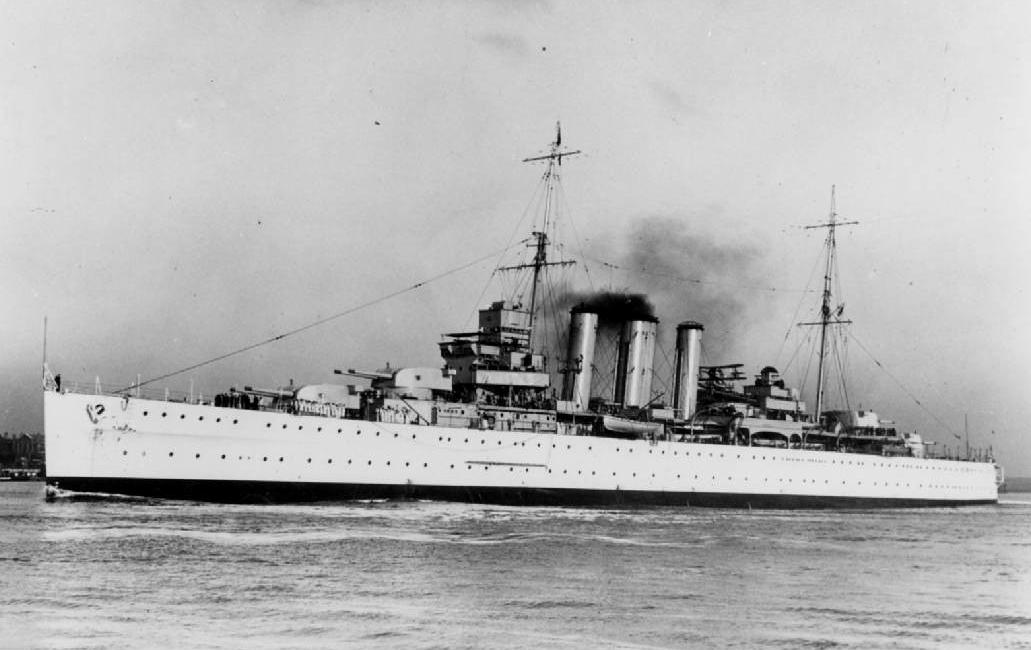
September 1940
17th Carried out bombardment of Fort Cappuzo.
Hit by torpedo from Italian aircraft during air attacks and disabled.
Taken in tow by HMS NUBIAN.
19th Arrived in tow at Alexandria, where emergency repairs were carried out.
www.naval-history.net/xGM-Chrono-06CA-Kent.htm
John was one of 33 crew members killed in the attack including a father and son.
On 15 September 1940 the battleship Valiant, the aircraft carrier Illustrious, Kent, the anti-aircraft cruisers Calcutta and Coventry, and seven destroyers left Alexandria bound for Benghazi. During the night of 16/17 September 1940, aircraft from the Illustrious mined the harbour of Benghazi. They also attacked shipping in the harbour with torpedoes and bombs, sinking two destroyers and two merchant ships. Kent and two destroyers were detached to bombard Bardia while returning to Alexandria. During the night of 17/18 September 1940 the ship was hit in the stern by a torpedo from Italian Savoia-Marchetti SM.79 bombers from the 279th Independent Torpedo Squadron (Italian: Squadriglie Autonomo Aerosiluranti) led by Carlo Emanuele Buscaglia. She was towed back to base by the destroyers with great difficulty.[
en.wikipedia.org/wiki/HMS_Kent_(54)
The Italian Army had crossed the Libyan border into Egypt a few days earlier and had re-taken Fort Capuzzo. The British Army had retreated to prepared position, leaving only a light screen of troops to delay the Italians advance. Part of the deception was to make the screen seen much stronger than it was. In deterring the Italian advance up the coastal road, the Royal Navy bombardment was part of that deception.
Filling Scour Protection along Jetty Piles with the CAT 375, Sint Maarten Port Expansion Project, Philipsburg Job Site, May 20th, 2008
The Port Expansion Project in the Great Bay of Philipsburg, St. Maarten (SXM), Netherlands Antilles, consisted of a Break Water, a Cruise Jetty and a Cargo Harbour.
Contractors Aarsleff of Denmark and Ballast Nedam of Holland
Project Owner The Port of St. Maarten & St. Maarten Port Services
Project Designer Lievense of Holland
Original Caption: The Lone Star passenger train slowly makes its way past debris which resulted from a freight train derailment in Oklahoma which disrupted rail traffic for two days. Old equipment received from the nation's railroads and the poor condition of some of the track and roadbeds leased by Amtrak has caused problems. As old equipment is replaced and roadbeds are improved, some of the problems are disappearing. This train is enroute from Chicago to Houston, Texas, June 1974
U.S. National Archives’ Local Identifier: 412-DA-13579
Photographer: O'Rear, Charles, 1941-
Subjects:
Texas (United States, North and Central America) state
Environmental Protection Agency
Project DOCUMERICA
Persistent URL: research.archives.gov/description/556031
Repository: Still Picture Records Section, Special Media Archives Services Division (NWCS-S), National Archives at College Park, 8601 Adelphi Road, College Park, MD, 20740-6001.
For information about ordering reproductions of photographs held by the Still Picture Unit, visit: www.archives.gov/research/order/still-pictures.html
Reproductions may be ordered via an independent vendor. NARA maintains a list of vendors at www.archives.gov/research/order/vendors-photos-maps-dc.html
Access Restrictions: Unrestricted
Use Restrictions: Unrestricted