View allAll Photos Tagged Normalizes
Simple Red to Blue gradient from the percentage of yes votes. So from 30% to 70%, providing a nice gradient of the vote outcome. Above this was place a completely white layer, which had its alpha channel driven by a normalized total voters field. So Glasgow has a white 100% transparent feature over it, while Orkney has a 0% transparent feature. This symbolises the impact of each councils vote and the result.
gisforthought.com/scottish-independence-referendum-2014-e...
Hebron (Arabic: الخليل al-Ḫalīl; Hebrew: חֶבְרוֹן , Standard Hebrew: Ḥevron ), is located in the southern West Bank, 30 km (19 mi) south of Jerusalem. Nestled in the Judean Mountains, it lies 930 meters (3,050 ft) above sea level. It is the largest city in the West Bank and home to an estimated 175,000 Palestinians, and over 500 Jewish settlers concentrated in and around the old quarter. The city is most notable for containing the traditional burial site of the biblical Patriarchs and Matriarchs and is therefore considered the second-holiest city in Judaism after Jerusalem. The city is also venerated by Muslims for its association with Abraham and was traditionally viewed as one of the "four holy cities of Islam."
Hebron is a busy hub of West Bank trade, responsible for roughly a third of the area's gross domestic product, largely due to the sale of marble from quarries. It is locally well known for its grapes, figs, limestone, pottery workshops and glassblowing factories, and is the location of the major dairy product manufacturer, al-Junaidi. The old city of Hebron is characterized by narrow, winding streets, flat-roofed stone houses, and old bazaars. The city is home to Hebron University and the Palestine Polytechnic University.
Jewish settlement after the Six-Day War
After the Six-Day War in June 1967, Israel, according to the Allon Plan, was to exchange parts of the West Bank with Jordan in a proposal for trading land for peace, with Israel annexing 45% of the West Bank and Jordan the remainder.
Allon thought settlement would determine the country's borders, and submitted to the cabinet a proposal building a Jewish settlement near Hebron. David Ben-Gurion also considered that Hebron was the one sector of the conquered territories that should remain under Jewish control, and have a large Jewish settlement. Apart from its symbolic message to the international community, settling Hebron had a theological significance of cosmic dimensions in some quarters, in that:-
'David's kingdom was a model for the messianic kingdom. David began in Hebron, so settling Hebron would lead to final redemption.'
Much of the ensuing settlement was planned and financed by the Movement for Greater Israel. Failing to obtain a green light from the government, though with Allon's consent, on Passover in 1968, a group led by Rabbi Moshe Levinger rented the main hotel in Hebron as Swiss tourists, with Haim Drukman presiding over seder, and then refused to leave. A Druze border policeman who had assisted Levinger was shot the next day. The Labor government's survival depended on the National Religious Party, and was reluctant to evacuate the settlers, given the massacre that occurred decades earlier. After heavy lobbying by Levinger, the settlement gained the tacit support of Levi Eshkol and Yigal Allon, while it was opposed by Abba Eban and Pinhas Sapir.After more than a year and a half of agitation, and a bloody attack during Sukkot (October 9, 1968), in which a grenade was thrown, apparently by a Hebron boy, onto the mosque stairs wounding 47 Israeli and foreign visitors, the government agreed to legitimize Levinger's wildcat settlement by establishing a town on the outskirts of the city. in an abandoned military base, which was named Kiryat Arba, 'as if to make the place instantly ancient.' In 1979, a group of settlers led by Miriam Levinger moved into the Dabouia, or former Hadassah Hospital, now Beit Hadassah, in central Hebron, and founded the Committee of The Jewish Community of Hebron near the Abraham Avinu Synagogue. The take-over created severe conflict with Arab shopkeepers in the same area, who appealed twice to the Israeli Supreme Court, without success. With this precedent, in February of the following year, the Government legitimized residency in the city of Hebron proper.The pattern of settlement followed by an outbreak of hostilities with local Palestinians was repeated later at Tel Rumeida. The most violent episode occurred on the 2 May 1980 when 6 yeshiva students died, on the way home from Sabbath prayer at the Tomb of the Patriarchs, in a grenade and firearm attack. The event provided a major motivation for settlers near Hebron to join the Jewish Underground.
Supporters of Jewish resettlement within Hebron see their program as the reclamation of an important heritage dating back to Biblical times, which was dispersed or, it is argued, stolen by Arabs after the massacre of 1929.The purpose of settlement is to return to the 'land of our forefathers', and the Hebron model of reclaiming sacred sites in Palestinian territories has pioneered a pattern for settlers in Bethlehem and Nablus. Many reports, foreign and Israeli, are sharply critical of the settlers
Hebron was the one city excluded from the interim agreement of September 1995 to restore rule over all Palestinian West Bank cities to the Palestinian Authority Since The Oslo Agreement, violent episodes have recurred in the city. The Cave of the Patriarchs massacre took place on February 25, 1994 when Baruch Goldstein, an Israeli physician and resident of Kiryat Arba, opened fire on Muslims at prayer in the Ibrahimi Mosque, killing 29, and wounding 125 before the survivors overcame and killed him This event was condemned by the Israeli Government, and the extreme right-wing Kach party was banned as a result] The Israeli government also tightened restrictions on the movement of Palestinians in H2, closed their vegetable and meat markets, and banned Palestinian cars on Shuhada Street
The Jewish community has been subject to attacks by Palestinian militants, especially during the periods of the Intifadas; which saw 3 fatal stabbings and 9 fatal shootings in between the first and second Intifada (0.9% of all fatalities in Israel and the West Bank) and 17 fatal shootings (9 soldiers and 8 settlers) and 2 fatalities from a bombing during the second Intifada and thousands of rounds fired on it from the hills above the Abu-Sneina and Harat al-Sheikh neighbourhoods. 12 Israeli soldiers were killed (Hebron Brigade commander Colonel Dror Weinberg and two other officers, 6 soldiers and 3 members of the security unit of Kiryat Arba) in an ambush Two Temporary International Presence in Hebron observers were killed by Palestinian gunmen in a shooting attack on the road to Hebron
Israeli organization B'Tselem states that there have been "grave violations" of Palestinian human rights in Hebron because of the "presence of the settlers within the city." The organization cites regular incidents of "almost daily physical violence and property damage by settlers in the city", curfews and restrictions of movement that are "among the harshest in the Occupied Territories", and violence and by Israeli border policemen and the IDF against Palestinians who live in the city's H2 sector According to Human Rights Watch, Palestinian areas of Hebron are frequently subject to indiscriminate firing by the IDF, leading to many casualties. One former IDF soldier, with experience in policing Hebron, has testified to Breaking the Silence, that on the briefing wall of his unit a sign des ribing their mission aim was hung that read:"To disrupt the routine of the inhabitants of the neighbourhood." Hebron mayor Mustafa Abdel Nabi invited the Christian Peacemaker Teams to assist the local Palestinian community in opposition to what they describe as Israeli military occupation, collective punishment, settler harassment, home demolitions and land confiscation.
An international unarmed observer force—the Temporary International Presence in Hebron (TIPH) was subsequently established to help the normalization of the situation and to maintain a buffer between the Palestinian Arab population of the city and the Jews residing in their enclave in the old city. On February 8, 2006, TIPH temporarily left Hebron after attacks on their headquarters by some Palestinians angered by the Jyllands-Posten Muhammad cartoons controversy. TIPH came back to Hebron a few months later. On May 15, 2006, a member of a group who is a direct descendant of the 1929 refugees, urged the government to continue its support of Jewish settlement, and allow the return of eight families evacuated the previous January from homes they set up in emptied shops near the Avraham Avinu neighborhood. Beit HaShalom, established in 2007 under disputed circumstances, was under court orders permitting its forced evacuation All the Jews were expelled on December 3, 2008
Since early 1997, following the Hebron Agreement, the city has been divided into two sectors: H1 and H2. The H1 sector, home to around 120,000 Palestinians, came under the control of the Palestinian Authority. H2, which was inhabited by around 30,000 Palestinians, remained under Israeli military control to protect several hundred Jewish residents in the old Jewish quarter. A large drop has since taken place in the Palestinian population in H2, identified with the impact of extended curfews, strict restrictions on movement with 16 check-points in place, the closure of Palestinian commercial activities near settler areas, and settler harassment Survivors and descendants of that prior community are mixed. Some support the project of Jewish redevelopment, others commend living in peace with Hebronite Arabs, while a third group recommend a full pullout. Descendants supporting the latter views have met with Palestinian leaders in Hebron. In 1997 one group of descendants dissociated themselves from the settlers by calling them an obstacle to peace.
A total of 86 Jewish families now live in Hebron.
The first thing I noticed with this picture was that there weren't any pictures of poc scientists. There were more pictures in this hall however, all of them had only white scientists, and there was only one woman. This picture is further showing the lack of poc diversity in schools and the curriculum. This picture affects us because it shows how schools think that the main or only scientists contribute anything to society or white male scientists. I think this notion of needing diversity is seen as too foreign for sometimes "unnecessary". This problem exists because it is so normalized in the education system to only teach people about the white/ European side of history and not anything else. I think this photo can educate people by showing them something that they would never notice if it didn't apply to them in any way. Noticing these types of problems is the first step to trying to fix this issue in the education system.
70mm 300 second exposure at iso 1600 at F2.8 from my hotel room window :)
That's 1142.8 iso 100 seconds/fstop (because I like to normalize things)
April:2015:
Processing Method processing method: using gimp,qtpfsgui,windows microsoft visual studio 2010.
Opened gimp 2.8, used the rotate tool to straighten the image, next i used the crop tool to clean the edge's of the image, next Channel mixer from the colour tool i converted b&w,next i ticked the monochrome box and adjusted to RGB R:145 G:145 B: -110,, then chose the top image changing the mode to "overlay" lowering the opacity to 35%, next used the normalize button from the colour tools to stretch the light levels over the image, this is something i've just started to tried out with my photo processing it's a great tool, next i flattened the image and exported and saved it as JPG, ..
As with all my previous hdr uploads i duplicated image x3 the 1st (original) duplicate i kept as normal, 2nd duplicate image i used the levels tool and adjusted the level from the middle to the left of the graph to 0.7 to make the image "Underexposed". next, opened 3rd image used levels tool & adjusted from the middle again to the right of the graph to 1.7.0 to make the image "Overexposed", next i opened Qtpfsgui free hdr software and loaded in the images as followed. 1. Original, 2.Under exposed, 3. Overexposed. clicked hdr tonemapping button,saved image as JPG, then opned up microsoft visual studio 2010, clicked auto edit, to bring out the colour & tones of the image, then closed to save.
godfather,
Plot
In late summer 1945, guests are gathered for the wedding reception of Don Vito Corleone's daughter Connie and Carlo Rizzi. Vito (Marlon Brando), the head of the Corleone Mafia family – who is known to friends and associates as "Godfather" – and Tom Hagen (Robert Duvall), the Corleone family lawyer and consigliere (counselor), are hearing requests for favors because "no Sicilian can refuse a request on his daughter's wedding day". Meanwhile, the Don's youngest son Michael (Al Pacino), a decorated Marine war hero returning from World War II service, tells his girlfriend Kay Adams (Diane Keaton) anecdotes about his family, attempting to inform her about his father's criminal life; he reassures her that he is different from his family.
Among the guests at the celebration is the famous singer Johnny Fontane (Al Martino), Corleone's godson, who has come from Hollywood to petition Vito's help in landing a movie role that will revitalize his flagging career. Jack Woltz (John Marley), the head of the studio, denies Fontane the part, but Don Corleone explains to Johnny: "I'm gonna make him an offer he can't refuse." Hagen is dispatched to California to fix the problem, but Woltz angrily tells him that he will never cast Fontane in the role, for which he is perfect and will make him an even bigger star, because Fontane seduced and "ruined" a starlet that Woltz favored. Woltz is then persuaded in what is perhaps one of the most notorious scenes in movie history. He wakes up early, and feels something wet in his bed. He pulls back the sheets, and finds himself in a pool of blood with the severed head of his prized $600,000 stud horse in the bed with him, and screams in horror.[5]
Upon Hagen's return, the family meets with Virgil "The Turk" Sollozzo (Al Lettieri), who is being backed by the rival Tattaglia family. He asks Don Corleone for financing, and political and legal protection for importing and distributing heroin. Despite the huge profit to be made, Corleone refuses, explaining that his political influence would be jeopardized by a move into the narcotics trade. The Don's eldest son, hotheaded Sonny (James Caan), who had earlier urged the family to enter into the narcotics trade, breaks ranks during the meeting and questions Sollozzo's assurances as to the Corleone Family's investment being guaranteed by the Tattaglia Family. His father, angry at Sonny's dissension in a non-family member's presence, privately rebukes him later. Don Corleone then dispatches Luca Brasi (Lenny Montana) to infiltrate Sollozzo's organization and report back with information.
Marlon Brando as Don Vito Corleone, the Godfather.
Soon after his meeting with Sollozzo, Don Corleone is gunned down in an assassination attempt, and it is not immediately known whether he has survived. Meanwhile, Sollozzo and the Tattaglias kill Luca Brasi. Sollozzo abducts Tom Hagen and persuades him to offer Sonny the deal previously offered to his father. Enraged, Sonny refuses to consider it and issues an ultimatum to the Tattaglias – turn over Sollozzo or face war. They refuse, and instead send Sonny "a Sicilian message," in the form of a fresh fish wrapped in Luca Brasi's bullet-proof vest, to tell the Corleones that Luca Brasi is dead.
Michael, whom the other Mafia families consider a "civilian" uninvolved in mob business, visits his father at the small private hospital. He is shocked to find that no one is guarding him. Realizing that his father is again being set up to be killed, he calls Sonny for help, moves his father to another room, and goes outside to watch the entrance. Michael enlists help from Enzo the baker, who has come to the hospital to pay his respects. Together, they bluff away Sollozzo's men as they drive by. Police cars soon appear with the corrupt Captain McCluskey, who breaks Michael's jaw when he insinuates that Sollozzo paid McCluskey to set up his father. Just then, Hagen arrives with "private detectives" licensed to carry guns to protect Don Corleone, and he takes Michael home. Sonny responds by having Bruno Tattaglia, son and underboss of Don Phillip Tattaglia (Victor Rendina), killed.
Following the attempt on the Don's life at the hospital, Sollozzo requests a meeting with the Corleones, which Captain McCluskey will attend as Sollozzo's bodyguard. When Michael volunteers to kill both men during the meeting, Sonny and the other senior Family members are amused; however, Michael convinces them that he is serious and that killing Sollozzo and McCluskey is in the family's interest: "It's not personal. It's strictly business." Although police officers are usually off limits for hits, Michael argues that since McCluskey is corrupt and has illegal dealings with Sollozzo, he is fair game.
Before the meeting in an Italian restaurant, McCluskey frisks Michael for weapons and finds him clean. Michael excuses himself to go to the bathroom where he retrieves a planted revolver, and returning to the table, he fatally shoots Sollozzo, then McCluskey. Michael is sent to hide in Sicily, while the Corleone family prepares for all-out warfare with the Five Families who are united against the Corleones, as well as a general clampdown on the mob by the police and government authorities.
Back in New York City, Don Corleone returns home from the hospital and is distraught to learn that it was Michael who killed Sollozzo and McCluskey. Some months later, in 1948, Sonny severely beats Carlo Rizzi for brutalizing the pregnant Connie, and threatens to kill him if he ever abuses his sister again. An angry Carlo responds by plotting with Tattaglia and Don Emilio Barzini (Richard Conte), the Corleones' chief rivals, to have Sonny killed. Carlo again beats Connie in order to lure Sonny out. Furious, Sonny drives off alone to fulfill his threat. On the way, he is ambushed at a toll booth and shot to death in his car. The radio broadcast of Bobby Thomson's home run to win the National League pennant was playing in the tollbooth as the shooting began (though the scene takes place in 1948, not 1951).
Rather than seek revenge for Sonny's killing, Don Corleone meets with the heads of the Five Families to negotiate a cease-fire. Not only is it draining all their assets and threatening their survival, but ending the conflict is the only way that Michael can return home safely. Reversing his previous decision, Vito agrees that the Corleone family will provide political protection for Tattaglia's traffic in heroin, as long as it is controlled and not sold to children. At the meeting, Don Corleone deduces that Don Barzini, not Tattaglia, was ultimately behind the mob war and Sonny's death.
In Sicily, Michael patiently waits out his exile, protected by Don Tommasino, an old family friend. Michael aimlessly wanders the countryside, accompanied by his ever-present bodyguards, Calo and Fabrizio. In a small village, Michael meets and falls in love with Apollonia Vitelli (Simonetta Stefanelli), the beautiful young daughter of a bar owner. They are soon married, but the wedding reveals Michael's presence to Corleone enemies. As the couple is about to be moved to a safer location, Apollonia is killed when their car is bombed; Michael, who barely escapes alive, spotted Fabrizio hurriedly leaving the grounds mere seconds before the explosion, implicating him in the assassination plot.
With his safety guaranteed, Michael returns home. More than a year later, he reunites with his former girlfriend Kay after a total of four years, three in Italy, and one in America. He tells her he wants them to be married. Although Kay is hurt that he waited so long to contact her, she accepts his proposal. With the Don semi-retired, Sonny dead, and middle brother Fredo (John Cazale) considered incapable of running the family business, Michael is now in charge; he promises Kay he will make the family business completely legitimate within five years.
Peter Clemenza (Richard S. Castellano) and Salvatore Tessio (Abe Vigoda), two Corleone Family caporegimes (captains) complain that they are being pushed around by the Barzini Family and ask permission to strike back, but Michael denies the request. He plans to move the family operations to Nevada and after that, Clemenza and Tessio may break away to form their own families. Michael further promises Connie's husband, Carlo, that he will be his right hand man in Nevada. Tom Hagen has been removed as consigliere and is now merely the family's lawyer, with Vito serving as consigliere. Privately, Hagen complains about his change in status, and also questions Michael about a new regime of "soldiers" secretly being built under Rocco Lampone (Tom Rosqui). Don Vito explains to Hagen that Michael is acting on his advice.
In Las Vegas Michael meets with casino boss Moe Greene (Alex Rocco). Michael offers to buy out Greene but is rudely rebuffed. Greene believes the Corleones are weak and that he can secure a better deal from Barzini. As Moe and Michael heatedly negotiate, Fredo sides with Moe. Afterward, Michael warns Fredo to never again "take sides with anyone against the family."
Michael returns home. In a private moment, Vito explains his expectation that the Family's enemies will attempt to murder Michael by using a trusted associate to arrange a meeting as a pretext for assassination. Vito also reveals that he had never intended a life of crime for Michael, hoping that his youngest son would hold legitimate power as a senator or governor. Shortly after, Vito suffers a fatal heart attack while playing with his young grandson Anthony in his tomato garden. At the burial, Tessio conveys a proposal for a meeting with Barzini, which identifies Tessio as the traitor that Vito was expecting.
Robert Duvall as Tom Hagen (left) and Al Pacino as Michael Corleone (right)
Michael arranges for a series of murders to occur simultaneously while he is standing godfather to Connie's and Carlo's newborn son at the church.
* Don Stracci is gunned down along with his men in an elevator by Clemenza.
* Moe Greene is shot through the eye by an unknown assassin while having a massage.
* Don Cuneo is trapped in a revolving door and shot dead by Willi Cicci.
* Don Tattaglia is assassinated in his bed, along with a prostitute, by Rocco Lampone and an unknown associate.
* Don Barzini, along with his bodyguard and driver, are shot by Al Neri, disguised in his old police uniform.
After the baptism, Tessio believes he and Hagen are on their way to the meeting between Michael and Barzini that he has arranged. Instead, he is surrounded by Willi Cicci and other button men as Hagen steps away. Realizing that Michael has uncovered his betrayal, Tessio tells Hagen that he always respected Michael, and that his disloyalty "was only business." He asks if Tom can get him off for "old times' sake," but Tom says he cannot. Meanwhile, Michael confronts Carlo about Sonny's murder and forces him to admit his role in setting up the ambush. Michael assures Carlo he will not be killed, that his punishment is exclusion from all family business. He hands Carlo a plane ticket to exile in Las Vegas. However, when Carlo gets into a car headed for the airport, he is garroted to death by Clemenza, on Michael's orders.
Later, a hysterical Connie confronts Michael, accusing him of murdering Carlo. Kay questions Michael about Connie's accusation, but he refuses to answer, reminding her to never ask him about his business. She insists, and Michael lies, reassuring his wife that he played no role in Carlo's death. Kay believes him and is relieved. The film ends with Clemenza and new caporegimes Rocco Lampone and Al Neri paying their respects to Michael. Clemenza kisses Michael's hand and greets him as "Don Corleone." As Kay watches, the door is closed. Michael is the new Godfather.
[edit] Differences from the novel
One of the primary parts of Puzo's novel which was not used for the movie was the flashback story of Vito Corleone's earlier life, including the circumstances of his emigration to America, his early family life, his murder of Don Fanucci, and his rise in importance in the Mafia, all of which were later used in The Godfather Part II.
Many subplots were trimmed in the transition from the printed page to the screen, including: singer Johnny Fontane's misfortunes with women and his problems with his voice; a teenaged Sonny's impulsive dabbling in street crime and his utterly lacking the tact and coolheadedness possessed in such abundance by his father; Sonny's mistress, Lucy Mancini's new-found love in Dr. Jules Segal (a character entirely missing from the film), who not only assists in surgically repairing Lucy's vaginal malformation (a condition that allowed her to tolerate Sonny's excessively large penis) but he refers Michael to the surgeon who repairs Michael's facial disfigurement (resulting from Capt. McCluskey smashing his jaw), and also operated on Johnny Fontane's vocal cords, thus restoring his singing voice; Jack Woltz's increasing pedophilia; Kay Adams's home life and her brief separation from Michael; Luca Brasi's demonic past; the Corleone family's victorious rise to power in earlier New York gang wars in which Don Corleone survives a previous assassination attempt and Al Capone sends triggermen from Chicago in an unsuccessful attempt to aid a rival gang; disgraced former police officer Al Neri's recruitment as a Corleone hit man, Don Corleone's ingenious plan to bring Michael out of exile in Sicily; the detailed savage attack on the two men who assaulted the undertaker Bonasera's daughter, which was led by Paulie Gatto and involved retainer thugs (which was only alluded to in the film).
According to the book, Michael's reason to Sonny for his new-found aggression is, "They made it personal when they shot Pop. It is not business, it's personal"; but in the movie, he states his father's motto, "It's not personal, Sonny. It's strictly business".
Additionally, the novel states that Lucy Mancini was not pregnant by Sonny when she moved to Las Vegas, thus leaving no room for her son, Vincent Mancini of The Godfather Part III. Puzo wrote the screenplays of all three movies, so he was obviously aware of this contradiction. It could be reconciled by saying that she was simply lying to Tom Hagen in the novel.
Connie's confrontation with Michael over Carlo's death is also portrayed somewhat differently. Although she is initially distraught, accusing Michael of executing her husband as revenge for Sonny's brutal murder, in the book she apologizes to Michael a few days later, claiming she was mistaken, apparently glad to be rid of the abusive Carlo and that Sonny has been avenged. She also marries again less than a year later.
Characters with smaller roles in the film than in the novel include Johnny Fontane, Lucy Mancini, Rocco Lampone, and Al Neri (the last two are reduced to non-speaking roles). Characters dropped in the film adaptation besides Dr. Segal include Vito's terminally-ill consigliere, Genco Abbandando (only spoken of, he appears in a deleted scene featured in The Godfather Saga; he first appears on film in The Godfather II) and Dr. Taza from Sicily. Also, in the book, Michael and Kay have two sons, but in the movies they have a son and a daughter.
The novel and film also differ on the fates of Michael's bodyguards in Sicily, Fabrizio and Calo. The film has them both surviving (Calo, in fact, appears in the third installment). In the book, however, it is implied that Calo dies along with Apollonia in the car explosion, and Fabrizio, implicated as an accomplice in the bombing, is shot and killed as one more victim in the famous "baptism scene" after he is tracked down running a pizza parlor in Buffalo. Fabrizio's murder was deleted from the film but publicity photos of the scene exist.[6] (He is later killed in a completely different scene in The Godfather Saga which was deleted from The Godfather Part II).
The book's ending differs from the movie: whereas in the film Kay suddenly realizes that Michael has become "like his family", the drama is toned down in the book. She leaves Michael and goes to stay with her parents. When Tom Hagen visits her there, he lets her in on family secrets for which, according to him, he would be killed should Michael find out what he has revealed. This is then followed by Kay's visit to the church, where she prays for her husband's soul.
[edit] Cast
* Marlon Brando as Don Vito Corleone – the boss (the "Don") of the Corleone family, Formerly known as Vito Andolini. He is the father of Sonny, Fredo, Michael and Connie and adoptive father to Tom Hagen. Husband of Carmella Corleone. A native Sicilian.
* Al Pacino as Michael Corleone – the Don's and Carmella's youngest son, recently returned from military service following the end of World War II. The only college-educated member of the family, he initially wants nothing to do with the Corleone family business. His evolution from doe-eyed outsider to ruthless boss is the key plotline of the film.
* James Caan as Santino "Sonny" Corleone – Vito's and Carmella's hot-headed eldest son; he is being groomed to succeed his father as head of the Corleone family. He is the family's underboss.
* Robert Duvall as Tom Hagen – an informally adopted son of Vito and Carmella Corleone, he is also the family lawyer and the new consigliere (counselor). He is not Sicilian, but German-Irish.
* Diane Keaton as Kay Adams – Michael's girlfriend and, ultimately, his wife and mother to his children.
* John Cazale as Fredo Corleone – the middle son of Vito and Carmella Corleone. Fredo is not very bright and appears to be the weakest of the Corleone brothers.
* Talia Shire as Constanzia "Connie" Corleone – Vito's and Carmella's youngest child and only daughter. She marries Carlo Rizzi.
* Richard S. Castellano as Peter "Pete" Clemenza – a caporegime for the Corleone family.
* Abe Vigoda as Salvatore "Sal" Tessio – a caporegime for the Corleone Family.
* Al Lettieri as Virgil "The Turk" Sollozzo – a heroin dealer associated with the Tattaglia family.
* Gianni Russo as Carlo Rizzi – Connie's husband. Becomes an associate of the Corleone family, and ultimately betrays Sonny to the Barzini family.
* Sterling Hayden as Captain Mark McCluskey – a corrupt police captain on Sollozzo's payroll.
* Lenny Montana as Luca Brasi – an enforcer utilized by Vito Corleone.
* Richard Conte as Emilio Barzini– Don of the Barzini family.
* Al Martino as Johnny Fontane – a world-famous popular singer and godson of Vito.
* John Marley as Jack Woltz – a powerful Hollywood producer.
* Alex Rocco as Moe Greene – a longtime associate of the Corleone family who owns a Las Vegas hotel.
* Morgana King as Carmella Corleone – Vito's wife and mother of Sonny, Fredo, Michael and Connie, and adoptive mother to Tom Hagen.
* John Martino as Paulie Gatto – A "button man" (soldier/hit man) under Capo Pete Clemenza and Vito's driver.
* Victor Rendina as Philip Tattaglia– Don of the Tattaglia family.
* Simonetta Stefanelli as Apollonia Vitelli-Corleone – A stunningly beautiful young girl Michael meets and marries while in Sicily.
* Louis Guss as Don Zaluchi – Don of the Zaluchi family of Detroit.
* Tom Rosqui as Rocco Lampone – a soldier under Clemenza who eventually becomes a caporegime in the Corleone family.
* Joe Spinell as Willi Cicci – a soldier in the Corleone family.
* Richard Bright as Al Neri – Michael Corleone's bodyguard. He eventually becomes a caporegime.
* Julie Gregg as Sandra Corleone – wife of Sonny.
[edit] Production
[edit] Coppola and Paramount
Francis Ford Coppola was not the first choice to direct. At least two other directors were approached first. Italian director Sergio Leone was offered the job, but he declined in order to direct his own gangster opus, Once Upon a Time in America, which focused on Jewish-American gangsters.[7] According to Robert Evans, head of Paramount Pictures at the time, Coppola also did not initially want to direct the film because he feared it would glorify the Mafia and violence, and thus reflect poorly on his Sicilian and Italian heritage; on the other hand, Evans specifically wanted an Italian-American to direct the film because his research had shown that previous films about the Mafia that were directed by non-Italians had fared dismally at the box office, and he wanted to, in his own words, "smell the spaghetti". When Coppola hit upon the idea of making it a metaphor for American capitalism, however, he eagerly agreed to take the helm.[8] At the time, Coppola had directed eight previous films, the most notable of which was the film version of the stage musical Finian's Rainbow — although he had also received an Academy Award for co-writing Patton in 1970.[9] Coppola was in debt to Warner Bros. for $400,000 following budget overruns on George Lucas's THX 1138, which Coppola had produced, and he took The Godfather on Lucas's advice.[10]
There was intense friction between Coppola and the studio, Paramount Pictures, and several times Coppola was almost replaced. Paramount maintains that its skepticism was due to a rocky start to production, though Coppola believes that the first week went extremely well. Paramount thought that Coppola failed to stay on schedule, frequently made production and casting errors, and insisted on unnecessary expenses. Coppola says he was shadowed by a replacement director, who was ready to take over if Coppola was fired, but despite such intense pressure, Coppola managed to defend his decisions and avoid being replaced.[11]
Paramount was in financial troubles at the time of production and so was desperate for a "Big Hit" to boost business, hence the pressure Coppola faced during filming. They wanted The Godfather to appeal to a wide audience and threatened Coppola with a "Violence coach" to make the film more exciting. Coppola added a few more violent scenes to keep the studio happy. The scene where Connie breaks crockery after finding out that her husband is playing around, was added for this reason.[11]
[edit] Casting
Coppola's casting choices were unpopular with studio executives at Paramount Pictures, particularly Marlon Brando as Don Vito Corleone. Paramount, which wanted Laurence Olivier (who could not take the part owing to health problems), originally refused to allow Coppola to cast Brando in the role, citing difficulties Brando had on recent film sets. One studio executive proposed Danny Thomas for the role citing the fact that Don Corleone was a strong "family man." At one point, Coppola was told by the then-president of Paramount that "Marlon Brando will never appear in this motion picture". After pleading with the executives, Coppola was allowed to cast Brando only if he appeared in the film for much less salary than his previous films, perform a screen-test, and put up a bond saying that he would not cause a delay in the production (as he had done on previous film sets).[12] Coppola chose Brando over Ernest Borgnine on the basis of Brando's screen test, which also won over the Paramount leadership. Brando later won an Academy Award for his portrayal, which he refused to accept.
The studio originally wanted Robert Redford or Ryan O'Neal to play Michael Corleone, but Coppola wanted an unknown who looked like an Italian-American, whom he found in Al Pacino.[11] Pacino was not well known at the time, having appeared in only two minor films, and the studio did not consider him right for the part,[12] in part because of his height. Pacino was given the role only after Coppola threatened to quit the production. Jack Nicholson, Dustin Hoffman, Warren Beatty, Martin Sheen,[12] and James Caan also auditioned.[12]
Among those who auditioned for other parts were Bruce Dern, Paul Newman and Steve McQueen, who were considered for the role of Tom Hagen that eventually went to Robert Duvall. Sylvester Stallone auditioned for Carlo Rizzi and Paulie Gatto, Anthony Perkins for Sonny, and Mia Farrow auditioned for Kay. William Devane was seen for the role of Moe Greene. Mario Adorf was approached for a role as well. A then-unknown Robert De Niro auditioned for the roles of Michael, Sonny, Carlo and Paulie Gatto. He was cast as Paulie, but Coppola arranged a "trade" with The Gang That Couldn't Shoot Straight to get Al Pacino from that film. De Niro later played the young Vito Corleone in Part II, winning a Best Supporting Actor Oscar for the role.
To some extent, The Godfather was a family affair for Francis Ford Coppola. Carmine Coppola, his father, who had a distinguished career as a composer, conductor and arranger, wrote additional music for the film and appeared in a bit part as a piano player, and Carmine's wife Italia Coppola was an extra. The director's sister Talia Shire was cast as Connie, and his infant daughter, Sofia, played Connie's and Carlo's newborn son, Michael Francis Rizzi, in the climactic baptism scene near the movie's end.[13] Coppola also cast his sons as Frank and Andrew Hagen, the two sons of Tom Hagen. They are seen in the Sonny-Carlo streetfight scene and behind Al Pacino and Robert Duvall during the funeral scene.
[edit] Star salaries
Al Pacino, James Caan and Diane Keaton each received $35,000 for their work on The Godfather, and Robert Duvall got $36,000 for eight weeks of work. Marlon Brando, on the other hand, was paid $50,000 for six weeks and weekly expenses of $1,000, plus 5% of the film, capped at $1.5 million. Brando later sold his points back to Paramount for $300,000.[14]
[edit] Filming
Most of the principal photography took place from 29 March 1971 to 6 August 1971, although a scene with Pacino and Keaton was shot in the autumn — there were a total of 77 days of shooting, fewer than the 83 for which the production had budgeted.
One of the movie's most shocking moments involved the real severed head of a horse. Animal rights groups protested the inclusion of the scene. Coppola later stated that the horse's head was delivered to him from a dog food company; a horse had not been killed specifically for the movie. This scene was shot in Port Washington, New York.[11][12]
In the novel, Jack Woltz, the movie producer whose horse's head is put in his bed, is also shown to be a pedophile as Tom Hagen sees a young girl (presumably one of Woltz's child stars) crying while walking out of Woltz's room. This scene was cut from the theatrical release but can be found on the DVD (though Woltz can still briefly be seen kissing the girl on the cheek in his studio in the film).
The shooting of Moe Green through the eye was inspired by the death of gangster Bugsy Siegel. To achieve the effect, actor Alex Rocco's glasses had two tubes hidden in their frames. One had blood in it, and the other had a BB and compressed air. When the gun was shot, the compressed air shot the BB through the glasses, shattering them from the inside. The other tube then released the blood.[citation needed]
The equally startling scene of McClusky's shooting was accomplished by building up a fake forehead on top of actor Sterling Hayden. A gap was cut in the center, filled with fake blood, and capped off with a plug of prosthetic flesh. During filming, the plug was quickly yanked out with monofilament fishing line, making a bloody hole suddenly appear in Hayden's head.
The opening scene of The Godfather is a long, slow zoom, starting with a close-up of the undertaker, Bonasera, who is petitioning Don Corleone, and ending with the Godfather, seen from behind, framing the scene. This zoom, which lasts for about three minutes, was shot with a computer-controlled zoom lens designed by Tony Karp.[15] The lens was also used in the making of Silent Running.[16]
[edit] Locations
Locations[17] around New York City and its environs were used for the film, including the then-closed flagship store of Best & Company on Fifth Avenue, which was dressed up and used for the scene in which Pacino and Keaton are Christmas shopping. At least one location in Los Angeles was used also (for the exterior of Woltz's mansion), for which neither Robert Duvall nor John Marley was available; in some shots, it is possible to see that extras are standing in for the two actors. A scene with Pacino and Keaton was filmed in the town of Ross, California. The Sicilian towns of Savoca and Forza d'Agrò outside of Taormina were also used for exterior locations. Interiors were shot at Filmways Studio in New York.
A side entrance to Bellevue Hospital was used for Michael's confrontation with police Captain McCluskey.[18] As of 2007, the steps and gate to the hospital were still there but victim to neglect.
The hospital interiors, when Michael visits his father there, were filmed at the New York Eye and Ear Infirmary on 14th Street, in Manhattan, New York City.
The scene in which Don Barzini was assassinated was filmed on the steps of the New York State Supreme Court building on Foley Square in Manhattan, New York City.[19]
Two churches were used to film the baptism scene. The interior shots were filmed at Old St. Patrick's in New York. For the baptism, Bach's Passacaglia and Fugue in C minor, BWV 582 was used, as were other Bach works for the pipe organ. The exterior scenes following the baptism were filmed at Mount Loretto Church in Pleasant Plains on Staten Island, New York. In 1973 much of Mount Loretto Church was destroyed in a fire. Only the façade and steeple of the original church remained, and were later incorporated into a new structure that was built to replace the structure destroyed in the fire.
The funeral scene was filmed at Calvary Cemetery in Woodside, Queens.[20]
[edit] Critical reception
The film is greatly respected among international critics and the public and is routinely listed as one of the greatest films ever made.[21] Rotten Tomatoes reported that 100% of 61 reviews were positive[22] and Metacritic, which assigns a normalized rating out of 100 to reviews from mainstream critics, the film has received a perfect average score of 100, based on 14 reviews.[23] It was voted greatest film of all time by Entertainment Weekly,[24] and is now ranked as the second greatest film in American cinematic history – behind Citizen Kane by the American Film Institute.[4] In the 2002 Sight & Sound poll of international critics, The Godfather (along with The Godfather Part II) was ranked as the fourth best film of all time.[25] Both The Godfather and The Godfather Part II were selected for preservation in the United States National Film Registry in 1990 and 1993, respectively, while The Godfather Part III was not.
The soundtrack's main theme by Nino Rota was also critically acclaimed; the main theme ("Speak Softly Love") is well-known and widely used. (See Score Controversy)
Stanley Kubrick believed that The Godfather was possibly the greatest movie ever made, and without question the best cast.[26]
[edit] Awards and honours
Academy Awards
1. Best Actor, Marlon Brando
2. Best Picture, Albert S. Ruddy
3. Best Adapted Screenplay, Mario Puzo, Francis Ford Coppola
Golden Globe Awards
1. Best Picture - Drama
2. Best Director, Francis Ford Coppola
3. Best Actor - Drama, Marlon Brando
4. Best Original Score, Nino Rota
5. Best Screenplay, Mario Puzo, Francis Ford Coppola
BAFTA Awards
1. Best Music, Nino Rota
Love Theme From The Godfather
Play sound
The famous theme, composed by Larry Kusic and Nino Rota.
Problems listening to this file? See media help.
The Godfather won the Academy Awards for Best Picture, Best Writing (adapted screenplay) for Francis Coppola and Mario Puzo, and Best Actor in a Leading Role for Marlon Brando, who declined to collect the award and sent Native American actress Sacheen Littlefeather to the Oscars in his place to explain his reasons.[27] The film had been nominated for eight other Academy Awards.
The film won five Golden Globes, one Grammy, and numerous other awards.
[edit] Score controversy
Nino Rota's score was removed at the last minute from the list of 1973 Academy Award nominees when it was discovered that he had used the theme in Eduardo De Filippo's 1958 comedy Fortunella. Although in the earlier film the theme was played in a brisk, staccato and comedic style, the melody was the same as the love theme from The Godfather, and for that reason was deemed ineligible for an Oscar.[28] Despite this, The Godfather Part II won a 1974 Oscar for best original score, although it featured the same love theme that made the 1972 score ineligible.
[edit] Current rankings
* The film is ranked as #1 on Metacritic's top 100 list,[29] and in the top 10 on Rotten Tomatoes' all-time best list.[30]
* In 2002, The Godfather and The Godfather Part II reached #2 in Channel 4's "100 Greatest Films" poll.[31]
* Entertainment Weekly named The Godfather the greatest film ever made.[24]
* The Godfather was voted in at #1 in Empire Magazine's "500 Greatest Films Ever" poll in November 2008.[32]
[edit] American Film Institute
* 1998 AFI's 100 Years... 100 Movies #3
* 2001 AFI's 100 Years... 100 Thrills #11
* 2005 AFI's 100 Years... 100 Movie Quotes:
o "I'm going to make him an offer he can't refuse," #2
* 2005 AFI's 100 Years of Film Scores #5
* 2007 AFI's 100 Years... 100 Movies (10th Anniversary Edition) #2
* 2008 AFI's 10 Top 10 #1 Gangster film
[edit] Cinematic influence
Although many films about gangsters had been made before The Godfather, Coppola's sympathetic treatment of the Corleone family and their associates, and his portrayal of mobsters as characters of considerable psychological depth and complexity[33] was hardly usual in the genre. This was even more the case with The Godfather Part II, and the success of those two films, critically, artistically and financially, opened the doors for more and varied depictions of mobster life, including films such as Martin Scorsese's Goodfellas and TV series such as David Chase's The Sopranos.
The image of the Mafia as being a feudal organization with the Don being both the protector of the small fry and the collector of obligations from them to repay his services, which The Godfather helped to popularize, is now an easily recognizable cultural trope, as is that of the Don's family as a "royal family". (This has spread into the real world as well – cf. John Gotti – the "Dapper Don", and his celebritized family.) This portrayal stands in contrast to the more sordid reality of lower level Mafia "familial" entanglements, as depicted in various post-Godfather Mafia fare, such as Scorsese's Mean Streets and Casino, and also to the grittier hard-boiled pre-Godfather films.
In the 1999 film Analyze This, which starred Robert De Niro and Billy Crystal, many references are made both directly and indirectly to the Godfather. One dream scene is almost a shot by shot replica of the attempted assassination of Vito Corleone (Crystal playing the Don and De Niro playing Fredo). In the 1990 comedy The Freshman, Marlon Brando plays a role reminiscent of Don Corleone. And one of those most unlikely homages to this film came in 2004, when the PG-rated, animated family film Shark Tale was released with a storyline that nodded at this and other movies about the Mafia.
The 2005 Indian film Sarkar and many others, made by Ram Gopal Varma, with Amitabh Bachan in the lead role as a "Don" and his son Abhishek Bachan as the equivalent of Michael, is modeled on The Godfather with due credits appearing at the beginning of the film.
[edit] Adaptations
[edit] Chronological versions
Main article: The Godfather Saga
In 1975, Coppola edited The Godfather and The Godfather Part II together for TV, putting the scenes in chronological order and adding some previously unseen footage, but also toning down the violence, sex, and profanity. It is rated TV-14. This version of the story was called The Godfather Saga. In 1981, Paramount released the Godfather Epic box set which combined parts I & II in chronological order, again with additional scenes not shown in theaters. In 1992, Coppola would again re-edit all three Godfather movies (The Godfather, The Godfather Part II and The Godfather Part III) in chronological order dubbed The Godfather Trilogy 1901-1980. It was released on VHS and laserdisc in 1993 but has yet (as of 2008) to appear on DVD. The total run time for this version is 583 minutes (9 hours, 43 minutes). This version spanned five VHS tapes and incorporated new previously deleted scenes that had not been seen in The Godfather Saga. This set also included a sixth VHS tape: "The Godfather Family: A Look Inside" a making-of documentary.
[edit] Additional scenes
Main article: The Godfather Additional Scenes
None of these releases contains all the additional scenes in one package. The Saga contains scenes not in the Epic or Trilogy, the Epic contains scenes not in the Saga or Trilogy, and the Trilogy contains scenes not in the Saga or the Epic. Fans have longed for a complete release of the entire series,[citation needed] though Francis Ford Coppola has stated that the films were meant to be seen in their original form and has not agreed (as of 2008) to a chronological release.
[edit] 2001 DVD release
The Godfather was released on DVD for the first time on 9 October 2001 as part of a DVD package called The Godfather DVD Collection.[34] The collection contained all three films with commentary from Francis Ford Coppola and a bonus disc that featured a 73-minute documentary from 1991 titled The Godfather Family: A Look Inside, plus a 1971 documentary. The package also contained deleted footage, including the additional scenes originally contained in The Godfather Saga; "Francis Coppola's Notebook" a look inside a notebook the director kept with him at all times during the production of the film; rehearsal footage; and video segments on Gordon Willis's cinematography, Nino Rota's and Carmine Coppola's music, Francis Ford Coppola, locations and Mario Puzo's screenplays. The DVD also held a Corleone family tree, a "Godfather" timeline, and footage of the Academy Award acceptance speeches.[35]
The restoration was confirmed by Francis Ford Coppola during a question-and-answer session for The Godfather Part III, when he said that he had just seen the new transfer and it was "terrific".
[edit] The Coppola Restoration
After a careful restoration of the aging first two movies, The Godfather movies were released on Blu-ray and DVD on 23 September 2008 under the title The Godfather: The Coppola Restoration. The work was done by Robert A. Harris of the Film Preserve. The Blu-ray box set (four discs) includes high-definition extra features on the restoration and film. They are included on disc 5 of the DVD box set (five discs).
Other extras are ported over from Paramount's 2001 DVD release. There are slight differences between the repurposed extras on the DVD and Blu-ray sets, with the HD box having more content.[36]
Paramount lists the new (HD) extra features as:
* Godfather World
* The Masterpiece That Almost Wasn't
* …when the shooting stopped
* Emulsional Rescue Revealing The Godfather
* The Godfather on the Red Carpet
* Four Short Films on The Godfather
* The Godfather vs. The Godfather, Part II
* Cannoli
* Riffing on the Riffing
* Clemenza
The new DVD boxset was released on 2 June 2008 in Europe.[37] It has been rerated as a "15" by the BBFC.[38] It is unclear whether a chronological box set will be released.
* Coppola restoration on Blu-ray (2008): End credit theme music (Godfather Part II) is missing the final (approx. 10 second) chord from film proper. This missing chord would be located immediately before the restoration credit music begins. Robert A. Harris has not publicly commented about this.
[edit] In popular culture
The Godfather along with the other films in the trilogy, had a strong impact on the public at large. Don Vito's line "I'm gonna make him an offer he can't refuse" was voted as the second most memorable line in cinema history in AFI's 100 Years... 100 Movie Quotes by the American Film Institute.[39]
Reports from Mafia trials and confessions suggest that Mafia families began a "real-life" tradition of paying respect to the family Don by kissing his ring, in imitation of the ending scene of the movie.[citation needed] There is no evidence of this custom being mentioned before the movie.
The scene in which a delivery is made of a pair of pants and bullet proof vest wrapped around a fish is explained to be an old Sicilian message, "Luca Brasi sleeps with the fishes". This expression has made it into widespread American parlance.
An indication of the continuing influence of The Godfather and its sequels can be gleaned from the many references to it which have appeared in every medium of popular culture in the decades since the film's initial release. That these homages, quotations, visual references, satires and parodies continue to pop up even now shows clearly the film's enduring impact. In the television show The Sopranos, Tony Soprano's topless bar is named Bada Bing after the line in The Godfather when Sonny says, "You've gotta get up close like this and bada-bing! You blow their brains all over your nice Ivy League suit."
In addition, the 1997 Welsh film Twin Town (dir. Kevin Allen) set in Swansea features a scene in which a severed dog's head is discovered in its owner's bed, just as Jack Woltz finds the head of his prize stud in his bed. Another homage to the famous decapitated horse scene was a 2008 Audi commercial for their new R8 model, first aired during Super Bowl XLII, in which the grill of a rival luxury car is discovered in the oil-soaked bed. In the television show Arrested Development, the scene is parodied when Michael Bluth discovers the handlebars of his bike in his bed. Yes Dear episode "On Your Mark Get Set Mow" ends with a mower steering wheel being found in Greg's bed, as a warning from other mowers. In The Simpsons episode "Lisa's Pony," Homer buys Lisa a pony and leaves it in her bed as a surprise. In the morning Lisa notices something in her bed, removes the blanket to reveal the horse (only his head is showing) which prompts Lisa to scream in shock. In the Simpsons, there is also another allusion to the horse's head scene in the episode "Guess Who's Coming to Criticize Dinner?"; Homer has given a bad review to Luigi's Eatery and Luigi delivers a horse's head to Homer's bed, but Homer eats the head and gives it a bad review. The scene is also imitated in The King of Queens when Arthur wakes up and finds his bed soaked in Clam Soup. At the very end of the episode "Fun It" of That '70s Show, Jackie wakes up in her bed, which is covered in ketchup, next to the severed head of Fatso the Clown. The Harvey Birdman, Attorney at Law episode "The Dabba Don" not only replicates the head-in-the-bed scene (the heads of various cartoon characters are found in Harvey Birdman's bed) but also lampoons the famous ring-kissing scene and the baptismal murders sequence.[40] Even in children's shows, such as Rugrats, the twins Phil and Lil Deville wake up and find the head of a stuffed horse in their crib. In the 2008 Simpsons episode, "The Burns and the Bees", the episode concludes with Mr. Burns being evicted from The Billionaire's Retreat for being four million dollars short, asking if he can be "let off the hook, for old times sake", echoing a line by Abe Vigoda's 'Sal' Tessio at Don Vito Corleone's home after the baptism of Michael Corleone's godson.
In another Simpsons episode "All's Fair in Oven War", the final scene in which the hillbillies ambush James Caan at the toll-station is a spoof of the scene in which Sonny Corleone is killed.
In the Family Guy episode "The Griffin Family History", the family are near death from drowning, and Peter says "I did not care for the Godfather". He is immediately criticized by the rest of the family, who say "Marlon Brando. Al Pacino. Robert De Niro. Robert Duvall. It can't get much better than that."
[edit] Video game
Main article: The Godfather: The Game
In March 2006, a video game version of The Godfather was released by Electronic Arts. Before his death, Marlon Brando provided voice work for Vito; however, owing to poor sound quality from Brando's failing health, a sound-alike's voice had to be used instead. James Caan, Robert Duvall and Abe Vigoda lent their voices and likenesses as well, and several other Godfather cast members had their likeness in the game. However, Al Pacino's likeness and voice (Michael Corleone) was not in the game as Al Pacino sold his likeness and voice exclusively for use in the Scarface video game. Francis Ford Coppola said in April 2005 that he was not informed and did not approve of Paramount allowing the game's production, and openly criticized the move.[41]
wikipedia
Artist: Victor Gabriel Gilbert, French
b. 1847, Paris, France; d. 1933 Paris, France
Medium: Oil on canvas
On loan from the Chrysler Museum of Art
In this painting, Victor Gabriel Gilbert revels in the bounty of France’s seas but also highlights an idealized view of social cohesion. Beneath the orderly architecture of Les Halles, Paris’s central market, a well-dressed woman in a fur-trimmed jacket, a female fish seller, a domestic worker, and a blue-bloused laborer interact harmoniously, normalizing the relations between social classes and genders. Gilbert encapsulates the entire market economy in a single scene.
Cincinnati Art Museum
Farm to Table Impressionism Exhibit
DSCF9361
Another amalgamation from the video "Chandelier" by Sia.
Mean averaged with G'MIC, normalized in GIMP.
Saudi Arabila Agriculture in Black and White
Date: 2019-01-29
Sentinel-2 L2A + modified normalized difference B11 and B04 index
Author: Monja Šebela
Contains modified Copernicus Sentinel data [2019], processed by Sentinel Hub
Container shops are now so normalized and integrated into African cities and culture that they don't bear commenting on any more. This way lies the future.
Photos to accompany a forthcoming toli project titled Containers and Networks.
A statue of celebrated New York photographer Diane Arbus by English sculptor Gillian Wearing was on display in Doris C. Freedman Plaza in Central Park from October 20, 2021 to August 14, 2022. The life-size sculpture, standing shoes-to-the-ground without a base at 5’6” tall, depicts Arbus with "depicts Arbus with her finger on the shutter button of her iconic twin lens camera, as she might have been seen in the 1950s and '60s.”
Diane Arbus (1923-1971) photographed a wide range of subjects including strippers, carnival performers, nudists, people with dwarfism, children, mothers, couples, elderly people, and middle-class families, often in familiar settings, helping to normalize marginalized groups and highlighting the importance of proper representation.
History
The church with the dowend tower
History of joy and suffering of an old christian time witness of Vienna
The Minoritenkirche in Vienna is one of the oldest and most valuable artistic churches of the city. It is therefore not surprising that it also experienced a very eventful history. In all probability, the Franciscans were - how the Friars Minor (Thomas of Celano: "Ordo Friars Minor" ) also called on account of its founders personality, called by the Babenberg Duke Leopold VI the Glorious, in 1230 into the country. Here he gave them a lot, probably with a church (probably dedicated to St. Catherine of Alexandria), before the walls of the city, between the Scots Monastery (Schottenstift) and the ducal residence. It was not until 1237, and in 1271 the entire area was included in the extended boundary wall. The Minorite Barnabas Strasser says in his chronicle from 1766 that Leopold had asked on his return from the Holy Land in 1219 Francis in Assisi to the relocation of some brothers to Vienna, which was then carried out 1224. The Franciscans, however, are detectable only in 1234 by a bull of Gregory IX . to Frederick the Warlike, the last reigning Babenberg, by the year 1239 there was already the Austrian province. The above-mentioned chapel near the present Minoritenkirche the brothers have now expanded and dedicated it to the Holy Cross ("Santa Croce"). In 1251 the dedication was by the Bishop Berthold of Passau. In addition, the friars began to build a monastery, the 1234 is mentioned in a document (the monastery comprised finally the Ballhausplatz, Minoritenplatz and parts of the Hofburg and the Public Garden) . Of the original Romanesque building stock nothing has been preserved. Especially the great fire of 1276 has cremated large parts of the Convention.
However, the strong growth of the Friars Minor now living in Vienna made a new building of the church and monastery necessary. Already laid by King Otakar II of Bohemia in 1276 the foundation stone for the new building of that temple which was now already on the present site of the church, the monarch also promised tax exemption for all who had contributed to the building of the church.
First stage of construction (beginning in the third third of the 13th century.): So he decided to build new church and convent, but by the death in battle of Ottokar in 1278 at the March Field (Jedlespeigen close Dürnkrut) delayed the construction, thus only after the turn of the century it couldbe completed. The embalmed body of Ottokar remained 30 weeks in the chapter house of the monastery until it was transferred to Znojmo and finally to Prague. The king's heart is buried in the original Chapel of St. Catherine, which was now newly assigned this name because the appropriation should be reserved to the Holy Cross of Christ, the new church and the convent . This newly built house of God was given the shape of a two-aisled nave with zweijochigem (two-bay) long choir (chancel), which closed with the five sides of a decagon. This long choir, the one 1785/86 and changed into a five-storey residential building, was canceled in 1903. In connection with the subway construction (1984-86), although archaeological excavations took place, it also laid the foundations of the former free long-choir, but most of the foundations of the old presbytery were destroyed at the same time. - The first church had a rood screen, even at the turn of the 15th/16th Century the still resulting image of the Saint Francis was attached by an unknown artist. Just from this first phase, we know by the Baroque Minoritenchronik (chronicle) first mentioned the name of a builder, namely brother Hans Schimpffenpfeil .
Second stage of construction (after 1317-1328 ) Blanche (Blanche) of Valois, the wife of Duke Rudolf III . ( 1307) and daughter of Philip the Fair, in 1304 decreed in his will to build a chapel in honor of her grandfather, the Holy King Louis IX. of France (canonized in 1297) and introduced for this purpose in 1000 available books. However, the project was realized only under Isabella (Elizabeth ) of Aragon, wife of King Frederick the Fair (1330 ). The chapel dedicated to their relatives canonized in 1317, St . Louis of Anjou, son of Charles II of Naples, great-nephew of Louis IX . of France and Franciscan archbishop of Toulouse (1297 ); it was first a self- cultivation in the NE (north-east) of the two-aisled nave Minoritenkirche, until the third construction phase it was integrated into the nave (now the north aisle with Anthony's Chapel). In 1328 the chapel was apparently completed because in 1330 the founder - was buried in the chapel of Louis - in terms of her testamentary disposition. The tomb of Queen Isabella stood in the middle of the Kapellenjochs (chapel bay) in front of the apse. The tracery show similarity with those of the Albertine choir of St. Stephen (built by Duke Albrecht II [ 1358] ) as well as with that of the Sanctuary Strassengel near the Cistercian monastery Rein near Graz (around the middle of the 14th century.). Probably belonged to the tympanum with the donor portraits of Frederick the Fair and Isabella at the feet of the Mother of God, which was inserted in the third construction phase of the church in the secondary north portal, the original entrance to the Ludwig chapel. It must be mentioned that even the Duchess Blanche (1305 ) built around 1330 a high early gothic marble grave, which unfortunately disappeared in the course of the renovation of the church in the years 1784-86 by the court architect Johann Ferdinand Hetzendorf of Hohenberg. It would be in Vienna today the only work of art of this kind
Third stage of construction (from 1339 -1400): Construction of a three-aisled hall (originally nave chapel Ludwig). The north wall of the chapel was extended to the west and in the north portal installed a second yoke. In addition, it was built a new west facade, with especially the central portal - including was designed - with jamb - pompous like the French late Gothic - perhaps under South German mediation. In the obituary of the Friars Minor brother Jacob of Paris is called ( around 1340), the confessor Albrecht II as the creator of this work of art. The duke and his wife Johanna von Außenmauer MinoritenkirchePfirt have obviously significantly contributed to the emergence of Vienna undoubtedly unique late Gothic cathedrals three portal group, there is also a representation of Albrecht and his wife in the middle portal next to the cross of Christ. Together with the two for a rich Mendikantenkirche (Mendicity church) this equipment is also of French models (see Notre Dame Cathedral in Paris [after 1285] ) constructed in 1350-1370 with splendid rose windows (with "bright" and "rotating" tracery) to the south wall - unusually without a doubt. The workshop, which built the Ludwig chapel was also busy with the west facade ("Minoritenwerkstatt" (workshop)). 1350-60 or later today, finally, the bell tower was only partially built (as a builder is a lay brother Nicholas, 1385 or 1386 called ). The tower consists mainly of two parts, a lower part made of stone blocks to the height of the nave, and an upper, octagonal section of mixed masonry. Its crown had because of damage - especially been renewed several times and was eventually removed - during the Turkish wars . The consecration of the enlarged Minoritenkirche must have taken place about the year 1390. So that the church had received its valid look for the next time.
In 1529, during the first siege of the monastery and the church even more extensive damage suffering (launch of the spire). Since the monastery of the Observant (Franciscans) had been destroyed by the Turks, these sought to supplant the Franciscans in their convent, where John Capistrano, the founder of the "brown Franciscan" (Observant) in Vienna, lived some time in the Franciscan monastery and in the Church had preached, but eventually instructed the Emperor Ferdinand I the now homeless Observant buildings on Singerschen Platz. In fact, the number of Wiener Friars Minor has then shrunk to seven, so that they felt compelled to call Fathers from Italy. But that but could not prevent that the church from 1569-1620 war a Protestant church. Interestingly, originate numerous coats of arms on the balcony of this period. At that time the Conventual were only in the possession of Louis Chapel and the Chapel of St. Catherine. Also during the second Turkish siege in 1683 the tower served as an observation tower and the Minoritenkirche was accordingly fired by the Turks and severely damaged. In 1733 the tower is adorned with a copper dome, but because of the danger of collapse eventually had to be removed. It brought the church to that low pointed tiled roof, which still exists today .
More and more, the bands developed in the Minoritenkirche, especially Ludwig chapel and cemetery, grave sites of the nobility. Besides Blanche of Valois and Isabella of Aragon and Margaret, the last country Duchess of Tyrol, was named Maultasch ( 1369 ), is buried here, as well as members of Lichtsteiner, Ditrichsteins, Puchaimer, Hojo, Stauffenberger, Greifensteiner; Piccolomini, Medici, Cavalcanti, Montaldi, Valperga, etc. (many of them are listed in the "Libro d'Oro of the "Congregation Italiana"). It should also be mentioned that the Franciscans since the end of the 14th Century took lively interest in teaching at the University of Vienna, especially of course in the subjects of theology, but also the jurisprudence. At the beginning of the 18th Century lived in the Vienna alsoin the Viennese Convention the Venetian cosmographer Br Vincenzo Coronelli, which the Emperor Charles VI. appointed to head the regulation of the Danube and its famous globes are now in the globe collection of the National Library in Vienna.
It is worthnoting, finally, the fact that around 1543 on the Ballhausplatz near the Imperial Palace from parts of the monastery a small hospital was donated and that the Franciscans for 13 years did all the counseling in this new Hofspital, at this time was the newly restored Chapel of St. Catherine Hospital Church. Another wing of the former minority monastery was home to the Imperial Court Library, 1558-1613.
To Minoritenkirche the second half of the 18th Century brought drastic changes. This development was initiated by the fact that the naturalized Italians in Vienna founded an Italian congregation in 1625/26 under the guidance of the Jesuit priest and professor at the University of Vienna Wilhelm Lamormaini. By the year 1773, when the Jesuit Order was temporarily released their Italian trade fairs celebrated this "Congregation Italiana" in a chapel of the Jesuits at Bognergasse, near the old Jesuit church "Am Hof". But in 1773 that little church was by the imperial government requisited. Then the Italians found in St. Catherine Chapel at Ballhausplatz, which popularly still is referred as the Italian church - ie not only the Minoritenkirche - a new home. After a thorough restoration of the chapel was consecrated on 1 February 1775 ceremony in memory of the "Santa Maria Maggiore" to Rome in the name of "Madonna della Neve" (Mary Snow church'). The Holy Mass conducted Antonio Salieri (1750-1825), who was in 1774 chamber composer and conductor of the Italian opera in Vienna, from 1788-90 to 1824 Kapellmeister and Director of the Court Chapel. Pope Pius VI . visited during his stay in Vienna on Good Friday of 1782 the church "Maria Schnee" on the Ballhausplatz. But this state of the law was short-lived: in 1783 Emperor Joseph II shifted the Friars Minor in the former Trinitarian on Alserstrasse, and the Minoritenkirche was on the grounds that the chapel "p Maria della Neve" for about 7,000 Italians living in Vienna was too small, the Congregation italiana transferred to the condition that the Community had now to restore the Great Church (imperial decree of June 3, 1784). The richly decorated chapel "Madonna della Neve" went on an imperial property and was finally in the late 18th Century canceled. Also, the Franciscan monastery passed into state ownership: one is used for imperial and feudal law firms. The cemetery near the church was abandoned. With the greatest financial burdens now led the congregation from the imperial mission of the church renovation, the thorough repair of the church was entrusted to the court architect Johann Ferdinand Hetzendorf of Hohenberg (1784-1789). In order to cover the construction costs somewhat, were the old long choir (chancel) and the beginning of the 14th Century. (Consecrated in 1317 ) at the western end of the south side of the nave grown (and now defunct) St. John's Chapel (Chapel Puchaimische Kapelle ) converted into residences. The solemn consecration of the church under the name of "Madonna della Neve" took place on 16 April 1786, on Easter Sunday.
But soon was moving closer to the church the next hardship: In the years of the Napoleonic wars, the church should serve as a warehouse for straw, hay and for different equipment, so in 1809 also the forced evacuation of the building took place. Shortly after engaging the French eventually turned this into a provisions store. Two-thirds of the floor was smashed by the rolling of drums and by the retraction of cars. In the middle of the church a wide, tunnel-like cavity had been excavated and other parts of the floor destroyed a in God's house capped oven. Until 18 April 1810, the then Prefect of the Minoritenkirche received back the church keys. In 1825 died one of the most famous Kongregaten (congregats) of this century, namely, the composer Antonio Salieri, and on 22 June this year resounded in the Italian national church with the participation of the court chapel and the first Hofchores (court choir) the Verdi Requiem.
As the situation after the Napoleonic war turmoil in the mid-19th Century had normalized, Emperor Ferdinand the Good in 1845 donated to the "Congregation italiana" the according to the model of Leonardo da Vinci's famous fresco (1495-97) designed mosaic of the Last Supper, which the Roman Giacomo Raffaelli of 12 panels with a total weight of 20 tons by Napoleon's orders had made in the years 1806-1814, and was eventually bought by Emperor Franz for the Belvedere Palace. To that gave Emperor Ferdinand a considerable amount (8000 guilders) to allow the mounting of the work of art in the Minoritenkirche. The inauguration of the altar took place on 26nd in March 1847. In 1852 Emperor Franz Joseph came and soon the Crown Prince Franz Ferdinand in the "Congregation ". The former paid each year mostly coming from out of town fast preachers for the Church, in return he regularly received at the Festival of Lights (2 February) as well as on Palm Sunday the sacred candle or the olive branch.
The last major change in the church took place in the years 1892-1905 at the restructuring of the Minoritenplatz. Now two new courses, namely the Ballhausplatz and Minoritenplatz emerged, the houses adjacent to the church (former Long John's Chapel Choir and) were demolished. The former Franciscan monastery had to give way to the House, Court and State Archives. Even the church was given a new face, although the plans of the architect Viktor Luntz due to financial reasons only could be realized partially, there were clearly visible changes: Most noticeable to the viewer is undoubtedly the Gothic passage on the south side of the walled grave stones originated partly from the bands, and part of the adjacent once cemetery, as well as the above installed "Minoritenhaus". 1907 were placed in the tower four new bells cast in Trento, which is, however - with the exception of one, St. Anthony ordained, Bell - 1914 confiscated. The solemn consecration of the church took place on 4 Held in May 1909 in the presence of Emperor Franz Joseph. Due to the highly cooperative attitude of the Congregation towards the transformation plans of the City of Vienna Lueger, the mayor promised that the court should never be installed directly behind the church.
More important restoration work was carried out 1960-1962 (church affairs), in the last decade, as the outer walls have been restored.
About Minoritenplatz finally should be mentioned that the pastoral care of Italians after 1786 by each rectors appointed by the Archbishop was, from 1808 to 1813 was also here Clemens Maria Hofbauer who died 1820 and later was canonized working as a church rector. Therefore, there is also his monument on the north side of the church. Since the year 1953, and officially by the order of the archbishop Ordinariate of 1 December 1957 is the Friars Minor transmitted the pastoral care of the Italian community again, firstly the Fathers belonging to the Order of Padua Province while they are under the Austrian province today. In the year 2003, ie 50 years after the adoption of the pastoral care of Italians in the Minoritenkirche by the Conventual, that Francis statue was made, nowadays, it is located on the north side of the church, next to the Baroque cultivation.
(Text by Dr. Manfred Zips , Ital. Congregation )
www.youtube.com/watch?v=vt7PvTwYF3E&feature=share&...
Full Feature in 9 Parts
American International Pictures lived up to its name on this project. Terrore nello spazio was a Spanish/Italian/American effort. The American release title, Planet of the Vampires (PoV) suggests a campier film than it is. There actually aren't any vampires in the usual sense. Yet, it is still a horror/sci-fi hybrid. Director Mario Bava (famous for horror pictures) gives the dark screenplay by Ib Melchior a good presentation, despite a low budget.
Synopsis
Mysterious signals received from a distant planet named Aura suggest some intelligent life, perhaps a distress call. Two interplanetary space ships are sent to investigate. The Galliot goes in first, but seems to crash. The crew of the Argos go lower to check on them. A sudden increase of gravity pins everyone to the floors and the Argos seems to be doomed to crash. At the last minute, the gravity normalizes and Captain Mark Markary is able to land the Argos. When various members of the crew awaken, they go viciously homicidal temporarily. Captain Mark is able to restore order. The Galliot is found near by, perfectly intact. When a team of the Argos investigate, they find the entire crew of the Galliot dead. They killed each other. The Galliot's "Meteor Rejector" device is smashed, making the ship unspaceworthy. The Argos team return later to find no bodies. (They are rising from the dead, but the Argos crew don't know this yet.) A team from the Argos find a derelict alien ship with a huge alien skeleton out front. Mark and Sanya check it out and almost become trapped inside. Various crewmen, usually given lone sentry jobs, disappear one by one. Two Galliot crewmen appear with a story of being unconscious after the landing. They are taken aboard the Argos, but it was a trick. They were zombies who came to steal the Argos's "Meteor Rejector" device. One zombie explains that Aura is inhabited by a race of energy beings. The Auran sun is dying but they cannot construct spaceships. So, they lured other race's ships to Aura to hijack their bodies and flee. The takeover can be done willingly too. Captain Mark says "Never". Mark, Sanya and Wess steal back the Meteor Rejector and plant bombs aboard the Galliot. They take off in the Argos. Wess discovers that Mark and Sanya are possessed by the Aurans. He smashes the Meteor Rejector, thinking he's stopping the Aurans. He dies in the process. Possessed Mark and Sanya decide to set down on an obscure little planet: Earth. The End.
PoV has the quirky charm typical of Italian sci-fi, but also some visual fun via Bava's sense of art.
The American title is a misnomer, but probably deemed better (by A.I.P.) for marketing. The dead bodies, re-animated by the Auran energy beings, were more the classic zombie than the classic vampire. There is no sucking of blood or needing of human blood, etc. The whole rising-from-the-grave scene is clearly in the zombie idiom. Mixed into the zombie trope is the familiar 50s theme of alien-takeover.
Like many B movies, the production budget for PoV was very tight. Modern viewers could easily scoff at the modest special effects and simple sets. Yet, fans of B sci-fi can appreciate how much mileage Bava got from his shoestring budget. He made an entire alien planet out of a few "rock" props left over from a prior sword-and-sandal film, making use of lots of dry ice fog to disguise how sparse things were. The ship models were quite small (and therefore cheaper), but he manages to make them look larger. To save on matte art and optical effects, Bava used mirrors to put actors and small models into the same shot. Of course, having the Argos and Galliot be identical ships meant handy double use. The giant alien skeleton was probably his biggest expense, but well worth it.
Bava also made ample use of strong color to make things look "alien." Pairs of red-green, or red-blue, or green-orange lights add a vivid other-worldliness. The lighting is reminiscent of that used in the soviet film: Mechte Navstrechu ('62) ("A Dream Come True"). American audiences wouldn't get to see the soviet footage until 1966 when A.I.P. created another of their mash-ups, this one entitled: Queen of Blood.
Some viewers see an inspiration for Ridley Scott's famous Alien (1979). Certainly the scene in which Mark and Sanya discover and explore the derelict alien ship bears a strong resemblance. Even though this scene in PoV is more of a sidetrack than pivotal, it is certainly possible that Scott drew upon it as a portion of his story.
Screenwriter Ib Melchior was fond of the notion that alien planets harbored mysterious danger. His dark vision was quite the opposite of the almost glib notion that alien beings would be pretty women in short skirts. Melchior's Angry Red Planet ('60) featured ominous unseen Martians who tell the earthlings to get lost and never ever come back. Journey to the Seventh Planet ('62) featured a malicious intellect being that messed with the earthlings' minds and was trying to get off its cold, dark moon, to a better planet -- like earth.
The ending of PoV is decidedly un-hollywood. Most of the crew die. Even the last uncompromised humans (Wess) dies trying to stop the Aurans. He fails, despite his heroic sacrifice. Auran-Mark and Auran-Sanya fly down to an unsuspecting earth. The danger of the mind-controlling energy being Aurans was about to be loosed on our simple civilization. On its own, such an ending does have nihilist overtones. It also smacks of a potential sequel along the Body Snatchers line.
Bottom line? PoV will not impress modern viewers who rate movies by how lavish the effects are. It is still a budget film. It also suffers some of the usual pitfalls of foreign films repackaged for American release. There are almost too many characters who are easy to mix up (everyone wore identical leather suits) Nonetheless, it one of the better B movies of the 60s.
www.dpreview.com/reviews/image-comparison/fullscreen?attr...
-
Nikon D5600 -3 eV'i NEF işleme sonucu
-
6000x4000 pixel view from here : c2.staticflickr.com/2/1877/44847510511_fbd48b692d_o.jpg
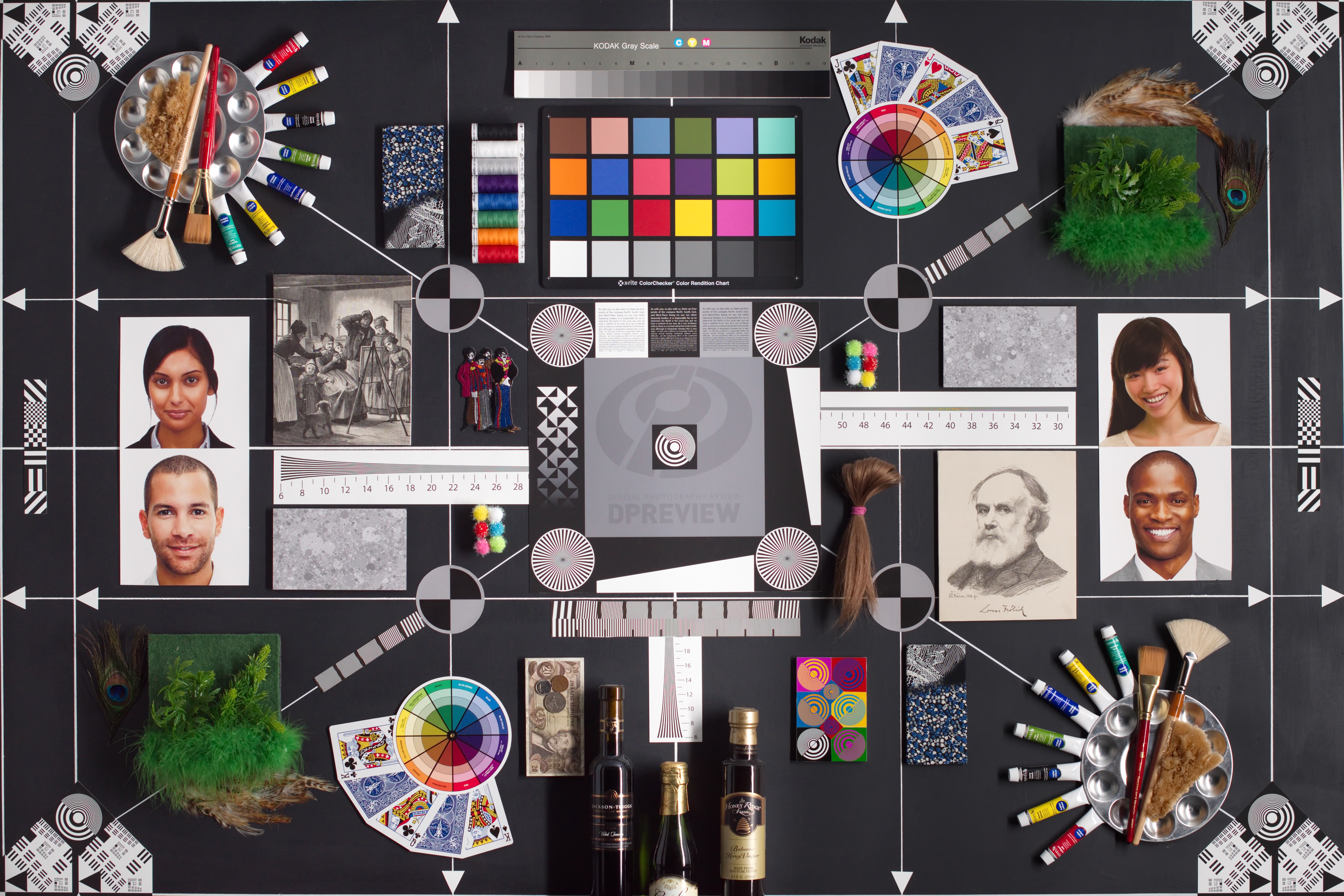
For a brief time, I owned Canon PowerShot G9—a compact camera that only satisfied my most modest expectations. As such, I don’t have much of a catalog of photos from the thing, but this portrait is one of them.
The date: New Years 2008, when we went with friends to Torrey Pines State Natural Reserve. These two gents converse about their wives, kids, weather—I dunno what, but something. The day was relatively clear and about 21 degrees Celsius (70 F) when I made the portrait, which in post-production is cropped 3:2.
Years later, I told the man on the left (yes, a family friend) about changing my diet and how it normalized my blood sugar. He conveyed the information to his wife, who at the time required insulin shots. Six months after she cut carbohydrate consumption, as I had done, her diabetes disappeared.
U.S. Secretary of State John Kerry applauds Vietnamese Deputy Prime Minister and Foreign Minister Pham Binh Minh on August 7, 2015, at the Daewoo Hotel in Hanoi, Vietnam, after the Secretary delivered a speech commemorating the 20th anniversary of the normalization of diplomatic relations between the United States and Vietnam. State Department photo/ Public Domain]
U.S. Secretary of State John Kerry thanks a Vietnamese artist – schooled at Boston University in his Massachusetts hometown – for making him a portrait tiny colored stones to commemorate the 20th anniversary of the normalization of diplomatic relations between the United States and Vietnam, which was presented to him on August 7, 2015, following a bilateral meeting with Vietnamese Deputy Prime Minister and Foreign Minister Pham Binh at the Vietnamese Ministry of Foreign Affairs Guesthouse in Hanoi, Vietnam. [State Department photo/ Public Domain]
After being up most of the night, I realized I had taken too many great photos of the eclipse to use only the one shot at totality.
Each image of the moon was taken at a different exposure, normalized in Lightroom and merged together in Photoshop.
Images were taken using a 5", 650mm Newtonian Telescope with a hand operated mount.
The neon sign at the Motor Vu drive-in.
THE STORY OF THE PARMA MOTOR-VU
By Karen Dobbs Cornwell and Family
My parents, Bill and Gladys Dobbs, entered the theatre business in 1944 when they purchased the Pacific Northwest theatre circuit, which included locations in Parma, New Plymouth, and Wilder. Every night, my dad drove to Wilder while my mom and I spent our evenings at the Parma Theatre. Looking back, I’m amazed I managed to make it through second grade! As time went on, our routine normalized a bit, and we even stayed home on some school nights.
Those were golden years for the movie industry. During the war, people had become used to staying in town, and in Parma, the theatre was the only form of entertainment. This continued until 1952, when the movie industry experienced a sharp and sudden downturn in Parma. It hit almost overnight, just like flipping on a television for the first time. We went from long lines at the box office to just a handful of patrons. The word television wasn’t even spoken in our home.
The rise of TV brought another shift: the drive-in theatre. My father had great foresight and got the ball rolling. In June of 1953, we opened one of the valley’s first drive-ins—the Parma Motor-Vu. I was a freshman in high school, and as we danced to “Rock Around the Clock,” it was an incredibly exciting time in my life.
Those early years were good—but not great. In the 1960s, the major saving grace for us was Spanish-language films. They helped keep both the Parma Theatre and the Motor-Vu open. By the 1970s, my parents began to enjoy more prosperous times. They started thinking about retirement, but every time a potential buyer showed interest, my dad would send them packing. He just couldn’t let go of his dream.
In 1976, my husband, David Cornwell, and I entered into an arrangement that allowed my parents to semi-retire. Then, in 1977, came a major change—radio sound. Many of you may remember the old metal speakers that hung from the poles. You’d hook them onto your car window—hopefully remembering to remove them before you drove off! Many a car window was broken that way. My dad had to remove and repair each speaker every fall and reinstall them every spring. So when the radio sound arrived, we were more than ready. Sure, a few car batteries died each night, but we had a trusty charger and no complaints.
The 1980s were tough times for both drive-ins and indoor theatres. With movies readily available on TV and video, attendance declined. The Parma Theatre closed in 1985. Even the famous Motor-Vu marquee went dim—except for the letters "MO." We couldn’t afford to fix it, and the kids started calling it “The MO.” At first, it felt like a sad reminder of hard times, but eventually we all embraced the name. Two years later, we finally got the sign fixed—well, mostly. The “R” still didn’t light up, so it read “Moe Toe Voo.”
By the 1990s, things started looking up again. The few remaining drive-ins in the country were able to book more current films. Grandparents began bringing their grandkids to share the nostalgia, and business started to pick up. We focused on maintaining a clean, safe, family-friendly atmosphere—and serving the best popcorn in the valley, thanks to our 65-year-old Manley popcorn machine (still in use and going strong!).
In 1998, we modernized by installing a used platter film system, which allowed the whole program to be spliced onto a single platter. When it worked, it was a joy.
Then came digital cinema. As the 21st century approached, it became clear the film industry was changing again. By 2012, we were told that film distribution would end after 2013. Many drive-ins were forced to close due to the high cost of converting to digital. But we couldn’t give up. We opened the 2013 season with digital projection—and what a difference! The picture was stunning. That same year, we celebrated our 60th anniversary with a BBQ for employees (past and present), family, and friends. All but one of our four generations were there, including my mother, Gladys, who was 103 at the time. She passed away not long after, at nearly 105. We’re forever grateful to her and my father for creating this Idaho gem.
In 2014, we added DirecTV so we could present a live, closed-circuit Jimmy Buffet concert. It also allowed us to screen Boise State football games, which we plan to continue doing whenever possible—as long as it’s dark enough outside!
The Motor-Vu remains a true family business. All three of my children grew up here and still help out from time to time. Over the past decade, seven of my grandchildren have been on the payroll. Our employees become like family. We love what we do, and thanks to our loyal community, we plan to keep it going.
2022 “ A new chapter”: After nearly ten years, it is clear that an update to this story is in need. Yes, we are now a decade into the great digital phenomenon. I, somehow, survived that transistion with a lot of assistance from our internet tech. This has given us the opportunity to play DVD movies, which opened up a whole new venue. That is renting the place on off-nights to schools, organizations, churches, families and businesses for private parties. We gave up on Directv, too expensive to keep live for the occasional game. Many games air at 4:00, which is too early to be visible on our screen.
In 2018, my youngest daughter, Susan Haaheim, became the owner of the Parma Motor-Vu. I, however, have not gone away. I returned to my original job at the popcorn machine, which is yes, still popping at the age of 80.
Ofcourse, what is there to say about 2020 that hasn’t been hashed and re-hashed? For the Motor-Vu it was amazing. Here we are with cars lined up to Jackson’s, playing 30 year old movies.
This brings us to the big event in 2023 when the Parma Motor-Vu will turn 70 years old. We will have the decade celebration party with employees, old and new, and family in June.
I am so happy and proud to be able to still be a part of this great, family adventure, standing at my popper, visiting with all you wonderful patrons. Thank you for reading my story.
See you at the Motor-Vu.
—Karen Dobbs Cornwell and Family
This is a mean blend of the entire Pharrell music video for "Happy".
Blended using my normal averaging workflow for videos with G'MIC.
Final result normalized in GIMP.
My other music video blends can be found here: Video Amalgams on Flickr
1. 91/365 weaving for peace, 2. 92/365 pink blossom, 3. 93/365 froggy swinger, 4. 94/365 red ferry, 5. 95/365 misty cloch, 6. 96/365 normalization, 7. 97/365 the struggle for independence, 8. 98/365 spring spur, 9. 99/365 beresford reflected, 10. 100/365 day 100, 11. 101/365 land shark, 12. 102/365 a is for apex, 13. 103/365 pork and apricot casserole, 14. 104/365 orient blossom, 15. 105/365 new city stripes, 16. 106/365 walking texting, 17. 107/365 reflection at dusk, 18. 108/365 portillo, 19. 109/365 lifeboat support, 20. 110/365 sauchiehall spring, 21. 111/365 army of cute, 22. 112/365 hot and cold rice, 23. 113/365 owl rising, 24. 114/365 barking mad, 25. 115/365 donau, 26. 116/365 tart selection, 27. 117/365 an older game of thrones, 28. 118/365 daffy's app, 29. 119/365 silver curls, 30. 120/365 southern view
Created with fd's Flickr Toys
Sony RX1 User Report.
I hesitate to write about gear. Tools are tools and the bitter truth is that a great craftsman rises above his tools to create a masterpiece whereas most of us try to improve our abominations by buying better or faster hammers to hit the same nails at the same awkward angles.
The internet is fairly flooded with reviews of this tiny marvel, and it isn’t my intention to compete with those articles. If you’re looking for a full-scale review of every feature or a down-to-Earth accounting of the RX1’s strengths and weaknesses, I recommend starting here.
Instead, I’d like to provide you with a flavor of how I’ve used the camera over the last six months. In short, this is a user report. To save yourself a few thousand words: I love the thing. As we go through this article, you’ll see this is a purpose built camera. The RX1 is not for everyone, but we will get to that and on the way, I’ll share a handful of images that I made with the camera.
It should be obvious to anyone reading this that I write this independently and have absolutely no relationship with Sony (other than having exchanged a large pile of cash for this camera at a retail outlet).
Before we get to anything else, I want to clear the air about two things: Price and Features
The Price
First things first: the price. The $2800+ cost of this camera is the elephant in the room and, given I purchased the thing, you may consider me a poor critic. That in mind, I want to offer you three thoughts:
Consumer goods cost what they cost, in the absence of a competitor (the Fuji X100s being the only one worth mention) there is no comparison and you simply have to decide for yourself if you are willing to pay or not.
Normalize the price per sensor area for all 35mm f/2 lens and camera alternatives and you’ll find the RX1 is an amazing value.
You are paying for the ability to take photographs, plain and simple. Ask yourself, “what are these photographs worth to me?”
In my case, #3 is very important. I have used the RX1 to take hundreds of photographs of my family that are immensely important to me. Moreover, I have made photographs (many appearing on this page) that are moving or beautiful and only happened because I had the RX1 in my bag or my pocket. Yes, of course I could have made these or very similar photographs with another camera, but that is immaterial.
35mm by 24mm by 35mm f/2
The killer feature of this camera is simple: it is a wafer of silicon 35mm by 24mm paired to a brilliantly, ridiculously, undeniably sharp, contrasty and bokehlicious 35mm f/2 Carl Zeiss lens. Image quality is king here and all other things take a back seat. This means the following: image quality is as good or better than your DSLR, but battery life, focus speed, and responsiveness are likely not as good as your DSLR. I say likely because, if you have an entry-level DSLR, the RX1 is comparable on these dimensions. If you want to change lenses, if you want an integrated viewfinder, if you want blindingly fast phase-detect autofocus then shoot with a DSLR. If you want the absolute best image quality in the smallest size possible, you’ve got it in the RX1.
While we are on the subject of interchangeable lenses and viewfinders...
I have an interchangeable lens DSLR and I love the thing. It’s basically a medium format camera in a 35mm camera body. It’s a powerhouse and it is the first camera I reach for when the goal is photography. For a long time, however, I’ve found myself in situations where photography was not the first goal, but where I nevertheless wanted to have a camera. I’m around the table with friends or at the park with my son and the DSLR is too big, too bulky, too intimidating. It comes between you and life. In this realm, mirrorless, interchangeable lens cameras seem to be king, but they have a major flaw: they are, for all intents and purposes, just little DSLRs.
As I mentioned above, I have an interchangeable lens system, why would I want another, smaller one? Clearly, I am not alone in feeling this way, as the market has produced a number of what I would call “professional point and shoots.” Here we are talking about the Fuji X100/X100s, Sigma DPm-series and the RX100 and RX1.
Design is about making choices
When the Fuji X100 came out, I was intrigued. Here was a cheap(er), baby Leica M. Quiet, small, unobtrusive. Had I waited to buy until the X100s had come out, perhaps this would be a different report. Perhaps, but probably not. I remember thinking to myself as I was looking at the X100, “I wish there was a digital Rollei 35, something with a fixed 28mm or 35mm lens that would fit in a coat pocket or a small bag.” Now of course, there is.
So, for those of you who said, “I would buy the RX1 if it had interchangeable lenses or an integrated viewfinder or faster autofocus,” I say the following: This is a purpose built camera. You would not want it as an interchangeable system, it can’t compete with DSLR speed. A viewfinder would make the thing bigger and ruin the magic ratio of body to sensor size—further, there is a 3-inch LCD viewfinder on the back! Autofocus is super fast, you just don’t realize it because the bar has been raised impossibly high by ultra-sonic magnet focusing rings on professional DSLR lenses. There’s a fantastic balance at work here between image quality and size—great tools are about the total experience, not about one or the other specification.
In short, design is about making choices. I think Sony has made some good ones with the RX1.
In use
So I’ve just written 1,000 words of a user report without, you know, reporting on use. In many ways the images on the page are my user report. These photographs, more than my words, should give you a flavor of what the RX1 is about. But, for the sake of variety, I intend to tell you a bit about the how and the why of shooting with the RX1.
Snapshots
As a beginning enthusiast, I often sneered at the idea of a snapshot. As I’ve matured, I’ve come to appreciate what a pocket camera and a snapshot can offer. The RX1 is the ultimate photographer’s snapshot camera.
I’ll pause here to properly define snapshot as a photograph taken quickly with a handheld camera.
To quote Ferris Bueller’s Day Off, “Life moves pretty fast. If you don't stop and look around once in a while, you could miss it.” So it is with photography. Beautiful photographs happen at the decisive moment—and to paraphrase Henri Cartier-Bresson further—the world is newly made and falling to pieces every instant. I think it is no coincidence that each revolution in the steady march of photography from the tortuously slow chemistry of tin-type and daguerreotype through 120 and 35mm formats to the hyper-sensitive CMOS of today has engendered new categories and concepts of photography.
Photography is a reflexive, reactionary activity. I see beautiful light or the unusual in an every day event and my reaction is a desire to make a photograph. It’s a bit like breathing and has been since I was a kid.
Rather than sneer at snapshots, nowadays I seek them out; and when I seek them out, I do so with the Sony RX1 in my hand.
How I shoot with the RX1
Despite much bluster from commenters on other reviews as to the price point and the purpose-built nature of this camera (see above), the RX1 is incredibly flexible. Have a peek at some of the linked reviews and you’ll see handheld portraits, long exposures, images taken with off-camera flash, etc.
Yet, I mentioned earlier that I reach for the D800 when photography is the primary goal and so the RX1 has become for me a handheld camera—something I use almost exclusively at f/2 (people, objects, shallow DoF) or f/8 (landscapes in abundant light, abstracts). The Auto-ISO setting allows the camera to choose in the range from ISO 50 and 6400 to reach a proper exposure at a given aperture with a 1/80 s shutter speed. I have found this shutter speed ensures a sharp image every time (although photographers with more jittery grips may wish there was the ability to select a different default shutter speed). This strategy works because the RX1 has a delightfully clicky exposure compensation dial just under your right thumb—allowing for fine adjustment to the camera’s metering decision.
So then, if you find me out with the RX1, you’re likely to see me on aperture priority, f/2 and auto ISO. Indeed, many of the photographs on this page were taken in that mode (including lots of the landscape shots!).
Working within constraints.
The RX1 is a wonderful camera to have when you have to work within constraints. When I say this, I mean it is great for photography within two different classes of constraints: 1) physical constraints of time and space and 2) intellectual/artistic constraints.
To speak to the first, as I said earlier, many of the photographs on this page were made possible by having a camera with me at a time that I otherwise would not have been lugging around a camera. For example, some of the images from the Grand Canyon you see were made in a pinch on my way to a Christmas dinner with my family. I didn’t have the larger camera with me and I just had a minute to make the image. Truth be told, these images could have been made with my cell phone, but that I could wring such great image quality out of something not much larger than my cell phone is just gravy. Be it jacket pocket, small bag, bike bag, saddle bag, even fannie pack—you have space for this camera anywhere you go.
Earlier I alluded to the obtrusiveness of a large camera. If you want to travel lightly and make photographs without announcing your presence, it’s easier to use a smaller camera. Here the RX1 excels. Moreover, the camera’s leaf shutter is virtually silent, so you can snap away without announcing your intention. In every sense, this camera is meant to work within physical constraints.
I cut my photographic teeth on film and I will always have an affection for it. There is a sense that one is playing within the rules when he uses film. That same feeling is here in the RX1. I never thought I’d say this about a camera, but I often like the JPEG images this thing produces more than I like what I can push with a RAW. Don’t get me wrong, for a landscape or a cityscape, the RAW processed carefully is FAR, FAR better than a JPEG.
But when I am taking snapshots or photos of friends and family, I find the JPEGs the camera produces (I’m shooting in RAW + JPEG) so beautiful. The camera’s computer corrects for the lens distortion and provides the perfect balance of contrast and saturation. The JPEG engine can be further tweaked to increase the amount of contrast, saturation or dynamic range optimization (shadow boost) used in writing those files. Add in the ability to rapidly compensate exposure or activate various creative modes and you’ve got this feeling you’re shooting film again. Instant, ultra-sensitive and customizable film.
Pro Tip: Focusing
Almost all cameras come shipped with what I consider to be the worst of the worst focus configurations. Even the Nikon D800 came to my hands set to focus when the shutter button was halfway depressed. This mode will ruin almost any photograph. Why? Because it requires you to perform legerdemain to place the autofocus point, depress the shutter halfway, recompose and press the shutter fully. In addition to the chance of accidentally refocusing after composing or missing the shot—this method absolutely ensures that one must focus before every single photograph. Absolutely impossible for action or portraiture.
Sensibly, most professional or prosumer cameras come with an AF-ON button near where the shooter’s right thumb rests. This separates the task of focusing and exposing, allowing the photographer to quickly focus and to capture the image even if focus is slightly off at the focus point. For portraits, kids, action, etc the camera has to have a hair-trigger. It has to be responsive. Manufacturer’s: stop shipping your cameras with this ham-fisted autofocus arrangement.
Now, the RX1 does not have an AF-ON button, but it does have an AEL button whose function can be changed to “MF/AF Control Hold” in the menu. Further, other buttons on the rear of the camera can also be programmed to toggle between AF and MF modes. What this all means is that you can work around the RX1’s buttons to make it’s focus work like a DSLR’s. (For those of you who are RX1 shooters, set the front switch to MF, the right control wheel button to MF/AF Toggle and the AEL button to MF/AF Control Hold and voila!) The end result is that, when powered on the camera is in manual focus mode, but the autofocus can be activated by pressing AEL, no matter what, however, the shutter is tripped by the shutter release. Want to switch to AF mode? Just push a button and you’re back to the standard modality.
Carrying.
I keep mine in a small, neoprene pouch with a semi-hard LCD cover and a circular polarizing filter on the front—perfect for buttoning up and throwing into a bag on my way out of the house. I have a soft release screwed into the threaded shutter release and a custom, red twill strap to replace the horrible plastic strap Sony provided. I plan to gaffer tape the top and the orange ring around the lens. Who knows, I may find an old Voigtlander optical viewfinder in future as well.
Sony RX1 User Report.
I hesitate to write about gear. Tools are tools and the bitter truth is that a great craftsman rises above his tools to create a masterpiece whereas most of us try to improve our abominations by buying better or faster hammers to hit the same nails at the same awkward angles.
The internet is fairly flooded with reviews of this tiny marvel, and it isn’t my intention to compete with those articles. If you’re looking for a full-scale review of every feature or a down-to-Earth accounting of the RX1’s strengths and weaknesses, I recommend starting here.
Instead, I’d like to provide you with a flavor of how I’ve used the camera over the last six months. In short, this is a user report. To save yourself a few thousand words: I love the thing. As we go through this article, you’ll see this is a purpose built camera. The RX1 is not for everyone, but we will get to that and on the way, I’ll share a handful of images that I made with the camera.
It should be obvious to anyone reading this that I write this independently and have absolutely no relationship with Sony (other than having exchanged a large pile of cash for this camera at a retail outlet).
Before we get to anything else, I want to clear the air about two things: Price and Features
The Price
First things first: the price. The $2800+ cost of this camera is the elephant in the room and, given I purchased the thing, you may consider me a poor critic. That in mind, I want to offer you three thoughts:
Consumer goods cost what they cost, in the absence of a competitor (the Fuji X100s being the only one worth mention) there is no comparison and you simply have to decide for yourself if you are willing to pay or not.
Normalize the price per sensor area for all 35mm f/2 lens and camera alternatives and you’ll find the RX1 is an amazing value.
You are paying for the ability to take photographs, plain and simple. Ask yourself, “what are these photographs worth to me?”
In my case, #3 is very important. I have used the RX1 to take hundreds of photographs of my family that are immensely important to me. Moreover, I have made photographs (many appearing on this page) that are moving or beautiful and only happened because I had the RX1 in my bag or my pocket. Yes, of course I could have made these or very similar photographs with another camera, but that is immaterial.
35mm by 24mm by 35mm f/2
The killer feature of this camera is simple: it is a wafer of silicon 35mm by 24mm paired to a brilliantly, ridiculously, undeniably sharp, contrasty and bokehlicious 35mm f/2 Carl Zeiss lens. Image quality is king here and all other things take a back seat. This means the following: image quality is as good or better than your DSLR, but battery life, focus speed, and responsiveness are likely not as good as your DSLR. I say likely because, if you have an entry-level DSLR, the RX1 is comparable on these dimensions. If you want to change lenses, if you want an integrated viewfinder, if you want blindingly fast phase-detect autofocus then shoot with a DSLR. If you want the absolute best image quality in the smallest size possible, you’ve got it in the RX1.
While we are on the subject of interchangeable lenses and viewfinders...
I have an interchangeable lens DSLR and I love the thing. It’s basically a medium format camera in a 35mm camera body. It’s a powerhouse and it is the first camera I reach for when the goal is photography. For a long time, however, I’ve found myself in situations where photography was not the first goal, but where I nevertheless wanted to have a camera. I’m around the table with friends or at the park with my son and the DSLR is too big, too bulky, too intimidating. It comes between you and life. In this realm, mirrorless, interchangeable lens cameras seem to be king, but they have a major flaw: they are, for all intents and purposes, just little DSLRs.
As I mentioned above, I have an interchangeable lens system, why would I want another, smaller one? Clearly, I am not alone in feeling this way, as the market has produced a number of what I would call “professional point and shoots.” Here we are talking about the Fuji X100/X100s, Sigma DPm-series and the RX100 and RX1.
Design is about making choices
When the Fuji X100 came out, I was intrigued. Here was a cheap(er), baby Leica M. Quiet, small, unobtrusive. Had I waited to buy until the X100s had come out, perhaps this would be a different report. Perhaps, but probably not. I remember thinking to myself as I was looking at the X100, “I wish there was a digital Rollei 35, something with a fixed 28mm or 35mm lens that would fit in a coat pocket or a small bag.” Now of course, there is.
So, for those of you who said, “I would buy the RX1 if it had interchangeable lenses or an integrated viewfinder or faster autofocus,” I say the following: This is a purpose built camera. You would not want it as an interchangeable system, it can’t compete with DSLR speed. A viewfinder would make the thing bigger and ruin the magic ratio of body to sensor size—further, there is a 3-inch LCD viewfinder on the back! Autofocus is super fast, you just don’t realize it because the bar has been raised impossibly high by ultra-sonic magnet focusing rings on professional DSLR lenses. There’s a fantastic balance at work here between image quality and size—great tools are about the total experience, not about one or the other specification.
In short, design is about making choices. I think Sony has made some good ones with the RX1.
In use
So I’ve just written 1,000 words of a user report without, you know, reporting on use. In many ways the images on the page are my user report. These photographs, more than my words, should give you a flavor of what the RX1 is about. But, for the sake of variety, I intend to tell you a bit about the how and the why of shooting with the RX1.
Snapshots
As a beginning enthusiast, I often sneered at the idea of a snapshot. As I’ve matured, I’ve come to appreciate what a pocket camera and a snapshot can offer. The RX1 is the ultimate photographer’s snapshot camera.
I’ll pause here to properly define snapshot as a photograph taken quickly with a handheld camera.
To quote Ferris Bueller’s Day Off, “Life moves pretty fast. If you don't stop and look around once in a while, you could miss it.” So it is with photography. Beautiful photographs happen at the decisive moment—and to paraphrase Henri Cartier-Bresson further—the world is newly made and falling to pieces every instant. I think it is no coincidence that each revolution in the steady march of photography from the tortuously slow chemistry of tin-type and daguerreotype through 120 and 35mm formats to the hyper-sensitive CMOS of today has engendered new categories and concepts of photography.
Photography is a reflexive, reactionary activity. I see beautiful light or the unusual in an every day event and my reaction is a desire to make a photograph. It’s a bit like breathing and has been since I was a kid.
Rather than sneer at snapshots, nowadays I seek them out; and when I seek them out, I do so with the Sony RX1 in my hand.
How I shoot with the RX1
Despite much bluster from commenters on other reviews as to the price point and the purpose-built nature of this camera (see above), the RX1 is incredibly flexible. Have a peek at some of the linked reviews and you’ll see handheld portraits, long exposures, images taken with off-camera flash, etc.
Yet, I mentioned earlier that I reach for the D800 when photography is the primary goal and so the RX1 has become for me a handheld camera—something I use almost exclusively at f/2 (people, objects, shallow DoF) or f/8 (landscapes in abundant light, abstracts). The Auto-ISO setting allows the camera to choose in the range from ISO 50 and 6400 to reach a proper exposure at a given aperture with a 1/80 s shutter speed. I have found this shutter speed ensures a sharp image every time (although photographers with more jittery grips may wish there was the ability to select a different default shutter speed). This strategy works because the RX1 has a delightfully clicky exposure compensation dial just under your right thumb—allowing for fine adjustment to the camera’s metering decision.
So then, if you find me out with the RX1, you’re likely to see me on aperture priority, f/2 and auto ISO. Indeed, many of the photographs on this page were taken in that mode (including lots of the landscape shots!).
Working within constraints.
The RX1 is a wonderful camera to have when you have to work within constraints. When I say this, I mean it is great for photography within two different classes of constraints: 1) physical constraints of time and space and 2) intellectual/artistic constraints.
To speak to the first, as I said earlier, many of the photographs on this page were made possible by having a camera with me at a time that I otherwise would not have been lugging around a camera. For example, some of the images from the Grand Canyon you see were made in a pinch on my way to a Christmas dinner with my family. I didn’t have the larger camera with me and I just had a minute to make the image. Truth be told, these images could have been made with my cell phone, but that I could wring such great image quality out of something not much larger than my cell phone is just gravy. Be it jacket pocket, small bag, bike bag, saddle bag, even fannie pack—you have space for this camera anywhere you go.
Earlier I alluded to the obtrusiveness of a large camera. If you want to travel lightly and make photographs without announcing your presence, it’s easier to use a smaller camera. Here the RX1 excels. Moreover, the camera’s leaf shutter is virtually silent, so you can snap away without announcing your intention. In every sense, this camera is meant to work within physical constraints.
I cut my photographic teeth on film and I will always have an affection for it. There is a sense that one is playing within the rules when he uses film. That same feeling is here in the RX1. I never thought I’d say this about a camera, but I often like the JPEG images this thing produces more than I like what I can push with a RAW. Don’t get me wrong, for a landscape or a cityscape, the RAW processed carefully is FAR, FAR better than a JPEG.
But when I am taking snapshots or photos of friends and family, I find the JPEGs the camera produces (I’m shooting in RAW + JPEG) so beautiful. The camera’s computer corrects for the lens distortion and provides the perfect balance of contrast and saturation. The JPEG engine can be further tweaked to increase the amount of contrast, saturation or dynamic range optimization (shadow boost) used in writing those files. Add in the ability to rapidly compensate exposure or activate various creative modes and you’ve got this feeling you’re shooting film again. Instant, ultra-sensitive and customizable film.
Pro Tip: Focusing
Almost all cameras come shipped with what I consider to be the worst of the worst focus configurations. Even the Nikon D800 came to my hands set to focus when the shutter button was halfway depressed. This mode will ruin almost any photograph. Why? Because it requires you to perform legerdemain to place the autofocus point, depress the shutter halfway, recompose and press the shutter fully. In addition to the chance of accidentally refocusing after composing or missing the shot—this method absolutely ensures that one must focus before every single photograph. Absolutely impossible for action or portraiture.
Sensibly, most professional or prosumer cameras come with an AF-ON button near where the shooter’s right thumb rests. This separates the task of focusing and exposing, allowing the photographer to quickly focus and to capture the image even if focus is slightly off at the focus point. For portraits, kids, action, etc the camera has to have a hair-trigger. It has to be responsive. Manufacturer’s: stop shipping your cameras with this ham-fisted autofocus arrangement.
Now, the RX1 does not have an AF-ON button, but it does have an AEL button whose function can be changed to “MF/AF Control Hold” in the menu. Further, other buttons on the rear of the camera can also be programmed to toggle between AF and MF modes. What this all means is that you can work around the RX1’s buttons to make it’s focus work like a DSLR’s. (For those of you who are RX1 shooters, set the front switch to MF, the right control wheel button to MF/AF Toggle and the AEL button to MF/AF Control Hold and voila!) The end result is that, when powered on the camera is in manual focus mode, but the autofocus can be activated by pressing AEL, no matter what, however, the shutter is tripped by the shutter release. Want to switch to AF mode? Just push a button and you’re back to the standard modality.
Carrying.
I keep mine in a small, neoprene pouch with a semi-hard LCD cover and a circular polarizing filter on the front—perfect for buttoning up and throwing into a bag on my way out of the house. I have a soft release screwed into the threaded shutter release and a custom, red twill strap to replace the horrible plastic strap Sony provided. I plan to gaffer tape the top and the orange ring around the lens. Who knows, I may find an old Voigtlander optical viewfinder in future as well.
Sony RX1 User Report.
I hesitate to write about gear. Tools are tools and the bitter truth is that a great craftsman rises above his tools to create a masterpiece whereas most of us try to improve our abominations by buying better or faster hammers to hit the same nails at the same awkward angles.
The internet is fairly flooded with reviews of this tiny marvel, and it isn’t my intention to compete with those articles. If you’re looking for a full-scale review of every feature or a down-to-Earth accounting of the RX1’s strengths and weaknesses, I recommend starting here.
Instead, I’d like to provide you with a flavor of how I’ve used the camera over the last six months. In short, this is a user report. To save yourself a few thousand words: I love the thing. As we go through this article, you’ll see this is a purpose built camera. The RX1 is not for everyone, but we will get to that and on the way, I’ll share a handful of images that I made with the camera.
It should be obvious to anyone reading this that I write this independently and have absolutely no relationship with Sony (other than having exchanged a large pile of cash for this camera at a retail outlet).
Before we get to anything else, I want to clear the air about two things: Price and Features
The Price
First things first: the price. The $2800+ cost of this camera is the elephant in the room and, given I purchased the thing, you may consider me a poor critic. That in mind, I want to offer you three thoughts:
Consumer goods cost what they cost, in the absence of a competitor (the Fuji X100s being the only one worth mention) there is no comparison and you simply have to decide for yourself if you are willing to pay or not.
Normalize the price per sensor area for all 35mm f/2 lens and camera alternatives and you’ll find the RX1 is an amazing value.
You are paying for the ability to take photographs, plain and simple. Ask yourself, “what are these photographs worth to me?”
In my case, #3 is very important. I have used the RX1 to take hundreds of photographs of my family that are immensely important to me. Moreover, I have made photographs (many appearing on this page) that are moving or beautiful and only happened because I had the RX1 in my bag or my pocket. Yes, of course I could have made these or very similar photographs with another camera, but that is immaterial.
35mm by 24mm by 35mm f/2
The killer feature of this camera is simple: it is a wafer of silicon 35mm by 24mm paired to a brilliantly, ridiculously, undeniably sharp, contrasty and bokehlicious 35mm f/2 Carl Zeiss lens. Image quality is king here and all other things take a back seat. This means the following: image quality is as good or better than your DSLR, but battery life, focus speed, and responsiveness are likely not as good as your DSLR. I say likely because, if you have an entry-level DSLR, the RX1 is comparable on these dimensions. If you want to change lenses, if you want an integrated viewfinder, if you want blindingly fast phase-detect autofocus then shoot with a DSLR. If you want the absolute best image quality in the smallest size possible, you’ve got it in the RX1.
While we are on the subject of interchangeable lenses and viewfinders...
I have an interchangeable lens DSLR and I love the thing. It’s basically a medium format camera in a 35mm camera body. It’s a powerhouse and it is the first camera I reach for when the goal is photography. For a long time, however, I’ve found myself in situations where photography was not the first goal, but where I nevertheless wanted to have a camera. I’m around the table with friends or at the park with my son and the DSLR is too big, too bulky, too intimidating. It comes between you and life. In this realm, mirrorless, interchangeable lens cameras seem to be king, but they have a major flaw: they are, for all intents and purposes, just little DSLRs.
As I mentioned above, I have an interchangeable lens system, why would I want another, smaller one? Clearly, I am not alone in feeling this way, as the market has produced a number of what I would call “professional point and shoots.” Here we are talking about the Fuji X100/X100s, Sigma DPm-series and the RX100 and RX1.
Design is about making choices
When the Fuji X100 came out, I was intrigued. Here was a cheap(er), baby Leica M. Quiet, small, unobtrusive. Had I waited to buy until the X100s had come out, perhaps this would be a different report. Perhaps, but probably not. I remember thinking to myself as I was looking at the X100, “I wish there was a digital Rollei 35, something with a fixed 28mm or 35mm lens that would fit in a coat pocket or a small bag.” Now of course, there is.
So, for those of you who said, “I would buy the RX1 if it had interchangeable lenses or an integrated viewfinder or faster autofocus,” I say the following: This is a purpose built camera. You would not want it as an interchangeable system, it can’t compete with DSLR speed. A viewfinder would make the thing bigger and ruin the magic ratio of body to sensor size—further, there is a 3-inch LCD viewfinder on the back! Autofocus is super fast, you just don’t realize it because the bar has been raised impossibly high by ultra-sonic magnet focusing rings on professional DSLR lenses. There’s a fantastic balance at work here between image quality and size—great tools are about the total experience, not about one or the other specification.
In short, design is about making choices. I think Sony has made some good ones with the RX1.
In use
So I’ve just written 1,000 words of a user report without, you know, reporting on use. In many ways the images on the page are my user report. These photographs, more than my words, should give you a flavor of what the RX1 is about. But, for the sake of variety, I intend to tell you a bit about the how and the why of shooting with the RX1.
Snapshots
As a beginning enthusiast, I often sneered at the idea of a snapshot. As I’ve matured, I’ve come to appreciate what a pocket camera and a snapshot can offer. The RX1 is the ultimate photographer’s snapshot camera.
I’ll pause here to properly define snapshot as a photograph taken quickly with a handheld camera.
To quote Ferris Bueller’s Day Off, “Life moves pretty fast. If you don't stop and look around once in a while, you could miss it.” So it is with photography. Beautiful photographs happen at the decisive moment—and to paraphrase Henri Cartier-Bresson further—the world is newly made and falling to pieces every instant. I think it is no coincidence that each revolution in the steady march of photography from the tortuously slow chemistry of tin-type and daguerreotype through 120 and 35mm formats to the hyper-sensitive CMOS of today has engendered new categories and concepts of photography.
Photography is a reflexive, reactionary activity. I see beautiful light or the unusual in an every day event and my reaction is a desire to make a photograph. It’s a bit like breathing and has been since I was a kid.
Rather than sneer at snapshots, nowadays I seek them out; and when I seek them out, I do so with the Sony RX1 in my hand.
How I shoot with the RX1
Despite much bluster from commenters on other reviews as to the price point and the purpose-built nature of this camera (see above), the RX1 is incredibly flexible. Have a peek at some of the linked reviews and you’ll see handheld portraits, long exposures, images taken with off-camera flash, etc.
Yet, I mentioned earlier that I reach for the D800 when photography is the primary goal and so the RX1 has become for me a handheld camera—something I use almost exclusively at f/2 (people, objects, shallow DoF) or f/8 (landscapes in abundant light, abstracts). The Auto-ISO setting allows the camera to choose in the range from ISO 50 and 6400 to reach a proper exposure at a given aperture with a 1/80 s shutter speed. I have found this shutter speed ensures a sharp image every time (although photographers with more jittery grips may wish there was the ability to select a different default shutter speed). This strategy works because the RX1 has a delightfully clicky exposure compensation dial just under your right thumb—allowing for fine adjustment to the camera’s metering decision.
So then, if you find me out with the RX1, you’re likely to see me on aperture priority, f/2 and auto ISO. Indeed, many of the photographs on this page were taken in that mode (including lots of the landscape shots!).
Working within constraints.
The RX1 is a wonderful camera to have when you have to work within constraints. When I say this, I mean it is great for photography within two different classes of constraints: 1) physical constraints of time and space and 2) intellectual/artistic constraints.
To speak to the first, as I said earlier, many of the photographs on this page were made possible by having a camera with me at a time that I otherwise would not have been lugging around a camera. For example, some of the images from the Grand Canyon you see were made in a pinch on my way to a Christmas dinner with my family. I didn’t have the larger camera with me and I just had a minute to make the image. Truth be told, these images could have been made with my cell phone, but that I could wring such great image quality out of something not much larger than my cell phone is just gravy. Be it jacket pocket, small bag, bike bag, saddle bag, even fannie pack—you have space for this camera anywhere you go.
Earlier I alluded to the obtrusiveness of a large camera. If you want to travel lightly and make photographs without announcing your presence, it’s easier to use a smaller camera. Here the RX1 excels. Moreover, the camera’s leaf shutter is virtually silent, so you can snap away without announcing your intention. In every sense, this camera is meant to work within physical constraints.
I cut my photographic teeth on film and I will always have an affection for it. There is a sense that one is playing within the rules when he uses film. That same feeling is here in the RX1. I never thought I’d say this about a camera, but I often like the JPEG images this thing produces more than I like what I can push with a RAW. Don’t get me wrong, for a landscape or a cityscape, the RAW processed carefully is FAR, FAR better than a JPEG.
But when I am taking snapshots or photos of friends and family, I find the JPEGs the camera produces (I’m shooting in RAW + JPEG) so beautiful. The camera’s computer corrects for the lens distortion and provides the perfect balance of contrast and saturation. The JPEG engine can be further tweaked to increase the amount of contrast, saturation or dynamic range optimization (shadow boost) used in writing those files. Add in the ability to rapidly compensate exposure or activate various creative modes and you’ve got this feeling you’re shooting film again. Instant, ultra-sensitive and customizable film.
Pro Tip: Focusing
Almost all cameras come shipped with what I consider to be the worst of the worst focus configurations. Even the Nikon D800 came to my hands set to focus when the shutter button was halfway depressed. This mode will ruin almost any photograph. Why? Because it requires you to perform legerdemain to place the autofocus point, depress the shutter halfway, recompose and press the shutter fully. In addition to the chance of accidentally refocusing after composing or missing the shot—this method absolutely ensures that one must focus before every single photograph. Absolutely impossible for action or portraiture.
Sensibly, most professional or prosumer cameras come with an AF-ON button near where the shooter’s right thumb rests. This separates the task of focusing and exposing, allowing the photographer to quickly focus and to capture the image even if focus is slightly off at the focus point. For portraits, kids, action, etc the camera has to have a hair-trigger. It has to be responsive. Manufacturer’s: stop shipping your cameras with this ham-fisted autofocus arrangement.
Now, the RX1 does not have an AF-ON button, but it does have an AEL button whose function can be changed to “MF/AF Control Hold” in the menu. Further, other buttons on the rear of the camera can also be programmed to toggle between AF and MF modes. What this all means is that you can work around the RX1’s buttons to make it’s focus work like a DSLR’s. (For those of you who are RX1 shooters, set the front switch to MF, the right control wheel button to MF/AF Toggle and the AEL button to MF/AF Control Hold and voila!) The end result is that, when powered on the camera is in manual focus mode, but the autofocus can be activated by pressing AEL, no matter what, however, the shutter is tripped by the shutter release. Want to switch to AF mode? Just push a button and you’re back to the standard modality.
Carrying.
I keep mine in a small, neoprene pouch with a semi-hard LCD cover and a circular polarizing filter on the front—perfect for buttoning up and throwing into a bag on my way out of the house. I have a soft release screwed into the threaded shutter release and a custom, red twill strap to replace the horrible plastic strap Sony provided. I plan to gaffer tape the top and the orange ring around the lens. Who knows, I may find an old Voigtlander optical viewfinder in future as well.
Sony RX1 User Report.
I hesitate to write about gear. Tools are tools and the bitter truth is that a great craftsman rises above his tools to create a masterpiece whereas most of us try to improve our abominations by buying better or faster hammers to hit the same nails at the same awkward angles.
The internet is fairly flooded with reviews of this tiny marvel, and it isn’t my intention to compete with those articles. If you’re looking for a full-scale review of every feature or a down-to-Earth accounting of the RX1’s strengths and weaknesses, I recommend starting here.
Instead, I’d like to provide you with a flavor of how I’ve used the camera over the last six months. In short, this is a user report. To save yourself a few thousand words: I love the thing. As we go through this article, you’ll see this is a purpose built camera. The RX1 is not for everyone, but we will get to that and on the way, I’ll share a handful of images that I made with the camera.
It should be obvious to anyone reading this that I write this independently and have absolutely no relationship with Sony (other than having exchanged a large pile of cash for this camera at a retail outlet).
Before we get to anything else, I want to clear the air about two things: Price and Features
The Price
First things first: the price. The $2800+ cost of this camera is the elephant in the room and, given I purchased the thing, you may consider me a poor critic. That in mind, I want to offer you three thoughts:
Consumer goods cost what they cost, in the absence of a competitor (the Fuji X100s being the only one worth mention) there is no comparison and you simply have to decide for yourself if you are willing to pay or not.
Normalize the price per sensor area for all 35mm f/2 lens and camera alternatives and you’ll find the RX1 is an amazing value.
You are paying for the ability to take photographs, plain and simple. Ask yourself, “what are these photographs worth to me?”
In my case, #3 is very important. I have used the RX1 to take hundreds of photographs of my family that are immensely important to me. Moreover, I have made photographs (many appearing on this page) that are moving or beautiful and only happened because I had the RX1 in my bag or my pocket. Yes, of course I could have made these or very similar photographs with another camera, but that is immaterial.
35mm by 24mm by 35mm f/2
The killer feature of this camera is simple: it is a wafer of silicon 35mm by 24mm paired to a brilliantly, ridiculously, undeniably sharp, contrasty and bokehlicious 35mm f/2 Carl Zeiss lens. Image quality is king here and all other things take a back seat. This means the following: image quality is as good or better than your DSLR, but battery life, focus speed, and responsiveness are likely not as good as your DSLR. I say likely because, if you have an entry-level DSLR, the RX1 is comparable on these dimensions. If you want to change lenses, if you want an integrated viewfinder, if you want blindingly fast phase-detect autofocus then shoot with a DSLR. If you want the absolute best image quality in the smallest size possible, you’ve got it in the RX1.
While we are on the subject of interchangeable lenses and viewfinders...
I have an interchangeable lens DSLR and I love the thing. It’s basically a medium format camera in a 35mm camera body. It’s a powerhouse and it is the first camera I reach for when the goal is photography. For a long time, however, I’ve found myself in situations where photography was not the first goal, but where I nevertheless wanted to have a camera. I’m around the table with friends or at the park with my son and the DSLR is too big, too bulky, too intimidating. It comes between you and life. In this realm, mirrorless, interchangeable lens cameras seem to be king, but they have a major flaw: they are, for all intents and purposes, just little DSLRs.
As I mentioned above, I have an interchangeable lens system, why would I want another, smaller one? Clearly, I am not alone in feeling this way, as the market has produced a number of what I would call “professional point and shoots.” Here we are talking about the Fuji X100/X100s, Sigma DPm-series and the RX100 and RX1.
Design is about making choices
When the Fuji X100 came out, I was intrigued. Here was a cheap(er), baby Leica M. Quiet, small, unobtrusive. Had I waited to buy until the X100s had come out, perhaps this would be a different report. Perhaps, but probably not. I remember thinking to myself as I was looking at the X100, “I wish there was a digital Rollei 35, something with a fixed 28mm or 35mm lens that would fit in a coat pocket or a small bag.” Now of course, there is.
So, for those of you who said, “I would buy the RX1 if it had interchangeable lenses or an integrated viewfinder or faster autofocus,” I say the following: This is a purpose built camera. You would not want it as an interchangeable system, it can’t compete with DSLR speed. A viewfinder would make the thing bigger and ruin the magic ratio of body to sensor size—further, there is a 3-inch LCD viewfinder on the back! Autofocus is super fast, you just don’t realize it because the bar has been raised impossibly high by ultra-sonic magnet focusing rings on professional DSLR lenses. There’s a fantastic balance at work here between image quality and size—great tools are about the total experience, not about one or the other specification.
In short, design is about making choices. I think Sony has made some good ones with the RX1.
In use
So I’ve just written 1,000 words of a user report without, you know, reporting on use. In many ways the images on the page are my user report. These photographs, more than my words, should give you a flavor of what the RX1 is about. But, for the sake of variety, I intend to tell you a bit about the how and the why of shooting with the RX1.
Snapshots
As a beginning enthusiast, I often sneered at the idea of a snapshot. As I’ve matured, I’ve come to appreciate what a pocket camera and a snapshot can offer. The RX1 is the ultimate photographer’s snapshot camera.
I’ll pause here to properly define snapshot as a photograph taken quickly with a handheld camera.
To quote Ferris Bueller’s Day Off, “Life moves pretty fast. If you don't stop and look around once in a while, you could miss it.” So it is with photography. Beautiful photographs happen at the decisive moment—and to paraphrase Henri Cartier-Bresson further—the world is newly made and falling to pieces every instant. I think it is no coincidence that each revolution in the steady march of photography from the tortuously slow chemistry of tin-type and daguerreotype through 120 and 35mm formats to the hyper-sensitive CMOS of today has engendered new categories and concepts of photography.
Photography is a reflexive, reactionary activity. I see beautiful light or the unusual in an every day event and my reaction is a desire to make a photograph. It’s a bit like breathing and has been since I was a kid.
Rather than sneer at snapshots, nowadays I seek them out; and when I seek them out, I do so with the Sony RX1 in my hand.
How I shoot with the RX1
Despite much bluster from commenters on other reviews as to the price point and the purpose-built nature of this camera (see above), the RX1 is incredibly flexible. Have a peek at some of the linked reviews and you’ll see handheld portraits, long exposures, images taken with off-camera flash, etc.
Yet, I mentioned earlier that I reach for the D800 when photography is the primary goal and so the RX1 has become for me a handheld camera—something I use almost exclusively at f/2 (people, objects, shallow DoF) or f/8 (landscapes in abundant light, abstracts). The Auto-ISO setting allows the camera to choose in the range from ISO 50 and 6400 to reach a proper exposure at a given aperture with a 1/80 s shutter speed. I have found this shutter speed ensures a sharp image every time (although photographers with more jittery grips may wish there was the ability to select a different default shutter speed). This strategy works because the RX1 has a delightfully clicky exposure compensation dial just under your right thumb—allowing for fine adjustment to the camera’s metering decision.
So then, if you find me out with the RX1, you’re likely to see me on aperture priority, f/2 and auto ISO. Indeed, many of the photographs on this page were taken in that mode (including lots of the landscape shots!).
Working within constraints.
The RX1 is a wonderful camera to have when you have to work within constraints. When I say this, I mean it is great for photography within two different classes of constraints: 1) physical constraints of time and space and 2) intellectual/artistic constraints.
To speak to the first, as I said earlier, many of the photographs on this page were made possible by having a camera with me at a time that I otherwise would not have been lugging around a camera. For example, some of the images from the Grand Canyon you see were made in a pinch on my way to a Christmas dinner with my family. I didn’t have the larger camera with me and I just had a minute to make the image. Truth be told, these images could have been made with my cell phone, but that I could wring such great image quality out of something not much larger than my cell phone is just gravy. Be it jacket pocket, small bag, bike bag, saddle bag, even fannie pack—you have space for this camera anywhere you go.
Earlier I alluded to the obtrusiveness of a large camera. If you want to travel lightly and make photographs without announcing your presence, it’s easier to use a smaller camera. Here the RX1 excels. Moreover, the camera’s leaf shutter is virtually silent, so you can snap away without announcing your intention. In every sense, this camera is meant to work within physical constraints.
I cut my photographic teeth on film and I will always have an affection for it. There is a sense that one is playing within the rules when he uses film. That same feeling is here in the RX1. I never thought I’d say this about a camera, but I often like the JPEG images this thing produces more than I like what I can push with a RAW. Don’t get me wrong, for a landscape or a cityscape, the RAW processed carefully is FAR, FAR better than a JPEG.
But when I am taking snapshots or photos of friends and family, I find the JPEGs the camera produces (I’m shooting in RAW + JPEG) so beautiful. The camera’s computer corrects for the lens distortion and provides the perfect balance of contrast and saturation. The JPEG engine can be further tweaked to increase the amount of contrast, saturation or dynamic range optimization (shadow boost) used in writing those files. Add in the ability to rapidly compensate exposure or activate various creative modes and you’ve got this feeling you’re shooting film again. Instant, ultra-sensitive and customizable film.
Pro Tip: Focusing
Almost all cameras come shipped with what I consider to be the worst of the worst focus configurations. Even the Nikon D800 came to my hands set to focus when the shutter button was halfway depressed. This mode will ruin almost any photograph. Why? Because it requires you to perform legerdemain to place the autofocus point, depress the shutter halfway, recompose and press the shutter fully. In addition to the chance of accidentally refocusing after composing or missing the shot—this method absolutely ensures that one must focus before every single photograph. Absolutely impossible for action or portraiture.
Sensibly, most professional or prosumer cameras come with an AF-ON button near where the shooter’s right thumb rests. This separates the task of focusing and exposing, allowing the photographer to quickly focus and to capture the image even if focus is slightly off at the focus point. For portraits, kids, action, etc the camera has to have a hair-trigger. It has to be responsive. Manufacturer’s: stop shipping your cameras with this ham-fisted autofocus arrangement.
Now, the RX1 does not have an AF-ON button, but it does have an AEL button whose function can be changed to “MF/AF Control Hold” in the menu. Further, other buttons on the rear of the camera can also be programmed to toggle between AF and MF modes. What this all means is that you can work around the RX1’s buttons to make it’s focus work like a DSLR’s. (For those of you who are RX1 shooters, set the front switch to MF, the right control wheel button to MF/AF Toggle and the AEL button to MF/AF Control Hold and voila!) The end result is that, when powered on the camera is in manual focus mode, but the autofocus can be activated by pressing AEL, no matter what, however, the shutter is tripped by the shutter release. Want to switch to AF mode? Just push a button and you’re back to the standard modality.
Carrying.
I keep mine in a small, neoprene pouch with a semi-hard LCD cover and a circular polarizing filter on the front—perfect for buttoning up and throwing into a bag on my way out of the house. I have a soft release screwed into the threaded shutter release and a custom, red twill strap to replace the horrible plastic strap Sony provided. I plan to gaffer tape the top and the orange ring around the lens. Who knows, I may find an old Voigtlander optical viewfinder in future as well.
Sony RX1 User Report.
I hesitate to write about gear. Tools are tools and the bitter truth is that a great craftsman rises above his tools to create a masterpiece whereas most of us try to improve our abominations by buying better or faster hammers to hit the same nails at the same awkward angles.
The internet is fairly flooded with reviews of this tiny marvel, and it isn’t my intention to compete with those articles. If you’re looking for a full-scale review of every feature or a down-to-Earth accounting of the RX1’s strengths and weaknesses, I recommend starting here.
Instead, I’d like to provide you with a flavor of how I’ve used the camera over the last six months. In short, this is a user report. To save yourself a few thousand words: I love the thing. As we go through this article, you’ll see this is a purpose built camera. The RX1 is not for everyone, but we will get to that and on the way, I’ll share a handful of images that I made with the camera.
It should be obvious to anyone reading this that I write this independently and have absolutely no relationship with Sony (other than having exchanged a large pile of cash for this camera at a retail outlet).
Before we get to anything else, I want to clear the air about two things: Price and Features
The Price
First things first: the price. The $2800+ cost of this camera is the elephant in the room and, given I purchased the thing, you may consider me a poor critic. That in mind, I want to offer you three thoughts:
Consumer goods cost what they cost, in the absence of a competitor (the Fuji X100s being the only one worth mention) there is no comparison and you simply have to decide for yourself if you are willing to pay or not.
Normalize the price per sensor area for all 35mm f/2 lens and camera alternatives and you’ll find the RX1 is an amazing value.
You are paying for the ability to take photographs, plain and simple. Ask yourself, “what are these photographs worth to me?”
In my case, #3 is very important. I have used the RX1 to take hundreds of photographs of my family that are immensely important to me. Moreover, I have made photographs (many appearing on this page) that are moving or beautiful and only happened because I had the RX1 in my bag or my pocket. Yes, of course I could have made these or very similar photographs with another camera, but that is immaterial.
35mm by 24mm by 35mm f/2
The killer feature of this camera is simple: it is a wafer of silicon 35mm by 24mm paired to a brilliantly, ridiculously, undeniably sharp, contrasty and bokehlicious 35mm f/2 Carl Zeiss lens. Image quality is king here and all other things take a back seat. This means the following: image quality is as good or better than your DSLR, but battery life, focus speed, and responsiveness are likely not as good as your DSLR. I say likely because, if you have an entry-level DSLR, the RX1 is comparable on these dimensions. If you want to change lenses, if you want an integrated viewfinder, if you want blindingly fast phase-detect autofocus then shoot with a DSLR. If you want the absolute best image quality in the smallest size possible, you’ve got it in the RX1.
While we are on the subject of interchangeable lenses and viewfinders...
I have an interchangeable lens DSLR and I love the thing. It’s basically a medium format camera in a 35mm camera body. It’s a powerhouse and it is the first camera I reach for when the goal is photography. For a long time, however, I’ve found myself in situations where photography was not the first goal, but where I nevertheless wanted to have a camera. I’m around the table with friends or at the park with my son and the DSLR is too big, too bulky, too intimidating. It comes between you and life. In this realm, mirrorless, interchangeable lens cameras seem to be king, but they have a major flaw: they are, for all intents and purposes, just little DSLRs.
As I mentioned above, I have an interchangeable lens system, why would I want another, smaller one? Clearly, I am not alone in feeling this way, as the market has produced a number of what I would call “professional point and shoots.” Here we are talking about the Fuji X100/X100s, Sigma DPm-series and the RX100 and RX1.
Design is about making choices
When the Fuji X100 came out, I was intrigued. Here was a cheap(er), baby Leica M. Quiet, small, unobtrusive. Had I waited to buy until the X100s had come out, perhaps this would be a different report. Perhaps, but probably not. I remember thinking to myself as I was looking at the X100, “I wish there was a digital Rollei 35, something with a fixed 28mm or 35mm lens that would fit in a coat pocket or a small bag.” Now of course, there is.
So, for those of you who said, “I would buy the RX1 if it had interchangeable lenses or an integrated viewfinder or faster autofocus,” I say the following: This is a purpose built camera. You would not want it as an interchangeable system, it can’t compete with DSLR speed. A viewfinder would make the thing bigger and ruin the magic ratio of body to sensor size—further, there is a 3-inch LCD viewfinder on the back! Autofocus is super fast, you just don’t realize it because the bar has been raised impossibly high by ultra-sonic magnet focusing rings on professional DSLR lenses. There’s a fantastic balance at work here between image quality and size—great tools are about the total experience, not about one or the other specification.
In short, design is about making choices. I think Sony has made some good ones with the RX1.
In use
So I’ve just written 1,000 words of a user report without, you know, reporting on use. In many ways the images on the page are my user report. These photographs, more than my words, should give you a flavor of what the RX1 is about. But, for the sake of variety, I intend to tell you a bit about the how and the why of shooting with the RX1.
Snapshots
As a beginning enthusiast, I often sneered at the idea of a snapshot. As I’ve matured, I’ve come to appreciate what a pocket camera and a snapshot can offer. The RX1 is the ultimate photographer’s snapshot camera.
I’ll pause here to properly define snapshot as a photograph taken quickly with a handheld camera.
To quote Ferris Bueller’s Day Off, “Life moves pretty fast. If you don't stop and look around once in a while, you could miss it.” So it is with photography. Beautiful photographs happen at the decisive moment—and to paraphrase Henri Cartier-Bresson further—the world is newly made and falling to pieces every instant. I think it is no coincidence that each revolution in the steady march of photography from the tortuously slow chemistry of tin-type and daguerreotype through 120 and 35mm formats to the hyper-sensitive CMOS of today has engendered new categories and concepts of photography.
Photography is a reflexive, reactionary activity. I see beautiful light or the unusual in an every day event and my reaction is a desire to make a photograph. It’s a bit like breathing and has been since I was a kid.
Rather than sneer at snapshots, nowadays I seek them out; and when I seek them out, I do so with the Sony RX1 in my hand.
How I shoot with the RX1
Despite much bluster from commenters on other reviews as to the price point and the purpose-built nature of this camera (see above), the RX1 is incredibly flexible. Have a peek at some of the linked reviews and you’ll see handheld portraits, long exposures, images taken with off-camera flash, etc.
Yet, I mentioned earlier that I reach for the D800 when photography is the primary goal and so the RX1 has become for me a handheld camera—something I use almost exclusively at f/2 (people, objects, shallow DoF) or f/8 (landscapes in abundant light, abstracts). The Auto-ISO setting allows the camera to choose in the range from ISO 50 and 6400 to reach a proper exposure at a given aperture with a 1/80 s shutter speed. I have found this shutter speed ensures a sharp image every time (although photographers with more jittery grips may wish there was the ability to select a different default shutter speed). This strategy works because the RX1 has a delightfully clicky exposure compensation dial just under your right thumb—allowing for fine adjustment to the camera’s metering decision.
So then, if you find me out with the RX1, you’re likely to see me on aperture priority, f/2 and auto ISO. Indeed, many of the photographs on this page were taken in that mode (including lots of the landscape shots!).
Working within constraints.
The RX1 is a wonderful camera to have when you have to work within constraints. When I say this, I mean it is great for photography within two different classes of constraints: 1) physical constraints of time and space and 2) intellectual/artistic constraints.
To speak to the first, as I said earlier, many of the photographs on this page were made possible by having a camera with me at a time that I otherwise would not have been lugging around a camera. For example, some of the images from the Grand Canyon you see were made in a pinch on my way to a Christmas dinner with my family. I didn’t have the larger camera with me and I just had a minute to make the image. Truth be told, these images could have been made with my cell phone, but that I could wring such great image quality out of something not much larger than my cell phone is just gravy. Be it jacket pocket, small bag, bike bag, saddle bag, even fannie pack—you have space for this camera anywhere you go.
Earlier I alluded to the obtrusiveness of a large camera. If you want to travel lightly and make photographs without announcing your presence, it’s easier to use a smaller camera. Here the RX1 excels. Moreover, the camera’s leaf shutter is virtually silent, so you can snap away without announcing your intention. In every sense, this camera is meant to work within physical constraints.
I cut my photographic teeth on film and I will always have an affection for it. There is a sense that one is playing within the rules when he uses film. That same feeling is here in the RX1. I never thought I’d say this about a camera, but I often like the JPEG images this thing produces more than I like what I can push with a RAW. Don’t get me wrong, for a landscape or a cityscape, the RAW processed carefully is FAR, FAR better than a JPEG.
But when I am taking snapshots or photos of friends and family, I find the JPEGs the camera produces (I’m shooting in RAW + JPEG) so beautiful. The camera’s computer corrects for the lens distortion and provides the perfect balance of contrast and saturation. The JPEG engine can be further tweaked to increase the amount of contrast, saturation or dynamic range optimization (shadow boost) used in writing those files. Add in the ability to rapidly compensate exposure or activate various creative modes and you’ve got this feeling you’re shooting film again. Instant, ultra-sensitive and customizable film.
Pro Tip: Focusing
Almost all cameras come shipped with what I consider to be the worst of the worst focus configurations. Even the Nikon D800 came to my hands set to focus when the shutter button was halfway depressed. This mode will ruin almost any photograph. Why? Because it requires you to perform legerdemain to place the autofocus point, depress the shutter halfway, recompose and press the shutter fully. In addition to the chance of accidentally refocusing after composing or missing the shot—this method absolutely ensures that one must focus before every single photograph. Absolutely impossible for action or portraiture.
Sensibly, most professional or prosumer cameras come with an AF-ON button near where the shooter’s right thumb rests. This separates the task of focusing and exposing, allowing the photographer to quickly focus and to capture the image even if focus is slightly off at the focus point. For portraits, kids, action, etc the camera has to have a hair-trigger. It has to be responsive. Manufacturer’s: stop shipping your cameras with this ham-fisted autofocus arrangement.
Now, the RX1 does not have an AF-ON button, but it does have an AEL button whose function can be changed to “MF/AF Control Hold” in the menu. Further, other buttons on the rear of the camera can also be programmed to toggle between AF and MF modes. What this all means is that you can work around the RX1’s buttons to make it’s focus work like a DSLR’s. (For those of you who are RX1 shooters, set the front switch to MF, the right control wheel button to MF/AF Toggle and the AEL button to MF/AF Control Hold and voila!) The end result is that, when powered on the camera is in manual focus mode, but the autofocus can be activated by pressing AEL, no matter what, however, the shutter is tripped by the shutter release. Want to switch to AF mode? Just push a button and you’re back to the standard modality.
Carrying.
I keep mine in a small, neoprene pouch with a semi-hard LCD cover and a circular polarizing filter on the front—perfect for buttoning up and throwing into a bag on my way out of the house. I have a soft release screwed into the threaded shutter release and a custom, red twill strap to replace the horrible plastic strap Sony provided. I plan to gaffer tape the top and the orange ring around the lens. Who knows, I may find an old Voigtlander optical viewfinder in future as well.
Sony RX1 User Report.
I hesitate to write about gear. Tools are tools and the bitter truth is that a great craftsman rises above his tools to create a masterpiece whereas most of us try to improve our abominations by buying better or faster hammers to hit the same nails at the same awkward angles.
The internet is fairly flooded with reviews of this tiny marvel, and it isn’t my intention to compete with those articles. If you’re looking for a full-scale review of every feature or a down-to-Earth accounting of the RX1’s strengths and weaknesses, I recommend starting here.
Instead, I’d like to provide you with a flavor of how I’ve used the camera over the last six months. In short, this is a user report. To save yourself a few thousand words: I love the thing. As we go through this article, you’ll see this is a purpose built camera. The RX1 is not for everyone, but we will get to that and on the way, I’ll share a handful of images that I made with the camera.
It should be obvious to anyone reading this that I write this independently and have absolutely no relationship with Sony (other than having exchanged a large pile of cash for this camera at a retail outlet).
Before we get to anything else, I want to clear the air about two things: Price and Features
The Price
First things first: the price. The $2800+ cost of this camera is the elephant in the room and, given I purchased the thing, you may consider me a poor critic. That in mind, I want to offer you three thoughts:
Consumer goods cost what they cost, in the absence of a competitor (the Fuji X100s being the only one worth mention) there is no comparison and you simply have to decide for yourself if you are willing to pay or not.
Normalize the price per sensor area for all 35mm f/2 lens and camera alternatives and you’ll find the RX1 is an amazing value.
You are paying for the ability to take photographs, plain and simple. Ask yourself, “what are these photographs worth to me?”
In my case, #3 is very important. I have used the RX1 to take hundreds of photographs of my family that are immensely important to me. Moreover, I have made photographs (many appearing on this page) that are moving or beautiful and only happened because I had the RX1 in my bag or my pocket. Yes, of course I could have made these or very similar photographs with another camera, but that is immaterial.
35mm by 24mm by 35mm f/2
The killer feature of this camera is simple: it is a wafer of silicon 35mm by 24mm paired to a brilliantly, ridiculously, undeniably sharp, contrasty and bokehlicious 35mm f/2 Carl Zeiss lens. Image quality is king here and all other things take a back seat. This means the following: image quality is as good or better than your DSLR, but battery life, focus speed, and responsiveness are likely not as good as your DSLR. I say likely because, if you have an entry-level DSLR, the RX1 is comparable on these dimensions. If you want to change lenses, if you want an integrated viewfinder, if you want blindingly fast phase-detect autofocus then shoot with a DSLR. If you want the absolute best image quality in the smallest size possible, you’ve got it in the RX1.
While we are on the subject of interchangeable lenses and viewfinders...
I have an interchangeable lens DSLR and I love the thing. It’s basically a medium format camera in a 35mm camera body. It’s a powerhouse and it is the first camera I reach for when the goal is photography. For a long time, however, I’ve found myself in situations where photography was not the first goal, but where I nevertheless wanted to have a camera. I’m around the table with friends or at the park with my son and the DSLR is too big, too bulky, too intimidating. It comes between you and life. In this realm, mirrorless, interchangeable lens cameras seem to be king, but they have a major flaw: they are, for all intents and purposes, just little DSLRs.
As I mentioned above, I have an interchangeable lens system, why would I want another, smaller one? Clearly, I am not alone in feeling this way, as the market has produced a number of what I would call “professional point and shoots.” Here we are talking about the Fuji X100/X100s, Sigma DPm-series and the RX100 and RX1.
Design is about making choices
When the Fuji X100 came out, I was intrigued. Here was a cheap(er), baby Leica M. Quiet, small, unobtrusive. Had I waited to buy until the X100s had come out, perhaps this would be a different report. Perhaps, but probably not. I remember thinking to myself as I was looking at the X100, “I wish there was a digital Rollei 35, something with a fixed 28mm or 35mm lens that would fit in a coat pocket or a small bag.” Now of course, there is.
So, for those of you who said, “I would buy the RX1 if it had interchangeable lenses or an integrated viewfinder or faster autofocus,” I say the following: This is a purpose built camera. You would not want it as an interchangeable system, it can’t compete with DSLR speed. A viewfinder would make the thing bigger and ruin the magic ratio of body to sensor size—further, there is a 3-inch LCD viewfinder on the back! Autofocus is super fast, you just don’t realize it because the bar has been raised impossibly high by ultra-sonic magnet focusing rings on professional DSLR lenses. There’s a fantastic balance at work here between image quality and size—great tools are about the total experience, not about one or the other specification.
In short, design is about making choices. I think Sony has made some good ones with the RX1.
In use
So I’ve just written 1,000 words of a user report without, you know, reporting on use. In many ways the images on the page are my user report. These photographs, more than my words, should give you a flavor of what the RX1 is about. But, for the sake of variety, I intend to tell you a bit about the how and the why of shooting with the RX1.
Snapshots
As a beginning enthusiast, I often sneered at the idea of a snapshot. As I’ve matured, I’ve come to appreciate what a pocket camera and a snapshot can offer. The RX1 is the ultimate photographer’s snapshot camera.
I’ll pause here to properly define snapshot as a photograph taken quickly with a handheld camera.
To quote Ferris Bueller’s Day Off, “Life moves pretty fast. If you don't stop and look around once in a while, you could miss it.” So it is with photography. Beautiful photographs happen at the decisive moment—and to paraphrase Henri Cartier-Bresson further—the world is newly made and falling to pieces every instant. I think it is no coincidence that each revolution in the steady march of photography from the tortuously slow chemistry of tin-type and daguerreotype through 120 and 35mm formats to the hyper-sensitive CMOS of today has engendered new categories and concepts of photography.
Photography is a reflexive, reactionary activity. I see beautiful light or the unusual in an every day event and my reaction is a desire to make a photograph. It’s a bit like breathing and has been since I was a kid.
Rather than sneer at snapshots, nowadays I seek them out; and when I seek them out, I do so with the Sony RX1 in my hand.
How I shoot with the RX1
Despite much bluster from commenters on other reviews as to the price point and the purpose-built nature of this camera (see above), the RX1 is incredibly flexible. Have a peek at some of the linked reviews and you’ll see handheld portraits, long exposures, images taken with off-camera flash, etc.
Yet, I mentioned earlier that I reach for the D800 when photography is the primary goal and so the RX1 has become for me a handheld camera—something I use almost exclusively at f/2 (people, objects, shallow DoF) or f/8 (landscapes in abundant light, abstracts). The Auto-ISO setting allows the camera to choose in the range from ISO 50 and 6400 to reach a proper exposure at a given aperture with a 1/80 s shutter speed. I have found this shutter speed ensures a sharp image every time (although photographers with more jittery grips may wish there was the ability to select a different default shutter speed). This strategy works because the RX1 has a delightfully clicky exposure compensation dial just under your right thumb—allowing for fine adjustment to the camera’s metering decision.
So then, if you find me out with the RX1, you’re likely to see me on aperture priority, f/2 and auto ISO. Indeed, many of the photographs on this page were taken in that mode (including lots of the landscape shots!).
Working within constraints.
The RX1 is a wonderful camera to have when you have to work within constraints. When I say this, I mean it is great for photography within two different classes of constraints: 1) physical constraints of time and space and 2) intellectual/artistic constraints.
To speak to the first, as I said earlier, many of the photographs on this page were made possible by having a camera with me at a time that I otherwise would not have been lugging around a camera. For example, some of the images from the Grand Canyon you see were made in a pinch on my way to a Christmas dinner with my family. I didn’t have the larger camera with me and I just had a minute to make the image. Truth be told, these images could have been made with my cell phone, but that I could wring such great image quality out of something not much larger than my cell phone is just gravy. Be it jacket pocket, small bag, bike bag, saddle bag, even fannie pack—you have space for this camera anywhere you go.
Earlier I alluded to the obtrusiveness of a large camera. If you want to travel lightly and make photographs without announcing your presence, it’s easier to use a smaller camera. Here the RX1 excels. Moreover, the camera’s leaf shutter is virtually silent, so you can snap away without announcing your intention. In every sense, this camera is meant to work within physical constraints.
I cut my photographic teeth on film and I will always have an affection for it. There is a sense that one is playing within the rules when he uses film. That same feeling is here in the RX1. I never thought I’d say this about a camera, but I often like the JPEG images this thing produces more than I like what I can push with a RAW. Don’t get me wrong, for a landscape or a cityscape, the RAW processed carefully is FAR, FAR better than a JPEG.
But when I am taking snapshots or photos of friends and family, I find the JPEGs the camera produces (I’m shooting in RAW + JPEG) so beautiful. The camera’s computer corrects for the lens distortion and provides the perfect balance of contrast and saturation. The JPEG engine can be further tweaked to increase the amount of contrast, saturation or dynamic range optimization (shadow boost) used in writing those files. Add in the ability to rapidly compensate exposure or activate various creative modes and you’ve got this feeling you’re shooting film again. Instant, ultra-sensitive and customizable film.
Pro Tip: Focusing
Almost all cameras come shipped with what I consider to be the worst of the worst focus configurations. Even the Nikon D800 came to my hands set to focus when the shutter button was halfway depressed. This mode will ruin almost any photograph. Why? Because it requires you to perform legerdemain to place the autofocus point, depress the shutter halfway, recompose and press the shutter fully. In addition to the chance of accidentally refocusing after composing or missing the shot—this method absolutely ensures that one must focus before every single photograph. Absolutely impossible for action or portraiture.
Sensibly, most professional or prosumer cameras come with an AF-ON button near where the shooter’s right thumb rests. This separates the task of focusing and exposing, allowing the photographer to quickly focus and to capture the image even if focus is slightly off at the focus point. For portraits, kids, action, etc the camera has to have a hair-trigger. It has to be responsive. Manufacturer’s: stop shipping your cameras with this ham-fisted autofocus arrangement.
Now, the RX1 does not have an AF-ON button, but it does have an AEL button whose function can be changed to “MF/AF Control Hold” in the menu. Further, other buttons on the rear of the camera can also be programmed to toggle between AF and MF modes. What this all means is that you can work around the RX1’s buttons to make it’s focus work like a DSLR’s. (For those of you who are RX1 shooters, set the front switch to MF, the right control wheel button to MF/AF Toggle and the AEL button to MF/AF Control Hold and voila!) The end result is that, when powered on the camera is in manual focus mode, but the autofocus can be activated by pressing AEL, no matter what, however, the shutter is tripped by the shutter release. Want to switch to AF mode? Just push a button and you’re back to the standard modality.
Carrying.
I keep mine in a small, neoprene pouch with a semi-hard LCD cover and a circular polarizing filter on the front—perfect for buttoning up and throwing into a bag on my way out of the house. I have a soft release screwed into the threaded shutter release and a custom, red twill strap to replace the horrible plastic strap Sony provided. I plan to gaffer tape the top and the orange ring around the lens. Who knows, I may find an old Voigtlander optical viewfinder in future as well.
Sony RX1 User Report.
I hesitate to write about gear. Tools are tools and the bitter truth is that a great craftsman rises above his tools to create a masterpiece whereas most of us try to improve our abominations by buying better or faster hammers to hit the same nails at the same awkward angles.
The internet is fairly flooded with reviews of this tiny marvel, and it isn’t my intention to compete with those articles. If you’re looking for a full-scale review of every feature or a down-to-Earth accounting of the RX1’s strengths and weaknesses, I recommend starting here.
Instead, I’d like to provide you with a flavor of how I’ve used the camera over the last six months. In short, this is a user report. To save yourself a few thousand words: I love the thing. As we go through this article, you’ll see this is a purpose built camera. The RX1 is not for everyone, but we will get to that and on the way, I’ll share a handful of images that I made with the camera.
It should be obvious to anyone reading this that I write this independently and have absolutely no relationship with Sony (other than having exchanged a large pile of cash for this camera at a retail outlet).
Before we get to anything else, I want to clear the air about two things: Price and Features
The Price
First things first: the price. The $2800+ cost of this camera is the elephant in the room and, given I purchased the thing, you may consider me a poor critic. That in mind, I want to offer you three thoughts:
Consumer goods cost what they cost, in the absence of a competitor (the Fuji X100s being the only one worth mention) there is no comparison and you simply have to decide for yourself if you are willing to pay or not.
Normalize the price per sensor area for all 35mm f/2 lens and camera alternatives and you’ll find the RX1 is an amazing value.
You are paying for the ability to take photographs, plain and simple. Ask yourself, “what are these photographs worth to me?”
In my case, #3 is very important. I have used the RX1 to take hundreds of photographs of my family that are immensely important to me. Moreover, I have made photographs (many appearing on this page) that are moving or beautiful and only happened because I had the RX1 in my bag or my pocket. Yes, of course I could have made these or very similar photographs with another camera, but that is immaterial.
35mm by 24mm by 35mm f/2
The killer feature of this camera is simple: it is a wafer of silicon 35mm by 24mm paired to a brilliantly, ridiculously, undeniably sharp, contrasty and bokehlicious 35mm f/2 Carl Zeiss lens. Image quality is king here and all other things take a back seat. This means the following: image quality is as good or better than your DSLR, but battery life, focus speed, and responsiveness are likely not as good as your DSLR. I say likely because, if you have an entry-level DSLR, the RX1 is comparable on these dimensions. If you want to change lenses, if you want an integrated viewfinder, if you want blindingly fast phase-detect autofocus then shoot with a DSLR. If you want the absolute best image quality in the smallest size possible, you’ve got it in the RX1.
While we are on the subject of interchangeable lenses and viewfinders...
I have an interchangeable lens DSLR and I love the thing. It’s basically a medium format camera in a 35mm camera body. It’s a powerhouse and it is the first camera I reach for when the goal is photography. For a long time, however, I’ve found myself in situations where photography was not the first goal, but where I nevertheless wanted to have a camera. I’m around the table with friends or at the park with my son and the DSLR is too big, too bulky, too intimidating. It comes between you and life. In this realm, mirrorless, interchangeable lens cameras seem to be king, but they have a major flaw: they are, for all intents and purposes, just little DSLRs.
As I mentioned above, I have an interchangeable lens system, why would I want another, smaller one? Clearly, I am not alone in feeling this way, as the market has produced a number of what I would call “professional point and shoots.” Here we are talking about the Fuji X100/X100s, Sigma DPm-series and the RX100 and RX1.
Design is about making choices
When the Fuji X100 came out, I was intrigued. Here was a cheap(er), baby Leica M. Quiet, small, unobtrusive. Had I waited to buy until the X100s had come out, perhaps this would be a different report. Perhaps, but probably not. I remember thinking to myself as I was looking at the X100, “I wish there was a digital Rollei 35, something with a fixed 28mm or 35mm lens that would fit in a coat pocket or a small bag.” Now of course, there is.
So, for those of you who said, “I would buy the RX1 if it had interchangeable lenses or an integrated viewfinder or faster autofocus,” I say the following: This is a purpose built camera. You would not want it as an interchangeable system, it can’t compete with DSLR speed. A viewfinder would make the thing bigger and ruin the magic ratio of body to sensor size—further, there is a 3-inch LCD viewfinder on the back! Autofocus is super fast, you just don’t realize it because the bar has been raised impossibly high by ultra-sonic magnet focusing rings on professional DSLR lenses. There’s a fantastic balance at work here between image quality and size—great tools are about the total experience, not about one or the other specification.
In short, design is about making choices. I think Sony has made some good ones with the RX1.
In use
So I’ve just written 1,000 words of a user report without, you know, reporting on use. In many ways the images on the page are my user report. These photographs, more than my words, should give you a flavor of what the RX1 is about. But, for the sake of variety, I intend to tell you a bit about the how and the why of shooting with the RX1.
Snapshots
As a beginning enthusiast, I often sneered at the idea of a snapshot. As I’ve matured, I’ve come to appreciate what a pocket camera and a snapshot can offer. The RX1 is the ultimate photographer’s snapshot camera.
I’ll pause here to properly define snapshot as a photograph taken quickly with a handheld camera.
To quote Ferris Bueller’s Day Off, “Life moves pretty fast. If you don't stop and look around once in a while, you could miss it.” So it is with photography. Beautiful photographs happen at the decisive moment—and to paraphrase Henri Cartier-Bresson further—the world is newly made and falling to pieces every instant. I think it is no coincidence that each revolution in the steady march of photography from the tortuously slow chemistry of tin-type and daguerreotype through 120 and 35mm formats to the hyper-sensitive CMOS of today has engendered new categories and concepts of photography.
Photography is a reflexive, reactionary activity. I see beautiful light or the unusual in an every day event and my reaction is a desire to make a photograph. It’s a bit like breathing and has been since I was a kid.
Rather than sneer at snapshots, nowadays I seek them out; and when I seek them out, I do so with the Sony RX1 in my hand.
How I shoot with the RX1
Despite much bluster from commenters on other reviews as to the price point and the purpose-built nature of this camera (see above), the RX1 is incredibly flexible. Have a peek at some of the linked reviews and you’ll see handheld portraits, long exposures, images taken with off-camera flash, etc.
Yet, I mentioned earlier that I reach for the D800 when photography is the primary goal and so the RX1 has become for me a handheld camera—something I use almost exclusively at f/2 (people, objects, shallow DoF) or f/8 (landscapes in abundant light, abstracts). The Auto-ISO setting allows the camera to choose in the range from ISO 50 and 6400 to reach a proper exposure at a given aperture with a 1/80 s shutter speed. I have found this shutter speed ensures a sharp image every time (although photographers with more jittery grips may wish there was the ability to select a different default shutter speed). This strategy works because the RX1 has a delightfully clicky exposure compensation dial just under your right thumb—allowing for fine adjustment to the camera’s metering decision.
So then, if you find me out with the RX1, you’re likely to see me on aperture priority, f/2 and auto ISO. Indeed, many of the photographs on this page were taken in that mode (including lots of the landscape shots!).
Working within constraints.
The RX1 is a wonderful camera to have when you have to work within constraints. When I say this, I mean it is great for photography within two different classes of constraints: 1) physical constraints of time and space and 2) intellectual/artistic constraints.
To speak to the first, as I said earlier, many of the photographs on this page were made possible by having a camera with me at a time that I otherwise would not have been lugging around a camera. For example, some of the images from the Grand Canyon you see were made in a pinch on my way to a Christmas dinner with my family. I didn’t have the larger camera with me and I just had a minute to make the image. Truth be told, these images could have been made with my cell phone, but that I could wring such great image quality out of something not much larger than my cell phone is just gravy. Be it jacket pocket, small bag, bike bag, saddle bag, even fannie pack—you have space for this camera anywhere you go.
Earlier I alluded to the obtrusiveness of a large camera. If you want to travel lightly and make photographs without announcing your presence, it’s easier to use a smaller camera. Here the RX1 excels. Moreover, the camera’s leaf shutter is virtually silent, so you can snap away without announcing your intention. In every sense, this camera is meant to work within physical constraints.
I cut my photographic teeth on film and I will always have an affection for it. There is a sense that one is playing within the rules when he uses film. That same feeling is here in the RX1. I never thought I’d say this about a camera, but I often like the JPEG images this thing produces more than I like what I can push with a RAW. Don’t get me wrong, for a landscape or a cityscape, the RAW processed carefully is FAR, FAR better than a JPEG.
But when I am taking snapshots or photos of friends and family, I find the JPEGs the camera produces (I’m shooting in RAW + JPEG) so beautiful. The camera’s computer corrects for the lens distortion and provides the perfect balance of contrast and saturation. The JPEG engine can be further tweaked to increase the amount of contrast, saturation or dynamic range optimization (shadow boost) used in writing those files. Add in the ability to rapidly compensate exposure or activate various creative modes and you’ve got this feeling you’re shooting film again. Instant, ultra-sensitive and customizable film.
Pro Tip: Focusing
Almost all cameras come shipped with what I consider to be the worst of the worst focus configurations. Even the Nikon D800 came to my hands set to focus when the shutter button was halfway depressed. This mode will ruin almost any photograph. Why? Because it requires you to perform legerdemain to place the autofocus point, depress the shutter halfway, recompose and press the shutter fully. In addition to the chance of accidentally refocusing after composing or missing the shot—this method absolutely ensures that one must focus before every single photograph. Absolutely impossible for action or portraiture.
Sensibly, most professional or prosumer cameras come with an AF-ON button near where the shooter’s right thumb rests. This separates the task of focusing and exposing, allowing the photographer to quickly focus and to capture the image even if focus is slightly off at the focus point. For portraits, kids, action, etc the camera has to have a hair-trigger. It has to be responsive. Manufacturer’s: stop shipping your cameras with this ham-fisted autofocus arrangement.
Now, the RX1 does not have an AF-ON button, but it does have an AEL button whose function can be changed to “MF/AF Control Hold” in the menu. Further, other buttons on the rear of the camera can also be programmed to toggle between AF and MF modes. What this all means is that you can work around the RX1’s buttons to make it’s focus work like a DSLR’s. (For those of you who are RX1 shooters, set the front switch to MF, the right control wheel button to MF/AF Toggle and the AEL button to MF/AF Control Hold and voila!) The end result is that, when powered on the camera is in manual focus mode, but the autofocus can be activated by pressing AEL, no matter what, however, the shutter is tripped by the shutter release. Want to switch to AF mode? Just push a button and you’re back to the standard modality.
Carrying.
I keep mine in a small, neoprene pouch with a semi-hard LCD cover and a circular polarizing filter on the front—perfect for buttoning up and throwing into a bag on my way out of the house. I have a soft release screwed into the threaded shutter release and a custom, red twill strap to replace the horrible plastic strap Sony provided. I plan to gaffer tape the top and the orange ring around the lens. Who knows, I may find an old Voigtlander optical viewfinder in future as well.
Sony RX1 User Report.
I hesitate to write about gear. Tools are tools and the bitter truth is that a great craftsman rises above his tools to create a masterpiece whereas most of us try to improve our abominations by buying better or faster hammers to hit the same nails at the same awkward angles.
The internet is fairly flooded with reviews of this tiny marvel, and it isn’t my intention to compete with those articles. If you’re looking for a full-scale review of every feature or a down-to-Earth accounting of the RX1’s strengths and weaknesses, I recommend starting here.
Instead, I’d like to provide you with a flavor of how I’ve used the camera over the last six months. In short, this is a user report. To save yourself a few thousand words: I love the thing. As we go through this article, you’ll see this is a purpose built camera. The RX1 is not for everyone, but we will get to that and on the way, I’ll share a handful of images that I made with the camera.
It should be obvious to anyone reading this that I write this independently and have absolutely no relationship with Sony (other than having exchanged a large pile of cash for this camera at a retail outlet).
Before we get to anything else, I want to clear the air about two things: Price and Features
The Price
First things first: the price. The $2800+ cost of this camera is the elephant in the room and, given I purchased the thing, you may consider me a poor critic. That in mind, I want to offer you three thoughts:
Consumer goods cost what they cost, in the absence of a competitor (the Fuji X100s being the only one worth mention) there is no comparison and you simply have to decide for yourself if you are willing to pay or not.
Normalize the price per sensor area for all 35mm f/2 lens and camera alternatives and you’ll find the RX1 is an amazing value.
You are paying for the ability to take photographs, plain and simple. Ask yourself, “what are these photographs worth to me?”
In my case, #3 is very important. I have used the RX1 to take hundreds of photographs of my family that are immensely important to me. Moreover, I have made photographs (many appearing on this page) that are moving or beautiful and only happened because I had the RX1 in my bag or my pocket. Yes, of course I could have made these or very similar photographs with another camera, but that is immaterial.
35mm by 24mm by 35mm f/2
The killer feature of this camera is simple: it is a wafer of silicon 35mm by 24mm paired to a brilliantly, ridiculously, undeniably sharp, contrasty and bokehlicious 35mm f/2 Carl Zeiss lens. Image quality is king here and all other things take a back seat. This means the following: image quality is as good or better than your DSLR, but battery life, focus speed, and responsiveness are likely not as good as your DSLR. I say likely because, if you have an entry-level DSLR, the RX1 is comparable on these dimensions. If you want to change lenses, if you want an integrated viewfinder, if you want blindingly fast phase-detect autofocus then shoot with a DSLR. If you want the absolute best image quality in the smallest size possible, you’ve got it in the RX1.
While we are on the subject of interchangeable lenses and viewfinders...
I have an interchangeable lens DSLR and I love the thing. It’s basically a medium format camera in a 35mm camera body. It’s a powerhouse and it is the first camera I reach for when the goal is photography. For a long time, however, I’ve found myself in situations where photography was not the first goal, but where I nevertheless wanted to have a camera. I’m around the table with friends or at the park with my son and the DSLR is too big, too bulky, too intimidating. It comes between you and life. In this realm, mirrorless, interchangeable lens cameras seem to be king, but they have a major flaw: they are, for all intents and purposes, just little DSLRs.
As I mentioned above, I have an interchangeable lens system, why would I want another, smaller one? Clearly, I am not alone in feeling this way, as the market has produced a number of what I would call “professional point and shoots.” Here we are talking about the Fuji X100/X100s, Sigma DPm-series and the RX100 and RX1.
Design is about making choices
When the Fuji X100 came out, I was intrigued. Here was a cheap(er), baby Leica M. Quiet, small, unobtrusive. Had I waited to buy until the X100s had come out, perhaps this would be a different report. Perhaps, but probably not. I remember thinking to myself as I was looking at the X100, “I wish there was a digital Rollei 35, something with a fixed 28mm or 35mm lens that would fit in a coat pocket or a small bag.” Now of course, there is.
So, for those of you who said, “I would buy the RX1 if it had interchangeable lenses or an integrated viewfinder or faster autofocus,” I say the following: This is a purpose built camera. You would not want it as an interchangeable system, it can’t compete with DSLR speed. A viewfinder would make the thing bigger and ruin the magic ratio of body to sensor size—further, there is a 3-inch LCD viewfinder on the back! Autofocus is super fast, you just don’t realize it because the bar has been raised impossibly high by ultra-sonic magnet focusing rings on professional DSLR lenses. There’s a fantastic balance at work here between image quality and size—great tools are about the total experience, not about one or the other specification.
In short, design is about making choices. I think Sony has made some good ones with the RX1.
In use
So I’ve just written 1,000 words of a user report without, you know, reporting on use. In many ways the images on the page are my user report. These photographs, more than my words, should give you a flavor of what the RX1 is about. But, for the sake of variety, I intend to tell you a bit about the how and the why of shooting with the RX1.
Snapshots
As a beginning enthusiast, I often sneered at the idea of a snapshot. As I’ve matured, I’ve come to appreciate what a pocket camera and a snapshot can offer. The RX1 is the ultimate photographer’s snapshot camera.
I’ll pause here to properly define snapshot as a photograph taken quickly with a handheld camera.
To quote Ferris Bueller’s Day Off, “Life moves pretty fast. If you don't stop and look around once in a while, you could miss it.” So it is with photography. Beautiful photographs happen at the decisive moment—and to paraphrase Henri Cartier-Bresson further—the world is newly made and falling to pieces every instant. I think it is no coincidence that each revolution in the steady march of photography from the tortuously slow chemistry of tin-type and daguerreotype through 120 and 35mm formats to the hyper-sensitive CMOS of today has engendered new categories and concepts of photography.
Photography is a reflexive, reactionary activity. I see beautiful light or the unusual in an every day event and my reaction is a desire to make a photograph. It’s a bit like breathing and has been since I was a kid.
Rather than sneer at snapshots, nowadays I seek them out; and when I seek them out, I do so with the Sony RX1 in my hand.
How I shoot with the RX1
Despite much bluster from commenters on other reviews as to the price point and the purpose-built nature of this camera (see above), the RX1 is incredibly flexible. Have a peek at some of the linked reviews and you’ll see handheld portraits, long exposures, images taken with off-camera flash, etc.
Yet, I mentioned earlier that I reach for the D800 when photography is the primary goal and so the RX1 has become for me a handheld camera—something I use almost exclusively at f/2 (people, objects, shallow DoF) or f/8 (landscapes in abundant light, abstracts). The Auto-ISO setting allows the camera to choose in the range from ISO 50 and 6400 to reach a proper exposure at a given aperture with a 1/80 s shutter speed. I have found this shutter speed ensures a sharp image every time (although photographers with more jittery grips may wish there was the ability to select a different default shutter speed). This strategy works because the RX1 has a delightfully clicky exposure compensation dial just under your right thumb—allowing for fine adjustment to the camera’s metering decision.
So then, if you find me out with the RX1, you’re likely to see me on aperture priority, f/2 and auto ISO. Indeed, many of the photographs on this page were taken in that mode (including lots of the landscape shots!).
Working within constraints.
The RX1 is a wonderful camera to have when you have to work within constraints. When I say this, I mean it is great for photography within two different classes of constraints: 1) physical constraints of time and space and 2) intellectual/artistic constraints.
To speak to the first, as I said earlier, many of the photographs on this page were made possible by having a camera with me at a time that I otherwise would not have been lugging around a camera. For example, some of the images from the Grand Canyon you see were made in a pinch on my way to a Christmas dinner with my family. I didn’t have the larger camera with me and I just had a minute to make the image. Truth be told, these images could have been made with my cell phone, but that I could wring such great image quality out of something not much larger than my cell phone is just gravy. Be it jacket pocket, small bag, bike bag, saddle bag, even fannie pack—you have space for this camera anywhere you go.
Earlier I alluded to the obtrusiveness of a large camera. If you want to travel lightly and make photographs without announcing your presence, it’s easier to use a smaller camera. Here the RX1 excels. Moreover, the camera’s leaf shutter is virtually silent, so you can snap away without announcing your intention. In every sense, this camera is meant to work within physical constraints.
I cut my photographic teeth on film and I will always have an affection for it. There is a sense that one is playing within the rules when he uses film. That same feeling is here in the RX1. I never thought I’d say this about a camera, but I often like the JPEG images this thing produces more than I like what I can push with a RAW. Don’t get me wrong, for a landscape or a cityscape, the RAW processed carefully is FAR, FAR better than a JPEG.
But when I am taking snapshots or photos of friends and family, I find the JPEGs the camera produces (I’m shooting in RAW + JPEG) so beautiful. The camera’s computer corrects for the lens distortion and provides the perfect balance of contrast and saturation. The JPEG engine can be further tweaked to increase the amount of contrast, saturation or dynamic range optimization (shadow boost) used in writing those files. Add in the ability to rapidly compensate exposure or activate various creative modes and you’ve got this feeling you’re shooting film again. Instant, ultra-sensitive and customizable film.
Pro Tip: Focusing
Almost all cameras come shipped with what I consider to be the worst of the worst focus configurations. Even the Nikon D800 came to my hands set to focus when the shutter button was halfway depressed. This mode will ruin almost any photograph. Why? Because it requires you to perform legerdemain to place the autofocus point, depress the shutter halfway, recompose and press the shutter fully. In addition to the chance of accidentally refocusing after composing or missing the shot—this method absolutely ensures that one must focus before every single photograph. Absolutely impossible for action or portraiture.
Sensibly, most professional or prosumer cameras come with an AF-ON button near where the shooter’s right thumb rests. This separates the task of focusing and exposing, allowing the photographer to quickly focus and to capture the image even if focus is slightly off at the focus point. For portraits, kids, action, etc the camera has to have a hair-trigger. It has to be responsive. Manufacturer’s: stop shipping your cameras with this ham-fisted autofocus arrangement.
Now, the RX1 does not have an AF-ON button, but it does have an AEL button whose function can be changed to “MF/AF Control Hold” in the menu. Further, other buttons on the rear of the camera can also be programmed to toggle between AF and MF modes. What this all means is that you can work around the RX1’s buttons to make it’s focus work like a DSLR’s. (For those of you who are RX1 shooters, set the front switch to MF, the right control wheel button to MF/AF Toggle and the AEL button to MF/AF Control Hold and voila!) The end result is that, when powered on the camera is in manual focus mode, but the autofocus can be activated by pressing AEL, no matter what, however, the shutter is tripped by the shutter release. Want to switch to AF mode? Just push a button and you’re back to the standard modality.
Carrying.
I keep mine in a small, neoprene pouch with a semi-hard LCD cover and a circular polarizing filter on the front—perfect for buttoning up and throwing into a bag on my way out of the house. I have a soft release screwed into the threaded shutter release and a custom, red twill strap to replace the horrible plastic strap Sony provided. I plan to gaffer tape the top and the orange ring around the lens. Who knows, I may find an old Voigtlander optical viewfinder in future as well.
Sony RX1 User Report.
I hesitate to write about gear. Tools are tools and the bitter truth is that a great craftsman rises above his tools to create a masterpiece whereas most of us try to improve our abominations by buying better or faster hammers to hit the same nails at the same awkward angles.
The internet is fairly flooded with reviews of this tiny marvel, and it isn’t my intention to compete with those articles. If you’re looking for a full-scale review of every feature or a down-to-Earth accounting of the RX1’s strengths and weaknesses, I recommend starting here.
Instead, I’d like to provide you with a flavor of how I’ve used the camera over the last six months. In short, this is a user report. To save yourself a few thousand words: I love the thing. As we go through this article, you’ll see this is a purpose built camera. The RX1 is not for everyone, but we will get to that and on the way, I’ll share a handful of images that I made with the camera.
It should be obvious to anyone reading this that I write this independently and have absolutely no relationship with Sony (other than having exchanged a large pile of cash for this camera at a retail outlet).
Before we get to anything else, I want to clear the air about two things: Price and Features
The Price
First things first: the price. The $2800+ cost of this camera is the elephant in the room and, given I purchased the thing, you may consider me a poor critic. That in mind, I want to offer you three thoughts:
Consumer goods cost what they cost, in the absence of a competitor (the Fuji X100s being the only one worth mention) there is no comparison and you simply have to decide for yourself if you are willing to pay or not.
Normalize the price per sensor area for all 35mm f/2 lens and camera alternatives and you’ll find the RX1 is an amazing value.
You are paying for the ability to take photographs, plain and simple. Ask yourself, “what are these photographs worth to me?”
In my case, #3 is very important. I have used the RX1 to take hundreds of photographs of my family that are immensely important to me. Moreover, I have made photographs (many appearing on this page) that are moving or beautiful and only happened because I had the RX1 in my bag or my pocket. Yes, of course I could have made these or very similar photographs with another camera, but that is immaterial.
35mm by 24mm by 35mm f/2
The killer feature of this camera is simple: it is a wafer of silicon 35mm by 24mm paired to a brilliantly, ridiculously, undeniably sharp, contrasty and bokehlicious 35mm f/2 Carl Zeiss lens. Image quality is king here and all other things take a back seat. This means the following: image quality is as good or better than your DSLR, but battery life, focus speed, and responsiveness are likely not as good as your DSLR. I say likely because, if you have an entry-level DSLR, the RX1 is comparable on these dimensions. If you want to change lenses, if you want an integrated viewfinder, if you want blindingly fast phase-detect autofocus then shoot with a DSLR. If you want the absolute best image quality in the smallest size possible, you’ve got it in the RX1.
While we are on the subject of interchangeable lenses and viewfinders...
I have an interchangeable lens DSLR and I love the thing. It’s basically a medium format camera in a 35mm camera body. It’s a powerhouse and it is the first camera I reach for when the goal is photography. For a long time, however, I’ve found myself in situations where photography was not the first goal, but where I nevertheless wanted to have a camera. I’m around the table with friends or at the park with my son and the DSLR is too big, too bulky, too intimidating. It comes between you and life. In this realm, mirrorless, interchangeable lens cameras seem to be king, but they have a major flaw: they are, for all intents and purposes, just little DSLRs.
As I mentioned above, I have an interchangeable lens system, why would I want another, smaller one? Clearly, I am not alone in feeling this way, as the market has produced a number of what I would call “professional point and shoots.” Here we are talking about the Fuji X100/X100s, Sigma DPm-series and the RX100 and RX1.
Design is about making choices
When the Fuji X100 came out, I was intrigued. Here was a cheap(er), baby Leica M. Quiet, small, unobtrusive. Had I waited to buy until the X100s had come out, perhaps this would be a different report. Perhaps, but probably not. I remember thinking to myself as I was looking at the X100, “I wish there was a digital Rollei 35, something with a fixed 28mm or 35mm lens that would fit in a coat pocket or a small bag.” Now of course, there is.
So, for those of you who said, “I would buy the RX1 if it had interchangeable lenses or an integrated viewfinder or faster autofocus,” I say the following: This is a purpose built camera. You would not want it as an interchangeable system, it can’t compete with DSLR speed. A viewfinder would make the thing bigger and ruin the magic ratio of body to sensor size—further, there is a 3-inch LCD viewfinder on the back! Autofocus is super fast, you just don’t realize it because the bar has been raised impossibly high by ultra-sonic magnet focusing rings on professional DSLR lenses. There’s a fantastic balance at work here between image quality and size—great tools are about the total experience, not about one or the other specification.
In short, design is about making choices. I think Sony has made some good ones with the RX1.
In use
So I’ve just written 1,000 words of a user report without, you know, reporting on use. In many ways the images on the page are my user report. These photographs, more than my words, should give you a flavor of what the RX1 is about. But, for the sake of variety, I intend to tell you a bit about the how and the why of shooting with the RX1.
Snapshots
As a beginning enthusiast, I often sneered at the idea of a snapshot. As I’ve matured, I’ve come to appreciate what a pocket camera and a snapshot can offer. The RX1 is the ultimate photographer’s snapshot camera.
I’ll pause here to properly define snapshot as a photograph taken quickly with a handheld camera.
To quote Ferris Bueller’s Day Off, “Life moves pretty fast. If you don't stop and look around once in a while, you could miss it.” So it is with photography. Beautiful photographs happen at the decisive moment—and to paraphrase Henri Cartier-Bresson further—the world is newly made and falling to pieces every instant. I think it is no coincidence that each revolution in the steady march of photography from the tortuously slow chemistry of tin-type and daguerreotype through 120 and 35mm formats to the hyper-sensitive CMOS of today has engendered new categories and concepts of photography.
Photography is a reflexive, reactionary activity. I see beautiful light or the unusual in an every day event and my reaction is a desire to make a photograph. It’s a bit like breathing and has been since I was a kid.
Rather than sneer at snapshots, nowadays I seek them out; and when I seek them out, I do so with the Sony RX1 in my hand.
How I shoot with the RX1
Despite much bluster from commenters on other reviews as to the price point and the purpose-built nature of this camera (see above), the RX1 is incredibly flexible. Have a peek at some of the linked reviews and you’ll see handheld portraits, long exposures, images taken with off-camera flash, etc.
Yet, I mentioned earlier that I reach for the D800 when photography is the primary goal and so the RX1 has become for me a handheld camera—something I use almost exclusively at f/2 (people, objects, shallow DoF) or f/8 (landscapes in abundant light, abstracts). The Auto-ISO setting allows the camera to choose in the range from ISO 50 and 6400 to reach a proper exposure at a given aperture with a 1/80 s shutter speed. I have found this shutter speed ensures a sharp image every time (although photographers with more jittery grips may wish there was the ability to select a different default shutter speed). This strategy works because the RX1 has a delightfully clicky exposure compensation dial just under your right thumb—allowing for fine adjustment to the camera’s metering decision.
So then, if you find me out with the RX1, you’re likely to see me on aperture priority, f/2 and auto ISO. Indeed, many of the photographs on this page were taken in that mode (including lots of the landscape shots!).
Working within constraints.
The RX1 is a wonderful camera to have when you have to work within constraints. When I say this, I mean it is great for photography within two different classes of constraints: 1) physical constraints of time and space and 2) intellectual/artistic constraints.
To speak to the first, as I said earlier, many of the photographs on this page were made possible by having a camera with me at a time that I otherwise would not have been lugging around a camera. For example, some of the images from the Grand Canyon you see were made in a pinch on my way to a Christmas dinner with my family. I didn’t have the larger camera with me and I just had a minute to make the image. Truth be told, these images could have been made with my cell phone, but that I could wring such great image quality out of something not much larger than my cell phone is just gravy. Be it jacket pocket, small bag, bike bag, saddle bag, even fannie pack—you have space for this camera anywhere you go.
Earlier I alluded to the obtrusiveness of a large camera. If you want to travel lightly and make photographs without announcing your presence, it’s easier to use a smaller camera. Here the RX1 excels. Moreover, the camera’s leaf shutter is virtually silent, so you can snap away without announcing your intention. In every sense, this camera is meant to work within physical constraints.
I cut my photographic teeth on film and I will always have an affection for it. There is a sense that one is playing within the rules when he uses film. That same feeling is here in the RX1. I never thought I’d say this about a camera, but I often like the JPEG images this thing produces more than I like what I can push with a RAW. Don’t get me wrong, for a landscape or a cityscape, the RAW processed carefully is FAR, FAR better than a JPEG.
But when I am taking snapshots or photos of friends and family, I find the JPEGs the camera produces (I’m shooting in RAW + JPEG) so beautiful. The camera’s computer corrects for the lens distortion and provides the perfect balance of contrast and saturation. The JPEG engine can be further tweaked to increase the amount of contrast, saturation or dynamic range optimization (shadow boost) used in writing those files. Add in the ability to rapidly compensate exposure or activate various creative modes and you’ve got this feeling you’re shooting film again. Instant, ultra-sensitive and customizable film.
Pro Tip: Focusing
Almost all cameras come shipped with what I consider to be the worst of the worst focus configurations. Even the Nikon D800 came to my hands set to focus when the shutter button was halfway depressed. This mode will ruin almost any photograph. Why? Because it requires you to perform legerdemain to place the autofocus point, depress the shutter halfway, recompose and press the shutter fully. In addition to the chance of accidentally refocusing after composing or missing the shot—this method absolutely ensures that one must focus before every single photograph. Absolutely impossible for action or portraiture.
Sensibly, most professional or prosumer cameras come with an AF-ON button near where the shooter’s right thumb rests. This separates the task of focusing and exposing, allowing the photographer to quickly focus and to capture the image even if focus is slightly off at the focus point. For portraits, kids, action, etc the camera has to have a hair-trigger. It has to be responsive. Manufacturer’s: stop shipping your cameras with this ham-fisted autofocus arrangement.
Now, the RX1 does not have an AF-ON button, but it does have an AEL button whose function can be changed to “MF/AF Control Hold” in the menu. Further, other buttons on the rear of the camera can also be programmed to toggle between AF and MF modes. What this all means is that you can work around the RX1’s buttons to make it’s focus work like a DSLR’s. (For those of you who are RX1 shooters, set the front switch to MF, the right control wheel button to MF/AF Toggle and the AEL button to MF/AF Control Hold and voila!) The end result is that, when powered on the camera is in manual focus mode, but the autofocus can be activated by pressing AEL, no matter what, however, the shutter is tripped by the shutter release. Want to switch to AF mode? Just push a button and you’re back to the standard modality.
Carrying.
I keep mine in a small, neoprene pouch with a semi-hard LCD cover and a circular polarizing filter on the front—perfect for buttoning up and throwing into a bag on my way out of the house. I have a soft release screwed into the threaded shutter release and a custom, red twill strap to replace the horrible plastic strap Sony provided. I plan to gaffer tape the top and the orange ring around the lens. Who knows, I may find an old Voigtlander optical viewfinder in future as well.
Sony RX1 User Report.
I hesitate to write about gear. Tools are tools and the bitter truth is that a great craftsman rises above his tools to create a masterpiece whereas most of us try to improve our abominations by buying better or faster hammers to hit the same nails at the same awkward angles.
The internet is fairly flooded with reviews of this tiny marvel, and it isn’t my intention to compete with those articles. If you’re looking for a full-scale review of every feature or a down-to-Earth accounting of the RX1’s strengths and weaknesses, I recommend starting here.
Instead, I’d like to provide you with a flavor of how I’ve used the camera over the last six months. In short, this is a user report. To save yourself a few thousand words: I love the thing. As we go through this article, you’ll see this is a purpose built camera. The RX1 is not for everyone, but we will get to that and on the way, I’ll share a handful of images that I made with the camera.
It should be obvious to anyone reading this that I write this independently and have absolutely no relationship with Sony (other than having exchanged a large pile of cash for this camera at a retail outlet).
Before we get to anything else, I want to clear the air about two things: Price and Features
The Price
First things first: the price. The $2800+ cost of this camera is the elephant in the room and, given I purchased the thing, you may consider me a poor critic. That in mind, I want to offer you three thoughts:
Consumer goods cost what they cost, in the absence of a competitor (the Fuji X100s being the only one worth mention) there is no comparison and you simply have to decide for yourself if you are willing to pay or not.
Normalize the price per sensor area for all 35mm f/2 lens and camera alternatives and you’ll find the RX1 is an amazing value.
You are paying for the ability to take photographs, plain and simple. Ask yourself, “what are these photographs worth to me?”
In my case, #3 is very important. I have used the RX1 to take hundreds of photographs of my family that are immensely important to me. Moreover, I have made photographs (many appearing on this page) that are moving or beautiful and only happened because I had the RX1 in my bag or my pocket. Yes, of course I could have made these or very similar photographs with another camera, but that is immaterial.
35mm by 24mm by 35mm f/2
The killer feature of this camera is simple: it is a wafer of silicon 35mm by 24mm paired to a brilliantly, ridiculously, undeniably sharp, contrasty and bokehlicious 35mm f/2 Carl Zeiss lens. Image quality is king here and all other things take a back seat. This means the following: image quality is as good or better than your DSLR, but battery life, focus speed, and responsiveness are likely not as good as your DSLR. I say likely because, if you have an entry-level DSLR, the RX1 is comparable on these dimensions. If you want to change lenses, if you want an integrated viewfinder, if you want blindingly fast phase-detect autofocus then shoot with a DSLR. If you want the absolute best image quality in the smallest size possible, you’ve got it in the RX1.
While we are on the subject of interchangeable lenses and viewfinders...
I have an interchangeable lens DSLR and I love the thing. It’s basically a medium format camera in a 35mm camera body. It’s a powerhouse and it is the first camera I reach for when the goal is photography. For a long time, however, I’ve found myself in situations where photography was not the first goal, but where I nevertheless wanted to have a camera. I’m around the table with friends or at the park with my son and the DSLR is too big, too bulky, too intimidating. It comes between you and life. In this realm, mirrorless, interchangeable lens cameras seem to be king, but they have a major flaw: they are, for all intents and purposes, just little DSLRs.
As I mentioned above, I have an interchangeable lens system, why would I want another, smaller one? Clearly, I am not alone in feeling this way, as the market has produced a number of what I would call “professional point and shoots.” Here we are talking about the Fuji X100/X100s, Sigma DPm-series and the RX100 and RX1.
Design is about making choices
When the Fuji X100 came out, I was intrigued. Here was a cheap(er), baby Leica M. Quiet, small, unobtrusive. Had I waited to buy until the X100s had come out, perhaps this would be a different report. Perhaps, but probably not. I remember thinking to myself as I was looking at the X100, “I wish there was a digital Rollei 35, something with a fixed 28mm or 35mm lens that would fit in a coat pocket or a small bag.” Now of course, there is.
So, for those of you who said, “I would buy the RX1 if it had interchangeable lenses or an integrated viewfinder or faster autofocus,” I say the following: This is a purpose built camera. You would not want it as an interchangeable system, it can’t compete with DSLR speed. A viewfinder would make the thing bigger and ruin the magic ratio of body to sensor size—further, there is a 3-inch LCD viewfinder on the back! Autofocus is super fast, you just don’t realize it because the bar has been raised impossibly high by ultra-sonic magnet focusing rings on professional DSLR lenses. There’s a fantastic balance at work here between image quality and size—great tools are about the total experience, not about one or the other specification.
In short, design is about making choices. I think Sony has made some good ones with the RX1.
In use
So I’ve just written 1,000 words of a user report without, you know, reporting on use. In many ways the images on the page are my user report. These photographs, more than my words, should give you a flavor of what the RX1 is about. But, for the sake of variety, I intend to tell you a bit about the how and the why of shooting with the RX1.
Snapshots
As a beginning enthusiast, I often sneered at the idea of a snapshot. As I’ve matured, I’ve come to appreciate what a pocket camera and a snapshot can offer. The RX1 is the ultimate photographer’s snapshot camera.
I’ll pause here to properly define snapshot as a photograph taken quickly with a handheld camera.
To quote Ferris Bueller’s Day Off, “Life moves pretty fast. If you don't stop and look around once in a while, you could miss it.” So it is with photography. Beautiful photographs happen at the decisive moment—and to paraphrase Henri Cartier-Bresson further—the world is newly made and falling to pieces every instant. I think it is no coincidence that each revolution in the steady march of photography from the tortuously slow chemistry of tin-type and daguerreotype through 120 and 35mm formats to the hyper-sensitive CMOS of today has engendered new categories and concepts of photography.
Photography is a reflexive, reactionary activity. I see beautiful light or the unusual in an every day event and my reaction is a desire to make a photograph. It’s a bit like breathing and has been since I was a kid.
Rather than sneer at snapshots, nowadays I seek them out; and when I seek them out, I do so with the Sony RX1 in my hand.
How I shoot with the RX1
Despite much bluster from commenters on other reviews as to the price point and the purpose-built nature of this camera (see above), the RX1 is incredibly flexible. Have a peek at some of the linked reviews and you’ll see handheld portraits, long exposures, images taken with off-camera flash, etc.
Yet, I mentioned earlier that I reach for the D800 when photography is the primary goal and so the RX1 has become for me a handheld camera—something I use almost exclusively at f/2 (people, objects, shallow DoF) or f/8 (landscapes in abundant light, abstracts). The Auto-ISO setting allows the camera to choose in the range from ISO 50 and 6400 to reach a proper exposure at a given aperture with a 1/80 s shutter speed. I have found this shutter speed ensures a sharp image every time (although photographers with more jittery grips may wish there was the ability to select a different default shutter speed). This strategy works because the RX1 has a delightfully clicky exposure compensation dial just under your right thumb—allowing for fine adjustment to the camera’s metering decision.
So then, if you find me out with the RX1, you’re likely to see me on aperture priority, f/2 and auto ISO. Indeed, many of the photographs on this page were taken in that mode (including lots of the landscape shots!).
Working within constraints.
The RX1 is a wonderful camera to have when you have to work within constraints. When I say this, I mean it is great for photography within two different classes of constraints: 1) physical constraints of time and space and 2) intellectual/artistic constraints.
To speak to the first, as I said earlier, many of the photographs on this page were made possible by having a camera with me at a time that I otherwise would not have been lugging around a camera. For example, some of the images from the Grand Canyon you see were made in a pinch on my way to a Christmas dinner with my family. I didn’t have the larger camera with me and I just had a minute to make the image. Truth be told, these images could have been made with my cell phone, but that I could wring such great image quality out of something not much larger than my cell phone is just gravy. Be it jacket pocket, small bag, bike bag, saddle bag, even fannie pack—you have space for this camera anywhere you go.
Earlier I alluded to the obtrusiveness of a large camera. If you want to travel lightly and make photographs without announcing your presence, it’s easier to use a smaller camera. Here the RX1 excels. Moreover, the camera’s leaf shutter is virtually silent, so you can snap away without announcing your intention. In every sense, this camera is meant to work within physical constraints.
I cut my photographic teeth on film and I will always have an affection for it. There is a sense that one is playing within the rules when he uses film. That same feeling is here in the RX1. I never thought I’d say this about a camera, but I often like the JPEG images this thing produces more than I like what I can push with a RAW. Don’t get me wrong, for a landscape or a cityscape, the RAW processed carefully is FAR, FAR better than a JPEG.
But when I am taking snapshots or photos of friends and family, I find the JPEGs the camera produces (I’m shooting in RAW + JPEG) so beautiful. The camera’s computer corrects for the lens distortion and provides the perfect balance of contrast and saturation. The JPEG engine can be further tweaked to increase the amount of contrast, saturation or dynamic range optimization (shadow boost) used in writing those files. Add in the ability to rapidly compensate exposure or activate various creative modes and you’ve got this feeling you’re shooting film again. Instant, ultra-sensitive and customizable film.
Pro Tip: Focusing
Almost all cameras come shipped with what I consider to be the worst of the worst focus configurations. Even the Nikon D800 came to my hands set to focus when the shutter button was halfway depressed. This mode will ruin almost any photograph. Why? Because it requires you to perform legerdemain to place the autofocus point, depress the shutter halfway, recompose and press the shutter fully. In addition to the chance of accidentally refocusing after composing or missing the shot—this method absolutely ensures that one must focus before every single photograph. Absolutely impossible for action or portraiture.
Sensibly, most professional or prosumer cameras come with an AF-ON button near where the shooter’s right thumb rests. This separates the task of focusing and exposing, allowing the photographer to quickly focus and to capture the image even if focus is slightly off at the focus point. For portraits, kids, action, etc the camera has to have a hair-trigger. It has to be responsive. Manufacturer’s: stop shipping your cameras with this ham-fisted autofocus arrangement.
Now, the RX1 does not have an AF-ON button, but it does have an AEL button whose function can be changed to “MF/AF Control Hold” in the menu. Further, other buttons on the rear of the camera can also be programmed to toggle between AF and MF modes. What this all means is that you can work around the RX1’s buttons to make it’s focus work like a DSLR’s. (For those of you who are RX1 shooters, set the front switch to MF, the right control wheel button to MF/AF Toggle and the AEL button to MF/AF Control Hold and voila!) The end result is that, when powered on the camera is in manual focus mode, but the autofocus can be activated by pressing AEL, no matter what, however, the shutter is tripped by the shutter release. Want to switch to AF mode? Just push a button and you’re back to the standard modality.
Carrying.
I keep mine in a small, neoprene pouch with a semi-hard LCD cover and a circular polarizing filter on the front—perfect for buttoning up and throwing into a bag on my way out of the house. I have a soft release screwed into the threaded shutter release and a custom, red twill strap to replace the horrible plastic strap Sony provided. I plan to gaffer tape the top and the orange ring around the lens. Who knows, I may find an old Voigtlander optical viewfinder in future as well.
Sony RX1 User Report.
I hesitate to write about gear. Tools are tools and the bitter truth is that a great craftsman rises above his tools to create a masterpiece whereas most of us try to improve our abominations by buying better or faster hammers to hit the same nails at the same awkward angles.
The internet is fairly flooded with reviews of this tiny marvel, and it isn’t my intention to compete with those articles. If you’re looking for a full-scale review of every feature or a down-to-Earth accounting of the RX1’s strengths and weaknesses, I recommend starting here.
Instead, I’d like to provide you with a flavor of how I’ve used the camera over the last six months. In short, this is a user report. To save yourself a few thousand words: I love the thing. As we go through this article, you’ll see this is a purpose built camera. The RX1 is not for everyone, but we will get to that and on the way, I’ll share a handful of images that I made with the camera.
It should be obvious to anyone reading this that I write this independently and have absolutely no relationship with Sony (other than having exchanged a large pile of cash for this camera at a retail outlet).
Before we get to anything else, I want to clear the air about two things: Price and Features
The Price
First things first: the price. The $2800+ cost of this camera is the elephant in the room and, given I purchased the thing, you may consider me a poor critic. That in mind, I want to offer you three thoughts:
Consumer goods cost what they cost, in the absence of a competitor (the Fuji X100s being the only one worth mention) there is no comparison and you simply have to decide for yourself if you are willing to pay or not.
Normalize the price per sensor area for all 35mm f/2 lens and camera alternatives and you’ll find the RX1 is an amazing value.
You are paying for the ability to take photographs, plain and simple. Ask yourself, “what are these photographs worth to me?”
In my case, #3 is very important. I have used the RX1 to take hundreds of photographs of my family that are immensely important to me. Moreover, I have made photographs (many appearing on this page) that are moving or beautiful and only happened because I had the RX1 in my bag or my pocket. Yes, of course I could have made these or very similar photographs with another camera, but that is immaterial.
35mm by 24mm by 35mm f/2
The killer feature of this camera is simple: it is a wafer of silicon 35mm by 24mm paired to a brilliantly, ridiculously, undeniably sharp, contrasty and bokehlicious 35mm f/2 Carl Zeiss lens. Image quality is king here and all other things take a back seat. This means the following: image quality is as good or better than your DSLR, but battery life, focus speed, and responsiveness are likely not as good as your DSLR. I say likely because, if you have an entry-level DSLR, the RX1 is comparable on these dimensions. If you want to change lenses, if you want an integrated viewfinder, if you want blindingly fast phase-detect autofocus then shoot with a DSLR. If you want the absolute best image quality in the smallest size possible, you’ve got it in the RX1.
While we are on the subject of interchangeable lenses and viewfinders...
I have an interchangeable lens DSLR and I love the thing. It’s basically a medium format camera in a 35mm camera body. It’s a powerhouse and it is the first camera I reach for when the goal is photography. For a long time, however, I’ve found myself in situations where photography was not the first goal, but where I nevertheless wanted to have a camera. I’m around the table with friends or at the park with my son and the DSLR is too big, too bulky, too intimidating. It comes between you and life. In this realm, mirrorless, interchangeable lens cameras seem to be king, but they have a major flaw: they are, for all intents and purposes, just little DSLRs.
As I mentioned above, I have an interchangeable lens system, why would I want another, smaller one? Clearly, I am not alone in feeling this way, as the market has produced a number of what I would call “professional point and shoots.” Here we are talking about the Fuji X100/X100s, Sigma DPm-series and the RX100 and RX1.
Design is about making choices
When the Fuji X100 came out, I was intrigued. Here was a cheap(er), baby Leica M. Quiet, small, unobtrusive. Had I waited to buy until the X100s had come out, perhaps this would be a different report. Perhaps, but probably not. I remember thinking to myself as I was looking at the X100, “I wish there was a digital Rollei 35, something with a fixed 28mm or 35mm lens that would fit in a coat pocket or a small bag.” Now of course, there is.
So, for those of you who said, “I would buy the RX1 if it had interchangeable lenses or an integrated viewfinder or faster autofocus,” I say the following: This is a purpose built camera. You would not want it as an interchangeable system, it can’t compete with DSLR speed. A viewfinder would make the thing bigger and ruin the magic ratio of body to sensor size—further, there is a 3-inch LCD viewfinder on the back! Autofocus is super fast, you just don’t realize it because the bar has been raised impossibly high by ultra-sonic magnet focusing rings on professional DSLR lenses. There’s a fantastic balance at work here between image quality and size—great tools are about the total experience, not about one or the other specification.
In short, design is about making choices. I think Sony has made some good ones with the RX1.
In use
So I’ve just written 1,000 words of a user report without, you know, reporting on use. In many ways the images on the page are my user report. These photographs, more than my words, should give you a flavor of what the RX1 is about. But, for the sake of variety, I intend to tell you a bit about the how and the why of shooting with the RX1.
Snapshots
As a beginning enthusiast, I often sneered at the idea of a snapshot. As I’ve matured, I’ve come to appreciate what a pocket camera and a snapshot can offer. The RX1 is the ultimate photographer’s snapshot camera.
I’ll pause here to properly define snapshot as a photograph taken quickly with a handheld camera.
To quote Ferris Bueller’s Day Off, “Life moves pretty fast. If you don't stop and look around once in a while, you could miss it.” So it is with photography. Beautiful photographs happen at the decisive moment—and to paraphrase Henri Cartier-Bresson further—the world is newly made and falling to pieces every instant. I think it is no coincidence that each revolution in the steady march of photography from the tortuously slow chemistry of tin-type and daguerreotype through 120 and 35mm formats to the hyper-sensitive CMOS of today has engendered new categories and concepts of photography.
Photography is a reflexive, reactionary activity. I see beautiful light or the unusual in an every day event and my reaction is a desire to make a photograph. It’s a bit like breathing and has been since I was a kid.
Rather than sneer at snapshots, nowadays I seek them out; and when I seek them out, I do so with the Sony RX1 in my hand.
How I shoot with the RX1
Despite much bluster from commenters on other reviews as to the price point and the purpose-built nature of this camera (see above), the RX1 is incredibly flexible. Have a peek at some of the linked reviews and you’ll see handheld portraits, long exposures, images taken with off-camera flash, etc.
Yet, I mentioned earlier that I reach for the D800 when photography is the primary goal and so the RX1 has become for me a handheld camera—something I use almost exclusively at f/2 (people, objects, shallow DoF) or f/8 (landscapes in abundant light, abstracts). The Auto-ISO setting allows the camera to choose in the range from ISO 50 and 6400 to reach a proper exposure at a given aperture with a 1/80 s shutter speed. I have found this shutter speed ensures a sharp image every time (although photographers with more jittery grips may wish there was the ability to select a different default shutter speed). This strategy works because the RX1 has a delightfully clicky exposure compensation dial just under your right thumb—allowing for fine adjustment to the camera’s metering decision.
So then, if you find me out with the RX1, you’re likely to see me on aperture priority, f/2 and auto ISO. Indeed, many of the photographs on this page were taken in that mode (including lots of the landscape shots!).
Working within constraints.
The RX1 is a wonderful camera to have when you have to work within constraints. When I say this, I mean it is great for photography within two different classes of constraints: 1) physical constraints of time and space and 2) intellectual/artistic constraints.
To speak to the first, as I said earlier, many of the photographs on this page were made possible by having a camera with me at a time that I otherwise would not have been lugging around a camera. For example, some of the images from the Grand Canyon you see were made in a pinch on my way to a Christmas dinner with my family. I didn’t have the larger camera with me and I just had a minute to make the image. Truth be told, these images could have been made with my cell phone, but that I could wring such great image quality out of something not much larger than my cell phone is just gravy. Be it jacket pocket, small bag, bike bag, saddle bag, even fannie pack—you have space for this camera anywhere you go.
Earlier I alluded to the obtrusiveness of a large camera. If you want to travel lightly and make photographs without announcing your presence, it’s easier to use a smaller camera. Here the RX1 excels. Moreover, the camera’s leaf shutter is virtually silent, so you can snap away without announcing your intention. In every sense, this camera is meant to work within physical constraints.
I cut my photographic teeth on film and I will always have an affection for it. There is a sense that one is playing within the rules when he uses film. That same feeling is here in the RX1. I never thought I’d say this about a camera, but I often like the JPEG images this thing produces more than I like what I can push with a RAW. Don’t get me wrong, for a landscape or a cityscape, the RAW processed carefully is FAR, FAR better than a JPEG.
But when I am taking snapshots or photos of friends and family, I find the JPEGs the camera produces (I’m shooting in RAW + JPEG) so beautiful. The camera’s computer corrects for the lens distortion and provides the perfect balance of contrast and saturation. The JPEG engine can be further tweaked to increase the amount of contrast, saturation or dynamic range optimization (shadow boost) used in writing those files. Add in the ability to rapidly compensate exposure or activate various creative modes and you’ve got this feeling you’re shooting film again. Instant, ultra-sensitive and customizable film.
Pro Tip: Focusing
Almost all cameras come shipped with what I consider to be the worst of the worst focus configurations. Even the Nikon D800 came to my hands set to focus when the shutter button was halfway depressed. This mode will ruin almost any photograph. Why? Because it requires you to perform legerdemain to place the autofocus point, depress the shutter halfway, recompose and press the shutter fully. In addition to the chance of accidentally refocusing after composing or missing the shot—this method absolutely ensures that one must focus before every single photograph. Absolutely impossible for action or portraiture.
Sensibly, most professional or prosumer cameras come with an AF-ON button near where the shooter’s right thumb rests. This separates the task of focusing and exposing, allowing the photographer to quickly focus and to capture the image even if focus is slightly off at the focus point. For portraits, kids, action, etc the camera has to have a hair-trigger. It has to be responsive. Manufacturer’s: stop shipping your cameras with this ham-fisted autofocus arrangement.
Now, the RX1 does not have an AF-ON button, but it does have an AEL button whose function can be changed to “MF/AF Control Hold” in the menu. Further, other buttons on the rear of the camera can also be programmed to toggle between AF and MF modes. What this all means is that you can work around the RX1’s buttons to make it’s focus work like a DSLR’s. (For those of you who are RX1 shooters, set the front switch to MF, the right control wheel button to MF/AF Toggle and the AEL button to MF/AF Control Hold and voila!) The end result is that, when powered on the camera is in manual focus mode, but the autofocus can be activated by pressing AEL, no matter what, however, the shutter is tripped by the shutter release. Want to switch to AF mode? Just push a button and you’re back to the standard modality.
Carrying.
I keep mine in a small, neoprene pouch with a semi-hard LCD cover and a circular polarizing filter on the front—perfect for buttoning up and throwing into a bag on my way out of the house. I have a soft release screwed into the threaded shutter release and a custom, red twill strap to replace the horrible plastic strap Sony provided. I plan to gaffer tape the top and the orange ring around the lens. Who knows, I may find an old Voigtlander optical viewfinder in future as well.
Sony RX1 User Report.
I hesitate to write about gear. Tools are tools and the bitter truth is that a great craftsman rises above his tools to create a masterpiece whereas most of us try to improve our abominations by buying better or faster hammers to hit the same nails at the same awkward angles.
The internet is fairly flooded with reviews of this tiny marvel, and it isn’t my intention to compete with those articles. If you’re looking for a full-scale review of every feature or a down-to-Earth accounting of the RX1’s strengths and weaknesses, I recommend starting here.
Instead, I’d like to provide you with a flavor of how I’ve used the camera over the last six months. In short, this is a user report. To save yourself a few thousand words: I love the thing. As we go through this article, you’ll see this is a purpose built camera. The RX1 is not for everyone, but we will get to that and on the way, I’ll share a handful of images that I made with the camera.
It should be obvious to anyone reading this that I write this independently and have absolutely no relationship with Sony (other than having exchanged a large pile of cash for this camera at a retail outlet).
Before we get to anything else, I want to clear the air about two things: Price and Features
The Price
First things first: the price. The $2800+ cost of this camera is the elephant in the room and, given I purchased the thing, you may consider me a poor critic. That in mind, I want to offer you three thoughts:
Consumer goods cost what they cost, in the absence of a competitor (the Fuji X100s being the only one worth mention) there is no comparison and you simply have to decide for yourself if you are willing to pay or not.
Normalize the price per sensor area for all 35mm f/2 lens and camera alternatives and you’ll find the RX1 is an amazing value.
You are paying for the ability to take photographs, plain and simple. Ask yourself, “what are these photographs worth to me?”
In my case, #3 is very important. I have used the RX1 to take hundreds of photographs of my family that are immensely important to me. Moreover, I have made photographs (many appearing on this page) that are moving or beautiful and only happened because I had the RX1 in my bag or my pocket. Yes, of course I could have made these or very similar photographs with another camera, but that is immaterial.
35mm by 24mm by 35mm f/2
The killer feature of this camera is simple: it is a wafer of silicon 35mm by 24mm paired to a brilliantly, ridiculously, undeniably sharp, contrasty and bokehlicious 35mm f/2 Carl Zeiss lens. Image quality is king here and all other things take a back seat. This means the following: image quality is as good or better than your DSLR, but battery life, focus speed, and responsiveness are likely not as good as your DSLR. I say likely because, if you have an entry-level DSLR, the RX1 is comparable on these dimensions. If you want to change lenses, if you want an integrated viewfinder, if you want blindingly fast phase-detect autofocus then shoot with a DSLR. If you want the absolute best image quality in the smallest size possible, you’ve got it in the RX1.
While we are on the subject of interchangeable lenses and viewfinders...
I have an interchangeable lens DSLR and I love the thing. It’s basically a medium format camera in a 35mm camera body. It’s a powerhouse and it is the first camera I reach for when the goal is photography. For a long time, however, I’ve found myself in situations where photography was not the first goal, but where I nevertheless wanted to have a camera. I’m around the table with friends or at the park with my son and the DSLR is too big, too bulky, too intimidating. It comes between you and life. In this realm, mirrorless, interchangeable lens cameras seem to be king, but they have a major flaw: they are, for all intents and purposes, just little DSLRs.
As I mentioned above, I have an interchangeable lens system, why would I want another, smaller one? Clearly, I am not alone in feeling this way, as the market has produced a number of what I would call “professional point and shoots.” Here we are talking about the Fuji X100/X100s, Sigma DPm-series and the RX100 and RX1.
Design is about making choices
When the Fuji X100 came out, I was intrigued. Here was a cheap(er), baby Leica M. Quiet, small, unobtrusive. Had I waited to buy until the X100s had come out, perhaps this would be a different report. Perhaps, but probably not. I remember thinking to myself as I was looking at the X100, “I wish there was a digital Rollei 35, something with a fixed 28mm or 35mm lens that would fit in a coat pocket or a small bag.” Now of course, there is.
So, for those of you who said, “I would buy the RX1 if it had interchangeable lenses or an integrated viewfinder or faster autofocus,” I say the following: This is a purpose built camera. You would not want it as an interchangeable system, it can’t compete with DSLR speed. A viewfinder would make the thing bigger and ruin the magic ratio of body to sensor size—further, there is a 3-inch LCD viewfinder on the back! Autofocus is super fast, you just don’t realize it because the bar has been raised impossibly high by ultra-sonic magnet focusing rings on professional DSLR lenses. There’s a fantastic balance at work here between image quality and size—great tools are about the total experience, not about one or the other specification.
In short, design is about making choices. I think Sony has made some good ones with the RX1.
In use
So I’ve just written 1,000 words of a user report without, you know, reporting on use. In many ways the images on the page are my user report. These photographs, more than my words, should give you a flavor of what the RX1 is about. But, for the sake of variety, I intend to tell you a bit about the how and the why of shooting with the RX1.
Snapshots
As a beginning enthusiast, I often sneered at the idea of a snapshot. As I’ve matured, I’ve come to appreciate what a pocket camera and a snapshot can offer. The RX1 is the ultimate photographer’s snapshot camera.
I’ll pause here to properly define snapshot as a photograph taken quickly with a handheld camera.
To quote Ferris Bueller’s Day Off, “Life moves pretty fast. If you don't stop and look around once in a while, you could miss it.” So it is with photography. Beautiful photographs happen at the decisive moment—and to paraphrase Henri Cartier-Bresson further—the world is newly made and falling to pieces every instant. I think it is no coincidence that each revolution in the steady march of photography from the tortuously slow chemistry of tin-type and daguerreotype through 120 and 35mm formats to the hyper-sensitive CMOS of today has engendered new categories and concepts of photography.
Photography is a reflexive, reactionary activity. I see beautiful light or the unusual in an every day event and my reaction is a desire to make a photograph. It’s a bit like breathing and has been since I was a kid.
Rather than sneer at snapshots, nowadays I seek them out; and when I seek them out, I do so with the Sony RX1 in my hand.
How I shoot with the RX1
Despite much bluster from commenters on other reviews as to the price point and the purpose-built nature of this camera (see above), the RX1 is incredibly flexible. Have a peek at some of the linked reviews and you’ll see handheld portraits, long exposures, images taken with off-camera flash, etc.
Yet, I mentioned earlier that I reach for the D800 when photography is the primary goal and so the RX1 has become for me a handheld camera—something I use almost exclusively at f/2 (people, objects, shallow DoF) or f/8 (landscapes in abundant light, abstracts). The Auto-ISO setting allows the camera to choose in the range from ISO 50 and 6400 to reach a proper exposure at a given aperture with a 1/80 s shutter speed. I have found this shutter speed ensures a sharp image every time (although photographers with more jittery grips may wish there was the ability to select a different default shutter speed). This strategy works because the RX1 has a delightfully clicky exposure compensation dial just under your right thumb—allowing for fine adjustment to the camera’s metering decision.
So then, if you find me out with the RX1, you’re likely to see me on aperture priority, f/2 and auto ISO. Indeed, many of the photographs on this page were taken in that mode (including lots of the landscape shots!).
Working within constraints.
The RX1 is a wonderful camera to have when you have to work within constraints. When I say this, I mean it is great for photography within two different classes of constraints: 1) physical constraints of time and space and 2) intellectual/artistic constraints.
To speak to the first, as I said earlier, many of the photographs on this page were made possible by having a camera with me at a time that I otherwise would not have been lugging around a camera. For example, some of the images from the Grand Canyon you see were made in a pinch on my way to a Christmas dinner with my family. I didn’t have the larger camera with me and I just had a minute to make the image. Truth be told, these images could have been made with my cell phone, but that I could wring such great image quality out of something not much larger than my cell phone is just gravy. Be it jacket pocket, small bag, bike bag, saddle bag, even fannie pack—you have space for this camera anywhere you go.
Earlier I alluded to the obtrusiveness of a large camera. If you want to travel lightly and make photographs without announcing your presence, it’s easier to use a smaller camera. Here the RX1 excels. Moreover, the camera’s leaf shutter is virtually silent, so you can snap away without announcing your intention. In every sense, this camera is meant to work within physical constraints.
I cut my photographic teeth on film and I will always have an affection for it. There is a sense that one is playing within the rules when he uses film. That same feeling is here in the RX1. I never thought I’d say this about a camera, but I often like the JPEG images this thing produces more than I like what I can push with a RAW. Don’t get me wrong, for a landscape or a cityscape, the RAW processed carefully is FAR, FAR better than a JPEG.
But when I am taking snapshots or photos of friends and family, I find the JPEGs the camera produces (I’m shooting in RAW + JPEG) so beautiful. The camera’s computer corrects for the lens distortion and provides the perfect balance of contrast and saturation. The JPEG engine can be further tweaked to increase the amount of contrast, saturation or dynamic range optimization (shadow boost) used in writing those files. Add in the ability to rapidly compensate exposure or activate various creative modes and you’ve got this feeling you’re shooting film again. Instant, ultra-sensitive and customizable film.
Pro Tip: Focusing
Almost all cameras come shipped with what I consider to be the worst of the worst focus configurations. Even the Nikon D800 came to my hands set to focus when the shutter button was halfway depressed. This mode will ruin almost any photograph. Why? Because it requires you to perform legerdemain to place the autofocus point, depress the shutter halfway, recompose and press the shutter fully. In addition to the chance of accidentally refocusing after composing or missing the shot—this method absolutely ensures that one must focus before every single photograph. Absolutely impossible for action or portraiture.
Sensibly, most professional or prosumer cameras come with an AF-ON button near where the shooter’s right thumb rests. This separates the task of focusing and exposing, allowing the photographer to quickly focus and to capture the image even if focus is slightly off at the focus point. For portraits, kids, action, etc the camera has to have a hair-trigger. It has to be responsive. Manufacturer’s: stop shipping your cameras with this ham-fisted autofocus arrangement.
Now, the RX1 does not have an AF-ON button, but it does have an AEL button whose function can be changed to “MF/AF Control Hold” in the menu. Further, other buttons on the rear of the camera can also be programmed to toggle between AF and MF modes. What this all means is that you can work around the RX1’s buttons to make it’s focus work like a DSLR’s. (For those of you who are RX1 shooters, set the front switch to MF, the right control wheel button to MF/AF Toggle and the AEL button to MF/AF Control Hold and voila!) The end result is that, when powered on the camera is in manual focus mode, but the autofocus can be activated by pressing AEL, no matter what, however, the shutter is tripped by the shutter release. Want to switch to AF mode? Just push a button and you’re back to the standard modality.
Carrying.
I keep mine in a small, neoprene pouch with a semi-hard LCD cover and a circular polarizing filter on the front—perfect for buttoning up and throwing into a bag on my way out of the house. I have a soft release screwed into the threaded shutter release and a custom, red twill strap to replace the horrible plastic strap Sony provided. I plan to gaffer tape the top and the orange ring around the lens. Who knows, I may find an old Voigtlander optical viewfinder in future as well.
The GP40X was EMD's testbed for the future GP50 and introduced the unpopular HT-B truck. The 'elephant ears' version shown here was an experiment in normalizing the tunnel motor concept. The ears eventually were removed and the HT-B trucks were never reproduced. I needed a powered SP unit to haul around some heavy trains so all those unique qualities fit the bill just right. Originally I wanted to build the UP version, but the SP is more iconic with those elephant ears. The UP version will follow someday.
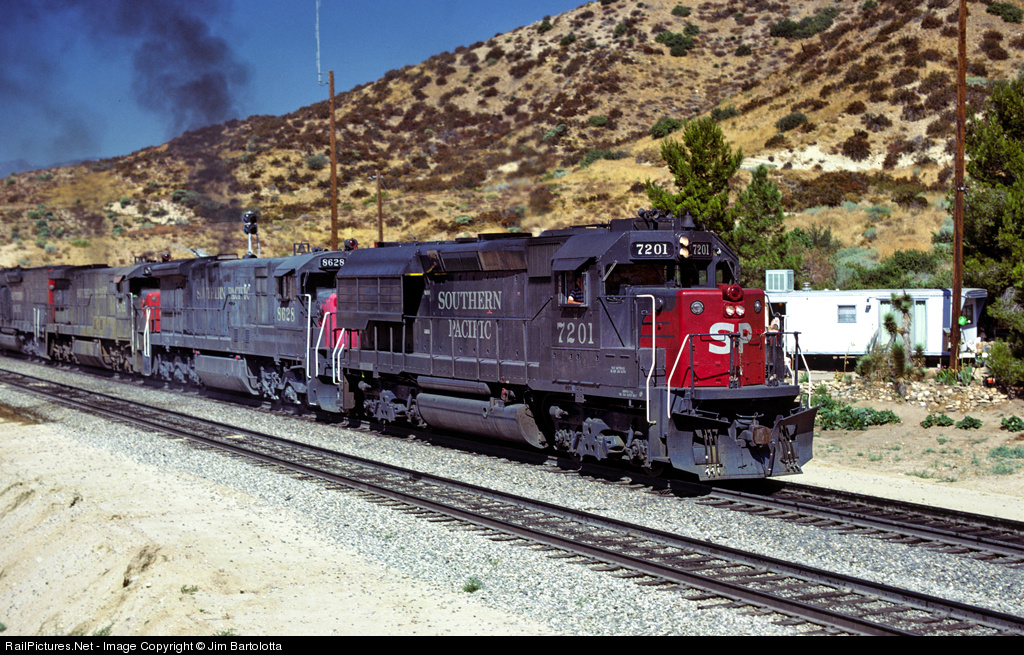
Sony RX1 User Report.
I hesitate to write about gear. Tools are tools and the bitter truth is that a great craftsman rises above his tools to create a masterpiece whereas most of us try to improve our abominations by buying better or faster hammers to hit the same nails at the same awkward angles.
The internet is fairly flooded with reviews of this tiny marvel, and it isn’t my intention to compete with those articles. If you’re looking for a full-scale review of every feature or a down-to-Earth accounting of the RX1’s strengths and weaknesses, I recommend starting here.
Instead, I’d like to provide you with a flavor of how I’ve used the camera over the last six months. In short, this is a user report. To save yourself a few thousand words: I love the thing. As we go through this article, you’ll see this is a purpose built camera. The RX1 is not for everyone, but we will get to that and on the way, I’ll share a handful of images that I made with the camera.
It should be obvious to anyone reading this that I write this independently and have absolutely no relationship with Sony (other than having exchanged a large pile of cash for this camera at a retail outlet).
Before we get to anything else, I want to clear the air about two things: Price and Features
The Price
First things first: the price. The $2800+ cost of this camera is the elephant in the room and, given I purchased the thing, you may consider me a poor critic. That in mind, I want to offer you three thoughts:
Consumer goods cost what they cost, in the absence of a competitor (the Fuji X100s being the only one worth mention) there is no comparison and you simply have to decide for yourself if you are willing to pay or not.
Normalize the price per sensor area for all 35mm f/2 lens and camera alternatives and you’ll find the RX1 is an amazing value.
You are paying for the ability to take photographs, plain and simple. Ask yourself, “what are these photographs worth to me?”
In my case, #3 is very important. I have used the RX1 to take hundreds of photographs of my family that are immensely important to me. Moreover, I have made photographs (many appearing on this page) that are moving or beautiful and only happened because I had the RX1 in my bag or my pocket. Yes, of course I could have made these or very similar photographs with another camera, but that is immaterial.
35mm by 24mm by 35mm f/2
The killer feature of this camera is simple: it is a wafer of silicon 35mm by 24mm paired to a brilliantly, ridiculously, undeniably sharp, contrasty and bokehlicious 35mm f/2 Carl Zeiss lens. Image quality is king here and all other things take a back seat. This means the following: image quality is as good or better than your DSLR, but battery life, focus speed, and responsiveness are likely not as good as your DSLR. I say likely because, if you have an entry-level DSLR, the RX1 is comparable on these dimensions. If you want to change lenses, if you want an integrated viewfinder, if you want blindingly fast phase-detect autofocus then shoot with a DSLR. If you want the absolute best image quality in the smallest size possible, you’ve got it in the RX1.
While we are on the subject of interchangeable lenses and viewfinders...
I have an interchangeable lens DSLR and I love the thing. It’s basically a medium format camera in a 35mm camera body. It’s a powerhouse and it is the first camera I reach for when the goal is photography. For a long time, however, I’ve found myself in situations where photography was not the first goal, but where I nevertheless wanted to have a camera. I’m around the table with friends or at the park with my son and the DSLR is too big, too bulky, too intimidating. It comes between you and life. In this realm, mirrorless, interchangeable lens cameras seem to be king, but they have a major flaw: they are, for all intents and purposes, just little DSLRs.
As I mentioned above, I have an interchangeable lens system, why would I want another, smaller one? Clearly, I am not alone in feeling this way, as the market has produced a number of what I would call “professional point and shoots.” Here we are talking about the Fuji X100/X100s, Sigma DPm-series and the RX100 and RX1.
Design is about making choices
When the Fuji X100 came out, I was intrigued. Here was a cheap(er), baby Leica M. Quiet, small, unobtrusive. Had I waited to buy until the X100s had come out, perhaps this would be a different report. Perhaps, but probably not. I remember thinking to myself as I was looking at the X100, “I wish there was a digital Rollei 35, something with a fixed 28mm or 35mm lens that would fit in a coat pocket or a small bag.” Now of course, there is.
So, for those of you who said, “I would buy the RX1 if it had interchangeable lenses or an integrated viewfinder or faster autofocus,” I say the following: This is a purpose built camera. You would not want it as an interchangeable system, it can’t compete with DSLR speed. A viewfinder would make the thing bigger and ruin the magic ratio of body to sensor size—further, there is a 3-inch LCD viewfinder on the back! Autofocus is super fast, you just don’t realize it because the bar has been raised impossibly high by ultra-sonic magnet focusing rings on professional DSLR lenses. There’s a fantastic balance at work here between image quality and size—great tools are about the total experience, not about one or the other specification.
In short, design is about making choices. I think Sony has made some good ones with the RX1.
In use
So I’ve just written 1,000 words of a user report without, you know, reporting on use. In many ways the images on the page are my user report. These photographs, more than my words, should give you a flavor of what the RX1 is about. But, for the sake of variety, I intend to tell you a bit about the how and the why of shooting with the RX1.
Snapshots
As a beginning enthusiast, I often sneered at the idea of a snapshot. As I’ve matured, I’ve come to appreciate what a pocket camera and a snapshot can offer. The RX1 is the ultimate photographer’s snapshot camera.
I’ll pause here to properly define snapshot as a photograph taken quickly with a handheld camera.
To quote Ferris Bueller’s Day Off, “Life moves pretty fast. If you don't stop and look around once in a while, you could miss it.” So it is with photography. Beautiful photographs happen at the decisive moment—and to paraphrase Henri Cartier-Bresson further—the world is newly made and falling to pieces every instant. I think it is no coincidence that each revolution in the steady march of photography from the tortuously slow chemistry of tin-type and daguerreotype through 120 and 35mm formats to the hyper-sensitive CMOS of today has engendered new categories and concepts of photography.
Photography is a reflexive, reactionary activity. I see beautiful light or the unusual in an every day event and my reaction is a desire to make a photograph. It’s a bit like breathing and has been since I was a kid.
Rather than sneer at snapshots, nowadays I seek them out; and when I seek them out, I do so with the Sony RX1 in my hand.
How I shoot with the RX1
Despite much bluster from commenters on other reviews as to the price point and the purpose-built nature of this camera (see above), the RX1 is incredibly flexible. Have a peek at some of the linked reviews and you’ll see handheld portraits, long exposures, images taken with off-camera flash, etc.
Yet, I mentioned earlier that I reach for the D800 when photography is the primary goal and so the RX1 has become for me a handheld camera—something I use almost exclusively at f/2 (people, objects, shallow DoF) or f/8 (landscapes in abundant light, abstracts). The Auto-ISO setting allows the camera to choose in the range from ISO 50 and 6400 to reach a proper exposure at a given aperture with a 1/80 s shutter speed. I have found this shutter speed ensures a sharp image every time (although photographers with more jittery grips may wish there was the ability to select a different default shutter speed). This strategy works because the RX1 has a delightfully clicky exposure compensation dial just under your right thumb—allowing for fine adjustment to the camera’s metering decision.
So then, if you find me out with the RX1, you’re likely to see me on aperture priority, f/2 and auto ISO. Indeed, many of the photographs on this page were taken in that mode (including lots of the landscape shots!).
Working within constraints.
The RX1 is a wonderful camera to have when you have to work within constraints. When I say this, I mean it is great for photography within two different classes of constraints: 1) physical constraints of time and space and 2) intellectual/artistic constraints.
To speak to the first, as I said earlier, many of the photographs on this page were made possible by having a camera with me at a time that I otherwise would not have been lugging around a camera. For example, some of the images from the Grand Canyon you see were made in a pinch on my way to a Christmas dinner with my family. I didn’t have the larger camera with me and I just had a minute to make the image. Truth be told, these images could have been made with my cell phone, but that I could wring such great image quality out of something not much larger than my cell phone is just gravy. Be it jacket pocket, small bag, bike bag, saddle bag, even fannie pack—you have space for this camera anywhere you go.
Earlier I alluded to the obtrusiveness of a large camera. If you want to travel lightly and make photographs without announcing your presence, it’s easier to use a smaller camera. Here the RX1 excels. Moreover, the camera’s leaf shutter is virtually silent, so you can snap away without announcing your intention. In every sense, this camera is meant to work within physical constraints.
I cut my photographic teeth on film and I will always have an affection for it. There is a sense that one is playing within the rules when he uses film. That same feeling is here in the RX1. I never thought I’d say this about a camera, but I often like the JPEG images this thing produces more than I like what I can push with a RAW. Don’t get me wrong, for a landscape or a cityscape, the RAW processed carefully is FAR, FAR better than a JPEG.
But when I am taking snapshots or photos of friends and family, I find the JPEGs the camera produces (I’m shooting in RAW + JPEG) so beautiful. The camera’s computer corrects for the lens distortion and provides the perfect balance of contrast and saturation. The JPEG engine can be further tweaked to increase the amount of contrast, saturation or dynamic range optimization (shadow boost) used in writing those files. Add in the ability to rapidly compensate exposure or activate various creative modes and you’ve got this feeling you’re shooting film again. Instant, ultra-sensitive and customizable film.
Pro Tip: Focusing
Almost all cameras come shipped with what I consider to be the worst of the worst focus configurations. Even the Nikon D800 came to my hands set to focus when the shutter button was halfway depressed. This mode will ruin almost any photograph. Why? Because it requires you to perform legerdemain to place the autofocus point, depress the shutter halfway, recompose and press the shutter fully. In addition to the chance of accidentally refocusing after composing or missing the shot—this method absolutely ensures that one must focus before every single photograph. Absolutely impossible for action or portraiture.
Sensibly, most professional or prosumer cameras come with an AF-ON button near where the shooter’s right thumb rests. This separates the task of focusing and exposing, allowing the photographer to quickly focus and to capture the image even if focus is slightly off at the focus point. For portraits, kids, action, etc the camera has to have a hair-trigger. It has to be responsive. Manufacturer’s: stop shipping your cameras with this ham-fisted autofocus arrangement.
Now, the RX1 does not have an AF-ON button, but it does have an AEL button whose function can be changed to “MF/AF Control Hold” in the menu. Further, other buttons on the rear of the camera can also be programmed to toggle between AF and MF modes. What this all means is that you can work around the RX1’s buttons to make it’s focus work like a DSLR’s. (For those of you who are RX1 shooters, set the front switch to MF, the right control wheel button to MF/AF Toggle and the AEL button to MF/AF Control Hold and voila!) The end result is that, when powered on the camera is in manual focus mode, but the autofocus can be activated by pressing AEL, no matter what, however, the shutter is tripped by the shutter release. Want to switch to AF mode? Just push a button and you’re back to the standard modality.
Carrying.
I keep mine in a small, neoprene pouch with a semi-hard LCD cover and a circular polarizing filter on the front—perfect for buttoning up and throwing into a bag on my way out of the house. I have a soft release screwed into the threaded shutter release and a custom, red twill strap to replace the horrible plastic strap Sony provided. I plan to gaffer tape the top and the orange ring around the lens. Who knows, I may find an old Voigtlander optical viewfinder in future as well.
Sony RX1 User Report.
I hesitate to write about gear. Tools are tools and the bitter truth is that a great craftsman rises above his tools to create a masterpiece whereas most of us try to improve our abominations by buying better or faster hammers to hit the same nails at the same awkward angles.
The internet is fairly flooded with reviews of this tiny marvel, and it isn’t my intention to compete with those articles. If you’re looking for a full-scale review of every feature or a down-to-Earth accounting of the RX1’s strengths and weaknesses, I recommend starting here.
Instead, I’d like to provide you with a flavor of how I’ve used the camera over the last six months. In short, this is a user report. To save yourself a few thousand words: I love the thing. As we go through this article, you’ll see this is a purpose built camera. The RX1 is not for everyone, but we will get to that and on the way, I’ll share a handful of images that I made with the camera.
It should be obvious to anyone reading this that I write this independently and have absolutely no relationship with Sony (other than having exchanged a large pile of cash for this camera at a retail outlet).
Before we get to anything else, I want to clear the air about two things: Price and Features
The Price
First things first: the price. The $2800+ cost of this camera is the elephant in the room and, given I purchased the thing, you may consider me a poor critic. That in mind, I want to offer you three thoughts:
Consumer goods cost what they cost, in the absence of a competitor (the Fuji X100s being the only one worth mention) there is no comparison and you simply have to decide for yourself if you are willing to pay or not.
Normalize the price per sensor area for all 35mm f/2 lens and camera alternatives and you’ll find the RX1 is an amazing value.
You are paying for the ability to take photographs, plain and simple. Ask yourself, “what are these photographs worth to me?”
In my case, #3 is very important. I have used the RX1 to take hundreds of photographs of my family that are immensely important to me. Moreover, I have made photographs (many appearing on this page) that are moving or beautiful and only happened because I had the RX1 in my bag or my pocket. Yes, of course I could have made these or very similar photographs with another camera, but that is immaterial.
35mm by 24mm by 35mm f/2
The killer feature of this camera is simple: it is a wafer of silicon 35mm by 24mm paired to a brilliantly, ridiculously, undeniably sharp, contrasty and bokehlicious 35mm f/2 Carl Zeiss lens. Image quality is king here and all other things take a back seat. This means the following: image quality is as good or better than your DSLR, but battery life, focus speed, and responsiveness are likely not as good as your DSLR. I say likely because, if you have an entry-level DSLR, the RX1 is comparable on these dimensions. If you want to change lenses, if you want an integrated viewfinder, if you want blindingly fast phase-detect autofocus then shoot with a DSLR. If you want the absolute best image quality in the smallest size possible, you’ve got it in the RX1.
While we are on the subject of interchangeable lenses and viewfinders...
I have an interchangeable lens DSLR and I love the thing. It’s basically a medium format camera in a 35mm camera body. It’s a powerhouse and it is the first camera I reach for when the goal is photography. For a long time, however, I’ve found myself in situations where photography was not the first goal, but where I nevertheless wanted to have a camera. I’m around the table with friends or at the park with my son and the DSLR is too big, too bulky, too intimidating. It comes between you and life. In this realm, mirrorless, interchangeable lens cameras seem to be king, but they have a major flaw: they are, for all intents and purposes, just little DSLRs.
As I mentioned above, I have an interchangeable lens system, why would I want another, smaller one? Clearly, I am not alone in feeling this way, as the market has produced a number of what I would call “professional point and shoots.” Here we are talking about the Fuji X100/X100s, Sigma DPm-series and the RX100 and RX1.
Design is about making choices
When the Fuji X100 came out, I was intrigued. Here was a cheap(er), baby Leica M. Quiet, small, unobtrusive. Had I waited to buy until the X100s had come out, perhaps this would be a different report. Perhaps, but probably not. I remember thinking to myself as I was looking at the X100, “I wish there was a digital Rollei 35, something with a fixed 28mm or 35mm lens that would fit in a coat pocket or a small bag.” Now of course, there is.
So, for those of you who said, “I would buy the RX1 if it had interchangeable lenses or an integrated viewfinder or faster autofocus,” I say the following: This is a purpose built camera. You would not want it as an interchangeable system, it can’t compete with DSLR speed. A viewfinder would make the thing bigger and ruin the magic ratio of body to sensor size—further, there is a 3-inch LCD viewfinder on the back! Autofocus is super fast, you just don’t realize it because the bar has been raised impossibly high by ultra-sonic magnet focusing rings on professional DSLR lenses. There’s a fantastic balance at work here between image quality and size—great tools are about the total experience, not about one or the other specification.
In short, design is about making choices. I think Sony has made some good ones with the RX1.
In use
So I’ve just written 1,000 words of a user report without, you know, reporting on use. In many ways the images on the page are my user report. These photographs, more than my words, should give you a flavor of what the RX1 is about. But, for the sake of variety, I intend to tell you a bit about the how and the why of shooting with the RX1.
Snapshots
As a beginning enthusiast, I often sneered at the idea of a snapshot. As I’ve matured, I’ve come to appreciate what a pocket camera and a snapshot can offer. The RX1 is the ultimate photographer’s snapshot camera.
I’ll pause here to properly define snapshot as a photograph taken quickly with a handheld camera.
To quote Ferris Bueller’s Day Off, “Life moves pretty fast. If you don't stop and look around once in a while, you could miss it.” So it is with photography. Beautiful photographs happen at the decisive moment—and to paraphrase Henri Cartier-Bresson further—the world is newly made and falling to pieces every instant. I think it is no coincidence that each revolution in the steady march of photography from the tortuously slow chemistry of tin-type and daguerreotype through 120 and 35mm formats to the hyper-sensitive CMOS of today has engendered new categories and concepts of photography.
Photography is a reflexive, reactionary activity. I see beautiful light or the unusual in an every day event and my reaction is a desire to make a photograph. It’s a bit like breathing and has been since I was a kid.
Rather than sneer at snapshots, nowadays I seek them out; and when I seek them out, I do so with the Sony RX1 in my hand.
How I shoot with the RX1
Despite much bluster from commenters on other reviews as to the price point and the purpose-built nature of this camera (see above), the RX1 is incredibly flexible. Have a peek at some of the linked reviews and you’ll see handheld portraits, long exposures, images taken with off-camera flash, etc.
Yet, I mentioned earlier that I reach for the D800 when photography is the primary goal and so the RX1 has become for me a handheld camera—something I use almost exclusively at f/2 (people, objects, shallow DoF) or f/8 (landscapes in abundant light, abstracts). The Auto-ISO setting allows the camera to choose in the range from ISO 50 and 6400 to reach a proper exposure at a given aperture with a 1/80 s shutter speed. I have found this shutter speed ensures a sharp image every time (although photographers with more jittery grips may wish there was the ability to select a different default shutter speed). This strategy works because the RX1 has a delightfully clicky exposure compensation dial just under your right thumb—allowing for fine adjustment to the camera’s metering decision.
So then, if you find me out with the RX1, you’re likely to see me on aperture priority, f/2 and auto ISO. Indeed, many of the photographs on this page were taken in that mode (including lots of the landscape shots!).
Working within constraints.
The RX1 is a wonderful camera to have when you have to work within constraints. When I say this, I mean it is great for photography within two different classes of constraints: 1) physical constraints of time and space and 2) intellectual/artistic constraints.
To speak to the first, as I said earlier, many of the photographs on this page were made possible by having a camera with me at a time that I otherwise would not have been lugging around a camera. For example, some of the images from the Grand Canyon you see were made in a pinch on my way to a Christmas dinner with my family. I didn’t have the larger camera with me and I just had a minute to make the image. Truth be told, these images could have been made with my cell phone, but that I could wring such great image quality out of something not much larger than my cell phone is just gravy. Be it jacket pocket, small bag, bike bag, saddle bag, even fannie pack—you have space for this camera anywhere you go.
Earlier I alluded to the obtrusiveness of a large camera. If you want to travel lightly and make photographs without announcing your presence, it’s easier to use a smaller camera. Here the RX1 excels. Moreover, the camera’s leaf shutter is virtually silent, so you can snap away without announcing your intention. In every sense, this camera is meant to work within physical constraints.
I cut my photographic teeth on film and I will always have an affection for it. There is a sense that one is playing within the rules when he uses film. That same feeling is here in the RX1. I never thought I’d say this about a camera, but I often like the JPEG images this thing produces more than I like what I can push with a RAW. Don’t get me wrong, for a landscape or a cityscape, the RAW processed carefully is FAR, FAR better than a JPEG.
But when I am taking snapshots or photos of friends and family, I find the JPEGs the camera produces (I’m shooting in RAW + JPEG) so beautiful. The camera’s computer corrects for the lens distortion and provides the perfect balance of contrast and saturation. The JPEG engine can be further tweaked to increase the amount of contrast, saturation or dynamic range optimization (shadow boost) used in writing those files. Add in the ability to rapidly compensate exposure or activate various creative modes and you’ve got this feeling you’re shooting film again. Instant, ultra-sensitive and customizable film.
Pro Tip: Focusing
Almost all cameras come shipped with what I consider to be the worst of the worst focus configurations. Even the Nikon D800 came to my hands set to focus when the shutter button was halfway depressed. This mode will ruin almost any photograph. Why? Because it requires you to perform legerdemain to place the autofocus point, depress the shutter halfway, recompose and press the shutter fully. In addition to the chance of accidentally refocusing after composing or missing the shot—this method absolutely ensures that one must focus before every single photograph. Absolutely impossible for action or portraiture.
Sensibly, most professional or prosumer cameras come with an AF-ON button near where the shooter’s right thumb rests. This separates the task of focusing and exposing, allowing the photographer to quickly focus and to capture the image even if focus is slightly off at the focus point. For portraits, kids, action, etc the camera has to have a hair-trigger. It has to be responsive. Manufacturer’s: stop shipping your cameras with this ham-fisted autofocus arrangement.
Now, the RX1 does not have an AF-ON button, but it does have an AEL button whose function can be changed to “MF/AF Control Hold” in the menu. Further, other buttons on the rear of the camera can also be programmed to toggle between AF and MF modes. What this all means is that you can work around the RX1’s buttons to make it’s focus work like a DSLR’s. (For those of you who are RX1 shooters, set the front switch to MF, the right control wheel button to MF/AF Toggle and the AEL button to MF/AF Control Hold and voila!) The end result is that, when powered on the camera is in manual focus mode, but the autofocus can be activated by pressing AEL, no matter what, however, the shutter is tripped by the shutter release. Want to switch to AF mode? Just push a button and you’re back to the standard modality.
Carrying.
I keep mine in a small, neoprene pouch with a semi-hard LCD cover and a circular polarizing filter on the front—perfect for buttoning up and throwing into a bag on my way out of the house. I have a soft release screwed into the threaded shutter release and a custom, red twill strap to replace the horrible plastic strap Sony provided. I plan to gaffer tape the top and the orange ring around the lens. Who knows, I may find an old Voigtlander optical viewfinder in future as well.
Sony RX1 User Report.
I hesitate to write about gear. Tools are tools and the bitter truth is that a great craftsman rises above his tools to create a masterpiece whereas most of us try to improve our abominations by buying better or faster hammers to hit the same nails at the same awkward angles.
The internet is fairly flooded with reviews of this tiny marvel, and it isn’t my intention to compete with those articles. If you’re looking for a full-scale review of every feature or a down-to-Earth accounting of the RX1’s strengths and weaknesses, I recommend starting here.
Instead, I’d like to provide you with a flavor of how I’ve used the camera over the last six months. In short, this is a user report. To save yourself a few thousand words: I love the thing. As we go through this article, you’ll see this is a purpose built camera. The RX1 is not for everyone, but we will get to that and on the way, I’ll share a handful of images that I made with the camera.
It should be obvious to anyone reading this that I write this independently and have absolutely no relationship with Sony (other than having exchanged a large pile of cash for this camera at a retail outlet).
Before we get to anything else, I want to clear the air about two things: Price and Features
The Price
First things first: the price. The $2800+ cost of this camera is the elephant in the room and, given I purchased the thing, you may consider me a poor critic. That in mind, I want to offer you three thoughts:
Consumer goods cost what they cost, in the absence of a competitor (the Fuji X100s being the only one worth mention) there is no comparison and you simply have to decide for yourself if you are willing to pay or not.
Normalize the price per sensor area for all 35mm f/2 lens and camera alternatives and you’ll find the RX1 is an amazing value.
You are paying for the ability to take photographs, plain and simple. Ask yourself, “what are these photographs worth to me?”
In my case, #3 is very important. I have used the RX1 to take hundreds of photographs of my family that are immensely important to me. Moreover, I have made photographs (many appearing on this page) that are moving or beautiful and only happened because I had the RX1 in my bag or my pocket. Yes, of course I could have made these or very similar photographs with another camera, but that is immaterial.
35mm by 24mm by 35mm f/2
The killer feature of this camera is simple: it is a wafer of silicon 35mm by 24mm paired to a brilliantly, ridiculously, undeniably sharp, contrasty and bokehlicious 35mm f/2 Carl Zeiss lens. Image quality is king here and all other things take a back seat. This means the following: image quality is as good or better than your DSLR, but battery life, focus speed, and responsiveness are likely not as good as your DSLR. I say likely because, if you have an entry-level DSLR, the RX1 is comparable on these dimensions. If you want to change lenses, if you want an integrated viewfinder, if you want blindingly fast phase-detect autofocus then shoot with a DSLR. If you want the absolute best image quality in the smallest size possible, you’ve got it in the RX1.
While we are on the subject of interchangeable lenses and viewfinders...
I have an interchangeable lens DSLR and I love the thing. It’s basically a medium format camera in a 35mm camera body. It’s a powerhouse and it is the first camera I reach for when the goal is photography. For a long time, however, I’ve found myself in situations where photography was not the first goal, but where I nevertheless wanted to have a camera. I’m around the table with friends or at the park with my son and the DSLR is too big, too bulky, too intimidating. It comes between you and life. In this realm, mirrorless, interchangeable lens cameras seem to be king, but they have a major flaw: they are, for all intents and purposes, just little DSLRs.
As I mentioned above, I have an interchangeable lens system, why would I want another, smaller one? Clearly, I am not alone in feeling this way, as the market has produced a number of what I would call “professional point and shoots.” Here we are talking about the Fuji X100/X100s, Sigma DPm-series and the RX100 and RX1.
Design is about making choices
When the Fuji X100 came out, I was intrigued. Here was a cheap(er), baby Leica M. Quiet, small, unobtrusive. Had I waited to buy until the X100s had come out, perhaps this would be a different report. Perhaps, but probably not. I remember thinking to myself as I was looking at the X100, “I wish there was a digital Rollei 35, something with a fixed 28mm or 35mm lens that would fit in a coat pocket or a small bag.” Now of course, there is.
So, for those of you who said, “I would buy the RX1 if it had interchangeable lenses or an integrated viewfinder or faster autofocus,” I say the following: This is a purpose built camera. You would not want it as an interchangeable system, it can’t compete with DSLR speed. A viewfinder would make the thing bigger and ruin the magic ratio of body to sensor size—further, there is a 3-inch LCD viewfinder on the back! Autofocus is super fast, you just don’t realize it because the bar has been raised impossibly high by ultra-sonic magnet focusing rings on professional DSLR lenses. There’s a fantastic balance at work here between image quality and size—great tools are about the total experience, not about one or the other specification.
In short, design is about making choices. I think Sony has made some good ones with the RX1.
In use
So I’ve just written 1,000 words of a user report without, you know, reporting on use. In many ways the images on the page are my user report. These photographs, more than my words, should give you a flavor of what the RX1 is about. But, for the sake of variety, I intend to tell you a bit about the how and the why of shooting with the RX1.
Snapshots
As a beginning enthusiast, I often sneered at the idea of a snapshot. As I’ve matured, I’ve come to appreciate what a pocket camera and a snapshot can offer. The RX1 is the ultimate photographer’s snapshot camera.
I’ll pause here to properly define snapshot as a photograph taken quickly with a handheld camera.
To quote Ferris Bueller’s Day Off, “Life moves pretty fast. If you don't stop and look around once in a while, you could miss it.” So it is with photography. Beautiful photographs happen at the decisive moment—and to paraphrase Henri Cartier-Bresson further—the world is newly made and falling to pieces every instant. I think it is no coincidence that each revolution in the steady march of photography from the tortuously slow chemistry of tin-type and daguerreotype through 120 and 35mm formats to the hyper-sensitive CMOS of today has engendered new categories and concepts of photography.
Photography is a reflexive, reactionary activity. I see beautiful light or the unusual in an every day event and my reaction is a desire to make a photograph. It’s a bit like breathing and has been since I was a kid.
Rather than sneer at snapshots, nowadays I seek them out; and when I seek them out, I do so with the Sony RX1 in my hand.
How I shoot with the RX1
Despite much bluster from commenters on other reviews as to the price point and the purpose-built nature of this camera (see above), the RX1 is incredibly flexible. Have a peek at some of the linked reviews and you’ll see handheld portraits, long exposures, images taken with off-camera flash, etc.
Yet, I mentioned earlier that I reach for the D800 when photography is the primary goal and so the RX1 has become for me a handheld camera—something I use almost exclusively at f/2 (people, objects, shallow DoF) or f/8 (landscapes in abundant light, abstracts). The Auto-ISO setting allows the camera to choose in the range from ISO 50 and 6400 to reach a proper exposure at a given aperture with a 1/80 s shutter speed. I have found this shutter speed ensures a sharp image every time (although photographers with more jittery grips may wish there was the ability to select a different default shutter speed). This strategy works because the RX1 has a delightfully clicky exposure compensation dial just under your right thumb—allowing for fine adjustment to the camera’s metering decision.
So then, if you find me out with the RX1, you’re likely to see me on aperture priority, f/2 and auto ISO. Indeed, many of the photographs on this page were taken in that mode (including lots of the landscape shots!).
Working within constraints.
The RX1 is a wonderful camera to have when you have to work within constraints. When I say this, I mean it is great for photography within two different classes of constraints: 1) physical constraints of time and space and 2) intellectual/artistic constraints.
To speak to the first, as I said earlier, many of the photographs on this page were made possible by having a camera with me at a time that I otherwise would not have been lugging around a camera. For example, some of the images from the Grand Canyon you see were made in a pinch on my way to a Christmas dinner with my family. I didn’t have the larger camera with me and I just had a minute to make the image. Truth be told, these images could have been made with my cell phone, but that I could wring such great image quality out of something not much larger than my cell phone is just gravy. Be it jacket pocket, small bag, bike bag, saddle bag, even fannie pack—you have space for this camera anywhere you go.
Earlier I alluded to the obtrusiveness of a large camera. If you want to travel lightly and make photographs without announcing your presence, it’s easier to use a smaller camera. Here the RX1 excels. Moreover, the camera’s leaf shutter is virtually silent, so you can snap away without announcing your intention. In every sense, this camera is meant to work within physical constraints.
I cut my photographic teeth on film and I will always have an affection for it. There is a sense that one is playing within the rules when he uses film. That same feeling is here in the RX1. I never thought I’d say this about a camera, but I often like the JPEG images this thing produces more than I like what I can push with a RAW. Don’t get me wrong, for a landscape or a cityscape, the RAW processed carefully is FAR, FAR better than a JPEG.
But when I am taking snapshots or photos of friends and family, I find the JPEGs the camera produces (I’m shooting in RAW + JPEG) so beautiful. The camera’s computer corrects for the lens distortion and provides the perfect balance of contrast and saturation. The JPEG engine can be further tweaked to increase the amount of contrast, saturation or dynamic range optimization (shadow boost) used in writing those files. Add in the ability to rapidly compensate exposure or activate various creative modes and you’ve got this feeling you’re shooting film again. Instant, ultra-sensitive and customizable film.
Pro Tip: Focusing
Almost all cameras come shipped with what I consider to be the worst of the worst focus configurations. Even the Nikon D800 came to my hands set to focus when the shutter button was halfway depressed. This mode will ruin almost any photograph. Why? Because it requires you to perform legerdemain to place the autofocus point, depress the shutter halfway, recompose and press the shutter fully. In addition to the chance of accidentally refocusing after composing or missing the shot—this method absolutely ensures that one must focus before every single photograph. Absolutely impossible for action or portraiture.
Sensibly, most professional or prosumer cameras come with an AF-ON button near where the shooter’s right thumb rests. This separates the task of focusing and exposing, allowing the photographer to quickly focus and to capture the image even if focus is slightly off at the focus point. For portraits, kids, action, etc the camera has to have a hair-trigger. It has to be responsive. Manufacturer’s: stop shipping your cameras with this ham-fisted autofocus arrangement.
Now, the RX1 does not have an AF-ON button, but it does have an AEL button whose function can be changed to “MF/AF Control Hold” in the menu. Further, other buttons on the rear of the camera can also be programmed to toggle between AF and MF modes. What this all means is that you can work around the RX1’s buttons to make it’s focus work like a DSLR’s. (For those of you who are RX1 shooters, set the front switch to MF, the right control wheel button to MF/AF Toggle and the AEL button to MF/AF Control Hold and voila!) The end result is that, when powered on the camera is in manual focus mode, but the autofocus can be activated by pressing AEL, no matter what, however, the shutter is tripped by the shutter release. Want to switch to AF mode? Just push a button and you’re back to the standard modality.
Carrying.
I keep mine in a small, neoprene pouch with a semi-hard LCD cover and a circular polarizing filter on the front—perfect for buttoning up and throwing into a bag on my way out of the house. I have a soft release screwed into the threaded shutter release and a custom, red twill strap to replace the horrible plastic strap Sony provided. I plan to gaffer tape the top and the orange ring around the lens. Who knows, I may find an old Voigtlander optical viewfinder in future as well.
Sony RX1 User Report.
I hesitate to write about gear. Tools are tools and the bitter truth is that a great craftsman rises above his tools to create a masterpiece whereas most of us try to improve our abominations by buying better or faster hammers to hit the same nails at the same awkward angles.
The internet is fairly flooded with reviews of this tiny marvel, and it isn’t my intention to compete with those articles. If you’re looking for a full-scale review of every feature or a down-to-Earth accounting of the RX1’s strengths and weaknesses, I recommend starting here.
Instead, I’d like to provide you with a flavor of how I’ve used the camera over the last six months. In short, this is a user report. To save yourself a few thousand words: I love the thing. As we go through this article, you’ll see this is a purpose built camera. The RX1 is not for everyone, but we will get to that and on the way, I’ll share a handful of images that I made with the camera.
It should be obvious to anyone reading this that I write this independently and have absolutely no relationship with Sony (other than having exchanged a large pile of cash for this camera at a retail outlet).
Before we get to anything else, I want to clear the air about two things: Price and Features
The Price
First things first: the price. The $2800+ cost of this camera is the elephant in the room and, given I purchased the thing, you may consider me a poor critic. That in mind, I want to offer you three thoughts:
Consumer goods cost what they cost, in the absence of a competitor (the Fuji X100s being the only one worth mention) there is no comparison and you simply have to decide for yourself if you are willing to pay or not.
Normalize the price per sensor area for all 35mm f/2 lens and camera alternatives and you’ll find the RX1 is an amazing value.
You are paying for the ability to take photographs, plain and simple. Ask yourself, “what are these photographs worth to me?”
In my case, #3 is very important. I have used the RX1 to take hundreds of photographs of my family that are immensely important to me. Moreover, I have made photographs (many appearing on this page) that are moving or beautiful and only happened because I had the RX1 in my bag or my pocket. Yes, of course I could have made these or very similar photographs with another camera, but that is immaterial.
35mm by 24mm by 35mm f/2
The killer feature of this camera is simple: it is a wafer of silicon 35mm by 24mm paired to a brilliantly, ridiculously, undeniably sharp, contrasty and bokehlicious 35mm f/2 Carl Zeiss lens. Image quality is king here and all other things take a back seat. This means the following: image quality is as good or better than your DSLR, but battery life, focus speed, and responsiveness are likely not as good as your DSLR. I say likely because, if you have an entry-level DSLR, the RX1 is comparable on these dimensions. If you want to change lenses, if you want an integrated viewfinder, if you want blindingly fast phase-detect autofocus then shoot with a DSLR. If you want the absolute best image quality in the smallest size possible, you’ve got it in the RX1.
While we are on the subject of interchangeable lenses and viewfinders...
I have an interchangeable lens DSLR and I love the thing. It’s basically a medium format camera in a 35mm camera body. It’s a powerhouse and it is the first camera I reach for when the goal is photography. For a long time, however, I’ve found myself in situations where photography was not the first goal, but where I nevertheless wanted to have a camera. I’m around the table with friends or at the park with my son and the DSLR is too big, too bulky, too intimidating. It comes between you and life. In this realm, mirrorless, interchangeable lens cameras seem to be king, but they have a major flaw: they are, for all intents and purposes, just little DSLRs.
As I mentioned above, I have an interchangeable lens system, why would I want another, smaller one? Clearly, I am not alone in feeling this way, as the market has produced a number of what I would call “professional point and shoots.” Here we are talking about the Fuji X100/X100s, Sigma DPm-series and the RX100 and RX1.
Design is about making choices
When the Fuji X100 came out, I was intrigued. Here was a cheap(er), baby Leica M. Quiet, small, unobtrusive. Had I waited to buy until the X100s had come out, perhaps this would be a different report. Perhaps, but probably not. I remember thinking to myself as I was looking at the X100, “I wish there was a digital Rollei 35, something with a fixed 28mm or 35mm lens that would fit in a coat pocket or a small bag.” Now of course, there is.
So, for those of you who said, “I would buy the RX1 if it had interchangeable lenses or an integrated viewfinder or faster autofocus,” I say the following: This is a purpose built camera. You would not want it as an interchangeable system, it can’t compete with DSLR speed. A viewfinder would make the thing bigger and ruin the magic ratio of body to sensor size—further, there is a 3-inch LCD viewfinder on the back! Autofocus is super fast, you just don’t realize it because the bar has been raised impossibly high by ultra-sonic magnet focusing rings on professional DSLR lenses. There’s a fantastic balance at work here between image quality and size—great tools are about the total experience, not about one or the other specification.
In short, design is about making choices. I think Sony has made some good ones with the RX1.
In use
So I’ve just written 1,000 words of a user report without, you know, reporting on use. In many ways the images on the page are my user report. These photographs, more than my words, should give you a flavor of what the RX1 is about. But, for the sake of variety, I intend to tell you a bit about the how and the why of shooting with the RX1.
Snapshots
As a beginning enthusiast, I often sneered at the idea of a snapshot. As I’ve matured, I’ve come to appreciate what a pocket camera and a snapshot can offer. The RX1 is the ultimate photographer’s snapshot camera.
I’ll pause here to properly define snapshot as a photograph taken quickly with a handheld camera.
To quote Ferris Bueller’s Day Off, “Life moves pretty fast. If you don't stop and look around once in a while, you could miss it.” So it is with photography. Beautiful photographs happen at the decisive moment—and to paraphrase Henri Cartier-Bresson further—the world is newly made and falling to pieces every instant. I think it is no coincidence that each revolution in the steady march of photography from the tortuously slow chemistry of tin-type and daguerreotype through 120 and 35mm formats to the hyper-sensitive CMOS of today has engendered new categories and concepts of photography.
Photography is a reflexive, reactionary activity. I see beautiful light or the unusual in an every day event and my reaction is a desire to make a photograph. It’s a bit like breathing and has been since I was a kid.
Rather than sneer at snapshots, nowadays I seek them out; and when I seek them out, I do so with the Sony RX1 in my hand.
How I shoot with the RX1
Despite much bluster from commenters on other reviews as to the price point and the purpose-built nature of this camera (see above), the RX1 is incredibly flexible. Have a peek at some of the linked reviews and you’ll see handheld portraits, long exposures, images taken with off-camera flash, etc.
Yet, I mentioned earlier that I reach for the D800 when photography is the primary goal and so the RX1 has become for me a handheld camera—something I use almost exclusively at f/2 (people, objects, shallow DoF) or f/8 (landscapes in abundant light, abstracts). The Auto-ISO setting allows the camera to choose in the range from ISO 50 and 6400 to reach a proper exposure at a given aperture with a 1/80 s shutter speed. I have found this shutter speed ensures a sharp image every time (although photographers with more jittery grips may wish there was the ability to select a different default shutter speed). This strategy works because the RX1 has a delightfully clicky exposure compensation dial just under your right thumb—allowing for fine adjustment to the camera’s metering decision.
So then, if you find me out with the RX1, you’re likely to see me on aperture priority, f/2 and auto ISO. Indeed, many of the photographs on this page were taken in that mode (including lots of the landscape shots!).
Working within constraints.
The RX1 is a wonderful camera to have when you have to work within constraints. When I say this, I mean it is great for photography within two different classes of constraints: 1) physical constraints of time and space and 2) intellectual/artistic constraints.
To speak to the first, as I said earlier, many of the photographs on this page were made possible by having a camera with me at a time that I otherwise would not have been lugging around a camera. For example, some of the images from the Grand Canyon you see were made in a pinch on my way to a Christmas dinner with my family. I didn’t have the larger camera with me and I just had a minute to make the image. Truth be told, these images could have been made with my cell phone, but that I could wring such great image quality out of something not much larger than my cell phone is just gravy. Be it jacket pocket, small bag, bike bag, saddle bag, even fannie pack—you have space for this camera anywhere you go.
Earlier I alluded to the obtrusiveness of a large camera. If you want to travel lightly and make photographs without announcing your presence, it’s easier to use a smaller camera. Here the RX1 excels. Moreover, the camera’s leaf shutter is virtually silent, so you can snap away without announcing your intention. In every sense, this camera is meant to work within physical constraints.
I cut my photographic teeth on film and I will always have an affection for it. There is a sense that one is playing within the rules when he uses film. That same feeling is here in the RX1. I never thought I’d say this about a camera, but I often like the JPEG images this thing produces more than I like what I can push with a RAW. Don’t get me wrong, for a landscape or a cityscape, the RAW processed carefully is FAR, FAR better than a JPEG.
But when I am taking snapshots or photos of friends and family, I find the JPEGs the camera produces (I’m shooting in RAW + JPEG) so beautiful. The camera’s computer corrects for the lens distortion and provides the perfect balance of contrast and saturation. The JPEG engine can be further tweaked to increase the amount of contrast, saturation or dynamic range optimization (shadow boost) used in writing those files. Add in the ability to rapidly compensate exposure or activate various creative modes and you’ve got this feeling you’re shooting film again. Instant, ultra-sensitive and customizable film.
Pro Tip: Focusing
Almost all cameras come shipped with what I consider to be the worst of the worst focus configurations. Even the Nikon D800 came to my hands set to focus when the shutter button was halfway depressed. This mode will ruin almost any photograph. Why? Because it requires you to perform legerdemain to place the autofocus point, depress the shutter halfway, recompose and press the shutter fully. In addition to the chance of accidentally refocusing after composing or missing the shot—this method absolutely ensures that one must focus before every single photograph. Absolutely impossible for action or portraiture.
Sensibly, most professional or prosumer cameras come with an AF-ON button near where the shooter’s right thumb rests. This separates the task of focusing and exposing, allowing the photographer to quickly focus and to capture the image even if focus is slightly off at the focus point. For portraits, kids, action, etc the camera has to have a hair-trigger. It has to be responsive. Manufacturer’s: stop shipping your cameras with this ham-fisted autofocus arrangement.
Now, the RX1 does not have an AF-ON button, but it does have an AEL button whose function can be changed to “MF/AF Control Hold” in the menu. Further, other buttons on the rear of the camera can also be programmed to toggle between AF and MF modes. What this all means is that you can work around the RX1’s buttons to make it’s focus work like a DSLR’s. (For those of you who are RX1 shooters, set the front switch to MF, the right control wheel button to MF/AF Toggle and the AEL button to MF/AF Control Hold and voila!) The end result is that, when powered on the camera is in manual focus mode, but the autofocus can be activated by pressing AEL, no matter what, however, the shutter is tripped by the shutter release. Want to switch to AF mode? Just push a button and you’re back to the standard modality.
Carrying.
I keep mine in a small, neoprene pouch with a semi-hard LCD cover and a circular polarizing filter on the front—perfect for buttoning up and throwing into a bag on my way out of the house. I have a soft release screwed into the threaded shutter release and a custom, red twill strap to replace the horrible plastic strap Sony provided. I plan to gaffer tape the top and the orange ring around the lens. Who knows, I may find an old Voigtlander optical viewfinder in future as well.
Sony RX1 User Report.
I hesitate to write about gear. Tools are tools and the bitter truth is that a great craftsman rises above his tools to create a masterpiece whereas most of us try to improve our abominations by buying better or faster hammers to hit the same nails at the same awkward angles.
The internet is fairly flooded with reviews of this tiny marvel, and it isn’t my intention to compete with those articles. If you’re looking for a full-scale review of every feature or a down-to-Earth accounting of the RX1’s strengths and weaknesses, I recommend starting here.
Instead, I’d like to provide you with a flavor of how I’ve used the camera over the last six months. In short, this is a user report. To save yourself a few thousand words: I love the thing. As we go through this article, you’ll see this is a purpose built camera. The RX1 is not for everyone, but we will get to that and on the way, I’ll share a handful of images that I made with the camera.
It should be obvious to anyone reading this that I write this independently and have absolutely no relationship with Sony (other than having exchanged a large pile of cash for this camera at a retail outlet).
Before we get to anything else, I want to clear the air about two things: Price and Features
The Price
First things first: the price. The $2800+ cost of this camera is the elephant in the room and, given I purchased the thing, you may consider me a poor critic. That in mind, I want to offer you three thoughts:
Consumer goods cost what they cost, in the absence of a competitor (the Fuji X100s being the only one worth mention) there is no comparison and you simply have to decide for yourself if you are willing to pay or not.
Normalize the price per sensor area for all 35mm f/2 lens and camera alternatives and you’ll find the RX1 is an amazing value.
You are paying for the ability to take photographs, plain and simple. Ask yourself, “what are these photographs worth to me?”
In my case, #3 is very important. I have used the RX1 to take hundreds of photographs of my family that are immensely important to me. Moreover, I have made photographs (many appearing on this page) that are moving or beautiful and only happened because I had the RX1 in my bag or my pocket. Yes, of course I could have made these or very similar photographs with another camera, but that is immaterial.
35mm by 24mm by 35mm f/2
The killer feature of this camera is simple: it is a wafer of silicon 35mm by 24mm paired to a brilliantly, ridiculously, undeniably sharp, contrasty and bokehlicious 35mm f/2 Carl Zeiss lens. Image quality is king here and all other things take a back seat. This means the following: image quality is as good or better than your DSLR, but battery life, focus speed, and responsiveness are likely not as good as your DSLR. I say likely because, if you have an entry-level DSLR, the RX1 is comparable on these dimensions. If you want to change lenses, if you want an integrated viewfinder, if you want blindingly fast phase-detect autofocus then shoot with a DSLR. If you want the absolute best image quality in the smallest size possible, you’ve got it in the RX1.
While we are on the subject of interchangeable lenses and viewfinders...
I have an interchangeable lens DSLR and I love the thing. It’s basically a medium format camera in a 35mm camera body. It’s a powerhouse and it is the first camera I reach for when the goal is photography. For a long time, however, I’ve found myself in situations where photography was not the first goal, but where I nevertheless wanted to have a camera. I’m around the table with friends or at the park with my son and the DSLR is too big, too bulky, too intimidating. It comes between you and life. In this realm, mirrorless, interchangeable lens cameras seem to be king, but they have a major flaw: they are, for all intents and purposes, just little DSLRs.
As I mentioned above, I have an interchangeable lens system, why would I want another, smaller one? Clearly, I am not alone in feeling this way, as the market has produced a number of what I would call “professional point and shoots.” Here we are talking about the Fuji X100/X100s, Sigma DPm-series and the RX100 and RX1.
Design is about making choices
When the Fuji X100 came out, I was intrigued. Here was a cheap(er), baby Leica M. Quiet, small, unobtrusive. Had I waited to buy until the X100s had come out, perhaps this would be a different report. Perhaps, but probably not. I remember thinking to myself as I was looking at the X100, “I wish there was a digital Rollei 35, something with a fixed 28mm or 35mm lens that would fit in a coat pocket or a small bag.” Now of course, there is.
So, for those of you who said, “I would buy the RX1 if it had interchangeable lenses or an integrated viewfinder or faster autofocus,” I say the following: This is a purpose built camera. You would not want it as an interchangeable system, it can’t compete with DSLR speed. A viewfinder would make the thing bigger and ruin the magic ratio of body to sensor size—further, there is a 3-inch LCD viewfinder on the back! Autofocus is super fast, you just don’t realize it because the bar has been raised impossibly high by ultra-sonic magnet focusing rings on professional DSLR lenses. There’s a fantastic balance at work here between image quality and size—great tools are about the total experience, not about one or the other specification.
In short, design is about making choices. I think Sony has made some good ones with the RX1.
In use
So I’ve just written 1,000 words of a user report without, you know, reporting on use. In many ways the images on the page are my user report. These photographs, more than my words, should give you a flavor of what the RX1 is about. But, for the sake of variety, I intend to tell you a bit about the how and the why of shooting with the RX1.
Snapshots
As a beginning enthusiast, I often sneered at the idea of a snapshot. As I’ve matured, I’ve come to appreciate what a pocket camera and a snapshot can offer. The RX1 is the ultimate photographer’s snapshot camera.
I’ll pause here to properly define snapshot as a photograph taken quickly with a handheld camera.
To quote Ferris Bueller’s Day Off, “Life moves pretty fast. If you don't stop and look around once in a while, you could miss it.” So it is with photography. Beautiful photographs happen at the decisive moment—and to paraphrase Henri Cartier-Bresson further—the world is newly made and falling to pieces every instant. I think it is no coincidence that each revolution in the steady march of photography from the tortuously slow chemistry of tin-type and daguerreotype through 120 and 35mm formats to the hyper-sensitive CMOS of today has engendered new categories and concepts of photography.
Photography is a reflexive, reactionary activity. I see beautiful light or the unusual in an every day event and my reaction is a desire to make a photograph. It’s a bit like breathing and has been since I was a kid.
Rather than sneer at snapshots, nowadays I seek them out; and when I seek them out, I do so with the Sony RX1 in my hand.
How I shoot with the RX1
Despite much bluster from commenters on other reviews as to the price point and the purpose-built nature of this camera (see above), the RX1 is incredibly flexible. Have a peek at some of the linked reviews and you’ll see handheld portraits, long exposures, images taken with off-camera flash, etc.
Yet, I mentioned earlier that I reach for the D800 when photography is the primary goal and so the RX1 has become for me a handheld camera—something I use almost exclusively at f/2 (people, objects, shallow DoF) or f/8 (landscapes in abundant light, abstracts). The Auto-ISO setting allows the camera to choose in the range from ISO 50 and 6400 to reach a proper exposure at a given aperture with a 1/80 s shutter speed. I have found this shutter speed ensures a sharp image every time (although photographers with more jittery grips may wish there was the ability to select a different default shutter speed). This strategy works because the RX1 has a delightfully clicky exposure compensation dial just under your right thumb—allowing for fine adjustment to the camera’s metering decision.
So then, if you find me out with the RX1, you’re likely to see me on aperture priority, f/2 and auto ISO. Indeed, many of the photographs on this page were taken in that mode (including lots of the landscape shots!).
Working within constraints.
The RX1 is a wonderful camera to have when you have to work within constraints. When I say this, I mean it is great for photography within two different classes of constraints: 1) physical constraints of time and space and 2) intellectual/artistic constraints.
To speak to the first, as I said earlier, many of the photographs on this page were made possible by having a camera with me at a time that I otherwise would not have been lugging around a camera. For example, some of the images from the Grand Canyon you see were made in a pinch on my way to a Christmas dinner with my family. I didn’t have the larger camera with me and I just had a minute to make the image. Truth be told, these images could have been made with my cell phone, but that I could wring such great image quality out of something not much larger than my cell phone is just gravy. Be it jacket pocket, small bag, bike bag, saddle bag, even fannie pack—you have space for this camera anywhere you go.
Earlier I alluded to the obtrusiveness of a large camera. If you want to travel lightly and make photographs without announcing your presence, it’s easier to use a smaller camera. Here the RX1 excels. Moreover, the camera’s leaf shutter is virtually silent, so you can snap away without announcing your intention. In every sense, this camera is meant to work within physical constraints.
I cut my photographic teeth on film and I will always have an affection for it. There is a sense that one is playing within the rules when he uses film. That same feeling is here in the RX1. I never thought I’d say this about a camera, but I often like the JPEG images this thing produces more than I like what I can push with a RAW. Don’t get me wrong, for a landscape or a cityscape, the RAW processed carefully is FAR, FAR better than a JPEG.
But when I am taking snapshots or photos of friends and family, I find the JPEGs the camera produces (I’m shooting in RAW + JPEG) so beautiful. The camera’s computer corrects for the lens distortion and provides the perfect balance of contrast and saturation. The JPEG engine can be further tweaked to increase the amount of contrast, saturation or dynamic range optimization (shadow boost) used in writing those files. Add in the ability to rapidly compensate exposure or activate various creative modes and you’ve got this feeling you’re shooting film again. Instant, ultra-sensitive and customizable film.
Pro Tip: Focusing
Almost all cameras come shipped with what I consider to be the worst of the worst focus configurations. Even the Nikon D800 came to my hands set to focus when the shutter button was halfway depressed. This mode will ruin almost any photograph. Why? Because it requires you to perform legerdemain to place the autofocus point, depress the shutter halfway, recompose and press the shutter fully. In addition to the chance of accidentally refocusing after composing or missing the shot—this method absolutely ensures that one must focus before every single photograph. Absolutely impossible for action or portraiture.
Sensibly, most professional or prosumer cameras come with an AF-ON button near where the shooter’s right thumb rests. This separates the task of focusing and exposing, allowing the photographer to quickly focus and to capture the image even if focus is slightly off at the focus point. For portraits, kids, action, etc the camera has to have a hair-trigger. It has to be responsive. Manufacturer’s: stop shipping your cameras with this ham-fisted autofocus arrangement.
Now, the RX1 does not have an AF-ON button, but it does have an AEL button whose function can be changed to “MF/AF Control Hold” in the menu. Further, other buttons on the rear of the camera can also be programmed to toggle between AF and MF modes. What this all means is that you can work around the RX1’s buttons to make it’s focus work like a DSLR’s. (For those of you who are RX1 shooters, set the front switch to MF, the right control wheel button to MF/AF Toggle and the AEL button to MF/AF Control Hold and voila!) The end result is that, when powered on the camera is in manual focus mode, but the autofocus can be activated by pressing AEL, no matter what, however, the shutter is tripped by the shutter release. Want to switch to AF mode? Just push a button and you’re back to the standard modality.
Carrying.
I keep mine in a small, neoprene pouch with a semi-hard LCD cover and a circular polarizing filter on the front—perfect for buttoning up and throwing into a bag on my way out of the house. I have a soft release screwed into the threaded shutter release and a custom, red twill strap to replace the horrible plastic strap Sony provided. I plan to gaffer tape the top and the orange ring around the lens. Who knows, I may find an old Voigtlander optical viewfinder in future as well.
Sony RX1 User Report.
I hesitate to write about gear. Tools are tools and the bitter truth is that a great craftsman rises above his tools to create a masterpiece whereas most of us try to improve our abominations by buying better or faster hammers to hit the same nails at the same awkward angles.
The internet is fairly flooded with reviews of this tiny marvel, and it isn’t my intention to compete with those articles. If you’re looking for a full-scale review of every feature or a down-to-Earth accounting of the RX1’s strengths and weaknesses, I recommend starting here.
Instead, I’d like to provide you with a flavor of how I’ve used the camera over the last six months. In short, this is a user report. To save yourself a few thousand words: I love the thing. As we go through this article, you’ll see this is a purpose built camera. The RX1 is not for everyone, but we will get to that and on the way, I’ll share a handful of images that I made with the camera.
It should be obvious to anyone reading this that I write this independently and have absolutely no relationship with Sony (other than having exchanged a large pile of cash for this camera at a retail outlet).
Before we get to anything else, I want to clear the air about two things: Price and Features
The Price
First things first: the price. The $2800+ cost of this camera is the elephant in the room and, given I purchased the thing, you may consider me a poor critic. That in mind, I want to offer you three thoughts:
Consumer goods cost what they cost, in the absence of a competitor (the Fuji X100s being the only one worth mention) there is no comparison and you simply have to decide for yourself if you are willing to pay or not.
Normalize the price per sensor area for all 35mm f/2 lens and camera alternatives and you’ll find the RX1 is an amazing value.
You are paying for the ability to take photographs, plain and simple. Ask yourself, “what are these photographs worth to me?”
In my case, #3 is very important. I have used the RX1 to take hundreds of photographs of my family that are immensely important to me. Moreover, I have made photographs (many appearing on this page) that are moving or beautiful and only happened because I had the RX1 in my bag or my pocket. Yes, of course I could have made these or very similar photographs with another camera, but that is immaterial.
35mm by 24mm by 35mm f/2
The killer feature of this camera is simple: it is a wafer of silicon 35mm by 24mm paired to a brilliantly, ridiculously, undeniably sharp, contrasty and bokehlicious 35mm f/2 Carl Zeiss lens. Image quality is king here and all other things take a back seat. This means the following: image quality is as good or better than your DSLR, but battery life, focus speed, and responsiveness are likely not as good as your DSLR. I say likely because, if you have an entry-level DSLR, the RX1 is comparable on these dimensions. If you want to change lenses, if you want an integrated viewfinder, if you want blindingly fast phase-detect autofocus then shoot with a DSLR. If you want the absolute best image quality in the smallest size possible, you’ve got it in the RX1.
While we are on the subject of interchangeable lenses and viewfinders...
I have an interchangeable lens DSLR and I love the thing. It’s basically a medium format camera in a 35mm camera body. It’s a powerhouse and it is the first camera I reach for when the goal is photography. For a long time, however, I’ve found myself in situations where photography was not the first goal, but where I nevertheless wanted to have a camera. I’m around the table with friends or at the park with my son and the DSLR is too big, too bulky, too intimidating. It comes between you and life. In this realm, mirrorless, interchangeable lens cameras seem to be king, but they have a major flaw: they are, for all intents and purposes, just little DSLRs.
As I mentioned above, I have an interchangeable lens system, why would I want another, smaller one? Clearly, I am not alone in feeling this way, as the market has produced a number of what I would call “professional point and shoots.” Here we are talking about the Fuji X100/X100s, Sigma DPm-series and the RX100 and RX1.
Design is about making choices
When the Fuji X100 came out, I was intrigued. Here was a cheap(er), baby Leica M. Quiet, small, unobtrusive. Had I waited to buy until the X100s had come out, perhaps this would be a different report. Perhaps, but probably not. I remember thinking to myself as I was looking at the X100, “I wish there was a digital Rollei 35, something with a fixed 28mm or 35mm lens that would fit in a coat pocket or a small bag.” Now of course, there is.
So, for those of you who said, “I would buy the RX1 if it had interchangeable lenses or an integrated viewfinder or faster autofocus,” I say the following: This is a purpose built camera. You would not want it as an interchangeable system, it can’t compete with DSLR speed. A viewfinder would make the thing bigger and ruin the magic ratio of body to sensor size—further, there is a 3-inch LCD viewfinder on the back! Autofocus is super fast, you just don’t realize it because the bar has been raised impossibly high by ultra-sonic magnet focusing rings on professional DSLR lenses. There’s a fantastic balance at work here between image quality and size—great tools are about the total experience, not about one or the other specification.
In short, design is about making choices. I think Sony has made some good ones with the RX1.
In use
So I’ve just written 1,000 words of a user report without, you know, reporting on use. In many ways the images on the page are my user report. These photographs, more than my words, should give you a flavor of what the RX1 is about. But, for the sake of variety, I intend to tell you a bit about the how and the why of shooting with the RX1.
Snapshots
As a beginning enthusiast, I often sneered at the idea of a snapshot. As I’ve matured, I’ve come to appreciate what a pocket camera and a snapshot can offer. The RX1 is the ultimate photographer’s snapshot camera.
I’ll pause here to properly define snapshot as a photograph taken quickly with a handheld camera.
To quote Ferris Bueller’s Day Off, “Life moves pretty fast. If you don't stop and look around once in a while, you could miss it.” So it is with photography. Beautiful photographs happen at the decisive moment—and to paraphrase Henri Cartier-Bresson further—the world is newly made and falling to pieces every instant. I think it is no coincidence that each revolution in the steady march of photography from the tortuously slow chemistry of tin-type and daguerreotype through 120 and 35mm formats to the hyper-sensitive CMOS of today has engendered new categories and concepts of photography.
Photography is a reflexive, reactionary activity. I see beautiful light or the unusual in an every day event and my reaction is a desire to make a photograph. It’s a bit like breathing and has been since I was a kid.
Rather than sneer at snapshots, nowadays I seek them out; and when I seek them out, I do so with the Sony RX1 in my hand.
How I shoot with the RX1
Despite much bluster from commenters on other reviews as to the price point and the purpose-built nature of this camera (see above), the RX1 is incredibly flexible. Have a peek at some of the linked reviews and you’ll see handheld portraits, long exposures, images taken with off-camera flash, etc.
Yet, I mentioned earlier that I reach for the D800 when photography is the primary goal and so the RX1 has become for me a handheld camera—something I use almost exclusively at f/2 (people, objects, shallow DoF) or f/8 (landscapes in abundant light, abstracts). The Auto-ISO setting allows the camera to choose in the range from ISO 50 and 6400 to reach a proper exposure at a given aperture with a 1/80 s shutter speed. I have found this shutter speed ensures a sharp image every time (although photographers with more jittery grips may wish there was the ability to select a different default shutter speed). This strategy works because the RX1 has a delightfully clicky exposure compensation dial just under your right thumb—allowing for fine adjustment to the camera’s metering decision.
So then, if you find me out with the RX1, you’re likely to see me on aperture priority, f/2 and auto ISO. Indeed, many of the photographs on this page were taken in that mode (including lots of the landscape shots!).
Working within constraints.
The RX1 is a wonderful camera to have when you have to work within constraints. When I say this, I mean it is great for photography within two different classes of constraints: 1) physical constraints of time and space and 2) intellectual/artistic constraints.
To speak to the first, as I said earlier, many of the photographs on this page were made possible by having a camera with me at a time that I otherwise would not have been lugging around a camera. For example, some of the images from the Grand Canyon you see were made in a pinch on my way to a Christmas dinner with my family. I didn’t have the larger camera with me and I just had a minute to make the image. Truth be told, these images could have been made with my cell phone, but that I could wring such great image quality out of something not much larger than my cell phone is just gravy. Be it jacket pocket, small bag, bike bag, saddle bag, even fannie pack—you have space for this camera anywhere you go.
Earlier I alluded to the obtrusiveness of a large camera. If you want to travel lightly and make photographs without announcing your presence, it’s easier to use a smaller camera. Here the RX1 excels. Moreover, the camera’s leaf shutter is virtually silent, so you can snap away without announcing your intention. In every sense, this camera is meant to work within physical constraints.
I cut my photographic teeth on film and I will always have an affection for it. There is a sense that one is playing within the rules when he uses film. That same feeling is here in the RX1. I never thought I’d say this about a camera, but I often like the JPEG images this thing produces more than I like what I can push with a RAW. Don’t get me wrong, for a landscape or a cityscape, the RAW processed carefully is FAR, FAR better than a JPEG.
But when I am taking snapshots or photos of friends and family, I find the JPEGs the camera produces (I’m shooting in RAW + JPEG) so beautiful. The camera’s computer corrects for the lens distortion and provides the perfect balance of contrast and saturation. The JPEG engine can be further tweaked to increase the amount of contrast, saturation or dynamic range optimization (shadow boost) used in writing those files. Add in the ability to rapidly compensate exposure or activate various creative modes and you’ve got this feeling you’re shooting film again. Instant, ultra-sensitive and customizable film.
Pro Tip: Focusing
Almost all cameras come shipped with what I consider to be the worst of the worst focus configurations. Even the Nikon D800 came to my hands set to focus when the shutter button was halfway depressed. This mode will ruin almost any photograph. Why? Because it requires you to perform legerdemain to place the autofocus point, depress the shutter halfway, recompose and press the shutter fully. In addition to the chance of accidentally refocusing after composing or missing the shot—this method absolutely ensures that one must focus before every single photograph. Absolutely impossible for action or portraiture.
Sensibly, most professional or prosumer cameras come with an AF-ON button near where the shooter’s right thumb rests. This separates the task of focusing and exposing, allowing the photographer to quickly focus and to capture the image even if focus is slightly off at the focus point. For portraits, kids, action, etc the camera has to have a hair-trigger. It has to be responsive. Manufacturer’s: stop shipping your cameras with this ham-fisted autofocus arrangement.
Now, the RX1 does not have an AF-ON button, but it does have an AEL button whose function can be changed to “MF/AF Control Hold” in the menu. Further, other buttons on the rear of the camera can also be programmed to toggle between AF and MF modes. What this all means is that you can work around the RX1’s buttons to make it’s focus work like a DSLR’s. (For those of you who are RX1 shooters, set the front switch to MF, the right control wheel button to MF/AF Toggle and the AEL button to MF/AF Control Hold and voila!) The end result is that, when powered on the camera is in manual focus mode, but the autofocus can be activated by pressing AEL, no matter what, however, the shutter is tripped by the shutter release. Want to switch to AF mode? Just push a button and you’re back to the standard modality.
Carrying.
I keep mine in a small, neoprene pouch with a semi-hard LCD cover and a circular polarizing filter on the front—perfect for buttoning up and throwing into a bag on my way out of the house. I have a soft release screwed into the threaded shutter release and a custom, red twill strap to replace the horrible plastic strap Sony provided. I plan to gaffer tape the top and the orange ring around the lens. Who knows, I may find an old Voigtlander optical viewfinder in future as well.
Sony RX1 User Report.
I hesitate to write about gear. Tools are tools and the bitter truth is that a great craftsman rises above his tools to create a masterpiece whereas most of us try to improve our abominations by buying better or faster hammers to hit the same nails at the same awkward angles.
The internet is fairly flooded with reviews of this tiny marvel, and it isn’t my intention to compete with those articles. If you’re looking for a full-scale review of every feature or a down-to-Earth accounting of the RX1’s strengths and weaknesses, I recommend starting here.
Instead, I’d like to provide you with a flavor of how I’ve used the camera over the last six months. In short, this is a user report. To save yourself a few thousand words: I love the thing. As we go through this article, you’ll see this is a purpose built camera. The RX1 is not for everyone, but we will get to that and on the way, I’ll share a handful of images that I made with the camera.
It should be obvious to anyone reading this that I write this independently and have absolutely no relationship with Sony (other than having exchanged a large pile of cash for this camera at a retail outlet).
Before we get to anything else, I want to clear the air about two things: Price and Features
The Price
First things first: the price. The $2800+ cost of this camera is the elephant in the room and, given I purchased the thing, you may consider me a poor critic. That in mind, I want to offer you three thoughts:
Consumer goods cost what they cost, in the absence of a competitor (the Fuji X100s being the only one worth mention) there is no comparison and you simply have to decide for yourself if you are willing to pay or not.
Normalize the price per sensor area for all 35mm f/2 lens and camera alternatives and you’ll find the RX1 is an amazing value.
You are paying for the ability to take photographs, plain and simple. Ask yourself, “what are these photographs worth to me?”
In my case, #3 is very important. I have used the RX1 to take hundreds of photographs of my family that are immensely important to me. Moreover, I have made photographs (many appearing on this page) that are moving or beautiful and only happened because I had the RX1 in my bag or my pocket. Yes, of course I could have made these or very similar photographs with another camera, but that is immaterial.
35mm by 24mm by 35mm f/2
The killer feature of this camera is simple: it is a wafer of silicon 35mm by 24mm paired to a brilliantly, ridiculously, undeniably sharp, contrasty and bokehlicious 35mm f/2 Carl Zeiss lens. Image quality is king here and all other things take a back seat. This means the following: image quality is as good or better than your DSLR, but battery life, focus speed, and responsiveness are likely not as good as your DSLR. I say likely because, if you have an entry-level DSLR, the RX1 is comparable on these dimensions. If you want to change lenses, if you want an integrated viewfinder, if you want blindingly fast phase-detect autofocus then shoot with a DSLR. If you want the absolute best image quality in the smallest size possible, you’ve got it in the RX1.
While we are on the subject of interchangeable lenses and viewfinders...
I have an interchangeable lens DSLR and I love the thing. It’s basically a medium format camera in a 35mm camera body. It’s a powerhouse and it is the first camera I reach for when the goal is photography. For a long time, however, I’ve found myself in situations where photography was not the first goal, but where I nevertheless wanted to have a camera. I’m around the table with friends or at the park with my son and the DSLR is too big, too bulky, too intimidating. It comes between you and life. In this realm, mirrorless, interchangeable lens cameras seem to be king, but they have a major flaw: they are, for all intents and purposes, just little DSLRs.
As I mentioned above, I have an interchangeable lens system, why would I want another, smaller one? Clearly, I am not alone in feeling this way, as the market has produced a number of what I would call “professional point and shoots.” Here we are talking about the Fuji X100/X100s, Sigma DPm-series and the RX100 and RX1.
Design is about making choices
When the Fuji X100 came out, I was intrigued. Here was a cheap(er), baby Leica M. Quiet, small, unobtrusive. Had I waited to buy until the X100s had come out, perhaps this would be a different report. Perhaps, but probably not. I remember thinking to myself as I was looking at the X100, “I wish there was a digital Rollei 35, something with a fixed 28mm or 35mm lens that would fit in a coat pocket or a small bag.” Now of course, there is.
So, for those of you who said, “I would buy the RX1 if it had interchangeable lenses or an integrated viewfinder or faster autofocus,” I say the following: This is a purpose built camera. You would not want it as an interchangeable system, it can’t compete with DSLR speed. A viewfinder would make the thing bigger and ruin the magic ratio of body to sensor size—further, there is a 3-inch LCD viewfinder on the back! Autofocus is super fast, you just don’t realize it because the bar has been raised impossibly high by ultra-sonic magnet focusing rings on professional DSLR lenses. There’s a fantastic balance at work here between image quality and size—great tools are about the total experience, not about one or the other specification.
In short, design is about making choices. I think Sony has made some good ones with the RX1.
In use
So I’ve just written 1,000 words of a user report without, you know, reporting on use. In many ways the images on the page are my user report. These photographs, more than my words, should give you a flavor of what the RX1 is about. But, for the sake of variety, I intend to tell you a bit about the how and the why of shooting with the RX1.
Snapshots
As a beginning enthusiast, I often sneered at the idea of a snapshot. As I’ve matured, I’ve come to appreciate what a pocket camera and a snapshot can offer. The RX1 is the ultimate photographer’s snapshot camera.
I’ll pause here to properly define snapshot as a photograph taken quickly with a handheld camera.
To quote Ferris Bueller’s Day Off, “Life moves pretty fast. If you don't stop and look around once in a while, you could miss it.” So it is with photography. Beautiful photographs happen at the decisive moment—and to paraphrase Henri Cartier-Bresson further—the world is newly made and falling to pieces every instant. I think it is no coincidence that each revolution in the steady march of photography from the tortuously slow chemistry of tin-type and daguerreotype through 120 and 35mm formats to the hyper-sensitive CMOS of today has engendered new categories and concepts of photography.
Photography is a reflexive, reactionary activity. I see beautiful light or the unusual in an every day event and my reaction is a desire to make a photograph. It’s a bit like breathing and has been since I was a kid.
Rather than sneer at snapshots, nowadays I seek them out; and when I seek them out, I do so with the Sony RX1 in my hand.
How I shoot with the RX1
Despite much bluster from commenters on other reviews as to the price point and the purpose-built nature of this camera (see above), the RX1 is incredibly flexible. Have a peek at some of the linked reviews and you’ll see handheld portraits, long exposures, images taken with off-camera flash, etc.
Yet, I mentioned earlier that I reach for the D800 when photography is the primary goal and so the RX1 has become for me a handheld camera—something I use almost exclusively at f/2 (people, objects, shallow DoF) or f/8 (landscapes in abundant light, abstracts). The Auto-ISO setting allows the camera to choose in the range from ISO 50 and 6400 to reach a proper exposure at a given aperture with a 1/80 s shutter speed. I have found this shutter speed ensures a sharp image every time (although photographers with more jittery grips may wish there was the ability to select a different default shutter speed). This strategy works because the RX1 has a delightfully clicky exposure compensation dial just under your right thumb—allowing for fine adjustment to the camera’s metering decision.
So then, if you find me out with the RX1, you’re likely to see me on aperture priority, f/2 and auto ISO. Indeed, many of the photographs on this page were taken in that mode (including lots of the landscape shots!).
Working within constraints.
The RX1 is a wonderful camera to have when you have to work within constraints. When I say this, I mean it is great for photography within two different classes of constraints: 1) physical constraints of time and space and 2) intellectual/artistic constraints.
To speak to the first, as I said earlier, many of the photographs on this page were made possible by having a camera with me at a time that I otherwise would not have been lugging around a camera. For example, some of the images from the Grand Canyon you see were made in a pinch on my way to a Christmas dinner with my family. I didn’t have the larger camera with me and I just had a minute to make the image. Truth be told, these images could have been made with my cell phone, but that I could wring such great image quality out of something not much larger than my cell phone is just gravy. Be it jacket pocket, small bag, bike bag, saddle bag, even fannie pack—you have space for this camera anywhere you go.
Earlier I alluded to the obtrusiveness of a large camera. If you want to travel lightly and make photographs without announcing your presence, it’s easier to use a smaller camera. Here the RX1 excels. Moreover, the camera’s leaf shutter is virtually silent, so you can snap away without announcing your intention. In every sense, this camera is meant to work within physical constraints.
I cut my photographic teeth on film and I will always have an affection for it. There is a sense that one is playing within the rules when he uses film. That same feeling is here in the RX1. I never thought I’d say this about a camera, but I often like the JPEG images this thing produces more than I like what I can push with a RAW. Don’t get me wrong, for a landscape or a cityscape, the RAW processed carefully is FAR, FAR better than a JPEG.
But when I am taking snapshots or photos of friends and family, I find the JPEGs the camera produces (I’m shooting in RAW + JPEG) so beautiful. The camera’s computer corrects for the lens distortion and provides the perfect balance of contrast and saturation. The JPEG engine can be further tweaked to increase the amount of contrast, saturation or dynamic range optimization (shadow boost) used in writing those files. Add in the ability to rapidly compensate exposure or activate various creative modes and you’ve got this feeling you’re shooting film again. Instant, ultra-sensitive and customizable film.
Pro Tip: Focusing
Almost all cameras come shipped with what I consider to be the worst of the worst focus configurations. Even the Nikon D800 came to my hands set to focus when the shutter button was halfway depressed. This mode will ruin almost any photograph. Why? Because it requires you to perform legerdemain to place the autofocus point, depress the shutter halfway, recompose and press the shutter fully. In addition to the chance of accidentally refocusing after composing or missing the shot—this method absolutely ensures that one must focus before every single photograph. Absolutely impossible for action or portraiture.
Sensibly, most professional or prosumer cameras come with an AF-ON button near where the shooter’s right thumb rests. This separates the task of focusing and exposing, allowing the photographer to quickly focus and to capture the image even if focus is slightly off at the focus point. For portraits, kids, action, etc the camera has to have a hair-trigger. It has to be responsive. Manufacturer’s: stop shipping your cameras with this ham-fisted autofocus arrangement.
Now, the RX1 does not have an AF-ON button, but it does have an AEL button whose function can be changed to “MF/AF Control Hold” in the menu. Further, other buttons on the rear of the camera can also be programmed to toggle between AF and MF modes. What this all means is that you can work around the RX1’s buttons to make it’s focus work like a DSLR’s. (For those of you who are RX1 shooters, set the front switch to MF, the right control wheel button to MF/AF Toggle and the AEL button to MF/AF Control Hold and voila!) The end result is that, when powered on the camera is in manual focus mode, but the autofocus can be activated by pressing AEL, no matter what, however, the shutter is tripped by the shutter release. Want to switch to AF mode? Just push a button and you’re back to the standard modality.
Carrying.
I keep mine in a small, neoprene pouch with a semi-hard LCD cover and a circular polarizing filter on the front—perfect for buttoning up and throwing into a bag on my way out of the house. I have a soft release screwed into the threaded shutter release and a custom, red twill strap to replace the horrible plastic strap Sony provided. I plan to gaffer tape the top and the orange ring around the lens. Who knows, I may find an old Voigtlander optical viewfinder in future as well.
Sony RX1 User Report.
I hesitate to write about gear. Tools are tools and the bitter truth is that a great craftsman rises above his tools to create a masterpiece whereas most of us try to improve our abominations by buying better or faster hammers to hit the same nails at the same awkward angles.
The internet is fairly flooded with reviews of this tiny marvel, and it isn’t my intention to compete with those articles. If you’re looking for a full-scale review of every feature or a down-to-Earth accounting of the RX1’s strengths and weaknesses, I recommend starting here.
Instead, I’d like to provide you with a flavor of how I’ve used the camera over the last six months. In short, this is a user report. To save yourself a few thousand words: I love the thing. As we go through this article, you’ll see this is a purpose built camera. The RX1 is not for everyone, but we will get to that and on the way, I’ll share a handful of images that I made with the camera.
It should be obvious to anyone reading this that I write this independently and have absolutely no relationship with Sony (other than having exchanged a large pile of cash for this camera at a retail outlet).
Before we get to anything else, I want to clear the air about two things: Price and Features
The Price
First things first: the price. The $2800+ cost of this camera is the elephant in the room and, given I purchased the thing, you may consider me a poor critic. That in mind, I want to offer you three thoughts:
Consumer goods cost what they cost, in the absence of a competitor (the Fuji X100s being the only one worth mention) there is no comparison and you simply have to decide for yourself if you are willing to pay or not.
Normalize the price per sensor area for all 35mm f/2 lens and camera alternatives and you’ll find the RX1 is an amazing value.
You are paying for the ability to take photographs, plain and simple. Ask yourself, “what are these photographs worth to me?”
In my case, #3 is very important. I have used the RX1 to take hundreds of photographs of my family that are immensely important to me. Moreover, I have made photographs (many appearing on this page) that are moving or beautiful and only happened because I had the RX1 in my bag or my pocket. Yes, of course I could have made these or very similar photographs with another camera, but that is immaterial.
35mm by 24mm by 35mm f/2
The killer feature of this camera is simple: it is a wafer of silicon 35mm by 24mm paired to a brilliantly, ridiculously, undeniably sharp, contrasty and bokehlicious 35mm f/2 Carl Zeiss lens. Image quality is king here and all other things take a back seat. This means the following: image quality is as good or better than your DSLR, but battery life, focus speed, and responsiveness are likely not as good as your DSLR. I say likely because, if you have an entry-level DSLR, the RX1 is comparable on these dimensions. If you want to change lenses, if you want an integrated viewfinder, if you want blindingly fast phase-detect autofocus then shoot with a DSLR. If you want the absolute best image quality in the smallest size possible, you’ve got it in the RX1.
While we are on the subject of interchangeable lenses and viewfinders...
I have an interchangeable lens DSLR and I love the thing. It’s basically a medium format camera in a 35mm camera body. It’s a powerhouse and it is the first camera I reach for when the goal is photography. For a long time, however, I’ve found myself in situations where photography was not the first goal, but where I nevertheless wanted to have a camera. I’m around the table with friends or at the park with my son and the DSLR is too big, too bulky, too intimidating. It comes between you and life. In this realm, mirrorless, interchangeable lens cameras seem to be king, but they have a major flaw: they are, for all intents and purposes, just little DSLRs.
As I mentioned above, I have an interchangeable lens system, why would I want another, smaller one? Clearly, I am not alone in feeling this way, as the market has produced a number of what I would call “professional point and shoots.” Here we are talking about the Fuji X100/X100s, Sigma DPm-series and the RX100 and RX1.
Design is about making choices
When the Fuji X100 came out, I was intrigued. Here was a cheap(er), baby Leica M. Quiet, small, unobtrusive. Had I waited to buy until the X100s had come out, perhaps this would be a different report. Perhaps, but probably not. I remember thinking to myself as I was looking at the X100, “I wish there was a digital Rollei 35, something with a fixed 28mm or 35mm lens that would fit in a coat pocket or a small bag.” Now of course, there is.
So, for those of you who said, “I would buy the RX1 if it had interchangeable lenses or an integrated viewfinder or faster autofocus,” I say the following: This is a purpose built camera. You would not want it as an interchangeable system, it can’t compete with DSLR speed. A viewfinder would make the thing bigger and ruin the magic ratio of body to sensor size—further, there is a 3-inch LCD viewfinder on the back! Autofocus is super fast, you just don’t realize it because the bar has been raised impossibly high by ultra-sonic magnet focusing rings on professional DSLR lenses. There’s a fantastic balance at work here between image quality and size—great tools are about the total experience, not about one or the other specification.
In short, design is about making choices. I think Sony has made some good ones with the RX1.
In use
So I’ve just written 1,000 words of a user report without, you know, reporting on use. In many ways the images on the page are my user report. These photographs, more than my words, should give you a flavor of what the RX1 is about. But, for the sake of variety, I intend to tell you a bit about the how and the why of shooting with the RX1.
Snapshots
As a beginning enthusiast, I often sneered at the idea of a snapshot. As I’ve matured, I’ve come to appreciate what a pocket camera and a snapshot can offer. The RX1 is the ultimate photographer’s snapshot camera.
I’ll pause here to properly define snapshot as a photograph taken quickly with a handheld camera.
To quote Ferris Bueller’s Day Off, “Life moves pretty fast. If you don't stop and look around once in a while, you could miss it.” So it is with photography. Beautiful photographs happen at the decisive moment—and to paraphrase Henri Cartier-Bresson further—the world is newly made and falling to pieces every instant. I think it is no coincidence that each revolution in the steady march of photography from the tortuously slow chemistry of tin-type and daguerreotype through 120 and 35mm formats to the hyper-sensitive CMOS of today has engendered new categories and concepts of photography.
Photography is a reflexive, reactionary activity. I see beautiful light or the unusual in an every day event and my reaction is a desire to make a photograph. It’s a bit like breathing and has been since I was a kid.
Rather than sneer at snapshots, nowadays I seek them out; and when I seek them out, I do so with the Sony RX1 in my hand.
How I shoot with the RX1
Despite much bluster from commenters on other reviews as to the price point and the purpose-built nature of this camera (see above), the RX1 is incredibly flexible. Have a peek at some of the linked reviews and you’ll see handheld portraits, long exposures, images taken with off-camera flash, etc.
Yet, I mentioned earlier that I reach for the D800 when photography is the primary goal and so the RX1 has become for me a handheld camera—something I use almost exclusively at f/2 (people, objects, shallow DoF) or f/8 (landscapes in abundant light, abstracts). The Auto-ISO setting allows the camera to choose in the range from ISO 50 and 6400 to reach a proper exposure at a given aperture with a 1/80 s shutter speed. I have found this shutter speed ensures a sharp image every time (although photographers with more jittery grips may wish there was the ability to select a different default shutter speed). This strategy works because the RX1 has a delightfully clicky exposure compensation dial just under your right thumb—allowing for fine adjustment to the camera’s metering decision.
So then, if you find me out with the RX1, you’re likely to see me on aperture priority, f/2 and auto ISO. Indeed, many of the photographs on this page were taken in that mode (including lots of the landscape shots!).
Working within constraints.
The RX1 is a wonderful camera to have when you have to work within constraints. When I say this, I mean it is great for photography within two different classes of constraints: 1) physical constraints of time and space and 2) intellectual/artistic constraints.
To speak to the first, as I said earlier, many of the photographs on this page were made possible by having a camera with me at a time that I otherwise would not have been lugging around a camera. For example, some of the images from the Grand Canyon you see were made in a pinch on my way to a Christmas dinner with my family. I didn’t have the larger camera with me and I just had a minute to make the image. Truth be told, these images could have been made with my cell phone, but that I could wring such great image quality out of something not much larger than my cell phone is just gravy. Be it jacket pocket, small bag, bike bag, saddle bag, even fannie pack—you have space for this camera anywhere you go.
Earlier I alluded to the obtrusiveness of a large camera. If you want to travel lightly and make photographs without announcing your presence, it’s easier to use a smaller camera. Here the RX1 excels. Moreover, the camera’s leaf shutter is virtually silent, so you can snap away without announcing your intention. In every sense, this camera is meant to work within physical constraints.
I cut my photographic teeth on film and I will always have an affection for it. There is a sense that one is playing within the rules when he uses film. That same feeling is here in the RX1. I never thought I’d say this about a camera, but I often like the JPEG images this thing produces more than I like what I can push with a RAW. Don’t get me wrong, for a landscape or a cityscape, the RAW processed carefully is FAR, FAR better than a JPEG.
But when I am taking snapshots or photos of friends and family, I find the JPEGs the camera produces (I’m shooting in RAW + JPEG) so beautiful. The camera’s computer corrects for the lens distortion and provides the perfect balance of contrast and saturation. The JPEG engine can be further tweaked to increase the amount of contrast, saturation or dynamic range optimization (shadow boost) used in writing those files. Add in the ability to rapidly compensate exposure or activate various creative modes and you’ve got this feeling you’re shooting film again. Instant, ultra-sensitive and customizable film.
Pro Tip: Focusing
Almost all cameras come shipped with what I consider to be the worst of the worst focus configurations. Even the Nikon D800 came to my hands set to focus when the shutter button was halfway depressed. This mode will ruin almost any photograph. Why? Because it requires you to perform legerdemain to place the autofocus point, depress the shutter halfway, recompose and press the shutter fully. In addition to the chance of accidentally refocusing after composing or missing the shot—this method absolutely ensures that one must focus before every single photograph. Absolutely impossible for action or portraiture.
Sensibly, most professional or prosumer cameras come with an AF-ON button near where the shooter’s right thumb rests. This separates the task of focusing and exposing, allowing the photographer to quickly focus and to capture the image even if focus is slightly off at the focus point. For portraits, kids, action, etc the camera has to have a hair-trigger. It has to be responsive. Manufacturer’s: stop shipping your cameras with this ham-fisted autofocus arrangement.
Now, the RX1 does not have an AF-ON button, but it does have an AEL button whose function can be changed to “MF/AF Control Hold” in the menu. Further, other buttons on the rear of the camera can also be programmed to toggle between AF and MF modes. What this all means is that you can work around the RX1’s buttons to make it’s focus work like a DSLR’s. (For those of you who are RX1 shooters, set the front switch to MF, the right control wheel button to MF/AF Toggle and the AEL button to MF/AF Control Hold and voila!) The end result is that, when powered on the camera is in manual focus mode, but the autofocus can be activated by pressing AEL, no matter what, however, the shutter is tripped by the shutter release. Want to switch to AF mode? Just push a button and you’re back to the standard modality.
Carrying.
I keep mine in a small, neoprene pouch with a semi-hard LCD cover and a circular polarizing filter on the front—perfect for buttoning up and throwing into a bag on my way out of the house. I have a soft release screwed into the threaded shutter release and a custom, red twill strap to replace the horrible plastic strap Sony provided. I plan to gaffer tape the top and the orange ring around the lens. Who knows, I may find an old Voigtlander optical viewfinder in future as well.
Sony RX1 User Report.
I hesitate to write about gear. Tools are tools and the bitter truth is that a great craftsman rises above his tools to create a masterpiece whereas most of us try to improve our abominations by buying better or faster hammers to hit the same nails at the same awkward angles.
The internet is fairly flooded with reviews of this tiny marvel, and it isn’t my intention to compete with those articles. If you’re looking for a full-scale review of every feature or a down-to-Earth accounting of the RX1’s strengths and weaknesses, I recommend starting here.
Instead, I’d like to provide you with a flavor of how I’ve used the camera over the last six months. In short, this is a user report. To save yourself a few thousand words: I love the thing. As we go through this article, you’ll see this is a purpose built camera. The RX1 is not for everyone, but we will get to that and on the way, I’ll share a handful of images that I made with the camera.
It should be obvious to anyone reading this that I write this independently and have absolutely no relationship with Sony (other than having exchanged a large pile of cash for this camera at a retail outlet).
Before we get to anything else, I want to clear the air about two things: Price and Features
The Price
First things first: the price. The $2800+ cost of this camera is the elephant in the room and, given I purchased the thing, you may consider me a poor critic. That in mind, I want to offer you three thoughts:
Consumer goods cost what they cost, in the absence of a competitor (the Fuji X100s being the only one worth mention) there is no comparison and you simply have to decide for yourself if you are willing to pay or not.
Normalize the price per sensor area for all 35mm f/2 lens and camera alternatives and you’ll find the RX1 is an amazing value.
You are paying for the ability to take photographs, plain and simple. Ask yourself, “what are these photographs worth to me?”
In my case, #3 is very important. I have used the RX1 to take hundreds of photographs of my family that are immensely important to me. Moreover, I have made photographs (many appearing on this page) that are moving or beautiful and only happened because I had the RX1 in my bag or my pocket. Yes, of course I could have made these or very similar photographs with another camera, but that is immaterial.
35mm by 24mm by 35mm f/2
The killer feature of this camera is simple: it is a wafer of silicon 35mm by 24mm paired to a brilliantly, ridiculously, undeniably sharp, contrasty and bokehlicious 35mm f/2 Carl Zeiss lens. Image quality is king here and all other things take a back seat. This means the following: image quality is as good or better than your DSLR, but battery life, focus speed, and responsiveness are likely not as good as your DSLR. I say likely because, if you have an entry-level DSLR, the RX1 is comparable on these dimensions. If you want to change lenses, if you want an integrated viewfinder, if you want blindingly fast phase-detect autofocus then shoot with a DSLR. If you want the absolute best image quality in the smallest size possible, you’ve got it in the RX1.
While we are on the subject of interchangeable lenses and viewfinders...
I have an interchangeable lens DSLR and I love the thing. It’s basically a medium format camera in a 35mm camera body. It’s a powerhouse and it is the first camera I reach for when the goal is photography. For a long time, however, I’ve found myself in situations where photography was not the first goal, but where I nevertheless wanted to have a camera. I’m around the table with friends or at the park with my son and the DSLR is too big, too bulky, too intimidating. It comes between you and life. In this realm, mirrorless, interchangeable lens cameras seem to be king, but they have a major flaw: they are, for all intents and purposes, just little DSLRs.
As I mentioned above, I have an interchangeable lens system, why would I want another, smaller one? Clearly, I am not alone in feeling this way, as the market has produced a number of what I would call “professional point and shoots.” Here we are talking about the Fuji X100/X100s, Sigma DPm-series and the RX100 and RX1.
Design is about making choices
When the Fuji X100 came out, I was intrigued. Here was a cheap(er), baby Leica M. Quiet, small, unobtrusive. Had I waited to buy until the X100s had come out, perhaps this would be a different report. Perhaps, but probably not. I remember thinking to myself as I was looking at the X100, “I wish there was a digital Rollei 35, something with a fixed 28mm or 35mm lens that would fit in a coat pocket or a small bag.” Now of course, there is.
So, for those of you who said, “I would buy the RX1 if it had interchangeable lenses or an integrated viewfinder or faster autofocus,” I say the following: This is a purpose built camera. You would not want it as an interchangeable system, it can’t compete with DSLR speed. A viewfinder would make the thing bigger and ruin the magic ratio of body to sensor size—further, there is a 3-inch LCD viewfinder on the back! Autofocus is super fast, you just don’t realize it because the bar has been raised impossibly high by ultra-sonic magnet focusing rings on professional DSLR lenses. There’s a fantastic balance at work here between image quality and size—great tools are about the total experience, not about one or the other specification.
In short, design is about making choices. I think Sony has made some good ones with the RX1.
In use
So I’ve just written 1,000 words of a user report without, you know, reporting on use. In many ways the images on the page are my user report. These photographs, more than my words, should give you a flavor of what the RX1 is about. But, for the sake of variety, I intend to tell you a bit about the how and the why of shooting with the RX1.
Snapshots
As a beginning enthusiast, I often sneered at the idea of a snapshot. As I’ve matured, I’ve come to appreciate what a pocket camera and a snapshot can offer. The RX1 is the ultimate photographer’s snapshot camera.
I’ll pause here to properly define snapshot as a photograph taken quickly with a handheld camera.
To quote Ferris Bueller’s Day Off, “Life moves pretty fast. If you don't stop and look around once in a while, you could miss it.” So it is with photography. Beautiful photographs happen at the decisive moment—and to paraphrase Henri Cartier-Bresson further—the world is newly made and falling to pieces every instant. I think it is no coincidence that each revolution in the steady march of photography from the tortuously slow chemistry of tin-type and daguerreotype through 120 and 35mm formats to the hyper-sensitive CMOS of today has engendered new categories and concepts of photography.
Photography is a reflexive, reactionary activity. I see beautiful light or the unusual in an every day event and my reaction is a desire to make a photograph. It’s a bit like breathing and has been since I was a kid.
Rather than sneer at snapshots, nowadays I seek them out; and when I seek them out, I do so with the Sony RX1 in my hand.
How I shoot with the RX1
Despite much bluster from commenters on other reviews as to the price point and the purpose-built nature of this camera (see above), the RX1 is incredibly flexible. Have a peek at some of the linked reviews and you’ll see handheld portraits, long exposures, images taken with off-camera flash, etc.
Yet, I mentioned earlier that I reach for the D800 when photography is the primary goal and so the RX1 has become for me a handheld camera—something I use almost exclusively at f/2 (people, objects, shallow DoF) or f/8 (landscapes in abundant light, abstracts). The Auto-ISO setting allows the camera to choose in the range from ISO 50 and 6400 to reach a proper exposure at a given aperture with a 1/80 s shutter speed. I have found this shutter speed ensures a sharp image every time (although photographers with more jittery grips may wish there was the ability to select a different default shutter speed). This strategy works because the RX1 has a delightfully clicky exposure compensation dial just under your right thumb—allowing for fine adjustment to the camera’s metering decision.
So then, if you find me out with the RX1, you’re likely to see me on aperture priority, f/2 and auto ISO. Indeed, many of the photographs on this page were taken in that mode (including lots of the landscape shots!).
Working within constraints.
The RX1 is a wonderful camera to have when you have to work within constraints. When I say this, I mean it is great for photography within two different classes of constraints: 1) physical constraints of time and space and 2) intellectual/artistic constraints.
To speak to the first, as I said earlier, many of the photographs on this page were made possible by having a camera with me at a time that I otherwise would not have been lugging around a camera. For example, some of the images from the Grand Canyon you see were made in a pinch on my way to a Christmas dinner with my family. I didn’t have the larger camera with me and I just had a minute to make the image. Truth be told, these images could have been made with my cell phone, but that I could wring such great image quality out of something not much larger than my cell phone is just gravy. Be it jacket pocket, small bag, bike bag, saddle bag, even fannie pack—you have space for this camera anywhere you go.
Earlier I alluded to the obtrusiveness of a large camera. If you want to travel lightly and make photographs without announcing your presence, it’s easier to use a smaller camera. Here the RX1 excels. Moreover, the camera’s leaf shutter is virtually silent, so you can snap away without announcing your intention. In every sense, this camera is meant to work within physical constraints.
I cut my photographic teeth on film and I will always have an affection for it. There is a sense that one is playing within the rules when he uses film. That same feeling is here in the RX1. I never thought I’d say this about a camera, but I often like the JPEG images this thing produces more than I like what I can push with a RAW. Don’t get me wrong, for a landscape or a cityscape, the RAW processed carefully is FAR, FAR better than a JPEG.
But when I am taking snapshots or photos of friends and family, I find the JPEGs the camera produces (I’m shooting in RAW + JPEG) so beautiful. The camera’s computer corrects for the lens distortion and provides the perfect balance of contrast and saturation. The JPEG engine can be further tweaked to increase the amount of contrast, saturation or dynamic range optimization (shadow boost) used in writing those files. Add in the ability to rapidly compensate exposure or activate various creative modes and you’ve got this feeling you’re shooting film again. Instant, ultra-sensitive and customizable film.
Pro Tip: Focusing
Almost all cameras come shipped with what I consider to be the worst of the worst focus configurations. Even the Nikon D800 came to my hands set to focus when the shutter button was halfway depressed. This mode will ruin almost any photograph. Why? Because it requires you to perform legerdemain to place the autofocus point, depress the shutter halfway, recompose and press the shutter fully. In addition to the chance of accidentally refocusing after composing or missing the shot—this method absolutely ensures that one must focus before every single photograph. Absolutely impossible for action or portraiture.
Sensibly, most professional or prosumer cameras come with an AF-ON button near where the shooter’s right thumb rests. This separates the task of focusing and exposing, allowing the photographer to quickly focus and to capture the image even if focus is slightly off at the focus point. For portraits, kids, action, etc the camera has to have a hair-trigger. It has to be responsive. Manufacturer’s: stop shipping your cameras with this ham-fisted autofocus arrangement.
Now, the RX1 does not have an AF-ON button, but it does have an AEL button whose function can be changed to “MF/AF Control Hold” in the menu. Further, other buttons on the rear of the camera can also be programmed to toggle between AF and MF modes. What this all means is that you can work around the RX1’s buttons to make it’s focus work like a DSLR’s. (For those of you who are RX1 shooters, set the front switch to MF, the right control wheel button to MF/AF Toggle and the AEL button to MF/AF Control Hold and voila!) The end result is that, when powered on the camera is in manual focus mode, but the autofocus can be activated by pressing AEL, no matter what, however, the shutter is tripped by the shutter release. Want to switch to AF mode? Just push a button and you’re back to the standard modality.
Carrying.
I keep mine in a small, neoprene pouch with a semi-hard LCD cover and a circular polarizing filter on the front—perfect for buttoning up and throwing into a bag on my way out of the house. I have a soft release screwed into the threaded shutter release and a custom, red twill strap to replace the horrible plastic strap Sony provided. I plan to gaffer tape the top and the orange ring around the lens. Who knows, I may find an old Voigtlander optical viewfinder in future as well.
Sony RX1 User Report.
I hesitate to write about gear. Tools are tools and the bitter truth is that a great craftsman rises above his tools to create a masterpiece whereas most of us try to improve our abominations by buying better or faster hammers to hit the same nails at the same awkward angles.
The internet is fairly flooded with reviews of this tiny marvel, and it isn’t my intention to compete with those articles. If you’re looking for a full-scale review of every feature or a down-to-Earth accounting of the RX1’s strengths and weaknesses, I recommend starting here.
Instead, I’d like to provide you with a flavor of how I’ve used the camera over the last six months. In short, this is a user report. To save yourself a few thousand words: I love the thing. As we go through this article, you’ll see this is a purpose built camera. The RX1 is not for everyone, but we will get to that and on the way, I’ll share a handful of images that I made with the camera.
It should be obvious to anyone reading this that I write this independently and have absolutely no relationship with Sony (other than having exchanged a large pile of cash for this camera at a retail outlet).
Before we get to anything else, I want to clear the air about two things: Price and Features
The Price
First things first: the price. The $2800+ cost of this camera is the elephant in the room and, given I purchased the thing, you may consider me a poor critic. That in mind, I want to offer you three thoughts:
Consumer goods cost what they cost, in the absence of a competitor (the Fuji X100s being the only one worth mention) there is no comparison and you simply have to decide for yourself if you are willing to pay or not.
Normalize the price per sensor area for all 35mm f/2 lens and camera alternatives and you’ll find the RX1 is an amazing value.
You are paying for the ability to take photographs, plain and simple. Ask yourself, “what are these photographs worth to me?”
In my case, #3 is very important. I have used the RX1 to take hundreds of photographs of my family that are immensely important to me. Moreover, I have made photographs (many appearing on this page) that are moving or beautiful and only happened because I had the RX1 in my bag or my pocket. Yes, of course I could have made these or very similar photographs with another camera, but that is immaterial.
35mm by 24mm by 35mm f/2
The killer feature of this camera is simple: it is a wafer of silicon 35mm by 24mm paired to a brilliantly, ridiculously, undeniably sharp, contrasty and bokehlicious 35mm f/2 Carl Zeiss lens. Image quality is king here and all other things take a back seat. This means the following: image quality is as good or better than your DSLR, but battery life, focus speed, and responsiveness are likely not as good as your DSLR. I say likely because, if you have an entry-level DSLR, the RX1 is comparable on these dimensions. If you want to change lenses, if you want an integrated viewfinder, if you want blindingly fast phase-detect autofocus then shoot with a DSLR. If you want the absolute best image quality in the smallest size possible, you’ve got it in the RX1.
While we are on the subject of interchangeable lenses and viewfinders...
I have an interchangeable lens DSLR and I love the thing. It’s basically a medium format camera in a 35mm camera body. It’s a powerhouse and it is the first camera I reach for when the goal is photography. For a long time, however, I’ve found myself in situations where photography was not the first goal, but where I nevertheless wanted to have a camera. I’m around the table with friends or at the park with my son and the DSLR is too big, too bulky, too intimidating. It comes between you and life. In this realm, mirrorless, interchangeable lens cameras seem to be king, but they have a major flaw: they are, for all intents and purposes, just little DSLRs.
As I mentioned above, I have an interchangeable lens system, why would I want another, smaller one? Clearly, I am not alone in feeling this way, as the market has produced a number of what I would call “professional point and shoots.” Here we are talking about the Fuji X100/X100s, Sigma DPm-series and the RX100 and RX1.
Design is about making choices
When the Fuji X100 came out, I was intrigued. Here was a cheap(er), baby Leica M. Quiet, small, unobtrusive. Had I waited to buy until the X100s had come out, perhaps this would be a different report. Perhaps, but probably not. I remember thinking to myself as I was looking at the X100, “I wish there was a digital Rollei 35, something with a fixed 28mm or 35mm lens that would fit in a coat pocket or a small bag.” Now of course, there is.
So, for those of you who said, “I would buy the RX1 if it had interchangeable lenses or an integrated viewfinder or faster autofocus,” I say the following: This is a purpose built camera. You would not want it as an interchangeable system, it can’t compete with DSLR speed. A viewfinder would make the thing bigger and ruin the magic ratio of body to sensor size—further, there is a 3-inch LCD viewfinder on the back! Autofocus is super fast, you just don’t realize it because the bar has been raised impossibly high by ultra-sonic magnet focusing rings on professional DSLR lenses. There’s a fantastic balance at work here between image quality and size—great tools are about the total experience, not about one or the other specification.
In short, design is about making choices. I think Sony has made some good ones with the RX1.
In use
So I’ve just written 1,000 words of a user report without, you know, reporting on use. In many ways the images on the page are my user report. These photographs, more than my words, should give you a flavor of what the RX1 is about. But, for the sake of variety, I intend to tell you a bit about the how and the why of shooting with the RX1.
Snapshots
As a beginning enthusiast, I often sneered at the idea of a snapshot. As I’ve matured, I’ve come to appreciate what a pocket camera and a snapshot can offer. The RX1 is the ultimate photographer’s snapshot camera.
I’ll pause here to properly define snapshot as a photograph taken quickly with a handheld camera.
To quote Ferris Bueller’s Day Off, “Life moves pretty fast. If you don't stop and look around once in a while, you could miss it.” So it is with photography. Beautiful photographs happen at the decisive moment—and to paraphrase Henri Cartier-Bresson further—the world is newly made and falling to pieces every instant. I think it is no coincidence that each revolution in the steady march of photography from the tortuously slow chemistry of tin-type and daguerreotype through 120 and 35mm formats to the hyper-sensitive CMOS of today has engendered new categories and concepts of photography.
Photography is a reflexive, reactionary activity. I see beautiful light or the unusual in an every day event and my reaction is a desire to make a photograph. It’s a bit like breathing and has been since I was a kid.
Rather than sneer at snapshots, nowadays I seek them out; and when I seek them out, I do so with the Sony RX1 in my hand.
How I shoot with the RX1
Despite much bluster from commenters on other reviews as to the price point and the purpose-built nature of this camera (see above), the RX1 is incredibly flexible. Have a peek at some of the linked reviews and you’ll see handheld portraits, long exposures, images taken with off-camera flash, etc.
Yet, I mentioned earlier that I reach for the D800 when photography is the primary goal and so the RX1 has become for me a handheld camera—something I use almost exclusively at f/2 (people, objects, shallow DoF) or f/8 (landscapes in abundant light, abstracts). The Auto-ISO setting allows the camera to choose in the range from ISO 50 and 6400 to reach a proper exposure at a given aperture with a 1/80 s shutter speed. I have found this shutter speed ensures a sharp image every time (although photographers with more jittery grips may wish there was the ability to select a different default shutter speed). This strategy works because the RX1 has a delightfully clicky exposure compensation dial just under your right thumb—allowing for fine adjustment to the camera’s metering decision.
So then, if you find me out with the RX1, you’re likely to see me on aperture priority, f/2 and auto ISO. Indeed, many of the photographs on this page were taken in that mode (including lots of the landscape shots!).
Working within constraints.
The RX1 is a wonderful camera to have when you have to work within constraints. When I say this, I mean it is great for photography within two different classes of constraints: 1) physical constraints of time and space and 2) intellectual/artistic constraints.
To speak to the first, as I said earlier, many of the photographs on this page were made possible by having a camera with me at a time that I otherwise would not have been lugging around a camera. For example, some of the images from the Grand Canyon you see were made in a pinch on my way to a Christmas dinner with my family. I didn’t have the larger camera with me and I just had a minute to make the image. Truth be told, these images could have been made with my cell phone, but that I could wring such great image quality out of something not much larger than my cell phone is just gravy. Be it jacket pocket, small bag, bike bag, saddle bag, even fannie pack—you have space for this camera anywhere you go.
Earlier I alluded to the obtrusiveness of a large camera. If you want to travel lightly and make photographs without announcing your presence, it’s easier to use a smaller camera. Here the RX1 excels. Moreover, the camera’s leaf shutter is virtually silent, so you can snap away without announcing your intention. In every sense, this camera is meant to work within physical constraints.
I cut my photographic teeth on film and I will always have an affection for it. There is a sense that one is playing within the rules when he uses film. That same feeling is here in the RX1. I never thought I’d say this about a camera, but I often like the JPEG images this thing produces more than I like what I can push with a RAW. Don’t get me wrong, for a landscape or a cityscape, the RAW processed carefully is FAR, FAR better than a JPEG.
But when I am taking snapshots or photos of friends and family, I find the JPEGs the camera produces (I’m shooting in RAW + JPEG) so beautiful. The camera’s computer corrects for the lens distortion and provides the perfect balance of contrast and saturation. The JPEG engine can be further tweaked to increase the amount of contrast, saturation or dynamic range optimization (shadow boost) used in writing those files. Add in the ability to rapidly compensate exposure or activate various creative modes and you’ve got this feeling you’re shooting film again. Instant, ultra-sensitive and customizable film.
Pro Tip: Focusing
Almost all cameras come shipped with what I consider to be the worst of the worst focus configurations. Even the Nikon D800 came to my hands set to focus when the shutter button was halfway depressed. This mode will ruin almost any photograph. Why? Because it requires you to perform legerdemain to place the autofocus point, depress the shutter halfway, recompose and press the shutter fully. In addition to the chance of accidentally refocusing after composing or missing the shot—this method absolutely ensures that one must focus before every single photograph. Absolutely impossible for action or portraiture.
Sensibly, most professional or prosumer cameras come with an AF-ON button near where the shooter’s right thumb rests. This separates the task of focusing and exposing, allowing the photographer to quickly focus and to capture the image even if focus is slightly off at the focus point. For portraits, kids, action, etc the camera has to have a hair-trigger. It has to be responsive. Manufacturer’s: stop shipping your cameras with this ham-fisted autofocus arrangement.
Now, the RX1 does not have an AF-ON button, but it does have an AEL button whose function can be changed to “MF/AF Control Hold” in the menu. Further, other buttons on the rear of the camera can also be programmed to toggle between AF and MF modes. What this all means is that you can work around the RX1’s buttons to make it’s focus work like a DSLR’s. (For those of you who are RX1 shooters, set the front switch to MF, the right control wheel button to MF/AF Toggle and the AEL button to MF/AF Control Hold and voila!) The end result is that, when powered on the camera is in manual focus mode, but the autofocus can be activated by pressing AEL, no matter what, however, the shutter is tripped by the shutter release. Want to switch to AF mode? Just push a button and you’re back to the standard modality.
Carrying.
I keep mine in a small, neoprene pouch with a semi-hard LCD cover and a circular polarizing filter on the front—perfect for buttoning up and throwing into a bag on my way out of the house. I have a soft release screwed into the threaded shutter release and a custom, red twill strap to replace the horrible plastic strap Sony provided. I plan to gaffer tape the top and the orange ring around the lens. Who knows, I may find an old Voigtlander optical viewfinder in future as well.
Sony RX1 User Report.
I hesitate to write about gear. Tools are tools and the bitter truth is that a great craftsman rises above his tools to create a masterpiece whereas most of us try to improve our abominations by buying better or faster hammers to hit the same nails at the same awkward angles.
The internet is fairly flooded with reviews of this tiny marvel, and it isn’t my intention to compete with those articles. If you’re looking for a full-scale review of every feature or a down-to-Earth accounting of the RX1’s strengths and weaknesses, I recommend starting here.
Instead, I’d like to provide you with a flavor of how I’ve used the camera over the last six months. In short, this is a user report. To save yourself a few thousand words: I love the thing. As we go through this article, you’ll see this is a purpose built camera. The RX1 is not for everyone, but we will get to that and on the way, I’ll share a handful of images that I made with the camera.
It should be obvious to anyone reading this that I write this independently and have absolutely no relationship with Sony (other than having exchanged a large pile of cash for this camera at a retail outlet).
Before we get to anything else, I want to clear the air about two things: Price and Features
The Price
First things first: the price. The $2800+ cost of this camera is the elephant in the room and, given I purchased the thing, you may consider me a poor critic. That in mind, I want to offer you three thoughts:
Consumer goods cost what they cost, in the absence of a competitor (the Fuji X100s being the only one worth mention) there is no comparison and you simply have to decide for yourself if you are willing to pay or not.
Normalize the price per sensor area for all 35mm f/2 lens and camera alternatives and you’ll find the RX1 is an amazing value.
You are paying for the ability to take photographs, plain and simple. Ask yourself, “what are these photographs worth to me?”
In my case, #3 is very important. I have used the RX1 to take hundreds of photographs of my family that are immensely important to me. Moreover, I have made photographs (many appearing on this page) that are moving or beautiful and only happened because I had the RX1 in my bag or my pocket. Yes, of course I could have made these or very similar photographs with another camera, but that is immaterial.
35mm by 24mm by 35mm f/2
The killer feature of this camera is simple: it is a wafer of silicon 35mm by 24mm paired to a brilliantly, ridiculously, undeniably sharp, contrasty and bokehlicious 35mm f/2 Carl Zeiss lens. Image quality is king here and all other things take a back seat. This means the following: image quality is as good or better than your DSLR, but battery life, focus speed, and responsiveness are likely not as good as your DSLR. I say likely because, if you have an entry-level DSLR, the RX1 is comparable on these dimensions. If you want to change lenses, if you want an integrated viewfinder, if you want blindingly fast phase-detect autofocus then shoot with a DSLR. If you want the absolute best image quality in the smallest size possible, you’ve got it in the RX1.
While we are on the subject of interchangeable lenses and viewfinders...
I have an interchangeable lens DSLR and I love the thing. It’s basically a medium format camera in a 35mm camera body. It’s a powerhouse and it is the first camera I reach for when the goal is photography. For a long time, however, I’ve found myself in situations where photography was not the first goal, but where I nevertheless wanted to have a camera. I’m around the table with friends or at the park with my son and the DSLR is too big, too bulky, too intimidating. It comes between you and life. In this realm, mirrorless, interchangeable lens cameras seem to be king, but they have a major flaw: they are, for all intents and purposes, just little DSLRs.
As I mentioned above, I have an interchangeable lens system, why would I want another, smaller one? Clearly, I am not alone in feeling this way, as the market has produced a number of what I would call “professional point and shoots.” Here we are talking about the Fuji X100/X100s, Sigma DPm-series and the RX100 and RX1.
Design is about making choices
When the Fuji X100 came out, I was intrigued. Here was a cheap(er), baby Leica M. Quiet, small, unobtrusive. Had I waited to buy until the X100s had come out, perhaps this would be a different report. Perhaps, but probably not. I remember thinking to myself as I was looking at the X100, “I wish there was a digital Rollei 35, something with a fixed 28mm or 35mm lens that would fit in a coat pocket or a small bag.” Now of course, there is.
So, for those of you who said, “I would buy the RX1 if it had interchangeable lenses or an integrated viewfinder or faster autofocus,” I say the following: This is a purpose built camera. You would not want it as an interchangeable system, it can’t compete with DSLR speed. A viewfinder would make the thing bigger and ruin the magic ratio of body to sensor size—further, there is a 3-inch LCD viewfinder on the back! Autofocus is super fast, you just don’t realize it because the bar has been raised impossibly high by ultra-sonic magnet focusing rings on professional DSLR lenses. There’s a fantastic balance at work here between image quality and size—great tools are about the total experience, not about one or the other specification.
In short, design is about making choices. I think Sony has made some good ones with the RX1.
In use
So I’ve just written 1,000 words of a user report without, you know, reporting on use. In many ways the images on the page are my user report. These photographs, more than my words, should give you a flavor of what the RX1 is about. But, for the sake of variety, I intend to tell you a bit about the how and the why of shooting with the RX1.
Snapshots
As a beginning enthusiast, I often sneered at the idea of a snapshot. As I’ve matured, I’ve come to appreciate what a pocket camera and a snapshot can offer. The RX1 is the ultimate photographer’s snapshot camera.
I’ll pause here to properly define snapshot as a photograph taken quickly with a handheld camera.
To quote Ferris Bueller’s Day Off, “Life moves pretty fast. If you don't stop and look around once in a while, you could miss it.” So it is with photography. Beautiful photographs happen at the decisive moment—and to paraphrase Henri Cartier-Bresson further—the world is newly made and falling to pieces every instant. I think it is no coincidence that each revolution in the steady march of photography from the tortuously slow chemistry of tin-type and daguerreotype through 120 and 35mm formats to the hyper-sensitive CMOS of today has engendered new categories and concepts of photography.
Photography is a reflexive, reactionary activity. I see beautiful light or the unusual in an every day event and my reaction is a desire to make a photograph. It’s a bit like breathing and has been since I was a kid.
Rather than sneer at snapshots, nowadays I seek them out; and when I seek them out, I do so with the Sony RX1 in my hand.
How I shoot with the RX1
Despite much bluster from commenters on other reviews as to the price point and the purpose-built nature of this camera (see above), the RX1 is incredibly flexible. Have a peek at some of the linked reviews and you’ll see handheld portraits, long exposures, images taken with off-camera flash, etc.
Yet, I mentioned earlier that I reach for the D800 when photography is the primary goal and so the RX1 has become for me a handheld camera—something I use almost exclusively at f/2 (people, objects, shallow DoF) or f/8 (landscapes in abundant light, abstracts). The Auto-ISO setting allows the camera to choose in the range from ISO 50 and 6400 to reach a proper exposure at a given aperture with a 1/80 s shutter speed. I have found this shutter speed ensures a sharp image every time (although photographers with more jittery grips may wish there was the ability to select a different default shutter speed). This strategy works because the RX1 has a delightfully clicky exposure compensation dial just under your right thumb—allowing for fine adjustment to the camera’s metering decision.
So then, if you find me out with the RX1, you’re likely to see me on aperture priority, f/2 and auto ISO. Indeed, many of the photographs on this page were taken in that mode (including lots of the landscape shots!).
Working within constraints.
The RX1 is a wonderful camera to have when you have to work within constraints. When I say this, I mean it is great for photography within two different classes of constraints: 1) physical constraints of time and space and 2) intellectual/artistic constraints.
To speak to the first, as I said earlier, many of the photographs on this page were made possible by having a camera with me at a time that I otherwise would not have been lugging around a camera. For example, some of the images from the Grand Canyon you see were made in a pinch on my way to a Christmas dinner with my family. I didn’t have the larger camera with me and I just had a minute to make the image. Truth be told, these images could have been made with my cell phone, but that I could wring such great image quality out of something not much larger than my cell phone is just gravy. Be it jacket pocket, small bag, bike bag, saddle bag, even fannie pack—you have space for this camera anywhere you go.
Earlier I alluded to the obtrusiveness of a large camera. If you want to travel lightly and make photographs without announcing your presence, it’s easier to use a smaller camera. Here the RX1 excels. Moreover, the camera’s leaf shutter is virtually silent, so you can snap away without announcing your intention. In every sense, this camera is meant to work within physical constraints.
I cut my photographic teeth on film and I will always have an affection for it. There is a sense that one is playing within the rules when he uses film. That same feeling is here in the RX1. I never thought I’d say this about a camera, but I often like the JPEG images this thing produces more than I like what I can push with a RAW. Don’t get me wrong, for a landscape or a cityscape, the RAW processed carefully is FAR, FAR better than a JPEG.
But when I am taking snapshots or photos of friends and family, I find the JPEGs the camera produces (I’m shooting in RAW + JPEG) so beautiful. The camera’s computer corrects for the lens distortion and provides the perfect balance of contrast and saturation. The JPEG engine can be further tweaked to increase the amount of contrast, saturation or dynamic range optimization (shadow boost) used in writing those files. Add in the ability to rapidly compensate exposure or activate various creative modes and you’ve got this feeling you’re shooting film again. Instant, ultra-sensitive and customizable film.
Pro Tip: Focusing
Almost all cameras come shipped with what I consider to be the worst of the worst focus configurations. Even the Nikon D800 came to my hands set to focus when the shutter button was halfway depressed. This mode will ruin almost any photograph. Why? Because it requires you to perform legerdemain to place the autofocus point, depress the shutter halfway, recompose and press the shutter fully. In addition to the chance of accidentally refocusing after composing or missing the shot—this method absolutely ensures that one must focus before every single photograph. Absolutely impossible for action or portraiture.
Sensibly, most professional or prosumer cameras come with an AF-ON button near where the shooter’s right thumb rests. This separates the task of focusing and exposing, allowing the photographer to quickly focus and to capture the image even if focus is slightly off at the focus point. For portraits, kids, action, etc the camera has to have a hair-trigger. It has to be responsive. Manufacturer’s: stop shipping your cameras with this ham-fisted autofocus arrangement.
Now, the RX1 does not have an AF-ON button, but it does have an AEL button whose function can be changed to “MF/AF Control Hold” in the menu. Further, other buttons on the rear of the camera can also be programmed to toggle between AF and MF modes. What this all means is that you can work around the RX1’s buttons to make it’s focus work like a DSLR’s. (For those of you who are RX1 shooters, set the front switch to MF, the right control wheel button to MF/AF Toggle and the AEL button to MF/AF Control Hold and voila!) The end result is that, when powered on the camera is in manual focus mode, but the autofocus can be activated by pressing AEL, no matter what, however, the shutter is tripped by the shutter release. Want to switch to AF mode? Just push a button and you’re back to the standard modality.
Carrying.
I keep mine in a small, neoprene pouch with a semi-hard LCD cover and a circular polarizing filter on the front—perfect for buttoning up and throwing into a bag on my way out of the house. I have a soft release screwed into the threaded shutter release and a custom, red twill strap to replace the horrible plastic strap Sony provided. I plan to gaffer tape the top and the orange ring around the lens. Who knows, I may find an old Voigtlander optical viewfinder in future as well.