View allAll Photos Tagged HTML,
✰ Credit ✰
Tattoo : .:RiotzInk:. - Venetian Tattoo {BOM/Evox}
:::FRIDA::: - SANDY Skin [LEL.EVOX] - Miix Event
:::FRIDA::: - SANDY SHAPE - Miix Event
..::Le Mew Beauty::.. - Primal Instinct Nails - Miix Event
NEW ATTITUDE
● Tumblr
● Flickr
● Primfeed
# #cozy #decor #art #fashion #style #portrait #homedecor #aesthetic #creative #lifestyle #photography #model #fashionphotography #design #mood #vibrant #people #Event #Cazimi #MiixEvent #MiixEvent # Skin #Frida #Shape #Riotzink #Tattoo #LeMewBeauty
rare & beautiful case of a well done double spread.
shot by Ji Hyuk Park
W magazine
more pics from JHP
english.chosun.com/w21data/html/news/200702/200702280033....
a friend sent me this a while back,
something from 2005 at www.wwd.com
sorry they didn't tell me the exact page it came from.
How a cover shoot happens
What does it take to produce a magazine cover? Well, start with $100,000. Considering the many expenditures involved, that’s almost a minimum budget for creating a memorable image. From the basics of a studio photo shoot to the extravagant requests celebrities often make on location, here’s a look at what’s behind those coy smiles on the newsstand.
BOOKING CELEBRITIES
In the earliest stages of planning a magazine issue, a special projects or entertainment editor will approach a potential cover subject. This initial outreach typically happens two to eight months before the shoot, though major stars are often sought out for covers more than a year in advance.
“We approached [the Olsen twins] a year and a half before the shoot,” said Allure editor in chief Linda Wells, of her May 2004 cover. “Everyone thought I was crazy at the time because they were still doing tween movies. But we pegged it to their 18th birthday, and it ended up being one of our bestsellers.”
“It depends how much competition there is over them and their project,” said Teen Vogue editor in chief Amy Astley. “For peace of mind, I like to have covers booked a little ahead.…But a lot of [celebrities] like to leave their options open now, so it’s hard.”
Once the celebrity has signed on, the star’s publicist and the magazine then haggle over various contract riders. These are additional requests made by the star and might include, but are not limited to, the type of transportation and accommodations provided by the magazine, what kind of motor home will be available if the shoot is on location, extra space for the star’s privacy, the names of hair and makeup artists the star would prefer to use, specific food requests for catering and stipulations that publicists and/or bodyguards be brought to the shoot at the magazine’s expense.
“Usually, it’s not just a diva-esque request,” Wells said diplomatically. “There might be an awkward history [with a stylist or a writer], or there’s been some violation of trust.” However, she added, “Sometimes we’ve had celebrities ask for their own hair and makeup people.…When we’ve bent the rules and acquiesced, it usually hasn’t yielded the best results.”
Since top hair and makeup people can charge upward of 10 times the standard editorial rate of $200 to $250 per day, upgrading can be an expensive request to indulge. However, when a star insists on bringing in his or her own team, the studio behind the project the celebrity is promoting will sometimes step in to defray costs.
INSPIRATION
Shortly after the cover is booked, someone from the magazine talks to the celebrity or the celebrity’s publicist about the direction of the shoot. Photographers are discussed, as are styles of clothing and locations that might be used. If the celebrity favors certain designers or has a cosmetics contract, those relationships are disclosed. Also discussed are styles and designers the star prefers not to wear, angles at which he or she prefers not to be shot and body parts he or she does not want shown. Independently, the editor in chief and art and/or photo directors will meet to discuss what they want from the cover image.
“We look to see what’s been done before, all the covers [the celebrity has] done, who’s photographed them. Are they comfortable posing in front of the camera? Are they comfortable moving their bodies?” said Laurie Kratochvil, the photo director of In Style. “We look at our last few covers. Have we done a tight headshot? Have we done a full body?….For a while, we were doing very much a head and shoulder thing, which got a little boring.” Now, celebrities appear on In Style’s mostly white backgrounds shot over the shoulder, in the “crouching starlet” pose or just sitting on the floor.
Then a photographer is booked. Most magazines have a select group they use for covers. At some titles, the photographers are on contract and are paid a flat fee for their work — anywhere from five to seven figures annually. Other companies simply have a verbal understanding with their photographers and pay them on a daily and/or per-page basis.
High-profile photographers often have a great deal of say in creating the cover image, and they also have their own sources of inspiration. Just as fashion designers consult vintage stores like What Comes Around Goes Around, and chefs frequent Bonnie Slotnick’s cookbook shop, many photographers look to Gallagher’s Fashion and Design magazine archive in Manhattan’s East Village for ideas. The influence of images past is sometimes barely perceptible. In other cases, such as in Esquire’s November 2003 cover with Britney Spears, which re-created a classic 1966 Angie Dickinson pose, the photographer makes an overt homage.
“Nothing ever dies in fashion,” said Michael Gallagher, magazine archive owner. “It just comes back around. Art directors are the worst — they copy too much sometimes. But when it works, it works. Why not re-create something beautiful and put your own spin on it?”
MODEL COVERS
Should the publication so choose — or should, say, a celebrity cancel at the last minute — a model might be booked for the cover instead. Models are reserved anywhere from a few months in advance to just days before the shoot. The going rate for editorial work is $225 a day plus 10 percent to the model’s agency — even for supermodels such as Daria Werbowy, Karolina Kurkova and Liya Kedebe, who is currently on the May cover of Vogue.
“[Editorial work] is not going to pay the same rate as selling jewelry or cosmetics [in an advertising campaign],” said Ivan Bart, senior vice president of IMG Models. “But doing covers leads to other opportunities.…In the same way that Julianne Moore does a magazine cover to promote a film, models are on covers to promote their interests, too.”
LOGISTICS
About a month before the shoot, a photo editor from the magazine reserves a studio space — usually Milk or Pier 59 in New York or SmashBox or Quixote in Los Angeles — or hires an outside producer to begin scouting and coordinating locations.
“When the editor or photographer comes to me, there’ll generally be an overall idea of where the shoot should be, what the clothes are and who the subject is,” said Victoria Brynner, an executive producer with Stardust Visions, a production company based in Los Angeles. “We’ll scout locations and post our pictures on a Web site, so that everybody — the photographer, the editor, the stylist — has a chance to take a look and decide which location is most appropriate.”
Prop stylists, hair and makeup people, a manicurist and a caterer are put on hold, as are any other extras that might be used — say, the lions that appeared with Drew Barrymore in the April Vogue cover shoot. The photo editor or independent producer also books all necessary travel arrangements, accommodations and limousine services. A few days before the shoot, call sheets are sent out to everyone who will be attending, and anyone at the magazine who might need to reach someone on set.
THE CLOTHES
Shortly after the direction is established, the fashion editor and stylist working on the story begin assembling inspiration boards of runway shots and photos. At least three weeks before the shoot, market editors begin calling in clothes and accessories for consideration. A run-through is scheduled, and more clothes are called in if necessary. Once the looks have been picked, all items are sent to the location. If the clothes have to fly, they are usually accompanied by a stylist’s assistant. Since celebrities are typically not sample size, there will often be a fitting the day before so that clothes can be altered to fit the cover subject’s frame. If that doesn’t work, often designers will offer clothes straight from the racks of their stores.
THE SHOOT
The photographer and crew are usually the first to arrive and set up. If a set needs to be built, it’s constructed.
The caterers get there to set up for breakfast and lunch.
“I think there are a lot of misconceptions about photo shoots and models and celebrities,” said Pam D’Orazio, who owns Palma in the West Village and caters many magazine shoots in New York. “People think they don’t eat dessert — they love dessert.” And some love it so much they make special requests. One star’s manager is known for calling ahead and asking for specific dessert recipes. If there are any leftovers, he’s apparently not shy about taking them home.
Hair and makeup people come in an hour or two before the celebrity, who is the last person to arrive on set. While most celebrities have cars in Los Angeles, and many have homes just blocks from the two major studios in New York, few stars offer to get themselves to and from a shoot. Notable exceptions are Julianne Moore, who has been known to walk to locations in New York, and Jennifer Aniston, who frequently drives herself to shoots in Los Angeles. (Uma Thurman, on the other hand, reportedly prefers to be chauffeured, even if it’s just a few blocks.)
If the shoot is not in New York or Los Angeles, chances are everyone has to be flown to the location. A-list celebrities, top photographers and top editors and stylists are almost always flown first class. B-list stars, assistants, hair and makeup people and publicists fly coach and must upgrade on their own. While most magazines will only make commercial flight arrangements, there have been instances where celebrities have requested and gotten private jet and helicopter flights to “save time” on a cover shoot.
LAYING OUT THE COVER
Within a week, contact sheets from the photographer arrive at the magazine. Film is picked by the art and photo departments and the editor in chief. A print order is made and the retouching and color correcting process begins, which can take up to two weeks. Most magazines and photographers use Box Studios in New York. Simultaneously, an editor in chief and other editors at the magazine generate cover lines, while the art department uses scans from the original contact sheets to mock up versions of the cover. While stars often ask for photo approval, it’s rarely ever granted. However, many celebrities and models are able to see polaroids during the shoot and can make objections if something looks off to them then.
COVER TESTING
Once the editor in chief has narrowed down the possibilities, two to five potential covers are tested, typically by an outside vendor using an e-mail survey. The vendor sends an e-mail blast to people who are asked to rate cover lines and images. Within 48 hours, the editor in chief receives the results of the test and makes his or her final decisions about which image and cover lines to use for the issue.
While some editors argue cover testing limits the creative process, its devotees say the opposite is true. Astley ended up going with a riskier cover choice for the June issue of Teen Vogue in part because of cover tests. “We had lots of different options that were all fairly conventional, with [cover subject Lindsay Lohan] just sitting there,” said Astley. “We thought here at the magazine that the image with her eyes closed was fun and different, but we didn’t know if it would work. The feedback we got [from kids through testing] just helped us follow our convictions.”
THE COVER SHIPS
Once the cover has been finalized, the image is sent to the printing plant — typically located in some far off, glamorous locale like Baraboo, Wisc., or Dyersburg, Tenn. — in an electronic file, along with a color proof. Depending on the magazine, someone from production may go with the magazine to the plant. It takes roughly two weeks to print and bind the issue. Within seven days after the issue is bound, magazines arrive on newsstands and in subscribers’ mailboxes. And then, of course, the process begins all over again.
Biennalist :
Biennalist is an Art Format commenting on active biennials and managed cultural events through artworks.Biennalist takes the thematics of the biennales and similar events like festivals and conferences seriously, questioning the established structures of the staged art events in order to contribute to the debate, which they wish to generate.
-------------------------------------------
links about Biennalist :
Thierry Geoffroy/Colonel:
en.wikipedia.org/wiki/Thierry_Geoffroy
en.wikipedia.org/wiki/Emergency_Room_(art)
www.emergencyrooms.org/formats.html
—--Biennale from wikipedia —--
The Venice International Film Festival is part of the Venice Biennale. The famous Golden Lion is awarded to the best film screening at the competition.
Biennale (Italian: [bi.enˈnaːle]), Italian for "biennial" or "every other year", is any event that happens every two years. It is most commonly used within the art world to describe large-scale international contemporary art exhibitions. As such the term was popularised by Venice Biennale, which was first held in 1895. Since the 1990s, the terms "biennale" and "biennial" have been interchangeably used in a more generic way - to signify a large-scale international survey show of contemporary art that recurs at regular intervals but not necessarily biannual (such as triennials, Documenta, Skulptur Projekte Münster).[1] The phrase has also been used for other artistic events, such as the "Biennale de Paris", "Kochi-Muziris Biennale", Berlinale (for the Berlin International Film Festival) and Viennale (for Vienna's international film festival).
Characteristics[edit]
According to author Federica Martini, what is at stake in contemporary biennales is the diplomatic/international relations potential as well as urban regeneration plans. Besides being mainly focused on the present (the “here and now” where the cultural event takes place and their effect of "spectacularisation of the everyday"), because of their site-specificity cultural events may refer back to,[who?] produce or frame the history of the site and communities' collective memory.[2]
The Great Exhibition in The Crystal Palace in Hyde Park, London, in 1851, the first attempt to condense the representation of the world within a unitary exhibition space.
A strong and influent symbol of biennales and of large-scale international exhibitions in general is the Crystal Palace, the gigantic and futuristic London architecture that hosted the Great Exhibition in 1851. According to philosopher Peter Sloterdijk,[3][page needed] the Crystal Palace is the first attempt to condense the representation of the world in a unitary exhibition space, where the main exhibit is society itself in an a-historical, spectacular condition. The Crystal Palace main motives were the affirmation of British economic and national leadership and the creation of moments of spectacle. In this respect, 19th century World fairs provided a visual crystallization of colonial culture and were, at the same time, forerunners of contemporary theme parks.
The Venice Biennale as an archetype[edit]
The structure of the Venice Biennale in 2005 with an international exhibition and the national pavilions.
The Venice Biennale, a periodical large-scale cultural event founded in 1895, served as an archetype of the biennales. Meant to become a World Fair focused on contemporary art, the Venice Biennale used as a pretext the wedding anniversary of the Italian king and followed up to several national exhibitions organised after Italy unification in 1861. The Biennale immediately put forth issues of city marketing, cultural tourism and urban regeneration, as it was meant to reposition Venice on the international cultural map after the crisis due to the end of the Grand Tour model and the weakening of the Venetian school of painting. Furthermore, the Gardens where the Biennale takes place were an abandoned city area that needed to be re-functionalised. In cultural terms, the Biennale was meant to provide on a biennial basis a platform for discussing contemporary art practices that were not represented in fine arts museums at the time. The early Biennale model already included some key points that are still constitutive of large-scale international art exhibitions today: a mix of city marketing, internationalism, gentrification issues and destination culture, and the spectacular, large scale of the event.
Biennials after the 1990s[edit]
The situation of biennials has changed in the contemporary context: while at its origin in 1895 Venice was a unique cultural event, but since the 1990s hundreds of biennials have been organized across the globe. Given the ephemeral and irregular nature of some biennials, there is little consensus on the exact number of biennials in existence at any given time.[citation needed] Furthermore, while Venice was a unique agent in the presentation of contemporary art, since the 1960s several museums devoted to contemporary art are exhibiting the contemporary scene on a regular basis. Another point of difference concerns 19th century internationalism in the arts, that was brought into question by post-colonial debates and criticism of the contemporary art “ethnic marketing”, and also challenged the Venetian and World Fair’s national representation system. As a consequence of this, Eurocentric tendency to implode the whole word in an exhibition space, which characterises both the Crystal Palace and the Venice Biennale, is affected by the expansion of the artistic geographical map to scenes traditionally considered as marginal. The birth of the Havana Biennial in 1984 is widely considered an important counterpoint to the Venetian model for its prioritization of artists working in the Global South and curatorial rejection of the national pavilion model.
International biennales[edit]
In the term's most commonly used context of major recurrent art exhibitions:
Adelaide Biennial of Australian Art, South Australia
Asian Art Biennale, in Taichung, Taiwan (National Taiwan Museum of Fine Arts)
Athens Biennale, in Athens, Greece
Bienal de Arte Paiz, in Guatemala City, Guatemala[4]
Arts in Marrakech (AiM) International Biennale (Arts in Marrakech Festival)
Bamako Encounters, a biennale of photography in Mali
Bat-Yam International Biennale of Landscape Urbanism
Beijing Biennale
Berlin Biennale (contemporary art biennale, to be distinguished from Berlinale, which is a film festival)
Bergen Assembly (triennial for contemporary art in Bergen, Norway)www.bergenassembly.no
Bi-City Biennale of Urbanism\Architecture, in Shenzhen and Hong Kong, China
Bienal de Arte de Ponce in Ponce, Puerto Rico
Biënnale van België, Biennial of Belgium, Belgium
BiennaleOnline Online biennial exhibition of contemporary art from the most promising emerging artists.
Biennial of Hawaii Artists
Biennale de la Biche, the smallest biennale in the world held at deserted island near Guadeloupe, French overseas region[5][6]
Biwako Biennale [ja], in Shiga, Japan
La Biennale de Montreal
Biennale of Luanda : Pan-African Forum for the Culture of Peace,[7] Angola
Boom Festival, international music and culture festival in Idanha-a-Nova, Portugal
Bucharest Biennale in Bucharest, Romania
Bushwick Biennial, in Bushwick, Brooklyn, New York
Canakkale Biennial, in Canakkale, Turkey
Cerveira International Art Biennial, Vila Nova de Cerveira, Portugal [8]
Changwon Sculpture Biennale in Changwon, South Korea
Dakar Biennale, also called Dak'Art, biennale in Dakar, Senegal
Documenta, contemporary art exhibition held every five years in Kassel, Germany
Estuaire (biennale), biennale in Nantes and Saint-Nazaire, France
EVA International, biennial in Limerick, Republic of Ireland
Göteborg International Biennial for Contemporary Art, in Gothenburg, Sweden[9]
Greater Taipei Contemporary Art Biennial, in Taipei, Taiwan
Gwangju Biennale, Asia's first and most prestigious contemporary art biennale
Havana biennial, in Havana, Cuba
Helsinki Biennial, in Helsinki, Finland
Herzliya Biennial For Contemporary Art, in Herzliya, Israel
Incheon Women Artists' Biennale, in Incheon, South Korea
Iowa Biennial, in Iowa, USA
Istanbul Biennial, in Istanbul, Turkey
International Roaming Biennial of Tehran, in Tehran and Istanbul
Jakarta Biennale, in Jakarta, Indonesia
Jerusalem Biennale, in Jerusalem, Israel
Jogja Biennale, in Yogyakarta, Indonesia
Karachi Biennale, in Karachi, Pakistan
Keelung Harbor Biennale, in Keelung, Taiwan
Kochi-Muziris Biennale, largest art exhibition in India, in Kochi, Kerala, India
Kortrijk Design Biennale Interieur, in Kortrijk, Belgium
Kobe Biennale, in Japan
Kuandu Biennale, in Taipei, Taiwan
Lagos Biennial, in Lagos, Nigeria[10]
Light Art Biennale Austria, in Austria
Liverpool Biennial, in Liverpool, UK
Lofoten International Art Festival [no] (LIAF), on the Lofoten archipelago, Norway[11]
Manifesta, European Biennale of contemporary art in different European cities
Mediations Biennale, in Poznań, Poland
Melbourne International Biennial 1999
Mediterranean Biennale in Sakhnin 2013
MOMENTA Biennale de l'image [fr] (formerly known as Le Mois de la Photo à Montréal), in Montreal, Canada
MOMENTUM [no], in Moss, Norway[12]
Moscow Biennale, in Moscow, Russia
Munich Biennale, new opera and music-theatre in even-numbered years
Mykonos Biennale
Nakanojo Biennale[13]
NGV Triennial, contemporary art exhibition held every three years at the National Gallery of Victoria, Melbourne, Australia
October Salon – Belgrade Biennale [sr], organised by the Cultural Center of Belgrade [sr], in Belgrade, Serbia[14]
OSTEN Biennial of Drawing Skopje, North Macedonia[15]
Biennale de Paris
Riga International Biennial of Contemporary Art (RIBOCA), in Riga, Latvia[16]
São Paulo Art Biennial, in São Paulo, Brazil
SCAPE Public Art Christchurch Biennial in Christchurch, New Zealand[17]
Prospect New Orleans
Seoul Biennale of Architecture and Urbanism
Sequences, in Reykjavík, Iceland[18]
Shanghai Biennale
Sharjah Biennale, in Sharjah, UAE
Singapore Biennale, held in various locations across the city-state island of Singapore
Screen City Biennial, in Stavanger, Norway
Biennale of Sydney
Taipei Biennale, in Taipei, Taiwan
Taiwan Arts Biennale, in Taichung, Taiwan (National Taiwan Museum of Fine Arts)
Taiwan Film Biennale, in Hammer Museum, Los Angeles, U.S.A.
Thessaloniki Biennale of Contemporary Art [el], in Thessaloniki, Greece[19]
Dream city, produced by ART Rue Association in Tunisia
Vancouver Biennale
Visayas Islands Visual Arts Exhibition and Conference (VIVA ExCon) in the Philippines [20]
Venice Biennale, in Venice, Italy, which includes:
Venice Biennale of Contemporary Art
Venice Biennale of Architecture
Venice Film Festival
Vladivostok biennale of Visual Arts, in Vladivostok, Russia
Whitney Biennial, hosted by the Whitney Museum of American Art, in New York City, NY, USA
Web Biennial, produced with teams from Athens, Berlin and Istanbul.
West Africa Architecture Biennale,[21] Virtual in Lagos, Nigeria.
WRO Biennale, in Wrocław, Poland[22]
Music Biennale Zagreb
[SHIFT:ibpcpa] The International Biennale of Performance, Collaborative and Participatory Arts, Nomadic, International, Scotland, UK.
—---Venice Biennale from wikipedia —
The Venice Biennale (/ˌbiːɛˈnɑːleɪ, -li/; Italian: La Biennale di Venezia) is an international cultural exhibition hosted annually in Venice, Italy by the Biennale Foundation.[2][3][4] The biennale has been organised every year since 1895, which makes it the oldest of its kind. The main exhibition held in Castello, in the halls of the Arsenale and Biennale Gardens, alternates between art and architecture (hence the name biennale; biennial).[5][6][7] The other events hosted by the Foundation—spanning theatre, music, and dance—are held annually in various parts of Venice, whereas the Venice Film Festival takes place at the Lido.[8]
Organization[edit]
Art Biennale
Art Biennale
International Art Exhibition
1895
Even-numbered years (since 2022)
Venice Biennale of Architecture
International Architecture Exhibition
1980
Odd-numbered years (since 2021)
Biennale Musica
International Festival of Contemporary Music
1930
Annually (Sep/Oct)
Biennale Teatro
International Theatre Festival
1934
Annually (Jul/Aug)
Venice Film Festival
Venice International Film Festival
1932
Annually (Aug/Sep)
Venice Dance Biennale
International Festival of Contemporary Dance
1999
Annually (June; biennially 2010–16)
International Kids' Carnival
2009
Annually (during Carnevale)
History
1895–1947
On April 19, 1893, the Venetian City Council passed a resolution to set up an biennial exhibition of Italian Art ("Esposizione biennale artistica nazionale") to celebrate the silver anniversary of King Umberto I and Margherita of Savoy.[11]
A year later, the council decreed "to adopt a 'by invitation' system; to reserve a section of the Exhibition for foreign artists too; to admit works by uninvited Italian artists, as selected by a jury."[12]
The first Biennale, "I Esposizione Internazionale d'Arte della Città di Venezia (1st International Art Exhibition of the City of Venice)" (although originally scheduled for April 22, 1894) was opened on April 30, 1895, by the Italian King and Queen, Umberto I and Margherita di Savoia. The first exhibition was seen by 224,000 visitors.
The event became increasingly international in the first decades of the 20th century: from 1907 on, several countries installed national pavilions at the exhibition, with the first being from Belgium. In 1910 the first internationally well-known artists were displayed: a room dedicated to Gustav Klimt, a one-man show for Renoir, a retrospective of Courbet. A work by Picasso "Family of Saltimbanques" was removed from the Spanish salon in the central Palazzo because it was feared that its novelty might shock the public. By 1914 seven pavilions had been established: Belgium (1907), Hungary (1909), Germany (1909), Great Britain (1909), France (1912), and Russia (1914).
During World War I, the 1916 and 1918 events were cancelled.[13] In 1920 the post of mayor of Venice and president of the Biennale was split. The new secretary general, Vittorio Pica brought about the first presence of avant-garde art, notably Impressionists and Post-Impressionists.
1922 saw an exhibition of sculpture by African artists. Between the two World Wars, many important modern artists had their work exhibited there. In 1928 the Istituto Storico d'Arte Contemporanea (Historical Institute of Contemporary Art) opened, which was the first nucleus of archival collections of the Biennale. In 1930 its name was changed into Historical Archive of Contemporary Art.
In 1930, the Biennale was transformed into an Ente Autonomo (Autonomous Board) by Royal Decree with law no. 33 of 13-1-1930. Subsequently, the control of the Biennale passed from the Venice city council to the national Fascist government under Benito Mussolini. This brought on a restructuring, an associated financial boost, as well as a new president, Count Giuseppe Volpi di Misurata. Three entirely new events were established, including the Biennale Musica in 1930, also referred to as International Festival of Contemporary Music; the Venice Film Festival in 1932, which they claim as the first film festival in history,[14] also referred to as Venice International Film Festival; and the Biennale Theatro in 1934, also referred to as International Theatre Festival.
In 1933 the Biennale organized an exhibition of Italian art abroad. From 1938, Grand Prizes were awarded in the art exhibition section.
During World War II, the activities of the Biennale were interrupted: 1942 saw the last edition of the events. The Film Festival restarted in 1946, the Music and Theatre festivals were resumed in 1947, and the Art Exhibition in 1948.[15]
1948–1973[edit]
The Art Biennale was resumed in 1948 with a major exhibition of a recapitulatory nature. The Secretary General, art historian Rodolfo Pallucchini, started with the Impressionists and many protagonists of contemporary art including Chagall, Klee, Braque, Delvaux, Ensor, and Magritte, as well as a retrospective of Picasso's work. Peggy Guggenheim was invited to exhibit her collection, later to be permanently housed at Ca' Venier dei Leoni.
1949 saw the beginning of renewed attention to avant-garde movements in European—and later worldwide—movements in contemporary art. Abstract expressionism was introduced in the 1950s, and the Biennale is credited with importing Pop Art into the canon of art history by awarding the top prize to Robert Rauschenberg in 1964.[16] From 1948 to 1972, Italian architect Carlo Scarpa did a series of remarkable interventions in the Biennale's exhibition spaces.
In 1954 the island San Giorgio Maggiore provided the venue for the first Japanese Noh theatre shows in Europe. 1956 saw the selection of films following an artistic selection and no longer based upon the designation of the participating country. The 1957 Golden Lion went to Satyajit Ray's Aparajito which introduced Indian cinema to the West.
1962 included Arte Informale at the Art Exhibition with Jean Fautrier, Hans Hartung, Emilio Vedova, and Pietro Consagra. The 1964 Art Exhibition introduced continental Europe to Pop Art (The Independent Group had been founded in Britain in 1952). The American Robert Rauschenberg was the first American artist to win the Gran Premio, and the youngest to date.
The student protests of 1968 also marked a crisis for the Biennale. Student protests hindered the opening of the Biennale. A resulting period of institutional changes opened and ending with a new Statute in 1973. In 1969, following the protests, the Grand Prizes were abandoned. These resumed in 1980 for the Mostra del Cinema and in 1986 for the Art Exhibition.[17]
In 1972, for the first time, a theme was adopted by the Biennale, called "Opera o comportamento" ("Work or Behaviour").
Starting from 1973 the Music Festival was no longer held annually. During the year in which the Mostra del Cinema was not held, there was a series of "Giornate del cinema italiano" (Days of Italian Cinema) promoted by sectorial bodies in campo Santa Margherita, in Venice.[18]
1974–1998[edit]
1974 saw the start of the four-year presidency of Carlo Ripa di Meana. The International Art Exhibition was not held (until it was resumed in 1976). Theatre and cinema events were held in October 1974 and 1975 under the title Libertà per il Cile (Freedom for Chile)—a major cultural protest against the dictatorship of Augusto Pinochet.
On 15 November 1977, the so-called Dissident Biennale (in reference to the dissident movement in the USSR) opened. Because of the ensuing controversies within the Italian left wing parties, president Ripa di Meana resigned at the end of the year.[19]
In 1979 the new presidency of Giuseppe Galasso (1979-1982) began. The principle was laid down whereby each of the artistic sectors was to have a permanent director to organise its activity.
In 1980, the Architecture section of the Biennale was set up. The director, Paolo Portoghesi, opened the Corderie dell'Arsenale to the public for the first time. At the Mostra del Cinema, the awards were brought back into being (between 1969 and 1979, the editions were non-competitive). In 1980, Achille Bonito Oliva and Harald Szeemann introduced "Aperto", a section of the exhibition designed to explore emerging art. Italian art historian Giovanni Carandente directed the 1988 and 1990 editions. A three-year gap was left afterwards to make sure that the 1995 edition would coincide with the 100th anniversary of the Biennale.[13]
The 1993 edition was directed by Achille Bonito Oliva. In 1995, Jean Clair was appointed to be the Biennale's first non-Italian director of visual arts[20] while Germano Celant served as director in 1997.
For the Centenary in 1995, the Biennale promoted events in every sector of its activity: the 34th Festival del Teatro, the 46th art exhibition, the 46th Festival di Musica, the 52nd Mostra del Cinema.[21]
1999–present[edit]
In 1999 and 2001, Harald Szeemann directed two editions in a row (48th & 49th) bringing in a larger representation of artists from Asia and Eastern Europe and more young artists than usual and expanded the show into several newly restored spaces of the Arsenale.
In 1999 a new sector was created for live shows: DMT (Dance Music Theatre).
The 50th edition, 2003, directed by Francesco Bonami, had a record number of seven co-curators involved, including Hans Ulrich Obrist, Catherine David, Igor Zabel, Hou Hanru and Massimiliano Gioni.
The 51st edition of the Biennale opened in June 2005, curated, for the first time by two women, Maria de Corral and Rosa Martinez. De Corral organized "The Experience of Art" which included 41 artists, from past masters to younger figures. Rosa Martinez took over the Arsenale with "Always a Little Further." Drawing on "the myth of the romantic traveler" her exhibition involved 49 artists, ranging from the elegant to the profane.
In 2007, Robert Storr became the first director from the United States to curate the Biennale (the 52nd), with a show entitled Think with the Senses – Feel with the Mind. Art in the Present Tense.
Swedish curator Daniel Birnbaum was artistic director of the 2009 edition entitled "Fare Mondi // Making Worlds".
The 2011 edition was curated by Swiss curator Bice Curiger entitled "ILLUMInazioni – ILLUMInations".
The Biennale in 2013 was curated by the Italian Massimiliano Gioni. His title and theme, Il Palazzo Enciclopedico / The Encyclopedic Palace, was adopted from an architectural model by the self-taught Italian-American artist Marino Auriti. Auriti's work, The Encyclopedic Palace of the World was lent by the American Folk Art Museum and exhibited in the first room of the Arsenale for the duration of the biennale. For Gioni, Auriti's work, "meant to house all worldly knowledge, bringing together the greatest discoveries of the human race, from the wheel to the satellite," provided an analogous figure for the "biennale model itself...based on the impossible desire to concentrate the infinite worlds of contemporary art in a single place: a task that now seems as dizzyingly absurd as Auriti's dream."[22]
Curator Okwui Enwezor was responsible for the 2015 edition.[23] He was the first African-born curator of the biennial. As a catalyst for imagining different ways of imagining multiple desires and futures Enwezor commissioned special projects and programs throughout the Biennale in the Giardini. This included a Creative Time Summit, e-flux journal's SUPERCOMMUNITY, Gulf Labor Coalition, The Invisible Borders Trans-African Project and Abounaddara.[24][25]
The 2017 Biennale, titled Viva Arte Viva, was directed by French curator Christine Macel who called it an "exhibition inspired by humanism".[26] German artist Franz Erhard Walter won the Golden Lion for best artist, while Carolee Schneemann was awarded a posthumous Golden Lion for Lifetime Achievement.[27]
The 2019 Biennale, titled May You Live In Interesting Times, was directed by American-born curator Ralph Rugoff.[28]
The 2022 edition was curated by Italian curator Cecilia Alemani entitled "The Milk of Dreams" after a book by British-born Mexican surrealist painter Leonora Carrington.[29]
The Biennale has an attendance today of over 500,000 visitors.[30][31][32]
Role in the art market[edit]
When the Venice Biennale was founded in 1895, one of its main goals was to establish a new market for contemporary art. Between 1942 and 1968 a sales office assisted artists in finding clients and selling their work,[33] a service for which it charged 10% commission. Sales remained an intrinsic part of the biennale until 1968, when a sales ban was enacted. An important practical reason why the focus on non-commodities has failed to decouple Venice from the market is that the biennale itself lacks the funds to produce, ship and install these large-scale works. Therefore, the financial involvement of dealers is widely regarded as indispensable;[16] as they regularly front the funding for production of ambitious projects.[34] Furthermore, every other year the Venice Biennale coincides with nearby Art Basel, the world's prime commercial fair for modern and contemporary art. Numerous galleries with artists on show in Venice usually bring work by the same artists to Basel.[35]
Central Pavilion and Arsenale[edit]
The formal Biennale is based at a park, the Giardini. The Giardini includes a large exhibition hall that houses a themed exhibition curated by the Biennale's director.
Initiated in 1980, the Aperto began as a fringe event for younger artists and artists of a national origin not represented by the permanent national pavilions. This is usually staged in the Arsenale and has become part of the formal biennale programme. In 1995 there was no Aperto so a number of participating countries hired venues to show exhibitions of emerging artists. From 1999, both the international exhibition and the Aperto were held as one exhibition, held both at the Central Pavilion and the Arsenale. Also in 1999, a $1 million renovation transformed the Arsenale area into a cluster of renovated shipyards, sheds and warehouses, more than doubling the Arsenale's exhibition space of previous years.[36]
A special edition of the 54th Biennale was held at Padiglione Italia of Torino Esposizioni – Sala Nervi (December 2011 – February 2012) for the 150th Anniversary of Italian Unification. The event was directed by Vittorio Sgarbi.[37]
National pavilions[edit]
Main article: National pavilions at the Venice Biennale
The Giardini houses 30 permanent national pavilions.[13] Alongside the Central Pavilion, built in 1894 and later restructured and extended several times, the Giardini are occupied by a further 29 pavilions built at different periods by the various countries participating in the Biennale. The first nation to build a pavilion was Belgium in 1907, followed by Germany, Britain and Hungary in 1909.[13] The pavilions are the property of the individual countries and are managed by their ministries of culture.[38]
Countries not owning a pavilion in the Giardini are exhibited in other venues across Venice. The number of countries represented is still growing. In 2005, China was showing for the first time, followed by the African Pavilion and Mexico (2007), the United Arab Emirates (2009), and India (2011).[39]
The assignment of the permanent pavilions was largely dictated by the international politics of the 1930s and the Cold War. There is no single format to how each country manages their pavilion, established and emerging countries represented at the biennial maintain and fund their pavilions in different ways.[38] While pavilions are usually government-funded, private money plays an increasingly large role; in 2015, the pavilions of Iraq, Ukraine and Syria were completely privately funded.[40] The pavilion for Great Britain is always managed by the British Council[41] while the United States assigns the responsibility to a public gallery chosen by the Department of State which, since 1985, has been the Peggy Guggenheim Collection.[42] The countries at the Arsenale that request a temporary exhibition space pay a hire fee per square meter.[38]
In 2011, the countries were Albania, Andorra, Argentina, Australia, Austria, Bangladesh, Belarus, Belgium, Brazil, Bulgaria, Canada, Chile, China, Congo, Costa Rica, Croatia, Cuba, Cyprus, Czechia and Slovakia, Denmark, Egypt, Estonia, Finland, France, Georgia, Germany, Greece, Haiti, Hungary, Iceland, India, Iran, Iraq, Ireland, Israel, Italy, Japan, Korea, Latvia, Lithuania, Luxembourg, Macedonia, Mexico, Moldova, Montenegro, Netherlands, New Zealand, Norway, Poland, Portugal, Romania, Russia, San Marino, Saudi Arabia, Serbia, Singapore, Slovenia, South Africa, Spain, Sweden, Switzerland, Syrian Arab Republic, Taiwan, Thailand, Turkey, Ukraine, United Arab Emirates, United Kingdom, United States of America, Uruguay, Venezuela, Wales and Zimbabwe. In addition to this there are two collective pavilions: Central Asia Pavilion and Istituto Italo-Latino Americano. In 2013, eleven new participant countries developed national pavilions for the Biennale: Angola, Bosnia and Herzegowina, the Bahamas, Bahrain, the Ivory Coast, Kosovo, Kuwait, the Maldives, Paraguay, Tuvalu, and the Holy See. In 2015, five new participant countries developed pavilions for the Biennale: Grenada,[43] Republic of Mozambique, Republic of Seychelles, Mauritius and Mongolia. In 2017, three countries participated in the Art Biennale for the first time: Antigua & Barbuda, Kiribati, and Nigeria.[44] In 2019, four countries participated in the Art Biennale for the first time: Ghana, Madagascar, Malaysia, and Pakistan.[45]
As well as the national pavilions there are countless "unofficial pavilions"[46] that spring up every year. In 2009 there were pavilions such as the Gabon Pavilion and a Peckham pavilion. In 2017 The Diaspora Pavilion bought together 19 artists from complex, multinational backgrounds to challenge the prevalence of the nation state at the Biennale.[47]
The Internet Pavilion (Italian: Padiglione Internet) was founded in 2009 as a platform for activists and artists working in new media.[48][49][50] Subsequent editions were held since,[51] 2013,[51] in conjunction with the biennale.[52]
-----
وینسVenetsiya
art umjetnost umění kunst taideτέχνη művészetList ealaínarte māksla menasartiKunst sztuka artăumenie umetnost konstcelfקונסטարվեստincəsənətশিল্প艺术(yìshù)藝術 (yìshù)ხელოვნებაकलाkos duabアートಕಲೆសិល្បៈ미(misul)ສິນລະປະകലकलाအတတ်ပညာकलाකලාවகலைఆర్ట్ศิลปะ آرٹsan'atnghệ thuậtفن (fan)אומנותهنرsanat artist
venice biennale Venezia Venedig biennalen Bienal_de_Venecia Venise Venecia Bienalo Bienal Biënnale Venetië Veneza Μπιενάλε της Βενετίας ヴェネツィ ア・ビエンナーレ 威尼斯双年展 Venedik Bienali Venetsian biennaali Wenecji biennial #venicebiennale #venicebiennial biennalism
Veneziako Venecija Venècia Venetië Veneetsia Venetsia VenedigΒ ενετία Velence Feneyjar Venice Venēcija Venezja Venezia Wenecja VenezaVeneția Venetsiya Benátky Benetke Fenisוועניס Վենետիկ ভেনি স威尼斯 威尼斯 ვენეციისવે નિસवेनिसヴ ェネツィアವೆನಿಸ್베니스வெனிஸ்వెనిస్เวนิซوینس Venetsiya Italy italia
--------key words
headband protest fashion protestfashion artistic intervention performance artformat action installation critical critic critique institutional critic choregraphy scenography
#venicebiennale #biennalist #artformat #biennale #artbiennale #biennial
#BiennaleArte2024 #artformat
✰ Credit ✰
Kaithleen's - Spa Temptation
Backdrop : SYNNERGY.TAVIS - Obsidian Retreat Backdrop
Pose : Black Box - Lilith Pose
NEW ATTITUDE
● Tumblr
● Flickr
● Primfeed
#Home #cozy #decor #art #fashion #style #portrait #homedecor #aesthetic #creative #lifestyle #photography #model #fashionphotography #design #mood #vibrant #Synnergy.Tavis #Kaithleen's #Black.Box #Backdrop #Pose
***
Juuichimen Kannon 十一面観音
Sk: Ekadasamukha. Eleven-headed Kannon; a form of *Kannon 観音 with eleven miniature faces around the top of his head. One of the Six Kannon *Roku Kannon 六観音 and responsible for the human realm. In painting and sculpture, Juuichimen Kannon may be shown seated or standing, but standing images are more common, especially in sculpture. The deity usually is shown with two arms, although sometimes with four. When two armed, he usually carries a water jar with a lotus in his left hand which makes a mudra of the absence of fear *semui-in 施無畏印, and with his right hand makes the mudra of the granting of wishes *yogan-in 与願印. The number of faces is usually eleven, though this number may or may not include the main face of the image (thus making the total number eleven or twelve). A form with nine faces, Kumen Kannon 九面観音 also exists (ex. 8c *danzou 檀像 in Houryuuji 法隆寺). The placement of the heads varies. Bodhisattva heads bosatsumen 菩薩面 are situated in either one or two tiers with the head of a Buddha butsumen 仏面 at the top. The faces of the bodhisattvas usually include three benign faces jihimen 慈悲面, three angry faces shinnumen 瞋怒面, three plain faces with fangs kugejoushutsumen 狗牙上出面; also known as gejoushutsumen 牙上出面 and, at the back, a laughing face daishoumen 大笑面; also known as bouaku daishoumen 暴悪大笑面, daibakushoumen 大爆笑面. A small standing image of *Amida 阿弥陀, referred to as a *kebutsu 化仏, may be added in front of his crown as well.
There are different theories to account for the meaning of Juuichimen's multiple heads. On a folk level, there is a story that his head split into many because of his worry over sentient beings. On a higher level, he removes the eleven impediments of sentient beings. The positioning of the heads clearly indicates, that the elevated head of the Buddha rises above the others and iconography evokes the ten stages of the bodhisattva path, with the Buddha as the final result. The encapsulation of these processes into one image shows the presence of all within the bodhisattva, and suggests the fully enlightened bodhisattva as the ideal.
The origin of the iconography is unclear, but in India, multi-headed, multi-armed figures were used by the 7c to express the complex religious truths and practices of Buddhism. Although few examples are extant in India, a sculpted 7-8c image of Juuichimen Kannon with four arms in the cave #41 at Kanheri is well-known. In China, Juuichimen was commonly portrayed from the early Tang dynasty (early 7c), and the extant examples are found in paintings in Dunhuang 敦煌 (Jp: Tonkou caves #321 and #334) as well as in bronze and stone sculptures. In Japan, belief in the power of Juuichimen Kannon is recorded from the mid 7c, and the deity was propitiated especially for aid in convalescense from illnesses. Sculptural and painted images were common in the Nara period (8c) and became extremely popular in the Heian period (9-12c). There are numerous extant examples, many of fine quality, such as a painted image on the walls of the *Kondou 金堂 (late 7c) in Houryuuji 法隆寺, Nara (burnt down in 1949). Devotion centered upon the practice of group confessions before an image of the deity, the most famous of which was the shuni-e 修二会 ceremony of the *Nigatsudou 二月堂 in Toudaiji 東大寺, Nara (commonly known as omizutori お水取り), which began in 752 and continues to the present day. In Esoteric Buddhism mikkyou 密教, Juuichimen appears in the *Taizoukai mandara 胎蔵界曼荼羅. In Shinto art *Shintou bijutsu 神道美術, Juuichimen Kannon is a common choice as the *honjibutsu 本地仏 (Buddhist counterpart) of female Shinto deities *kami 神 and is one of the two most common choices as honjibutsu of the Sun Goddess Amaterasu Oomikami 天照大神 (the other being *Dainichi 大日). Juuichimen Kannon may be painted; 1) alone, as in the large Kamakura period (14c) painting held by Shidoji 志度寺 in Kagawa prefecture; 2) in his paradise *Fudaraku 補陀洛 (on a rock in the ocean) often accompained by Zenzai Douji 善財童子; or 3) in a setting like that of the large panel painting in Kaijuusenji 海住山寺, Kyoto, in which the deity descends from his paradise across the sea to welcome the deceased, *raigou 来迎, accompanied by the 25 bodhisattvas. In addition, the fame of distinct sculptural images of Juuichimen Kannon also lead their being the subject of paintings. One such example is the principal image of Hasedera 長谷寺 in Nara, which as a special feature holds a pewter staff *shakujou 錫杖 in its right hand and a lotus in a vase in its left. This very large image stands on a smooth, flat stone uncovered in a landslide, (instead of the lotus pedestal *rengeza 蓮華座, on which the deity first appeared). The story of the making of the image appears in the illustrated history of the temple *shaji engi-e 社寺縁起絵.
bestpauljaisini.blogspot.com/2015/01/muse-gif-1.html The art conundrum; the disconnect between society and art establishment
Celebrity art dealers artists and art collectors have become superstars of such caliber F. Scott Fitzgerald would’t imagine in a wildest Great Gatsby's wet dream.
The breathtaking fables of high-flying multi-million art deals inspire the sensational and entertaining articles to be written by the writers who could barely earn a living nowadays. How many people, however, actually become the art lovers learning about the adventures of the glitzy art stars? None.
The art world is a lonely Narcissus that admires the own reflection. But desperately wants the public affection and attention unwilling to admit the need of new source for awe. Or how many art critics made a serious attempt to explain in written word the post post-modern art scene?
What about the artists… is next thought that comes to mind. Maybe this whole problem of art turning into a very sexy fast-money exchange business is due the bad quality artists?
Even television tried to popularize art in the attempt to create a show who wants to be the next American top model I mean artist. But the public only grow less interested, more so, the public wants to take over the art franchise after the so-called digital revolution. Masses of people who could never touch a camera for variety of reasons now turn to photography. For instance, 300 million photographs are uploaded every minute to Facebook, The numbers have power the sheer grandiosity. And yet the art world tries to keep its cool. And more so, continues to be disconnected.
Which could be good or bad depending how one looks at it. Good in a sense of art preservation, not good for survival of the franchise. In most recent global social phenomenon there’s a new traits of human behavior that present a real threat to what is known as highly developed Western culture.
Excerpt from centrewellington.maps.arcgis.com/apps/Shortlist/index.htm...:
36 Henderson Street
The Parish of St. John the Evangelist was formed in 1830. The present church was opened in 1875. Besides being a place of worship for over 125 years, St. John’s has evolved into a community centre, and has been an incubator for many organizations. It has been a community meeting place for such diverse groups as the Girl Guides, Canada World Youth, the Elora-Salem Horticultural Society and Alcoholics Anonymous. St. John’s-Kilmarnock School, the amalgamation of St. John’s College and St. Margaret’s Schools, which were founded in Elora, still have close ties with the church. Well known for its music, St. John’s was the birthplace of the Elora Festival in 1979. The Festival and its Singers hold concerts in the church throughout the year. In recent years a strong bond has developed with Portage, an organization offering a drug free therapeutic rehabilitation program for juveniles. Students at Portage serve at church services and a number of members of the parish do volunteer work at Portage. St. John’s is the home of the famous communion set reportedly donated by Florence Nightingale to her cousin and reputed lover, John Smithurst, Rector of the church from 1852-1857. The building is an excellent example of Victorian Gothic Revival architecture. Hallmarks of the Gothic Revival style in St. John’s include buttresses, vaulted arches, steeply pitched gable roofs, elaborate cast iron ornaments such as rooftop cresting and pointed arch windows. The polychrome colour scheme of red and yellow brick buttresses and external woodwork are all features of Gothic Revival architecture. The church was designed by Henry Langley (1836-1907) an architect with extensive experience in church design. Langley was responsible for the design of the Metropolitan Methodist, Jarvis Street Baptist, and St. Andrew’s Presbyterian (now United) churches in Toronto. Year Built: 1875
JOSE' LUIS PERALES - QUE CANTEN LOS NINOS
__________________________________________________________________________________________
OXFAM ITALIA - www.oxfamitalia.org/
------------------------------------
OXFAM CANADA - www.oxfam.ca/
-----------------------------------
OXFAM QUEBEC - oxfam.qc.ca/fr/accueil
----------------------------------
OXFAM AMERICA - www.oxfamamerica.org/
-----------------------------------
OXFAM MEXICO - www.oxfammexico.org/oxfam/
----------------------------------
OXFAM AUSTRALIA - www.oxfam.org.au/
----------------------------------
OXFAM NEW ZELAND - www.oxfam.org.nz/
-----------------------------------
OXFAM FRANCE - www.oxfamfrance.org/
-----------------------------------
OXFAM DEUTSCHLAND - www.oxfam.de/
-----------------------------------
OXFAM GB/UK - www.oxfam.org.uk/index-b.html
-----------------------------------
OXFAM ESPANA - www.intermonoxfam.org/es/page.asp?id=1
---------------------------------
OXFAM RUSSIA
www.oxfam.org.uk/oxfam_in_action/where_we_work/russia.html
___________________________________________________________
OXFAM HONG KONG - www.oxfam.org.hk/en/default.aspx
---------------------------------
OXFAM INDIA - www.oxfamindia.org/
---------------------------------
OXFAM INDIA - www.oxfamindia.org/
--------------------------------
OXFAM IRELAND - www.oxfamireland.org/
-------------------------------
OXFAM NETHERLAND - www.oxfamnovib.nl/
-------------------------------
OXFAM JAPAN - www.oxfam.jp/
-----------------------------
LA LOTTA DELLE MADRI DEL CORNO D'AFRICA .
Namanakwee Ngamor
Ho sempre creduto che sotterrare un figlio o una figlia sia la più traumatica esperienza che possa accadere a una madre, in quanto è una violazione dell’ordine naturale della vita. Ma se, nel peggiore dei casi, tuo figlio muore perché non sei in grado di fornirgli il cibo, il tuo dolore è aggravato per non essere in grado di rispondere all’istinto materno basilare: nutrirlo.
Ecco perché, quando Namanakwee Ngamor mi confida che meno di un mese fa suo figlio è morto di fame, nei suoi occhi affranti ho letto molto più che semplice dolore. “Mio figlio aveva cinque anni. Non abbiamo mangiato per intere settimane, ma lui non ce l’ha fatta a sopravvivere”, spiega la donna, mentre tiene in mano un sacco vuoto che utilizzerà per raccogliere la propria porzione di cibo distribuita oggi da Oxfam a Kanukurdio.
Questo piccolo villaggio nel nord del Kenya, è solo uno dei tanti colpiti dalla grave crisi alimentare del Corno d’Africa che minaccia più di 12 milioni di persone nella regione.
La fame non perdona, sta addosso ai più deboli, uccidendo soprattutto vecchi e bambini, ma è talmente devastante che colpisce anche gli adulti.
Le madri, dopo anni di avversità, hanno i corpi fragili e sono sempre più deboli: potrebbero soccombere da un momento all’altro.
Mary Nsaniana ha da poco seppellito sua figlia, madre dei suoi nipoti, morta a seguito di una malattia che, secondo la sua saggezza di donna cinquantenne, era dovuta al perdurare costante di fame e sete. La fame e la sete, infatti, sono due fattori che violano il naturale ordine della vita.
--------------------------------------------------------------------------------
La popolazione locale non può comprendere le ragioni di questa siccità, il perché non piova da oltre cinque anni e nemmeno dove possano trovare la forza per andare avanti dopo aver perduto circa il 60% del loro bestiame. Le loro capre, le pecore, il bestiame, e anche i loro cammelli stanno morendo. E con la loro scomparsa sta venendo meno la loro unica fonte di reddito. “Nel momento in cui gli animali muoiono, capiamo che le persone seguiranno lo stesso destino ”, afferma Mary con un’espressione che tradisce un sentimento di rabbia e disperazione.
--------------------------------------------------------------------------------
Un sentimento di disperazione, ma anche una determinazione a cercare un’alternativa alla morte. “Abbiamo bisogno di grano, così possiamo preparare le pappe per i nostri bambini prima che sia troppo tardi”, esclama Aite Eknba mentre tenta di sorreggere le sue bimbe, Apùa e Evei, i cui piccoli corpi stanno cedendo al tremendo peso della fame.
Dopo tre settimane in cui l’unico alimento a disposizione dei bambini è stato l’ edapal, uno dei frutti selvatici che cresce nella regione, i piccoli sono talmente deboli che per molto tempo non potranno digerire cibo solido. Nel caso in cui le madri non trovino al più presto del cibo appropriato per nutrirli, un’altra violazione dell’ordine naturale della vita minaccerà anche il villaggio di Nakimnet, dove più di 4.400 persone dipendono totalmente dagli aiuti umanitari.
In questo villaggio già sono stati seppelliti quattro bambini, vittime della fame e altri 626 stanno soffrendo a causa della malnutrizione. È impossibile misurare il sentimento di impotenza di queste madri, che sono obbligate ad aspettare per giorni gli aiuti umanitari per poter sfamare i propri figli.
--------------------------------------------------------------------------------
Aite, Mary e Namanakwee sono solo tre delle migliaia di madri della regione che non hanno niente da mangiare e tantomeno hanno cibo da dare ai propri figli. I loro mariti, che una volta erano fieri pastori nomadi, oggi possono solo aspettare che cada finalmente la pioggia di cui hanno disperato bisogno.
La carenza di pascoli e i conflitti etnici che hanno colpito alcune aree al confine della regione un tempo fertili, sottopone i villaggi ad un virtuale stato di assedio, obbligando le persone a restare in questa drammatica attesa.
--------------------------------------------------------------------------------
Tuttavia, per molte di queste donne, la sosta obbligata è stata l’occasione per prendere delle iniziative. Nel villaggio di Mila Matatu, ho parlato con Alice Atabo, l’agente designata da Oxfam per favorire la distribuzione del cibo. Questa donna intraprendente si è occupata di metter su un piccolo negozio di alimentari e può così aiutare la comunità a rifornirsi di cibo.
“Tutto cominciò quando decisi di investire una piccola somma, che Oxfam mi aveva donato, perché partecipai a un progetto che prevedeva dei finanziamenti per avviare attività. Io comprai prodotti come latte, farina e zucchero. Non appena le persone vennero a sapere del mio negozio, iniziarono a comprare gli alimenti basilari da me. Nel corso del tempo”, spiega Alice, “sono stata in grado di rientrare economicamente con le spese e anche di fare richiesta di un ulteriore credito per espandere la mia attività. Inoltre, mi venne data una parte di cibo da distribuire gratuitamente alle famiglie più bisognose che venivano a prenderlo nel mio negozio”.
“Oggi il cibo arriva dal centro di distribuzione e le persone, che possiedono dei buoni d’acquisto, sono impazienti di comprarlo, perché scarseggia e sta per finire”, afferma la donna mentre tiene in braccio il più piccolo dei suoi otto figli, un bimbo sorridente che, mentre la madre parla, gioca con la sua collana.
Alice è consapevole di essere una madre fortunata, perché ha abbastanza cibo per nutrire i suoi bambini.
--------------------------------------------------------------------------------
Con i fondi raccolti, Oxfam Italia porterà alle popolazioni del sud dell’Etiopia cibo, acqua e servizi igienici, e creerà posti di lavoro retribuiti (programma cash for work) per far ripartire l’economia locale. L’Etiopia è uno dei paesi più colpiti dalla crisi. Con il suo intervento Oxfam assisterà circa 15mila persone e 750 famiglie.
“In questo momento il Corno d’Africa è la priorità assoluta. Basti pensare che con tutta probabilità le Nazioni Unite dichiareranno lo stato di carestia in tutta la Somalia.
COME DONARE
Dal 19 settembre al 5 ottobre è possibile donare 1 € tramite SMS da rete mobile TIM, Vodafone, WIND, 3, Poste Mobile, CoopVoce al 45592 o 2 € chiamando il 45592 da rete fissa Telecom Italia, Infostrada, Fastweb, TeleTu.
E’ inoltre possibile donare tramite:
carta di credito su questo sito o al numero verde 800.99.13.99
bollettino postale 14301527 intestato a Oxfam Italia
bonifico bancario sul conto n. 000000102000 di Banca Etica (iban IT03Y05018002800000000102000)
___________________________________________________________________________
Irina Fuhrmann, Media e Policy officer di Intermon Oxfam
-----------------------------------------------------------------------------------------------------------------------------------------------------
ESPANOL
La lucha de una madre en el Cuerno de África
10 Agosto, 2011| Blog channel: Conflicto y Desastres
Siempre he pensado que enterrar a un hijo es la experiencia más traumática que puede ocurrirle a una madre, una alteración del orden natural de la vida. Pero si además, tu hijo muere porque no has podido alimentarle, a ese dolor se añade la impotencia de no haber podido responder al más básico de los instintos maternales: nutrir a los hijos.
Por ello, cuando Namanakwee Ngamor, me cuenta que hace menos de un mes el hambre mató a su hijo, sus ojos abatidos expresan más que dolor. “Mi hijo tenía 5 años. Estaba cada vez más débil y yo no tenía nada más para darle qué frutos silvestres. Llevábamos semanas sin comer y mi hijo no pudo aguantar”, explica la mujer mientras sostiene entres sus manos un saco vacío, que utilizará para recoger la parte que le corresponde de la distribución de alimentos que hoy está realizando Oxfam en Kanukurdio. Esta aldea del norte de Kenia, es una más de las afectada por la grave crisis alimentaria en el Cuerno de África, que amenaza a más de 15 millones de personas en la región.
Namanakwee Ngamor, instalada en Kanukurdio, en el norte de Kenia, ha perdido a su hijo de 5 años. Foto: Irina Fuhrmann /Oxfam
El hambre se mece lentamente sobre los más débiles, adormeciendo primero a los niños y a los ancianos, pero sus estragos empiezan a alcanzar también a los adultos. Las madres, con sus cuerpos ya frágiles por años de penuria, se están debilitando cada vez más y en cualquier momento ellas también pueden caer. Mary Nsaniana enterró hace poco a su hija, la madre de sus dos nietos, tras una enfermedad que según la experiencia de esta mujer de 50 años, fue una acumulación de hambre y sed. Hambre y sed que alteran el orden natural de la vida.
Tampoco los habitantes de la zona comprenden por qué hay sequia, por qué ya hace más de cinco años que no llueve ni cómo van a poder seguir adelante cuando han perdido cerca del 60% de su ganado. Las cabras, ovejas, vacas, e incluso ahora los camellos, se están desvaneciendo y con ellos su única fuente de ingresos. “Cuando mueren los animales sabemos que los siguientes somos nosotros, los humanos”, explica Mary, con ademanes que muestran el enojo de su desesperanza.
Desesperanza y urgencia para que no mueran más personas. “Necesitamos cereales para poder darles papilla a los niños, antes de que sea demasiado tarde” clama Aite Eknoba, tratando de sostener erguidos a sus dos hijos, Apúa y Evei, cuyos cuerpecitos se doblegan ante la fuerza del hambre. Tras haber pasado tres semanas comiendo edapal, uno de los frutos silvestres que se encuentra en la zona, los niños están tan débiles que ya no retienen ningún alimento sólido. Si su madre no encuentra algo adecuado para alimentarles rápidamente, otra nueva alteración del orden natural de la vida se cernirá sobre Nakinomet, una aldea dónde más de 4.400 personas dependen totalmente de la ayuda humanitaria.
Esta comunidad ya ha enterrado a cuatro niños víctimas del hambre y otros 626 sufren desnutrición. Según las recientes evaluaciones que se han llevado a cabo en la región de Turkana, 37 niños de cada 100 muestran signos de desnutrición. Lo que no podemos medir todavía es el grado de impotencia de sus madres, obligadas a esperar que llegue la ayuda humanitaria para poder alimentar a sus hijos unos días más.
Aite, Mary y Namanakwee son sólo tres madres entre miles de mujeres afectadas en la región, que no tienen nada con qué alimentarse, ni ellas ni sus hijos. Sus maridos, antes orgullosos pastores trashumantes, sólo esperan que llegue la tan ansiada lluvia. La falta de pasto y el conflicto interétnico que afecta ciertas zonas de pastoreo fronterizas han sitiado a estas comunidades, obligándolas a permanecer en esta dramática espera.
Alice Atabo abrió una pequeña tienda de comestibles de su comunidad, Mila Matatu, en el norte de Kenia. Foto: Irina Fuhrmann /Oxfam
Sin embargo, para algunas de estas madres, la espera no carece de iniciativa. En Mila Matatu, otra aldea de la zona, me encuentro con Alice Atabo, la agente de intercambio designada por Oxfam para apoyar la distribución de alimentos. Esta emprendedora mujer ha hecho crecer una pequeña tienda de alimentación que provee a la comunidad. “Todo empezó cuando decidí invertir una pequeña cantidad, que me había dado Oxfam al participar en un proyecto al cash x work, en comprar productos como leche, harina, azúcar. Tan pronto supieron que en mi tienda podían abastecerse de lo básico, empezaron a venir de todos lados. Y con el tiempo, pude volver a pedir otro crédito y ampliar mi aprovisionamiento. Ahora además, recepciono los alimentos de la distribución gratuita y las familias más necesitadas vienen a recogerlos a mi tienda” explica Alice.
“Hoy han llegado los alimentos de la distribución y la gente ya está impaciente con sus tarjetas de intercambio preparadas, pues ya no les queda nada para comer”, nos explica mientras sostiene en sus brazos al último de sus ocho hijos, un bebé sonriente que juega con los collares de su madre. Alice sabe que es una madre afortunada pues tiene con qué nutrir a sus hijos.
Oxfam interviene en la región del norte de Kenia, distribuyendo alimentos a más de 200.000 personas. La organización trabaja desde hace años con las comunidades de pastores, apoyando la habilitación de puntos de agua, interviniendo con programas de dinero a cambio de trabajo y acompañando en el desarrollo de nuevos medios de vida alternativos para las comunidades de pastoralistas.
Más información
Crisis alimentaria en el Cuerno de África
Apoya el trabajo de Oxfam: Haz un donativo
-----------------------------------------------------------------------------------------------------------------------------------------
FRANCAIS
Le combat quotidien des mères dans la Corne de l'Afrique
15 Août, 2011| Blog channel: Conflits et Urgences
Devoir enterrer son enfant m'a toujours semblé être l'expérience la plus traumatisante que pouvait vivre une mère, une sorte de bouleversement de l'ordre naturel de la vie. Mais si en plus, cet enfant meurt car vous n'avez pas été en mesure de le nourrir, alors vient s'ajouter à la douleur de la perte d'un enfant celle de ne pas avoir pu répondre à un des instincts maternels primaires : celui de nourrir ses enfants.
Namanakwee Ngamor, installée à Kanukurdio, au nord du Kenya, a perdu son fils, âgé de 5 ans. Photo : Irina Fuhrmann /Oxfam
Quand Namanakwee Ngamor m'explique comment, il y a moins d'un mois, elle a perdu son fils, mort de faim, ses yeux trahissent bien plus que de la douleur. "Mon fils avait 5 ans. Il était de plus en plus faible, et je n'avais rien d'autre à lui donner que des baies. Nous sommes restés des semaines sans manger et il n'avait plus assez d'énergie pour se tenir debout", m'explique-t-elle, en tenant dans ses mains le sac vide qui lui servira à garder la ration distribuée plus tard par Oxfam à Kanukurdio. Cette zone du nord du Kenya est une des plus gravement touchées par la crise dans la Corne de l'Afrique, qui menace à terme plus de 15 millions de personnes.
La faim s'installe lentement parmi les populations les plus faibles, frappant en priorité les enfants et les personnes âgées, mais ses effets sont également de plus en plus visibles chez les adultes. Les mères, dont les corps ont déjà été éprouvés par des années de pénuries, sont très affaiblies et peuvent succomber à tout moment. Mary Nsaniana a enterré il y a peu sa fille, la mère de ses deux petits-enfants, morte de complications qui, selon cette femme de 50 ans, sont consécutives à la faim et la soif persistantes. Cette faim et cette soif qui bouleverse l'ordre naturel de la vie.
Les habitants de ces régions ne savent pas non plus d'où vient cette sécheresse, pourquoi il n'a pas plu suffisamment depuis cinq ans, ni comment ils vont pourvoir continuer à vivre en ayant perdu presque 60% de leurs réserves de grain. Chèvres, moutons, vaches et maintenant également les chameaux périssent lentement, et avec eux l'unique source de revenus des populations. "Quand les animaux commencent à mourir, nous savons que nous, les humains, sommes les suivants", explique Mary, désespérée.
Il est urgent d'intervenir, pour éviter que davantage de personnes ne perdent la vie. "Nous avons besoin de céréales, pour préparer des bouillies pour les enfants, avant qu'il ne soit trop tard", demande Aite Eknoba, tout en essayant de maintenir debout ses deux enfants, Apúa et Evei, dont les petits corps sont meurtris par la faim. Après avoir mangé de l'edapal, une baie locale, pendant trois semaines, les enfants étaient tellement faibles qu'ils n'arrivaient plus à digérer des aliments solides. Si leur mère ne trouve pas rapidement de quoi les nourrir, l'ordre naturel de la vie sera une nouvelle fois bouleversé à Nakinomet, où 4 400 personnes dépendent entièrement de l'aide humanitaire.
Cette communauté a déjà dû enterrer quatre enfants des suites de la famine, et 626 autres souffrent de malnutrition. Selon des évaluations récentes effectuées dans la région de Turkana, 37% des enfants sont sous-alimentés. Il est à l'heure actuelle encore impossible d'évaluer ce taux chez les mères, obligées d'attendre l'arrivée de l'aide humanitaire pour pouvoir nourrir leurs enfants un jour de plus.
Alice Atabo a ouvert un petit magasin d'alimentation pour sa communauté, à Mila Matatu, au nord du Kenya. Photo : Irina Fuhrmann /Oxfam
Aite, Mary et Namanakwee ne sont que trois des milliers de femmes touchées par la crise et qui ne trouvent plus de quoi s'alimenter, ni pour elles, ni pour leurs enfants. Leurs maris, de fiers bergers itinérants, en sont réduits à attendre l'arrivée tant espérée de la pluie. Le manque de pâturages et le conflit ethnique qui touche certaines zones de la région ont coincé ici ces communautés, les obligeant à poursuivre cette attente dramatique.
Cependant, pour certaines de ces mères, l'attente n'exclut pas la prise d'initiatives. À Mila Matatu, une autre zone de la région affectée, j'ai rencontré Alice Atabo, désignée par Oxfam comme agente de liaison pour aider à la distribution de nourriture. Cette femme entreprenante a mis en place un petit magasin d'alimentation pour la communauté. "Tout a commencé quand j'ai décidé d'investir une petite partie de l'argent reçu par Oxfam dans le cadre d'un projet 'argent-contre-travail' pour acheter des produits comme du lait, du sucre et de la farine. Dès que le bruit s'est répandu qu'on pouvait trouver des produits dans mon échoppe, les gens ont commencé à affluer. Peu de temps après, j'ai pu demander un autre crédit et ainsi remplir mon magasin. Je reçois également les rations alimentaires des familles les plus faibles, qui peuvent ensuite venir les retirer chez moi", explique Alice.
"La distribution de nourriture a eu lieu aujourd'hui, et les gens attendent avec impatience, leur carte d'approvisionnement à la main, car il ne leur reste plus rien à manger,", nous raconte-t-elle en tenant à la main le dernier de ses huit enfants, un bébé souriant qui joue avec les colliers de sa mère. Alice sait qu'elle a de la chance, car elle possède de quoi nourrir ses enfants.
Oxfam intervient dans la région du nord du Kenya en distribuant des produits alimentaires pour 200 000 personnes. L'organisation travaille depuis des années avec les communautés pastorales, en appuyant l'installation de points d'eau, en mettant en place des programmes "argent-contre-travail" et en les accompagnant dans le développement de moyens de subsistance alternatifs.
-------------------------------------------------------------------------------------------------------------------------------------------------
MEDJUGORIE -
WEB MULTILINGUAL SITE - www.medjugorje.ws/
L'ULTIMO MESSAGGIO DEL 25 SETTEMBRE 2011
Quote of the day ( 25 settembre 2011 )
"Cari figli, Oggi, figlioli, vi invito, ad essere con Gesù attraverso la preghiera, per poter scoprire la bellezza delle creature di Dio tramite l'esperienza personale nella preghiera. Non potete parlare né testimoniare della preghiera se non pregate, perciò, figlioli, nel silenzio del cuore rimanete con Gesù, perché Lui vi cambi e vi trasformi con il Suo Amore."
--------------------------------------------------------------
IL SANTO DEL GIORNO
OGGI MARTEDI' 26 SETTEMBRE - .S. VINCENZO DE PAOLI .
Cosma e Damiano, medici anàrgiri (gratuiti), secondo un'antica tradizione subirono il martirio a Ciro in Siria e il loro culto fu assai diffuso in tutta la Chiesa fin dal sec. IV. Il 26 settembre è la probabile data della dedicazione della basilica che a Roma porta il loro nome, edificata da Felice IV (525-530). Di loro si fa memoria nel Canone romano
youtu.be/VZOssXaTt4w
LITURGIA DEL GIORNO
www.chiesacattolica.it/cci2009/chiesa_cattolica_italiana/...
✰ Credit ✰
Skin : Midori's - Laisa Skin - EVOX - Gothcore
[ VelvetVue ] - Sanguinia Eyes - Gothcore
Dead Dolls - Dark Reflections EvoX 4KHD - Gothcore
NEW ATTITUDE
● Tumblr
● Flickr
● Primfeed
# #cozy #decor #art #fashion #style #portrait #homedecor #aesthetic #creative #lifestyle #photography #model #fashionphotography #design #mood #vibrant #people #Event #DeadDolls #Midori's #Gothcore #Skin #Tattoo #VelevetVue
✰ Credit ✰
For Her
GASET & "CATARSIS" - Chihiro Set - Level Event
For Him
NEW ATTITUDE
● Tumblr
● Flickr
● Primfeed
"Tandis qu'à leurs oeuvres perverses
Les hommes courent haletants,
Mars qui rit, malgré les averses,
Prépare en secret le printemps.
Pour les petites pâquerettes,
Sournoisement lorsque tout dort,
Il repasse des collerettes
Et cisèle des boutons d'or."
[Théophile GAUTIER] - Premier sourire du printemps
La petite
Marguerite
Est tombée
Singulière
Du bréviaire
De l'abbé
Trois pétales
De scandale
Sur l'autel
Indiscrète
Pâquerette
D'où vient-ell'
Dans l'enceinte
Sacro-sainte
Quel émoi
Quelle affaire
Oui, ma chère
Croyez-moi
La frivole
Fleur qui vole
Arrive en
Contrebande
Des plat's-bandes
Du couvent
Notre Père
Qui, j'espère
Etes aux cieux
N'ayez cure
Des murmures
Malicieux
La légère
Fleur, peuchère
Ne vient pas
De nonnettes
De cornettes
En sabbat
Sachez, diantre
Qu'un jour, entre
Deux ave
Sur la pierre
D'un calvaire
Il l'a trouvée
Et l'a mise
Chose admise
Par le ciel
Sans ambages
Dans les pages
Du missel
Que ces messes
Basses cessent
Je vous en prie
Non, le prêtre
N'est pas traître
A Marie
Que personne
Ne soupçonne
Puis jamais
La petite
Marguerite
Ah ! ça mais...
Georges Brassens
✰ Credit ✰
Niawi - Cheeky Papernote - Fetish Fair
JXL - OUTFIT 20 - Fetish Fair
NEW ATTITUDE
● Tumblr
● Flickr
● Primfeed
✰ Credit ✰
For Her
Kaithleen's - Beach Bar Outfit
Hoodlem - Vlone Tattoo
For Him
[Elementtare] - BCalif T-Shirt
[Elementtare] - BCalif Shorts
NEW ATTITUDE
● Tumblr
● Flickr
✰ Credit ✰
::Loa:: - April Brows ~LeLutka EVO X~ [BOM]
Aura De La Luna - Eyeshadow #14 - DollHolic Event
Aura De La Luna - Animation Cross Earring - Gothcore
CODEX - Marzia necklace - Kinky Event
NEW ATTITUDE
● Tumblr
● Flickr
researches for COPENHAGEN ULTRACONTEMPORARY BIENNALE
-------
a presentation of COPENHAGEN ULTRACONTEMPORARY BIENNALE will be done at the Venice Biennale 2015 ---
check date and place here www.facebook.com/CopenhagenBiennale
COPENHAGEN ULTRACONTEMPORARY BIENNALE
main : copenhagenbiennale.org/
www.facebook.com/CopenhagenBiennale
www.emergencyrooms.org/formats.html
meanwhile during Venice Biennale contemporary art will be shown by
ABBOUD, Jumana Emil .ABDESSEMED, Adel .ABONNENC, Mathieu Kleyebe
ABOUNADDARA.ACHOUR, Boris ADKINS, Terry AFIF, Saâdane
AKERMAN, Chantal AKOMFRAH, John AKPOKIERE, Karo
AL SOLH, Mounira ALGÜN RINGBORG, Meriç ALLORA, Jennifer & CALZADILLA, Guillermo
ATAMAN, Kutlug BAJEVIC, Maja BALLESTEROS, Ernesto
BALOJI, Sammy BARBA, Rosa
BASELITZ, Georg BASUALDO, Eduardo BAUER, Petra
BESHTY, Walead BHABHA, Huma BOLTANSKI, Christian
BONVICINI, Monica BOYCE, Sonia
BOYD, Daniel BREY, Ricardo BROODTHAERS, Marcel BRUGUERA, Tania
BURGA, Teresa CALHOUN, Keith & McCORMICK, Chandra CAO, Fei
CHAMEKH, Nidhal CHERNYSHEVA, Olga CHUNG, Tiffany
COOPERATIVA CRÁTER INVERTIDO CREATIVE TIME SUMMIT
DAMIANI, Elena DELLER, Jeremy DJORDAJDZE, Thea DUMAS, Marlene
E-FLUX JOURNAL EDWARDS, Melvin EFFLATOUN, Inji EHMANN, Antje & FAROCKI, Harun
EICHHORN, Maria EVANS, Walker FAROCKI, Harun FLOYD, Emily
FRIEDL, Peter FUSCO, Coco FUSINATO, Marco
GAINES, Charles GALLAGHER, Ellen GALLARDO, Ana GARCIA, Dora
GATES, Theaster GENZKEN, Isa GLUKLYA GOMES, Sônia GROSSE, Katharina
GULF LABOR GURSKY, Andreas HAACKE, Hans
HADJITHOMAS, Joana & JOREIGE, Khalil HARRY, Newell HASSAN, Kay
HIRSCHHORN, Thomas HÖLLER, Carsten HOLT, Nancy & SMITHSON, Robert
IM, Heung Soon INVISIBLE BORDERS: Trans-African Photographers ISHIDA, Tetsuya
JI, Dachun JULIEN, Isaac K., Hiwa KAMBALU, Samson KIM, Ayoung
KLUGE, Alexander KNGWARREYE, Emily Kame LAGOMARSINO, Runo LEBER, Sonia & CHESWORTH, David
LIGON, Glenn MABUNDA, Gonçalo MADHUSUDHANAN MAHAMA, Ibrahim
MALJKOVIC, David MAN, Victor MANSARAY, Abu Bakarr MARKER, Chris
MARSHALL, Kerry James MARTEN, Helen MAURI, Fabio McQUEEN, Steve
MOHAIEMEN, Naeem MORAN, Jason MÜLLER, Ivana MUNROE, Lavar MURILLO, Oscar
MUTU, Wangechi NAM, Hwayeon NAUMAN, Bruce NDIAYE, Cheikh NICOLAI, Olaf
OFILI, Chris OGBOH, Emeka PARRENO, Philippe PASCALI, Pino PIPER, Adrian
PONIFASIO, Lemi QIU, Zhijie RAISSNIA, Raha RAQS MEDIA COLLECTIVE
(NARULA, Monica; BAGCHI, Jeebesh; SENGUPTA, Shuddhabrata) REYNAUD-DEWAR, Lili
RIDNYI, Mykola ROBERTS, Liisa ROTTENBERG, Mika SCHÖNFELDT, Joachim SELMANI, Massinissa
SENGHOR, Fatou Kand SHETTY, Prasad & GUPTE, Rupal SIBONY, Gedi
SIMMONS, Gary SIMON, Taryn SIMPSON, Lorna SMITHSON, Robert SUBOTZKY, Mikhael
SUHAIL, Mariam SZE, Sarah THE PROPELLER GROUPthe TOMORROW
TIRAVANIJA, Rirkrit TOGUO, Barthélémy XU, Bing YOUNIS, Ala
ALBANIA
Albanian Trilogy: A Series of Devious Stratagems
Armando Lulaj
Commissioner: Ministry of Culture. Curator: Marco Scotini. Deputy Curator: Andris Brinkmanis. Venue: Pavilion at Arsenale
ANDORRA
Inner Landscapes
Roqué, Joan Xandri
Commissioner: Henry Périer. Deputy Commissioner: Joana Baygual, Sebastià Petit, Francesc Rodríguez
Curator: Paolo de Grandis, Josep M. Ubach. Venue: Spiazzi, Castello 3865
ANGOLA
On Ways of Travelling
António Ole, Binelde Hyrcan, Délio Jasse, Francisco Vidal, Nelo Teixeira
Commissioner: Ministry of Culture, Rita Guedes Tavares. Curator: António Ole. Deputy Curator: Antonia Gaeta. Venue: Conservatorio Benedetto Marcello - Palazzo Pisani, San Marco 2810
ARGENTINA
The Uprising of Form
Juan Carlos Diste´fano
Commissioner: Magdalena Faillace. Curator: Mari´a Teresa Constantin. Venue: Pavilion at Arsenale – Sale d’Armi
ARMENIA, Republic of
Armenity / Haiyutioun
Haig Aivazian, Lebanon; Nigol Bezjian, Syria/USA; Anna Boghiguian Egypt/Canada; Hera Büyüktasçiyan, Turkey; Silvina Der-Meguerditchian, Argentina/Germany; Rene Gabri & Ayreen Anastas, Iran/Palestine/USA; Mekhitar Garabedian, Belgium; Aikaterini Gegisian, Greece; Yervant Gianikian & Angela Ricci Lucchi, Italy; Aram Jibilian, USA; Nina Katchadourian, USA/Finland; Melik Ohanian, France; Mikayel Ohanjanyan, Armenia/Italy; Rosana Palazyan, Brazil; Sarkis, Turkey/France; Hrair Sarkissian, Syria/UK
Commissioner: Ministry of Culture of the Republic of Armenia. Deputy Commissioner: Art for the World, Mekhitarist Congregation of San Lazzaro Island, Embassy of the Republic of Armenia in Italy, Vartan Karapetian. Curator: Adelina Cüberyan von Fürstenberg. Venue: Monastery and Island of San Lazzaro degli Armeni
AUSTRALIA
Fiona Hall: Wrong Way Time
Fiona Hall
Commissioner: Simon Mordant AM. Deputy Commissioner: Charles Green. Curator: Linda Michael. Scientific Committee: Simon Mordant AM, Carolyn Christov-Bakargiev, Max Delany, Rachel Kent, Danie Mellor, Suhanya Raffel, Leigh Robb. Venue: Pavilion at Giardini
AUSTRIA
Heimo Zobernig
Commissioner: Yilmaz Dziewior. Curator: Yilmaz Dziewior. Scientific Committee: Friends of the Venice Biennale. Venue: Pavilion at Giardini
AZERBAIJAN, Republic of
Beyond the Line
Ashraf Murad, Javad Mirjavadov, Tofik Javadov, Rasim Babayev, Fazil Najafov, Huseyn Hagverdi, Shamil Najafzada
Commissioner: Heydar Aliyev Foundation. Curators: de Pury de Pury, Emin Mammadov. Venue: Palazzo Lezze, Campo S.Stefano, San Marco 2949
Vita Vitale
Edward Burtynsky, Mircea Cantor, Loris Cecchini, Gordon Cheung, Khalil Chishtee, Tony Cragg, Laura Ford, Noemie Goudal, Siobhán Hapaska, Paul Huxley, IDEA laboratory and Leyla Aliyeva, Chris Jordan with Rebecca Clark and Helena S.Eitel, Tania Kovats, Aida Mahmudova, Sayyora Muin, Jacco Olivier, Julian Opie, Julian Perry, Mike Perry, Bas Princen, Stephanie Quayle, Ugo Rondinone, Graham Stevens, Diana Thater, Andy Warhol, Bill Woodrow, Erwin Wurm, Rose Wylie
Commissioner: Heydar Aliyev Foundation. Curators: Artwise: Susie Allen, Laura Culpan, Dea Vanagan. Venue: Ca’ Garzoni, San Marco 3416
BELARUS, Republic of
War Witness Archive
Konstantin Selikhanov
Commissioner: Natallia Sharanhovich. Deputy Commissioners: Alena Vasileuskaya, Kamilia Yanushkevich. Curators: Aleksei Shinkarenko, Olga Rybchinskaya. Scientific Committee: Dmitry Korol, Daria Amelkovich, Julia Kondratyuk, Sergei Jeihala, Sheena Macfarlane, Yuliya Heisik, Hanna Samarskaya, Taras Kaliahin, Aliaksandr Stasevich. Venue: Riva San Biagio, Castello 2145
BELGIUM
Personnes et les autres
Vincent Meessen and Guests, Mathieu K. Abonnenc, Sammy Baloji, James Beckett, Elisabetta Benassi, Patrick Bernier & Olive Martin, Tamar Guimara~es & Kasper Akhøj, Maryam Jafri, Adam Pendleton
Commissioner: Wallonia-Brussels Federation and Wallonia-Brussels International. Curator: Katerina Gregos. Venue: Pavilion at Giardini
COSTA RICA
"Costa Rica, Paese di pace, invita a un linguaggio universale d'intesa tra i popoli".
Andrea Prandi, Beatrice Gallori, Beth Parin, Biagio Schembari, Carla Castaldo, Celestina Avanzini, Cesare Berlingeri, Erminio Tansini, Fabio Capitanio, Fausto Beretti, Giovan Battista Pedrazzini, Giovanni Lamberti, Giovanni Tenga, Iana Zanoskar, Jim Prescott, Leonardo Beccegato, Liliana Scocco, Lucia Bolzano, Marcela Vicuna, Marco Bellagamba, Marco Lodola, Maria Gioia dell’Aglio, Mario Bernardinello, Massimo Meucci, Nacha Piattini, Omar Ronda, Renzo Eusebi, Tita Patti, Romina Power, Rubens Fogacci, Silvio di Pietro, Stefano Sichel, Tino Stefanoni, Ufemia Ritz, Ugo Borlenghi, Umberto Mariani, Venere Chillemi, Jacqueline Gallicot Madar, Massimo Onnis, Fedora Spinelli
Commissioner: Ileana Ordonez Chacon. Curator: Gregorio Rossi. Venue: Palazzo Bollani
CROATIA
Studies on Shivering: The Third Degree
Damir Ocko
Commissioner: Ministry of Culture. Curator: Marc Bembekoff. Venue: Palazzo Pisani, S. Marina
CUBA
El artista entre la individualidad y el contexto
Lida Abdul, Celia-Yunior, Grethell Rasúa, Giuseppe Stampone, LinYilin, Luis Edgardo Gómez Armenteros, Olga Chernysheva, Susana Pilar Delahante Matienzo
Commissioner: Miria Vicini. Curators: Jorge Fernández Torres, Giacomo Zaza. Venue: San Servolo Island
CYPRUS, Republic of
Two Days After Forever
Christodoulos Panayiotou
Commissioner: Louli Michaelidou. Deputy Commissioner: Angela Skordi. Curator: Omar Kholeif. Deputy Curator: Daniella Rose King. Venue: Palazzo Malipiero, Sestiere San Marco 3079
CZECH Republic and SLOVAK Republic
Apotheosis
Jirí David
Commissioner: Adam Budak. Deputy Commissioner: Barbara Holomkova. Curator: Katarina Rusnakova. Venue: Pavilion at Giardini
ECUADOR
Gold Water: Apocalyptic Black Mirrors
Maria Veronica Leon Veintemilla in collaboration with Lucia Vallarino Peet
Commissioner: Andrea Gonzàlez Sanchez. Deputy Commissioner: PDG Arte Communications. Curator: Ileana Cornea. Deputy Curator: Maria Veronica Leon Veintemilla. Venue: Istituto Santa Maria della Pietà, Castello 3701
ESTONIA
NSFW. From the Abyss of History
Jaanus Samma
Commissioner: Maria Arusoo. Curator: Eugenio Viola. Venue: Palazzo Malipiero, campo San Samuele, San Marco 3199
EGYPT
CAN YOU SEE
Ahmed Abdel Fatah, Gamal Elkheshen, Maher Dawoud
Commissioner: Hany Al Ashkar. Curator: Ministry of Culture. Venue: Pavilion at Giardini
FINLAND (Pavilion Alvar Aalto)
Hours, Years, Aeons
IC-98
Commissioner: Frame Visual Art Finland, Raija Koli. Curator: Taru Elfving. Deputy Curator: Anna Virtanen. Venue: Pavilion at Giardini
FRANCE
revolutions
Céleste Boursier-Mougenot
Commissioner: Institut français, with Ministère de la Culture et de la Communication. Curator: Emma Lavigne. Venue: Pavilion at Giardini
GEORGIA
Crawling Border
Rusudan Gobejishvili Khizanishvili, Irakli Bluishvili, Dimitri Chikvaidze, Joseph Sabia
Commissioner: Ana Riaboshenko. Curator: Nia Mgaloblishvili. Venue: Pavilion at Arsenale – Sale d’Armi
GERMANY
Fabrik
Jasmina Metwaly / Philip Rizk, Olaf Nicolai, Hito Steyerl, Tobias Zielony
Commissioner: ifa (Institut für Auslandsbeziehungen) on behalf of the Federal Foreign Office. Deputy Commissioner: Elke aus dem Moore, Nina Hülsmeier. Curator: Florian Ebner. Deputy Curator: Tanja Milewsky, Ilina Koralova. Venue: Pavilion at Giardini
GREAT BRITAIN
Sarah Lucas
Commissioner: Emma Dexter. Curator: Richard Riley. Deputy Curator: Katrina Schwarz. Venue: Pavilion at Giardini
GRENADA *
Present Nearness
Oliver Benoit, Maria McClafferty, Asher Mains, Francesco Bosso and Carmine Ciccarini, Guiseppe Linardi
Commissioner: Ministry of Culture. Deputy Commissioner: Susan Mains. Curator: Susan Mains. Deputy Curator: Francesco Elisei. Venue: Opera don Orione Artigianelli, Sala Tiziano, Fondamenta delle Zattere ai Gesuati, Dorsoduro 919
GREECE
Why Look at Animals? AGRIMIKÁ.
Maria Papadimitriou
Commissioner: Hellenic Ministry of Culture, Education and Religious Affairs. Curator: Gabi Scardi. Deputy Curator: Alexios Papazacharias. Venue: Pavilion at Giardini
BRAZIL
So much that it doesn't fit here
Antonio Manuel, André Komatsu, Berna Reale
Commissioner: Luis Terepins. Curator: Luiz Camillo Osorio. Deputy Curator: Cauê Alves. Venue: Pavilion at Giardini
CANADA
Canadassimo
BGL
Commissioner: National Gallery of Canada, Marc Mayer. Deputy Commissioner: National Gallery of Canada, Yves Théoret. Curator: Marie Fraser. Venue: Pavilion at Giardini
CHILE
Poéticas de la disidencia | Poetics of dissent: Paz Errázuriz - Lotty Rosenfeld
Paz Errázuriz, Lotty Rosenfeld
Commissioner: Antonio Arèvalo. Deputy Commissioner: Juan Pablo Vergara Undurraga. Curator: Nelly Richard. Venue: Pavilion at Arsenale - Artiglierie
CHINA, People’s Republic of
Other Future
LIU Jiakun, LU Yang, TAN Dun, WEN Hui/Living Dance Studio, WU Wenguang/Caochangdi Work Station
Commissioner: China Arts and Entertainment Group, CAEG. Deputy Commissioners: Zhang Yu, Yan Dong. Curator: Beijing Contemporary Art Foundation. Scientific Committee: Fan Di’an, Zhang Zikang, Zhu Di, Gao Shiming, Zhu Qingsheng, Pu Tong, Shang Hui. Venue: Pavilion at Arsenale – Giardino delle Vergini
GUATEMALA
Sweet Death
Emma Anticoli Borza, Sabrina Bertolelli, Mariadolores Castellanos, Max Leiva, Pier Domenico Magri, Adriana Montalto, Elmar Rojas (Elmar René Rojas Azurdia), Paolo Schmidlin, Mónica Serra, Elsie Wunderlich, Collettivo La Grande Bouffe
Commissioner: Daniele Radini Tedeschi. Curators: Stefania Pieralice, Carlo Marraffa, Elsie Wunderlich. Deputy Curators: Luciano Carini, Simone Pieralice. Venue: Officina delle Zattere, Dorsoduro 947, Fondamenta Nani
HOLY SEE
Commissioner: Em.mo Card. Gianfranco Ravasi, Presidente del Pontificio Consiglio della Cultura. Venue: Pavilion at Arsenale – Sale d’Armi
HUNGARY
Sustainable Identities
Szilárd Cseke
Commissioner: Monika Balatoni. Deputy Commissioner: István Puskás, Sándor Fodor, Anna Karády. Curator: Kinga German. Venue: Pavilion at Giardini
ICELAND
Christoph Büchel
Commissioner: Björg Stefánsdóttir. Curator: Nína Magnúsdóttir. Venue: to be confirmed
INDONESIA, Republic of
Komodo Voyage
Heri Dono
Commissioner: Sapta Nirwandar. Deputy Commissioner: Soedarmadji JH Damais. Curator: Carla Bianpoen, Restu Imansari Kusumaningrum. Scientific Committee: Franco Laera, Asmudjo Jono Irianto, Watie Moerany, Elisabetta di Mambro. Venue: Venue: Arsenale
IRAN
Iranian Highlights
Samira Alikhanzaradeh, Mahmoud Bakhshi Moakhar, Jamshid Bayrami, Mohammed Ehsai
The Great Game
Lida Abdul, Bani Abidi, Adel Abidin, Amin Agheai, Ghodratollah Agheli, Shahriar Ahmadi, Parastou Ahovan, Farhad Ahrarnia, Rashad Alakbarov, Nazgol Ansarinia, Reza Aramesh, Alireza Astaneh, Sonia Balassanian, Mahmoud Bakhshi, Moakhar Wafaa Bilal, Mehdi Farhadian, Monir Farmanfarmaian, Shadi Ghadirian, Babak Golkar, Shilpa Gupta, Ghasem Hajizadeh, Shamsia Hassani, Sahand Hesamiyan, Sitara Ibrahimova, Pouran Jinchi, Amar Kanwar, Babak Kazemi, Ryas Komu, Ahmad Morshedloo, Farhad Moshiri, Mehrdad Mohebali, Huma Mulji, Azad Nanakeli, Jamal Penjweny, Imran Qureshi, Sara Rahbar, Rashid Rana, T.V. Santhosh, Walid Siti, Mohsen Taasha Wahidi, Mitra Tabrizian, Parviz Tanavoli, Newsha Tavakolian, Sadegh Tirafkan, Hema Upadhyay, Saira Wasim
Commissioner: Majid Mollanooruzi. Deputy Commissioners: Marco Meneguzzo, Mazdak Faiznia. Curators: Marco Meneguzzo, Mazdak Faiznia. Venue: Calle San Giovanni 1074/B, Cannaregio
IRAQ
Commissioner: Ruya Foundation for Contemporary Culture in Iraq (RUYA). Deputy Commissioner: Nuova Icona - Associazione Culturale per le Arti. Curator: Philippe Van Cauteren. Venue: Ca' Dandolo, San Polo 2879
IRELAND
Adventure: Capital
Sean Lynch
Commissioner: Mike Fitzpatrick. Curator: Woodrow Kernohan. Venue: Pavilion at Arsenale - Artiglierie
ISRAEL
Tsibi Geva | Archeology of the Present
Tsibi Geva
Commissioner: Arad Turgem, Michael Gov. Curator: Hadas Maor. Venue: Pavilion at Giardini
ITALY
Ministero dei Beni e delle attività culturali e del turismo - Direzione Generale Arte e Architettura Contemporanee e Periferie Urbane. Commissioner: Federica Galloni. Curator: Vincenzo Trione. Venue: Padiglione Italia, Tese delle Vergini at Arsenale
JAPAN
The Key in the Hand
Chiharu Shiota
Commissioner: The Japan Foundation. Deputy Commissioner: Yukihiro Ohira, Manako Kawata and Haruka Nakajima. Curator: Hitoshi Nakano. Venue : Pavilion at Giardini
KENYA
Creating Identities
Yvonne Apiyo Braendle-Amolo, Qin Feng, Shi Jinsong, Armando Tanzini, Li Zhanyang, Lan Zheng Hui, Li Gang, Double Fly Art Center
Commissioner: Paola Poponi. Curator: Sandro Orlandi Stagl. Deputy Curator: Ding Xuefeng. Venue: San Servolo Island
KOREA, Republic of
The Ways of Folding Space & Flying
MOON Kyungwon & JEON Joonho
Commissioner: Sook-Kyung Lee. Curator: Sook-Kyung Lee. Venue: Pavilion at Giardini
KOSOVO, Republic of
Speculating on the blue
Flaka Haliti
Commissioner: Ministry of Culture, Youth and Sports. Curator: Nicolaus Schafhausen. Deputy Curator: Katharina Schendl. Venue: Pavilion at Arsenale - Artiglierie
LATVIA
Armpit
Katrina Neiburga, Andris Eglitis
Commissioner: Solvita Krese (Latvian Centre for Contemporary Art). Deputy Commissioner: Kitija Vasiljeva. Curator: Kaspars Vanags. Venue: Pavilion at Arsenale
LITHUANIA
Museum
Dainius Liškevicius
Commissioner: Vytautas Michelkevicius. Deputy Commissioner: Rasa Antanaviciute. Curator: Vytautas Michelkevicius. Venue: Palazzo Zenobio, Fondamenta del Soccorso 2569, Dorsoduro
LUXEMBOURG, Grand Duchy of
Paradiso Lussemburgo
Filip Markiewicz
Commissioner: Ministry of Culture. Deputy Commissioner: MUDAM Luxembourg. Curator: Paul Ardenne. Venue: Cà Del Duca, Corte del Duca Sforza, San Marco 3052
MACEDONIA, Former Yugoslavian Republic of
We are all in this alone
Hristina Ivanoska and Yane Calovski
Commissioner: Maja Nedelkoska Brzanova, National Gallery of Macedonia. Deputy Commissioner: Olivija Stoilkova. Curator: Basak Senova. Deputy Curator: Maja Cankulovska Mihajlovska. Venue: Pavilion at Arsenale - Sale d’Armi
MAURITIUS *
From One Citizen You Gather an Idea
Sultana Haukim, Nirmal Hurry, Alix Le Juge, Olga Jürgenson, Helge Leiberg, Krishna Luchoomun, Neermala Luckeenarain, Kavinash Thomoo, Bik Van Der Pol, Laure Prouvost, Vitaly Pushnitsky, Römer + Römer
Commissioner: pARTage. Curators: Alfredo Cramerotti, Olga Jürgenson. Venue: Palazzo Flangini - Canareggio 252
MEXICO
Possesing Nature
Tania Candiani, Luis Felipe Ortega
Commissioner: Tomaso Radaelli. Deputy Commissioner: Magdalena Zavala Bonachea. Curator: Karla Jasso. Venue: Pavilion at Arsenale – Sale d’Armi
MONGOLIA *
Other Home
Enkhbold Togmidshiirev, Unen Enkh
Commissioner: Gantuya Badamgarav, MCASA. Curator: Uranchimeg Tsultemin. Scientific Committee: David A Ross, Boldbaatar Chultemin. Venue: European Cultural Centre - Palazzo Mora
MONTENEGRO
,,Ti ricordi Sjecaš li se You Remember "
Aleksandar Duravcevic
Commissioner/Curator: Anastazija Miranovic. Deputy Commissioner: Danica Bogojevic. Venue: Palazzo Malipiero (piano terra), San Marco 3078-3079/A, Ramo Malipiero
MOZAMBIQUE, Republic of *
Theme: Coexistence of Tradition and Modernity in Contemporary Mozambique
Mozambique Artists
Commissioner: Joel Matias Libombo. Deputy Commissioner: Gilberto Paulino Cossa. Curator: Comissariado-Geral para a Expo Milano 2015. Venue: Pavilion at Arsenale
NETHERLANDS, The
herman de vries - to be all ways to be
herman de vries
Commissioner: Mondriaan Fund. Curators: Colin Huizing, Cees de Boer. Venue: Pavilion ar Giardini
NEW ZEALAND
Secret Power
Simon Denny
Commissioner: Heather Galbraith. Curator: Robert Leonard. Venue: Biblioteca Nazionale Marciana, Marco Polo Airport
NORDIC PAVILION (NORWAY)
Camille Norment
Commissioner: OCA, Office for Contemporary Art Norway. Curator: Katya García-Antón. Deputy Curator: Antonio Cataldo. Venue: Pavilion at Giardini
PERU
Misplaced Ruins
Gilda Mantilla and Raimond Chaves
Commissioner: Armando Andrade de Lucio. Curator: Max Hernández-Calvo. Venue: Pavilion at Arsenale – Sale d’Armi
PHILIPPINES
Tie a String Around the World
Manuel Conde, Carlos Francisco, Manny Montelibano, Jose Tence Ruiz
Commissioner: National Commission for Culture and the Arts (NCCA), Felipe M. de Leon Jr. Curator: Patrick D. Flores. Venue: European Cultural Centre - Palazzo Mora
POLAND
Halka/Haiti. 18°48’05”N 72°23’01”W
C.T. Jasper, Joanna Malinowska
Commissioner: Hanna Wróblewska. Deputy Commissioner: Joanna Wasko. Curator: Magdalena Moskalewicz. Venue: Pavilion at Giardini
PORTUGAL
I Will Be Your Mirror / poems and problems
João Louro
Commissioner/Curator: María de Corral. Venue: Palazzo Loredan, campo S. Stefano
ROMANIA
Adrian Ghenie: Darwin’s Room
Adrian Ghenie
Commissioner: Monica Morariu. Deputy Commissioner: Alexandru Damian. Curator: Mihai Pop. Venue: Pavilion at Giardini
Inventing the Truth. On Fiction and Reality
Michele Bressan, Carmen Dobre-Hametner, Alex Mirutziu, Lea Rasovszky, Stefan Sava, Larisa Sitar
Commissioner: Monica Morariu. Deputy Commissioner: Alexandru Damian. Curator: Diana Marincu. Deputy Curators: Ephemair Association (Suzana Dan and Silvia Rogozea). Venue: New Gallery of the Romanian Institute for Culture and Humanistic Research in Venice
RUSSIA
The Green Pavilion
Irina Nakhova
Commissioner: Stella Kesaeva. Curator: Margarita Tupitsyn. Venue: Pavilion at Giardini
SERBIA
United Dead Nations
Ivan Grubanov
Commissioner: Lidija Merenik. Deputy Commissioner: Ana Bogdanovic. Curator: Lidija Merenik. Deputy Curator: Ana Bogdanovic. Scientific Committee: Jovan Despotovic. Venue: Pavilion at Giardini
SAN MARINO
Repubblica di San Marino “ Friendship Project “ China
Xu De Qi, Liu Dawei, Liu Ruo Wang, Ma Yuan, Li Lei, Zhang Hong Mei, Eleonora Mazza, Giuliano Giulianelli, Giancarlo Frisoni, Tony Margiotta, Elisa Monaldi, Valentina Pazzini
Commissioner: Istituti Culturali della Repubblica di San Marino. Curator: Vincenzo Sanfo. Venue: TBC
SEYCHELLES, Republic of *
A Clockwork Sunset
George Camille, Léon Wilma Loïs Radegonde
Commissioner: Seychelles Art Projects Foundation. Curators: Sarah J. McDonald, Victor Schaub Wong. Venue: European Cultural Centre - Palazzo Mora
SINGAPORE
Sea State
Charles Lim Yi Yong
Commissioner: Paul Tan, National Arts Council, Singapore. Curator: Shabbir Hussain Mustafa. Scientific Committee: Eugene Tan, Kathy Lai, Ahmad Bin Mashadi, June Yap, Emi Eu, Susie Lingham, Charles Merewether, Randy Chan. Venue: Pavilion at Arsenale – Sale d’Armi
SLOVENIA, Republic of
UTTER / The violent necessity for the embodied presence of hope
JAŠA
Commissioner: Simona Vidmar. Deputy Commissioner: Jure Kirbiš. Curators: Michele Drascek and Aurora Fonda. Venue: Pavilion at Arsenale - Artiglierie
SPAIN
Los Sujetos (The Subjects)
Pepo Salazar, Cabello/Carceller, Francesc Ruiz, + Salvador Dalí
Commissioner: Ministerio Asuntos Exteriores. Gobierno de España. Curator: Marti Manen. Venue: Pavilion at Giardini
SYRIAN ARAB REPUBLIC
Origini della civiltà
Narine Ali, Ehsan Alar, Felipe Cardeña, Fouad Dahdouh, Aldo Damioli, Svitlana Grebenyuk, Mauro Reggio, Liu Shuishi, Nass ouh Zaghlouleh, Andrea Zucchi, Helidon Xhixha
Commissioner: Christian Maretti. Curator: Duccio Trombadori. Venue: Redentore – Giudecca, San Servolo Island
SWEDEN
Excavation of the Image: Imprint, Shadow, Spectre, Thought
Lina Selander
Commissioner: Ann-Sofi Noring. Curator: Lena Essling. Venue: Pavilion at Arsenale
SWITZERLAND
Our Product
Pamela Rosenkranz
Commissioner: Swiss Arts Council Pro Helvetia, Sandi Paucic and Marianne Burki. Deputy-Commissioner: Swiss Arts Council Pro Helvetia, Rachele Giudici Legittimo. Curator: Susanne Pfeffer. Venue: Pavilion at Giardini
THAILAND
Earth, Air, Fire & Water
Kamol Tassananchalee
Commissioner: Chai Nakhonchai, Office of Contemporary Art and Culture (OCAC), Ministry of Culture. Curator: Richard David Garst. Deputy Curator: Pongdej Chaiyakut. Venue: Paradiso Gallerie, Giardini della Biennale, Castello 1260
TURKEY
Respiro
Sarkis
Commissioner: Istanbul Foundation for Culture and Arts. Curator: Defne Ayas. Deputy Curator: Ozge Ersoy. Venue: Pavilion at Arsenale – Sale d’Armi
TUVALU
Crossing the Tide
Vincent J.F. Huang
Commissioner: Taukelina Finikaso. Deputy Commissioner: Temate Melitiana. Curator: Thomas J. Berghuis. Scientific Committee: Andrea Bonifacio. Venue: Pavilion at Arsenale
UKRAINE
Hope!
Yevgenia Belorusets, Nikita Kadan, Zhanna Kadyrova, Mykola Ridnyi & SerhiyZhadan, Anna Zvyagintseva, Open Group, Artem Volokitin
Commissioner: Ministry of Culture. Curator: Björn Geldhof. Venue: Riva dei Sette Martiri
UNITED ARAB EMIRATES
1980 – Today: Exhibitions in the United Arab Emirates
Abdullah Al Saadi, Abdul Qader Al Rais, Abdulraheem Salim, Abdulrahman Zainal, Ahmed Al Ansari, Ahmed Sharif, Hassan Sharif, Mohamed Yousif, Mohammed Abdullah Bulhiah, Mohammed Al Qassab, Mohammed Kazem, Moosa Al Halyan, Najat Meky, Obaid Suroor, Salem Jawhar
Commissioner: Salama bint Hamdan Al Nahyan Foundation. Curator: Hoor Al Qasimi. Venue: Pavilion at Arsenale – Sale d'Armi
UNITED STATES OF AMERICA
Joan Jonas: They Come to Us Without a Word
Joan Jonas
Commissioner: Paul C. Ha. Deputy Commissioner: MIT List Visual Arts Center. Curators: Ute Meta Bauer, Paul C. Ha. Venue: Pavilion at Giardini
URUGUAY
Global Myopia II (Pencil & Paper)
Marco Maggi
Commissioner: Ricardo Pascale. Curator: Patricia Bentancour. Venue: Pavilion at Giardini
VENEZUELA, Bolivarian Republic of
Te doy mi palabra (I give you my word)
Argelia Bravo, Félix Molina (Flix)
Commissioner: Oscar Sotillo Meneses. Deputy Commissioner: Reinaldo Landaeta Díaz. Curator: Oscar Sotillo Meneses. Deputy Curator: Morella Jurado. Scientific Committee: Carlos Pou Ruan. Venue: Pavilion at Giardini
ZIMBABWE, Republic of
Pixels of Ubuntu/Unhu: - Exploring the social and cultural identities of the 21st century.
Chikonzero Chazunguza, Masimba Hwati, Gareth Nyandoro
Commissioner: Doreen Sibanda. Curator: Raphael Chikukwa. Deputy Curator: Tafadzwa Gwetai. Scientific Committee: Saki Mafundikwa, Biggie Samwanda, Fabian Kangai, Reverend Paul Damasane, Nontsikelelo Mutiti, Stephen Garan'anga, Dominic Benhura. Venue: Santa Maria della Pieta
ITALO-LATIN AMERICAN INSTITUTE
Voces Indígenas
Commissioner: Sylvia Irrazábal. Curator: Alfons Hug. Deputy Curator: Alberto Saraiva. Venue: Pavilion at Arsenale
ARGENTINA
Sofia Medici and Laura Kalauz
PLURINATIONAL STATE OF BOLIVIA
Sonia Falcone and José Laura Yapita
BRAZIL
Adriana Barreto
Paulo Nazareth
CHILE
Rainer Krause
COLOMBIA
León David Cobo,
María Cristina Rincón and Claudia Rodríguez
COSTA RICA
Priscilla Monge
ECUADOR
Fabiano Kueva
EL SALVADOR
Mauricio Kabistan
GUATEMALA
Sandra Monterroso
HAITI
Barbara Prézeau Stephenson
HONDURAS
Leonardo González
PANAMA
Humberto Vélez
NICARAGUA
Raúl Quintanilla
PARAGUAY
Erika Meza
Javier López
PERU
José Huamán Turpo
URUGUAY
Gustavo Tabares
Ellen Slegers
001 Inverso Mundus. AES+F
Magazzino del Sale n. 5, Dorsoduro, 265 (Fondamenta delle Zattere ai Saloni); Palazzo Nani Mocenigo, Dorsoduro, 960
May 9th – October 31st
Organization: VITRARIA Glass + A Museum
Catalonia in Venice: Singularity
Cantieri Navali, Castello, 40 (Calle Quintavalle)
May 9th - November 22nd
Organization: Institut Ramon Llull
Conversion. Recycle Group
Chiesa di Sant’Antonin, Castello (Campo Sant’Antonin)
May 6th - October 31st
Organization: Moscow Museum of Modern Art
Dansaekhwa
Palazzo Contarini-Polignac, Dorsoduro, 874 (Accademia)
May 7th – August 15th
Organization: The Boghossian Foundation
Dispossession
Palazzo Donà Brusa, Campo San Polo, 2177
May 9th - November 22nd
Organization: European Capital of Culture Wroclaw 2016
EM15 presents Doug Fishbone’s Leisure Land Golf
Arsenale Docks, Castello, 40A, 40B, 41C
May 6th - July 26th
Organization: EM15
Eredità e Sperimentazione
Grand Hotel Hungaria & Ausonia, Viale Santa Maria Elisabetta, 28, Lido di Venezia
May 9th - November 22nd
Organization: Istituto Nazionale di BioArchitettura - Sezione di Padova
Frontiers Reimagined
Palazzo Grimani, Castello, 4858 (Ramo Grimani)
May 9th - November 22nd
Organization: Tagore Foundation International; Polo museale del Veneto
Glasstress 2015 Gotika
Istituto Veneto di Scienze Lettere ed Arti, Palazzo Cavalli Franchetti, San Marco, 2847 (Campo Santo Stefano); Chiesa di Santa Maria della Visitazione, Centro Culturale Don Orione Artigianelli, Dorsoduro, 919 (Zattere); Fondazione Berengo, Campiello della Pescheria, 15, Murano;
May 9th — November 22nd
Organization: The State Hermitage Museum
Graham Fagen: Scotland + Venice 2015
Palazzo Fontana, Cannaregio, 3829 (Strada Nova)
May 9th - November 22nd
Organization: Scotland + Venice
Grisha Bruskin. An Archaeologist’s Collection
Former Chiesa di Santa Caterina, Cannaregio, 4941-4942
May 6th – November 22nd
Organization: Centro Studi sulle Arti della Russia (CSAR), Università Ca’ Foscari Venezia
Helen Sear, ... The Rest Is Smoke
Santa Maria Ausiliatrice, Castello, 450 (Fondamenta San Gioacchin)
May 9th - November 22nd
Organization: Cymru yn Fenis/Wales in Venice
Highway to Hell
Palazzo Michiel, Cannaregio, 4391/A (Strada Nova)
May 9th - November 22nd
Organization: Hubei Museum of Art
Humanistic Nature and Society (Shan-Shui) – An Insight into the Future
Palazzo Faccanon, San Marco, 5016 (Mercerie)
May 7th – August 4th
Organization: Shanghai Himalayas Museum
In the Eye of the Thunderstorm: Effervescent Practices from the Arab World & South Asia
Dorsoduro, 417 (Zattere)
May 6th - November 15th
Organization: ArsCulture
Italia Docet | Laboratorium- Artists, Participants, Testimonials and Activated Spectators
Palazzo Barbarigo Minotto, San Marco, 2504 (Fondamenta Duodo o Barbarigo)
May 9th – June 30th; September 11st – October 31st
Organization: Italian Art Motherboard Foundation (i-AM Foundation)
www.venicebiennale-italiadocet.org
Jaume Plensa: Together
Basilica di San Giorgio Maggiore, Isola di San Giorgio Maggiore
May 6th – November 22nd
Organization: Abbazia di San Giorgio Maggiore Benedicti Claustra Onlus
Jenny Holzer "War Paintings"
Museo Correr, San Marco, 52 (Piazza San Marco)
May 6th – November 22nd
Organization: The Written Art Foundation; Museo Correr, Fondazione Musei Civici di Venezia
correr.visitmuve.it
Jump into the Unknown
Palazzo Loredan dell’Ambasciatore, Dorsoduro, 1261-1262
May 9th – June 18th
Organization: Nine Dragon Heads
9dh-venice.com
Learn from Masters
Palazzo Bembo, San Marco, 4793 (Riva del Carbon)
May 9th – November 22nd
Organization: Pan Tianshou Foundation
pantianshou.caa.edu.cn/foundation_en
My East is Your West
Palazzo Benzon, San Marco, 3927
May 6th – October 31st
Organization: The Gujral Foundation
Ornamentalism. The Purvitis Prize
Arsenale Nord, Tesa 99
May 9th – November 22nd
Organization: The Secretariat of the Latvian Presidency of the Council of the European Union in 2015
www.purvisabalva.lv/en/ornamentalism
Path and Adventure
Arsenale, Castello, 2126/A (Campo della Tana)
May 9th – November 22nd
Organization: The Civic and Municipal Affairs Bureau; The Macao Museum of Art; The Cultural Affairs Bureau
Patricia Cronin: Shrine for Girls, Venice
Chiesa di San Gallo, San Marco, 1103 (Campo San Gallo)
May 9th – November 22nd
Organization: Brooklyn Rail Curatorial Projects
curatorialprojects.brooklynrail.org
Roberto Sebastian Matta. Sculture
Giardino di Palazzo Soranzo Cappello, Soprintendenza BAP per le Province di Venezia, Belluno, Padova e Treviso, Santa Croce, 770 (Fondamenta Rio Marin)
May 9th – November 22nd
Organization: Fondazione Echaurren Salaris
www.fondazioneechaurrensalaris.it
www.maggioregam.com/56Biennale_Matta
Salon Suisse: S.O.S. Dada - The World Is A Mess
Palazzo Trevisan degli Ulivi, Dorsoduro, 810 (Campo Sant'Agnese)
May 9th; June 4th - 6th; September 10th - 12th; October 15th - 17th; November 19th – 21st
Organization: Swiss Arts Council Pro Helvetia
Sean Scully: Land Sea
Palazzo Falier, San Marco, 2906
May 9th – November 22nd
Organization: Fondazione Volume!
Sepphoris. Alessandro Valeri
Molino Stucky, interior atrium, Giudecca, 812
May 9th – November 22nd
Organization: Assessorato alla Cultura del Comune di Narni(TR); a Sidereal Space of Art; Satellite Berlin
Tesla Revisited
Palazzo Nani Mocenigo, Dorsoduro, 960
May 9th – October 18th
Organization: VITRARIA Glass + A Museum
The Bridges of Graffiti
Arterminal c/o Terminal San Basilio, Dorsoduro (Fondamenta Zattere al Ponte Lungo)
May 9th - November 22nd
Organization: Associazione Culturale Inossidabile
The Dialogue of Fire. Ceramic and Glass Masters from Barcelona to Venice
Palazzo Tiepolo Passi, San Polo, 2774
May 6th - November 22nd
Organization: Fundaciò Artigas; ArsCulture
The Question of Beings
Istituto Santa Maria della Pietà, Castello, 3701
May 9th - November 22nd
Organization: Museum of Contemporary Art, Taipei (MoCA, Taipei)
The Revenge of the Common Place
Università Ca' Foscari, Ca' Bernardo, Dorsoduro, 3199 (Calle Bernardo)
May 9th – September 30th
Organization: Vrije Universiteit Brussel (Free University Brussels-VUB)
The Silver Lining. Contemporary Art from Liechtenstein and other Microstates
Palazzo Trevisan degli Ulivi, Dorsoduro, 810 (Campo Sant'Agnese)
October 24th – November 1st
Organization: Kunstmuseum Liechtenstein
The Sound of Creation. Paintings + Music by Beezy Bailey and Brian Eno
Conservatorio Benedetto Marcello, Palazzo Pisani, San Marco, 2810 (Campo Santo Stefano)
May 7th - November 22nd
Organization: ArsCulture
The Union of Fire and Water
Palazzo Barbaro, San Marco, 2840
May 9th - November 22nd
Organization: YARAT Contemporary Art Organisation
Thirty Light Years - Theatre of Chinese Art
Palazzo Rossini, San Marco, 4013 (Campo Manin)
May 9th - November 22nd
Organization: GAC Global Art Center Foundation; The Guangdong Museum of Art
Tsang Kin-Wah: The Infinite Nothing, Hong Kong in Venice
Arsenale, Castello, 2126 (Campo della Tana)
May 9th - November 22nd
Organization: M+, West Kowloon Cultural District; Hong Kong Arts Development Council
Under the Surface, Newfoundland and Labrador at Venice
Galleria Ca' Rezzonico, Dorsoduro, 2793
May 9th - November 22nd
Organization: Terra Nova Art Foundation
Ursula von Rydingsvard
Giardino della Marinaressa, Castello (Riva dei Sette Martiri)
May 6th - November 22nd
Organization:Yorkshire Sculpture Park
We Must Risk Delight: Twenty Artists from Los Angeles
Magazzino del Sale n. 3, Dorsoduro, 264 (Zattere)
May 7th - November 22nd
Organization: bardoLA
Wu Tien-Chang: Never Say Goodbye
Palazzo delle Prigioni, Castello, 4209 (San Marco)
May 9th - November 22nd
Organization: Taipei Fine Arts Museum of Taiwan
Xanadu
Istituto Santa Maria della Pietà, Castello, 3701
May 9th - November 22nd
Organization: Dream Amsterdam Foundation
Universities and Associations that have joined the project
Sotheby’s Institute of Art, London / St Lucas University College of Art & Design, Antwerp / University of Washington - College of Arts & Sciences, Seattle / Iowa State University - College of Design, Ames / Universität für angewandte Kunst, Vienna
Venice International University / Università Ca’ Foscari, Venezia / Università Ca’ Foscari, Venezia - Dipartimento di Filosofia e Beni Culturali / Università IUAV di Venezia / Università Commerciale Luigi Bocconi, Milano - Dipartimento di Marketing / Accademia di Belle Arti di Brera, Milano - Ufficio Relazioni Internazionali. Erasmus Office / Politecnico di Milano - Scuola del Design. Laurea in Design degli Interni / Università di Roma Sapienza - Facoltà di Architettura / Associazione Cinemavvenire, Roma / Università per Stranieri di Perugia / Università per Stranieri di Siena
Central Pavilion at the Giardini (3,000 sq.m.) to the Arsenale
Bice Curiger Massimiliano Gioni
A Parliament for a Biennale
Paolo Baratta, President of la Biennale di Venezia
Okwui Enwezor the ARENA Karl Marx’s Das Kapital
Theaster Gates Chris Rehberger Joseph Haydn Cesare Paveset David Adjaye Olaf Nicolai Joana Hadjithomas and Khalil Joreige Marsilio Editori. emergency cinema.” Abounaddara
Mathieu KleyebeCharles Gaines’Jeremy Deller Jason Moran , venedig biennale biennial
other Biennale :(Biennials ) :
Venice Biennial , Documenta Havana Biennial,Istanbul Biennial ( Istanbuli),Biennale de Lyon ,Dak'Art Berlin Biennial,Mercosul Visual Arts Biennial ,Bienal do Mercosul Porto Alegre.,Berlin Biennial ,Echigo-Tsumari Triennial .Yokohama Triennial Aichi Triennale,manifesta ,Copenhagen Biennale,Aichi Triennale
Yokohama Triennial,Echigo-Tsumari Triennial.Sharjah Biennial ,Biennale of Sydney, Liverpool , São Paulo Biennial ; Athens Biennale , Bienal do Mercosul ,Göteborg International Biennial for Contemporary Art
This image from my Glass Walls series has been a hard photo for me to get online because I have so, so much that I want to say about it. Not just say. Scream. Pound my fists against the wall (or on a deserving subject). The inspiration behind it enrages me so much, it makes it difficult to remain rational in my description.
That said, this image was inspired by the documentary Blackfish. You probably know what it's about, but for those who don't, it exposes the horrific abuse that goes on in SeaWorld and many, many other marine parks of the kind. Certainly, some may not be as bad as SeaWorld, but when it comes down to it, none of these animals should be in captivity. Especially the orcas.
Kidnapped from their mothers' sides as young calves. Forced to perform in order to eat. Kept in cramped tiny cages where orca-on-orca violence is rampant. Physically and psychologically tortured every single day. Artificially inseminated at very young ages, only to have their young ripped from them and sent to other parks. SeaWorld claims to be a place to celebrate these animals. The truth is, their tanks may as well be filled with the orcas' tears.
It's no wonder that after being kept in such conditions for years and years, many of them become psychotic. They snap and attack their trainers. They may kill their trainers or members of the public who get too close. Frequently, this destructive, hopelessness is turned inward. They bash their heads against the walls of their tanks and chew their teeth to nubs, driven mad in their tiny tanks. Some will have their teeth drilled out of their head - all of their teeth - without any anesthetic at all. Having been to the dentist for far less serious procedures, I can hardly imagine the excruciating pain.
Captive whales typically live about 8-20 years. In the wild, males usually live to about 50-70 and females can reach 80-100. We are essentially looking at human lifespans for these incredibly intelligent, sentient creatures. I suspect they welcome their extremely early deaths.
The size of the tanks they live in has been likened to a human living his whole life in a cage the size of a bathtub. Imagine it: at two, you're kidnapped by a different species, made to perform or you won't be fed, and every minute you're not performing, you're locked back into a cell which makes solitary confinement housing look spacious. How well adjusted would you be? Never mind the malnutrition, being forced to constantly pop out babies, the lack of any positive or natural stimuli. Even with the best of intentions, a marine park would never be able to replicate life in the wild for an orca. And SeaWorld has no intentions for anything other than increasing its bottom line.
To help address this atrocity which continues every day, I asked Travis to shove himself into a bathtub for me and photographed him on a ladder. Now imagine that that tub is virtually his entire world. He's spent years in there. Would you want to watch a show where he was forced to perform? If he started lashing out against his captors, would you blame him? If he tried to end his own life, would you be surprised?
I addressed SeaWorld a bit more directly in a blog post that you can read here. There's also a great article here to get you started on learning the truth behind the lies SeaWorld tells.
I often feel helpless about this problem. I can't physically break into a park and carry the whales out to sea by myself, one by one. And even if I could, the ones born into captivity usually can't make it in the wild anymore. But we can do something. Boycott them. Spread the word. Counter their lies with truth. SeaWorld's only care is profit, and if that dries up, they'll eventually do the right thing. They'll stop kidnapping whales. They'll stop their horribly incestuous breeding program. They'll let the poor whales who are left live out their days in a large, protected enclosure in the sea. It's not freedom, but they've taken that option away from these innocent beasts. It's their best chance at a good life.
Blackfish is widely available for viewing, including streaming on Netflix. I urge you to watch it if you have not yet seen it. But more than that, I ask, no, implore you; do not support SeaWorld or any other marine park with your money. When the money goes, so will they, and one incredible injustice in the world will finally stop.
Please feel free to share this image around online! The more people who know about the issues, the better for all!
Model: Travis Weinand
On a happier note, if you're in or near the LA area, please come by the Creative Arts Group Gallery in Sierra Madre (which is right next door to Pasadena)! They are showing eight of my prints, all from my DreamWorld series, including my latest piece for DreamWorld, A Poisoned Sleep Of Kissless Dreams, which crosses over into my Enchanted Sleep series on life with M.E.. In addition to the prints, they are displaying a number of costume pieces and props which I hand-made for the images being shown. This is how I've always envisioned DreamWorld being shown, with physical pieces of it alongside the final product. Very exciting!
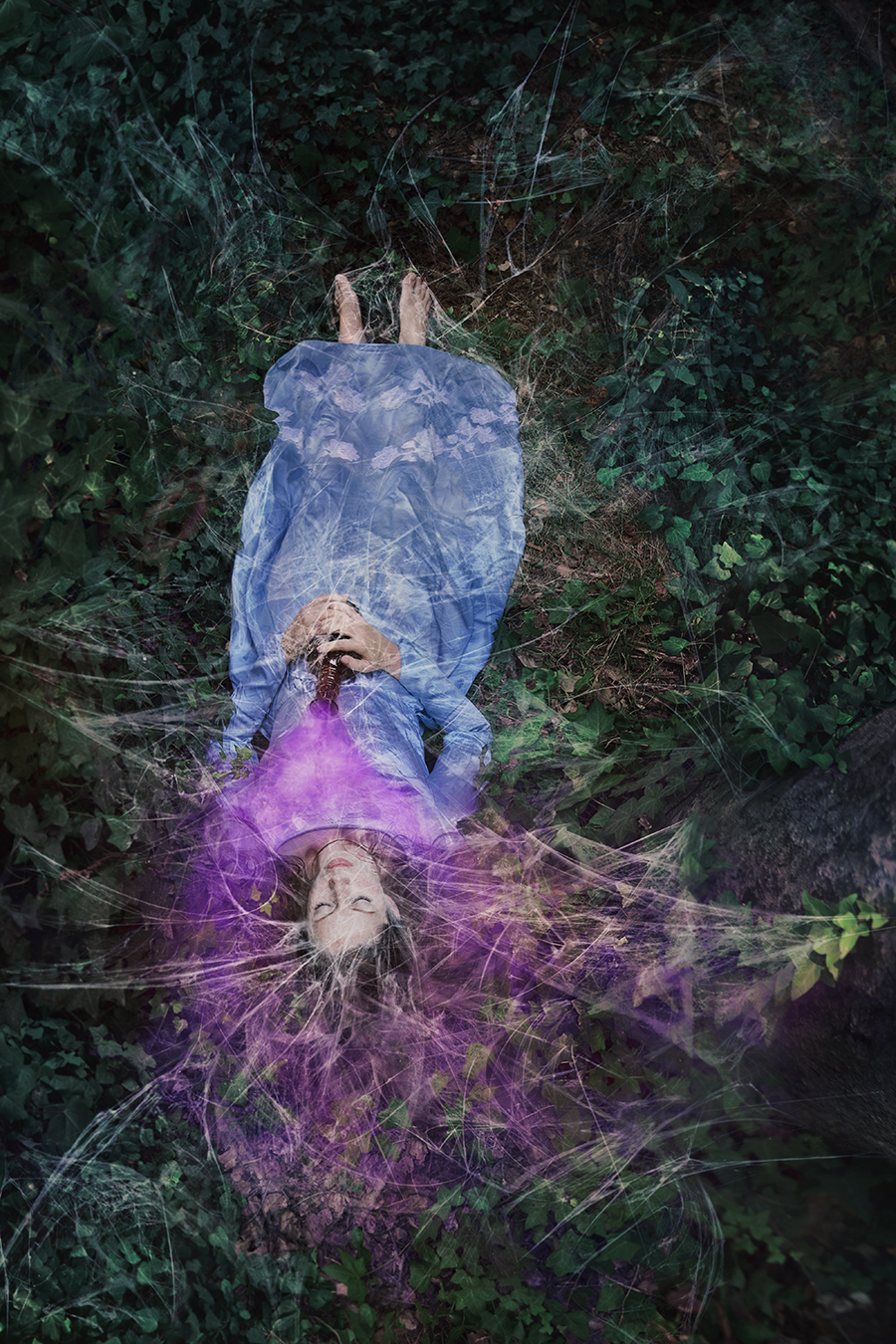
There will be an opening reception on June 20th from 12-2 and I would LOVE it if you stopped by! It's always so nice to put faces to people you've only known online, and it will also help distract me from being nervous ;) If you can't make it to the reception, please do feel free to visit the gallery any other time the show is running! And if you're so inclined, telling the gallery staff that you're there to see my work would also be appreciated :)
Thanks, and I hope to see you there!!
*Blog
*Prints and more prints
La canción cristiana más hermosa | Todos los hombres, venid a alabar a Dios
I
Un relámpago de Este a Oeste,
el Cristo de los últimos días, ha aparecido trabajando en China.
Su luz verdadera brilla más, la gente va a buscarlo.
Oh, ¡Dios Todopoderoso! Lleno de poder y de gloria.
Sus elegidos acuden a Su trono.
Dios aparece en el mundo para realizar Su obra.
Toda la humanidad, venid a alabarlo, oh reverenciarlo.
II
Escuchad Su voz, ved Su glorioso rostro, presenciad Sus actos.
Venid y adorad a Dios.
La palabra de Dios lo conquista y purifica todo.
Todo el mundo se inclina ante Dios Todopoderoso.
Sus elegidos acuden a Su trono.
Dios aparece en el mundo para realizar Su obra.
Toda la humanidad, venid a alabarlo, oh reverenciarlo.
Reverenciadlo. En toda Su gloria.
Enaltecedlo, porque Él lo merece.
Reverenciadlo. Siempre está para nosotros. Glorificadlo ahora.
III
Sed testigos de Sus obras. Su poder lo domina todo.
Alabad Su justicia, Su santidad y Su amor.
Nadie desea apartarse de la palabra de Dios.
La palabra de Dios difícil es de comprender,
pero trae alegría y luz.
Sus elegidos acuden a Su trono.
Dios aparece en el mundo para realizar Su obra.
Toda la humanidad, venid a alabarlo, oh, y a revernciarlo.
Dios aparece en el mundo para realizar Su obra.
Toda la humanidad, venid a alabarlo, oh, y a revernciarlo.
IV
¡Venid a adorar a Dios! ¡Venid a adorar a Dios!
¡Venid a adorar a Dios! ¡Venid a adorar a Dios!
¡Venid a adorar a Dios! ¡Venid a adorar a Dios!
¡Venid a adorar a Dios! ¡Venid a adorar a Dios!
¡Aleluya!
De “Seguir al Cordero y cantar nuevos cánticos”
el.godfootsteps.org/videos/true-prayer-hymn.html
Εισαγωγή
Εκκλησιαστικοί ύμνοι
Ύμνος των λόγων του Θεού | Αληθινή προσευχή | Μάθετε πώς να προσευχόμαστε στον Θεό
I
Προσευχή αληθινή είναι να Του μιλάς από καρδιάς,
βασίζεται στην βούληση, στον λόγο Του.
Είναι να νιώθεις τόσο κοντά στον Θεό,
σαν να είναι μπροστά σου.
Σημαίνει πως έχεις τόσα να Του πεις,
η καρδιά σου σαν τον ήλιο λάμπει,
Νιώθεις έμπνευση απ’ το κάλλος του Θεού,
όσοι ακούν νιώθουν χαρά.
Η προσευχή η αληθινή θα φέρει ειρήνη, χαρά,
δύναμη να Τον αγαπήσεις,
και νιώθεις την αξία αυτού.
Κι όλα αυτά δηλώνουν προσευχή αληθινή.
II
Προσευχή αληθινή δεν είν’ οι τυπικότητες,
ούτε είναι απαγγελία απλή.
Δεν είναι το να αντιγράφεις τους άλλους.
Μίλα από καρδιάς, αγγίξου απ’ τον Θεό.
Οι προσευχές σου για να πιάσουν τόπο,
διάβασε τα λόγια του Θεού.
Και μόνο αν προσεύχεσαι με τα λόγια Του,
θα δεις τη φώτιση.
Ω ... ω ...
III
Η προσευχή δείχνεται με καρδιά
που λαχταρά ό,τι απαιτεί γι’ αυτήν ο Θεός.
Τη θέληση για να την εκπληρώσεις,
και το μίσος για τα μίση του Θεού.
Και σύμφωνα μ’ αυτά που ήδη ξέρεις,
όλες οι αλήθειες που λέει είναι σαφείς,
με πίστη ισχυρή, και δρόμο να ασκήσεις.
Μόνο αυτή η προσευχή είν’ αληθινή.
Ναι. Μόνο αυτή η προσευχή είν’ αληθινή.
Η προσευχή η αληθινή θα φέρει ειρήνη, χαρά,
δύναμη να Τον αγαπήσεις,
και νιώθεις την αξία αυτού.
Και όλα αυτά δηλώνουν προσευχή αληθινή,
αληθινή. Αληθινή.
από το βιβλίο «Ο Λόγος Ενσαρκώνεται»
Πηγή εικόνας: Εκκλησία του Παντοδύναμου Θεού
Όροι Χρήσης: el.godfootsteps.org/disclaimer.html
FaceBook|Blogger |Instagram |500PX
You can licence images through My Getty image
All of My Reviews|心得文:
Olympus MZD 17mm f/1.2 PRO Review
Olympus MZD 25mm f/1.2 PRO Review
Olympus MZD 45mm f/1.2 PRO Review
Panasonic LEICA DG 12mm f/1.4 Review
Panasonic LEICA DG 8-18mm f/2.8-4 Review
A Five-Year Photographic Journey with the M4/3 Series.
✰ Credit ✰
Kaithleen's - Golda Latex Top - Fameshed Event
Justice - Meadow Shorts
RVN - Take a note
Hoodlem - Bliss Tattoo
NEW ATTITUDE
● Tumblr
● Flickr
✰ Credit ✰
Chewingum - Joel Eyebrows Bom EvoX
Knife Party - Evening Eye Makeup // Evo X - TOKYO ZERO Event
: mercurial : - Muffet Piercings - TOKYO ZERO Event
Vixen - Holly Swallow Gauged S / XL - TOKYO ZERO Event
NEW ATTITUDE
● Tumblr
● Flickr
ok so i basically have been posting like wild on my blog, but almost never here anymore, so if you like my shit follow my tumblr. i am posting up entire zines that are out of print now for you to view, free little ones i make to give away, all of my tattoos, free music, sometimes diary stuff, sometimes drunk or silly fashion and my life living with a chronic illness, cystic fibrosis. xo grant
htmlflowers.tumblr.com
II . Featured Items. II
●TWELVE - Seren Outdoor Set - Megapack NOW @ their Mainstore
Pool house perfect for hosting the hottest and most chic gatherings this summer! ☀️🍸
✨ What’s included:
• Pool – 76LI (PBR & Legacy Textures)
• PG & Adult Animations
• Sliding Television
• Media TV with working button
• Sofa – 8LI
• Ottoman – 3LI
• Chair – 3LI
• Pergola – 4LI
• Tables – 2LI
• Clutter – 1LI
• Dimensions: 34 x 23
All items available individually or grab the full experience with the Megapack!
TWELVE SL's Socials:
-Marketplace:marketplace.secondlife.com/stores/254652
-Flickr:www.flickr.com/groups/14863591@N23/
-Facebook:www.facebook.com/TWELVESL
-Instagram:www.instagram.com/sl.twelve/
-Primfeed:www.primfeed.com/twelve
TWELVE Mainstore:
maps.secondlife.com/secondlife/TWELVE/65/109/29
●CANARUN - Ova Backyard - NOW @ their Mainstore
(4 Color Variations)(Black Version Shown in Picture)
CANARUN Mainstore: maps.secondlife.com/secondlife/Canarun/241/130/24
CANARUN Website: www.canarunsl.com/
●[Erfe Design] ROUND FOUNTAIN FATPACK 3 COLORS PACK NOW @ their Mainstore
(Black & White Round Fountain Shown in Picture)
Each Fountain is 25 LI
Fountain Water Sound
Realistic particle system
2K HQ Textures
Suitable for Non-PBR Viewers
Copy & modify
ERFE Design Marketplace:
marketplace.secondlife.com/stores/222762
Erfe Design's socials:
www.facebook.com/ErfeArchDesign
www.flickr.com/photos/196168895@N02
[Erfe Design] Mainstore: maps.secondlife.com/secondlife/ERFE/143/144/24
ru.godfootsteps.org/testimonies/what-is-the-rapture.html?...
Как и многие другие братья и сестры-христиане, я с нетерпением жду второго пришествия Господа Иисуса. Мы руководствуемся следующим отрывком из Библии: «Потом мы, оставшиеся в живых, вместе с ними восхищены будем на облаках в сретение Господу на воздухе, и так всегда с Господом будем» (1-е Фесс.). По этой причине мы неразумно смотрим на небеса в ожидании того дня, когда Иисус вернется и заберет нас на облака, чтобы мы могли быть с Господом. Однако, после стольких лет, уже появились четыре кровавые луны; землетрясения, голод, язвы и войны и всевозможные другие бедствия становятся все сильнее. Пророчества о втором пришествии Господа в основном сбылись. Однако мы до сих пор не увидели ни одного христианина восхищенным на небеса. Я не могу не думать: «Почему Господь не приходит, чтобы принять нас? Господь заслуживает доверия. Господь обещал, что Он приведет нас в Небесное Царство в последние дни. Обетование Господа, безусловно, совершится и исполнится. Я в этом ничуть не сомневаюсь. Однако, почему до сих пор мы так и не восхищены Господом на небеса? Может быть, что-то не так с нашим страстным желанием?»
…….
Подробнее:
Хороший христианский фильм | Послушайте голос Божий «СТОЮ У ДВЕРИ И СТУЧУ» Русская озвучка
Image Source: Церковь Всемогущего Бога
Terms of Use : ru.godfootsteps.org/disclaimer.html
Fonte dell'immagine: La Chiesa di Dio Onnipotente
Condizioni d'Uso: www.kingdomsalvation.org/it/disclaimer.html
I
Nell'Età del Regno, gli uomini saran resi completi, pienamente completi nell'Età del Regno. Quando l'opera di conquista sarà compiuta, essi saran sottoposti a raffinamento e tribolazione, quando la conquista sarà compiuta. Quelli che trionfano e offron testimonianza in questa tribolazione, oh, quelli son coloro che infine saran resi completi, e saranno i trionfatori.
II
Durante questa tribolazione, l'uomo deve esser raffinato. l'ultima istanza dell'opera di Dio, l'ultima volta che l'uomo è raffinato prima che il lavoro di gestione di Dio venga chiuso. Chi Lo segue deve accettar questa prova. Quelli che trionfano e offron testimonianza in questa tribolazione, oh, quelli son coloro che infine saran resi completi, e saranno i trionfatori.
III
Chi affronta la tribolazione non avrà la guida di Dio o l'opera dello Spirito. Ma il conquistato, cercando Dio, resterà in piedi. Non importa cosa Dio faccia, essi non perderan le loro visioni, ma praticheran la verità, portando testimonianza. Questi ce la faranno. Quelli che trionfano e offron testimonianza in questa tribolazione, oh, quelli son coloro che infine saran resi completi, e saranno i trionfatori.
IV
Oh, essi son coloro, coloro in possesso dell'umanità, che amano davvero Dio. Quelli che trionfano e offron testimonianza in questa tribolazione, oh, quelli son coloro che infine saran resi completi, e saranno i trionfatori.
da "La Parola appare nella carne"
Fonte: www.kingdomsalvation.org/it/only-the-overcomers-stand-fir...
✿My BLOG ✿ orangeparadisemm.blogspot.com/2025/05/817.html
✿Primfeed✿ www.primfeed.com/orangeparadise.resident/posts/68f60462-b...
✿My Facebook✿
www.facebook.com/share/p/1AUbb3zmB4/
✿My Instagram✿ www.instagram.com/p/DKLBTV3IcPb/?igsh=MXVmaHZkZ2FwdnhtbA
✿My VK ✿ vk.com/id756646471?z=photo756646471_457241498%2F1e09265d8...
IMAGE:
Body: eBODY - REBORN
Head: LeLUTKA
_______________________________________
🍒OUTFIT:
ERROR Shop #error - miko set - The Warehouse Sale
🍒STOCKINGS:
-LP- Stockings ^ Melisa ^ -BOM V -LP- MP
🍒SHOES:
🍒ACCESSORIES🍒
🍒CAP:
ERROR Shop #ERROR & [TYN] - Peggy Cap event "Anthology"
🍒BAT:
Bad Unicorn Carott Bat (includes hitting animation) Bad Unicorn MP
ONE OF THE WAY TO TRAIN THE "THE AWARENESS MUSCLE
is the critical run
and other emergency art format
CRITICAL RUN / Debate Format
Critical Run is an Art Format created by Thierry Geoffroy/Colonel
debate while running .
Debate and Run together,Now,before it is too late.
www.emergencyroomscanvas todo .org/criticalrun.html
The Art Format Critical Run has been activated in 30 differents countries with 120 different burning debates
New York,Cairo,London,Istanbul,Athens,Hanoi,Paris,Munich,Amsterdam Siberia,Copenhagen,Johanesburg,Moskow,Napoli,Sydney,
Wroclaw,Bruxelles,Rotterdam,Barcelona,Venice,Virginia,Stockholm,Århus,Kassel,Lyon,Trondheim, Berlin ,Toronto,Hannover ...
CRITICAL RUN happened on invitation from institution like Moma/PS1, Moderna Muset Stockholm ,Witte de With Rotterdam,ZKM Karlsruhe,Liverpool Biennale;Sprengel Museum etc..or have just happened on the spot because
a debate was necessary here and now.
In 2020 the Energy Room was an installation of 40 Critical Run at Museum Villa Stuck /Munich
part of Colonel solo show : The Awareness Muscle Training Center
----
Interesting publication for researches on running and art
www.emergencyrooms.org/formats.html
14 Performances. Relation Work (1976 - 1980). Filmed by Paolo Cardazzo. Marina Abramović/ Ulay. Neuer Berliner Kunstverein, Berlin, Germany.
Abramović, Marina. Student Body: Workshops 1979 - 2003: Performances 1993 - 2003. Milano: ed. Charta, 2003.
Bergson, Henri. Creative Evolution. London: Macmillan and Co., 1911.
Bergson, Henri. Key Writings. Edited by Keith Ansell-Pearson and John Mullarkey. New York:
Continuum, 2002.
Bergson, Henri. Matter and Memory. New York: Zone Books, 1988.
Blaikie, William. “Common Sense Physical Training.” In Athletics and Health: Modern Achievement: Advice and Instruction upon the Conduct of Life, Principles of Business, Care of Health, Duties of Citizenship, etc. Edited by Edward Everett Hale. New York: P.F. Collier & Son, 1902.
Blaikie, William. How to Get Strong and How to Stay So. New York: Harper & Brothers Publishers, 1883.
Cunningham, Merce. Changes: Notes on Choreography. New York: Something Else Press, 1969.
de Balzac, Honoré. The Human Comedy. EBook: Project Gutenberg, 2010. de Balzac, Honoré. Théorie de la démarche. 1833, 1853.
de Biran, Maine. “Opposition du principe de Descartes avec celui d’une science de l’homme. Première base d’une division des faits psychologiques et physiologiques. Perception et sensation animale.” In Maine de Biran. Librairie Philosophique J. VRIN, 1990.
de Tocqueville, Alexis. The Old Regime and the Revolution. New York: Harper & Brothers, Publishers, 1856.
Delaumosne, M. L’Abbe. “The Delsarte System.” Translated by Frances A. Shaw. In Delsarte System of Oratory, 4th Ed. New York: Edgar S. Werner, 1893.
Descartes, René. Méditations metaphysiques. 1641.
Gropius, Walter, and Arthur S. Wensinger, eds. The Theater of the Bauhaus: Oskar Schlemmer, Laszlo Moholy-Nagy, Farkas Molnár. Translated by Arthur S. Wensinger. Middleton, Conn.: Wesleyan University, 1961.
Hahn, Archibald. How to Sprint: The Theory of Spring Racing. New York: American Sports Publishing Company, 1923.
Hegel, Georg Wilhelm Friedrich. Phenomenology of Spirit. Translated by A.V. Miller. Oxford: Oxford University Press, 1977.
Helmholtz, Hermann. “On the Facts Underlying Geometry.” In Epistemological Writings: Hermann von Helmholtz. Edited by R.S. Cohen and Y. Elkana. Boston: D. Reidel Publishing Company, 1977.
Helmholtz, Hermann. Théorie physiologique de la musique fondée sur l’étude des sensations auditives. Paris: Masson, 1868.
Helmholtz, Hermann. Treatise of Physiological Optics (Handbuch der physiologischen Optik) 1856. 3 Volumes. Translated by James P.C. Southall. Milwaukee, 1924.
Holmes, Oliver Wendall. Soundings from the Atlantic. Boston: Tickknor and Fields, 1864. James, William. The Principles of Psychology. New York: Henry Holt & Co, 1890, 1918.
James, William. Writings 1902 - 1910. Edited by Bruce Kuklick. New York: Literary Classics of the United States, 1987.
Kandinsky, Vasily. Über Das Geistige in der Kunst. Dritte Auflage. München: R. Piper&Co, 1912.
Kant, Immanuel. “Was ist Aufklärung?” 1784.
Laban, Rudolf. A Life for Dance: Reminiscences. Translated by Lisa Ullmann. London: Macdonald & Evans, 1975.
Laban, Rudolf. Choreographie. Jena: E. Diederichs, 1926.
Laban, Rudolf. Choreutics. Edited by Lisa Ullmann. London: Macdonald & Evans, 1939, 1966.
Laban, Rudolf. Effort: Economy in Body Movement. 2nd Edition. Boston: Plays, 1947, 1974.
Laban, Rudolf. Principles of Dance and Movement Notation. New York: A Dance Horizons Republication, 1956, 1970.
Laban, Rudolf. The Language of Movement: A Guidebook to Choreutics. Edited by Lisa Ullmann. Boston: Plays, Inc., 1974.
MacKaye, Percy. “Steele Mackaye, Dynamic Artist of the American Theatre; An Outline of his Life Work,” in The Drama. Edited by William Norman Guthrie and Charles Hubbard Sergel. Chicago: The Dramatic Publishing Company, 1911.
Marey, Étienne-Jules. La Machine Animale: Locomotion Terrestre et Aérienne. Paris: Librairie Germer Baillière, 1873.
Marey, Étienne-Jules. Le Vol des Oiseaux. Paris: Libraire de l’académie de médecine, 1890. Marey, Étienne-Jules. Movement. Translated by Eric Pritchard. New York: D. Appleton and
Company, 1895.
Michelet, Jules. The History of France. Volume I. Translated by Walter K. Kelly. London: Chapman and Hall, 1844.
Morgan, Anna. An Hour with Delsarte: A Study of Expression. New York: Edgar S. Werner Publisher, 1891.
Muybridge, Eadweard. Animal Locomotion: An Electro-photographic Investigation of Consecutive Phases of Animal Movements. Philadelphia: University of Pennsylvania and J. B. Lippincott Company, 1887.
Muybridge, Eadweard. Descriptive Zoopraxography, or the Science of Animal Locomotion. Philadelphia: University of Pennsylvania, 1893.
Muybridge, Eadweard. The Attitudes of Animals in Motion: A Series of Photographs Illustrating the Consecutive Positions assumed by Animals in Performing Various Movements; Executed at Palo Alto, California, in 1878 and 1879 (1881). Albumen, Library of Congress, Washington, D.C., Library of Congress.
Muybridge, Eadweard. The Human Figure in Motion. New York: Dover Publications, 1955. Ramsaye, Terry. A Million and One Nights: A History of the Motion Picture. U.K.: Simon and
Schuster, Inc., 1926, 1954.
Richer, Paul. Physiologie Artistique: De l’Homme en Mouvement. Paris: Aulanier et Cie, 1896.
Sanburn, Frederic. Delsartean Scrap-book: Health, Personality, Beauty, House-Decoration, Dress, etc. New York: United States Book Company, c. 1890.
Schlemmer, Oskar. Briefe und Tagebücher: The Letters and Diaries of Oskar Schlemmer. Edited by Tut Schlemmer. Translated by Krishna Winston. Middletown, Conn: Wesleyan University Press, 1972.
Schlemmer, Oskar, and Heimo Kuchling. Der Mensch, Unterricht am Bauhaus. Nachgelassene Aufzeichnungen. Mainz: F. Kupferberg, 1969.
Schuftan, Werner. Handbuch des Tanzes. Preface by Rudolf von Laban. Mannheim: Verlag Deutscher Chorsänger Verband und Tänzerbund, 1928.
Shearman, Sir Montague. Athletics and Football. London: Longmans, Green, and Co., 1888. Smith, Shawn Michelle. At the Edge of Sight: Photography and the Unseen. Durham: Duke
University Press, 2013.
Stebbins, Genevieve. Delsarte System of Expression, 5th Edition. New York: Edgar S. Werner, 1894; orig. 1885.
Talbot, Frederick A. Practical Cinematography and its Applications. London: William Heinemann, 1913.
Wigman, Mary. The Mary Wigman Book: Her Writings. Middletown, CT: Wesleyan University Press, 1975.
Abramović, Marina, et al. Marina Abramović: Seven Easy Pieces. New York: Charta 2007. Acconci, Vito. Language to Cover a Page: The Early Writings of Vito Acconci. Edited by Craig
Dworkin. Cambridge: MIT Press, 2006.
Adolphs, Volker, and Philip Norten. Gehen Bleiben: Bewegung, Körper, Ort in der Kunst der
Gegenwart. Bonn: Kunstmuseum Bonn, 2007.
Agamben, Giorgio. “Movement.” In Dance: Documents of Contemporary Art. Edited André
Lepecki. London: MIT Press and WhiteChapel Gallery, 2012.
Alberro, Alexander, and Blake Stimson, eds. Institutional Critique: An Anthology of Artists’
Writings. Cambridge: MIT Press, 2009.
Albers, Kate Palmer. “Abundant Images and the Collective Sublime.” Exposure. Volume 46,
Issue 2 (Fall 2013).
Allen, Beverly. Rape Warfare: The Hidden Genocide in Bosnia-Herzegovina and Croatia. Minneapolis: University of Minnesota Press, 1996.
Alloway, Lawrence. The Venice Biennale 1895 - 1968: from salon to goldfish bowl. Greenwich, CT: New York Graphic Society LTD., 1968.
Anderson, Ben. “Affect and Biopower: Towards a Politics of Life.” Transactions - Institute of British Geographers, Issue 1 (2011).
Andras, Edit, and Bojana Pejic, eds. Gender Check: Femininity and Masculinity in the Art of Eastern Europe. Cologne: Buchhandlung Walther König, 2009.
Antliff, Mark. Inventing Bergson: Cultural Politics and the Parisian Avant-Garde. Princeton: Princeton University Press, 1992.
Arendt, Hannah. The Human Condition, Second Edition. Chicago: University of Chicago Press, 1958, 1998.
Arendt, Hannah. On Violence. New York: Harcourt Brace, 1969.
Atkins, Dawn, ed. Looking Queer: Body Image and Identity in Lesbian, Bisexual, Gay, and
Transgender Communities. New York: The Haworth Press, 1998.
Ault, Julie, ed. Alternative Art, New York, 1965-1985: A Cultural Politics Book for the Social
Text Collective. Minneapolis: University of Minnesota Press, 2002.
Auslander, Philip. “Going with the Flow: Performance Art and Mass Culture.” TDR. Volume 33,
Number 2 (Summer 1989).
Auslander, Philip. “The Performativity of Performance Documentation.” PAJ 84 (2006).
Backstein, Joseph, and Daniel Birnbaum, Sven-Olov Wallenstein. Thinking Worlds - The Moscow Conference on Philosophy, Politics, and Art. Berlin: Sternberg Press, 2008.
Badovinac, Zdenka. Body and the East: From the 1960s to the Present. Cambridge, Mass.: MIT Press, 1999.
Baer, Ulrich. Spectral Evidence: The Photography of Trauma. Cambridge: MIT Press, 2002. Baker, George. “Entr’acte.” October. Volume 105 (Summer 2003).
Bale, John. Imagined Olympians: Body Culture and Colonial Representations in Rwanda. Minneapolis: University of Minnesota Press, 2002.
Bale, John. Running Cultures: Racing in Time and Space. London: Frank Cass, 2004. Banes, Sally. Democracy’s Body: Judson Dance Theatre, 1962 - 1964. Durham, NC: Duke
University Press, 1993.
Banes, Sally. Terpsichore in Sneakers: Post-Modern Dance, 2nd edition. Middletown, CT: Wesleyan University Press, 1987.
Bartenieff, Irmgard. Body Movement: Coping with the Environment. New York: Routledge, 2002.
Barthes, Roland. Camera Lucida: Reflections on Photography. Translated by Richard Howard. New York: Hill and Wang, 198, 2010.
Barthes, Roland. Mythologies. Translated by Annette Lavers. New York: Hill and Wang, 1972. Batchen, Geoffrey. Burning with Desire: The Conception of Photography. Cambridge: MIT
Press, 1997.
Baudelaire, Charles. The Parisian Prowler, Le Spleen de Paris Petits Poèmes en Prose. Translated by Edward K. Kaplan. Athens: The University of Georgia Press, 1989.
Bauer, M. W. and G. Gaskell. Biotechnology — the Making of a Global Controversy. Cambridge: Cambridge University Press, 2002.
Bayat, Asef. Life as Politics: How Ordinary People Change the Middle East. Amsterdam: Amsterdam University Press, 2010, 2015.
Belaief, Lynne. “Meanings of the Body.” Journal of the Philosophy of Sport. Volume 4, Issue 1 (1977).
Bell, Catherine. Ritual: Perspectives and Dimensions. New York: Oxford University Press, 1997.
Benjamin, Walter. Charles Baudelaire: A Lyric Poet in the Era of High Capitalism. Translated by Harry Zohn. London: Verso, 1997.
Benjamin, Walter. Selected Writings, Volumes 1 - 4. Edited by Howard Eiland and Michael W. Jennings. Cambridge: Belknap Press of Harvard University Press, 2003 - 2006.
Benjamin, Walter. “The Storyteller: Reflections on the Works of Nikolai Leskov.” In Illuminations. Edited by Hannah Arendt. Translated by Harry Zohn. New York: Schocken Books, 2007.
Bennett, Jill. Empathic Vision: Affect, Trauma, and Contemporary Art. Stanford, CA; Stanford University Press, 2005.
Berger, John. About Looking. New York: Pantheon Books, 1980.
Bergson, Henri. Laughter: An Essay on the Meaning of the Comic. Translated by Cloudesley Brereton and Fred Rothwell. New York: The Macmillan Company, 1914.
Bishop, Claire, and Marta Dziewańska, eds. 1968 - 1989: Political Upheaval and Artistic Change. Warsaw: Museum of Modern Art, 2009.
Bishop, Claire. Artificial Hells: Participatory Art and the Politics of Spectatorship. London: Verso, 2012.
Bishop, Claire. Radical Museology: or, What’s ‘Contemporary’ in Museums of Contemporary Art? London: Koenig Books, 2013.
Black, Graham. Transforming Museums in the Twenty-First Century. New York: Routledge, 2011.
Blaive, Muriel, and Christian Gerbel, Thomas Lindenberger, eds. Clashes in European Memory: The Case of Communist Repression and the Holocaust. Innsbruck: Studienverlag, 2011.
Blassnigg, Martha. Time, Memory, Consciousness and the Cinema Experience: Revisiting Ideas on Matter and Spirit. New York: Rodopi, 2009.
Bloomer, Kent C., and Charles Willard Moore. Body, Memory, and Architecture. New Haven: Yale University Press, 1977.
Boecker, Henning, et. al. “The Runner’s High: Opioidergic Mechanisms in the Human Brain.” Cerebral Cortex. Volume 18, Number 11 (2008).
Bougarel, Xavier, and Elissa Helms, Ger Duijzings, eds. The New Bosnian Mosaic: Identities, Memories and Moral Claims in a Post-War Society. Hampshire, England: Ashgate, 2007.
Bourdieu, Pierre. Outline of a Theory of Practice. Cambridge: Cambridge University Press, 1977.
Bourriaud, Nicolas. Relational Aesthetics. Dijon: Les Presses du réel, 1998, 2002.
Brandstetter, Gabriele. Poetics of Dance: Body, Image and Space in the Historical Avant- Gardes. Translated by Elena Polzer and Mark Franko. Oxford: Oxford University Press, 1995, 2015.
Braudy, Leo, and Marshall Cohen, eds. Film Theory and Criticism: Introductory Readings. New York: Oxford UP, 1999.
Braun, Marta. Eadweard Muybridge. London: Reaktion, 2010.
Braun, Marta. Picturing Time: The Work of Etienne-Jules Marey (1830 - 1904). Chicago:
University of Chicago Press, 1992, 1994.
Brettell, Richard R. Modern Art, 1851 - 1929: Capitalism and Representation. Oxford: Oxford University Press, 1999.
Brooke, J.D., and H.T.A. Whiting, eds. Human Movement - A Field of Study. London: Henry Kimpton Publishers, 1973.
Brown, Keith S., and Yannis Hamilakis, eds. The Usable Past: Greek Metahistories. Lanham, MD: Lexington Books, 2003.
Brunnbauer, Ulf, and Konrad Clewing, eds. Südost-Forschungen. Munich: R. Oldenbourg Verlag, 2008.
Bruno, Giuliana. Atlas of Emotion: Journeys in Art, Architecture, and Film. New York: Verso, 2002.
Bryzgel, Amy. Performing the East: Performance Art in Russia, Latvia, and Poland since 1980. London: I.B. Tauris, 2012.
Buchloh, Benjamin H. D. Neo-Avantgarde and Culture Industry: Essays on European and American Art from 1955 to 1975. Cambridge: MIT Press, 2001, 2003.
Buck-Morss, Susan. The Dialectics of Seeing: Walter Benjamin and the Arcades Project. Cambridge: MIT Press, 1991.
Burchell, Graham, and Colin Gordon, Peter Miller, eds. The Foucault Effect: Studies in Governmentality. Chicago: University of Chicago Press, 1991.
Bürger, Peter. Theory of the Avant-Garde. Translated by Michael Shaw. Minneapolis: University of Minnesota Press and Manchester University Press, 1974, 1984.
Butler, Judith. Bodies that Matter: On the Discursive Limits of Sex. New York: Routledge, 1993. Butler, Judith. Gender Trouble: Feminism and the Subversion of Identity. New York: Routledge,
2006.
Butler, Samuel. Unconscious Memory: A Comparison between the Theory of Dr. Ewald Hering and the ‘Philosophy of the Unconscious’ of Dr. Edward von Hartmann. London: David Bogue, 1880.
Cage, John. Silence: Lectures and Writings. Middletown, CT: Wesleyan University Press, 1961. Campany, David, ed. The Cinematic: Documents of Contemporary Art. Cambridge: MIT Press,
2007.
Canales, Jimena. A Tenth of a Second: A History. Chicago: University of Chicago Press, 2009.
Careri, Francesco. Walkscapes: Walking as an Aesthetic Practice. Translated by Steve Piccolo and Paul Hammond. Barcelona: Editorial Gusavo Gili, 2002.
Carroll, Noël. Theorizing the Moving Image. Cambridge: Cambridge University Press, 1996. Cetinić, Ljiljana, and Ana Panić, eds. Štafete: Titova Štafeta - Štafeta Mladosti, 1945 - 1987.
Belgrade: Tipografik plus, 2008.
Chase, Stuart. Men and Machines. New York: Macmillan Co, 1929.
Christesen, Paul. Sport and Democracy in the Ancient and Modern Worlds. Cambridge: Cambridge University Press, 2012.
Christian, Mary. Marina Abramović: The Artist is Present. New York: The Museum of Modern Art, 2010.
Clark, Kenneth. The Nude: A Study in Ideal Form. New York: Pantheon Books, 1956. Coleman, Simon, and John Eade, eds. Reframing Pilgrimage: Cultures in Motion. London:
Routledge, 2004.
Connerton, Paul. The Spirit of Mourning: History, Memory and the Body. Cambridge: Cambridge University Press, 2011.
Cosgrove, Denis. Geography and Vision: Seeing, Imagining and Representing the World. New York: I.B. Tauris, 2008.
Cottington, David. Cubism in the Shadow of War: The Avant-Garde and Politics in Paris 1905- 1914. New Haven: Yale University Press, 1998.
Crane, Susan, ed. Museums and Memory. Stanford: Stanford University Press, 2000. Crary, Jonathan. Techniques of the Observer: On Vision and Modernity in the Nineteenth
Century. Cambridge: MIT Press, 1990.
Crow, Thomas. The Rise of the Sixties: American and European Art in the Era of Dissent.
London: Laurence King Publishing, 1996.
Csiksgentmihalyi, Mihaly. Creativity! Flow and psychology of discovery and invention. New York: Harper Collins, 1996.
Cumming, John. Runners & Walkers: A Nineteenth Century Sports Chronicle. Chicago: Regency Gateway, 1981.
Cvejić, Bojana, and Ana Vujanović. Public Sphere by Performance. Belgrade: b_books, TkH, 2012.
Dagg, Anne Innis. Running, Walking, and Jumping: The Science of Locomotion. New York: Crane, Russak & Company, Inc, 1977.
de Certeau, Michel. The Practice of Everyday Life. Translated by Steven Rendall. Berkeley: University of California Press, 1984, 1988.
de Certeau, Michel. The Writing of History. Translated by Tom Conley. New York: Columbia University Press, 1975, 1988.
de Groote, Pascale. Ballets Suédois: Jean Börlin. Ghent: University of Ghent, 2002.
de Waal, Frans. The Age of Empathy: Nature’s Lessons for a Kinder Society. New York:
Harmony Books, 2009.
Deleuze, Gilles. Cinema 1: The Movement-Image. Minneapolis: University of Minnesota Press, 1986.
Deleuze, Gilles, and Félix Guattari. A Thousand Plateaus. London: Continuum, 1980, 2008. Dewey, John. The Public and its Problems: An Essay in Political Inquiry. Edited by Melvin L.
Rogers. University Park, PA: The Pennsylvania State University, 2012.
di Giovanni, Janine. Madness Visible: A Memoir of War. London: Bloomsbury, 2005.
Djetelić, Pera, and Dragan Maršičević. Narodna Omladina i Jugoslovenski Kongres za Fizičku Kulturu. Beograd: Mladost, 1959.
Djurić, Dubravka, and Miško Šuvaković, eds. Impossible Histories: Historical Avant-gardes, Neo-avant-gardes, and Post-avant-gardes in Yugoslavia, 1918 - 1991. Cambridge: MIT Press, 2003.
Donawerth, Jane, ed. Rhetorical Theory by Women before 1900: An Anthology. Lanham, MD: Rowman & Littlefield Publishers, Inc, 2002.
Dörr, Evelyn. Rudolf Laban: The Dancer of the Crystal. Lanham, Maryland: The Rowman & Littlefield Publishing Group, Inc., 2008.
Drakulić, Slavenka. Balkan Express: Fragments from the Other Side of War. London: Hutchinson, 1993.
Drakulić, Slavenka. They Would Never Hurt a Fly: War Criminals on Trial in the Hague. New York: Penguin, 2005.
Drapag, Vesna. Constructing Yugoslavia: A Transnational History. London: Palgrave Macmillan, 2010.
Duncan, Carol. Civilizing Rituals: Inside Public Art Museums. Abingdon: Routledge, 1995. Eamon, Christopher. Rearview Mirror: New Art from Central and Eastern Europe. Edmonton:
Art Gallery of Alberta, 2011.
Eichberg, Henning, ed. Body Cultures: Essays on Sport, Space, and Identity. London, New York: Routledge, 1998.
Elias, Norbert. The Civilizing Process. Sociogenetic and Psychogenetic Investigations. Oxford: Blackwell, 1939, 2000.
Elias, Norbert, and Eric Dunning. Quest for Excitement: Sport and Leisure in the Civilising Process. Dublin: University of College Dublin Press, 2008.
Enwezor, Okwui. Archive Fever: Uses of the Document in Contemporary Art. Göttingen: Steidl Publishers, 2008.
Erjavec, Aleš, ed. Postmodernism and the Postsocialist Condition: Politicized Art under Late Socialism. Berkeley: University of California Press, 2003.
Fer, Briony, and David Batchelor, Paul Wood. Realism, Rationalism, Surrealism: Art Between the Wars. New Haven: Yale University Press, 1993.
Finn, David. How to Visit A Museum. New York: Abrams, 1985.
Fleming, Bruce. Running is Life: Transcending the Crisis of Modernity. Lanham: University
Press of America, Inc, 2010.
Forrester, Sibelan E.S., and Magdalena J. Zaborowska, Elena Gapova, eds. Over the Wall/After the Fall: Post-Communist Cultures Through an East-West Gaze. Bloomington: Indiana University Press, 2004.
Foster, Hal. The Return of the Real: The Avant-Garde at the End of the Century. Cambridge: MIT Press, 1996.
Foster, Hal. “What’s Neo about the Neo-Avant-Garde?” October. Volume 70, The Duchamp Effect (Autumn, 1994), 5 - 32.
Foucault, Michel. Discipline and Punish: The Birth of the Prison. Translated by Alan Sheridan. New York: Vintage Books, Random House, Inc, 1977, 1995.
Foucault, Michel. The History of Sexuality Volume 1. Translated by Robert Hurley. New York: Pantheon Books, 1978.
Foucault, Michel. Power/Knowledge: Selected Interviews & Other Writings, 1972 - 1977. Edited by Colin Gordon. New York: Pantheon Books,1972, 1980.
Fraleigh, Sondra Horton. Dance and the Lived Body: A Descriptive Aesthetics. Pittsburgh: University of Pittsburgh Press, 1987.
Frampton, Hollis. “Eadweard Muybridge: Fragments of a Tesseract.” In On the Camera Arts and Consecutive Matters: The Writings of Hollis Frampton. Cambridge: MIT Press, 2009.
Fried, Michael. Four Honest Outlaws: Sala, Ray, Marioni, Gordon. New Haven: Yale University Press, 2011.
Gallagher, Catherine, and Thomas Laqueur, eds. The Making of the Modern Body: Sexuality and Society in the Nineteenth Century. Berkeley: University of California Press, 1987.
Gamwell, Lynn, ed. Dreams Nineteen Hundred to Two Thousand: Science, Art, and the Unconscious Mind. Binghamton: State University of New York at Binghamton, 2000.
Gay, Peter. Savage Reprisals: Bleak House, Madame Bovary, Buddenbrooks. New York: W.W. Norton & Company, 2002.
Gehm, Sabine, and Pirkko Husemann, Katharina von Wilke, eds. Knowledge in Motion: Perspectives of Artistic and Scientific Research in Dance. Translated by Bettina von Arps- Aubert. Bielefeld: Transcript, 2007.
Genoways, Hugh H., ed. Museum Philosophy for the Twenty-First Century. Oxford: AltaMira Press, 2006.
Geoghegan, Bernard Dionysius. “After Kittler: On the Cultural Techniques of Recent German Media Theory.” Theory Culture Society (August 2013).
Gidal, Peter. Materialist Film. London: Routledge, 1989.
Giedion, Siegfried. Space, Time, and Architecture: The Growth of a New Tradition. Cambridge:
Harvard University Press, 1974.
Godard, Jean-Luc. Godard on Godard. Edited by Jean Narboni and Tom Milne. New York: The Viking Press, 1968, 1972.
Gödl, Doris. “Challenging the Past: Serbian and Croatian Aggressor-Victim Narratives.” International Journal of Sociology 37. No. 1 (2007).
Goldberg, Roselee. Performance: Live Art Since the ‘60s. London: Thames & Hudson, 2004.
Goldberg, Roselee. Performance Art: From Futurism to the Present. London: Thames & Hudson, 2001.
Goldberg, Vicki, ed. Photography in Print: Writings from 1816 to the Present. New York: Simon and Schuster, 1981.
Golding, Sue, ed. The Eight Technologies of Otherness. London: Routledge, 1997. Gotaas, Thor. Running: A Global History. London: Reaktion Books, 2009.
Grau, Andrée, and Stephanie Jordan. Europe Dancing: Perspectives on Theatre, Dance, and Cultural Identity. New York: Routledge, 2000.
Grigorov, Dimitar. “‘Рачунајте на нас.’ ‘Oдломак’ о Титовој штафети или Штафети младости.” In Друштвену историју. Belgrade: 2008.
Grimes, Ronald L. Beginnings in Ritual Studies. Columbia: University of South Carolina Press, 1995.
Groys, Boris. Introduction to Antiphilosophy. Translated by David Fernbach. London: Verso, 2012.
Groys, Boris. The Communist Postscript. Translated by Thomas Ford. London: Verso, 2010. Groys, Boris, and Ann von der Heiden, Peter Weibel, eds. Zurück aus der Zukunft.
Osteuropäische Kulturen im Zeitalter des Postkommunismus. Berlin: Suhrkamp, 2005.
Gržinić, Marina, and Günther Heeg, Veronika Darian. Mind the Map! History is not a Given: A
th th
Critical Anthology Based on the Symposium [Leipzig, 13 -16 October 2005]. Frankfurt:
Revolver, 2006.
Guttman, Allen. “Sport, Politics, and the Engaged Historian.” Journal of Contemporary History. Volume 38, Number 3 (2003).
Hardt, Michael, and Antonio Negri. Empire. Boston, Harvard University Press, 2001. Hargreaves, Jennifer, and Patricia Anne Vertinsky, eds. Physical Culture, Power, and the Body.
New York: Routledge, 2007.
Harris, Mary Emma. The Arts at Black Mountain College. Cambridge: MIT Press, 1987, 2002.
Harte, Jane L., et. al. “The effects of running and meditation on beta-endorphin, corticotropin- releasing hormone and cortisol in plasma, and on mood.” Biological Psychology. Volume 40, Issue 3 (June 1995).
Harte, Jane L., and Georg H. Eifert. “The effects of running, environment, and attentional focus on athletes’ catecholamine and cortisol levels and moods.” Psychophysiology. Volume 32, Issue 1 (January 1995).
Havránek, Vít, ed. Jiří Kovanda: Actions and Installations, 2005-1976. Zurich: Tranzit & JRP|Ringier, 2006.
Helme, Sirje. PopKunst Forever: Estonian Pop Art at the Turn of the 1960s and 1970s. Tallinn: Art Museum of Estonia - Kumu Art Museu, 2010.
Hemmings, Frederick William John, ed. The Age of Realism. Baltimore: Penguin Books, 1974. Hendricks, Gordon. Eadweard Muybridge: The Father of the Motion Picture. New York:
Grossman Publishers, of Viking Press, 1975.
Henning, Michelle. Museums, Media, and Cultural Theory. New York: Open University Press, 2006.
Hewitt, Andrew. Social Choreography: Ideology as Performance in Dance and Everyday Movement. Durham: Duke University Press, 2005.
Higgins, Steven. Still Moving: The Film and Media Collections of the Museum of Modern Art. New York: The Museum of Modern Art, 2006.
Hoberman, John M. “Sport and Political Ideology.” Journal of Sport and Social Issues. Volume 1, Number 2 (1977).
Hodgson, John. Mastering Movement: The Life and Work of Rudolf Laban. New York: Routledge, 2001.
Hoelzl, Ingrid, and Friedrich Tietjen, eds. Images in Motion. Burges: Die Keure, 2012. Husserl, Edmund. The Phenomenology of Internal Time-Consciousness. Edited by Martin
Heidegger. Translated by James S. Churchill. Bloomington: Indiana University Press, 1964.
IRWIN, ed. East Art Map: Contemporary Art and Eastern Europe. London: Afterall and MIT Press, 2006.
Ivey, Paul Eli. Radiance from Halcyon: A Utopian Experiment in Religion and Science. Minneapolis: University of Minnesota Press, 2013.
Jameson, Frederic. Postmodernism, or, The Cultural Logic of Late Capitalism. Durham: Duke University Press,1991.
Janevski, Ana, ed. As Soon as I Open My Eyes I See a Film: Experiment in the Art of Yugoslavia in the 1960s and 1970s. Warsaw: Museum of Modern Art, 2010.
Jarausch, Konrad H., and Michael Geyer. Shattered Past: Reconstructing German Histories. Princeton, NJ: Princeton University Press, 2003.
Jones, Amelia. Body Art/Performing the Subject. Minneapolis: University of Minnesota Press, 1998.
Jones, Amelia, and Adrian Heathfield. Perform, Repeat, Record: Live Art in History. Chicago: University of Chicago Press, 2012.
Jones, Amelia. “The Body and Technology.” Art Journal. Volume 60, Number 1 (Spring, 2001). Joseph, Brandon W. Random Order: Robert Rauschenberg and the Neo-avant-garde.
Cambridge: MIT Press, 2003.
Joy, Jenn. The Choreographic. Cambridge: MIT Press, 2014.
Jünger, Ernst. “War and Photography.” Translated by Anthony Nassar. New German Critique. Number 59 (Spring-Summer, 1993).
Kater, Michael H. Hitler Youth. Cambridge, Mass.: Harvard University Press, 2004. Kebo, Ozren. Sarajevo za početnike. Sarajevo: Dani, 1996.
Kelley, Jeff, ed. Essays on the Blurring of Art and Life. Berkley: University of California Press, 1993, 2003.
Kern, Stephen. The Culture of Time and Space. Cambridge, Mass: Harvard University Press, 1983.
Kester, Grant H. Conversation Pieces: Community and Communication in Modern Art. Berkley: University of California Press, 2004.
Kholeif, Omar. Moving Image. London: Whitechapel, 2015.
Kirkpatrick, Sidney. The Revenge of Thomas Eakins. New Haven: Yale University Press, 2006.
Kirn, Gal, and Dubravka Sekulić, Žiga Testen, eds. Surfing the Black: Yugoslav Black Wave Cinema and its Transgressive Moments. Maastricht: Jan van Eyck Academie, 2012.
Kittler, Friedrich A. Gramophone, Film, Typewriter. Stanford: Stanford University Press, 1999. Klinger, Cornelia, and Bartomeu Mari. Modernologies: Contemporary Artists Researching
Modernity and Modernism. Barcelona: Museu d’Art Contemporani de Barcelona, 2009.
Knell, Simon J., et al., eds. National Museums: New Studies from around the World. New York:
Routledge, 2011.
Knudson, Duane. Fundamentals of Biomechanics, Second Edition. New York: Springer, 2007.
Knust, Albrecht. Handbook of Kinetography Laban: Examples. Hamburg: Das Tanzarchiv, 1958. Koch, Sabine, et al. Body Memory, Metaphor, and Movement. Philadelphia: John Benjamins
Publishing Company, 2012.
Krauss, Rosalind E. “Sculpture in the Expanded Field.” October. Volume 8 (Spring 1979).
Krauss, Rosalind E. The Originality of the Avant-Garde and Other Modernist Myths. Cambridge: MIT Press, 1985.
Kuligowski, Waldemar. “A Relay of Youth of the 21st Century. A Re-enactment of Ritual or a Grotesque Performance?” Cargo. Volume 10, Number 1 - 2 (2012).
Kwon, Miwon. One Place After Another: Site-Specific Art and Locational Identity. Cambridge: MIT Press, 2002.
LaBelle, Brandon. Background Noise: Perspectives on Sound Art. London and New York: Continuum International Publishing Group, 2006.
Lakoff, George, and Mark Johnson. Metaphors We Live By. Chicago: University of Chicago Press, 1980.
Landsberg, Alison. Prosthetic Memory: The Transformation of American Remembrance in the Age of Mass Culture. New York: Columbia University Press, 2004.
Laws, Kenneth, and Francia Russell. Physics and the Art of Dance: Understanding Movement. Oxford: Oxford University Press, 2002.
le Blanc, Guillaume. Courir: Méditations Physiques. Paris: Éditions Flammarion, 2012.
Leahy, Helen Rees. Museum Bodies: The Politics of Practices of Visiting and Viewing. Surrey,
England: Ashgate, 2012.
Lederman, Gail. Manliness and Civilization: A Cultural History of Gender and Race in the
United States, 1880 - 1917. Chicago: The University of Chicago Press, 1995. Lefebvre, Henri. The Production of Space. Oxford: Blackwell, 1991.
Lehman, Arnold L., and Brenda Richardson, eds. Oskar Schlemmer. Baltimore: The Baltimore Museum of Art, 1986.
Lemke, Thomas. Bio-Politics: An Advanced Introduction. Translated by Eric Frederick Trump. New York: New York University Press, 2011.
Lepage, Jean-Denis G.G. Hitler Youth, 1922 - 1945: An Illustrated History. London: McFarland & Company, Inc.,2009.
Lepecki, André, ed. Dance: Documents of Contemporary Art. London: MIT Press and WhiteChapel Gallery, 2012.
Leposavić, Radonja. vlasTito iskustvo. Belgrade: Publikum, 2005.
Licht, Alan. Sound Art: Beyond Music, Between Categories. New York: Rizzoli International
Publications, 2007.
Lippard, Lucy. Six Years: The Dematerialization of the Art Object from 1966 to 1972. Berkley: University of California Press, 1973.
Loland, Sigmund, and Berit Skirstad, Ivan Waddington. Pain and Injury in Sport: Social and Ethical Analysis. New York: Routledge, 2006.
Luthar, Breda, and Maruša Pušnik, eds. Remembering Utopia: The Culture of Everyday Life in Socialist Yugoslavia. Washington, D.C.: New Academia Publishers, 2010.
Mackay, Robin, and Armen Avanessian, eds. #Accelerate: The Accelerationist Reader. Falmouth, UK: Urbanomic, 2014.
Malcolm, Noel. Bosnia: A Short Story. London: MacMillan, 1994.
Maletic, Vera. Body - Space - Expression: The Development of Rudolf Laban’s Movement and
Dance Concepts. Amsterdam: Mouton de Gruyter, 1987.
Marie, Michel. The French New Wave: An Artistic School. Translated by Richard Neupert.
Oxford: Blackwell Publishing, 1997.
Marien, Mary Warner. Photography: A Cultural History. 2nd Edition. London: Laurence King Publishing Ltd, 2002, 2006.
Marks, Laura. Touch: Sensuous Theory and Multisensory Media. Minneapolis: University of Minnesota Press, 2002.
Marvin, Carolyn. When Old Technologies Were New: Thinking about Electric Communication in the Late Nineteenth Century. Oxford: Oxford University Press, 1988.
Mathews, Nancy Mowll. “The Body in Motion.” In Moving Pictures: American Art and Early Film, 1880 - 1910. Manchester, Vermont: Hudson Hills Press, 2005.
Mauss, Marcel. “Techniques of the Body” (1934). In Incorporations, Zone 6. Edited by Jonathan Crary and Sanford Kwinter. New York: Zone, 1992.
Mazower, Mark. Dark Continent: Europe’s Twentieth Century. New York: A.A. Knopf, 1999.
McGinnis, Peter M. Biomechanics of Sport and Exercise, Third Edition. Champaign, IL: Human Kinetics, 2013.
McSorley, Kevin, ed. War and the Body: Militarisation, Practice and Experience. New York: Routledge, 2013.
Meltzer, Eve. Systems We Have Loved: Conceptual Art, Affect, and the Antihumanist Turn. Chicago: The University of Chicago, 2013.
Merleau-Ponty, Maurice. The Phenomenology of Perception. Translated by Colin Smith. London: Routledge and Kegan Paul, 1962, 1989.
Metz, Christian. Film Language: A Semiotics of the Cinema. Translated by Michael Taylor. New York: Oxford University Press, 1974.
Metz, Christian. “Photography and Fetish.” October. Volume 34 (Autumn, 1985).
Meyer, James. Minimalism: Art and Polemics in the Sixties. New Haven: Yale University Press,
Michelson, Annette, ed. Kino-Eye: The Writings of Dziga Vertov. Translated by Kevin O’Brien. Berkeley: University of California Press, 1984.
Mirzoeff, Nicholas, ed. The Visual Culture Reader, Second Edition. New York: Routledge, 1998, 2002.
Mishima, Yukio. Sun and Steel: His Personal Testament on Art, Action, and Ritual Death. New York: Kodansha, 1970.
Mondloch, Kate. Screens: Viewing Media Installation Art. Minneapolis: The University of Minnesota Press, 2010.
Moore, Sarah J. Empire on Display: San Francisco’s Panama-Pacific International Exposition of 1915. Norman, OK: University of Oklahoma Press, 2013.
Morgan, William P. “Affective beneficence of vigorous physical activity.” Medicine and Science in Sports and Exercise. Volume 17, Number 1 (February 1985).
Morse, Meredith. Soft is Fast: Simone Forti in the 1960s and After. Cambridge: MIT Press, 2016.
Mosse, George L. The Image of Man: The Creation of Modern Masculinity. Oxford: Oxford University Press, 1996.
Motherwell, Robert, ed. Dada Painters and Poets. New Haven: Harvard University Press, 1981.
Mozley, Anita Ventura, ed. Eadweard Muybridge: The Stanford Years, 1872 - 1882. San Francisco: Stanford University, 1972.
Mulvey, Laura. Death 24x a Second: Stillness and the Moving Image. London: Reaction books, 2006.
Mumford, Lewis. Technics and Civilization. London: Routledge & Kegan Paul LTD, 1934, 1955.
Muñoz, José Esteban. Disidentifications: Queers of Color and the Performance of Politics. Minneapolis: The University of Minnesota Press, 1999.
Musolff, Andreas. Metaphor, Nation, and the Holocaust: The Concept of the Body Politic. New York: Routledge, 2010.
New Collectivism, ed. Neue Slowenische Kunst. Translated by Marjan Golobič. Hong Kong: Paramount Printing, 1991.
Newman, Michael, and Jon Bird, eds. Rewriting Conceptual Art. London: Reaction Books, 1999. O’Doherty, Brian. Inside the White Cube: The Ideology of the Gallery Space. Berkley:
University of California Press, 1986.
O’Rourke, Karen. Walking and Mapping: Artists as Cartographers. Cambridge: MIT Press, 2013.
Obrist, Hans Ulrich. Do It: The Compendium. New York: Independent Curators International/D.A.P., 2013.
Partsch-Bergsohn, Isa. Modern Dance in Germany and the Untied States: Crosscurrents and Influences. Chur: Harwood Academic Publishers, 1994.
Passerini, Luisa, ed. Memory and Totalitarianism. Oxford: Oxford University Press, 1992. Pavković, Aleksandar. The Fragmentation of Yugoslavia: Nationalism and War in the Balkans,
Second Edition. New York: St. Martin’s Press, 2000.
Pegrum, Mark A. Challenging Modernity: Dada Between Modern and Postmodern. Oxford: Berghahn Books, 2000.
Peiffer, Lorenz. Sport im Nationalsozialismus: Zum aktuellen Stand der sporthistorischen Forschung. Göttingen: Verlag Die Werkstaat, 2004, 2015.
Pejić, Bojana, and David Elliot. After the Wall: Art and Culture in Post-Communist Europe. Stockholm: Moderna Museet, 1999.
Penz, Otto. “Sport and Speed.” International Review for the Sociology of Sport. Volume 25, Number 2 (June 1990).
Peoples, Crocker. “A Psychological Analysis of the ‘Runner’s High’ (Human Performance).” Physical Educator. Volume 40, Number 1 (March 1, 1983).
Perica, Vjekoslav. Balkan Idols: Religion and Nationalism in Yugoslav States. Oxford: Oxford University Press, 2002.
Petrov, Ana. “Telesni projekti i regulacija normativnog tela: uloga fizičke kulture u Jugoslaviji.” Institut za etnologiju i folkloristiku. Issue 51, Number 2 (2014).
Pfister, Gertrud, ed. Gymnastics, A Transatlantic Movement: From Europe to America. New York: Routledge, 2011.
Phelan, Peggy. Unmarked: The Politics of Performance. New York: Routledge, 1993. Phillips, Christopher, ed. Photography in the Modern Era: European Documents and Critical
Writings, 1913 - 1940. New York: The Metropolitan Museum of Art/Aperature, 1990. Phillips, Murray G. Deconstructing Sport History: A Postmodern Analysis. Albany: State
University of New York Press, 2006.
Pissaro, Joachim, et al. Martin Creed: What’s the Point of It? London: Hayward Publishing, 2014.
Piotrowski, Piotr. In the Shadow of Yalta: Art and the Avant-Garde in Eastern Europe, 1945 - 1989. London: Reaktion, 2009.
Preston-Dunlop, Valerie. Rudolf Laban: An Extraordinary Life. London, Dance Books, 1998. Preziosi, Donald. Art Religion Amnesia: The Enchantments of Credulity. New York: Routledge,
Pursell, Caroll. White Heat: People and Technology. Berkley: University of California Press, 1994.
Quercetani, R. L. A World History of Track and Field Athletics 1864-1964. London: Oxford University Press, 1964.
Rabinbach, Anson. The Human Motor: Energy, Fatigue, and the Origins of Modernity. New York: Basic Books, 1990.
Rabinow, Paul, ed. The Foucault Reader. New York: Random House, 1984.
Radstone, Susannah, and Bill Schwarz, Memory: Histories, Theories, Debates. New York: Fordham University Press, 2010.
Rancière, Jacques. Aesthetics and its Discontents. Malden: Polity Press, 2004.
Rancière, Jacques. The Emancipated Spectator. Translated by Gregory Elliot. London: Verso,
Rancière, Jacques. The Politics of Aesthetics: The Distribution of the Sensible. London: Continuum, 2006.
Rees, A.L., and Duncan White, Steven Ball, David Curtis, eds. Expanded Cinema: Art, Performance, Film. London: Tate Publishing, 2011.
Rempel, Gerhard. Hitler’s Children: The Hitler Youth and the SS. Chapel Hill: University of North Carolina Press, 1989.
Richards, Mary. Marina Abramović. New York: Routledge, 2010.
Ricoeur, Paul. Oneself as Another. Translated by Kathleen Blamey. Chicago: University of
Chicago Press, 1992.
Rosa, Hartmut. Beschleunigung und Entfremdung: Entwurf einer Kritischen Theorie
spätmoderner Zeitlichkeit. Berlin: Suhrkamp, 2013.
Rosa, Hartmut, and William E. Scheuerman. High-Speed: Social Acceleration, Power, and
Modernity. University Park, PA: The Pennsylvania State University, 2009.
Rosati, Lauren, and Mary Anne Staniszewski, eds. Alternative Histories: New York Art Spaces,
1960-2010. Cambridge: MIT Press, 2012.
Rosenstone, Robert A., “History in Images/History in Words: Reflections on the Possibility of Really Putting History onto Film.” The American Historical Review. Volume 93. Number 5 (December 1988).
Rossol, Nadine. Performing the Nation in Interwar Germany: Sport, Spectacle, and Political Symbolism, 1926 - 1936. New York: Palgrave Macmillan, 2010.
Roxby-Maude, Alice, On Camera: Performance and Photography. Southampton: John Hansard Gallery, 2007.
Ruyter, Nancy Lee Chalfa. The Cultivation of Body and Mind in Nineteenth-Century American Delsartism. Westport, CT: Greenwood Press, 1999.
Salazar, James B. Bodies of Reform The Rhetoric of Character in Gilded Age America. New York: New York University Press, 2010.
Schechner, Richard. Essays on Performance Theory 1970 - 1976. New York: Drama Book Specialists, 1973, 1977.
Scheerder, Jeroen, and Koen Breedveld, eds. Running Across Europe: The Rise and Size of One of the Largest Sport Markets. New York: Palgrave Macmillan, 2015.
Seckinelgin, H., and Billy Wong, eds. Global Civil Society 2011: Globally and the Absence of Justice. Hampshire: Palgrave Macmillan, 2011.
Sekula, Allan. “The Body and the Archive.” October. Volume 39 (Winter, 1986). Semon, Richard. Die mnemischen Empmfindungen in ihren Beziehungen zu den
Originalempfindungen. Leipzig: W. Engelmann, 1909.
Shawn, Ted. Every Little Movement: A Book About François Delsarte. Pittsfield, MA: The Eagle
Printing and Binding Company, 1954.
Shayt, David H. “Stairway to Redemption: America’s Encounter with the British Prison
Treadmill.” Technology and Culture, Volume 30, Number 4 (Oct. 1989).
Sheridan, Heather, and Leslie Howe, and Keith Thompson, eds. Sporting Reflections: Some
Philosophical Perspectives. Aachen: Meyer & Meyer Verlag, 2007.
Siegmund, Gerald, and Stefan Hölscher, eds. Dance, Politics, and Co-Immunity: Thinking Resistances, Current Perspectives on Politics and Communities in the Arts. Volume 1. Zürich- Berlin: Diaphanes, 2013.
Sileo, Diego, and Eugenio Viola, PAC (Milano), eds. Marina Abramović: The Abramović Method. 2 Volumes. Milan: 24 ORE Cultura, 2012.
Silverman, Kaja. The Subject of Semiotics. New York: Oxford University Press, 1983.
Slevin, Tom. Vision of the Human: Art, World War One and the Modernist Subject. London: I.B.
Tauris, 2015.
Solnit, Rebecca. River of Shadows: Eadweard Muybridge and the Technological Wild West. New York: Viking, 2003.
Solnit, Rebecca. Wanderlust: A History of Walking. London: Verso, 2001.
Sontag, Susan. Against Interpretation and Other Essays. New York: Picador, 1966, 2001. Sontag, Susan. “Fascinating Fascism.” The New York Review of Books (6 February 1975). Sontag, Susan. On Photography. New York: Picador, 1977.
Spieker, Sven. The Big Archive: Art from Bureaucracy. Cambridge: MIT Press, 2008. Stepišnik, Drago. Oris Zgodovine Telesne Kulture na Slovenskem. Ljubljana: Dražavna založba
Slovenija, 1968.
Stipančić, Branka. “‘Zame je resničnost umetnost,’ Intervju s Tomislavom Gotovcem.” Vijenac, Number 123/VI (8 Oct. 1998).
Stoddart, Tom. Sarajevo. Washington, D.C.: Smithsonian Institution Press, 1998.
Stošić, Mirjana. “Body-name — The Brotherhood Chronotype and Social Choreography.”
Култура/Culture (2015).
Suljagić, Emir. Postcards from the Grave. Translated by Lejla Haverić. London: The Bosnian
Institute, 2005.
Susovski, Marijan, ed. The New Art Practice in Yugoslavia, 1966 - 1978. Zagreb: Gallery of Contemporary Art, 1978.
Sutil, Nicolás Salazar. Motion and Representation: The Language of Human Movement. Cambridge: MIT Press, 2015.
Swenson, Kirsten. Irrational Judgements: Eva Hesse, Sol Lewitt, and 1960s New York. New Haven: Yale University Press, 2015.
Szeemann, Harold. Zum freien Tanz, zu reiner Kunst. Rolandseck: Stiftung Hans Arp und Sophie Taeuber-Arp, 1991.
Tagg, John. The Burden of Representation: Essays on Photographies and Histories. Minneapolis: University of Minnesota Press, 1988.
Tilmans, Karin, and Frank van Vree, Jay Winter, eds. Performing the Past: Memory, History, and Identity in Modern Europe. Amsterdam: Amsterdam University Press, 2010.
Tumarkin, Maria M. Traumascapes: The Power and Fate of Places Transformed by Tragedies. Victoria, Australia: Melbourne University Press, 2005.
Udall, Sharyn R. Dance and American Art: A Long Embrace. Madison: University of Wisconsin Press, 2012.
Vacche, Angela Dalle. Film, Art, New Media: Museum without Walls? New York: Palgrave Macmillan, 2012.
Vertinsky, Patricia Anne. The Eternally Wounded Woman: Women, Doctors, and Exercise in the Late Nineteenth Century. Manchester: Manchester University Press, 1989.
Virilio, Paul. The Art of the Motor. Translated Julie Rose. Minneapolis: University of Minnesota Press, 1995.
Weibel, Peter. Beyond Art: A Third Culture. Vienna: Ambra Verlag, 2005.
Wells, Liz, ed. Photography: A Critical Introduction. New York: Rutledge, 1996/2015.
Westcott, James. When Marina Abramović Dies: A Biography. Cambridge: MIT Press, 2010.
White, Hayden. “Historiography and Historiophoty.” The American Historical Review. Volume 93. Number 5 (December 1988).
White, Hayden V. Metahistory: The Historical Imagination in Nineteenth-Century Europe. Baltimore: Johns Hopkins University Press, 1973.
Wiehager, Renate, ed. Moving Pictures: Photography and Film in Contemporary Art. Ostfildern- Ruit, Germany: Hate Cantz Publishers, 2001.
Williams, Raymond. Culture and Society, 1780 - 1950. New York: Columbia University Press, 1958/1983.
Wood, Catherine. Yvonne Rainer: The Mind is a Muscle. London: Afterall, 2007. Wood, Denis. The Power of Maps. New York: Guilford Press, 2010.
Woodward, Susan L. Balkan Tragedy: Chaos and Dissolution after the Cold War. Washington, D.C.: The Brookings Institution, 1995.
Young, Kevin. Deviance and Social Control in Sport. Champaign, IL: Human Kinetics, 2008. Youngblood, Gene. Expanded Cinema. New York: E.P. Dutton and Co., 1970.
Zelizer, Barbie, ed. Visual Culture and the Holocaust. New Brunswick: Rutgers University Press, 2001.
Zidić, Igor, and Ana Dević, Antonio Gotovac Lauer a.k.a. Tomislav Gotovac. Antonio Gotovac Lauer: Čelična mreža. Zagreb: Moderna Galerija and Studio Josip Račič, 2006.
Zorn, John W., ed. The Essential Delsarte. Metuchen, NJ: The Scarecrow Press, Inc, 1968.
Žižek, Slavoj. The Indivisible Remainder: An Essay on Schelling and Related Matters. London: Verso, 1996.
----
------------about Venice Biennale history from wikipedia ---------
curators previous
* 1948 – Rodolfo Pallucchini
* 1966 – Gian Alberto Dell'Acqua
* 1968 – Maurizio Calvesi and Guido Ballo
* 1970 – Umbro Apollonio
* 1972 – Mario Penelope
* 1974 – Vittorio Gregotti
* 1978 – Luigi Scarpa
* 1980 – Luigi Carluccio
* 1982 – Sisto Dalla Palma
* 1984 – Maurizio Calvesi
* 1986 – Maurizio Calvesi
* 1988 – Giovanni Carandente
* 1990 – Giovanni Carandente
* 1993 – Achille Bonito Oliva
* 1995 – Jean Clair
* 1997 – Germano Celant
* 1999 – Harald Szeemann
* 2001 – Harald Szeemann
* 2003 – Francesco Bonami
* 2005 – María de Corral and Rosa Martinez
* 2007 – Robert Storr
* 2009 – Daniel Birnbaum
* 2011 – Bice Curiger
* 2013 – Massimiliano Gioni
* 2015 – Okwui Enwezor
* 2017 – Christine Macel[19]
* 2019 – Ralph Rugoff[20]
----------
#art #artist #artistic #artists #arte #artwork
Pavilion at the Venice Biennale #artcontemporain contemporary art Giardini arsenal
venice Veneziako VenecijaVenècia Venedig Venetië Veneetsia Venetsia Venise Venecia VenedigΒενετία( Venetía Hungarian Velence Feneyjar Venice Venezia Venēcija Venezja Venezia Wenecja Veneza VenețiaVenetsiya BenátkyBenetke Venecia Fenisוועניס Վենետիկ ভেনি স威尼斯 (wēinísī) 威尼斯 ვენეციისવે નિસवेनिसヴェネツィアವೆನಿಸ್베니스வெனிஸ்వెనిస్เวนิซوینس Venetsiya
art umjetnost umění kunst taide τέχνη művészetList ealaín arte māksla menasarti Kunst sztuka artă umenie umetnost konstcelfקונסטարվեստincəsənətশিল্প艺术(yìshù)藝術 (yìshù)ხელოვნებაकलाkos duabアートಕಲೆសិល្បៈ미술(misul)ສິນລະປະകലकलाအတတ်ပညာकलाකලාවகலைఆర్ట్ศิลปะ آرٹsan'atnghệ thuậtفن (fan)אומנותهنرsanat artist
other Biennale :(Biennials ) :
Venice Biennial , Documenta Havana Biennial,Istanbul Biennial ( Istanbuli),Biennale de Lyon ,Dak'Art Berlin Biennial,Mercosul Visual Arts Biennial ,Bienal do Mercosul Porto Alegre.,Berlin Biennial ,Echigo-Tsumari Triennial .Yokohama Triennial Aichi Triennale,manifesta ,Copenhagen Biennale,Aichi Triennale .Yokohama Triennial,Echigo-Tsumari Triennial.Sharjah Biennial ,Biennale of Sydney, Liverpool , São Paulo Biennial ; Athens Biennale , Bienal do Mercosul ,Göteborg International Biennial for Contemporary Art ,DOCUMENTA KASSEL ATHENS
* Dakar
kritik [edit] kritikaria kritičar crític kritiker criticus kriitik kriitikko critique crítico Kritiker κριτικός(kritikós) kritikus Gagnrýnandi léirmheastóir critico kritiķis kritikas kritiku krytyk crítico critic crítico krytyk beirniad קריטיקער
Basque Veneziako Venecija [edit] Catalan Venècia Venedig Venetië Veneetsia Venetsia Venise Venecia Venedig Βενετία(Venetía) Hungarian Velence Feneyjar Venice Venezia Latvian Venēcija Venezja Venezia Wenecja Portuguese Veneza Veneția Venetsiya Benátky Benetke Venecia Fenis וועניס Վենետիկ ভেনিস 威尼斯 (wēinísī) 威尼斯 Georgian ვენეციის વેનિસ वेनिस ヴェネツィア ವೆನಿಸ್ 베니스 வெனிஸ் వెనిస్ เวนิซ وینس Venetsiya
Thierry Geoffroy / Colonel
#thierrygeoffroy #geoffroycolonel #thierrygeoffroycololonel #lecolonel #biennalist
#artformat #formatart
#emergencyart #urgencyart #urgentart #artofthenow #nowart
emergency art emergency art urgency artist de garde vagt alarm emergency room necessityart artistrole exigencyart predicament prediction pressureart
#InstitutionalCritique
#venicebiennale #venicebiennale2017 #venicebiennale2015
#venicebiennale2019
#venice #biennale #venicebiennale #venezia #italy
#venezia #venice #veniceitaly #venicebiennale
#pastlife #memory #venicebiennale #venice #Venezia #italy #hotelveniceitalia #artexhibit #artshow #internationalart #contemporaryart #themundane #summerday
#biennalevenice
Institutional Critique
Identity Politics Post-War Consumerism, Engagement with Mass Media, Performance Art, The Body, Film/Video, Political, Collage, , Cultural Commentary, Self as Subject, Color Photography, Related to Fashion, Digital Culture, Photography, Human Figure, Technology
Racial and Ethnic Identity, Neo-Conceptualism, Diaristic
Contemporary Re-creations, Popular Culture, Appropriation, Contemporary Sculpture,
Culture, Collective History, Group of Portraits, Photographic Source
, Endurance Art, Film/Video,, Conceptual Art and Contemporary Conceptualism, Color Photography, Human Figure, Cultural Commentary
War and Military, Political Figures, Social Action, Racial and Ethnic Identity, Conflict
Personal Histories, Alter Egos and Avatars
Use of Common Materials, Found Objects, Related to Literature, Installation, Mixed-Media, Engagement with Mass Media, Collage,, Outdoor Art, Work on Paper, Text
Appropriation (art) Art intervention Classificatory disputes about art Conceptual art Environmental sculpture Found object Interactive art Modern art Neo-conceptual art Performance art Sound art Sound installation Street installations Video installation Conceptual art Art movements Postmodern art Contemporary art Art media Aesthetics Conceptualism
Post-conceptualism Anti-anti-art Body art Conceptual architecture Contemporary art Experiments in Art and Technology Found object Happening Fluxus Information art Installation art Intermedia Land art Modern art Neo-conceptual art Net art Postmodern art Generative Art Street installation Systems art Video art Visual arts ART/MEDIA conceptual artis
—-
CRITICAL RUN is an art format developed by Thierry Geoffroy / COLONEL, It follows the spirit of ULTRACONTEMPORARY and EMERGENCY ART as well as aims to train the AWARENESS MUSCLE.
Critical Run has been activated on invitation from institutions such as Moderna Muset Stockholm, Moma PS1 ,Witte de With Rotterdam, ZKM Karlsruhe, Liverpool Biennale, Manifesta Biennial ,Sprengel Museum,Venice Biennale but have also just happened on the spot because a debate was necessary here and now.
It has been activated in Beijing, Cairo, London, Istanbul, Athens, Kassel, Sao Paolo, Hanoi, Istanbul, Paris, Copenhagen, Moskow, Napoli, Sydney, Wroclaw, Bruxelles, Rotterdam, Siberia, Karlsruhe, Barcelona, Aalborg, Venice, Virginia, Stockholm, Aarhus, Rio de Janeiro, Budapest, Washington, Lyon, Caracas, Trondheim, Berlin, Toronto, Hannover, Haage, Newtown, Cartagena, Tallinn, Herning, Roskilde;Mannheim ;Munich etc...
The run debates are about emergency topics like Climate Change , Xenophobia , Wars , Hyppocrisie , Apathy ,etc ...
Participants have been very various from Sweddish art critics , German police , American climate activist , Chinese Gallerists , Brasilian students , etc ...
Critical Run is an art format , like Emergency Room or Biennalist and is part of Emergency Art ULTRACONTEMPORARY and AWARENESS MUSCLE .
www.emergencyrooms.org/criticalrun.html
www.emergencyrooms.org/formats.html
-------
In 2020 a large exhibition will show 40 of the Critical Run at the Museum Villa Stuck in Munich / part of the Awareness Muscle Training Center
------
for activating the format or for inviting the installation
please contact 1@colonel.dk
-----
critical,run,art,format,debate ,artformat,formatart,moment,clarity,emergency,kunst,
Sport,effort,curator,artist,urgency,urgence,criticalrun,emergencies,ultracontemporary
,rundebate,sport,art,activism, critic,laufen,Thierry Geoffroy , Colonel,kunstformat
,now art,copenhagen,denmark
Explore #439 06/16/08
Linked by:
flowplayer.org/tools/release-notes/index.html
www.freelanceadvisor.co.uk/legal-advice/web-wednesday-hav...
pawst.com/post/285883-copyright-is-for-losers-on-flickr-p...
www.psychu.eu/2010/11/copyright-is-for-loosers/
www.boothlucking.co.uk/social-media-intellectual-property...
bip.tumblr.com/post/47713473/oszo-copyright-is-for-losers...
www.slideshare.net/mweller/blogging-and-academic-identity
www.jiscdigitalmedia.ac.uk/blog/entry/new-copyright-and-d...
untrue.thomd.net/post/556733258/copyright-is-for-losers-b...
en.wikinoticia.com/Technology/general-technology/75916-mp...
meejalaw.com/2010/09/17/online-law-survey-mixed-feelings-...
www.bhagwad.com/blog/2009/technology/how-patents-stifle-g...
wissen.dradio.de/netzkommentar-die-folgen-des-perlentauch...
www.robblatt.com/random/owns-blog-comments/
owni.fr/2010/08/25/itw-soundcloud-et-les-creative-commons/
www.fechadevencimiento.com/2008/10/16/ley-de-propiedad-in...
mrtopp.com/2010/02/01/copyright-madness/
www.nacionred.com/neutralidad-de-la-red/granadinos-por-el...
alt1040.com/2011/02/mpeg-la-anuncia-que-va-a-la-caza-de-s...
www.com3.es/2011/02/mpeg-la-anuncia-que-va-a-la-caza-de-s...
alt1040.com/2011/04/proveedores-internet-britanicos-pierd...
suravisos.com/mpeg-la-anuncia-que-va-a-la-caza-de-sus-pat...
www.noalcierredewebs.com/2010/04/granadinos-por-el-conoci...
vkontakte.ru/away.php?to=http://www.flickr.com/photos/917...
francoisguite.posterous.com/copyright-is-for-losers
mrtopp.tumblr.com/post/4891251606/copyright-is-for-losers...
www.torstenbeeck.com/post/5416972074/foto-copyright-is-fo...
mrjamie.cc/2011/05/31/nytimes-social-media/
mrjamie.cc/2011/11/21/copyright/
www.snaphow.com/5600/find-royalty-free-stock-images-to-us...
sicrono.com/internet/cuando-los-derechos-de-autor-van-mal/
www.dipity.com/tickr/Flickr_copyrighted/
www.jetlaw.org/?p=6958&preview=true
tabaka.blogspot.com/2011/07/projet-de-loi-consommation-ii...
www.torstenbeeck.com/post/5416972074/foto-copyright-is-fo...
artursikorski.natemat.pl/9025,panie-jobs-pan-tu-nie-stal
www.elephantjournal.com/2010/11/banksy-vs-tagging/
www.mindoverflow.fr/injuste-propriete-intellectuelle/
www.frescodesayuno.com/2012/07/licencias.html
www.actualitte.com/international/un-auteur-virulent-pour-...
www.sender-fn.de/2013/01/creative-commons-freie-kultur-vo...
✰ Credit ✰
Vanilla Bae - Presley Dress - Tres Chic Event
Letis Tattoo - :: Yalitza :: FULL19001 ::
NEW ATTITUDE
● Tumblr
● Flickr
✰ Credit ✰
Unorthodox - Scalpz UNITS v2.4
Unorthodox - Brown Ponytail
ASCENT - Rim Eyebrow Piercings
[ VelvetVue ] - Unholy Scars :: Cross - Gothcore
[ VelvetVue ] - Holy Eyes - Gothcore
~SickBoy~ - Swallow XL03 Piercings - Gothcore
Aura De La Luna - Eyeshadow #24 - Gothcore
Leven Ink - Tenebrus Tattoo
NEW ATTITUDE
● Tumblr
● Flickr
● Primfeed
Night Blooming Cactus bloomed last night but is permanently closing up after sunrise
www.brainyquote.com/quotes/authors/m/mark_twain.html
Mark Twain , USA Philosophizing Writer Quotes
Born November 30, 1835; Died April 21, 1910
It's no wonder that truth is stranger than fiction. Fiction has to make sense.
It's not the size of the dog in the fight, it's the size of the fight in the dog.
Kindness is the language which the deaf can hear and the blind can see.
Laws control the lesser man... Right conduct controls the greater one.
Let us live so that when we come to die even the undertaker will be sorry.
__________________________
Responding to an admirer today, I shared these secrets:
Appreciation much for your fine words.
With my two Point and Shot cameras (about $240 each), I am having a ball.
Having taken over 120,000 fotos, I have deleted many not so good.
I try to upload only the best in my eyes. Sometimes others agree.
My secrets::
1. take lots of same subject if you can from many different angles; and
2. use Google's free Picasa2 when you need to edit or crop, etc.
Be sure to maintain LIFE in good balance, for this Flickring can take up your whole day and night each 24 hours if you are not careful. GET BALANCE!
_____________________
On Her Detours CD (2008 AM Records)
Sheryl Crow sings of World Peace
Out of our Heads
Lyrics: Bill Bottrell/CrowMusic: Bottrell
If you feel you wanna fight me
There’s a chain around your mind
When something is holding you tightly
What is real is so hard to find
Losing babies to genocide
Oh where’s the meaning in that plight
Can’t you see that we’ve really bought into
Every word they proclaimed and every lie, oh
If we could only get out of our heads, out of our heads
And into our hearts
If we could only get out of our heads, out of our heads
And into our hearts
Someone’s feeding on your anger
Someone’s been whispering in your ear
You’ve seen his face before
We’ve bee played before
These aren’t the words you need to hear
Through the dawn of darkness blindly
You have blood upon your hands
All the words will treat you kindly
But only the heart can understand, oh understand
If we could only get out of our heads, out of our heads
And into our hearts
Children of Abraham lay down your fears, swallow your
tears and look to your heart
If we could only get out of our heads, out of our heads
And into our hearts
Children of Abraham lay down your fears, swallow your
tears and look to your heart
Every man is his own prophet
Oh every prophet just a man
I say all the women stand up, say yes to themselves
Teach your children best you can
Let every man bow to the best in himself
We’re not killing any more
We’re the wisest ones, everybody listen
‘Cause you can’t fight this feeling any more, oh anymore
If we could only get out of our heads, out of our heads
And into our hearts
Children of Abraham lay down your fears, swallow your
tears and look to your heart
If we could only get out of our heads, out of our heads
And into our hearts
Children of Abraham lay down your fears, swallow your
tears and look to your heart
________________________
EXPLORE # 265 on Sunday, June 29, 2008; # 460 on 06-28-2008
Wearing yellow PVC raingear in Melun downtown.
bottescaoutchouc.free.fr/galeries2_fr/gal_cires/gal_cires...
I met Adam inside the Park Avenue Voice Tunnel during Summer Streets. This beautiful shaft of daylight was popping though a ventilation opening and I knew that I had to snap a portrait. I approached a girl before Adam, but she shut me down. <-Probably because I approached her from the darkness! Adam didn't flinch to help me out and I am really thankful for it. It turns out that Adam Petherbridge is a really talented producer. You can check out some of his short films on his website. I am sure that a lot of other people have helped him out over the years as well. This experience was just another reminder that I need to keep supporting and encouraging others. A lot of people have helped me out!
Find out more about the project and see pictures taken by other photographers at the 100 Strangers Flickr Group page
Camera Specs
ISO:100 Shutter: 1/800 fStop3.5 Focal Length: 70mm
I put my gorilla pod against my chest for this shot. My 24-70 is a tank and the gorilla pod helped me shoot at a slower shutter speed. I'm also surprised at how sharp this came out at a 2.8. Must be the daylight!
✰ Credit ✰
[ADD] - Antis Sweater - Dubai Event
Justice - Tate Skirt - Fameshed Event
NEW ATTITUDE
● Tumblr
● Flickr