View allAll Photos Tagged Differences
Oil, 24” x 12”, Gessoboard
A winter day in the Deschutes river canyon, watching this lone kestrel as a snow flurry came.
I mixed a lot of Gamblin silver into the grays of the sky. Not sure if it made a difference...kind of like bay leaves in soup, might make a difference if they weren’t there.
Standard stirfry, in order and in peanut oil: broccoli stems, celery, diced garlic & ginger, green pepper, tomato, broccoli flowerets, sliced mushrooms, Chinese cabbage, and fried and sliced veggie 'bacon'.
EXCEPT: after adding the diced tomato, I splashed in 1/3 cup of vodka!
Ever since I had 'Penne ala Vodka' at a great little Italian restaurant a while ago, I've been trying to find ways to add vodka to other foods, and I was curious to see what it would do in Aisan cuisine. I think it made a perceptible difference in the richness of the taste! In any event, my wife thought it was delicious! :-)
Finished off with a sauce made of the juice of a lemon, a glug of Maggi, Chinese Premium Soy Sauce, Chinese cooking wine, a little splash of fish sauce, and a little teaspoon of (aargh!) MSG, with a forkfull of cornstarch stired in at the end.
Served over a bed of Basmati rice and topped with sliced green onion.
- Different sound ..., ancient bells ...
Sounds like past emergencies ..., sounding distant illusions in time ....
Sound errors forgotten ....
They sound different .......
- Diferentes suenan..., los timbres antiguos...
Suenan a urgencias pasadas..., suenan a ilusiones lejanas en el tiempo....
Suenan a errores olvidados....
Suenan diferentes.....
This and the previous photo are almost identical, but there is one subtle difference... can you spot what it is? (There's a clue in the title!)
© Mieneke Andeweg-van Rijn 2016
All rights reserved.
Cows-R-Us....
A typically Dutch scene....flat countryside & flocked by cows....
Happy grazing ladies
What a difference an hour makes! Low cloud and fog shrouded Burrator Reservoir on arrival
The glorious vista that would have greeted rail passengers to Burrator Halt. Built in 1924, as the area around Burrator Reservoir had become an attraction to ramblers after the completion of the reservoir in 1898.
Burrator Halt was on the Princetown Railway which opened with trains operating from Horrabridge until the opening of Yelverton station in 1885.
The area is still a magnet for ramblers and tourists but sadly the railway closed in 1956, much of the trackbed is now a footpath/cycle track.
2020 All images and use thereof are copyright of Daryl Hutchinson. Reproduction of them is forbidden without prior permission
Location : Ladakh,Himalaya,IND
=========================================
AMAR © PHOTOGRAPHY © All rights reserved.
=========================================
Generational differences. And the color palette of the older two bench warmers.
Bath, England.
British Isles.
#AbFav_PHOTOSTORY
#AbFav_SUMMER_FUN
THORNWICK Bay...(pronounced Thornick... welcome to Yorkshire, lol)
Thornwick Bay derives it's name from "Thor" the God of Thunder because of the roar of the breaking waves on the rocks during a North Easterly gale which pounds the magnificent cliffs.
In the winter when the winds are strong and the weather is bad, when the waves hit the rocks, foam and spray blows up the cliff and over the cafe, but thankfully most people come to visit in the Spring, Summer and Autumn months when the weather is much calmer, and people can sit on the cliff top and admire the fantastic scenery and watch the sun reflect off the brilliant white chalk cliffs which have been cleaned by the winter storms over thousands of years.
The stretch of water North of the Lighthouse was named 'the graveyard' by the skippers and crew of sailing vessels which once they had lost the safety of Bridlington Bay, and without the aids of navigation and weather forecasting which we now take for granted, were at the mercy of the angry weather, Marine charts show hundreds of wrecks all within a few miles radius of Thornwick bay.
A great many people visit Thornwick Bay each year to enjoy wonderful cliff top walks observing the abundance of seabirds including Puffins, Guillemots and Kittiwakes etc.
Always you have the 'risk-takers' who will venture and walk the very narrow and crumbly ridge to get to the furthest point.
Do you spot this one?
Have a lovely day and thank you, as always, M, (*_*)
For more: www.indigo2photography.com
IT IS STRICTLY FORBIDDEN (BY LAW!!!) TO USE ANY OF MY image or TEXT on websites, blogs or any other media without my explicit permission. © All rights reserved
people, sea, waves, horizon, Thornwick, Yorkshire, coast, rocks, cliffs, evening, colour, horizontal, "Nikon D7000", "Magda Indigo"
Manipulations of my own photograph(s) combined with sampling and manipulations of my own previous abstract work using IfanView and Photoshop Elements.
Again, you can't connect the dots looking forward; you can only connect them looking backwards. So you have to trust that the dots will somehow connect in your future. You have to trust in something - your gut, destiny, life, karma, whatever. This approach has never let me down, and it has made all the difference in my life.
Steve Jobs
In the amount of traffic in two locations. This is the Norfolk Southern Crescent Line in Laurel, MS. It's the same line I fan in Greensboro, NC. Greensboro gets a LOT more traffic... but I liked Laurel and will go back again. : )
This pic shows the difference between this Anhinga's straight as a pin beak and that of a Cormorant, a very similar water bird. The Cormorant has blue eyes, too, and the Anhinga's are red.
This female was photographed at Reed Canal Park, and was in a very advanced stage of molting when I saw her. The poor thing looked as if a dog had gotten a hold of her wings! I researched it and found that when they molt, they lose all their feathers at one time, making it impossible for them to fly. It's a very vulnerable time for these birds, and they sure look funny while it's going on! I have other photos of her in my Reed Canal Park and Its Wildlife album, and will be posting a few more eventually, too.
The difference in the structure of this spider web and the one on the previous image is quite striking - 2D vs. 3D...
Obviously, both strategies work for the makers of the webs.
What a difference over the years!
The first pic was taken 22 days after arriving in SL in March 2008.
The second pic was when I got my first (free) skin.
the third pic was quickly after because a female friend of mine said I couldn't have a body without npples so she bought me a better one, haha!
The third one I wore for a long time until mesh came around, number 4. The red curls were there first and have been with me for ages. It was only 2020 when I finally said goodbye to the flowing red curls and the head and got myself a mesh topping as well. (head and hair). And here we are now!
The rain was well-timed in that it passed overnight and once some minimal fog burned off it was another day of abundant sunshine. The radio was relatively quiet as I made my way across town and there didn't seem to be anything happening on the hill, nor at the south end of the yard. At the north end however, was 357 parked on the mainline for a crew change. Despite the all too common GEVO up front it was going in the right direction and I had some summer morning northbound shots in mind.
I've mentioned the trees taking over at the places I revisited but nothing compared to the forest that has sprung up at Van Dyne. Van Dyne had been the go-to place for elevated views where you could include the two mainlines, sometimes two trains, or nice sweeping panoramas looking east towards Lake Winnebago. Now I had to pick my spot and carefully time my shot according to gaps in the tree shadows. 357 is coming up the "SOO side" and the side track has been lifted. The "CNW side" is now Main 2 and obscured by the trees at left. July 21, 2024.
In the foreground "footer" James R Barker has just pulled into the CSX ore dock and swung out their boom to start unloading. Built in 1976 with a length of 1,004 feet (hence the thousand "footer" nickname for Lake Boats this size) the Barker has a 63,300 ton capacity. In comparison the classic Lake Boat Philip R Clarke looks considerably smaller. Commissioned in 1952 and 767 feet long it is hardly small but its 25,300 ton capacity is less than half that of the Barker. Aside from the length difference the Barker is also a much wider ship with a 105 foot beam vs. the Clarke's 70 foot beam. On the bright side, after being in long term layup for years there's word that the Clarke is fitting out and should join the active fleet in the next month or so which would be a very welcome addition to the handful of remaining "classic boats" still in service. Toledo, OH 7/4/2022
Eta Carinae (NGC 3372) - The Carina Nebula.
"Backyard Astronomy" - photographed in the Light Pollution of the City. To see the difference, follow the link below to a more recent photo of the same Deep Sky Object in darker skies: www.flickr.com/photos/martin_heigan/26196012013/
About the Carina Nebula:
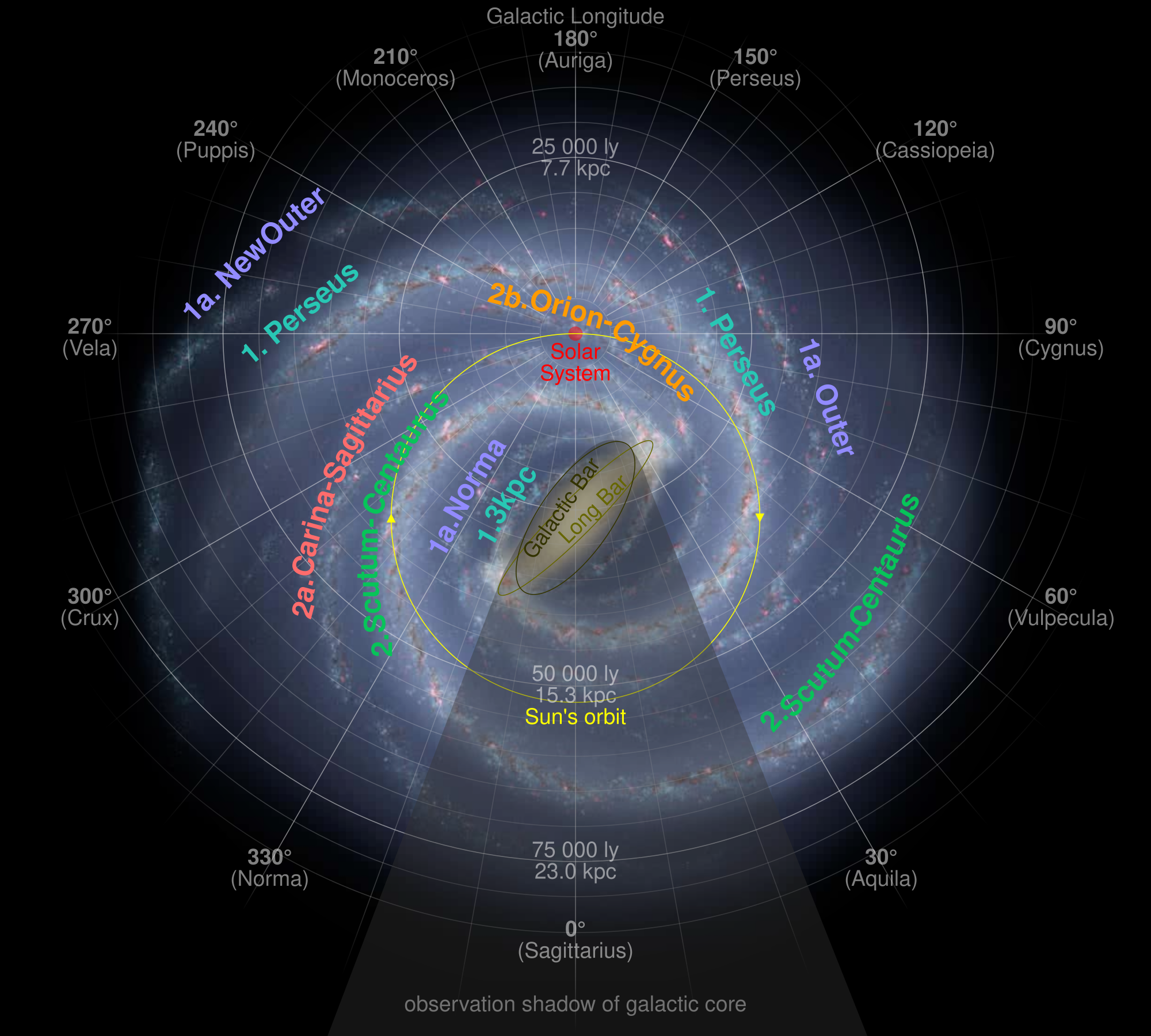
The Carina Nebula is the closest giant star-forming region to our Solar System, in the Carina–Sagittarius Arm of the Milky Way Galaxy (7 500 light years from Earth). It is situated in the Southern Hemisphere Constellation Carina (The Keel). The Carina Nebula (also called The Grand Nebula or Eta Carinae Nebula) is one of the largest Diffuse Nebulae in our skies, and contains at least two stars with a combined luminosity over five million times that of the Sun. The star Eta Carinae is at least a hundred times more massive than our star (the Sun), and is a candidate for a Supernova.
Telescopes are like time machines, and this is what the Carina Nebula looked like 7 500 years ago (as the light took that long to reach us, traveling at 300 000 km/s or 186 411 mi/s).
About this image:
Quick test exposures in light polluted skies after months of cloudy weather. Photographed mainly in the visible wavelengths of light, and the Hydrogen Alpha (Hα) Infrared spectral line of 656.28 nm. The mount was Polar Aligned, but due to the weather there was no time for Autoguiding or longer exposures to capture more of the subtle Hydrogen Nebulosity detail.
Star Colors:
You will notice that star colors differ from red, orange and yellow, to blue. This is an indication of the temperature of the star's Nuclear Fusion process. This is determined by the size and mass of the star, and the stage of its life cycle. In short, the blue stars are hotter, and the red ones are cooler.
Light Pollution Map:
Photographed at 26° Latitude South, close to the light polluted suburbs to the West of Johannesburg (Gauteng Province, South Africa). Light Pollution Map.

Tech:
Lights/Subs: 25 x 30 sec RAW exposures.
Calibration Frames: Bias and Dark frames from my Library.
Pre-Processing and Linear workflow in PixInsight, and finished in Photoshop.
Gear:
GSO 6" f/4 Imaging Newtonian Reflector Telescope.
Baader Mark-III MPCC Coma Corrector.
Astronomik CLS Light Pollution Filter.
Celestron AVX Mount.
Canon 60Da DSLR.
Astrometry Info:
nova.astrometry.net/user_images/1060749#annotated
About the Milky Way, and our Solar System's place within it:
The Milky Way Galaxy is estimated to have over 400 billion stars. Stars are suns, and just like in our Solar System, many of the stars have planets with moons orbiting them. Our sun is a middle aged Yellow Dwarf star, located in the Orion Arm (or Orion Spur) of the Milky Way Galaxy. It's a minor side spiral arm, located between two larger arms of the Milky Way Galaxy's spiral. The Milky Way is merely one mid-sized barred spiral Galaxy, amongst over 100 billion other Galaxies in the observable Universe. When we look up at the night sky from Earth, we see a glimpse of the Carina-Sagittarius Arm of the Milky Way Galaxy. It takes about 250 million years for the Milky Way Galaxy's spiral arms to complete one rotation.
The size, distance and age of the Universe is far beyond human comprehension. The known Universe is estimated to contain over One Billion Trillion stars.
1 000 000 000 000 000 000 000
Click on this link to view an image that illustrates ''our Solar System's position within the Milky Way Galaxy''.
Martin
-
[Home Page] [Photography Showcase] [My Free Photo App]
[Flickr Profile] [Facebook] [Twitter] [My Science & Physics Page]