View allAll Photos Tagged Coherence
A long time ago in a Galaxy far, far away from common sense there was a Kingdom which, despite its great history, is not having the luckiest of its moments.
After a devastating political backlash the Prime Minister Dave “Dodgy Ham” was kicked off his position.
The new Prime Minister Tessy “Coherence is Overrated” proceeds to form the new government and things gets complicated when the have to choose the new Foreign Secretary.
All the most illustrious personalities are unavailable or don’t want to enter this political storm, so someone comes out with an idea.
“Why don’t we choose someone who could ruin our international relationships once and for all? We already made a huge mess and we should stay faithful to that principle! Let’s find a calamitous Foreign Secretary!”
The idea is welcome enthusiastically. “That’s brilliant- says Tessy- We are good at making bad choices so why don’t make the worst one. But who can take the mantle of such a demanding task?”
“I know- says one of the persons present- there is this guy from a famous franchising named Jar Jar Long Ears, a politician who actually ruined an entire Galaxy!”
“That sounds very promising- intervenes another- but are we sure he is up to the task? This is not a fictional universe. This is the real world and are we sure he can make a total mess of our foreign policy? I fear the other governments may just feel sympathy for this creature!”
“There is another option. We could choose Boris Floppy Hair! He already insulted every foreign leader we have friendly relationships with. If there is someone who can ruin our foreign policy it’s him!”
Tessy is torn between the two options.
“Long Ears or Floppy Hair- that is the question”
But Tessy has a brilliant idea.
Eureka! Why choosing one of them when you you can have both of them?
Merging the best of them, or the worst (which is actually their best), into a new entity, the perfect Foreign Secretary for their government.
Jar Jar Boris (some call him Jar Jar Johnson and I can’t guess why hehe).
Like the old saying goes when it rains, it pours.
I can neither confirm nor deny that the present photo and its background story are inspired by real life events taking place in an European Country lol (well geographically speaking it is still Europe lol).
I usually prefer to avoid political and social satire because I don’t want to hurt anyone’s sensibility but there are political characters who really inspire parodies hehe :)
I couldn’t resist making this Lego parody with Jar Jar. I swear I tried to resist but it was too tempting to pass on lol :)
I hope no one feels offended by this lol. Let me know, since like I said there is reason I never do political satire :)
Just remember it is just a parody, so no offense intended toward anyone :)
May the Brick be with You :)
Commissioned by Rowland Egerton-Warburton, the house was designed by local architect George Latham, and as they were both keen to get the period detail right, they visited lots of genuine Elizabethan and Jacobean houses in the area. Apparently all its components - windows, doors, chimneys etc. - were based on existing ones, but somehow the overall design lacks coherence, and it's been described as 'Jacobethan'. Even since it was built in 1845, it has undergone considerable changes, and the porticoed porch on the south side was so draughty that the current entrance on the west front was used instead. It did have plumbing, however, which was pretty advanced for 1845. The underlying clay has caused lots of problems, as has dry rot, so in 1967 various parts were demolished.
Adjacent to the house is what I assume was a stable yard.
WPD22Objects
Eastbourne Pier, Grand Parade
Grade II* Listed
List Entry Number: 1353116
Details
623/7/110A GRAND PARADE 17-MAY-1971 EASTBOURNE PIER
GV II*
Seaside pier. It opened on 13th June 1870 and was designed by Eugenius Birch, the contractors Messrs Head, Wrighton and Co of Stockton on Tees. It was completed in 1872 and modified at the landward end following a storm of 1877. The seaward Pavilion theatre with 'camera obscura' and two games pavilions are of 1901 designed by Noel Ridley AMICE. The central windscreens were erected betweeen 1902-03, and a music pavilion was added in 1925 designed by P D Stoneham. Further kiosks were added in 1971, and an entrance building in 1991 in matching style.
MATERIALS: Substructure of cast iron screwpiles with some surviving combined cast iron side railings and seating. Wooden decking except for the centre which was replaced in concrete slabs after the Second World War. The pier buildings are constructed of wood with some structural cast iron and zinc roofs.
PLAN: As originally built in 1872 it was 1000ft long by 22ft wide, with two projecting bays on each side increasing the width to 68ft at the shore end and 52ft halfway along. The pier head had a diamond-shaped end approximately 115ft wide. After the storm of 1877 the shoreward end was rebuilt 5ft higher and the width of the pier increased to 52ft. By 1901 the pier end was much enlarged to accommodate the Pavilion theatre and in 1925 a section near the shore end was widened for a new music pavilion.
DESCRIPTION: The pier is 1000ft long and 52ft wide on a substructure of iron screw piles. Some original combined cast iron side railings and seating survives in the central section of the pier, the top railing tube originally doubling as a gas pipe to provide lanterns with gas lighting. There is wooden decking, except for the central section, removed during World War II to prevent an enemy landing, and replaced in concrete slabs after World War II. The entrance building is of 1991 in matching style to the earlier buildings on the pier. It is constructed of wood with metal supports, and is of one storey with a central open passageway with metal columns supporting a large square rooflight of five arches on each side, surmounted by clock faces on all sides with a hipped zinc roof. The front has octagonal pavilions with hipped roofs with small cupola, which merge into larger shops.
To the south west is the music pavilion of 1925, currently an amusement arcade, which has an oval domed zinc roof with a large iron-crested central roof-light and walls with diagonally placed weatherboarding with reeded pilasters and blocked multi-paned sash windows. The north west end has a wide central entrance with round-headed window and cornice and pilasters flanked by smaller entrances with cornices and brackets. The south east end has a tall central entrance with pilasters and oculus. The interior has large segmental arches and Art Deco decoration of floral swags, urns and Vitruvian scrolls. There is a proscenium arch at the south east end with Art Deco motifs, but the stage has been removed and there is a later C20 staircase.
To the south east are three 1970s cruciform-shaped wooden central kiosks.
Further to the south east, on either side of the pier, are two 1901 games pavilions. These are single-storeyed of wooden construction with zinc roofs with three pediments. Over the central pediments there are elaborate cupolas with fishscale domes and bases and decorative metal finials. Over the end pediments there are tapering roof features with ogee roofs with metal finials.
Further south east are an oval and circular 1970s building, originally amusement arcade buildings. Next to these are 1902-03 cast iron and glazed central screens acting as shelters and windbreaks with entwined dolphin emblems. At the end of the pier is the 1901 wooden theatre building which has a large domed roof with a smaller domed cupola containing the 'camera obscura'. The south east side has a projecting two-storey central bay either side of staircases with continuous glazing to the top floor bar. The north west side has a rebuilt wooden staircase to the camera obscura. The interior of the camera obscura has an octagonal lower waiting room, leading by means of a narrow curved wooden staircase into the boarded cupola. This contains a concave, emulsioned circular raised surface for showing the images and an iron wheel fixed to the ground, which can be moved by hand to open the roof light by means of a gear wheel connected to the larger wheel by a leather fanbelt. The theatre below was damaged by fire in 1970, but retains the domed wooden roof with large metal arched ribs, steps for gallery seating and panelling to the walls. The landing stage at the end of the pier was damaged during the 1987 hurricane.
HISTORY: The first pile of Eastbourne Pier was screwed into the seabed on 18th April 1866, and the pier was officially opened on 13th June 1870 by Lord Edward Cavendish. The pier was one of 14 designed by Eugenius Birch (1818-1884). By the official opening date only half the projected 1000ft length had been constructed and it was not completed until 1872. It was originally 22ft wide with two projecting wings on each side and a small diamond-shaped pier head with two kiosks and a bandstand.
On New Year's Day 1877 a violent storm washed away a large part of the shoreward end of the pier. To counteract the effect of waves surging over the shingle below the shoreward end was rebuilt 5ft higher. Also the pier was rebuilt to the width of the former projecting bays, from 22ft to 52ft. In 1888 a large building was constructed at a cost of £250 on the pier head to form a theatre, but was taken off 'in one piece' to Lewes for use as a cattle shed when it was proposed in 1899 to produce a grander building. The plans, drawn up by Noel Ridley, were for a new pavilion theatre housing a 'camera obscura' in the dome surmounting the structure. The building, completed in 1901, could accommodate 1000 people, it had no pillars to obstruct the view and the balconies were cantilevered. It contained a bar, a cafe and the pier offices. An open verandah just above ground level was later filled-in. The camera obscura was the largest in the country when constructed. Very few now remain and this is thought to be the only camera obscura on a pier in the world. Visitors could watch a moving coloured picture of the view outside on an emulsioned dish in a darkened room.
In 1901 the two games saloons were erected on either side of the central ramp. Between 1902 and 1903 the central windscreens were erected and a ten-sided bandstand which was removed in 1945.
In 1912 the original octagonal front entrance kiosks, together with the central octagonal pay kiosk, were removed. The central pay kiosk still survives in the middle of the Redoubt Pavilion Gardens.
In 1925 a section of the upper deck level was widened near the shore end and a new music pavilion with domed roof constructed which could seat 900. It was used for many years as a ballroom and later became an amusement arcade.
During World War II there was an order to blow up the pier but, luckily, it was spared; wooden decking was removed from the centre to prevent an enemy landing and gun platforms installed in the theatre to repel any attempted enemy landing. In 1945 the bandstand was removed and in 1951 the Edwardian entrance kiosks were replaced by a flat-roofed building.
In 1970 a pier employee set fire to the Pavilion Theatre and severe damage was caused to its shoreward end, including the destruction of the access staircase to the camera obscura. As a result the theatre was closed down and the remaining part of the building converted into a nightclub. In the 1970s two steel-framed glass fibre amusement arcade buildings were added betweeen the ramp and the old theatre, followed by three kiosks between the ballroom and the ramp.
In 1991 the entrance building of 1951 was replaced by a new entrance, in a similar style to the original octagonal turrets, with shops and a weatherproof covered way. In 2003 the camera obscura was re-opened to the public.
SOURCES: Supplement to "The Illustrated London News", June 25, 1870. Print of original pier. "The British Builder", July 1925, pp.281-283 for the musuc pavilion. The Oxford Dictionary of National Biography entry for Eugenius Birch. Simon H Adamson, "Seaside Piers", 1977. "Eastbourne Argus", 14/06/1982. John D Clarke and Partners, "Eastbourne Pier Conservation Strategy". Report of December 2007. Arthur J Gill, "Camera Obscura", April 1976. James Fenton, "Journal of Photography and Motiuon Picture Photography of the International Museum of Photography at George Eastman House, Rochester, New York, USA". Vol 27, No 4, Dec 1984, pp.9-15 for surviving 'camera obscura' in Great Britain.
REASONS FOR DESIGNATION: * Following the loss of a number of Eugenius Birch's 14 seaside piers and most notably the almost complete destruction of Brighton West Pier by storm damage and fire, Eastbourne is now the finest of Birch's surviving seaside piers. * Eastbourne and Brighton Palace Pier, by St John Moore, are now the best surviving Victorian seaside piers on the South Coast for the number of remaining Victorian and Edwardian structures. * Eastbourne Pier has a rare surviving example of a 'camera obscura'; it was the largest example in Great Britain when built in 1901, and seems to be the only example of a camera obscura on a seaside pier in the world. * Eastbourne Pier is a good example of a promenade pier, later adapted into a full blown pleasure pier with good quality late C19, Edwardian and 1920s structrues. Later replacement buildings have imitated the style of the earlier structures, so that the pier retains a stylistic coherence.
historicengland.org.uk/listing/the-list/list-entry/1353116
——————————————————————————————————
Eastbourne Pier
Grade II* Listed
Eugenius Birch's pier opened in June 1870 but was added to several times: the concert hall and main pavilion date from 1888, Noel Ridley's camera obscura and theatre were finished in 1901, and another pavilion was added by P.D. Stonham in 1925. Most of the structure is wooden with zinc-clad roofs and some cast iron. A storm in 1877 destroyed part of the structure.
en.wikipedia.org/wiki/Listed_buildings_in_Eastbourne
See also:-
en.wikipedia.org/wiki/Eastbourne_Pier
The August Break 2016
Day 16
Breathing slowly and calmly brings helps us find a peaceful inner rhythm which relaxes both mind and body and eliminates stress.
Inhale 1-2-3-4-5
Exhale 1-2-3-4-5
Here is a short video to guide us:
www.youtube.com/watch?v=KA8EfBP_S88
This sort of breathing is called 'cardiac coherence' (cohérence cardiaque).
parfois j'ai du mal à comprendre les humains :
dans flickr il y a des groupes et parmi ces groupes il y en a dont l'objet et de collectionner des favoris.
parmi les membres de ces groupes il y en a un certain nombre qui commentent, notamment pour échapper aux sweepers mais qui ne laissent pas de favoris... !!! ??? !!!
je trouve que ça manque de cohérence...
c'est pas si grave mais cela s'ajoute au fait que les propriétaires de flickr ne font rien pour leur site ...
A veces me cuesta entender a los humanos:
en Flickr hay grupos y, entre ellos, hay algunos cuyo objetivo es coleccionar favoritos.
Entre los miembros de estos grupos hay algunos que comentan, sobre todo para escapar de los «sweepers», pero que no dejan favoritos... ¡¡¡??? !!!
Me parece que falta coherencia...
No es tan grave, pero se suma al hecho de que los propietarios de Flickr no hacen nada para su sitio...
Sometimes I find it hard to understand humans:
on Flickr there are groups, and among these groups there are some whose purpose is to collect favourites.
Among the members of these groups there are a number who comment, particularly to escape the sweepers, but who don't leave any favourites... !!! ??? !!!
I find this inconsistent...
It's not that serious, but it adds to the fact that the owners of Flickr are not doing anything for their site...
Press L to view in light box
Z to zoom!
F Favorite
C Comment
S Search
photos de minéraux : www.flickr.com/photos/artzethic/collections/7215762604784...
photos de coquillages : www.flickr.com/photos/artzethic/collections/7215762723660...
photos figurines RPG www.foto-figurines.com/
photos canaux de Patagonie www.noname.fr/patagonie
phots du Maroc www.noname.fr/maroc
compte youtube : www.youtube.com/user/pierreNi31
Flickr’s redesign is a disjointed bit of visual overload that lacks coherence and ease of navigation.
Comme son nom l'indique déjà, le dégradé de trame d'affiches sérigraphiées consiste en un dégradé réalisé par une trame de points. combinée à un papier peint, l'affiche crée une illusion d'optique d'irritation spatiale.
Carsten Nicolai, né en 1965 à Karl-Marx-Stadt, est un artiste et musicien allemand basé à Berlin. Il fait partie d'une génération d'artistes qui travaille intensément dans la zone de transition entre la musique, l'art et la science. Dans son travail, il cherche à surmonter la séparation des perceptions sensorielles de l'homme en rendant des phénomènes scientifiques comme les fréquences sonores et lumineuses perceptibles pour les yeux et les oreilles. Influencé par les systèmes de référence scientifiques, Nicolai utilise souvent des modèles mathématiques tels que des grilles et des codes, ainsi que des structures d'erreur, aléatoires et auto-organisées. Ses installations ont une esthétique minimaliste qui, par son élégance et sa cohérence, est très intrigante. Après sa participation à d'importantes expositions internationales comme la documenta X et la 49e et 50e Biennale de Venise,
Son œuvre artistique trouve écho dans son travail de musicien. Pour ses sorties musicales, il utilise le pseudonyme Alva Noto. Avec une forte adhésion au réductionnisme, il mène ses expérimentations sonores dans le domaine de la musique électronique en créant son propre code de signes, d'acoustique et de symboles visuels. Avec Olaf Bender et Frank Bretschneider, il est co-fondateur du label 'raster-noton. archiv für ton und nichtton'. Divers projets musicaux incluent des collaborations remarquables avec Ryuichi Sakamoto, Ryoji Ikeda (cyclo.), Blixa Bargeld ou Mika Vainio. Nicolai a fait de nombreuses tournées en tant qu'Alva Noto à travers l'Europe, l'Asie, l'Amérique du Sud et les États-Unis. Il s'est notamment produit au Solomon R. Guggenheim Museum de New York, au San Francisco Museum of Modern Art, au Centre Pompidou à Paris et à la Tate Modern de Londres.
As the name already suggests, the screen-printed poster raster gradient consists of a gradient made by a raster of dots. combined with wallpaper, the poster creates an optical illusion of spatial irritation.
Carsten Nicolai, born in 1965 in Karl-Marx-Stadt, is a German artist and musician based in Berlin. He is part of a generation of artists who work intensely in the transition zone between music, art and science. In his work he seeks to overcome the separation of human sensory perceptions by making scientific phenomena like sound and light frequencies perceptible to the eyes and ears. Influenced by scientific reference systems, Nicolai often uses mathematical models such as grids and codes, as well as error, random and self-organizing structures. His installations have a minimalist aesthetic which, through its elegance and coherence, is very intriguing. After participating in important international exhibitions such as documenta X and the 49th and 50th Venice Biennale,
His artistic work finds an echo in his work as a musician. For his musical releases, he uses the pseudonym Alva Noto. With a strong adherence to reductionism, he conducts his sound experiments in the field of electronic music by creating his own code of signs, acoustics and visual symbols. Together with Olaf Bender and Frank Bretschneider, he is co-founder of the label 'raster-noton. archiv für ton und nichtton'. Various musical projects include notable collaborations with Ryuichi Sakamoto, Ryoji Ikeda (cyclo.), Blixa Bargeld or Mika Vainio. Nicolai has toured extensively as Alva Noto across Europe, Asia, South America and the United States. He has performed at the Solomon R. Guggenheim Museum in New York, the San Francisco Museum of Modern Art, the Center Pompidou in Paris and the Tate Modern in London, among others.
On a spring afternoon, the meadow lay beneath the deep shadow cast by dense foliage. Through a small gap in the trees, a narrow beam of sunlight broke through — illuminating a handful of yellow blossoms as if by intention. The soft focus and dark surroundings let their glow unfold quietly, a moment where light and nature found perfect coherence.
A remix of "Minuet in C minor", created for the "Sweet 18" exhibition in Castle d'Ursel, 2015.
Our story begins on a magical evening, when a colorful crowd of guests makes it's appearance in the classicistic castle d’Ursel for a ball. What starts as a very formal dance party, neatly directed by the mischievous hostess Cupid, soon loses all coherence. While the party degenerates into great chaos, the other protagonist who plays with the feelings of the guests becomes increasingly apparent: Fortuna.
Au milieu de la place actuelle se trouve un jardin exceptionnel, le square du Petit Sablon, aménagé par l'architecte Henri Beyaert et inauguré en 1890.
Il est entouré d'une balustrade en fer forgé inspirée de celle qui ornait jadis les bailles de l'ancien palais du Coudenberg, à l'instar de la place de la Gare de Binche. De nombreux sculpteurs de l'époque y contribuèrent par la représentation en bronze de l'un ou l'autre des quarante-huit métiers d'autrefois qui l'entourent. Pour assurer la cohérence du projet, Beyaert avait demandé au peintre Xavier Mellery de dessiner les quarante-huit statues. Chaque pilier de pierre supportant les statues s'orne d'un décor original et ces piliers eux-mêmes sont reliés par des grilles aux motifs tous différents. Un régal pour les admirateurs du savoir-faire d'autrefois.
In the middle of the present square is an exceptional garden, the Petit Sablon square, designed by the architect Henri Beyaert and inaugurated in 1890.
It is surrounded by a wrought iron balustrade inspired by the one that once adorned the remains of the old Coudenberg Palace, like the Place de la Gare de Binche. Many sculptors of the time contributed to this by the bronze representation of one or the other of the forty-eight former crafts which surround it. To ensure the coherence of the project, Beyaert had asked the painter Xavier Mellery to draw the forty-eight statues. Each pillar of stone supporting the statues is decorated with an original decoration and these pillars themselves are connected by grids with all different patterns. A treat for the admirers of the know-how of the past.
Halpha and Oiii long exposures with Newton 10" and ASI2600mm : 224 x 300s
Halpha and Oiii long exposures with RC16" and ASI2600mm : 200x300s
RVB long exposures with Newton 10" and ASI2600mm : 90x120s
Halpha lucky imaging with Newton 12"and Playerone Neptune color II : 5000x2.5s
IR - RVB lucky imaging with Newton 12"and Playerone Neptune color II : 40000x500ms
Some time after the finalization of my image of M27 in the summer of 2021, made with a Newton 250mm and ASI2600mm camera with 21h40 of long exposures, I came across the superb high resolution image made by Stephane Gonzales (Exaxe) in lucky imaging (short exposures).
I then decided to contact Stéphane to propose him to mix our two images and thus benefit from his high resolution on the heart of the nebula thanks to his short exposures in Halpha and IR, and from the signal/noise ratio obtained on the extensions of the nebula thanks to the long exposures on my HORVB image in order to create a composite image taking the best advantage of the two images.
Stephane is willing to take on the project and sends me his Halpha + IR luminance so that I can start trying to insert his image into mine.
Having already tried this type of experiment with other astrophotographers, Stéphane rightly anticipates that the result may lack coherence due to the difference in sampling and resolution between our images.
At the same time, and by pure coincidence, my friend Sébastien Kuenlin contacted me because: he would like to try to mix his image of M27 made a few months earlier with his new RC400mm f/8 telescope with mine in order to benefit from the details of his image and the signal on my extensions!
The junction then takes shape since Sebastien's image made at 0.5"/pixel with a FWHM around 1.8" is slightly more resolved than mine made at 0.8"/pixel with an average FWHM of about 2.5" and thus approaches Stephane's image made at 0.3"/pixel with a FWHM close to 1".
The project then takes shape in a new form using 3 images: Stephane's heart, close extensions of Sébastien's, and far extensions of my image. The coherence then becomes more convincing between the samplings with this progressivity from the centre at 0.3"/pixel to the close extensions at 0.5"/pixel and then the far extensions at 0.8"/pixel.
- Once the raw stacks are collected, the first phase of the work follows, which I carry out by inlaying the core + close extensions of Sébastien's M27 into my image. This step is carried out in linear (before histogram editing) in order to ensure a dynamic match so as not to alter the difference in luminosity of the object between the core and the extensions. This mixing is carried out on the Halpha and Oiii layers.
- Sébastien is in charge of the second phase which consists of processing the composite images obtained from Halpha and Oiii (deconvolution, noise processing, histogram enhancement, sharpening, etc.), mixing them to obtain a HOO colour image, and integrating the colour of the stars obtained by the RGB layer of my image.
- Finally, we collaborate with Sébastien on the last phase, which consists in inlaying the non-linear image provided by Stéphane, on which the deconvolution, sharpening etc. treatments have already been performed by him with his technique from planetary astrophotography, which uses the same software and process to process deep sky images acquired in lucky imaging.
The processing of the M27 nebula always presents a certain difficulty and forces choices because of the great difference in luminosity between the core and the extensions on the one hand, and the strong presence of Halpha and Oiii signals on identical zones on the other hand.
These artistic choices have been made with maximum respect for the scientific coherence of the object, although this is not 100% possible: indeed, one obtains a saturated core if one wants to take advantage of the signal on the most distant extensions, or one does not distinguish these if one wants to maintain an unsaturated core. It is therefore necessary to use HDR processing as sparingly as possible, which inevitably alters the object's dynamic range but allows a compromise to highlight the different signals making up the nebula.
In the end we are very happy to present the fruit of this work with the objectives fulfilled:
- to enjoy the details of the short exposures
- to take advantage of the extensions of the long exposures
- to ensure coherence between the levels of detail thanks to the intermediate image taken in long exposure at long focal length
- keep the dynamics of the object as "real" as possible
- not to perceive any artefact or transition linked to the mixing of the three images
Sébastien, Stéphane and Mathieu, November 2021
Original uploaded size | My portfolio
I attended the photographic aesthetics workshop taught by my friend Mário Pires, and it was a wonderful experience. We spent Saturday getting all our preconceptions washed away by being asked the right questions (to which there are no wrong or right answers), and Sunday was spent doing three photo assignments in the morning, and analysing what we all did in the afternoon.
This assignment was: create a series of between five and ten images, titled "A blue day". For this one I exercised some iterative subtraction - I shot as many blue things I could find, and then made several rounds of deleting photos until I had left a series with some aesthetic coherence.
I shot all the workshop photos using my almost ten year old Leica Digilux Zoom, which only has 1.3 megapixels, but is still a wonderful camera.
342. The present time as a modern time, that is, an antitraditional time in the extreme, is the time of negative dominances. And it holds true even on the level of the most base profanities: for example, a young and healthy man feels bad much more often than good, he is much rather depressive, sad and gloomy than luminous, happy and joyous.
343. The present age - as René Guénon put it - »is the crisis of the modern world«. Yet, the modern world without any inner crises is ab ovo the crisis of the world itself. When the crisis itself gets into crisis, it will not come about in the sense as if a traditional world were to take the place of the modern world but in the sense that the modern world as one built on materialism - that is on a view representing lifelessness, destruction and even active forces of death - reached a phase when the destructive and necrotising forces let loose by materialism are starting to disintegrate modern world itself.
344. Modernity is not a stiffened, static reality, but a dynamic process, which is continuously working to make itself darker and darker.
345. Descent is not merely a monotonous descent. Phases of sudden halts, sharp falls and slow descents are changing - but these take place in the process of a monotonous descent.
346. Exactly as in the demential phase of paralysis progressiva there are lucida intervalla, but they come about more and more raerly and are less and less luminous, in just the same way in the last phase of the Kali-yuga there can be lucida intervalla, but those who examine processes in their total coherence cannot be deceived by these.
347. Modernity is maximal just now.
348. Once darkening could be perceived in fifty or a hundred years. Now it is perceivable every five years.
An Earth observation taken from the International Space Station during a day pass. Also in view is the Cygnus cargo spacecraft, which arrived on Dec. 9, carrying science and other supplies.
Astronaut Scott Kelly and Russian cosmonaut Mikhail Kornienko completed comprehensive testing for their Ocular Health suite of exams, which comprise vision testing, blood pressure, tonometry (determining the fluid pressure inside the eye), and ocular and cardiac ultrasound. Kelly and Kornienko also completed their fundoscopy (retinal imagery) and Optical Coherence Tomography exams, non-invasive imaging using light waves to take high-resolution pictures of the retina that are used to diagnose or monitor eye conditions.
These tests are essential for the crew, as spaceflight has an impact on their bodies, and some experience impaired vision. The Ocular Health tests gather data on crew members' visual health during and after long-duration space station missions. Ongoing tests are crucial to understand how living in microgravity can affect the visual, vascular and central nervous systems, and to inform future research.
Credits: NASA
Au milieu de la place actuelle se trouve un jardin exceptionnel, le square du Petit Sablon, aménagé par l'architecte Henri Beyaert et inauguré en 1890.
Il est entouré d'une balustrade en fer forgé inspirée de celle qui ornait jadis les bailles de l'ancien palais du Coudenberg, à l'instar de la place de la Gare de Binche. De nombreux sculpteurs de l'époque y contribuèrent par la représentation en bronze de l'un ou l'autre des quarante-huit métiers d'autrefois qui l'entourent. Pour assurer la cohérence du projet, Beyaert avait demandé au peintre Xavier Mellery de dessiner les quarante-huit statues. Chaque pilier de pierre supportant les statues s'orne d'un décor original et ces piliers eux-mêmes sont reliés par des grilles aux motifs tous différents. Un régal pour les admirateurs du savoir-faire d'autrefois.
In the middle of the present square is an exceptional garden, the Petit Sablon square, designed by the architect Henri Beyaert and inaugurated in 1890.
It is surrounded by a wrought iron balustrade inspired by the one that once adorned the remains of the old Coudenberg Palace, like the Place de la Gare de Binche. Many sculptors of the time contributed to this by the bronze representation of one or the other of the forty-eight former crafts which surround it. To ensure the coherence of the project, Beyaert had asked the painter Xavier Mellery to draw the forty-eight statues. Each pillar of stone supporting the statues is decorated with an original decoration and these pillars themselves are connected by grids with all different patterns. A treat for the admirers of the know-how of the past.
The Prince’s Palace in Rab is one of the most important monuments on the island and one of the most recognizable buildings of Rab’s medieval architecture. Although it has not been preserved in its fully original form, its appearance, location, and surviving parts testify to the long and rich history of the town of Rab. Today, the Prince’s Palace houses the offices of the Rab city administration and the council chamber.
Location and Urban Context
The Prince’s Palace is situated in the heart of Rab’s historical core, close to the port, as was often the case with administrative buildings during Venetian rule.
Its position was not accidental – it served as a symbol of secular authority at a strategic point from which the administration, judiciary, and everyday life of the town were controlled.
History and Purpose
The Prince’s Palace was the seat of the comes Arbae (the Count of Rab), the official who represented Venetian authority during the period when Rab was part of the Venetian Republic (from the 10th century until 1797).
Roles of the Prince’s Palace throughout history:
Administrative center – the place where political and economic decisions for the town and island were made.
Judicial center – court hearings were held here, and verdicts were issued.
Residence of the prince – the official residence and working quarters of the Venetian representative.
Archive and administrative building – housed the city archive, records, statutes, and council decisions.
Architectural Features
The Prince’s Palace is a complex of buildings from various periods: from the Romanesque council hall overlooking Donja Street, to Gothic extensions and Renaissance interventions.
Although not fully preserved today, the following features remain recognizable:
1. Façade and Exterior Appearance
A combination of Romanesque, Gothic, and Renaissance architectural elements.
Stone as the dominant material.
Rich window frames, trifora and bifora windows, characteristic of Dalmatian communal palaces.
2. Inner Courtyard
The former palace had an inner courtyard with passages connecting different parts of the complex, as well as a cistern.
The courtyard was used for public gatherings, receptions, and judicial ceremonies.
3. Administrative Rooms
Rooms for the council, chancery, and archive were located on the upper floors.
A separate section served as the prince’s residence, distinct from the public functions.
Reconstructions and Current State
Over the centuries, the Prince’s Palace suffered various damages, alterations, and losses. Parts of the complex were demolished or modified in the 19th and 20th centuries. Today, only some original elements survive, but:
architectural traces still allow a clear identification of the palace’s position and volume,
archaeological research has confirmed the continuity of an administrative center at this site,
conservation works have preserved the most valuable elements, such as Gothic windows and sections of Renaissance façades.
The Prince’s Palace in Rab’s Cultural Identity
For the people of Rab, the Prince’s Palace is not merely a ruin or historical building – it is a symbol of the town’s thousand-year-old autonomy. Even in its altered form, it remains one of the key landmarks of the old town, especially in the context of:
the 14th-century Rab Statute,
the tradition of self-governance and communal institutions,
the urban coherence of the historical town center.
The Knežev dvor (Prince’s Palace) in Rab is one of the most important monuments of historical and administrative power on the island and a defining landmark of the medieval architecture of the town of Rab. Although it has not survived in its complete original form, its surviving sections, location, and architectural traces bear witness to the long and rich history of the city.
________________________________________
Location and Urban Setting
The Knežev dvor is located in the very heart of Rab’s historic core, near the Cathedral complex and the famous “four bell towers.” It stands close to the main urban axis (the ancient Decumanus), in an area where the most significant civic, religious, and noble institutions were concentrated throughout the centuries.
Its position was carefully chosen—this palace symbolized secular authority and oversight of administrative, judicial, and civic affairs.
________________________________________
Historical Role and Purpose
The palace served as the official seat of the knez (count or governor of Rab), the Venetian-appointed official (comes Arbae) during the centuries when Rab belonged to the Venetian Republic (from the 10th century until 1797).
Functions of the Knežev dvor through history:
•Administrative center – where political, economic, and civic decisions for the island were made.
•Judicial hub – hosting court hearings and legal proceedings.
•Residence of the prince – official living and working quarters of the Venetian representative.
•Archive and chancery – housing important records, statutes, and decisions of the town council.
________________________________________
Architectural Characteristics
Originally, the palace was a complex of several buildings built across different periods, from Romanesque foundations to Gothic expansions and Renaissance alterations.
Although today only parts remain, several features can still be recognized:
1. Exterior and façade
•A combination of Gothic and Renaissance elements.
•Dominated by finely worked local limestone typical of Dalmatian coastal architecture.
•Decorative window frames, including biforas and triforas, similar to those seen on other Dalmatian civic palaces.
2. Inner courtyard
•The former palace included a courtyard, likely with arcades and internal connections between administrative, residential, and ceremonial spaces.
•It served for official gatherings, receptions, and legal ceremonies.
3. Interior rooms
•Chambers for the town council, the chancery, and the archive were located on the upper floors.
•A separate section contained the private living quarters of the knez, ensuring separation between public and residential functions.
________________________________________
Reconstruction and Present State
Over the centuries, the Knežev dvor suffered damage, reconstructions, and partial demolitions. Significant parts were altered or lost during the 19th and 20th centuries. Nevertheless:
•Architectural remnants still reveal the palace’s original volume and layout.
•Archaeological research has confirmed the continuity of administrative activity on the site.
•Conservation efforts have preserved valuable elements such as Gothic windows and Renaissance façade fragments.
________________________________________
Cultural Significance for Rab
For the people of Rab, the Knežev dvor is more than a historical structure—it represents centuries of autonomy, governance, and civic identity. Even in its altered form, it remains a symbolic anchor of the old town, especially in relation to:
•the medieval Rab Statute (14th c.),
•traditions of local self-government,
•and the architectural integrity of the historic core.
________________________________________
Summary
The Knežev dvor of Rab was once a prestigious center of Venetian governance and the heart of civic authority. Today it stands as a historical and architectural monument that preserves the memory of Rab’s medieval prominence. Though fragmented, it still radiates historical significance and remains essential for understanding the political and urban development of the island.
-------------------------------------------
s084 11876 RabOtok1926 Knežev dvor. 1926. Brusić Vladislav: Otok Rab Nakladnik: Franjevački kamporski samostan sv. Eufemije
Knežev dvor na Rabu jedan je od najvažnijih spomenika povijesno-administrativne vlasti na otoku i jedan od najprepoznatljivijih objekata rapske srednjovjekovne arhitekture. Iako danas nije sačuvan u potpuno izvornom obliku, njegov izgled, položaj i sačuvani dijelovi svjedoče o dugoj i bogatoj povijesti grada Raba. U Kneževu dvoru danas su smješteni uredi rapske gradske uprave i vijećnica.
________________________________________
Položaj i urbanistički kontekst
Knežev dvor smješten je u srcu povijesne jezgre grada Raba, uz kompleks katedrale i tzv. „četiri zvonika“. Nalazi se u blizini glavne gradske ulice (tzv. Decumanus), u zoni u kojoj su se tijekom stoljeća koncentrirale najvažnije upravne, crkvene i plemićke institucije.
Njegov položaj nije slučajan – bio je simbol svjetovne vlasti na strateškom mjestu iz kojeg se kontrolirala uprava, pravosuđe i svakodnevni život grada.
________________________________________
Povijest i namjena
Knežev dvor bio je sjedište rapskog kneza (comes Arbae), dužnosnika koji je predstavljao mletačku vlast u razdoblju kada je Rab bio dio Mletačke Republike (od 10. st. pa sve do 1797.).
Uloge Kneževa dvora kroz povijest:
•Upravni centar – mjesto gdje se donosile političke i gospodarske odluke za grad i otok.
•Središte pravosuđa – ovdje su se održavale sudske rasprave i izdavale presude.
•Rezidencija kneza – službeni stan i radni prostori mletačkog predstavnika.
•Arhiv i uredovna zgrada – čuvao se gradski arhiv, zapisi, statuti i odluke vijeća.
________________________________________
Arhitektonska obilježja
Izvorni Knežev dvor bio je kompleks zgrada iz raznih razdoblja, od romaničkih temelja preko gotičkih dogradnji do renesansnih intervencija.
Iako danas nije u potpunosti sačuvan, prepoznatljiva su sljedeća obilježja:
1. Fasada i vanjski izgled
•Kombinacija gotičkih i renesansnih arhitektonskih elemenata.
•Kamen je dominantni materijal, s tipičnom dalmatinskom obradom.
•Bogati prozorski okviri, trifore i bifore, karakteristične za dalmatinske komunalne palače.
2. Unutarnje dvorište
•Nekadašnji Knežev dvor imao je unutarnje dvorište, često s arkadama i komunikacijama između različitih dijelova kompleksa.
•Dvorište se koristilo i za javna okupljanja, dane primanja i sudske ceremonije.
3. Upravne prostorije
•Prostorije za vijeće, kancelariju i arhiv bile su smještene u gornjim katovima.
•Poseban dio je bio namijenjen stanu kneza, odvojen od javnih funkcija.
________________________________________
Rekonstrukcije i današnje stanje
Knežev dvor je kroz stoljeća pretrpio niz oštećenja, pregradnji i gubitaka. Dio kompleksa srušen je ili izmijenjen u 19. i 20. stoljeću. Danas se vide samo neki očuvani elementi izvorne zgrade, no:
•arhitektonski tragovi i dalje omogućuju jasnu identifikaciju položaja i volumena dvora,
•arheološka istraživanja potvrdila su kontinuitet upravnog centra na tom mjestu,
•konzervatorski radovi sačuvali su najvrednije dijelove, poput gotičkih prozora i dijelova renesansnih pročelja.
________________________________________
Knežev dvor u kulturnom identitetu Raba
Za Rabljane Knežev dvor nije samo ruševina ili povijesna građevina – on je simbol tisućljetne gradske autonomije. Čak i u izmijenjenom obliku, ostao je jedan od ključnih točaka identiteta starog grada, naročito u kontekstu:
•rapskog Statuta iz 14. stoljeća,
•tradicije samouprave i komunalnih institucija,
•urbanističke cjelovitosti starogradske jezgre.
Minolta MD Rokkor 50mm 1.2
Aperture was closed down to F5.6
PEI oysters shells at Norman Hardie Winery in Prince Edward County. I saw a vast pile of shucked oysters shells near the base of the oyster bar and was taken by the textures. I think this kind of image could work as a wallpaper for the backsplash of a kitchen counter - rich in detail but the repeating shapes and limited colour palette gives it coherence.
.
YA! A common project of Yves & Anne : Two glances, parallels or crossed, images to be juxtaposed, to be set or to be stacked...
First theme : Alignments.
YA! Un projet commun de Yves & Anne : Deux regards, parallèles ou croisés, des images à juxtaposer, à opposer ou à superposer...
Premier thème : Alignements...
.
Encore une fois ou plutôt 1000 fois merci Yves pour le travail fait sur cette photo!
.
.
© Anne d'Huart
.
_____________________________________
The fontaine Saint-Michel was part of the great project for the reconstruction of Paris overseen by Baron Haussmann during the French Second Empire. In 1855 Haussmann completed an enormous new boulevard, originally called boulevard de Sébastopol-rive-gauche, now called Boulevard Saint-Michel, which opened up the small place Pont-Saint-Michel into a much larger space. Haussmann asked the architect of the service of promenades and plantations of the prefecture, Gabriel Davioud, to design a fountain which would be appropriate in scale to the new square. As the architect of the prefecture, he was able to design not only the fountain but also the facades of the new buildings around it, giving coherence to the square, but he also had to deal with the demands of the prefet and city administration, which was paying for the project.
Davioud's original project was for a fountain dedicated to peace, located in the center of the square. The prefect authorities rejected this idea and asked him instead to build a fountain to hide the end wall of the building at the corner of boulevard Saint-Michel and Saint-André des Arts. This forced Davioud to adapt his plan to the proportions of that building.
The next design made by Davioud in 1856 provided the architectural structure of the fountain; a facade divided into four horizontal levels, similar to a triumphal arch, with four Corinthian columns on high socles framing the central niche. The main cornice is surmounted by a French Renaissance design feature, an inscribed tablet in a grand architectural framing. As the revised site was just off the axis of the bridge, Davioud created a visual compromise in a series of shallow bowed basins through which the water issuing from the rock under the supine body of Saint Michael's adversary spills. The water ends in a basin sunk into street level, with a curving front edge that softens the line of the monuments architectural base.
These new experiments have come from the first 3 years if work with drawings and the camera.
I have found that certain materials are very difficult to combine so that there is some sort of coherence. Often it just looks like strips of coloured paper, or paper and glass separate but there is no unity. Metal is very hard to incorporate with other materials such as fabric or paper. These attempts became more frequent towards the end of May of this year and so I have settled into the challenge to see what can come of it. The first 6 intersections are what I consider to be the most successful so far and I hope are not the last.
The fresco decoration of the Hall of Justice of the fortress of Angera constitutes one of the main figurative testimonies of the development phase of the Gothic pictorial language in the Lombard territory; it also proposes a rare and early example of painting with profane themes, of historical-political and celebratory significance.
The room, on the second floor of the Visconti wing of the building, has a rectangular plan, divided into two parts by a pointed arch. The ceiling, formed by cross vaults, is covered by a lively decoration with geometric motifs, with squares and rounds interwoven to form a sort of sumptuous painted fabric. The six bays of the walls, illuminated by large windows with two lights, host the pictorial decoration, which is divided into three superimposed registers within large arches defined by ornamental borders with stylized stars and flowers: the narrative scenes, in the center, are surmounted by a high band with astrological-astronomical subjects, while the lowest register is formed by a lozenge decoration that supported an elegant painted veil, now almost completely disappeared.
The cycle narrates the deeds of Ottone Visconti, archbishop and lord of Milan from 1277 after the victory obtained in Desio over the opposing Torriani family. Since a long time, studies have linked the frescoes to a precise literary source, the Liber de gestis in civitate Mediolani, a work in praise of the Visconti family written by the monk Stefanardo da Vimercate probably in the last decade of the thirteenth century; the tituli that accompany the scenes are inspired by it, while other Latin inscriptions report, to complete the upper decorative band, some verses of the astrological treatise De Sphaera.
From a stylistic point of view, the author of the paintings shows a marked taste for the complex layout of the scenes, while neglecting the coherence of the figure-architecture relationship; the forms are simplified and the faces, lacking in individual characterization, derive strong consistency from the resentful linear definition and the thick dark outlines; these elements constitute an evident link with the thirteenth-century pictorial tradition of Byzantine matrix, probably filtered through the knowledge of works from the Veneto area. Moreover, the attention that will be typically Lombardy for the realistic definition of details or for the description of costumes is already present and alive.
The brilliant overall effect of the room is enhanced by the whirlwind of colors of the vault, a real explosion of chromatic happiness that finds immediate comparisons in the vault of S. Bassiano in Lodi Vecchio, also decorated with joyful secular subjects.
The representations of the planets and the signs of the zodiac are still linked to those astrological-astronomical themes that had an enormous development since the beginning of the Christian Middle Ages and in particular in the Romanesque period; connected to the scansion of time and of the different working activities - in particular agricultural and pastoral -, they had multiple ethical, civil and religious implications. Situated in the courtroom of the Rocca, the cycle must have had the value of an exemplum for those who were called to judge, through the underlining of motifs such as the clemency of the winner on the vanquished enemy or the subjection of earthly power to the stars and to Fortune, and with precise indications on the virtues that should accompany the exercise of power.
As for the dating of the paintings, critics have expressed themselves in various ways, with wide oscillations between 1277 of the battle of Desio and 1314, the year in which Matteo Visconti definitively acquired possession of the fortress after a period of domination by the Torriani and other families.
Lonchura castaneothorax in my garden, I think they don't normally come around suburban gardens, but when I started putting out a tray of seed, small flocks of these birds turned up along with the Double-barred Finches...I think it helps when natural seed in in short supply. I think they use habitat along a nearby river. Most people probably have never seen them. We humans have taken so much of the natural world, I feel I am giving something back.
The species is found in Australia, New Caledonia, Indonesia, and Papua New Guinea. Wikipedia
A typical reed finch, the chestnut-breasted mannikin flocks in groups of up to several hundred birds. They bunch into tight-flying packs, calling and executing all manoeuvres in rapid unison. They also feed, drink, rest, sleep and sing together; fighting is rare but ritualized. They do not preen one another and never build roost nests, clustering instead to sleep in thick grass areas or reeds. Bonds and coherence in flocks are kept by ‘jingling’ and peering. Australia Zoo.
This July 2020 out-take photo shows Ms. Essay wearing her pastel blue bare shoulder dress with rolled pleats in the skirting. The color-matched pointed-toe high heel pumps add an attractive element of coherence to this ensemble.
【 消えた境界線から生まれたもの 】
~ 去ってゆく川村記念美術館を振り返って ~
木。鉄。紙。砂。油絵。
これらを素材として扱ったアーティストは数万といるだろうけど、完全な融和と調和を達成したアーティストは、ジョゼフコーネル、たったひとりだと思う。
僕は彼を川村記念美術館の展示で知った。彼の作品を多く見られる場所としても、おそらく世界的にも珍しいはずだ。なぜなら、蒐集された方がジョセフコーネルを敬愛していたからだ。そのおかげで、僕は彼の多数の作品を見ることができた。その影響は僕の作品の質を一変させることになる。
デザインフェスタや川村記念美術館で展示するまで、僕は僕らしい作品を目指すことで頭が狂いそうになっていた。
決して大袈裟ではなく、僕は僕自身に高いハードルを強いたからだ。
それはふたつだ。
ひとつは、写真をメインにするものの、写真だけの展示では、退屈だということ。
ふたつめは、写真を使いながらも、別の何かを使い、融和と調和を目指すこと。
ひとつめの写真の展示に関しては、僕のYouTubeにアップロードしてあるのでそれを見てほしい。
「写真の展示」は退屈だ。僕は誘われても一度も行ったことがない。そういった内容を動画で語っている。
ふたつめの融和と調和についても、同じく動画で語り尽くしている。
初めて展示を行った際、表参道のデザインフェスタの一角に、夏から12月までの毎月、作品を展示することを自分に課した。
僕はそこで毎月、さまざまな素材にチャレンジした。
銀色の鉄板、キャンバス、和紙、ビニール、などなど。そのなかで僕が最終的にベースに選んだのが蝋を塗った梱包紙だった。
僕が出した結論の影響は、ジョセフコーネルの存在が欠かせない。
もちろん僕は彼のように手先が器用であったり、根気もないので彼の作品のレベルには到底到達できない。
でも、僕はジョセフコーネル以降のアーティストで、写真を使った有名なアーティストらを絶対に越えるということも内心、目指していた。
2024年の現在。
僕はそれを達成したと思う。
僕が展示した作品は、世界中に散らばったからだ。
初めて川村記念美術館に訪れたのは、僕が書いた小説”unforgettable”に登場した彼女が一緒だった。
僕は何者でもなかった。
カメラなんてまるで興味ないし、美術館に展示されているレンブラントやピカソ、モネらは中学校の美術の時間の延長に過ぎなかった。
僕はモネの美しさよりも彼女の横顔に見惚れていた。かっこつけるわけでもなく、嘘でもない。美術館で、作品をじっと静寂の中で見つめている彼女の横顔こそが僕の心を捉えていた。
作品から離れ、通路に溢れた外光のなかに彼女が立って、光と溶け合った時、僕は時を止められることを知った。
アートとは、時を止め、融和と調和を生む。止められた時間は、永遠に消えず、誰かの心を刻む。
川村記念美術館は、佐倉市の大自然に溶け込むようにして展示場があり、そこに作品が置かれている。
完全な融和と調和を目指した、世界でも稀な美術館だと、近隣に住んでいる僕は思っている。
なぜ、アートは融和と調和を目指すのだろうか。
違和感のない、柔らかな整合性は何を導くのか。
僕は心の平静だと思う。
作品にはさまざまなタイプがあるだろう。憎しみや憎悪といった嫌悪感に満ちた作品も確かにあるけれども、それらの作品ですらその向こうに安らぎがあるのではないだろうか。
融和と調和から生まれた安らぎに触れた時、人はほんの少しだけ変われるかもしれない。
彼女はどうして美術に無関心な僕をここへ連れてきたのだろうか。
長い年月が経ってからやっとその意味を理解して、僕は今、11月の展示に臨む。
川村記念美術館は、たぶん、多くの人を支えてくれたと思う。
その意義は、今後も残り続ける作品とともに、誰かの心を刻み続ける。
融和と調和によって境界線は、消える。
小さな作品から大きな波紋となって、世界へ広がってゆく。
国境。人種。貧富。
自然とアートの融和と調和。
川村記念美術館の存在は、少なくとも僕の人生を大きく塗り替えた。
僕が展示する人間になるなんて夢にも思わなかった。
当時の彼女は、きっと僕に何かを伝えたかったんだといまさらながら思う。
川村記念美術館から、作品が消え、建物が消え、すべてが消えても、僕の記憶からは決して消えないだろう。
長い間、僕を支えてくれてありがとうございました。
川村記念美術館のスッタフの皆様に僕は心から感謝しています。
ありがとうございました。
Mitsushiro Nakagawa. 24th.Sep.2024.
追伸。
僕が美術館内で最も繰り返し聴いた曲を最後に。
追伸2。
使っている写真は既に過去にアップロードした写真です。
Everything But The Girl … Time After Time
youtu.be/tyEb2BpctyY?si=v42LWD4BQE7hSExk
What Emerged from the Vanishing Boundaries
~ Reflecting on the Departing Kawamura Memorial Museum ~
Wood. Iron. Paper. Sand. Oil painting.
There must be tens of thousands of artists who have worked with these materials, but I believe only one artist, Joseph Cornell, achieved complete harmony and fusion.
I learned about him through an exhibition at the Kawamura Memorial Museum. As a place where many of his works can be seen, it’s probably rare even on a global scale. That's because the collector deeply admired Joseph Cornell. Thanks to that, I was able to see many of his works, and they had a profound impact, completely transforming the quality of my own work.
Until I exhibited at Design Festa and the Kawamura Memorial Museum, I was driven mad by the desire to create something that felt truly like my own.
I'm not exaggerating. I set extremely high standards for myself.
There were two key challenges I set:
1. Although photography would be the main focus, a photo-only exhibition would be boring.
2. While using photography, I would incorporate something else, aiming for fusion and harmony.
Regarding the first point, you can see my "photo exhibitions" on my YouTube channel.
Photo exhibitions are dull. I've never gone to one, even when invited. I talk about this in the video.
As for the second point—fusion and harmony—I’ve also covered it extensively in videos.
When I held my first exhibition, I set myself the task of displaying works every month from summer to December at a corner of Design Festa in Omotesando.
There, I challenged myself with a variety of materials every month: silver metal sheets, canvas, washi (Japanese paper), vinyl, and more. Ultimately, I chose wax-coated packing paper as my base material.
Joseph Cornell's influence was indispensable in reaching this conclusion.
Of course, I lack his skill with my hands and patience, so I could never achieve his level.
But inwardly, I was determined to surpass other well-known artists who used photography after Joseph Cornell.
As of 2024, I believe I’ve achieved that.
The works I exhibited have spread across the world.
The first time I visited the Kawamura Memorial Museum, I was with the woman who appears in my novel *Unforgettable*.
I was a nobody at the time.
I had no interest in cameras, and the Rembrandts, Picassos, and Monets displayed in the museum were just an extension of art class from middle school.
Rather than Monet’s beauty, I was captivated by her profile. No pretense, no lie—her profile, gazing at the artwork in the museum's silence, was what truly captured my heart.
When she stepped away from the artwork and stood in the hallway flooded with natural light, blending into it, I realized that time could be stopped.
Art stops time and creates fusion and harmony. The time that is paused never fades; it imprints itself on someone's heart.
The Kawamura Memorial Museum, with its exhibition spaces blended into the vast nature of Sakura City, displays its works in perfect fusion and harmony. Living nearby, I believe it is one of the rare museums in the world that strives for such completeness.
Why does art aim for fusion and harmony?
What does soft, seamless coherence lead to?
I believe it leads to peace of mind.
There are many types of art. There are certainly works filled with hatred and disgust, but even those might bring some form of tranquility beyond them.
When touched by the tranquility born from fusion and harmony, perhaps people can change, even just a little.
Why did she, who had no interest in art, bring me to this place?
After many years, I finally understand its meaning, and now I face my exhibition in November.
I believe the Kawamura Memorial Museum has supported many people.
Its significance will continue to resonate in people's hearts, along with the works that remain.
Boundaries vanish through fusion and harmony.
From small works, they ripple out into the world—across borders, races, and wealth.
The fusion and harmony of nature and art.
The Kawamura Memorial Museum profoundly reshaped my life, at the very least.
I never dreamed I would become someone who exhibits works.
Looking back, I think she must have wanted to tell me something.
Even when the works disappear from the Kawamura Memorial Museum, when the building is gone and everything vanishes, it will never fade from my memory.
Thank you for supporting me for so long.
I am deeply grateful to all the staff of the Kawamura Memorial Museum.
Thank you.
Mitsushiro Nakagawa. 24th Sep. 2024.
P.S.
Let me end with the song I listened to most while at the museum.
P.S. 2.
The photo I am using is one I have already uploaded in the past.
Everything But The Girl … Time After Time
youtu.be/tyEb2BpctyY?si=v42LWD4BQE7hSExk
#Italy #Eurostar #イタリア #ユーロスター #art #展示 #佐倉市 #佐倉 #千葉 #千葉市 #成田 #成田市 #narita #四街道 #四街道市 #yotsukaido #tomisato #山武 #山武市 #Sanmu #富里 #富里市 #八街 #八街市 #yachimata #inzai #印西 #印西市 #shisui #酒々井 #酒々井町 #千葉県 #日本 #sakura #chiba #Japan #kawamuramemorialdicmuseumofart #川村記念美術館 #exhibition
Art Nouveau architecture in Riga makes up roughly one third of all the buildings in the center of Riga, making Latvia's capital the city with the highest concentration of Art Nouveau architecture anywhere in the world. Built during a period of rapid economic growth, most of Riga's Art Nouveau buildings date from between 1904 and 1914. The style is most commonly represented in multi-story apartment buildings.
Stylistic influences derived not least from Austria, Finland and Germany, while the establishment of a faculty of architecture in Riga in 1869 was instrumental in providing a local cadre of architects.
As elsewhere, the Art Nouveau movement in Riga was driven by a desire to express greater individuality, local attachment and a more rational kind of architecture than that which had dominated during the 19th century. Stylistically, the Art Nouveau architecture of Riga can be further divided into four different stages: Eclectic, Perpendicular, National Romantic; and Neo-Classical.
At the end of the 19th century, the old Hanseatic town and seaport of Riga was an important city in the Russian Empire which was enjoying a period of rapid economic, industrial and demographic development. Between 1897 and 1913, the city grew by 88%, reaching a population of 530,000 in 1914 and making it the fifth largest city in the Russian Empire and the third largest in the Baltic region. Its growth rate during this period was the highest the city had ever experienced.
By the middle of the 19th century, the city had begun to expand beyond medieval Riga, which was once surrounded by gates and walls. These were demolished between 1857 and 1863, and replaced with a belt of boulevards and gardens. The expanding city possessed urban coherence, as it developed along a grid pattern, following strict building regulations (which stated, for example, that no house could be taller than six storeys or 21.3 metres, 70 ft).
Between 1910 and 1913, 300 to 500 new buildings were built every year, mostly in the Art Nouveau style, and most of them outside the old town. Art Nouveau buildings were also built within the old town, and single-family homes were constructed in the suburb of Mežaparks. Riga's first Art Nouveau building, designed by the architects Alfred Aschenkampff and Max Scherwinsky and finished in 1899, lies on Audēju iela 7 (Audeju street) in the medieval part of the city, but the majority of Art Nouveau architecture in Riga can be found beyond the city center.
The owners, builders and architects of these houses came from a variety of different ethnic groups: among these were the first Latvians to receive formal training as architects. Architects working during this period in Riga included ethnic Latvians (among the most well represented being Eižens Laube, Konstantīns Pēkšēns and Jānis Alksnis), as well as architects from a Jewish background (Mikhail Eisenstein, Paul Mandelstamm) and Baltic Germans (such as Bernhard Bielenstein, Rudolph Dohnberg and Artur Moedlinger).
Some of the decorative details for these buildings, such as sculptures, stained glass and majolica stoves, were made locally by companies in Riga. Local decorative arts companies produced items for both their regional market and the Russian Empire, reaching destinations such as Tallinn and Saint Petersburg.
Today, Art Nouveau architecture accounts for one third of all the buildings in the center of Riga, making it the city with the highest concentration of such buildings anywhere in the world. The style is most commonly represented in multi-story apartment blocks.
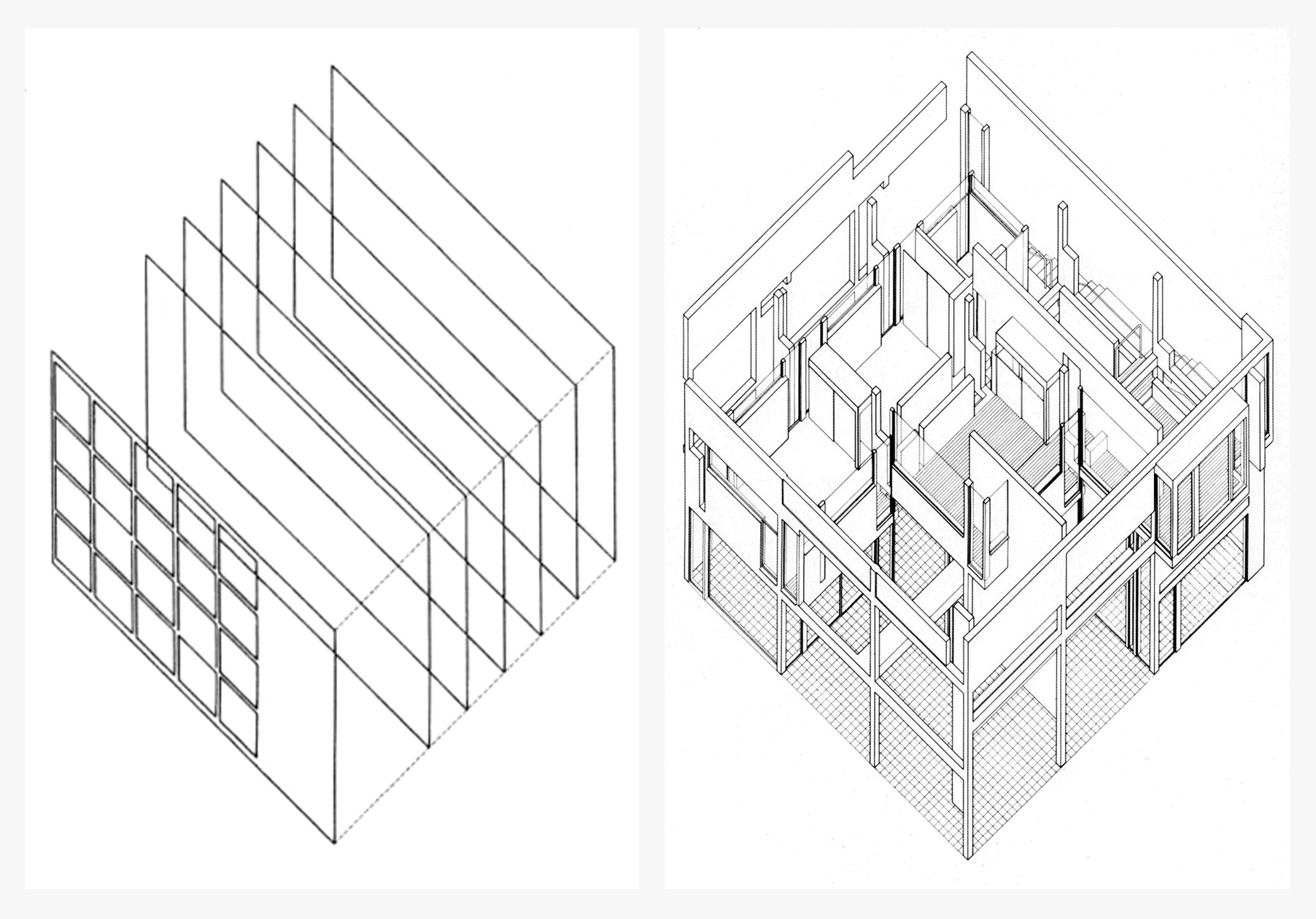
Giuseppe Terragni's infamous Casa Del Fascio (today casa del populi) built in 1935 as a symbol for the superiority of the rising fascist party shows mainly Terragnis superiority in comosing space with complexity and coherence. The balance of rules and exceptions and the impressive control of light fascinated architects and theorists (such as Peter Eisenman who analysed the building properly) for decades.
architecturality.files.wordpress.com/2010/10/terragni_eis...
The award-winning South Bank Grand Arbour is a kilometre long arbour located in the South Bank Parklands in Brisbane, Australia. The greening structure functions as a pedestrian walkway which connects the Griffith Film School and Vulture Street to the Cultural Forecourt adjacent to QPAC, as well as the rest of the South Bank Parklands through which it runs. The vertical gardens of the arbour have become a defining symbol of South Bank with its 443 curling, tendril-like columns of steel, each covered with a train of vibrant magenta bougainvillea plants.
The creative design of the arbour, by Melbourne-based architectural firm Denton Corker Marshall, glows with colour and atmospheric mood lighting in the evening. Dedicated staff trim the living walls of the bougainvillea weekly, to ensure the stunning architectural vertical garden weaves lush and vibrant through the parklands.
Denton Corker Marshall was commissioned to prepare a new urban masterplan for the former 20 hectare site of Brisbane Expo ’88, located on the south bank of the Brisbane River, looking north towards the city centre.
The objective was to integrate South Bank as a living part of the city and to re-engender its internal coherence. The masterplan focussed on the removal of its existing negative features to provide a large revitalised area including approximately 15 hectares of parklands and 5 hectares of street space and development parcels. The linear site divides naturally into three spines: a river spine, a park spine and a street spine.
The strategy was to fill in an existing canal and replace it with a grand arbour running the length of the site; reinstate Grey Street as a functional two-way street; build Little Stanley Street overlooking the parklands; open up other streets and vistas; and build a pedestrian bridge across the river.
Ronstan refined the specification with engineer, Aurecon, supplied the product and componentry and worked with our installers to realize the complex design. The client knew they could rely on our service and assistance accompanying materials. Not only did Ronstan supply material for this job, but we assisted with the design and specification of the arbour. A modified version of Ronstan’s AGSH single cable trellis system was chosen for its structural performance, refined aesthetics and longevity.
Source: Ronstan & Denton Corker Marshall.
Flora and Fauna
I started out writing all the apping down, then put it away and got sidetracked. Now, I seem to have lost the paper. I guess I just should have said the dog ate it.
So often Briar-Rose is with me when I'm out walking the neighborhood with my iPhone in my pocket. Stopping and snapping an image when I get a chance. The crows and ravens are wary of furry carnivores coming their way, taking flight, they'll land a safe distance away and caw their alerts to other corvids. I have an OlloClip telephoto lens, but I don't usually carry it on my short walks as the camera should be supported with a tripod. I'm glad I could use the crow capture in my composition and I probably would not have thought to do so, if I didn't already have the image in my iPhone.
From my memory: All shot with iPhone6. Edited on the iPad mini. The four quads of Brugmansia I shot in Hipstamatic and put together in Diptic. There's an abstract print, I shot in the Dr's office, in there as a layer, and then the layer with the palms and the crow. I did all the blending in iColorama. The crow was pixely because I zoomed way in while shooting on the iP. Coherence in iColorama smoothed it right out. Lot's of playing and fiddling in iC, used the smudge tool on the center divide and a galaxy preset from Light.
I did not look into the mirror.
I summoned it.
What you see is not a face,
but a remainder; a residue that refused deletion
when the world attempted to compress me into function.
The lens is not an eye.
It is a relic of judgment,
a cold halo recording the moment
where identity fails to fully load.
I stand here as a system error,
a misalignment between flesh and meaning.
The skin remembers names
that language was ordered to forget.
This body is not mine.
It is a temporary archive
where breath loops like corrupted code,
where silence runs background processes.
I have already been erased once; by rituals of normality,
by soft voices demanding coherence,
by light calibrated to flatter obedience.
What remains
is not rebellion,
but incompatibility.
The glasses do not clarify vision.
They frame the fracture.
They declare: this observer is compromised.
Behind the camera,
I amputate my reflection.
In front of it,
I let the void sign its name through me.
This image is not a self-portrait.
It is a forensic document
proving that something lived here
after meaning collapsed.
I do not ask to be seen.
I certify my disappearance.
And still; the witness persists.
The fresco decoration of the Hall of Justice of the fortress of Angera constitutes one of the main figurative testimonies of the development phase of the Gothic pictorial language in the Lombard territory; it also proposes a rare and early example of painting with profane themes, of historical-political and celebratory significance.
The room, on the second floor of the Visconti wing of the building, has a rectangular plan, divided into two parts by a pointed arch. The ceiling, formed by cross vaults, is covered by a lively decoration with geometric motifs, with squares and rounds interwoven to form a sort of sumptuous painted fabric. The six bays of the walls, illuminated by large windows with two lights, host the pictorial decoration, which is divided into three superimposed registers within large arches defined by ornamental borders with stylized stars and flowers: the narrative scenes, in the center, are surmounted by a high band with astrological-astronomical subjects, while the lowest register is formed by a lozenge decoration that supported an elegant painted veil, now almost completely disappeared.
The cycle narrates the deeds of Ottone Visconti, archbishop and lord of Milan from 1277 after the victory obtained in Desio over the opposing Torriani family. Since a long time, studies have linked the frescoes to a precise literary source, the Liber de gestis in civitate Mediolani, a work in praise of the Visconti family written by the monk Stefanardo da Vimercate probably in the last decade of the thirteenth century; the tituli that accompany the scenes are inspired by it, while other Latin inscriptions report, to complete the upper decorative band, some verses of the astrological treatise De Sphaera.
From a stylistic point of view, the author of the paintings shows a marked taste for the complex layout of the scenes, while neglecting the coherence of the figure-architecture relationship; the forms are simplified and the faces, lacking in individual characterization, derive strong consistency from the resentful linear definition and the thick dark outlines; these elements constitute an evident link with the thirteenth-century pictorial tradition of Byzantine matrix, probably filtered through the knowledge of works from the Veneto area. Moreover, the attention that will be typically Lombardy for the realistic definition of details or for the description of costumes is already present and alive.
The brilliant overall effect of the room is enhanced by the whirlwind of colors of the vault, a real explosion of chromatic happiness that finds immediate comparisons in the vault of S. Bassiano in Lodi Vecchio, also decorated with joyful secular subjects.
The representations of the planets and the signs of the zodiac are still linked to those astrological-astronomical themes that had an enormous development since the beginning of the Christian Middle Ages and in particular in the Romanesque period; connected to the scansion of time and of the different working activities - in particular agricultural and pastoral -, they had multiple ethical, civil and religious implications. Situated in the courtroom of the Rocca, the cycle must have had the value of an exemplum for those who were called to judge, through the underlining of motifs such as the clemency of the winner on the vanquished enemy or the subjection of earthly power to the stars and to Fortune, and with precise indications on the virtues that should accompany the exercise of power.
As for the dating of the paintings, critics have expressed themselves in various ways, with wide oscillations between 1277 of the battle of Desio and 1314, the year in which Matteo Visconti definitively acquired possession of the fortress after a period of domination by the Torriani and other families.
I would like to thank all of you who helped me to "edit" better one photograph so it fits well my photo series submission to "Lens Culture Exposure Awards 2015."
These are 6 final images I am thinking to submit. I am still wondering whether I should keep 6 or remove one of them (the fifth). Sequencing is very important and strength of each single photograph as well.
PLEASE, if you have any suggestions regarding it, write it in the comments.
I honestly read a lot, but will share just some advice from the Exposure Awards 2015 International Jury which I found in my inbox a moment ago:
“Put your best pictures up front—don’t try to tell a nuanced narrative/sequence here. It’s more about making a good first impression with killer photographs.”
— Denise Wolff, Senior Editor for Aperture New York, NY, USA
---
"Sequencing is best done physically. Print all the images. Lay all of them out on the floor or pin them on the wall...The physical process leads to new discoveries—an opportunity to see a new way of looking, of discovering what's possible."
— David Chickey, Publisher, Designer, Editorial Director for Radius Books, Santa Fe, New Mexico, USA
---
"Eavesdrop on the conversation amongst the best pictures. You'll find that what you thought you were doing and what you're really doing can be very different. If you look closely, the work tells you what it wants to be."
— Christopher Rauschenberg, Board Chair, Exhibition Committee for Blue Sky Gallery, Portland, Oregon, USA
---
"Be honest—about your passions, about your position, about what you have to say. Imagine that I'm walking down the street and you, a complete stranger, stop me. Before you do, think about why you are coming to me, why you are telling me this?”
— Cristina de Middel, Photographer & Curator, Uruapan, Mexico
---
“People want to read what's been done; they don't want to be told how to interpret the work. And they definitely don't want to be told airy, vague, art-speak. Keep it simple and let your images do most of the talking."
— Chris Littlewood, Photography Director for Flowers Gallery, London, New York, International Fairs
---
"I am looking at the coherence of the series, principally between the concept and the images themselves. Sometimes the first image is strong but not the rest. That's not enough. Remember, originality is important but the technical quality has to be there as well."
— Marion Hislen, Curator and Director for Circulation(s) Festival, Paris, France
---
"The bed-rock [of journalism] remains trust in your photographers to deliver telling and truthful images...Make sure you use your camera every day, whether you are commissioned or not."
— Roger Tooth, Head of Photography for The Guardian, London, UK
---
“From the beginning, it’s important to start with a very strong photo—one that grabs the viewer’s attention and forces him or her to stop and study the image, to read the caption, to want to see and learn more...you need to hook the viewer right away!”
— Jim Casper, Editor-in-Chief for LensCulture, Amsterdam, The Netherlands
And here more information about my submission.
---
First time in my life I decided to submit my work to a competition. I mean no one suggested it to me, although there was some "electronic" pressure: over 10 e-mails in my inbox so far from Lens Culture community advertising their Lens Culture Exposure Awards 2015: www.lensculture.com/
I'm going to enter a photo series category where I am allowed to submit up to 10 photographs. I've started working on my series only very recently, just after my exhibition was over. I've been going through a very hard time selecting images and their sequence in the photo series: "IN A GEOMETRY OF EVENTS" .
I would like to submit 5 or 6 works coming from two series I have already published:
1/ "The trembling living world will congeal into a perfect shape nearly geometrical"
The deadline is on Monday 21 st of December and still, I think my submission is not exactly the way it should be in order to be strong enough.
Thank you very much once again for all your precious input!
I promise once I'm done with this submission, I'll have some exciting news for you.
This is not a form.
It is a recursive refusal.
The forest did not grow it.
The wind did not summon it.
It arrived already rotating,
already forgetting its own origin.
A spiral of interrupted futures
stitched from metallic breath,
each blade a sentence cut short,
each curve a thought aborted
before language could betray it.
It turns without advancing.
It advances without movement.
Time fractures along its edges
like bone pressed against glass.
This is where myth collapses into protocol,
where ancient gods are rewritten
as unstable algorithms
running on roots and damp soil.
The trees lean away,
not in fear,
but in recognition.
They remember this shape
from a time before memory,
when reality was still optional
and matter had not yet agreed
to obey.
This helix is a machine
that does not produce,
does not calculate,
does not serve.
It erodes certainty.
It harvests doubt.
It feeds on the hesitation
between one second
and the next.
Stand too close
and your name will loosen.
Remain too long
and your past will lose coherence.
This is not an object.
It is a question
rotating faster than thought.
And the forest,
silent accomplice,
lets it spin.
My dog, Briar-Rose, dressed as Catrina de Dia los Muertos, contemplates Jack O' Lantern. Halloween Challenge
Briar-Rose image shot on iPhone 6
Apps: - Day of the Dead Me (Catrina make up), Hallows Eve (Jack), iColorama with Coherence, Flow, Tone Lab (for blends).
© All rights reserved.
Ich nehme alles zurück und behaupte das Gegenteil. Erst jetzt habe ich entdeckt, wie praktisch ein Notizbüchlein sein kann. An jedem erdenklichen Ort war es diese Woche mein Begleiter. Das Prüfungsergebnis hab' ich zwar noch nicht, aber es hat definitiv etwas gebracht (mal abgesehen, von den Fehlern die ich gemacht habe), das spüre ich :-)
Have a nice weekend ...
The award-winning South Bank Grand Arbour is a kilometre long arbour located in the South Bank Parklands in Brisbane, Australia. The greening structure functions as a pedestrian walkway which connects the Griffith Film School and Vulture Street to the Cultural Forecourt adjacent to QPAC, as well as the rest of the South Bank Parklands through which it runs. The vertical gardens of the arbour have become a defining symbol of South Bank with its 443 curling, tendril-like columns of steel, each covered with a train of vibrant magenta bougainvillea plants.
The creative design of the arbour, by Melbourne-based architectural firm Denton Corker Marshall, glows with colour and atmospheric mood lighting in the evening. Dedicated staff trim the living walls of the bougainvillea weekly, to ensure the stunning architectural vertical garden weaves lush and vibrant through the parklands.
Denton Corker Marshall was commissioned to prepare a new urban masterplan for the former 20 hectare site of Brisbane Expo ’88, located on the south bank of the Brisbane River, looking north towards the city centre.
The objective was to integrate South Bank as a living part of the city and to re-engender its internal coherence. The masterplan focussed on the removal of its existing negative features to provide a large revitalised area including approximately 15 hectares of parklands and 5 hectares of street space and development parcels. The linear site divides naturally into three spines: a river spine, a park spine and a street spine.
The strategy was to fill in an existing canal and replace it with a grand arbour running the length of the site; reinstate Grey Street as a functional two-way street; build Little Stanley Street overlooking the parklands; open up other streets and vistas; and build a pedestrian bridge across the river.
Ronstan refined the specification with engineer, Aurecon, supplied the product and componentry and worked with our installers to realize the complex design. The client knew they could rely on our service and assistance accompanying materials. Not only did Ronstan supply material for this job, but we assisted with the design and specification of the arbour. A modified version of Ronstan’s AGSH single cable trellis system was chosen for its structural performance, refined aesthetics and longevity.
Source: Ronstan & Denton Corker Marshall.
Amiens Cathedral, in the heart of Picardy, is one of the largest 'classic' Gothic churches of the 13th century. It is notable for the coherence of its plan, the beauty of its three-tier interior elevation and the particularly fine display of sculptures on the principal facade and in the south transept.
Nice est une ville du sud-est de la France, préfecture du département des Alpes-Maritimes et deuxième ville de la région Provence-Alpes-Côte d'Azur derrière Marseille. Située à l'extrémité sud-est de la France, à une trentaine de kilomètres de la frontière italienne, elle est établie sur les bords de la mer Méditerranée, le long de la baie des Anges et à l'embouchure du Paillon.
Avec 344 875 habitants en 20081, elle est la cinquième commune de France en termes de population (après Paris, Marseille, Lyon et Toulouse). Son agglomération est également la cinquième de France (après Paris, Marseille, Lyon et Lille) et regroupe 946 630 habitants (2007)2. Elle est enfin située au cœur d'une aire urbaine de 999 678 habitants (2007)3 et d'un espace urbain, l' « espace urbain Nice-Côte-d'Azur » qui compte une population de 1 293 381 habitants (2007)4. La ville est le centre d'une communauté urbaine, Nice Côte d'Azur, la septième de France, qui rassemble vingt-sept communes et 535 543 habitants5. Le Scot de Nice (Schéma de cohérence territoriale), créé en 2003, regroupe vingt-neuf communes. Sa population est estimée à 517 500 habitants en 20056.
Située entre mer et montagnes, capitale économique de la Côte d'Azur, Nice bénéficie d'importants atouts naturels. Le tourisme, le commerce et les administrations (publiques ou privées) occupent une place importante dans l'activité économique de la ville. Elle possède la deuxième capacité hôtelière du pays7 et accueille chaque année 4 millions de touristes8. Elle dispose également du troisième aéroport de France9,10 et de deux palais des congrès dédiés au tourisme d'affaires. La ville possède aussi une université et plusieurs quartiers d'affaires. Nice est enfin dotée de certains équipements culturels importants. Elle possède ainsi plusieurs musées, un théâtre national, un opéra, une bibliothèque à vocation régionale, un conservatoire à rayonnement régional et des salles de concert.
Capitale historique du comté de Nice, elle a appartenu à la Provence avant de rejoindre la Maison de Savoie en 1388 et plus tard le royaume de Piémont-Sardaigne. Nice ne devint définitivement française qu'en 1860. Ses habitants s'appellent les Niçois(es).
____________
Nice é uma cidade francesa, situada no departamento francês dos Alpes Marítimos e na região de Provença-Alpes-Costa Azul. Nice conta com 347.900 habitantes (2005) e sua área metropolitana tem 968.903 habitantes (2007). Depois do Congresso de Viena (1815), voltou a fazer parte do reino da Sardenha, um dos que formaram a Itália moderna. Foi definitivamente anexada à França em 1860, por meio do tratado de Villafranca.
Algumas placas indicam, além da forma francesa Nice, a forma provençal Nissa. A origem do nome vem do grego Nikaia - vitoriosa - e a versão latina é Nicæa.
_____________
Nice is the fifth most populous city in France, after Paris, Marseille, Lyon and Toulouse, with a population of 348,721 within its administrative limits on a land area of 71.92 km2 (28 sq mi). The urban area of Nice extends beyond the administrative city limits with a population of over 955,000[1] on an area of 721 km2 (278 sq mi). Located on the south east coast of France on the Mediterranean Sea, Nice is second largest French city on the Mediterranean coast.
The city is nicknamed Nice la Belle (Nissa la Bella in Niçard), which means Nice the Beautiful. Nice is the capital city of the Alpes Maritimes department, and the second biggest city of the Region Provence-Alpes-Côte d'Azur after Marseille.
The area of today’s Nice is believed to be among the oldest human settlements in Europe. One of the archaeological sites, Terra Amata, displays evidence of a very early usage of fire. Around 350 BCE, Greeks of Marseille founded a permanent settlement and called it Nikaia, after Nike, the goddess of victory.[2]
Throughout the ages the town changed hands many times. Its strategic location and port significantly contributed to its maritime strength. For years, it was an Italian dominion, then became part of France in 1860. Culturally and architecturally enriched over time, today Nice has become a truly cosmopolitan tourist destination.[3] The spectacular natural beauty of the Nice area and its mild Mediterranean climate came to the attention of the English upper classes in the second half of the 18th century, when an increasing number of aristocratic families took to spending their winter there. The city’s main seaside promenade, the Promenade des Anglais (‘the Walkway of the English’) owes its name to the earliest visitors to the resort.[4] For decades now, the picturesque Nicean surroundings have attracted not only those in search of relaxation, but also those seeking inspiration. The clear air and soft light has been of particular appeal to some of Western culture’s most outstanding painters, such as Marc Chagall, Henri Matisse, Niki de Saint Phalle and Arman. Their work is commemorated in many of the city’s museums, including Musée Marc Chagall, Musée Matisse and Musée des Beaux-Arts Jules Chéret.[5] The climate and landscape are still what attracts most visitors today. It has the second largest hotel capacity in the country[6] and it’s the second-most visited place in France after Paris, receiving 4 million tourists every year.[7] It also has the second busiest airport in France after Paris[8] and two convention centers dedicated to business tourism. The city also has a university, several business districts and some major cultural facilities, such as museums, a national theater, an opera house with a regional library and several concert halls and casinos. It is the historical capital city of the County of Nice (Comté de Nice).
Nice experiences a Mediterranean climate. The summer's/holiday season lasts for 6 months, from May to October, although also in April and November sometimes there are temperatures above 20 °C (68 °F). Winters are mild, with average temperatures of 13.4 °C (56.1 °F) during the day and 5.8 °C (42.4 °F) at night in the period from December to February.
These new experiments have come from the first 3 years if work with drawings and the camera.
I have found that certain materials are very difficult to combine so that there is some sort of coherence. Often it just looks like strips of coloured paper, or paper and glass separate but there is no unity. Metal is very hard to incorporate with other materials such as fabric or paper. These attempts became more frequent towards the end of May of this year and so I have settled into the challenge to see what can come of it. The first 6 intersections are what I consider to be the most successful so far and I hope are not the last.