View allAll Photos Tagged Attribute
In the Marina district is the monumental church of St. Sepulchre. According to some news, the building would be attributed to the Knights Templar, who would have built as a chapel of their monastery.
most credible hypothesis, they would find the foundation in the sixteenth century when it was founded the Confraternity of the Holy Crucifix Prayer and Death. The crypt was used as a cemetery and the Brotherhood took care to bury the poorest people.
In the nineteenth century, the area lost its function and became a square. During the restoration of the Collegiate Sant'Eulaia, San Sepulchre became the parish church of the neighborhood. In the postwar years he was home to the Carmelites. After being closed for renovation, the church was inaugurated by the archbishop of Cagliari, in December 1998.
_________________________________________
Nel quartiere Marina c’è la chiesa monumentale di San Sepolcro. Secondo alcune notizie, l’edificio sarebbe da ricondursi ai Cavalieri Templari, che l’avrebbero costruito come cappella del loro monastero.
Ipotesi più accreditate ne vedrebbero la fondazione nel XVI secolo quando venne fondata la Confraternita del Santissimo Crocifisso dell’Orazione e della Morte. La cripta veniva utilizzata come cimitero e la Confraternita si occupava di dare sepoltura alle persone più povere.
Nel XIX secolo, l’area perse la sua funzione e diventò una piazza. Durante i lavori di restauro della Colleggiata di Sant’Eulaia, San Sepolcro diventò la chiesa parrocchiale del quartiere. Negli anni del dopo guerra ospitò i Carmelitani. Dopo essere stata chiusa per lavori di restauro, la chiesa venne inaugurata dall’arcivescovo di Cagliari, nel dicembre del 1998.
Erroneously attributed to Banksy on discovery, this piece of street art created in reaction to Brexit was later found to be the work of Weston's JPS
Ruins of the Ancient Greek Theatre at Taormina, 1905, Hungarian National Gallery, Budapest
Tivadar Csontváry Kosztka (1853 – 1919), the Hungarian painter loved by Picasso.
"Csontváry’s works were exhibited in Paris in 1948. Picasso spent an hour outside the exhibition’s regular opening hours viewing them, and after emerging, declared “I did not realize there was another great painter in this century aside from myself.”
Csontváry probably would have taken issue with Picasso’s proclamation, arguing that he was a more significant painter even than Raphael."
"On the hot sunny afternoon of 13 October 1880, when Csontvary was 27 years old, he had a mystic vision. He heard a voice saying, 'You will be the greatest Sunway Painter, greater than Raphael!' He took journeys around Europe, visited the galleries of the Vatican, and returned to Hungary to earn money for his journeys by working as an apothecary. From 1890, he traveled around the world. He visited Paris, the Mediterraneum (Dalmatia, Italy, Greece), North Africa and the Middle East (Lebanon, Palestine, Egypt, Syria) and painted pictures. Often his pictures are very large, several metres wide and height is not unusual."
"In recent decades, Tivadar Kosztka Csontváry has become a true national hero. After all, he has all the necessary attributes: he was only celebrated after his time, his canon of work is not only spectacular, but also unique, and his contemporaries in Hungarian society treated him as all future national heroes were: he was mocked and humiliated.
He painted his major works between 1901 and 1909. He had some exhibitions in Paris (1907) and Western Europe. Most of the critics in Western Europe recognized his abilities, art and congeniality, but in the Kingdom of Hungary during his life, he was considered to be an eccentric crank for several reasons, e. g. for his vegetarianism, anti-alcoholism, anti-smoking, pacifism, and his cloudy, prophetic writings and pamphlets about his life (Curriculum), genius (The Authority, The Genius) and religious philosophy (The Positivum). Some of his biographists considered this as a latent, but increasingly disruptive schizophrenia. Although he was later acclaimed, during his lifetime Csontváry found little understanding for his visionary, expressionistic style. A loner by nature, his “failure” impaired his creative power.
His art connects with post-impressionism and expressionism, but he was an autodidact and cannot be classified into one style. He identified as a "sunway"-painter, a term which he created.
The painter, after being derided for decades, ended up starving to death after the Soviet Republic took everything away from him.
He starved to death.
To give us an idea of how his life’s work was rated at the time, his heirs attempted to sell the paintings to delivery men as they were painted on high-quality canvas. Were it not for Gedeon Gerlóczy, who recognized Csontváry’s genius and bought them all up, there would be no paintings surviving to this day.
Today, a Csontváry is worth millions of Euros."
en.wikipedia.org/wiki/Tivadar_Csontv%C3%A1ry_Kosztka
bestbudapest.blog.hu/2015/07/22/csontvary_the_hungarian_p...
Attributed to L.W. Cushing and Sons
Medium: gilt copper
Intricate works like this grasshopper were made in a factory setting by skilled craftsmen. Much of the manufacturing process involved work done by hand, from the initial carving of a multipart mold for the metal to the addition of fine details found on the legs, wings, and antennae of the insect. The manufacturer offered weather vanes through illustrated mail-order catalogs, allowing people to customize and purchase them for farms, homes and public buildings.
Toledo Museum of Art, Toledo, Ohio
DSCF8867
giardini dall'alto
The Villa di Vicobello, attributed to Baldassarre Peruzzi, is located at the top of a hill overlooking Siena, and is one of the most beautiful examples of a Renaissance residence, which has always belonged to the Chigi- Zondadari family.
Surrounded by a wonderful park that represents a perfect model of an Italian garden, the residence acquires a unique importance.
De Villa di Vicobello, toegeschreven aan Baldassarre Peruzzi, bevindt zich op de top van een heuvel die uitkijkt over Siena en is één van de mooiste voorbeelden van een renaissancistisch verblijf, dat altijd heeft toebehoord aan de familie Chigi-Zondadari.
Omringd door een prachtig park dat een perfect model is van een Italiaanse tuin, krijgt de residentie een unieke betekenis.
^^^^^^^^^^^^^^^^^^^^^^^^^^^^^^^^^^^^^^^^^^^^
“To an ignorant lady, she wants to look attractive and beautiful while some conscienceless men prey on That Beauty…”
― Attributed: Sunday Adelaja
“The hunter is patient. The prey is careless.”
― Jeff Wheeler, The Blight of Muirwood
^^^^^^^^^^^^^^^^^^^^^^^^^^^^^^^^^^^^^^
An Excerpt from “Lucidity”
We both had become bored, and that is pretty much the reason in it’s entirety of why we snuck off….
It was pitch black outside as we made our way from the outdoor wedding reception we had been attending.
Entering the woods, we started down a well worn white stone path, our eyes quickly adjusting so that what had at first appeared to be an inky blackness, soon became a very real, very surreal, world of shadows and misty shapes.
We suddenly found ourselves by a small narrow clearing, and my sister looking down the hill, saw the playground, a distance off through the woods.
My sister grasped my arm, there it is, let’s go over she whispered, not wishing to totally break the silence.!
Her long rhinestone earrings, swinging along from her earlobes, were dancing in and out of her hair as she pleaded to me.
Observing her sparkling jewels, I held my thoughts in check. Maybe the playground would offer up some entertaining possibilities?!
Even though the path did not go that way, we soon spied a well-used route, not stoned over like the one we were currently following, but unmistakable a short cut through to the playground.
I pointed it out and She happily took the path, heading off to the playground and all its assorted attractions.
I slowed down, letting my sister get to wondering a bit ahead, pretending in my mind of being someone with a devious intent on the ( in my mind, real) jewels that were dangling and sparkling along this fetching lass clad in a shiny gown that swished and swirled about her figure in a rather enchanting fashion.
My sister soon took a turn ahead of me on the path, disappearing around a corner.
Further down, at the edge of the playground, I saw a bench across the path facing a cupid like statue. Behind the bench was the large trunk of a rather ancient tree.
As I reached it, I slipped in behind the trunk to hide .
Spying a short knobby stick at my feet, I picked it up…may come in handy I thought a bit wickedly as I prepared to play at being Robin Hood!
Soon I heard her call my name, then silence, except for the swishing of her long gown as she quickly came back up the path. From a hole in a large bush, I could see was looking side to side, her jewels sparkling nicely,rather invitingly. Like in a noir film movie, where the richly decked out heroine was walking out alone, unprotected, who was in sinister danger of losing her valuables, ….. a loss of jewels Like this one was about to encounter!
I waited for her to innocently pass me by, as I lurked back from her sight in the shadows of my tree.
She suddenly stopped, catching a stone in one of her heels.
She limped over to the bench and stooping over pulled off the offending heel and shook it.
I dropped the knobby stick, smelling a new opportunity that was ripe for the picking..
I slipped out ,quiet as a church mouse, and snuck up behind her on the heels of my feet.
Reaching my intended victim without any notice, I held my hands over her eyes.
She immediately straightened up, I could feel her figure freezing rigid.
I could also feel her long earrings under my palms as I held my fingers over her eyes.
I bent over and said in her ear, ” guess who lass?” as I eyed up close several of my objectives just dangling there with no care in the world.
After I spoke, I started pulling my hands from her eyes, and lifted back her hair with my thumbs, while resting my fingers gently upon her earlobes. Both of her earrings dangling coolly from out underneath..!
Suddenly, with a giggle, my twin jumped up and ran off ahead, disappearing down into the misty shadows of the playground.
I waited a few long minutes, giving more then time enough to let her get a head start.
Reaching the stairs that led down in what we called “The Playground” I looked over the many object’s half laying in the shadows….
As my eyes went along to each of the pieces, strewn about like chessman on grass filled nightmarish board, I wickedly thought of the enticing games each could playout.
The was no sign of my twin sister, whom I knew was lurking in the area, watching me from the hiding place she had fled too, as she tried to control her rasping breath….
Just then lightening flashed from a still far off storm.
An Interesting twist to tonight’s contention, I thought ….as the crackling thunder permeated the area, it was agin lit up with a flickering demand…
^^^^^
I then slowly made my way down, my feet silent on the moss-covered brick stairs, the hunter in search of the glittering prey he had sighted….
Kenroku-en (兼六園, Six Attributes Garden), located in Kanazawa, Ishikawa, Japan, is an old private garden. Along with Kairaku-en and Kōraku-en, Kenroku-en is one of the Three Great Gardens of Japan.
Kenroku-en was developed from the 1620s to the 1840s by the Maeda clan, the daimyōs who ruled the former Kaga Domain.
While the date of initial development of the garden that would be become known as Kenroku-en is rather unclear, one version of the garden's origins can perhaps be marked by the completion of the Tatsumi water channel in 1632 by Maeda Toshitsune,[2] the third daimyō of the powerful Maeda clan and ruler of the Kaga Domain from 1605 to 1639, as this feature would be later incorporated into creating the garden's twisting waterways in 1822.
The garden is located outside the gates of Kanazawa Castle where it originally formed the outer garden, and covers 114,436.65 m² (over 25 acres). It began in 1676 when the 5th daimyō Maeda Tsunanori moved his administration to the castle and began to landscape a garden in this vicinity. This garden was, however, destroyed by fire in 1759.
The garden was named by Matsudaira Sadanobu at the request of Narinaga. Its name was derived from the "Chronicles of the Famous Luoyang Gardens" (洛陽名園記), a book by the Chinese poet Li Gefei (李格非), and stands for the six attributes of a perfect landscape: spaciousness, seclusion, artifice, antiquity, waterways, and panoramas.
AND20+15 D16* Kanazawa@Japan
Kenroku-en (兼六園, Six Attributes Garden), located in Kanazawa, Ishikawa, Japan, is an old private garden. Along with Kairaku-en and Koraku-en, Kenroku-en is one of the Three Great Gardens of Japan. The garden was named by Matsudaira Sadanobu at the request of Narinaga. Its name was derived from the "Chronicles of the Famous Luoyang Gardens" (洛陽名園記), a book by the Chinese poet Li Gefei (李格非), and stands for the six attributes of a perfect landscape: spaciousness, seclusion, artifice, antiquity, waterways, and panoramas.
Please don't use this image on websites, blogs or other media without my explicit permission.
© All rights reserved
en.wikipedia.org/wiki/York_Minster
The Cathedral and Metropolitical Church of Saint Peter in York, commonly known as York Minster, is the cathedral of York, England, and is one of the largest of its kind in Northern Europe. The minster is the seat of the Archbishop of York, the second-highest office of the Church of England, and is the cathedral for the Diocese of York. It is run by a dean and chapter, under the Dean of York. The title "minster" is attributed to churches established in the Anglo-Saxon period as missionary teaching churches, and serves now as an honorific title.[1] Services in the minster are sometimes regarded as on the High Church or Anglo-Catholic end of the Anglican continuum.[2]
The minster has a very wide Decorated Gothic nave and chapter house, a Perpendicular Gothic Quire and east end and Early English North and South transepts. The nave contains the West Window, constructed in 1338, and over the Lady Chapel in the east end is the Great East Window, (finished in 1408), the largest expanse of medieval stained glass in the world. In the north transept is the Five Sisters Window, each lancet being over 52 feet (16 m) high.[citation needed] The south transept contains a rose window, while the West Window contains a heart-shaped design colloquially known as 'The Heart of Yorkshire'.
History
York has had a verifiable Christian presence from the 4th century. However, there is circumstantial evidence pointing to much earlier Christian involvement. According to Bede, missionaries were sent from Rome by Eleutherius at the request of the chieftain Lucius of Britain in AD 180 to settle controverted points of differences as to Eastern and Western ceremonials which were disturbing the church. Tradition speaks of 28 British bishops, one for each of the greater British cities, over whom presided the Archbishops of London, York and Caerleon-on-Usk.
The first recorded church on the site was a wooden structure built hurriedly in 627 to provide a place to baptise Edwin, King of Northumbria. Moves toward a more substantial building began in the decade of the 630s. A stone structure was completed in 637 by Oswald and was dedicated to Saint Peter. The church soon fell into disrepair and was dilapidated by 670 when Saint Wilfrid ascended to the See of York. He repaired and renewed the structure. The attached school and library were established and by the 8th century were some of the most substantial in Northern Europe.[citation needed][3]
In 741 the church was destroyed in a fire. It was rebuilt as a more impressive structure containing thirty altars. The church and the entire area then passed through the hands of numerous invaders, and its history is obscure until the 10th century. There was a series of Benedictine archbishops, including Saint Oswald of Worcester, Wulfstan and Ealdred, who travelled to Westminster to crown William in 1066. Ealdred died in 1069 and was buried in the church.[4]
The church was damaged in 1069 during William the Conqueror's harrying of the North, but the first Norman archbishop, Thomas of Bayeux, arriving in 1070, organised repairs. The Danes destroyed the church in 1075, but it was again rebuilt from 1080. Built in the Norman style, it was 111 m (364.173 ft) long and rendered in white and red lines. The new structure was damaged by fire in 1137 but was soon repaired. The choir and crypt were remodelled in 1154, and a new chapel was built, all in the Norman style.
The Gothic style in cathedrals had arrived in the mid 12th century. Walter de Gray was made archbishop in 1215 and ordered the construction of a Gothic structure to compare to Canterbury; building began in 1220. The north and south transepts were the first new structures; completed in the 1250s, both were built in the Early English Gothic style but had markedly different wall elevations. A substantial central tower was also completed, with a wooden spire. Building continued into the 15th century.
The Chapter House was begun in the 1260s and was completed before 1296. The wide nave was constructed from the 1280s on the Norman foundations. The outer roof was completed in the 1330s, but the vaulting was not finished until 1360. Construction then moved on to the eastern arm and chapels, with the last Norman structure, the choir, being demolished in the 1390s. Work here finished around 1405. In 1407 the central tower collapsed; the piers were then reinforced, and a new tower was built from 1420. The western towers were added between 1433 and 1472. The cathedral was declared complete and consecrated in 1472.[5]
The nave of York Minster
The English Reformation led to the looting of much of the cathedral's treasures and the loss of much of the church lands. Under Elizabeth I there was a concerted effort to remove all traces of Roman Catholicism from the cathedral; there was much destruction of tombs, windows and altars. In the English Civil War the city was besieged and fell to the forces of Cromwell in 1644, but Thomas Fairfax prevented any further damage to the cathedral.
Following the easing of religious tensions there was some work to restore the cathedral. From 1730 to 1736 the whole floor of the minster was relaid in patterned marble and from 1802 there was a major restoration. However, on 2 February 1829, an arson attack by a non-conformist, Jonathan Martin,[6] inflicted heavy damage on the east arm. An accidental fire in 1840 left the nave, south west tower and south aisle roofless and blackened shells. The cathedral slumped deeply into debt and in the 1850s services were suspended. From 1858 Augustus Duncombe worked successfully to revive the cathedral.
During the 20th century there was more concerted preservation work, especially following a 1967 survey that revealed the building, in particular the central tower, was close to collapse. £2,000,000 was raised and spent by 1972 to reinforce and strengthen the building foundations and roof. During the excavations that were carried out, remains of the north corner of the Roman Principia (headquarters of the Roman fort, Eboracum) were found under the south transept. This area, as well as remains of the Norman cathedral, re-opened to the public in spring 2013 as part of the new exhibition exploring the history of the building of York Minster.[7]
On 9 July 1984, a fire believed to have been caused by a lightning strike[8] destroyed the roof in the south transept, and around £2.5 million was spent on repairs. The fire was photographed from just south of the minster in the early hours by Bettison photographers. This picture was subsequently published showing the South transept alight with a list of North Yorkshire firefighters attending. The stations attending ranged from Scarborough to Harrogate. Huge amounts of water were needed to provide jets at great height to hit the roof timbers and protect the Rose Window. Most of the water was pumped from the Ouse nearby because the water supplies around the minster were inadequate. Fire crews from the main York fire station in Clifford Street worked hard to protect the Rose Window and stop the fire spreading into the tower and organ. Many crews worked for hours and some were on high levels of the minster at the time when the South transept roof fell in. Luckily, those few firefighters inside when the roof crashed down were not directly beneath. But what they saw after the ventilation released the smoke, was a pile of timber covering the whole of the south transept floor to a height of at least six feet. When daylight came the whole scene was occupied by media. At about 8am an officer was approached by two ladies looking for information. "Have you an account for The Times"? They said. The officer replied, "Actually, I spoke to the London and New York Times at about four thirty" The ladies then announced that they were from the Church Times. Reports of the fire travelled across both hemispheres. The Restoration work was completed in 1988, and included new roof bosses to designs which had won a competition organised by BBC Television's Blue Peter programme. In 2007 renovation began on the east front, including the Great East Window, at an estimated cost of £23 million.[9][10]
In 2000, the Dean and Chapter allowed the York Mystery Plays to be performed for the first time inside the Minster, directed by Greg Doran.[11]
Architecture of the present building
York Minster is the second largest Gothic cathedral of Northern Europe and clearly charts the development of English Gothic architecture from Early English through to the Perpendicular Period. The present building was begun in about 1230 and completed in 1472. It has a cruciform plan with an octagonal chapter house attached to the north transept, a central tower and two towers at the west front. The stone used for the building is magnesian limestone, a creamy-white coloured rock that was quarried in nearby Tadcaster. The Minster is 173 yards (158 m) long[citation needed] and the central tower has a height of 230 feet (70 m) high.[citation needed] The choir has an interior height of 102 feet (31 m).[citation needed]
The north and south transepts were the first parts of the new church to be built. They have simple lancet windows, including the Five Sisters in the north transept. These are five lancets, each 52 feet (16 m) high[citation needed] and glazed with grey (grisaille) glass, rather than narrative scenes or symbolic motifs that are usually seen in medieval stained glass windows. In the south transept is a rose window whose glass dates from about 1500 and commemorates the union of the royal houses of York and Lancaster. The roofs of the transepts are of wood, that of the south transept was burnt in the fire of 1984 and was replaced in the restoration work which was completed in 1988. New designs were used for the bosses, five of which were designed by winners of a competition organised by the BBC's Blue Peter television programme.
The chapter house.
Work began on the chapter house and its vestibule that links it to the north transept after the transepts were completed. The style of the chapter house is of the early Decorated Period where geometric patterns were used in the tracery of the windows, which were wider than those of early styles. However, the work was completed before the appearance of the ogee curve, an S-shaped double curve which was extensively used at the end of this period. The windows cover almost all of the upper wall space, filling the chapter house with light. The chapter house is octagonal, as is the case in many cathedrals, but is notable in that it has no central column supporting the roof. The wooden roof, which was of an innovative design, is light enough to be able to be supported by the buttressed walls. The chapter house has many sculptured heads above the canopies, representing some of the finest Gothic sculpture in the country. There are human heads, no two alike, and some pulling faces; angels; animals and grotesques. Unique to the transepts and chapter house is the use of Purbeck marble to adorn the piers, adding to the richness of decoration.
The Kings Screen and organ.
The nave was built between 1291 and c. 1350 and is also in the decorated Gothic style. It is the widest Gothic nave in England and has a wooden roof (painted so as to appear like stone) and the aisles have vaulted stone roofs. At its west end is the Great West Window, known as the 'Heart of Yorkshire' which features flowing tracery of the later decorated gothic period.
The east end of the Minster was built between 1361 and 1405 in the Perpendicular Gothic style. Despite the change in style, noticeable in details such as the tracery and capitals, the eastern arm preserves the pattern of the nave. The east end contains a four bay choir; a second set of transepts, projecting only above half-height; and the Lady Chapel. The transepts are in line with the high altar and serve to throw light onto it. Behind the high altar is the Great East Window, the largest expanse of medieval stained glass in the world, which is currently undergoing a massive conservation project, due to be completed in 2015–16. Below the Great East Window currently sits the Orb, a stainless steel dome which opened at the end of October 2012, containing five of the conserved panels from the window, one of which is changed each month. The Orb enables visitors to see the work of renowned medieval artist, John Thornton, up close, revealing the remarkable detail in each panel.
The sparsely decorated Central Tower was built between 1407 and 1472 and is also in the Perpendicular style. Below this, separating the choir from the crossing and nave is the striking 15th century choir screen. It contains sculptures of the kings of England from William the Conqueror to Henry VI with stone and gilded canopies set against a red background. Above the screen is the organ, which dates from 1832. The West Towers, in contrast with the Central Tower, are heavily decorated and are topped with battlements and eight pinnacles each, again in the Perpendicular style.
English Heritage has recently made publicly available a monograph[12] on the architectural history of York Minster. The book charts the construction and development of the minster based on the architectural recording of the building from the 1970s. The full report can be downloaded from the Archaeology Data Service website.
Stained glass
York as a whole, and particularly the minster, have a long tradition of creating beautiful stained glass. Some of the stained glass in York Minster dates back to the 12th century. The Minster's records show that much of the glass (white or coloured) came from Germany.[13] Upon arrival at York, it was intricately painted, fired, then glazed together with lead strips into the windows. The 76-foot (23 m)[citation needed] tall Great East Window, created by John Thornton in the early 15th century, is the largest expanse of medieval stained glass in the world. Other windows in the minster include an ornate rose window and the 50-foot (15 m)[citation needed] tall Five Sisters window. Because of the extended time periods during which the glass was installed, different types of glazing and painting techniques which evolved over hundreds of years are visible in the different windows. Approximately two million individual pieces of glass make up the cathedral's 128 stained glass windows. Much of the glass was removed before and pieced back together after the First and Second World Wars, and the windows are constantly being cleaned and conserved to keep their beauty intact.
In 2008 a major conservation project of the Great East Window commenced, involving the removal, repainting and re-leading of each individual panel.[14] While the window was in storage in the minster's stonemasons' yard, a fire broke out in some adjoining offices, due to an electrical fault, on 30 December 2009.[15] The window's 311 panes, stored in a neighbouring room, were undamaged and were successfully moved to safety.[16][17] In September 2015 Phase One of the renovation project of the East Front of the Minster was completed.[18]
Towers and bells
The two west towers of the minster hold bells, clock chimes and a concert carillon. The north-west tower contains Great Peter (216 cwt or 10.8 tons) and the six clock bells (the largest weighing just over 60 cwt or 3 tons). The south-west tower holds 14 bells (tenor 59 cwt or 3 tons) hung and rung for change ringing and 22 carillon bells (tenor 23 cwt or 1.2 tons) which are played from a baton keyboard in the ringing chamber (all together 35 bells.)
The clock bells ring every quarter of an hour during the daytime and Great Peter strikes the hour. The change ringing bells are rung regularly on Sundays before church services and at other occasions, the ringers practise on Tuesday evenings. York Minster became the first cathedral in England to have a carillon of bells with the arrival of a further twenty-four small bells on 4 April 2008. These are added to the existing "Nelson Chime" which is chimed to announce Evensong around 5.00 pm each day, giving a carillon of 35 bells in total (three chromatic octaves). The new bells were cast at the Loughborough Bell Foundry of Taylors, Eayre & Smith, where all of the existing minster bells were cast. The new carillon is a gift to the minster. It will be the first new carillon in the British Isles for 40 years and first hand played carillon in an English cathedral. Before Evensong each evening, hymn tunes are played on a baton keyboard connected with the bells, but occasionally anything from Beethoven to the Beatles may be heard.[19]
Shrines
When Thomas Becket was murdered and subsequently enshrined at Canterbury, York found itself with a rival major draw for pilgrims. More specifically, pilgrims spent money and would leave gifts for the support of the cathedral. Hence Walter de Gray, supported by the King, petitioned the Pope. On 18 March 1226, Pope Honorius issued a letter to the effect that the name of William (Fitzherbert), formerly Archbishop of York, was "inscribed in the catalogue of the Saints of the Church Militant." Thus there was now St William of York (whose name is perhaps more often associated with the adjacent St William's College). York had its saint but it took until 1279, when William de Wickwane (William de Wykewayne) was elected archbishop, for the remains of the canonised William to be transferred to a shrine prepared for them behind the high altar.[20] This was placed on a platform raised upon the arches of the crypt removed to this position for that purpose. On 29 December King Edward I himself, together with the bishops who were present, carried on their shoulder the chest or feretory containing the relics to their new resting-place and Anthony Beck, consecrated the same day as Bishop of Durham, paid all the expenses.
The tomb of Walter de Gray was erected in the south transept. His remains were interred on "the vigil of Pentecost, 1255"[20] under his effigy "in full canonicals" carved in Purbeck marble under a canopy resting on ten light pillars. It was subsequently somewhat hidden behind a screen of ironwork erected by Archbishop William Markham in the early 19th century.
Organ
The choir
The fire of 1829 destroyed the organ and the basis of the present organ dates from 1832, when Elliot and Hill constructed a new instrument. This organ was reconstructed in 1859 by William Hill and Sons. The case remained intact, but the organ was mechanically new, retaining the largest pipes of the former instrument.
In 1903, J.W. Walker and Sons built a new instrument in the same case. They retained several registers from the previous instrument.
Some work was undertaken in 1918 by Harrison & Harrison when the Tuba Mirabilis was added and the Great chorus revised. The same firm rebuilt this Walker-Harrison instrument in 1931 when a new console and electro-pneumatic action were added together with four new stops. The smaller solo tubas were enclosed in the solo box. In 1960, J.W. Walker & Sons restored the actions, lowered wind pressures and introduced mutations and higher chorus work in the spirit of the neo-classical movement. They cleaned the organ in 1982.
The fire of 1984 affected the organ but not irreparably; the damage hastened the time for a major restoration, which was begun in 1991 and finished two years later by Principal Pipe Organs of York, under the direction of their founder, Geoffrey Coffin, who had at one time been assistant organist at the Minster.[21]
Organists
The organists of York Minster have had several official titles, the job description roughly equates to that of Organist and Master of the Choristers. The current Organist and Director of Music of the minster is Robert Sharpe. There is also an assistant director of music, David Pipe, and an organ scholar.
Among the notable organists of York Minster are four members of the Camidge family, who served as the cathedral's organists for over 100 years, and a number of composers including John Naylor, T. Tertius Noble, Edward Bairstow, Francis Jackson, and Philip Moore.
Dean and chapter
Dean: The Very Revd Vivienne Faull (since 1 December 2012 installation[22])
Precentor: The Revd Canon Peter Moger (since 12 September 2010 installation[23])
Pastor: The Reverend Michael Smith
Chancellor: The Reverend Canon Christopher Collingwood
Archdeacon: The Reverend Canon David Butterfield
Burials
Bosa of York, Bishop of York and Saint (died c. 705)
Eanbald I, Archbishop (780–796)
Osbald, King of Northumbria (died 799)
Ealdred (archbishop of York) (1061–1069)
Thomas of Bayeux, Archbishop (1070–1100)
Gerard, Archbishop (1100–1108)
Thomas II of York, Archbishop (1108–1114)
William of York, Archbishop (1141–1147, 1153–1154)
Henry Murdac, Archbishop (1147–1153)
Roger de Pont L'Eveque, Archbishop {1154–1181}
Walter de Gray, Archbishop (1216–1255)
Sewal de Bovil, Dean and Archbishop (1256–1258)
Godfrey Ludham, Archbishop (1258–1265)
William Langton, Archbishop (1265)
Walter Giffard, Archbishop (1266–1279)
John le Romeyn, Archbishop (1286–1296)
Henry of Newark, Archbishop (1296–1299)
William Greenfield, Archbishop (1306–1315)
Prince William of Hatfield, Infant son of Edward III (1337)
William Melton, Archbishop (1317–1340)
William Zouche, Archbishop (1342–1352)
Henry Percy, soldier (1364–1403)
Richard le Scrope, Archbishop (1398–1405)
Henry Bowet, Archbishop (1407–1423)
Thomas Savage, Archbishop (1501–1507)
Hugh Ashton, Archdeacon of York (died 1522)
John Piers, Archbishop (1589–1594)
George Meriton, Dean of York (1579–1624)
Charles Watson-Wentworth, 2nd Marquess of Rockingham, (1730-1782)
John Farr Abbott, barrister (1756–1794)
Astronomical clock
The astronomical clock was installed in the North Transept of York Minster in 1955. The clock is a memorial to the airmen operating from bases in Yorkshire, County Durham and Northumberland who were killed in action during the Second World War.[24]
Illuminations
In November 2002, York Minster was illuminated in colour, devised by York-born Mark Brayshaw, for the first time in its history. The occasion was televised live on the BBC1 Look North programme. Similar illuminations have been projected over the Christmas period in subsequent years.
York Minster was also artistically illuminated on 5 November 2005, celebrating the 400th anniversary of the foiling of York-born Guy Fawkes' gunpowder plot. This was done by Patrice Warrener using his unique "chromolithe" technique with which he 'paints' with light, picking out sculpted architectural details.
In October 2010, York Minster's south transept was selected for "Rose", a son et lumiere created by international artists Ross Ashton and Karen Monid which lit up the entire exterior of the south transept of the minster and illuminated the Rose Window. There were also satellite illuminate events in Dean's Park.
“things only exist if they are told/narrated”
(attributed to Alessandro Baricco);
“le cose esistono solo se vengono raccontate”
(attribuita ad Alessandro Baricco).
POSTER - LOCANDINA –
www.primevideo.com/detail/Oh-Mio-Dio/0FBFGSB0G1HMNXV56F5C...
pad.mymovies.it/filmclub/2018/02/181/locandina.jpg
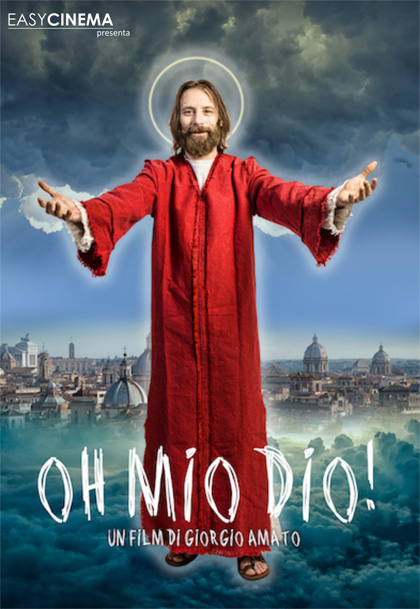
movieplayer.net-cdn.it/t/images/2018/03/08/oh_mio_dio_car...

----------------------------------------------------------
click to activate the small icon of slideshow: the small triangle inscribed in the small rectangle, at the top right, in the photostream (it means the monitor);
or…. Press the “L” button to zoom in the image;
clicca sulla piccola icona per attivare lo slideshow: sulla facciata principale del photostream, in alto a destra c'è un piccolo rettangolo (rappresenta il monitor) con dentro un piccolo triangolo nero;
oppure…. premi il tasto “L” per ingrandire l'immagine;
www.worldphoto.org/sony-world-photography-awards/winners-...
www.fotografidigitali.it/gallery/2726/opere-italiane-segn...
………………………………………………………
This "photographic story" ideally follows the previous one, for two reasons, first because in this case too, as in the previous story we talk about "angels", they are the "Golden Angels" of San Pier Niceto (in the province of Messina), and second, because this singular and beautiful religious festival, with its procession, also takes place during the Easter period, specifically during "Holy Tuesday". The photographs that I post (not a few, I wish in this way to pay homage to the inhabitants of San Pier Niceto, who can find themselves in these photos, especially for those fathers, mothers, grandfathers, grandmothers, aunts and uncles, in seeing their beloved and very sweet "angels - angiolette"); if you look closely at some of the photographed subjects, you will notice a "temporal disconnect", in fact in some cases, the same girls are present, with two different ages, they will be dressed differently, this is because the photos were taken during Holy Tuesday of 2024 and that of 2025. The temporal sequence of the photographs does not take into account either the year in which they were taken, nor the moments attributable to the phases of the ceremony and subsequent procession.
In San Pier Niceto, on the Peloritani Mountains in Sicily, during the Holy Tuesday takes place the SS. Crucifix procession, whose roots are ancient. The Church of St. James houses and cares for the precious Crucifix, Which is brought to the procession by the streets of the country preceded by very young children, of both sexes, who imitate little Angels, Angels and Grieving young Nuns, dressed in elaborate dresses covered with many gold jewelery, sewn by handy hands that with pins, necklaces , Bracelets and many other gold jewelry applied to their little clothes, they make real works of art whose designs are reminiscent of Easter symbols. Gold for dressing is collected home from home by people who have to melt a "vote", gold that will be returned at the end of the procession. Everything begins during Lent when parents decide to dress their baby by little Angels, Angels or Grieving Nuns .The Little Angels are usually 3 or 4 year olds, the Angels are a little bigger, the Nuns are little young girls. Thus the preparations for the elaboration of the elaborate clothes begin: Parents during Lent are knocking at every door of the country, among friends and relatives, to borrow bracelets, brooches, necklaces and all the gold necessary for the composition of embroidery . The Little Angel's dress is white, short down to the knee, made up of a gold-plated bodice and a skirt with some golden embroidery; Arms are adorned by bracelets, the head is adorned by a collier, small wings (white dove feathers) sprout from behind. The Angels have a white tunic, on which sacred icons are embroidered in gold, the head is covered by a collier, wings lie on their shoulders. The Nun's dress is black, on which are stitched the crowns of the S.S. Rosary, on the head is placed a white veil, held by a rose crown. At 16:30 on Holy Tuesday, a tapping of bells together with the band's fanfare in the village, set off at the "Crucifixion Procession" of San Pier Niceto: at the foot of the Crucifix there are red roses, behind it are located branches of cypress (at the end of the event the faithful will carry with them a piece of cypress as a relic), finally the red ribbons are tied to the arms of the Crucifix, they will mark the procession of the procession until the arrival at the Mother Church, a century church to St. Peter the Apostle, where the celebration of the Holy Mass will take place (the reverse path will bring the SS Crucifix to the Church of St. James): in perfect order the faithful in religious silence, with votive candles in their hands, walk the streets of the country never crossing the red ribbons as they delimit the path of the Golden Little Angels, Angels and the Grieving young Nuns .
Questo "racconto fotografico" segue idealmente il precedente, per due motivi, innanzitutto perchè anche in questo caso, come nel racconto precedente si parla di "angeli", sono "gli Angioletti d'oro" di San Pier Niceto (in provincia di Messina), e secondo, perchè questa singolare e bella festa religiosa, con la sua processione, si svolge anch'essa durante il periodo pasquale, nello specifico durante il "Martedì Santo". Le fotografie che posto (non poche, desidero in tal modo omaggiare gli abitanti di San Pier Niceto, che possano ritrovarsi in queste foto, soprattutto per quei papà, mamme, nonni, nonne, zie e zii, nel rivedere i loro adorati e dolcissimi "angioletti - angiolette"); a ben guardare in alcuni dei soggetti fotografati, si noterà uno "scollamento temportale", infatti in qualche caso, sono presenti le stessi bimbe, con due età diverse, saranno vestite diversamente, questo perchè le foto sono state realizzate durante il Martedì Santo del 2024 e quello del 2025. La sequenza temporale delle fotografie non tiene conto nè dell'anno nel quale sono state realizzate, nè dei momenti ascrivibili alle fasi della cerimonia e successiva processione.
A San Pier Niceto, sui monti Peloritani in Sicilia, durante il Martedì Santo prende vita la processione per le vie del paese del SS. Crocifisso, le cui radici sono antichissime. La Chiesa di San Giacomo ospita e custodisce il pregevole Crocifisso, che viene portato in processione per le vie del paese preceduto da bambini anche molto piccoli, di entrambi i sessi, che impersonano Angioletti ed Addoloratine vestiti con elaboratissimi abiti ricoperti con tantissimi monili d’oro, cuciti dalle mani abili di sarte che con spille, collane, bracciali e tanti altri monili in oro applicati sui loro piccoli vestiti, realizzano vere opere d’arte i cui disegni ricordano simboli pasquali. L’oro per la realizzazione dei vestitini viene raccolto di casa in casa da persone che hanno da sciogliere un “voto”, oro che verrà restituito alla fine della processione. Tutto ha inizio durante la Quaresima, quando dei genitori decidono per “voto” di vestire il proprio bambino da Angioletto, Angiolone o Monachella.
Gli Angioletti sono solitamente bimbi di 3 o 4 anni, gli Angioloni sono un po’ più grandi, le Monachelle sono delle bambine. Così iniziano i preparativi per la realizzazione degli elaboratissimi vestiti: i genitori durante la Quaresima bussano ad ogni porta del paese, tra la cerchia di amici e parenti, per prendere in prestito bracciali, spille, collane e tutto l’oro necessario alla composizione dei ricami. Il vestito degli Angioletti è bianco, corto fino al ginocchio, composto da un corpetto ricoperto d’oro ed una gonna segnata da alcuni ricami d’oro; le braccia sono adornate da bracciali, la testa è adornata da un collier, da dietro le spalle spuntano delle piccole ali (piume di colomba bianca). Gli Angioloni hanno una tunica bianca sulla quale vengono ricamate delle icone sacre in oro, la testa è cinta da un collier, sulle spalle trovano posto delle ali. Il vestito delle Monachelle invece è nero, sul quale vengono cucite delle coroncine del S.S. Rosario, sul capo viene posto un velo bianco, trattenuto da una corona di rose. Alle 16:30 del Martedì Santo un rintocco di campane insieme alla fanfare della banda del paese, danno il via alla “Processione del Crocifisso” di San Pier Niceto: ai piedi della Croce vi sono delle rose rosse, dietro di essa trovano posto dei rami di cipresso (alla fine dell’evento i fedeli porteranno con se un pezzetto di rametto come reliquia), infine dei nastri rossi vengono legati alle braccia del Crocifisso, essi segneranno il percorso della processione, fino all’arrivo al Duomo, una chiesa cinquecentesca dedicata a San Pietro apostolo, ove si terrà la celebrazione della Santa Messa ( il percorso inverso riporterà il S.S. Crocifisso nella Chiesa di San Giacomo): in perfetto ordine i fedeli in religioso silenzio, con ceri votivi in mano, percorrono le vie del paese, non oltrepassando i nastri rossi poiché essi delimitano il percorso degli Angioletti d’oro e delle Addoloratine.
Amid the wall of buildings existing along Flamengo Beach, Biarritz stands out for its aristocratic character and French air. In fact, the project is attributed to Frenchman Henri Paul Pierre Sajous, who lived in Brazil from 1931 to 1959.
The Pfirnhof, a historic former Bavarian farm near the bank of the Tegernsee (in English: "Lake Tegernsee"), Bad Wiessee, Bavaria, Germany
Some background information:
The Pfirnhof is a historic estate in the community of Bad Wiessee near the waterfront of the Tegernsee. Historically, it is a traditional Bavarian farm, likely founded in the Middle Ages, and hence, one of the oldest farms in the region. The Pfirnhof used to serve agricultural purposes for centuries. Today, it mainly serves as a holiday accommodation, like many old farms in the region that have been re-purposed due to the growing tourism.
Particular attention is given to the architecture of the Pfirnhof. It is built in the typical Upper Bavarian style, characterized by wooden construction, wide eaves, and intricately carved balconies. The farm is a so-called Eindachhof (in English: "Single roof farm"), which is the most common type of farms in this area. It is characterized by providing space for the peasant family, the farm servants and the livestock under one and the same roof.
With its less than 5,200 residents, Bad Wiessee is a municipality in the Upper Bavarian district of Miesbach, located on the western shore of the Tegernsee. Since 1922, the commune is officially recognized as a spa town. It owes its status as a health resort to the two strongest iodine-sulfur healing springs in Germany, which were discovered during oil drilling in 1909. Since 1957, the Bavarian State Lottery also operates a casino in Bad Wiessee, which serves as an additional magnet for visitors.
In 1017, the settlement was first mentioned as "Wesses" in the registry of Tegernsee Abbey. The hamlet‘s name just meant that it was located west of the lake. According to legend, in 1441, a monk on the eastern shore of Lake Tegernsee discovered a golden-yellow streak in the lake, which came from a spot on the western shore, where there was a natural oil spring. In fact, the now long-dried-up spring, whose location is still marked today by a chapel, had likely existed for ages. According to a commemorative plaque inside the chapel, the spring was first tapped in 1430.
In 1471, the monks of Tegernsee Abbey on the opposite shore created three fish ponds in the area of Bad Wiessee and in 1480, the hamlet was first mentioned as a village. At that time, three farms were documented, along with several smaller houses. Until the end of the 19th century, the village gradually developed around its centre. Back then, the stone oil from Tegernsee was already attributed with therapeutic properties (e.g., for rubbing on the body), and it gained even more popularity with pillgrims as St. Quirin Oil.
Stimulated by the already widespread technical use of petroleum, a Dutch company attempted in 1904 to discover rich oil deposits at greater depths, which were encountered at about 500 meters. This led to the execution of eleven more oil drilling operations in Bad Wiessee. However, by 1912, the production had declined so much that oil extraction was stopped. But three years before, a rich source of thermal water at borehole III at a depth of 692 meters had been encountered during drilling operations. Later chemical analyses revealed that it was the strongest iodine-sulfur thermal spring in allo of Germany.
In 1912, the first bathhouse was built with twelve cabins. The spring was named after King Ludwig III in 1914, and the petroleum company changed its name to Jod-Schwefelbad Wiessee GmbH (in English: "Iodine-sulfur Spa Wiessee Company"). This laid the foundation for the rise to a health resort. In 1922, Wiessee was awarded the title "Bad,". In 1930, another borehole was drilled to develop the Königin Wilhelmina Spring, and in 1978, the third spring, the Adrianus Spring was drilled and developed.
During the Nazi era, the SA leadership gathered in Bad Wiessee on Hitler's telephoned orders. In the Hanselbauer guesthouse, Ernst Röhm and his SA leaders were arrested by the SS in Hitler's presence, and some were shot later that same day. These events were called the Röhm Putsch, although there’s was no proof that Röhm really planned to take power by a revolt of his SA. Shortly afterwards, Heinrich Himmer, the leader of the SS, transferred his place of residence to Bad Wiessee. Furthermore, Bad Wiessee was also the retirement home of Field Marshal Werner von Blomberg, who had been one of the architects of the German Wehrmacht.
Today, Tourism is one of the main sources of income for the population of Bad Wiessee. Although spa tourism has declined in the last decades, Bad Wiessee is still very popular for its casino and with wealthy people, many of them buying a second home or condo to spend their holidays or retirement there. As a residential area, the beautiful nature around Bad Wiessee and its good reachability from the city of Munich have attracted more and more millionaires as well as multimillionaires.
The demand for housing at Lake Tegernsee remains high, resulting in astronomically high real estate prices. Prices for vacation homes are even the highest in the German Alpine region and just the premises for single-family homes in the first row by the lake are offered for up to 10 million euros by local real estate agencies. Hence, the dream of a house at Lake Tegernsee will always be unrealisable for most Germans. However, traditional B&B and reasonable priced accommodations for tourists are still available all year round.
The Tegernsee is a so-called tongue-basin lake in the Bavarian Alps in southern Germany. The lake is the centre of a popular recreation area 50 kilometres (31 miles) south-east of Munich. Communities on the lake include the eponymous Tegernsee, as well as Bad Wiessee, Kreuth, Gmund, and Rottach-Egern.
The lake is some 6.5 kilometres (4.0 miles) in length, 1.4 kilometres (0.87 miles) across at its widest, and spans an area of 8.934 square kilometres (3.449 square miles). It reaches a maximum depth of 72.6 metres (238 feet), with an average depth of 36.3 metres (119 feet). Its normal water level is 725.5 metres (2,380 feet) above sea level. The lake flows into the River Mangfall, a tributary of the River Inn and thence the River Danube.
A legend attributes Kraków's founding to the mythical ruler Krakus, who built it above a cave occupied by a dragon, Smok Wawelski. The first written record dates to 965, when Kraków was described as a notable commercial center captured by a Bohemian duke Boleslaus I in 955. The first ruler of Poland, Mieszko I, took Kraków from the Bohemians.
In 1038, Kraków became the seat of the Polish government. By the end of the 10th century, the city was a center of trade. Brick buildings were constructed, including the Royal Wawel Castle. The city was sacked and burned during the Mongol invasion of 1241. It was rebuilt and incorporated in 1257 by Bolesław V the Chaste who introduced city rights. In 1259, the city was again ravaged by the Mongols. The third attack in 1287 was repelled thanks in part to the newly built fortifications.
The city rose to prominence in 1364, when Casimir III founded the University of Kraków, the second oldest university in central Europe. But after Casimir´s death in 1370 the campus did not get completed.
As the capital of the Kingdom of Poland and a member of the Hanseatic League, the city attracted craftsmen from abroad, guilds as science and the arts began to flourish. The 15th and 16th centuries are known as Poland's "Złoty Wiek" (Golden Age).
After childless King Sigismund II had died in 1572, the Polish throne passed to Henry III of France and then to other foreign-based rulers in rapid succession, causing a decline in the city's importance that was worsened by pillaging during the Swedish invasion and by an outbreak of bubonic plague that left 20,000 of the city's residents dead. In 1596, Sigismund III of the House of Vasa moved the capital of the Polish–Lithuanian Commonwealth from Kraków to Warsaw.
-
The Barbican in Krakow is considered the largest preserved barbican in Europe. This defensive structure in front of the Florian Gate was built of brick in 1498/99 during the reign of John I Albrecht and was connected to the Florian Gate via a bridge leading over the moat.
The circular Gothic building has an inner diameter of 24.40 meters, the wall thickness is over three meters. There are 130 embrasures in the surrounding corridor and openings in the floor for pouring boiling water on the besiegers.
Ferdinand, 50, moved to Baseco from Cavite to look for work. He made friends with a local dog.
Baseco, once an industrial dockyard, is now a dense urban settlement where 60,000 people live on reclaimed land. It reflects a broader Philippine trend: rural workers migrate to cities like Manila seeking opportunity, but face overcrowding and poor infrastructure. Baseco symbolizes how the promise of urban life collides with precarity—yet also with resilience and community.
“things only exist if they are told/narrated”
(attributed to Alessandro Baricco);
“le cose esistono solo se vengono raccontate”
(attribuita ad Alessandro Baricco).
POSTER - LOCANDINA –
< a>
----------------------------------------------------------
click to activate the small icon of slideshow: the small triangle inscribed in the small rectangle, at the top right, in the photostream (it means the monitor);
or…. Press the “L” button to zoom in the image;
clicca sulla piccola icona per attivare lo slideshow: sulla facciata principale del photostream, in alto a destra c'è un piccolo rettangolo (rappresenta il monitor) con dentro un piccolo triangolo nero;
oppure…. premi il tasto “L” per ingrandire l'immagine;
www.worldphoto.org/sony-world-photography-awards/winners-...
www.fotografidigitali.it/gallery/2726/opere-italiane-segn...
………………………………………………………
This "photographic story" ideally follows the previous one, for two reasons, first because in this case too, as in the previous story we talk about "angels", they are the "Golden Angels" of San Pier Niceto (in the province of Messina), and second, because this singular and beautiful religious festival, with its procession, also takes place during the Easter period, specifically during "Holy Tuesday". The photographs that I post (not a few, I wish in this way to pay homage to the inhabitants of San Pier Niceto, who can find themselves in these photos, especially for those fathers, mothers, grandfathers, grandmothers, aunts and uncles, in seeing their beloved and very sweet "angels - angiolette"); if you look closely at some of the photographed subjects, you will notice a "temporal disconnect", in fact in some cases, the same girls are present, with two different ages, they will be dressed differently, this is because the photos were taken during Holy Tuesday of 2024 and that of 2025. The temporal sequence of the photographs does not take into account either the year in which they were taken, nor the moments attributable to the phases of the ceremony and subsequent procession.
In San Pier Niceto, on the Peloritani Mountains in Sicily, during the Holy Tuesday takes place the SS. Crucifix procession, whose roots are ancient. The Church of St. James houses and cares for the precious Crucifix, Which is brought to the procession by the streets of the country preceded by very young children, of both sexes, who imitate little Angels, Angels and Grieving young Nuns, dressed in elaborate dresses covered with many gold jewelery, sewn by handy hands that with pins, necklaces , Bracelets and many other gold jewelry applied to their little clothes, they make real works of art whose designs are reminiscent of Easter symbols. Gold for dressing is collected home from home by people who have to melt a "vote", gold that will be returned at the end of the procession. Everything begins during Lent when parents decide to dress their baby by little Angels, Angels or Grieving Nuns .The Little Angels are usually 3 or 4 year olds, the Angels are a little bigger, the Nuns are little young girls. Thus the preparations for the elaboration of the elaborate clothes begin: Parents during Lent are knocking at every door of the country, among friends and relatives, to borrow bracelets, brooches, necklaces and all the gold necessary for the composition of embroidery . The Little Angel's dress is white, short down to the knee, made up of a gold-plated bodice and a skirt with some golden embroidery; Arms are adorned by bracelets, the head is adorned by a collier, small wings (white dove feathers) sprout from behind. The Angels have a white tunic, on which sacred icons are embroidered in gold, the head is covered by a collier, wings lie on their shoulders. The Nun's dress is black, on which are stitched the crowns of the S.S. Rosary, on the head is placed a white veil, held by a rose crown. At 16:30 on Holy Tuesday, a tapping of bells together with the band's fanfare in the village, set off at the "Crucifixion Procession" of San Pier Niceto: at the foot of the Crucifix there are red roses, behind it are located branches of cypress (at the end of the event the faithful will carry with them a piece of cypress as a relic), finally the red ribbons are tied to the arms of the Crucifix, they will mark the procession of the procession until the arrival at the Mother Church, a century church to St. Peter the Apostle, where the celebration of the Holy Mass will take place (the reverse path will bring the SS Crucifix to the Church of St. James): in perfect order the faithful in religious silence, with votive candles in their hands, walk the streets of the country never crossing the red ribbons as they delimit the path of the Golden Little Angels, Angels and the Grieving young Nuns .
Questo "racconto fotografico" segue idealmente il precedente, per due motivi, innanzitutto perchè anche in questo caso, come nel racconto precedente si parla di "angeli", sono "gli Angioletti d'oro" di San Pier Niceto (in provincia di Messina), e secondo, perchè questa singolare e bella festa religiosa, con la sua processione, si svolge anch'essa durante il periodo pasquale, nello specifico durante il "Martedì Santo". Le fotografie che posto (non poche, desidero in tal modo omaggiare gli abitanti di San Pier Niceto, che possano ritrovarsi in queste foto, soprattutto per quei papà, mamme, nonni, nonne, zie e zii, nel rivedere i loro adorati e dolcissimi "angioletti - angiolette"); a ben guardare in alcuni dei soggetti fotografati, si noterà uno "scollamento temportale", infatti in qualche caso, sono presenti le stessi bimbe, con due età diverse, saranno vestite diversamente, questo perchè le foto sono state realizzate durante il Martedì Santo del 2024 e quello del 2025. La sequenza temporale delle fotografie non tiene conto nè dell'anno nel quale sono state realizzate, nè dei momenti ascrivibili alle fasi della cerimonia e successiva processione.
A San Pier Niceto, sui monti Peloritani in Sicilia, durante il Martedì Santo prende vita la processione per le vie del paese del SS. Crocifisso, le cui radici sono antichissime. La Chiesa di San Giacomo ospita e custodisce il pregevole Crocifisso, che viene portato in processione per le vie del paese preceduto da bambini anche molto piccoli, di entrambi i sessi, che impersonano Angioletti ed Addoloratine vestiti con elaboratissimi abiti ricoperti con tantissimi monili d’oro, cuciti dalle mani abili di sarte che con spille, collane, bracciali e tanti altri monili in oro applicati sui loro piccoli vestiti, realizzano vere opere d’arte i cui disegni ricordano simboli pasquali. L’oro per la realizzazione dei vestitini viene raccolto di casa in casa da persone che hanno da sciogliere un “voto”, oro che verrà restituito alla fine della processione. Tutto ha inizio durante la Quaresima, quando dei genitori decidono per “voto” di vestire il proprio bambino da Angioletto, Angiolone o Monachella.
Gli Angioletti sono solitamente bimbi di 3 o 4 anni, gli Angioloni sono un po’ più grandi, le Monachelle sono delle bambine. Così iniziano i preparativi per la realizzazione degli elaboratissimi vestiti: i genitori durante la Quaresima bussano ad ogni porta del paese, tra la cerchia di amici e parenti, per prendere in prestito bracciali, spille, collane e tutto l’oro necessario alla composizione dei ricami. Il vestito degli Angioletti è bianco, corto fino al ginocchio, composto da un corpetto ricoperto d’oro ed una gonna segnata da alcuni ricami d’oro; le braccia sono adornate da bracciali, la testa è adornata da un collier, da dietro le spalle spuntano delle piccole ali (piume di colomba bianca). Gli Angioloni hanno una tunica bianca sulla quale vengono ricamate delle icone sacre in oro, la testa è cinta da un collier, sulle spalle trovano posto delle ali. Il vestito delle Monachelle invece è nero, sul quale vengono cucite delle coroncine del S.S. Rosario, sul capo viene posto un velo bianco, trattenuto da una corona di rose. Alle 16:30 del Martedì Santo un rintocco di campane insieme alla fanfare della banda del paese, danno il via alla “Processione del Crocifisso” di San Pier Niceto: ai piedi della Croce vi sono delle rose rosse, dietro di essa trovano posto dei rami di cipresso (alla fine dell’evento i fedeli porteranno con se un pezzetto di rametto come reliquia), infine dei nastri rossi vengono legati alle braccia del Crocifisso, essi segneranno il percorso della processione, fino all’arrivo al Duomo, una chiesa cinquecentesca dedicata a San Pietro apostolo, ove si terrà la celebrazione della Santa Messa ( il percorso inverso riporterà il S.S. Crocifisso nella Chiesa di San Giacomo): in perfetto ordine i fedeli in religioso silenzio, con ceri votivi in mano, percorrono le vie del paese, non oltrepassando i nastri rossi poiché essi delimitano il percorso degli Angioletti d’oro e delle Addoloratine.
Attributed to Quentin Matsys (1466~1530)
Sorry for the poor image quality, this was hidden away over a doorway in the Tournai cathedral treasury.
The Karen tribe of Thailand traditionally practices neck elongation using brass coils. Starting at a young age, coils are added gradually, giving the appearance of a longer neck. This practice is culturally significant, symbolizing beauty and social status within the tribe.
“things only exist if they are told/narrated”
(attributed to Alessandro Baricco);
“le cose esistono solo se vengono raccontate”
(attribuita ad Alessandro Baricco).
POSTER - LOCANDINA –
www.primevideo.com/detail/Oh-Mio-Dio/0FBFGSB0G1HMNXV56F5C...
pad.mymovies.it/filmclub/2018/02/181/locandina.jpg
movieplayer.net-cdn.it/t/images/2018/03/08/oh_mio_dio_car...
----------------------------------------------------------
click to activate the small icon of slideshow: the small triangle inscribed in the small rectangle, at the top right, in the photostream (it means the monitor);
or…. Press the “L” button to zoom in the image;
clicca sulla piccola icona per attivare lo slideshow: sulla facciata principale del photostream, in alto a destra c'è un piccolo rettangolo (rappresenta il monitor) con dentro un piccolo triangolo nero;
oppure…. premi il tasto “L” per ingrandire l'immagine;
www.worldphoto.org/sony-world-photography-awards/winners-...
www.fotografidigitali.it/gallery/2726/opere-italiane-segn...
………………………………………………………
This "photographic story" ideally follows the previous one, for two reasons, first because in this case too, as in the previous story we talk about "angels", they are the "Golden Angels" of San Pier Niceto (in the province of Messina), and second, because this singular and beautiful religious festival, with its procession, also takes place during the Easter period, specifically during "Holy Tuesday". The photographs that I post (not a few, I wish in this way to pay homage to the inhabitants of San Pier Niceto, who can find themselves in these photos, especially for those fathers, mothers, grandfathers, grandmothers, aunts and uncles, in seeing their beloved and very sweet "angels - angiolette"); if you look closely at some of the photographed subjects, you will notice a "temporal disconnect", in fact in some cases, the same girls are present, with two different ages, they will be dressed differently, this is because the photos were taken during Holy Tuesday of 2024 and that of 2025. The temporal sequence of the photographs does not take into account either the year in which they were taken, nor the moments attributable to the phases of the ceremony and subsequent procession.
In San Pier Niceto, on the Peloritani Mountains in Sicily, during the Holy Tuesday takes place the SS. Crucifix procession, whose roots are ancient. The Church of St. James houses and cares for the precious Crucifix, Which is brought to the procession by the streets of the country preceded by very young children, of both sexes, who imitate little Angels, Angels and Grieving young Nuns, dressed in elaborate dresses covered with many gold jewelery, sewn by handy hands that with pins, necklaces , Bracelets and many other gold jewelry applied to their little clothes, they make real works of art whose designs are reminiscent of Easter symbols. Gold for dressing is collected home from home by people who have to melt a "vote", gold that will be returned at the end of the procession. Everything begins during Lent when parents decide to dress their baby by little Angels, Angels or Grieving Nuns .The Little Angels are usually 3 or 4 year olds, the Angels are a little bigger, the Nuns are little young girls. Thus the preparations for the elaboration of the elaborate clothes begin: Parents during Lent are knocking at every door of the country, among friends and relatives, to borrow bracelets, brooches, necklaces and all the gold necessary for the composition of embroidery . The Little Angel's dress is white, short down to the knee, made up of a gold-plated bodice and a skirt with some golden embroidery; Arms are adorned by bracelets, the head is adorned by a collier, small wings (white dove feathers) sprout from behind. The Angels have a white tunic, on which sacred icons are embroidered in gold, the head is covered by a collier, wings lie on their shoulders. The Nun's dress is black, on which are stitched the crowns of the S.S. Rosary, on the head is placed a white veil, held by a rose crown. At 16:30 on Holy Tuesday, a tapping of bells together with the band's fanfare in the village, set off at the "Crucifixion Procession" of San Pier Niceto: at the foot of the Crucifix there are red roses, behind it are located branches of cypress (at the end of the event the faithful will carry with them a piece of cypress as a relic), finally the red ribbons are tied to the arms of the Crucifix, they will mark the procession of the procession until the arrival at the Mother Church, a century church to St. Peter the Apostle, where the celebration of the Holy Mass will take place (the reverse path will bring the SS Crucifix to the Church of St. James): in perfect order the faithful in religious silence, with votive candles in their hands, walk the streets of the country never crossing the red ribbons as they delimit the path of the Golden Little Angels, Angels and the Grieving young Nuns .
Questo "racconto fotografico" segue idealmente il precedente, per due motivi, innanzitutto perchè anche in questo caso, come nel racconto precedente si parla di "angeli", sono "gli Angioletti d'oro" di San Pier Niceto (in provincia di Messina), e secondo, perchè questa singolare e bella festa religiosa, con la sua processione, si svolge anch'essa durante il periodo pasquale, nello specifico durante il "Martedì Santo". Le fotografie che posto (non poche, desidero in tal modo omaggiare gli abitanti di San Pier Niceto, che possano ritrovarsi in queste foto, soprattutto per quei papà, mamme, nonni, nonne, zie e zii, nel rivedere i loro adorati e dolcissimi "angioletti - angiolette"); a ben guardare in alcuni dei soggetti fotografati, si noterà uno "scollamento temportale", infatti in qualche caso, sono presenti le stessi bimbe, con due età diverse, saranno vestite diversamente, questo perchè le foto sono state realizzate durante il Martedì Santo del 2024 e quello del 2025. La sequenza temporale delle fotografie non tiene conto nè dell'anno nel quale sono state realizzate, nè dei momenti ascrivibili alle fasi della cerimonia e successiva processione.
A San Pier Niceto, sui monti Peloritani in Sicilia, durante il Martedì Santo prende vita la processione per le vie del paese del SS. Crocifisso, le cui radici sono antichissime. La Chiesa di San Giacomo ospita e custodisce il pregevole Crocifisso, che viene portato in processione per le vie del paese preceduto da bambini anche molto piccoli, di entrambi i sessi, che impersonano Angioletti ed Addoloratine vestiti con elaboratissimi abiti ricoperti con tantissimi monili d’oro, cuciti dalle mani abili di sarte che con spille, collane, bracciali e tanti altri monili in oro applicati sui loro piccoli vestiti, realizzano vere opere d’arte i cui disegni ricordano simboli pasquali. L’oro per la realizzazione dei vestitini viene raccolto di casa in casa da persone che hanno da sciogliere un “voto”, oro che verrà restituito alla fine della processione. Tutto ha inizio durante la Quaresima, quando dei genitori decidono per “voto” di vestire il proprio bambino da Angioletto, Angiolone o Monachella.
Gli Angioletti sono solitamente bimbi di 3 o 4 anni, gli Angioloni sono un po’ più grandi, le Monachelle sono delle bambine. Così iniziano i preparativi per la realizzazione degli elaboratissimi vestiti: i genitori durante la Quaresima bussano ad ogni porta del paese, tra la cerchia di amici e parenti, per prendere in prestito bracciali, spille, collane e tutto l’oro necessario alla composizione dei ricami. Il vestito degli Angioletti è bianco, corto fino al ginocchio, composto da un corpetto ricoperto d’oro ed una gonna segnata da alcuni ricami d’oro; le braccia sono adornate da bracciali, la testa è adornata da un collier, da dietro le spalle spuntano delle piccole ali (piume di colomba bianca). Gli Angioloni hanno una tunica bianca sulla quale vengono ricamate delle icone sacre in oro, la testa è cinta da un collier, sulle spalle trovano posto delle ali. Il vestito delle Monachelle invece è nero, sul quale vengono cucite delle coroncine del S.S. Rosario, sul capo viene posto un velo bianco, trattenuto da una corona di rose. Alle 16:30 del Martedì Santo un rintocco di campane insieme alla fanfare della banda del paese, danno il via alla “Processione del Crocifisso” di San Pier Niceto: ai piedi della Croce vi sono delle rose rosse, dietro di essa trovano posto dei rami di cipresso (alla fine dell’evento i fedeli porteranno con se un pezzetto di rametto come reliquia), infine dei nastri rossi vengono legati alle braccia del Crocifisso, essi segneranno il percorso della processione, fino all’arrivo al Duomo, una chiesa cinquecentesca dedicata a San Pietro apostolo, ove si terrà la celebrazione della Santa Messa ( il percorso inverso riporterà il S.S. Crocifisso nella Chiesa di San Giacomo): in perfetto ordine i fedeli in religioso silenzio, con ceri votivi in mano, percorrono le vie del paese, non oltrepassando i nastri rossi poiché essi delimitano il percorso degli Angioletti d’oro e delle Addoloratine.
Thalmor Dossier: Throgar Winter-Flame
Status: Asset (non-attributed), Dormant. Watch-only. Emissary Level Approval.
Background: Born in Bruma, 4E 176, son of Halbjorn Winter-Flame (see related documents for further information) and Fjilsi Stone-Shield (terminated 4E 178). After agents separated Throgar from his father in the 4E 179 kill missions (failed), Haafingar-based Justiciars were unable to prevent the boy from falling into Imperial interest. Throgar was taken in by the Dragon’s Bridge based blacksmith Pavus Arellius. This information arrived late, and was further ignored by the mission officer. Situation was deemed irreparable: responsible parties for this oversight were summarily removed and replaced. Initial reports suggested that Throgar might serve as a bargaining tool to draw out the high value target Halbjorn Winter-Flame. Probing missions proved ineffective, resulting in the deaths of three local agents. Throgar was moved to an inactive surveillance state from there.
Our Justiciar in charge of the operation notes that Throgar displays very low personal threat: while growing up, the boy learned to despise the Legions, as he attributed his parents’ deaths to it. Rather than work making Legion steel with his adoptive father, Throgar is noted as a rapacious youth who prefers to spend time sleeping in beds owned by the daughters of noblemen and harassing area guardsmen. Upon Throgar’s fifteenth year, weekly reports were transitioned to basic annual synopses, as per discretion of Justiciar Alerin, following her conclusion that the younger Winter-Flame was of no threat to machinations in Skyrim.
The motion gained Third Emissary approval after Throgar began regular caravan activity as a guard for Arellius’ shipments of non-armory goods to Hjaalmarch and Reach holds. Justiciar Alerin notes that Throgar demonstrates the innate martial capability of his father, but prefers to exercise this particular skill-set in tavern brawls as opposed to any useful (or hindering) manner. As he has proven of no threat to area assets, Command has simply added an “engage-with-caution” clause to any pending operations involving him. Justiciar Alerin’s latest annual report places Throgar in Hjaalmarch, working as a sell-sword out of Morthal.
Operational Notes: Given his father’s excessively violent nature, Throgar has been designated as a zero-contact surveillance project save for dire circumstances. Given his possible value in the apprehension of his father, area assets have been advised to ensure that Throgar remains alive throughout his mercenary work: general well-being, however, is a non-priority. Justiciar Alerin suggests that any situtationally-mandated contact be made indoors, taverns being the safest locations. Stealth infiltration/exfiltration protocols required at all times when gathering intelligence on target.
Attributed to Carlo Cesio ( after Pietro da Cortona )
Situated in the main hall of the Palazzo Barberini in Rome, Pietro da Cortona’s finished fresco Hercules Driving out the Harpies is an allegory about the sense of justice of Pope Urban Vlll, Maffeo Barberini. Although harpies are usually represented in art as foul and loathsome creatures in the shape of Bird-women, here they are portrayed as winged felines with human heads.
"In earlier times, the Goldfinch was kept as a cagebird for its song. Escapes from captivity and deliberate releases have colonised southeastern Australia and New Zealand.
Goldfinches are commonly kept and bred in captivity around the world because of their distinctive appearance and pleasant song. The Goldfinch males are sometimes crossed with Canary females with the intention to produce male mules with beautiful singing voices, that often capture the best singing attributes of both breeds."
Quoted from Wikipedia
Unsigned sketches attributed to William Buelow Gould
Inscribed on the UNESCO Australian Memory of the World Register on 1 April 2011
Tasmanian Archives and Heritage Office: Allport Library & Museum of Fine Arts
Images from the TAHO collection that are part of The Commons have ‘no known copyright restrictions’, which means TAHO is unaware of any current copyright restrictions on these works. This can be because the term of copyright for these works may have expired or that the copyright was held and waived by TAHO. The material may be freely used provided TAHO is acknowledged; however TAHO does not endorse any inappropriate or derogatory use.
The panel was first attributed to Giovanni Bellini in 1916; until then it had been considered a work of Mantegna, partly owing to a spurious inscription on the back of the work probably added in the eighteenth century.Due to its strong compositional similarities it has always been linked to Andrea Mantegna’s The Presentation of Christ in the Temple, now exhibited in Berlin’s Gemäldegalerie. There is some discussion as to an exact date for the painting. The Presentation of Christ in the Temple by Mantegna, from 1454-1455, is the first example of a scenic representation of half-length figures in a single space. With the Querini panel Bellini wanted to practise on this sort of new and extraordinary composition, reviving the Venetian tradition. --- --- A comparison with early work by the artist indicates that some time passed between the two versions and allows a possible dating to the Querini version of around 1469.A palette rich with red shades, the use of brilliant and intense colours with strong contrasts, and the light sources which arrive simultaneously from above and below, reveal the Venetian roots of the artist.Various identifications have been proposed for the figures present in the Querini Stampalia panel: Giovanni and Andrea Mantegna to the right; Nicolosia Bellini and the mother of the artist, Anna Bellini, to the left; and perhaps Jacopo Bellini in the figure of Saint Joseph or in that of the High Priest.The wonderful under-drawing , discovered thanks to reflectography carried out in the process of the recent conservation project, confirms the attribution of this work to Giovanni Bellini. ( from the Fondazione's website )
Attributed to renowned practice David and James Hamilton, circa 1840. Classical house with symmetrical west elevation (shown). Polished ashlar with channelled and battered basement, windows with architraves or margins, band course above basement and ground floors, modillion cornice and blocking course to all elevations. 3 central, taller advanced bays, basement projects to give ground floor terrace with parapet (originally supporting a verandah). 3 tall round-headed 8-pane sash windows to ground floor. Corniced windows above.
Largs and Millport Weekly describes house being "a yachting residence for Mr Matthew Perston a prominent Glasgow merch ...", but he was bankrupted in 1847 and had to put Brooksby House up for sale. It was bought by the governors of the infirmary who reopened it as a convalescent home in 1897 with accommodation for 24 patients.
In 1846 Perston was listed as a shareholder of the Glasgow, Largs and Milport Steam-boat Company, but his main business was the Bothwell Street Spinning Company, Glasgow.
Attributed to Irineo Cristobal, 1940's-1950's. Restored by the Vecin Workshop. Urna restored by the Bloomquist Workshop.
Baseco, once an industrial dockyard, is now a dense urban settlement where 60,000 people live on reclaimed land. It reflects a broader Philippine trend: rural workers migrate to cities like Manila seeking opportunity, but face overcrowding and poor infrastructure. Baseco symbolizes how the promise of urban life collides with precarity—yet also with resilience and community.
“things only exist if they are told/narrated”
(attributed to Alessandro Baricco);
“le cose esistono solo se vengono raccontate”
(attribuita ad Alessandro Baricco).
POSTER - LOCANDINA –
www.primevideo.com/detail/Oh-Mio-Dio/0FBFGSB0G1HMNXV56F5C...
pad.mymovies.it/filmclub/2018/02/181/locandina.jpg
movieplayer.net-cdn.it/t/images/2018/03/08/oh_mio_dio_car...
----------------------------------------------------------
click to activate the small icon of slideshow: the small triangle inscribed in the small rectangle, at the top right, in the photostream (it means the monitor);
or…. Press the “L” button to zoom in the image;
clicca sulla piccola icona per attivare lo slideshow: sulla facciata principale del photostream, in alto a destra c'è un piccolo rettangolo (rappresenta il monitor) con dentro un piccolo triangolo nero;
oppure…. premi il tasto “L” per ingrandire l'immagine;
www.worldphoto.org/sony-world-photography-awards/winners-...
www.fotografidigitali.it/gallery/2726/opere-italiane-segn...
………………………………………………………
This "photographic story" ideally follows the previous one, for two reasons, first because in this case too, as in the previous story we talk about "angels", they are the "Golden Angels" of San Pier Niceto (in the province of Messina), and second, because this singular and beautiful religious festival, with its procession, also takes place during the Easter period, specifically during "Holy Tuesday". The photographs that I post (not a few, I wish in this way to pay homage to the inhabitants of San Pier Niceto, who can find themselves in these photos, especially for those fathers, mothers, grandfathers, grandmothers, aunts and uncles, in seeing their beloved and very sweet "angels - angiolette"); if you look closely at some of the photographed subjects, you will notice a "temporal disconnect", in fact in some cases, the same girls are present, with two different ages, they will be dressed differently, this is because the photos were taken during Holy Tuesday of 2024 and that of 2025. The temporal sequence of the photographs does not take into account either the year in which they were taken, nor the moments attributable to the phases of the ceremony and subsequent procession.
In San Pier Niceto, on the Peloritani Mountains in Sicily, during the Holy Tuesday takes place the SS. Crucifix procession, whose roots are ancient. The Church of St. James houses and cares for the precious Crucifix, Which is brought to the procession by the streets of the country preceded by very young children, of both sexes, who imitate little Angels, Angels and Grieving young Nuns, dressed in elaborate dresses covered with many gold jewelery, sewn by handy hands that with pins, necklaces , Bracelets and many other gold jewelry applied to their little clothes, they make real works of art whose designs are reminiscent of Easter symbols. Gold for dressing is collected home from home by people who have to melt a "vote", gold that will be returned at the end of the procession. Everything begins during Lent when parents decide to dress their baby by little Angels, Angels or Grieving Nuns .The Little Angels are usually 3 or 4 year olds, the Angels are a little bigger, the Nuns are little young girls. Thus the preparations for the elaboration of the elaborate clothes begin: Parents during Lent are knocking at every door of the country, among friends and relatives, to borrow bracelets, brooches, necklaces and all the gold necessary for the composition of embroidery . The Little Angel's dress is white, short down to the knee, made up of a gold-plated bodice and a skirt with some golden embroidery; Arms are adorned by bracelets, the head is adorned by a collier, small wings (white dove feathers) sprout from behind. The Angels have a white tunic, on which sacred icons are embroidered in gold, the head is covered by a collier, wings lie on their shoulders. The Nun's dress is black, on which are stitched the crowns of the S.S. Rosary, on the head is placed a white veil, held by a rose crown. At 16:30 on Holy Tuesday, a tapping of bells together with the band's fanfare in the village, set off at the "Crucifixion Procession" of San Pier Niceto: at the foot of the Crucifix there are red roses, behind it are located branches of cypress (at the end of the event the faithful will carry with them a piece of cypress as a relic), finally the red ribbons are tied to the arms of the Crucifix, they will mark the procession of the procession until the arrival at the Mother Church, a century church to St. Peter the Apostle, where the celebration of the Holy Mass will take place (the reverse path will bring the SS Crucifix to the Church of St. James): in perfect order the faithful in religious silence, with votive candles in their hands, walk the streets of the country never crossing the red ribbons as they delimit the path of the Golden Little Angels, Angels and the Grieving young Nuns .
Questo "racconto fotografico" segue idealmente il precedente, per due motivi, innanzitutto perchè anche in questo caso, come nel racconto precedente si parla di "angeli", sono "gli Angioletti d'oro" di San Pier Niceto (in provincia di Messina), e secondo, perchè questa singolare e bella festa religiosa, con la sua processione, si svolge anch'essa durante il periodo pasquale, nello specifico durante il "Martedì Santo". Le fotografie che posto (non poche, desidero in tal modo omaggiare gli abitanti di San Pier Niceto, che possano ritrovarsi in queste foto, soprattutto per quei papà, mamme, nonni, nonne, zie e zii, nel rivedere i loro adorati e dolcissimi "angioletti - angiolette"); a ben guardare in alcuni dei soggetti fotografati, si noterà uno "scollamento temportale", infatti in qualche caso, sono presenti le stessi bimbe, con due età diverse, saranno vestite diversamente, questo perchè le foto sono state realizzate durante il Martedì Santo del 2024 e quello del 2025. La sequenza temporale delle fotografie non tiene conto nè dell'anno nel quale sono state realizzate, nè dei momenti ascrivibili alle fasi della cerimonia e successiva processione.
A San Pier Niceto, sui monti Peloritani in Sicilia, durante il Martedì Santo prende vita la processione per le vie del paese del SS. Crocifisso, le cui radici sono antichissime. La Chiesa di San Giacomo ospita e custodisce il pregevole Crocifisso, che viene portato in processione per le vie del paese preceduto da bambini anche molto piccoli, di entrambi i sessi, che impersonano Angioletti ed Addoloratine vestiti con elaboratissimi abiti ricoperti con tantissimi monili d’oro, cuciti dalle mani abili di sarte che con spille, collane, bracciali e tanti altri monili in oro applicati sui loro piccoli vestiti, realizzano vere opere d’arte i cui disegni ricordano simboli pasquali. L’oro per la realizzazione dei vestitini viene raccolto di casa in casa da persone che hanno da sciogliere un “voto”, oro che verrà restituito alla fine della processione. Tutto ha inizio durante la Quaresima, quando dei genitori decidono per “voto” di vestire il proprio bambino da Angioletto, Angiolone o Monachella.
Gli Angioletti sono solitamente bimbi di 3 o 4 anni, gli Angioloni sono un po’ più grandi, le Monachelle sono delle bambine. Così iniziano i preparativi per la realizzazione degli elaboratissimi vestiti: i genitori durante la Quaresima bussano ad ogni porta del paese, tra la cerchia di amici e parenti, per prendere in prestito bracciali, spille, collane e tutto l’oro necessario alla composizione dei ricami. Il vestito degli Angioletti è bianco, corto fino al ginocchio, composto da un corpetto ricoperto d’oro ed una gonna segnata da alcuni ricami d’oro; le braccia sono adornate da bracciali, la testa è adornata da un collier, da dietro le spalle spuntano delle piccole ali (piume di colomba bianca). Gli Angioloni hanno una tunica bianca sulla quale vengono ricamate delle icone sacre in oro, la testa è cinta da un collier, sulle spalle trovano posto delle ali. Il vestito delle Monachelle invece è nero, sul quale vengono cucite delle coroncine del S.S. Rosario, sul capo viene posto un velo bianco, trattenuto da una corona di rose. Alle 16:30 del Martedì Santo un rintocco di campane insieme alla fanfare della banda del paese, danno il via alla “Processione del Crocifisso” di San Pier Niceto: ai piedi della Croce vi sono delle rose rosse, dietro di essa trovano posto dei rami di cipresso (alla fine dell’evento i fedeli porteranno con se un pezzetto di rametto come reliquia), infine dei nastri rossi vengono legati alle braccia del Crocifisso, essi segneranno il percorso della processione, fino all’arrivo al Duomo, una chiesa cinquecentesca dedicata a San Pietro apostolo, ove si terrà la celebrazione della Santa Messa ( il percorso inverso riporterà il S.S. Crocifisso nella Chiesa di San Giacomo): in perfetto ordine i fedeli in religioso silenzio, con ceri votivi in mano, percorrono le vie del paese, non oltrepassando i nastri rossi poiché essi delimitano il percorso degli Angioletti d’oro e delle Addoloratine.
attributed to Stefano di Giovanni (1375 - 1438) or Michelino da Besozzo (1370 - 1455) - Madonna of the rose garden - Madonna with Child and Saint Catherine - from the convent of San Domenico - Museum of Castelvecchio, Verona
“things only exist if they are told/narrated”
(attributed to Alessandro Baricco);
“le cose esistono solo se vengono raccontate”
(attribuita ad Alessandro Baricco).
POSTER - LOCANDINA –
< a>
----------------------------------------------------------
click to activate the small icon of slideshow: the small triangle inscribed in the small rectangle, at the top right, in the photostream (it means the monitor);
or…. Press the “L” button to zoom in the image;
clicca sulla piccola icona per attivare lo slideshow: sulla facciata principale del photostream, in alto a destra c'è un piccolo rettangolo (rappresenta il monitor) con dentro un piccolo triangolo nero;
oppure…. premi il tasto “L” per ingrandire l'immagine;
www.worldphoto.org/sony-world-photography-awards/winners-...
www.fotografidigitali.it/gallery/2726/opere-italiane-segn...
………………………………………………………
This "photographic story" ideally follows the previous one, for two reasons, first because in this case too, as in the previous story we talk about "angels", they are the "Golden Angels" of San Pier Niceto (in the province of Messina), and second, because this singular and beautiful religious festival, with its procession, also takes place during the Easter period, specifically during "Holy Tuesday". The photographs that I post (not a few, I wish in this way to pay homage to the inhabitants of San Pier Niceto, who can find themselves in these photos, especially for those fathers, mothers, grandfathers, grandmothers, aunts and uncles, in seeing their beloved and very sweet "angels - angiolette"); if you look closely at some of the photographed subjects, you will notice a "temporal disconnect", in fact in some cases, the same girls are present, with two different ages, they will be dressed differently, this is because the photos were taken during Holy Tuesday of 2024 and that of 2025. The temporal sequence of the photographs does not take into account either the year in which they were taken, nor the moments attributable to the phases of the ceremony and subsequent procession.
In San Pier Niceto, on the Peloritani Mountains in Sicily, during the Holy Tuesday takes place the SS. Crucifix procession, whose roots are ancient. The Church of St. James houses and cares for the precious Crucifix, Which is brought to the procession by the streets of the country preceded by very young children, of both sexes, who imitate little Angels, Angels and Grieving young Nuns, dressed in elaborate dresses covered with many gold jewelery, sewn by handy hands that with pins, necklaces , Bracelets and many other gold jewelry applied to their little clothes, they make real works of art whose designs are reminiscent of Easter symbols. Gold for dressing is collected home from home by people who have to melt a "vote", gold that will be returned at the end of the procession. Everything begins during Lent when parents decide to dress their baby by little Angels, Angels or Grieving Nuns .The Little Angels are usually 3 or 4 year olds, the Angels are a little bigger, the Nuns are little young girls. Thus the preparations for the elaboration of the elaborate clothes begin: Parents during Lent are knocking at every door of the country, among friends and relatives, to borrow bracelets, brooches, necklaces and all the gold necessary for the composition of embroidery . The Little Angel's dress is white, short down to the knee, made up of a gold-plated bodice and a skirt with some golden embroidery; Arms are adorned by bracelets, the head is adorned by a collier, small wings (white dove feathers) sprout from behind. The Angels have a white tunic, on which sacred icons are embroidered in gold, the head is covered by a collier, wings lie on their shoulders. The Nun's dress is black, on which are stitched the crowns of the S.S. Rosary, on the head is placed a white veil, held by a rose crown. At 16:30 on Holy Tuesday, a tapping of bells together with the band's fanfare in the village, set off at the "Crucifixion Procession" of San Pier Niceto: at the foot of the Crucifix there are red roses, behind it are located branches of cypress (at the end of the event the faithful will carry with them a piece of cypress as a relic), finally the red ribbons are tied to the arms of the Crucifix, they will mark the procession of the procession until the arrival at the Mother Church, a century church to St. Peter the Apostle, where the celebration of the Holy Mass will take place (the reverse path will bring the SS Crucifix to the Church of St. James): in perfect order the faithful in religious silence, with votive candles in their hands, walk the streets of the country never crossing the red ribbons as they delimit the path of the Golden Little Angels, Angels and the Grieving young Nuns .
Questo "racconto fotografico" segue idealmente il precedente, per due motivi, innanzitutto perchè anche in questo caso, come nel racconto precedente si parla di "angeli", sono "gli Angioletti d'oro" di San Pier Niceto (in provincia di Messina), e secondo, perchè questa singolare e bella festa religiosa, con la sua processione, si svolge anch'essa durante il periodo pasquale, nello specifico durante il "Martedì Santo". Le fotografie che posto (non poche, desidero in tal modo omaggiare gli abitanti di San Pier Niceto, che possano ritrovarsi in queste foto, soprattutto per quei papà, mamme, nonni, nonne, zie e zii, nel rivedere i loro adorati e dolcissimi "angioletti - angiolette"); a ben guardare in alcuni dei soggetti fotografati, si noterà uno "scollamento temportale", infatti in qualche caso, sono presenti le stessi bimbe, con due età diverse, saranno vestite diversamente, questo perchè le foto sono state realizzate durante il Martedì Santo del 2024 e quello del 2025. La sequenza temporale delle fotografie non tiene conto nè dell'anno nel quale sono state realizzate, nè dei momenti ascrivibili alle fasi della cerimonia e successiva processione.
A San Pier Niceto, sui monti Peloritani in Sicilia, durante il Martedì Santo prende vita la processione per le vie del paese del SS. Crocifisso, le cui radici sono antichissime. La Chiesa di San Giacomo ospita e custodisce il pregevole Crocifisso, che viene portato in processione per le vie del paese preceduto da bambini anche molto piccoli, di entrambi i sessi, che impersonano Angioletti ed Addoloratine vestiti con elaboratissimi abiti ricoperti con tantissimi monili d’oro, cuciti dalle mani abili di sarte che con spille, collane, bracciali e tanti altri monili in oro applicati sui loro piccoli vestiti, realizzano vere opere d’arte i cui disegni ricordano simboli pasquali. L’oro per la realizzazione dei vestitini viene raccolto di casa in casa da persone che hanno da sciogliere un “voto”, oro che verrà restituito alla fine della processione. Tutto ha inizio durante la Quaresima, quando dei genitori decidono per “voto” di vestire il proprio bambino da Angioletto, Angiolone o Monachella.
Gli Angioletti sono solitamente bimbi di 3 o 4 anni, gli Angioloni sono un po’ più grandi, le Monachelle sono delle bambine. Così iniziano i preparativi per la realizzazione degli elaboratissimi vestiti: i genitori durante la Quaresima bussano ad ogni porta del paese, tra la cerchia di amici e parenti, per prendere in prestito bracciali, spille, collane e tutto l’oro necessario alla composizione dei ricami. Il vestito degli Angioletti è bianco, corto fino al ginocchio, composto da un corpetto ricoperto d’oro ed una gonna segnata da alcuni ricami d’oro; le braccia sono adornate da bracciali, la testa è adornata da un collier, da dietro le spalle spuntano delle piccole ali (piume di colomba bianca). Gli Angioloni hanno una tunica bianca sulla quale vengono ricamate delle icone sacre in oro, la testa è cinta da un collier, sulle spalle trovano posto delle ali. Il vestito delle Monachelle invece è nero, sul quale vengono cucite delle coroncine del S.S. Rosario, sul capo viene posto un velo bianco, trattenuto da una corona di rose. Alle 16:30 del Martedì Santo un rintocco di campane insieme alla fanfare della banda del paese, danno il via alla “Processione del Crocifisso” di San Pier Niceto: ai piedi della Croce vi sono delle rose rosse, dietro di essa trovano posto dei rami di cipresso (alla fine dell’evento i fedeli porteranno con se un pezzetto di rametto come reliquia), infine dei nastri rossi vengono legati alle braccia del Crocifisso, essi segneranno il percorso della processione, fino all’arrivo al Duomo, una chiesa cinquecentesca dedicata a San Pietro apostolo, ove si terrà la celebrazione della Santa Messa ( il percorso inverso riporterà il S.S. Crocifisso nella Chiesa di San Giacomo): in perfetto ordine i fedeli in religioso silenzio, con ceri votivi in mano, percorrono le vie del paese, non oltrepassando i nastri rossi poiché essi delimitano il percorso degli Angioletti d’oro e delle Addoloratine.
“things only exist if they are told/narrated”
(attributed to Alessandro Baricco);
“le cose esistono solo se vengono raccontate”
(attribuita ad Alessandro Baricco).
POSTER - LOCANDINA –
< a>
----------------------------------------------------------
click to activate the small icon of slideshow: the small triangle inscribed in the small rectangle, at the top right, in the photostream (it means the monitor);
or…. Press the “L” button to zoom in the image;
clicca sulla piccola icona per attivare lo slideshow: sulla facciata principale del photostream, in alto a destra c'è un piccolo rettangolo (rappresenta il monitor) con dentro un piccolo triangolo nero;
oppure…. premi il tasto “L” per ingrandire l'immagine;
www.worldphoto.org/sony-world-photography-awards/winners-...
www.fotografidigitali.it/gallery/2726/opere-italiane-segn...
………………………………………………………
This "photographic story" ideally follows the previous one, for two reasons, first because in this case too, as in the previous story we talk about "angels", they are the "Golden Angels" of San Pier Niceto (in the province of Messina), and second, because this singular and beautiful religious festival, with its procession, also takes place during the Easter period, specifically during "Holy Tuesday". The photographs that I post (not a few, I wish in this way to pay homage to the inhabitants of San Pier Niceto, who can find themselves in these photos, especially for those fathers, mothers, grandfathers, grandmothers, aunts and uncles, in seeing their beloved and very sweet "angels - angiolette"); if you look closely at some of the photographed subjects, you will notice a "temporal disconnect", in fact in some cases, the same girls are present, with two different ages, they will be dressed differently, this is because the photos were taken during Holy Tuesday of 2024 and that of 2025. The temporal sequence of the photographs does not take into account either the year in which they were taken, nor the moments attributable to the phases of the ceremony and subsequent procession.
In San Pier Niceto, on the Peloritani Mountains in Sicily, during the Holy Tuesday takes place the SS. Crucifix procession, whose roots are ancient. The Church of St. James houses and cares for the precious Crucifix, Which is brought to the procession by the streets of the country preceded by very young children, of both sexes, who imitate little Angels, Angels and Grieving young Nuns, dressed in elaborate dresses covered with many gold jewelery, sewn by handy hands that with pins, necklaces , Bracelets and many other gold jewelry applied to their little clothes, they make real works of art whose designs are reminiscent of Easter symbols. Gold for dressing is collected home from home by people who have to melt a "vote", gold that will be returned at the end of the procession. Everything begins during Lent when parents decide to dress their baby by little Angels, Angels or Grieving Nuns .The Little Angels are usually 3 or 4 year olds, the Angels are a little bigger, the Nuns are little young girls. Thus the preparations for the elaboration of the elaborate clothes begin: Parents during Lent are knocking at every door of the country, among friends and relatives, to borrow bracelets, brooches, necklaces and all the gold necessary for the composition of embroidery . The Little Angel's dress is white, short down to the knee, made up of a gold-plated bodice and a skirt with some golden embroidery; Arms are adorned by bracelets, the head is adorned by a collier, small wings (white dove feathers) sprout from behind. The Angels have a white tunic, on which sacred icons are embroidered in gold, the head is covered by a collier, wings lie on their shoulders. The Nun's dress is black, on which are stitched the crowns of the S.S. Rosary, on the head is placed a white veil, held by a rose crown. At 16:30 on Holy Tuesday, a tapping of bells together with the band's fanfare in the village, set off at the "Crucifixion Procession" of San Pier Niceto: at the foot of the Crucifix there are red roses, behind it are located branches of cypress (at the end of the event the faithful will carry with them a piece of cypress as a relic), finally the red ribbons are tied to the arms of the Crucifix, they will mark the procession of the procession until the arrival at the Mother Church, a century church to St. Peter the Apostle, where the celebration of the Holy Mass will take place (the reverse path will bring the SS Crucifix to the Church of St. James): in perfect order the faithful in religious silence, with votive candles in their hands, walk the streets of the country never crossing the red ribbons as they delimit the path of the Golden Little Angels, Angels and the Grieving young Nuns .
Questo "racconto fotografico" segue idealmente il precedente, per due motivi, innanzitutto perchè anche in questo caso, come nel racconto precedente si parla di "angeli", sono "gli Angioletti d'oro" di San Pier Niceto (in provincia di Messina), e secondo, perchè questa singolare e bella festa religiosa, con la sua processione, si svolge anch'essa durante il periodo pasquale, nello specifico durante il "Martedì Santo". Le fotografie che posto (non poche, desidero in tal modo omaggiare gli abitanti di San Pier Niceto, che possano ritrovarsi in queste foto, soprattutto per quei papà, mamme, nonni, nonne, zie e zii, nel rivedere i loro adorati e dolcissimi "angioletti - angiolette"); a ben guardare in alcuni dei soggetti fotografati, si noterà uno "scollamento temportale", infatti in qualche caso, sono presenti le stessi bimbe, con due età diverse, saranno vestite diversamente, questo perchè le foto sono state realizzate durante il Martedì Santo del 2024 e quello del 2025. La sequenza temporale delle fotografie non tiene conto nè dell'anno nel quale sono state realizzate, nè dei momenti ascrivibili alle fasi della cerimonia e successiva processione.
A San Pier Niceto, sui monti Peloritani in Sicilia, durante il Martedì Santo prende vita la processione per le vie del paese del SS. Crocifisso, le cui radici sono antichissime. La Chiesa di San Giacomo ospita e custodisce il pregevole Crocifisso, che viene portato in processione per le vie del paese preceduto da bambini anche molto piccoli, di entrambi i sessi, che impersonano Angioletti ed Addoloratine vestiti con elaboratissimi abiti ricoperti con tantissimi monili d’oro, cuciti dalle mani abili di sarte che con spille, collane, bracciali e tanti altri monili in oro applicati sui loro piccoli vestiti, realizzano vere opere d’arte i cui disegni ricordano simboli pasquali. L’oro per la realizzazione dei vestitini viene raccolto di casa in casa da persone che hanno da sciogliere un “voto”, oro che verrà restituito alla fine della processione. Tutto ha inizio durante la Quaresima, quando dei genitori decidono per “voto” di vestire il proprio bambino da Angioletto, Angiolone o Monachella.
Gli Angioletti sono solitamente bimbi di 3 o 4 anni, gli Angioloni sono un po’ più grandi, le Monachelle sono delle bambine. Così iniziano i preparativi per la realizzazione degli elaboratissimi vestiti: i genitori durante la Quaresima bussano ad ogni porta del paese, tra la cerchia di amici e parenti, per prendere in prestito bracciali, spille, collane e tutto l’oro necessario alla composizione dei ricami. Il vestito degli Angioletti è bianco, corto fino al ginocchio, composto da un corpetto ricoperto d’oro ed una gonna segnata da alcuni ricami d’oro; le braccia sono adornate da bracciali, la testa è adornata da un collier, da dietro le spalle spuntano delle piccole ali (piume di colomba bianca). Gli Angioloni hanno una tunica bianca sulla quale vengono ricamate delle icone sacre in oro, la testa è cinta da un collier, sulle spalle trovano posto delle ali. Il vestito delle Monachelle invece è nero, sul quale vengono cucite delle coroncine del S.S. Rosario, sul capo viene posto un velo bianco, trattenuto da una corona di rose. Alle 16:30 del Martedì Santo un rintocco di campane insieme alla fanfare della banda del paese, danno il via alla “Processione del Crocifisso” di San Pier Niceto: ai piedi della Croce vi sono delle rose rosse, dietro di essa trovano posto dei rami di cipresso (alla fine dell’evento i fedeli porteranno con se un pezzetto di rametto come reliquia), infine dei nastri rossi vengono legati alle braccia del Crocifisso, essi segneranno il percorso della processione, fino all’arrivo al Duomo, una chiesa cinquecentesca dedicata a San Pietro apostolo, ove si terrà la celebrazione della Santa Messa ( il percorso inverso riporterà il S.S. Crocifisso nella Chiesa di San Giacomo): in perfetto ordine i fedeli in religioso silenzio, con ceri votivi in mano, percorrono le vie del paese, non oltrepassando i nastri rossi poiché essi delimitano il percorso degli Angioletti d’oro e delle Addoloratine.
“things only exist if they are told/narrated”
(attributed to Alessandro Baricco);
“le cose esistono solo se vengono raccontate”
(attribuita ad Alessandro Baricco).
POSTER - LOCANDINA –
< a>
----------------------------------------------------------
click to activate the small icon of slideshow: the small triangle inscribed in the small rectangle, at the top right, in the photostream (it means the monitor);
or…. Press the “L” button to zoom in the image;
clicca sulla piccola icona per attivare lo slideshow: sulla facciata principale del photostream, in alto a destra c'è un piccolo rettangolo (rappresenta il monitor) con dentro un piccolo triangolo nero;
oppure…. premi il tasto “L” per ingrandire l'immagine;
www.worldphoto.org/sony-world-photography-awards/winners-...
www.fotografidigitali.it/gallery/2726/opere-italiane-segn...
………………………………………………………
This "photographic story" ideally follows the previous one, for two reasons, first because in this case too, as in the previous story we talk about "angels", they are the "Golden Angels" of San Pier Niceto (in the province of Messina), and second, because this singular and beautiful religious festival, with its procession, also takes place during the Easter period, specifically during "Holy Tuesday". The photographs that I post (not a few, I wish in this way to pay homage to the inhabitants of San Pier Niceto, who can find themselves in these photos, especially for those fathers, mothers, grandfathers, grandmothers, aunts and uncles, in seeing their beloved and very sweet "angels - angiolette"); if you look closely at some of the photographed subjects, you will notice a "temporal disconnect", in fact in some cases, the same girls are present, with two different ages, they will be dressed differently, this is because the photos were taken during Holy Tuesday of 2024 and that of 2025. The temporal sequence of the photographs does not take into account either the year in which they were taken, nor the moments attributable to the phases of the ceremony and subsequent procession.
In San Pier Niceto, on the Peloritani Mountains in Sicily, during the Holy Tuesday takes place the SS. Crucifix procession, whose roots are ancient. The Church of St. James houses and cares for the precious Crucifix, Which is brought to the procession by the streets of the country preceded by very young children, of both sexes, who imitate little Angels, Angels and Grieving young Nuns, dressed in elaborate dresses covered with many gold jewelery, sewn by handy hands that with pins, necklaces , Bracelets and many other gold jewelry applied to their little clothes, they make real works of art whose designs are reminiscent of Easter symbols. Gold for dressing is collected home from home by people who have to melt a "vote", gold that will be returned at the end of the procession. Everything begins during Lent when parents decide to dress their baby by little Angels, Angels or Grieving Nuns .The Little Angels are usually 3 or 4 year olds, the Angels are a little bigger, the Nuns are little young girls. Thus the preparations for the elaboration of the elaborate clothes begin: Parents during Lent are knocking at every door of the country, among friends and relatives, to borrow bracelets, brooches, necklaces and all the gold necessary for the composition of embroidery . The Little Angel's dress is white, short down to the knee, made up of a gold-plated bodice and a skirt with some golden embroidery; Arms are adorned by bracelets, the head is adorned by a collier, small wings (white dove feathers) sprout from behind. The Angels have a white tunic, on which sacred icons are embroidered in gold, the head is covered by a collier, wings lie on their shoulders. The Nun's dress is black, on which are stitched the crowns of the S.S. Rosary, on the head is placed a white veil, held by a rose crown. At 16:30 on Holy Tuesday, a tapping of bells together with the band's fanfare in the village, set off at the "Crucifixion Procession" of San Pier Niceto: at the foot of the Crucifix there are red roses, behind it are located branches of cypress (at the end of the event the faithful will carry with them a piece of cypress as a relic), finally the red ribbons are tied to the arms of the Crucifix, they will mark the procession of the procession until the arrival at the Mother Church, a century church to St. Peter the Apostle, where the celebration of the Holy Mass will take place (the reverse path will bring the SS Crucifix to the Church of St. James): in perfect order the faithful in religious silence, with votive candles in their hands, walk the streets of the country never crossing the red ribbons as they delimit the path of the Golden Little Angels, Angels and the Grieving young Nuns .
Questo "racconto fotografico" segue idealmente il precedente, per due motivi, innanzitutto perchè anche in questo caso, come nel racconto precedente si parla di "angeli", sono "gli Angioletti d'oro" di San Pier Niceto (in provincia di Messina), e secondo, perchè questa singolare e bella festa religiosa, con la sua processione, si svolge anch'essa durante il periodo pasquale, nello specifico durante il "Martedì Santo". Le fotografie che posto (non poche, desidero in tal modo omaggiare gli abitanti di San Pier Niceto, che possano ritrovarsi in queste foto, soprattutto per quei papà, mamme, nonni, nonne, zie e zii, nel rivedere i loro adorati e dolcissimi "angioletti - angiolette"); a ben guardare in alcuni dei soggetti fotografati, si noterà uno "scollamento temportale", infatti in qualche caso, sono presenti le stessi bimbe, con due età diverse, saranno vestite diversamente, questo perchè le foto sono state realizzate durante il Martedì Santo del 2024 e quello del 2025. La sequenza temporale delle fotografie non tiene conto nè dell'anno nel quale sono state realizzate, nè dei momenti ascrivibili alle fasi della cerimonia e successiva processione.
A San Pier Niceto, sui monti Peloritani in Sicilia, durante il Martedì Santo prende vita la processione per le vie del paese del SS. Crocifisso, le cui radici sono antichissime. La Chiesa di San Giacomo ospita e custodisce il pregevole Crocifisso, che viene portato in processione per le vie del paese preceduto da bambini anche molto piccoli, di entrambi i sessi, che impersonano Angioletti ed Addoloratine vestiti con elaboratissimi abiti ricoperti con tantissimi monili d’oro, cuciti dalle mani abili di sarte che con spille, collane, bracciali e tanti altri monili in oro applicati sui loro piccoli vestiti, realizzano vere opere d’arte i cui disegni ricordano simboli pasquali. L’oro per la realizzazione dei vestitini viene raccolto di casa in casa da persone che hanno da sciogliere un “voto”, oro che verrà restituito alla fine della processione. Tutto ha inizio durante la Quaresima, quando dei genitori decidono per “voto” di vestire il proprio bambino da Angioletto, Angiolone o Monachella.
Gli Angioletti sono solitamente bimbi di 3 o 4 anni, gli Angioloni sono un po’ più grandi, le Monachelle sono delle bambine. Così iniziano i preparativi per la realizzazione degli elaboratissimi vestiti: i genitori durante la Quaresima bussano ad ogni porta del paese, tra la cerchia di amici e parenti, per prendere in prestito bracciali, spille, collane e tutto l’oro necessario alla composizione dei ricami. Il vestito degli Angioletti è bianco, corto fino al ginocchio, composto da un corpetto ricoperto d’oro ed una gonna segnata da alcuni ricami d’oro; le braccia sono adornate da bracciali, la testa è adornata da un collier, da dietro le spalle spuntano delle piccole ali (piume di colomba bianca). Gli Angioloni hanno una tunica bianca sulla quale vengono ricamate delle icone sacre in oro, la testa è cinta da un collier, sulle spalle trovano posto delle ali. Il vestito delle Monachelle invece è nero, sul quale vengono cucite delle coroncine del S.S. Rosario, sul capo viene posto un velo bianco, trattenuto da una corona di rose. Alle 16:30 del Martedì Santo un rintocco di campane insieme alla fanfare della banda del paese, danno il via alla “Processione del Crocifisso” di San Pier Niceto: ai piedi della Croce vi sono delle rose rosse, dietro di essa trovano posto dei rami di cipresso (alla fine dell’evento i fedeli porteranno con se un pezzetto di rametto come reliquia), infine dei nastri rossi vengono legati alle braccia del Crocifisso, essi segneranno il percorso della processione, fino all’arrivo al Duomo, una chiesa cinquecentesca dedicata a San Pietro apostolo, ove si terrà la celebrazione della Santa Messa ( il percorso inverso riporterà il S.S. Crocifisso nella Chiesa di San Giacomo): in perfetto ordine i fedeli in religioso silenzio, con ceri votivi in mano, percorrono le vie del paese, non oltrepassando i nastri rossi poiché essi delimitano il percorso degli Angioletti d’oro e delle Addoloratine.
Please attribute to Lorie Shaull if used elsewhere.
The mural, located on the corner of 38th Street and Chicago Avenue South in Minneapolis, is the work of artists Xena Goldman, Cadex Herrera, and Greta McLain. The group started working on the mural on Thursday morning and finished it within 12 hours with the help of artists Niko Alexander and Pablo Hernandez.