View allAll Photos Tagged Attribute
Valkyrja...a terribly dangerous journey
"She was endowed with great beauty for all those attributes that were outside her control, but it was said that in all characteristics for which she herself was responsible, she was utterly wicked"
― Njal's Saga
wearing :
*EXIA* Valkyrie
NO.MATCH NO_RUST Hairstyle & *{junbug}* Winged Crown
[NC] Morgana Cloak, Fantasy Feathers Shawl, Chaotic Pauldrons & Necklace
N.C. Obsidian Sword
Fallen Gods Inc.+ A Merry Crown & Elegance tattoos
Nefakalum Enchanted tattoo
.:EMO-tions:. Hairbase 3.0
Psycho Pills Love of Kitsune Eyeshadows & Bloom Eyes
IDTTY FACES Deep Cove Lips
LeLutka Erin
Maitreya Lara
^.^serenity style studio^.^shape
windlight : [TOR] Scifi - Chinese Legacy
Pose: SSP - Hula 6
Photographed at ~Enchantment Presents~ Viking Saga
Editing: Thoth Jantzen
no other environmental effects or photography filters were used in creating this image
Explore ~Enchantment Presents~ Viking Saga, through March 8
The Last Supper is a fresco by the Italian Renaissance painters Cosimo Rosselli and Biagio d'Antonio. Created during the years 1481–1482, it is located in the Sistine Chapel in Rome.
On 27 October 1480 Rosselli, together with other Florentine painters, left for Rome, where he had been called as part of the reconciliation project between Lorenzo de' Medici, the de facto ruler of Florence, and Pope Sixtus IV. The Florentines started to work in the Sistine Chapel as early as the Spring of 1481, along with Pietro Perugino, who was already there.
The theme of the decoration was a parallel between the stories of Moses and those of Christ, as a sign of continuity between the Old and the New Testament, as well as between the divine law of the Tables and the message of Jesus, who had chosen Peter (the first alleged bishop of Rome) as his successor: This would finally result in a legitimation of the latter's successors, the popes of Rome.
Due to the commission's size, the artists brought with them numerous assistants. Rosselli brought his son-in-law Piero di Cosimo. According to the Renaissance art historian Giorgio Vasari, Rosselli was considered one of the less gifted among the painters at the Sistine Chapel, and his paintings in the chapel were the subject of the other artists' irony. However, his sheer adoption of brilliant colors granted him the appreciation of the pope, who apparently, was not considered an art expert.
The scene is part of the Stories of Jesus cycle and, like the others, shows more than one episode at the same time. The frieze has the inscription REPLICATIO LEGIS EVANGELICAE A CHRISTO ('Repetition of the Evangelical Law by Christ'). The supper is set in a semi-circular apse, with a horseshoe-shaped table at whose center sits Jesus, the apostles at his side. Judas, as usual, is depicted on the side, from behind; the fighting cat and dog are elements which further stress his negative connotation. The scene shows the moment immediately after Jesus' annunciation that one apostle would betray him. His hearers' reactions include touching their own chests, or muttering to each other.
The table has no meals, but a single chalice in front of Jesus; some gilded or silvered kitchenware is shown in the foreground, an example of still life inspired by contemporary Flemish painting and widespread in Florentine art at the time. At the sides, are two couples of figures dressing rich garments. Another dog is jumping on the left.
Within the three windows behind the table are three scenes of the Passion: the Prayer at Gethsemane, the Arrest of Jesus and the Crucifixion. These are attributed by some authorities to Biagio d'Antonio. Perugino used the same panel-within-a-panel effect in his later Last Supper.
en.wikipedia.org/wiki/York_Minster
The Cathedral and Metropolitical Church of Saint Peter in York, commonly known as York Minster, is the cathedral of York, England, and is one of the largest of its kind in Northern Europe. The minster is the seat of the Archbishop of York, the second-highest office of the Church of England, and is the cathedral for the Diocese of York. It is run by a dean and chapter, under the Dean of York. The title "minster" is attributed to churches established in the Anglo-Saxon period as missionary teaching churches, and serves now as an honorific title.[1] Services in the minster are sometimes regarded as on the High Church or Anglo-Catholic end of the Anglican continuum.[2]
The minster has a very wide Decorated Gothic nave and chapter house, a Perpendicular Gothic Quire and east end and Early English North and South transepts. The nave contains the West Window, constructed in 1338, and over the Lady Chapel in the east end is the Great East Window, (finished in 1408), the largest expanse of medieval stained glass in the world. In the north transept is the Five Sisters Window, each lancet being over 52 feet (16 m) high.[citation needed] The south transept contains a rose window, while the West Window contains a heart-shaped design colloquially known as 'The Heart of Yorkshire'.
History
York has had a verifiable Christian presence from the 4th century. However, there is circumstantial evidence pointing to much earlier Christian involvement. According to Bede, missionaries were sent from Rome by Eleutherius at the request of the chieftain Lucius of Britain in AD 180 to settle controverted points of differences as to Eastern and Western ceremonials which were disturbing the church. Tradition speaks of 28 British bishops, one for each of the greater British cities, over whom presided the Archbishops of London, York and Caerleon-on-Usk.
The first recorded church on the site was a wooden structure built hurriedly in 627 to provide a place to baptise Edwin, King of Northumbria. Moves toward a more substantial building began in the decade of the 630s. A stone structure was completed in 637 by Oswald and was dedicated to Saint Peter. The church soon fell into disrepair and was dilapidated by 670 when Saint Wilfrid ascended to the See of York. He repaired and renewed the structure. The attached school and library were established and by the 8th century were some of the most substantial in Northern Europe.[citation needed][3]
In 741 the church was destroyed in a fire. It was rebuilt as a more impressive structure containing thirty altars. The church and the entire area then passed through the hands of numerous invaders, and its history is obscure until the 10th century. There was a series of Benedictine archbishops, including Saint Oswald of Worcester, Wulfstan and Ealdred, who travelled to Westminster to crown William in 1066. Ealdred died in 1069 and was buried in the church.[4]
The church was damaged in 1069 during William the Conqueror's harrying of the North, but the first Norman archbishop, Thomas of Bayeux, arriving in 1070, organised repairs. The Danes destroyed the church in 1075, but it was again rebuilt from 1080. Built in the Norman style, it was 111 m (364.173 ft) long and rendered in white and red lines. The new structure was damaged by fire in 1137 but was soon repaired. The choir and crypt were remodelled in 1154, and a new chapel was built, all in the Norman style.
The Gothic style in cathedrals had arrived in the mid 12th century. Walter de Gray was made archbishop in 1215 and ordered the construction of a Gothic structure to compare to Canterbury; building began in 1220. The north and south transepts were the first new structures; completed in the 1250s, both were built in the Early English Gothic style but had markedly different wall elevations. A substantial central tower was also completed, with a wooden spire. Building continued into the 15th century.
The Chapter House was begun in the 1260s and was completed before 1296. The wide nave was constructed from the 1280s on the Norman foundations. The outer roof was completed in the 1330s, but the vaulting was not finished until 1360. Construction then moved on to the eastern arm and chapels, with the last Norman structure, the choir, being demolished in the 1390s. Work here finished around 1405. In 1407 the central tower collapsed; the piers were then reinforced, and a new tower was built from 1420. The western towers were added between 1433 and 1472. The cathedral was declared complete and consecrated in 1472.[5]
The nave of York Minster
The English Reformation led to the looting of much of the cathedral's treasures and the loss of much of the church lands. Under Elizabeth I there was a concerted effort to remove all traces of Roman Catholicism from the cathedral; there was much destruction of tombs, windows and altars. In the English Civil War the city was besieged and fell to the forces of Cromwell in 1644, but Thomas Fairfax prevented any further damage to the cathedral.
Following the easing of religious tensions there was some work to restore the cathedral. From 1730 to 1736 the whole floor of the minster was relaid in patterned marble and from 1802 there was a major restoration. However, on 2 February 1829, an arson attack by a non-conformist, Jonathan Martin,[6] inflicted heavy damage on the east arm. An accidental fire in 1840 left the nave, south west tower and south aisle roofless and blackened shells. The cathedral slumped deeply into debt and in the 1850s services were suspended. From 1858 Augustus Duncombe worked successfully to revive the cathedral.
During the 20th century there was more concerted preservation work, especially following a 1967 survey that revealed the building, in particular the central tower, was close to collapse. £2,000,000 was raised and spent by 1972 to reinforce and strengthen the building foundations and roof. During the excavations that were carried out, remains of the north corner of the Roman Principia (headquarters of the Roman fort, Eboracum) were found under the south transept. This area, as well as remains of the Norman cathedral, re-opened to the public in spring 2013 as part of the new exhibition exploring the history of the building of York Minster.[7]
On 9 July 1984, a fire believed to have been caused by a lightning strike[8] destroyed the roof in the south transept, and around £2.5 million was spent on repairs. The fire was photographed from just south of the minster in the early hours by Bettison photographers. This picture was subsequently published showing the South transept alight with a list of North Yorkshire firefighters attending. The stations attending ranged from Scarborough to Harrogate. Huge amounts of water were needed to provide jets at great height to hit the roof timbers and protect the Rose Window. Most of the water was pumped from the Ouse nearby because the water supplies around the minster were inadequate. Fire crews from the main York fire station in Clifford Street worked hard to protect the Rose Window and stop the fire spreading into the tower and organ. Many crews worked for hours and some were on high levels of the minster at the time when the South transept roof fell in. Luckily, those few firefighters inside when the roof crashed down were not directly beneath. But what they saw after the ventilation released the smoke, was a pile of timber covering the whole of the south transept floor to a height of at least six feet. When daylight came the whole scene was occupied by media. At about 8am an officer was approached by two ladies looking for information. "Have you an account for The Times"? They said. The officer replied, "Actually, I spoke to the London and New York Times at about four thirty" The ladies then announced that they were from the Church Times. Reports of the fire travelled across both hemispheres. The Restoration work was completed in 1988, and included new roof bosses to designs which had won a competition organised by BBC Television's Blue Peter programme. In 2007 renovation began on the east front, including the Great East Window, at an estimated cost of £23 million.[9][10]
In 2000, the Dean and Chapter allowed the York Mystery Plays to be performed for the first time inside the Minster, directed by Greg Doran.[11]
Architecture of the present building
York Minster is the second largest Gothic cathedral of Northern Europe and clearly charts the development of English Gothic architecture from Early English through to the Perpendicular Period. The present building was begun in about 1230 and completed in 1472. It has a cruciform plan with an octagonal chapter house attached to the north transept, a central tower and two towers at the west front. The stone used for the building is magnesian limestone, a creamy-white coloured rock that was quarried in nearby Tadcaster. The Minster is 173 yards (158 m) long[citation needed] and the central tower has a height of 230 feet (70 m) high.[citation needed] The choir has an interior height of 102 feet (31 m).[citation needed]
The north and south transepts were the first parts of the new church to be built. They have simple lancet windows, including the Five Sisters in the north transept. These are five lancets, each 52 feet (16 m) high[citation needed] and glazed with grey (grisaille) glass, rather than narrative scenes or symbolic motifs that are usually seen in medieval stained glass windows. In the south transept is a rose window whose glass dates from about 1500 and commemorates the union of the royal houses of York and Lancaster. The roofs of the transepts are of wood, that of the south transept was burnt in the fire of 1984 and was replaced in the restoration work which was completed in 1988. New designs were used for the bosses, five of which were designed by winners of a competition organised by the BBC's Blue Peter television programme.
The chapter house.
Work began on the chapter house and its vestibule that links it to the north transept after the transepts were completed. The style of the chapter house is of the early Decorated Period where geometric patterns were used in the tracery of the windows, which were wider than those of early styles. However, the work was completed before the appearance of the ogee curve, an S-shaped double curve which was extensively used at the end of this period. The windows cover almost all of the upper wall space, filling the chapter house with light. The chapter house is octagonal, as is the case in many cathedrals, but is notable in that it has no central column supporting the roof. The wooden roof, which was of an innovative design, is light enough to be able to be supported by the buttressed walls. The chapter house has many sculptured heads above the canopies, representing some of the finest Gothic sculpture in the country. There are human heads, no two alike, and some pulling faces; angels; animals and grotesques. Unique to the transepts and chapter house is the use of Purbeck marble to adorn the piers, adding to the richness of decoration.
The Kings Screen and organ.
The nave was built between 1291 and c. 1350 and is also in the decorated Gothic style. It is the widest Gothic nave in England and has a wooden roof (painted so as to appear like stone) and the aisles have vaulted stone roofs. At its west end is the Great West Window, known as the 'Heart of Yorkshire' which features flowing tracery of the later decorated gothic period.
The east end of the Minster was built between 1361 and 1405 in the Perpendicular Gothic style. Despite the change in style, noticeable in details such as the tracery and capitals, the eastern arm preserves the pattern of the nave. The east end contains a four bay choir; a second set of transepts, projecting only above half-height; and the Lady Chapel. The transepts are in line with the high altar and serve to throw light onto it. Behind the high altar is the Great East Window, the largest expanse of medieval stained glass in the world, which is currently undergoing a massive conservation project, due to be completed in 2015–16. Below the Great East Window currently sits the Orb, a stainless steel dome which opened at the end of October 2012, containing five of the conserved panels from the window, one of which is changed each month. The Orb enables visitors to see the work of renowned medieval artist, John Thornton, up close, revealing the remarkable detail in each panel.
The sparsely decorated Central Tower was built between 1407 and 1472 and is also in the Perpendicular style. Below this, separating the choir from the crossing and nave is the striking 15th century choir screen. It contains sculptures of the kings of England from William the Conqueror to Henry VI with stone and gilded canopies set against a red background. Above the screen is the organ, which dates from 1832. The West Towers, in contrast with the Central Tower, are heavily decorated and are topped with battlements and eight pinnacles each, again in the Perpendicular style.
English Heritage has recently made publicly available a monograph[12] on the architectural history of York Minster. The book charts the construction and development of the minster based on the architectural recording of the building from the 1970s. The full report can be downloaded from the Archaeology Data Service website.
Stained glass
York as a whole, and particularly the minster, have a long tradition of creating beautiful stained glass. Some of the stained glass in York Minster dates back to the 12th century. The Minster's records show that much of the glass (white or coloured) came from Germany.[13] Upon arrival at York, it was intricately painted, fired, then glazed together with lead strips into the windows. The 76-foot (23 m)[citation needed] tall Great East Window, created by John Thornton in the early 15th century, is the largest expanse of medieval stained glass in the world. Other windows in the minster include an ornate rose window and the 50-foot (15 m)[citation needed] tall Five Sisters window. Because of the extended time periods during which the glass was installed, different types of glazing and painting techniques which evolved over hundreds of years are visible in the different windows. Approximately two million individual pieces of glass make up the cathedral's 128 stained glass windows. Much of the glass was removed before and pieced back together after the First and Second World Wars, and the windows are constantly being cleaned and conserved to keep their beauty intact.
In 2008 a major conservation project of the Great East Window commenced, involving the removal, repainting and re-leading of each individual panel.[14] While the window was in storage in the minster's stonemasons' yard, a fire broke out in some adjoining offices, due to an electrical fault, on 30 December 2009.[15] The window's 311 panes, stored in a neighbouring room, were undamaged and were successfully moved to safety.[16][17] In September 2015 Phase One of the renovation project of the East Front of the Minster was completed.[18]
Towers and bells
The two west towers of the minster hold bells, clock chimes and a concert carillon. The north-west tower contains Great Peter (216 cwt or 10.8 tons) and the six clock bells (the largest weighing just over 60 cwt or 3 tons). The south-west tower holds 14 bells (tenor 59 cwt or 3 tons) hung and rung for change ringing and 22 carillon bells (tenor 23 cwt or 1.2 tons) which are played from a baton keyboard in the ringing chamber (all together 35 bells.)
The clock bells ring every quarter of an hour during the daytime and Great Peter strikes the hour. The change ringing bells are rung regularly on Sundays before church services and at other occasions, the ringers practise on Tuesday evenings. York Minster became the first cathedral in England to have a carillon of bells with the arrival of a further twenty-four small bells on 4 April 2008. These are added to the existing "Nelson Chime" which is chimed to announce Evensong around 5.00 pm each day, giving a carillon of 35 bells in total (three chromatic octaves). The new bells were cast at the Loughborough Bell Foundry of Taylors, Eayre & Smith, where all of the existing minster bells were cast. The new carillon is a gift to the minster. It will be the first new carillon in the British Isles for 40 years and first hand played carillon in an English cathedral. Before Evensong each evening, hymn tunes are played on a baton keyboard connected with the bells, but occasionally anything from Beethoven to the Beatles may be heard.[19]
Shrines
When Thomas Becket was murdered and subsequently enshrined at Canterbury, York found itself with a rival major draw for pilgrims. More specifically, pilgrims spent money and would leave gifts for the support of the cathedral. Hence Walter de Gray, supported by the King, petitioned the Pope. On 18 March 1226, Pope Honorius issued a letter to the effect that the name of William (Fitzherbert), formerly Archbishop of York, was "inscribed in the catalogue of the Saints of the Church Militant." Thus there was now St William of York (whose name is perhaps more often associated with the adjacent St William's College). York had its saint but it took until 1279, when William de Wickwane (William de Wykewayne) was elected archbishop, for the remains of the canonised William to be transferred to a shrine prepared for them behind the high altar.[20] This was placed on a platform raised upon the arches of the crypt removed to this position for that purpose. On 29 December King Edward I himself, together with the bishops who were present, carried on their shoulder the chest or feretory containing the relics to their new resting-place and Anthony Beck, consecrated the same day as Bishop of Durham, paid all the expenses.
The tomb of Walter de Gray was erected in the south transept. His remains were interred on "the vigil of Pentecost, 1255"[20] under his effigy "in full canonicals" carved in Purbeck marble under a canopy resting on ten light pillars. It was subsequently somewhat hidden behind a screen of ironwork erected by Archbishop William Markham in the early 19th century.
Organ
The choir
The fire of 1829 destroyed the organ and the basis of the present organ dates from 1832, when Elliot and Hill constructed a new instrument. This organ was reconstructed in 1859 by William Hill and Sons. The case remained intact, but the organ was mechanically new, retaining the largest pipes of the former instrument.
In 1903, J.W. Walker and Sons built a new instrument in the same case. They retained several registers from the previous instrument.
Some work was undertaken in 1918 by Harrison & Harrison when the Tuba Mirabilis was added and the Great chorus revised. The same firm rebuilt this Walker-Harrison instrument in 1931 when a new console and electro-pneumatic action were added together with four new stops. The smaller solo tubas were enclosed in the solo box. In 1960, J.W. Walker & Sons restored the actions, lowered wind pressures and introduced mutations and higher chorus work in the spirit of the neo-classical movement. They cleaned the organ in 1982.
The fire of 1984 affected the organ but not irreparably; the damage hastened the time for a major restoration, which was begun in 1991 and finished two years later by Principal Pipe Organs of York, under the direction of their founder, Geoffrey Coffin, who had at one time been assistant organist at the Minster.[21]
Organists
The organists of York Minster have had several official titles, the job description roughly equates to that of Organist and Master of the Choristers. The current Organist and Director of Music of the minster is Robert Sharpe. There is also an assistant director of music, David Pipe, and an organ scholar.
Among the notable organists of York Minster are four members of the Camidge family, who served as the cathedral's organists for over 100 years, and a number of composers including John Naylor, T. Tertius Noble, Edward Bairstow, Francis Jackson, and Philip Moore.
Dean and chapter
Dean: The Very Revd Vivienne Faull (since 1 December 2012 installation[22])
Precentor: The Revd Canon Peter Moger (since 12 September 2010 installation[23])
Pastor: The Reverend Michael Smith
Chancellor: The Reverend Canon Christopher Collingwood
Archdeacon: The Reverend Canon David Butterfield
Burials
Bosa of York, Bishop of York and Saint (died c. 705)
Eanbald I, Archbishop (780–796)
Osbald, King of Northumbria (died 799)
Ealdred (archbishop of York) (1061–1069)
Thomas of Bayeux, Archbishop (1070–1100)
Gerard, Archbishop (1100–1108)
Thomas II of York, Archbishop (1108–1114)
William of York, Archbishop (1141–1147, 1153–1154)
Henry Murdac, Archbishop (1147–1153)
Roger de Pont L'Eveque, Archbishop {1154–1181}
Walter de Gray, Archbishop (1216–1255)
Sewal de Bovil, Dean and Archbishop (1256–1258)
Godfrey Ludham, Archbishop (1258–1265)
William Langton, Archbishop (1265)
Walter Giffard, Archbishop (1266–1279)
John le Romeyn, Archbishop (1286–1296)
Henry of Newark, Archbishop (1296–1299)
William Greenfield, Archbishop (1306–1315)
Prince William of Hatfield, Infant son of Edward III (1337)
William Melton, Archbishop (1317–1340)
William Zouche, Archbishop (1342–1352)
Henry Percy, soldier (1364–1403)
Richard le Scrope, Archbishop (1398–1405)
Henry Bowet, Archbishop (1407–1423)
Thomas Savage, Archbishop (1501–1507)
Hugh Ashton, Archdeacon of York (died 1522)
John Piers, Archbishop (1589–1594)
George Meriton, Dean of York (1579–1624)
Charles Watson-Wentworth, 2nd Marquess of Rockingham, (1730-1782)
John Farr Abbott, barrister (1756–1794)
Astronomical clock
The astronomical clock was installed in the North Transept of York Minster in 1955. The clock is a memorial to the airmen operating from bases in Yorkshire, County Durham and Northumberland who were killed in action during the Second World War.[24]
Illuminations
In November 2002, York Minster was illuminated in colour, devised by York-born Mark Brayshaw, for the first time in its history. The occasion was televised live on the BBC1 Look North programme. Similar illuminations have been projected over the Christmas period in subsequent years.
York Minster was also artistically illuminated on 5 November 2005, celebrating the 400th anniversary of the foiling of York-born Guy Fawkes' gunpowder plot. This was done by Patrice Warrener using his unique "chromolithe" technique with which he 'paints' with light, picking out sculpted architectural details.
In October 2010, York Minster's south transept was selected for "Rose", a son et lumiere created by international artists Ross Ashton and Karen Monid which lit up the entire exterior of the south transept of the minster and illuminated the Rose Window. There were also satellite illuminate events in Dean's Park.
Xanthoria parietina, often considered a maritime lichen, is prevalent in Southwestern Ontario. This is attributed to its tolerance for nitrates deposited by industry and agriculture, unlike most lichens, which are highly sensitive to pollution. It commonly appears near rivercourses, in this case along Cedar Creek in Twin Oaks Woods. I often see it on branches of ash trees recently killed by emerald ash borer, though the lichen may have been present before the disease. This luxuriant cluster grew on a high branch the city cut to avoid injury to pedestrians and cyclists along Laurel Trail.
Thank you to everyone who visits, faves, and comments.
Roadside shrine.
Catholicism plays a central role in Filipino life, shaping values, traditions, and daily routines. Over 80% of the population is Catholic, making the Philippines one of the most religious countries in Asia—and the world. Churches are active hubs, faith festivals are national events, and symbols of devotion are seen everywhere, reflecting a deep, enduring spiritual culture.
The Northern Lapwing is considered to be a threatened bird kind.
The name lapwing has been variously attributed to the "lapping" sound its wings make in flight, from the irregular progress in flight due to its large wings (OED derives this from an Old English word meaning "to totter"), or from its habit of drawing potential predators away from its nest by trailing a wing as if broken.
The scientific name Vanellus is Medieval Latin for the northern lapwing and derives from vannus a winnowing fan.
The northern lapwing is a 28–33 cm (11–13 in) long bird with a 67–87 cm (26–34 in) wingspan and a body mass of 128–330 g (4.5–11.6 oz).[5] It has rounded wings and a crest. It is also the shortest-legged of the lapwings. It is mainly black and white, but the back is tinted green. The male has a long crest and a black crown, throat and breast contrasting with an otherwise white face. Females and young birds have shorter crests, and have less strongly marked heads, but plumages are otherwise quite similar.
For more information please visit en.wikipedia.org/wiki/Northern_lapwing
Anthropomorphizing (ascribing human form or attributes to an animal) is a tricky thing. For one, it suggests that an animal may not on its own account feel any of the same traits as human, or at least not in a meaningful way. This denies these two Richardson's Ground Squirrels a whole range of things, including real care, connection, fear and concern.
On the other hand, when an animal's face by chance mimics a human expression, it's pretty funny.
With this image, as in the next, the parent is clearly alarmed and is sending out a warning. The baby, on the other hand, appears to wear a beatific smile - perhaps arising from simple ignorance of potential danger, or maybe from wilful refusal to take its parent seriously. Of course the musculature and expression on the young one's face has no connection to a human smile, it just happens by coincidence to resemble one. That's what makes anthropomorphizing fun - although one of my friends and her daughter didn't think it was so amusing when I said the picture reminded me of them (well, the daughter thought it was a bit funny).
At the other end of the spectrum from anthropomorphizing is comparing a living thing to an inanimate object. In this case, these ground squirrels are sometimes called Picket Pins, a reference to their standing posture's resemblance to the stakes that would hold a tethered horse to a certain location. Finally, on the comparison front, I thought these two might be called Saskatchewan Meerkats, on account of their resemblance to that charismatic African plains dweller.
View of the Château d'Ussé, in the commune of Rigny-Ussé (in the département of Indre-et-Loire, located in the Centre-Val de Loire region in central France), as the sun begins to shine on it on a clear morning in mid-October (2016).
Located on the left (south) bank of the Indre a little upriver from its confluence with the Loire, it is between the river and a bluff on the edge of the Forêt de Chinon, a bit of which can be seen behind and above the buildings.
A castle on this site was first constructed in wood in the early 11th century by Guelduin Ier de Saumur (also spelled Gelduin or Gilduin). Fortification in stone followed, but it fell into disuse. The château was rebuilt, beginning in the 1440s by Jean V de Bueil, sieur d'Ussé, and, after the property changed hands multiple times, updated and expanded during the 16th and 17th centuries. The result is a mixture of late Gothic and Renaissance architecture, complemented by gardens of a design attributed to André Le Nôtre. Further work was done during the 19th century.
Today, the privately owned Château d'Ussé is open to the public. It is classified as one of the Châteaux de la Loire and is within the Vallée de la Loire UNESCO World Heritage Site.
We stopped in the car park for the sake of the light, when the château was not yet open for the day -- so we shall have to return another time to visit the buildings and gardens.
(Information from the Château d'Ussé website, Mérimée (reference number PA00098034) -- an architectural heritage database of the Ministère de la culture -- and the French-language Wikipedia, all last consulted 4 October 2020, as well as the Michelin Châteaux of the Loire Green Guide (Watford, Herts., UK: Michelin Travel Partner, 2015 printing). Jean de Bueil's dates and highest title from US Library of Congress "authority record" n 95081736.)
[Rigny-Ussé Château d'Ussé light morning 2016 oct 11 f; DSCF0345]
“things only exist if they are told/narrated”
(attributed to Alessandro Baricco);
“le cose esistono solo se vengono raccontate”
(attribuita ad Alessandro Baricco).
POSTER - LOCANDINA –
www.primevideo.com/detail/Oh-Mio-Dio/0FBFGSB0G1HMNXV56F5C...
pad.mymovies.it/filmclub/2018/02/181/locandina.jpg
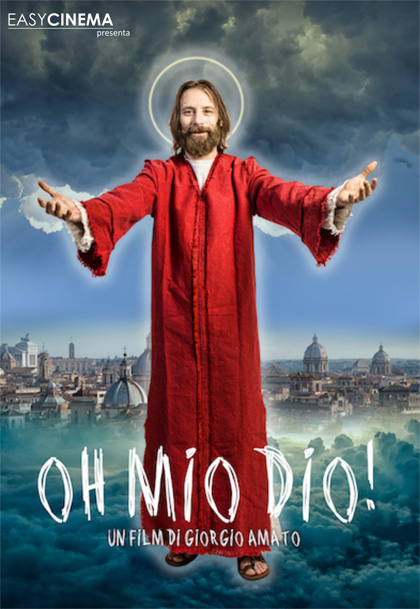
movieplayer.net-cdn.it/t/images/2018/03/08/oh_mio_dio_car...

----------------------------------------------------------
click to activate the small icon of slideshow: the small triangle inscribed in the small rectangle, at the top right, in the photostream (it means the monitor);
or…. Press the “L” button to zoom in the image;
clicca sulla piccola icona per attivare lo slideshow: sulla facciata principale del photostream, in alto a destra c'è un piccolo rettangolo (rappresenta il monitor) con dentro un piccolo triangolo nero;
oppure…. premi il tasto “L” per ingrandire l'immagine;
www.worldphoto.org/sony-world-photography-awards/winners-...
www.fotografidigitali.it/gallery/2726/opere-italiane-segn...
………………………………………………………
This "photographic story" ideally follows the previous one, for two reasons, first because in this case too, as in the previous story we talk about "angels", they are the "Golden Angels" of San Pier Niceto (in the province of Messina), and second, because this singular and beautiful religious festival, with its procession, also takes place during the Easter period, specifically during "Holy Tuesday". The photographs that I post (not a few, I wish in this way to pay homage to the inhabitants of San Pier Niceto, who can find themselves in these photos, especially for those fathers, mothers, grandfathers, grandmothers, aunts and uncles, in seeing their beloved and very sweet "angels - angiolette"); if you look closely at some of the photographed subjects, you will notice a "temporal disconnect", in fact in some cases, the same girls are present, with two different ages, they will be dressed differently, this is because the photos were taken during Holy Tuesday of 2024 and that of 2025. The temporal sequence of the photographs does not take into account either the year in which they were taken, nor the moments attributable to the phases of the ceremony and subsequent procession.
In San Pier Niceto, on the Peloritani Mountains in Sicily, during the Holy Tuesday takes place the SS. Crucifix procession, whose roots are ancient. The Church of St. James houses and cares for the precious Crucifix, Which is brought to the procession by the streets of the country preceded by very young children, of both sexes, who imitate little Angels, Angels and Grieving young Nuns, dressed in elaborate dresses covered with many gold jewelery, sewn by handy hands that with pins, necklaces , Bracelets and many other gold jewelry applied to their little clothes, they make real works of art whose designs are reminiscent of Easter symbols. Gold for dressing is collected home from home by people who have to melt a "vote", gold that will be returned at the end of the procession. Everything begins during Lent when parents decide to dress their baby by little Angels, Angels or Grieving Nuns .The Little Angels are usually 3 or 4 year olds, the Angels are a little bigger, the Nuns are little young girls. Thus the preparations for the elaboration of the elaborate clothes begin: Parents during Lent are knocking at every door of the country, among friends and relatives, to borrow bracelets, brooches, necklaces and all the gold necessary for the composition of embroidery . The Little Angel's dress is white, short down to the knee, made up of a gold-plated bodice and a skirt with some golden embroidery; Arms are adorned by bracelets, the head is adorned by a collier, small wings (white dove feathers) sprout from behind. The Angels have a white tunic, on which sacred icons are embroidered in gold, the head is covered by a collier, wings lie on their shoulders. The Nun's dress is black, on which are stitched the crowns of the S.S. Rosary, on the head is placed a white veil, held by a rose crown. At 16:30 on Holy Tuesday, a tapping of bells together with the band's fanfare in the village, set off at the "Crucifixion Procession" of San Pier Niceto: at the foot of the Crucifix there are red roses, behind it are located branches of cypress (at the end of the event the faithful will carry with them a piece of cypress as a relic), finally the red ribbons are tied to the arms of the Crucifix, they will mark the procession of the procession until the arrival at the Mother Church, a century church to St. Peter the Apostle, where the celebration of the Holy Mass will take place (the reverse path will bring the SS Crucifix to the Church of St. James): in perfect order the faithful in religious silence, with votive candles in their hands, walk the streets of the country never crossing the red ribbons as they delimit the path of the Golden Little Angels, Angels and the Grieving young Nuns .
Questo "racconto fotografico" segue idealmente il precedente, per due motivi, innanzitutto perchè anche in questo caso, come nel racconto precedente si parla di "angeli", sono "gli Angioletti d'oro" di San Pier Niceto (in provincia di Messina), e secondo, perchè questa singolare e bella festa religiosa, con la sua processione, si svolge anch'essa durante il periodo pasquale, nello specifico durante il "Martedì Santo". Le fotografie che posto (non poche, desidero in tal modo omaggiare gli abitanti di San Pier Niceto, che possano ritrovarsi in queste foto, soprattutto per quei papà, mamme, nonni, nonne, zie e zii, nel rivedere i loro adorati e dolcissimi "angioletti - angiolette"); a ben guardare in alcuni dei soggetti fotografati, si noterà uno "scollamento temportale", infatti in qualche caso, sono presenti le stessi bimbe, con due età diverse, saranno vestite diversamente, questo perchè le foto sono state realizzate durante il Martedì Santo del 2024 e quello del 2025. La sequenza temporale delle fotografie non tiene conto nè dell'anno nel quale sono state realizzate, nè dei momenti ascrivibili alle fasi della cerimonia e successiva processione.
A San Pier Niceto, sui monti Peloritani in Sicilia, durante il Martedì Santo prende vita la processione per le vie del paese del SS. Crocifisso, le cui radici sono antichissime. La Chiesa di San Giacomo ospita e custodisce il pregevole Crocifisso, che viene portato in processione per le vie del paese preceduto da bambini anche molto piccoli, di entrambi i sessi, che impersonano Angioletti ed Addoloratine vestiti con elaboratissimi abiti ricoperti con tantissimi monili d’oro, cuciti dalle mani abili di sarte che con spille, collane, bracciali e tanti altri monili in oro applicati sui loro piccoli vestiti, realizzano vere opere d’arte i cui disegni ricordano simboli pasquali. L’oro per la realizzazione dei vestitini viene raccolto di casa in casa da persone che hanno da sciogliere un “voto”, oro che verrà restituito alla fine della processione. Tutto ha inizio durante la Quaresima, quando dei genitori decidono per “voto” di vestire il proprio bambino da Angioletto, Angiolone o Monachella.
Gli Angioletti sono solitamente bimbi di 3 o 4 anni, gli Angioloni sono un po’ più grandi, le Monachelle sono delle bambine. Così iniziano i preparativi per la realizzazione degli elaboratissimi vestiti: i genitori durante la Quaresima bussano ad ogni porta del paese, tra la cerchia di amici e parenti, per prendere in prestito bracciali, spille, collane e tutto l’oro necessario alla composizione dei ricami. Il vestito degli Angioletti è bianco, corto fino al ginocchio, composto da un corpetto ricoperto d’oro ed una gonna segnata da alcuni ricami d’oro; le braccia sono adornate da bracciali, la testa è adornata da un collier, da dietro le spalle spuntano delle piccole ali (piume di colomba bianca). Gli Angioloni hanno una tunica bianca sulla quale vengono ricamate delle icone sacre in oro, la testa è cinta da un collier, sulle spalle trovano posto delle ali. Il vestito delle Monachelle invece è nero, sul quale vengono cucite delle coroncine del S.S. Rosario, sul capo viene posto un velo bianco, trattenuto da una corona di rose. Alle 16:30 del Martedì Santo un rintocco di campane insieme alla fanfare della banda del paese, danno il via alla “Processione del Crocifisso” di San Pier Niceto: ai piedi della Croce vi sono delle rose rosse, dietro di essa trovano posto dei rami di cipresso (alla fine dell’evento i fedeli porteranno con se un pezzetto di rametto come reliquia), infine dei nastri rossi vengono legati alle braccia del Crocifisso, essi segneranno il percorso della processione, fino all’arrivo al Duomo, una chiesa cinquecentesca dedicata a San Pietro apostolo, ove si terrà la celebrazione della Santa Messa ( il percorso inverso riporterà il S.S. Crocifisso nella Chiesa di San Giacomo): in perfetto ordine i fedeli in religioso silenzio, con ceri votivi in mano, percorrono le vie del paese, non oltrepassando i nastri rossi poiché essi delimitano il percorso degli Angioletti d’oro e delle Addoloratine.
"Creativity is contagious. Pass it on." Attributed to A. Einstein.
During our last trips I have always tried to photograph interiors of buildings, sometimes to give a personal touch I try to use my wife in the composition to get a more interesting image. In Brussels I had marked in red a bookshop located in the beautiful Bortier Gallery, a building built in the mid-nineteenth century that fortunately continues to host some art businesses.
When we got there the thermometer indicated about 40 degrees and I thought that inside the gallery we would be safe from the heat wave. However, the ceiling glass turned the place into a kind of sauna with a smell of old books. After waiting a few minutes for some clients to leave, my muse patiently agreed to pose for me despite the stifling heat. Luckily I got the image I was looking for quite quickly. With certain uncomfortable conditions it can be very tempting to give up and not take a picture, but we should not look for excuses to create and we should always try it. On this occasion, my creativity was contagious enough to convince the model that we could not miss the opportunity to create something together in this beautiful place.
-----------------------------------------------
"La creatividad es contagiosa. Pásala." Atribuida a A. Einstein.
Durante nuestros últimos viajes siempre he intentado fotografiar interiores de edificios, a veces para darle un toque personal intento usar a mi mujer en la composición para conseguir una imagen más interesante. En Bruselas había marcado en rojo una librería situada en la preciosa Galería Bortier, un edificio construido a mediados del siglo XIX que por suerte sigue acogiendo algunos negocios de arte.
Cuando llegamos allí el termómetro marcaba unos 40 grados y pensé que dentro de la galería estaríamos a salvo de la ola de calor. Sin embargo, el cristal del techo convertía el lugar en una especie de sauna con olor a libros antiguos. Después de esperar unos minutos a que algunos clientes se fueran, mi musa aceptó pacientemente a posar para mí a pesar del sofocante calor. Por suerte conseguí bastante rápido la imagen que buscaba. Con determinadas condiciones incómodas puede ser muy tentador desistir y no realizar una fotografía, pero no deberíamos buscar excusas para crear y deberíamos intentarlo siempre. En esta ocasión, mi creatividad fue lo suficientemente contagiosa para convencer a la modelo de que no podíamos dejar pasar la oportunidad de crear algo juntos en este precioso lugar.
The Oranjehotel was the name the Dutch attributed to the Scheveningen prison during the Second World War. Here the German occupier detained over 25,000 people for interrogation and prosecution. Those who violated regulations imposed by the nazi's covered a broad spectrum and came from all corners of the Netherlands. Most were members of the Resistance, but those imprisoned here also included Jews and Jehovah’s Witnesses, as well as people detained for economic offences, such as dealing on the black market. Even during the war, the complex was called Oranjehotel as a tribute to the Resistance members imprisoned there.
Google European Headquarters in Dublin
You can use this image freely, however under the CC BY 2.0 licence we ask you attribute www.outreachpete.com as the original source.
Jamaica Apas, 14
Started boxing at at 12. Her goal is to be a world champion.
Flores Boxing Gym, founded in the 1970s by Paciano “Noy Pacing” Flores in Mandaue City, Cebu, is a no-frills, community-rooted gym that continues to thrive under the guidance of his son, Brix Flores, a bronze medalist in the 1986 Asian Games. With little more than basic gear and a makeshift ring, the gym offers underprivileged youth a place to train, grow, and dream. Many train at little or no cost, learning discipline and perseverance in an environment fueled by grit and mentorship. Despite its humble setup, the gym has produced regional and national champions, including notable female boxers competing on the WBC stage. More than a training facility, Flores Boxing Gym serves as a beacon of hope in Cebu’s urban landscape—a place where raw talent is refined, champions are made, and community bonds are forged through sweat and determination.
Attributed to Wilhelm Schubert van Ehrenberg (1630-1676) - Two figures in a classical church interior
www.sothebys.com/en/auctions/ecatalogue/2012/old-master-b...
The Akha Hill Tribe, indigenous to Southeast Asia, practice a traditional tea harvesting method ingrained in their culture. Working communally, they meticulously hand-pick the youngest, most tender tea leaves during flush seasons, ensuring optimal flavor. These leaves undergo sorting to remove imperfections before traditional processing methods, including withering, rolling, oxidation, and drying, are applied. Drying, crucial for flavor preservation, is typically achieved through sun exposure or low-heat pan-firing. The processed tea is then carefully packaged, often in traditional bamboo containers or handmade pouches. Beyond sustenance, tea harvesting holds cultural significance, fostering community bonds through ceremonies and shared traditions. This ancient practice not only sustains the Akha Hill Tribe but also preserves their rich cultural heritage.
Flores Boxing Gym, founded in the 1970s by Paciano “Noy Pacing” Flores in Mandaue City, Cebu, is a no-frills, community-rooted gym that continues to thrive under the guidance of his son, Brix Flores, a bronze medalist in the 1986 Asian Games. With little more than basic gear and a makeshift ring, the gym offers underprivileged youth a place to train, grow, and dream. Many train at little or no cost, learning discipline and perseverance in an environment fueled by grit and mentorship. Despite its humble setup, the gym has produced regional and national champions, including notable female boxers competing on the WBC stage. More than a training facility, Flores Boxing Gym serves as a beacon of hope in Cebu’s urban landscape—a place where raw talent is refined, champions are made, and community bonds are forged through sweat and determination.
The Annunciation is a painting widely attributed to the Italian Renaissance artist Leonardo da Vinci, dated to c. 1472–1476. Leonardo's earliest extant major work, it was completed in Florence while he was an apprentice in the studio of Andrea del Verrocchio. The painting was made oil and tempera on a large poplar panel and depicts the Annunciation, a popular biblical subject in 15th-century Florence. Since 1867 it has been housed in the Uffizi in Florence, the city where it was created. Though the work has been criticized for inaccuracies in its composition, it is among the best known portrayals of the Annunciation in Christian art.
The subject matter of the work is drawn from Luke 1.26–39. It depicts the angel Gabriel announcing to Mary that she would conceive miraculously and give birth to a son to be named Jesus and called "the Son of God", whose reign would never end. The subject of the annunciation was very popular for contemporaneous artworks painted in Christian countries such as Italy and had been depicted many times in Florentine art, including several examples by the Early Renaissance painter Fra Angelico. Details of the commission for the painting and its early history remain obscure.
The marble table in front of Mary probably is derived from the tomb of Piero and Giovanni de' Medici in the Basilica of San Lorenzo, Florence, which Verrocchio had sculpted during this same period. The angel holds a Madonna lily, a symbol of Mary's virginity as well as that of the city of Florence.
It is presumed that, being a keen observer of nature, Leonardo painted the wings of the angel to resemble those of a bird in flight, but later, the wings were lengthened dramatically by another artist.
Although this is the earliest known commissioned painting by Leonardo, it has been pointed out that the painting already bears characteristics that are described as demonstrating his signature work, the innovations he introduced in his paintings: sfumato and atmospheric perspective.
Following Gustav Waagen methods in 1869, Baron Liphart identified this Annunciation, that newly arrived in the Uffizi Gallery from the church of San Bartolomeo a Monte Oliveto in Florence, as by the young Leonardo while he still was working in the studio of his master, Andrea del Verrocchio. Before that determination by Liphart the painting had been attributed to Domenico Ghirlandaio.
When the Annunciation came to the Uffizi in 1867, from the Olivetan monastery of San Bartolomeo near Florence, it was ascribed to Domenico Ghirlandaio who, like Leonardo, was an apprentice in the workshop of Andrea del Verrocchio. In 1869, Karl Eduard von Liphart, the central figure of the German expatriate art colony in Florence, recognized the painting as a youthful work by Leonardo. It was one of the first attributions of a surviving work to the youthful Leonardo. Since then, a Leonardo drawing in a collection at Christ Church Picture Gallery in Oxford was recognized as a preparatory drawing for the sleeve of the angel, further supporting the attribution to Leonardo.
Occasionally, some immaturity in Leonardo's painting technique is noted by art critics when discussing the spatial relationship between Mary and the desk and the marble table on which it rests.
6 year old Kamu Ntip cradled by her 70 year old grandmother Apah's Hands.
The Akha people, an indigenous hill tribe in northern Thailand, have distinct and colorful dress traditions that reflect their cultural identity. Akha women often wear vibrant, intricately adorned attire that varies based on age, marital status, and ceremonial occasions.
Their traditional clothing includes a headdress adorned with silver coins, beads, and decorative elements symbolizing their cultural beliefs. The headdress's design and ornamentation may signify different stages of life or marital status. For instance, unmarried women might wear headdresses with decorative elements that cover their ears, while married women often wear head coverings with silver ornamentation shaped like horns or wings.
Akha women's attire typically consists of long-sleeved jackets, often red or indigo, adorned with elaborate embroidery and patterns. They pair these jackets with wraparound skirts or pants adorned with detailed needlework or embellishments. Additionally, they wear numerous accessories, including necklaces, bracelets, and anklets made of beads, shells, and silver.
These garments and accessories are not just about aesthetics but also reflect the Akha community's identity, social standing, and cultural heritage. The attire's complexity and colors signify various aspects of their lives, beliefs, and roles within the community, making it a significant aspect of their cultural expression and traditions.
The Karen tribe of Thailand traditionally practices neck elongation using brass coils. Starting at a young age, coils are added gradually, giving the appearance of a longer neck. This practice is culturally significant, symbolizing beauty and social status within the tribe.
Sculptures attributed to Enrico Merengo, on the exterior of Church Santa Maria del Giglio in Venice on Campo Santa Maria Zobenigo.
The Barbaro family was a patrician family of Venice. They were wealthy and influential and owned large estates in the Veneto above Treviso. Various members were noted as church leaders, diplomats, patrons of the arts, military commanders, philosophers, scholars, and scientists
Attributed to Claus de Werve (Netherlandish, active in France, ca. 1380–1439, active Burgundy, 1396–ca. 1439)
The date of the sculpture is around 1415.
There is a quality that I cannot describe in a photograph captured by a Hasselblad that I just cannot attribute to other cameras. There is a realness that puts me in the photo, fingers raking the grass, without too much effort processing the raw image. Now the Hasselblad 503CWD is an older technology camera. My anniversary edition is from 2006 and is 16 megapixels. It has shortcomings, such as 400 ISO is the highest it goes. I find the very expensive PME 45 viewfinder is hard to focus as compared to the waistlevel finder. This lens and digital back combination reported the Shutter Speed as 0.5 second, -but it was in fact 1/125th. It is about as ergonomic as holding a brik up to your eye, but the Swedes are masters at manufacturing "bricks", such as the indestructible Volvo 244DL. The camera would be best served in a studio setting. But, it creates wonderfully natural landscapes.
I did nothing to the sky and clouds, but they look three dimensional.
This photo was chosen to be display on Channel Nine.
This photo has been published.
A gentle reminder about copyright and intellectual property-
Ⓒ Cassidy Photography (All images in this Flickr portfolio)
Salish cedar-root basketry served many functions, from storing medicines and personal belongings to even heating water. Basket making as a skill became more widespread in the early to mid-twentieth century, when demand for basketry among settler tourists and collectors soared, ad it became a source of income for many First Nation Women. While the market declined after the 1950s, artists such as Andrew preserved the tradition, passing her knowledge on the her daughter Doreen, who is also a basket weaver.
It is a great temptation to attribute the apparent naivety of the Holy Scriptures to the "human margin", stretched out as it is in the shadow of Divine inspiration; it goes without saying that there is no connection between the two, unless we take this margin in a transposed and altogether different way, as we will do later, but it is clearly no such transposition that modern critics have in view when they bring up as arguments against the sacred books the apparent scientific errors which they contain.
The data - said to be naive – of Genesis for example prove, not that the Bible is wrong, but that man ought not to be told any more; needless to say, no knowledge is harmful in itself, and there are necessarily always men who are capable of spiritually integrating all possible knowledge; but the only kinds of knowledge that the average man can cope with are those which come to him through elementary, universal, age-old and therefore normal experience, as the history of the last centuries clearly proves.
It is a fact not only that scientific man (rough-cast by classical Greece and developed by the modern West) loses religion in proportion to his involvement with physical science but also that the more he is thus involved, the more he closes himself to the infinite dimension of suprasensory knowledge - the very knowledge that gives life a meaning.
It is true that Paradise is described in the Scriptures as being "up above", "in Heaven", because the celestial vault is the only height that can be empirically or sensorially grasped; and for an analogous reason, hell is "down below", "under the earth", in darkness, heaviness, imprisonment. Similarly, for the Asiatics, samsaric rebirths (when they are neither celestial nor infernal) take place "on earth", that is, on the only plane that can be empirically grasped; what counts, for Revelation, is the efficacy of the symbolism and not the indefinite knowledge of meaningless facts. It is true that no fact is totally meaningless in itself, otherwise it would be nonexistent, but the innumerable facts which escape man's normal experience and which the scientific viewpoint accumulates in our consciousness and also in our life are only spiritually intelligible for those who have no need of them.
Ancient man was extremely sensitive to the intentions inherent in symbolic expressions, as is proved on the one hand by the efficacy of these expressions throughout the centuries and on the other hand by the fact that ancient man was a perfectly intelligent being, as everything goes to show; when he was told the story of Adam and Eve, he grasped so well what it was all about - the truth of it is in fact dazzlingly clear - that he did not dream of wondering "why" or "how"; for we carry the story of Paradise and the Fall in our soul and even in our flesh.
The same applies to all eschatological symbolism: the "eternity" of the hereafter denotes first of all a contrast in relation to what is here below, a dimension of absoluteness as opposed to our world of fleeting and therefore "vain" contingencies, and it is this and nothing else that matters here, and this is the divine intention that lies behind the image. In transmigrationist symbolisms, on the contrary, this "vanity" is extended also to the hereafter, at least in a certain measure and by reason of a profound difference of perspective; and here likewise there is no preoccupation with either "why" or "how", once the penetrating intention of the symbol has been grasped as it were in one's own flesh.
In the man who is marked by the viewpoint of modern science, intuition of the underlying intentions has vanished, and that is not all; modern science, axiomatically closed to the suprasensory dimensions of the Real, has endowed man with a crass ignorance and thereby warped his imagination.
The modernist mentality is bent on reducing angels, devils, miracles (in a word all non-material phenomena which are inexplicable in material terms) to the domain of the "subjective" and the "psychological", when there is not the slightest connection between the two, except that the psychic itself is also made - but objectively - of substance which lies beyond matter; a contemporary theologian, speaking of the Ascension, has gone so far as to ask slyly, "where does this cosmic journey end?", which serves to measure out the self-satisfied imbecility of a certain mentality that wants to be "of our time". It would be easy to explain why Christ was "carried up" into the air and what is the meaning of the "cloud" which hid him from sight, and also why it was said that Christ "will come after the same fashion"; every detail corresponds to a precise reality which can easily be understood in the light of the traditional cosmologies; the key lies in the fact that the passage from one cosmic degree to another is heralded in the lower degree by "technically" necessary and symbolically meaningful circumstances which reflect after their fashion the higher state and which follow one another in the order required by the nature of things.
In any case, the deficiency of modern science lies essentially in its neglect of universal causality; it will no doubt be objected that science is not concerned with philosophical causality but with phenomena, which is untrue, for evolutionism in its entirety is nothing other than a hypertrophy, thought out as a means of denying real causes, and this materialistic negation, together with its evolutionist compensation, belongs to philosophy and not to science.
From an altogether different point of view, it must be admitted that the progressives are not entirely wrong in thinking that there is something in religion which no longer works; in fact the individualistic and sentimental argumentation with which traditional piety operates has lost almost all its power to pierce consciences, and the reason for this is not merely that modern man is irreligious but also that the usual religious arguments, through not probing sufficiently to the depths of things and not having had previously any need to do so, are psychologically somewhat outworn and fail to satisfycertain needs of causality.
If human societies degenerate on the one hand with the passage of time, they accumulate on the other hand experience by virtue of old age, however intermingled with errors their experience may be; this paradox is something that any pastoral teaching bent on efficacy should take into account, not by drawing new directives from the general error but on the contrary by using arguments of a higher order, intellectual rather than sentimental; as a result, some at least would be saved (a greater number than one might be tempted to suppose) whereas the demagogic scientistic pastoralist saves no one.
----
Frithjof Schuon: Islam and the Perennial Philosophy
In the early to mid-twentieth century Indigenous basket makers began expanding their repertoire of shapes and styles for collectors. Many new forms, including tea cups, suitcases, hand bags and basketry cradles emerged. This coiled cedar root cradle, with a pattern of mainly canary grass with several repeat of alternating cherry bark and grass, was recently attributed to Peters. Her daughter, Joan Chapman, recognized its design as one she had inherited from her mother.
In the Marina district is the monumental church of St. Sepulchre. According to some news, the building would be attributed to the Knights Templar, who would have built as a chapel of their monastery.
most credible hypothesis, they would find the foundation in the sixteenth century when it was founded the Confraternity of the Holy Crucifix Prayer and Death. The crypt was used as a cemetery and the Brotherhood took care to bury the poorest people.
In the nineteenth century, the area lost its function and became a square. During the restoration of the Collegiate Sant'Eulaia, San Sepulchre became the parish church of the neighborhood. In the postwar years he was home to the Carmelites. After being closed for renovation, the church was inaugurated by the archbishop of Cagliari, in December 1998.
_________________________________________
Nel quartiere Marina c’è la chiesa monumentale di San Sepolcro. Secondo alcune notizie, l’edificio sarebbe da ricondursi ai Cavalieri Templari, che l’avrebbero costruito come cappella del loro monastero.
Ipotesi più accreditate ne vedrebbero la fondazione nel XVI secolo quando venne fondata la Confraternita del Santissimo Crocifisso dell’Orazione e della Morte. La cripta veniva utilizzata come cimitero e la Confraternita si occupava di dare sepoltura alle persone più povere.
Nel XIX secolo, l’area perse la sua funzione e diventò una piazza. Durante i lavori di restauro della Colleggiata di Sant’Eulaia, San Sepolcro diventò la chiesa parrocchiale del quartiere. Negli anni del dopo guerra ospitò i Carmelitani. Dopo essere stata chiusa per lavori di restauro, la chiesa venne inaugurata dall’arcivescovo di Cagliari, nel dicembre del 1998.
Erroneously attributed to Banksy on discovery, this piece of street art created in reaction to Brexit was later found to be the work of Weston's JPS
I was a little taken aback when I walked over the chalk marks on this bridge, since they appeared to read "666". Most Christians attribute the number to what the bible calls the Antichrist, and I wondered if some child had just made the shapes, or if someone who was into satanism had done it. Either way, for me it was a reminder that the world we know will one day end, and there will be some pretty insidious, and defining things that will happen before it does. One of those things will be the emergence of the "Antichrist", whether it is an actual man, or a system of government.
The bible speaks of the Antichrist as if he will be a man. It is hard to imagine the entire world agreeing to follow the rule of one person, but when you look back at history, and see people like Hitler, who was most assuredly an Antichrist of his time, though not THE Antichrist, it is not completely unfathomable. People do tend to follow more than they do lead, and someone like that can rally millions of people to their cause. The cause is usually self-glorification, but it takes a long time before many people can see that. People WANT to believe someone who promises them what they would like to have. I would rather have discernment and stand for what is right, even if things will not go well for me when I do! After all, to side with God is the ONLY safe place on earth, or anywhere in the universe! No one can oppose the Lord and succeed. Why anyone would want to beats me! Takes all kinds, like the one who drew this mark in a pretty, local park....