View allAll Photos Tagged Attribute
Two of my favorite memories of Trinidad were hearing the bread sellers’ whistles echo through the streets and seeing men stroll with their parakeets. The morning calls of “panadero” and the colorful birds add charm and rhythm to this colonial town, where daily life blends tradition, companionship, and the music of the streets.
Torres del Paine National Park in Chilean Patagonia, a UNESCO Biosphere Reserve, is renowned for its stunning granite peaks, including the iconic “Torres,” and vibrant glacial lakes like Pehoé and Grey. The park’s rich biodiversity includes guanacos, condors, and elusive pumas. Its diverse ecosystems span from windswept plains to dense forests, making it a paradise for nature lovers and a must-see destination for its breathtaking landscapes and wildlife.
attributed to Stefano di Giovanni (1375 - 1438) or Michelino da Besozzo (1370 - 1455) - Madonna of the rose garden - Madonna with Child and Saint Catherine - from the convent of San Domenico - Museum of Castelvecchio, Verona
winged and bearded genies with various attributes
New Assyrian Period, c. 870 BC, Nimrud, North-West Palace of Ashurnasirpal II
Staatliches Museum Ägyptischer Kunst, München, Deutschland / State Museum of Egyptian Art, Munich, Germany
Archaeologists attribute the glyphs at Painted Rock Pictograph site to either the Western Archaic tradition or the Gila Style.
The Gila Style is defined as having designs of animals, insects, human shapes, plants, circles, and zigzags, which we see here. The Hohokam people, who are accredited as the artists of these glyphs, lived in the area between 300 BC and 1450 AD.
Chill time.....
COSCOROBA SWAN (Coscoroba coscoroba)
The Coscoroba Swan is the smallest of the wildfowl called a ‘Swan’. It belongs to the subfamily Anserinae in the family Anatidae which includes ducks, swans and geese.
The Coscoroba Swan shows all attributes associated with the Anatidae family, the body is like a small swan, the head is like a goose and the bill is similar to a duck.
Belfast Castle.
Although attributed to architect Sir Charles Lanyon, some architectural historians believe that the castle was actually designed by either his business partner, and former apprentice, W.H. Lynn, or by Sir Charles's son John Lanyon.
________________________
Jesus said:
Come unto me, all ye that labour and are heavy laden, and I will give you rest.
(Matthew 11:28)
Foxes, serving as messengers for Inari (the deity associated with paddy fields and other attributes), are depicted as statues marking the shrines. Narrative paintings and scrolls often feature kitsune (foxes), particularly as white foxes.
At Fushimi Inari Shrine, the kitsune sculptures make up over 25% of all fox statues found at shrines throughout Japan.
In Japanese iconography, foxes hold significant roles, ranging from cunning shape-shifters to guardians of rice and granaries. In mythology, foxes (kitsune) can be either bad (nogitsune) or good (yako or zenko), often distinguished by their colors and facial expressions in paintings.
Regarding sculptures, good foxes are typically placed at the entrances of Inari shrines, serving as guardians. These statues are often adorned with a red cloth, symbolizing the auspicious color of Inari. In contrast, bad fox statues are fewer and usually hidden in thickets or remote locations.
At the Inari shrine, a kitsune holding a key to the rice granary welcomes visitors. Its raised tail and stern expression signify its role as a guardian. The other kitsune in the pair greets visitors with a pleasant expression. Both kitsune at Fushimi Inari have one tail, while some kitsune depicted as spirits or souls in paintings have multiple tails.
Fushimi Inari Taisha, Fushimi-ku, Kyoto, Japan
Magnificent is the set of the Virgin of Granada in the Scalas Chapel (measures 2.50x1.80m) made of baked and polychrome clay, the background being cobalt blue and milky white figures, work attributed to the 19th century Florentine workshop of Andrea della Robbia .
In the altarpiece where the Virgin of Granada is located we see her complete image, which has the Child, seated on her right leg offering her a pomegranate, a symbol of redemption. The Virgin receives the crown carried by cherubs and to her right and left Saint Francis of Assisi, Saint Sebastian, Saint Dominic de Guzmán and Saint Casilda, found on the frieze of the altarpiece, little heads of winged angels and on the curved tympanum of the pediment the Christ, Man of Sorrows in the center, the Virgin and Saint John. Another gem of the many that this unbeatable Sevillian Cathedral contains
“things only exist if they are told/narrated”
(attributed to Alessandro Baricco);
“le cose esistono solo se vengono raccontate”
(attribuita ad Alessandro Baricco).
POSTER - LOCANDINA –
www.primevideo.com/detail/Oh-Mio-Dio/0FBFGSB0G1HMNXV56F5C...
pad.mymovies.it/filmclub/2018/02/181/locandina.jpg
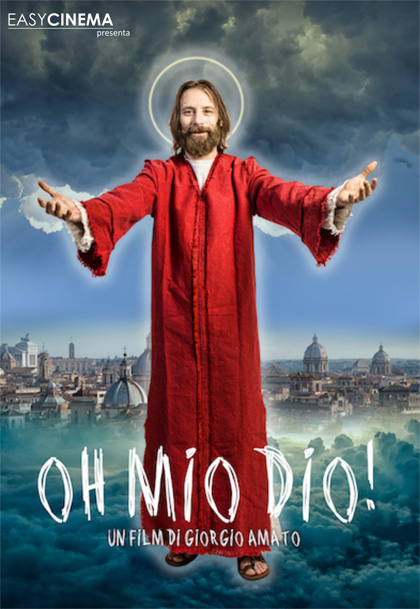
movieplayer.net-cdn.it/t/images/2018/03/08/oh_mio_dio_car...

..........................................................................
click to activate the small icon of slideshow: the small triangle inscribed in the small rectangle, at the top right, in the photostream (it means the monitor);
or…. Press the “L” button to zoom in the image;
clicca sulla piccola icona per attivare lo slideshow: sulla facciata principale del photostream, in alto a destra c'è un piccolo rettangolo (rappresenta il monitor) con dentro un piccolo triangolo nero;
oppure…. premi il tasto “L” per ingrandire l'immagine;
www.worldphoto.org/sony-world-photography-awards/winners-...
www.fotografidigitali.it/gallery/2726/opere-italiane-segn...
………………………………………………………
This "photographic story" ideally follows the previous one, for two reasons, first because in this case too, as in the previous story we talk about "angels", they are the "Golden Angels" of San Pier Niceto (in the province of Messina), and second, because this singular and beautiful religious festival, with its procession, also takes place during the Easter period, specifically during "Holy Tuesday". The photographs that I post (not a few, I wish in this way to pay homage to the inhabitants of San Pier Niceto, who can find themselves in these photos, especially for those fathers, mothers, grandfathers, grandmothers, aunts and uncles, in seeing their beloved and very sweet "angels - angiolette"); if you look closely at some of the photographed subjects, you will notice a "temporal disconnect", in fact in some cases, the same girls are present, with two different ages, they will be dressed differently, this is because the photos were taken during Holy Tuesday of 2024 and that of 2025. The temporal sequence of the photographs does not take into account either the year in which they were taken, nor the moments attributable to the phases of the ceremony and subsequent procession.
In San Pier Niceto, on the Peloritani Mountains in Sicily, during the Holy Tuesday takes place the SS. Crucifix procession, whose roots are ancient. The Church of St. James houses and cares for the precious Crucifix, Which is brought to the procession by the streets of the country preceded by very young children, of both sexes, who imitate little Angels, Angels and Grieving young Nuns, dressed in elaborate dresses covered with many gold jewelery, sewn by handy hands that with pins, necklaces , Bracelets and many other gold jewelry applied to their little clothes, they make real works of art whose designs are reminiscent of Easter symbols. Gold for dressing is collected home from home by people who have to melt a "vote", gold that will be returned at the end of the procession. Everything begins during Lent when parents decide to dress their baby by little Angels, Angels or Grieving Nuns .The Little Angels are usually 3 or 4 year olds, the Angels are a little bigger, the Nuns are little young girls. Thus the preparations for the elaboration of the elaborate clothes begin: Parents during Lent are knocking at every door of the country, among friends and relatives, to borrow bracelets, brooches, necklaces and all the gold necessary for the composition of embroidery . The Little Angel's dress is white, short down to the knee, made up of a gold-plated bodice and a skirt with some golden embroidery; Arms are adorned by bracelets, the head is adorned by a collier, small wings (white dove feathers) sprout from behind. The Angels have a white tunic, on which sacred icons are embroidered in gold, the head is covered by a collier, wings lie on their shoulders. The Nun's dress is black, on which are stitched the crowns of the S.S. Rosary, on the head is placed a white veil, held by a rose crown. At 16:30 on Holy Tuesday, a tapping of bells together with the band's fanfare in the village, set off at the "Crucifixion Procession" of San Pier Niceto: at the foot of the Crucifix there are red roses, behind it are located branches of cypress (at the end of the event the faithful will carry with them a piece of cypress as a relic), finally the red ribbons are tied to the arms of the Crucifix, they will mark the procession of the procession until the arrival at the Mother Church, a century church to St. Peter the Apostle, where the celebration of the Holy Mass will take place (the reverse path will bring the SS Crucifix to the Church of St. James): in perfect order the faithful in religious silence, with votive candles in their hands, walk the streets of the country never crossing the red ribbons as they delimit the path of the Golden Little Angels, Angels and the Grieving young Nuns .
Questo "racconto fotografico" segue idealmente il precedente, per due motivi, innanzitutto perchè anche in questo caso, come nel racconto precedente si parla di "angeli", sono "gli Angioletti d'oro" di San Pier Niceto (in provincia di Messina), e secondo, perchè questa singolare e bella festa religiosa, con la sua processione, si svolge anch'essa durante il periodo pasquale, nello specifico durante il "Martedì Santo". Le fotografie che posto (non poche, desidero in tal modo omaggiare gli abitanti di San Pier Niceto, che possano ritrovarsi in queste foto, soprattutto per quei papà, mamme, nonni, nonne, zie e zii, nel rivedere i loro adorati e dolcissimi "angioletti - angiolette"); a ben guardare in alcuni dei soggetti fotografati, si noterà uno "scollamento temportale", infatti in qualche caso, sono presenti le stessi bimbe, con due età diverse, saranno vestite diversamente, questo perchè le foto sono state realizzate durante il Martedì Santo del 2024 e quello del 2025. La sequenza temporale delle fotografie non tiene conto nè dell'anno nel quale sono state realizzate, nè dei momenti ascrivibili alle fasi della cerimonia e successiva processione.
A San Pier Niceto, sui monti Peloritani in Sicilia, durante il Martedì Santo prende vita la processione per le vie del paese del SS. Crocifisso, le cui radici sono antichissime. La Chiesa di San Giacomo ospita e custodisce il pregevole Crocifisso, che viene portato in processione per le vie del paese preceduto da bambini anche molto piccoli, di entrambi i sessi, che impersonano Angioletti ed Addoloratine vestiti con elaboratissimi abiti ricoperti con tantissimi monili d’oro, cuciti dalle mani abili di sarte che con spille, collane, bracciali e tanti altri monili in oro applicati sui loro piccoli vestiti, realizzano vere opere d’arte i cui disegni ricordano simboli pasquali. L’oro per la realizzazione dei vestitini viene raccolto di casa in casa da persone che hanno da sciogliere un “voto”, oro che verrà restituito alla fine della processione. Tutto ha inizio durante la Quaresima, quando dei genitori decidono per “voto” di vestire il proprio bambino da Angioletto, Angiolone o Monachella.
Gli Angioletti sono solitamente bimbi di 3 o 4 anni, gli Angioloni sono un po’ più grandi, le Monachelle sono delle bambine. Così iniziano i preparativi per la realizzazione degli elaboratissimi vestiti: i genitori durante la Quaresima bussano ad ogni porta del paese, tra la cerchia di amici e parenti, per prendere in prestito bracciali, spille, collane e tutto l’oro necessario alla composizione dei ricami. Il vestito degli Angioletti è bianco, corto fino al ginocchio, composto da un corpetto ricoperto d’oro ed una gonna segnata da alcuni ricami d’oro; le braccia sono adornate da bracciali, la testa è adornata da un collier, da dietro le spalle spuntano delle piccole ali (piume di colomba bianca). Gli Angioloni hanno una tunica bianca sulla quale vengono ricamate delle icone sacre in oro, la testa è cinta da un collier, sulle spalle trovano posto delle ali. Il vestito delle Monachelle invece è nero, sul quale vengono cucite delle coroncine del S.S. Rosario, sul capo viene posto un velo bianco, trattenuto da una corona di rose. Alle 16:30 del Martedì Santo un rintocco di campane insieme alla fanfare della banda del paese, danno il via alla “Processione del Crocifisso” di San Pier Niceto: ai piedi della Croce vi sono delle rose rosse, dietro di essa trovano posto dei rami di cipresso (alla fine dell’evento i fedeli porteranno con se un pezzetto di rametto come reliquia), infine dei nastri rossi vengono legati alle braccia del Crocifisso, essi segneranno il percorso della processione, fino all’arrivo al Duomo, una chiesa cinquecentesca dedicata a San Pietro apostolo, ove si terrà la celebrazione della Santa Messa ( il percorso inverso riporterà il S.S. Crocifisso nella Chiesa di San Giacomo): in perfetto ordine i fedeli in religioso silenzio, con ceri votivi in mano, percorrono le vie del paese, non oltrepassando i nastri rossi poiché essi delimitano il percorso degli Angioletti d’oro e delle Addoloratine.
................................................
…………………………………………………….
Il Martedì Santo a San Pier Niceto, con gli angioletti d'oro
A San Pier Niceto il martedì Santo bambini vestiti d’oro
processione di Gesù Crocifisso e degli angioletti vestiti d'oro il martedì santo a san pier niceto
Martedì Santo in Sicilia, la discesa del Crocifisso nel borgo di San Pier Niceto
La Discesa dall'Altare del SS Crocifisso della Chiesa di San Giacomo a San Pier Niceto ANNO 2018
OH MIO DIO | E se Gesù tornasse in Terra? | HOT CORN
Oh mio Dio 😎#film #filme #filmscene #fpy #movie #foryou #neiperte #clip #movieclip
Miracolo Gesù a Roma - guarda il video
LE TESTIMONIANZE DI CHI HA SENTITO PARLARE GESU'
LUI E' CON NOI - Canzone per Gesù
OH MIO DIO | Intervista al regista Giorgio Amato
......................................................
The Royal Portuguese Cabinet of Reading in Rio de Janeiro, Brazil. An architectural masterpiece founded in 1837 by Portuguese immigrants with one goal in mind: preserve and promote their cultural heritage.
The library’s current building, completed in 1887, is a stunning example of Neo-Manueline architecture, reminiscent of the Gothic-Renaissance style popular in Portugal.
Mittens on the back deck, staring at me as I photograph her.
Mittens has many interesting attributes including her beautiful long-haired tux fur coat, beautiful eyes ...but most of all her black spot on her nose is the cutest of all!
Posted for Happy Caturday's theme of cat's attributes. Happy Caturday!
Lepre_La Fertilità
"Attributo di Eostre, la dea solare che presiede l'equinozio di primavera, la Lepre simboleggia la fertilità e la fecondità della Terra ed è connessa alla fase crescente della Luna e quindi all'Est, alla fase preovulatoria, nonché all'archetipo della fanciulla nella ruota di medicina femminile. ... In una leggenda taoista, la Lepre che vive sulla Luna, all'ombra di un albero di fico, pesta in un mortaio le erbe dell'immortalità."
Hare_Fertility
"Attribute of Eostre, the solar goddess who presides over the spring equinox, the Hare symbolizes the fertility and fecundity of the Earth and is connected to the waxing phase of the Moon and therefore to the East, to the pre-ovulatory phase, as well as to the archetype of the girl in the female medicine wheel. ... In a Taoist legend, the Hare who lives on the Moon, in the shade of a fig tree, crushes the herbs of immortality in a mortar."
I testi citati sono di Federica Zizzari, tratti da "Animali Guida" ed. Vivida. The texts cited are by Federica Zizzari, taken from "Animali Guida" ed. Vivida.
Bing Image Creator
“things only exist if they are told/narrated”
(attributed to Alessandro Baricco);
“le cose esistono solo se vengono raccontate”
(attribuita ad Alessandro Baricco).
POSTER - LOCANDINA –
www.primevideo.com/detail/Oh-Mio-Dio/0FBFGSB0G1HMNXV56F5C...
pad.mymovies.it/filmclub/2018/02/181/locandina.jpg
movieplayer.net-cdn.it/t/images/2018/03/08/oh_mio_dio_car...
----------------------------------------------------------
click to activate the small icon of slideshow: the small triangle inscribed in the small rectangle, at the top right, in the photostream (it means the monitor);
or…. Press the “L” button to zoom in the image;
clicca sulla piccola icona per attivare lo slideshow: sulla facciata principale del photostream, in alto a destra c'è un piccolo rettangolo (rappresenta il monitor) con dentro un piccolo triangolo nero;
oppure…. premi il tasto “L” per ingrandire l'immagine;
www.worldphoto.org/sony-world-photography-awards/winners-...
www.fotografidigitali.it/gallery/2726/opere-italiane-segn...
………………………………………………………
This "photographic story" ideally follows the previous one, for two reasons, first because in this case too, as in the previous story we talk about "angels", they are the "Golden Angels" of San Pier Niceto (in the province of Messina), and second, because this singular and beautiful religious festival, with its procession, also takes place during the Easter period, specifically during "Holy Tuesday". The photographs that I post (not a few, I wish in this way to pay homage to the inhabitants of San Pier Niceto, who can find themselves in these photos, especially for those fathers, mothers, grandfathers, grandmothers, aunts and uncles, in seeing their beloved and very sweet "angels - angiolette"); if you look closely at some of the photographed subjects, you will notice a "temporal disconnect", in fact in some cases, the same girls are present, with two different ages, they will be dressed differently, this is because the photos were taken during Holy Tuesday of 2024 and that of 2025. The temporal sequence of the photographs does not take into account either the year in which they were taken, nor the moments attributable to the phases of the ceremony and subsequent procession.
In San Pier Niceto, on the Peloritani Mountains in Sicily, during the Holy Tuesday takes place the SS. Crucifix procession, whose roots are ancient. The Church of St. James houses and cares for the precious Crucifix, Which is brought to the procession by the streets of the country preceded by very young children, of both sexes, who imitate little Angels, Angels and Grieving young Nuns, dressed in elaborate dresses covered with many gold jewelery, sewn by handy hands that with pins, necklaces , Bracelets and many other gold jewelry applied to their little clothes, they make real works of art whose designs are reminiscent of Easter symbols. Gold for dressing is collected home from home by people who have to melt a "vote", gold that will be returned at the end of the procession. Everything begins during Lent when parents decide to dress their baby by little Angels, Angels or Grieving Nuns .The Little Angels are usually 3 or 4 year olds, the Angels are a little bigger, the Nuns are little young girls. Thus the preparations for the elaboration of the elaborate clothes begin: Parents during Lent are knocking at every door of the country, among friends and relatives, to borrow bracelets, brooches, necklaces and all the gold necessary for the composition of embroidery . The Little Angel's dress is white, short down to the knee, made up of a gold-plated bodice and a skirt with some golden embroidery; Arms are adorned by bracelets, the head is adorned by a collier, small wings (white dove feathers) sprout from behind. The Angels have a white tunic, on which sacred icons are embroidered in gold, the head is covered by a collier, wings lie on their shoulders. The Nun's dress is black, on which are stitched the crowns of the S.S. Rosary, on the head is placed a white veil, held by a rose crown. At 16:30 on Holy Tuesday, a tapping of bells together with the band's fanfare in the village, set off at the "Crucifixion Procession" of San Pier Niceto: at the foot of the Crucifix there are red roses, behind it are located branches of cypress (at the end of the event the faithful will carry with them a piece of cypress as a relic), finally the red ribbons are tied to the arms of the Crucifix, they will mark the procession of the procession until the arrival at the Mother Church, a century church to St. Peter the Apostle, where the celebration of the Holy Mass will take place (the reverse path will bring the SS Crucifix to the Church of St. James): in perfect order the faithful in religious silence, with votive candles in their hands, walk the streets of the country never crossing the red ribbons as they delimit the path of the Golden Little Angels, Angels and the Grieving young Nuns .
Questo "racconto fotografico" segue idealmente il precedente, per due motivi, innanzitutto perchè anche in questo caso, come nel racconto precedente si parla di "angeli", sono "gli Angioletti d'oro" di San Pier Niceto (in provincia di Messina), e secondo, perchè questa singolare e bella festa religiosa, con la sua processione, si svolge anch'essa durante il periodo pasquale, nello specifico durante il "Martedì Santo". Le fotografie che posto (non poche, desidero in tal modo omaggiare gli abitanti di San Pier Niceto, che possano ritrovarsi in queste foto, soprattutto per quei papà, mamme, nonni, nonne, zie e zii, nel rivedere i loro adorati e dolcissimi "angioletti - angiolette"); a ben guardare in alcuni dei soggetti fotografati, si noterà uno "scollamento temportale", infatti in qualche caso, sono presenti le stessi bimbe, con due età diverse, saranno vestite diversamente, questo perchè le foto sono state realizzate durante il Martedì Santo del 2024 e quello del 2025. La sequenza temporale delle fotografie non tiene conto nè dell'anno nel quale sono state realizzate, nè dei momenti ascrivibili alle fasi della cerimonia e successiva processione.
A San Pier Niceto, sui monti Peloritani in Sicilia, durante il Martedì Santo prende vita la processione per le vie del paese del SS. Crocifisso, le cui radici sono antichissime. La Chiesa di San Giacomo ospita e custodisce il pregevole Crocifisso, che viene portato in processione per le vie del paese preceduto da bambini anche molto piccoli, di entrambi i sessi, che impersonano Angioletti ed Addoloratine vestiti con elaboratissimi abiti ricoperti con tantissimi monili d’oro, cuciti dalle mani abili di sarte che con spille, collane, bracciali e tanti altri monili in oro applicati sui loro piccoli vestiti, realizzano vere opere d’arte i cui disegni ricordano simboli pasquali. L’oro per la realizzazione dei vestitini viene raccolto di casa in casa da persone che hanno da sciogliere un “voto”, oro che verrà restituito alla fine della processione. Tutto ha inizio durante la Quaresima, quando dei genitori decidono per “voto” di vestire il proprio bambino da Angioletto, Angiolone o Monachella.
Gli Angioletti sono solitamente bimbi di 3 o 4 anni, gli Angioloni sono un po’ più grandi, le Monachelle sono delle bambine. Così iniziano i preparativi per la realizzazione degli elaboratissimi vestiti: i genitori durante la Quaresima bussano ad ogni porta del paese, tra la cerchia di amici e parenti, per prendere in prestito bracciali, spille, collane e tutto l’oro necessario alla composizione dei ricami. Il vestito degli Angioletti è bianco, corto fino al ginocchio, composto da un corpetto ricoperto d’oro ed una gonna segnata da alcuni ricami d’oro; le braccia sono adornate da bracciali, la testa è adornata da un collier, da dietro le spalle spuntano delle piccole ali (piume di colomba bianca). Gli Angioloni hanno una tunica bianca sulla quale vengono ricamate delle icone sacre in oro, la testa è cinta da un collier, sulle spalle trovano posto delle ali. Il vestito delle Monachelle invece è nero, sul quale vengono cucite delle coroncine del S.S. Rosario, sul capo viene posto un velo bianco, trattenuto da una corona di rose. Alle 16:30 del Martedì Santo un rintocco di campane insieme alla fanfare della banda del paese, danno il via alla “Processione del Crocifisso” di San Pier Niceto: ai piedi della Croce vi sono delle rose rosse, dietro di essa trovano posto dei rami di cipresso (alla fine dell’evento i fedeli porteranno con se un pezzetto di rametto come reliquia), infine dei nastri rossi vengono legati alle braccia del Crocifisso, essi segneranno il percorso della processione, fino all’arrivo al Duomo, una chiesa cinquecentesca dedicata a San Pietro apostolo, ove si terrà la celebrazione della Santa Messa ( il percorso inverso riporterà il S.S. Crocifisso nella Chiesa di San Giacomo): in perfetto ordine i fedeli in religioso silenzio, con ceri votivi in mano, percorrono le vie del paese, non oltrepassando i nastri rossi poiché essi delimitano il percorso degli Angioletti d’oro e delle Addoloratine.
With over 300 families living in this 8 acre cemetery there is a thriving community of shops and services within the cemetery.
In the Philippines, particularly in densely populated cities like Manila, thousands of impoverished families reside within cemeteries. This phenomenon stems primarily from severe poverty, lack of affordable housing, and internal migration. Many arrive seeking work as grave caretakers, masons, or vendors, eventually building makeshift homes on or within mausoleums. Conditions are often dire, lacking basic sanitation, clean water, and electricity, yet cemeteries offer a semblance of free shelter and livelihood opportunities for those with nowhere else to go.
I have a pretty nice fashion blog and you can find it here: Charisma .
You're welcome to visit! ♥
Tousled together like so:
Head: Lelutka EvoX Avalon 3.1
Body: Maitreya Lara 5.3
Skin: Amara Beauty
Eyes: Avi-Glam
Hair: BarberYumYum - S13 (02)
Hairbase: Angel Eyes
Shape: Mine - Laurna - Lara 5.3 - 2024
Enhancements by:
Cazimi, poema, Izzie's, addon+, OYI, Lucci, Warpaint
Apparel:
Outfit: Have Unequal - Florence Jumpsuit with Undergarments - Fatpack
Shoes: Gos - Scarlet Pointed Stilettos - Winter Pack
Jewelry:
Earrings: Yummy - Hoop Set, Tiny Round - Gold
Earrings: EarthStones - Solitaire Studs - Champagne Diamond - Gold
Necklaces: Euphorie - Adina Collars, 1 & 3 - Gold
Piercing: Punch - Dermal Piercing - Heart - Gold
Armlet: Messy - Hera Armlet - Gold
Bracelet: Cae - Engraved Bracelet - Sister - Gold
Ring: Ascendant - Kimmy Ring - Gold
Gemstone Ring: Orsini Jewel Care - Christina Ring - Gold
Poses:
Indigo - Paris
Amitie Poses - Santa Fe
Traditionally known as the Bravi, (heavies) referring to Francesco Querini’s infamous guards, the seven marble busts were attributed to Orazio Marinali. Recent critics now believe the busts to be the work of Michele Fabris known as L’Ongaro, one of the most important sculptors the Veneto in the second half of the seventeenth century. New identifications for the individual busts have also been proposed: philosophers, a young pupil and a pair of saints, Saint John the Baptist and Saint John the Evangelist.Although there is no extant documentation for the commissioning of the busts we can connect them to Girolamo and Polo Querini and the Accademia dei Paragonisti, opened in 1684 in the Santa Maria Formosa palace and where, according to eighteenth century sources “le più nobili questioni erudite” [most noble and learned issues] were discussed.
I guess I’m not a magpie, attracted to shiny things.
Underneath the tarnished surface of 64 years is a shiny silver bowl.
An old tarnished silver baby bowl. Still life in colour
Yoennis (43) guides Alejandro (12). Twenty years of repair mastery passes to the next generation. In Cuba, new goods are in short supply and repair is an indispensable trade.
Among the sources of Western esotericism, the Hermetica is the most prominent. It is a collection of writings on cosmology, astrology, alchemy, and magic, and it has its origins in the Egyptian city of Alexandria. The Hermetica is attributed to Hermes Trismegistus. Thoth, the Egyptian god of wisdom and magic, is a significant figure in the Hermetica. Greeks in Egypt came to identify Thoth with their god Hermes.
Hermetism, in its ancient context, is closely related to pagan Neoplatonism. Neo-Platonists practiced Theurgy, a form of pagan mystical practice and magical ritual. The concept of theurgy came from the Chaldean Oracles, which describe the physical world as a prison from which the higher human soul must escape.
Gnosticism is a heresy from the early Christian era. The word Gnosticism comes from the Greek word gnosis, meaning “knowledge” or “insight,” and it pertains to hidden or secret spiritual knowledge. Gnostics believe that their souls are trapped in an imperfect world and that through esoteric knowledge they can be freed from the prison of this material world.
During the Italian Renaissance, a priest named Marsilio Ficino taught new spiritual concepts of Platonism and the Hermetica. This caused a revival of Neoplatonism and Hermetism. During this time, Giovanni Pico della Mirandola blended Kabbalah with Hermeticism. Then came figures such as Johannes Reuchlin, Johann Trithemius, and Henry Cornelius Agrippa, who mixed forms of Hermeticism with Neoplatonism, Neopythagoreanism, magic, astrology, alchemy, and Cabala. After came John Dee, who was an advisor to Elizabeth I. He immersed himself in astrology, alchemy, and Cabala. John Dee and Edward Kelley collaborated in angel magic for several years. And an influential figure in medicine named Paracelsus, combined alchemy with Hermetic and Neoplatonic ideas to form his medical theories. The Emerald Tablet, one of the oldest alchemical writings, played a major role in Renaissance esotericism. The saying, “as above, so below,” comes from the Emerald Tablet.
Christian theosophy emerged in the seventeenth and eighteenth centuries in reaction to the strict orthodoxy of the Lutheran Reformation. Jacob Boehme was the figure behind the start of this movement. His ideas influenced intellectual movements such as Romanticism and Idealism in the eighteenth and nineteenth centuries. Platonism and Hermeticism are an essential part of theosophy. Rosicrucianism also arose in the seventeenth century. “From its obscure origins, the Rosicrucian myth would inspire literature, eighteenth-century Masonic adaptations, the rituals of the Golden Dawn, the leading magical order of the modern occult revival, and still exerts a powerful mystique today.”
Many secret societies formed in the eighteenth century, with their different esoteric beliefs. Many of these societies had relationships with the various Masonic lodges. Continental Freemasonry latched onto many of the esoteric ideas of these societies. The higher degrees of Freemasonry usually incorporated themes of theosophy, Rosicrucianism, and alchemy. Therefore, in the eighteenth century, Freemasonry was a major conduit for the spread of Western esotericism.
Emanuel Swedenborg had a great influence on eighteenth-century theosophy and was a major player in the development of modern esotericism. The Enlightenment influenced esoteric ideas, and they were accepted by many eighteenth-century illuminists. Then came Franz Anton Mesmer, who developed the theory of animal magnetism. His legacy can be traced to the early beginnings of modern Spiritualism. Animal magnetism was rooted in esoteric traditions. A key figure in animal magnetism was Justinus Kerner. His work became well-known throughout Europe. Another key figure was Baron Jules Dupotet de Sennevoy, who used animal magnetism to “unlock the secrets of magic.” His ideas influenced modern occultism. Helena Blavatsky, one of the founders of modern Theosophy, was a big fan of Dupotet. She also linked animal magnetism to magic. A man named James Braid coined the term “hypnotism” to describe animal magnetism. Hypnosis played a major role in the development of modern psychology. (Though they stripped the occult “ideas” from animal magnetism (hypnotism), I consider hypnotism to be an occult “practice.” Both Sigmund Freud and Carl Jung experimented with hypnosis.
In the mid-nineteenth century, occultism was introduced to America, predominantly through forms of animal magnetism, Swedenborgianism, and Freemasonry. Animal magnetism was introduced to America by Charles de Poyen. It quickly spread among occultists and spiritualists and was often combined with Swedenborgian ideas. Then came Andrew Jackson Davis, who communicated with a spirit he later identified as Swedenborg. He wrote a book called The Principles of Nature, which utilized Swedenborg’s ideas. His book sold many copies and became one of the founding texts of modern Spiritualism. Out of animal magnetism came the movements of New Thought and Christian Science, which integrated traditional Christian ideas with nineteenth-century metaphysical traditions. Next came modern Spiritualism, with its entertaining showmanship (self-moving furniture, self-playing musical instruments, and body levitation). Although the concepts of Swedenborg and animal magnetism were part of modern Spiritualism, the movement emerged independently of these influences.
The modern occult revival of the nineteenth century was complex. Romanticism sparked interest in the mysterious and unknown, thus creating an interest in animal magnetism, Spiritualism, and magic. A man named Eliphas Lévi became a pioneering figure in this Western occult revival. Lévi mixed ideas of animal magnetism with his philosophy of magic. Lévi used the Kabbalah and the Tarot as a source of magical symbolism. Much of modern occultism recognizes the Tarot as a root of mystical symbolism and imagery. Aleister Crowley believed himself to be a reincarnation of Lévi. Helena Blavatsky was also a fan of Lévi. In the second half of the nineteenth century, a Freemasonry order called the Societas Rosicruciana in Anglia was founded. In turn, some of its members founded the Hermetic Order of the Golden Dawn. The Golden Dawn produced various offshoots, impacting Western esoteric traditions during the twentieth century.
Arthur Edward Waite came out of the Golden Dawn. He was a poet, scholar, mystic, and occultist. He was a prolific writer on esoteric matters. He was also a co-creator of the Rider-Waite TAROT card deck, which is one of the most popular Tarot decks. Aleister Crowley also came out of the Golden Dawn. Crowley wrote “The Book of the Law,” which stated, “Do what thou wilt shall be the whole of the Law!” Crowley used sex magick as a major tool for his magical system. Crowley referred to himself as the Great Beast 666. “Gerald Gardner, the founder of modern witchcraft, introduced Crowleyan magick into the neopagan Wiccan movement.” Dion Fortune, who had a great impact on modern Western esotericism, also came out of the Golden Dawn. She was one of the most influential twentieth-century occultists and ceremonial magicians. She had a significant influence on both later ceremonial magic and Wicca. “She was perhaps one of the first occult writers to approach magic and hermetic concepts from the psychology of Sigmund Freud and Carl Jung.”
The Theosophical Society was founded by Helena Petrovna Blavatsky and Henry Steel Olcott. Blavatsky combined elements of Neoplatonism, Renaissance magic, Kabbalah, Freemasonry, ancient Egyptian and Greco-Roman mythology and religion, Buddhism and Advaita Vedanta into her religious system. Her new religious movement played a major role in the spread of esoteric traditions in the modern era, and it was likely the biggest Influence behind the modern occult revival. In the late nineteenth and early twentieth centuries, Theosophy gained a large international following. Her work prepared the foundation for what is now known as the New Age movement.
Alice A. Bailey authored many books on Theosophy. She was one of the first writers to use the term New Age, and her works have significantly influenced the New Age movement. Alice and Foster Bailey founded the Lucifer Publishing Company, which was later named the Lucis Publishing Company. (The Theosophical Society had also used the name “Lucifer” for its early magazine.) World Goodwill, which is part of Alice Bailey’s Lucis Trust, is an accredited Nongovernmental Organization with the Department of Public Information at the United Nations. The Lucis Trust is also on the Roster of the United Nations Economic and Social Council.
Carl Jung, the famous psychiatrist, had a profound impact on the world of psychology and spirituality. Esoteric traditions profoundly shaped Jung’s understanding of the human psyche. Gnosticism deeply resonated with Jung’s theories. His ideas have had a significant influence on the New Age movement. Western esotericism gained renewed momentum from Jung’s implied spiritualization of the psyche.
“Ever since Plato’s separation of the body and the soul, Western esotericism has traced a path in which the soul has been granted some share in divinity.” Hermetism, Neoplatonism, and modern-day Western esotericism provide people with a vision of the cosmos in which their soul has divine purpose. With the popularity of New Age and neopagan philosophies in the West today, esoteric traditions will continue to evolve and lay claim to some sort of enlightened gnosis.
I think that modern esotericism will lead down the road to Alice Bailey’s vision of a world religion—the fusion of faiths. This concept has been around for a long time. Here is the concept: a one-world government is needed to unite mankind in order to create a world of peace and prosperity (political Gnosticism). To accomplish a one-world government, all religions must unite under one umbrella (spiritual Gnosticism). Many groups have been working towards this goal, such as the Parliament of the World’s Religions, the International Association for Religious Freedom, the World Congress of Faiths, Nostra Aetate, and Religions for Peace.
Nietzsche’s murder of God is an element of parousiastic Gnosticism, which seeks to destroy everything that is perceived as unjust (imperfect), and to replace it with a just (perfect) order through the power of human means and intellect. Therefore, the Christian God of the West has to go, and so does Western democracy. Just like the murder of God, Nietzsche’s transformation of man into the superman is an attempt to murder man. “Historically, the murder of God is not followed by the superman, but by the murder of man.” The Marxists must destroy capitalism and instate communism, thus killing off bourgeois society. They are trapped in this world of capitalism; thus, their world is a prison. The Marxists are trapped in a system of private property and must transcend private property, abolishing it forever. Marxists must transcend the evils of this capitalist world and evolve into the “socialist man”/“communist man.” They must destroy the current system to gain their utopia. Indeed, “socialism is man’s positive self-consciousness,” his gnosis.
“Communism is the riddle of history solved, and it knows itself to be this solution. The entire movement of history, just as its actual act of genesis—the birth act of its empirical existence—is, therefore, for its thinking consciousness the comprehended and known process of its becoming.” – Karl Marx
“The positive transcendence of private property as the appropriation of human life, is therefore the positive transcendence of all estrangement—that is to say, the return of man from religion, family, state, etc., to his human, i.e., social, existence.” – Karl Marx
Political Gnosticism is seen in communism and National Socialism. Political Gnosticism is alive and well today, with affluent people and organizations who want to transform our world into their utopian dream. The United Nations, with its Sustainable Development Goals, is the chief example. The World Economic Forum is another. Through their gnosis, they can bring peace and prosperity to the world.
“Queer theory brings knowing and being into the education of young children.” In queer theory, people are born (trapped) in the wrong body; their bodies are prisons. “Young people are absorbing the idea that the physical body is not part of the authentic self—that the authentic self is only the autonomous choosing self. This is ancient Gnosticism in new garb.”
Transhumanists want mankind to transcend into the superman. Man is trapped in this mortal body, but the goal is to someday attain immortality. They will use technology and super intelligence to solve man’s problems, to bring about a perfect world of peace and prosperity.
The Bible warns about the forming of a future one-world religion—the mother of harlots and abominations of the earth. It warns of a one-world cashless currency system, which will be connected to the Mark of the Beast. Without this one-world digital ID Mark, which will be located on the right hand or forehead, a person will not be able to buy or sell. The man who implements this system will be the Antichrist. His Mark will plunge mankind into the first stages of transhumanism. Those who refuse this transformation into the superman will be put to death—the murder of man. The Western religion of Christianity will be replaced with the worship of Caesar (the Beast). Western democracy will be replaced with totalitarianism.
The gnosis: if you eat the fruit, your eyes will be opened, and you will be like God.
Excerpt from www.lecinqueterre.org/eng/arte/montebattista.php:
THE CHURCH OF SAINT JOHN THE BAPTIST
The church of San Giovanni Battista was built between 1244 and 1307, the date inscribed on a rock in the second column on the left looking towards the altar. Remodeled in the Baroque period and more recently between 1963 and 1964, it is a splendid example of Genoese Ligurian Gothic.
The façade is made of alternating vestments of white marble and dark green serpentine, with a slightly splayed pointed portal, flanked by a double pair of marble columns and surmounted by a lunette with an 18th century fresco depicting the Baptism of Christ. The splendid central rose window in white marble is a splendid example of ornate Gothic, attributed to Matteo and Pietro da Campiglio. From the central button, eighteen smooth and twisted columns radiate alternating from which intertwined trefoil arches branch off.
With a basilica plan with three naves, it has a progressive narrowing of the width of the aisles towards the entrance, with the dual effect of creating a perspective illusion and favoring the propagation of sound waves. Inside are preserved the baptismal font from 1360, a canvas of the Madonna del Rosario from the school of Luca Cambiaso, a painting depicting the Crucifixion by an unknown artist, probably a Genoese painter from the 17th century and the high altar from 1734. One of the columns bears an inscription engraved in medieval characters.
The bell tower with Ghibelline battlements rises alongside the apse area, an ancient medieval control tower with a rectangular plan, opened by Gothic mullioned windows with arches decorated with denticles, raised in the 15th century and remodeled in the 18th century after an earthquake.