View allAll Photos Tagged Absorption
Tree was planted near the cement that prevent the absorption of the water. The tree was sick and it had to be removed.
The Earth Shadow photograph was taken at ESO's Paranal Observatory by B. Tafreshi (
www.eso.org/public/images/potw1251a/ ) and shows the shadow of the Earth's ozone layer cast onto the western sky as the Sun rises in the east.
The data in the lower panel plot were kindly made available to me by Raymond Lee (USNA) from observations made in March 2013 (4) and in 2000-1 (1-3). The spectral radiance scale refers to the 2013 observation while the 2000-2 observation and the model are arbitrarily scaled to this.
The orange line (with error-bars) shows the latest (2013) Lee data and correspond to the radiance scale on the plot.
The green line is the average of the three earlier Lee observations - scaled in radiance since they were taken with a more negative solar elevation and a smaller FoV.
The purple line is 2-scattering model multiplied by the F_lambda of the Sun (outside the atmosphere) - scaled arbitrarily to the region of the 2013 data.
The model considers a first scattering by molecules or aerosols in the upper atmosphere followed by a second scattering towards the observer from within the shadowed region. It includes Rayleigh and aerosol scattering into and out of the beam as well as ozone Chappuis band absorption. The result is a bimodal distribution of blue and red light that results in the characteristic 'metallic' purple of the dark segment. The colour is the result of the strong ozone absorption.
The two triplets below the title refer to [Air Mass, aerosol content in units of standard (clear) atmosphere = 1, ozone content relative to an air mass containing 3mm of ozone at STP ] for the first and second scattering.
May 2012
The Netherlands
Candid shots in and around the Public Transport in The Netherlands
Ricoh GRD IV
Please do not reproduce or use this picture without my explicit permission.
If you ask nicely I will probably say yes, just ask me first!
If you happen to be in one of my frames and have any objections to this.
Please contact me!
Please no glossy awards, scripted comments and big thumbnails back to your own work.
I will remove them...
Diagram to illustrate common spectra. The solar spectrum from outside the atmosphere comes from the HST calibration database.
This includes the spectra from a mercury (Hg) street-lamp, a quartz-halogen filament lamp and the transmission of a leaf - showing the chlorophyll spectral signature which includes a dramatic jump at 700nm (the 'chlorophyll red-edge').
Benefits of AirField in a green roofing system include:
AirDrain creates and helps maintain a constant Gmax for artificial turf (See below)
Thickness and resin consistency of AirDrain provides uniform shock absorbency
Shock absorption reduces the strain on joints and ligaments
AirDrain is only limited by the drainage capacity of the profile above it
Installation time measured in days instead of weeks
AirDrain can be reused when the artificial turf must be replaced
Water harvesting reclamation and reuse
Helps qualify for LEED and other green building credits
A smaller carbon and development footprint with reduced site disturbance
100% vertical drainage under the entire field surface
Minimizes water related injuries / Less infill migration due to superior drainage
AirDrain is a 100% recycled product
Less infill migration due to superior drainage
GMAX Information Existing Conditions for Testing
Turf - 2 1/2” Slit Film, in filled with 50% Green Rubber Infill and 50% Silica Sand.
The drainage/shock pad and turf underlying substrate consists of a concrete deck/rooftop, coated with a waterproof membrane and 10 ounce 100% recycled polyester geo-textile filter fabric.
The Standard Test Method for Shock-Absorbing Properties of Playing Surface Systems and Materials (ASTM F1936-98 American Football Field) testing locations and procedure were preformed. The tests were performed using a Triax 2000 A-1 Missile, tripod mounted Gmax registration unit(www.triax2000.com). This report presents background information on the test procedures, existing conditions, test results and observations in football, baseball, softball, soccer, lacrosse, and field hockey artificial sports fields.
The environmental impact of a green roof is undenyable, and adds significantly to the LEED Point system designed by the USGC in all five major areas: sustainable site development, water savings, energy efficiency, materials selection, and indoor environmental quality. Green roofing replaces the green space displaced by a building, prevents excess stormwater drainage, reduces the temperature of a building and the urban heat island effect, protects and extends the useful life of a roof, and reduce energy demands. What's more, a green roof incorporating AirDrain means your design includes renewable, recycled, and locally obtained materials. We know you have a choice in designing a green roof, and we hope you consider the many benefits of AirDrain.
A typical AirDrain green roof installation design
The reflectance spectra were obtained using a Sekonic C-7000 spectroradiometer fitted with a collimating tube selecting a 12° diameter acceptance beam tapering to zero response at 30°. To obtain the spectral readings, the tube was pointed 20° above the horizon for the sky and and 15° below the horizon for the sea.
The Sun was behind me and there is little sign of direct specular reflection of it in the FoV. There is, however, a small amount of cross-talk between the upward and downward pointing beams due to the beam profile that will result in a small dilution of the derived reflectance signal.
The plot in this post shows the following spectra:
1. The relative radiance spectrum of the Sun after extinction by Rayleigh and aerosol scattering and ozone absorption with the solar altitude of 46°appropriate to the time and place of the measurement (top grey line);
2. The relative radiance measurement of the sky centred 20° above the horizon (dashed light blue line);
3. The relative radiance measurement of the sea centred 15° below the horizon (dashed dark blue line);
4. The ratio of the sea to the sky spectra as reflectance which represent the same angular acceptance angle for both pointings (continuous red line);
5. A scaled Planck curve for the colour temperature of the sea as measured by the Sekonic (lower dashed grey line);
6. a representative reflectance curve measures from a mixed mat of freshwater algae including red and green varieties (dotted green line).
The oscillation in the red line above 720nm arises from the different water and molecular oxygen paths in the beams from the sea and sky from the strong telluric bands in this spectral region.
This type of measurement is frequently made by Earth resource satellites to track algal blooms around the globe but I was curious to measure it myself although, at such a grazing angle, it cannot be directly compared with direct look-down measurements.
I was surprised at how strongly the chlorophyll 'red-edge' at 700nm appeared and at the clear presence of reflection peaks in the green and yellow parts of the spectrum due to biological photopigments.
For me, it was surprising what such a simple measurement could tell us about the presence of life close to Earth's surface.
Processed using near-infrared methane absorption band (CB2, MT2, MT1) filtered images taken by Cassini on July 20 2016.
NASA/JPL-Caltech/SSI/Kevin M. Gill
On July 4, 2024, I took my camera Zenza Bronica S2A (Japan, 1972-1977) for a tour in the district of Fourvière, Lyon, France.
The Nikkor normal lens 1:2.8 f=75mm was equipped of a Hoya Yellow (K2) 67mm screwed filter and the dedicated Zenza Bronica metal hood.
I used an Ilford FP4+12-exposure negative 120-format film . The film was exposed for 64 ISO (to compensate the filter absorption) using an Autometer III Minolta lightmeter fitted with a 10° finder for selective measurements privileging the shadow areas.
View 1 : 1/125s f/9
Ville de Lyon, Saint-Jean et Bellecour depuis Fourvière, July 4, 2024
69005 Lyon
France
After the view #12 exposed, the film was fully rolled to the taking spool and was developed in a Paterson tank with a spiral adapted to the 70mm large film. 500 mL of Adox Adonal (Agfa Rodinal) developer were prepared at the dilution 1+25 and the film processed for 9min at 20°C.
Digitizing was made using a Sony A7 camera (ILCE-7, 24MP) held on a Minolta vertical macro stative device and adapted to a Minolta MD Macro lens 1:3.5 f=50mm. The light source was a LED panel (approx. 4x5') CineStill Cine-lite fitted with film holder "Lobster" to maintain flat the 70mm films.
The RAW files obtained were inverted within LR and edited to the final jpeg pictures without intermediate file. They are presented either as printed files with frame or the full size JPEG.
All views of the film are presented in the dedicated album either in the printed framed versions and unframed full-size jpeg accompanied by some documentary smartphone Vivo Y76 color pictures.
Strangely, although its 1.8 kg the camera is not at all uncomfortable to carry, especially when the camera is hold on the chest by the neck strap. I did not feel tied after this photo tour (about 4km walking). It is easily to get a good stability and a precise framing with the camera on the chest.
Details about the camera :
The Zenza Bronica’s S (ゼンザブロニカ) were often referred to the « Japanese Hasselblad ». Conceived in the year 50’s (Bronica D, 1959) was manufactured in ToKy,o Itabashi-ku, Minami-Tokiwadai with the Japan engineering spirit of that time : « we wlll do as … in better! »; The Bronica (ETR, SQ series) camera’s were progressively discontinued twenty years ago between 2002 and 20O4 and the brand was bought by Tamron company and disappeared from the market.
The Zenza Bronica S2A was produced by Bronica Insdutries founded by Yoshino Zenzaburo, between 1972 and 1977 and was the ultimate model of fully mechanical medium format modular SLR o th e S series. The camera in made in stainless steel 18-8 quality for the outer elements. The S2A is still a focal-plane shutter camera with automatic diaphragm and automatic film back coupled to the shutter cocking through a re-arming crank. Bronica were equipped either with Nikon Nikkor lenses, Zenzanon of Komura optics.
I got this exemplary from a French eBay auction for a quite reasonable price, equipped with a Nikkor-P normal lens 1:2.8 f=75mm, a generic 67mm lens cap, and a neck/shoulder Bronica strap. I found at my monthly trade -exchange photo meeting new-old stock 67mm filters (Hoya HMC anti-UV, Yellow K2, and a Zenzza Bronica Skylight 1A) and two shade shade hoods (one generic foldable and a rigid metal Zenza Bronica Japan). I also found a nice storage box 15x20x20cm to store the machine with silica-gel protectant.
The camera fit in my ThinkTank Retrospective 5 usual bag as easy as my French TLR Semflex. The weight is however twice more heavy by about 1.8 kg (0.8 kg for my Semflex TLR).
Reflection, refraction, absorption. This is a large microscope slide made into a lens by a dimple cut into it, on top of a shiny optical table. At optical wavelengths, the glass or plastic of the microscope slide is minimally absorptive.
Beamline 12.0.2, Advanced Light Source, Lawrence Berkeley National Lab.
Sigma 30mm f/1.4 @ f/2.8.
BAE Systems’ Survivor Post Mount 1000 Driver’s Seat designed with a resettable, energy-absorption feature to help minimize occupant injury during a blast.
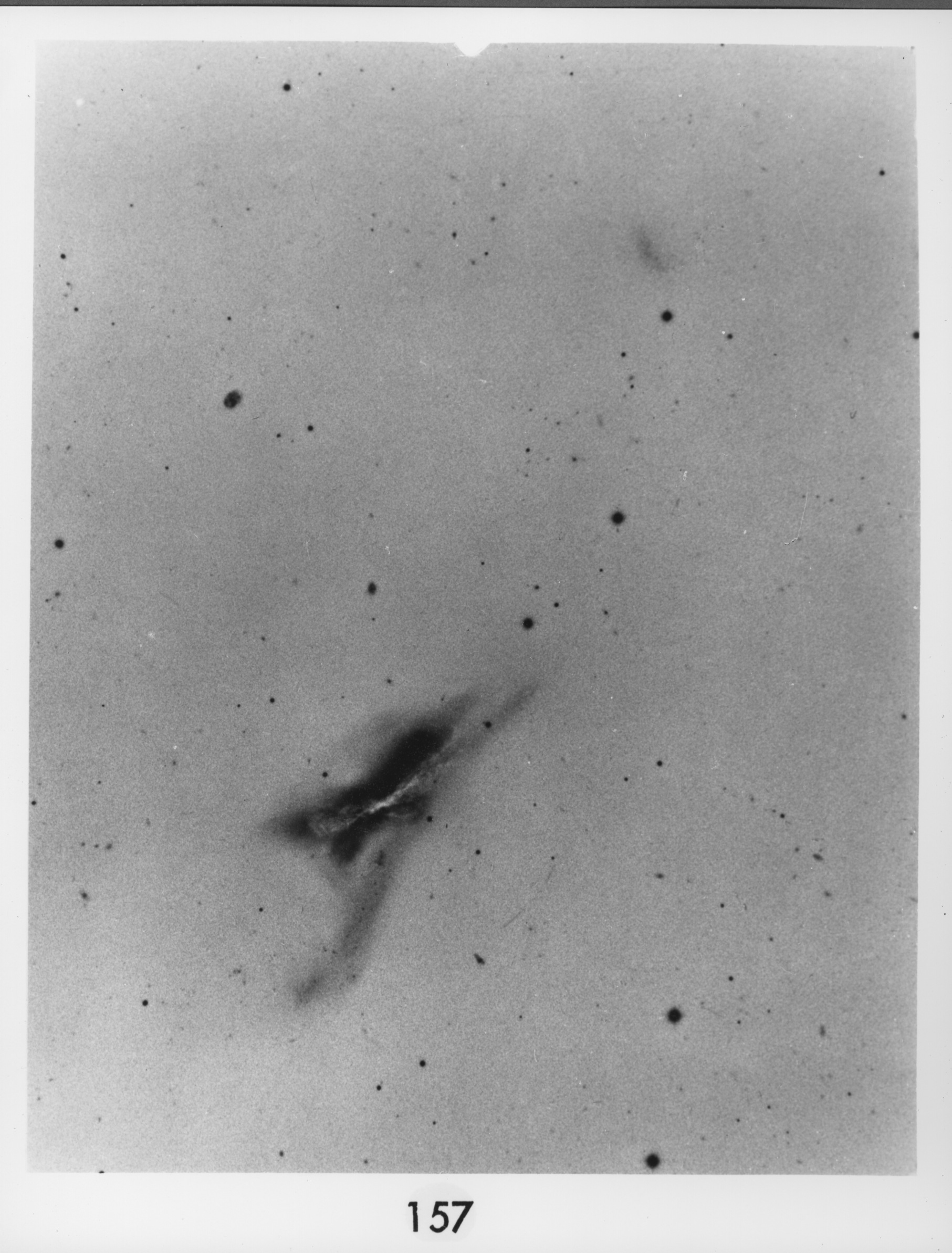
NGC 520 (= PGC 5193 = Arp 157)
Discovered (Dec 13, 1784) by William Herschel
A magnitude 11.4 spiral galaxy (type Sa? pec) in Pisces (RA 01 24 34.7, Dec +03 47 39)
Apparent size 3.4 by 1.7 arcmin? A pair of colliding galaxies. Used by the Arp Atlas as an example of a disturbed galaxy with interior absorption.
"Excerpt courtesy of Courtney Seligman"
cseligman.com/text/atlas/ngc5.htm#520
Circled is Quasar (QSO B0121+0327) at a magnitude of approximately +18.5. Radial velocity V (km/s) 84494 and redshift of 0.336. I used the Aladin Sky Atlas tool to incorporate my FIT image of Arp galaxy 157 and colour enhanced and overlay objects of interest, this is where I came across a QSO.
Image... Cherryvalley Observatory (I83). Telescope: 0.2-m SCT & SBIG STL-1301E CCD Camera @f7.6. Image Scale 2.17 arcsec/pixel, Field of View 46 x 37 arcmins.
Flat field and dark subtract calibration frames. Combined Stack of ten images of 210 seconds each unfiltered and unbinned. CCD operating temperature: -38 degrees. Image acquisition and processing: CCD Soft v5, TheSky6 Professional and Mira Pro v7. Date: 23rd November 2014.
Dr. Halton Arp originally compiled the Atlas of peculiar galaxies with photographs he made mainly using the Palomar 200-inch telescope and the 48-inch Schmidt telescope between the years 1961 to 1966. Original image can be found here: ned.ipac.caltech.edu/level5/Arp/Figures/big_arp157.jpeg
Benefits of AirField in a green roofing system include:
AirDrain creates and helps maintain a constant Gmax for artificial turf (See below)
Thickness and resin consistency of AirDrain provides uniform shock absorbency
Shock absorption reduces the strain on joints and ligaments
AirDrain is only limited by the drainage capacity of the profile above it
Installation time measured in days instead of weeks
AirDrain can be reused when the artificial turf must be replaced
Water harvesting reclamation and reuse
Helps qualify for LEED and other green building credits
A smaller carbon and development footprint with reduced site disturbance
100% vertical drainage under the entire field surface
Minimizes water related injuries / Less infill migration due to superior drainage
AirDrain is a 100% recycled product
Less infill migration due to superior drainage
GMAX Information Existing Conditions for Testing
Turf - 2 1/2” Slit Film, in filled with 50% Green Rubber Infill and 50% Silica Sand.
The drainage/shock pad and turf underlying substrate consists of a concrete deck/rooftop, coated with a waterproof membrane and 10 ounce 100% recycled polyester geo-textile filter fabric.
The Standard Test Method for Shock-Absorbing Properties of Playing Surface Systems and Materials (ASTM F1936-98 American Football Field) testing locations and procedure were preformed. The tests were performed using a Triax 2000 A-1 Missile, tripod mounted Gmax registration unit(www.triax2000.com). This report presents background information on the test procedures, existing conditions, test results and observations in football, baseball, softball, soccer, lacrosse, and field hockey artificial sports fields.
The environmental impact of a green roof is undenyable, and adds significantly to the LEED Point system designed by the USGC in all five major areas: sustainable site development, water savings, energy efficiency, materials selection, and indoor environmental quality. Green roofing replaces the green space displaced by a building, prevents excess stormwater drainage, reduces the temperature of a building and the urban heat island effect, protects and extends the useful life of a roof, and reduce energy demands. What's more, a green roof incorporating AirDrain means your design includes renewable, recycled, and locally obtained materials. We know you have a choice in designing a green roof, and we hope you consider the many benefits of AirDrain.
A typical AirDrain green roof installation design
Laser Tattoo Removal Post-Treatment Advice
The area to be treated should be free from make-up, perfume, deodorant and body or face creams.
GF Family
The area should not be sun-tanned. Use of sun beds or exposure to strong sunlight is not advised
prior to treatment. Dark suntans must be left to fade before treatment can start and fake tan should
not be applied.
A medical history is taken at consultation, but we rely on you to inform us of any changes to this.
We need to know of any medication you are taking, even those bought from a chemist or herbal
The immediate whitening of the treated area is the reaction of the ink to the absorption of the laser
light energy creating steam within the surface of your skin, this usually only lasts for several minutes.
Post-treatment skincare
Post treatment skin care divides into three areas:
Immediately after treatment, the area is best left alone completely for 24 hours.
After 24 hours antiseptic ointment or 1% hydrocortisone cream (available 'over the counter' at most chemists) can be used up to 3 times a day for 7 days. A sterile dressing should be used to cover the treated area for at least the first 3 days. It may be necessary to use a dressing for the duration of healing to protect the area if there is risk of damage from treated area rubbing on clothes (e.g. on waistband).
Cold compresses and ice packs may be used as needed after the laser treatment for any discomfort or inflammation, you can also take paracetamol for relief but not aspirin. This is because aspirin thins the blood, can increase the chance of bruising and bleeding, and can hamper the healing process.
Aloe Vera gel can also help improve skin comfort and reduce swelling or post-treatment redness.
Do not pick or rub, picking at scabs or allowing the treated area to get scraped increases your
chance of getting an infection and also increases your chance of developing a scar.
Short to medium term
Within the first 24 hours the area may become reddened and swollen which will settle in a few days and may feel similar to sunburn. The skin is fragile and needs gentle handling. Blisters sometimes appear and may be large. Do not worry, as this is not unusual.
Blisters usually last anywhere from 2-3 days to 2 weeks, depending on skin sensitivity. There are some rules that must be followed to avoid further complications:
Do not disturb the blister, this is nature’s “Elastoplast” and the skin will heal naturally under the blister. The blister will dry to form a “crust” and it will be shed by the skin when it is no longer required. The new skin will look “shiny” and will take a few weeks to return to a normal look and feel. Always:
o Wear clean, loose fitting clothes where possible
o Keep the area clean and dry. After washing, pat the area dry – do not rub
o If the blister bursts, do not panic – however it is important to keep the area clean. You can apply
Savlon or Vaseline
o Apply a non-adherent dressing if advised to do so
o Do not use make-up, perfumed products, toners, astringents or soap on the treated area until
healed
o Be careful with sprays, such as deodorants
o Do not shave over a blistered area
o Exercise is OK after treatment, considering all other after care instructions are practised but
avoid excess sweating for 48 hours after treatment.
o Do not soak the treated area until the skin has completely healed. - hot tubs, swimming pools or
PureLite - 28 Space Business Centre, Knight Road, Strood, Rochester, Kent ME2 2BF Tel: 01634 292050 | Email: info@purelitekent.co.uk | Web: www.purelitekent.co.uk
:2
baths are not recommended as this increase the chances of infection. Showers are OK, but don’t allow the shower steam to hit the affected area. Do not keep treated area under running water or have the water too hot. Remember to pat dry, don’t rub the area.
o Hydrate the body by drinking plenty of water,
o Due to the dehydrating effect of the laser treatment, itching is very common. Aquaphor,
hydrocortisone cream, or vitamin E ointment can be used to the treated area.
o Call the studio immediately if the area looks infected or you are concerned in any way
Long term
Once post-treatment skin changes have subsided and the skin texture has returned to normal you will be ready for a follow up treatment. There may still be some reddening if the immune response is still active and, in any case, you must leave at least 4 weeks before any follow up.
You should take the following steps to reduce the risks of long term pigment disturbance:
Always wear at least a Factor 25+ sun block and reapply frequently, or better still cover with a dressing
Do not expose the treated area of your skin to UV light before and between treatments (natural sunlight and sun beds)
Do not apply fake/ spray tan to the area to be treated
There is also a risk, increasing with the number of treatments, of textural skin changes that can lead to scarring. If, after the skin in the treatment area has settled down, it feels lumpy or thickened, the matter should be raised prior to your next treatment. Depending on the situation, the clinic may recommend a longer treatment interval and/or the use of a topical silica gel product.
Adverse Reactions
As different people react to laser tattoo removals differently, it’s important that you keep a look out for skin changes after undergoing treatment. It is normal to experience scabs, blisters, crusts and swelling for a fortnight.
However if you have any extreme reactions or experience any of the following symptoms you have to immediately seek medical attention:
Persistent pain, which won’t go away with over-the-counter pain medication.
The treated area looks infected (yellow or honey coloured oozing and crusting)
Fever over 100°C.
If the treated tattoo area becomes swollen
Excessive bleeding or any drainage.
Although times can vary, complete healing usually takes 4-6 weeks, the process which breaks down the tattoo ink begins 2 weeks after the laser treatment. The ink will continue to evacuate until about the 6 week post treatment mark. Ideally, treatments should be scheduled 6 weeks apart.
Laser Tattoo Removal Follow Up
Follow after care advice and keep good standards of hygiene
Follow up treatments should be scheduled every 6 weeks.
Consistent repeated treatments will produce the best resolution of tattoos or pigmented lesions.
Tattoo Artists in Chennai | Best Tattoo Studio Chennai | Tattoo Images, Tattoo PhotosAdwww.justdial.com/Chennai/Tattoo-Artists
Tattoo Artists in Chennai, Tattoo Making Classes. Get Phone Numbers, Reviews. Get Tattoo Designs for Men, for Women by Professional Artists on Justdial. 91 million+ reviews. Genuine User Reviews. Justdial Verified
Doctors for tattoo removal in Chennai, find doctors near you. Book Doctor's Appointment Online, View Cost for Permanent Tattoo ...
Tattoo Removal Cost In Chennai. The average price of tattoo removal in Chennai, differs from clinic to clinic, with base starting price is between Rs. 4,000 to Rs. 7,000 per session. The size of your tattoo determines the number of sessions.
Add me as a friend on YouTube! youtu.be/addme/2Gx1k-9MYjbnt79VyEkUK5xQEQT5xg
Geo Tattoos One of the Best tattoo artists in chennai since 2002 call:9884211116
Replaced by a new figure on 21 December 2013.
This shows the two observations of the eastern sky before sunset that are described in a previous post (see below). Each spectrum is associated with a simple single-path model (red and brown) including molecular (Rayleigh) and aerosol scattering as well as ozone Chappuis band absorption acting on the 'above the atmosphere' solar spectrum from the HST calibration database. These illustrative models do not fit the entire spectral range since they are too simple to account for the multiple paths taken through the atmosphere by the light reaching the spectrometer.
The drawing at the top of the figure was made by Ångström sometime before 1872 and appears the book "Spectrum Analysis", published by H. Schellen in that year. Ångström expressed the opinion that the bands A, B, 'alpha' and 'delta' were not due to water vapor since they remained constant when seen at the same solar altitude under different conditions.
The thick, light blue line is from an observation of the western sky at sunset that has been normalised by dividing by a model fit including Rayleigh and aerosol scattering and the ozone Chappuis absorption. This leaves the signature of the molecular oxygen and water absorption and also the Collision Induced Absorption (CIA) features of O_4, the strongest of which is at 577nm. This CIA feature, along with the water band that stretches from the sodium D-lines to around 600nm, results in the remarkable apparent 'emission' band that is clearly seen in a visual spectroscope when looking at the twilight sky or the rising/setting Sun. The CIA features are produced during a short-lived association between two oxygen molecules (Greenblatt et al. 1990; J. Geophys. Res. 95, 18577.
Broccoli provides a high amount of vitamin C, which aids iron absorption in the body, prevents the development of cataracts, and also eases the symptoms of the common cold.
The folic acid in broccoli helps women sustain normal tissue growth and is often used as a supplement when taking birth control pills and during pregnancies.
The potassium in broccoli aids those battling high blood pressure, while a large amount of calcium helps combat osteoporosis.
The vegetable is also fiber-rich, which enhances the gastrointestinal (GI) tract, as well as aims to reduce blood cholesterol levels.
In recent years, broccoli has made the headlines regarding three components found in the vegetable. For instance, indole-3-carbinol has captured the attention of those looking to prevent hormone-related cancers, such as breast- and prostate cancer.
I3C promotes "good" hormones, while working against destructive ones. The sulforaphane in broccoli also helps to increase the level of enzymes that block cancer, while the beta-carotene in broccoli transforms into vitamin A within the body, providing an effective antioxidant that destroys free radicals (responsible for weakening the defense of cells).
Additionally, the health benefits of broccoli have been linked to preventing and controlling the following medical concerns: Alzheimer's disease, diabetes, calcium deficiencies, stomach and colon cancer, malignant tumors, lung cancer, heart disease, arthritis, and even the aging process.
From the health Food Guide healthfood-guide.com/HealthBenefitsOfBroccoli.aspx
A Fomapan Action 400 black-and-white film to test the effect a the special Foca filter "Dyma" produced in France in the 50's.
The filter is called "Dyma" due to the presence of neodymium in the glass giving an unusual absorption by bands in the visible spectrum. In particulier blue and yellow color ans more absorbed than the rest of the spectrum. The filter existed in two different versions with the coefficient x2.5 or 3.5. Here the 42mm push-on Foca Dyma filter used is a x 3.5.
As a consequence, I exposed the Foma 400 for 80 ISO using a Minolta Autometer III with a 10° finder for selective measurements privileging the shadow areas. I used my FOCA camera PF2B year 1956 and its normal Oplar lens1:2.8 f=5cm equipped for all the views with the Dyma filter and a Genaco metal shade hood.
Typical settings during the session : 1/100s f/8 to f/11.
May 29, 2023
69004 Lyon
France
After exposure, the film was processed using Adox Adonal (Agfa Rodinal) developer at dilution 1+25, 20°C for 6 min.
The film was then digitalized using a Sony A7 body adapted to a Minolta Auto Bellows III and a Minolta Slide Duplicator using a lens Minolta Bellow Macro Rokkor 50mm f/3.5 at a reproduction ratio of 1:1. The reproduced RAW files obtained were processed in LR prior the the final JPEG editions.
All views of the film are presented in the dedicated album either in the printed framed versions and unframed full-size jpeg.
About the camera and the lens:
The Foca type PF2B (PF for "Petit Format") was constructed in France by the company "Optique & Precision de Levallois" (OPL) starting from 1947. It was manufactured in the Chateaudun OPL factory, route de Jallans, France, in 1956 among a late series of the PF2B. The factory, constructed in 1938, is still at the same place under the name of SAFRAN now producing precision devices for aerospace appliances.
The camera is equipped with the collapsible OPLAR lens (a Tessar formula) 1:2.8 f=5cm. The focal shutter of the PF2B has timing of 1/1000, 1/500, 1/200, 1/100, 1/50 and 1/25s plus the B pose. A slow exposure device below 1/25s could be installed by the aftermarket service and was installed basically for the FOCA PF3 and Foca Universel.
This plot shows the fluorescence spectra of riboflavin, in the form of a powder and a solution in isopropyl alcohol, when excited by violet/near-uv light, The riboflavin powder is in the form of transparent rod-shaped crystals a few tens of microns long and a few microns in diameter: they are derived from the fungal mould Eremothecium ashbyii.
The differences in fluorescence spectra are the result of the self absorption of fluorescence photons as they escape from within the powder crystals removing (and perhaps reconverting some of) the shorter wavelength light. The reflectance spectrum of a thick pile of crystals is shown as the thick grey line.
The dark blue and pink line spectra are from a thick layer of powder while the light blue curve is from a thin (incompletely covering) layer between two microscope slides.
The red and green spectra show the green fluorescence from the solution: these suffer very little from self absorption. The extension of the fluorescent signal below 470nm includes Raman components, especially the dominant stretch mode vibration in the isopropyl.
This is a good lesson (for me at least) about the interpretation of the fluorescence of powders. It illustrates that self absorption can happen both within the crystal where a fluorescent photon is emitted and from subsequent multiple scattering as it emerges from the powder.
Benefits of AirField in a green roofing system include:
AirDrain creates and helps maintain a constant Gmax for artificial turf (See below)
Thickness and resin consistency of AirDrain provides uniform shock absorbency
Shock absorption reduces the strain on joints and ligaments
AirDrain is only limited by the drainage capacity of the profile above it
Installation time measured in days instead of weeks
AirDrain can be reused when the artificial turf must be replaced
Water harvesting reclamation and reuse
Helps qualify for LEED and other green building credits
A smaller carbon and development footprint with reduced site disturbance
100% vertical drainage under the entire field surface
Minimizes water related injuries / Less infill migration due to superior drainage
AirDrain is a 100% recycled product
Less infill migration due to superior drainage
GMAX Information Existing Conditions for Testing
Turf - 2 1/2” Slit Film, in filled with 50% Green Rubber Infill and 50% Silica Sand.
The drainage/shock pad and turf underlying substrate consists of a concrete deck/rooftop, coated with a waterproof membrane and 10 ounce 100% recycled polyester geo-textile filter fabric.
The Standard Test Method for Shock-Absorbing Properties of Playing Surface Systems and Materials (ASTM F1936-98 American Football Field) testing locations and procedure were preformed. The tests were performed using a Triax 2000 A-1 Missile, tripod mounted Gmax registration unit(www.triax2000.com). This report presents background information on the test procedures, existing conditions, test results and observations in football, baseball, softball, soccer, lacrosse, and field hockey artificial sports fields.
The environmental impact of a green roof is undenyable, and adds significantly to the LEED Point system designed by the USGC in all five major areas: sustainable site development, water savings, energy efficiency, materials selection, and indoor environmental quality. Green roofing replaces the green space displaced by a building, prevents excess stormwater drainage, reduces the temperature of a building and the urban heat island effect, protects and extends the useful life of a roof, and reduce energy demands. What's more, a green roof incorporating AirDrain means your design includes renewable, recycled, and locally obtained materials. We know you have a choice in designing a green roof, and we hope you consider the many benefits of AirDrain.
A typical AirDrain green roof installation design
Far-infrared spectra of the chalcogenide alloy of the GST system of composition Ge15Sb15Te70 in the glassy and crystalline states have been measured and analysed in the frequency range of 20–400 cm-1 at room temperature. The absorption in this range is due to the phonon modes of the structural units of crystalline and correlated librational vibrations (boson peak) of glassy alloy, which precede the appearance of relaxation dynamics. IR spectroscopy is one of the most frequently used spectroscopic tools for the crystals and amorphous materials (including chalcogenide) study The vibrational assignments of various absorption bands and the differences revealed in the spectra will make it possible to more confidently elucidate the possible molecular mechanism of the crystal-to-amorphous transition in other chalcogenide alloys. New details of the crystal-to-amorphous transition scenario are suggested. The results, by the example of the composition Ge15Sb15Te70, demonstrate, that the use of far-IR spectroscopy has a clear potential to characterise the local atomic structure and dynamics of the GST alloys. Here experimental evidence is present that along with the change in bonding mechanism there is change medium-range ordering upon crystallisation in GST alloys. Further studies on the new GST materials will give the possibility to improve the parameters of the already developed memory elements and will provide additional information about the nature of the switching effect.
Biography of author(s)
Valery Ryzhov
Ioffe Physical-Technical Institute, Russian Academy of Science, 194021 St-Petersburg, Russia.
Read full article: bp.bookpi.org/index.php/bpi/catalog/view/19/20/99-1
View More: www.youtube.com/watch?v=Rr_1Qwvwc4o
Top left: a collection of small (~5mm) tumble polished peridot pebbles photographed under white (CT 6500K) light.
Top right: The transmissions of a small cut peridot (~1mm depth) and one of the pebbles (3.5mm)
Bottom: Raman spectra of the two samples using a 532nm laser and a notch filter (orange and blue lines). The green line uses an orange (Schott OG570 3mm) filter instead of the notch. The passband of the orange filter is shown as the thin grey line.
Lines are seen with Raman shifts of (-cm^-1) 539, 586, 821, 852, 916, 959.
Limestone
Cypriot, Classical
ca. 475-450 B.C.
Said to be from the temple at Golgoi
After the absorption of Cyprus into the Persian Empire in 526 B.C., contacts increased with the wealthy East Greek cities on the western coast of Asia Minor, which had also fallen under Persian rule. The influence of Greek sculptural style can be seen in this statue of a man dedicated in a temple at Golgoi. He wears typical East Greek dress, a finely pleated linen chiton, and a woolen himation (cloak). His smile and the jewel-like precision with which his hair and beard are carved remind one of Greek Archaic art of the sixth century B.C.
Like many Cypriot votive statues, this figure wears a wreath of leaves and flowers. It is composed of oak leaves and stylized narcissus flowers to evoke ideas of virility and regeneration.
Metropolitan Museum of Art
NYC
AquaShield Concrete and Stone is a new surface protection product to reduce water absorption, moss and algae growth, efflorenscence on mineral substrates. The product has deep penetrating properties, without the use of any hazardous solvents or substances. AquaShield Concrete and Stone is odor free and still matches the performance of any conventional sealer on the market.
AquaShield Concrete and Stone treated concrete repels water simply by not absorbing it which creates a new standard in concrete protection. Water on a surface protected with AquaShield Concrete and Stone evaporates
than penetrates. Therefore surfaces dry up within minutes after exposed to rain, leaving no breading ground for microbial growth and also offers protection against absorption of water soluble pollutants as well as handling freeze / thaw cycles.
The use of water as a carrier has significant benefits on the environmental performance of a treatment system and also makes AquaShield Concrete and Stone the most cost effective solution on the market. AquaShield Concrete and Stone is available in a high concentrated formula for easy shipping and diluting.
The main advantages of our method:
-Excellent penetration-
-Water based, improves OH& S
-Solvent free and low VOC
-Outstanding wear resistance and durability
-For High Traffic Areas, drive ways, run ways, roads
-Cost effective concentrated form
-Reduced packaging material, less shipping costs
-Does not change the appearance
-Environmentally friendly
AquaShield is user friendly and can be applied in a variety of direct methods. Depending on the size of the surface to be treated, it can be applied with a simple brush, a roller, or a spray gun. The full range of properties are obtained after about 24 hrs.
All our AquaShield formulas are non-toxic, environmentally safe, and non-flammable when dry. They leave zero residues and are 100% invisible, odorless and don’t alter the texture of the substrate.
IDEAL APPLICATIONS
Concrete and Stone
AVERAGE COVERAGE PER LITRE
450 sq ft
SHELF LIFE
2 years from day of order
DURABILITY
10 years on flat surfaces and up to 15 years on vertical surfaces
I always enjoy the "assignments" for Y SIN EMBARGO Magazine. They force me to conceptualize what I am doing. My interpretation of the latest assignment was that it was about "digtal materialism", that is, the desire to possess digital artifacts.
I began by thinking about storage (in the technical sense, e.g. hard disks, DVDs, etc.) which are fundametally needed to be digitally materialistic. I started shooting DVDs and their reflections. Pretty soon, I realized that a DVD was a kind of mirror. I had some luck previously shooting reflections of my TV off my coffee table. The TV provides a still image (if you pause) with lots of vibrant colors.
This led to my first submission, entitled Absorption, which is a reflection of a commercial off of the DVD. I believe it was a commercial for some kind of tropical vacation getaway, and the sunbathing model had her head tossed back looking up at the sky. The model's face fits almost perfectly in the DVD. The DVD has distorted her face into a kind of round shape, which makes her appear quite primitive. She appears to be gazing up, as if lost in thought. I call this "Absorption" because it symbolizes the capture of the digital artifact into storage, even though it is just a fleeting reflection. She is contained, at least mometarily, in the medium.
Next, I started wondering if I could build a large mirror out of several DVDs, and I did some experiments with small arrays of DVDs that didn't turn out so well. However, the idea led me back to an idea I had last year about replicating center pivot irrigation in art. If you are not familiar with center pivot irrigation, it is a method of crop irrigation that utilizes a watering system that rotates around a center pivot in a field. You can often see them as patterns of circular shapes from an airplane in large farming areas. I find these pivot irrigation systems quite beautiful.
So, my second submission, entitled Maintenance, was an attempt to replicate the circular shapes of a typical center pivot irrigation system using DVDs. I replicated a small piece of this image. (Can you see where?) This was an extraordinarily tedious project. I almost gave up several times. There are approximately 144 separate subimages. Each subimage was constructed from shots of DVDs, circuit boards, schematic diagrams, floppy disks, and hard drive enclosures. Each of these cells required multiple layers to construct. In some cases I used seven or eight layers to get the textures and colors I wanted. This symbolizes to me the idea that you have to maintain all of this information --- you have to back it up, index it, organize it, etc. And that our digital collections are much more than independent files, but rather there are connections amongst them, a kind of communication.

Since absorption by the expansive Canadian National, BC Rail's surviving locomotives have been worked hard and few if any have been repainted. On my recent trip I saw a few of the big "cowl"-type GEs and they were all in a similar desperate state externally!
I was pleased to see a lone example in the yard in Jasper when we pulled into the platform on the Canadian. As luck would have it it was soon moving and was turned around in order to face West and pass the CN offices, coming into range of this intrepid photographer!
[Original plots and text replaced 9/8/2014]
The light emerging from the base of thick, probably many-layered, cloud carries the story of the photons that make it through the soup of cloud water droplets of a wide range of sizes. The visible/nir spectrum of this emergent light has three dominant properties:
1. It is remarkably blue compared with direct sunlight.
2. It shows very strong water vapour absorption bands especially at longer wavelengths but extending identifiably right down to the blue/green part of the spectrum.
3. It exhibits absorption bands due to the transient association of oxygen molecules (O2.O2, called O4 CIA). This process, called 'collision induced absorption' is effective only in the low atmosphere where the gas pressure is highest. In this cloud, the CIA bands are considerably stronger than seen in direct sunlight at similar solar altitudes.
While trying to obtain the spectrum of lightning flashes during the daytime with a solar altitude of close to 45 degrees, I collected spectra of the dark grey clouds during the thunderstorm and accompanying rain. The upper plot shows, on a logarithmic intensity scale, the spectra of the cloud and, for comparison, of the Sun seen in a relatively clear (some light cirrus) sky.
orange line: Sun spectrum at zenith distance (zd) = 51.5 deg (altitude = 90 - zd)
grey line: Grey sky spectrum with some lightning emission lines from cloud reflections. Sun at zd ~ 45 deg
[Both of these are in flux/nm normalised at around 770nm.]
green line: The ratio of the thundercloud/sun
red line: A lambda^(-2) power law continuum.
violet line: The O4 CIA transmission of the power law continuum: Ref: GEISA Spectroscopic Database ( ether.ipsl.jussieu.fr/etherTypo/?id=950 )
The lower plot shows a zoom of the visible part of the spectrum to show the CIA lines more clearly. This also marks the 'Rain Band', the observation of which with small visual spectroscopes, allowed the observer - generally unsuccessfully - to predict the onset of rain. This pursuit was popular at the end of the 19th century in Britain (at least). The fortuitous combination of this band at one side (red) and the 578nm O4 band on the other (blue) with the centre of the ozone Chappuis absorption band seen strongly in the orange when the Sun is low in the sky (which it is not in this case) produces a very characteristic feature in the middle of the spectrum when seen with a visual spectroscope.
The ratio of the sky to the solar spectrum is quite blue and fitted well with a power-law in wavelength with an index of minus two. The Rayleigh blue sky has an index of -4 and atmospheric aerosol/haze usually exhibits an index of around -1.3 (Allen, C.W, "Astrophysical Quantities", third edition, The Athlone Press, 1973, p126).
The notable feature in the spectrum of the sky here is the great strength of the absorption bands due to collision induced absorption (CIA) produced by the temporary close proximity of two oxygen molecules. Such absorption is produced predominantly at low atmospheric altitudes since the strength is proportional to the square of the oxygen molecular density (while that of the other telluric absorbers goes with only the first power of their density).
Why is the grey sky so blue and why are the CIA bands so strong - much stronger than in direct sunlight at this zd?
The three spectral characteristics mentioned above are all consistent with the emerging photons being scattered very many times during their passage through the cloud and accumulating a long pathlength through a moist, low altitude atmosphere.
From the fit to the depth of the CIA bands at 476, 578 and 630nm, it is possible to make some estimates of the behaviour of the photons as they traverse the cloud. If we assume that CIA bands are formed in the lower regions of the cloud, say at an altitude of around 2km where the partial pressure of oxygen is 16 kPa - corresponding to a molecular O2 density of 4 x 10^18 cm^-3, then we require that the path traversed by a typical photon around this altitude is 110km. If while being multiply scattered from water droplets the photon remains within a region of 2km in diameter (i.e. within the cloud), it will scatter about 3000 times with a mean free path between scatterings of 30 or 40m. This means that if you were within this part of the cloud, you would be able to see clearly objects that were this distance away from you and much beyond that they would become 'lost in the mist'.
In a flash, the visible spectrum of the Sun changed from absorption to emission on March 9 during the total solar eclipse. That fleeting moment, at the beginning the total eclipse phase, is captured by telephoto lens and diffraction grating in this image from clearing skies over Ternate, Indonesia. At left, the overwhelming light from the Sun is just blocked by the lunar disk. The normally dominant absorption spectrum of the solar photosphere is hidden. What remains, spread by the diffraction grating into the spectrum of colors to the right of the eclipsed Sun, are individual eclipse images. The images appear at each wavelength of light emitted by atoms along the thin visible arc of the solar chromosphere and in an enormous prominence extending beyond the Sun's upper limb. The brightest images, or strongest chromospheric emission lines, are due to Hydrogen atoms that produce the red hydrogen alpha emission at the far right and blue hydrogen beta emission to the left. In between, the bright yellow emission image is caused by atoms of Helium, an element only first discovered in the flash spectrum of the Sun. via NASA ift.tt/1pma33F
It was recently pointed out to me by Hrumkorf ( www.flickr.com/photos/hrumkorf/ ) that several of my gemstone absorption spectra exhibited what are called 'Fano antiresonances': notably in Kyanite ( www.flickr.com/photos/35652793@N04/5628085961/ ) and Emerald ( www.flickr.com/photos/35652793@N04/5601474102/ ).
Such resonaces are caused by the quantum mechanical interference of the wavefunctions representing two or more possible paths by which a single photon can achive a specific change in state of an atomic system, such as the ionization of an atom via a direct process or, alternatively, an internal two-electron excitation followed by an auto-ionization.
In the chromium (Cr3+) containing crystals such as kyanite and emerald, the upper level of the metastable 'R-lines' (the 'laser' line in ruby) can be excited directly from the ground state by the absorption of a red photon. The same photon could also excite an R-line via a much broader absorption line which includes this particular photon wavelength but is responsible for the very broad green-red absorption band producing the blue colour of kyanite. It is the interaction between these two possibilities that results in the characteristic asymmetric absorption/emission structures in the crystal absorption spectrum.
These two plots show: top - the transmission spectrum of kyanite (blue line). This has been fitted in the range 12000 - 16000 cm^-1 by a 5th order polynomial (red line). This has been used to normalise, by division, the absorption spectrum (black line). This result shows clearly the two asymmetic Fano antiresonances. In the lower plot, the normalised spectrum has been fitted by the simplest version of a Fano resonance model (see, e.g., en.wikipedia.org/wiki/Fano_resonance ), shown as the red line.
The kyanite red fluorescence spectrum is overlayed on the bottom plot as the thin green line.
The Fano phenomenon, although originally investigated for the behaviour of noble gases, is proving to be more widely important and in particular for the photonic engineering of nanostructures and metamaterials.
If you're looking for a cheap way to soundproof a bird cage, check out Audimute Sound Absorption Sheets. They're portable and are super easy to put up and take down. Work extremely well in soundproofing a bird cage by absorbing the mid and high frequencies that are often the most annoying. Simply line two sides of your cage and two walls with Absorption Sheets to make the sound of your screaming bird more tolerable.
For more info, visit audimutesoundproofing.com, quietparrothappyowner.com or give us a call at 866-505-MUTE. We'd be glad to help you find a solution that'll save you money and your sanity!
Manganese Ammonium Pyro Phosphate
Manganese Violet, PV 16 (No. 45350)
The three spectra show:
Violet line: The reflectance of the powdered pigment
Orange line: weak fluorescence under 404nm laser excitation
Green line: infrared fluorescence under 532nm laser excitation
In addition, the thin grey line is the 100% reference for the reflectance measurement.
Web Link:
advancedhomewellness.com/cycloastragenol-protect-dna-telo...
Product Links
advancedhomewellness.com/product/example-1/
advancedhomewellness.com/product/stomach-acid-protected-s...
advancedhomewellness.com/product/cycloastragenol-98-10mg/
advancedhomewellness.com/product/super-absorption-cycloas...
Cycloastragenol: Preserve Your DNA, Boost Your Vitality, Prevent Early Aging and Extend Your Lifespan with Nature’s Fountain of Youth
Learn about the do’s and don’t of cycloastragenol and how it can help you preserve your DNA, helping to keep you young and vital for many decades.
The Nobel prize for science in 2009 went to a team at UCLA for their work in showing that aging is essentially what happens when our DNA strands get split ends, start to unravel and shorten in length. When the end of our DNA strands slowly unravels and the length shortens, cell replication becomes less and less precise.
They evidenced that shortened telomeres in our DNA strands are really the fundamental underlying cause for aging and degenerative disease.
Telomerase is the body’s natural way of maintaining the health of the ends of the strands of DNA. And usually somewhere in our 30s, the body stops producing enough natural telomerase and our DNA begins to shorten in length, thus the slow crawl of aging begins.
Of course, pharmaceutical companies have been researching ways to extend shortened telomeres and prevent them from shrinking, but it turns out that nature has already created a perfect compound to replace telomerase in the roots of astragalus.
Cycloastragenol is a nearly identical analogue to the natural telomerase in our body, which means it has the exact same DNA preserving effects. Studies have already been done showing that cycloastragenol can be profoundly beneficial in preserving the length of our telomeres.
But don’t just go taking cycloastragenol!
For starters, make sure you are around 40 years old or older.
You never want to take cycloastragenol before your telomerase starts to naturally decline. This is not a supplement for vitality. This is not a tonic for youthful vigor and strength. Concentrated cycloastragenol is basically telomerase, which you need to keep your DNA healthy. But if you take this supplement when you’re young, your body may stop producing its own.
Further, even if you are over 40, then you need to take it carefully.
It can make you very ill if you take too much, and especially if you take a lot with a full stomach. Its really best to lick your finger and dip it into the powder and dissolve a small amount of powder in your mouth on an empty stomach. You let your saliva digest it in your mouth, and swallow it back only once it is all liquid and tasteless, and drink some water afterward as well.
This is a good way to take it at first, and you can gradually build up to more. You may want to this daily if you in your 50s, 60s or 70s, as this will greatly help to preserve the length of your telomeres.
Cycloastragenol is being ignored by the mainstream medical industry and pharmaceutical companies especially -likely because they cannot patent it.
And so far there really are no effective drugs on the market to lengthen or preserve telomeres.
Now, Stanford can perform a surgery which does the trick, and they have actually managed to re-extend shortened telomeres, “reversing the clock” so to speak, with a new RNA technique. This is beyond the prowess of cycloastragenol, which preserves telomeres but does not re-lengthen them.
Despite the success of this experimental surgery at Stanford, there are still no pharmaceutical drugs on the market to re-lengthen telomeres, nor to preserve them.
And maybe that’s really for the best, I think, after all pharmaceuticals are notorious for unwanted side effects and unknown long-term complications.
And moreover, why create a chemical drug when nature has already provided the perfect solution? Oh yeah…. because you can’t patent it!
Really the only caveat with cycloastragenol is that it a whole lot more expensive than most natural supplements. But when you compare it with the cost of surgery at Stanford or the probable price of a comparative pharmaceutical product…well then it looks very cheap indeed.
You know, for someone in their late 30s or 40s, a hundred dollars worth is enough to last a year, as you really only need to take tiny amounts.
If you are in your 50s or 60s, then you may want to invest closer to $1000 a year on these products, as natural telomerase declines very steadily after 40. Even at $1000 a year, or around $85 a month, cycloastragenol is well worth the investment into preserving the integrity of the most fundamental and important part of our bodies, our DNA itself.
Benefits of AirField in a green roofing system include:
AirDrain creates and helps maintain a constant Gmax for artificial turf (See below)
Thickness and resin consistency of AirDrain provides uniform shock absorbency
Shock absorption reduces the strain on joints and ligaments
AirDrain is only limited by the drainage capacity of the profile above it
Installation time measured in days instead of weeks
AirDrain can be reused when the artificial turf must be replaced
Water harvesting reclamation and reuse
Helps qualify for LEED and other green building credits
A smaller carbon and development footprint with reduced site disturbance
100% vertical drainage under the entire field surface
Minimizes water related injuries / Less infill migration due to superior drainage
AirDrain is a 100% recycled product
Less infill migration due to superior drainage
GMAX Information Existing Conditions for Testing
Turf - 2 1/2” Slit Film, in filled with 50% Green Rubber Infill and 50% Silica Sand.
The drainage/shock pad and turf underlying substrate consists of a concrete deck/rooftop, coated with a waterproof membrane and 10 ounce 100% recycled polyester geo-textile filter fabric.
The Standard Test Method for Shock-Absorbing Properties of Playing Surface Systems and Materials (ASTM F1936-98 American Football Field) testing locations and procedure were preformed. The tests were performed using a Triax 2000 A-1 Missile, tripod mounted Gmax registration unit(www.triax2000.com). This report presents background information on the test procedures, existing conditions, test results and observations in football, baseball, softball, soccer, lacrosse, and field hockey artificial sports fields.
The environmental impact of a green roof is undenyable, and adds significantly to the LEED Point system designed by the USGC in all five major areas: sustainable site development, water savings, energy efficiency, materials selection, and indoor environmental quality. Green roofing replaces the green space displaced by a building, prevents excess stormwater drainage, reduces the temperature of a building and the urban heat island effect, protects and extends the useful life of a roof, and reduce energy demands. What's more, a green roof incorporating AirDrain means your design includes renewable, recycled, and locally obtained materials. We know you have a choice in designing a green roof, and we hope you consider the many benefits of AirDrain.
A typical AirDrain green roof installation design
茶皂素
Tea saponin is triterpenoid saponin substance abstracted from wild camellia fruit. The product tastes bitter and spicy. It stimulates mucous membrane of nose to lead to sneeze. The pure product is fine white column-shape crystalloid with strong moisture absorption ability. It presents apparent acidity to methyl red and is hard to be dissolved in non-water methanol, non-water ethanol, and cannot be dissolved in organic dissolvent like acetone, benzene and petroleum ehter. It's easy to be dissolved in water, water-contained methanol, water-contained ethanol, glacial acetic acid, acetic anhydride and pyridine etc. The saponin is easy to deposit when tea saponin is added with muriatic acid. Its melting point: 224.
Appearance: light yellow powder
The content of active matter: ≥80%
Foaming ability: 160~190mm Baumé degree: ≥20Be
Water-solubility: easy Foaming ability: 160~190mm
PH value: 5.0~6.0 pH value: 5.0~6.0
Application
The environment-protection type pesticide agent produced with the main body of tea saponin can be widely applied in insecticide and antiseptic to increase effects, dissolution and reduce toxin. Meanwhile, it's also a good organic pesticide on the account of the function of tea saponin and biotin and can stimulate the growing crops. The special pesticide made of tea saponin has effective eliminative function for cutworm, angleworm and eelworm without any soil pollution for environmental protection.
The application of tea saponin in aquatic and livestock breeding industry
The feedstuff additive made of tea saponin is effective substitute antibiotic and can reduce the diseases for both humans and animals so as to improve the whole aquatic breeding industry and eventually bring healthy meat for people.
Regarding the shrimp breeding, tea saponin can prevent the black-gill shrimp disease and control parasites as well as improve the ecdysis and growing. It can be made for pond-cleaning agent on the account of hemolysis and fish poison functions (3ppm will bring good effects) in order to kill harmful fish but no harm to shrimp (safe concentration is 20ppm). In livestock breeding, it can reduce the level of cholesterol inside the animals and develop low-cholesterol animal products.
The application of tea saponin in building industry
Tea saponin can be used as foaming agent and foam-stabilization agent in air-added concrete production. It has the degrease function and can improve aluminum spreading suspended character, enhance the stability of concrete setting, improve the air-hole structure to make the products firmer and more reliable. The effects are much better than honeylocust powder and nekal. The strong emulsification and dispersing can be applied to the production of paraffin emulsification agent which has been successively used in the fiberboard gel crafts and apparently reduces the moisture absorption of products and increases the waterproof capability and the fiberboard quality.
Tea saponin can also be used in sensitization, beer industries and anti-corruption production with wider and wider application range.
The application of tea saponin in daily-use chemical industry
The surface activation of tea saponin can be used for production of hair-washing agent such shampoo etc. It has good effects for hair washing, protection and inflammation diminishing and scurf elimination. Tea saponin can also be used for washing clothes and will not reduce color or shrink and therefore the textile will not lose luster.
The application of tea saponin in medicine
Tea saponin has apparent characteristics of anti-leakage and anti-inflammation. During the primary period of inflammation, it can normalize the permeating of capillary vessel; regulate blood sugar content, reduce cholesterol content, prevent cardiovascular disease; it has cough-relieving function and can cure the old people's bronchitis and various edema; it can also eliminate bacteria and restrain white monilia albicans, escherichia coli; it can also restrain the alcohol absorption, increase the alcohol dissolution so that it can be used for sobering up after being drunk.
The application of tea saponin in drainage in oil field
Tea saponin is a kind of large molecule quality net-shape structure surface activator with good foaming ability and strong anti-acid and salt-decomposing capability as well as large quantity of water-combination. It's a kind of good daily-use chemical surface activator and high-efficiency oil field foam drainage agent.
I didn't know how much water distorts colors. Enlarge the chart (which was featured on the Atlantis Submarine informational brochure) to see how colors change "hues" as the psi changes.
From the Atlantis Submarine Tour brochure, from my daughter, who spent 6 weeks on Maui this summer, working at a Boy Scout Camp.
The Telaire 7001 hand held Carbon Dioxide sensor feature patented Absorption Infrared technology. Each sensor measures CO2 and Temperature and can calculate and display real-time ventilation rates. When combined with the HOBO U12 or ZW Series it can record CO2 and when connected to the H22 or U30 Series can record Temperature & CO2. The Telaire comes with an adapter but also operates up to 70 hours on 4 AA batteries (not included).
A Contemplative Walk - Part 2
Now is Woodberry Park, this upmarket private housing development has been carved out of the old Woodberry Down Estate.
Contemplation turns to research: the developer Berkeley; the planning authority, previous landowner and ultimate client Hackney Council; the social housing provider Genesis; critique by Municipal Dreams; critique by The Multicultural Politic . . . and this brings me back to David Harvey and his The Right to the City - "A process of displacement and what I call ‘accumulation by dispossession’ lie at the core of urbanization under capitalism. It is the mirror-image of capital absorption through urban redevelopment, and is giving rise to numerous conflicts over the capture of valuable land from low-income populations that may have lived there for many years".
Spectra from two parts of a butane gas flame (air-mixed - top; unmixed gas - bottom). Compared with the candle flame, the near infrared contains much stronger emission bands of water. The deep blue colour of the flame sheath is due to the recombination of free electrons with positive ions. The strong emissions from the visible (blue-green) part of the flame are due mostly to the C_2 molecule (two carbon atoms) but also to CN and CH.
The orange line shows a black body (Planck) spectrum which corresponds to the brightest, white-yellow, part of a candle flame - similar to the yellow tip of the bottom image. The broad, light-orange band is the infrared camera bandpass.
AirDrain Agronomic Natural Grass Drainage at the Chesapeake Energy Roof Top Sports Field
74,000 sqft. Natural Grass Field
Benefits of AirDrain in a green roofing system include:
AirDrain creates and helps maintain a constant Gmax for artificial turf (See below)
Thickness and resin consistency of AirDrain provides uniform shock absorbency
Shock absorption reduces the strain on joints and ligaments
AirDrain is only limited by the drainage capacity of the profile above it
Installation time measured in days instead of weeks
AirDrain can be reused when the artificial turf must be replaced
Water harvesting reclamation and reuse
Helps qualify for LEED and other green building credits
A smaller carbon and development footprint with reduced site disturbance
100% vertical drainage under the entire field surface
Minimizes water related injuries / Less infill migration due to superior drainage
AirDrain is a 100% recycled product
Less infill migration due to superior drainage
GMAX Information Existing Conditions for Testing
Turf - 2 1/2” Slit Film, in filled with 50% Green Rubber Infill and 50% Silica Sand.
The drainage/shock pad and turf underlying substrate consists of a concrete deck/rooftop, coated with a waterproof membrane and 10 ounce 100% recycled polyester geo-textile filter fabric.
The Standard Test Method for Shock-Absorbing Properties of Playing Surface Systems and Materials (ASTM F1936-98 American Football Field) testing locations and procedure were preformed. The tests were performed using a Triax 2000 A-1 Missile, tripod mounted Gmax registration unit(www.triax2000.com). This report presents background information on the test procedures, existing conditions, test results and observations in football, baseball, softball, soccer, lacrosse, and field hockey artificial sports fields.
The environmental impact of a green roof is undenyable, and adds significantly to the LEED Point system designed by the USGC in all five major areas: sustainable site development, water savings, energy efficiency, materials selection, and indoor environmental quality. Green roofing replaces the green space displaced by a building, prevents excess storm water drainage, reduces the temperature of a building and the urban heat island effect, protects and extends the useful life of a roof, and reduce energy demands.
What's more, a green roof incorporating AirDrain means your design includes renewable, recycled, and locally obtained materials. We know you have a choice in designing a green roof, and we hope you consider the many benefits of AirDrain.
A typical AirDrain green roof
AirDrain Agronomic Natural Grass Drainage at the Chesapeake Energy Roof Top Sports Field
74,000 sqft. Natural Grass Field
Benefits of AirDrain in a green roofing system include:
AirDrain creates and helps maintain a constant Gmax for artificial turf (See below)
Thickness and resin consistency of AirDrain provides uniform shock absorbency
Shock absorption reduces the strain on joints and ligaments
AirDrain is only limited by the drainage capacity of the profile above it
Installation time measured in days instead of weeks
AirDrain can be reused when the artificial turf must be replaced
Water harvesting reclamation and reuse
Helps qualify for LEED and other green building credits
A smaller carbon and development footprint with reduced site disturbance
100% vertical drainage under the entire field surface
Minimizes water related injuries / Less infill migration due to superior drainage
AirDrain is a 100% recycled product
Less infill migration due to superior drainage
GMAX Information Existing Conditions for Testing
Turf - 2 1/2” Slit Film, in filled with 50% Green Rubber Infill and 50% Silica Sand.
The drainage/shock pad and turf underlying substrate consists of a concrete deck/rooftop, coated with a waterproof membrane and 10 ounce 100% recycled polyester geo-textile filter fabric.
The Standard Test Method for Shock-Absorbing Properties of Playing Surface Systems and Materials (ASTM F1936-98 American Football Field) testing locations and procedure were preformed. The tests were performed using a Triax 2000 A-1 Missile, tripod mounted Gmax registration unit(www.triax2000.com). This report presents background information on the test procedures, existing conditions, test results and observations in football, baseball, softball, soccer, lacrosse, and field hockey artificial sports fields.
The environmental impact of a green roof is undenyable, and adds significantly to the LEED Point system designed by the USGC in all five major areas: sustainable site development, water savings, energy efficiency, materials selection, and indoor environmental quality. Green roofing replaces the green space displaced by a building, prevents excess storm water drainage, reduces the temperature of a building and the urban heat island effect, protects and extends the useful life of a roof, and reduce energy demands.
What's more, a green roof incorporating AirDrain means your design includes renewable, recycled, and locally obtained materials. We know you have a choice in designing a green roof, and we hope you consider the many benefits of AirDrain.
A typical AirDrain green roof
My photowalk with my Semflex Standard 3.5, a French TLR camera year 1959, Lyon, France June 18, 2024.
The camera was equipped with a Semflex yellow filter x2 and the Semflex metal shade hood. An Ilford PanF+ 120 film was loaded and exposed for 32 ISO (Instead of 50 ISO to compensate in part the filter absorption) using a Minolta Autometer III equipped with a 10° finder for selective measures privileging the shadow areas.
Typically I used the 1/100s (one at 1/50s) with aperture ranging from f/8 to f/4.5.
Place Rouville, June 18, 2024
69001 Lyon
France
After the view #12 exposed, the film was fully rolled to the taking spool and was developed in a Paterson tank with a spiral adapted to the 70mm large film. 500 mL of Adox Adonal (Agfa Rodinal) developer were prepared at the dilution 1+25 and the film processed for 6min at 20°C.
Digitizing was made using a Sony A7 camera (ILCE-7, 24MP) held on a Minolta vertical macro stative device and adapted to a Minolta MD Macro lens 1:3.5 f=50mm. The light source was a LED panel (approx. 4x5') CineStill Cine-lite fitted with film holder "Lobster" to maintain flat the 70mm films.
The RAW files obtained were inverted within LR and edited to the final jpeg pictures without intermediate file. They are presented either as printed files with frame or the full size JPEG.
About the camera and lenses :
New in my camera collection this French Semflex TLR year 1959-1960 equipped with f=75mm SOM Berthiot lenses.
The SEM company ("Société des Etablissements Modernes de Mécanique") was founded in France by Paul Royet in 1946, in the small city of Aurec near Saint-Etienne (Loire). The SEM camera's was known essentially for the TLR Semflex that were a great commercial success in France until the 70's. The camera's are constructed around an injected aluminum alloy chassis, very resistant and rigid permitting precise optical alignments. The focusing mechanism is made of a cam system like the Rolleiflex giving an accurate and smooth focusing. SEM constructed their own shutters called Orec with 5 leaves capable of the 1/400s to 1s with B.
Semflex received in majority French optics Berthiot with 3 or 4 lenses (Tessar type). Some camera's were also mounted with Angénieux lenses.
Semflex were trusted TLR camera's used by amateurs and for professional purposes. From 1949 to 1976, 171.000 Semflex were produced in many different types and versions.
My Semflex in a middle grade version Standard 3.5 type-10 (1959-1960). It was the last version mounted with the 3-lens SOM Berthiot 1:3.5 f=75mm. I got the camera with set of accessories and several documents including the user manual of the Semflex Standard 4.5 versions. The accessories include a leather SEM ever-ready bag, a Semflex push-on shade hood, a Semflex push-on yellow filter x2 in its original box, and close-focusing lenses. The 1D one is constructed with a prism for the finder lens that compensates the parallax in the zone 1m to 0.5m.
The decorative ring around each lenses can also receive push-on accessories in 36mm diameter as the FOCA or Leitz 36mm filter series. I adapted two protective lens caps from Kodak film canister snapped covers.
The first Indian Nobel Laureate in physics, C.V.Raman, developed a strong interest in the colour of the sea whilst on a return voyage by ship from India to Britain in 1921 (see: www.flickr.com/photos/bob_81667/16237555842/ ). This voyage led to an interest in molecular scattering of light and thence to his discovery of what has become known as Raman scattering.
There are two primary physical process associated with the water molecule in the ocean that contribute to its blue colour.
These are firstly the absorption of near-infrared and red light in the harmonics of the vibrational spectral absorption bands associated with the stretching and bending modes of the H2O molecule. These extend, with decreasing strength, from the red into the blue regions of the visible spectrum. The net effect of this it to produce a blue colour from clear water when seen against a bright surface at a depth of about a metre or more, e.g., a white-painted swimming pool.
The second process is the preferentially blue scattering of light by water molecules called Rayleigh scattering — the same process that results in the daytime colour of a cloud-free sky.
Raman scattering also occurs in the ocean but has only a small effect on the colour of the reflected light from the surface. It does, however, have a profound effect on the colour of the light descending into a deep, clear-water ocean (see: "The Optics of Life" by Sönke Johnsen, Princeton University Press, 2012, pp. 195-202), where multiple Raman scattering generates red light from the copious downwelling blue photons.
Whilst on holiday on the north Pembrokeshire coast in August 2021, I had the opportunity to measure the reflectance of the sea, illuminated by a largely clear sky from a cliff of height 13m overlooking Cardigan Bay.
This was an experiment to assess the strength of the phytoplankton spectral signature in skylight reflected at a glancing angle (~10°) from the sea surface. The image here shows the view from the clifftop towards the NNW.