View allAll Photos Tagged 508TH
According to the teachings of the Apostle Paul, the Church is a mysterious mystical organism, which is the Body of Christ. That is why the Lord instituted the Sacrament of the Eucharist.
Ікона «Тайна вечеря» над царською брамою іконостасу Благовіщенського собору.
За вчення апостола Павла, Церква — це таємничий містичний організм, який є Тілом Христовим. Для того Господь і встановив Таїнство Євхаристії.
«Ісус на Тайній Вечері, тієї ночі, коли Його було видано, встановив Євхаристійну Жертву Свого Тіла і Крові, щоб увічнити жертву Хреста впродовж віків, аж до Свого приходу» (ККЦ, 1323).
Він заповів Своїм учням Своє Тіло і Свою Кров: «І, взявши хліб, віддав хвалу, переломив, дав їм і мовив: «Це Моє Тіло, що за вас віддається. Чиніть це на Мій спомин». Так само чашу по вечері, кажучи: «Ця чаша – це Новий Завіт у Моїй крові, що за вас проливається».
*Німб (від лат. nimbus — хмара), ореол — коло або сяйво, що оточує голову особи в релігійному мистецтві. Слугує для вказівки на святість цієї особи. У християнському мистецтві німб відомий з III століття. На Сході німб — коло сяйва, ознака наділення благодаттю.
en.wikipedia.org/wiki/Wollaton_Hall
Completed in 1588, the year of the Spanish Armada.
The grounds were "home" to the US 508th Parachute Infantry Regiment during WW2
Photos of this series: t1p.de/3ngz
OLDENBURG - UTKIEK : the old landfill / alte Mülldeponie / Graffiti, Street Art: goo.gl/qcHfkz
OLDENBURG - Grundschule / primary school (Eßkamp) / Graffiti, Street Art: goo.gl/ngAi7d
OLDENBURG - Youth Club Ofenerdiek / Graffiti, Street Art: goo.gl/g8r9of
OLDENBURG - Rudolf-Diesel Straße / Burmesterstraße / Graffiti, Street Art: goo.gl/ZsI9AI
OLDENBURG - Melkbrink / Graffiti, Street Art: goo.gl/fQj9wO
OLDENBURG - Warehouse Logemann / Graffiti, Street Art: goo.gl/b0Y4sS
OLDENBURG - Sportshall TuS Bloherfelde / Graffiti, Street Art: tinyurl.com/ycftt9gl
OLDENBURG - an verschiedenen Plätzen / at different locations / Graffiti, Street Art: goo.gl/7e1fkZ
OLDENBURG - Metal Wall - Stedinger Str., Drielaker 'Str. / Graffiti, Street Art: tinyurl.com/y7w3kfh5
` OLDENBURG ´ - is an independent city in the state of Lower Saxony, Germany.
Population 165.000 ( Dec. 31. 2015 ) ( Metropolitan Region `Bremen / Oldenburg´ 2.4 million people )
A view from the lake at Wollaton Park.
Wollaton Park is a deer park and home of Wollaton Hall, Nottingham Natural History Museum and Nottingham Industrial Museum in the heart of Nottingham.
The enclosure of Wollaton Park required the destruction of the village of Sutton Passeys. It was enclosed by Henry Willoughby, 6th Baron Middleton with a 7-mile (11 km) red brick wall at the start of the nineteenth century. Originally 790 acres (3.2 km2), land sales have reduced the park to 500 acres (2.0 km2).
In this park, during World War II American troops of the 508th Parachute Infantry Regiment, part of the US 82nd Airborne Division, were billeted here, waiting to be parachuted into Europe, which they did in June 1944. A small plaque commemorates this event. Subsequently German prisoners of war were billeted here for employment in the locality between 1945 and 1947.
Aerial shot of the Grave Bridge, also known as the John S. Thompson Bridge. Informally known as 'Gravy Bridge', by the American troops
The bridge over the river Meuse was one of the objectives of Operation Market Garden in September 1944. The 82nd Airborne Division was selected for the area south of the Waal bridge in Nijmegen up to Groesbeek and Grave on the other far side of the triangle. They selected the 504th PIR, or Parachute Infantry Regiment, the 505th PIR and the 508th PIR for this task under command of Brigade General James M Gavin.
Photos of this series: t1p.de/3ngz
OLDENBURG - UTKIEK : the old landfill / alte Mülldeponie / Graffiti, Street Art: goo.gl/qcHfkz
OLDENBURG - Grundschule / primary school (Eßkamp) / Graffiti, Street Art: goo.gl/ngAi7d
OLDENBURG - Youth Club Ofenerdiek / Graffiti, Street Art: goo.gl/g8r9of
OLDENBURG - Rudolf-Diesel Straße / Burmesterstraße / Graffiti, Street Art: goo.gl/ZsI9AI
OLDENBURG - Melkbrink / Graffiti, Street Art: goo.gl/fQj9wO
OLDENBURG - Warehouse Logemann / Graffiti, Street Art: goo.gl/b0Y4sS
OLDENBURG - Sportshall TuS Bloherfelde / Graffiti, Street Art: tinyurl.com/ycftt9gl
OLDENBURG - an verschiedenen Plätzen / at different locations / Graffiti, Street Art: goo.gl/7e1fkZ
OLDENBURG - Metal Wall - Stedinger Str., Drielaker 'Str. / Graffiti, Street Art: tinyurl.com/y7w3kfh5
` OLDENBURG ´ - is an independent city in the state of Lower Saxony, Germany.
Population 170.000 ( Dec. 31. 2019 ) ( Metropolitan Region `Bremen / Oldenburg´ 2.4 million people )
photos of this series goo.gl/fQj9wO
OLDENBURG - Grundschule / primary school (Eßkamp) / Graffiti, Street Art: goo.gl/ngAi7d
OLDENBURG - Youth Club Ofenerdiek / Graffiti, Street Art: goo.gl/g8r9of
OLDENBURG - Rudolf-Diesel Straße / Burmesterstraße / Graffiti, Street Art: goo.gl/ZsI9AI
OLDENBURG - Warehouse Logemann / Graffiti, Street Art: goo.gl/b0Y4sS
OLDENBURG - Sportshall TuS Bloherfelde / Graffiti, Street Art: tinyurl.com/ycftt9gl
OLDENBURG - an verschiedenen Plätzen / at different locations / Graffiti, Street Art: goo.gl/7e1fkZ
OLDENBURG - Metal Wall - Stedinger Str., Drielaker 'Str. / Graffiti, Street Art: tinyurl.com/y7w3kfh5
OLDENBURG - Bridge Gallery / bridges near the city center - Brücken in Innenstadtnähe / Graffiti, Street Art: t1p.de/3ngz
OLDENBURG - UTKIEK : the old landfill / alte Mülldeponie / Graffiti, Street Art: goo.gl/qcHfkz
` OLDENBURG ´ - is an independent city in the state of Lower Saxony, Germany.
Population 165.000 ( Dec. 31. 2015 ) ( Metropolitan Region `Bremen / Oldenburg´ 2.4 million people )
The slightly morbid charm of an old hall in Oldenburg !
c/n 12830
Built in 1944 as a C-47A-20-DK with the US military serial 42-92970. Delivered to the Ninth Air Force in April 1944 and operated by the 47th Troop Carrier Squadron, part of the 313th Troop Carrier Group based at Folkingham in Lincolnshire. She is known to have taken part in D-Day by transporting paratroopers from the 3rd Battalion of the 508th Parachute Infantry Regiment, part of the 82nd Airborne Division, to a drop zone near Picauville in Normandy as part of Operation Boston, during which she was sustained damage from enemy ground fire.
After the war she was sold off to the Ford Motor Company and civil registered as NC57779, later changing to N57779 and then N5108 before moving to General Motors as N51080 in June 1946. She went to the University of Nebraska in May 1967 where she became N622NU, but was sold off in October 1971 becoming N62DN. She became part of the Yugoslavian Air Force in April 1976 and operated for them with the serial 71288 until joining Nesu Air in August 1989 with the Turkish civil registration TC-ALI.
She has been part of the museum here since July 2001
Rahmi M. Koç Museum, Hasköy, Istanbul, Turkey.
11th May 2023
THE OLD LANDFILL !
Photos of this series: goo.gl/qcHfkz
OLDENBURG - Grundschule / primary school (Eßkamp) / Graffiti, Street Art: goo.gl/ngAi7d
OLDENBURG - Youth Club Ofenerdiek / Graffiti, Street Art: goo.gl/g8r9of
OLDENBURG - Rudolf-Diesel Straße / Burmesterstraße / Graffiti, Street Art: goo.gl/ZsI9AI
OLDENBURG - Melkbrink / Graffiti, Street Art: goo.gl/fQj9wO
OLDENBURG - Warehouse Logemann / Graffiti, Street Art: goo.gl/b0Y4sS
OLDENBURG - Sportshall TuS Bloherfelde / Graffiti, Street Art: tinyurl.com/ycftt9gl
OLDENBURG - an verschiedenen Plätzen / at different locations / Graffiti, Street Art: goo.gl/7e1fkZ
OLDENBURG - Metal Wall - Stedinger Str., Drielaker 'Str. / Graffiti, Street Art: tinyurl.com/y7w3kfh5
OLDENBURG - Bridge Gallery / bridges near the city center - Brücken in Innenstadtnähe / Graffiti, Street Art: t1p.de/3ngz
` OLDENBURG ´ - is an independent city in the state of Lower Saxony, Germany.
Population 165.000 ( Dec. 31. 2015 ) ( Metropolitan Region `Bremen / Oldenburg´ 2.4 million people )
The skies over Maniago, Italy, are peppered with members of the Airborne Combat Team from the 1st Battalion, 508th Infantry, as they conduct a training jump near Aviano Air Base, Italy. (USAF PHOTO BY SSGT JENNIFER C. WALLIS 010109-F-3820W-002)
To learn about the US Army in Korea, visit: imcom.korea.army.mil
For photographs from the US Army in Korea, visit: www.flickr.com/imcomkorea
Interested in working for the US Army as a Civilian Employee? Check out our overseas employment video at www.youtube.com/imcomkorearegion
These images are cleared for release and are considered in the public domain. Request credit be given the US Army and individual photographer.
It's a long way down for members of the Airborne Combat Team from the 1st Battalion, 508th Infantry out of Vicenza, Italy, as they conduct parachute training at the Maniago drop zone near Aviano Air Base, Italy. (USAF PHOTO BY SSGT JENNIFER C. WALLIS 010109-F-3820W-005)
To learn about the US Army in Korea, visit: imcom.korea.army.mil
For photographs from the US Army in Korea, visit: www.flickr.com/imcomkorea
Interested in working for the US Army as a Civilian Employee? Check out our overseas employment video at www.youtube.com/imcomkorearegion
These images are cleared for release and are considered in the public domain. Request credit be given the US Army and individual photographer.
Photo taken by Theo Kastner and kindly provided by him for inclusion on this page.
München-Riem
April 1976
N62DN
Douglas C-47A Skytrain
12830
N62DN was noted at Riem on 9 and 10 April 1976.
Information from airhistory.net - thanks to Michael Röser:
Built 1944 as 42-92970 for USAAF. Civilianized as N57779 for Ford Motor Company, later registered N5108, N51080, N622NU, N62DN. Yugoslav Air Force 71288 in 1976. Nesu Air TC-ALI in July 1989 for pleasure flights. On display at Rahmi M. Koç Müzesi in Istanbul in 2001.
Information from joebaugher.com:
42-92970 (MSN 12830) to USAAF 24Mar44. Eighth Air Force 27Apr44. Ninth Air Force 27Apr44. 47th Troop Carrier Squadron, 313th Troop Carrier Group, Ninth Air Force, Folkingham (Station 484). Transported paratroopers of the 3rd Battalion, 508th Parachute Infantry Regiment to a drop zone one mile NW of Picauville, Normandy, France on Mission ‘Boston’ 6Jun44; battle damaged by enemy ground fire.
To Ford Motor Company; Registered NC57779, later as N57779; University of Nebraska May67; Registered N5108; Reregistered N51080; Reregistered N622NU; Reregistered N62DN Oct71;
Yugoslav Air Force / Jugoslovensko Ratno Vazduhoplovstvo (JRV) 1971 as 71288;
To Nesu Air, Turkey; Registered TC-ALI; Preserved and on display at Rahmi M Koç Müzesi, Hasköy, Istanbul, Turkey
Registration details for this airframe:
rzjets.net/aircraft/?reg=214075
N62DN at RKV on 5 April 1976, a few days prior to its visit at Riem:
imgproc.airliners.net/photos/airliners/4/4/1/1751144.jpg

This airframe as TC-ALI with Nesu Air at AYT in April 1989 (Pamfilya titles):
www.airhistory.net/photo/496229/TC-ALI
TC-ALI preserved at Rahmi M Koç Müzesi, Istanbul, in July 2007:
www.airhistory.net/photo/149846/TC-ALI
TC-ALI preserved at Rahmi M Koç Müzesi, Istanbul, in November 2023:
www.flickr.com/photos/88952305@N08/53420048521
Scan from Kodachrome slide.
The following is from the museums website.
The March Field Museum has two F-105's. This is a B model, serial number 57-5803. The main difference between models is internal avionics and weapons capability. 57-5803 was also used as a prop for the movie "Firefox" with Clint Eastwood. Filming took place in 1981 at March AFB when the museum was located on base.
This aircraft is on loan from the USAF.
According to the Air Force Historical Research Agency (AFHRA/RSA), Maxwell AFB, AL, the museum's F-105B has the following history:
F-105B, s/n 57-5803, was manufactured by Republic Aircraft, Farmingdale NY and delivered to the USAF on 10 Sep 1959. Its assignments were:
Sep 1959 - Retained by manufacturer
Jun 1960 - To Wright Air Development Division (ARDC) Wright-Patterson AFB OH (converted to JF-105B)
Mar 1961 - To Mobile Air Materiel Area AL (to F-105B)
Jul 1962 - To 4th Tactical Fighter Wing (TAC), Seymour Johnson AFB NC
Jun 1964 - To Mobile Air Materiel Area AL
Jun 1965 - To 4520th Combat Crew Training Wing (TAC), Nellis AFB NV
Oct 1967 - To 23rd Tactical Fighter Wing (TAC), McConnell AFB KS
Jun 1970 - To 177th Tactical Fighter Wing (ANG) Atlantic City AP NJ
Nov 1972 - To 945th Military Airlift Group (AFRES), Hill AFB
Jan 1973 - To 508th Tactical Fighter Group (AFRES), Hill AFB UT
Jan 1980 - To 466th Tactical Fighter Squadron (AFRES), Hill AFB UT
Nov 1980 - Dropped from inventory by transfer to museum or school
©All photographs on this site are copyright: ©DESPITE STRAIGHT LINES (Paul Williams) 2011 – 2021 & GETTY IMAGES ®
No license is given nor granted in respect of the use of any copyrighted material on this site other than with the express written agreement of ©DESPITE STRAIGHT LINES (Paul Williams). No image may be used as source material for paintings, drawings, sculptures, or any other art form without permission and/or compensation to ©DESPITE STRAIGHT LINES (Paul Williams)
.
.
I would like to say a huge and heartfelt 'THANK YOU' to GETTY IMAGES, and the 41.595+ Million visitors to my FLICKR site.
***** Selected for sale in the GETTY IMAGES COLLECTION on August 5th 2021
CREATIVE RF gty.im/1332259763 MOMENT ROYALTY FREE COLLECTION**
This photograph became my 5,508th frame to be selected for sale in the Getty Images collection and I am very grateful to them for this wonderful opportunity.
©DESPITE STRAIGHT LINES (Paul Williams)
.
.
Photograph taken at an altitude of Fifty two metres at 18:20pm on an overcast summer evening on Tuesday 3rd August 2021, off Hythe Avenue and Chessington Avenue in Bexleyheath, Kent.
New to my neighbourhood is this magnificent young Chausie, a hybrid originally bred from the non domestic species JUngle cat (Felis Chaus) and a greater number of domestic cats (Felis Silvestris catus). This one is absolutely gorgeous, incredibly friendly and the single greatest predatory hunter I have ever witnessed in my garden, catching several mice in one sitting with consumate ease. This is a brown ticked variant of the species that live to around 14 years and are highly intelligent, social and loving.
Chausie kittens in the UK fetch between eight hundred and two thousand pounds each.
Nikon D850 Focal length: 600mm Shutter speed: 1/125s Aperture: f/7.1 iso640 Hand held with Tamron VC Vibration control set to ON (Position 1) 14 Bit uncompressed RAW NEF file size L (8256 x 5504 pixels) FX (36 x 24) Focus mode: AF-C AF-Area mode: 3D-tracking AF-C Priority Selection: Release. Nikon Back button focusing enabled 3D Tracking watch area: Normal 55 Tracking points Exposure mode: Manual exposure mode Metering mode: Matrix metering White balance on: Auto1 (5960k) Colour space: RGB Picture control: Neutral (Sharpening +2)
Tamron SP 150-600mm F/5-6.3 Di VC USD G2. Nikon GP-1 GPS module. Lee SW150 MKII filter holder. Lee SW150 95mm screw in adapter ring. Lee SW150 circular polariser glass filter.Lee SW150 Filters field pouch. Hoodman HEYENRG round eyepiece oversized eyecup.Mcoplus professional MB-D850 multi function battery grip 6960.Two Nikon EN-EL15a batteries (Priority to battery in Battery grip). Black Rapid Curve Breathe strap. My Memory 128GB Class 10 SDXC 80MB/s card. Lowepro Flipside 400 AW camera bag.
LATITUDE: N 51d 28m 28.05s
LONGITUDE: E 0d 8m 10.56s
ALTITUDE: 52.00m
RAW (TIFF) FILE: 130.00MB NEF FILE: 91.5MB
PROCESSED (JPeg) FILE: 46.70MB
PROCESSING POWER:
Nikon D850 Firmware versions C 1.10 (9/05/2019) LD Distortion Data 2.018 (18/02/20) LF 1.00
HP 110-352na Desktop PC with AMD Quad-Core A6-5200 APU 64Bit processor. Radeon HD8400 graphics. 8 GB DDR3 Memory with 1TB Data storage. 64-bit Windows 10. Verbatim USB 2.0 1TB desktop hard drive. WD My Passport Ultra 1tb USB3 Portable hard drive. Nikon ViewNX-1 64bit Version 1.4.1 (18/02/2020). Nikon Capture NX-D 64bit Version 1.6.2 (18/02/2020). Nikon Picture Control Utility 2 (Version 2.4.5 (18/02/2020). Nikon Transfer 2 Version 2.13.5. Adobe photoshop Elements 8 Version 8.0 64bit.
photos of this series flic.kr/s/aHsjGT9m9x
`Sports hall´ of the `sports club´ TuS Bloherfelde in the City Oldenburg, in the German state Lower Saxony.
OLDENBURG - Grundschule / primary school (Eßkamp) / Graffiti, Street Art: goo.gl/ngAi7d
OLDENBURG - Youth Club Ofenerdiek / Graffiti, Street Art: goo.gl/g8r9of
OLDENBURG - Rudolf-Diesel Straße / Burmesterstraße / Graffiti, Street Art: goo.gl/ZsI9AI
OLDENBURG - Metal Wall - Stedinger Str., Drielaker 'Str. / Graffiti, Street Art: tinyurl.com/y7w3kfh5
OLDENBURG - Bridge Gallery / bridges near the city center - Brücken in Innenstadtnähe / Graffiti, Street Art: t1p.de/3ngz
OLDENBURG - UTKIEK : the old landfill / alte Mülldeponie / Graffiti, Street Art: goo.gl/qcHfkz
OLDENBURG - Melkbrink / Graffiti, Street Art: goo.gl/fQj9wO
OLDENBURG - an verschiedenen Plätzen / at different locations / Graffiti, Street Art: goo.gl/7e1fkZ
OLDENBURG - Warehouse Logemann / Graffiti, Street Art: goo.gl/b0Y4sS
` OLDENBURG ´ - is an independent city in the state of Lower Saxony, Germany.
Population 165.000 ( Dec. 31. 2015 ) ( Metropolitan Region `Bremen / Oldenburg´ 2.4 million people )
508th Tactical Air Force Reserve Unit F-105B Thunderchiefs (s/n 57-5817, s/n 57-5831 and s/n 57-5839) and two VC-1 Blue Aliis' TA-4J Skyhawks BuNo 153685, UA-01, and 154632, UA-02, flying in formation, Oahu, Hawaii, 25 January 1978. Official U.S. Navy photo by PH3 (AC) T.J. Pfrang.
Mars Express HRSC image of Mars centered over the Tharsis volcanic region. Near center is the extremely low-profile shield volcano Alba Mons, the largest volcano in the Solar System in terms of area. At bottom right is Ascraeus Mons, another shield volcano with a summit region approximately 12 km above the surrounding plains. A small cluster of volcanic edifaces is visible just above Ascraeus Mons. The Valles Marineris and Noctis Labyrinthus canyon systems are visible along the horizon.
This image was taken near the northern summer solstice. With the solstice came the annual retreat of the north polar cap, which was nearing peak sublimation rate when this image was taken. The CO2 and water vapor released fueled several cold fronts and dust storms in the northern polar plains. In addition, much of the equatorial region is swathed in the Aphelion Cloud Belt, a seasonal feature that forms when Mars is around its furthest from the Sun. The reduced sunlight lowers the vapor temperature just enough to allow water vapor to condense into clouds around the equatorial regions.
This image was taken during Mars Express' 18,508th orbit of Mars, October 30, 2017.
Photo taken by Stefan Röhrich.
München-Riem
1978-03-30 (30 March 1978)
87
Douglas C-47DL Skytrain (DC-3)
4579
Aéronavale (French Navy)
87 is seen here shortly before touch-down on runway 07. It was accompanied by French Navy C-47 '59' that day. This aircraft was actually damaged by enemy ground fire on 6 June 1944 in Normandy as 41-18487 with USAAF (see below). It’s preserved at Lorient/Lann-Bihoue NAS today.
French Navy Dakotas were occasionally seen at Riem during the 1970s, often turning up in twos or threes. The following were logged (there may have been more):
59: 28 September 1971
36, 71 & 716: 24 February 1975
711 & 725: 13 September 1976
10 & 87: 1 May 1977
59 & 87: 30 March 1978
771 & 726: 27 February 1979
725: 8 October 1979
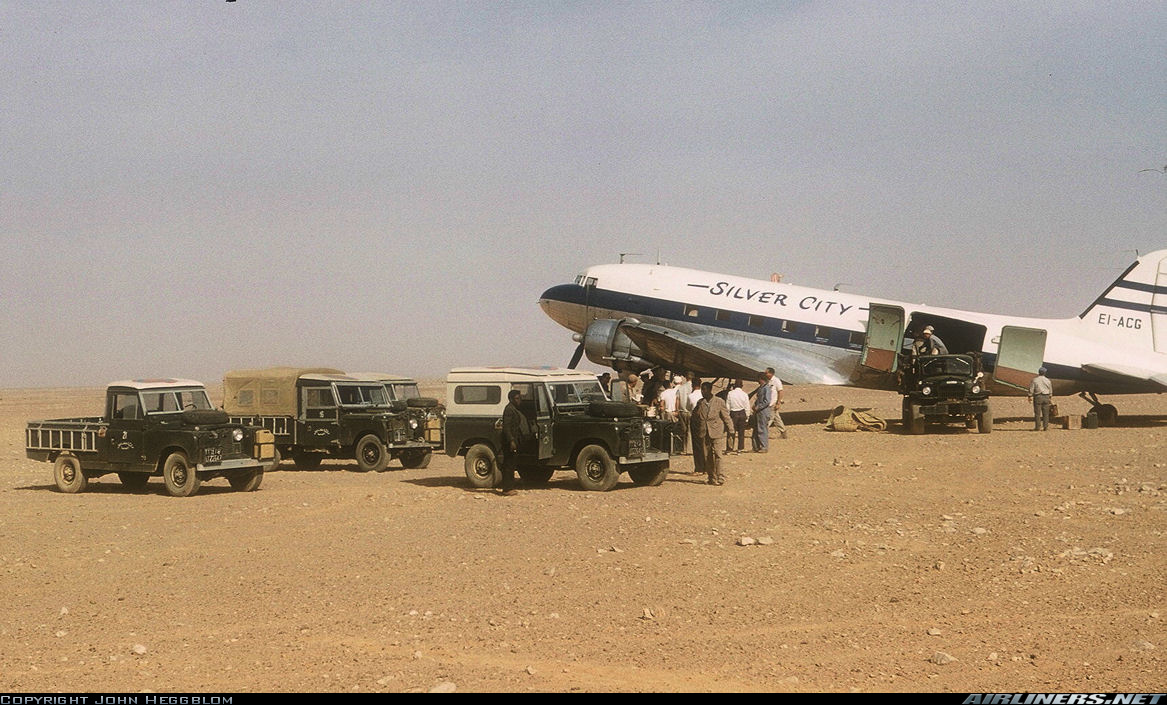
Built for USAAF as 41-18487 in August 1942, serving in North Africa. Bought by Aer Lingus in April 1946 and named "St Malachy" operating schedules to the UK and near Continent. (Source: R.A. Scholefield, airliners.net) Sold to French Navy in October 1961.
Detailed entry on this airframe from joebaugher.com:
18487 (MSN 4579) to USAAF Aug 03, 1942 - Used in training by 5th AF, 317th TCG, 41st TCS, Australia Sep 28, 1942 to Dec 14, 1942 - Oran, North Africa May 10, 1943 - Eighth Air Force, UK 30Mar44. 48th Troop Carrier Squadron, 313th Troop Carrier Group, Ninth Air Force, Folkingham (Station 484). Transported paratroopers of the 3rd Battalion, 508th Parachute Infantry Regiment to a drop zone one mile NW of Picauville, Normandy, France on Mission ‘Boston’ 6Jun44; battle damaged by enemy ground fire- to RFC Dec 14, 1945 - Scottish Aviation Limited 14Dec45 for civil conversion. To civil registry as EI-ACG (Aer Lingus ‘St Malachy’ Apr 17, 1946. Leased to Silver City Airways Apr 07, 1959 to Oct 28, 1960), EI-ALR (Benedar Air Ltd Jan 02, 1961). Delivered 14Jan61 to Société d'Exploitation et de Construction Aéronautique (SECA), Le Bourget, Paris, France for overhaul and modification, then sold to French Navy Oct 10, 1961 as 8487/87. Operated by squadron 56S as ‘87/F-YFGC’, later ‘F-YGGB (1969 to 1979). Preserved Ste Mere l’Eglise Airborne Troops Museum (Normandy). Later replaced by 42-100825. Preserved and on display at Nîmes-Garons, France. With the impending closure of the navy base at Nîmes, the aircraft is moved to Lann Bihoué, Bretagne/Brittany. Exhibited at BAN Lann Bihoué; dedicated 18Sep10 on the occasion of the BAN Lann Bihoué Open House for the Naval Aeronautics Centennial.
More details on the Aéronavale C-47s and this airframe here (in French):
www.ffaa.net/aircraft/dakota/dakota_fr.htm
This airframe as EI-ACG with Aer Lingus at MAN in April 1952:
imgproc.airliners.net/photos/airliners/2/7/3/2395372.jpg

EI-ACG with Silver City Airways in Libya in 1959:
imgproc.airliners.net/photos/airliners/6/3/3/1223336.jpg
87 preserved and displayed at FNI in June 1996:
www.flickr.com/photos/57646436@N06/44879418761
87’s fuselage arriving at BAN Lann Bihoué in May 2010:
imgproc.airliners.net/photos/airliners/9/2/4/2345429.jpg?...

87 preserved and displayed at BAN Lann Bihoué in May 2016:
bdd.deltareflex.com/photos/highdef/15/15352.jpg

Scan from Kodachrome K25 slide.
Bwlch Mawr is the 5735th highest peak in the British Isles and the 508th tallest in Wales. It may not be be one of the big boys but it offers some excellent views - on a clear day!
She and her friend approached me with smiles as I walked down Toronto’s Church Street at the conclusion of the city’s annual Pride Parade. They asked if I could spare a couple of minutes for a survey they were doing. I said I could. The survey had to do with urban development and was asking what I liked about the downtown community and what I would suggest to improve it. My thoughts ran toward making the city more pedestrian-friendly and my belief is that wider sidewalks (as are common in European cities) contribute to people walking more and mingling.
Once I had shared my thoughts, I told her about my Human Family photography project and invited her to join through having me make a street portrait of her. She laughed and said “I think that’s a fair trade. Sure.” Meet Erika.
I took a couple of portraits and we looked at them on my camera. Her friend commented that she might even be able to use the photo as her headshot. If she decided she could use the portrait that way, I would be pleased. I discovered that Erika is originally from my home town of Chicago although she is now living in Philadelphia and is in town for meetings regarding a fellowship program she is involved in. It was fun to compare notes about where we grew up. It’s a small world. We didn’t have much time to chat further because of the circumstances, but I told her about the project and we exchanged contact information, agreeing to follow up by email.
When I sent Erika her photo she replied with a friendly email expanding on her background and activities. Born in Mexico, Erika came to the U.S. as a young child and was one of the undocumented Mexican immigrants you have read about in the news. She didn’t receive her green card until 2013 and has devoted herself to supporting others in similar situations through her art along with other activities. She describes herself as “a queer artist and activist focusing on topics related to racial justice and immigrant rights.” Her recent activities include community art workshops for immigrant youth and holding rallies with a goal of “demanding an end to all detentions and deportations, particularly those of LGBTQ immigrants.” She is the recipient of a grant to further her work which you can read about here: www.leeway.org/artists/erika_guadalupe_nunez.
Erika’s visit to Toronto was for a training week for a Fellowship program called Emerging City Champions through the Knight Foundation. The Foundation has selected 20 young people from across the U.S. (mid-20s to mid-30s) who are interviewing residents as part of a training exercise on community engagement and community improvement. All 20 will return to their communities to execute funded projects to better their cities.
When we hear the expression “think globally, act locally” it is referring to people like Erika who has used her own experience and her artistic talents to work toward the betterment of her community and especially its young residents who have been marginalized by immigration and/or sexual identity. Her message to The Human Family project is “No human being is illegal.”
Thank you Erika for all that you are doing to make the world a better place and thank you for your participation in my project.
This is my 508th submission to The Human Family Group on Flickr.
You can view more street portraits and stories by visiting The Human Family.
From Wikipedia, the free encyclopedia
F-84 Thunderjet
RoleFighter-bomber
ManufacturerRepublic Aviation
First flight28 February 1946
IntroductionNovember 1947
Retired1964 (USAF)
1974 (Yugoslavia)
Primary userUnited States Air Force
Number built7,524
Unit cost
US$237,247 (F-84G)[1]
US$769,330 (F-84F)
VariantsRepublic F-84F Thunderstreak
Republic XF-84H Thunderscreech
Republic XF-91 Thunderceptor
The Republic F-84 Thunderjet was an American turbojet fighter-bomber aircraft. Originating as a 1944 United States Army Air Forces (USAAF) proposal for a "day fighter", the F-84 first flew in 1946. Although it entered service in 1947, the Thunderjet was plagued by so many structural and engine problems that a 1948 U.S. Air Force review declared it unable to execute any aspect of its intended mission and considered canceling the program. The aircraft was not considered fully operational until the 1949 F-84D model and the design matured only with the definitive F-84G introduced in 1951. In 1954, the straight-wing Thunderjet was joined by the swept-wing F-84F Thunderstreak fighter and RF-84F Thunderflash photo reconnaissance aircraft.
The Thunderjet became the USAF's primary strike aircraft during the Korean War, flying 86,408 sorties and destroying 60% of all ground targets in the war as well as eight Soviet-built MiG fighters. Over half of the 7,524 F-84s produced served with NATO nations, and it was the first aircraft to fly with the U.S. Air Force Thunderbirds demonstration team. The USAF Strategic Air Command had F-84 Thunderjets in service from 1948 through 1957.
The F-84 was the first production fighter aircraft to utilize inflight refueling and the first fighter capable of carrying a nuclear weapon, the Mark 7 nuclear bomb. Modified F-84s were used in several unusual projects, including the FICON and Tom-Tom dockings to the B-29 Superfortress and B-36 bomber motherships, and the experimental XF-84H Thunderscreech turboprop.
The F-84 nomenclature can be somewhat confusing. The straight-wing F-84A to F-84E and F-84G models were called the Thunderjet. The F-84F Thunderstreak and RF-84F Thunderflash were different airplanes with swept wings. The XF-84H Thunderscreech (not its official name) was an experimental turboprop version of the F-84F. The F-84F swept wing version was intended to be a small variation of the normal Thunderjet with only a few different parts, so it kept the basic F-84 number. Production delays on the F-84F resulted in another order of the straight-wing version; this was the F-84G.
Design and development
An F-84G at Chaumont-Semoutiers Air Base, France, in 1953
In 1944, Republic Aviation's chief designer, Alexander Kartveli, began working on a turbojet-powered replacement for the P-47 Thunderbolt piston-engined fighter. The initial attempts to redesign the P-47 to accommodate a jet engine proved futile due to the large cross-section of the early centrifugal compressor turbojets. Instead, Kartveli and his team designed a new aircraft with a streamlined fuselage largely occupied by an axial compressor turbojet engine and fuel stored in rather thick unswept wings.[1]
On 11 September 1944, the USAAF released General Operational Requirements for a day fighter with a top speed of 600 mph (521 kn, 966 km/h), combat radius of 705 miles (612 nmi, 1,135 km), and armament of either six 0.50 in (12.7 mm) or four 0.60 in (15.2 mm) machine guns. In addition, the new aircraft had to use the General Electric TG-180 axial turbojet which entered production as the Allison J35.
On 11 November 1944, Republic received an order for three prototypes of the new XP-84—Model AP-23.[1] Since the design promised superior performance to the Lockheed-built P-80 Shooting Star and Republic had extensive experience in building single-seat fighters, no competition was held for the contract. The name Thunderjet was chosen to continue the Republic Aviation tradition started with the P-47 Thunderbolt while emphasizing the new method of propulsion. On 4 January 1945, even before the aircraft took to the air, the USAAF expanded its order to 25 service test YP-84As and 75 production P-84Bs (later modified to 15 YP-84A and 85 P-84B).
Meanwhile, wind tunnel testing by the National Advisory Committee for Aeronautics revealed longitudinal instability and stabilizer skin buckling at high speeds.[1] The weight of the aircraft, a great concern given the low thrust of early turbojets, was growing so quickly that the USAAF had to set a gross weight limit of 13,400 lb (6,080 kg). The results of this preliminary testing were incorporated into the third prototype, designated XP-84A, which was also fitted with a more powerful J35-GE-15 engine with 4,000 lbf (17.79 kN) of thrust.[1]
The first prototype XP-84 was transferred to Muroc Army Air Field (present-day Edwards Air Force Base) where it flew for the first time on 28 February 1946 with Major Wallace A. "Wally" Lien at the controls. It was joined by the second prototype in August, both aircraft flying with J35-GE-7 engines producing 3,745 lbf (16.66 kN). The 15 YP-84As delivered to Patterson Field (present-day Wright-Patterson Air Force Base) for service tests differed from XP-84s by having an upgraded J35-A-15 engine, carrying six 0.50 in (12.7 mm) M2 Browning machine guns (four in the nose and one in each wing root), and having the provision for wingtip fuel tanks holding 226 U.S. gal (856 L) each.
Due to delays with delivery of jet engines and production of the XP-84A, the Thunderjet had undergone only limited flight testing by the time production P-84Bs began to roll out of the factory in 1947. In particular, the impact of wingtip tanks on aircraft handling was not thoroughly studied. This proved problematic later.[1]
After the creation of the United States Air Force by the National Security Act of 1947, the Pursuit designation was replaced with Fighter, and the P-84 became the F-84.
F-84s were assigned to the 27th Fighter Wing, 27th Fighter Escort Wing, 27th Strategic Fighter Wing, 31st Fighter Escort Wing, 127th Fighter Day Wing, 127th Fighter Escort Wing, 127th Strategic Fighter Wing, 407th Strategic Fighter Wing and the 506th Strategic Fighter Wing of the Strategic Air Command from 1947 through 1958.[2]
Operational history
The F-84B, which differed from YP-84A only in having faster-firing M3 machine guns, became operational with 14th Fighter Group at Dow Field, Bangor, Maine in December 1947. Flight restrictions followed immediately, limiting maximum speed to Mach 0.8 due to control reversal, and limiting maximum acceleration to 5.5 g (54 m/s²) due to wrinkling of the fuselage skin. To compound the problem, parts shortages and maintenance difficulties earned the aircraft the nickname, "Mechanic's Nightmare".[1] On 24 May 1948, the entire F-84B fleet was grounded due to structural failures.
P-84Bs of the 48th Fighter Squadron, 14th Fighter Group, 1948.
A 1948 review of the entire F-84 program discovered that none of the F-84B or F-84C aircraft could be considered operational or capable of executing any aspect of their intended mission. The program was saved from cancellation because the F-84D, whose production was well underway, had satisfactorily addressed the major faults. A fly-off against the F-80 revealed that while the Shooting Star had a shorter takeoff roll, better low altitude climb rate and superior maneuverability, the F-84 could carry a greater bomb load, was faster, had better high altitude performance and greater range.[1] As a temporizing measure, the USAF in 1949 committed US$8 million to implement over 100 upgrades to all F-84Bs, most notably reinforcing the wings. Despite the resultant improvements, the F-84B was withdrawn from active duty by 1952.[1]
The F-84C featured a somewhat more reliable J35-A-13 engine and had some engineering refinements. Being virtually identical to the F-84B, the C model suffered from all of the same defects and underwent a similar structural upgrade program in 1949. All F-84Cs were withdrawn from active service by 1952.[1]
The structural improvements were factory-implemented in the F-84D, which entered service in 1949. Wings were covered with thicker aluminum skin, the fuel system was winterized and capable of using JP-4 fuel, and a more powerful J35-A-17D engine with 5,000 lbf (22.24 kN) was fitted. It was discovered that the untested wingtip fuel tanks contributed to wing structural failures by inducing excessive twisting during high-"g" maneuvers.[1] To correct this, small triangular fins were added to the outside of the tanks. The F-84D was phased out of USAF service in 1952 and left Air National Guard (ANG) service in 1957.[1]
The first effective and fully capable Thunderjet was the F-84E model which entered service in 1949. The aircraft featured the J35-A-17 engine, further wing reinforcement, a 12 in (305 mm) fuselage extension in front of the wings and 3 in (76 mm) extension aft of the wings to enlarge the cockpit and the avionics bay, an A-1C gunsight with APG-30 radar, and provision for an additional pair of 230 gal (870 L) fuel tanks to be carried on underwing pylons.[1] The latter increased the combat radius from 850 to 1,000 miles (740 to 870 nmi; 1,370 to 1,610 km).
One improvement to the original F-84 design was rocket racks that folded flush with the wing after the 5-inch HVAR rockets were fired, which reduced drag over the older fixed mounting racks. This innovation was adopted by other U.S. jet fighter-bombers.[3]
A Portuguese F-84 being loaded with ordnance in the 1960s, at Luanda Air Base, during the Portuguese Colonial War.
Despite the improvements, the in-service rates for the F-84E remained poor with less than half of the aircraft operational at any given time.[1] This was primarily due to a severe shortage of spares for the Allison engines. The expectation was that F-84Es would fly 25 hours per month, accumulating 100 hours between engine overhauls. The actual flight hours for Korean War and NATO deployments rapidly outpaced the supply and Allison's ability to manufacture new engines.[1] The F-84E was withdrawn from USAF service in 1956, lingering with ANG units until 1959.
The definitive straight-wing F-84 was the F-84G which entered service in 1951. The aircraft introduced a refueling boom receptacle in the left wing,[4] autopilot, Instrument Landing System, J35-A-29 engine with 5,560 lbf (24.73 kN) of thrust, a distinctive framed canopy (also retrofitted to earlier types), and the ability to carry a single Mark 7 nuclear bomb.[1] The F-84G was retired from USAF in the mid-1960s.
Starting in the early 1960s, the aircraft was deployed by the Força Aérea Portuguesa (FAP) during the Portuguese Colonial War in Africa. By 1972, all four operating F-84 aircraft were supplementing the FAP in Angola.[5]
Flying the Thunderjet
Typical of most early jets, the Thunderjet's takeoff performance left much to be desired. In hot Korean summers with a full combat load, the aircraft routinely required 10,000 ft (3,000 m) of runway for takeoff even with the help of RATO bottles (two or four of these were carried, each producing 1,000 lbf (4.4 kN) of thrust for 14 seconds).[1] All but the lead aircraft had their visibility obscured by the thick smoke from the rockets. Early F-84s had to be pulled off the ground at 160 mph (140 kn, 260 km/h) with the control stick held all the way back. Landings were made at a similar speed, for comparison the North American P-51 Mustang landed at approximately 120 mph (100 kn, 190 km/h). Despite the "hot" landing speeds, the Thunderjet was easy to fly on instruments and crosswinds did not present much of a problem.[6]
An F-84E launching rockets.
Thanks to the thick straight wing the Thunderjet rapidly reached its Mach 0.82 limitation at full throttle and low altitude. The aircraft had sufficient power to fly faster, but exceeding the Mach limit at low altitudes resulted in a violent pitch-up and structural failure causing the wings to break off.[6] Above 15,000 ft (4,600 m), the F-84 could be flown faster but at the expense of severe buffeting. However, the airspeed was sufficiently easy to control to make safe dive bombing from 10,000 ft (3,000 m) possible.[6] The top speed limitation proved troublesome against Soviet Mikoyan-Gurevich MiG-15s in Korea. Slower than the MiG, the F-84 was also unable to turn tightly with a maximum instantaneous-turn load of only 3 Gs followed by rapid loss of airspeed. One F-84E pilot credited with two MiG kills achieved his second victory by intentionally flying his aircraft into pitch-up.[6] The MiGs chasing him were unable to follow the violent maneuver and one crashed into the ground. Luckily for the F-84E pilot, the aircraft did not disintegrate but the airframe did suffer heavy warping. The F-84 was a stable gun platform and the computing gunsight aided in accurate gunnery and bombing. Pilots praised the aircraft for Republic's legendary ruggedness.[6]
Pilots nicknamed the Thunderjet "The Lead Sled".[2] It was also called "The Iron Crowbar", "a hole sucking air", "The Hog" ("The Groundhog"), and "The World's Fastest Tricycle", "Ground Loving Whore" as a testament to its long takeoff rolls.[2] F-84 lore stated that all aircraft were equipped with a "sniffer" device that, upon passing V2, would look for the dirt at the end of the runway. As soon as the device could smell the dirt, the controls would turn on and let the pilot fly off the ground. In the same vein, it was suggested a bag of dirt should be carried in the front landing gear well. Upon reaching V2, the pilot would dump the dirt under the wheels, fooling the sniffer device.[2]
Korean War
The Thunderjet had a distinguished record during the Korean War. Although the F-84B and F-84C could not be deployed because their J35 engines had a service life of only 40 hours, the F-84D and F-84E entered combat with 27th Fighter Escort Group on 7 December 1950.[1] The aircraft were initially tasked with escorting the B-29 Superfortress bombers. The first Thunderjet air-to-air victory was scored on 21 January 1951 at the cost of two F-84s.[2] The F-84 was a generation behind the swept-wing Soviet Mikoyan-Gurevich MiG-15 and outmatched, especially when the MiGs were flown by more-experienced pilots, and the MiG counter-air mission was soon given to the F-86 Sabre. Like its famous predecessor, the P-47, the F-84 switched to the low-level interdiction role at which it excelled.
A KB-29M tanker refueling an F-84E over Korea. F-84Es could only refuel the wingtip tanks separately.
F-84G-26-RE Thunderjet 51-16719 while assigned to the 3600th Air Demonstration Team (USAF Thunderbirds), 1954.
The F-84 flew a total of 86,408 missions, dropping 55,586 tons (50,427 metric tons) of bombs and 6,129 tons (5,560 metric tons) of napalm.[2] The USAF claimed F-84s were responsible for 60% of all ground targets destroyed in the war. Notable F-84 operations included the 1952 attack on the Sui-ho Dam. During the war, the F-84 became the first USAF fighter to utilize aerial refueling. In aerial combat, F-84 pilots were credited with eight MiG-15 kills against a Soviet-claimed loss of 64 aircraft. The total losses were 335 F-84D, E and G models.[2]
Portuguese Overseas War
In 1961, the Portuguese Air Force sent 25 of their remaining F-84G to Angola. There they formed the Esquadra 91 (91st Squadron), based at Luanda Air Base. From then on, the F-84s were engaged in the Angolan Theater of the Portuguese Overseas War, being mainly employed in air strike missions against the separatist guerrillas.
The last F-84 were kept operational in Angola until 1974.
Notable achievements
The F-84 was the first aircraft flown by the U.S. Air Force Thunderbirds, which operated F-84G Thunderjets from 1953 to 1955 and F-84F Thunderstreaks from 1955 to 1956. The F-84E was also flown by the Skyblazers team of United States Air Forces Europe (USAFE) from 1950 to 1955.[1]
On 7 September 1946, the second XP-84 prototype set a national speed record of 607.2 mph (527.6 kn, 977.2 km/h), slightly slower than the world record 612.2 mph (532.0 kn, 985.2 km/h) held by the British Gloster Meteor.[1]
On 22 September 1950, two EF-84Es, flown by David C. Schilling and Col. William Ritchie, flew across the North Atlantic from Great Britain to the United States. Ritchie's aircraft ran out of fuel over Newfoundland but the other successfully made the crossing which took ten hours two minutes and three aerial refuelings. The flight demonstrated that large numbers of fighters could be rapidly moved across the Atlantic.[1]
F-84G was the first fighter with built-in aerial refueling capability and the first single-seat aircraft capable of carrying a nuclear bomb.[1]
On 20 August 1953, 17 F-84Gs using aerial refueling flew from the United States to the United Kingdom. The 4,485-mile (3,900 nmi, 7,220 km) journey was the longest-ever nonstop flight by jet fighters.[1]
In 1955, an F-84G became the first aircraft to be zero-length launched from a trailer.[7]
By the mid-1960s, the F-84/F-84F was replaced by the F-100 Super Sabre and the RF-84F by the RF-101 Voodoo in USAF units, being relegated to duty in the Air National Guard. The last F-84F Thunderflash retired from the ANG in 1971. Three Hellenic Air Force RF-84Fs that were retired in 1991 were the last operational F-84s.
Costs
F-84BF-84CF-84DF-84EF-84GF-84FRF-84F
Airframe139,863139,863150,846562,715482,821
Engine41,65441,65441,488146,02795,320
Electronics7,1657,1654,7619,62321,576
Armament23,55923,55937,43341,71363,632
Ordnance2,7199,2524,529
Flyaway cost286,407 for the first 100
163,994 for the next 141147,699212,241212,241237,247769,300667,608
Cost per flying hour390
Maintenance cost per flying hour185185
Notes: The costs are in approximately 1950 United States dollars and have not been adjusted for inflation.[1]
Variants
Straight-wing variants
The XP-84A (foreground) and YP-84As
XP-84
The first two prototypes.
XP-84A
The third prototype with a more powerful J35-GE-15 engine. This airframe was subsequently modified with a pointed fairing over the intake and lateral NACA intakes were installed into the intake trunks.
YP-84A
Service test aircraft; 15 built.
P-84B (F-84B)
First production version, J35-A-15 engine; 226 built.
F-84C
Reverted to the more reliable J35-A-13 engine, improved fuel, hydraulic and electrical systems; 191 built.
F-84D
J35-A-17 engine, various structural improvements. The pitot tube was moved from the tail fin to the splitter in the air intake with fins added to the wingtip fuel tanks; 154 built.
F84 E&G Thunderjet French Air Force 1951–1955
EF-84D
Two F-84Ds, EF-84D 48-641 and EF-84D 48-661 were modified with coupling devices; 641 starboard wing, 661 port wing for "Tip-Tow Project MX106 Wing Coupling Experiments." An EB-29A 44-62093 was modified with coupling devices on both wings. Because of the difference in landing gear lengths, the three aircraft took off separately and couple/uncoupled in flight. The pilot of 641 was Major John M. Davis and the pilot of 661 was Major C.E. "Bud" Anderson.
"One of the more interesting experiments undertaken to extend the range of the early jets in order to give fighter protection to the piston-engine bombers, was the provision for inflight attachment/detachment of fighter to bomber via wingtip connections. One of the several programs during these experiments was done with a B-29 mother ship and two F-84D 'children', and was code named 'Tip Tow'. A number of flights were undertaken, with several successful cycles of attachment and detachment, using, first one, and then two F-84s. The pilots of the F-84s maintained manual control when attached, with roll axis maintained by elevator movement rather than aileron movement. Engines on the F-84s were shut down in order to save fuel during the 'tow' by the mother ship, and inflight engine restarts were successfully accomplished. The experiment ended in disaster during the first attempt to provide automatic flight control of the F-84s, when the electronics apparently malfunctioned. The left hand F-84 rolled onto the wing of the B-29, and the connected aircraft both crashed with loss of all on board personnel (Anderson had uncoupled so did not crash with the other two aircraft)."[8]
F-84E
J35-A-17D engine, Sperry AN/APG-30 radar-ranging gunsight, retractable attachments for RATO bottles, inboard wing hardpoints made "wet" to permit carrying an additional pair of 230 U.S. gal (870 L) fuel tanks. Most aircraft were retrofitted with F-84G-style reinforced canopies. The fuselage was stretched 15"; the canopy was lengthened 8", the canopy frame was lengthened 12" (accounting for another 4"), and a 3" splice panel was added aft of the canopy. The stretch was not done to enlarge the cockpit but rather to enable a larger fuel tank, provide additional space for equipment under the canopy behind the pilot's seat, and to improve aerodynamics. This can be distinguished from earlier models by the presence of two fuel vents on ventral rear fuselage, the added radar in the nose splitter, and the pitot tube was moved downward from mid-height in the splitter (as on the F-84D) to clear the radar installation. 843 built. F-84E 49-2031 was a test aircraft for air-to-air missiles. F-84E 50-1115 was a test aircraft for the FICON project.
EF-84E
Two F-84Es were converted into test prototypes, to test various methods of air-to-air refueling. EF-84E 49-2091 was used as a probe-and-drogue test aircraft. The probe was mid-span on the port wing. Production aircraft with probes (removable) had the probe fitted to the auxiliary wing tanks. EF-84E 49-2115 was used as a FICON test aircraft with a B-36 host. EF-84E 49-1225 and EF-84E 51-634 were test aircraft for the ZELMAL (Zero-length launch, Mat landing) experiments version for point defense, used the booster rocket from MGM-1 Matador cruise missile.
F-84G
Single-seat fighter-bomber capable of delivering the Mark 7 nuclear bomb using the LABS, J35-A-29 engine, autopilot, capable of inflight refueling using both the boom (receptacle in left wing leading edge) and drogue (probe fitted to wingtip fuel tanks), introduced the multi-framed canopy which was later retrofitted to earlier straight-winged F-84s. A total of 3,025 were built (1,936 for NATO under MDAP). The larger engine had a higher airflow at its take-off thrust than the intake had been designed for. This caused higher flow velocities, increased pressure losses and thrust loss. Commencing with block 20, auxiliary "suck-in" doors were added ahead of the wing leading edge to regain some of the thrust loss. At high engine rpm and low aircraft speeds, such as take-off, the spring-loaded doors were sucked open by the partial vacuum created in the duct. When the aircraft reached sufficient airspeed the ram pressure rise in the duct closed the auxiliary doors.[9] F-84G 51-1343 was modified with a periscope system to test the periscope installation proposed for the Republic XF-103.
F-84KX
Eighty ex-USAF F-84Bs converted into target drones for the United States Navy.
RF-84G
F-84G Thunderjets converted by France and Yugoslavia for recon duty with cameras in the ventral fuselage and modified auxiliary wing tanks.
YF-96A aka YF-84F aka YRF-84K
F-84E 49-2430 converted to swept wing configuration. The "first prototype" for the F-84F Thunderstreak. Canopy and ventral speed brake carried over from Thunderjet. Originally with a V-windscreen, later reverted to the standard Thunderjet flat windscreen. Modified by adding a fixed hook at the weapons bay and anhedral horizontal tailplane to enable FICON tests (trapeze capture) with GRB-36D mother ship. The airframe was capable of higher speeds than the Thunderjet engine could deliver. The YF-84F was a follow on with a larger engine and deepened fuselage.
YF-84F
F-84G 51-1344 converted to swept wing configuration. The "second prototype" for the F-84F Thunderstreak. Fuselage deepened by 7 inches (180 mm) to accommodate larger engine. Canopy and ventral speed brake carried over from Thunderjet, tail configuration same as YF-96A.
YF-84F aka YRF-84F
F-84G 51-1345 converted to swept wing configuration with a pointed nose and lateral intakes. This was a test airframe to evaluate the effects of moving the intakes to the wing roots. Like 1344, the fuselage was deepened by 7 inches (180 mm) to accommodate larger engine. Canopy and ventral speed brake carried over from Thunderjet, tail configuration same as YF-96A. For the swept wing versions of the F-84 series, see Republic F-84F Thunderstreak
Tip-Tow
See EF-84D above, did not become operational. See FICON project
Tom-Tom
Two RF-84K and B-36 wingtip coupling experiment, did not become operational. See FICON project
FICON
F-84E and GRB-36D trapeze system, became operational. See FICON project
Swept-wing variants
Main articles: Republic F-84F Thunderstreak and Republic XF-84H
YF-84F
Two swept-wing prototypes of the F-84F, initially designated YF-96A.
F-84F Thunderstreak
Swept wing version with Wright J65 engine.
RF-84F Thunderflash
Reconnaissance version of the F-84F, 715 built.
RF-84K FICON project
Reconnaissance version of the F model, 25 built to hang from the Consolidated B-36 Peacemaker.
XF-84H Thunderscreech
Experimental supersonic-turboprop version.
YF-84J
Two conversions with the General Electric J73 engine.
Operators
Republic F-84 Thunderjet in the Royal Military Museum at the Jubelpark, Brussels.
Imperial Iranian Air Force F-84G of the Golden Crown aerobatic team.
Republic F-84 Thunderjet at the en:Italian Air Force Museum, Vigna di Valle in 2012.
Royal Norwegian Air Force Republic F-84G Thunderjet.
Portuguese Air Force F-84 Thunderjet.
Belgium
Belgian Air Force operated 213 Republic F-84G from March 1952 until September 1957 and 21 Republic RF-84E
Denmark
Danish Air Force operated 240 Republic F-84G fromApril 1952 until January 1962 and 6 Republic F-84E[10]
France
French Air Force operated 335 F-84G from April 1952 until November 1956 and 46 Republic F-84E
Greece
Hellenic Air Force operated 234 Republic F-84G from March 1952 until June 1960. They equipped the 335, 336, 337, 338, 339 and 340 Squadrons (Μοίρα Δίωξης)
Iran Iran
Imperial Iranian Air Force operated 69 Republic F-84G from May 1957 until September 1961
Italy
Italian Air Force operated 256 Republic F-84G from March 1952 until May 1957[11][12]
Netherlands
Netherlands Air Force operated 166 Republic F-84G from April 1952 until December 1957 and 21 Republic RF-84E
Norway
Norwegian Air Force operated 208 Republic F-84G from June 1952 until Jun 1960 and 6 Republic F-84E from 1951 until 1956 and 35 Republic RF-84F from 1956 until 1970
Portugal
Portuguese Air Force operated 125 Republic F-84G from January 1953 until July 1974
Taiwan (Republic of China)
Republic of China Air Force operated 246 Republic F-84G from June 1953 until April 1964
Thailand
Royal Thai Air Force operated 31 Republic F-84G from November 1956 until 1963
Turkey
Turkish Air Force operated 489 Republic F-84G from March 1952 until June 1966
United States
United States Air Force operated 226 Republic F-84B, 191 Republic F-84C, 154 Republic F-84D, 743 Republic F-84E, 789 Republic F-84G
Yugoslavia
Yugoslavian Air Force operated 231 Republic (R)F-84G from June 1953 until July 1974
Major USAF operational F-84 units
Republic F-84E-15-RE Thunderjet Serial 49-2338 of the 136th Fighter-Bomber Wing, Korea
10th Tactical Reconnaissance Wing: RF-84F (1955–1958)
12th Fighter Escort Wing/Group: F-84E/G/F (1950–1957;1962–1964)
14th Fighter Wing/Group: P/F-84B (1947–1949)
15th Tactical Fighter Wing: F-84F (1962–1964)
20th Fighter Bomber Wing/Group: F-84B/C/D/E/F/G (1958–1959)
27th Fighter Escort Wing/Group: F-84E/G/F (1950–1958)
31st Fighter Escort Wing/Group: F-84C/E/F (1948–1950; 1951–1957)
49th Fighter Bomber Wing/Group: F-84E/G (1951–1953)
58th Fighter Bomber Group: F-84E/G (1952–1954)
66th Tactical Reconnaissance Wing: RF-84F (1955–1959)
67th Tactical Reconnaissance Wing: (15th & 45th TRS5) RF-84F/K (1955–1958)
71st Strategic Reconnaissance Wing: RF-84F/K (1955–1956)
81st Fighter Bomber Wing/Group: F-84F (1954–1959)
136th Fighter Bomber Wing/Group F-84E (1951–1952) @ K2, also J-13
312th Fighter Bomber Group: F-84E/G (1954–1955)
363rd Tactical Reconnaissance Wing: RF-84F (1954–1958)
366th Fighter Bomber Wing/Tactical Fighter Wing: F-84E,F (1954–1958;1962–1965)
401st Fighter Bomber Wing/Tactical Fighter Wing: F-84F (1957)
405th Fighter Bomber Wing/Tactical Fighter Wing: F-84F (1953–1956)
407th Strategic Fighter Wing: F-84F (1954–1957)
474th Fighter Bomber Wing: F-84D/E/G (1952–1953)
506th Strategic Fighter Wing: F-84F (1953–1957)
508th Strategic Fighter Wing: F-84F (1952–1956)
3540th Combat Crew Training Wing: F-84E (1952–1953)
3600th Combat Crew Training Wing: F-84D/E/G/F (1952–1957)
Redesignated 4510th CCTW with F-84D/F (1958)
3645th Combat Crew Training Wing: F-84E/G (1953–1957)
4925th Test Group (Atomic): F-84E/F/G (1950–1963)
Royal Netherlands Air Force operational F-84 units
JVS-2 (Jacht Vlieger School): RF-84E (1953)
306 Squadron: F-84G (1953–1954) / RF-84E (1954-1957)
311 Squadron: RF-84E (1951-1952) / F-84G (1952-1956)
312 Squadron: RF-84E (1951-1954) / F-84G (1952-1956)
313 Squadron: RF-84E (1953-1954) / F-84G (1953-1956)
314 Squadron: F-84G (1952-1956)
315 Squadron: F-84G (1952-1956)
Aircraft on display
A F-84 during Zero-length launch testing
Croatia
F-84G
10676 Ex-USAF – Rijeka Airport, Omišalj.[13]
Denmark
F-84G
51-9966/KR-A – Aalborg Defence and Garrison Museum, Aalborg[14]
51-10622/KU-U – Aalborg Defence and Garrison Museum[14]
A-777/SY-H – Danmarks Tekniske Museum, Helsingør[15]
KP-X – Danish Collection of Vintage Aircraft, Skjern[16]
RF-84F
C-581 – Flyvestation Karup Historiske Forening Museet, Karup[17]
C-264 – Danish Collection of Vintage Aircraft, Skjern[16]
Netherlands
F-84G
K-171 – Nationaal Militair Museum, Soesterberg.[18]
Norway
F-84G
51-10161 – Flyhistorisk Museum, Sola, Stavanger Airport, Sola, near Stavanger.[19]
51-11209 – Forsvarets flysamling Gardermoen, Oslo Airport, Gardermoen near Oslo.[20]
52-2912 - Ørland Main Air Station
52-8465 – Royal Norwegian Air Force Museum, Bodø[21]
Portugal
F-84G
5131 – Museu do Ar, Sintra Air Base, Sintra.[22]
5201 - Military and Technical Training Center of the Air Force, Ota (Alenquer).[23]
Serbia
F-84G
10501 – Ex-USAF 52-2936, c/n 3050-1855B Museum of Aviation, Nikola Tesla Airport, Belgrade.[24][verification needed]
10525 – Ex-USAF 52-2939, c/n 3050-1858B Museum of Aviation, Nikola Tesla Airport, Belgrade.[25][verification needed]
10530 – Ex-USAF 52-8435, c/n 3250-2260B Museum of Aviation, Nikola Tesla Airport, Belgrade.[26][verification needed]
Slovenia
F-84G
10642 Ex-USAF 52-2910, c/n 3050-1829B – Pivka Military History Park, Pivka.[27]
Thailand
F-84G at the Royal Thai Air Force Museum
F-84G
51-10582 Ex-USAF and retired Royal Thai Air Force fighter in Royal Thai Air Force Museum
Turkey
110572 F-84G at Atatürk Airport.
F-84G
10572 – Istanbul Aviation Museum.
19953 – Atatürk Airport, İstanbul.
RF-84F
1901 – Istanbul Aviation Museum.
1917 – Istanbul Aviation Museum.
United States
YP-84A
45-59494 – Discovery Park of America, Union City, Tennessee. Formerly at Octave Chanute Aerospace Museum at the former Chanute Air Force Base in Rantoul, Illinois.[28][29]
F-84B
45-59504 – Cradle of Aviation Museum in Garden City, New York.[30]
45-59556 – Planes of Fame Museum in Chino, California.[31]
46-0666 – Mid-Atlantic Air Museum in Reading, Pennsylvania.[32]
F-84C
47-1433 – Pima Air and Space Museum, adjacent to Davis-Monthan Air Force Base in Tucson, Arizona.[33]
47-1486 – Goldwater Air National Guard Base, Sky Harbor International Airport in Phoenix, Arizona.[34]
47-1498 – EAA Airventure Museum in Oshkosh, Wisconsin.[35]
47-1513 – Kansas Aviation Museum at McConnell Air Force Base in Wichita, Kansas.[36]
47-1530 – Cannon Air Force Base, New Mexico.[37]
47-1562 – Pueblo Weisbrod Aircraft Museum in Pueblo, Colorado.[38]
47-1595 – March Field Air Museum at March Air Reserve Base (former March Air Force Base) in Riverside, California.[39]
F-84E
F-84E at the USAF Museum
49-2155 – Yanks Air Museum in Chino, California.[40]
49-2285 – Texas Military Forces Museum in Austin, Texas.[41]
49-2348 – American Airpower Museum in East Farmingdale, New York.[42]
50-1143 – National Museum of the United States Air Force at Wright-Patterson Air Force Base in Dayton, Ohio. It was obtained from Robins Air Force Base, Georgia, in October 1963.[43]
51-0604 – Museum of Aviation at Robins Air Force Base, Georgia.[44]
F-84G
51-0791 – Springfield Air National Guard Base, Springfield, Ohio.[45]
51-11126 - under restoration to airworthiness by a Vulcan Warbirds Inc. for the Flying Heritage Collection in Seattle, Washington.[46][47]
52-3242 – Hill Aerospace Museum, Hill Air Force Base, Utah.[48]
52-8365 - under restoration to airworthiness by a private owner in Edmonds, Washington.[49][50]
Specifications (F-84G Thunderjet)
Line drawing of F-84C
Data from Encyclopedia of US Air Force Aircraft and Missile Systems[1]
General characteristics
Crew: one
Length: 38 ft 1 in (11.60 m)
Wingspan: 36 ft 5 in (11.10 m)
Height: 12 ft 7 in (3.84 m)
Wing area: 260 ft² (24 m²)
Empty weight: 11,470 lb (5,200 kg)
Loaded weight: 18,080 lb (8,200 kg)
Max. takeoff weight: 23,340 lb (10,590 kg)
Powerplant: 1 × Allison J35-A-29 turbojet, 5,560 lbf (24.7 kN)
Performance
Maximum speed: 622 mph (540 kn, 1,000 km/h,Mach .81)
Cruise speed: 475 mph (413 kn, 770 km/h)
Range: 1,000 mi (870 nmi, 1,600 km) combat
Ferry range: 2,000 mi (1,700 nmi, 3,200 km) with external tanks
Service ceiling: 40,500 ft (12,350 m)
Rate of climb: 3,765 ft/min (19.1 m/s)
Wing loading: 70 lb/ft² (342 kg/m²)
Thrust/weight: 0.31 lbf/lb
Armament
6 × .50 in (12.7 mm) M3 Browning machine guns, 300 rpg
Up to 4,450 lb (2,020 kg) of rockets and bombs, including 1 × Mark 7 nuclear bomb
Avionics
A-1CM or A-4 gunsight with APG-30 or MK-18 ranging radar
F-84F Thunderstreak
Republic XF-91 Thunderceptor
XF-84H Thunderscreech
Aircraft of comparable role, configuration and era
Dassault Ouragan
de Havilland Venom
Gloster Meteor
Grumman F9F Cougar
Grumman F9F Panther
McDonnell XF-85 Goblin
F-105B, s/n 57-5803, was manufactured by Republic Aircraft, Farmingdale NY
and delivered to the USAF on 10 Sep 1959. Its assignments were:
Sep 1959 - Retained by manufacturer
Jun 1960 - To Wright Air Development Division (ARDC) Wright-Patterson AFB OH
(converted to JF-105B)
Mar 1961 - To Mobile Air Materiel Area AL (to F-105B)
Jul 1962 - To 4th Tactical Fighter Wing (TAC), Seymour Johnson AFB NC
Jun 1964 - To Mobile Air Materiel Area AL
Jun 1965 - To 4520th Combat Crew Training Wing (TAC), Nellis AFB NV
Oct 1967 - To 23rd Tactical Fighter Wing (TAC), McConnell AFB KS
Jun 1970 - To 177th Tactical Fighter Wing (ANG) Atlantic City AP NJ
Nov 1972 - To 945th Military Airlift Group (AFRES), Hill AFB
Jan 1973 - To 508th Tactical Fighter Group (AFRES), Hill AFB UT
Jan 1980 - To 466th Tactical Fighter Squadron (AFRES), Hill AFB UT
Nov 1980 - Dropped from inventory by transfer to museum or school
The F-105 was the fifth entry in the famous "Century" series of jet fighters. Designed as a supersonic, single-seater fighter/bomber able to carry nuclear weapons and heavy payloads over great distances at high speeds. It made its first flight on October 12th, 1955. The first F-105D (BuNo 58-1146) flew on June 9th, 1959. The TAC at Nellis AFB, Nevada, accepted the first F-105D on September 28th, 1960. The initial contract for 59 F-105Ds was increased to nearly 300 by the end of 1961. Ultimately, a total of 610 F-105Ds were built. It was named the “Thunderchief” because Republic Aviation liked to give their military aircraft names with “Thunder.”
The F-105D variant was an all-weather fighter-bomber version, fitted with monopulse and Doppler radar for night and poor weather operations. This radar was capable of terrain avoidance commands. The original weapons bay, designed for nuclear stores, was sealed and fitted with additional fuel tanks. Bombs were carried on multiple weapons racks on the centerline of the fuselage and wing pylons. The aircraft was equipped with a retractable in-flight refueling probe. During the Vietnam War, the F-105s operated from allied bases in Thailand.
The F-105D was the major production version of the series. It was essentially an all-weather version of the daytime-only F-105B. Externally, the -D differed from the -B in having a slightly longer and wider nose, which housed the AN/ASG-19 "Thunderstick" system designed to meet the new all-weather requirements specified in November of 1957. The AN/ASG-19 was designed around the NASARR R-14A all-purpose monopulse radar. This was optimized in air-to-ground and air-to-air modes and could perform low-level and high-altitude missions. The aircraft was equipped with a General Electric FC-5 flight control system with the R-14A radar to provide the F-105D with full all-weather capability. The design included a bomb-toss computer, a sight system, an AN/APN-131 Doppler navigator, an air data computer, a missile launch computer, an autopilot, and a search and ranging radar. The radar installation also incorporated a terrain guidance mode permitting the pilot to descend through poor weather in unfamiliar territory and to hug the ground, thus avoiding enemy detection.
The F-105Ds were powered by a single Pratt & Whitney J75-P-19W jet engine equipped with water injection. A new cockpit was provided with a vertical instrument panel. The higher gross weight of the -D version required a stronger main landing gear and more robust brakes. In addition, a pitot tube was mounted on the extreme tip of the nose. The aircraft was otherwise quite similar to other F-105 models. The F-105D had an arrester hook mounted on the rear of the ventral fin. This hook was intended to engage a wire in case the aircraft overshot the end of the runway during landing. The Thunderchief was not capable of carrier-based operations.
The 335th Tactical Fighter Squadron of the 4th Tactical Fighter Wing was the first unit to receive the new F-105D. It exchanged its older F-105Bs for the new -D models in June of 1960. The Thunderchief's first European deployments came in May of 1961 when the 36th TFW based at Bitburg in West Germany received its first F-105Ds. The 49th TFW soon followed it. F-105Ds were also supplied to the 4520th Combat Crew Training Wing based at Nellis AFB, the 36th TFW (22nd, 23rd, and 53rd Squadrons), the 49th TFW (7th, 8th, and 9th Squadrons), the 18th Fighter Bomber Wing (12th, 44th, and 67th squadrons), the 355th FBW (354th and 357th Squadrons), and the 388th TFW. The 36th and 49th Wings went to Europe at the end of 1961 to provide NATO with nuclear strike capabilities. The 8th and 18th Wings were stationed at bases in Japan from 1962 onwards.
In June of 1961, during special tests at Eglin AFB in Florida, the F-105D demonstrated its ability to carry and deliver up to seven tons of bombs. This was the heaviest load of bombs ever carried by a single-engined fighter at the time. This feat was repeated in October 1961 at Fort Bragg, North Carolina. President John F. Kennedy himself was one of the brass hats in attendance.
The F-105D was initially intended for the nuclear strike role, with the primary armament being a "special store" (a nuclear weapon) housed in the internal weapons bay. This weapon was usually either a Mk28 or Mk43. However, a Mk61 could be carried underneath the left or right inboard underwing pylon, and a Mk57 or Mk61 could be carried underneath the centerline pylon. But, as a nuclear war became less likely, the atomic weapon held in the internal weapons bay was usually replaced by a 390-gallon inner fuel tank for extended range.
The Thunderchief made for an excellent tactical bomber. All ordnance was carried externally except for the ammunition for the M61A1 cannon. With multiple ejector racks, the F-105D could have an impressive load of external fuel, ECM gear, and up to eight 750-lb. bombs on long-range missions. On short-range missions, it could carry up to sixteen 750-lb. bombs. Alternatively, payloads consisted of two 3000-lb. bombs or three drop tanks. On a typical mission over North Vietnam, the F-105D carried six 750-lb. bombs or five 1,000-lb bombs, along with two 450 US-gallon drop tanks. The F-105D also carried the Martin AGM-12 Bullpup air-to-surface missile. This weapon proved ineffective in Vietnam against hardened targets. The F-105D could also carry 2.75-inch rocket pods, napalm canisters, and four AIM-9 Sidewinder infrared-homing air-to-air missiles. The M61A1 Gatling-type, 20-mm cannon proved highly effective in air-to-air combat and ground strafing. With its size and range, the F-105D could carry twice the bomb load further and faster than the F-100. Initially, the hydraulic system was susceptible to failure due to battle damage. Modifications in this system improved the F-105s' ability to withstand enemy fire later on.
The F-105D was somewhat less successful as an air-to-air fighter, often challenged by the enemy MiG-17 and MiG-21 fighters. The "Thud" was not as maneuverable compared to the more nimble MiGs. Additionally, because the aircraft's ordnance was carried externally, maximum performance could only be reached once the bombs and rockets had been jettisoned or after the plane was clear of the target. However, when being attacked, the enormous thrust of the J-75 engine enabled a "slick" Thunderchief to fly supersonic "on the deck," quickly leaving its pursuers behind. F-105Ds did manage to shoot down 27.5 enemy fighters during 1966-1967. 20-mm Vulcan cannon shots accomplished most of these, and two more were downed by Sidewinder missiles.
Strikes against targets near Hanoi involved 1,250-mile round trips from Tahkli. High ambient temperatures, which were average for Thailand, handicapped takeoff performance. This required takeoffs with less than a maximum fuel load. Consequently, F-105Ds operating out of bases in Thailand usually were refueled by KC-135s over Laos before crossing into North Vietnam. Refueling operations were often repeated on the way back, mainly if afterburners had been used to evade enemy defenses. On occasion, KC-135 tanker crews would take extra risks and penetrate North Vietnamese airspace to come to the rescue of F-105Ds short on fuel or suffering from battle damage. Many F-105 pilots escaped from being an unwilling guest in the "Hanoi Hilton" because of the courage and skill of KC-135 crews.
When approaching Hanoi from Thailand, the F-105Ds had to cross "Thud Ridge," the name Thunderchief pilots gave to a series of hills between the Red and Black Rivers. Once over "Thud Ridge," the F-105s would approach their targets low and fast, an environment where the F-105D excelled. Maneuverability and stability during low-level, high-speed flight was excellent because of the aircraft's high wing loading.
Throughout the Vietnam War, the F-105D was modified to meet constantly changing conditions. Many F-105Ds were retrofitted with armor plating, backup flight control systems, X-band beacons, more effective radar altimeters, and AN/ASG-19 Thunderstick guns/bombsights. This sight provided either a blind or visual weapons delivery, using automatic or manually-controlled weapons release. The ejection seat was improved, and AN/APR-25(U)-26(V) radar homing and warning (RHAW) antennae were added to the tip of the vertical fin. The RHAW helped to warn the pilot when enemy MiGs were sneaking up on his tail and targeting his aircraft with radar. In addition, F-105D refueling probes were also improved.
Several F-105Ds were provided with a combat camera mounted in a protrusion on the lower nose just behind the radome. Many F-105Ds were fitted in the field with ram air intake scoops on the rear fuselage to address an afterburner cooling problem that had resulted in some engine fires. Unfortunately, heat and high humidity often wreaked havoc with the reliability of delicate electronic systems, with failures frequently occurring just at inopportune times.
In 1969, 30 F-105Ds were re-equipped with AN/ARN-92 LORAN equipment for more precise navigation. These planes can be identified by a long dorsal spine extending from the canopy to the tail fin. They were known as "Thunderstick IIs," T-Stick II for short. The first T-Stick aircraft flew on August 9th, 1969. They served with the 23rd TFW in the continental U.S. but never saw any combat.
Thunderchiefs in Vietnam flew more than 20,000 combat missions. As many as 350 Thunderchiefs (-Ds and -Fs) were lost in combat, most of them to North Vietnamese anti-aircraft fire. This was more than half of all Thunderchiefs built. 126 F-105s were lost in 1966 alone, 103 of them to AAA fire. From 1965-1968, it was calculated that any F-105 pilot stood only a 75% chance of surviving 100 missions over North Vietnam.
Following their withdrawal from Southeast Asia, the few Thunderchiefs to survive combat in Vietnam served with active duty Air Force units for two more years, primarily with the 23rd TFW at McConnell AFB, KS, and with the 18th TFW at Kadena AB on Okinawa. Beginning in 1971, some aircraft were handed to the Air National Guard. The ANG operated them until 1983, when the last “Thuds” were retired. Other F-105Ds were transferred to the Air Force Reserve. The Air Force Reserve acquired its first F-105Ds in July of 1972. The last Air Force reserve unit to operate the F-105D, the 466th TFS of the 508th TFW, made the final flight with the type on February 25th, 1984.
This F-105D, BuNo 62-4318, was built at Republic’s Farmingdale, NY plant in 1962 and delivered to the USAF the next year. She was retired in November of 1983 and placed on display at the old Kelly AFB in Texas before being moved to Fairview Park in Centralia, IL, where it remains today.
.
.
I was originally enrolled into the GETTY IMAGES collection as a contributor on April 9th 2012, and when links with FLICKR were terminated in March 2014, I was retained and fortunate enough to be signed up via a second contract, both of which have proved to be successful with sales of my photographs all over the world now handled exclusively by them.
On November 12th 2015 GETTY IMAGES unveiled plans for a new stills upload platform called ESP (Enterprise Submission Platform), to replace the existing 'Moment portal', and on November 13th I was invited to Beta test the new system prior to it being officially rolled out in December. (ESP went live on Tuesday December 15th 2015 and has smoothed out the upload process considerably).
With visits now in excess of 18.678 Million to my FLICKR site, used primarily these days as a fun platform to reach friends and family as I have now sold my professional gear and now take a more leisurely approach to my photographic exploits, I would like to say a huge and heartfelt 'THANK YOU' to FLICKR, GETTY IMAGES and everyone who drops by.
***** Selected for sale in the GETTY IMAGES COLLECTION on March 16th 2017
CREATIVE RF gty.im/648675198 MOMENT OPEN COLLECTION**
This photograph became my 2,508th frame to be selected for sale in the Getty Images collection and I am very grateful to them for this wonderful opportunity.
.
.
This photograph was taken an altitude of Nine hundred and thirteen metres, at 13:29pm on Monday May 16th 2016 off the Alaska Highway 1 close to Morley Lake on the way to Teslin in British Columbia, Canada.
This is a large adult American Black Bear (Ursus Americanus). Native to North America, and found in abundance in the Yukon territory and Alaska, Black bears have a small tail, up to nine inches long foot length and males can weigh up to 250kgs. On my trip I encountered several bears and, although it is strongly reccommended that you do not leave your vehicle to photograph these beautiful wild animals, needless to say, with care and caution I did just that to capture my photographs.
.
.
Nikon D800 500mm 1/125s f/6.3 iso100 RAW (14Bit) Hand held with Nikon VR Vibration reduction enabled. Nikon back focus button enabled. AF-C Continuous point focus with 3-D tracking. Manual exposure. Matrix metering. Auto white balance.
Nikkor AF-S 200-500mm f/5.6G ED VR. Power Up 77mm UV filter. Nikon MB-D12 battery grip. Two Nikon EN-EL15 batteries. Nikon DK-17M 1.2x Magnifying Eyepiece. Nikon DK-19 soft rubber eyecup. Digi-Chip 64GB Class 10 UHS-1 SDXC card. Lowepro Transporter camera strap. Lowepro Vertex 200 AW Photo/ 15.4" Notebook Backpack camera bag.
.
.
RAW (TIFF) FILE SIZE: 103.00MB
PROCESSED (JPeg) SIZE: 31.30MB
.
.
PROCESSING POWER:
Nikon D800 Firmware versions A 1.10 B 1.10 L 2.009 (Lens distortion control version 2)
HP 110-352na Desktop PC with AMD Quad-Core A6-5200 APU processor. AMD Radeon HD8400 graphics. 8 GB DDR3 Memory with 1TB SATA storage. 64-bit Windows 10. Verbatim USB 2.0 1TB desktop hard drive. WD My Passport Ultra 1tb USB3 Portable hard drive. Nikon ViewNX2 Version 2.10.3 64bit. Adobe photoshop Elements 8 Version 8.0 64bit.
F-105B, s/n 57-5803, was manufactured by Republic Aircraft, Farmingdale NY
and delivered to the USAF on 10 Sep 1959. Its assignments were:
Sep 1959 - Retained by manufacturer
Jun 1960 - To Wright Air Development Division (ARDC) Wright-Patterson AFB OH
(converted to JF-105B)
Mar 1961 - To Mobile Air Materiel Area AL (to F-105B)
Jul 1962 - To 4th Tactical Fighter Wing (TAC), Seymour Johnson AFB NC
Jun 1964 - To Mobile Air Materiel Area AL
Jun 1965 - To 4520th Combat Crew Training Wing (TAC), Nellis AFB NV
Oct 1967 - To 23rd Tactical Fighter Wing (TAC), McConnell AFB KS
Jun 1970 - To 177th Tactical Fighter Wing (ANG) Atlantic City AP NJ
Nov 1972 - To 945th Military Airlift Group (AFRES), Hill AFB
Jan 1973 - To 508th Tactical Fighter Group (AFRES), Hill AFB UT
Jan 1980 - To 466th Tactical Fighter Squadron (AFRES), Hill AFB UT
Nov 1980 - Dropped from inventory by transfer to museum or school
French army paratroopers prepare to land in Picauville, France, June 8, 2014, during an event commemorating the 70th anniversary of D-Day. More than 50,000 spectators attended the event, where approximately 750 U.S, Canadian, French, German, Italian, Dutch and British army paratroopers jumped from aircraft as part of a joint airborne operation. The morning of June 6, 1944, Allied forces conducted a massive airborne assault and amphibious landing in the Normandy region of France. The invasion marked the beginning of the final phase of World War II in Europe, which ended with the surrender of Germany the following May. (DoD photo by Sgt. Daniel Cole, U.S. Army/Released)
U.S. Soldiers with the New Jersey National Guard take the oath of office to serve with Capitol Police in the Visitor Center at the U.S. Capitol in Washington, D.C., Jan. 13, 2021. National Guard Soldiers and Airmen from several states have traveled to Washington to provide support to federal and district authorities leading up to the 59th Presidential Inauguration. (U.S. Air National Guard photo by Master Sgt. Matt Hecht)
©All photographs on this site are copyright: DESPITE STRAIGHT LINES (Paul Williams) 2011 – 2020 & GETTY IMAGES ®
No license is given nor granted in respect of the use of any copyrighted material on this site other than with the express written agreement of DESPITE STRAIGHT LINES (Paul Williams) ©
.
.
I would like to say a huge and heartfelt 'THANK YOU' to GETTY IMAGES, and the 36.949+ Million visitors to my FLICKR site.
***** Selected for sale in the GETTY IMAGES COLLECTION on January 16th 2020
CREATIVE RF gty.im/1199659572 MOMENT OPEN COLLECTION**
This photograph became my 4,508th frame to be selected for sale in the Getty Images collection and I am very grateful to them for this wonderful opportunity.
.
.
Photograph taken at an altitude of Eleven metres, at 06:31am on Tuesday 7th September 2019 around sunrise from the wooden jetty off the beach at Harrison Lake in the village of Harrison Hot springs.
In the distance we see Mount Breakenridge situated in the Lilloet ranges of Southwestern British Columbia. The mountain stands 2,395 metres tall, and takes it's name from Sapper Archibald T. Breakenridge,making a reconnaissance survey in 1859
Harrison is a small community at the Southern end of Harrison Lake where Harrison River flows inwards in the Fraser valley of British Columbia in Canada. Known for it's hot springs, it has a population of around fifteen hundred people and was named after Benjamin Harrison, who formerly worked as Deputy governor for the Hudson's Bay Company.
.
.
Nikon D850. Focal length 70mm Shutter speed: Two seconds long exposure Aperture f/16.0 iso64 RAW (14 bit uncompressed) Image size L (8256 x 5504 FX). Hand held with Nikon VR Vibration Reduction enabled. Focus mode AF-C focus 51 point with 3D- tracking. AF-Area mode single point & 73 point switchable. Exposure mode - Aperture priority exposure. Nikon Back button focusing enabled. Matrix metering. ISO Sensitivity: Auto. White balance: Natural light auto. Colour space Adobe RGB. Nikon Distortion control on. Picture control: Auto. High ISO NR on. Vignette control: normal. Active D-lighting Auto.
Nikkor AF-S 24-120mm f/4G ED VR. Lee SW150 MKII filter holder. Lee SW150 77mm screw in adapter ring. Lee SW150 0.9 (3 stops) ND Grad soft resin. Lee SW150 Filters field pouch. Nikon EN-EL15a battery.Mcoplus professional MB-D850 multi function battery grip 6960. Matin quick release neckstrap. My Memory 128GB Class 10 SDXC 80MB/s card. Lowepro Flipside 400 AW camera bag. Nikon GP-1 GPS module. Hoodman HEYENRG round eyepiece oversized eyecup.Manfrotto 055XPROB Tripod 3 Sections (Payload: 5.6kgs). Manfrotto 327RC2 Light Duty Grip Ball Magnesium Tripod Head (Payload: 5.5kgs). Manfrotto quick release plate 200PL-14. Jessops Tripod bag.Nikon MC-DC2 remote shutter release cable.
.
.
LATITUDE: N 49d 18m 14.50s
LONGITUDE: W 121d 47m 7.86s
ALTITUDE: 11.0m
RAW (TIFF) FILE: 130.00MB NEF: 89.1MB
PROCESSED (JPeg) FILE: 36.50MB
.
.
PROCESSING POWER:
Nikon D850 Firmware versions C 1.10 (9/05/2019) LD Distortion Data 2.017 (20/3/18) LF 1.00
HP 110-352na Desktop PC with AMD Quad-Core A6-5200 APU 64Bit processor. Radeon HD8400 graphics. 8 GB DDR3 Memory with 1TB Data storage. 64-bit Windows 10. Verbatim USB 2.0 1TB desktop hard drive. WD My Passport Ultra 1tb USB3 Portable hard drive. Nikon ViewNX-1 64bit (Version 1.3.1 11/07/2019). Nikon Capture NX-D 64bit (Version 1.4.7 15/03/2018). Nikon Picture Control Utility 2 (Version 1.3.2 15/03/2018). Adobe photoshop Elements 8 Version 8.0 64bit.
.
.
I was originally enrolled into the GETTY IMAGES collection as a contributor on April 9th 2012, and when links with FLICKR were terminated in March 2014, I was retained and fortunate enough to be signed up via a second contract, both of which have proved to be successful with sales of my photographs all over the world now handled exclusively by them.
On November 12th 2015 GETTY IMAGES unveiled plans for a new stills upload platform called ESP (Enterprise Submission Platform), to replace the existing 'Moment portal', and on November 13th I was invited to Beta test the new system prior to it being officially rolled out in December. ESP went live on Tuesday December 15th 2015 and has smoothed out the upload process considerably.
These days I take a far more leisurely approach to my photographic exploits, a Nikon D850 FX Pro body as companion to my D7200 DX, I travel light with less constraints and more emphasis on the pure capture of the beauty that I see, more akin to my original persuits and goals some five decades previously when starting out. I would like to say a huge and heartfelt 'THANK YOU' to GETTY IMAGES, and the 28.653+ Million visitors to my FLICKR site.
***** Selected for sale in the GETTY IMAGES COLLECTION on May 8th 2018
CREATIVE RF gty.im/956324866 MOMENT OPEN COLLECTION**
This photograph became my 3,508th frame to be selected for sale in the Getty Images collection and I am very grateful to them for this wonderful opportunity.
.
.
Photograph taken at an altitude of Two metres, at 08:09am on Thursday 3rd May 2018 beneath Victoria Parade on the golden sandy shoreline of Viking Bay in Broadstairs, Kent, England.
The seven bays in Broadstairs consist of: (From south to north) Dumpton Gap, Louisa Bay, Viking Bay, Stone Bay, Joss Bay, Kingsgate Bay and Botany Bay.
.
.
Nikon D850 120mm 1/320s (Electronic front curtain) f/4.0 iso64 RAW (14 bit uncompressed) Image size L 8256 x 5504 FX). Colour space Adobe RGB. AF-C focus 51 point with 3-D tracking. Manual exposure. Matrix metering. Auto 0 white balance (8030K). Nikon Distortion control on. Vignette control Normal.
Nikkor AF-S 24-120mm f/4G ED VR. Phot-R ultra slim 77mm UV filter. Nikon EN-EL15a battery. Matin quick release neckstrap. My Memory 128GB Class 10 SDXC. Lowepro Flipside 400 AW camera bag. Nikon GP-1 GPS module. Manfrotto 055Xprob Carbon Fiber Tripod 3 Sections. Manfrotto 327RC2 Magnesium Ball Head. Manfrotto quick release plate 200PL-14. Jessops Tripod bag.
.
.
LATITUDE: N 51d 21m 14.00s
LONGITUDE: E 1d 26m 38.10s
ALTITUDE: 2.0m
RAW (TIFF) FILE: 130.00MB (NEF 91.1mb)
PROCESSED (JPeg) FILE: 40.70MB
.
.
PROCESSING POWER:
Nikon D850 Firmware versions C 1.01 (16/01/2018) LD Distortion Data 2.017 (20/3/18)
HP 110-352na Desktop PC with AMD Quad-Core A6-5200 APU 64Bit processor. Radeon HD8400 graphics. 8 GB DDR3 Memory with 1TB DATA storage. 64-bit Windows 10. Verbatim USB 2.0 1TB desktop hard drive. WD My Passport Ultra 1tb USB3 Portable hard drive. Nikon ViewNX-1 64bit (Version 1.2.11 15/03/2018). Nikon Capture NX-D 64bit (Version 1.4.7 15/03/2018). Nikon Picture Control Utility 2 (Version 1.3.2 15/03/2018). Adobe photoshop Elements 8 Version 8.0 64bit.
A paratrooper from 1st Battalion, 508th Parachute Infantry Regiment scans for a simulated enemy during a training patrol alongside British paratroopers of 2PARA, 16 Air Assault Brigade on December 1, 2018 in Kenya, Africa. The training scenario was part of Operation Askari Storm, a multinational training exercise occurring in Kenya, Africa between U.S., British and other partner-nation forces. The training focuses on increasing the readiness and interoperability of the participating forces while placing them in tough, realistic scenarios against simulated near-peer adversaries.
U.S. Army Soldiers with the New Jersey National Guard's 508th Military Police Company take part in the updated combat pistol qualification course (CPQC) on Joint Base McGuire-Dix-Lakehurst, N.J., June 10, 2021. (U.S. Air National Guard photo by Master Sgt. Matt Hecht)
A New Jersey Army National Guard Soldier has his blood pressure checked during in-processing and medical screening for state activation at the Teaneck Armory in Teaneck, N.J., March 19, 2020. The New Jersey National Guard has more than 150 members activated to support state and local authorities during the COVID-19 outbreak. Bother the 508th and 143rd will be working with the New Jersey Department of Health and local first responders at a mobile testing facility located at Bergen Community College in Paramus, N.J. (U.S. Air National Guard photo by Master Sgt. Matt Hecht)
New Jersey National Guard Soldiers and Airmen from 1st Battalion, 114th Infantry Regiment, 508th Military Police Company, 108th Wing, and 177th Fighter Wing arrive near the Capitol to set up security positions in Washington, D.C., Jan. 12, 2021. National Guard Soldiers and Airmen from several states have traveled to Washington to provide support to federal and district authorities leading up to the 59th Presidential Inauguration. (U.S. Air National Guard photo by Master Sgt. Matt Hecht)
.
.
***** Selected for sale in the GETTY IMAGES COLLECTION on December 30th 2015
CREATIVE RF gty.im/597981357 MOMENT OPEN COLLECTION**
This photograph became my 1,508th frame, (I have 1,580+ including ESP selections), to be selected for inclusion and sale in the Getty Images 'Moment' collection, and with my photographs now selling all over the world, I am truly very grateful to them for this wonderful opportunity,
.
.
Photograph taken with the Thanet Offshore Wind Farm in the distance at 06:15am on Sunday October 25th 2015 in the magic of The Golden Hour around Sunrise, (Sunrise was at precisely 06:35am), at an altitude of Two metres, off Botany Road and Marine Drive, on the sandy shoreline of Botany Bay in Broadstairs, Kent, England.
I set off at 04:35am, remembering that the clocks went backwards by one hour this morning, and drove the one and a half hour journey there to enjoy a lovely sunrise, with the tide incoming fast. After the shoot, a wonderful full English breakfast on the balcony of a pub in Viking Bay, Broadstairs. The seven bays in Broadstairs consist of: (From south to north) Dumpton Gap, Louisa Bay, Viking Bay, Stone Bay, Joss Bay, Kingsgate Bay and Botany Bay.
Thanet offshore windfarm was officially opened on September 23rd 2010 and was for a time, the largest offshore windfarm project in the world. The eight lines of turbines, one hundred of them in total, run north-west to south-east, covering a total area of 35sq km off Foreness Point near Margate. Each turbine is 115 metres high with 44-metre blades, and the project cost between £780-900million
.
.
Nikon D800 78mm 1/10s f/5.0 iso100 RAW (14Bit) AF-S single point focus using manual override. Manual exposure. Matrix metering. Auto white balance. Auto Active D-lighting.
Sigma 50-500mm F4.5-6.3 APO DG OS HSM. Power UP 95mm HD UV filter. Nikon MB-D12 battery grip. Two Nikon EN-EL15 batteries. Nikon DK-17M Magnifying Eyepiece. Nikon DK-19 soft rubber eyecup. Manfrotto MT057C3 057 Carbon Fibre Tripod 3 Sections (Payload 18kgs). Manfrotto MH057M0-RC4 057 Magnesium Ball Head with RC4 Quick Release (Payload 15kgs). Manfrotto quick release plate 410PL-14.Jessops Tripod bag. Optech Tripod Strap. Digi-Chip 64GB Class 10 UHS-1 SDXC. Lowepro Transporter camera strap. Lowepro Vertex 200 AW camera bag. Nikon MC-DC2 remote shutter release. Nikon GP-1 GPS unit.
.
.
LATITUDE: N 51d 23m 20.48s
LONGITUDE: E 1d 26m 11.73s
ALTITUDE: 2.0m
RAW (TIFF) FILE SIZE: 103.00MB
PROCESSED (JPeg) SIZE: 15.35MB
.
.
PROCESSING POWER:
Nikon D800 Firmware versions A 1.10 B 1.10 L 2.009 (Lens distortion control version 2)
HP 110-352na Desktop PC with AMD Quad-Core A6-5200 APU processor. AMD Radeon HD8400 graphics. 8 GB DDR3 Memory with 1TB SATA storage. 64-bit Windows 10. Verbatim USB 2.0 1TB desktop hard drive. WD My Passport Ultra 1tb USB3 Portable hard drive. Nikon ViewNX2 Version 2.10.3 64bit. Adobe photoshop Elements 8 Version 8.0 64bit
Sainte-Mère-Eglise, le jour le plus long du 505th.
Bien qu’une heure du matin soit passée en ce 6 juin 1944, les habitants du village de Sainte-Mère-Eglise se pressent sur la place de l’église. Malgré le couvre-feu et alertés par le tocsin, ils ont découvert la maison en feu de Julia Pommier et s’affairent le long d’une chaîne humaine afin de circonscrire l’incendie. Encadrés par les soldats allemands du Grenadier-Régiment 1058, 91. Infanterie-Division, les normands perçoivent un bruit au loin. Depuis 23h, ce vrombissement se fait entendre, mais là, le bruit s’amplifie.
Puis dans la nuit, les civils sont médusés : des avions passent en formation. Une première vague, puis une deuxième venant de l’Ouest survole la péninsule du Cotentin. Les habitants, comme l’occupant allemand, sentaient que quelque chose se préparait, que les alliés allaient bientôt tenter de percer ce Mur de l’Atlantique. Mais ils ignoraient où et quand ?
Il est 1h15 (heure française) et la troisième vague se présente au-dessus de Sainte-Mère-Eglise. Soudain, les C-47 crachent leurs volées de parachutistes, pris pour cibles par les rafales allemandes. Les hommes de la 82nd US Airborne Division s’élancent vers le sol de France, au Nord-Ouest du futur secteur Utah Beach. Le Jour J, les régiments de la division aéroportée ont 3 missions principales :
•Le 505th Parachute Infantry Régiment doit s’emparer de Sainte-Mère-Eglise, codé Brooklyn pour les alliés, et de son réseau de communications stratégiques sur la RN13. Le 505th doit également capturer et tenir deux ponts sur le Merderet, à La Fière et Chef-du-Pont. Puis les paras devront signaler et sécuriser la Landing Zone W pour les planeurs.
•Le 507th PIR doit cloisonner le secteur à l’Ouest du Merderet et soutenir le 505th pour la défense des ponts.
•Le 508th PIR doit détruire les ponts de Beuzeville et former la réserve de la division.
Cependant les tirs de la Flak ennemie et le stress des pilotes de C-47 rendent les largages des parachutistes difficiles. Devant être droppés plus au Sud, vers Sainte-Marie-du-Mont, des membres de la 101st US Airborne Division se retrouvent largués avec leurs camarades de la 82nd Airborne.
Il est 1h15, et ce sont d'abord les boys des 502nd et 506th PIR, 101st US Airborne, qui se balancent au-dessus du bourg de Sainte-Mère-Eglise. Le maire Alexandre Renaud enjoint ses administrés à se rendre aux abris. La F Compagny du 505th arrive ensuite sur le guêpier de la place du village. Les allemands ouvrent le feu sur les corolles flottant au vent. Alfred Van Holsbeck se dirige vers les flammes de la maison Pommier. Il hurle, puis péri dans le brasier. Destinée cruelle, des hommes meurent avant d'avoir touché le sol. Six parachutistes pendent aux arbres, tués dans leurs harnais.
L’institutrice va aux toilettes quand une ombre imposante apparait. Robert Murphy vient de toucher terre à vingt mètres d’elle. Les arbres de la place de l’église reçoivent la visite du para Blanchard, qui pour se dégager et échapper à la tuerie, sectionne ses sangles et un de ses deux pouces sans s’en apercevoir. Cliff Maughan atterrit dans le jardin de Mr Monnier, le vétérinaire, et est mis en joue par Werner, un officier allemand. Mais ce dernier, comprenant l’importance du largage américain, se rend à son tour au soldat Maughan.
Au coin Nord-Ouest de l’église, John M. Steele reste accroché par son parachute à l’édifice. Quant à Kenneth Russel, sa toile se prend au toit du transept Nord. En essayant de prendre son poignard, Steele le fait maladroitement tomber à proximité d’un allemand. Le feldgrau lève la tête et ouvre le feu sur le para, le blessant au pied. Steele se résout alors à faire le mort pendant deux à trois heures, malmené par le bruyant tumulte des cloches. Positionné dans le clocher, Rudolf May agrippe le parachute de Steele et hisse l’américain hors du vide (fait prisonnier, Steele parviendra à s’échapper deux ou trois jours plus tard. Il souffrira plusieurs semaines de surdité, mais réalisera son quatrième saut de combat lors de l’opération Market Garden en Hollande en septembre 1944).
Aux alentours, des éléments du 505th PIR ont atterri et se sont regroupés pour donner l’assaut. Dans le même temps les allemands sont perplexes face aux évènements. Ils quittent le bourg et partent en direction du Sud vers le château de Fauville.
Le 3/505th avance prudemment dans les rues de la commune, bientôt rejoint par le Lieutenant-Colonel Krause et 158 hommes. Vers 5h, Sainte-Mère-Eglise est aux mains des américains, et pour quelques minutes à 6h30, le drapeau étoilé flotte sur l’hôtel de ville. Vers 9h, 360 paras du 3/505th tiennent le village, retranchés derrière 7 barrages routiers.
Néanmoins, les paras du Général Ridgway doivent empêcher les contre-attaques dans le secteur. Le 2/505th se met en position défensive au Nord, à Neuville-au-Plain. Leur commandant, le Lieutenant-Colonel Vandervoort se déplace dans une remorque à munition, la cheville gauche brisée lors de son atterrissage. Son supérieur, le Colonel Ekman, n’arrivait pas à joindre le 3rd battalion. Inquiet, il a donc ordonné à Vandervoort de rejoindre le groupe de Krause.
Les américains doivent encaisser les nombreux assauts des allemands, déterminés à reprendre possession du village et de son nœud routier. Dès 9h30, les combats sont acharnés et les Sainte-Mère-Eglisais paient un lourd tribut pour leur libération. Blessé trois fois dans la journée, Le Lieutenant-Colonel Krause laisse la place à Vandervoort et au Major Hagan. Au crépuscule du D-Day, Sainte-Mère-Eglise est un bastion isolé. Les parachutistes accusent de lourdes pertes et le moral est bas. Le 7 juin, même sans nouvelles du VIIth US Corps débarqué la veille sur Utah Beach, ils doivent tenir leur avantage. Car à 9h, l’artillerie allemande fracasse l’entrée Nord du village. Des blindés s’approchent sur la RN13, mais les paras neutralisent la menace. Enfin, vers 15h, le contact est établi avec des GI’s du 8th Infantry Régiment, 4th US Infantry Division. Après l’emploi d’autres tirs d’artillerie, les allemands relâchent peu à peu leur pression dans la soirée. Après 40 heures de combats, les habitants peuvent souffler et savourer la fin de l’Occupation.
Pour les hommes de la 82nd US Airborne Division, la Bataille de Normandie commence, Sainte-Mère-Eglise n’étant que la première étape d’une campagne qui durera 35 jours.
L'ultime tir du Sergent Ray
Le Jour J, le Sergent John P. Ray (photo ci-contre) est membre de la Fox Compagny du 505th PIR. Il glisse avec son parachute le long du toit de l’église de Sainte-Mère-Eglise puis chute lourdement. Un autre para de sa compagnie, John Steele, voit sa toile s’accrocher au clocher. Il n'est pas seul, car Kenneth Russel est également en mauvaise posture, lui-aussi resté suspendu un peu plus bas contre le transept de l'église. Un allemand assiste à ces péripéties. Cependant ce dernier remarque aussi au sol le Sgt Ray et fait d’abord feu sur lui, le touchant mortellement à l'estomac. Puis l’allemand vise John Steele et Kenneth Russel. Soudain, le Sgt Ray se redresse et abat son agresseur dans un ultime effort. Il sauve ainsi la vie de ses camarades mais succombe ensuite. Sa tombe se trouve au cimetière militaire américain de Colleville-sur-mer, plot E, rangée 26, tombe 36.
Devant l’église est aujourd'hui placé un monument qui rappelle la libération de la commune par les paras américains. A l’intérieur du bâtiment religieux deux vitraux rendent hommage aux hommes de la 82nd US Airborne Division, et un mannequin placé sur le clocher envoi un clin d’oeil à l’odyssée de John Steele (décédé le 16 mai 1969). Des impacts sont encore visibles sur la façade, car les troupes aéroportées ont dû tirer sur le clocher pour déloger des vigies allemandes.
Rendez-vous à l'Airborne Muséum, à droite de la place de l’église. Trois bâtiments, dont la première pierre fut posée par le Général Gavin en 1962, vous propose de revivre et comprendre les préparatifs et l’action des 82nd et 101st US Airborne Divisions. L’un abrite un planeur Waco, le seul d’Europe. On y voit notamment une réplique d’un rupert, ces mannequins largués lors de l'opération Titanic pour leurrer l’ennemi allemand. L’autre abrite un C-47, et des bornes présentent une riche documentation sur la libération du village. Deux films racontent les évènements de l’opération Overlord.
Une extension a été inaugurée en mai 2014 et permet aux visiteurs de s'immerger dans l'épopée des paras américains aux premières heures de la Libération de la France. Devant l’accueil (ou se trouvait la fameuse maison en flammes), un Char américain Sherman et un canon sont exposés.
A l’intérieur du village une dizaine de panneaux jalonnent les rues et racontent les évènements passés. La commune regroupe également plusieurs magasins de militaria, qui font le bonheur des amateurs de tous horizons.
Sainte-Mère-Eglise abrita le premier cimetière américain de la Libération et regroupait 13 000 dépouilles (photos ci-dessous). En 1948, les corps furent rapatriés soit aux Etats-Unis, ou déposés aux cimetières de Saint-James et Colleville-sur-mer. Une stèle commémorative près du complexe sportif marque depuis l’emplacement ou il se trouvait auparavant (voir l'article Les cimetières provisoires américains de Sainte-Mère-Eglise).
This isn't an Easy Company 506th site, but this set is dedicated to all of the paratroopers, and I think you'll be interested in this.
In this picture, I'm standing on the La Fiere Bridge over the Merderet River, about 1-2 km west of Ste Mere Eglise. On D-Day, this field was flooded. The Germans had jammed the lock on a dam to flood a lot of fields that were potential airborne landing site.
One thing I learned about the consequence is visible in this picture. If you were a paratrooper and you landed in that field, you were in about three feet of water. If you landed in the river, you were in over your head. I read the account of one trooper who landed in the river and had to use his Mae West life preserver to surface. Then as he gasped for air, he had to cut himself out of his harness with his knife, then was able to drag himself to safety. Another account I read was about a trooper who landed in this field, and wind gusts blew him, face down (so he was drowning) across the field until he was able to turn over and get out of his chute.
The Germans were massed to the left of the river, and a small contingent of men from the 82nd Airborne and the 505th of the 101st formed a defense on the right side. They were there for one job: prevent the Germans from counterattacking with armor across the Merderet and hitting the paratroops from their left flank (Ste Mere Eglise would have been totally exposed if they didn't hold this bridge. At first, they had rifles, carbines and a light mortar, and then they got more equipment. Here are some downloads I clipped from the internet to illustrate
La Fiere Bridge: D-Day June 6, 1944
Around 1:00 a.m. on June 6, 1944, Marcus Heim jumped out of a C-47 transport plane over Normandy, France. Heim was part of A Company, 505, their specific objective was to seize and hold the La Fiere Bridge over the Merderet River until reinforcements from the amphibious portion of the Allied invasion arrived.
"In all of the airborne operations of the ETO, the Merderet Bridgehead was the one attended by the greatest difficulty and hardships of the individual assemblies … these conditions so frequently brought forth the finest characteristics of the American soldier." - S L A Marshall
Enclosed are Marcus Heim’s recollections of June 6. That day, their small four-man team set up a roadblock next to the La Fiere Bridge and was responsible for repelling several powerful German counter attacks.
I landed about twenty-five feet from a road and before I could get my rifle assembled, I heard a motorcycle approaching. I remained still as I did not have time to assemble my rifle, and watched two German soldiers pass by. After they passed and I had my rifle together I found other paratroopers and our equipment bundle and set off for the bridge over the Merderet River. We were to hold the bridge until the soldiers who landed on the beach arrived later that day, but it was three days before they reached our position.
As you stand at the La Fiere Bridge looking in the direction of Ste Mere- Eglise, the Manor House is on the right and was the living quarters. There were several buildings, one a large barn, which was close to the Merderet River. The Germans had occupied the Manor House and were driven out by "A" Company, 505, after heavy fighting. As you pass the Manor House toward Ste Mere-Eglise, the road goes up hill and curves to the left. Across from the Manor House there was a pathway which was about four feet wide and now is a causeway was narrow and had brush and trees on each side, some hung over the causeway. The fields were completely flooded right up to the causeway. The town on Cauquigny was about 800 to 900 yards from the bridge, and it was in German hands. The causeway curved to the right about 60 or 65 yards from the bridge.
Map of The La Fiere Bridge Head. Heim's position is near the bottomof the map (U.S. Army).
When we arrived at the bridge, men were placed down the pathway to the right and to the left of the Manor House and out buildings. The four bazooka men included: Lenold Peterson, and myself, John Bolderson and Gordon Pryne. Peterson and I took up positions on the Manor House side facing Cauquigny, below the driveway. There was a concrete telephone pole just in front of us and we dug in behind it. We knew that when the Germans started the attack with their tanks, we would have to get out of our foxhole and reveal our position to get a better view of the tanks. Bolderson and Pryne were on the right side of the road just below the pathway. I do not remember how many paratroopers were around us, all I saw was a machine gun set up in the Manor House yard. On the right side down the pathway a few riflemen took up positions.
There was a 57-millimeter cannon up the road in back of us along with another machine gun. We carried antitank mines and bazooka rockets from the landing area. These mines were placed across the causeway about 50 or 60 feet on the other side of the bridge. There was a broken down German truck by the Manor House, which we pushed and dragged across the bridge and placed it across the causeway. All that afternoon the Germans kept shelling our position, and the rumor was that the Germans were going to counter attack. Around 5:00 in the afternoon the Germans started the attack. Two tanks with infantry on each side and in the rear following them was a third tank with more infantry following it. As the lead tank started around the curve in the road the tank commander stood up in the turret to take a look and from our left the machine gun let loose a burst and killed the commander. At the same time the bazookas, 57 millimeter and everything else we had were firing at the Germans and they in turn were shooting at us with cannons, mortars, machine guns and rifle fire. Lenold Peterson and I (the loader), in the forward position got out of the foxhole and stood behind the telephone pole so we could get a better shot at the tanks. We had to hold our fire until the last minute because some of the tree branches along the causeway were blocking our view. The first tank was hit and started to turn sideways and at the same time was swinging the turret around and firing at us. We had just moved forward around the cement telephone pole when a German shell hit it and we hat to jump out of the way to avoid being hit as it was falling. I was hoping that Bolderson and Pryne were also firing at the tanks for with all that was happening in front of us there was not time to look around to see what others were doing. We kept firing at the first tank until it was put out of action and on fire. The second tank came up and pushed the first tank out of the way. We moved forward toward the second tank and fired at it as fast as I could load the rockets in the bazooka. We kept firing at the second tank and we hit it in the turret where it is connected to the body, also in the track and with another hit it also went up in flames. Peterson and I were almost out of rockets, and the third tank was still moving. Peterson asked me to go back across the road and see if Bolderson had any extra rockets. I ran across the road and with all the crossfire I still find it hard to believe I made it to the other side in one piece. When I got to the other side I found one dead soldier and Bolderson and Pryne were gone. Their bazooka was lying on the ground and it was damaged by what I thought were bullet holes. Not finding Bolderson or Pryne I presumed that either one or both were injured. I found the rockets they left and then had to return across the road to where I left Peterson. The Germans were still firing at us and I was lucky again, I return without being hit. Peterson and I put the new found rockets to use on the third tank. After that one was put out of action the Germans pulled back to Cauquigy and continued shelling us for the rest of the night. They also tried two other counter attacks on our position, which also failed.
During the battles, one does not have time to look around to see how others are doing. We were told that when we took up our position by the bridge that we have to hold it at all cost until the men from the beach arrived, for if the Germans broke through they would have a good chance of going all the way to the beach. Our job was to be in the forward position by the La Fiere Bridge with our bazooka to stop any German tanks from advancing over the bridge and onto Ste Mere-Eglise and the beaches. This we accomplished all the while the Germans were continuously firing everything they had at us. After I went across the road and found more rockets for the bazooka and returned, the third tank was put out of action and the Germans retreated. When the Germans pulled back, we looked around did not see anyone, we than moved back to our foxhole. Looking back up the road toward Ste Mere-Eglise, we saw that the 57-millimeter cannon and the machine gun were destroyed. Looking down the pathway across from the Manor House we could not see any of our men. We were thinking that we were all alone and that maybe we should move from here, then someone came and told us to hold our position and he would find more men to place around us for the Germans may try again to breach our lines. We found out later, of the few that were holding the bridge at this time, most were either killed or wounded. Why we were not injured or killed only the good Lord knows.
Marcus Heim recieves the DSC from General Omar Bradley.
For holding their position and repelling the Germans on June 6, 1944, Heim, Peterson, Bolderson and Pryne were each awarded the Distinguished Service Cross.
The following letter is from John "Red Dog" Dolan, Company Commander of A Company 505 PIR, to General James Gavin. Wriiten in 1959, at the urging of Robert Murphy, the letter provides a very detailed account of A Company's legendary actions at La Fiere Bridge. General Gavin's transmittal letter to famed author Cornelius Ryan is also enclosed.
JOHN J. DOLAN
ATTORNEY AT LAW
BOX 1272, 141 MILK STREET
BOSTON 4, MASS.
March 15, 1959
Lt. General James N. Gavin
c/o Arthur D. Little, Inc.
30 Memorial Drive
Cambridge, Mass.
Dear General Gavin:
Thank you for your letter of March 10, 1959. It had always been my intention of answering the questionnaire of Cornelius Ryan; but realizing that it would take considerable time to give a detailed and accurate account, I kept putting it aside and then completely forgot about it until Bob Murphy spoke to me about it a few days before receipt of your letter.
I shall try to cover as much detail without making this letter too voluminous, leaving it to your judgment and discretion to delete any portion that you deem unfavorable to the outfit. You may recall that I was in command of Company "A", 505 Parachute Infantry, with the rank of First Lieutenant. The specific mission of the Company "A" was to seize and defend the bridge crossing the Merderet River on the road that ran East to West from Ste. Mere Eglise, with the purpose of preventing the movement of German troops down to the beach-head.
I don’t recall exactly what time the first Battalion jumped but it was between 1:00 and 2:00 a.m. on D-Day. We hit our drop zone right on the nose, because within twenty minutes to one-half hour, I knew our exact location. I was able to identify a "T" intersection, dirt roads 8 to 10 feet wide, near our drop zone. The upper arm of which ran generally east to west, the vertical arm running north to south, to meet the road running from Ste. Mere Eglise to our objective, the bridge at the Merderet River.
We had the usual problems of re-organization in the dark; however, about an hour before dawn, Company "A" moved out from the drop zone with about ninety (90) per cent of the men accounted for. (This was not due to luck alone, but to the cooperation of Officers, Non-Coms, and last but not least, training. Men who have to fight in the night should be trained in nighttime fighting, not just taken on a night march and digging foxholes.) We moved along this dirt road which I previously referred to as being the North-South arm of the "T" intersection, and just around here, I ran into Major McGinity. He moved out with us.
The order of march was first, Co. Headquarters, third and second platoons in that order. When we reached the road running East-West from Ste. Mere Eglise, a German motorcycle passed us going toward Ste. Mere Eglise. At this time, it was still dark, but daylight was starting to break. We crossed the road and started west toward the bridge,with a hedge row to our right between us and the road. Just about this time, contact was lost with the first platoon, so the third platoon took the lead.
About seven to eight hundred yards from the bridge, we came upon a dirt road running southeasterly from the road to the bridge. Hedgerows were on either side of this road; and beyond it in the direction of the bridge, was an open, flat field, about 100 yards deep and about 75 yards wide. It was here that I figured the Germans would defend if they intended a defense of the bridge.
I directed Lt. Donald Coxon to send his scouts out. This he did, and he also went out with them. He had plenty of personal courage but he didn’t have the heart to order them out without going with them.
A few moments later, a German machine gun opened up, killing Lt. Coxon and one of his scouts, Fergueson. Their fire was returned; and, with Major McGinity and myself leading, a few men holding and returning frontal fire, the platoon flanked to the left. At the same time, I directed Lt. Presnell to re-cross the road and attack along the northern side down to the bridge. This was done, and the second platoon didn't meet with any fire until they arrived at the bridge.
The third platoon continued its flanking move and cut back in toward the road to the bridge. Because of the fire, we calculated that there was just one machine gun crew that was in our way. It later turned out that there must have been at least a squad dug in at this point, with at least two of them armed with machine pistols. Prisoners captured later, in addition to the German dead, amounted to about the size of one of our platoons. There were no German officers captured. I don’t know whether or not any of their enlisted men escaped.
To continue, we cut back toward the road, travelling in a Northerly direction. Major McGinity was leading and I was about three’ or four paces behind, and slightly to the right. There was a high, thick hedgerow to our left, and it was in here that I figured the machine gun was located.
When we had traveled about two-thirds of the way up the hedgerow, they opened up on us with rifle, and at least two machine pistols. I returned the fire with my Thompson Sub-Machine Gun at a point where I could see leaves in the hedgerow fluttering. Major McGinity was killed instantly. As luck would have it, there was a German foxhole to my left which I jumped into and from where I continued to fire I could only guess where to shoot, but I had to as part of the Third platoon was exposed to their fire. Lt. McLaughlin, the assistant platoon leader was wounded and died later that day. His radio operator was also killed the platoon by now was under fire from two directions, from the point where I was pinned down, and also from the direction of the bridge.
I can’t estimate how long we were pinned down in this fashion, but it was at least an hour. I made several attempts to move, but drew their fire. On my last attempt, I drew no fire. They obviously had pulled out. During all of this time, I could hear rifle and machine gunfire down by the bridge on the north side. This ceased about this time I returned to the rest of the third platoon, instructed the Non-Coms to re-organize and to maintain their present position. I then crossed the road and located the first platoon commanded by Lt. Oakley on the north side. They were moving toward the bridge, so I instructed them to continue and dig in on the right side. I went down to the bridge and found that we had received an assist from some of the 508 Prcht. Infantry about this time, I ran into Col. Eckman, and sent for my third platoon to dig in on the left or south side of the bridge. The first was already digging in on the north side.
I thought that all of the Germans had retreated; but unknown to us, there were about ten or twelve Germans holed up on the second floor of a stucco-type farmhouse. At the time they started firing. Col. Eckman and I were casually looking the situation over. It lasted about twenty minutes with about ten or twelve Germans surrendering. About a squad of men from the 508 made the actual capture.
We dug in, the disposition of my Company as follows: First platoon on the north side of the road, the third on the south and the second in reserve, about 4OO yards back, so that it could also protect the rear.
Major Kellam arrived at the bridge with Capt. Roysden, his S-3. He had most of his C.P. unit with him. I don’t know whether or not a Battalion C.P. had ever been set up as planned, at least, I don’t recall having had any communication with it. Down at the bridge now was most of Company "A", about one platoon or Company "B", a platoon of the Division Engineers (mission to blow the bridge if necessary), about half of Battalion Headquarters Company with mortars awl machine gun sections and several stray men from other regiments. The Company dug in well and quickly. I had just completed my inspection of the forward positions when we knew that an attack was coming. You will recall that in front of our position, west of the Merderet River, was a marsh at least 1000 yards wide at its narrowest point. The road running west from the bridge could better be described as a causeway.
As I recall, the mission of the 508 was to occupy a position beyond this causeway. In addition to the men who assisted us in capturing the bridge at least a company of the 508 passed through our position and moved over the causeway to their objective. They were gone at least an hour when we saw several of them retreating back across the marsh. I remember that we helped several of them out of the river, which was quite shallow.
The machine gun fire from the Germans was very heavy by now. We didn’t return their fire as there were no visible targets and our ammunition supply was limited. They attacked with three tanks, which I was unable to identify for sure; but they appeared to be similar to the German Mark IV type, or maybe a little lighter. The tanks were firing on us with machine guns and cannon.
Just about a half-hour before this attack, a 57MM A. T. gun was assigned to Company "A". I located this gun about 150 yards from the bridge on the road where it curves to the right as you approach the bridge. Incidentally, this was my C.P. and later the Battalion C.P. This gave the gun excellent cover and a good field of fire.
On the bridge I had three bazooka teams. Two of them were from Company "A" and the third was either from "B" or "C" Company. The two Company "A" bazookas were dug in to the left and right of the bridge. Because of the fact that the road itself was the causeway type, they were as of necessity dug in below the level of the road, so that in order to fire, they had to get out of their foxholes. The third bazooka was over more to the south where better cover was available.
To continue, I had just completed my inspection of our defenses and was 40 to 50 yards from the bridge. Major Kellam and Captain Royaden were nearby. The first two tanks were within 15 Qr 20 yards of each other, the third was back about 50 yards. When the lead tank was about 40 or 50 yards away from the bridge, the two Company "A" bazooka teams got up just like clock work to the edge of the road. They were under the heaviest small arms fire from the other side of the causeway, and from the cannon and machine gun fire from the tanks. To this day, I’ll never be able to explain why all four of them were not killed. They fired and reloaded with the precision of well-oiled machinery. Watching them made it hard to believe that this was nothing but a routine drill. I don’t think that either crew wasted a shot. The first tank received several direct hits. The treads were knocked off, and within a matter of minutes it was on fire. Then they went to work on the second tank, and within about 30 seconds, it was on fire. They fired every rocket that they had and then jumped into their foxholes. The 57mm during this time was firing and eventually knocked out the last tank. The gun crew did an excellent job.
My two bazooka crews called for more ammunition. Major Kellam ran up toward the bridge with a bag of rockets followed by Captain Roysden. When they were within 15 or 20 yards of the bridge, the Germans opened up with mortar fire on the bridge. Major Kellam was killed and Captain Roysden was rendered unconscious from the concussion. He died later that day. Both of the bazookas were destroyed by the mortar fire. Lt. Weir (Reg. Hq. Co.) and I carried Captain Roysden back. I then took over command of the battalion, being the senior officer present.
Company "B" was put into reserve in the perimeter of Company "A", so that we had almost a 560 degree perimeter defense. The rest of the day we were under heavy mortar and machine gun fire. The mortar fire was very effective as against the two forward platoons because of tree bursts. It took very little imagination on the part of the Krauts to figure out just where we would be dug in. As I recall, there was less than a seventy-five yard frontage on either side of the bridge from where we could effectively defend, so they could throw their mortar fin in our general direction with good results. During the night, the fire let up, but they started early the next morning and kept it up. My third platoon took the worst beating, as they were in a heavier wooded area, (tree bursts).
The second tank attack came on the afternoon of the second day. I was over on the north side of the bridge with the first platoon. For about an hour before the attack, they increased their mortar fire to the extent that the third platoon was just about knocked out, but not quite. I was not aware of this at the time. In addition to already heavy casualties, Sgt. Monahan, the platoon Sgt. was fatally wounded.
I learned second hand that some other troops had retreated through the third platoon’s position, and then through my C.P. Rumors were around that we were going to give up the bridge. As a result of this, the 57MM A.T. crew took off. I didn’t have an Executive Officer at the time. Earlier that day, he (Tom Furey) was put in command of "C" Company. My First Sergeant was a jump casualty, so my Company Headquarters at the time was non-existent except for runners and radio operators. I can’t recall why, but our radios were not working. The only way that we could communicate was through runners.
The first platoon was under heavy fire also. The platoon leader, Lt. Oakley, who had been doing an excellent job, was fatally wounded, and Sgt. Ricci was leaving the junior squad leader, Sgt. Owens, in command. You will recall that we have had some communication about Sgt. Owens in the past as to his personal courage and the way he commanded the platoon at this most critical time. I recommended Sgt. Owens and my tour bazooka men for the D.S.C. The bazooka men were awarded the D.S.C., but Sgt. Owens was not. This is a story in itself.
The second attack was with two tanks and infantry. I was unable to estimate the size. The tanks stayed out of effective bazooka range. (We had one bazooka left.) Not hearing any fire from the 57MM, I went over to it and found it unmanned. I tried to fire it, but the crew had taken the firing mechanism. I organized five or six men behind the hedge on the southerly side of the road with Gammon grenades, and just about this time, two of the gun crew returned with the firing mechanism. They knocked out the two tanks. They were two youngsters not more than 17 or 18 years old, who returned on their own initiative. I recommended them for Silver Stars.
The rest of our stay at the bridge was uneventful, except for the continued mortar fire, and at the end, artillery fire which damaged the 57MM. Lt. Col. Mark Alexander took over command of the battalion later that day and continued to command it for most of the operation. Without exception, he was the finest battalion commander I ever served under. My second son, Mark Alexander Dolan, was named after him.
In conclusion, we held the bridge until relieved. In Co. "A" alone, in those days (three in all), we had seventeen known dead and about three times that number wounded. The rest of the battalion also had heavy casualties.
I have tried to give you an accurate picture of what happened however, after fifteen years, the foregoing may contain some minor inaccuracies I will be glad to give Mr. Ryan any additional information he may require. You may assure him that I will be happy to cooperate with him in every detail.
Very truly yours,
JJD:eg
P.S. Since writing this Letter, I have read the account by David Howarth in the Saturday Evening Post, and I agree with you that it contains many inaccuracies. You will probably note that some of the events related tie in with what I have told you in this letter.
The most glaring inaccuracy is about the bridge being lost. For the record, this bridge was held by Company "A" from the time of its capture on "D" Day, until we were relieved.
The battle around La Fière Bridge
When the main Airborne force landed around midnight Robert Murphey's job as a pathfinder was done. He had marked the way for the others and now he stayed behind on the dropzone and helped gathering the supply-bundles that had landed with the paratroopers. At first light, which must have been around eight or eight-thirty Murphey's platoonleader 1st Lt. Lightchester (commander of the 1st Pathfinder Bn.) told him to go look for Lt. John J (Red Dog) Dolan. Lt. Dolan was the commander of A Co. at that time. This company's goal was to take and hold the La Fière Bridge.
The La Fiere bridge is located just west of Ste. Mere d'Eglise, the primary target of the 82nd Airborne Division. The bridge runs across the small river the Merderet. Holding the bridge ment holding the western entrance of ste. Mere d'Eglise.
This city was so important because it was the crossing of the road from Carentan to Cherbourg and the road running from the west side of the peninsula to the beach that was code-named Utah Beach. If the Germans wanted to launch a full scale counterattack on the men coming in on the beaches from the sea, then they certainly had to bypass ste. Mere d'Eglise at La Fière Bridge. A large German counterattack in the first hours of the invasion could endanger the whole operation.
When Murphey arrived at the bridge, a defense-line had already been established. The paratroopers had pulled a German truck onto the bridge, to prevent any vehicles from passing. Anti-tank mines were laid in front of the truck to add to the roadblock.
The Germans had flooded the grasslands, prior to the invasion and the road alone was the sticking out above the water, because it was on a dike. Parachutes and supply-bundles could be see floating in the water and it was obvious that paratroopers had drowned in these fields on landing. The paratroopers had no choice then to dig in on the sides of the road, and even their they could dig very deep without getting water in their foxholes.
The artillery support that the defenders had was only one 57mm canon that had been flown in by glider. Murphey was not the only soldier joining the men from A Co. at that time. A group of soldiers from the 508th had been trapped in Coccagny during the night and had now gotten away and pulled back across the bridge.
Just as the men from the 508th had crossed the bridge, German 88th' s were zeroing in on the bridge. These shells were particularly feared by the Americans because you couldn't hear them coming in. Mortar shells and rockets also started to land within the American defense-line.
Three German tanks advanced towards the bridge as soon as the shelling had stopped. It were French Renault tanks which the Germans had captured during their drive into France in 1940. Although not very modern they still posed a serious threat for the weakly armed Airborne soldiers. The infantry followed the tanks in their advance, using the tanks as cover.
Two American bazooka-teams jumped up as soon as the tanks got within range. Each team had two men, one aimer and one loader. John D Boldison and Gordon Poya made the first team and Leonard Peterson, a Swedish airborne soldier that barely spoke English and Marcus Huyme made the second team. The aimers had to stand-up in their foxholes when they fired their bazooka's. This ment that they had to expose themselves to all enemy fire. The didn't pay attention to the German fire and placed several hits on the first two tanks, disabling both. The third tank also received some damage, but it managed to pull back.
A German officer climbed out of the first tank, in an attempt to run off to safety. There was not much feeling of compassion with the Germans among the Airborne soldiers and several men opened fire on the officer as soon as he had lifted himself from on the turret. The officer was killed at the spot.
The Infantry also remained at a distance once they had lost the support of their tanks. The battle was still far from being over. More critical hours were still ahead of A Co. of the 505th Parachute Infantry Regiment. Relief came in the night of June 8th. The 325th Glider Infantry Regiment of the same 82nd Airborne division took the positions at the bridge over from A Co. By that time more canons had been brought in for the paratroopers. For Robert Murphey the relief ment the end of his activities in Normandy. He had been hit by shrapnel in his back as a result from the continuous German shelling. He was taken back to England where he spend several weeks in a hospital.
© normandy44
To all fans, my book, "From Toccoa to the Eagle's Nest: Discoveries in the Boosteps of the Band of Brothers" is now available on Amazon, Booksurge and Alibris Thanks Dalton
December 24, 1971.
From Wikipedia, the free encyclopedia
Camp Eagle
Coordinates16.408°N 107.631°E
TypeArmy
Site information
Conditionabandoned
Site history
Built1968
In use1968-72
Vietnam War
Garrison information
Occupants1st Cavalry Division
3rd Brigade, 82nd Airborne Division
101st Airborne Division
Camp Eagle (also known as LZ El Paso and LZ Tombstone) is a former US Army base south-east of Huế in central Vietnam.
History
1968
The base was originally established by the 1st Cavalry Division in January 1968, 7 km southeast of Huế and 9 km west of Phu Bai Combat Base.[1][2]
From February–August 1968, the 3rd Brigade, 82nd Airborne Division (February–August 1968) comprising
1st Battalion, 505th Infantry[2]:158
2nd Battalion, 505th Infantry[2]:159
1st Battalion, 508th Infantry[2]:160
was based here to support post-Tet Offensive operations.
The 1st Brigade, 101st Airborne Division was based here from May–June 1968.[2]:156
1969-72
The base was named "Camp Eagle" when the 101st Airborne Division moved their headquarters here in March 1969.[1]
The 1st Brigade, 101st Airborne was based at Camp Eagle from December 1969 until December 1971,[2]:156 when the following units were detached and remained at the base:
1st Battalion, 327th Infantry (November 1971-January 1972)[2]:156
2nd Battalion, 327th Infantry (January–April 1972)[2]:156
The 3rd Brigade, 101st Airborne was based at Camp Eagle from September 1970-February 1971 and finally from May–December 1971.[2]:159
Camp Eagle was used to support the 101st Airborne's major operations in the A Shau Valley - Operation Apache Snow in 1969 and Operation Texas Star in 1970.
Current use
The base is abandoned and turned over to farmland, light industry and housing.