View allAll Photos Tagged rocketengine
At NASA’s Michoud Assembly Facility in New Orleans, technicians from Orion prime contractor Lockheed Martin have welded together three cone-shaped panels on Orion’s crew module for the Artemis III mission that will land the first woman and next man on the Moon.
The crew module’s primary structure, the pressure vessel, is comprised of seven machined aluminum alloy pieces that are welded together through a weld process that produces a strong, air-tight habitable space for astronauts during the mission. The pressure vessel is designed to withstand the harsh and demanding environment of deep space, and is the core structure upon which all the other elements of Orion’s crew module are integrated.
Credit: NASA
#NASA #space #moon #Mars #NASAMarshall #msfc #sls #spacelaunchsystem #nasasls #rockets #exploration #engineering #explore #rocketscience #artemis #orion #MAF #MichoudAssemblyFacility
NASA conducts the first hot fire Jan. 28 in a new series of tests for production of RS-25 engines that will help power the agency’s Space Launch System (SLS) rocket on future deep space missions. The test of RS-25 developmental engine No. 0528 on the A-1 Test Stand at Stennis Space Center near Bay St. Louis, Miss., marks the beginning of a seven-test series designed to provide valuable data to Aerojet Rocketdyne, leadcontractor for SLS engines, as the company begins production of new RS-25 engines. Four RS-25 engines help power SLS at launch, firing simultaneously to generate a combined 1.6 million pounds of thrust at launch and 2 million pounds of thrust during ascent. NASA is building SLS as the world’s most powerful rocket. Initial SLS missions will fly to the Moon as part of NASA’s Artemis program, including the Artemis I uncrewed test flight this year that will pave the way for future flights with astronauts to explore the lunar surface and prepare for missions to Mars.
Credit: NASA
#NASA #space #moon #Mars #NASAMarshall #msfc #sls #spacelaunchsystem #nasasls #rockets #exploration #engineering #explore #rocketscience #artemis #SSC #StennisSpaceCenter
NASA astronaut Drew Feustel and SLS (Space Launch System) employees from Marshall Space Flight Center in Huntsville, Alabama, interact with racegoers during the Miami Grand Prix race weekend May 6-8. Feustel is a veteran of three spaceflights, including the final servicing mission of NASA’s Hubble Space Telescope. The avid auto racing fan is a nine-time spacewalker and has logged 226 days in space throughout his career. Students and members of the public were invited to walk through the exhibit area to learn more about Artemis throughout race weekend. While there, NASA discussed the physics behind the SLS rocket that will power the Artemis missions to the Moon in comparison to the world-famous racecars.
With Artemis, NASA will land the first woman and the first person of color on the lunar surface and establish long-term exploration and science capabilities at the Moon in preparation for human missions to Mars. SLS and NASA’s Orion spacecraft, along with the human landing system and the Gateway in orbit around the Moon, are NASA’s foundation for deep space exploration.
Image Credit: NASA/Brandon Hancock
#NASA #NASAMarshall #sls #spacelaunchsystem #nasasls #exploration #rocket #artemis #grandprix
NASA’s Space Launch System (SLS) rocket with the Orion spacecraft aboard is seen atop a mobile launcher at Launch Complex 39B at NASA’s Kennedy Space Center in Florida.
Image Credit: NASA
#MoontoMars #NASAMarshall #nasasls #artemis #NASA
NASA and its partners across the country are continuing to make progress on the crewed Artemis missions with hardware for NASA’s Space Launch System (SLS) rockets for Artemis II, III, and IV already in various phases of production, assembly, and testing.
SLS proved to be the world’s most powerful rocket, when its two solid rocket boosters and four RS-25 engines produced more than 8.8 million pounds of thrust at liftoff to send NASA’s Orion spacecraft beyond the Moon and back on Artemis I. Data from the first flight of SLS is helping engineers build confidence in the rocket’s systems to safely fly crew on future lunar missions
In this image, all of the booster motors for the two solid rocket boosters on the SLS rocket for Artemis II are complete and will be readied for shipment from Northrop Grumman’s facilities in Utah to NASA’s Kennedy Space Center in Florida later this year.
Image credit: Northrop Grumman
#NASA #NASAMarshall #ArtemisI #sls #spacelaunchsystem #nasasls #exploration #rocket #artemis #KSC #KennedySpaceCenter #ArtemisII
The first four Artemis missions will use NASA’s 16 upgraded RS-25 engines that previously powered space shuttle flights. For future flights on the Space Launch System (SLS), NASA and prime contractor Aerojet Rocketdyne are changing the way they build major parts for the RS-25. Engineers and technicians are fabricating some of these parts using advanced manufacturing techniques that increase reliability while reducing both the cost and and time to build the engine.
The first RS-25 powerhead produced by Aerojet Rocketdyne in over a decade arrived at NASA’s Stennis Space Center near Bay St. Louis, Mississippi on Oct. 25. Here, it will be installed to a flight certification engine built specifically for testing newly designed parts for the latest production RS-25 engine that will power SLS flights beyond Artemis IV.
The powerhead serves as the structural backbone to the RS-25. It houses three highly complex injectors that produce the combustion to power the engine and acts as a junction for several critical parts, including both high pressure pumps and the main combustion chamber.
Image Credit: NASA
#NASA #space #moon #Mars #Moon2Mars #MoontoMars #NASAMarshall #msfc #sls #spacelaunchsystem #nasasls #rockets #exploration #engineering #explore #rocketscience #artemis #Orion #SSC #StennisSpaceCenter
Teams at NASA’s Marshall Space Flight Center in Huntsville, Alabama, recently completed welding the launch vehicle stage adapter for Artemis II, the first flight with astronauts. Teams moved the Artemis II launch vehicle stage adapter to another area of the Marshall facility to finish outfitting and assembly. The LVSA flight hardware is produced exclusively at Marshall by Teledyne Brown Engineering in Huntsville.
Image Credit: NASA
#NASA #space #moon #Mars #NASAMarshall #msfc #sls #spacelaunchsystem #nasasls #rockets #exploration #engineering #explore #rocketscience #artemis #KSC #KennedySpaceCenter
This week in 1962, the first full-thrust, long-duration F-1 engine test was successfully conducted. The F-1 engine was developed by Rocketdyne under the direction of NASA’s Marshall Space Flight Center and was propelled by a mixture of RP-1, a type of kerosene, and liquid oxygen. The engine was used in a cluster of five engines to propel the Saturn V rocket’s first stage, the S-IC stage. Each engine produced 1.5 million pounds of thrust. Here, the F-1 engine is test-fired at Test Stand 1-C at Edwards Air Force Base in California. Now through December 2022, NASA will mark the 50th anniversary of the Apollo Program that landed a dozen astronauts on the Moon between July 1969 and December 1972, and the first U.S. crewed mission -- Apollo 8 -- that circumnavigated the Moon in December 1968. The NASA History Program is responsible for generating, disseminating and preserving NASA's remarkable history and providing a comprehensive understanding of the institutional, cultural, social, political, economic, technological and scientific aspects of NASA 's activities in aeronautics and space. For more pictures like this one and to connect to NASA's history, visit the Marshall History Program's webpage.
Image credit: NASA
The fully stacked twin solid rocket boosters for NASA’s Space Launch System (SLS) rocket are mated atop the mobile launcher at the agency’s Kennedy Space Center in Florida as stacking and assembly activities for NASA’s Artemis I mission are underway. Crews from the spaceport’s Exploration Ground Systems and contractor Jacobs teams are currently preparing to lift the 188,000-pound core stage and place it in between the two solid rocket boosters. Teams will use a specialized crane to lift, place, and secure the core stage on the mobile launcher inside the spaceport’s iconic Vehicle Assembly Building (VAB).
The 212-foot-tall core stage, which will provide more than 2 million pounds of thrust at launch, arrived at Kennedy on April 27. Together with the two solid rocket boosters, the SLS rocket will provide more than 8.8 million pounds of thrust to launch the first of NASA’s next-generation Artemis Moon missions. Soon after the core stage activity, crews will stack and integrate other elements of the rocket needed for launch preparedness testing that occurs inside the VAB before final assembly of the rocket and the addition of the Orion spacecraft. The mobile launcher serves as a platform not just for stacking but as a key supplier of power, communications, coolants, and propellant for the rocket and spacecraft before launch.
With Artemis, NASA will land the first woman and the first person of color on the Moon and establish sustainable exploration in preparation for missions to Mars. SLS and NASA’s Orion spacecraft, along with the commercial human landing system and the Gateway in orbit around the Moon, are NASA’s backbone for deep space exploration. SLS is the only rocket that can send Orion, astronauts, and supplies to the Moon in a single mission.
Credit: NASA
#NASA #space #moon #Mars #NASAMarshall #msfc #sls #spacelaunchsystem #nasasls #rockets #exploration #engineering #explore #rocketscience #artemis #KSC #KennedySpaceCenter #StennisSpaceCenter #SSC
Technicians with NASA's Exploration Ground Systems rehearse booster stacking operations inside the Vehicle Assembly Building (VAB) at the agency's Kennedy Space Center in Florida on Monday, Sept.14, in preparation for the Artemis I launch. The team is using full-scale replicas of booster segments, referred to as pathfinders, for the practice exercise in one of the tallest sections, or high bays, of the VAB built for stacking rockets. As part of the rehearsal, a pathfinder for an aft segment, the very bottom of the stack, was prepared in High Bay 4. Then, a team of crane operators moved the segment into High Bay 3, where it was placed on the mobile launcher. Careful measurements were taken before the team added a center segment to the stack.
The actual Space Launch System (SLS) booster segments will be stacked on the mobile launcher later this year, following completion of Green Run testing of the rocket's core stage -- a series of eight tests taking place at the agency's Stennis Space Center in Mississippi. Under the Artemis program, NASA is working toward landing the first woman and the next man on the Moon in 2024. The first in a series of increasingly complex missions, Artemis I will test SLS and the Orion spacecraft as an integrated system ahead of crewed flights to the Moon.
Image credit: NASA/Kim Shiflett
#NASA #space #moon #Mars #NASAMarshall #msfc #sls #spacelaunchsystem #nasasls #rockets #exploration #engineering #explore #rocketscience #artemis
Fully loading the propellant and detecting no leaks is a major milestone for the Green Run test series. A total of 114 tanker trucks delivered propellant to six propellant barges next to the B-2 Test Stand at NASA’s Stennis Space Center near Bay St. Louis, Mississippi. The barges deliver more than 733,000 gallons of liquid hydrogen and liquid oxygen to the core stage for NASA’s Space Launch System (SLS) rocket as part of the seventh test in the Green Run test series. The wet dress rehearsal test marks the first time propellant is loaded and drained from the propellant tanks of the stage that will help power Artemis I. Six propellant barges send fuel through a special feed system and lines in the test stand to the rocket stage.
Image Credit: NASA
#NASA #space #moon #Mars #NASAMarshall #msfc #sls #spacelaunchsystem #nasasls #rockets #exploration #engineering #explore #rocketscience #artemis #StennisSpaceCenter #SSC #GreenRun #rocketengine
Space Shuttle Discovery sits in the Space Hanger of the Air & Space Museum in Chantilly Virginia. Previously, the original Shuttle Enterprise sat in this spot, but after Discovery's retirement in 2011, it was decided to display Discovery here, and to move the Enterprise to the Intrepid Sea, Air & Space Museum in New York City in 2012. I've seen both shuttles in this spot, and I must say, seeing Discovery takes the cake, since it's easily recognized that this shuttle flew to space many times. There are marks, scorches, and wear and tear visible on Discovery that came after 39 flights to and from space. If you've not been to this museum, you need to make time and make it happen!
NASA is headed back to the Moon as part of the Artemis program – and the agency’s “worm” logo will be along for the ride on the first integrated mission of the powerful Space Launch System (SLS) rocket and Orion spacecraft. Teams at NASA’s Kennedy Space Center in Florida have applied the historic logo in bright red on visible parts of the Artemis I rocket and spacecraft.
Here, the NASA logotype, or "worm" logo, is seen on a booster segment of the Space Launch System rocket that will fly on Artemis I.
Image credit: NASA/Kim Shiflett
#NASA #space #moon #Mars #NASAMarshall #msfc #sls #spacelaunchsystem #nasasls #rockets #exploration #engineering #explore #rocketscience #artemis #NASAworm #worm
NASA joined the Space Launch System rocket’s core stage forward assembly with the 130-foot liquid hydrogen tank for the Artemis II mission on March 18. This completes assembly of four of the five large structures that make up the core stage that will help send the first astronauts to lunar orbit on Artemis II.
The 66-foot forward assembly consists of the forward skirt, liquid oxygen tank and the intertank, which were mated earlier. Engineers inserted 360 bolts to connect the forward assembly to the liquid hydrogen tank to make up the bulk of the stage. Only the engine section, which is currently being outfitted and includes the main propulsion systems that connect to the four RS-25 engines, remains to be added to form the final core stage.
All parts of the core stage are manufactured by NASA and Boeing, the core stage lead contractor at the agency’s Michoud Assembly Facility in New Orleans. Currently, the team is building core stages for three Artemis missions. The first core stage is stacked with the rest of the SLS rocket, which will launch the Artemis I mission to the Moon this year. Together with its twin solid rocket boosters, the core stage will produce 8.8 million pounds of thrust to send NASA’s Orion spacecraft, astronauts, and supplies beyond Earth’s orbit to the Moon. The SLS rocket and the Orion spacecraft form the foundation for Artemis missions and future deep space exploration.
Image Credit: NASA/Michael DeMocker
#MoontoMars #NASAMarshall #nasasls #artemis #NASA
The rocket engine with one of the most storied histories in spaceflight, the RS-25, is returning to space for a second act – this time to send humans on the Artemis missions to explore the Moon.
As the space shuttle main engine, the RS-25 has a proven record of launching 135 missions spanning over three decades. At the end of the shuttle program in 2011, 16 RS-25 engines that helped build NASA’s International Space Station and deploy the Hubble Space Telescope, among other achievements, were stored away.
When NASA began scouting engines to power America’s next super heavy-lift rocket, the Space Launch System (SLS), the RS-25 offered an opportunity to forgo costs of developing a new engine, and the ability to leverage the assets, capabilities, and experience of the Space Shuttle Program.
Seen here in the RS-25 assembly deck at Aerojet Rocketdyne’s facility, located at NASA’s Stennis Space Center in Mississippi, are main engines 2057 and 2054, which will fly on the Artemis III crewed lunar mission.
Credit: Aerojet Rocketdyne
#NASA #space #moon #Mars #NASAMarshall #msfc #sls #spacelaunchsystem #nasasls #rockets #exploration #engineering #explore #rocketscience #artemis #SSC #StennisSpaceCenter
Eight rocket motor segments for the first flight of NASA's Space Launch System (SLS) are lined up in preparation for stacking at NASA's Kennedy Space Center in Florida. As each segment completed processing, workers moved them to the surge bay at Kennedy's Rotation, Processing, and Surge Facility. Each of the fully assembled, 177-foot-tall solid rocket boosters on SLS produce more than 3.6 million pounds of thrust and together provide more than 75% of the total thrust during the first two minutes of launch and flight. The booster segments will help power the first Artemis mission of NASA's Artemis program with the SLS rocket. NASA's Exploration Ground Systems team transported the motor segments to the Vehicle Assembly Building (VAB), and will use a crane to lift the booster segments and stack them one by one on the mobile launcher. The bottom section of the boosters, known as the aft assemblies, were completed in November and moved to the VAB, and the first of the two pieces was placed on the mobile launcher Nov. 21. The boosters are the first elements of SLS to be installed on the mobile launcher ahead of the Artemis I launch. After booster stacking is complete, the core stage, which is undergoing final Green Run testing at NASA's Stennis Space Center near Bay St. Louis, Mississippi, will be delivered to Kennedy and moved to the VAB to continue rocket construction.
NASA is working to land the first woman and the next man on the Moon by 2024. SLS and Orion, along with the human landing system and the Gateway in orbit around the Moon, are NASA’s backbone for deep space exploration. SLS is the only rocket that can send Orion, astronauts, and supplies to the Moon in a single mission.
Image Credit: NASA
#NASA #space #moon #Mars #NASAMarshall #msfc #sls #spacelaunchsystem #nasasls #rockets #exploration #engineering #explore #rocketscience #artemis #KennedySpaceCenter #KSC
NASA's uncrewed Orion spacecraft reached the farthest distance from Earth it will travel during the Artemis I mission — 268,563 miles from our home planet — just after 3 p.m. CST. The spacecraft also captured imagery of Earth and the Moon together throughout the day, including of the Moon appearing to eclipse Earth.
Reaching the halfway point of the mission on Flight Day 13 of a 25.5 day mission, the spacecraft remains in healthy condition as it continues its journey in distant retrograde orbit, an approximately six-day leg of its larger mission thousands of miles beyond the Moon.
Image credit: NASA
#NASA #NASAMarshall #ArtemisI #Orion #sls #spacelaunchsystem #nasasls #exploration #rocket #artemis #ArtemisI
A Titan booster stage lying about the Evergreen Air Museum in McMinnville, Or.
Copyright © 2010 by Craig Paup. All rights reserved.
Any use, printed or digital, in whole or edited, requires my written permission.
Teams from NASA and Northrop Grumman fire a ground-based version of a booster for the agency's SLS (Space Launch System) rocket June 26. Secured horizontally in a test stand at Northrop Grumman's test facility in Promontory, Utah, the single five-segment booster motor fired for more than 2 minutes and produced 3.9 million pounds of thrust. The booster for this test, known as Demonstration Motor-1 (DM-1), is the result of the Booster Obsolescence Life Extension (BOLE) project. This test was the first full-scale ground test of a new five-segment solid rocket motor.
Credit: Northrop Grumman/Dylan Baker
#NASAMarshall #spacelaunchsystem #nasasls #exploration #rocket #Artemis
NASA conducted the 10th certification test of an RS-25 engine June 8, continuing a critical hot fire series to facilitate production of new engines for future SLS (Space Launch System) missions to deep space. Operators on the Fred Haise Test Stand at NASA’s Stennis Space Center near Bay St. Louis, Mississippi, fired the RS-25 certification engine for more than 8 minutes (500 seconds), the same amount of time the engines must fire to help launch NASA’s SLS rocket on Artemis missions to the Moon in preparation for future journeys to Mars. The engine also fired as high as 113% power during the test, exceeding the 111% power level needed during launch and providing a margin of operational performance safety. NASA plans two additional tests to certify production of new RS-25 engines by lead contractor Aerojet Rocketdyne. Four RS-25 engines fire simultaneously to help launch each SLS rocket, producing up to 2 million pounds of combined thrust.
Image credit: NASA
#NASA #NASAMarshall #sls #spacelaunchsystem #nasasls #exploration #rocket #artemis #ssc #StennisSpaceCenter #Stennis
Crews from NASA’s Marshall Space Flight Center in Huntsville, Alabama, offload a transportation stand from NASA's Pegasus barge Saturday, Jan. 7. The barge ferried the stand from NASA's Kennedy Space Center in Florida, where it was used to transport the launch vehicle stage adapter (LVSA) of the Space Launch System (SLS) rocket for Artemis I.
The nearly 28-foot-tall LVSA is a cone-shaped element that connects the rocket’s core stage and the interim cryogenic propulsion stage (ICPS) and partially covers the in-space stage's single RL10 engine. It is fully produced and manufactured at Marshall by Teledyne Brown Engineering, the LVSA lead contractor. The transportation stand is one of two at Marshall and will be used as teams continue to manufacture the LVSA for Artemis III. NASA and Teledyne Brown Engineering use the stands to maneuver the LVSA hardware from facility to facility, across the facility, and for application of the thermal protection system.
After unloading the transportation stand from Pegasus, teams at Marshall will load the Artemis III LVSA hardware onto the stand to transport it to the facility where the thermal protection system spray foam will be applied by hand. NASA and Teledyne Brown have already completed applying the thermal protection system spray foam to the LVSA for Artemis II.
Credits: NASA/Sam Lott and Brandon Hancock
#NASA #NASAMarshall #ArtemisI #sls #spacelaunchsystem #nasasls #exploration #rocket #artemis #KSC #KennedySpaceCenter
The first two CubeSats are aboard for the Artemis I mission as secondary payloads that will conduct a range of science experiments and technology demonstrations in deep space.
In preparation for their missions, Lunar IceCube and Near-Earth Asteroid (NEA) Scout have been integrated with their dispensers and installed in the Orion stage adapter at NASA’s Kennedy Space Center in Florida. Housed in the spaceport’s Space Station Processing Facility, the Orion stage adapter connects the top of the Space Launch System (SLS) rocket to the Orion spacecraft. The small satellites, roughly the size of large shoeboxes and weighing no more than 30 pounds, enable science and technology experiments that may enhance our understanding of the deep space environment, expand our knowledge of the Moon and beyond, and demonstrate technology that could open up possibilities for future missions. The payloads will deploy from the rocket after the Orion spacecraft separates from the rocket's Interim Cryogenic Propulsion Stage that provides the propulsion to send Orion to the Moon.
Credit: NASA
#NASA #space #moon #Mars #NASAMarshall #msfc #sls #spacelaunchsystem #nasasls #rockets #exploration #engineering #explore #rocketscience #artemis #cubesat #KSC #KennedySpaceCenter
On May 24, 2022, the core stage production team moved the Space Launch System (SLS) rocket engine section for Artemis II to the core stage final integration area at NASA's Michoud Assembly Facility in New Orleans. While there, the engine section team is completing installation of the main propulsion systems, finishing integration of the electrical and avionics systems, and preparing for functional testing of the various systems. During final integration, the team also will install remaining internal thermal protection systems and prepare to position the engine section from vertical to horizontal so that it can be joined with the rest of the core stage. The engine section is located at the bottom of the core stage and includes the rocket's main propulsion systems that connect to the core stage's four RS-25 engines that will help launch the Artemis II lunar mission. This fall, the engine section will be horizontally integrated with the previously-joined forward assembly and liquid hydrogen tank to complete the core stage. NASA and core stage lead contractor Boeing are building core stages for the next three Artemis missions.
The 212-foot core stage with its RS-25 engines will provide more than 2 million pounds of thrust at launch. With Artemis, NASA will land the first woman and the first person of color on the Moon and establish long-term exploration in preparation for missions to Mars. SLS and NASA's Orion spacecraft, along with the commercial human landing system and the Gateway in orbit around the Moon, are NASA's backbone for deep space exploration. SLS is the only rocket that can send Orion, astronauts, and supplies to the Moon in a single mission.
Image credit: NASA/Jared Lyons
#MoontoMars #NASAMarshall #nasasls #artemis #NASA #NASAMarshall #MSFC #MarshallSpaceFlightCenter #SpaceLaunchSystem #MichoudAssemblyFacility
The NASA team is moving parts of the Space Launch System rocket to begin assembly of the forward, or upper part, of the rocket’s core stage for the Artemis II Moon mission. On March 19, the intertank was moved to the vertical assembly area at NASA’s Michoud Assembly Facility in New Orleans where the core stage is manufactured. The intertank flight hardware is part of the upper portion of the core stage that will help power Artemis II, the second flight of the deep space rocket and the first crewed lunar mission of NASA’s Artemis program.
Credit: NASA
#NASA #space #moon #Mars #NASAMarshall #msfc #sls #spacelaunchsystem #nasasls #rockets #exploration #engineering #explore #rocketscience #artemis #MAF #MichoudAssemblyFacility #Michoud #intertank
NASA is moving forward with Space Launch System (SLS) production and assembly activities for future Artemis missions.
The agency is optimizing manufacturing capabilities by enabling SLS core stage lead contractor Boeing to use facilities at NASA’s Kennedy Space Center in Florida to perform some core stage assembly and outfitting activities beginning with the Artemis III rocket. In tandem, teams will continue all core stage manufacturing activities at NASA’s Michoud Assembly Facility in New Orleans.
In this image, teams at NASA’s Michoud Assembly Facility in New Orleans move the engine section flight hardware to the agency’s Pegasus barge Sunday, Dec. 4. The barge will ferry the engine section of NASA’s Space Launch System (SLS) rocket for Artemis III to the agency’s Kennedy Space Center in Florida. Teams at Kennedy will finish outfitting the engine section, which comprises the tail-end of the 212-foot-tall core stage, before integrating it with the rest of the stage.
Image credit: NASA
#NASA #NASAMarshall #ArtemisI #sls #spacelaunchsystem #nasasls #exploration #rocket #artemis #ArtemisIII #Pegasus #Michoud
Spuren der ehemaligen V2 Rüstungsproduktion.
Traces of the V2 Rocketengine facility.
Urbextour with JoniB, Bunkersachse, Marko Bunker and Bunkerpaule.
Engineers are welding the core stage structures for the Artemis III mission, which will land the first woman and the next man on the lunar surface, through a process called friction stir welding. Each of the structures for the core stage has rings that attach the pieces together to produce one stage during final assembly. The rings are trimmed down to 1/1000th of an inch at the ring machining center then sent to another part of the facility for the next phase of manufacturing. Assembling the 5.5-million-pound SLS rocket for the Artemis missions takes special tools and is a collaborative effort between NASA and Boeing, the lead contractor for the core stage.
Image Credit: NASA
#NASA #space #moon #Mars #NASAMarshall #msfc #sls #spacelaunchsystem #nasasls #rockets #exploration #engineering #explore #rocketscience #artemis #MichoudAssemblyFacility #MAF #Michoud
Okay, I am a bit early, but I really hope to have a huge non-lego project going on in September, so I'll give it a go now.
I tried to build something two years ago but ran out of parts at 71 studs, so I don't expect to finish anything this year. Parts shouldn't be a problem this year, I just came back from the flea market with 3kg of (dark) grey Legoes.
The Thing shown is the engine, that octagonal structure is from a Febrover. 21 studs, and I already have problems photographing such big stuff.
Toy Project Day 1466
Can you feel the ground rumbling? Wednesday marked the first full-scale booster test to support future flights of the SLS rocket beyond #Artemis III. You'll want the sound on to watch the highlights from the Sept. 2 Flight Support Booster-1 (FSB-1) test in Utah!
Credit: NASA
#NASA #space #moon #Mars #NASAMarshall #msfc #sls #spacelaunchsystem #nasasls #rockets #exploration #engineering #explore #rocketscience #artemis #solidrocketbooster
The Space Launch System (SLS) rocket core stage for the Artemis I lunar mission has successfully completed its first four Green Run tests and is building on those tests for the next phase of checkout as engineers require more capability of the hardware before hot-firing the stage and its four powerful engines.
Green Run is a demanding series of eight tests and nearly 30 firsts: first loading of the propellant tanks, first flow through the propellant feed systems, first firing of all four engines, and first exposure of the stage to the vibrations and temperatures of launch.
Here, The Space Launch System (SLS) rocket is completing the Green Run test for the rocket’s core stage, shown installed on the top left side of the B-2 Test Stand at NASA’s Stennis Space Center near Bay St. Louis, Mississippi. For Green Run, the team is completing a series of eight tests culminating with Test 8, a full-up hot fire test that lasts eight minutes. Flames from the test will exit out of the yellow flame bucket shown here on the north side of the test stand. The B-2 test stand has dual positions and the right side of the stand is used for other testing. The SLS core stage is being tested for the first time testing prior to its use on the Artemis I lunar mission.
Image credit: NASA
Engineers successfully fired a 2-foot-diameter, subscale solid rocket booster June 1, 2022, at NASA's Marshall Space Flight Center in Huntsville, Alabama. The test, conducted in Marshall’s East Test Area, produced 92,000 pounds of thrust and was done as part of the booster obsolescence and life extension (BOLE) program, providing an upgraded booster design for the evolved configuration of the Space Launch System (SLS) rocket for Artemis IX and beyond. The BOLE booster will be a larger and more powerful solid rocket motor to make the SLS rocket capable of sending heavier payloads to the Moon and beyond.
Image Credit: NASA/Samuel Lott
#MoontoMars #NASAMarshall #nasasls #artemis #NASA #NASAMarshall #MSFC #MarshallSpaceFlightCenter #SpaceLaunchSystem
As NASA and CSA (Canadian Space Agency) prepare to announce the four astronauts who will venture around the Moon on Artemis II, teams at NASA’s Michoud Assembly Facility in New Orleans are working to prepare their ride. All five major elements of the core stage for NASA’s Space Launch System (SLS) rocket are fully integrated. Watch as technicians line up the stage and insert 360 bolts to join the last major element to the rest of the previously assembled structure, and then move the 212-foot-tall core stage into position to prepare to install its four RS-25 engines. At launch the rocket’s core stage and its RS-25 engines, along with two solid rocket boosters, will produce more than 8.8 million pounds of thrust to send the Artemis II crew beyond Earth orbit to the Moon.
You can watch the Artemis II Crew Announcement event at 10 a.m. CDT on various NASA social media accounts, NASA TV, the NASA App, or the NASA Website.
Image credit: NASA/Eric Bordelon
#NASA #NASAMarshall #sls #spacelaunchsystem #nasasls #exploration #rocket #artemis #MichoudAssemblyFacility #ArtemisII #Astronauts
The MVP (Most Valuable Puppy) award goes to… Snoopy! Snoopy recently traveled beyond the Moon and back to Earth as the #Artemis I zero-gravity indicator.
Zero gravity indicators are small items carried aboard spacecraft that provide a visual indicator when a spacecraft has reached the weightlessness of microgravity. NASA has held an association with Snoopy since the Apollo Era—the character has contributed to the excitement for NASA human spaceflight missions, helping inspire generations to dream big, and is a symbol of NASA's safety culture and mission success.
Artemis Launch Director Charlie Blackwell-Thompson, in the center, performs the official turnover of Snoopy to Melissa Menta, far left, senior vice president with Peanuts Worldwide LLC, inside Launch Control Center Firing Room 1 at NASA’s Kennedy Space Center in Florida on Jan. 18, 2023. From left, behind Charlie are Mike Sarafin, Artemis I mission manager; Glenn Chin, deputy manager, Orion Production Operations Office, Exploration Ground Systems; and Kevin Ash, payload and flight crew equipment project lead with Jacobs.
Image credit: NASA/Kim Shiflett
#PuppyBowl #SuperBowl #Artemis #ArtemisI #Marshall #Space #NASASLS #Orion #NASA
NASA Deputy Administrator Pam Melroy, middle, and Dr. Quincy K. Brown, front right, senior policy advisor in the White House Office of Science and Technology Policy, are shown the core stage of NASA’s Space Launch System (SLS) rocket by Jennifer Boland-Masterson, left, director of manufacturing and site leader at NASA’s Michoud Assembly Facility for Boeing, during a March 31 visit to Michoud in New Orleans. They are accompanied by Michoud Facility Director Lonnie Dutreix, back right. The 212-foot-tall core stage and its four RS-25 engines will help power NASA’s Artemis II flight test, the first crewed Artemis mission that will send four astronauts around the Moon and return them home to test the spacecraft in deep space ahead of lunar surface missions. Teams at Michoud recently integrated the last of the five major core stage structures and unboxed the four RS-25 engines. NASA and Boeing, the core stage lead contractor, along with Aerojet Rocketdyne, the RS-25 engine lead contractor, are preparing to install the engines to the base of the rocket’s core stage. The core stage and its RS-25 engines produce more than 2 million pounds of thrust at launch.
NASA is working to land the first woman and first person of color on the Moon under Artemis. SLS is part of NASA’s backbone for deep space exploration, along with Orion and the Gateway in orbit around the Moon. SLS is the only rocket that can send Orion, astronauts, and supplies to the Moon in a single mission.
Image credit: NASA/Michael DeMocker
#NASA #NASAMarshall #sls #spacelaunchsystem #nasasls #exploration #rocket #artemis #MichoudAssemblyFacility #ArtemisII
The date is set. NASA and its partners, @Boeing and @AerojetRocketdyne, will conduct a "hot fire" of the core stage for NASA's Space Launch System rocket on Saturday, Jan. 16 at @NASAStennis. The hot fire test is the eighth and final test of the SLS Green Run test series. Together with the previously completed #NASAMarshall structural test campaign and RS-25 engine test series at Stennis, Green Run testing verifies the core stage and its engines are ready for NASA's Artemis missions to the Moon. You can watch the broadcast LIVE on NASA TV and on the agency's website on Saturday.
Credit: NASA
#NASA #space #moon #Mars #NASAMarshall #msfc #sls #spacelaunchsystem #nasasls #rockets #exploration #engineering #explore #rocketscience #artemis #SSC #StennisSpaceCenter
Two additional secondary payloads that will travel to deep space on Artemis I, the first flight of the Space Launch System (SLS) rocket and Orion spacecraft, are ready for launch.
The Team Miles and EQUilibriUm Lunar-Earth point 6U Spacecraft (EQUULEUS) CubeSats are tucked into dispensers and installed in the Orion stage adapter the ring that connects Orion to the SLS rocket. They are joining five other secondary payloads that were recently installed. These small satellites, known as CubeSats, will conduct a variety of science experiments and technology demonstrations. The CubeSats will deploy after the Orion spacecraft separates from SLS.
In this image, members of the EQUULEUS (EQUilibriUm Lunar-Earth point 6U Spacecraft) team prepare their CubeSat to be loaded in the Space Launch System’s Orion stage adapter for launch on the Artemis I mission. This CubeSat, developed jointly by the Japan Aerospace Exploration Agency (JAXA) and the University of Tokyo, will help scientists understand the radiation environment in the region of space around Earth called the plasmasphere.
Credit: NASA
#NASA #space #moon #Mars #NASAMarshall #msfc #sls #spacelaunchsystem #nasasls #rockets #exploration #engineering #explore #rocketscience #artemis #JAXA #cubesat
Technicians are manufacturing NASA's Space Launch System (SLS) core stage for the Artemis II lunar mission at NASA's Michoud Assembly Facility in New Orleans. The core stage for the deep space rocket consists of two huge propellant tanks, four RS-25 engines, and miles of cabling for the avionics systems and flight computers. All the main core stage structures for Artemis II, the first mission with astronauts, have been built and are being outfitted with electronics, feedlines, propulsion systems, and other components. Technicians are currently wiring and performing functional tests on the avionics inside both the forward skirt and intertank sections. The engine section – the most complicated part of the stage – is in production assembly.
Image Credit: NASA
#NASA #space #moon #Mars #NASAMarshall #msfc #sls #spacelaunchsystem #nasasls #rockets #exploration #engineering #explore #rocketscience #artemis #KennedySpaceCenter #KSC
Technicians are preparing to connect two major parts of the Space Launch System (SLS) rocket’s Artemis II core stage. On Jan. 30, technicians moved the largest part of the stage, the 130-foot liquid hydrogen tank to the vertical assembly area at NASA’s Michoud Assembly Facility. Here, it will be prepared for joining with the 66-foot forward assembly.
The forward assembly comprised of the joined forward skirt, intertank, and liquid oxygen tank completed construction and was transported to the final assembly area inside the factory on Jan. 10. Technicians will move the liquid hydrogen tank back to this final assembly where Boeing, the lead core stage contractor, will join the two structures. This will complete construction of most of the core stage that will launch the first crew on the Artemis II mission.
Only the engine section, the fifth piece of the stage, will need to be added to complete the Artemis II core stage. The engine section is one of the most complex parts of the stage. It includes the main propulsion system that connects to the four RS-25 engines that are built by Aerojet Rocketdyne and are assembled and stored at their facility at NASA’s Stennis Space Center near Bay St. Louis, Mississippi. The engines will be the last items installed on the stage. During launch, more than 700,000 gallons of propellant flows from the core stage tanks to the engines that produce more than 2 million pounds of thrust to help launch the SLS rocket.
The core stage serves as the backbone of the rocket, supporting the weight of the payload, upper stage, and Orion crew vehicle, as well as the thrust of its four RS-25 engines and two five-segment solid rocket boosters attached to the engine and intertank sections. The Artemis II mission will help NASA prepare for later Artemis missions that will enable the first woman and first person of color to land on the Moon.
Image Credit: NASA/Jared Lyons
#MoontoMars #NASAMarshall #nasasls #artemis #NASA
Artemis I is the test flight of NASA's Space Launch System (SLS) rocket and Orion spacecraft. This mission will prepare NASA to send the first woman and the first person of color to the Moon. Testing of the rocket, systems, and teams had to be done to prepare SLS for liftoff. Watch to learn how NASA engineers and technicians put SLS to the test before launch day.
Image Credit: NASA
#NASA #NASAMarshall #Artemis #NASA #SLS #SpaceLaunchSystem #NASASLS
As part of the Artemis program, NASA is returning astronauts to the Moon where we will prepare for human exploration of Mars. Additive manufacturing, or 3D printing, experts from NASA, industry, and academia are pioneering methods to print the rocket parts that could power those journeys.
NASA’s Rapid Analysis and Manufacturing Propulsion Technology project, or RAMPT, is advancing development of an additive manufacturing technique to 3D print rocket engine parts using metal powder and lasers. The method, called blown powder directed energy deposition, could bring down costs and lead times for producing large, complex engine components like nozzles and combustion chambers. Prior developments in additive manufacturing did not have the large-scale capabilities this emerging technology provides.
The printing method injects metal powder into a laser-heated pool of molten metal, or melt pool. The blown powder nozzle and laser optics are integrated into a print-head. This print-head is attached to a robot and moves in a pattern determined by a computer building one layer at a time. The fabrication method has many advantages, including the ability to produce very large pieces – limited only by the size of the room in which they are created. It can also be used to print very complex parts, including engine nozzles with internal coolant channels. Rocket engine nozzles that contain internal coolant channels run cryogenic propellant through the channels to help keep the nozzle at safe temperatures.
Blown powder directed energy deposition can produce large structures – such as these engine nozzles – cheaper and quicker than traditional fabrication techniques.
Image credit: NASA
#NASA #space #moon #Mars #NASAMarshall #msfc #sls #spacelaunchsystem #nasasls #rockets #exploration #engineering #explore #rocketscience #artemis #3dprinting
One of the main stage rocket engines of a Saturn V on display at the Air and Space Museum in Washington DC.
Watch technicians at NASA's Michoud Assembly Facility in New Orleans move the engine section of NASA's #SpaceLaunchSystem rocket for #Artemis IV after welding was completed. This hardware is the first large piece manufactured for the Artemis IV mission and makes up the lowest portion of the 212-foot-tall core stage. Currently, the team is in the process of outfitting engine sections for the Artemis II and Artemis III missions.
Image credit: NASA/Jared Lyons
#MoontoMars #NASAMarshall #nasasls #artemis #NASA #NASAMarshall #MSFC #MarshallSpaceFlightCenter #SpaceLaunchSystem #MichoudAssemblyFacility #NASAMichoud
On Jan. 17, NASA continued a critical test series for future flights of NASA’s SLS (Space Launch System) rocket in support of the Artemis campaign with a full-duration hot fire of the RS-25 engine on the Fred Haise Test Stand at NASA’s Stennis Space Center near Bay St. Louis, Mississippi.
Data collected from the test series will be used to certify production of new RS-25 engines by lead contractor Aerojet Rocketdyne, an L3Harris Technologies company, to help power the SLS rocket on future Artemis missions to the Moon and beyond, beginning with Artemis V.
Image credit: NASA/Danny Nowlin
#NASA #NASAMarshall #sls #spacelaunchsystem #nasasls #exploration #rocket #artemis #ssc #StennisSpaceCenter #Stennis
In this image from Dec. 11, 2024, the 212-foot-tall SLS (Space Launch System) core stage is lowered into High Bay 2 at the Vehicle Assembly Building at NASA’s Kennedy Space Center in Florida. With the move to High Bay 2, NASA and Boeing technicians now have 360-degree access to the core stage both internally and externally.
The Artemis II test flight, targeted for launch in 2026, will be NASA’s first mission with crew under the Artemis campaign. NASA astronauts Victor Glover, Christina Koch, and Reid Wiseman, as well as CSA (Canadian Space Agency) astronaut Jeremy Hansen, will go on a 10-day journey around the Moon and back.
Credits: NASA/Kim Shiflett
#NASA #space #moon #NASAKennedy #NASAMarshall #msfc #sls #spacelaunchsystem #nasasls #rockets #exploration #artemis #rocketengine
NASA tested RS-25 engine No. 20001 on June 20, at the Fred Haise Test Stand at NASA’s Stennis Space Center at Bay St. Louis, Mississippi. Test teams fired the engine for almost eight-and-a-half minutes (500 seconds), the same amount of time RS-25 engines fire during a launch of an SLS (Space Launch System) rocket on Artemis missions to the Moon. The Artemis campaign will explore the Moon for scientific discovery, economic benefits, and to build the foundation for the first crewed missions to Mars – for the benefit of all.
Four RS-25 engines, built by contractor L3Harris Technologies (formerly Aerojet Rocketdyne), help power each SLS launch, producing up to 2 million pounds of combined thrust. During the test, operators also fired engine No. 20001 up to the 111% power level, the same amount of thrust needed to launch an SLS rocket, carrying the Orion spacecraft, to orbit. The full-duration “hot fire” was the first test since NASA completed certification testing for new production RS-25 engines in 2024.
Credit: NASA
#NASAMarshall #spacelaunchsystem #nasasls #exploration #rocket #Artemis #NASAStennis
“Suited technicians “safe” the Orbiter Challenger after eight days in orbit and a successful landing at KSC. Cooling and purge lines are hooked up to the orbiter to prepare it for towing to the Orbiter Processing Facility for post-flight assessment. The 41G astronaut crew arrived safely at KSC’s runway at the conclusion of the mission. This was the second shuttle landing at KSC since the beginning of the STS program.”
Note the tile damage:
www.nasa.gov/feature/35-years-ago-sts-41g-a-flight-of-man...
Very cool, especially since both OMS engine nozzles can be seen…the power plant of one of them being at the end of the European Service Module (ESM) of Artemis I:
mobile.twitter.com/ThePrimalDino/status/1504450964928942086
Credit: David Willis/Twitter
So, the large nozzle seen here is powered by one of the two OMS engines behind one or the other of the two nozzles visible in my posted photograph:
uploads.disquscdn.com/images/60ddeac864c868b26fed545499d5...
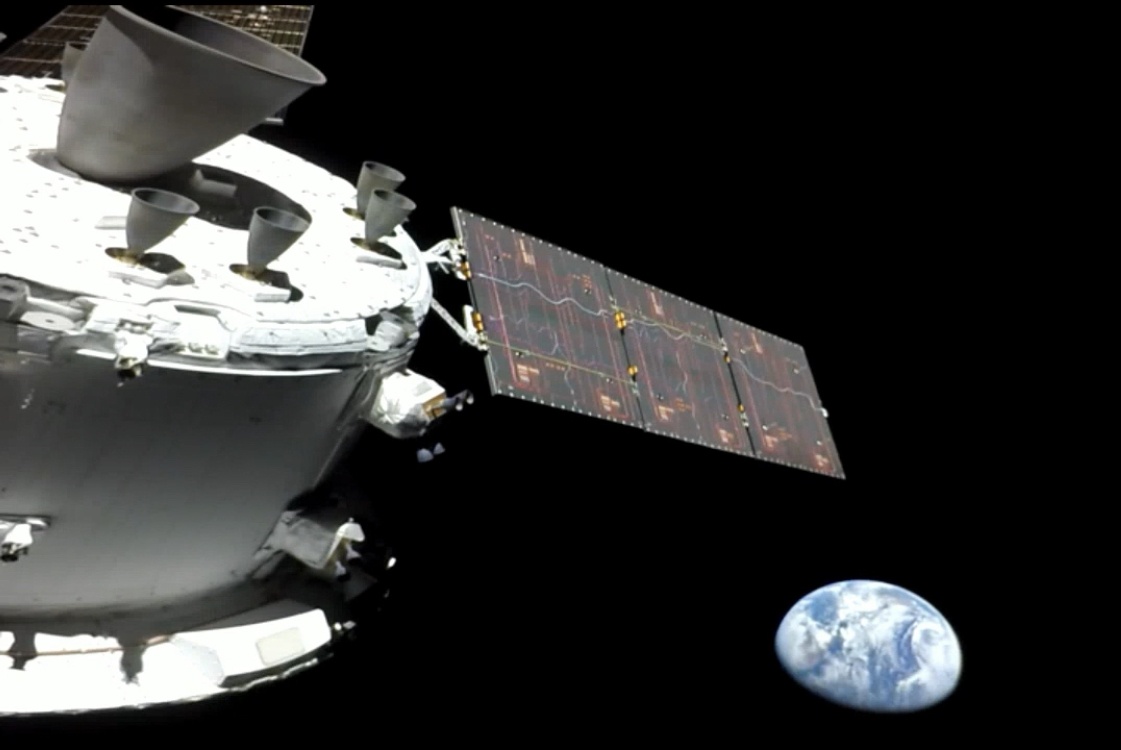
uploads.disquscdn.com/images/a5ed616c5381feb7ec49b0ae5640...
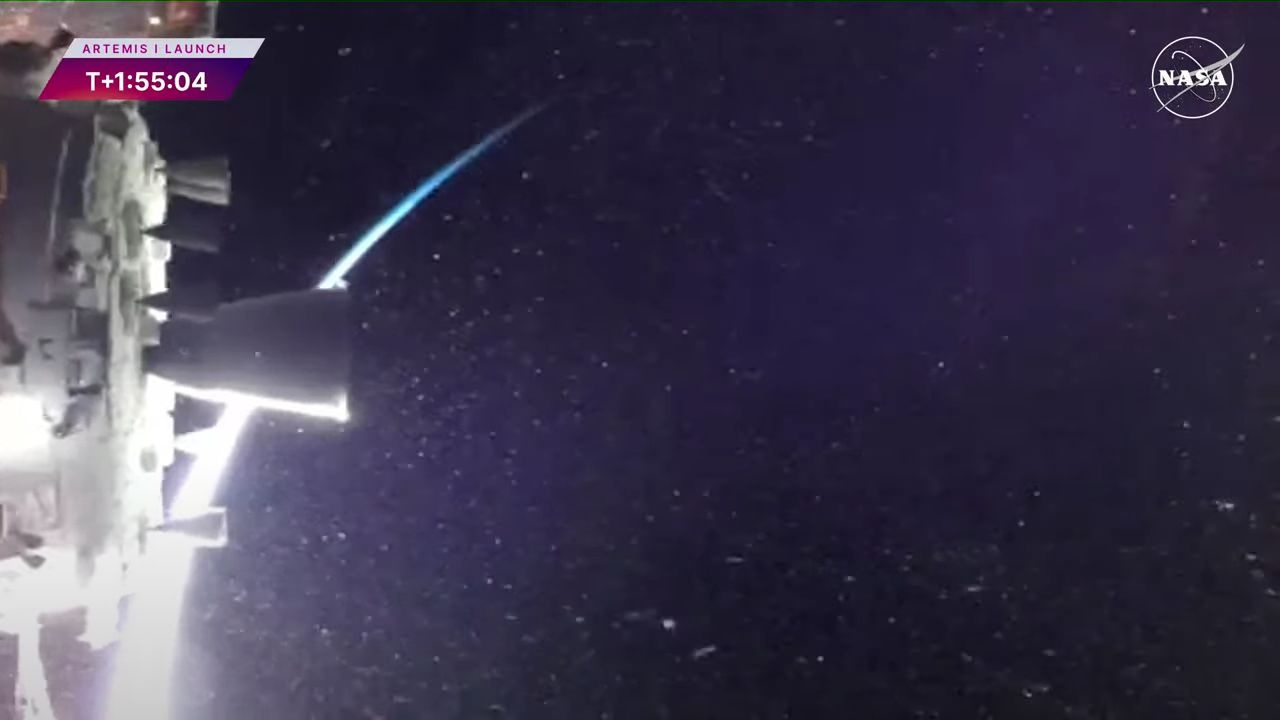
Both above credit: SPACE NEWS website
STS-41G being the engine's first flight, Artemis I its last.
Also:
www.aero-news.net/annticker.cfm?do=main.textpost&id=9...
Credit: Aero-News Network website
en.wikipedia.org/wiki/Space_Shuttle_recovery_convoy
Credit: Wikipedia
The solid rocket boosters for NASA's Space Launch System rocket are the largest, most powerful boosters every built for flight. As NASA and Northrop Grumman teams in Utah prepare for a Flight Support Booster (FSB-1) test of NASA's Space Launch System rocket on Sept. 2, learn more about the SLS boosters in this episode of Rocket Science in 60 Seconds with SLS booster subsystem manager and #NASAMarshall team member Julia Khodabandeh.
Image credit: NASA/Tyson Eason
#NASA #space #moon #Mars #NASAMarshall #msfc #sls #spacelaunchsystem #nasasls #rockets #exploration #engineering #explore #rocketscience #artemis #solidrocketbooster